Many will disagree with Izaak Walton’s statement, “As no man is born an artist, so no man is born an angler.” He published his book, The Compleat Angler; or, The Contemplative Man’s Recreation, in 1653, and it remains a pleasurable read for angler and armchair reader alike. The novelist Thomas McGuane commented, “The Compleat Angler is not about how to fish but about how to be.” There is an innate awareness in the soul of the artist and that of the angler.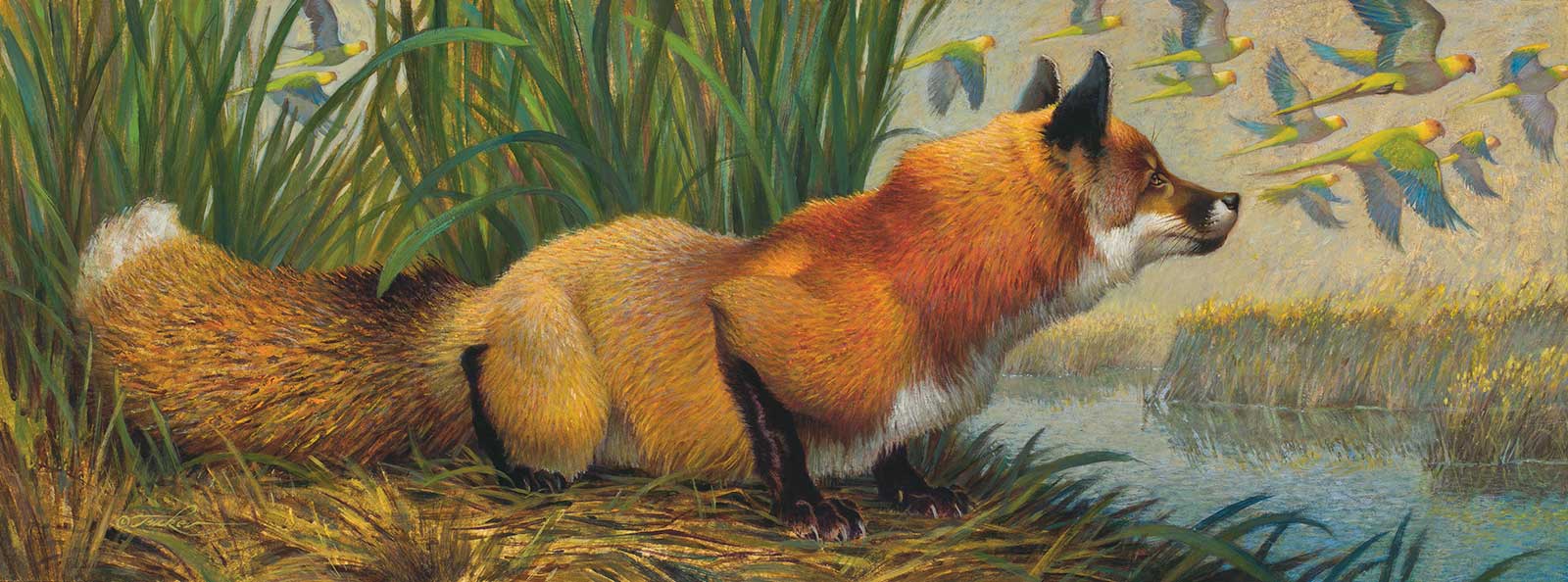 Ezra Tucker, Gone With the Wind, acrylic on board, 15 x 40"
I had thought about hunter and prey as a theme for this introduction and found the perfect representation of the idea in Jeremy Welsh’s bas-relief Cutthroat Rise, Whet or Dry. A trout rises to consider consuming a tasty insect, which is an imitation, contains a hook and is connected to the end of the angler’s line. When I ask him about “whet or dry” he replies, “This wording is a play on both the phrase to ‘whet one’s appetite’ as well as a reference to the two major types of flies used in fly-fishing—wet and dry. The fishing fly visible in the bronze is a dry fly, which is called a humpy fly. And so, in simple—the trout’s appetite has been whetted on a dry fly…I chose an interplay between four uniquely adapted entities—three of which act as both potential predator and prey within the interlaced relationships of their life cycles. And then there is humankind—a fascinating player, indeed!”
The fisherman’s analysis of the conditions dictates the type of fly and his approach. The trout does his own analysis whether to go for the fly or not.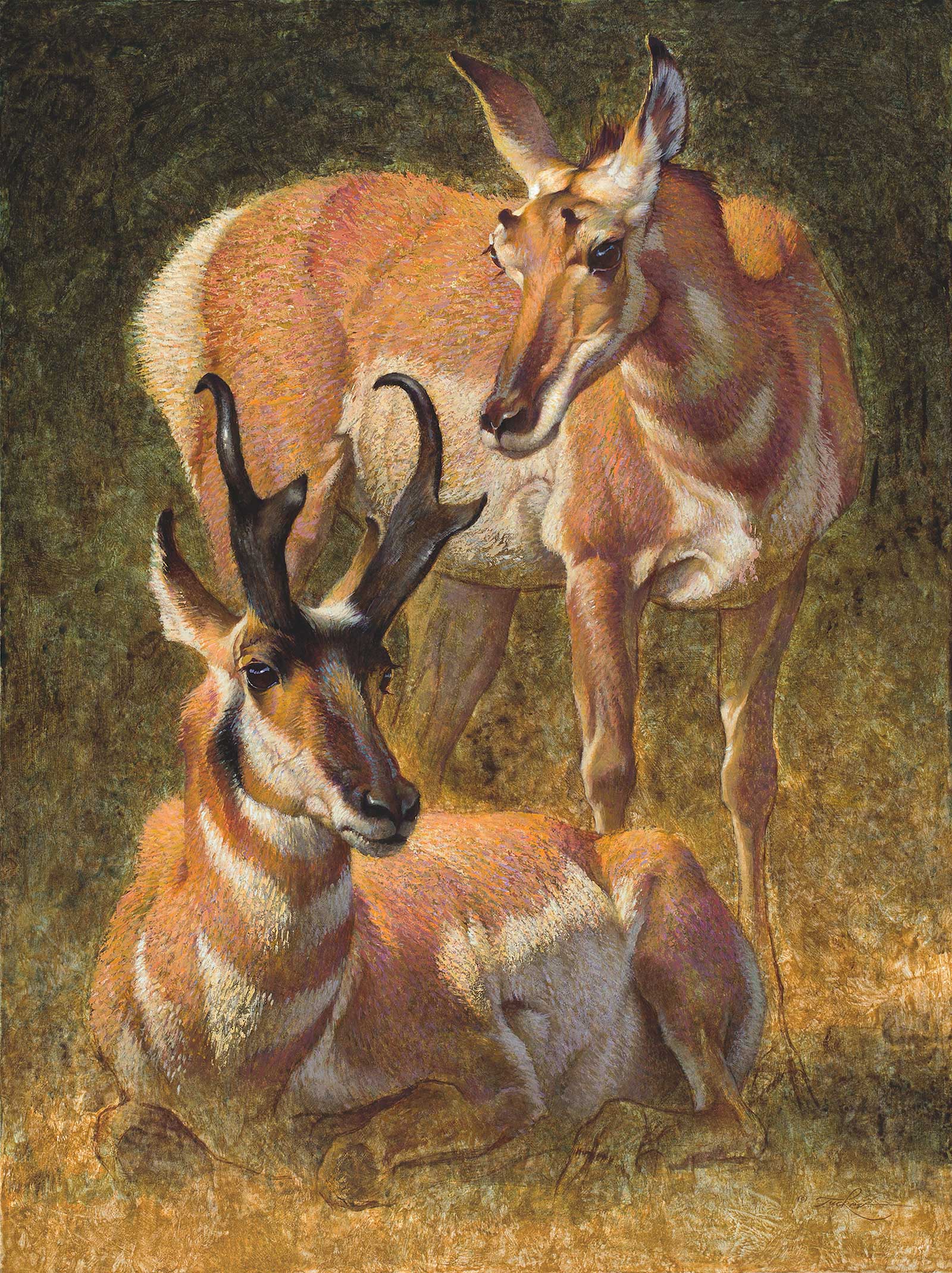 Ezra Tucker, Splendor of the Plains, acrylic on board, 40 x 30"Steve Kestrel takes consciousness to another dimension in Dream of Little Dipper/Big Fish. The bear cub dreams of making a big catch, almost too big to hold. Kestrel and his wife live on a 62-acre “wildlife preserve” in Colorado. He was brought up in southern New Mexico. He later raised and trained quarter horses and worked on cattle ranches, through it all, becoming aware of something more than the physical characteristics of the animals. The Kestrels live on their land trying to have as little impact on it and their “animal brethren” as they can.
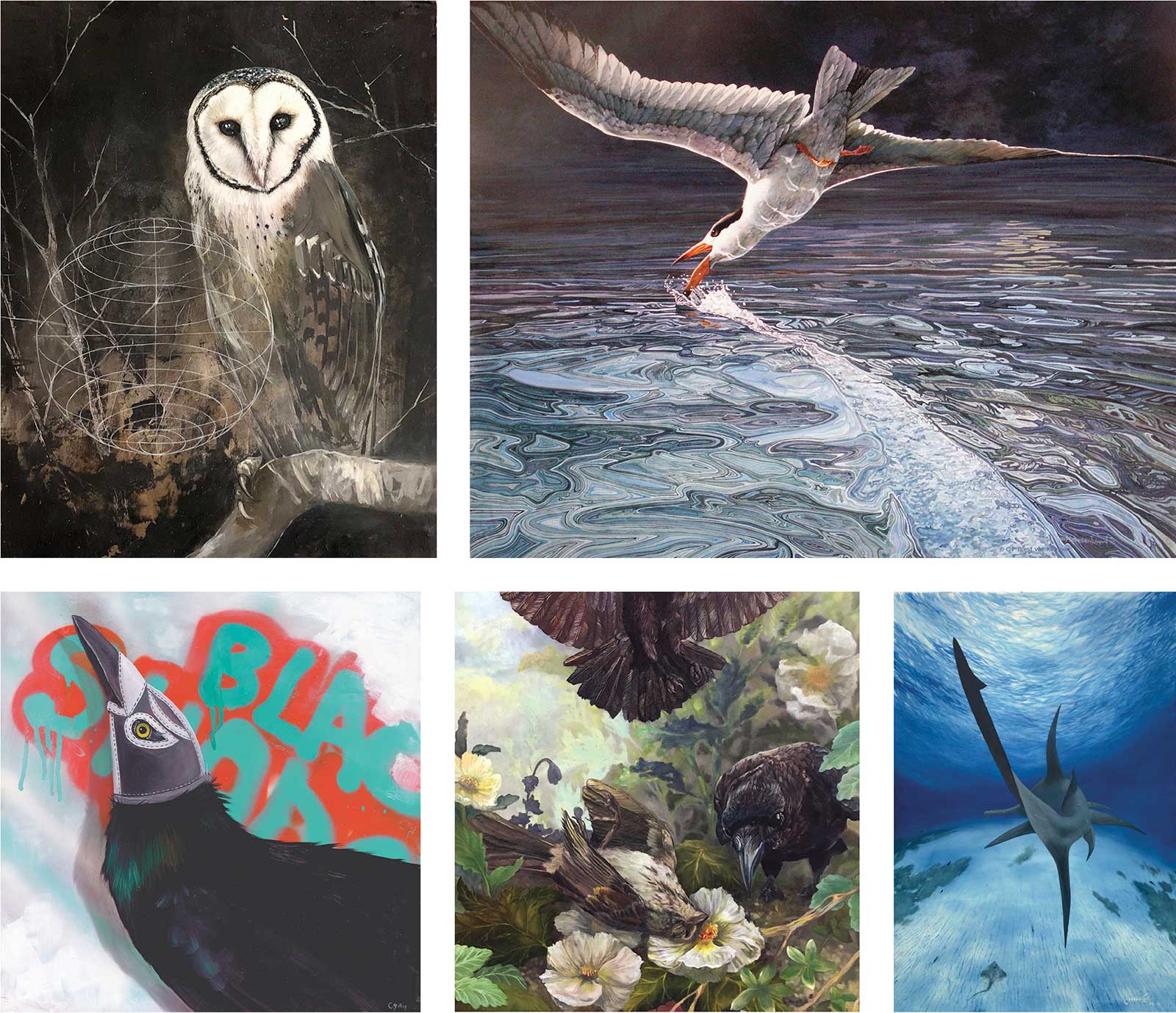 Clockwise from top left: PoetsArtists, Orb, oil on wood, 14 x 11", by Cheryl Kelley; Carel Pieter Brest van Kempen, Black Skimmer, acrylic on illustration board, 24 x 30"; Alhaitham Jassar, Hammerhead, oil on canvas, 36 x 24"; PoetsArtists, Bed of Poppies, oil on panel, 11½ x 11", by Rhea O’Neill; PoetsArtists, Black Shadow, spray paint and oil, 18 x 18", by Christy Stallop.
Luke Frazier’s bear in Salmon Falls seems overwhelmed by the abundance that surrounds him, pausing for a moment of gratitude before getting to work. Frazier grew up hunting and fishing and training bird dogs in Utah. His energetic brushstrokes emulate the energy of the waterfall, which is complemented by the contrast of lights and darks. He comments on the hunter-hunted theme, “My goal as an artist is to offer up a different point of view of the natural world. As a sportsman, I want to tell a gripping story between antagonists, portray an emotionally charged powerful scene, or show a calm intimate close-up. As a representational artist, I need to be as accurate as possible with my drawing, having a strong knowledge of the anatomy, and a good grasp of the nuance of subtle color and composition.” His knowledge of the animals he paints allows him to be accurate, yet revel in the qualities of the paint with which he builds his images.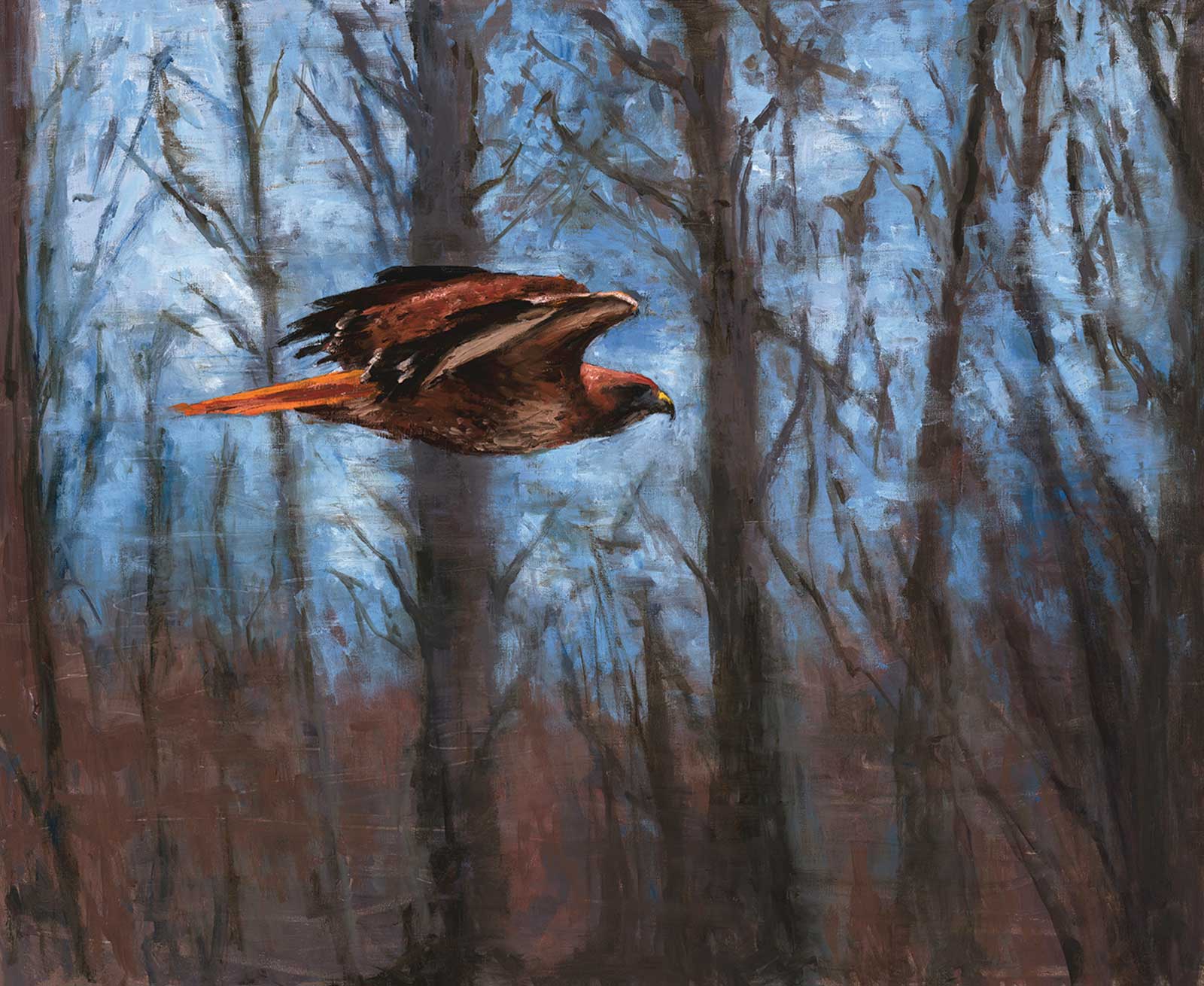 Andria Sullivan, Cruising, oil, 18 x 22"
 Andria Sullivan, Watching Me, oil, 9 x 12”
Carel Pieter Brest van Kempen portrays another kind of fisher in his painting Black Skimmer. The skimmer’s lower mandible is longer than its top one. It flies low skimming the water. When the lower bill touches a fish, the upper one snaps shut capturing the prey. The “wake” of the skimming leads the eye to the point of action as the bill skims the surface, making the viewer feel part of the action.
Brest van Kempen also grew up and lives in Utah. He decided to devote himself to painting at about 30 and lived out of his van, immersing himself in the diversity of nature and painting up to 100 hours a week.
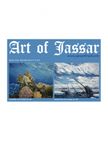
In a book of his art, Rigor Vitae: Life Unyielding, he wrote, “It is not surprising that the first Cro-Magnon artists painted animals. The first creative reasoning that hominids engaged in was in tracking and hunting prey. To be a predator is to be a naturalist. Inferring the presence of prey through tracks, scats and other signs, then predicting its behavior and imagining one’s self in time and space in various hunting situations, these activities are all within the realm of the artistic mind. It is no accident that wildlife art has always been closely associated with hunting.”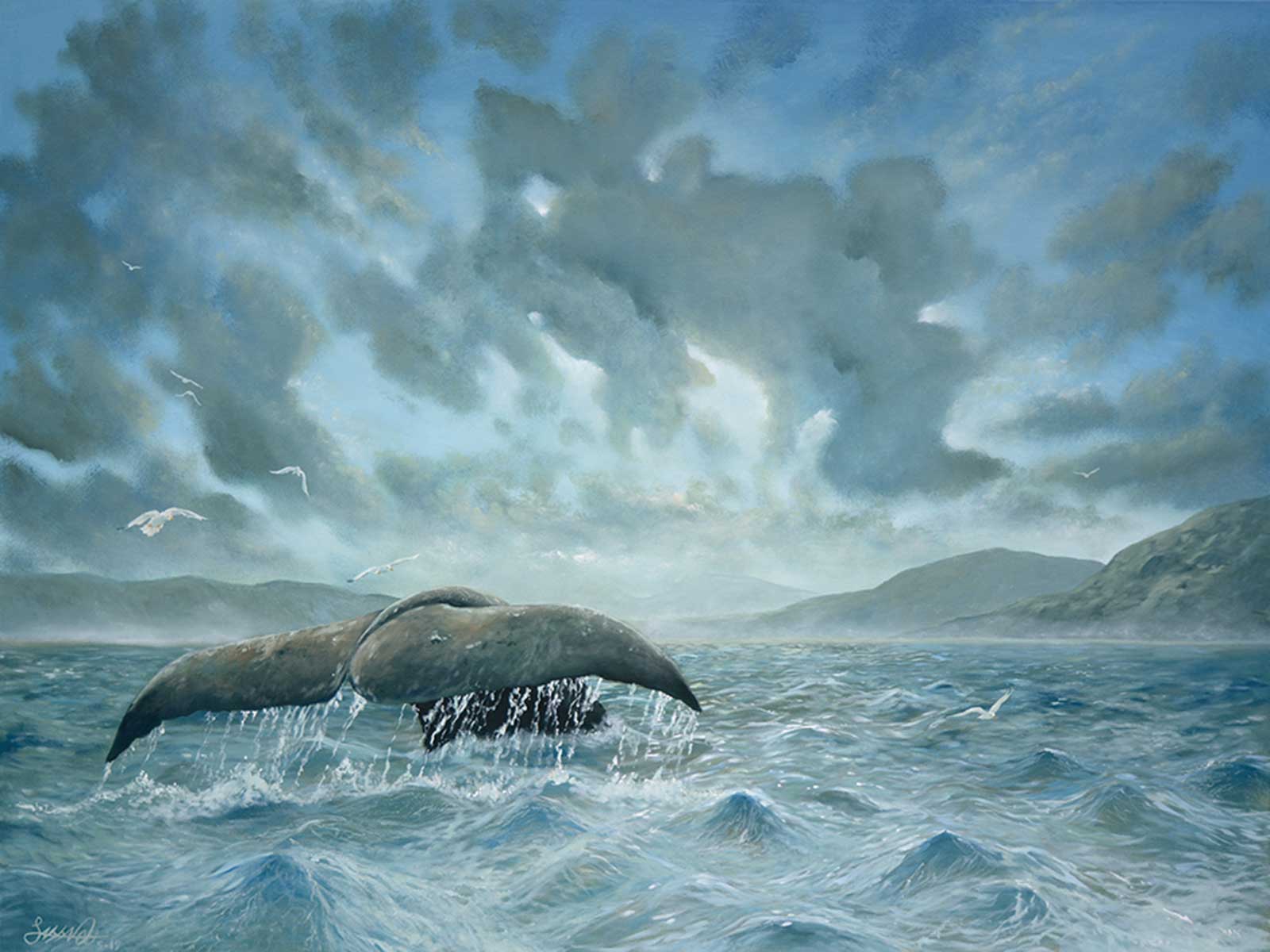 Alhaitham Jassar, Whale Tail, oil on canvas, 36 x 40"
Animal habitats, instincts and personalities will be on full display in the pages of this special section dedicated to wildlife art. Collectors will find everything from dogs and birds to bunnies and sea creatures portrayed, highlighting the variety of this timeless genre.
“Nature is the mother of all inspiration, and awing the viewer with the beauty of our natural heritage is my ultimate goal,” says artist Alhaitham Jassar. “My advice to the collector is to acquire what you enjoy looking at and not necessarily follow a trend. Oftentimes, a turtle’s fin can be as beautiful to look at as a whole landscape.”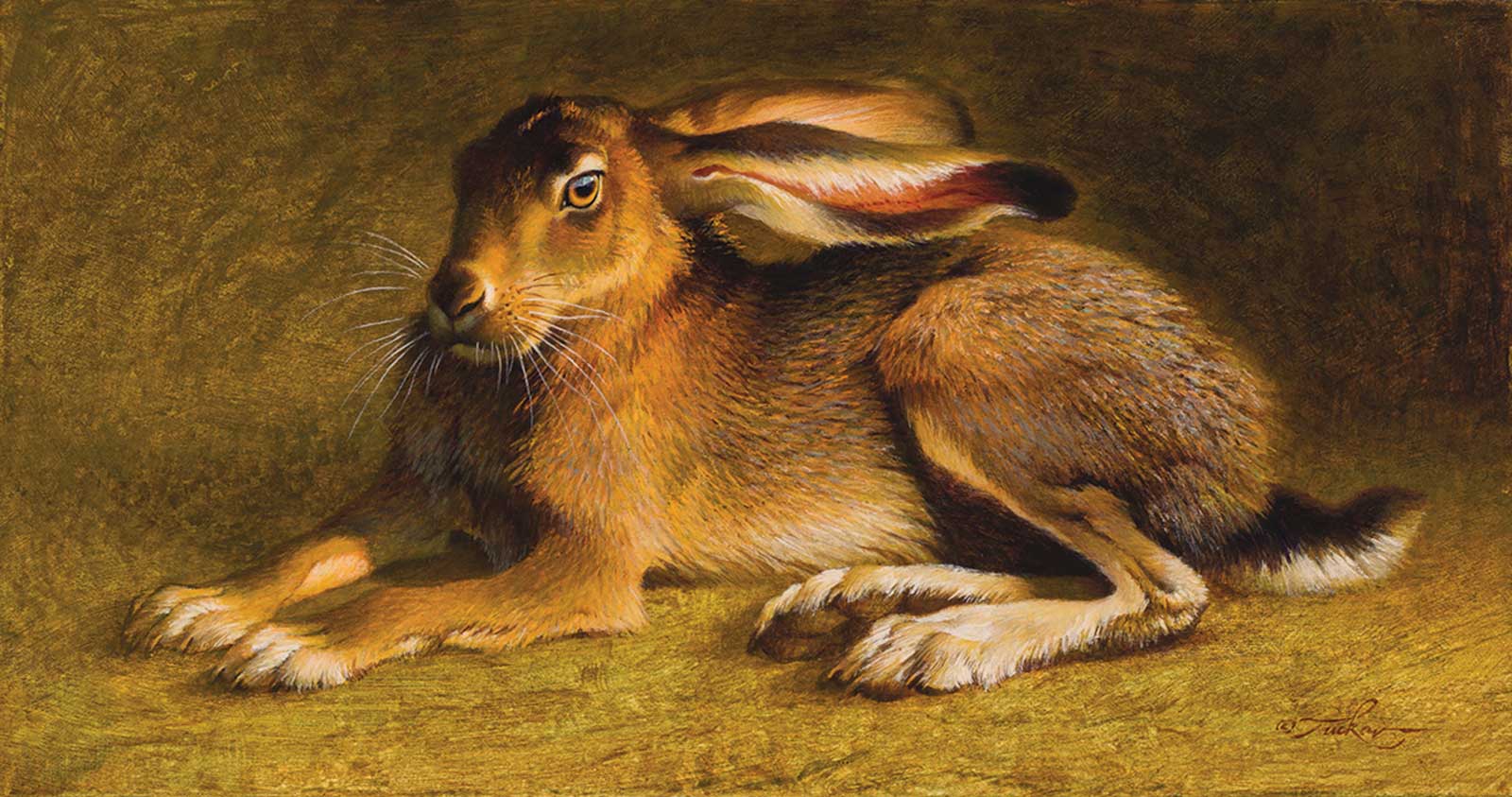 Ezra Tucker, A Noble Black-Tailed Jack, acrylic on board, 12 x 23"
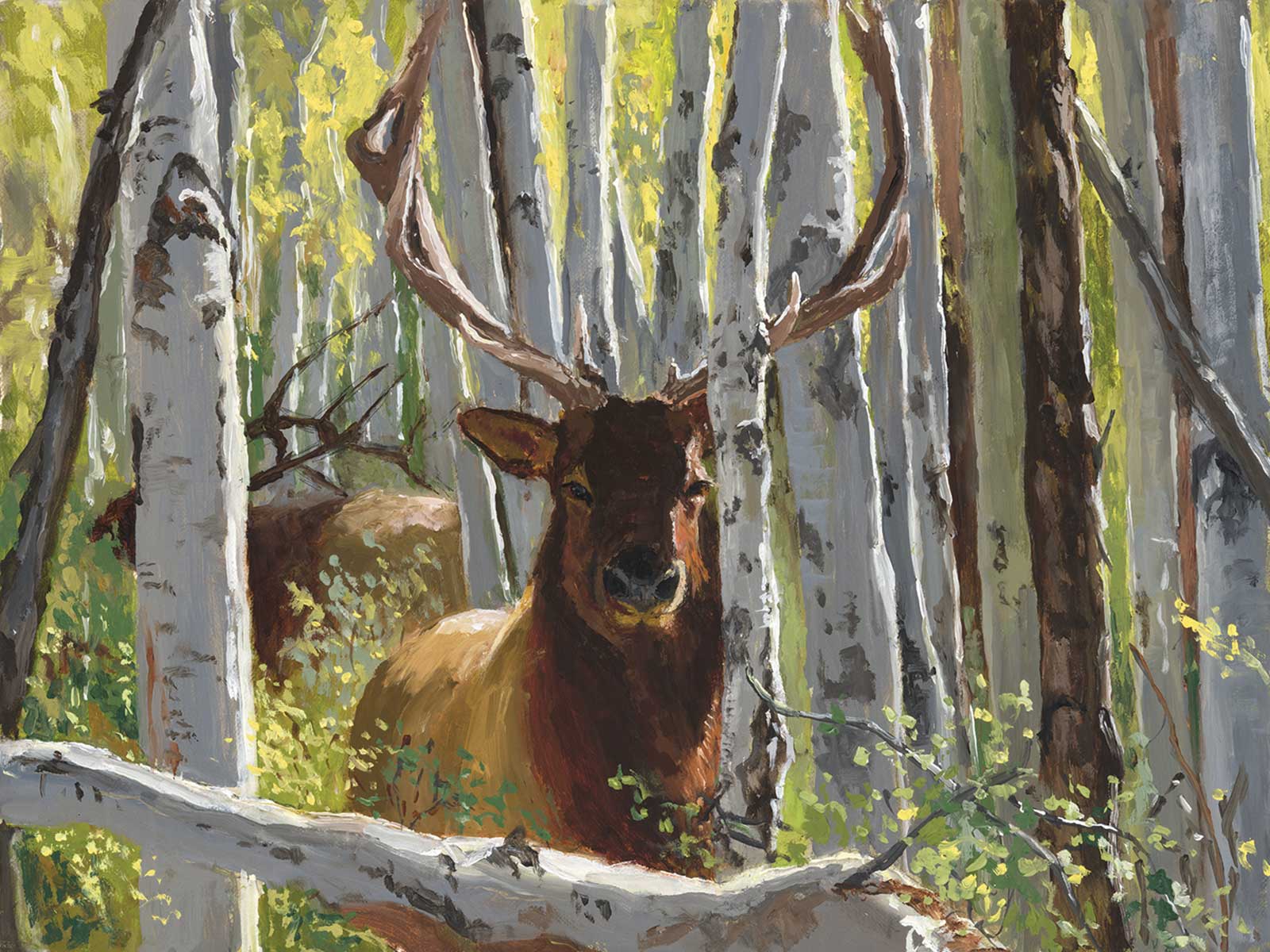
Utah artist Andria Sullivan says, “I am creating a series of paintings documenting the generations of wildlife that migrate onto our ranch from the adjacent national forest every year. In the West, wildlife and humans live with the constant threat of wildfires and the stress from climate change. I feel compelled to capture the spirit of these animals in their beautiful but impermanent existence. Never has wildlife art been so important to the history of America’s West.”
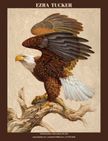
The focus of Ezra Tucker’s wildlife art is “to excite and engage people into developing a visceral understanding of the wildlife that inhabit our living planet,” he says. “The challenge I have for myself is to present the splendor and majesty of the animal world in dynamic form. I am wanting to create an impression of my subjects and not a photorealistic image.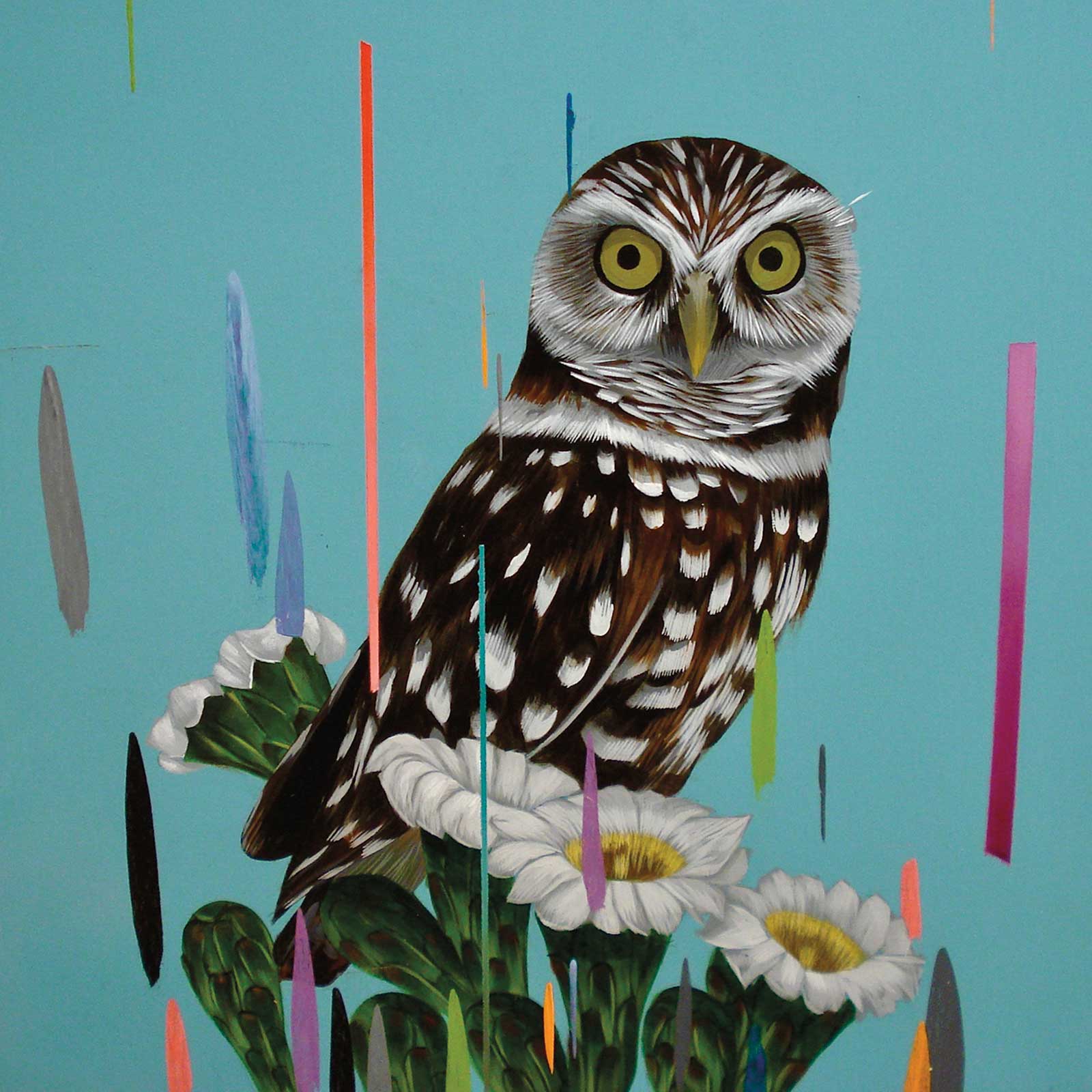 Lotton Gallery, Owl and Saguaro Blooms, acrylic on panel, 16 x 16", by Frank Gonzales.I desire for the viewer to use their intellect and curiosity to imagine and to become aware when they observe my depictions.
I hope that my inspired likenesses of wildlife may inspire and connect people to the conservation efforts necessary to protect these essential species that we rely on for our existence. There is an honesty about wildlife that is a fundamental definition of reality to me. When I am painting, I become a part of this universal truth. This feeling of connectivity and my ability to participate in it is extremely exciting. A sensation I hope to share through my artwork.”
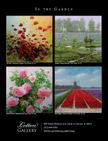
Lotton Gallery represents painters Gelena Pavlenko, Yana Movchan and Frank Gonzales—all three have painted several favorite subjects and genres, including wildlife art.
Pavlenko often paints birds; her latest work Bunny in the Garden shows her own beloved pet bunny, a beautiful black bunny painted with sweet fondness. Movchan is known for her detailed florals; her new work On the Hill shows two Borzois, also called Russian wolfhounds, a famously majestic dog depicted by many artists throughout the years. Gonzales captures his fascination with owls of late in his painting Owl and Saguaro Blooms.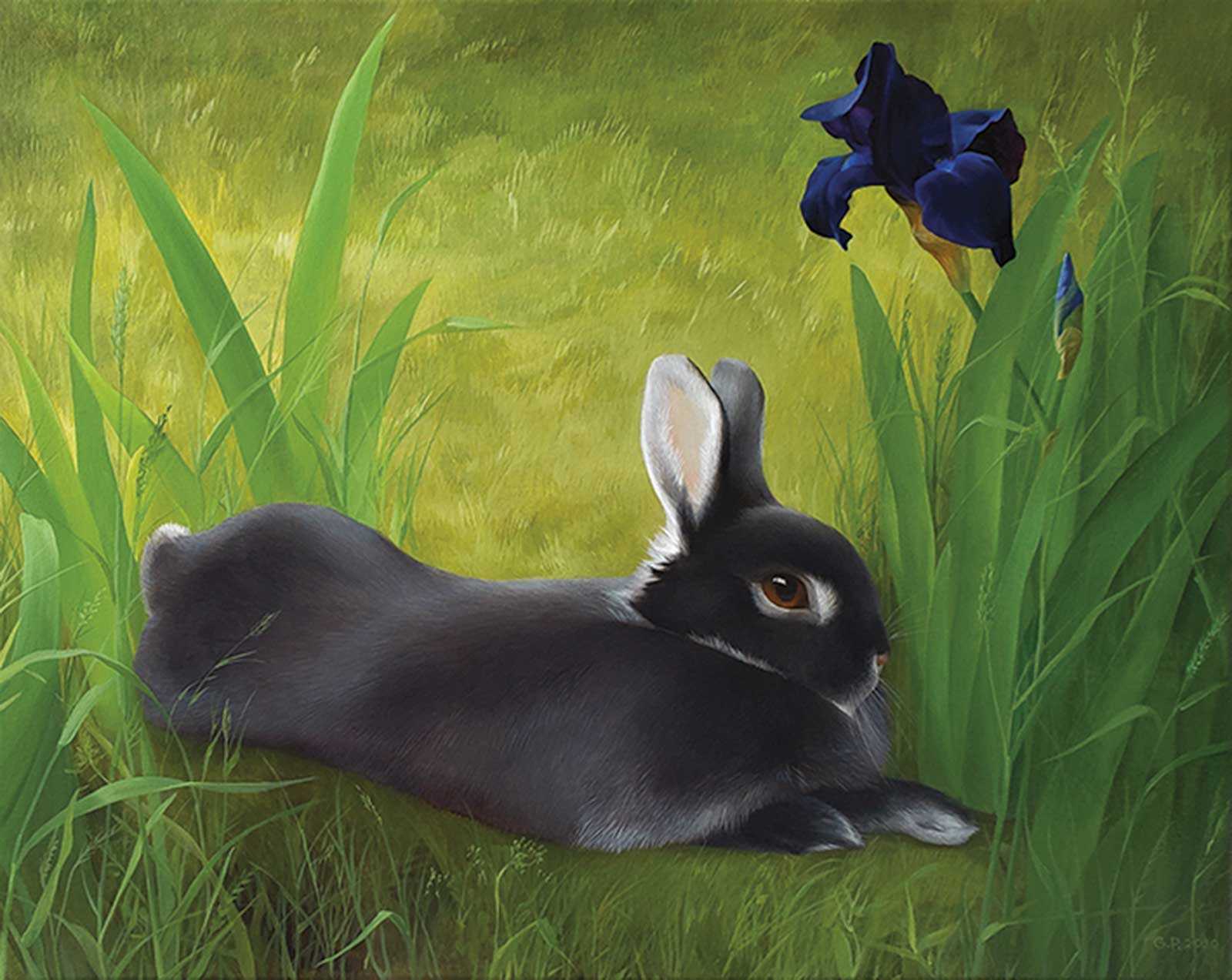 Lotton Gallery, Bunny in the Garden, oil on canvas, 16 x 20", by Gelena Pavlenko.
The PoetsArtists organization, headed by Didi Menendez, features a number of artists creating contemporary wildlife works including Rhea O’Neill, Cheryl Kelley and Christy Stallop.
O’Neill says, “A large part of my painting practice is informed by the beauty of my surroundings in Northern California. Vivid landscapes and soft light create an idyllic landscape from which to pluck colors and forms. My work embodies a personal, lifelong fascination with an imagined animal existence. The creatures I depict are alive with their own agency, coexisting in a world altered by humanity.”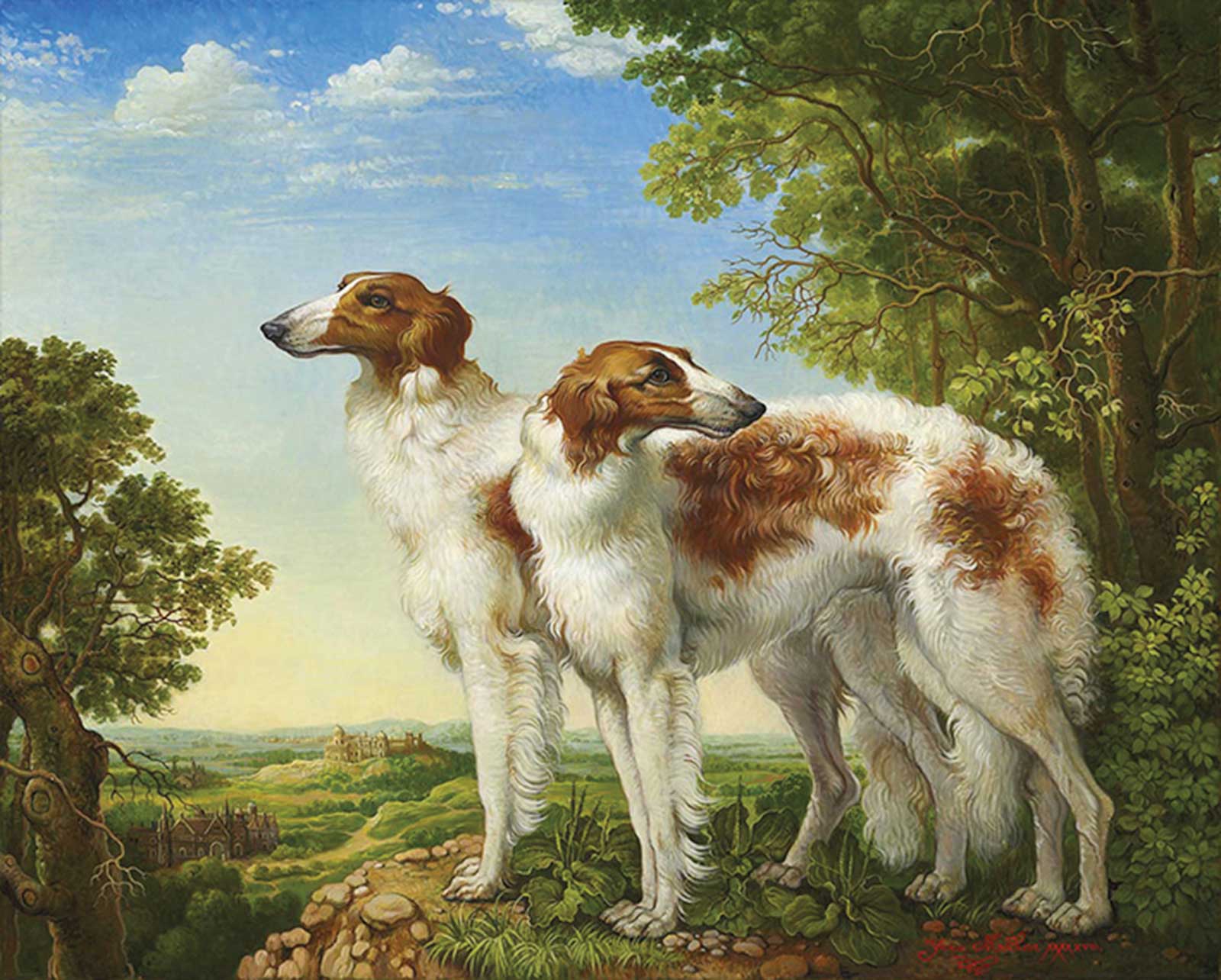 Lotton Gallery, On the Hill, oil on canvas, 24 x 30", by Yana Movchan.
Kelley looks for “the meaning of the creatures of archetype. What is the symbology of an owl, a goat? I hope my paintings will draw on the viewers experience to answer those questions,” she says. “For me, certain symbols return again and again and become for me sign posts for authentic creation.”
In Austin, Texas, where Stallop lives, she says there’s an abundance of grackles and they’ve become one of her favorite subjects. “They are funny, quirky, obnoxious and extremely versatile as models. My primary focus is creating work that connects with one of the most universal human emotions, happiness.” —
Featured Artists & Galleries
Alhaitham Jassar
www.jassarbrush.com
Andria Sullivan
(630) 561-6274
www.andriacostassullivan.com
Carel Pieter Brest van Kempen
(801) 474-2505
carelbvk@gmail.com
www.cpbrestvankempen.com
Ezra Tucker
(719) 487-0648
ezratucker155@aol.com
www.ezratucker.com
Lotton Gallery
900 N. Michigan Avenue, Level 6
Chicago, IL 60611
(312) 664-6203
www.lottongallery.com
PoetsArtists
www.poetsandartists.com
Powered by Froala Editor