Portland, Oregon-based artist Eric Wert turns the traditional genre of still life on its axis with his colorful and dynamic compositions. Yet, there is still a hint of the past in his pieces, as he borrows concepts and aesthetics from throughout art history in subtle ways. His paintings depict time-honored subjects—flowers, fruits, birds and vases—but with items such as avocados and irises they are clearly of this modern world. His backdrops are also referential, with them being his own designs that come from hours studying archives of vintage textiles or those at a fabric store.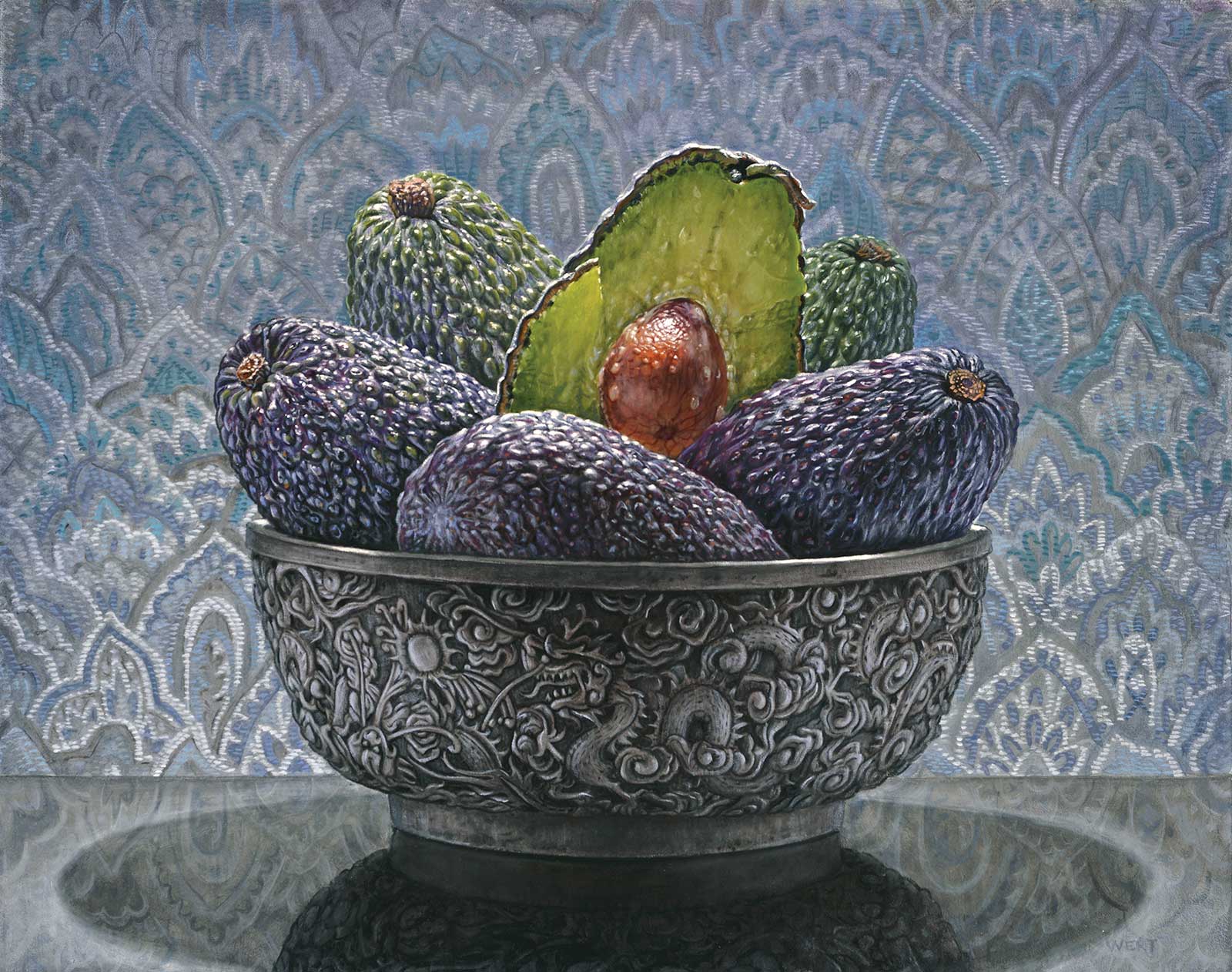 Avocados, oil on panel, 11½ x 14½"
“I think that’s one of the things that’s so beautiful about still life painting,” Wert says. “It really is one of the oldest art forms. Still life paintings were on the walls of Pompeii that are of what I’m doing now—flowers in vases and fruits on the table. I love the fact that we can look at something we can relate to in our contemporary life and it connects us to something people have been experiencing throughout history.”
Wert adds that he often borrows ideas and concepts from the past, for instance, “[When I was] very concerned with the light in the painting, I looked at historical egg tempera paintings and traditional paintings and thought about how color was layered to create a luminous effect.” And today, when he thinks more about composition and construction, Wert’s looking at the Renaissance and Dutch works because those artists’ pieces kept the eyes moving through the scene.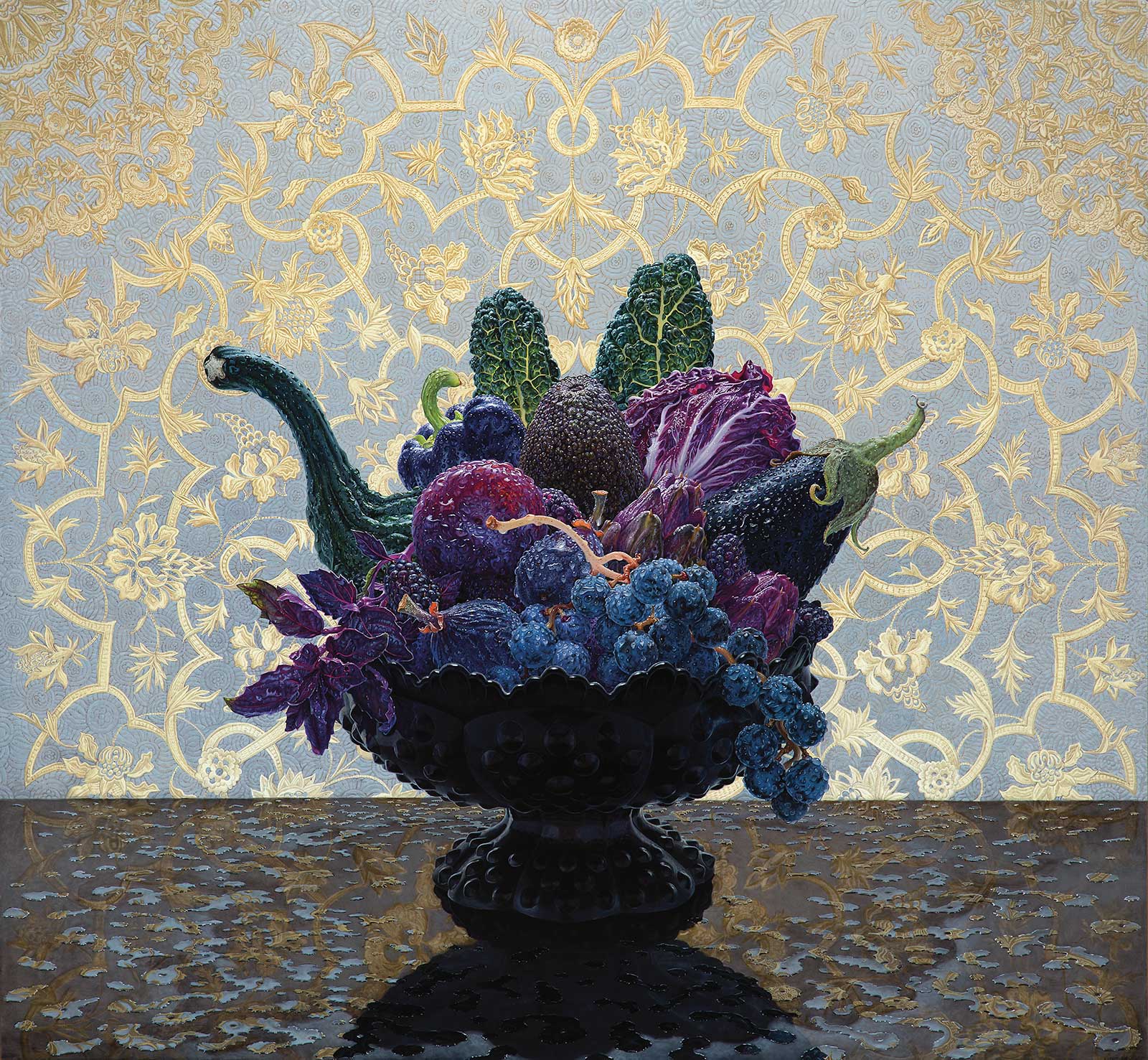 Dark Still Life, oil on canvas, 60 x 60"
This fall, Wert will exhibit past and present paintings in his first New York City solo show at Gallery Henoch. Many of Wert’s pieces are larger than life size, showing the items on a grand scale that allows the viewer to look at the details and textures. Others are small-scale pieces at about 4 by 4 inches, displaying his subjects in a more intimate level.
Wert uses contemporary techniques and visual cues that help elevate and change the way people look at the items featured. For instance, in paintings such as Romanesco and Tomato, Wert silhouettes one subject at an angle that invites the viewer to step into the piece and gaze around. The former piece shows the complex shape of the vegetable from the top in a way that puts a different perspective on its spirals and cone shapes. Tomato shows the insides of a tomato spilling out on to the table—the beauty and intricacy of the red edible is on full display in contrast to its simple exterior that most people might immediately recall.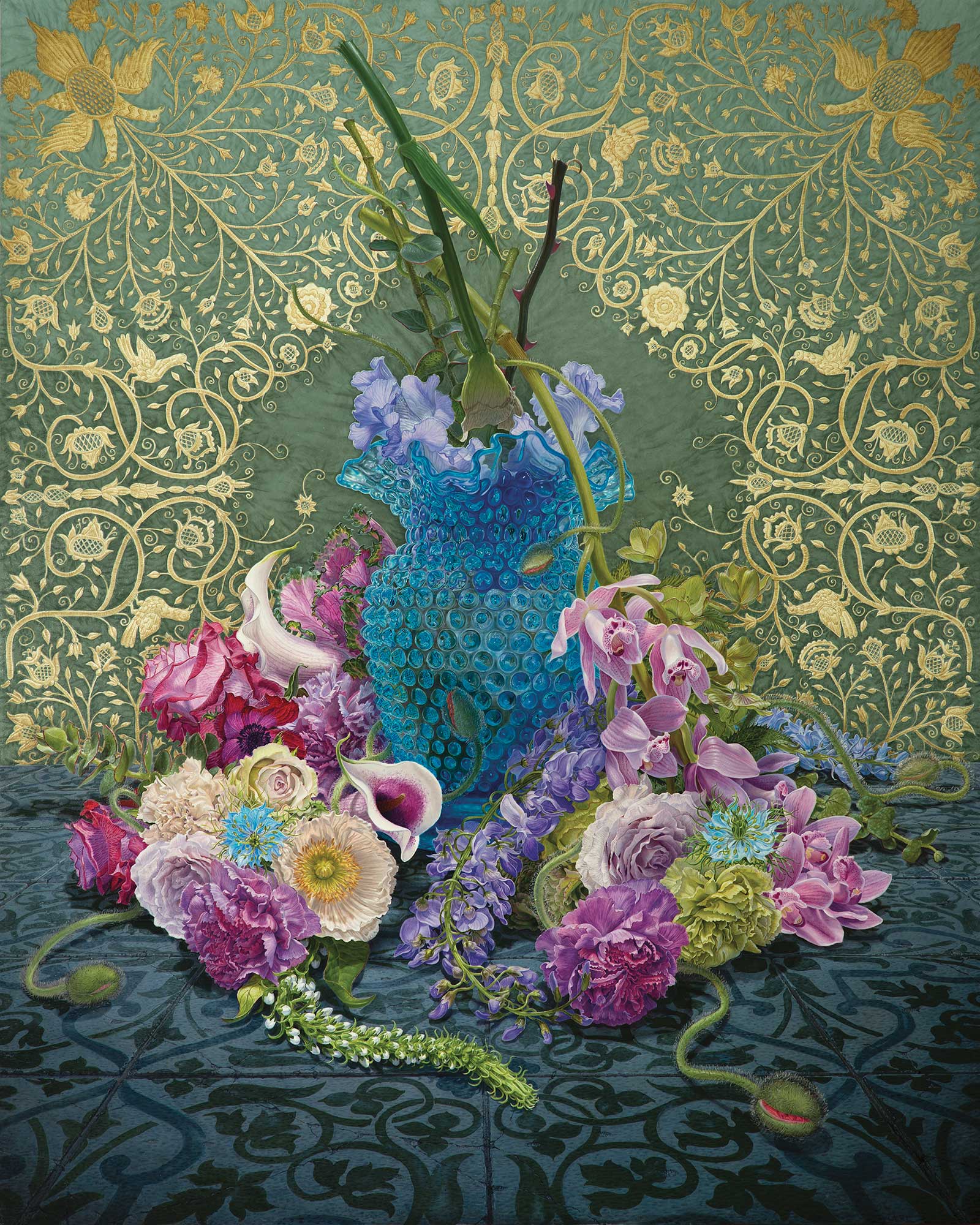 Nimbus, oil on canvas, 60 x 48"
These pieces in particular are ones Wert finds referential to the exhibition’s title, Other Life, because “you’re having a new experience with these subjects.” He adds, “I love being able to look at things from that new perspective. See something we see every day, but imagine that you haven’t seen it before and see it with new eyes.”
Wert plays with perspective in other ways, such as in Oysters, where the painting has a Trompe l’Oeil effect as it is seen from above. “I’ve done the overhead works periodically throughout my career. It’s sort of a different thing because it becomes almost that Trompe l’Oeil effect and it’s a much more controlled space,” Wert explains. “With the still lifes you have a deep space, one you could almost walk in to, and the overheads, you really have to concentrate on those technical skills. You don’t have that many tricks up the sleeve. You have the object and the background.”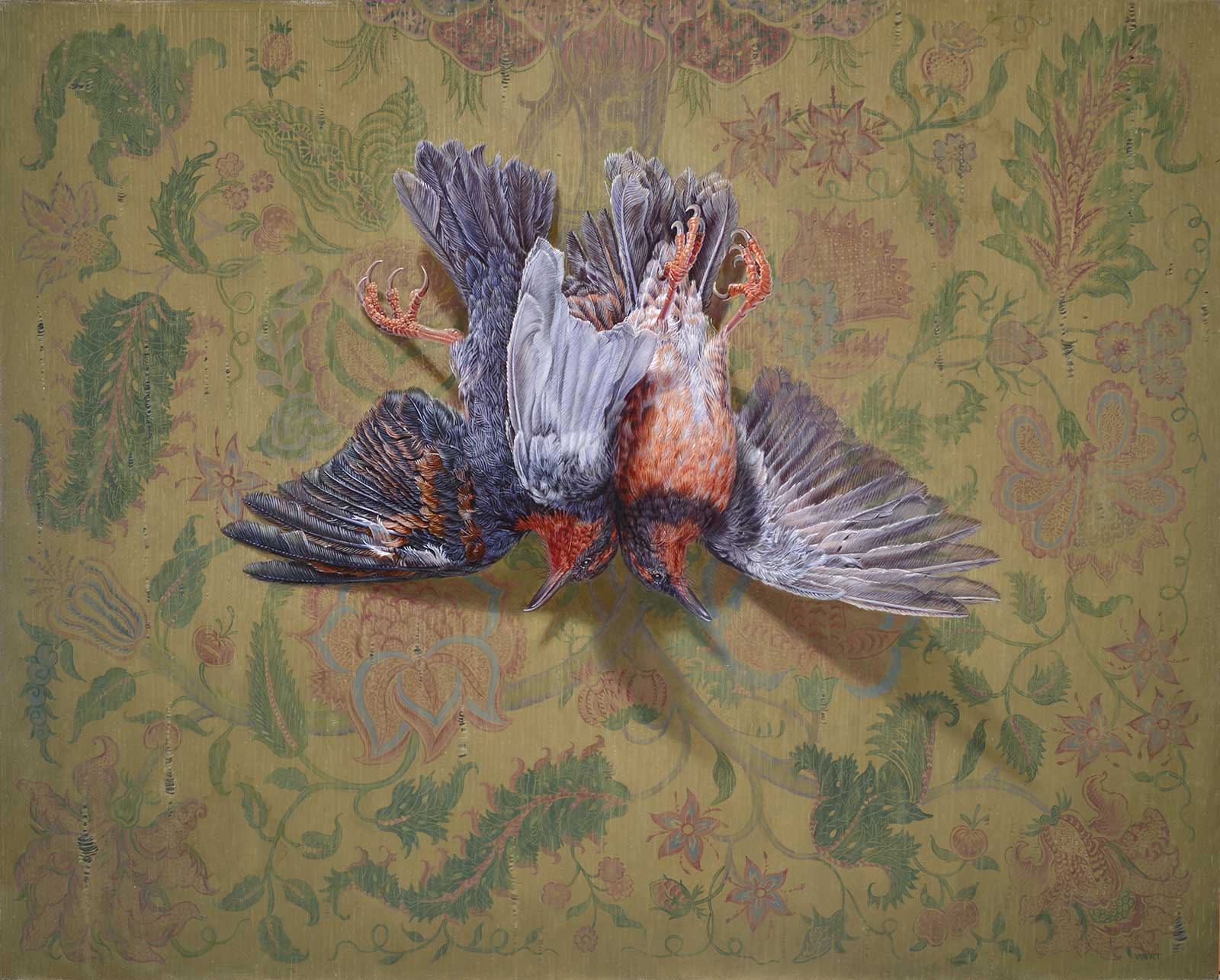 Varied Thrush, oil on panel, 24 x 30"
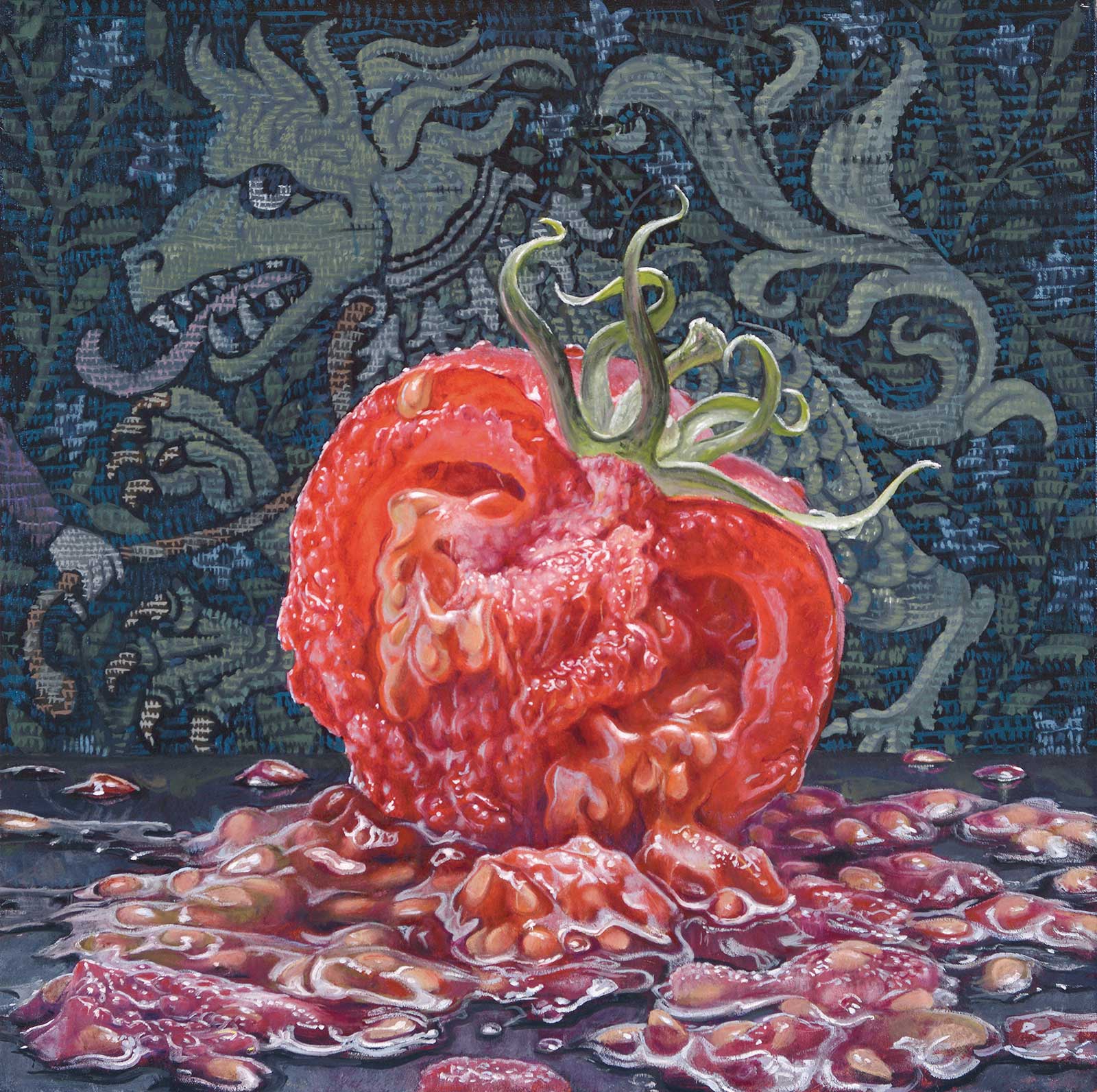 Tomato, oil on panel, 9 x 9"
Often working from photographs, because his paintings can take months at a time, Wert will manipulate the items and scenes to get the best composition for the work. He also takes time with items in person to get a feel for how they should be depicted. For instance, when painting Avocados, one of Wert’s primary focuses was on the texture of the peel. “It is important to have a physical sense of the object,” he says. “You can paint them from a photograph, but you don’t really know that bumpy, rocky texture. While I was doing that painting I kept buying avocados and had them in my hand to refer to because you want to have that tactile sense.”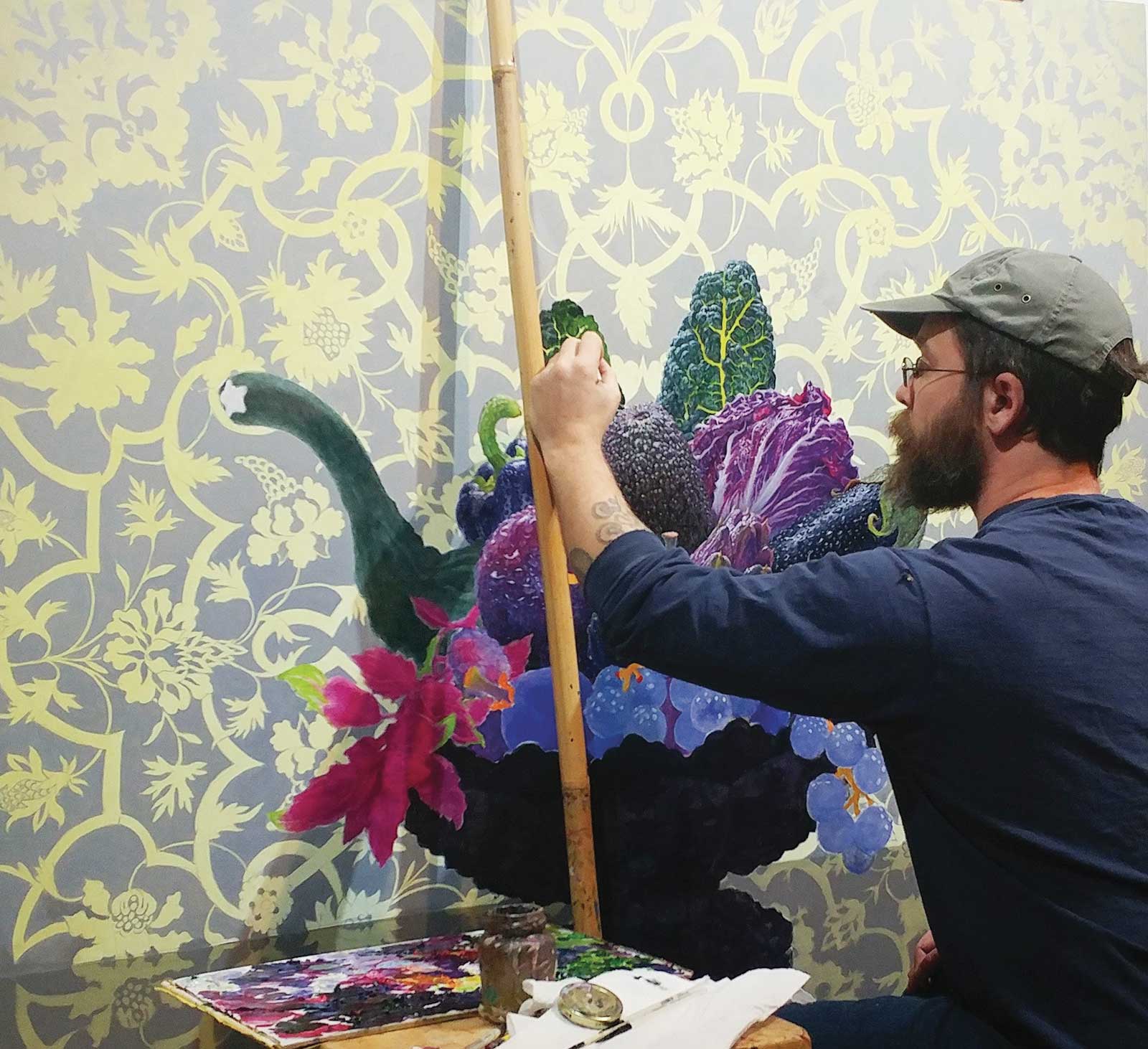 Eric Wert paints his large-scale work Dark Still Life.
Another of his works, Dark Still Life, features a hobnail bowl that was a much different size than it appears in the painting. “It’s a tiny, little thing,” Wert says. “I photographed the vegetables and the still life objects and worked with that hobnail and changed the perspective to make it work with that scale. There’s a lot of construction that gets started.” The painting, one of the larger works in the show along with Nimbus, also has another surprise for the viewer if they look close enough. “In the black hobnail vase, I could see my own reflection, so there’s about 27 tiny self-portraits in each of those little hobnails,” he explains. “I thought it’d be fun to have a reference to the Old Dutch paintings and see the artist reflected in the glass.”
Along with Wert’s newer paintings, Other Life will include two drawings from earlier in his career and several other works that show his evolution as an artist. —
Eric Wert: Other Life
When: Fall 2020
Where: Gallery Henoch, 555 W. 25th Street, New York, NY 10001
Information: (917) 305-0003, www.galleryhenoch.com
Powered by Froala Editor