After the French Revolution in 1789, artists became disillusioned with the ideas of reason and order from the enlightenment and began to pursue the imagination and emotion in a new creative era now referred to as romanticism. The French poet and essayist Charles Baudelaire (1821-1867) wrote, “To say the word Romanticism is to say modern art - that is, intimacy, spirituality, color, aspiration towards the infinite, expressed by every means available to the arts.”
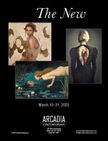
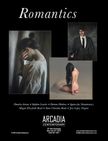
Arcadia Contemporary presents The New Romantics with young painters from around the world at its New York gallery, March 10 through 31. 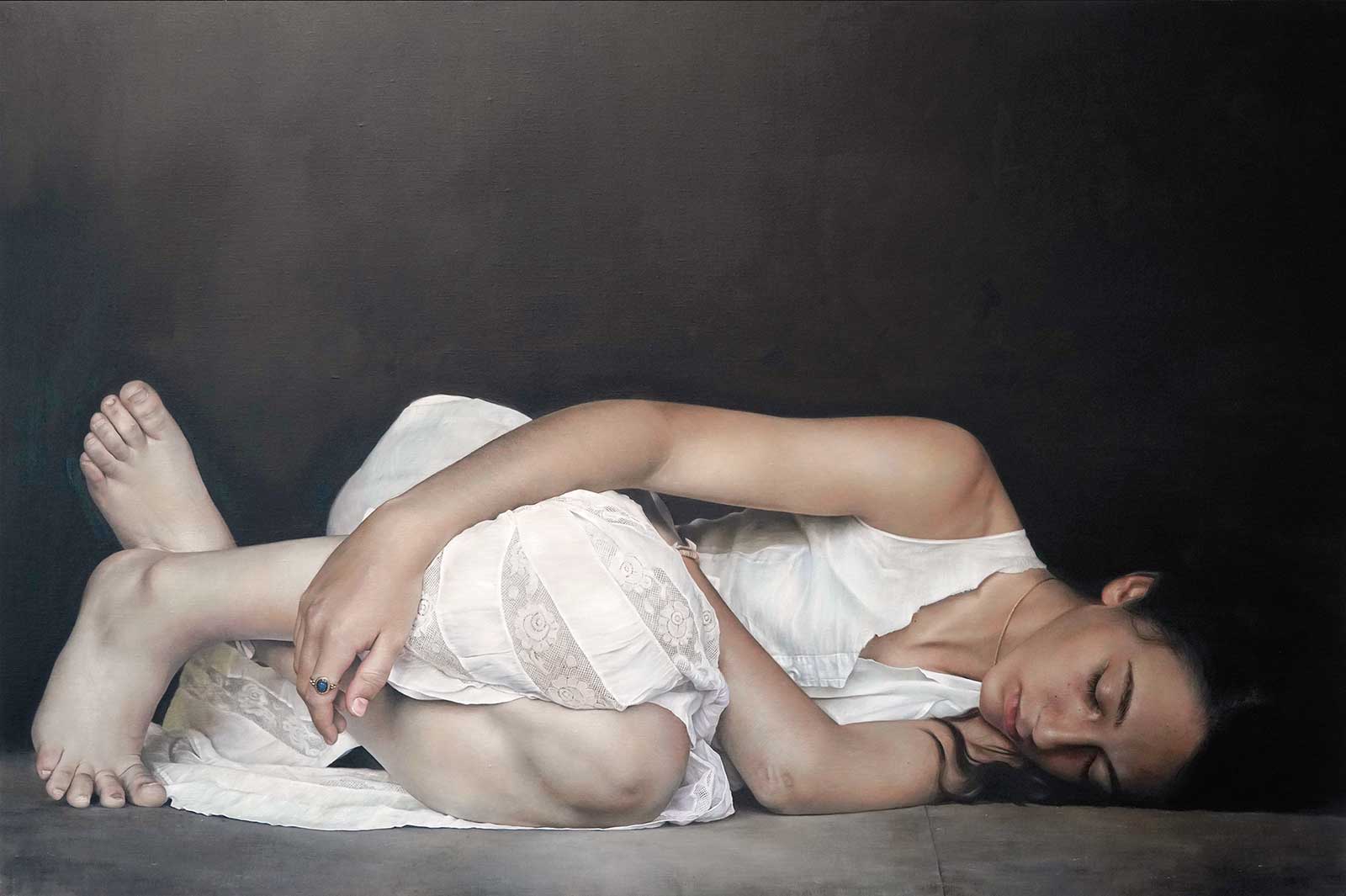 Anne-Christine Roda, L’escargot, oil on canvas, 35 x 57"
The Polish artist Agnieszka Nienartowicz portrays women and girls who reveal classic paintings of Western art tattooed on their backs. In The Triumph of Death, she reveals a portion of the painting with the same title by Pieter Bruegel the Elder. Nienartowicz explores the effects of religion on the mind and on the body explaining, “Following the theory of empiricism, according to which, on the day of birth, everyone is a tabula rasa—a blank blackboard, each event leaves a mark. Systems of beliefs and practices, doctrines, cults and rituals leave behind deep and indelible traces. They create a framework for thinking firmly and indisputably, because they make themselves infallible. Just as the skin serves as a room for the interior, keeping it intact, so beliefs and doctrines are imprinted on it with marks and tattoos.”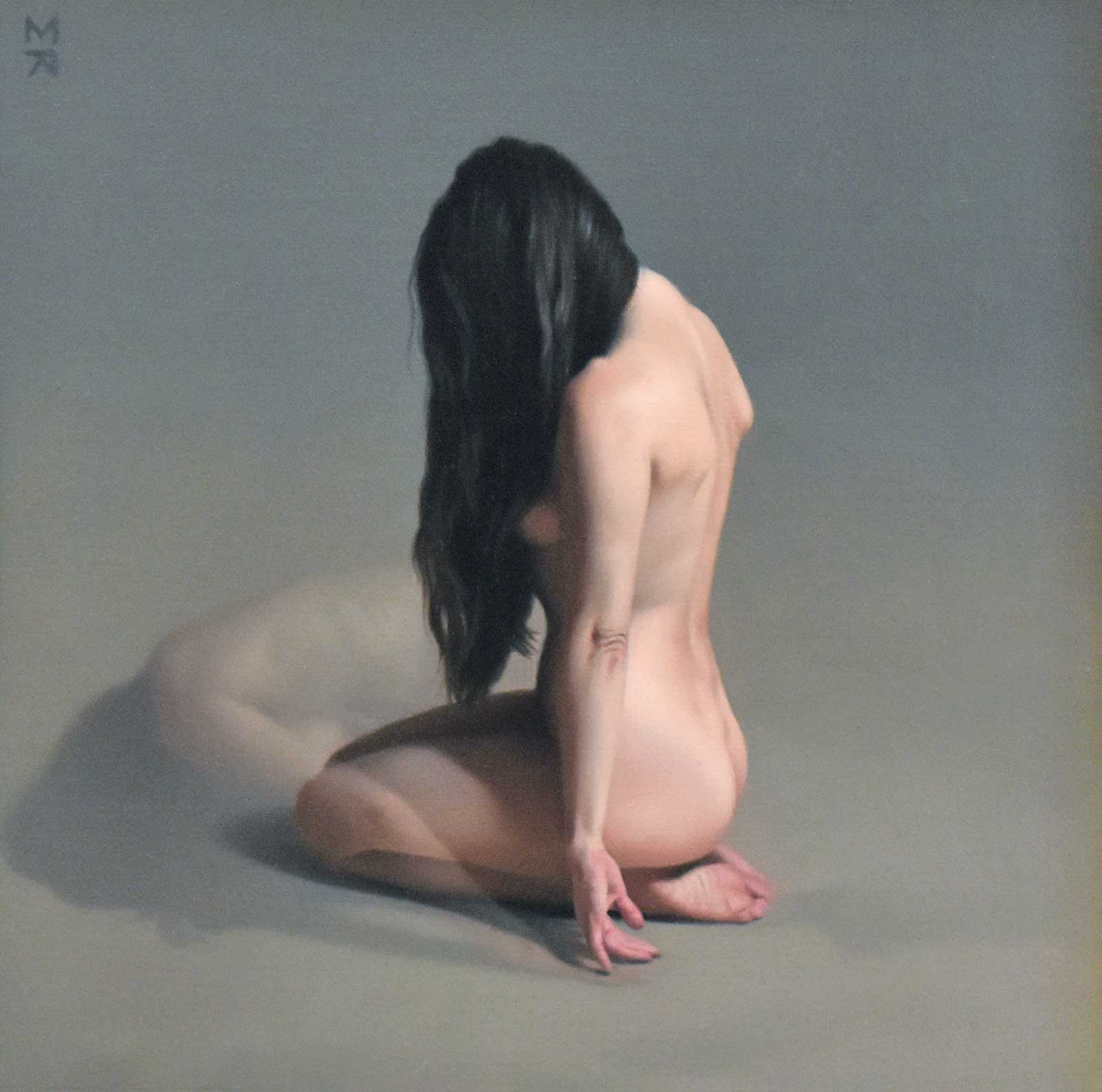 Megan Elizabeth Read, Inhale-Light, oil on linen, 6 x 6"
Darian Mederos emigrated from Cuba where he had been painting as a young boy. He challenges the viewer to understand the human face and figure—both of which reveal our lives. The Orange Second, a 5-by-4-foot canvas, is from his Obscura Series. From afar, the photorealistic subject is approachable, seemingly obscured by a layer of bubble wrap. Closer, his brushstrokes are prominent abstractions. In his process, he brushes on a translucent glaze that he removes in the highlights with a cotton swab. 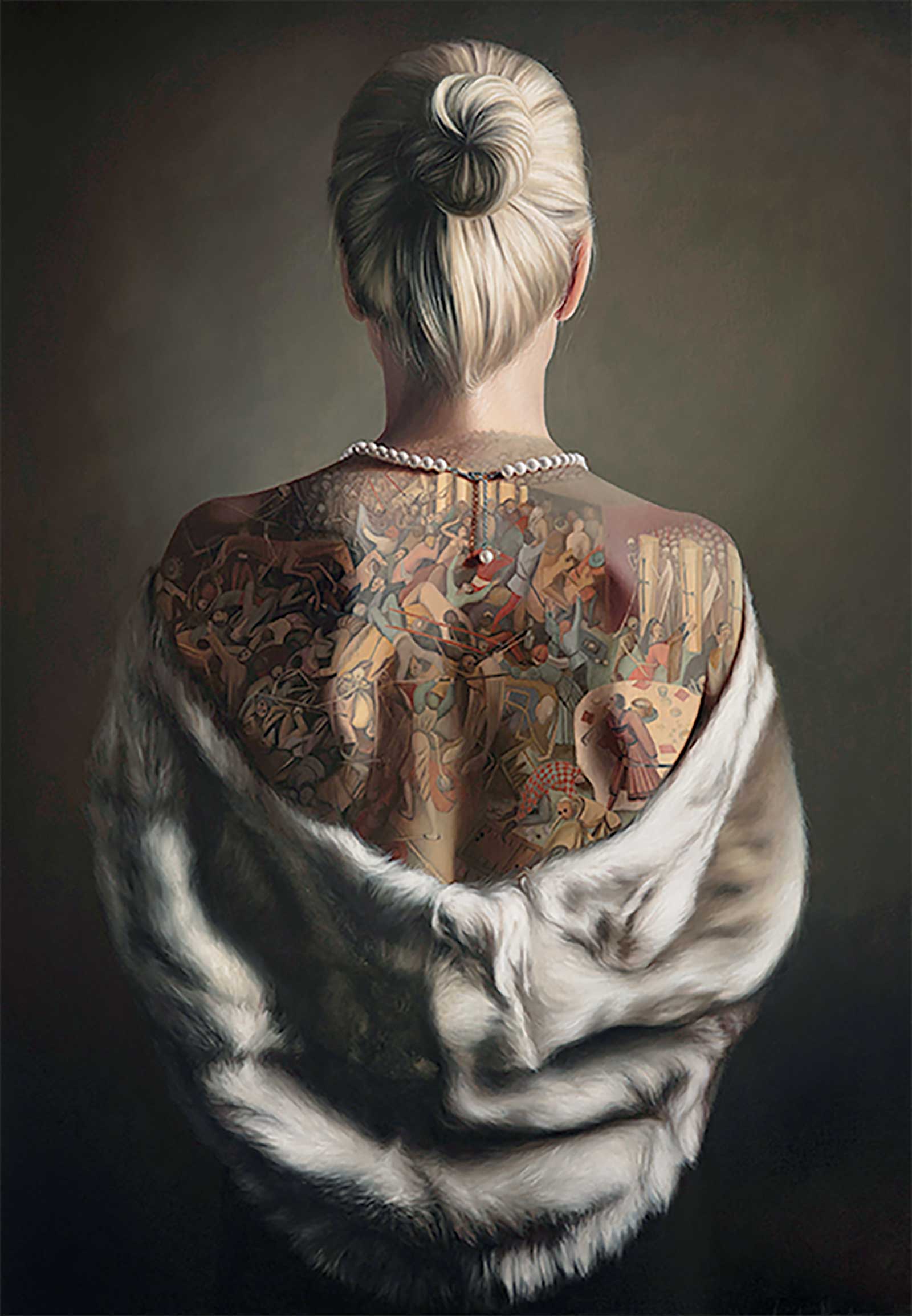 Agnieszka Nienartowicz, The Triumph of Death, oil on canvas, 39 x 28"
 Steven Lawler, Before the Storm, oil on canvas, 42 x 32"
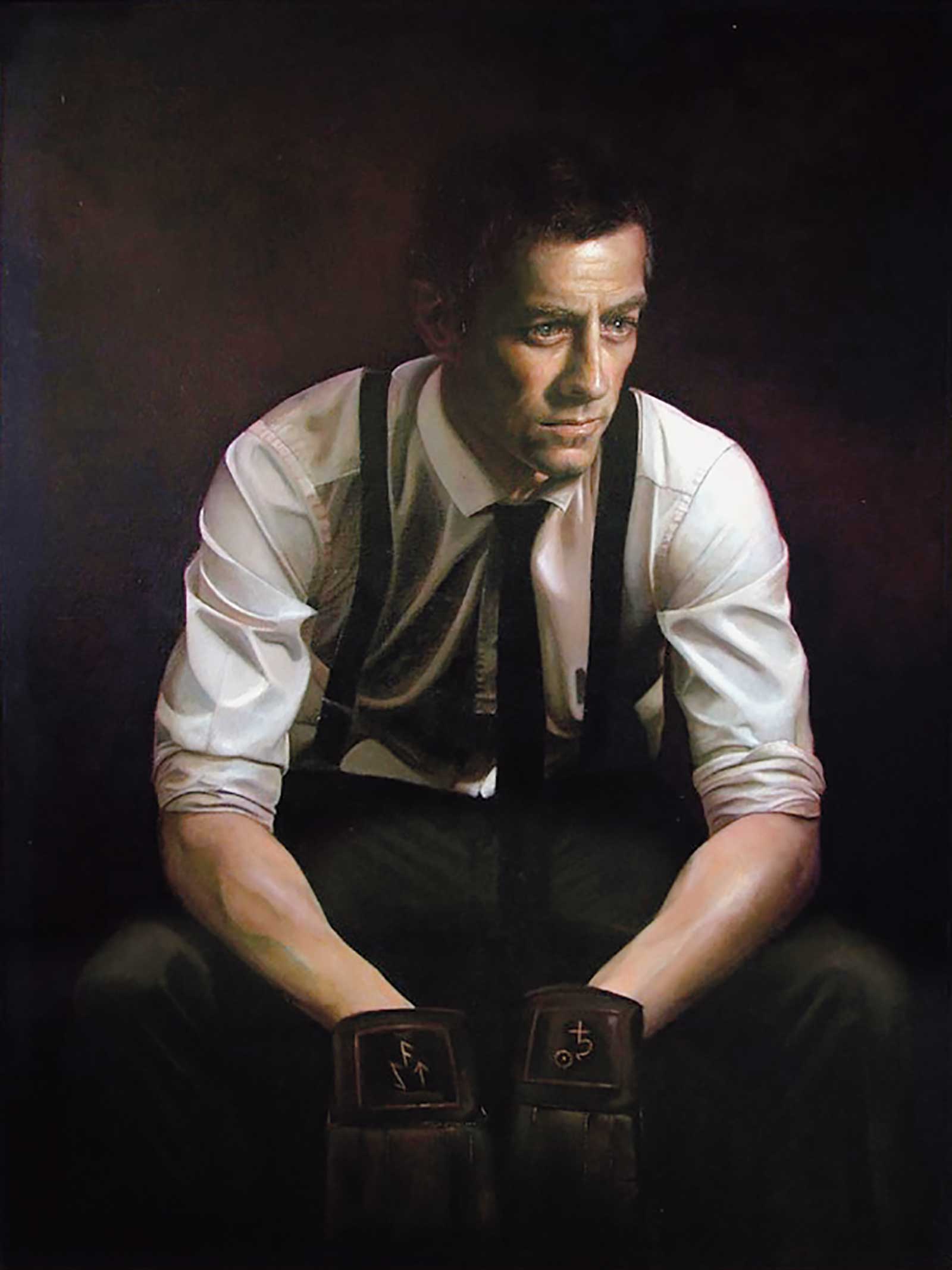
Steven Lawler paints in West Yorkshire, England. The figure in his painting Before the Storm emerges from the dark in the manner of the Old Masters and characters in his favorite film noir. These filmmakers’ and painters’ use of light, separated by centuries, create a sense of drama, regardless of the subject. The dramatic light adds both clarification and mystery to his characters.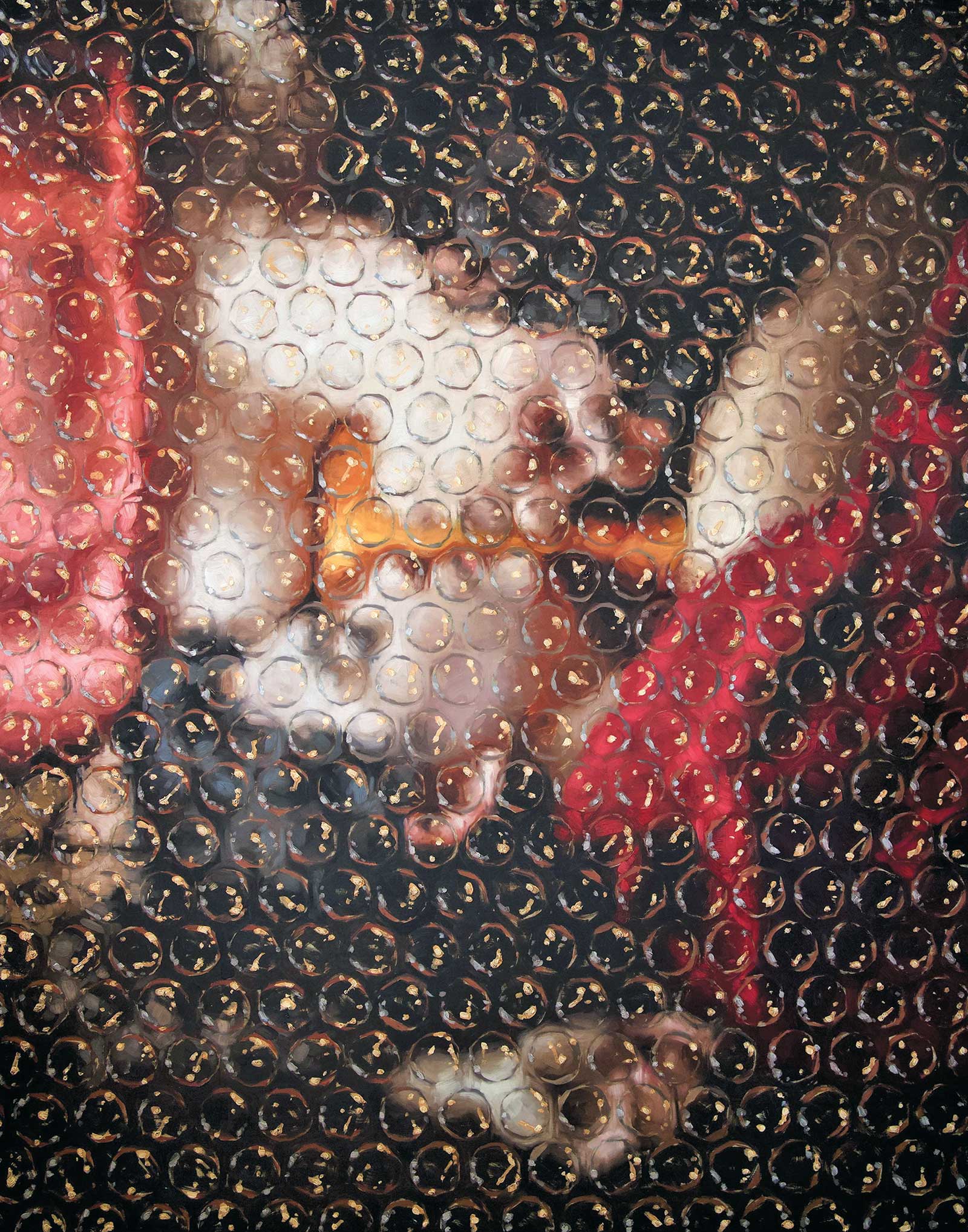 Darian Mederos, The Orange Second, oil on canvas, 60 x 48"
Megan Elizabeth Read comes to painting from a career in the tech field. Largely self-taught, she grew up in rural Virginia drawing as often as she could. Today, her sophisticated, hyperrealist female figures exist in dark spaces, the better to reveal something about themselves or the human condition. They occupy the dark space rather than emerge from it as in Lawler’s paintings. The dark is their place of discovery. In her tiny, 6-by-6-inch painting Inhale-Light, the kneeling figure appears to have breathed in life-giving light and air, raising her from a collapsed posture, still remembered and still visible in a ghostly remnant.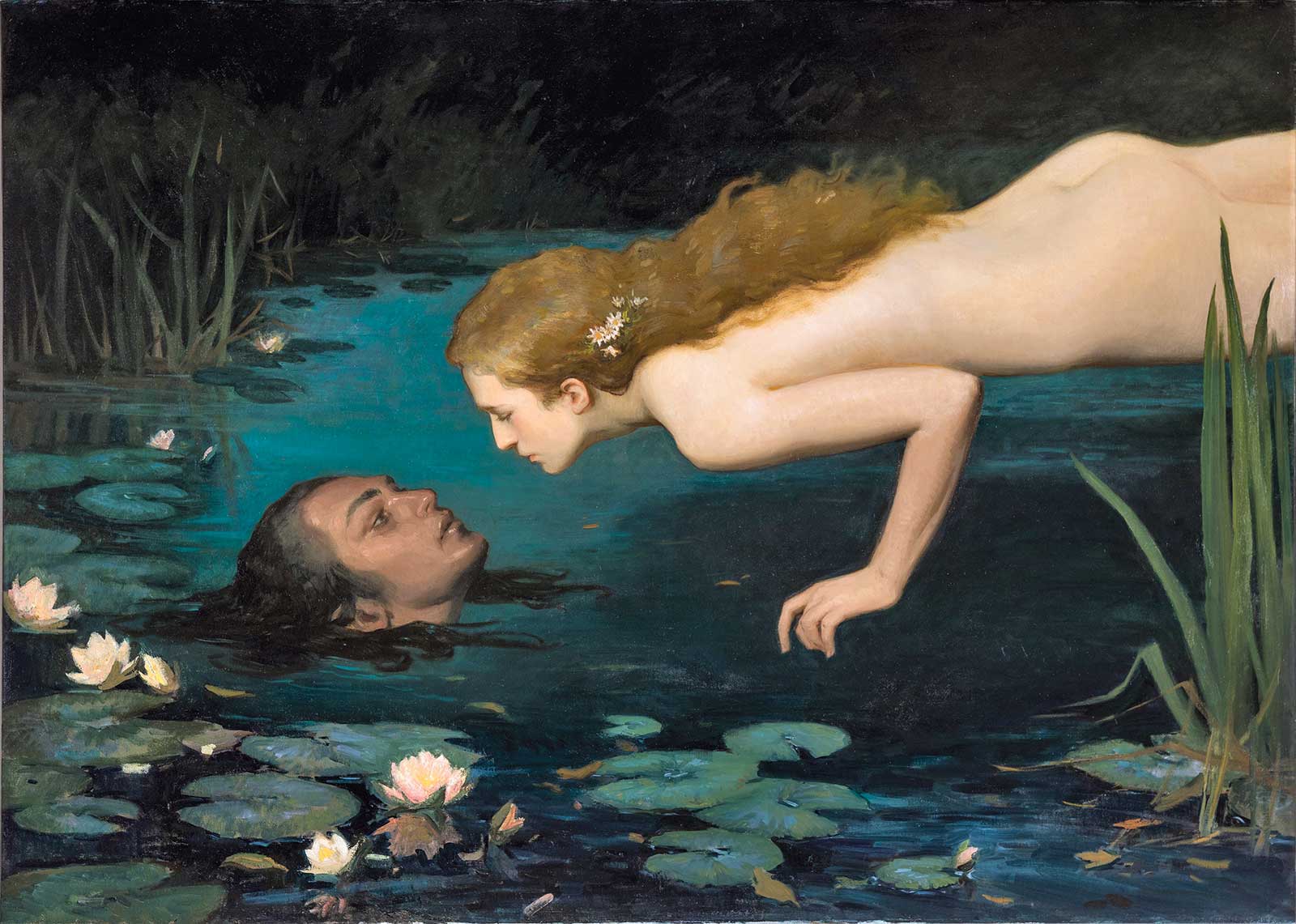 Daniela Astone, Love, oil on linen, 39 x 55"
 Jose Lopez Vergara, Reverence, oil on panel, 20 x 16"
French painter Anne-Christine Roda’s figures also emerge from the dark. In L’escargot, a woman dressed in a linen and lace nightdress curls into a fetal position in a complex composition of arms, legs and fabric. It is as if she has withdrawn into her shell like the snail, having slowed down and protecting herself. As the snail retracts into its shell, she withdraws her spiritual self into her physical body.
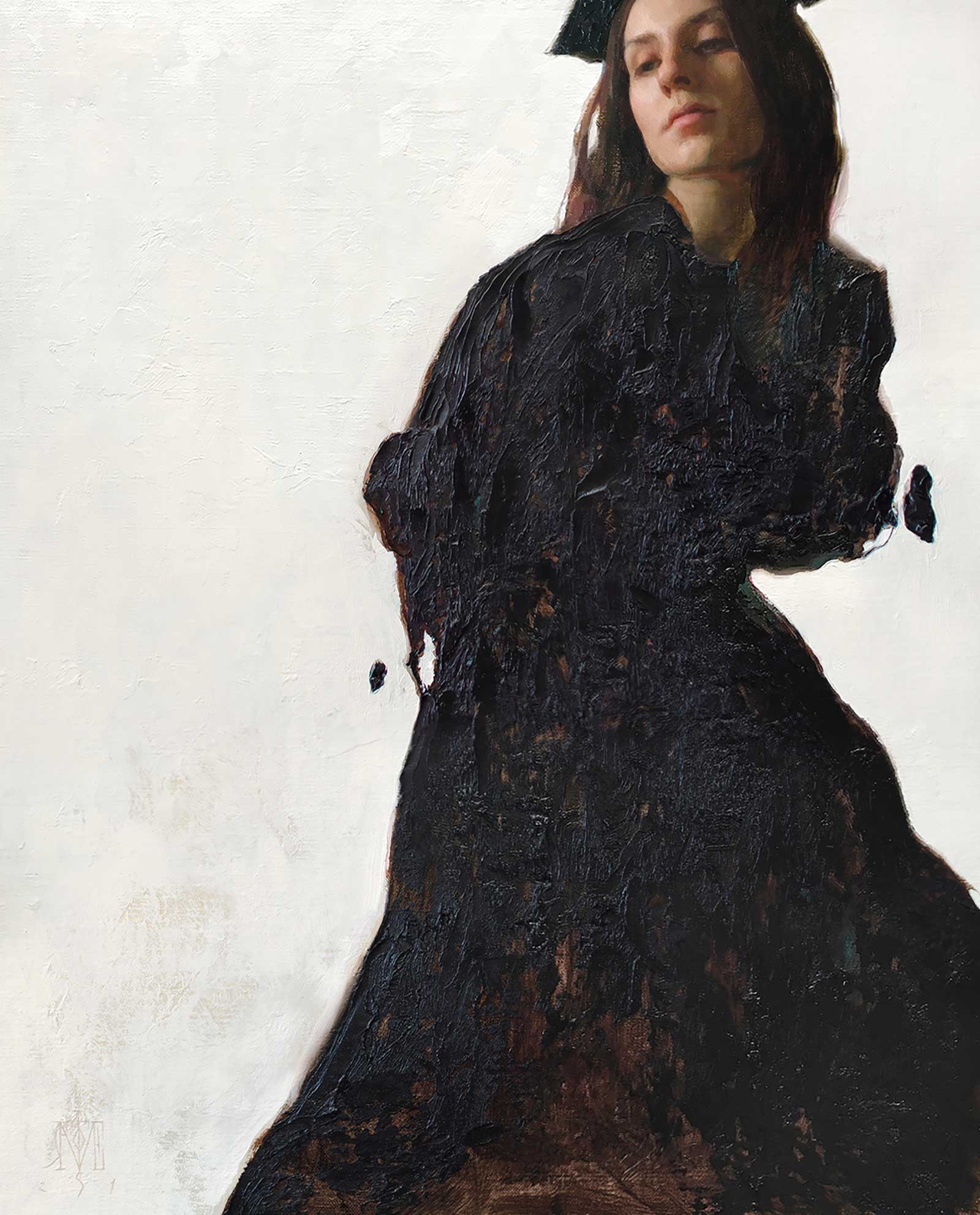
Other artists with work in the show are Daniela Astone and Jose Lopez Vergara. —
Arcadia Contemporary
421 W. Broadway • New York, NY 10012
(646) 861-3941 • www.arcadiacontemporary.com
Powered by Froala Editor