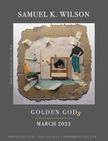
Texas-based artist Samuel K. Wilson goes beyond the techniques for his Trompe l’Oeil paintings. For his “trick of the eye,” Wilson reflects on consumerism and media by hand building compositions with clippings from advertisements or other materials before putting brush to canvas. He implores the viewer to question everything in front of them and rely on their own instincts to decipher his paintings. Throughout the month of March, he will have his first solo exhibition at RJD Gallery in Romeo, Michigan.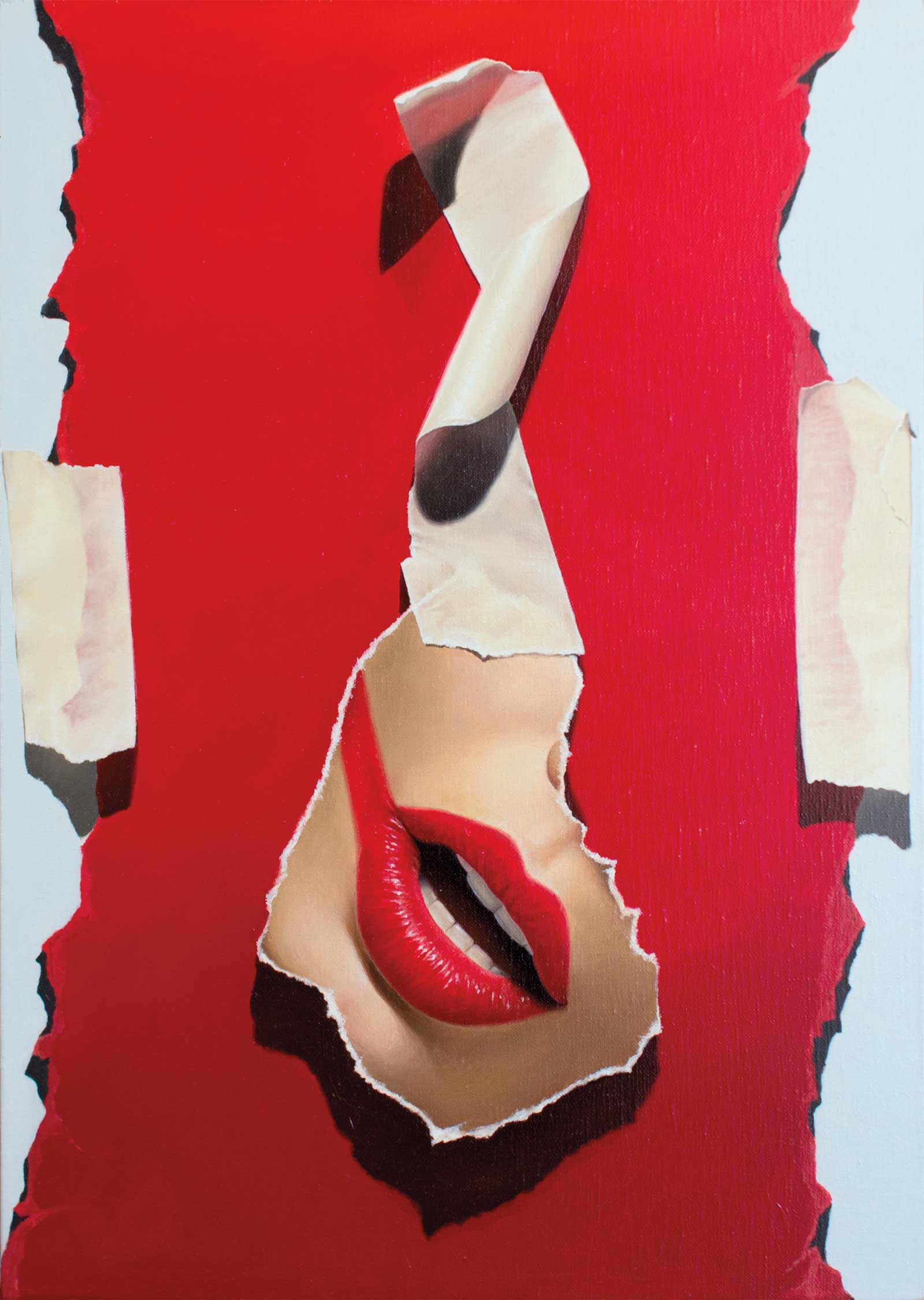 Kiss, oil on linen, 20 x 14"“I chose Golden Gods as the title for this series because it seems to reflect how our consumerism and materialistic culture creates value,” he says, adding, “This series speaks a lot to social constructs and how mass media influences our desires, opinions and norms. Strange social standards and etiquette.”
RJD Gallery director Joi Jackson Perle says, “What better time than now to poke fun at ourselves and our media obsession than through art, which always seems to reflect our collective truths? Samuel K. Wilson’s artworks present a unique and playful look at our unquenchable thirst to be wrapped in and enraptured by mass communications and bottomless self-promotion. Wilson presents this assault on our senses in brilliantly conceived artworks, that seem simplistic and childlike as if to underscore the immaturity of society’s fixation on ‘in your face’ culture. His work, like all great art, brings us to our senses and encourages us to raise our consciousness to a higher level.”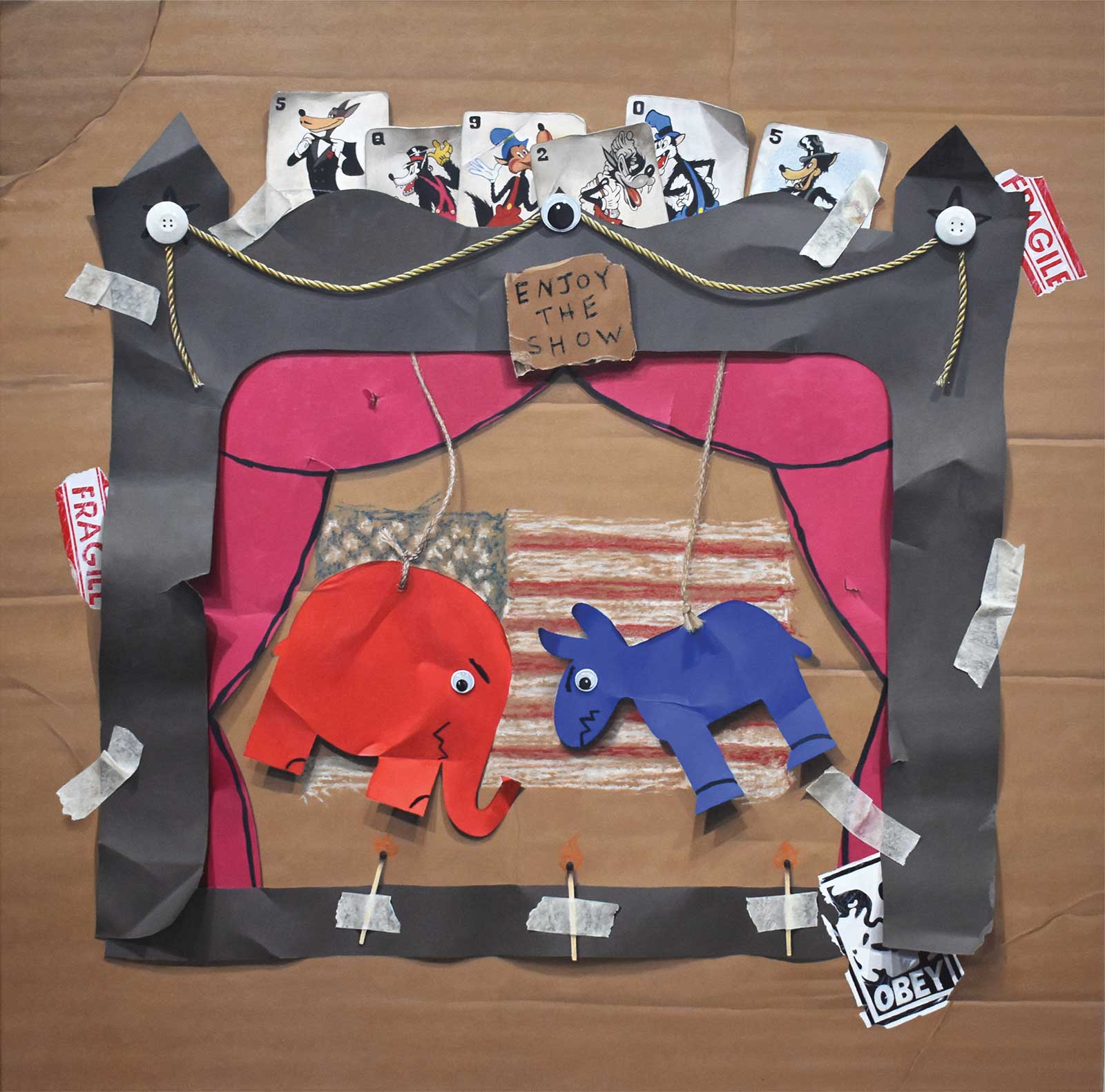 Rock Em Sock Em Robots, oil on linen, 32 x 32"
Wilson grew up in an artistic household learning oil painting from his father, who is a portrait painter. And in his early days Wilson primarily painted figurative portraiture but, coming off a 2019 show, he wanted to challenge himself with something different. Wilson was asked to create a small work for a benefit at a San Antonio museum and decided it was time to experiment.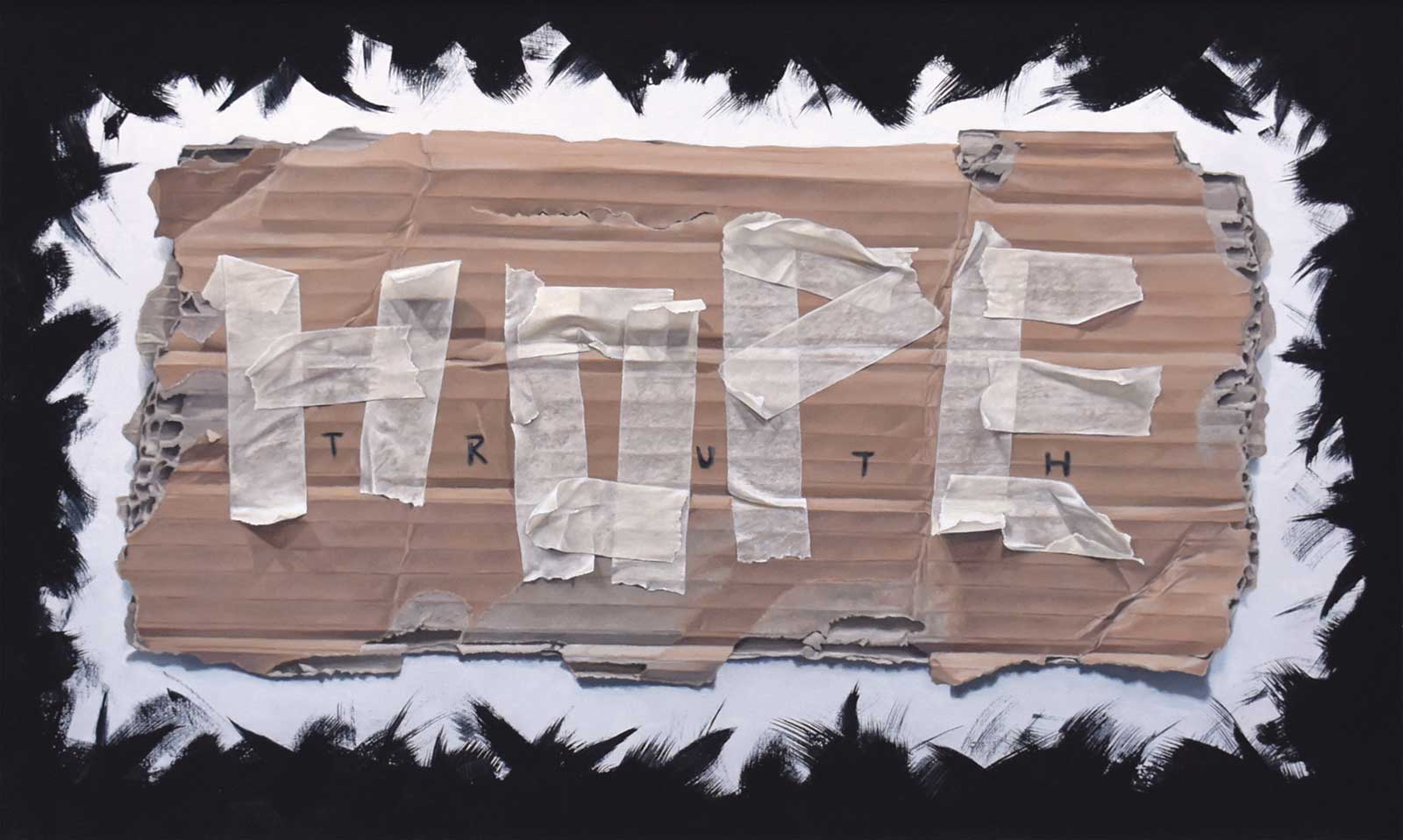 Faith, oil on linen, 13 x 28"
“That was when I first did Trompe l’Oeil,” he recalls. “I composed a face from magazines—choosing one eye, nose and mouth—and taped [the pieces] to a background. It was a portrait, but done in a different way. After I did that, I saw the amount of storytelling that I could do with Trompe l’Oeil and how many different options, compositions and materials that I could use. I was engulfed.”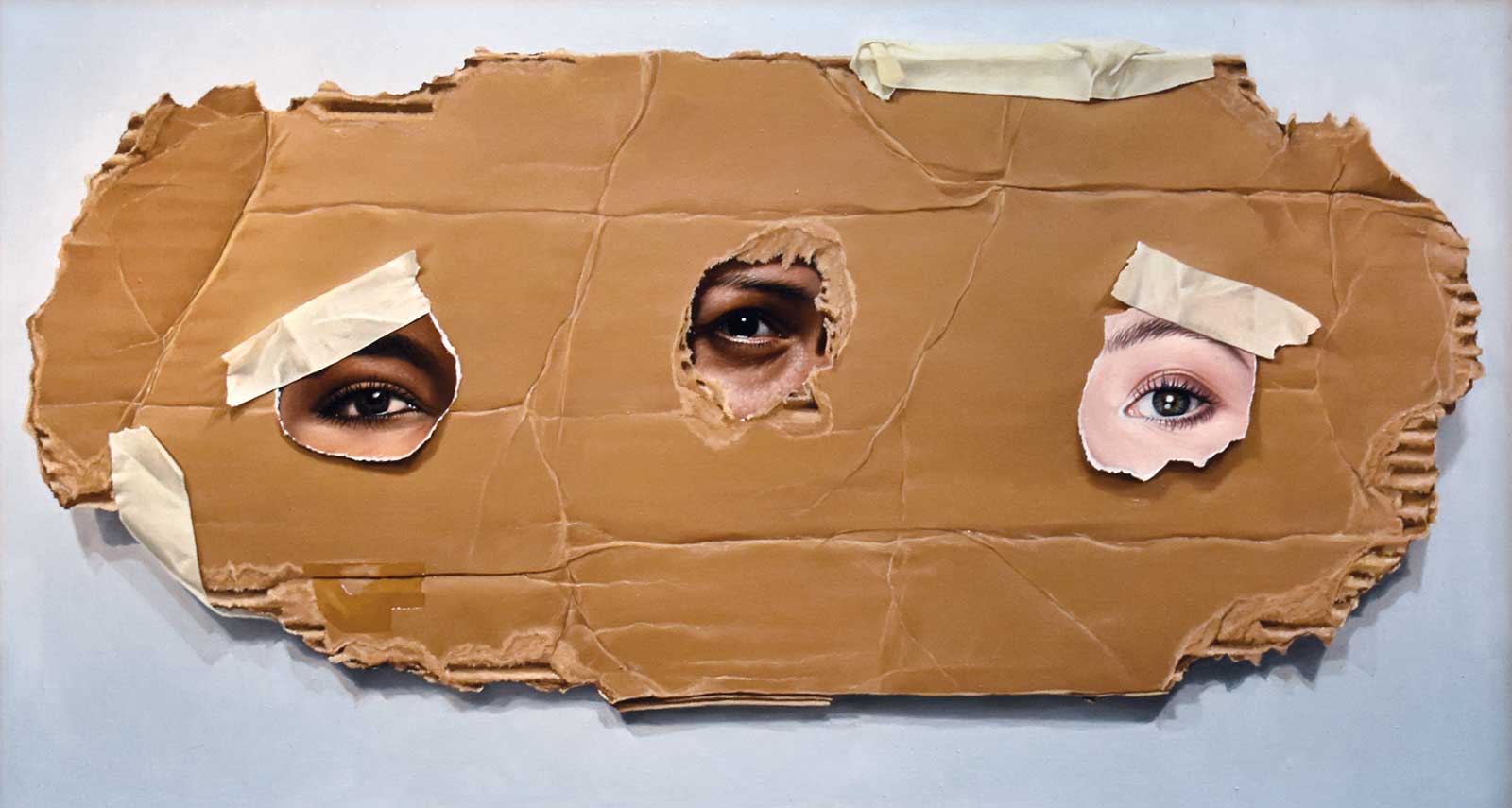 Seeing is Believing, oil on linen, 16 x 26"
Creating a mock-up is one of the integral components to Wilson’s Trompe l’Oeil works because he carefully selects the materials and builds the narrative in every element. “I want my pieces to have multiple layers to read like a story rather than an image,” he says. “And to read like a story, I have to be conscious to be specific in what materials I’m using to reinforce the point that I’m trying to make.”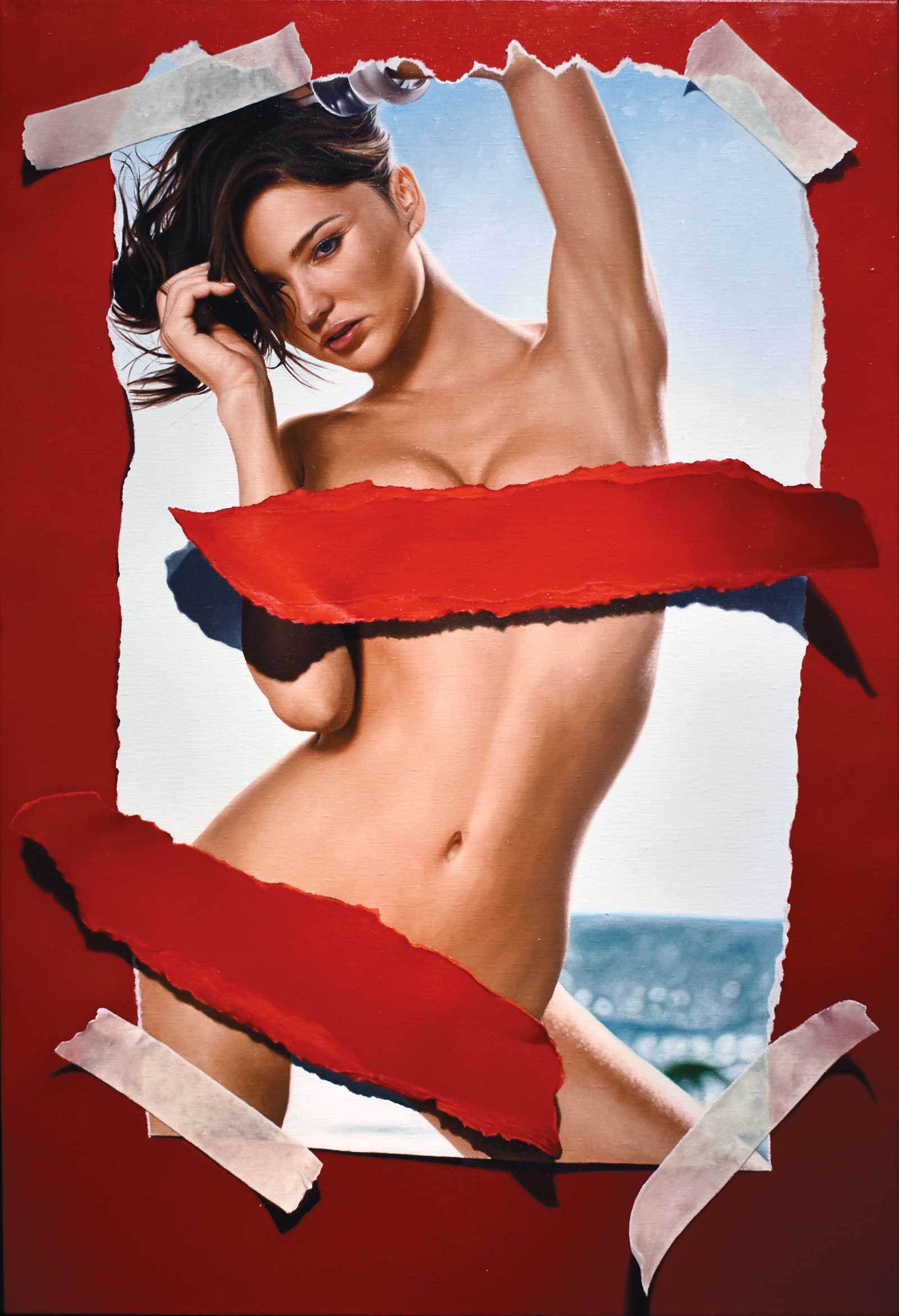 Read Between the Lines, oil on linen, 30 x 20"
His painting Rock Em Sock Em Robots, for example, includes a cardboard background, playing cards worn with age, stickers and more to represent political unrest. The donkey and elephant—symbols of the two U.S. political parties—are fashioned like marionettes. “This piece is about the overshadowing focus on the battle between the American political parties as a distraction for the elite to manipulate and control the people,” says Wilson. “While mass media promotes the stereotyping of political affiliation and the ongoing clash between Republican and Democratic, the idea of a united nation is left in the background.”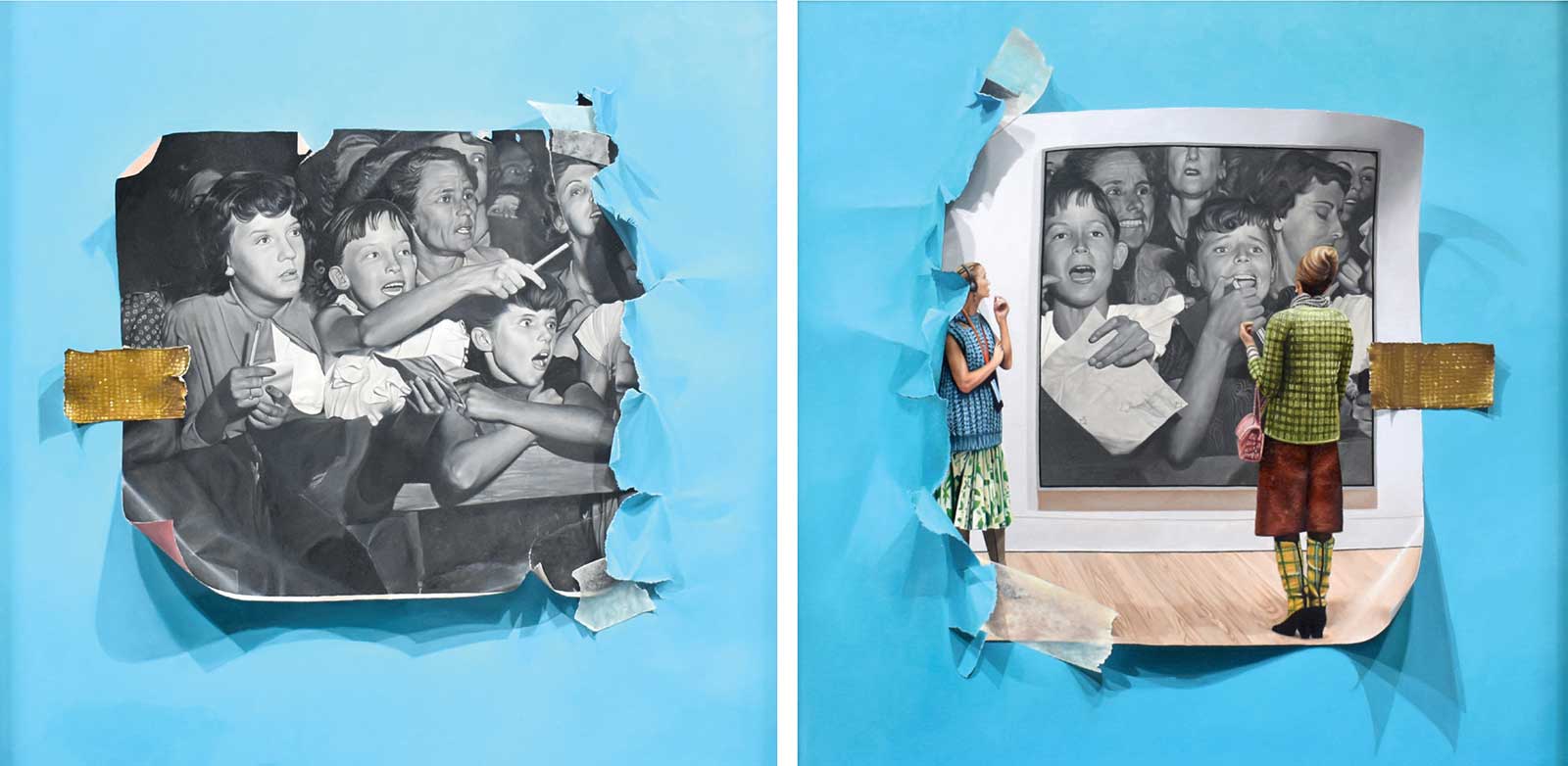 The Ultra Part 1 and The Ultra Part 2 (diptych), oil on linen, 22 x 44"
The diptych The Ultra Part 1 and The Ultra Part 2 are about the passage of time and figuring out what is valuable to your life. The artist explains, “Part 1 represents the moment in time where you currently are, fascinated and looking toward the future of where you will be. The children are in their own moment looking toward the future. As the image moves in and underneath the canvas in Part 1 this represents an undetermined passing of time. All the time that is forgotten and slips by in everyday life. We see the children re-emerge in Part 2. At this point they are cast in time and now have become a moment in time for a future generation.”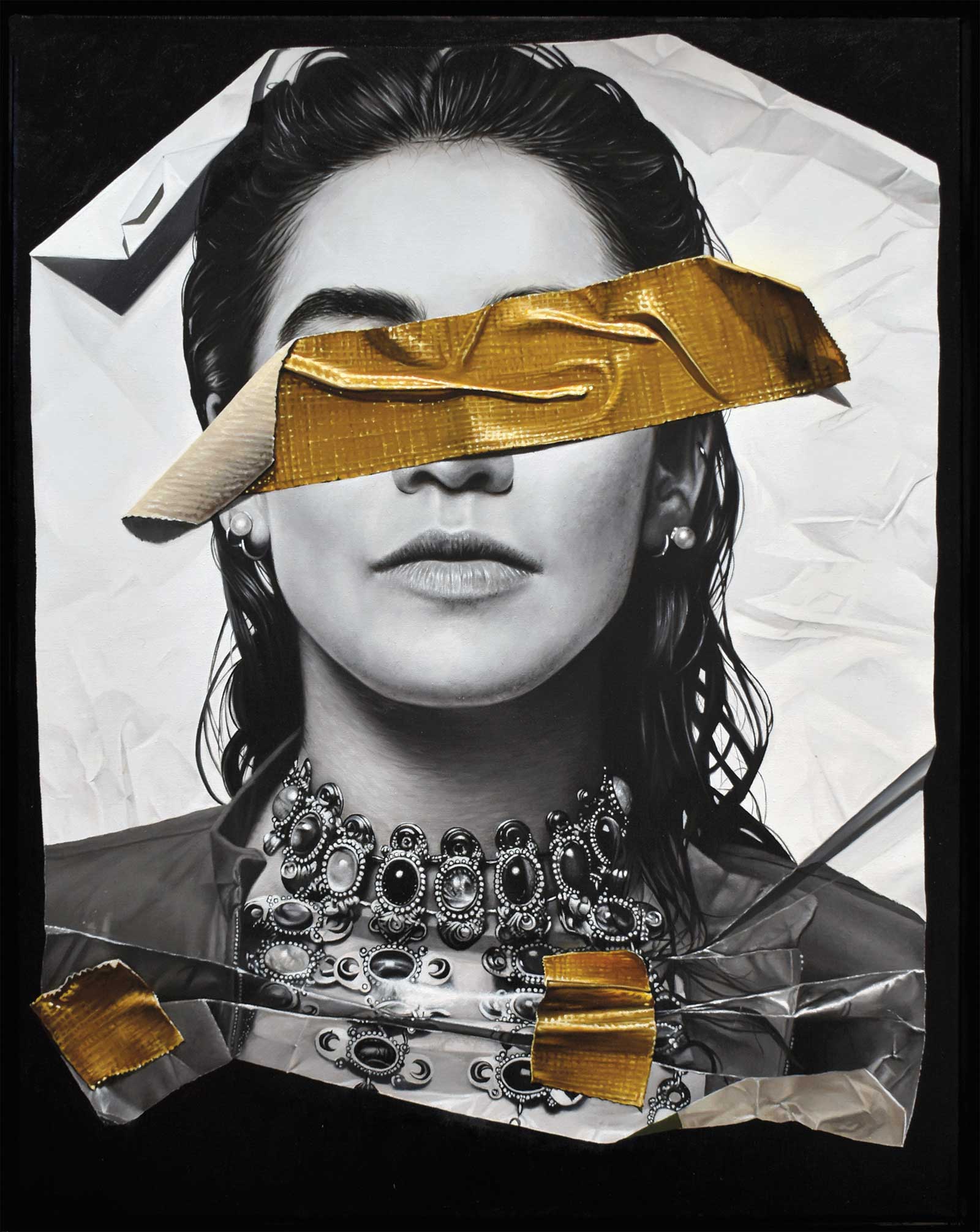 All That Glitters is Not Gold, oil on linen, 28 x 22"
In All That Glitters is Not Gold Wilson “points out the extreme manufactured value of intrinsically useless items compared to utilitarian items. The image of the woman is displayed to boost the value of the necklace, an otherwise useless item. The fact that it is in black and white is meant to represent the true lack of practical use it holds,” he says. “In contrast the gold duct tape is inexpensive, yet it holds more technical purpose than the highly valued necklace. The duct tape blinds the woman representing the illusion of those values in our culture.” —
RJD Gallery
227 N. Main Street • Romeo, MI 48065
(586) 281-3613 • www.rjdgallery.com
Powered by Froala Editor