Still life painters have fascinating studios. Their subjects are their things, and their things are their subjects. So the venue where they create is part studio and part museum, with a generous serving of antique store thrown in for good measure. 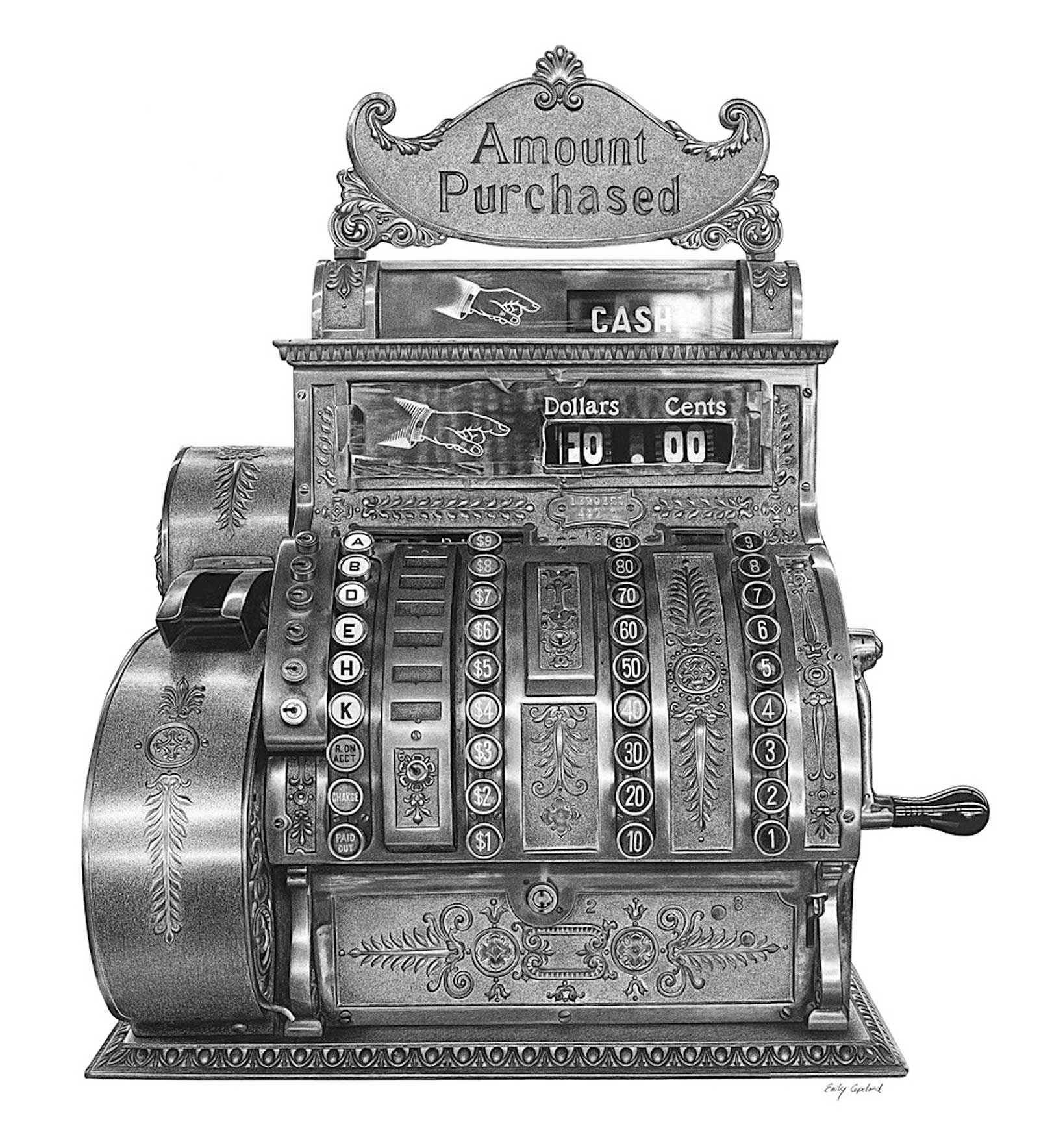 Vintage Cash Register, charcoal on Stonehenge paper, 42 x 36½"
That’s certainly the case with Emily Copeland, whose studio is near Vancouver, and it’s filled with the objects she uses for her highly detailed charcoal works. The objects in her pieces, many of them featuring vintage or antique materials, can be found all around her studio: sports equipment, musical instruments, creaky old leather items, mechanical devices made of brass and steel, ornate instruments of the past and other miscellaneous items. What ties them all together is their visual appeal to the artist, who will be showing her new works in the show Timeless: The Extraordinary Art of Emily Copeland, opening March 1 at RJD Gallery.
“I love antique objects. I love that they all tell their own stories, and they can really resonate with people. But what it really comes down to is a list of things I like: items with detail, reflections or shine, items that have contrast,” Copeland says. “I’m very picky because when I work with something, I might spend a month or two with it, so it has to be perfect. Really flat objects are hard because they have no depth. The same with things that are one color. There’s really no method for how I choose things, as long as they meet those standards and they are unique.”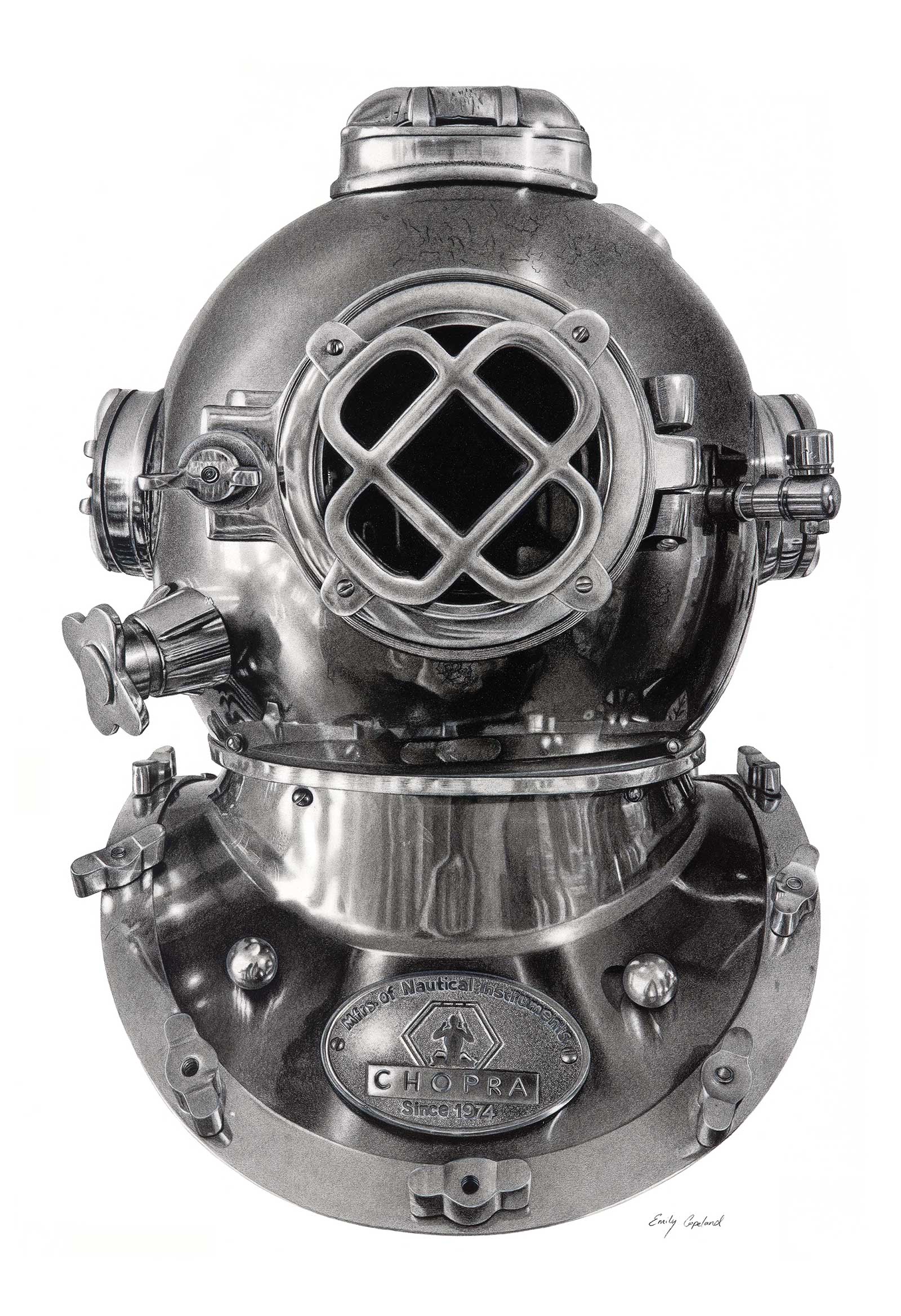 Vintage Scuba Helmet, charcoal on Stonehenge paper, 38 x 27"
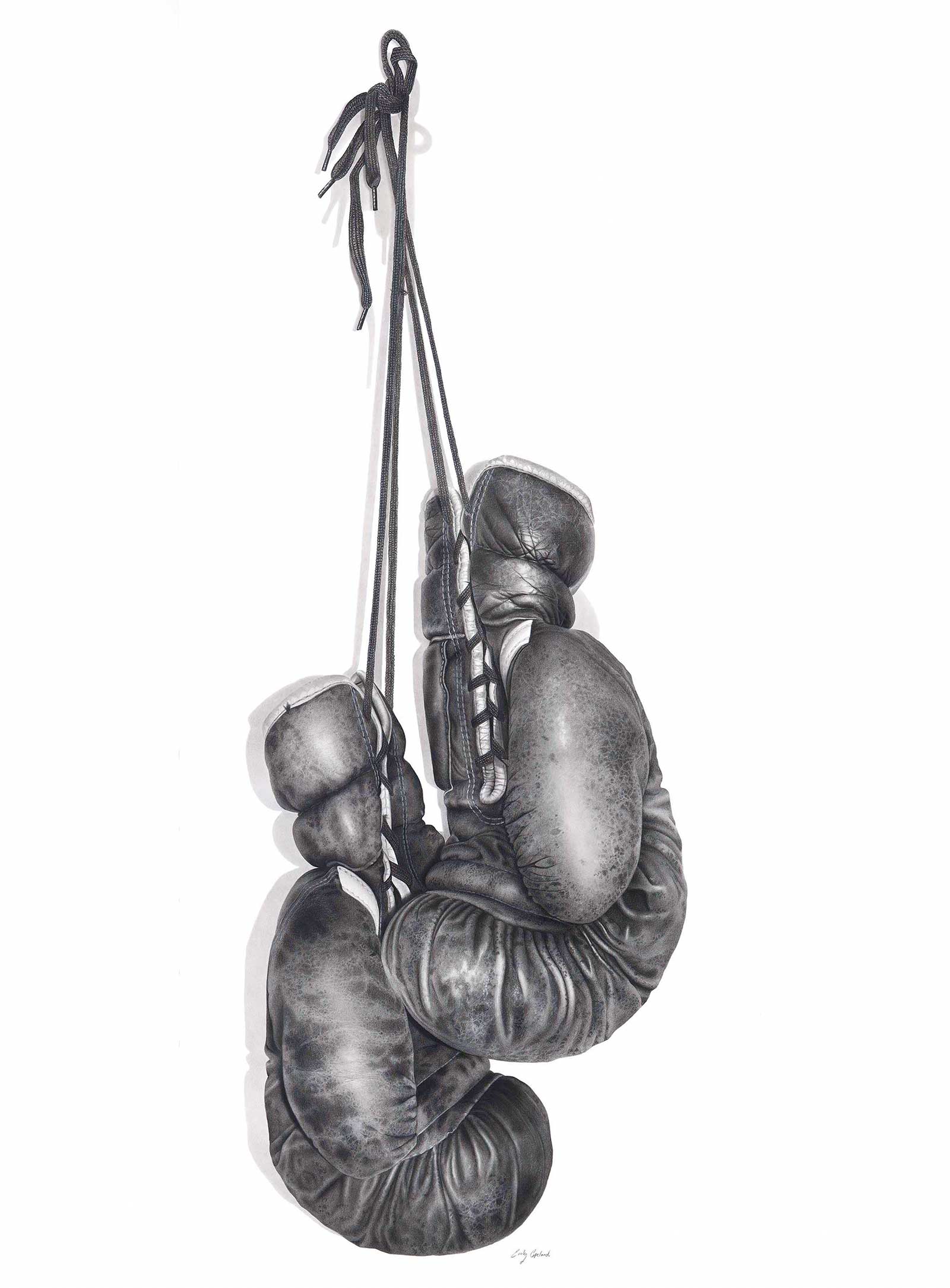 Antique Boxing Gloves, charcoal on Stonehenge paper, 68½ x 42"
Although a great deal of material comes from antique stores—she says she’ll buy an item in one out of every five stores she goes inside—some others have ties to her own life, such as a pair of hockey skates or a set of teacups that her grandmother had. When the works do have personal provenance, Copeland sees it as her responsibility to just draw the objects and not make her own personal connections to the work. She uses a new drawing, Mazzoni Accordion, as an example: “I don’t know this object’s history. It came from an antique store, and I have no relationship to it. But some people will have stories about an accordion, and that’s the point,” she says. “As soon as I tell someone that this is my special object, it takes meaning away from other people, people who start wondering where something comes from or how it arrived in front of them. Objects can be very personal for people, and they want to find their own meaning in them.”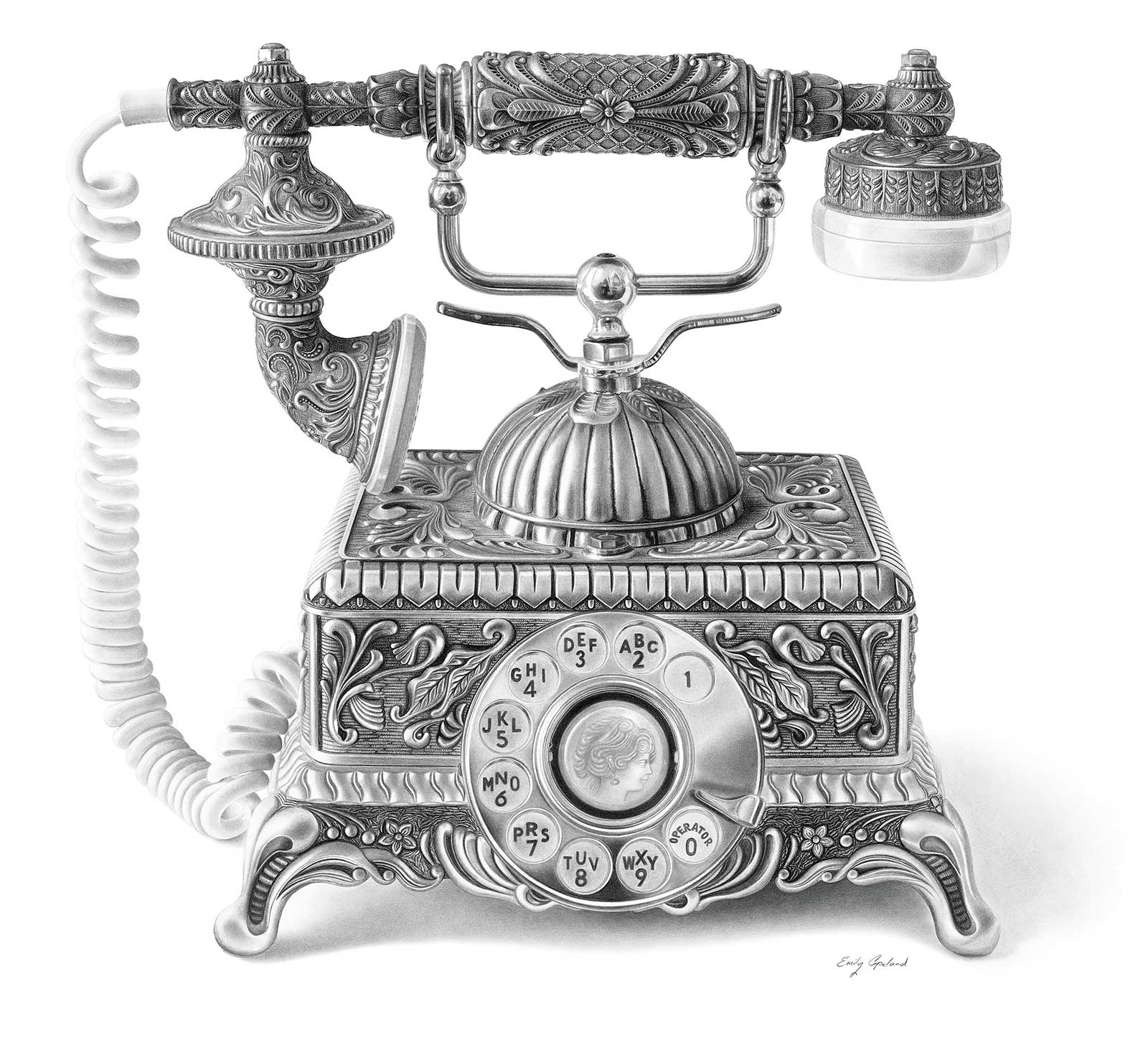 Antique Telephone, charcoal on Stonehenge paper, 50 x 50"Of course, all this takes place on a fascinating metatextual level since the objects themselves existed in the world prior to Copeland’s artwork—they were made, bought, used and somehow ended up in an antique store, where an artist plucked them from obscurity—and their wear and tear is clearly visible on their surfaces, from bent metal to worn leather to splintered wood. These objects have histories that will never be known, to the viewer or the artist. It reinforces what Copeland believes in: objects have power.
 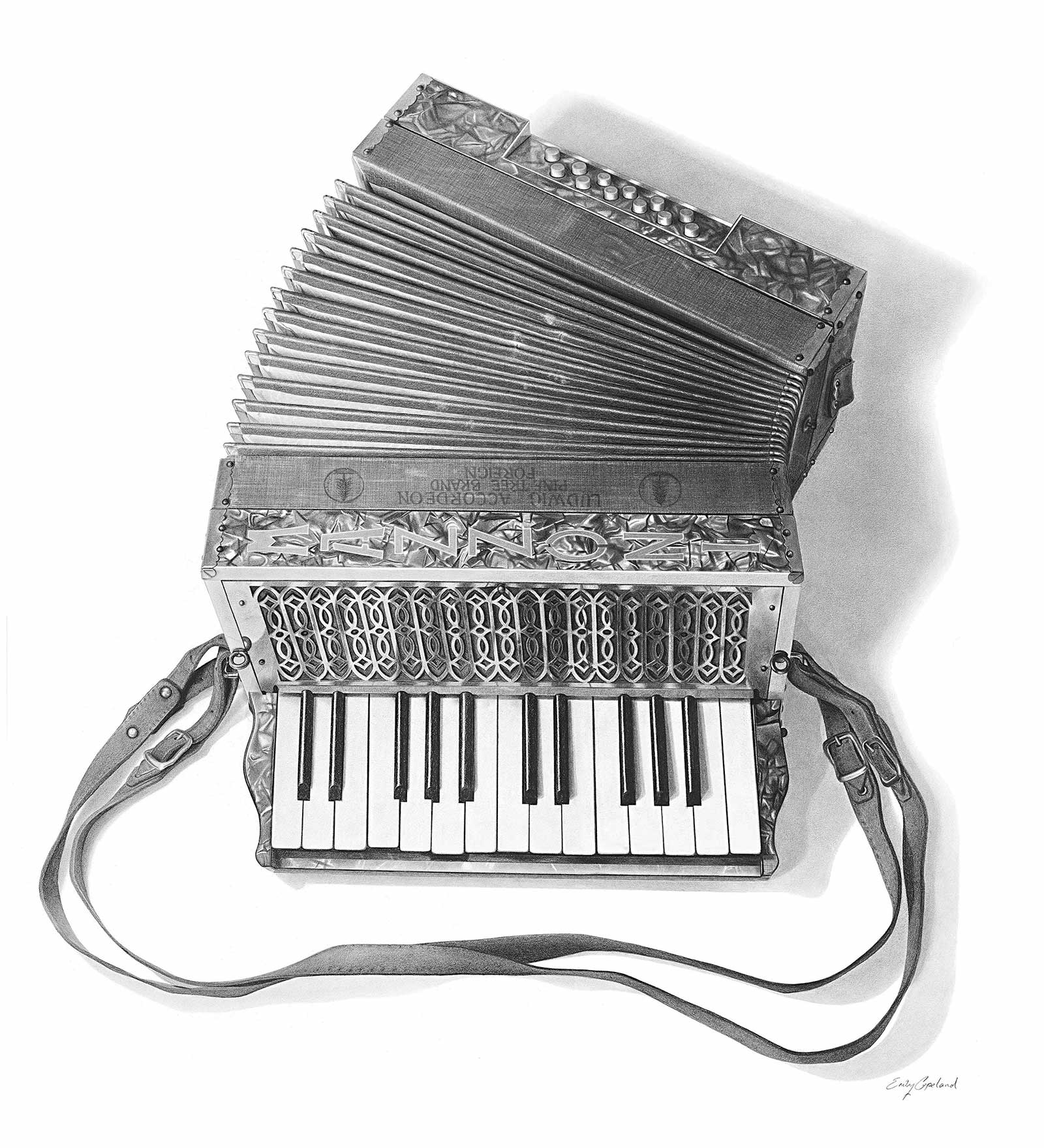 Mazzoni Accordion, charcoal on Stonehenge paper, 46 x 42"
One image in the show, Singer Sewing Machine, will certainly grab viewers’ attention, and not just because it’s flawlessly drawn. “I’ve been looking for a really detailed Singer for some time. This one is in really good condition, but it’s also cracking, which gives it a special look. I’m really influenced by art history, and it has a Baroque-era look to it, like a Caravaggio that has some cracks in it,” the artist says. “You can sense this sewing machine was loved, and anyone who learned to sew on a machine like this will remember it fondly.”
Other works in the show include Vintage Scuba Helmet, which looks like a deep-sea helmet from a Jules Verne novel—it screams adventure. Copeland saw it and knew she had to have it, especially when she could so clearly see her own reflection in the brass surfaces. (She has yet to try it on simply because it’s too heavy to lift over her head.) Vintage Cash Register is one of the few objects that is not her own. A local business was going out of business and they had used the heavy machine as its store register, so Copeland offered to buy it and was shocked at their asking price. Turns out, functional antique cash registers are more expensive than most people realize, so she accepted it as a loaner for her work. 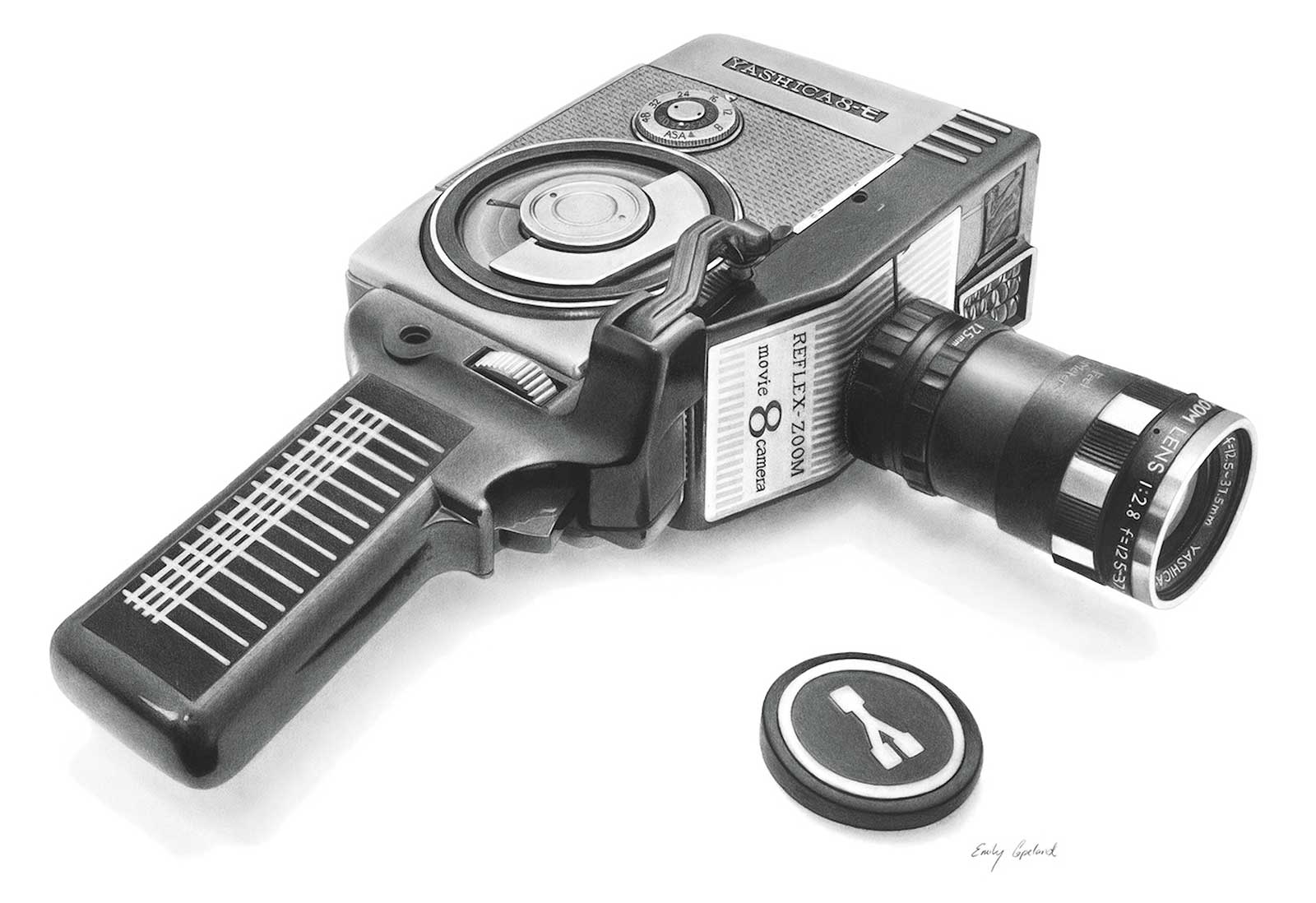 Yashica Movie Camera, charcoal on Stonehenge paper, 24 x 34 ½"The works take anywhere from a month to four months to complete, and her work is getting bigger: a pair of boxing gloves are 68 inches high, an antique telephone is 50 square inches and the Singer is 50 inches wide, which makes it larger than life. She starts almost every work in the upper left, and then works left to right, top to bottom, so she reduces the amount of contact her hands and arms make with her marks. Smudges and stray charcoal bits are bound to happen, so she tapes down blank sheets of paper to reduce marks on the paper and she has high-quality erasers on hand just in case. “Smudges are my absolute nightmare,” she adds. “This is why I wash my hands every five minutes.”
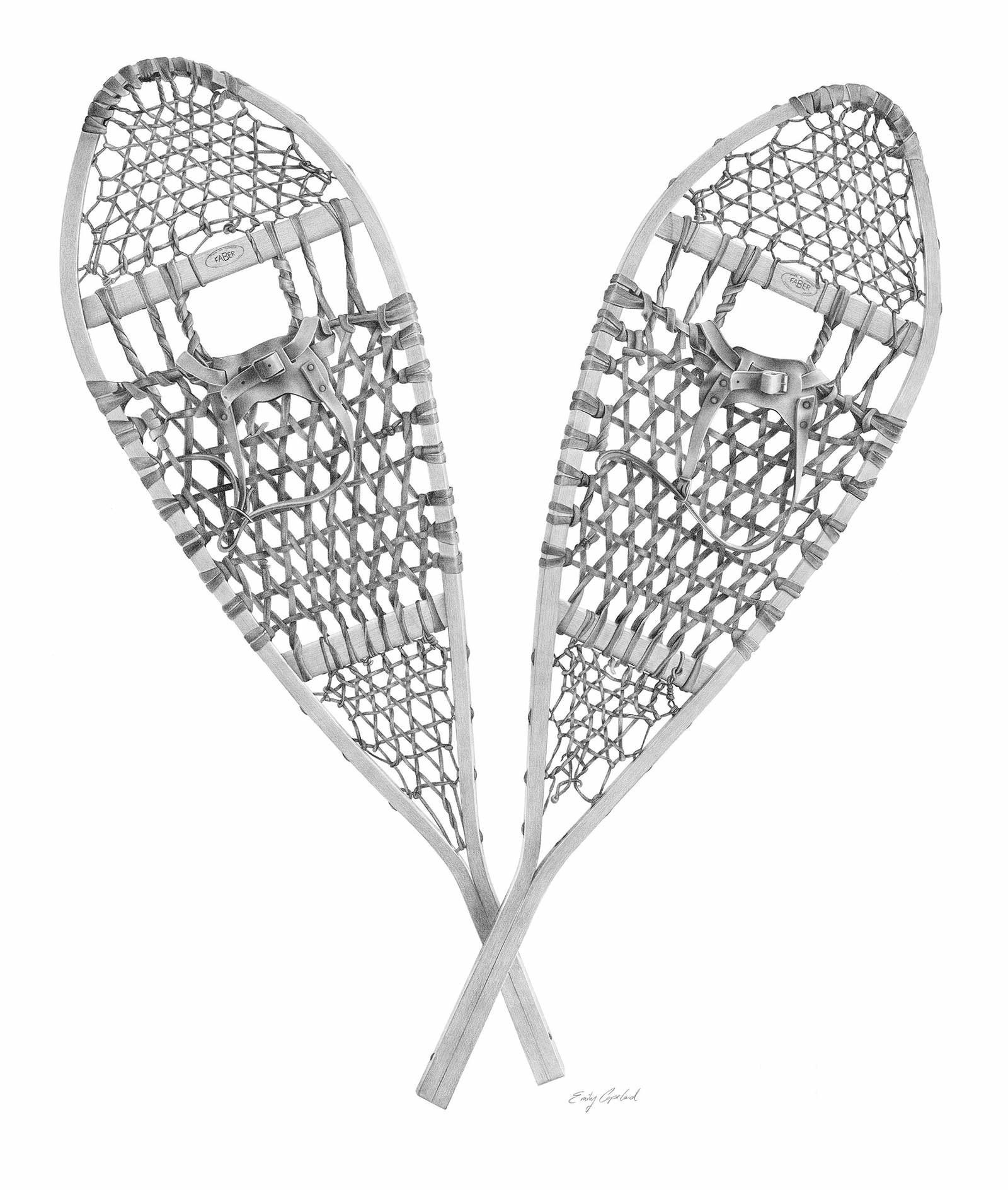 Antique Snowshoes, charcoal on Stonehenge paper, 50 x 45½"Copeland hopes viewers find objects they like, either because they owned one, wanted to own one or just admire the design of old things. The gallery is confident that viewers will appreciate the artist’s choice of subjects and the stories they tell. “Everything old is new again in the works of Emily Copeland,” says gallery director Joi Jackson Perle. “A fan of all things vintage, Copeland captures the essence and energy of long-forgotten objects in stunning charcoal with exacting detail. She uncovers what we have valued in the past and allows us to enjoy a bit of nostalgia in seeing these items again, making them and her artwork timeless.” —
RJD Gallery 227 N. Main Street • Romeo, MI 48065 • (586) 281-3613 • www.rjdgallery.com
Powered by Froala Editor