Widely recognized as one of the leading realist painters alive today, Jeremy Lipking has more than earned his place among the great contemporary masters. His works, combining naturalism and a beautifully refined realism have been likened to those by master artists such as Anders Zorn and William-Adolphe Bouguereau, yet celebrate simple, everyday life. Lipking’s ability to tackle both landscape and figurative art with the same expertise is another skill that further solidifies his place in the master artist category. From his early years in art school, to winning top awards from California Art Club and Portrait Society of America, to best in show at the Prix de West, his path to an abundance of honorable achievements was paved with hard work and dedication. Lipking’s remarkable paintings can be found not only in the leading fine art galleries and fine homes of important collectors today, but on the walls of Americas fine art museums themselves—the most impressive honor for any living artist.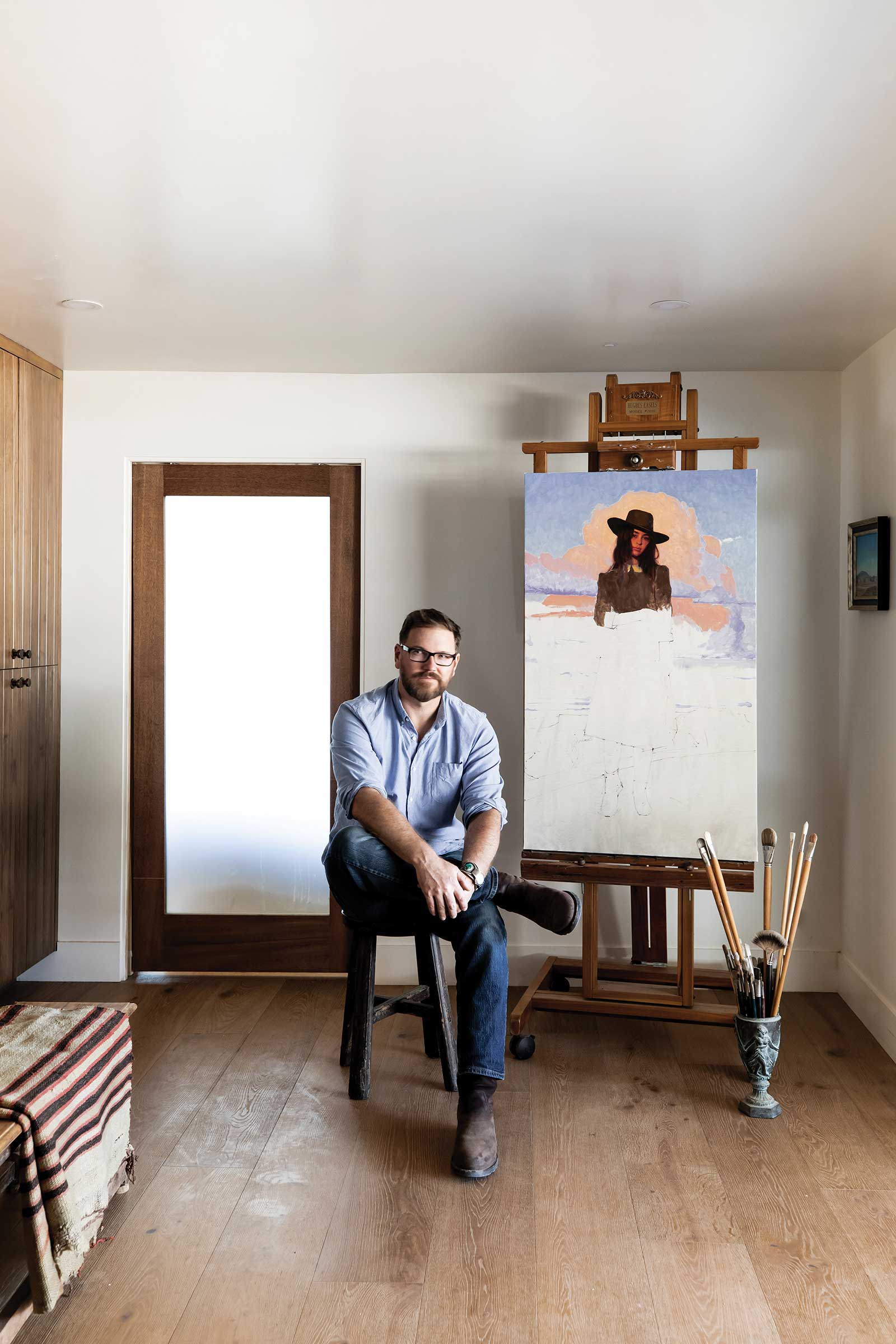 Jeremy Lipking in his home studio, 2022. Photo by Public 311 Design.The Young Prodigy
Lipking spent his youth in Los Angeles, the son of celebrated illustrator Ronald Lipking, and was surrounded by artists and musicians. He was often found at his father’s side as he worked, drew early on and exhibited a heightened sensibility to art, music and beauty at a young age.
He spent many summers in the Eastern Sierra mountains with his family, exploring the great outdoors, amid the rocks and trees, occasionally capturing the landscape in watercolors. These childhood times surrounded by the beauty of nature continues to have a profound effect on his art-making to this day.
“I had learned a lot from my dad growing up and had taken a few art classes when I was young,” says Lipking. “I grew up going to museums and gallery exhibitions and painting alongside my father. I was making music and art, and stood out from other kids my age. I even started doing some sketch and design work for a toy company right after high school when I was 18.”
Knowing that his father was able to make a living as an artist and having held a few simple day jobs, Lipking realized he would rather work for himself. In 1997, he enrolled in the California Art Institute to take fundamental art classes. “I really started to put my nose to the grindstone in my early 20s at the California Art Institute when I started drawing with [famed illustrator] Glen Orbik,” Lipking recalls. “He introduced me to tonal drawing which is basically painting monochromatically with charcoal. I picked up this method of drawing pretty quickly [which] made it pretty easy to transition into painting. It wasn’t the type of art school that had a start and a finish to it, you just stayed as long as you wanted, studied what you wanted with whoever you wanted to study with. I even started teaching there while I was still a student.”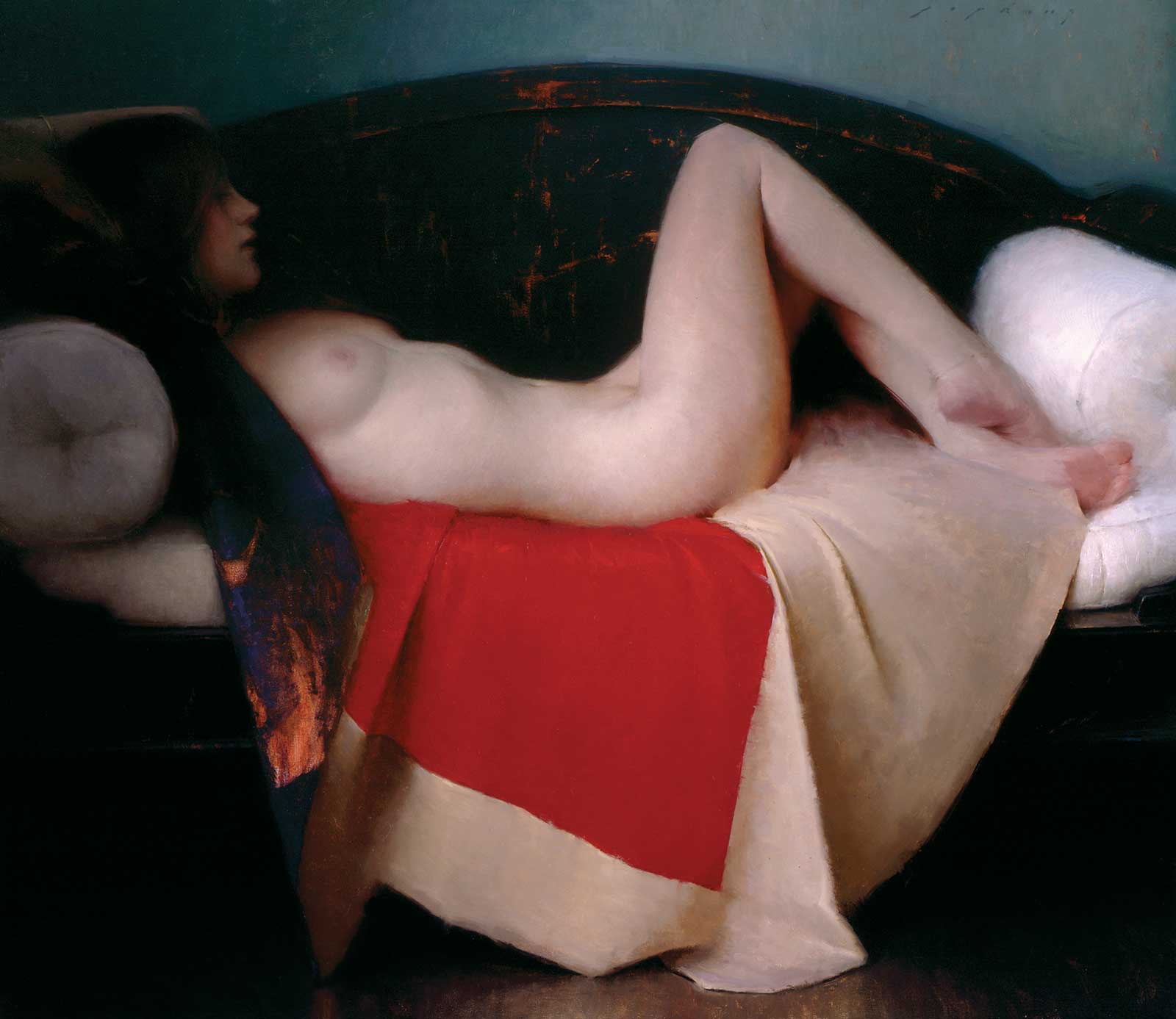 Reclining Red Kimono, 2003, oil on linen, 46 x 54". Sold, Arcadia Contemporary.Lipking also notes the importance working with—and being critiqued by—professional living artists. Painting alongside David Leffel, Max Turner and Richard Schmid influenced his work and helped him further hone his talent. “After a couple of years at CAI, my buddy Aaron Westerberg introduced me to Richard Schmid. I soon bought Richard’s book ‘Alla Prima’ and that book became my next important teacher,” Lipking says.
Later, Lipking had the opportunity to paint alongside Schmid in the Putney Painters Group and further deepened his understanding of his craft and life as a professional artist. Lipking also poured over art history books and drew from the Old Masters. He cites John Singer Sargent, Anders Zorn, Joaquin Sorolla, California impressionists such as Edgar Payne and William Wendt, and the Taos Colony of Artists, as influences and consistent sources of inspiration for his work.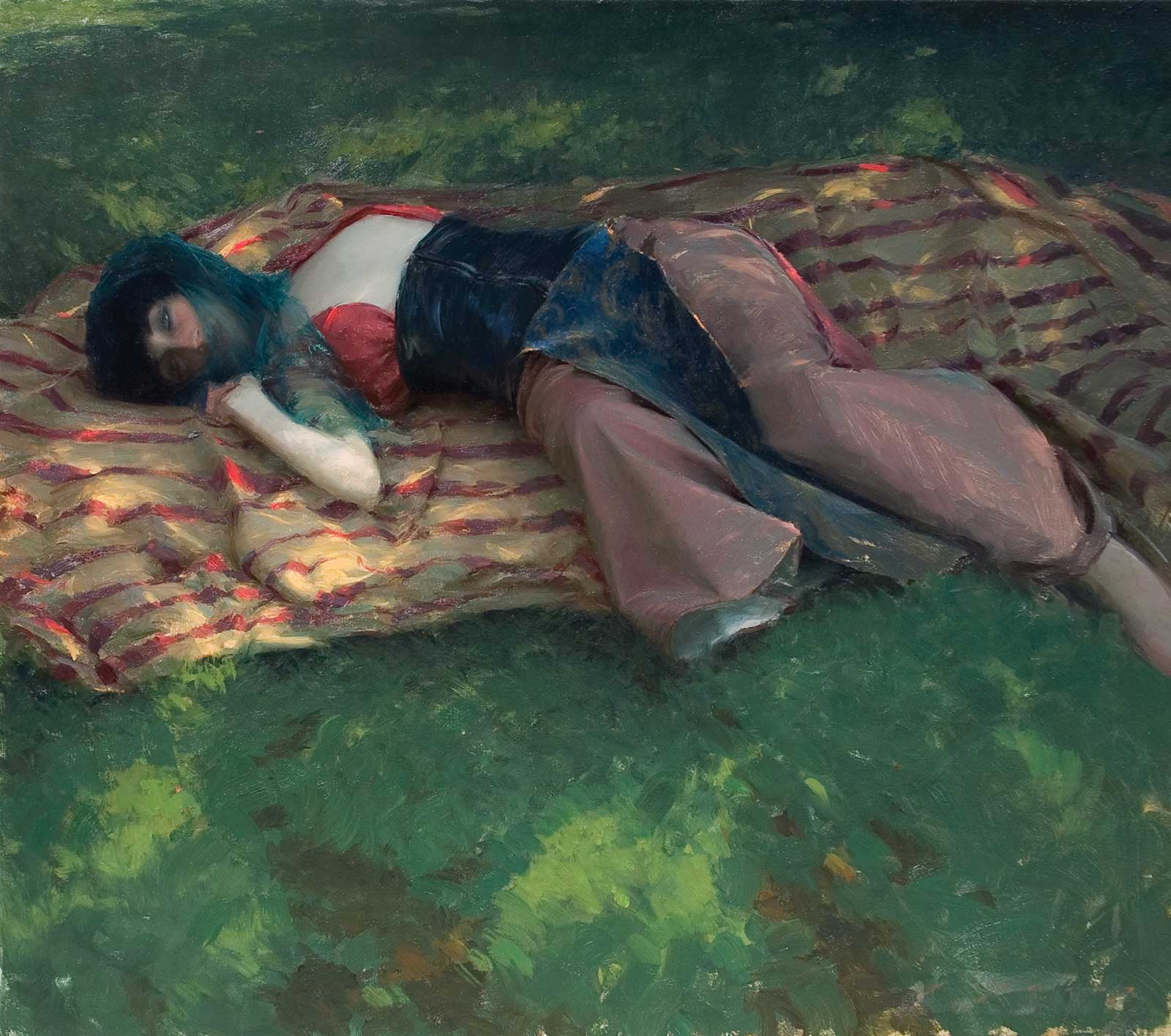 Outdoor Figure, 2003, oil on linen, 40 x 46". Sold, Arcadia Contempory.Life as an Artist
After nearly six years in art school, Lipking was able to acquire his own studio and began working as a professional artist. Landscapes were his first love, but he was inspired to paint the figure after seeing exhibitions by other artists. He soon moved into a studio where his earliest iconic figurative works were created against a blue wall background. The works created around this time, 2004, would later be categorized as “Lipking’s blue studio works”.
Lipking explains, “I knew ‘Skip’ a.k.a Malcolm Liepke and his work, through my dad as they were friends from Art Center. I loved everything about his work—the design, brushwork and palette. Moving indoors after painting landscapes in the bright sun was a big change. The light is softer and the value range more compressed. My palette totally changed. Not necessarily the colors I used, but the way I used them. When I moved into the studio it was painted a deep turquoise blue, not my first choice, but I painted nude figures in there and the way the warm natural light on the figure blended with the blue walls...I liked it so much I decided to keep it blue.”
At just 25 years old, Lipking won first prize at California Art Club’s Annual Gold Medal Exhibition for his work Shady Grove, putting him on the map, not only as one to watch, but already one of the great artists of his time. Seeing this remarkable skill, Steve Diamant of Arcadia Contemporary started representing him and soon Lipking was at the center of sell-out solo shows in New York City. His 2003 piece Outdoor Figure brought him much fame among his artist peers and collectors which lead to further success and opportunities.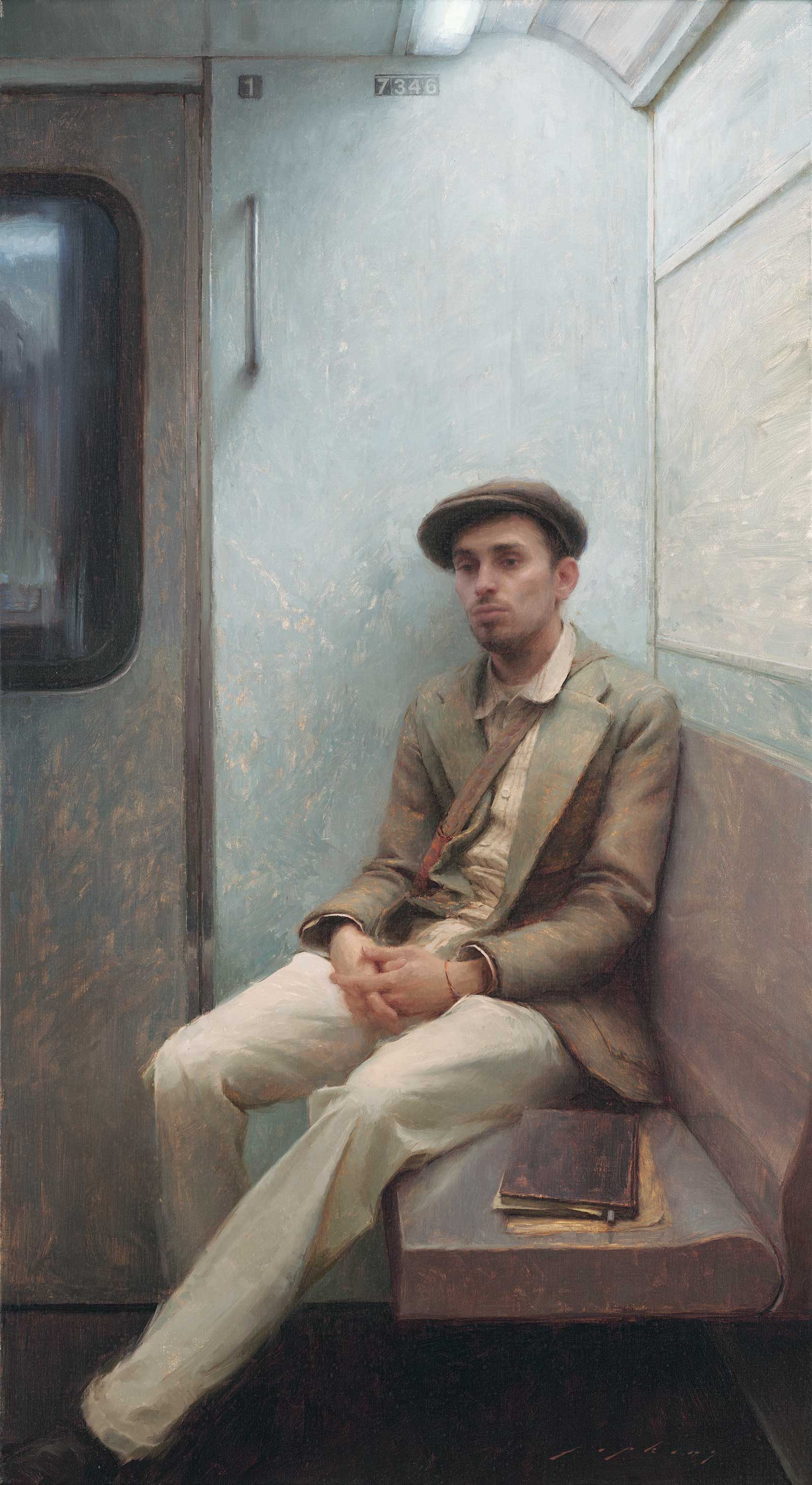 The Artist (Joseph Todorovitch), 2010, oil on linen, 40 x 22". Sold, Lipking Fine Art.Artist as Teacher
For a period, Lipking, having benefitted from artist mentors, taught workshops at his old studio in Agoura Hills, California, but his commissions and museum exhibitions keep him too busy to do so at this time in his career. “I taught for a long time, however, I don’t teach much anymore, other than the occasional workshop, usually somewhere I like to travel,” he says. “For a while I had a night class once a week at my studio, which was a fun break from the routine of working by yourself for long hours in the studio. I’ve also had some apprentices over the years and it’s definitely rewarding to see someone who has learned something from you do some great work.”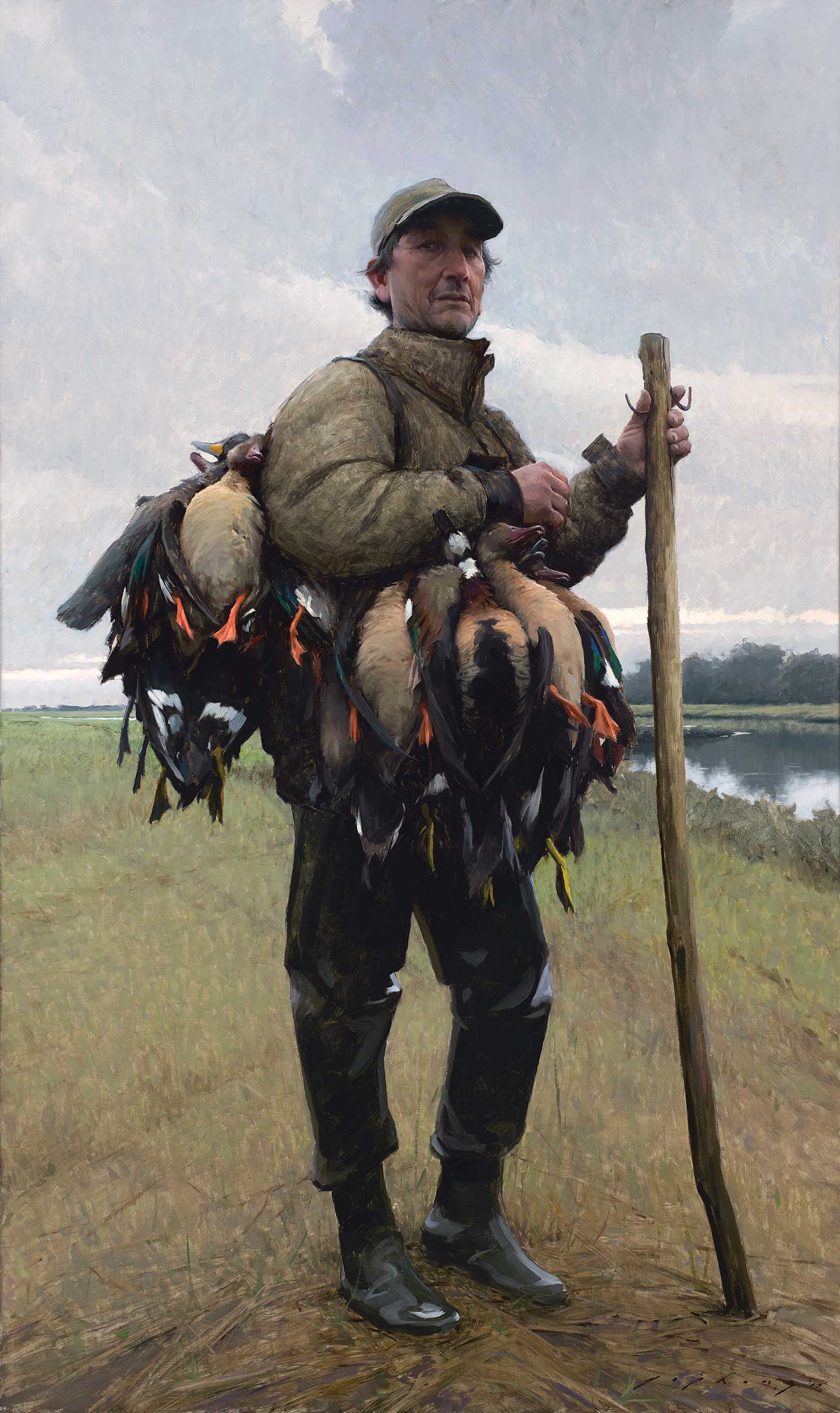 Julian Alonso (Duck Hunter), 2017, oil on linen, 40 x 24". Sold, Lipking Fine Art. Collection of Mark and Janice Dickson.Subject and Style
Lipking’s iconic figures in landscape-settings marry his favorite subjects and are some of the most popular and in-demand works in the contemporary market. Similar to Sargent, Lipking started to acquire, and continues to paint, large portrait commissions for collectors seeking highly personalized work in his distinctive style.
One of his favorites is a Portrait of Julien Alonso, a masterful depiction of a duck hunter adorned with his prey, all feather and form. The figure, standing tall, and the landscape that surrounds him, are rendered with equal skill and the color harmony between them is superb. Lipking’s style also echoes that of 19th century French artist Émile Friant, who aimed to achieve a beautiful combination of close value, soft edges and color. Lipking’s works are so remarkable for his ability to achieve a high level of realism, despite visible brushwork and very subtle value changes, and edge-work that pairs areas of soft, whispering transitions along with bold, hard lines.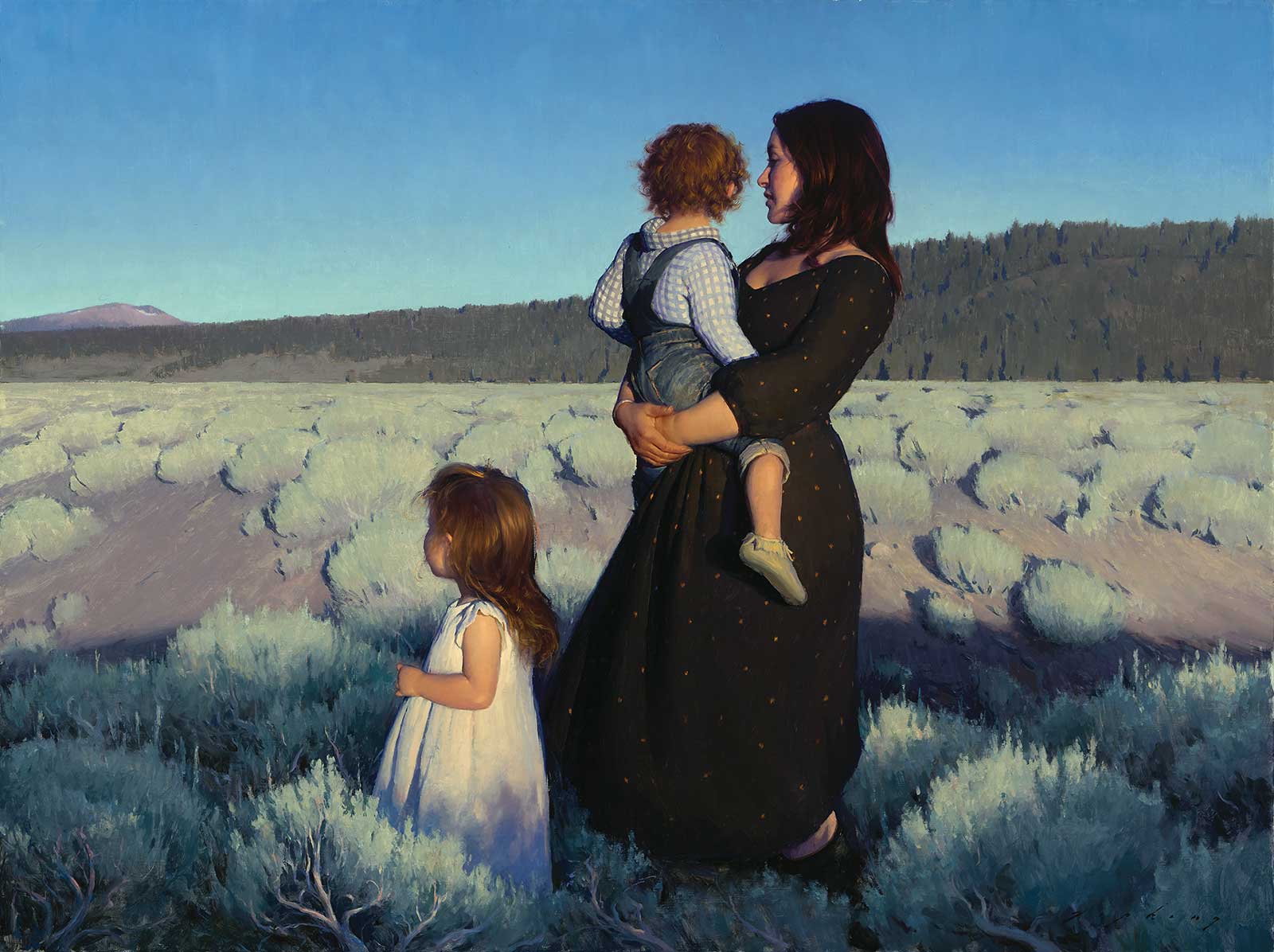 A Mother’s Love, 2020, oil on linen, 30 x 40". Sold, Legacy Gallery, Scottsdale, AZ.When asked how his style has changed through the years, Lipking notes, “I paint more intuitively now. I rely a little less on my reference and models, and paint more from memory. I’m just as conscious about my brushwork today as I was early on, but my paintings are a little more refined now. I don’t lavish out many frivolous, flashy brushstrokes just for the sake of showing off. I simply paint what I’m inspired to paint.” Lipking used to travel to Italy, France, England and beyond in search of new subjects and, while he will always be grateful for those fruitful trips, he had a recent realization. “I used to think I needed to go looking for subject matter, but whatever the subject matter, you’re probably telling a universal story that would work if it were placed in another environment.” It’s what an artist sees in a moment of their life that they try and capture for the painting…be it a windswept plain, or the light on a woman’s face as seen in A Mothers Love, shown here.
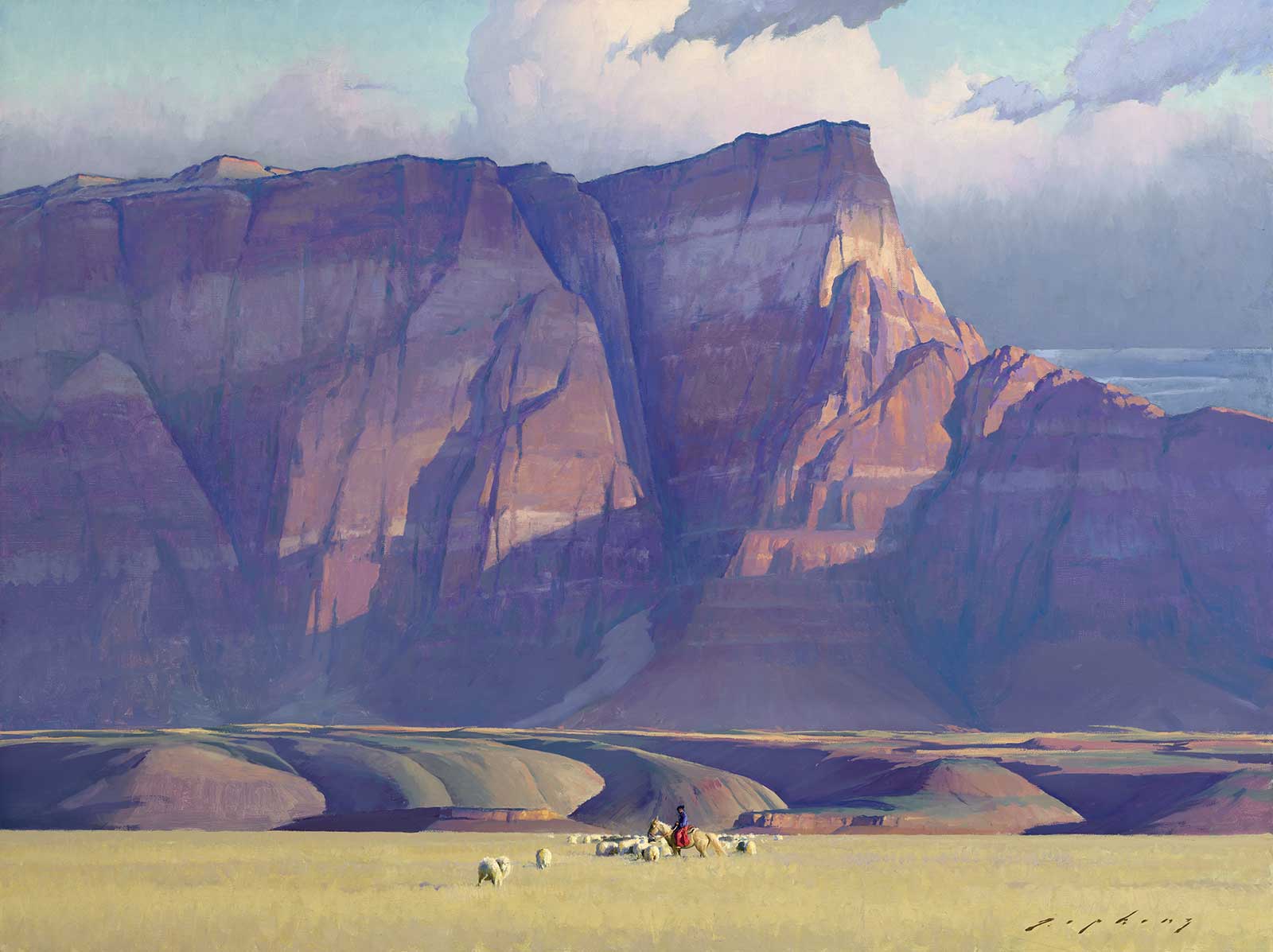 Valley Shadows, 2022, oil on linen, 30 x 40". Will be available at Briscoe Western Art Museum’s Night of Artists beginning March 24.The West
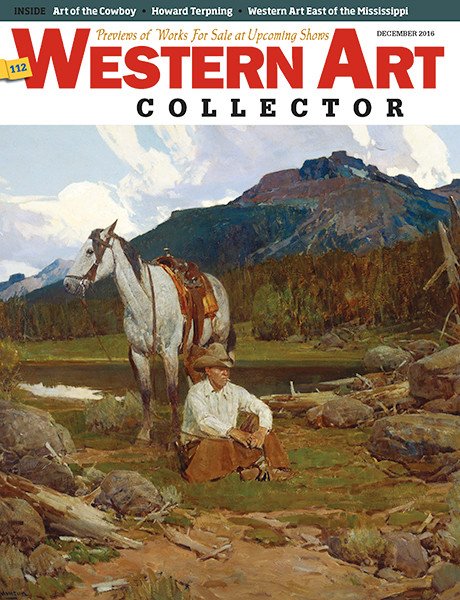
In recent years, Lipking’s love of the West dominates his subject matter. Riders on horses set against the vast plains and mountains of Utah pair eloquently with his colorful yet realist style. His most recent large scale work, measuring 30 by 40 inches, is titled Valley of Shadows, and was completed just in time for the publication of this issue. His work was recently featured in Western Art Collector magazine that compared his work to an artist he admires greatly, Edgar Payne. The grand scale of his pieces intensifies the dramatic, vast and monumental landscapes of the West. In this new work we can marvel at the scale of the mountains compared to the horse and riders below in the shadow of the cliffs. The bold color palette is also inspired by Payne, with a focus on light and shadows as they drape across the land.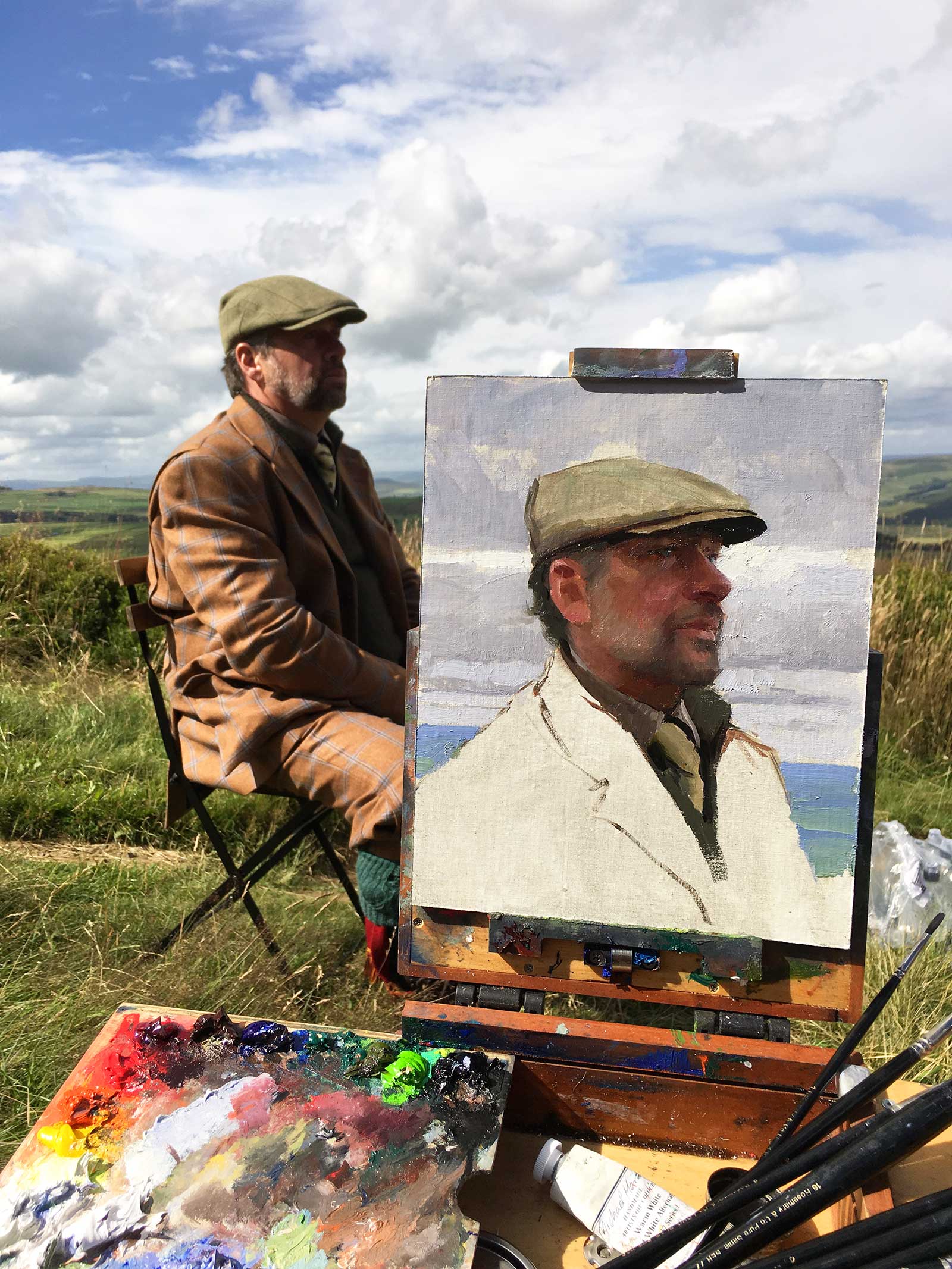 Photo of Lipking’s Portrait of Ross, 2017, oil on linen mounted to panel, 10 x 8", taken during a plein air teaching workshop led by Lipking in Yorkshire, England. Available at Dark Creek Press.Natural progression
An illustrious Western art career has since followed with awards and exhibitions at the Autry Museum of the American West in Los Angeles; and Oklahoma City’s National Cowboy & Western Heritage Museum. When asked about the achievements he has been most grateful for in his art career, Lipking notes that he is most proud of taking first place in the 2007 Portrait Society of America International Portrait Competition and winning the Prix de West Purchase Award at the National Cowboy & Western Heritage Museum in 2014. Admiring the Taos Colony painters growing up and creating work that will go down in art history among them has been an especially important moment in the artist’s successful career, even more so because he is part American Indian.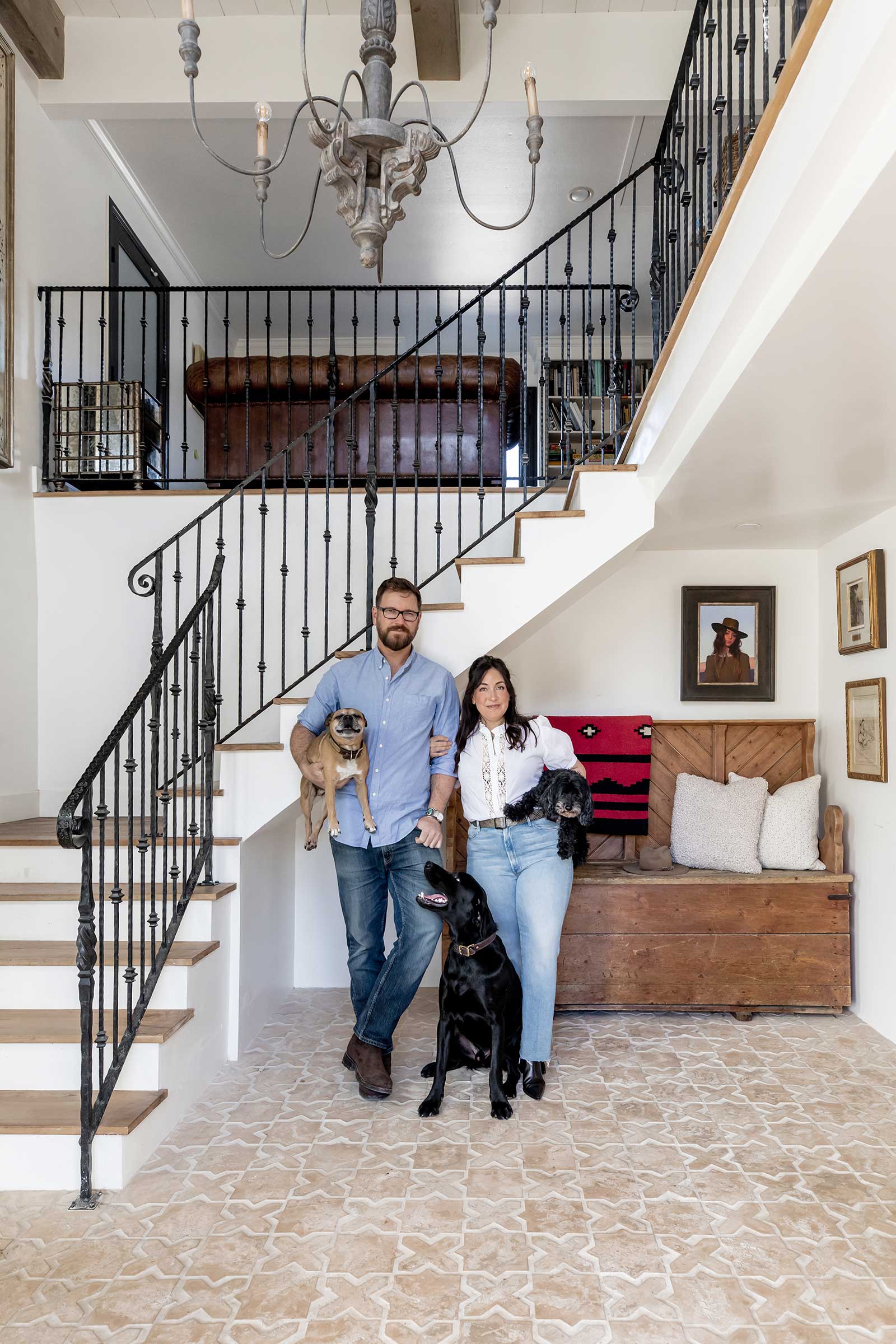 Lipking in the foyer of his home with wife Danielle and the dogs. Photo by Public 311 Design.Lipking continues to paint award-winning Western works, stunning portrait commissions and works for select exhibitions in his home studio near Malibu, California, where he lives with his family of six. The home and studio are decorated and furnished with a Western edge and his most recent landscapes adorn the freshly painted walls. With his wife Danielle and his children Skylar, Jacob, Sierra and twins, Juniper and Zion, Lipking feels fortunate to have a career that allows him to spend time with his beautiful family on their ranch, with their various farm animals, dogs, swings and vegetable gardens in the coastal hills of California. Here, he is at home with the very subjects that first inspired his great works of art. —
+++
Vanessa Françoise Rothe is a curator, editor/writer, art dealer and fine artist. She has had dozens of articles published in various fine art magazines for the last 20 years, has served as the chairman/educational director for many fine art organizations, and is the founder of the Americans in Paris fine art project.
Powered by Froala Editor