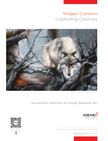
Australian artist Stephen Jesic has always painted highly realistic still lifes, landscapes and potraits, but in 1991 he made the shift to solely wildlife art. He says, “Over many years of practice my painting technique has improved, which allows me to paint wildlife in a super realistic style as you would a still life.” 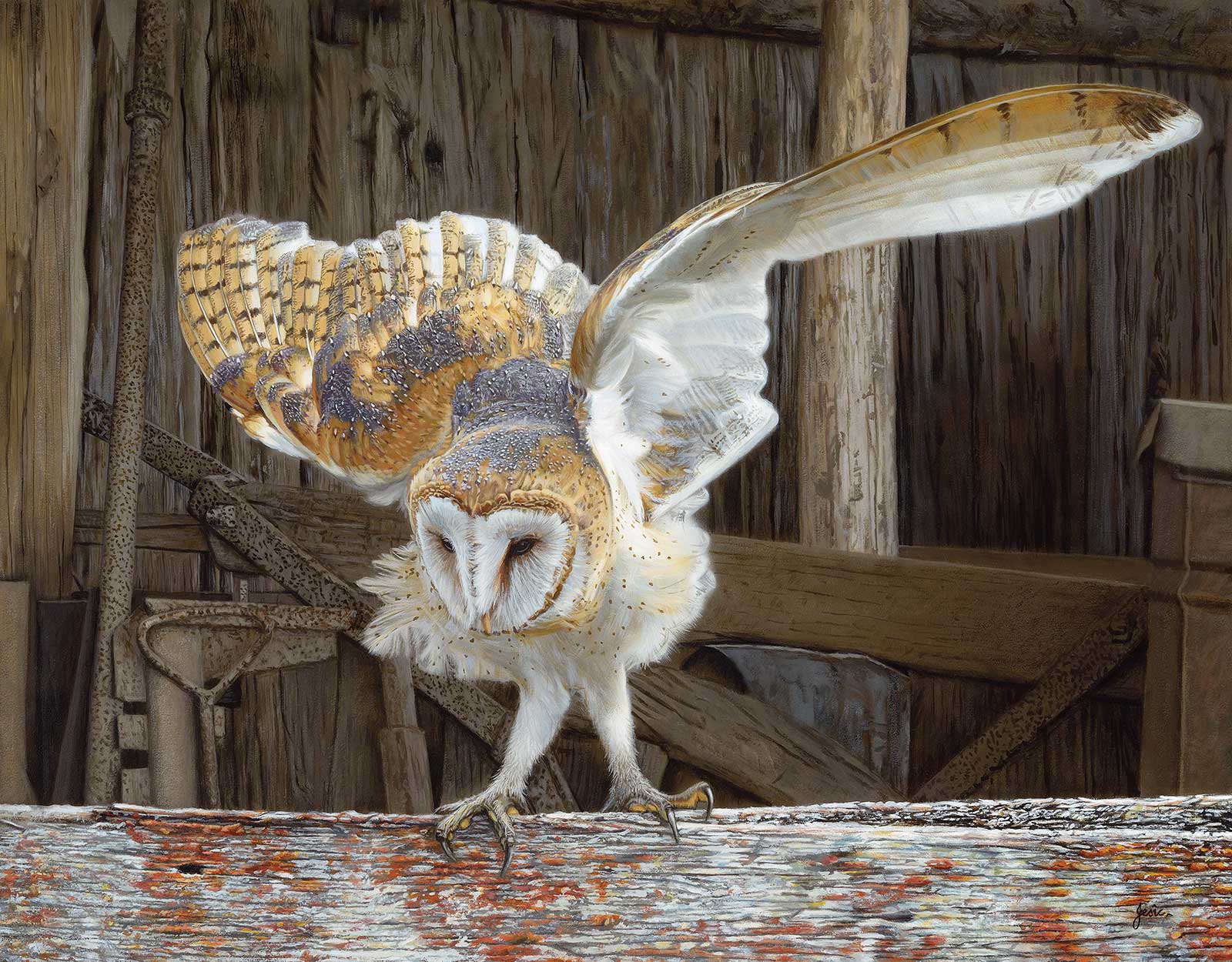 Catching the Light, acrylic on board, 21.6 x 27.6"
It also has evolved over the years, especially with changing technology. As a former electronic engineer, Jesic took like a duck to water adapting to advancements in computers, scanners, printers and digital cameras.
Rosellas Revenge, Jesic’s first major wildlife piece in 1991, is a good example of his original design technique. He explains. “All my artwork was drawn manually on paper, full size, then birds were drawn to scale on paper, cut out then placed onto the scene moving them around to optimal strategic points along ‘golden means’ and ‘lines of thirds’ subconsciously controlling the viewer’s eye through the painting,” he says. “Once the design was finalized, it was transferred to a prepared gessoed board. Very time consuming, a bit hit-and-miss not knowing what the paintings full outcome would be.”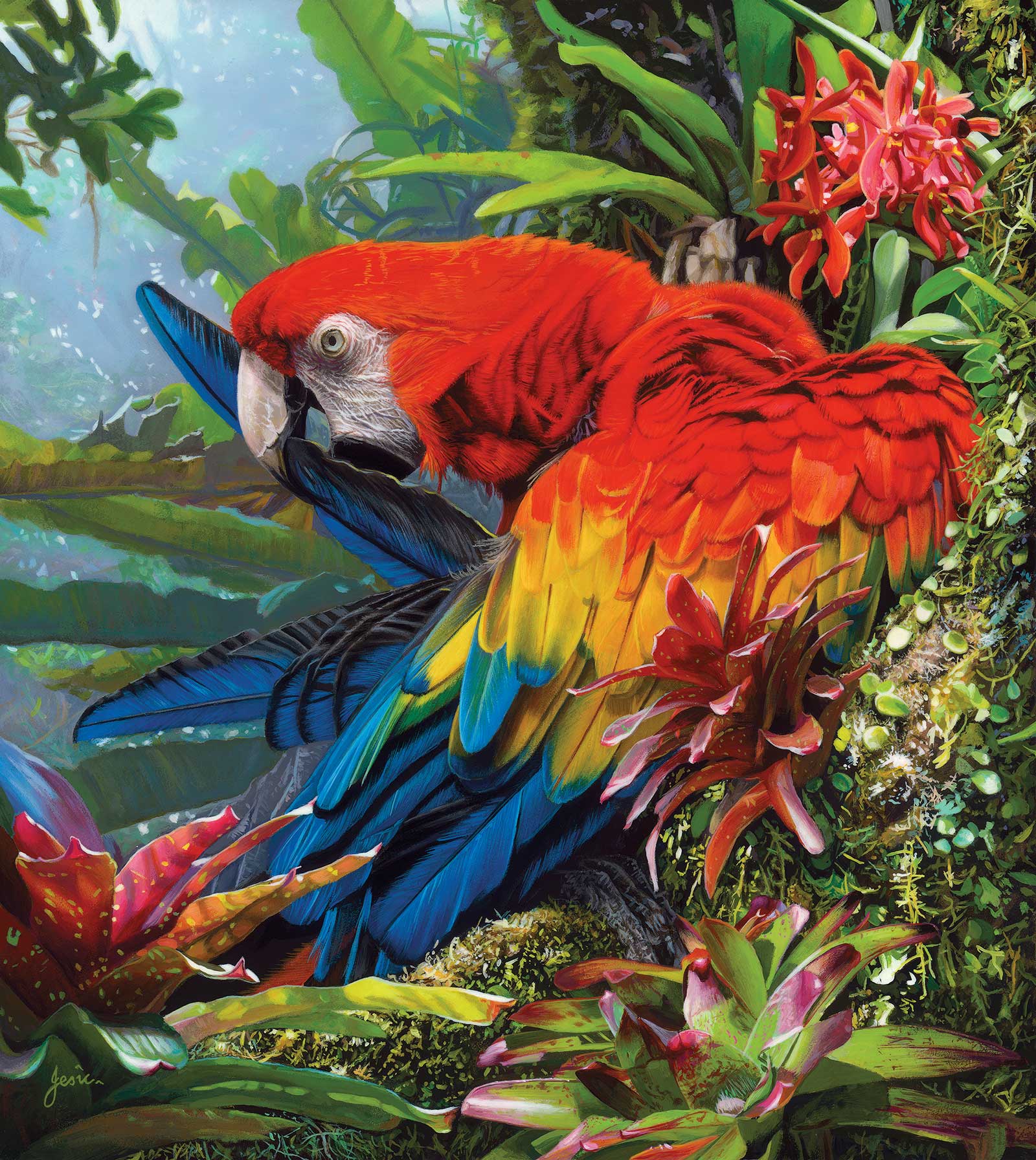 Morning Reflections, acrylic on board, 17 x 15"
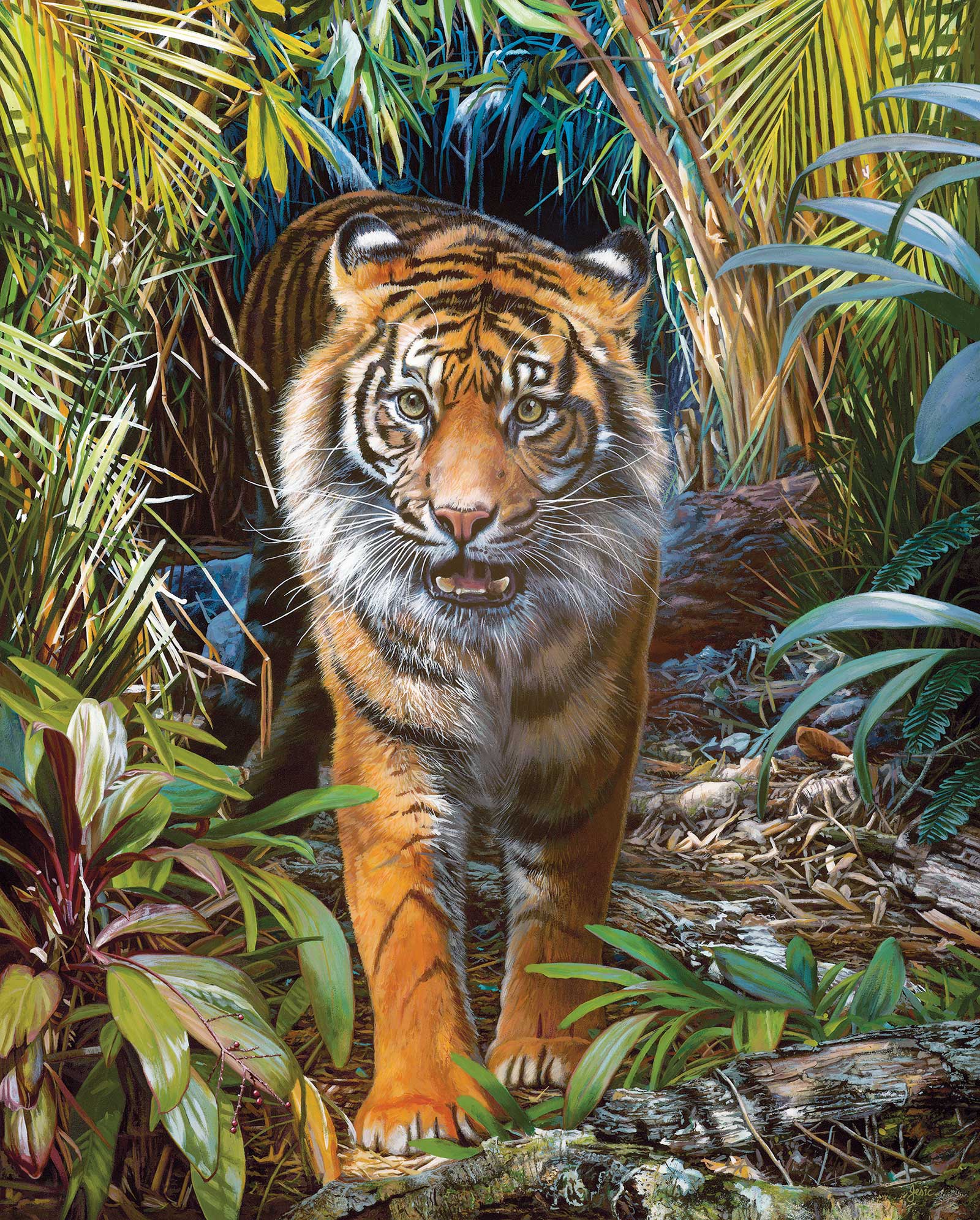 Out of the Shadows, acrylic on board, 30 x 24"
By the year 2000, Jesic began creating his designs on the computer, scanning his vast collection of slides, selecting a background setting, then pasting and scaling the birds to match the scene. “[It was] a big advancement to be able to see a design come to life, adjust the scale and see the final result in full color,” he says. In 2006, he purchased a digital camera, and then in 2012 with further advancements, a high-ISO, full-frame camera. “This was a game changer for me,” says Jesic, “perfect high-resolution, low light photos, [and] the ability to pick a small section out of an image, extract and paste it into a design collage was instrumental in furthering my design strategy.”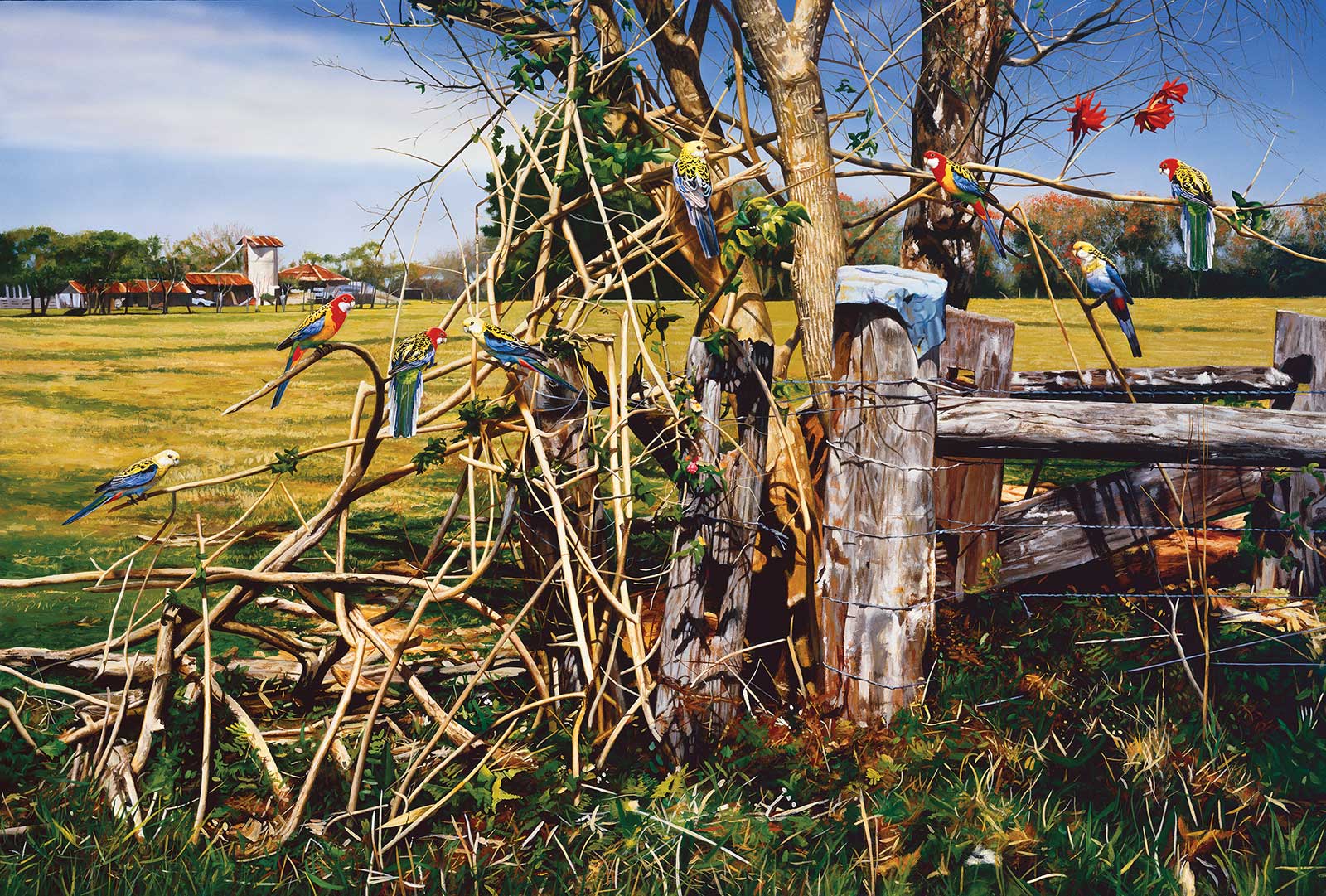 Rosellas Revenge, acrylic on Baltic birch, 32 x 48"
He continues, “I have so many reference photos, I can construct a scene that looks real but actually does not exist. It is so difficult to photograph wildlife in a perfect setting, so I try to create a scene that complements the wildlife being portrayed,” says Jesic. “Embrace technology, use it creatively to your advantage, turn the ordinary into extraordinary.”
Jesic is represented by Morpeth Gallery in Australia, which can be viewed online at www.morpethgallery.com. —
Powered by Froala Editor