Katharine Lee Bates (1859-1929) was a poet and professor of English literature at Wellesley College. In 1893, on a lecture tour to Colorado Springs, she joined a group that made the arduous trek to the top of Pikes Peak. Overwhelmed by the view, she wrote in her notebook about “the sea-like expanse of fertile country . . . under those ample skies,” and “the opening lines of the hymn floated into my mind.” The lines are: “O beautiful for spacious skies, / For amber waves of grain, / For purple mountain majesties / Above the fruited plain!”
America the Beautiful was published in 1895 and later set to music by S.A. Ward. The two never met, but their work has inspired generations. Bates was surprised by the popularity of her poem and reflected that the “hold as it has upon our people, is clearly due to the fact that Americans are at heart idealists, with a fundamental faith in human brotherhood.”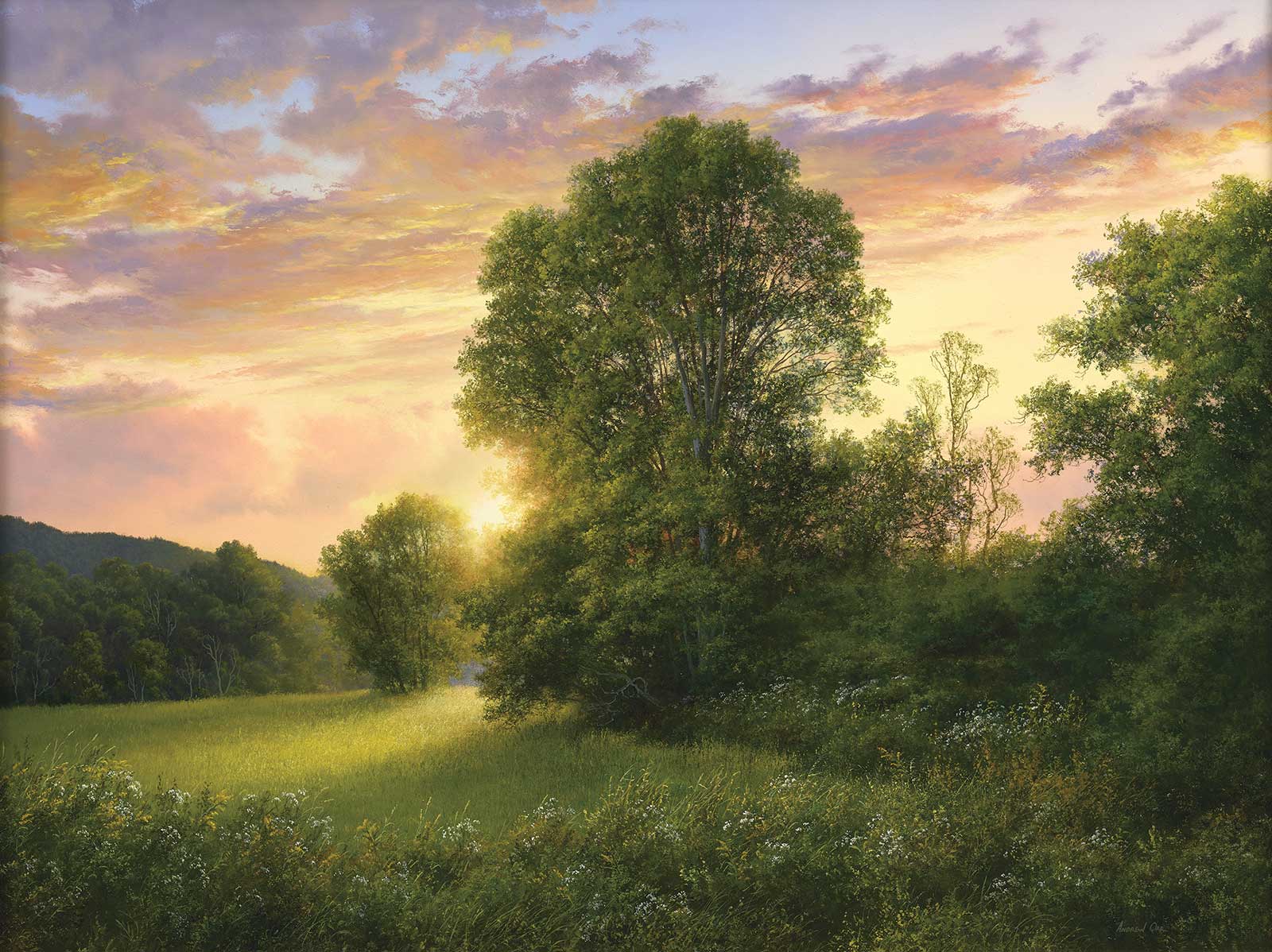 Rehs Contemporary, Surrender to Evening, oil on panel, 18 x 24", by Andrew Orr.
The poem celebrates the beauty of the landscape as well as the love of soldiers for their country, the confirmation of liberty through law and the hope to “crown thy good with brotherhood / From sea to shining sea!”
George Caleb Bingham (1811-1879) painted View of Pike’s Peak in 1872. The Clovis people lived in the area around 11,000 BCE. More recently in has been inhabited by the Ute, Comanche, Arapaho and Cheyenne. The Ute called it “Sun Mountain.” The Arapaho called it “Long Mountain.” The Spanish called it “El Capitán.” Army Lieutenant Zebulon Pike named it “Grand Peak.” It became known as “Pike’s Peak” and, in 1890, it lost the apostrophe.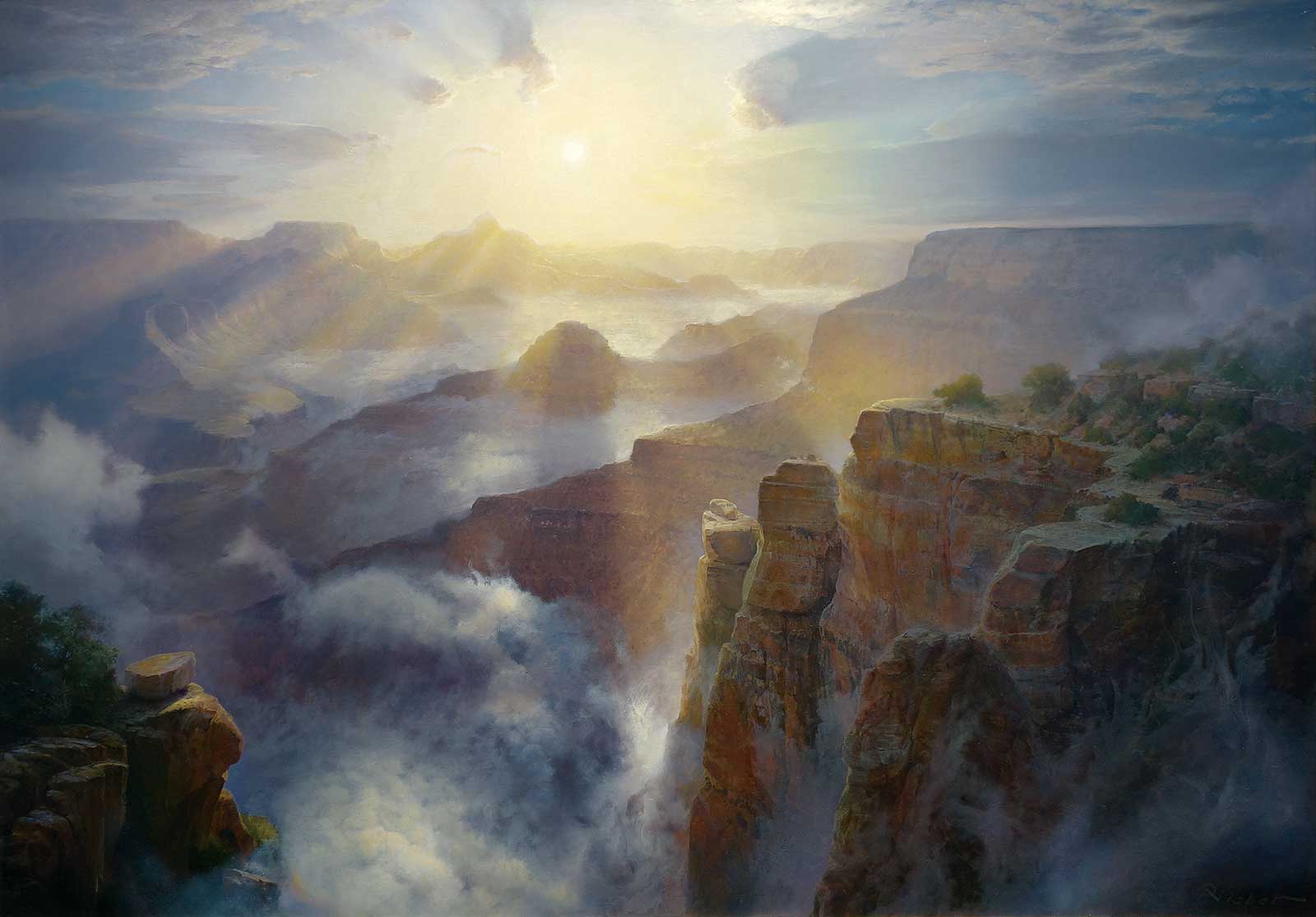 Meyer Gallery, Sunburst, Grand Canyon, oil, 38 x 54", by P.A. Nisbet.
Bingham was known as a portrait and genre painter and was active in politics, including serving with the Union Army in the Civil War. Like many artists of the time and in later years, he traveled west to ameliorate the effects of tuberculosis. His few surviving landscapes are generic rather than specific places, but View of Pike’s Peak is specific and embodies his political belief in westward expansion.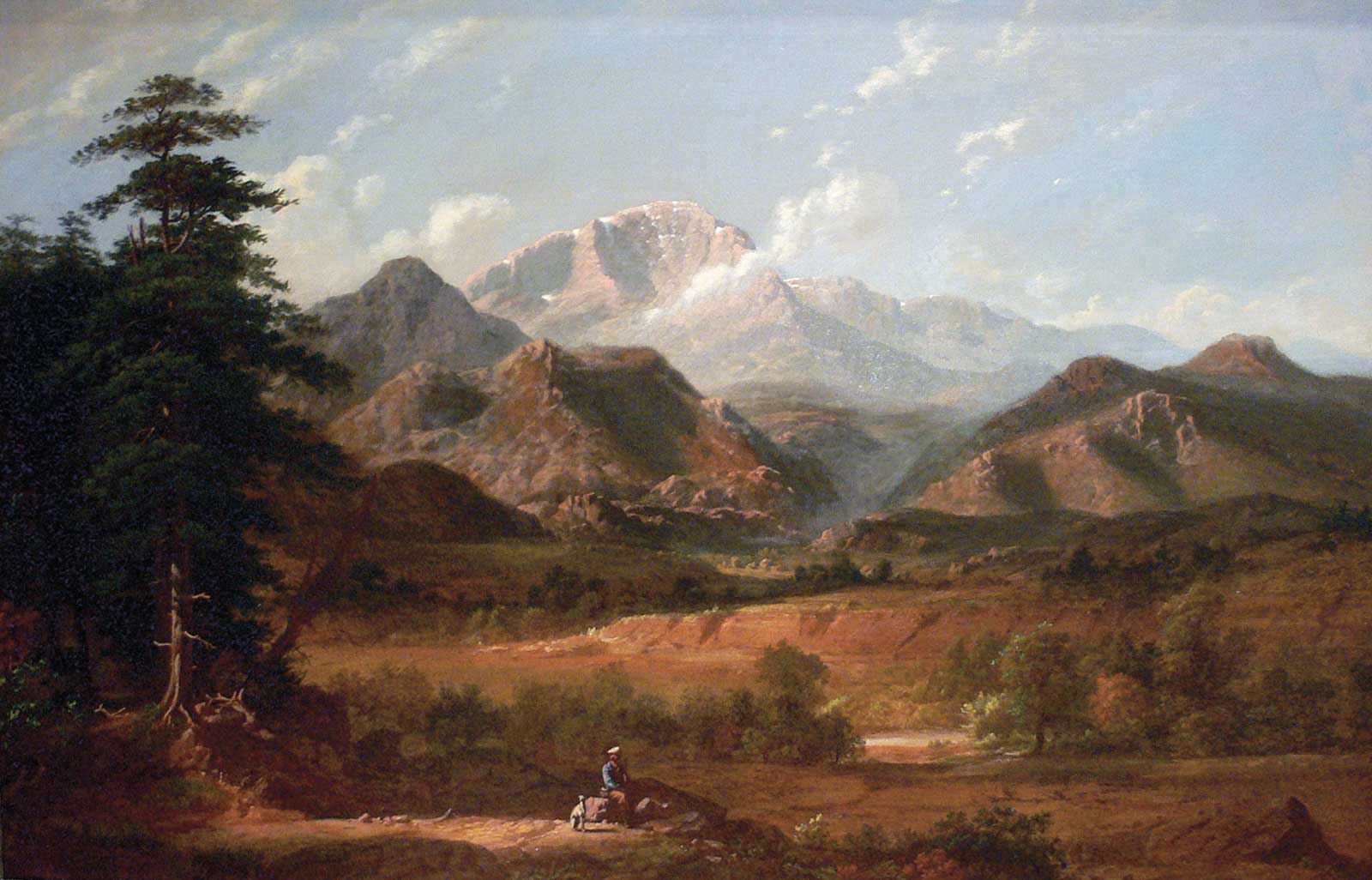 George Caleb Bingham (1811-1879), View of Pike’s Peak, 1872, oil on canvas, 28 x 421⁄8". Amon Carter Museum of American Art, Fort Worth, TX.
David Grossmann embodies the promise of the vastness of the plains in his painting Flowing Spaces. Wind sculpts the trees, bends the grasses and propels the clouds as the birds harness it for flight. Grossmann remarks, “In the steady shifting of one season to the next I am reminded of what is precious and fleeting; I try holding on to the quickly changing colors of autumn, to the light of summer, to what is quickly passing. I also look ahead with anticipation to the awakening of spring after winter, to the wonder of every first snowfall, to the hope of rebirth. These paintings stem from inspirations that are always in motion, and in all of this letting go and holding on there is the hope of inner stillness and the renewal that comes with every breath and every sunrise.”
Walt Whitman compared Yosemite, Yellowstone and Niagara Falls to the Plains, which “while less stunning at first sight, last longer, fill the esthetic sense fuller, precede all the rest, and make North America’s characteristic landscape.”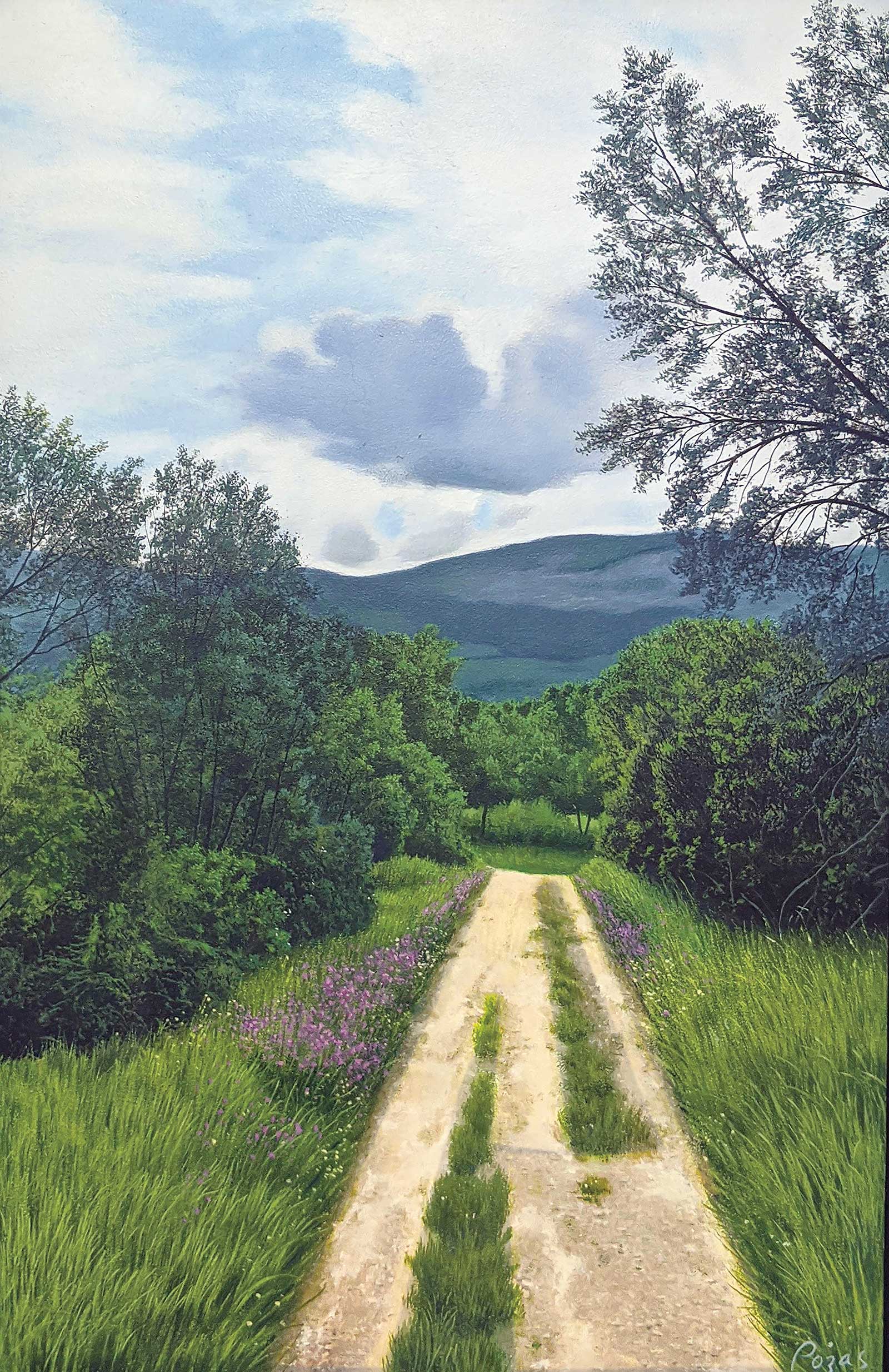 Gallery Victor Armendariz, The Walk, oil on panel, 15¾ x 10¼", by René Monzón Relova “Pozas”.
John James Audubon, on the other hand, was awestruck by Niagara. He wrote, “All trembling, I reached the Falls of Niagara, and oh, what a scene! My blood shudders still, although I am not a coward, at the grandeur of the Creator’s power; and I gazed motionless on this new display of the irresistible force of one of His elements.”
Ken Salaz joins Katharine Lee Bates and Audubon in their awe of the majesty of the landscape. His painting Transcendence, Niagara Falls captures the falls in an otherworldly moment. He says, “I approach each canvas with the heart of a poet, the mind of a philosopher, the hands of a surgeon and the vision of an eagle. The paintings are created to evoke in the viewer the questions of who we are, why we are here and how we can live for the betterment of humanity. In order to create landscapes that aren’t simply copies of nature, but rather the poetic expressions of fleeting moments, I have delved deeply into the studies of philosophy, religion, optics, anatomy, color and the great poets such as Homer and Rumi. I deeply believe it is the function of masterful artwork to be a vehicle that elevates the viewer and all of humanity to a state of transcendent certainty that beauty is eternal and ever-present.”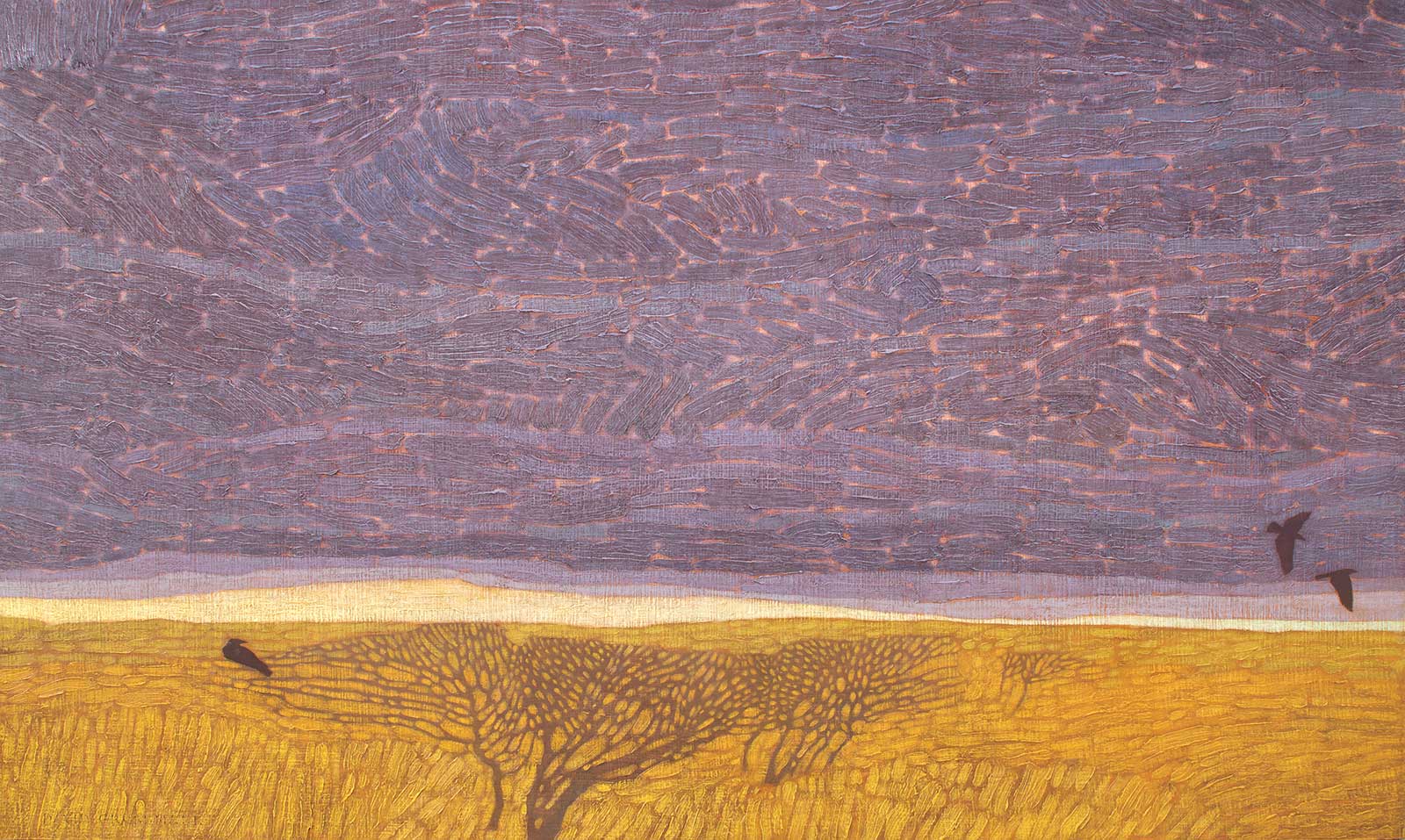 Altamira Fine Art, Flowing Spaces, oil on linen panel, 30 x 50", by David Grossmann.
Purple mountain majesties on a less grand scale are shown in The Walk by René Monzón Relova “Pozas”. He softens the color of the hills in the distance by bringing in a bit of the color of the sky and using less vibrant color than in the foreground. Pozas trained as an industrial engineer in Cuba but later taught himself to paint. “Copying a landscape does not serve me, it does not satisfy me,” he says. “I believe in imagined, modeled nature…because it is more interesting to discover that no matter how much you imagine, there is always a place like the one thought.”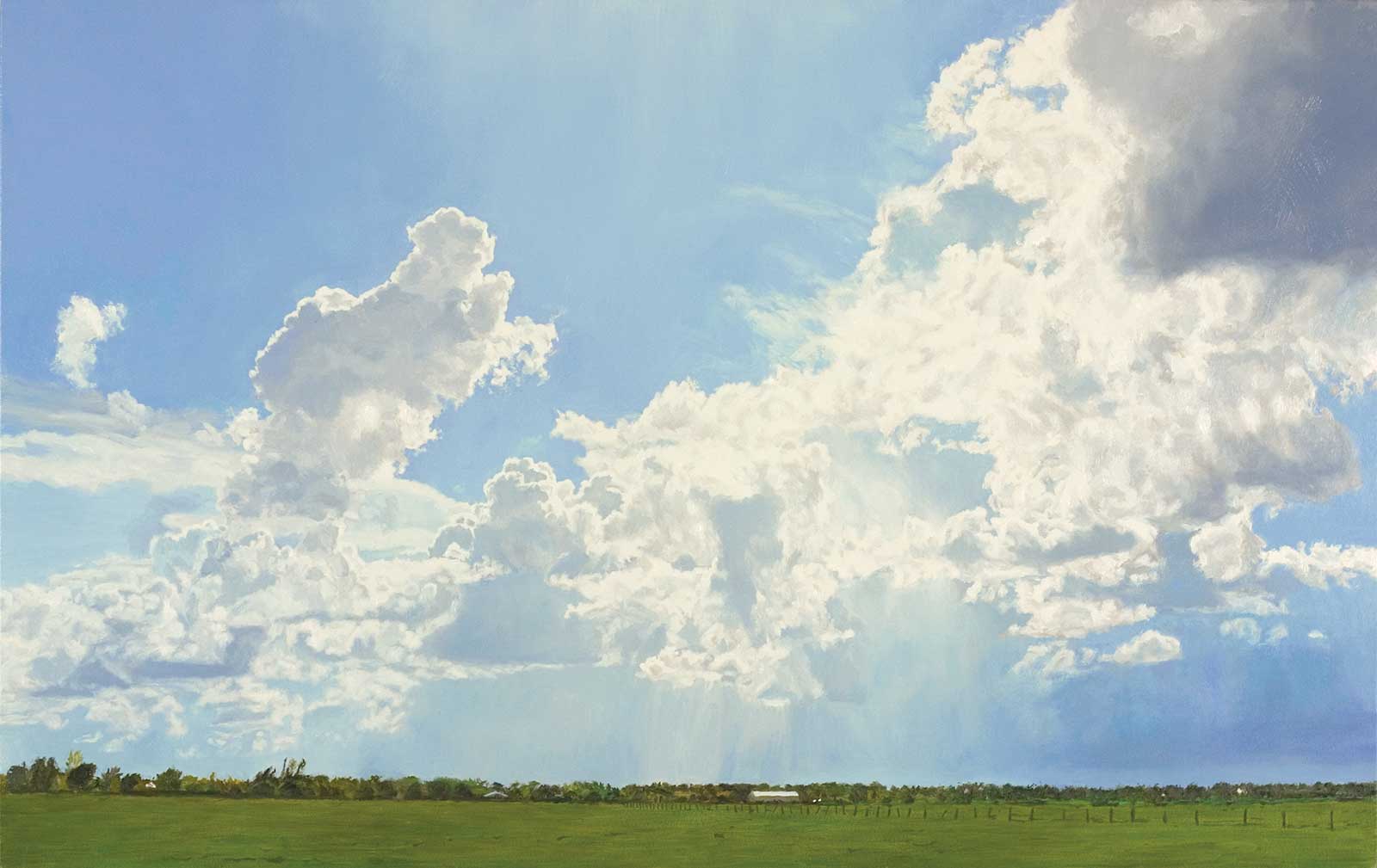 David Jenks, Sky Light, oil on canvas, 28 x 44"
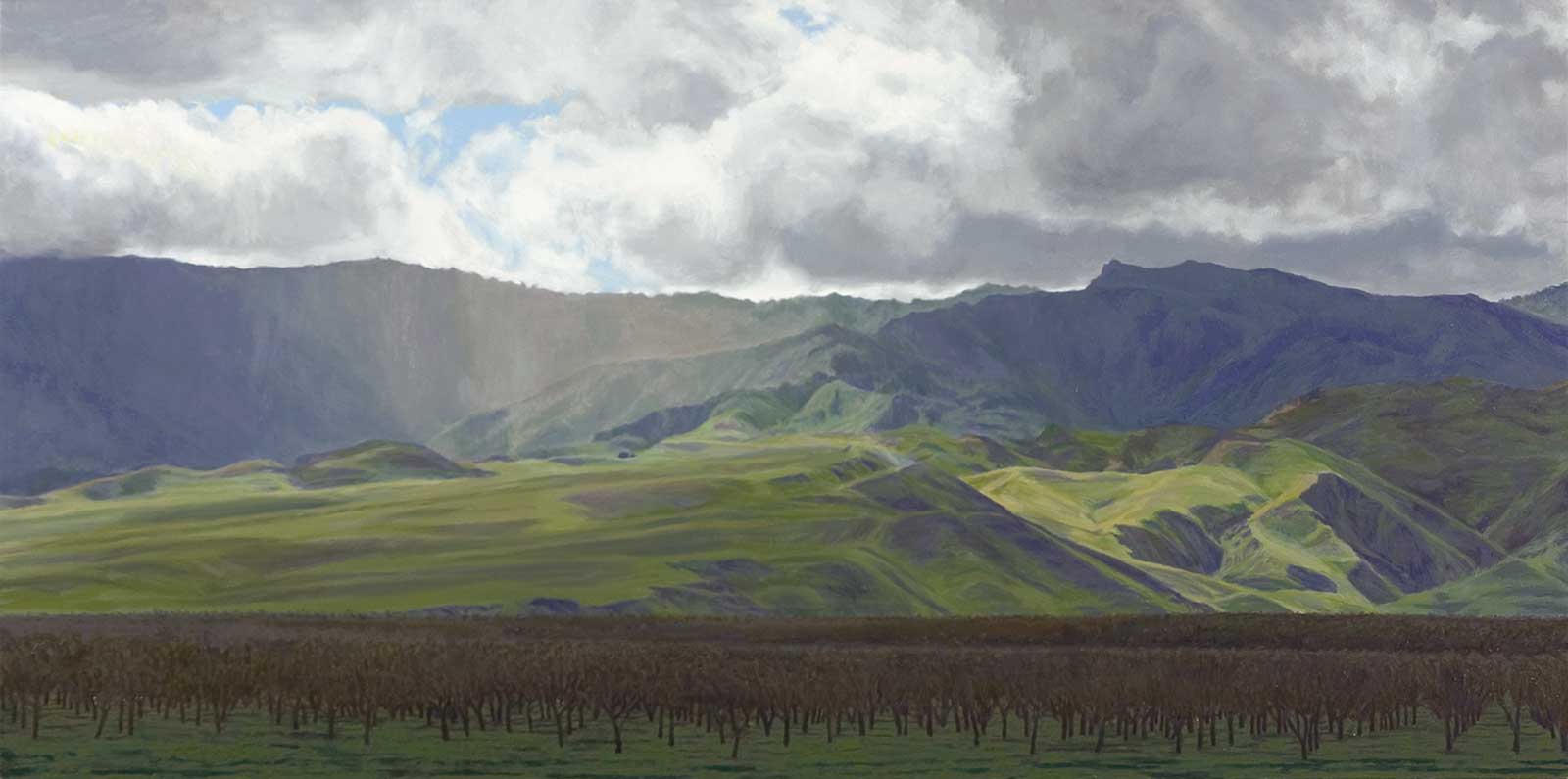 David Jenks, San Joaquin Symphony, oil on canvas, 24 x 48"
“Bucolic” describes the less grand landscapes of the country. The word derives from the Greek boukolos meaning cowherd. It later developed into meaning pastoral. Andrew Orr’s bucolic landscapes are often scenes near his home at the northern border of Vermont. Orr says, “My paintings are about joy—about expressing the excitement I feel when I see light falling on an autumnal tree or the beauty of a newly opened flower. They are about my curiosity and intrigue with objects, old and new; they are about those things that inspire me, that give me a reason to get out each day to see what the world has in store.”
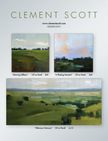
P.A. Nisbet first visited the south rim of the Grand Canyon in 1970. Today, after countless hours of sitting, observing and painting in the canyon he continues to create images that “transcend just the image of what was out there.” He explains, “Painting is really just a process of becoming more aware, not unlike hiking or reading a book. It is a journey laced with a lot of magic. It starts in a myth of place and people, and meanders along pathways pointed out by past sojourners…Art has always been a vehicle that transported me to a grand Romantic world. In the land and in the sky I find the stories that animate us all, the same stories that captivated my forefathers.”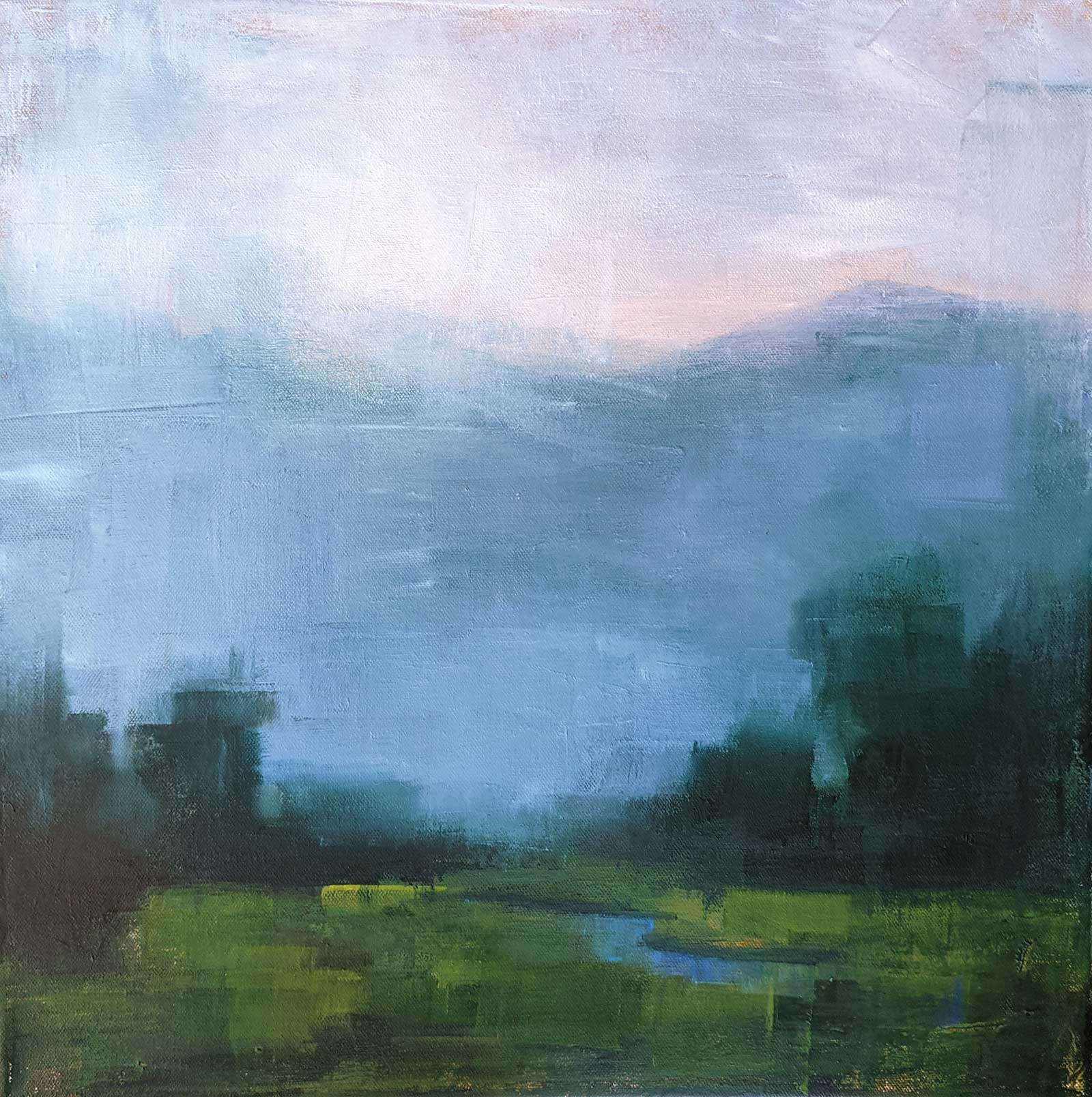 Clement Scott, The Clearing, oil on panel, 18 x 18"
Nisbet’s Sunburst, Grand Canyon, painted this year, depicts the awesome everyday majesty of the sun breaking through the moisture of clouds. In this case it is happening in the vastness of the Grand Canyon. Paintings like this and those of the other artists here remind us that America the beautiful exists not only in the vast and picturesque, but in the experience of nature in our own backyards.
In the page of our 2021 edition of the Collector’s Focus: Landscapes, you will find standout landscapes in a variety of mediums and styles. The paintings are of real or imagined places, but all show the grandeur and beauty that surrounds us every day. Also included are inspirations direct from the artists, adding another layer to your collecting journey.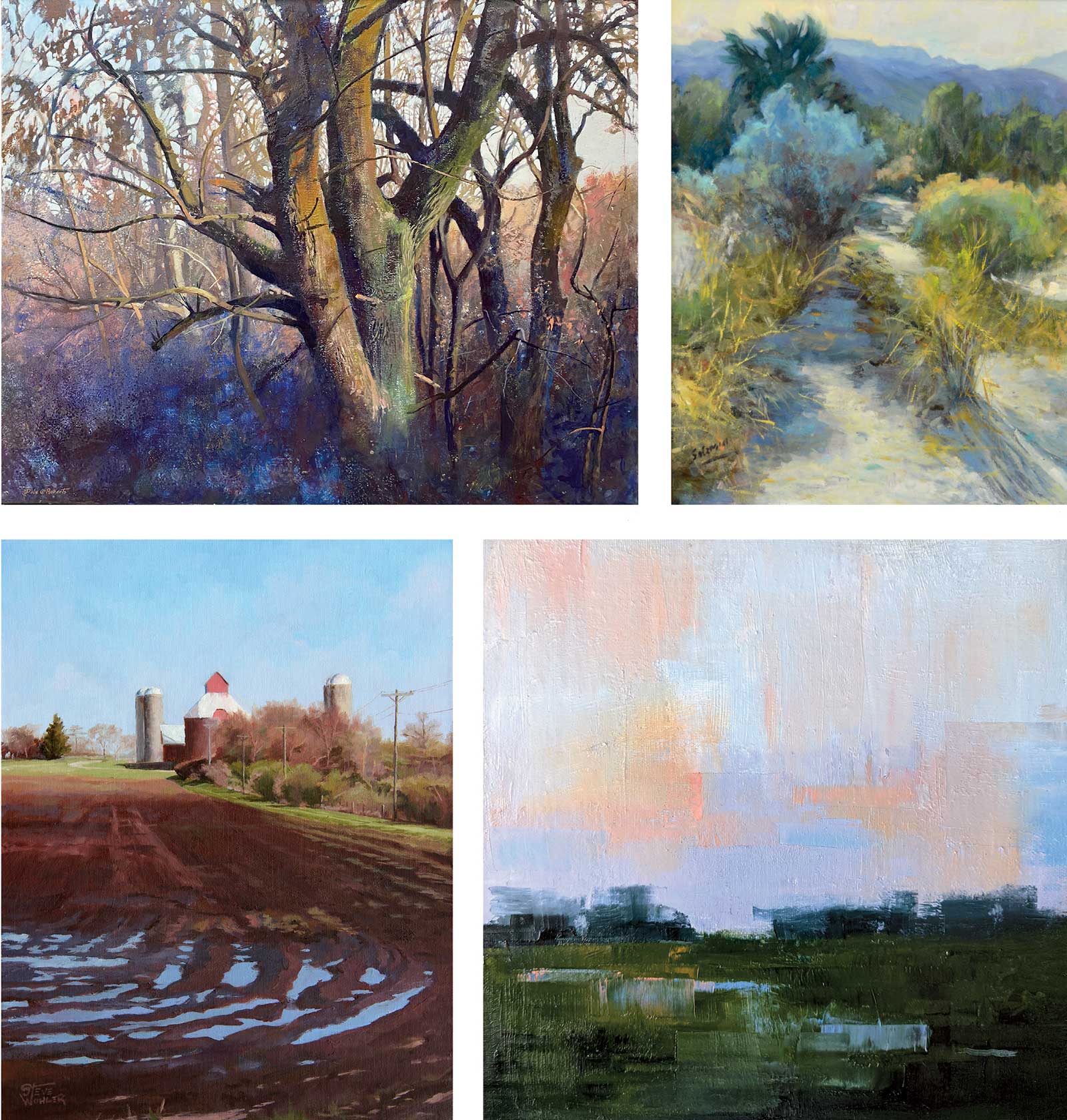 Clockwise from top left: Gross McCleaf Gallery, Edge of Evening, encaustic, 32 x 40", by Dale Roberts; Janine Salzman, Desert Bloom, oil, 20 x 16"; Clement Scott, A Fleeting Moment, oil on panel, 8 x 8"; Steve Wohler, April Field, oil, 14 x 11"
California artist David Jenks is concerned with “portraying the beauty of nature and conveying the feeling of being there. I also seek to intimate a dimension beyond the visual or the material—perhaps a spiritual one. So, I am inexorably drawn to the sky and the effects of sun and clouds. They also demand everything the palette has to offer—and more. I’m painting form but always prospecting for light, striving to see a deeper harmony, to open the door to pure energy.”
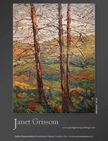
Gross McCleaf Gallery in Philadelphia represents several artists working in the landscape tradition, including encaustic artist Dale Roberts. In discussing his paintings, Roberts says, “I am generally moved by an emotional response to light, texture and shape and the urge to explore those relationships more fully in paint. Work proceeds from sketches and color studies and is soon dictated by the life of the paint. The work often ends in a place much different from the original conception, and that’s a big part of why I take that journey in the first place.”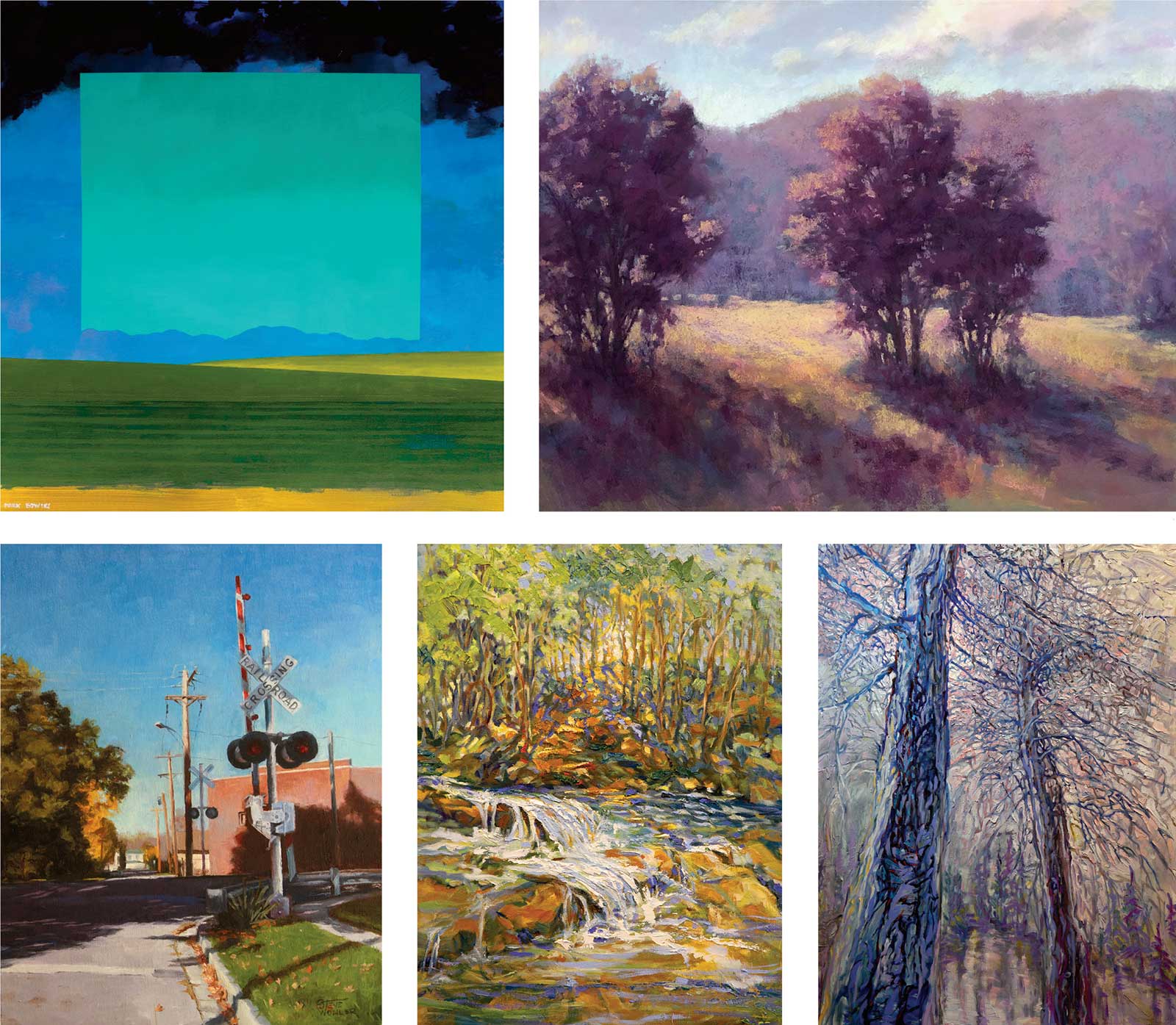 Clockwise from top left: Canyon Road Contemporary Art, The Back Range, acrylic on canvas, 40 x 40", by Mark Bowles.; Marsha Hamby Savage, Purple Mountains Majesty, pastel, 16 x 20"; Janet Grissom, Strength in Subtlety, oil on canvas, 48 x 36"; Janet Grissom, Moving On, oil on linen board, 24 x 18"; Steve Wohler, German Street Crossing, oil, 14 x 11"
Working in a loose, almost abstracted style, Clement Scott pushes the boundaries of landscape painting with unique color patterns and a focus on the atmosphere. “There is joy I find in searching for a soulful way to convey the scenes I paint,” says Scott. “I love capturing the effects weather and atmospheric conditions have on the landscape. For me it is less about painting the way a scene is and more about capturing the way it feels.”
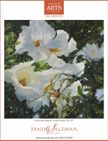
A great love of color is evident in Janine Salzman’s impressionistic paintings and is reflected in works such as Desert Bloom where the greens and blues of desert life are accurate and highlight the lights and shadows. She says, “Art opens your heart to the beauty of everyday life. I am inspired to share this truth with you through my paintings.”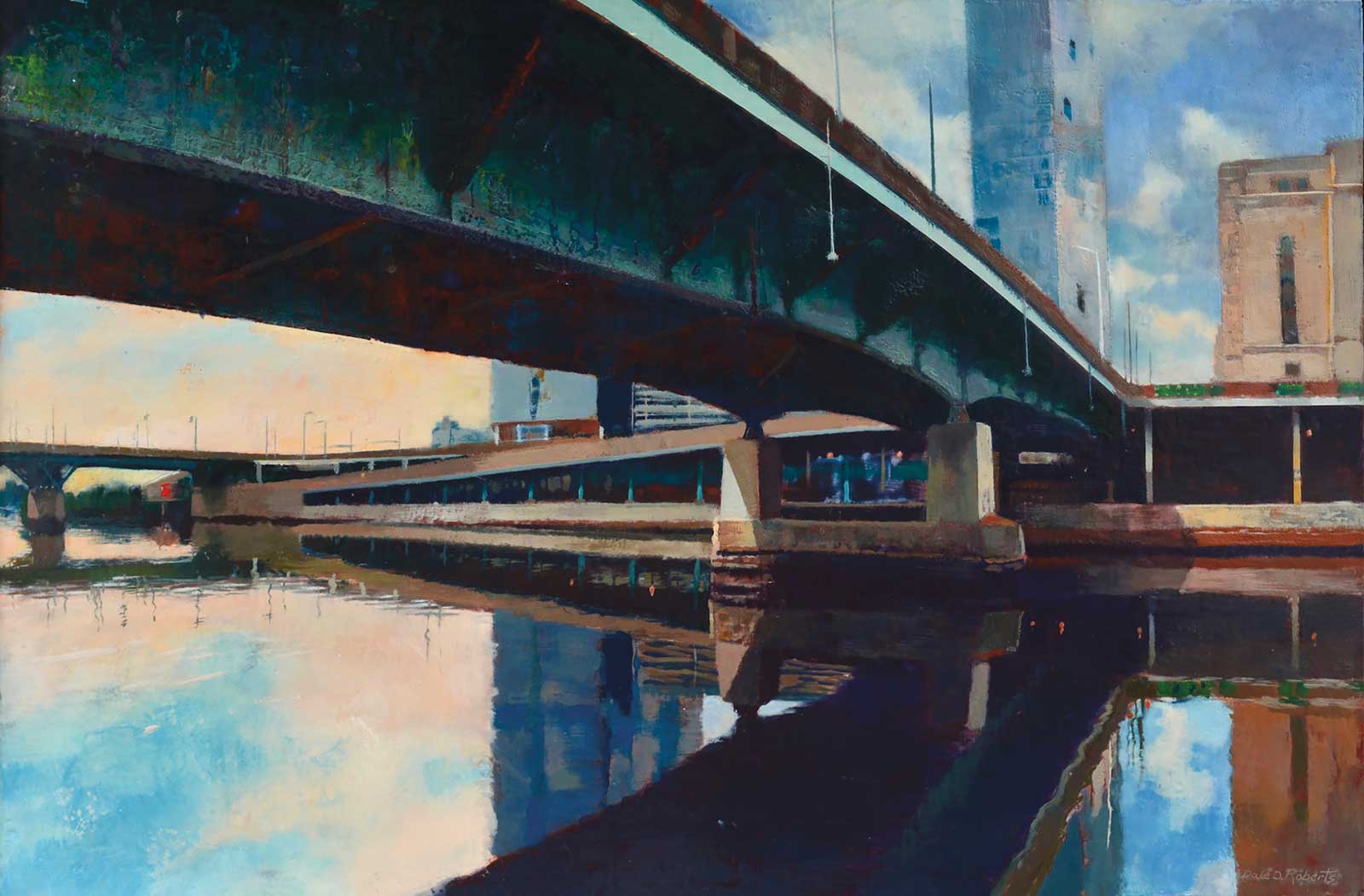 Gross McCleaf Gallery, Coming Forward, encaustic, 24 x 36", by Dale Roberts
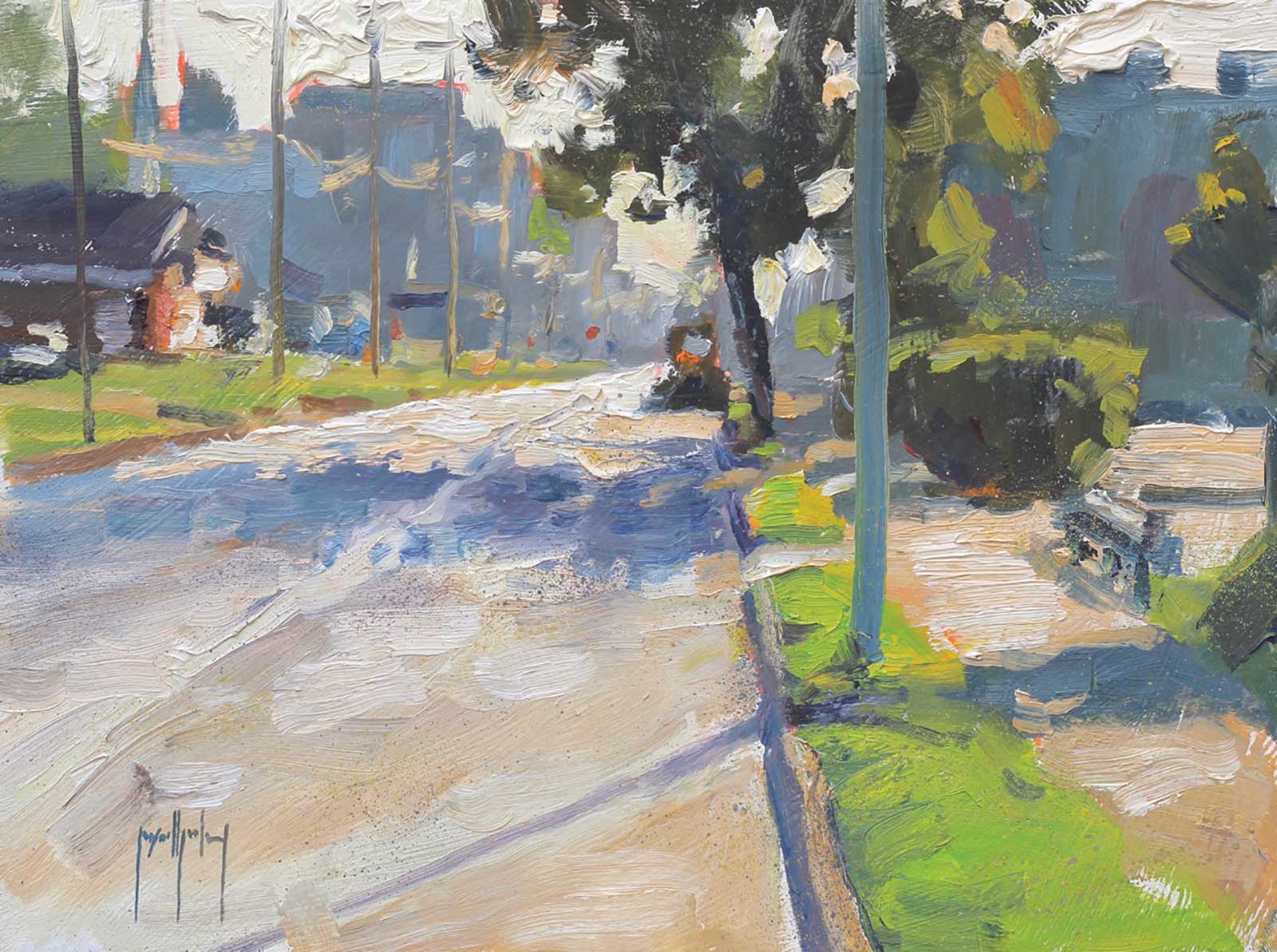 Jason Bailey, Sun Drenched, oil on panel, 9 x 12"
Canyon Road Contemporary Art, located on the famed Canyon Road in Santa Fe, New Mexico, offers an array of artwork to entice collectors of all types. Gallery owner Nancy Ouimet says, “Our landscape artists find personal fulfillment in their lifelong contemplations of the landscape and how it moves us spiritually. Examining our relationship with time, Mark Bowles layers shifting color palettes of sky and earth with a minimalist approach, allowing the viewer to inhabit the space with a feeling of awe. Phyllis Kapp’s bountiful and fiercely joyful watercolors celebrate life and [there is] power over our hearts with her colorful paintings.”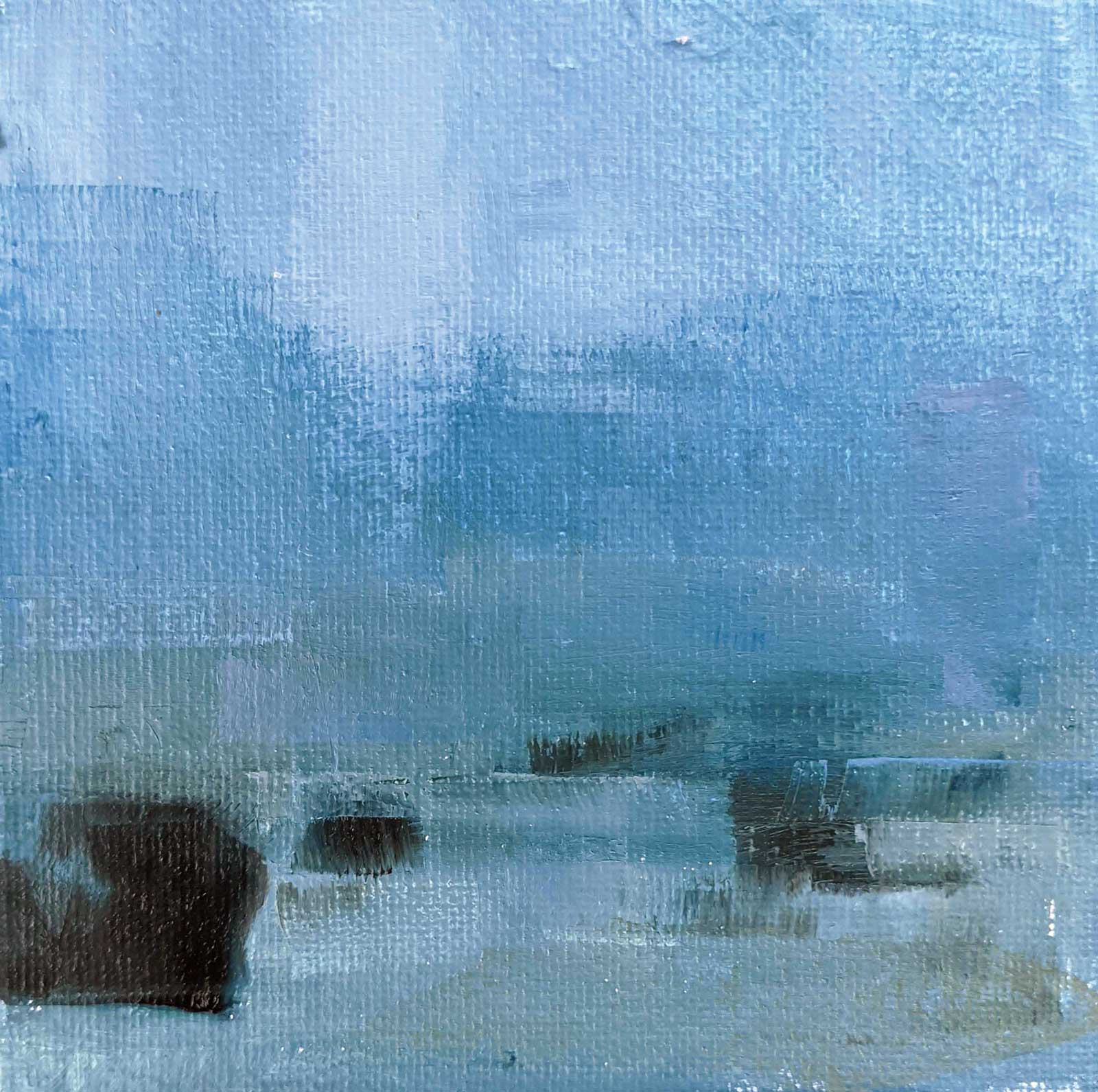 Clement Scott, Landscape Study #12, oil on panel, 5 x 5"
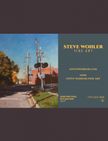
Steve Wohler paints Midwestern landscapes and townscapes. Preferring to showcase the ordinary over the spectacular, he uses a realistic, yet loose style that rings of the truth. Whether working in the studio or plein air, he hopes to convey the essence and emotion of a place and time. “I enjoy conveying a simplicity that gives a sense of well-being. My inspiration comes from scenes of the Midwestern landscape, small towns, country roads, fields and farms,” he says. “Including man-made objects such as buildings or an old truck adds interest and contrasts well with the landscape. Trying always to employ great light and a fairly loose brush gives wonderful energy to the painting.”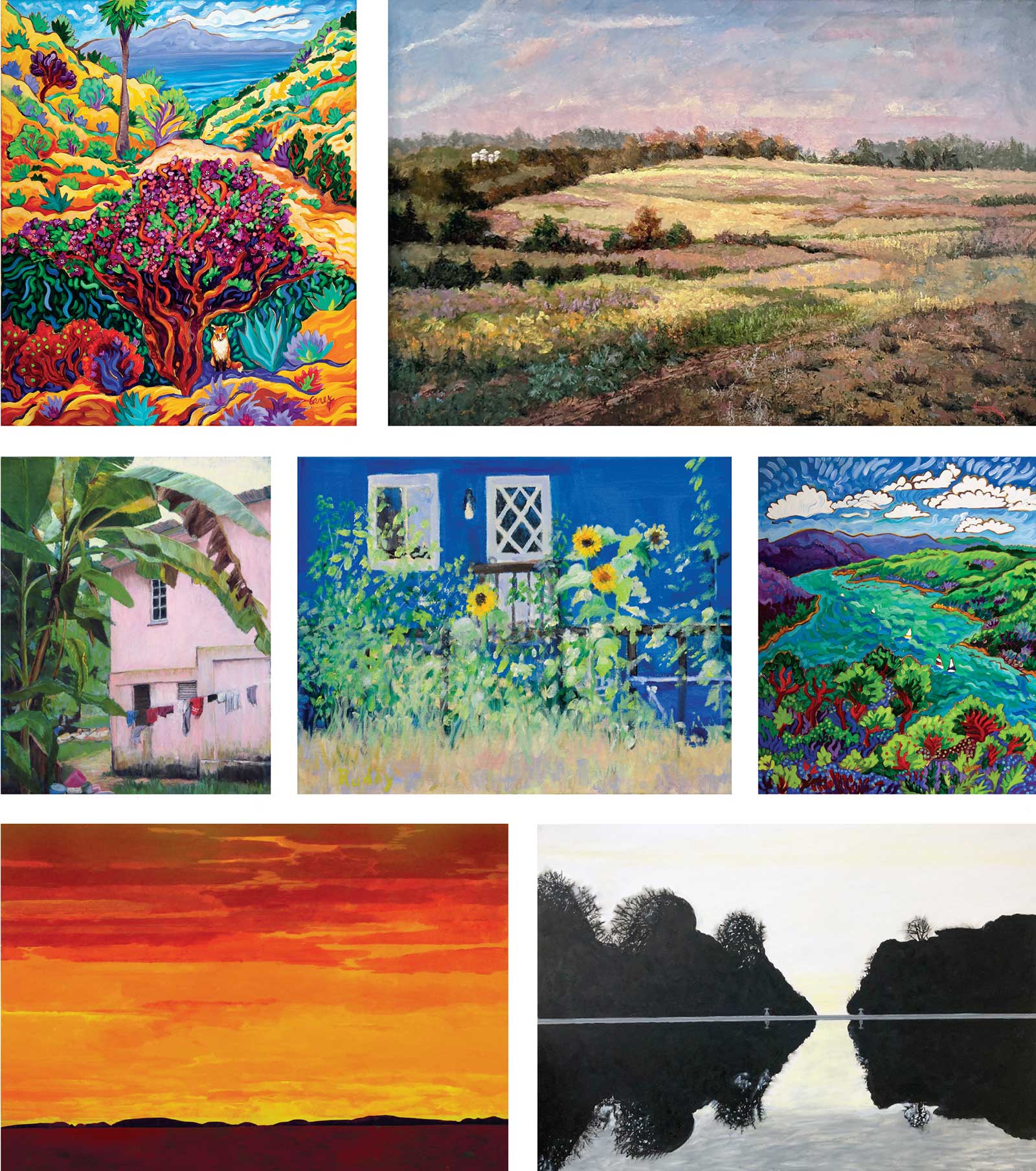 Top row, left to right: Cathy Carey, Shelter in Place, oil on linen, 24 x 20"; F. Lisa Hannick, Golden Waves of Grain, oil on board, 16 x 24". Center, left to right: Marsha Hamby Savage, Wash Day, pastel, 20 x 16"; Sally Ruddy, Sunflower Welcome, oil on canvas, 11 x 14"; Cathy Carey, View from Esperanza, oil on linen, 24 x 20"; Bottom row: Canyon Road Contemporary Art, Solitude of the West, acrylic on canvas, 50 x 72", by Mark Bowles; SHOH Gallery, Reflecting Pond After Atget’s Saint-Cloud June 1926, oil stick on paper, 27¾ x 39", by Archana HorstingAccording to artist Marsha Hamby Savage, “Nature is a happy place to me and creates a smile on my face. In my mind, all is right with the world. When I have a bit of time to enjoy walking or sitting in it, I find multiple paintings in my mind. Inspiration on any given day can be totally different, but the angle of the sun seems to play a large part in what I choose. Maybe a misty atmosphere or low or warm early light could send my mind off on a journey. I love a bend in the road or river, with a bit of mystery to be found. Most of my work tends to have trees in a rural setting, or rocks and cascading water. The elements in nature also remind me of gestures and human qualities, creating a story in my mind, and I end up naming it something that fits the story.”
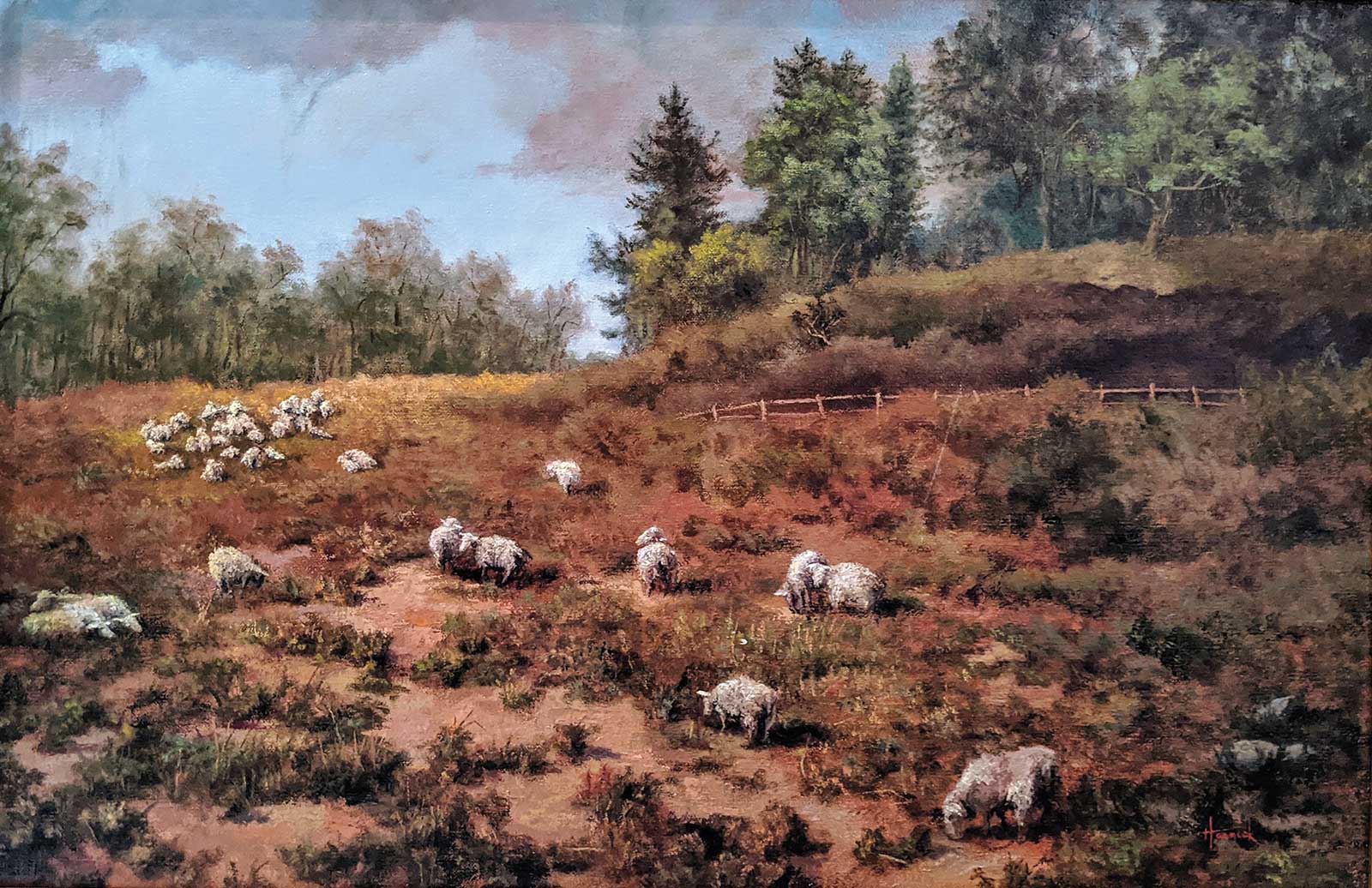 F. Lisa Hannick, Sheep in the Meadow, oil on linen, 15 x 23"
Creating since she was a small child, Kimberly Conrad believes she is an abstract expressionist at heart. “Each painting is a journey, dictated primarily by my current thoughts and emotions; be they happy, sad, peaceful or frenzied,” says Conrad. “It is a mysterious relationship and is thrilling when the painting finally reveals itself, and our private journey becomes a story to share.”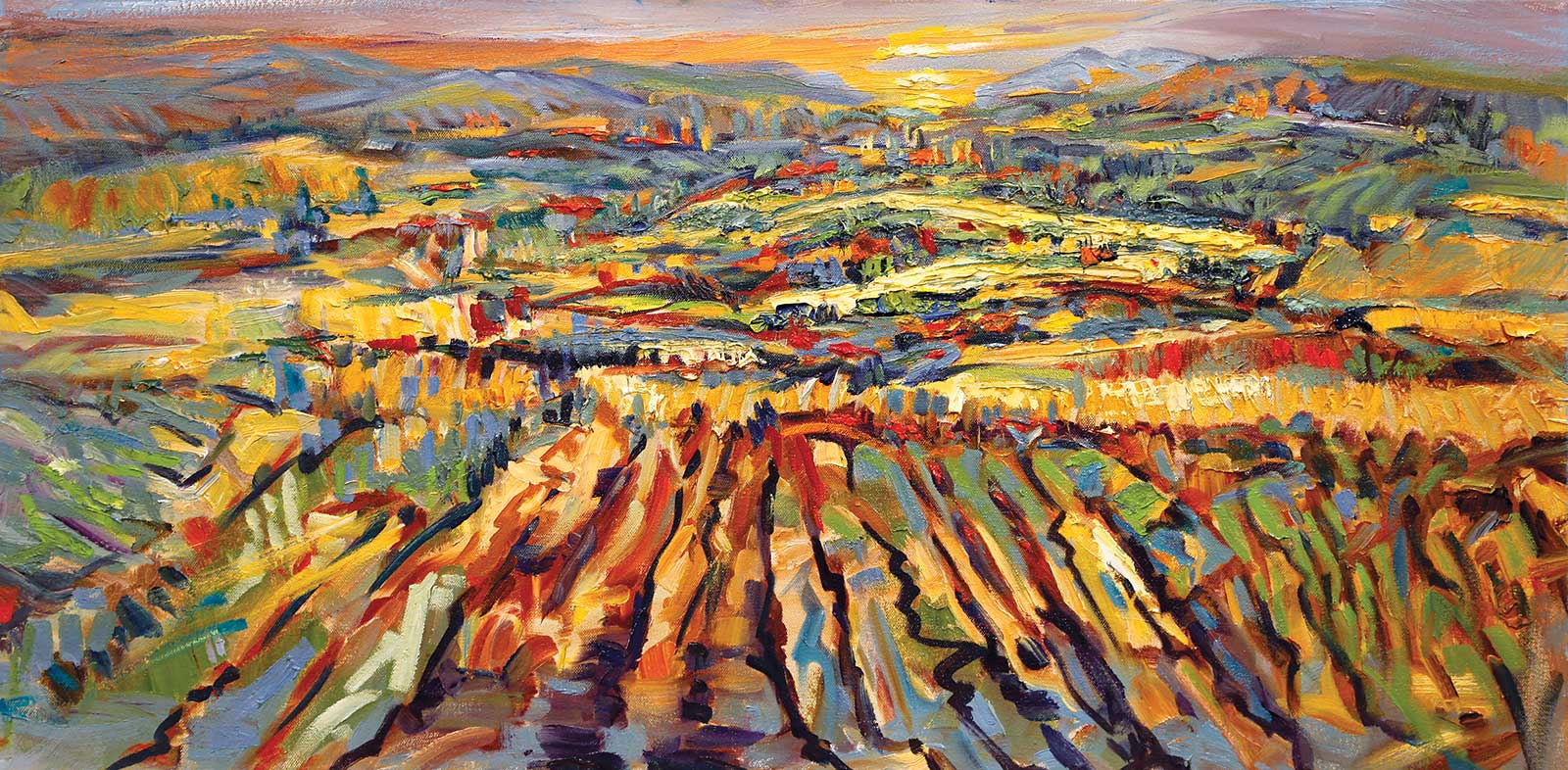 Janet Grissom, Journey of Color, oil on canvas, 18 x 36"
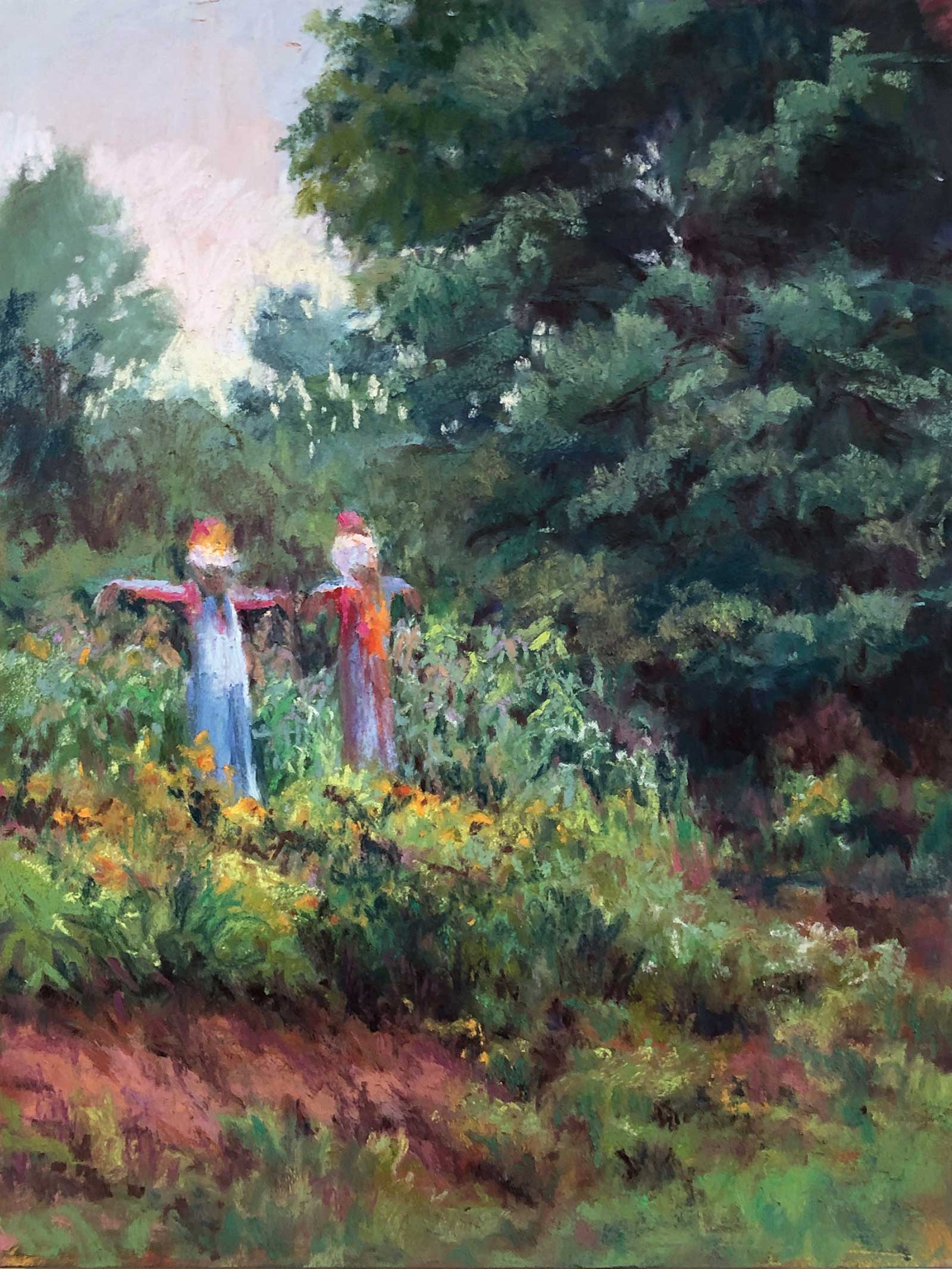 Marsha Hamby Savage, Partners In Fun, pastel, 12 x 9"
For Janet Grissom, “Landscape as a concept is not dictated by a singular realistic capture. I see landscapes as a layering of present sensory perception, details of past travels and saturated strokes of future dreamscapes. My eyes, mind and soul reach for a place of commonality on the canvas creating space and experience for the viewer.”
She continues, “I connect the visual elements of time, place and imagination in the composition, adjusting my design, color and marks to find a complete understanding of my world. The design is sometimes delicate, other times powerful and dynamic. Technically, I crave rich colors that relate to the landscape. I apply the colors with rhythmic, gestural marks. My brush simulates the passion I feel when wind blows waves through fields of grasses or trees layer their leaves over the sun.”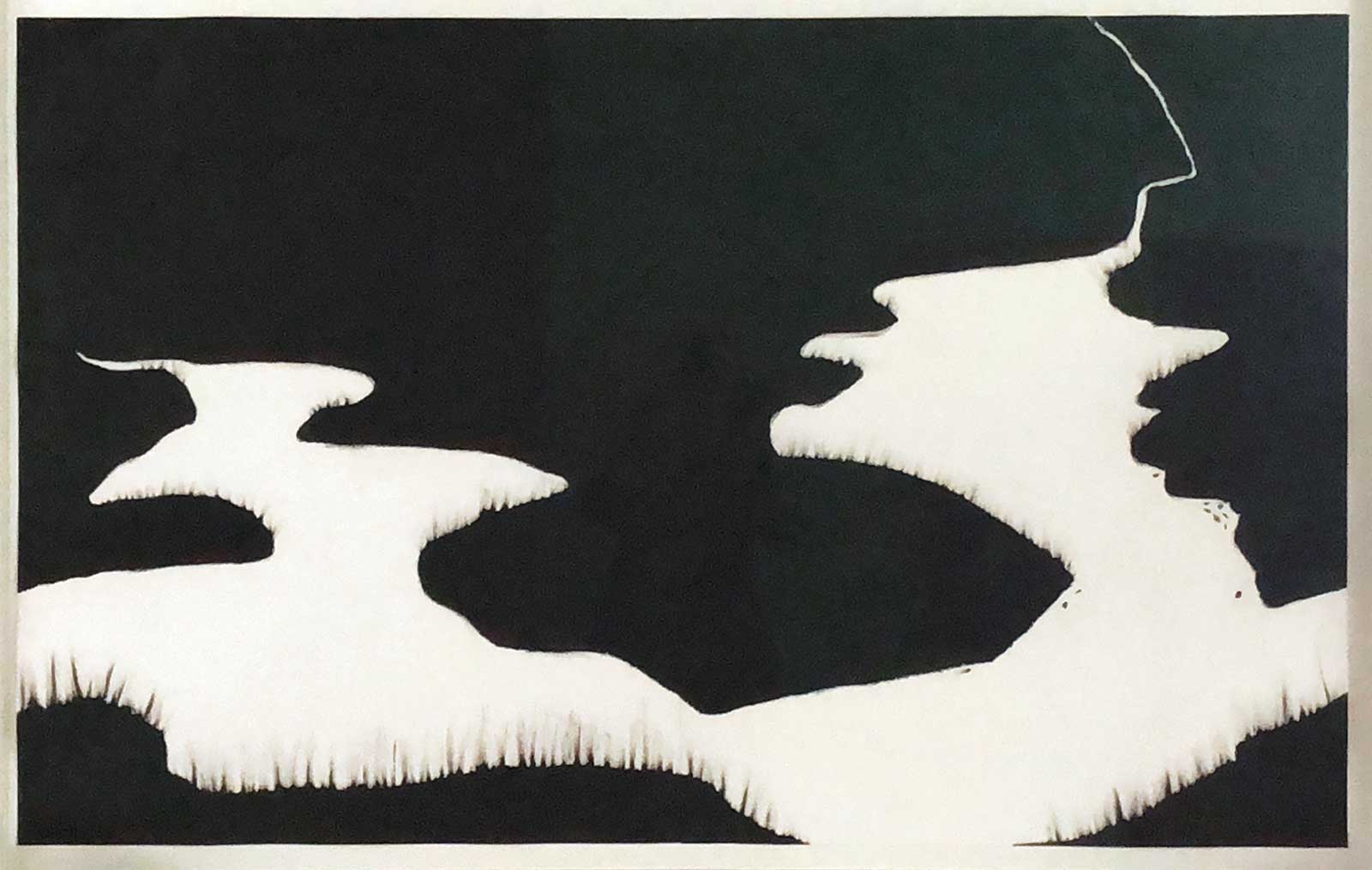 SHOH Gallery, Tributaries (diptych), oil stick on paper, 40 x 64", by Archana Horsting.
Many times, the places in her paintings are specific to the moment Grissom is living, and through layers and symbols she tells the stories of the place.
Jason Bailey tells a story through the poetry of light in the landscape. Living in the middle of America without the grandeur scenery, he has to focus more on composition and values. He’s also studied plein air painting from masters in the field, allowing him to accurately capture elements of the landscape with ease. “I love to be outdoors to see and capture the poetic dance of light and shadow in my paintings,” says Bailey.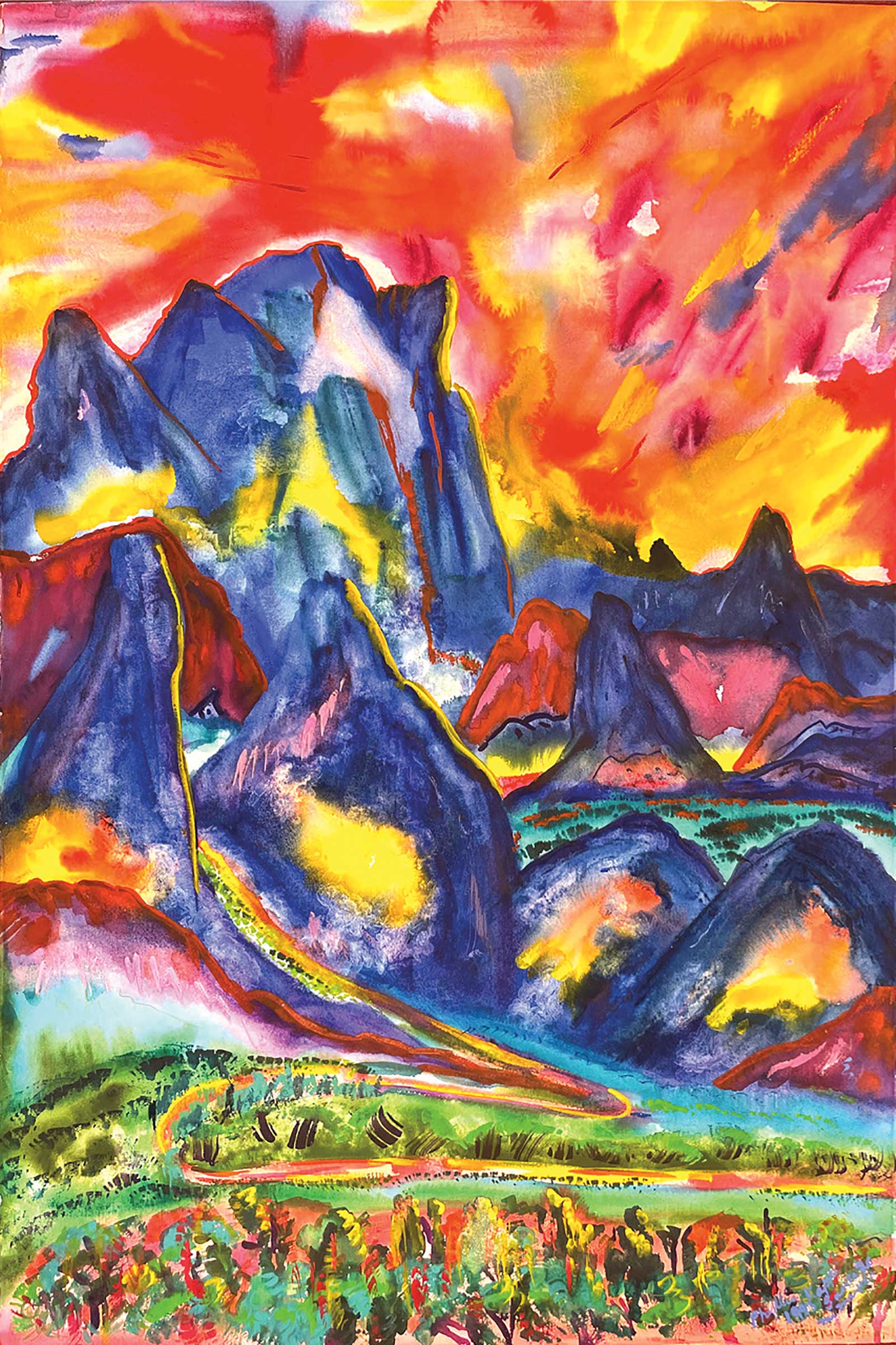 Canyon Road Contemporary Art, Rhythmic Impressions, watercolor on paper, 60 x 40", by Phyllis Kapp
“I focus on composition, value, color and texture so I am able to capture the mood of the scene before me.”
California-based artist Cathy Carey says, “I love painting landscapes and animals and point the energized feeling I get when I’m surrounded by nature. I’m fascinated by organic shapes, inspired by the feel of the wind and intrigued by how movement makes light dance in patterns of warm and cool. I want my pictures to be more than the reality of description, and I strive to fill viewers with a sense of joy.”
Carey is represented by La Playa Gallery in La Jolla, California. Gallery owner Vaughn Woods says, “La Playa Gallery is delighted to be the exclusive West Coast representative for Cathy Carey, an artist deserving of national recognition. Collectors seeking awareness of her works will find the word ‘joy’ a fascinating initial argument expressing her interdisciplinary expertise.”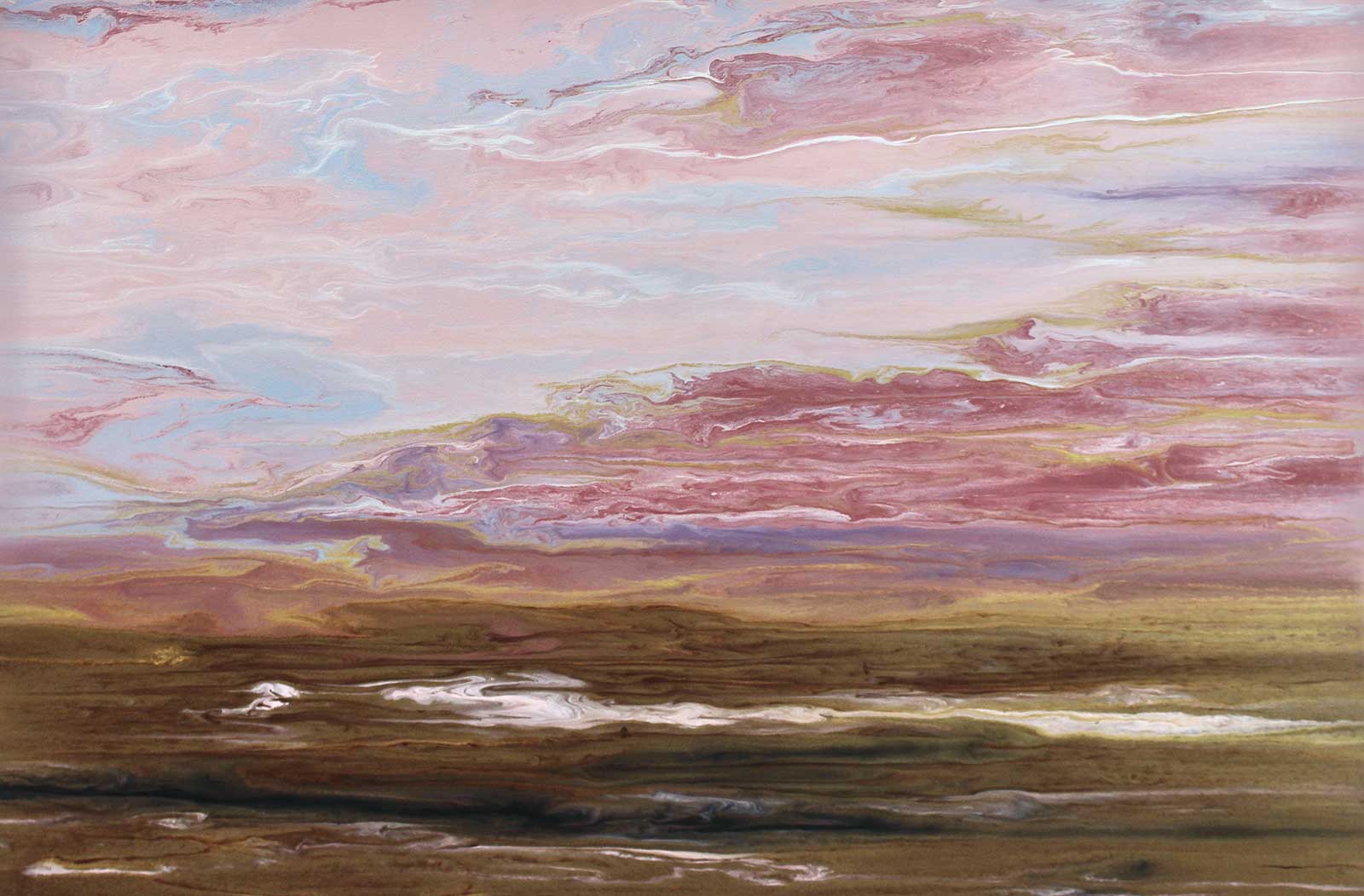 Kimberly Conrad, Softly Calling III, acrylic on gallery wrapped canvas, 24 x 36 x 1½"
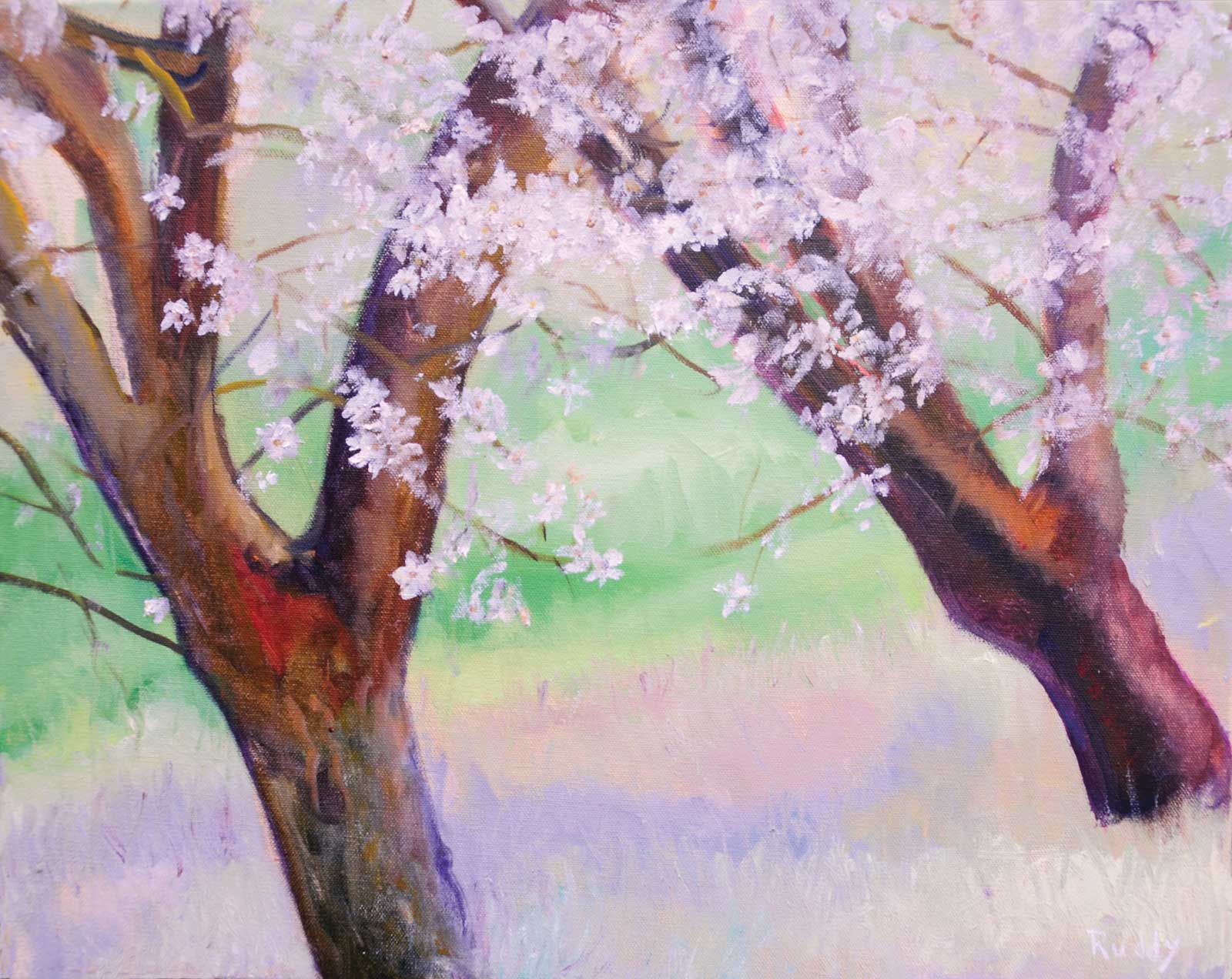 Sally Ruddy, Filigree, oil on canvas, 15 x 20"
“Creative juices run deep. And once conceded, can never be ignored,” says F. Lisa Hannick. “The thirst for artistic knowledge whether about art, artists or technique cannot be quenched. For me, it is a lifelong learning process. It, among many other things, is the impetus that moves me to express myself through paint. From the excitement of starting a painting, then working through the frustrations of not accomplishing exactly what you envisioned, to finally feeling the satisfaction of a work well done, is the struggle of every artist. From men drawing on cave walls to the great artists of today, we all encounter the same trials, tribulations and ultimate joy.”
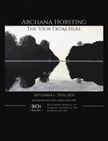
SHOH Gallery in Berkeley, California, will present an exhibition for Archana Horsting this September 1 to 25. Her paintings are mostly done in black and white, allowing the elements to be simplified. The artist says, “All of my artwork reflects a lifelong interest in landscape and architecture. For a very long time I have been working in black and white for several reasons. First because I like the full arc of contrast that I get with it. Second, I see a multitude of implied color in the work and each artwork asks the viewer’s full participation to imagine the colors they see in their own mind. Third, I love the dense black pigment that feels to me like the soil or the earth itself.”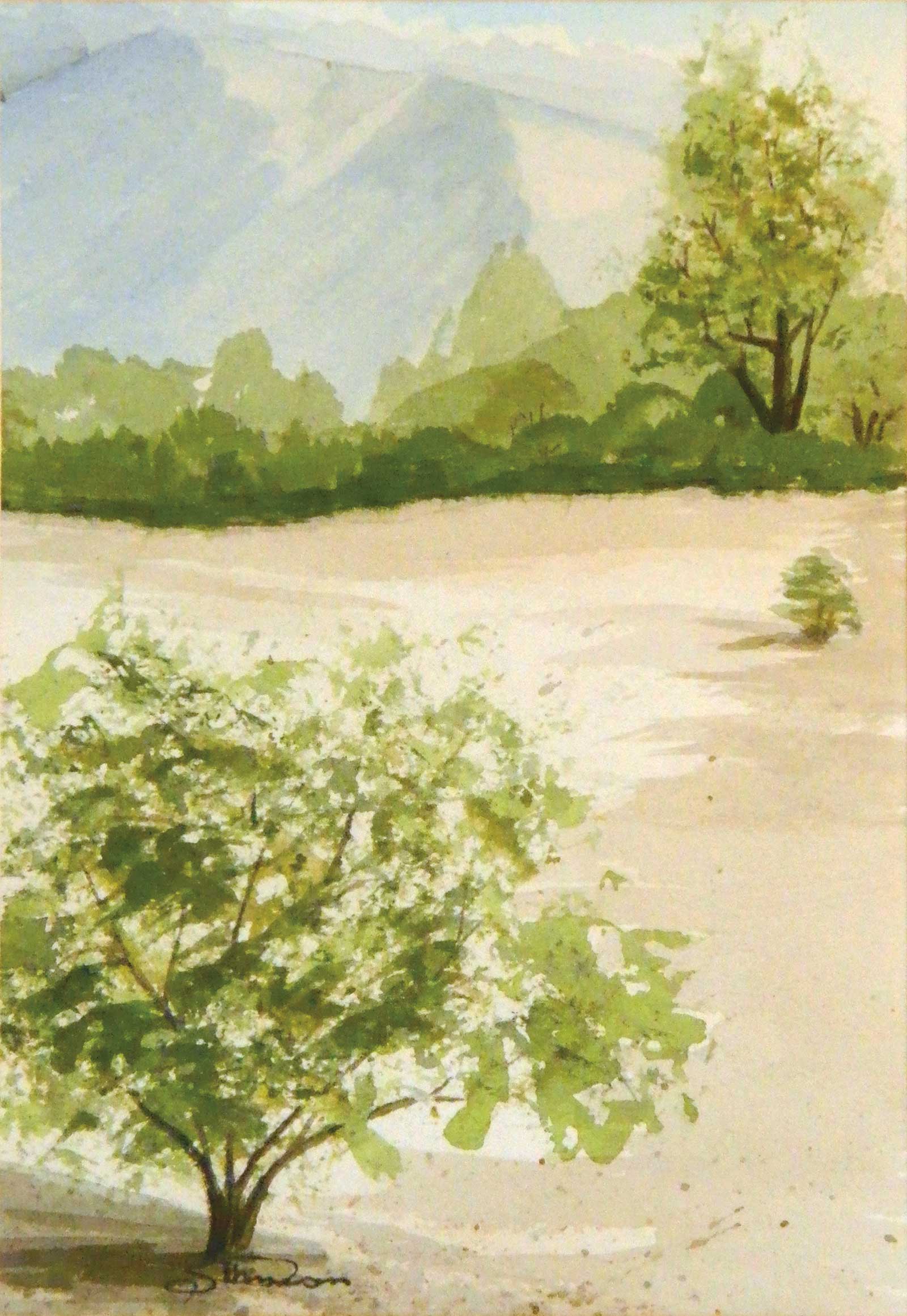 Sally Thomason, Yuma Solitude, watercolor on Arches, 6½ x 4½"
Sally Thomason’s watercolor Yuma Solitude has a serene atmosphere, reflecting the mood that she felt when observing her desert surroundings. She elaborates, “I was taken with how quiet the desert can be, with the calm I felt, with the beauty of an almost monochromatic landscape.”
Artist Sally Ruddy lives in the California Central Valley on a small ranch in the town of Waterford. “This is farm country, made up of orchards and fields. When I find something that resonates with me, sometimes, I can get right to it; other times I have to wait. I plant the seed of an idea and wait for it to grow.”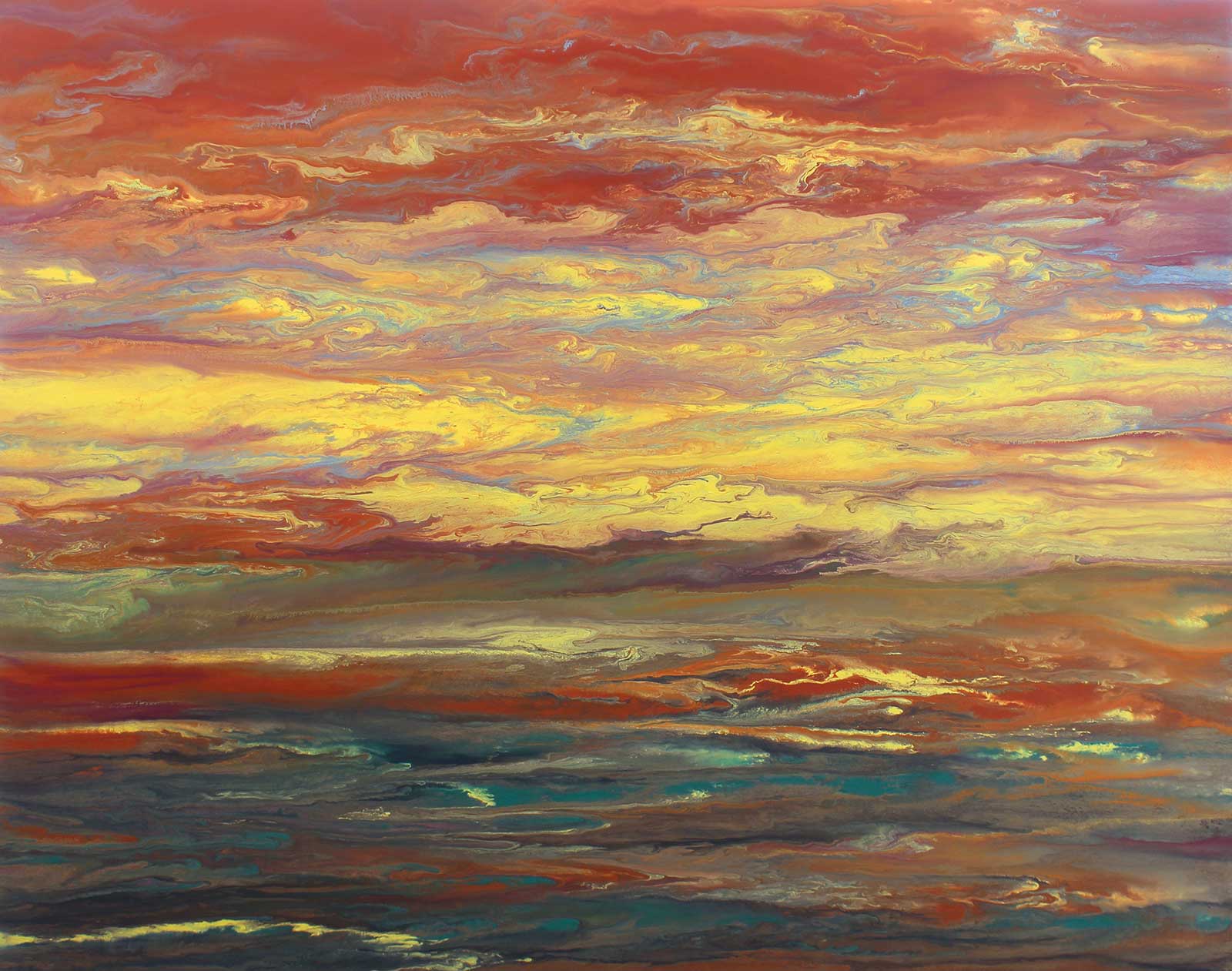 Kimberly Conrad, Blazing Sky Reflected VIII, acrylic on gallery wrapped canvas, 48 x 60 x 1½"
By simplifying the composition, Ruddy creates a quietude in her landscapes. Her soft brushwork expresses her feminine tenderness toward nature. Such as in Filigree, the delicate patchwork of new blossoms and in Sunflower Welcome expressing its bright cheer.
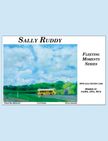
The Fleeting Moment Series reflects her efforts to find those experiences that catch the eye. We want them to last, but what makes them so special is how soon they pass. For a few brief moments the ordinary becomes the extraordinary. —
Featured Artists & Galleries
Altamira Fine Art
Jackson, WY & Scottsdale, AZ
www.altamiraart.com
Canyon Road Contemporary
622 Canyon Road, Santa Fe, NM 87501
(505) 983-0433, info@canyoncontemporary.com
www.canyoncontemporary.com
Cathy Carey
cathy@artstudiosandiego.com
www.artstudiosandiego.com
Represented by La Playa Gallery
2226 Avenida De La Playa
La Jolla, CA 92037
(858) 454-6903, laplayagallery@gmail.com
www.laplayagallery.com
Clement Scott
(520) 269-3310
www.clementscott.com
David Jenks
P.O. Box 516, Mendocino CA 95460
(707) 937-2748, phone
(818) 497-0875, cell
art@djenks.com, www.djenks.com
F. Lisa Hannick
(917) 548-8350, lisa@hannickfineart.com
www.hannickfineart.com
Gallery Victor Armendariz
300 W. Superior Street
Chicago, IL 60654
(312) 722-6447, www.galleryvictor.com
Gross McCleaf Gallery
127 S. 16th Street
Philadelphia, PA 19102
(215) 665-8138, www.grossmccleaf.com
Janet Grissom
(614) 218-7985
www.janetgrissompaintings.com
Janine Salzman
(949) 310-5649
www.janinesalzman.com
Jason Bailey
jwbaileyart@yahoo.com
www.jasonbaileyfineart.com
Kimberly Conrad
Kimberly Conrad Contemporary Art Gallery
220 E. 7th Avenue, 2nd Floor
Denver, CO 80203, (303) 881-2258
kimberlyconradfineart@gmail.com
kimberlyconradcontemporaryart.com
Marsha Hamby Savage
Smyrna GA, (770) 853-4696
www.marshasavage.com
Meyer Gallery
225 Canyon Road, Suite 15
Santa Fe, NM 87501
(505) 983-1434
www.meyergalleries.com
Rehs Contemporary
5 E. 57th Street, 8th Floor, New York, NY 10022
(212) 355-5710, www.rehs.com
Sally Ruddy
info@sallyruddy.com
www.sallyruddy.com
Sally Thomason
(509) 520-8080, sally@slthomason.com
SHOH Gallery
700 Gilman Street, Berkeley, CA 94710
(510) 406-4661
www.shohgallery.com
Steve Wohler
(937) 602-3868
www.stevewohler.com
Powered by Froala Editor