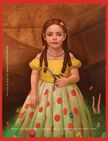
Semyon Bilmes trained in the rigorous tradition of the Russian art academy, later immigrated to New York and graduated from the Parsons School of Design. He dreamed of having a school that would teach drawing, painting and composition—the fundamental skills needed to produce great art. He moved his family to Oregon and established the Ashland Academy of Art, now Atelier Maui in Hawaii.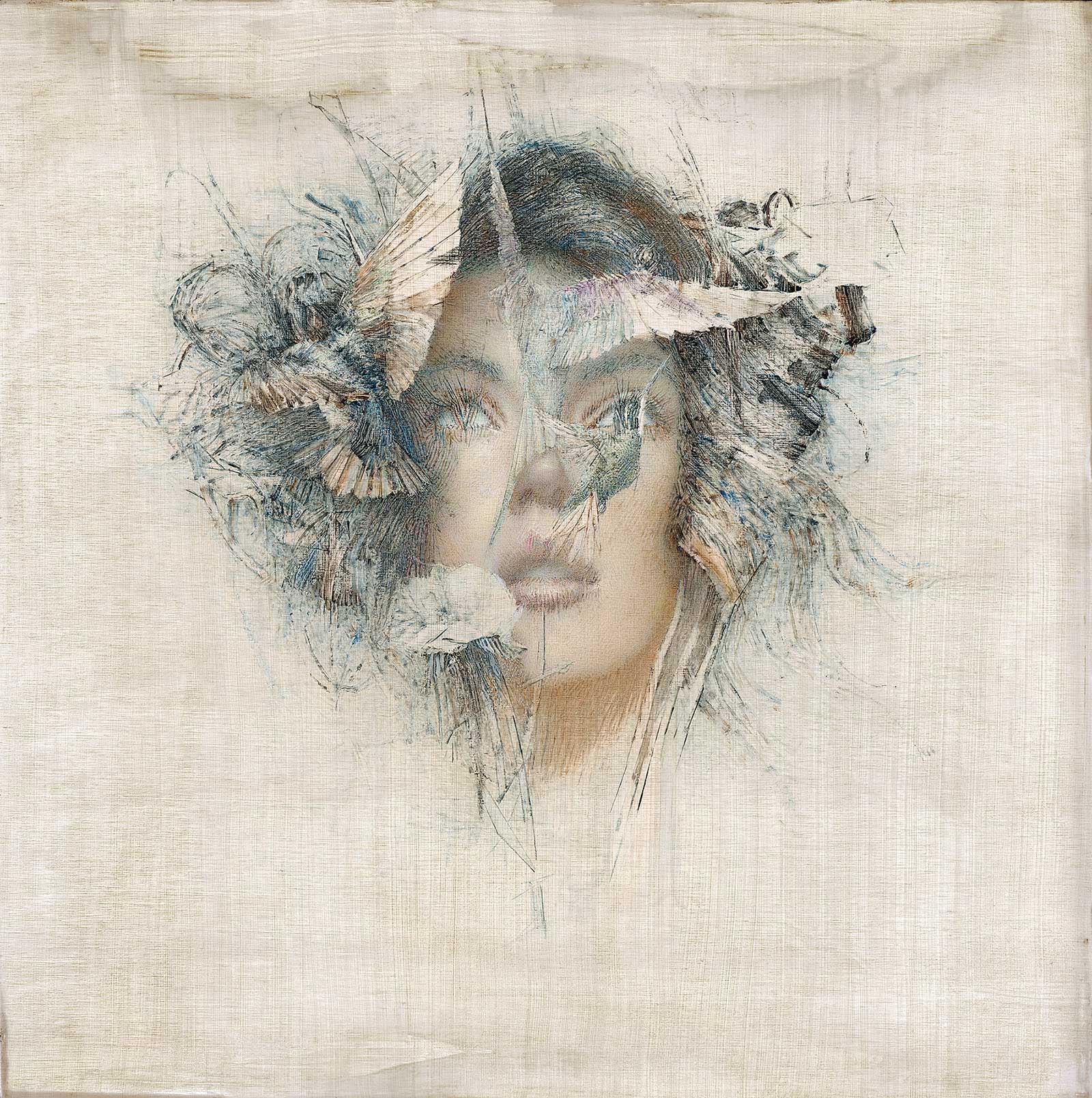 The Weavers, oil on panel, 20 x 20"
His son, Daniel, was born in Oregon in 1989 and began studying with his father at the age of 8. Despite the influence of the international greats of the past, his father continues to be his greatest influence. “He is responsible for my foray into this career,” says Daniel.
“A lot of my childhood was spent in the art school,” he recalls, “constructing easels, remodeling the building. The school was based on the curriculum of the French and Russian academies. I enjoyed the discipline. It was a kind of visual arithmetic, developing a skill set. It was like my training in fencing—systematically improving through discipline over time. You learn to stretch your brain in different ways. My transition into the personal came later when I asked what do I want to do with this skill set?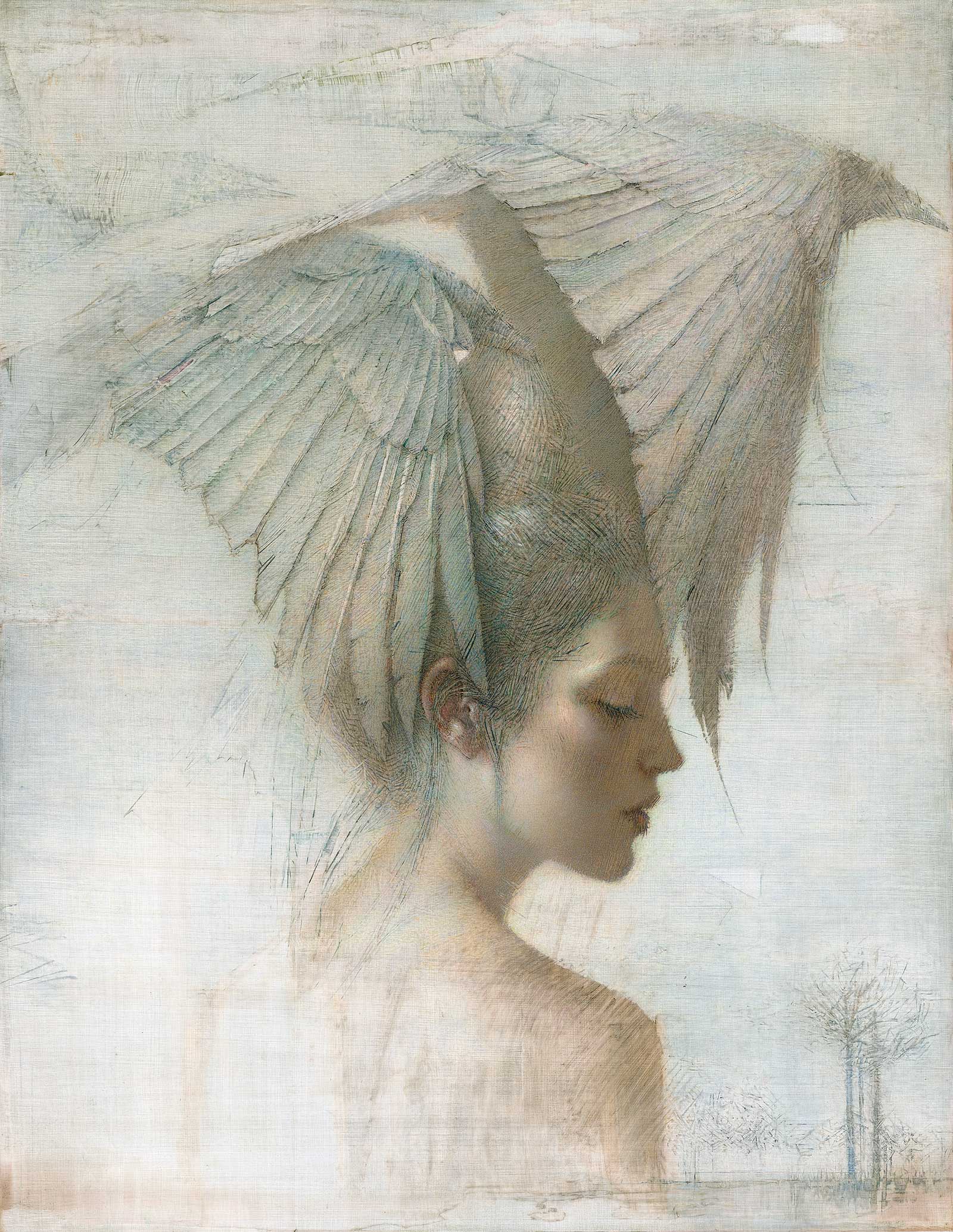 Ravens Shadow, oil on panel, 31 x 24"
“I started thinking about where this goes in my early to mid-20s,” he continues. “I took aesthetics, textures and atmosphere more seriously—more personally. I basically wanted to understand what makes me feel things when I look at imagery.
I would compile images of architecture, sculpture, photography, historic paintings, that make me feel something. I built folders and would go through them beginning to understand my own response to visual stimuli—is it random or is there a pattern or a construct that makes me feel something?”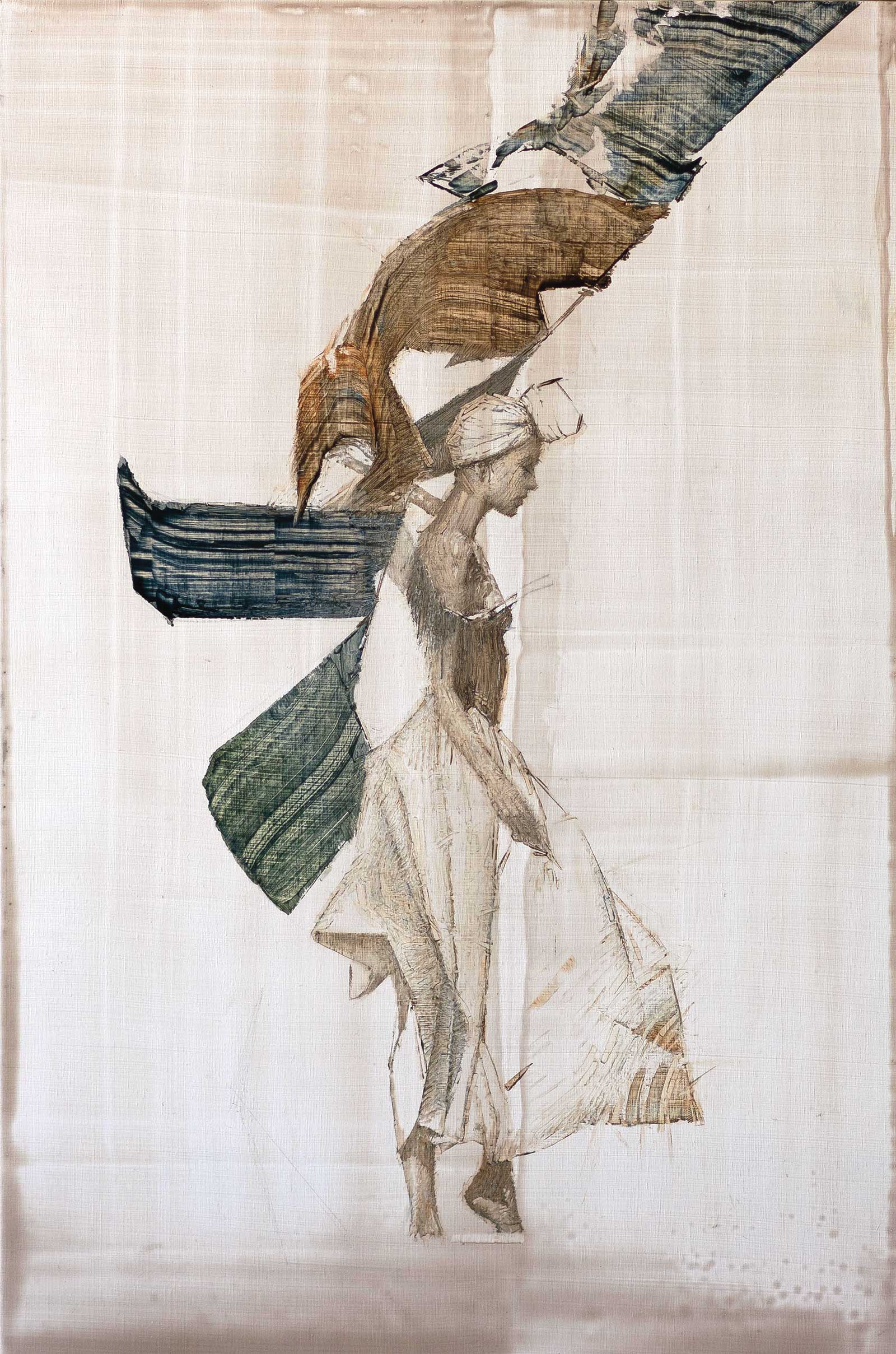 Silk, oil on panel, 18 x 12"
Daniel found there are “certain shapes and certain types of composition and tonal value that have their own meaning before even getting to the image. I like muted, subtle color gradients and luminosity. I’m obsessed with texture and enjoy creating it, scraping into the paint as it dries.”
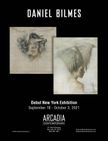
His most recent work will be shown in his first New York exhibition at Arcadia Contemporary, September 18 through October 3.
“This show is the most complex one I’ve done,” he says. “I’m pushing the boundaries and pushing myself. I’m not holding back and am giving the paintings what they need to get to a place where I want them to be. I’m not worrying about the time and intensive work. It’s been a year and a half in the making, and I’m looking forward to sharing it.”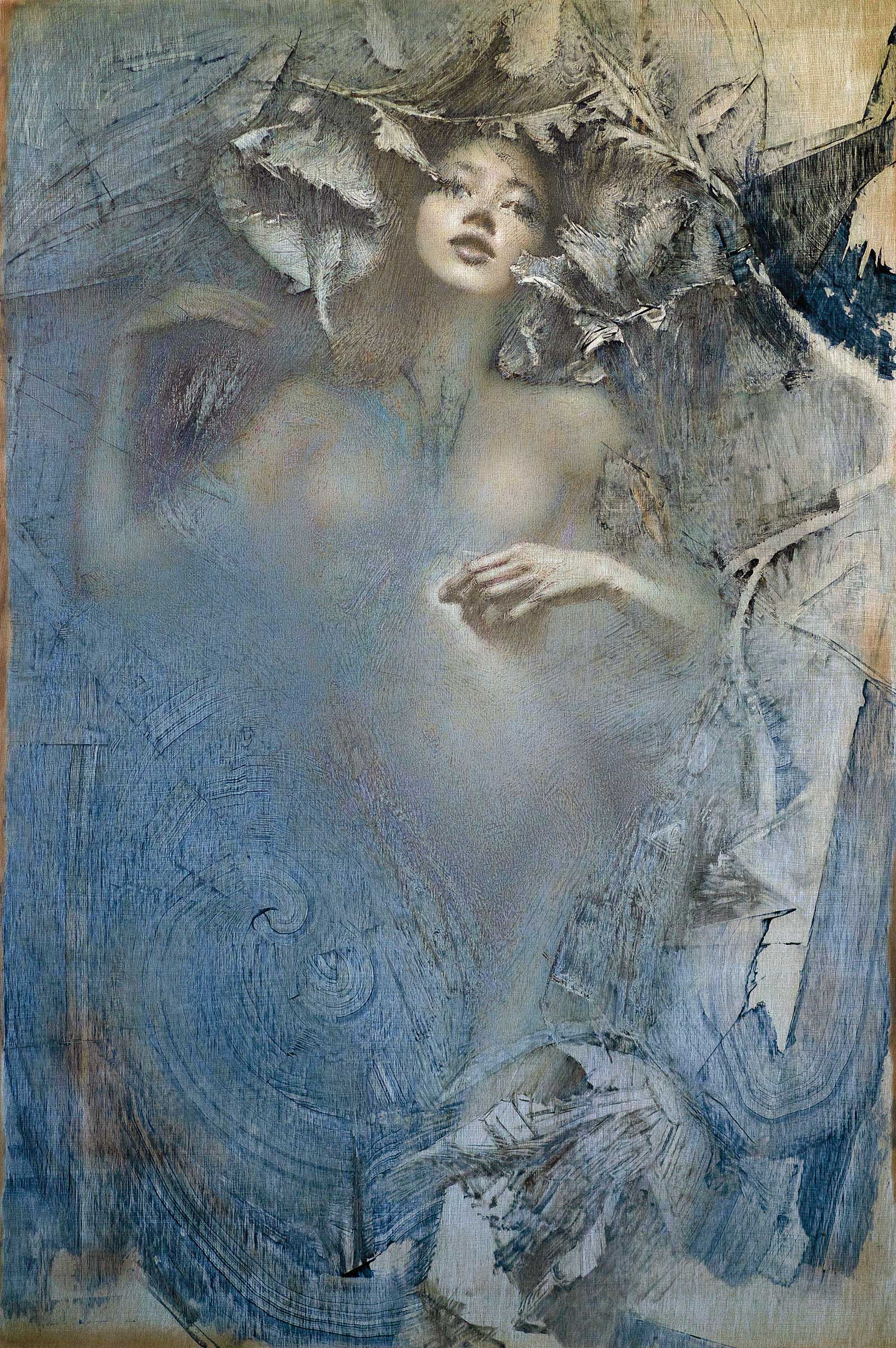 Ophelia, oil on panel, 36 x 24"
He prepares the surface of his panels through a process of applying different layers and subtle washes to create an environment for his subjects. “I create an environment I’m excited to build in and sort of weave my paintings into it,” he explains. “The further the painting progresses I develop a partnership with it. I keep asking it what does it need. I try to complete the painting, not finish it.”
In The Weavers, the prepared panel itself feels like a weaving. Birds flutter around a woman’s face, weaving a nest and “almost weaving her into existence,” he observes. “She is fascinated by the process of her becoming.”
Birds are prominent in his paintings, especially in his new work, Ravens Shadow. “A bunch of ravens live right outside my window,” he says. “I like the amount of feathers ravens have and like to explore their level of complexity, texture and form. I like painting them and stylizing them. Compositionally I can arrange birds in space according to the movement of their wings and feathers.”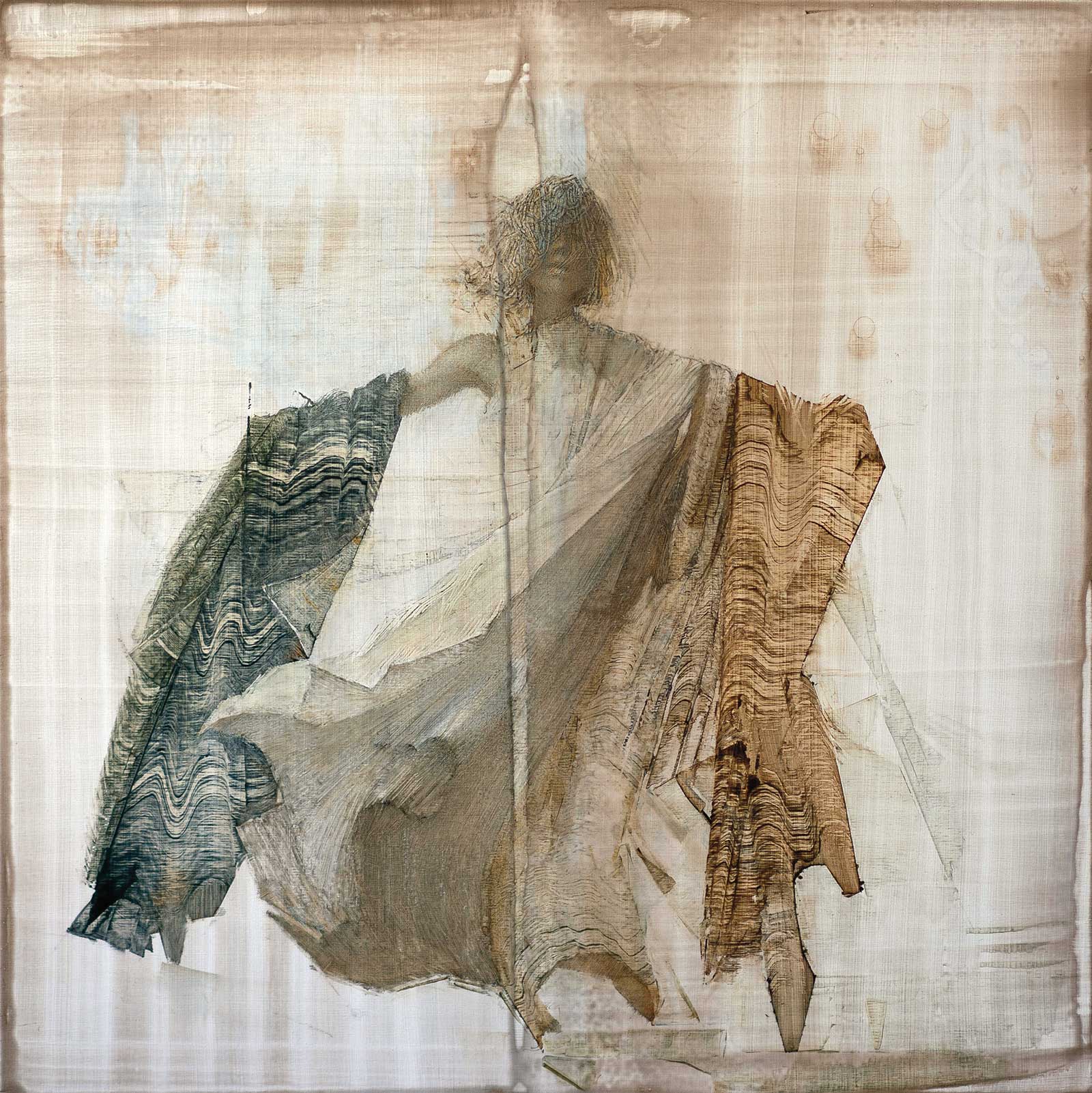 Decima, oil on panel, 18 x 18"
Daniel notes the raven’s symbolic role as harbinger and its prominence in literature. Charles Dickens kept ravens and wrote about creating a character who would be “always in company with a pet raven, who is immeasurably more knowing than himself.” Edgar Allen Poe wrote about a mysterious raven rapping at his chamber door.
In the painting, he notes, “the tips of the ravens’ wings are triangular, and each raven is triangular. There is complexity within simplicity. Their interaction casts a shadow on the space between them and on her hair, creating an interaction with her.”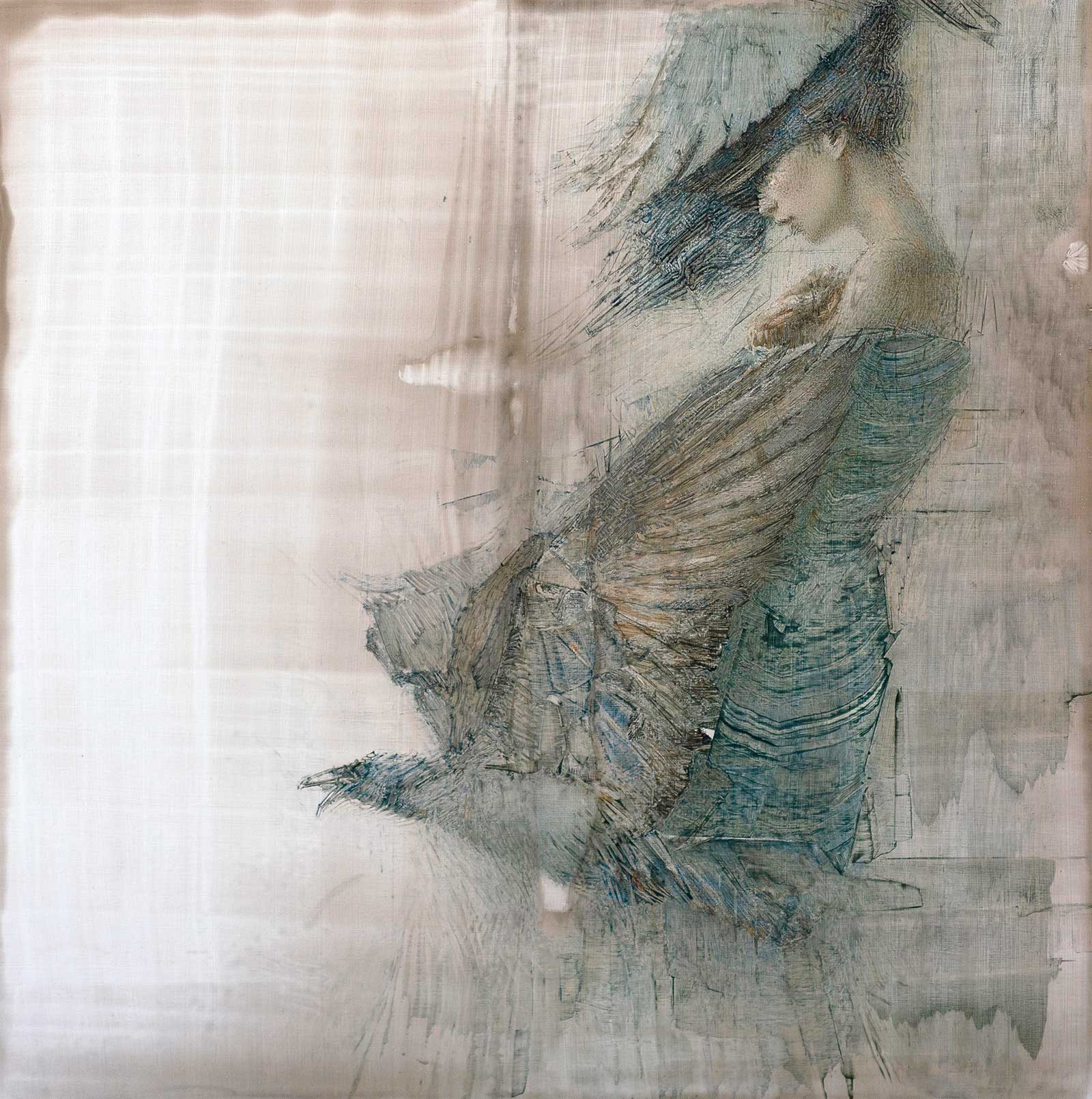 Morta, oil on panel, 16 x 16"
Interaction with the viewer is another component of his work. “I like the viewers to come up with their own stories which don’t need to be literal. I’m always fascinated about portraying expression. I find it interesting to create in the realm of conveying a feeling that people interpret themselves,” he says. “It’s a personal thing. The more personal a subject is the more you care and, in my case, the better I paint it. I go deeper because I’m interested.”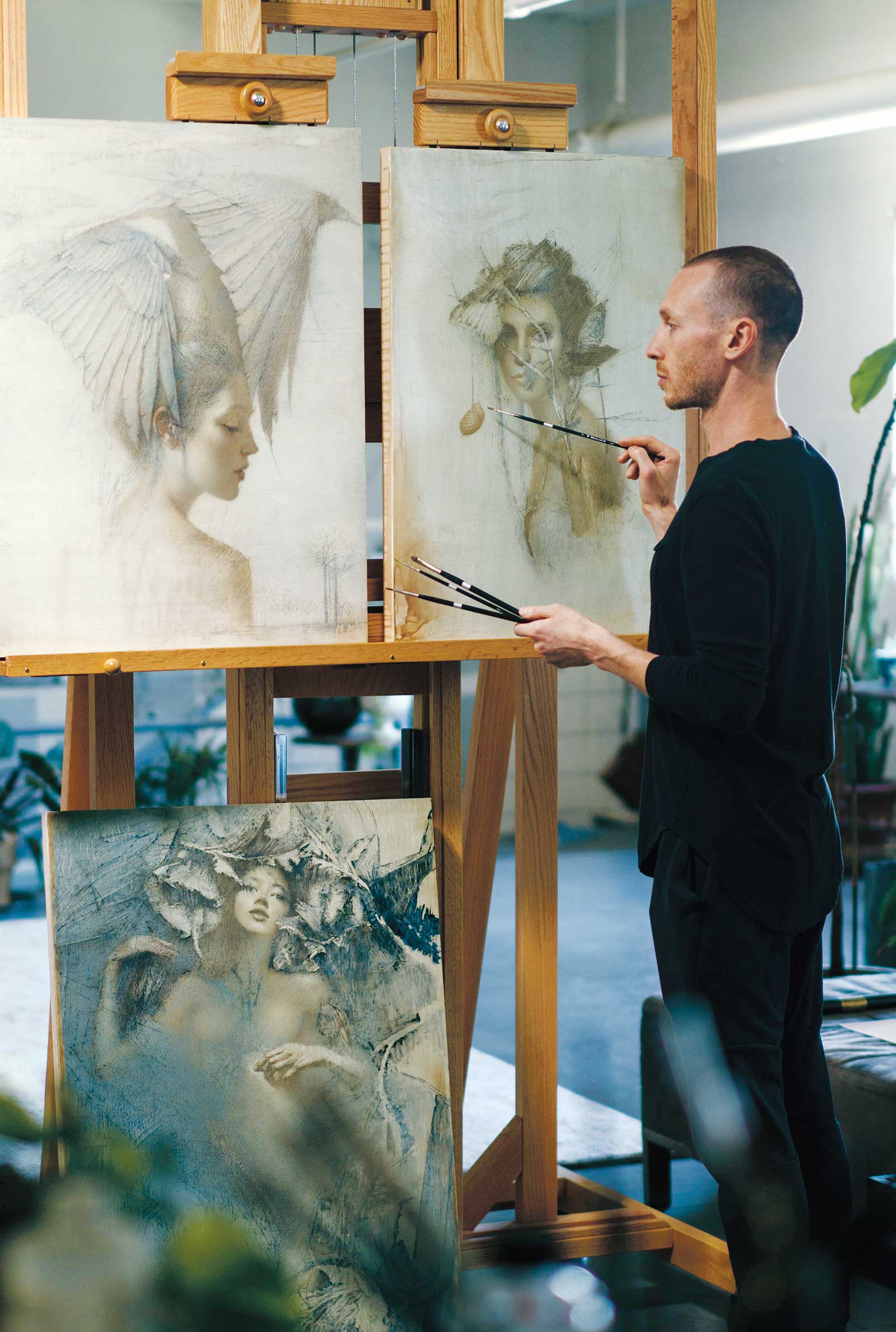 Daniel Bilmes in his studio with some of his newest paintings.
Among the new paintings are those of the three Fates. Decima and Nona were responsible for weaving the fabric of life and Morta’s role was to determine when to cut the thread. The three Fates will be woven into one painting for the exhibition. Wind will be an element of the composition as each responds to it as we each respond to our common environment. “As powerful as they are,” he observes, “they’re subject to the wind. It is a duality of strength and surrender. People try to grasp control but nobody really has power.”
Bilmes is passionate about personal growth. “I have developed through my work,” he says.” I like the disciplines that allow you to evolve. A strong society comes from strong individuals who have the responsibility to grow and develop and, gradually, to evolve.” —
Daniel Bilmes
When: September 18-October 3, 2021
Where: Arcadia Contemporary, 421 W. Broadway, New York, NY 10012
Information: (646) 861-3941, www.arcadiacontemporary.com
Powered by Froala Editor