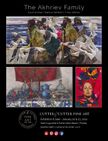
Juliette Aristides was trained in the classical tradition of drawing and painting and has dedicated her life to passing on the traditions and the basic concept of learning to see. She says, “It is craftsmanship that opens the door to self-expression. I am excited about teaching the methods from our artistic inheritance. I know that once this knowledge becomes commonplace again, it can only enrich our cultural life.” She is the founder of the Aristides Atelier, located at Gage Academy of Art in Seattle.
Louise Palermo, curator of education at Maryhill Museum of Art in Goldendale, Washington, explains, “The term ‘classical realism’ was coined by Richard Lack and a group of atelier-trained realist artists communicating their connection to academic traditions, coupled with a modern way of seeing. It embraces classicism, realism and an impressionist style using rigorous atelier apprenticeships, intensive mentoring, and an academic method of drawing and painting. While ‘realistic’ might, in a narrow way, define a work of art with recognizable objects, the broad stroke doesn’t do justice to the thoughtful insight of this movement. Simple objects become as beautiful as the most famous portrait. Meaning and insight resonate for those taking the time to ponder.”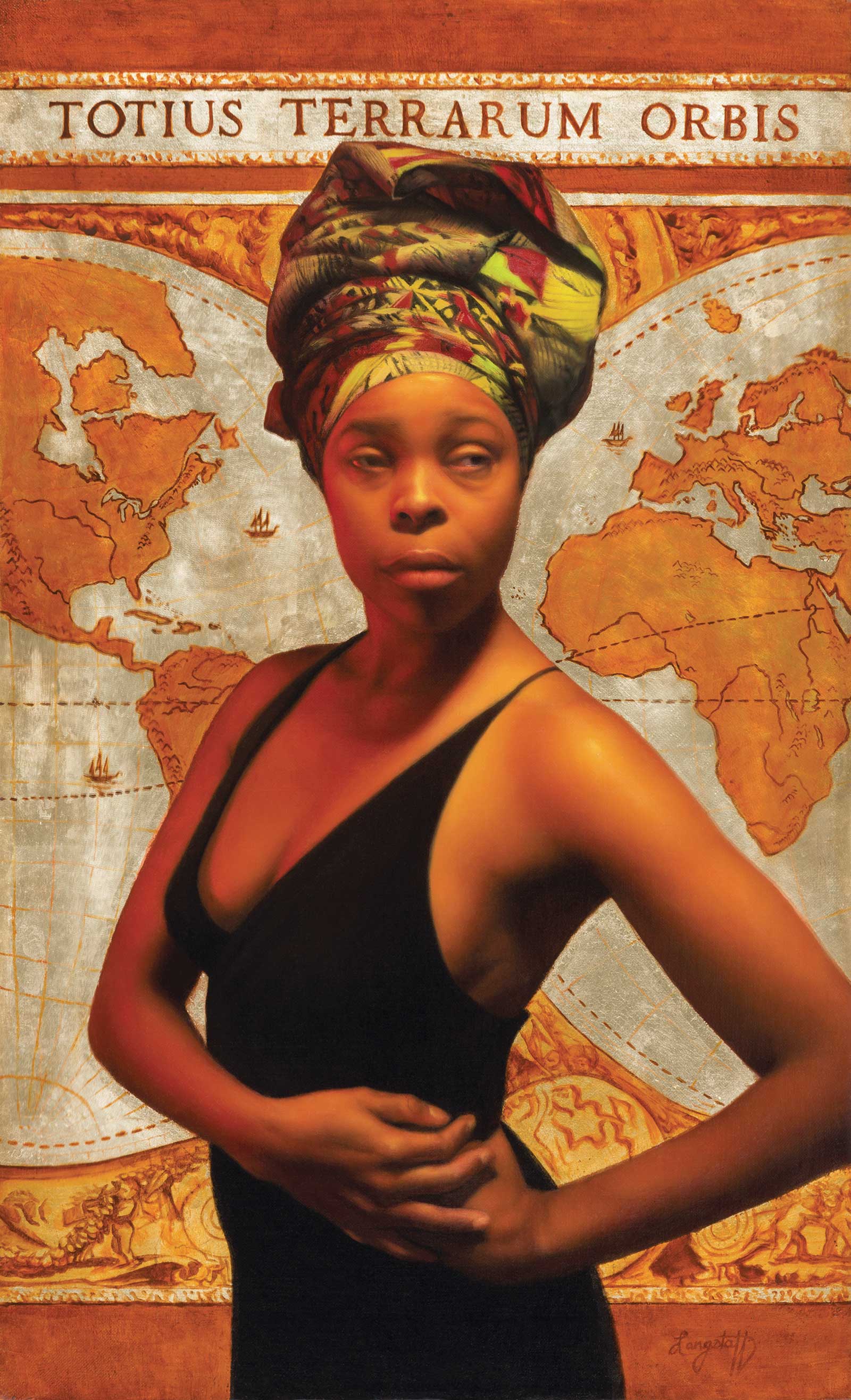 Joshua Langstaff, Citizen of the World, oil and gold metal leaf on linen, 26 x 16"
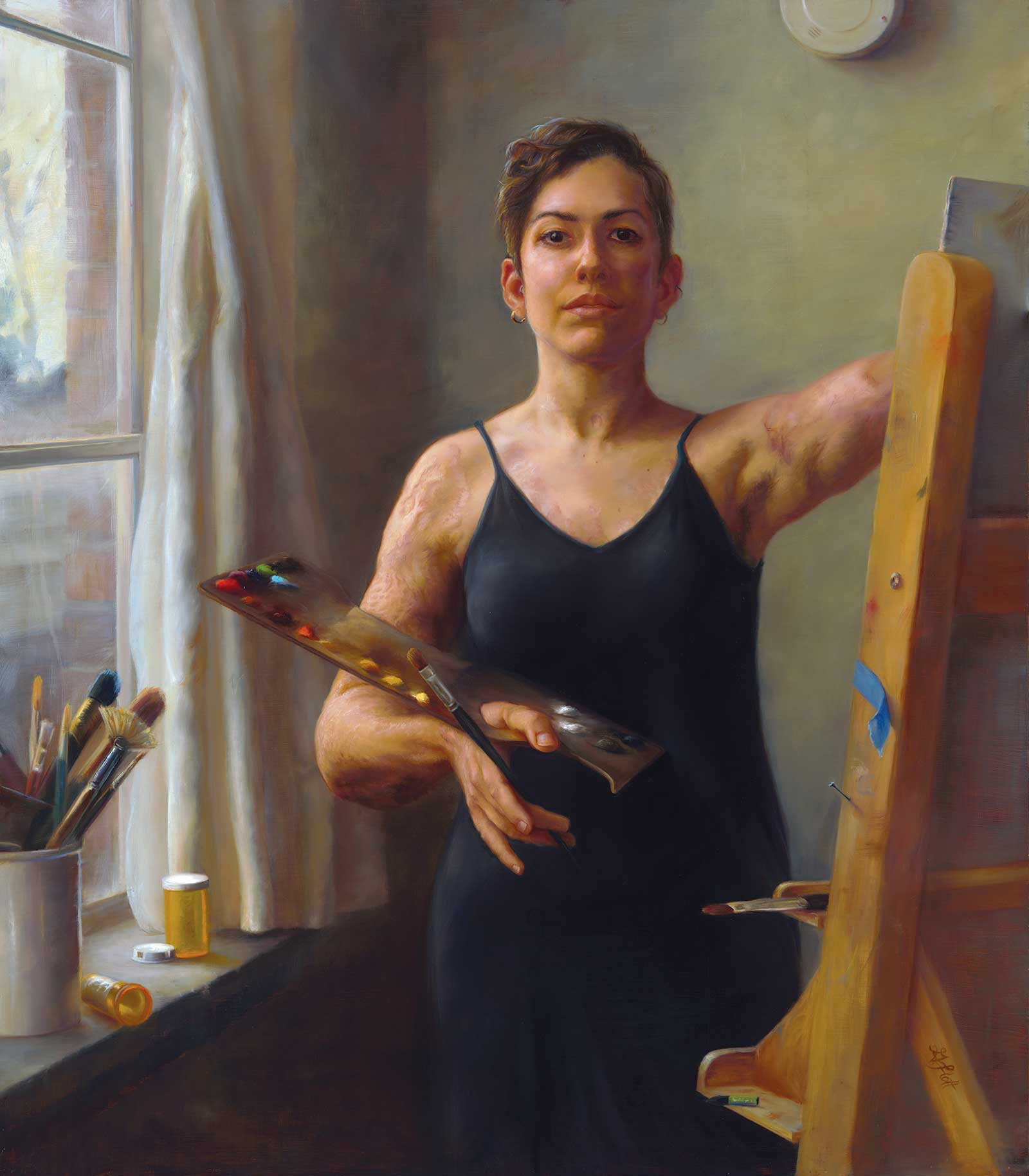 Grace Athena Flott, Forged in the Flames (Self-portrait at 28), oil on panel, 32 x 28"
The museum has a tradition of collecting and displaying works of classical realism since its founding.
For the third consecutive year, Palermo has invited alumni and current students of the atelier to exhibit at the museum. The Influence of Women with Aristides Atelier is an online exhibition. Palermo explains, “The theme of this exhibition was chosen to coincide with the 100th anniversary of women in America finally achieving their right to vote. Artists were asked to explore the women who have influenced their life and art.”
The word “influence” comes from the Latin word, influere, “to flow into.”
David Dwyer depicts an intimate influence. He comments, “This painting is a tribute to my mother, with deep gratitude for the many ways she instilled in me a lifelong interest in art. When I was growing up she’d often set up a still life composition on a table after dinner and we’d sit and draw it together. The items in this still life painting are very symbolic. As a young woman, my mother took ceramics classes at the Arts and Crafts Society in Portland, as did I as a teenager, following in her footsteps. The stoneware vase in this painting was thrown by Ken Hendry, the first director of Pottery Northwest. My mother also had a love of gardening and flower arranging—therefore the eucalyptus leaves. The seashell represents one of her favorite places, the Oregon coast.”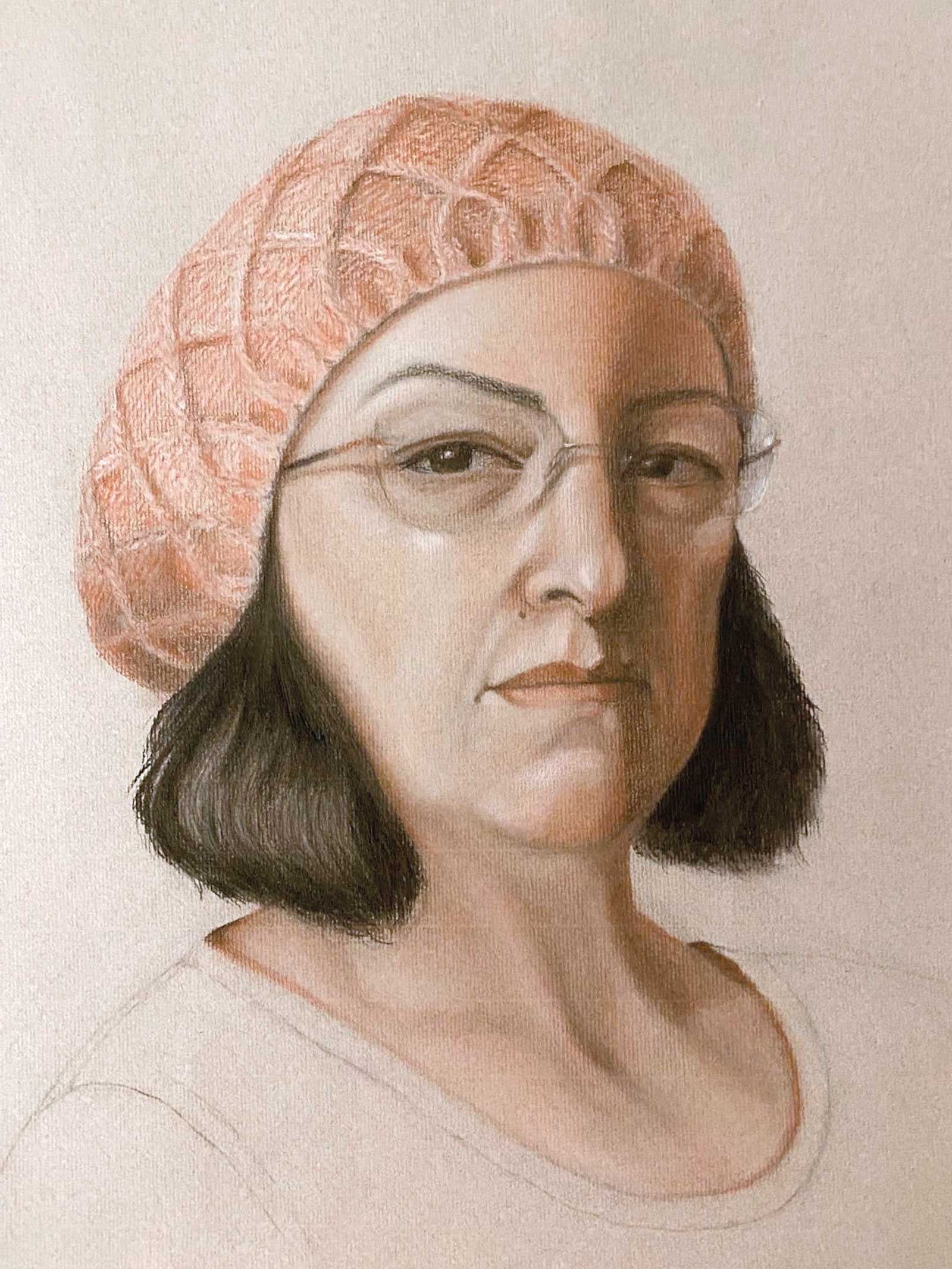 Farida Abedeen, Self Portrait, pastel on Canson paper, 25 x 19"
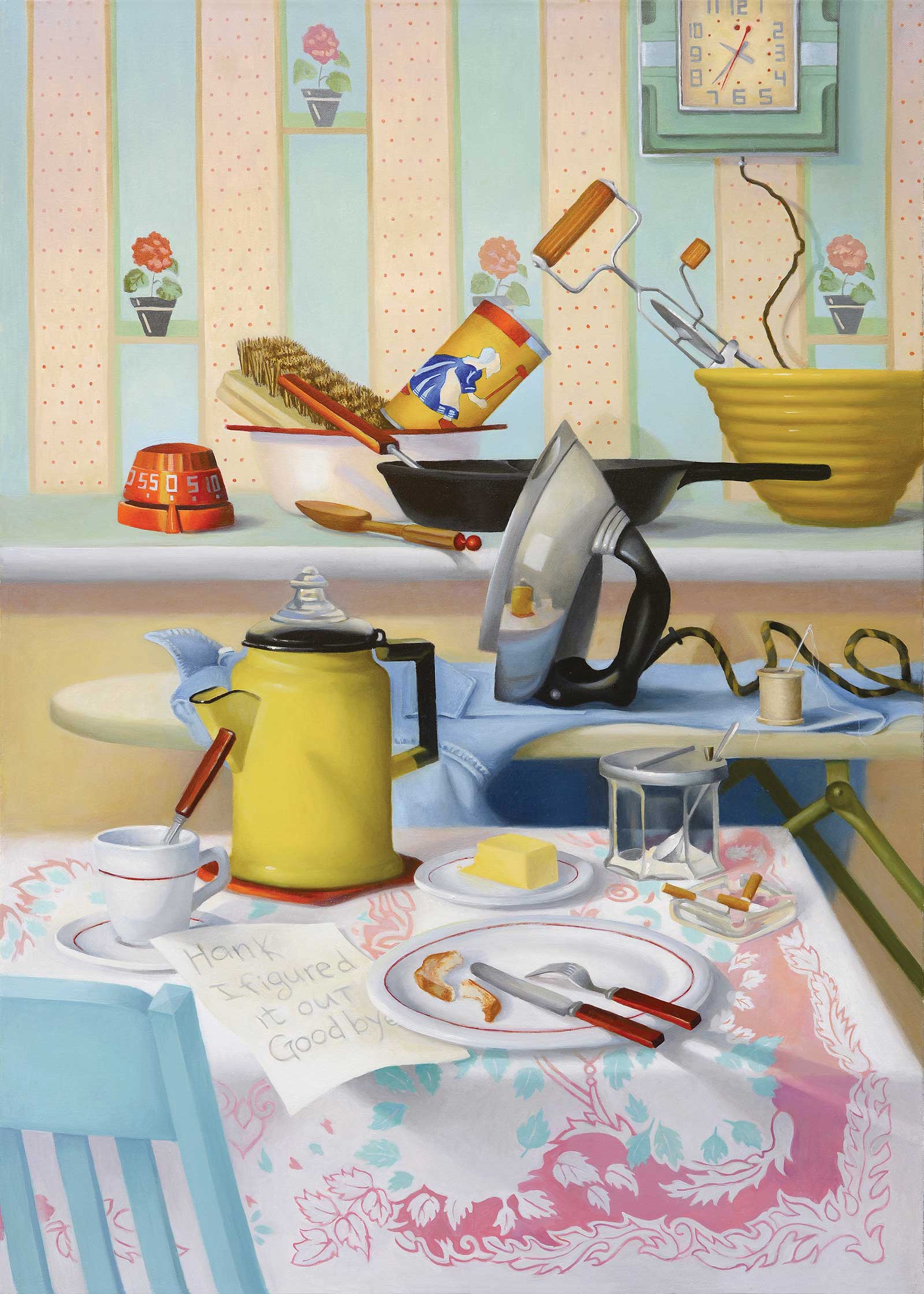 John Rizzotto, Hank, I Figured It Out. Goodbye, oil on canvas, 42 x 30"
The background for Joshua Langstaff’s Citizen of the World is a rendition of an old map, Totius Terrarum Orbis, “The Whole World.” His model is from South Africa and she overcame numerous hardships “to become a successful performance artist and a prominent activist for social justice. Unfortunately, she has had difficulties acquiring citizenship in both the U.S. and in her birth country. This got me thinking about how the artificial construct of national boundaries shape lives,” he says. “I decided to paint her as a ‘Citizen of the World’ and I depicted her looking strong and confident with an antique world map behind her. The background is painted on gold metal leaf and I was thinking about medieval icon paintings when I designed the composition. In iconography, gold leaf signifies the holiness and importance of the subject. In my painting, I wanted to convey the equal importance of this young woman, and in turn, all of humanity, regardless of nationality.”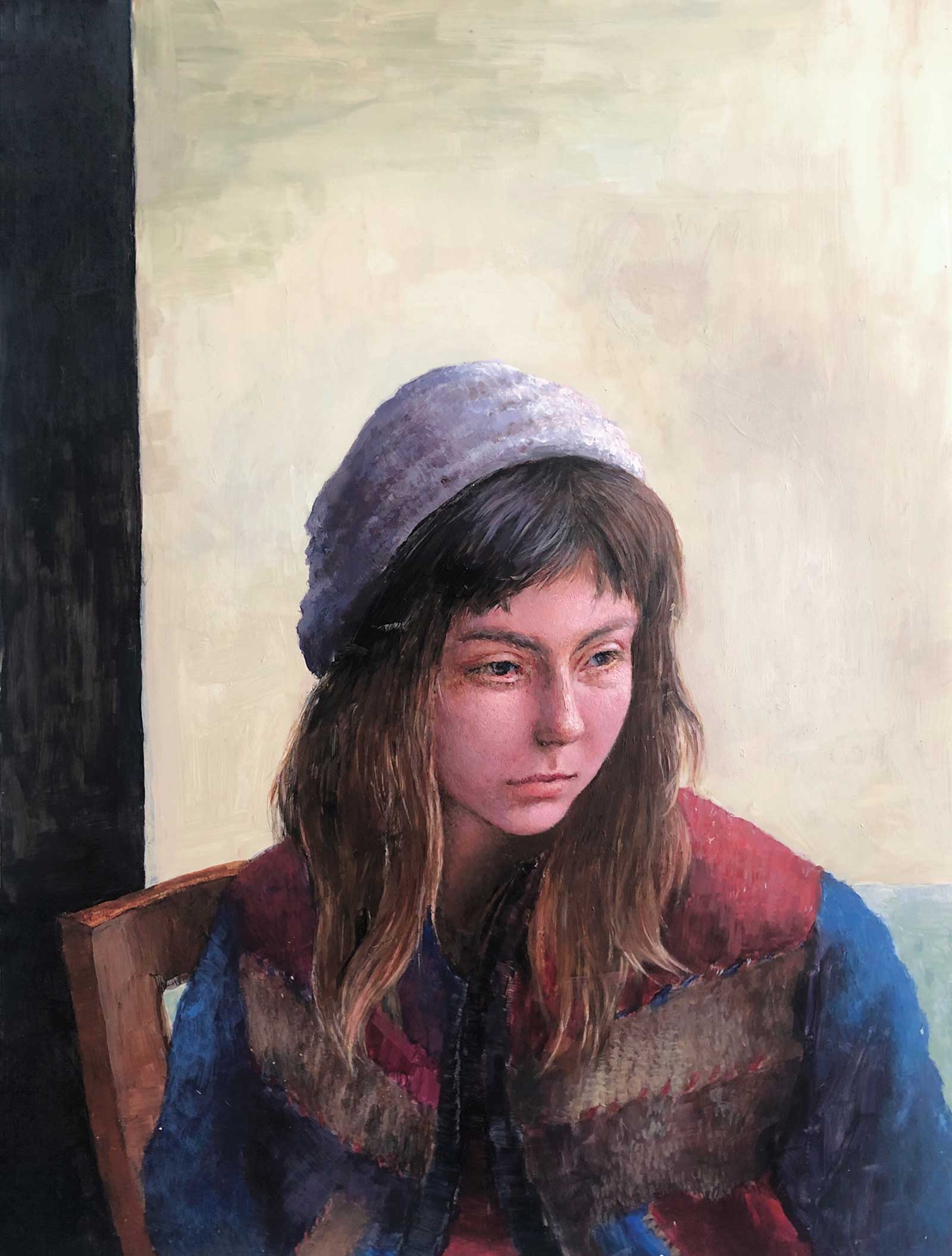 Larine Chung, Dream of Pacific Northeast, acrylic on Mylar
Farida Abadeen was born in Kuwait. She says, “Unfortunately, the environment I was growing in, whether at home, school or the society was not conducive to female artists to thrive. To this day, there is no art academy or art department at the university for studying arts. So, becoming an artist was a difficult option for me to pursue.” She has since moved to Seattle where she discovered Gage Academy.
“I specifically chose the Aristides Atelier for classical drawing—my passion,” she says. “Now as the first year approaches its end, I am glad to have chosen this place and fortunate to be learning from one of the best classical and realist artists, Juliette Aristides. This portrait was done in the quarantine as part of our online training.”
I met Larine Chung 10 years ago when she was in Santa Fe studying at The Ryder Studio with Tony Ryder and have been following her career online. She had received her B.F.A. in printmaking and mixed media at The Chinese University of Hong Kong and was in the Aristides Atelier with Juliette Aristides. She is now an art instructor at Gage Academy. Tenaya Simms, Semillas, oil and gold leaf on linen, 110 x 90"
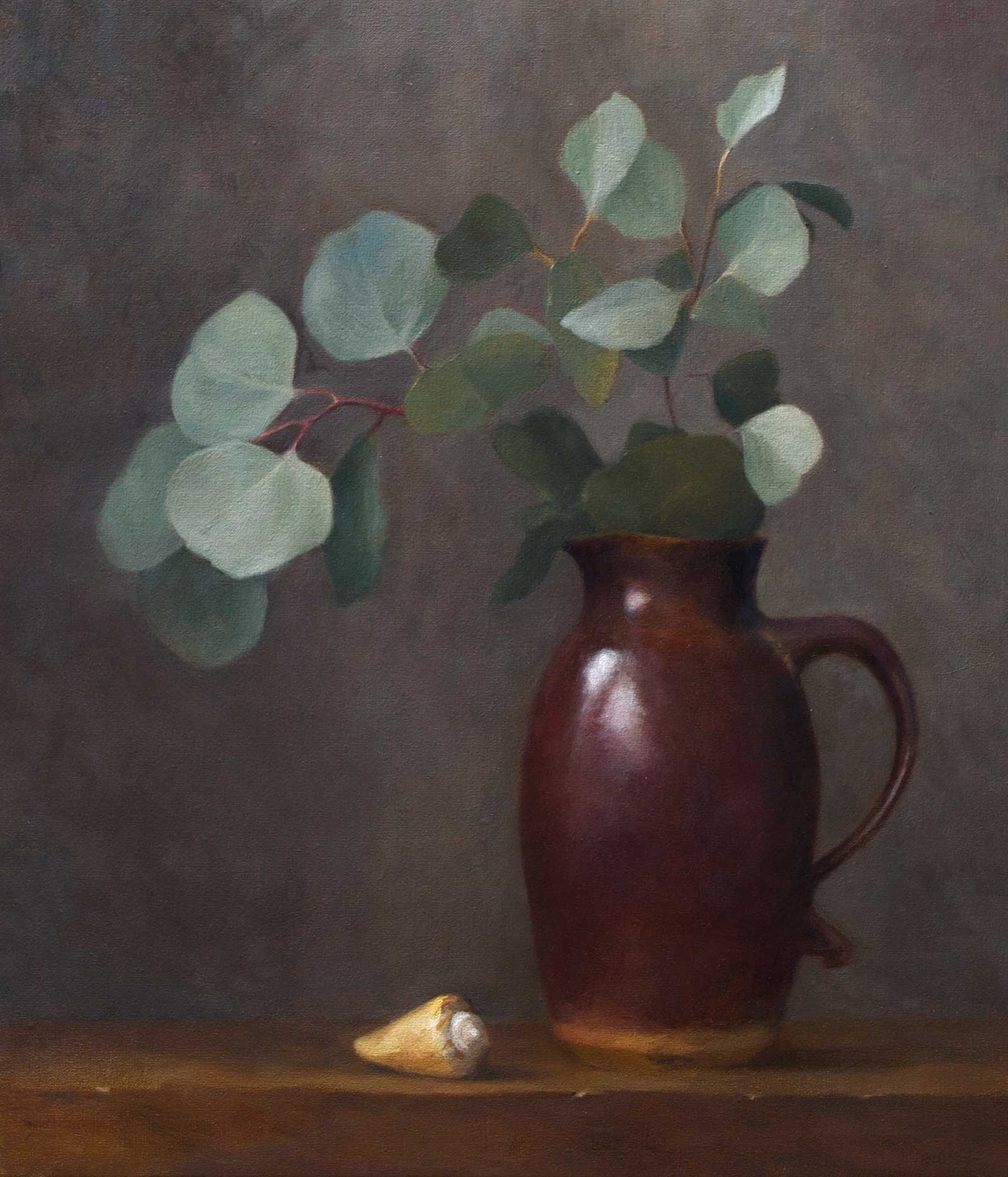 David Dwyer, Eucalyptus Leaves, oil on linen canvas, 14 x 16"
“My training was more conceptual than fundamental,” she explains. “I would have a concept without the means to carry it out. Following the French atelier method, Juliette was the first person to help me systematically see the structure of light. Her teaching formed the basis of my knowledge of the western art tradition.
“My Chinese cultural background is an important part of my identity,” continues Chung. “We use an ethereal light rather than the light and shadow of Western art and aerial perspective rather than the West’s linear perspective. I’m trying to combine the different concepts in my work and encourage my students to look into their own cultural backgrounds and draw from that.”
Her painting in The Influence of Women is Dream of Pacific Northwest. “I walked into the lunch room at Gage and saw one of the students, Yarrow, sitting at a table in a quiet introspective moment in the fading light,” she explains. “As a female painter, I’m not often outspoken and am influenced by internal quiet. I think women exhibit a strong internal strength that is often quietly shown though their gesture and expression.
I resonated with Yarrow’s look as I tend to go to that introspective space inside my mind as well.” —
The Influence of Women with Aristides Atelier
When: Online now
Where: Maryhill Museum of Art,
35 Maryhill Museum Drive, Goldendale, WA 98620
Information: (509) 773-3733, www.maryhillmuseum.org
Powered by Froala Editor