
In the late 1980s, artist Stephen Jesic found he was captivated by the colors and vibrancy of Australian birds and added them to his oeuvre of still lifes and landscapes. Working in a traditional realistic style, Jesic paints with a high degree of detail right down to the feathers and found a need to transition to acrylics so he could obtain faster drying times to rework intricate components. Within a few years wildlife became his primary subject and acrylic his go-to medium. 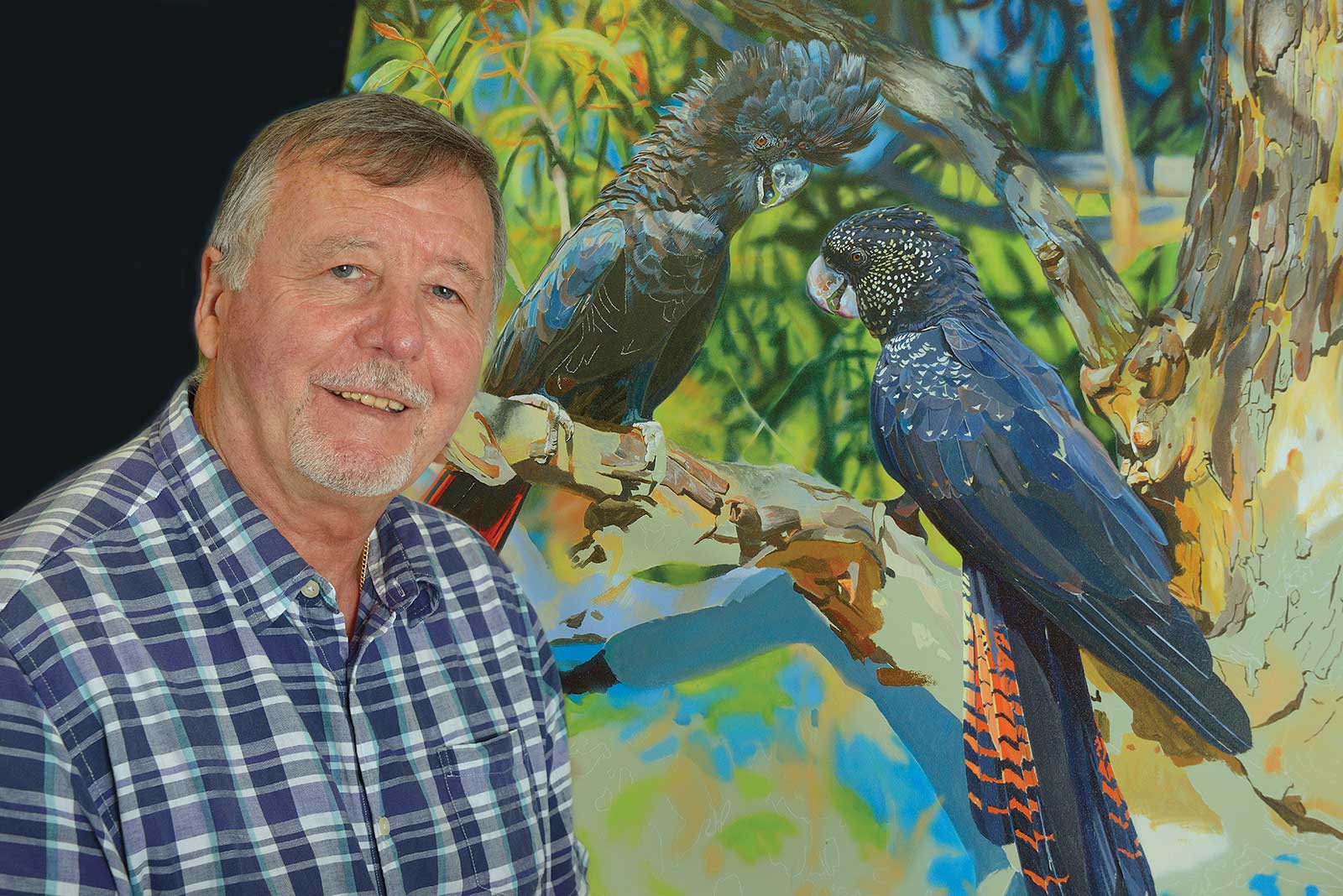 Stephen Jesic in his studio in Australia.
“By the late ’80s I worked solely in acrylics developing my painting technique to a point now where my hand, eye, color mixing and application of paint are seamless: That is, I don’t have to consciously think about the color and application of paint onto the board,” says Jesic. “This confidence allows me to take risks in my latest works knowing no matter how complex and detailed the subject matter is I can succeed.”
For example, his painting Instant Attraction features superb blue wrens—creatures that are constantly moving and never stay still. His work, however, shows a brief moment of interaction. “To the left, the male wren’s gesture is showing how besotted he was with their encounter,” says Jesic. This piece and all of his other works are inspired by the animals themselves and the habitats that they live in. 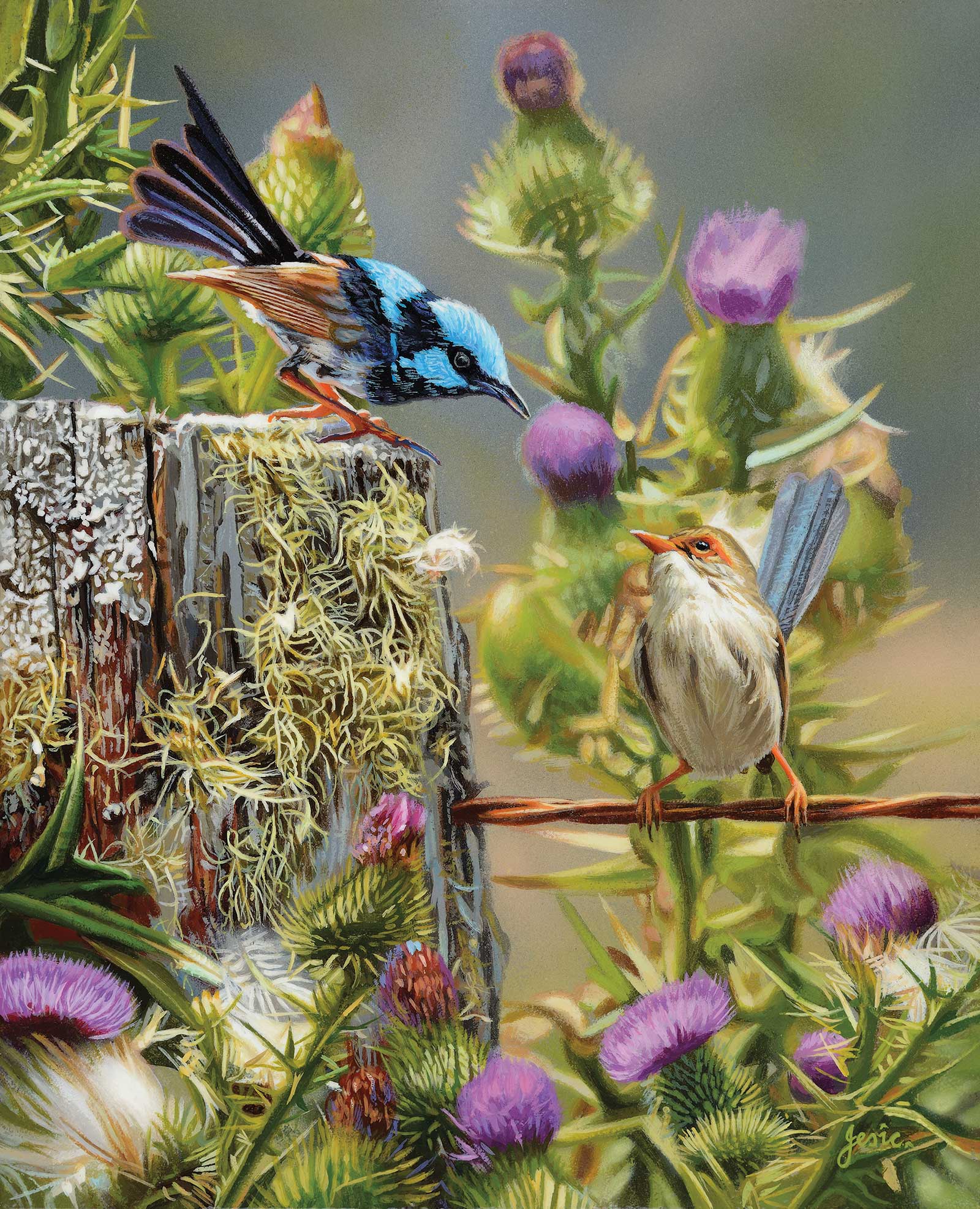 Instant Attraction, acrylic on Baltic birch, 10.4 x 8.4"
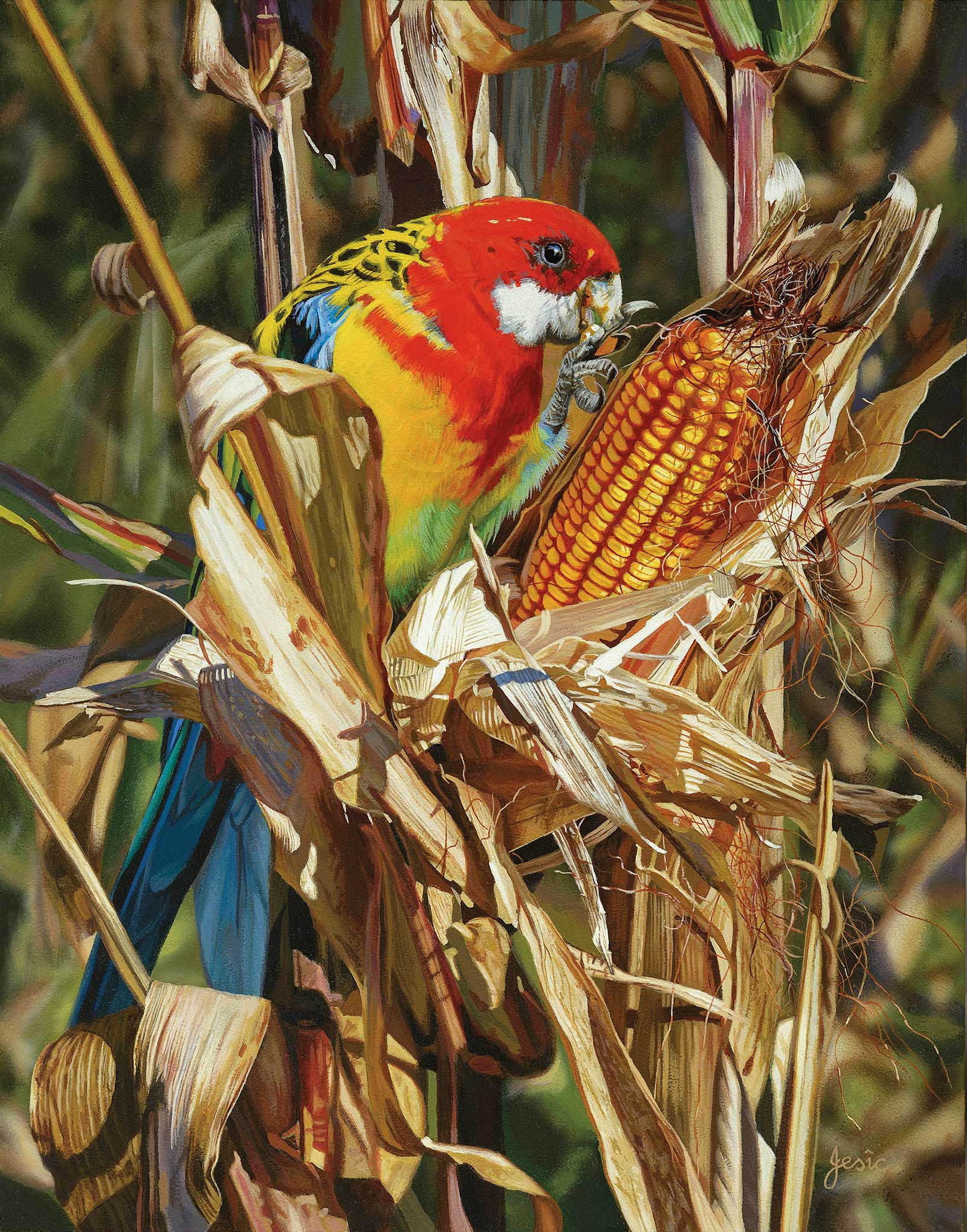 Golden Harvest, acrylic on Baltic birch, 14 x 11"
“I have thousands of photographs of species and habitat,” he explains. “I remember most photographs that I have taken and usually what triggers a design is when I reach a point where I have gathered sufficiently high-quality photographs of both bird/animal and habitat that match and complement each other.”
Jesic uses traditional design principles, such as line of thirds, golden mean and controlling how the viewer’s eye moves around the painting. He prefers to paint a foreground, middle ground and background, with the focus primarily being at the middle point and the other areas being secondary and not interfering with his main theme. 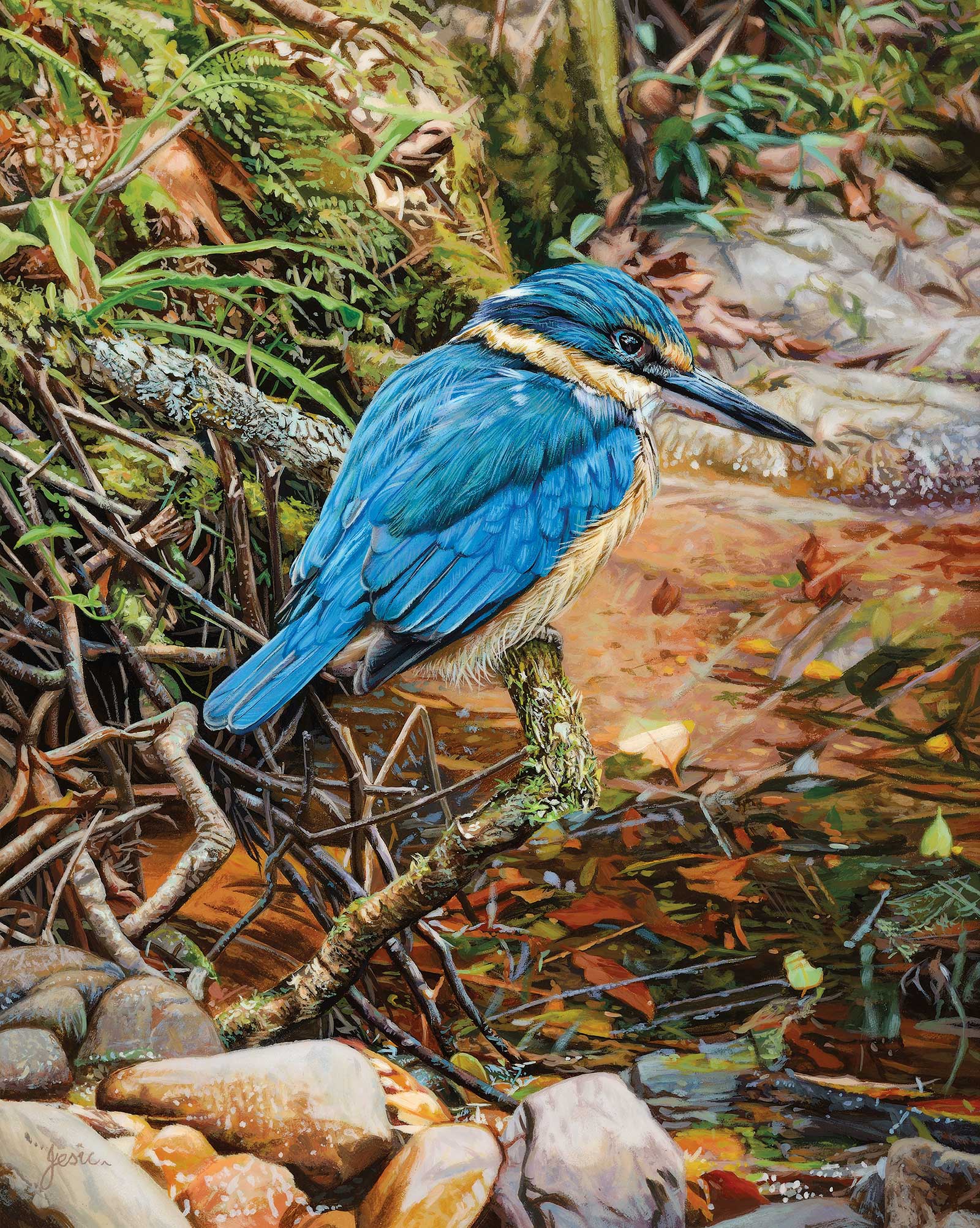 Awaiting the Catch, acrylic on Baltic birch, 14 x 11"
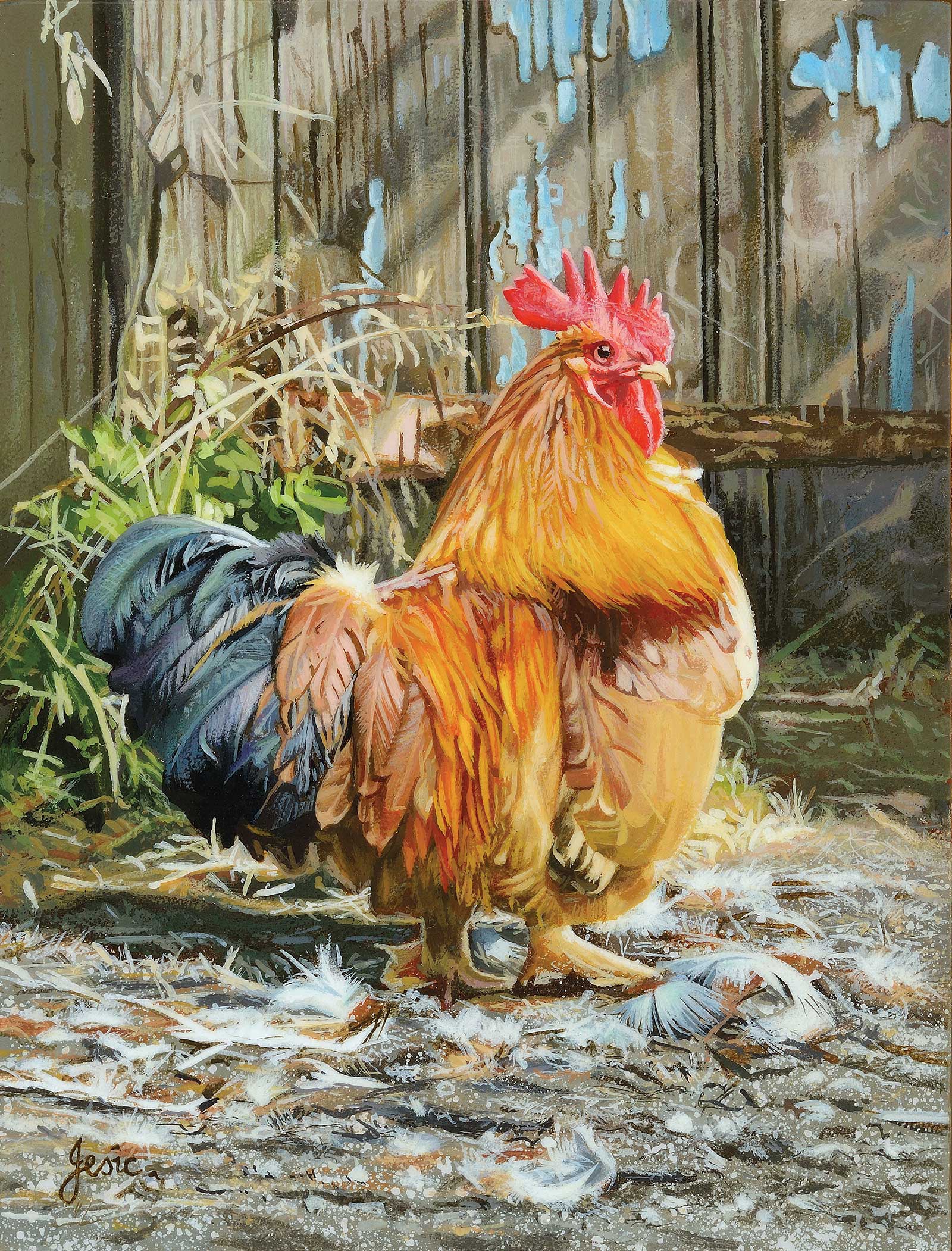 Whose Boss, acrylic on Baltic birch, 8 x 6"
“It’s all a compromise to create a depth of field by keeping to the principles of atmospheric perspective; cooler, grayer and lighter as you go back in the distance,” Jesic shares. “Then there is color and color harmony: with birds an absolute symphony of vibrancy of color. Finding the correct setting, complementing colors counterbalanced by the subtleties of nature is quite a juggling act to achieve harmony between subject and scene.”
His painting Golden Harvest is a prime example of this, and it also uses his artistic background to play with the composition. Jesic explains this painting was done more like a still life, showing the detail and controlling the depth of field. “Having been trained in painting still life for almost 12 years, this was a sheer joy to paint. The symphony of colors, light and dry textures of the corn really complemented the Eastern rosella,” he explains. “As rosellas raid farmers’ crops, I placed the bird behind the dried leaves as if it were hiding [and] quietly picking the last of the juicy remnants of corn kernels.”
Jesic is represented by Morpeth Gallery in Australia and at Robert Simon Fine Art in New York City. —
Stephen Jesic
saj@stephenjesic.com • www.stephenjesic.com
Powered by Froala Editor