International Guild of Realism has been at the forefront of contemporary realism since its inception in 2002. One of the ways it continues to promote its artists is through yearly exhibitions at galleries around the country, but a new opportunity for the members is to show their work online in its Spring Salon Online Exhibition.
Not only will the exhibition be available to view in its entirety on the IGOR website, but our brand-new website will be hosting the entire show as well. Since the magazine started 15 years ago, American Art Collector has been a corporate sponsor of the Guild’s shows. With our new homepage we are allowing you, the collector, the opportunity to see the more than 200 works that were juried in the show and communicate directly with IGOR about purchasing the work by clicking “Inquire About this Art” in the Gallery Space Online. The Spring Salon Online Exhibition will be available to view March 20 through May 20.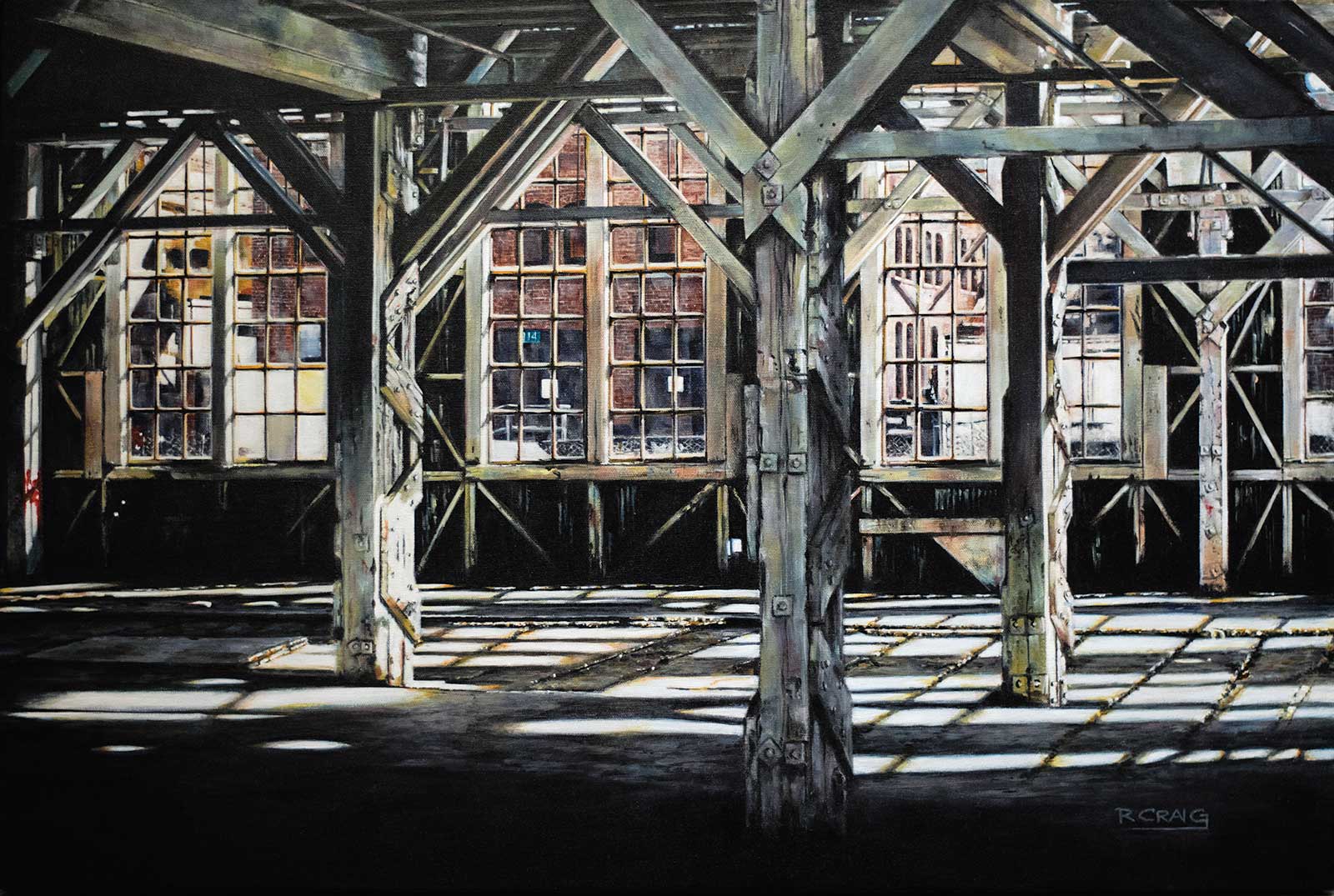 Ron Craig, Inside Out, acrylic on canvas, 20 x 30"
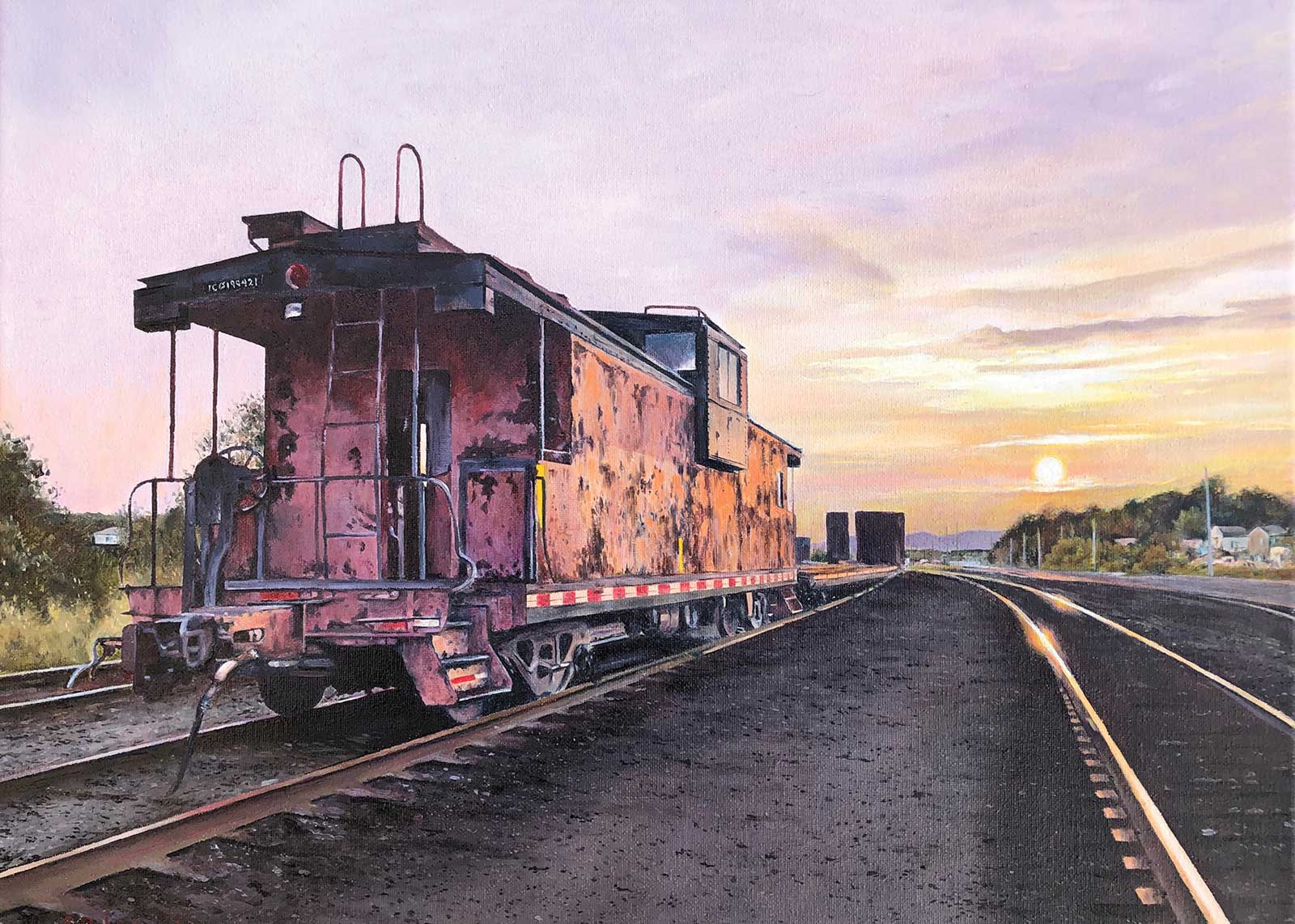 Shawn Robichaud, Yesterday’s Tomorrow, oil on linen, 16 x 20"
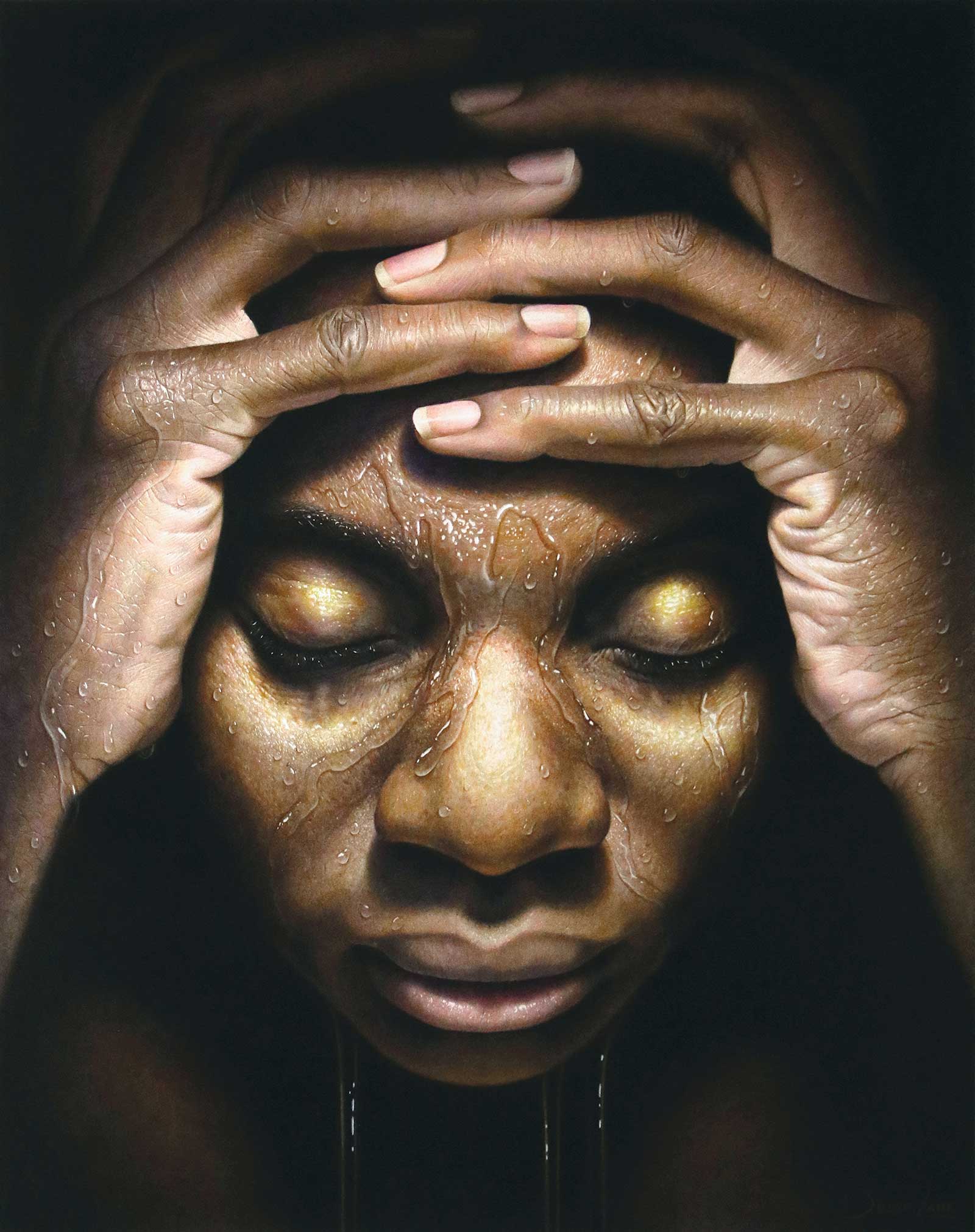 Jesse Lane, Labyrinth, colored pencil on Bristol board, 29 x 23"
“As an original charter member of the International Guild of Realism, I am thrilled to see the amazing growth within IGOR over the past 16 years. IGOR is proud to present the 2020 Spring Salon Online Exhibition,” says Donald Clapper, a founding charter member of the group. He adds, “IGOR is definitely a major player in the resurgence of academic realism in fine art. Our juried membership represents some of the very best realists in the world and this year’s Spring Salon is one of our best shows to date in terms of quality, creativity and number of paintings. Our artist members hail not only from North America but from more than 35 countries around the world.”
American Art Collector editor Joshua Rose says, “We are thrilled to be partnering with International Guild of Realism once again, and this is a great opportunity for us to not only display the beautiful artwork of the group’s talented artists but also show everything that is offered through our new website.”
Included in this year’s show are Abbey Ryan, Aicy Karbstein, Al Vesselli, Ann Justin, Barbara Clements, Cathryne Trachok, Cathy Johnson, Cher Pruys, Cindy Valek Mottl, Debbie Shirley, Duhita Samaiyar, Eduardo Landa, Erwin P. Lewandowski, Jesse Lane, Laurie Riley, Lloyd Voges, Lorn Curry, Marissa Oosterlee, Michela Mansuino, Nancy Jacey, Sandra Desrosiers and Sharon Sayegh.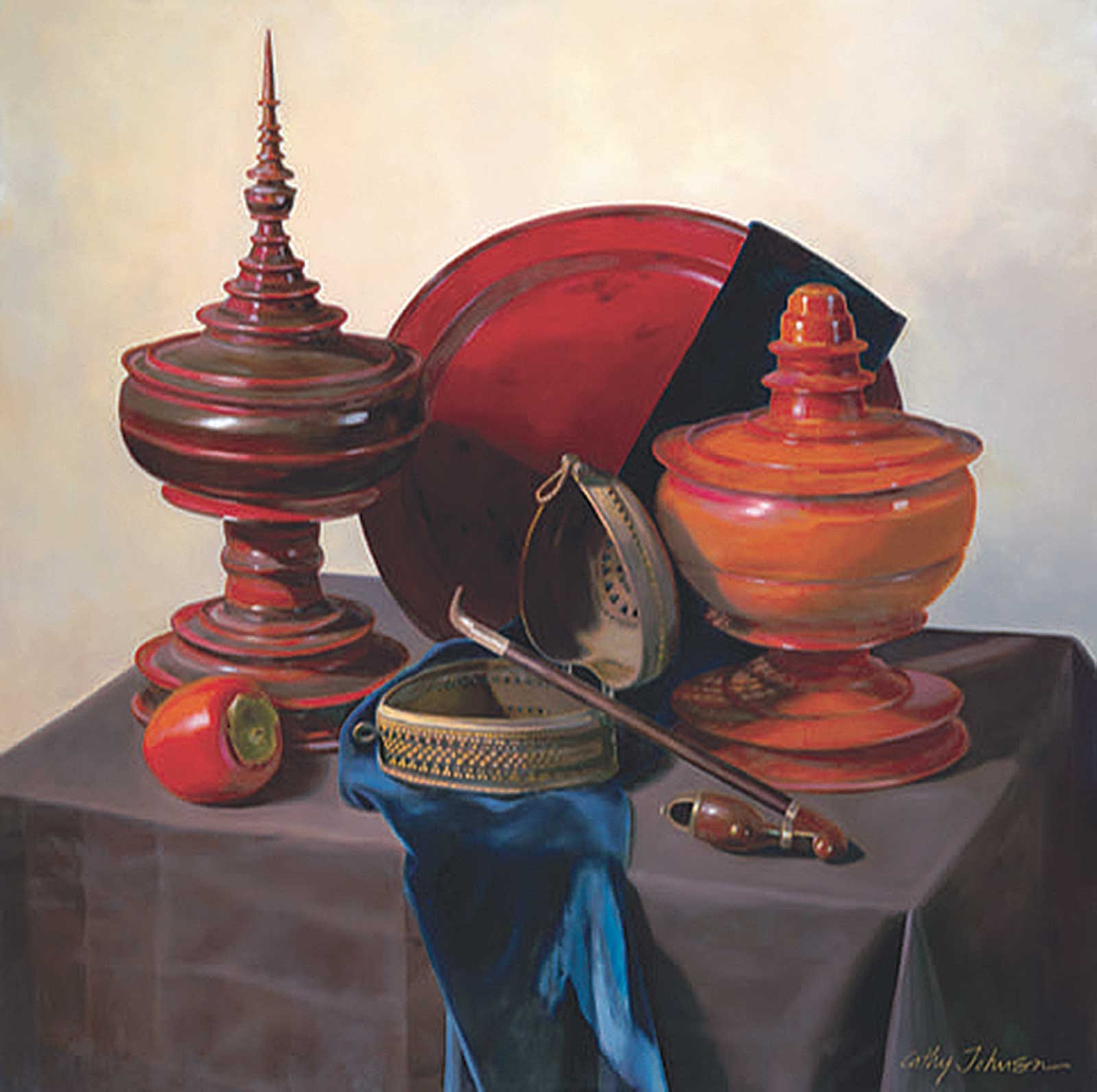 Cathy Johnson, Burmese Vessels, oil on linen, 30 x 30"
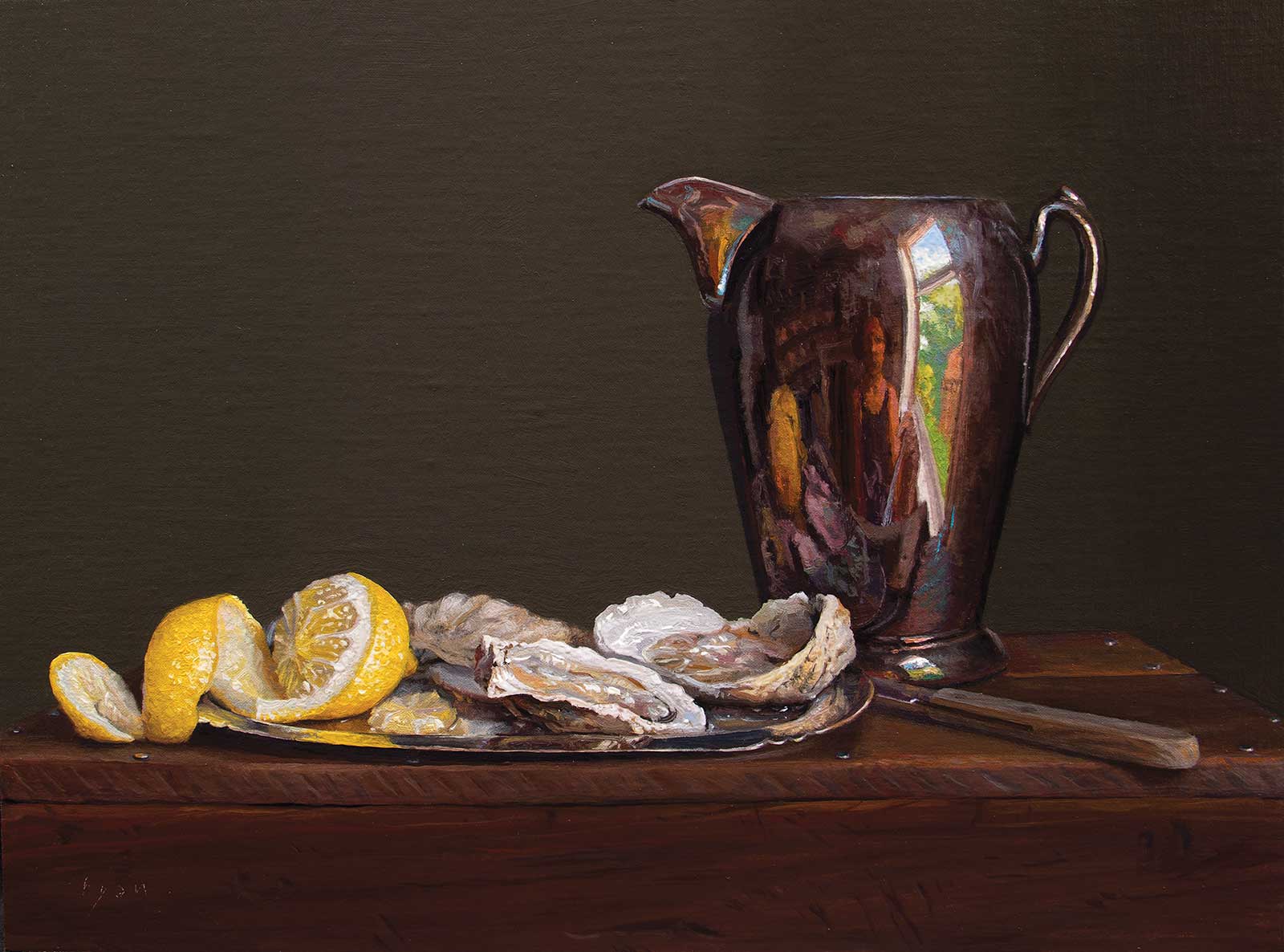 Abbey Ryan, Still Life with Oysters, Peeled Lemon, and Silver Pitcher (with Self-Portrait Reflection), oil on linen on panel, 12 x 16"
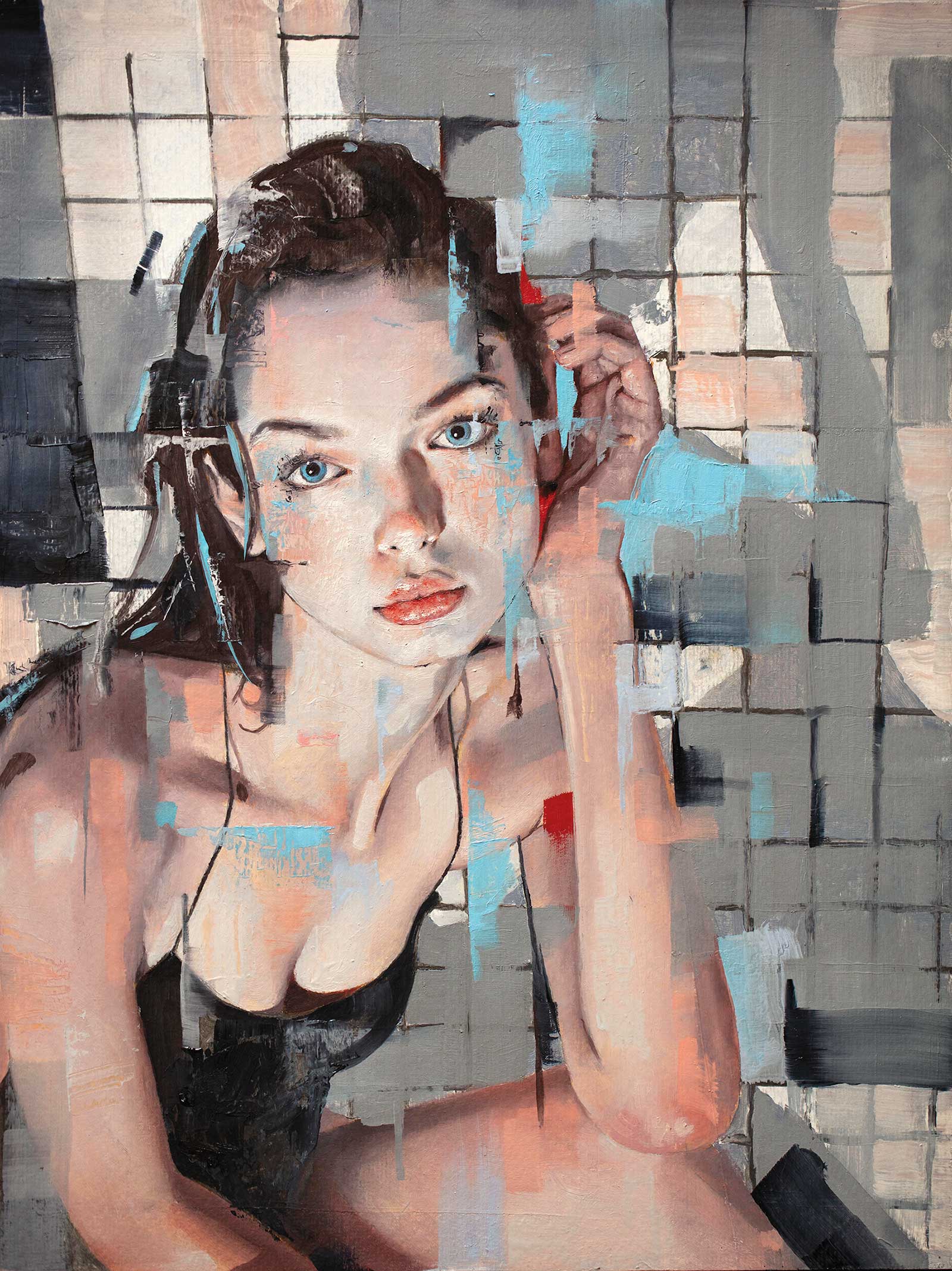 Eduardo Landa, Untitled, oil on gessoed paper, 15½ x 12"
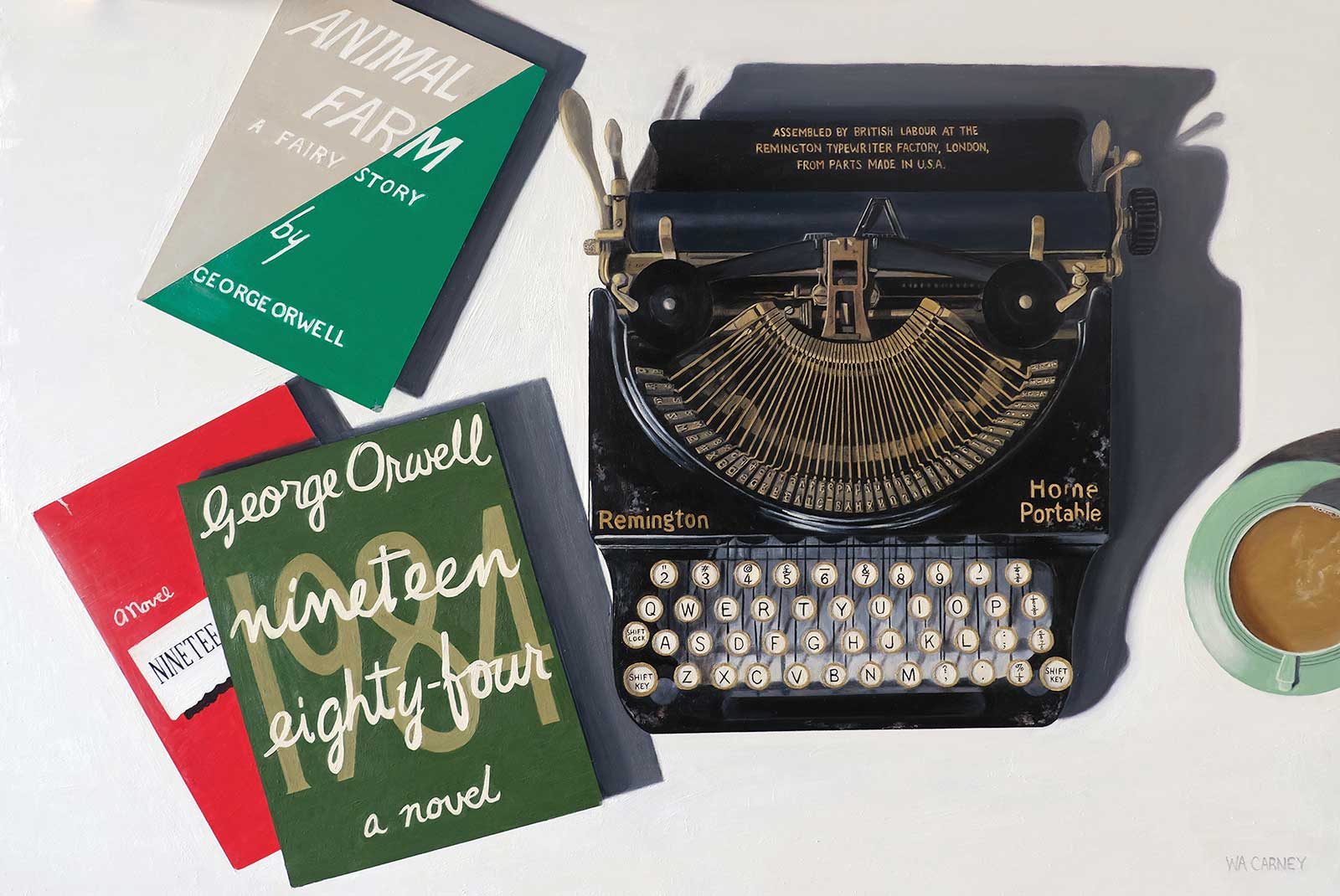 Wendy A. Carney, Orwell, oil on panel, 24 x 36"
Aleta Rossi-Steward’s floral painting Diamond Droplets represents the memory of one of her neighbors who passed years ago. “This hollyhock had been in her yard, but was terribly neglected,” she says. “I rescued it, and it has flourished, growing back larger every year. I was struck by the way the sun shone through the petals and illuminated the droplets after a summer rain.”
Also focusing on the natural world in all its beauty is Carin Wagner, who was taken aback by the tree that is center stage in Lady of the Sycamore. “I encountered a tree that looked so much like a woman with her arms raised joyously that it stunned me,” she recalls. “She became the basis for my painting Lady of the Sycamore. Would showing people the human form of some trees arouse a protective spirit in them?”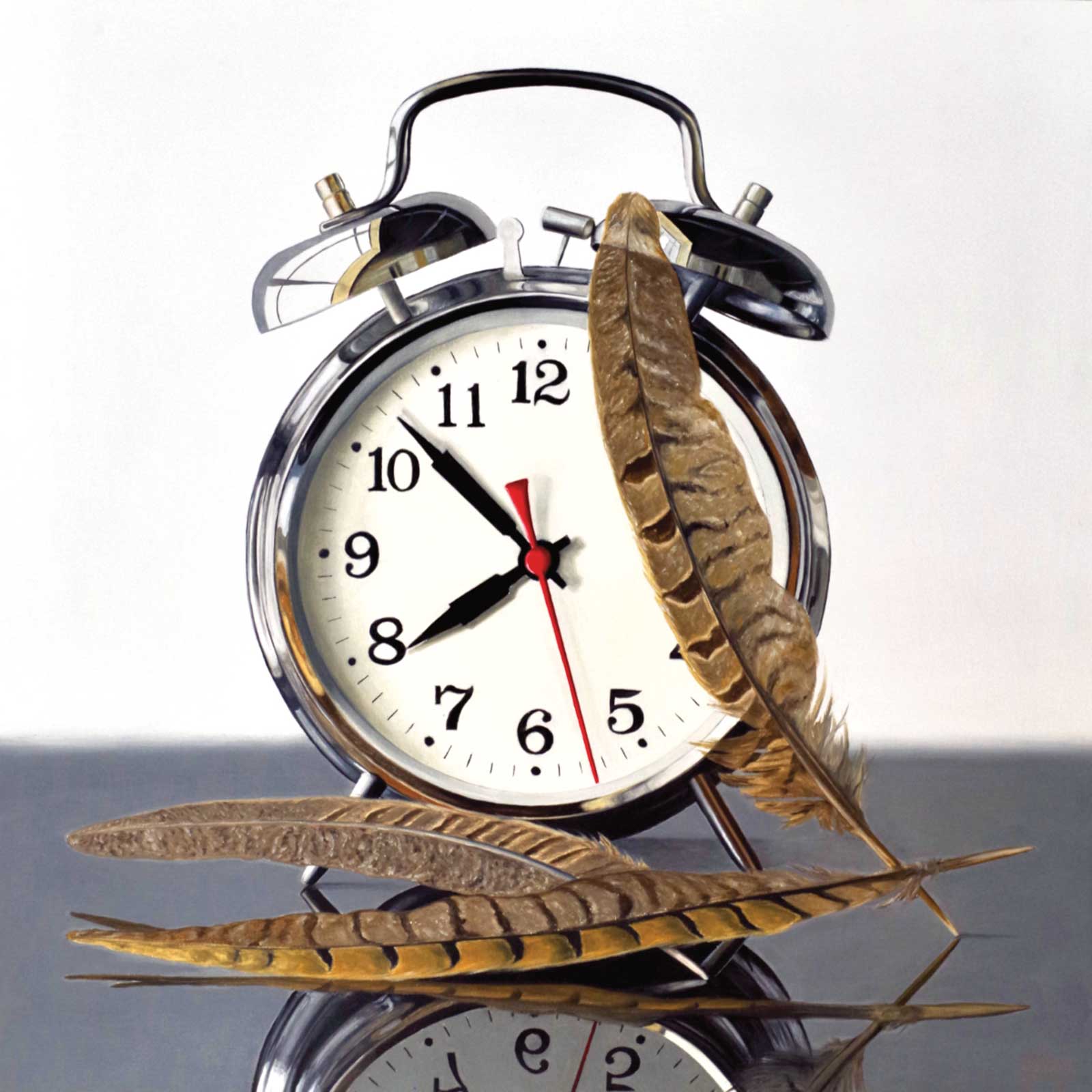 Lorn Curry, Time Flies, oil on cradled birch panel, 24 x 24"
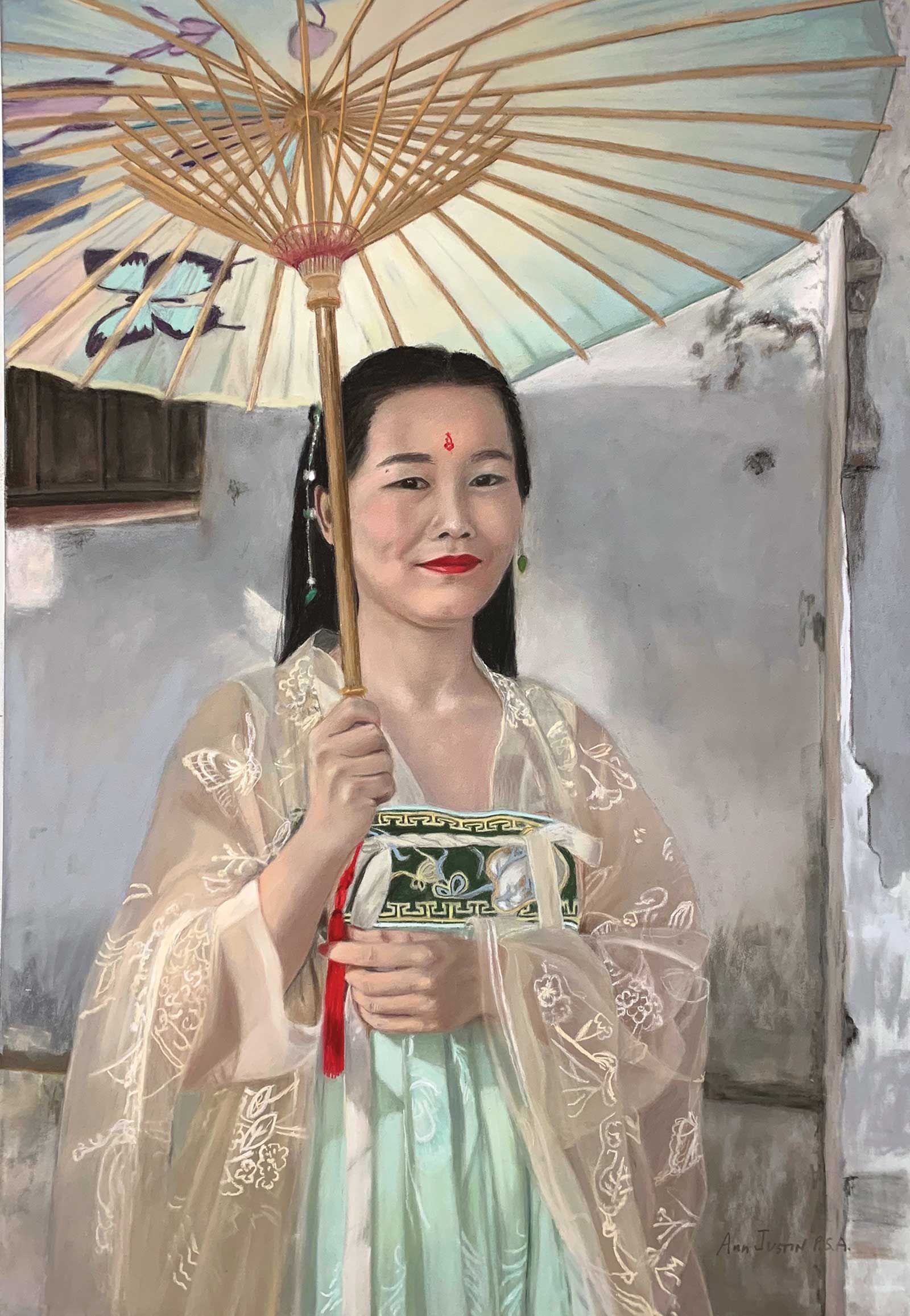 Ann Justin, Dreaming of the Past, soft pastel, 28½ x 20"
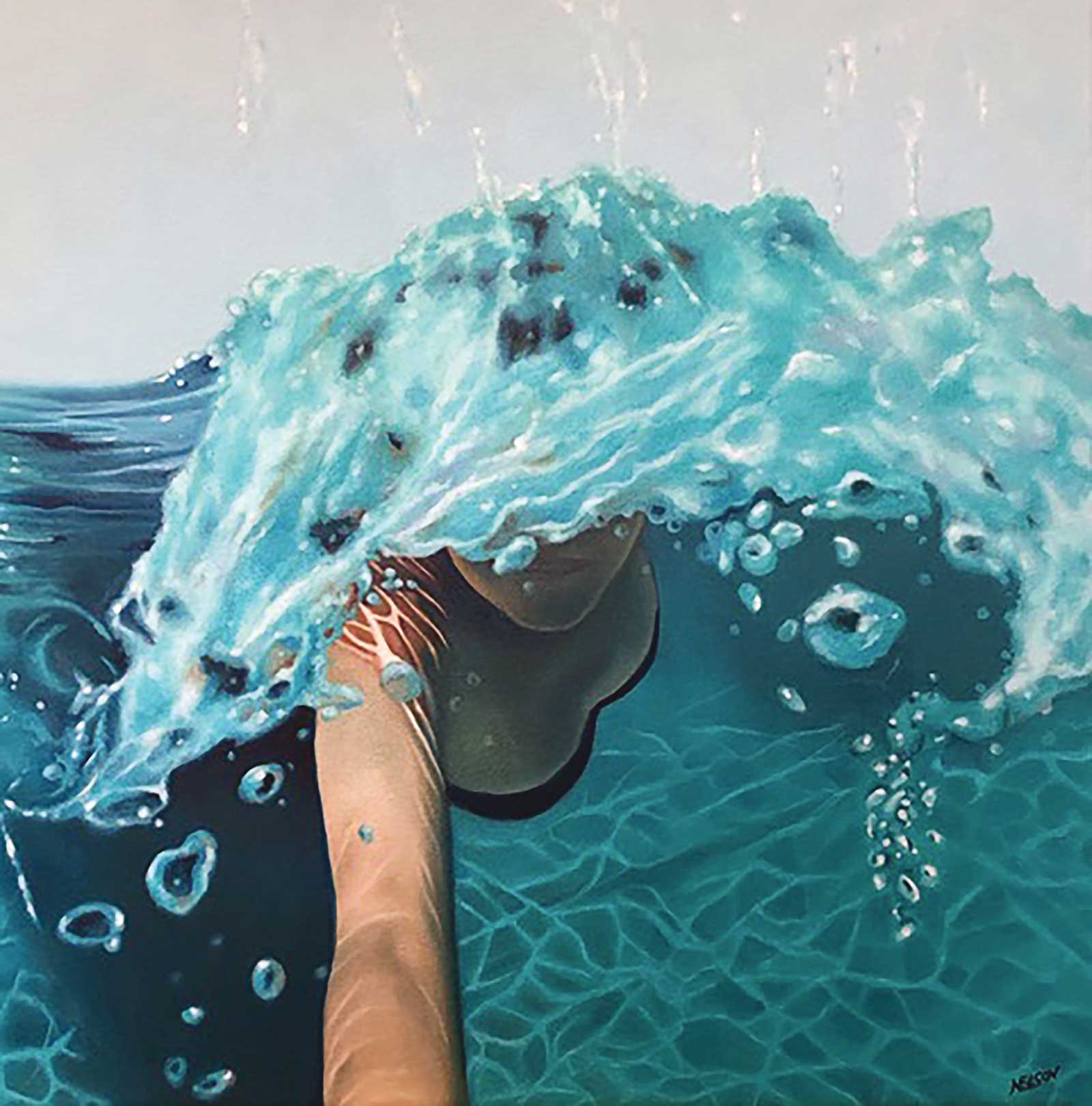 Priscilla Nelson, Making Waves, oil on canvas, 24 x 24"
In Stoic Observers, a landscape by Dimitrina Stamboldjiev Kutriansky “the turbulent sky reflects the vivacity of nature, which, coupled with a nuanced palette, creates an atmosphere that is characterized by the congruence of both drama and subtlety. The light emerges through the grayness of the clouds, illuminating the battered trees, rooted in the rocky earth. These ‘stoic observers’ have stood as witnesses to the constant changes in the natural world, their enigmatic beauty persevering through the years. The painting invites the viewer to reflect upon humanity’s capacity for endurance and serves as a symbolic affirmation of man’s innate ability to hope.”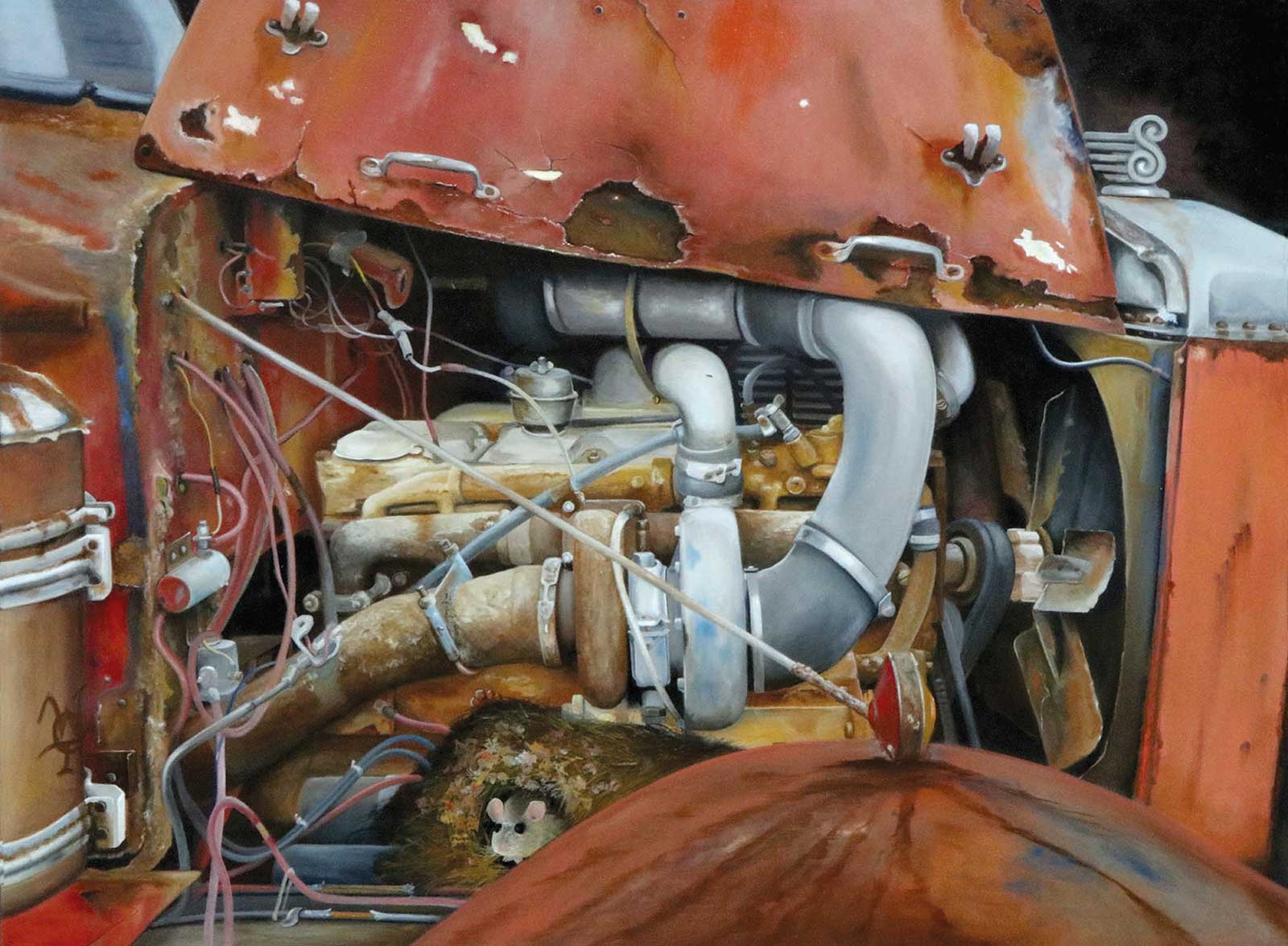 William C. Turner, Surprise!, oil on canvas, 30 x 40"
Rob MacIntosh’s painting The Three Amigo’s was inspired by where he lives. He elaborates, “Living in the Sonoran Desert I get to experience watching these magnificent cacti produce the most beautiful blooms. Watching them unfold is just magic. Every detail is inspirational—an artist’s dream.”
Allan Gorman is always looking for architectural and structural oddities that are interesting or challenging for a painting. His juried work Crown, “depicts the iconic Crown Building in NYC, reflected in the sloping, modern facade of 9 West 57th Street,” he says. “I love the way the alternating glass panes between floors distorts and makes abstract shapes of the reflected facades of the buildings across the street.”
Also focusing on architecture is Ron Craig, whose juried work Inside Out depicts beauty in an overlooked place. He muses, “An empty warehouse occupied only by the afternoon sun, surrounded by stillness inside—looking out. My moment of inspiration.”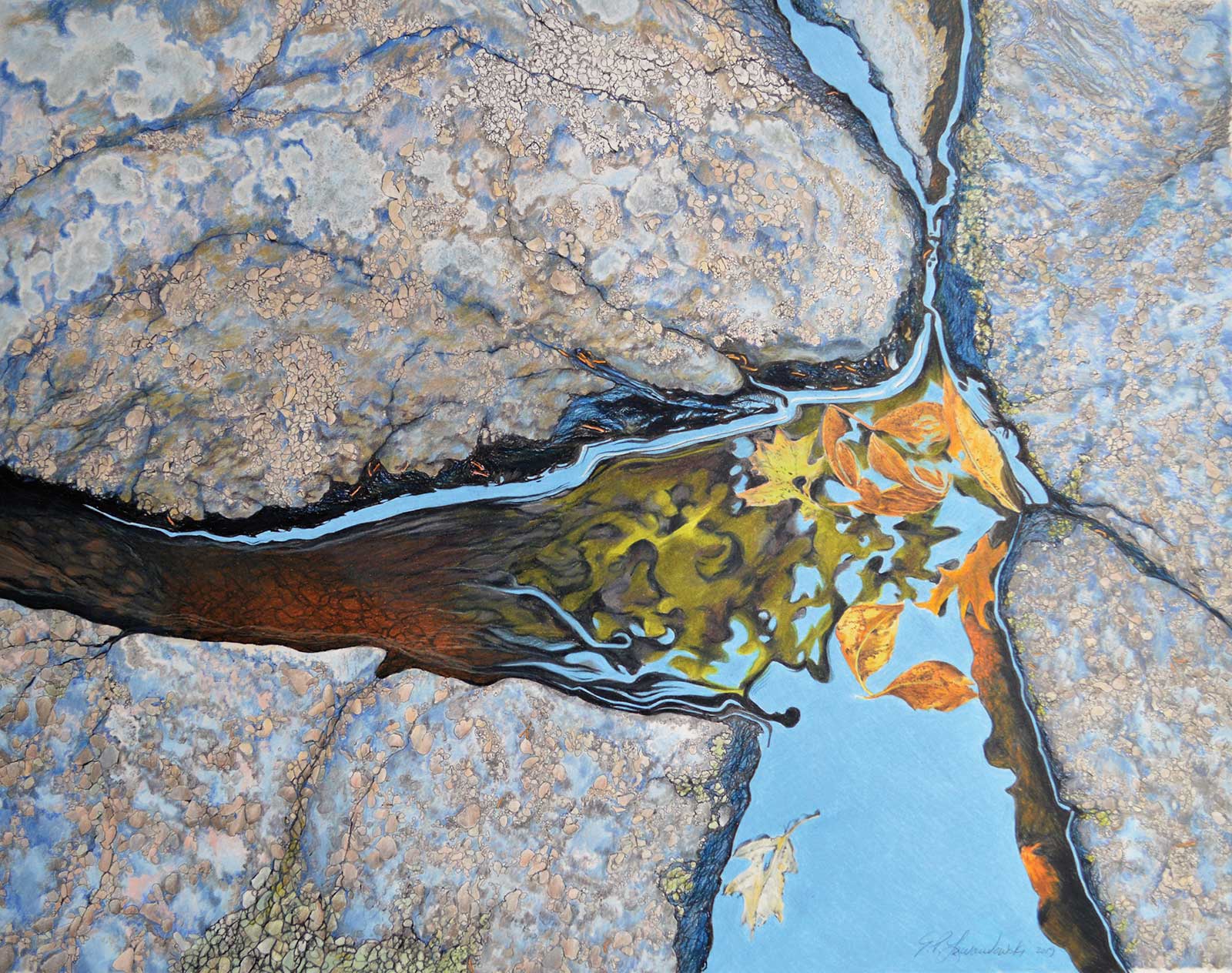 Erwin P. Lewandowski, Stillwater XXI, colored pencil, 17 x 22"
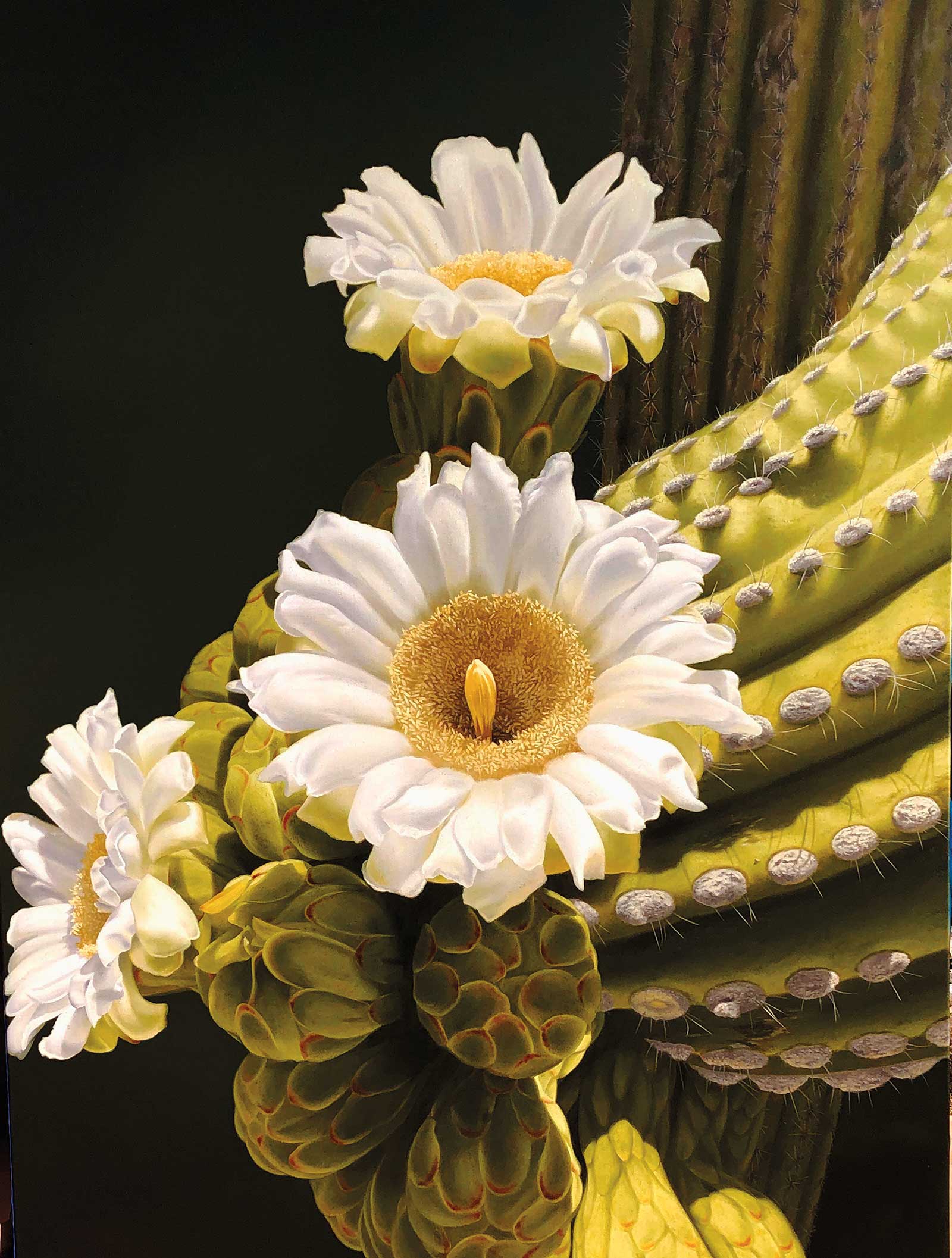 Rob MacIntosh, The Three Amigo’s, oil on canvas, 48 x 36"
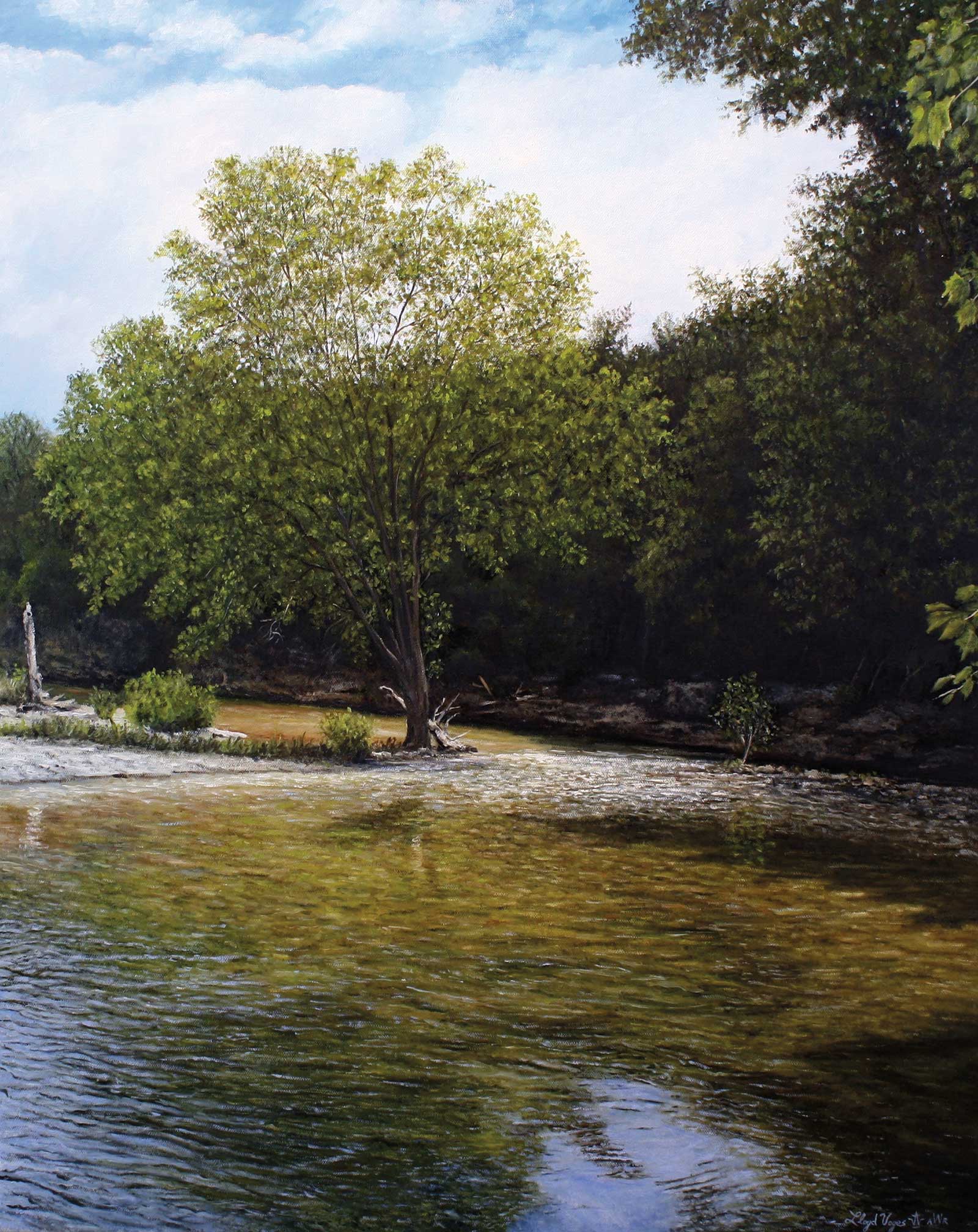 Lloyd Voges, Creeking Along, oil, 30 x 24"
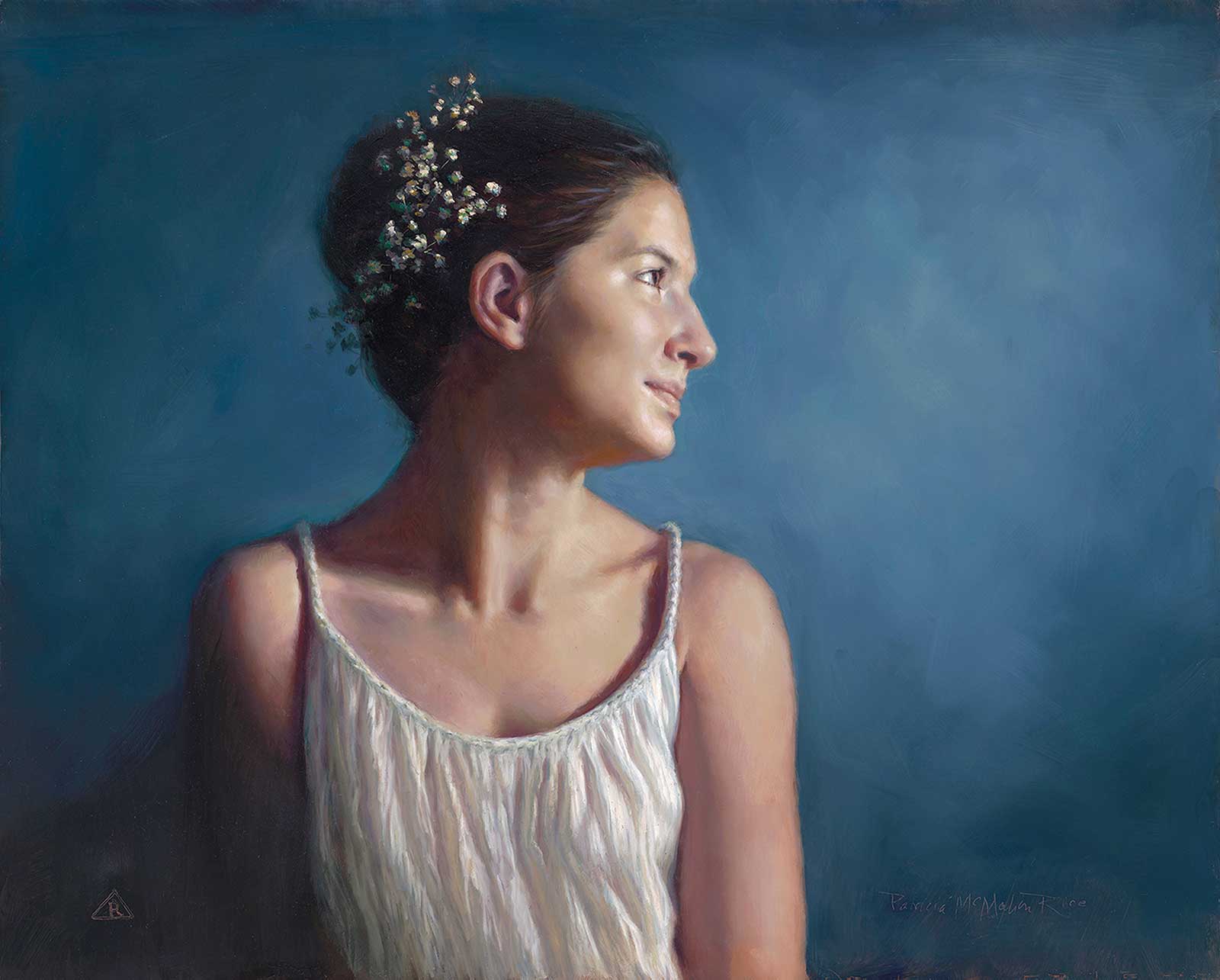 Patricia McMahon Rice, Blue River Dream, oil on copper, 16 x 20"
Surprise! by William C. Turner shows a rusty interior of a car, with a hidden creature within its parts. “The challenge of replicating the complexity of wiring, hoses, rust and colors and the surprise of seeing it is a creature’s home was my inspiration,” he says.
Shawn Robichaud’s Yesterday’s Tomorrow shows a long-abandoned train. He says, “No longer in use; the caboose played a huge part in our locomotive history. For nearly 150 years, it served as shelter for the crew, but also it played a part as a building block in creating the country we now have. Today it is but a relic, some [are] found in museums and only few remain. In a strange way, it is a reminder that we all play a part in this world and will one day leave a legacy.”
Wildlife artist Brenda Morgan’s painting Anticipation depicts one of the cougars that lives at Turpentine Creek Wildlife Refuge in Eureka Springs, Arkansas. “[It is] a wonderful nonprofit providing lifetime refuge to neglected, abused or abandoned ‘big’ cats,” Morgan says. “I visit there a few times a year to take photo references and have painted many of their rescues.”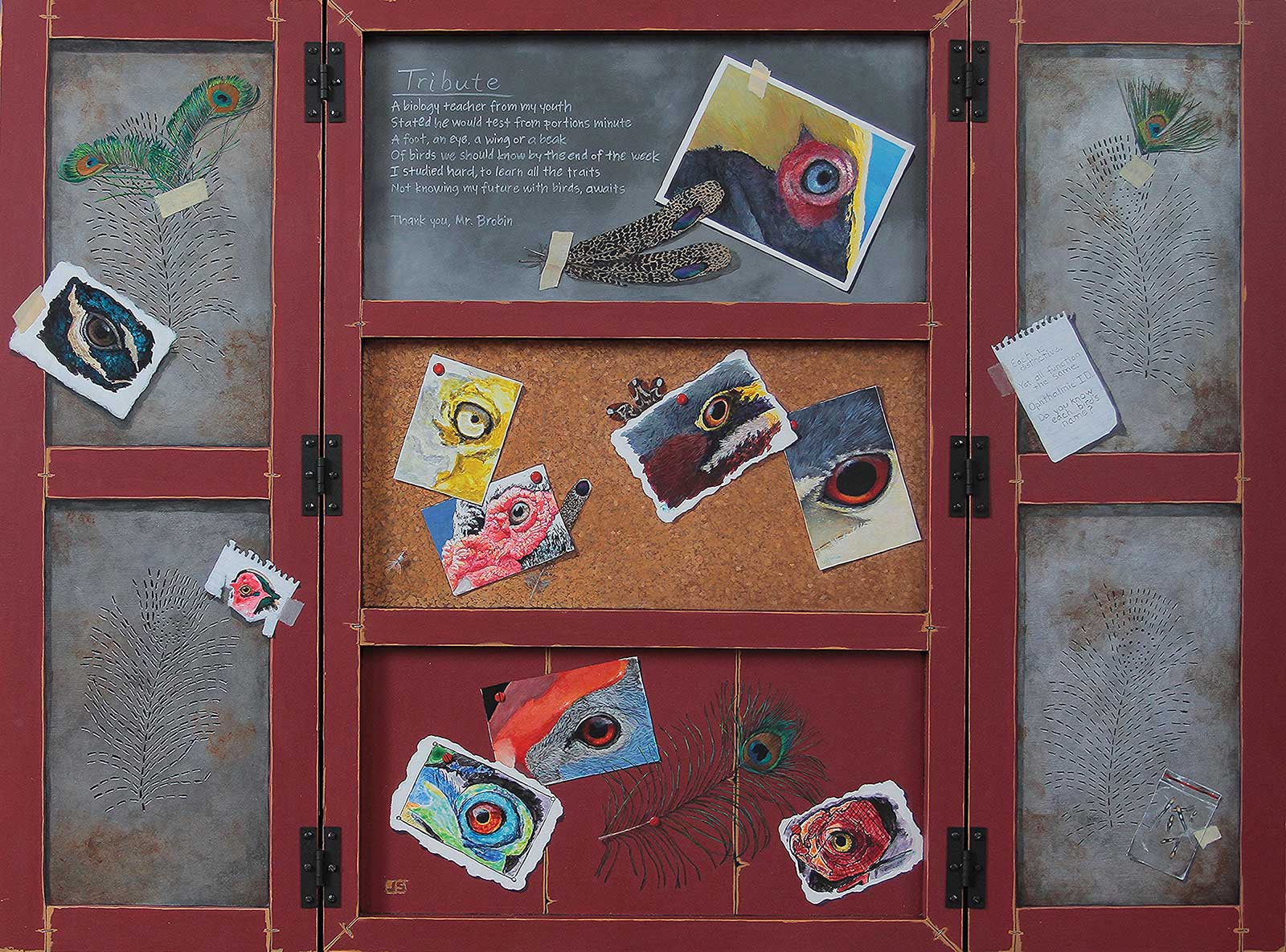 Jan Stommes, Trompe l’Oeil Series: The Eyes Have It (triptych), oil and acrylic on panel, 36 x 48"
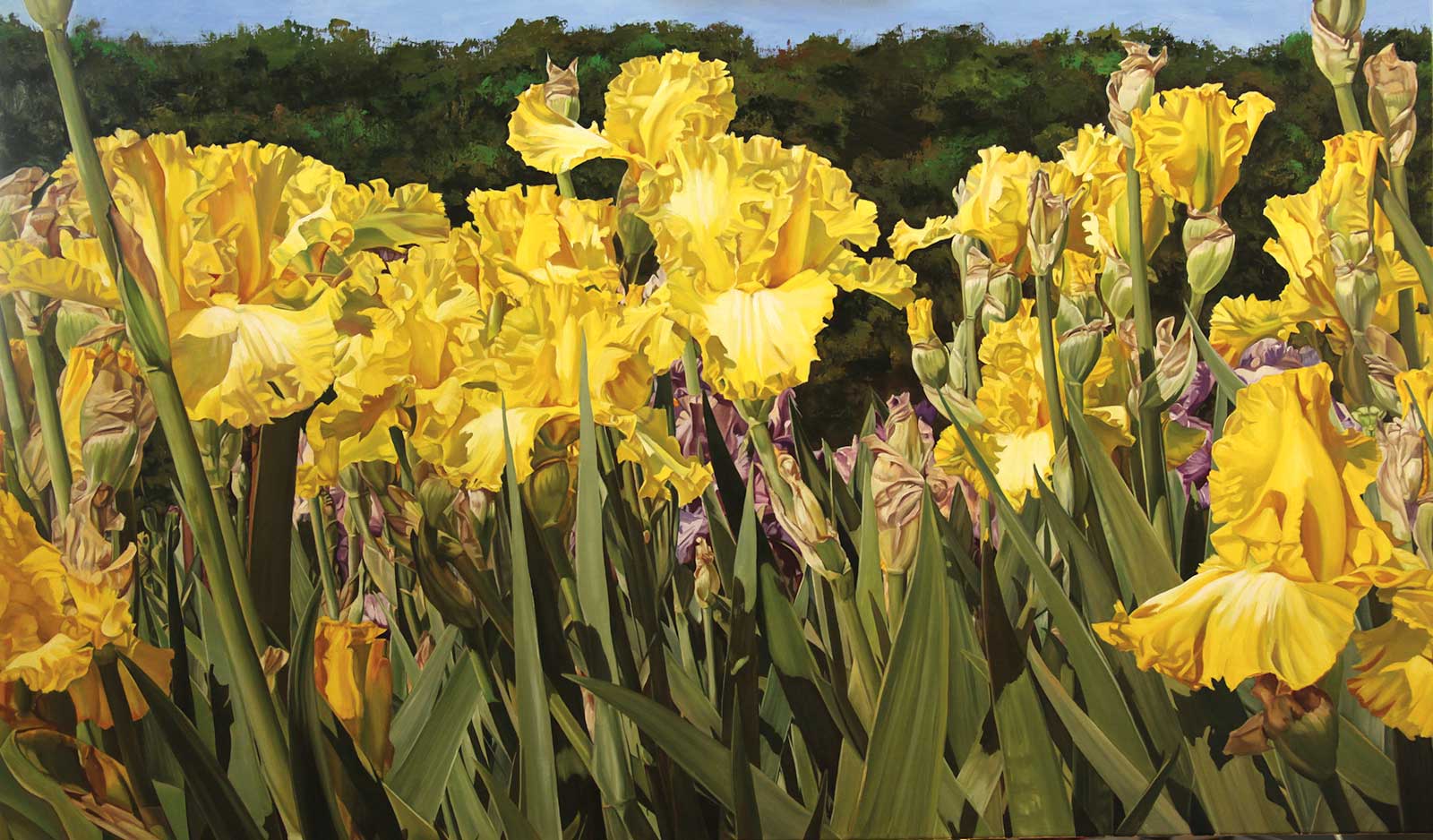 Cathryne Trachok, Compliments, oil on linen, 36 x 60"
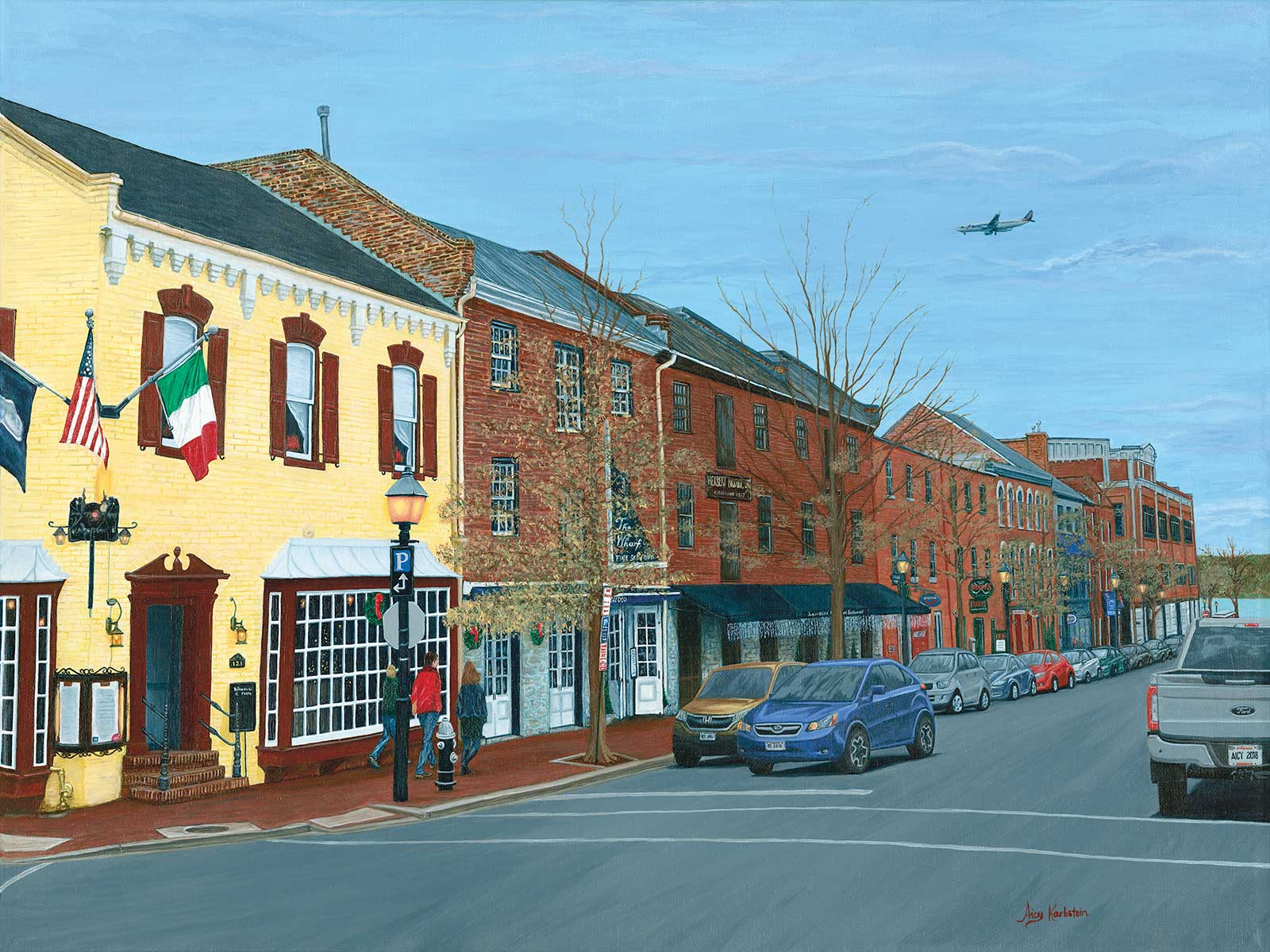 Aicy Karbstein, Old Town Alexandria in December, acrylic on canvas, 18 x 24"
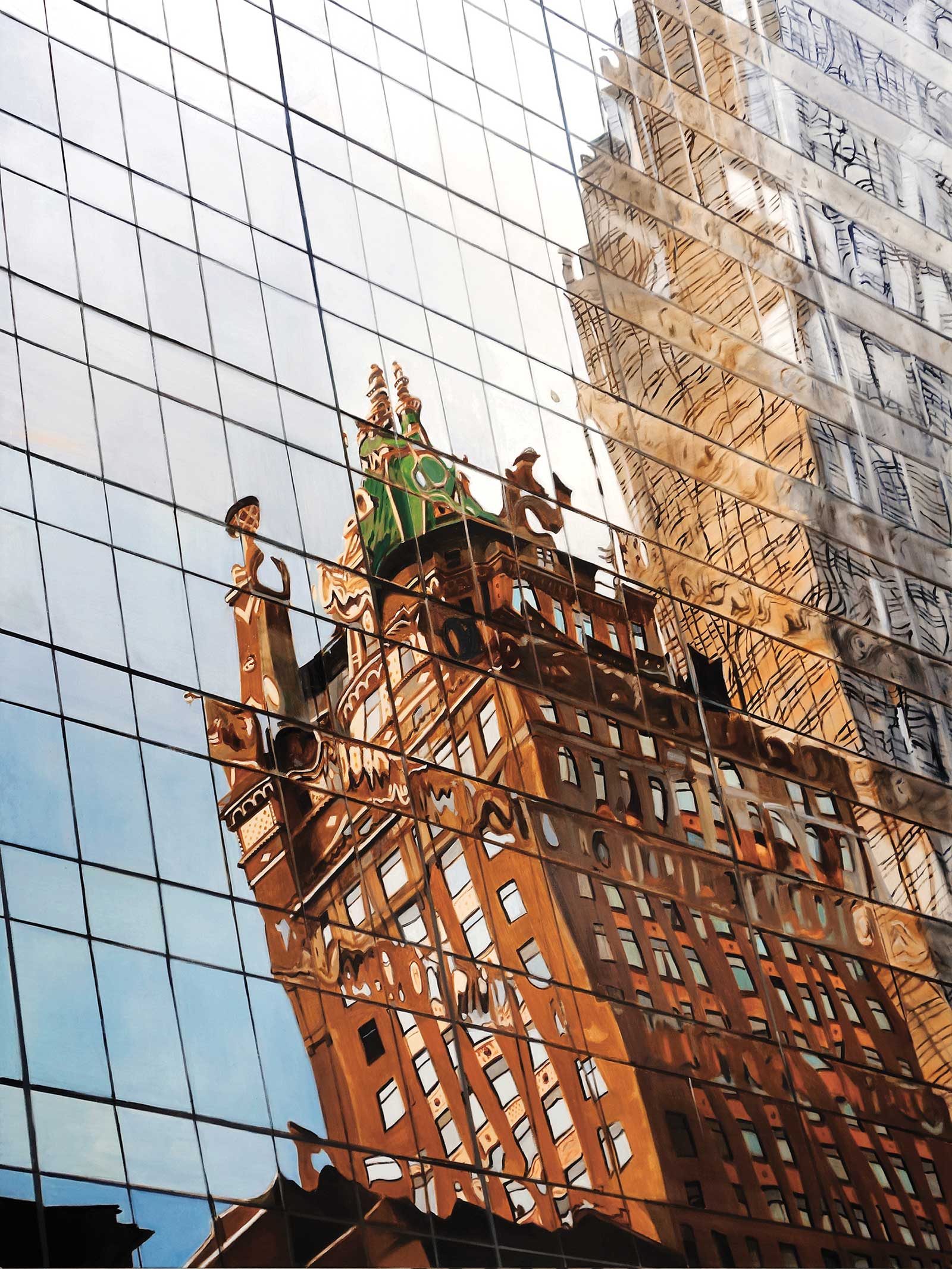 Allan Gorman, Crown, oil on linen, 60 x 45"
Another artist focusing on animals is Brenda Kidera, whose painting Shirley is a cow portrait. “Cows evoke a feeling of calmness in me. I’ve painted cows for many years and enjoy being out in the pasture with them,” explains Kidera. “I find their anatomy particularly interesting and challenging to paint. Cows are curious and social animals; they’ll often sneak up behind me.”
In her painting Ghost Rider, Cathy McClelland also focuses on cattle, but in a larger context. “We are sixth-generation beef cattle farmers in Queensland, Australia, and this is a painting of my oldest son, Travis, ghosting in and out of the thick choking dust on our farm as he was mustering the cows,” she explains. “I was watching him disappear then reappear through the dust and was pondering the question—with the continuing crippling droughts and financial difficulties faced by small family farms, will they and our iconic Aussie cowboys become ‘ghost riders’ of the past? Disappear into history? I hope not.”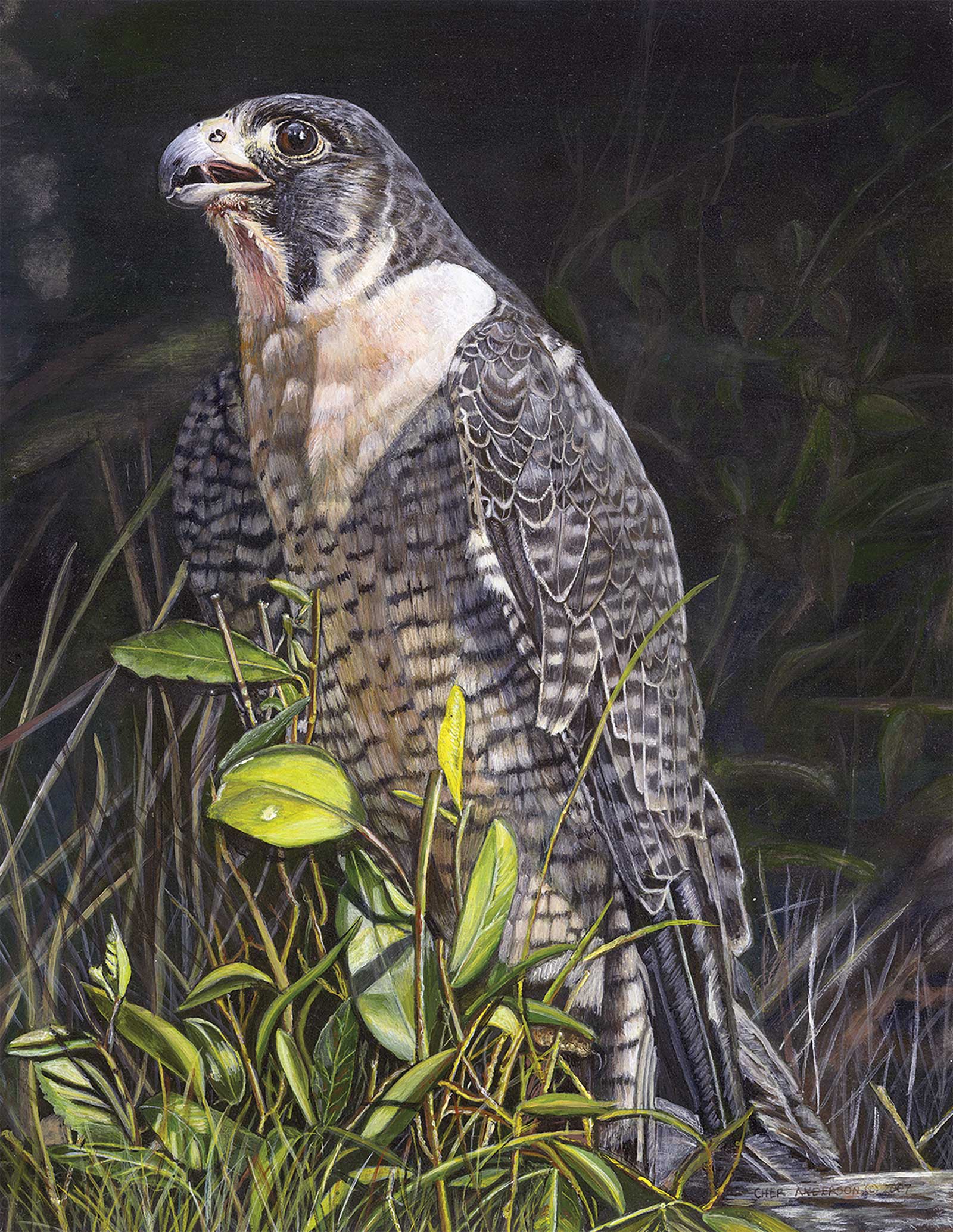 Cher Anderson, The Hunter, acrylic on gesso board, 18 x 14"
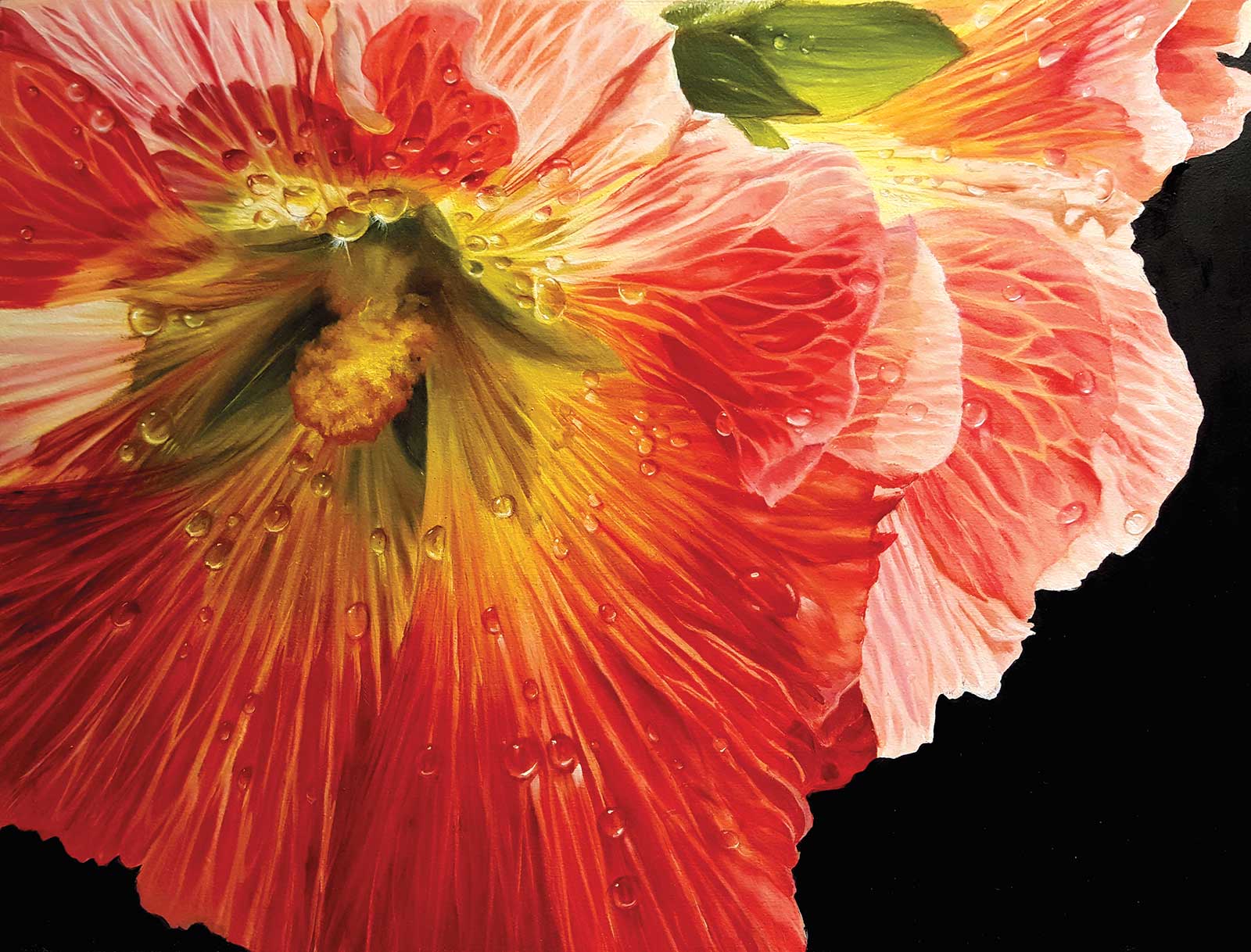 Aleta Rossi-Steward, Diamond Droplets, oil on 2-inch cradled panel with gold leaf sides, 12 x 16"
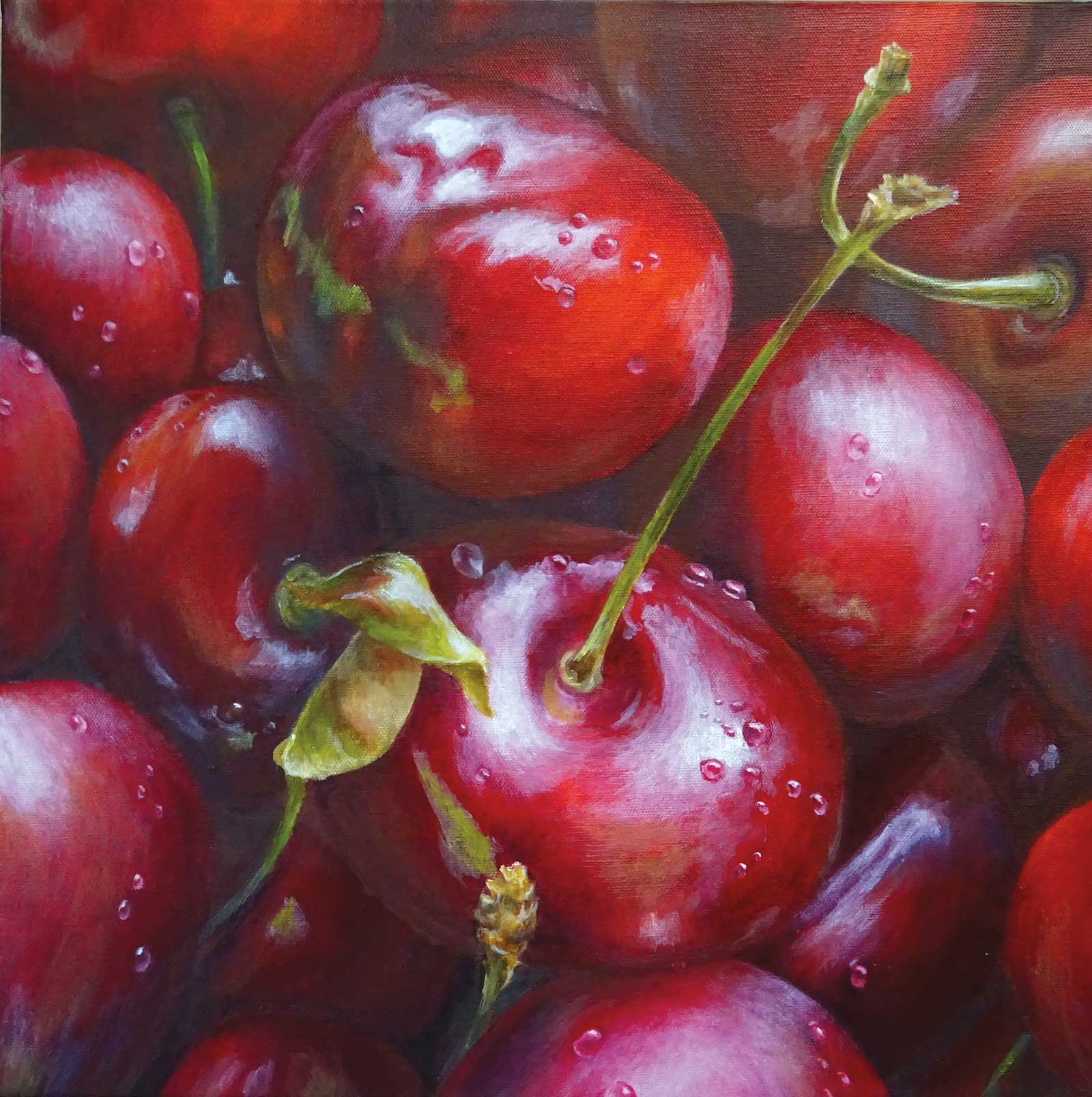 Debbie Shirley, Pretty Please, acrylic on canvas, 18 x 18"
The Hunter is a falcon painting by Cher Anderson that shows the creature in all its majesty. Describing the inspiration, she says, “I have always had a passion for birds and am inspired by their beauty, intelligence and incredible spectrum of species. The peregrine falcon is one of my favorites because of their speed and death-defying dives during hunting. I photographed this one in particular to use as reference and was amazed at its beauty.”
A toucan appears in Dirk Freder’s juried work A Rainbow in the Forest. The artist says, “When I was on a trip through the rainforest of Costa Rica, shortly after a heavy rain shower, which plunged the whole scenery into a deep green, a keel-billed toucan appeared with its intensely colored beak shining like a rainbow. I knew that this was one of those moments that I had to realize as a painting in order to preserve the memory of this fascinating atmosphere, which I could only rudimentarily capture with the reference photos that I was able to shoot quickly before it disappeared.”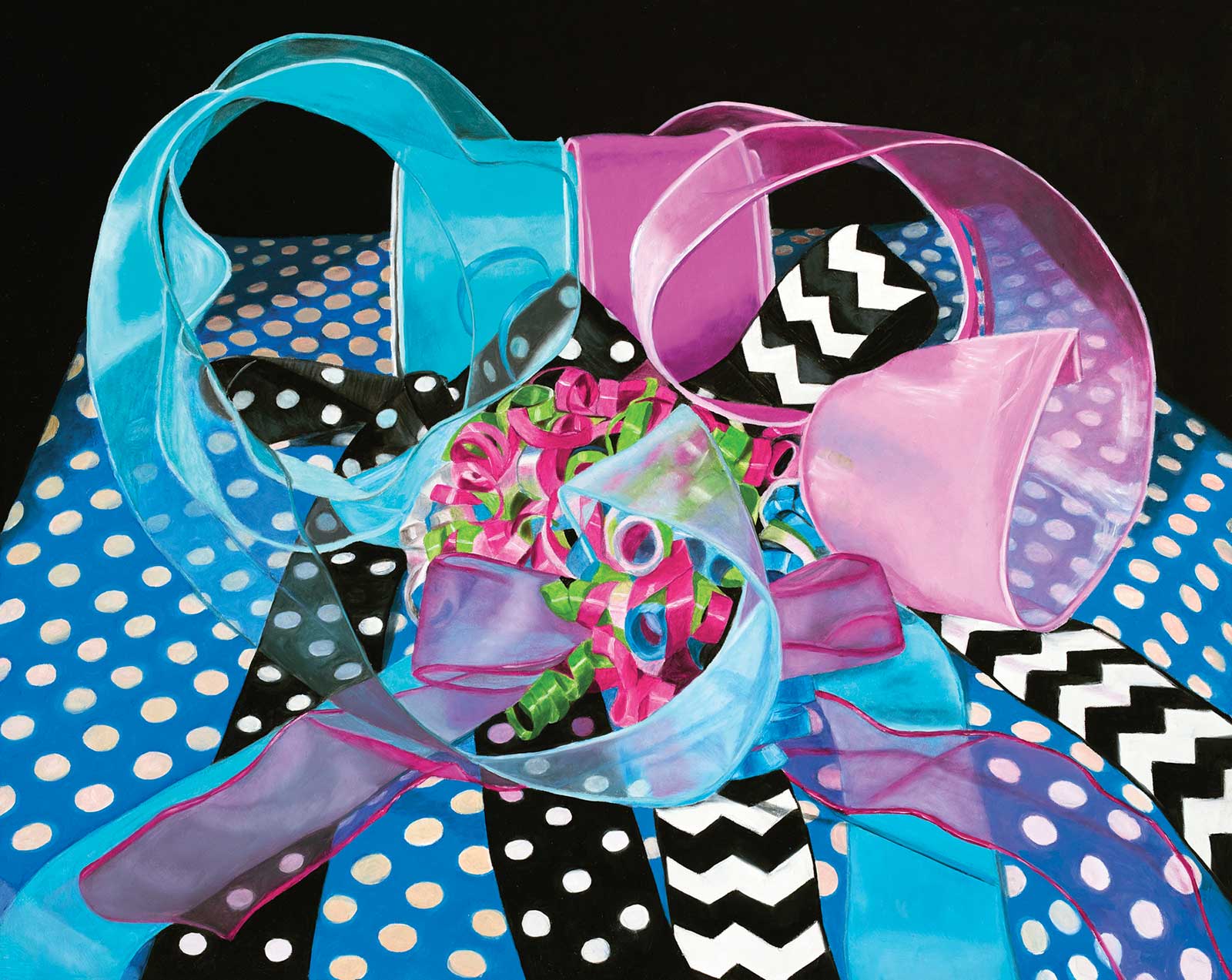 Karen Merkin, Ribbons and Bows, oil on board, 16 x 20"
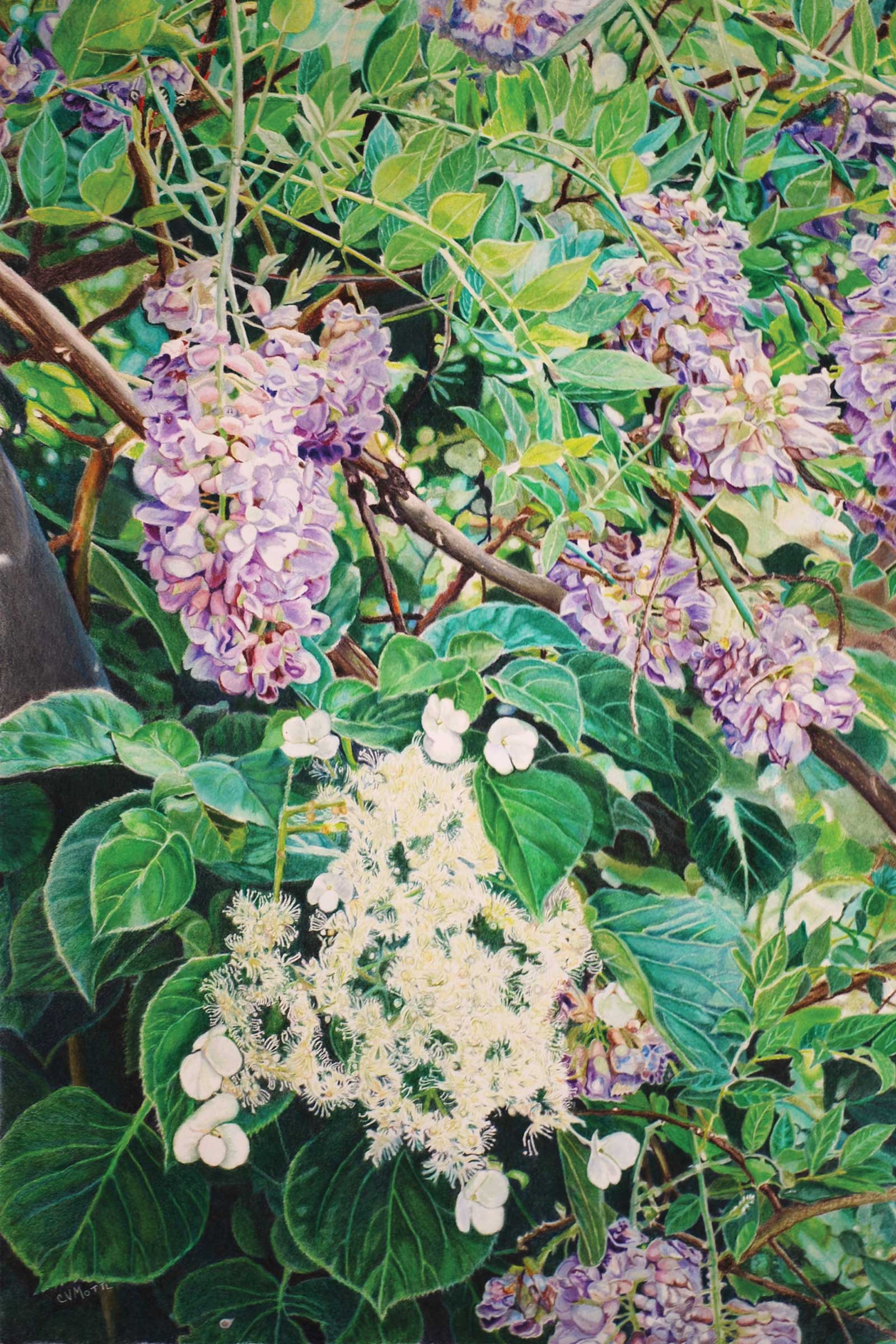 Cindy Valek Mottl, Wisteria and Hydrangea, Morton Arboretum Children’s Garden, colored pencil, 22½ x 15"
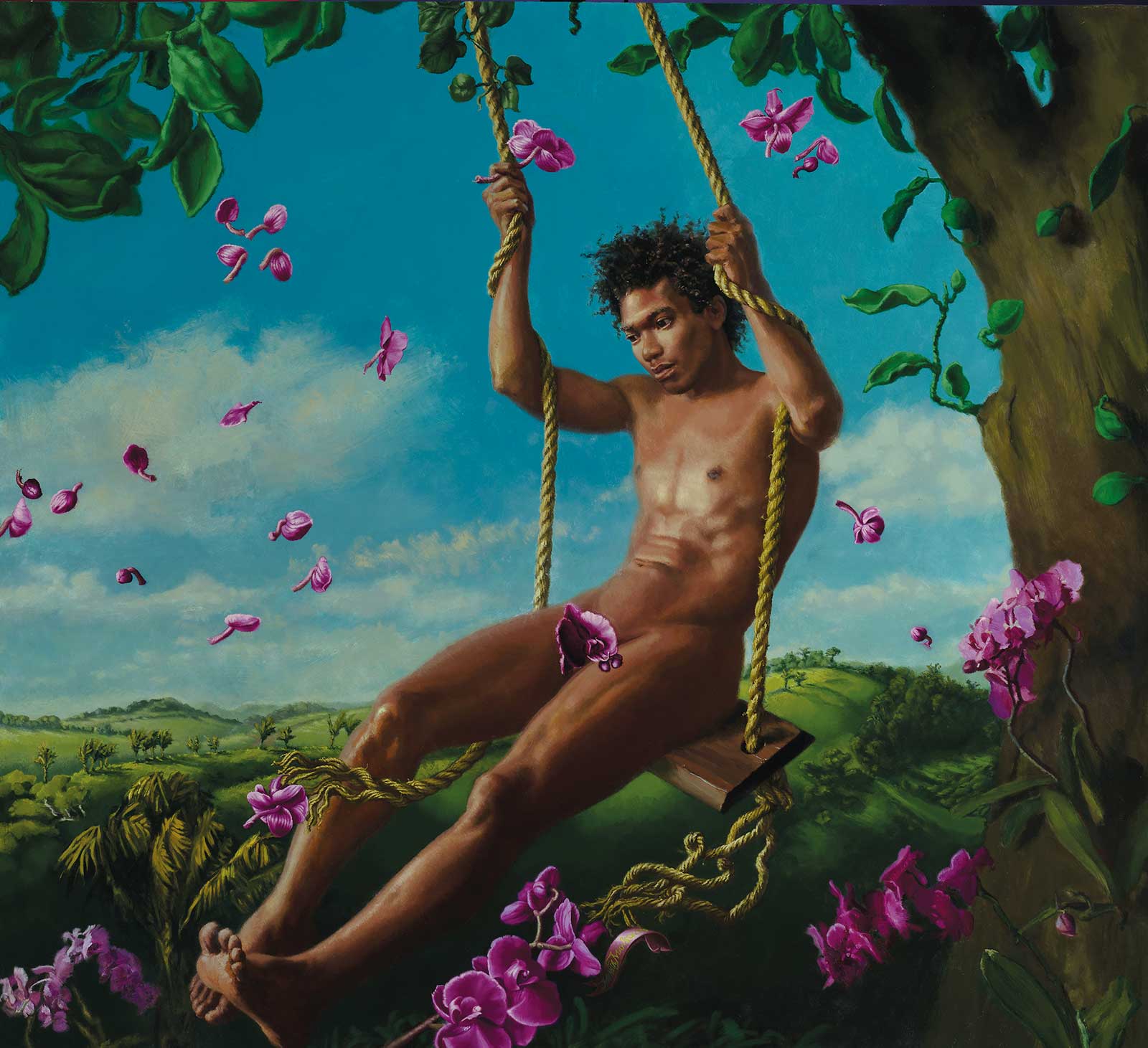 Michela Mansuino, The Fountain of Youth, oil on linen, 49 x 54"
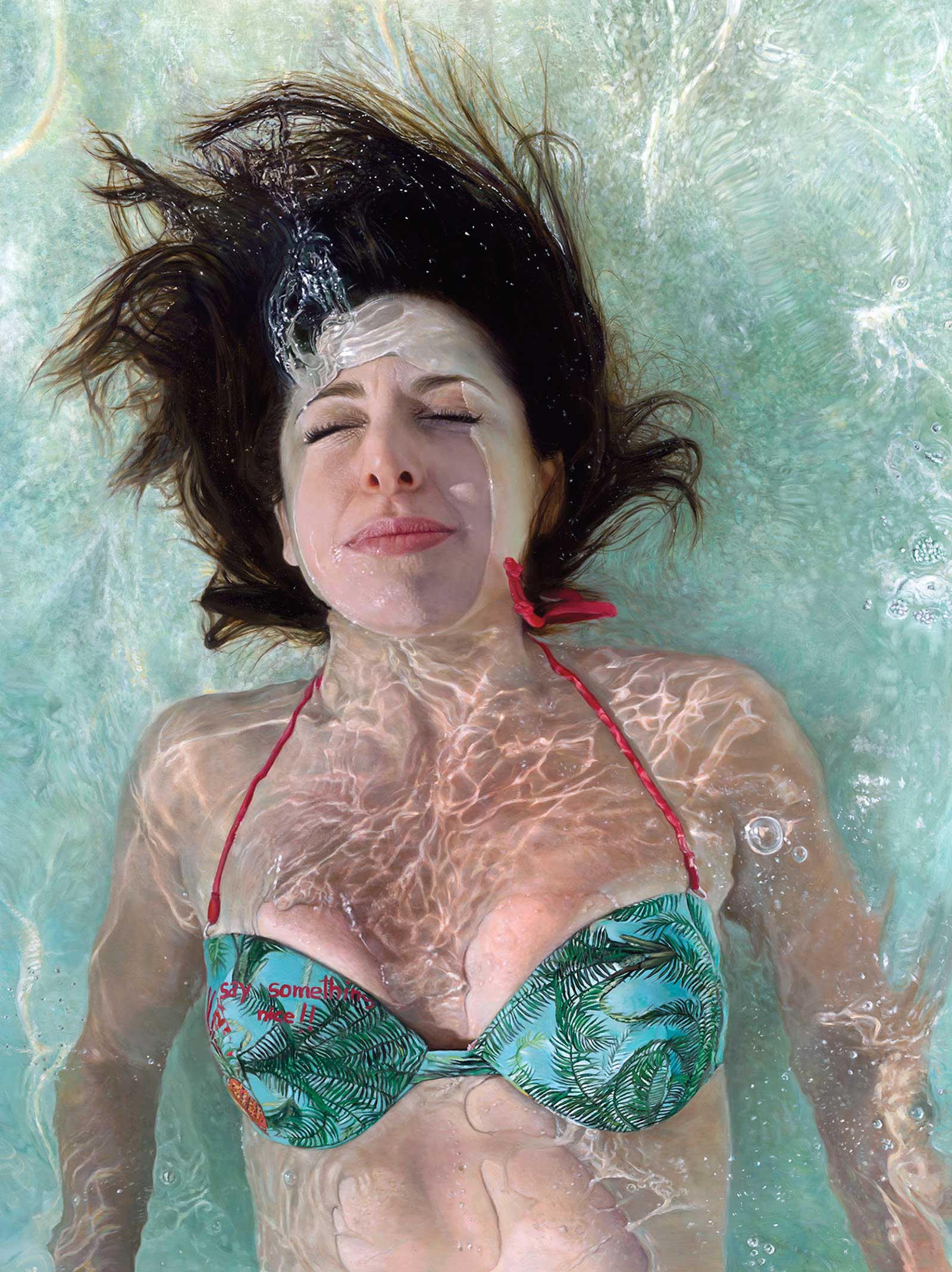 Marissa Oosterlee, Washing Away My Sorrows II, oil on Gessobord, 40 x 31"
Elena Eros’ Snow White Expressions depicts a white Arabian horse in all of its moods. “Horses are so impressive in their movements, that it’s not enough to paint a head or even a body of this creature to show its full glory,” Eros shares. “In order to express its magnificent essence, I’ve come with an idea to animate a horse in the same painting, showing the same horse in motion from different angles. I painted on transparently primed linen without background to draw all attention of the viewer to this beautiful animal.”
Also showing an artist’s love of wildlife is Cindy Sorley-Keichinger’s painting Sunning. “Painting is a form of communication. I wanted the majesty of the tiger to come through loud and clear,” she says. “Hopefully it was a successful communication. Art should speak to its audience with no other communication needed.”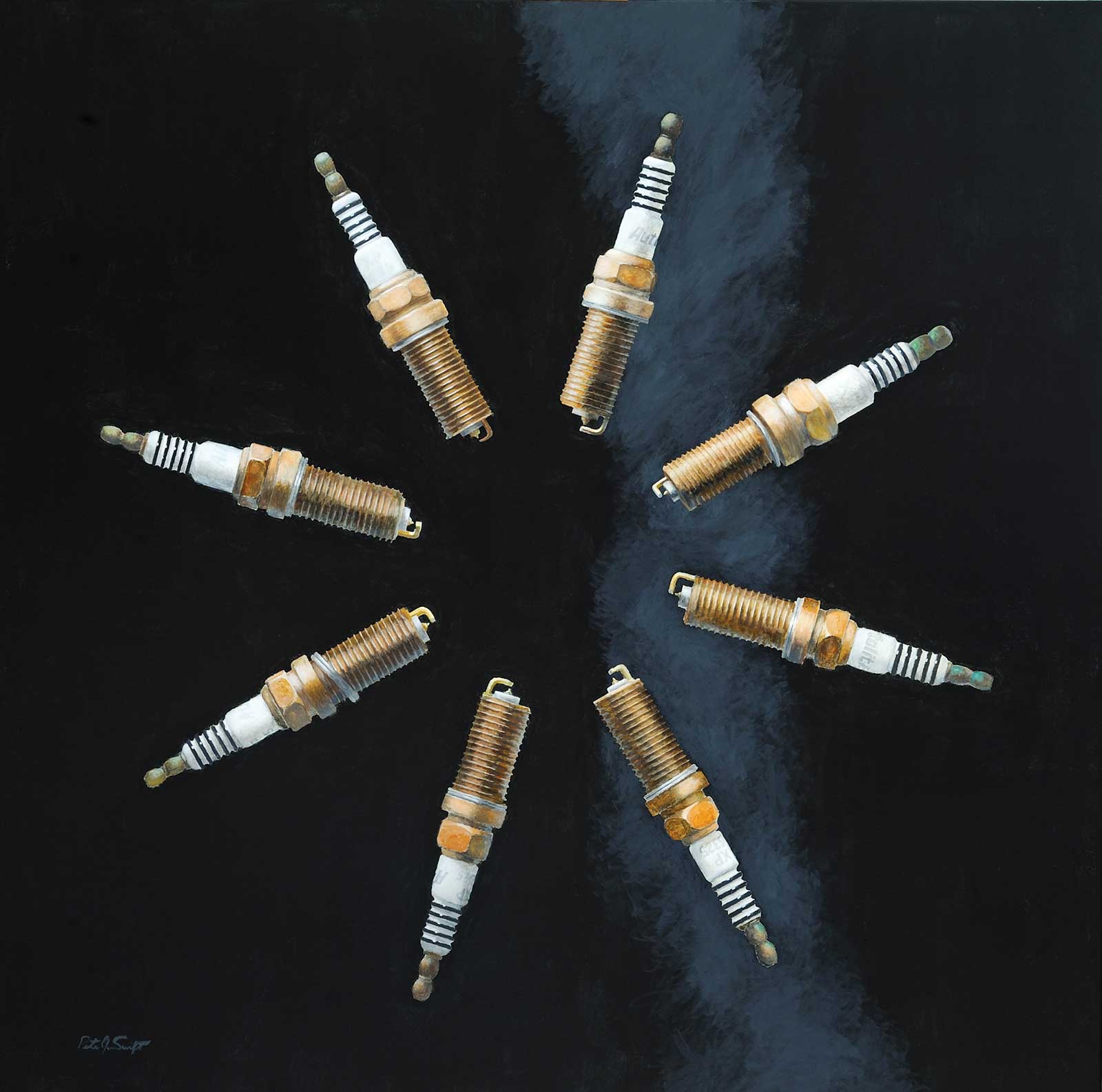 Peter Swift, Eight Spark Plugs, acrylic on canvas, 60 x 60"
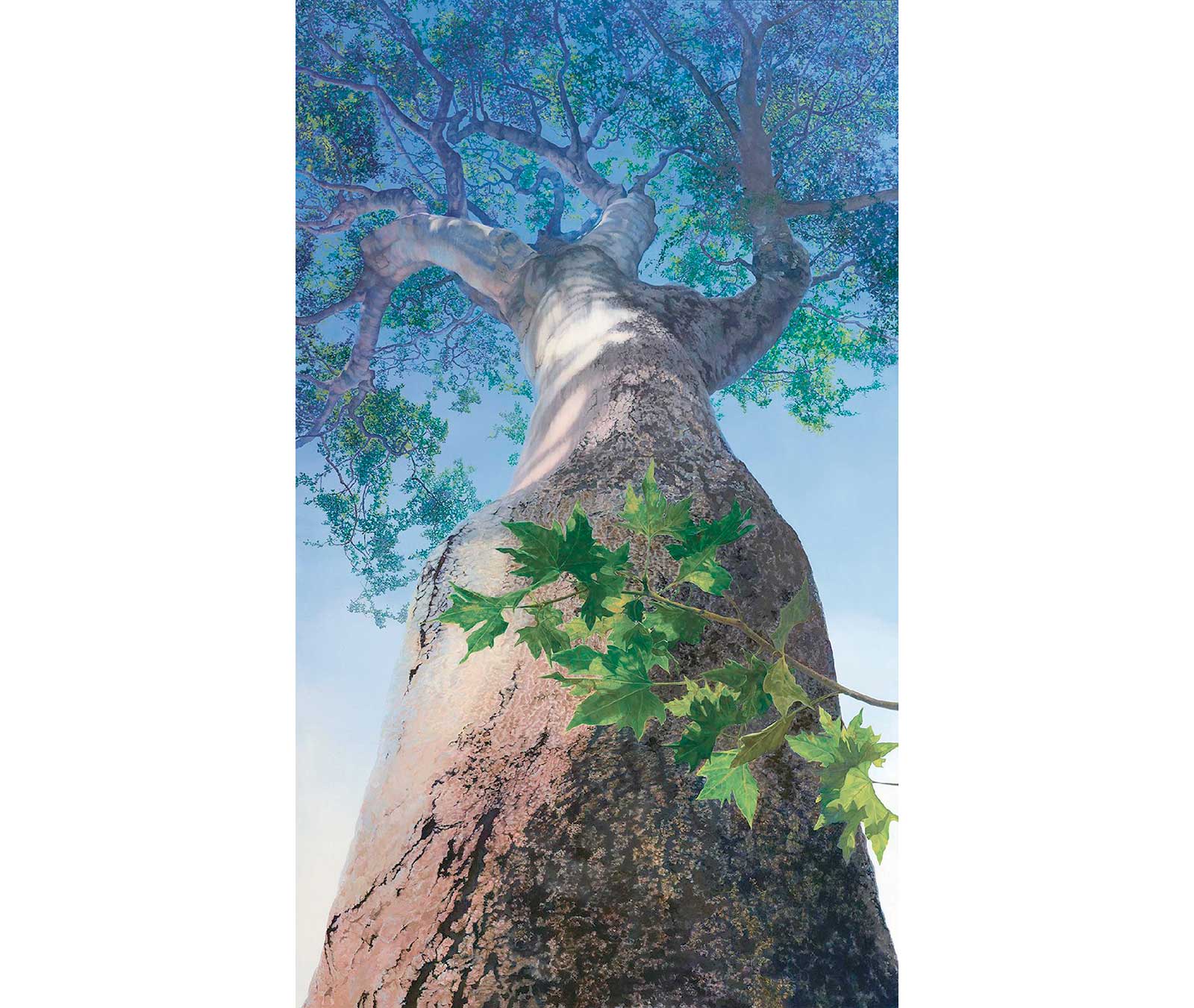 Carin Wagner, Lady of the Sycamore, oil on linen, 80 x 46"
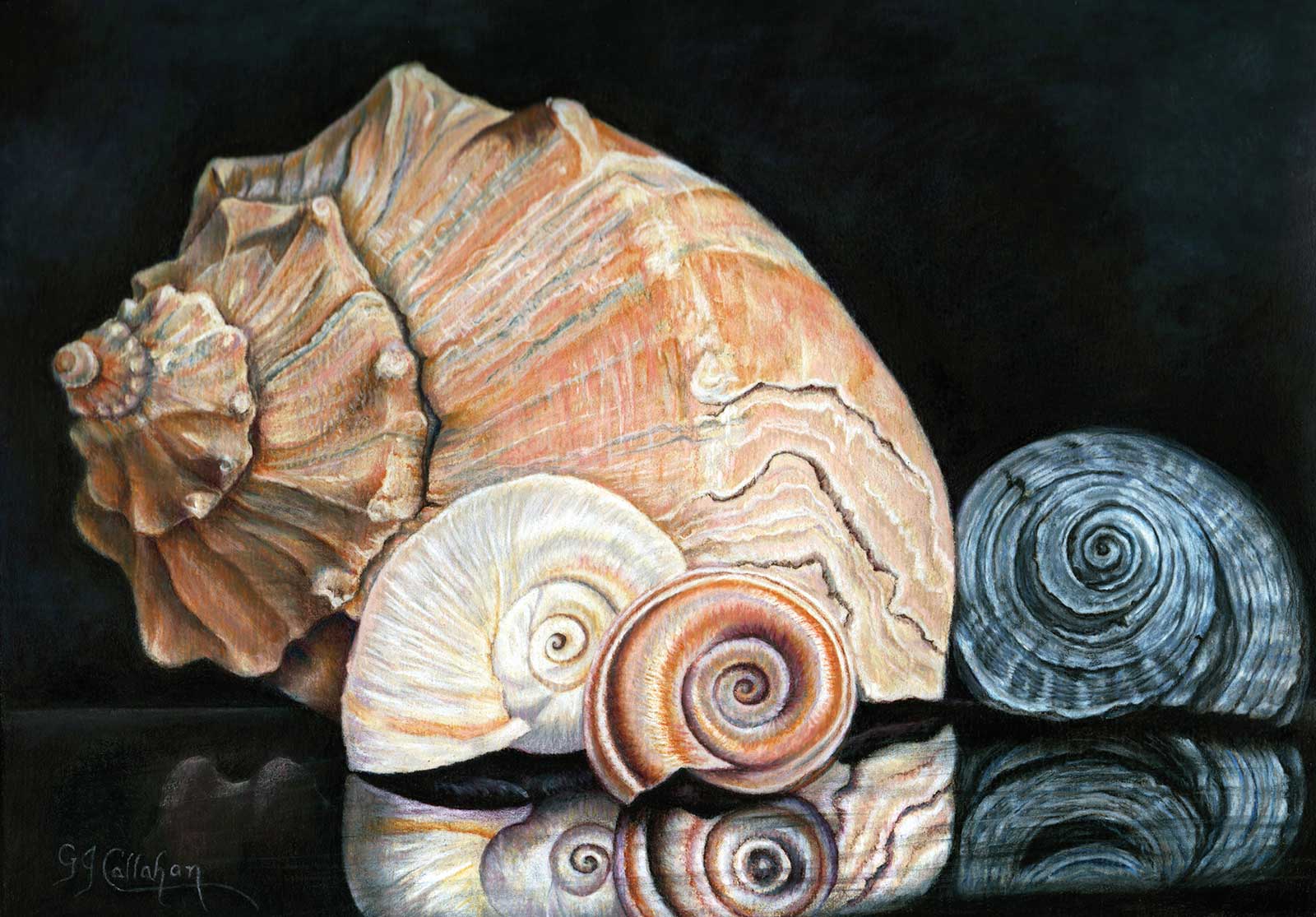 Gloria J. Callahan, Reflections of Sea Life, colored pencil, 8 x 12"
Joye DeGoede has a playful take on wildlife with her JoyEful Party Animals series that includes her work You Look Like a Monkey… that shows two monkeys with cupcakes. “This painting of my zoo series kept me smiling while on my easel,” she says. “I kept it within eyesight in my studio while I worked on the other zoo paintings in this series. It reminded me to laugh, enjoy opportunities and not to take life so serious. I also loved eating my cupcake props.”
Tom Fuller’s painting Waitin depicts two horses. He says, “A great horse will change your life. A good horse will define it.”
The figurative work Concentration by Edi Matsumoto shows the artist’s interest in faces and showing the person’s life stories through their features. “The model of Concentration is a surgeon, Dr. Edgar Rodas, who attached an operating room on the back of a trailer so he could operate on patients in the remote areas in Ecuador,” Matsumoto explains. “He performed over 7,000 surgeries this way for people who otherwise did not have access to such medical care where they lived. As a fellow healthcare provider, I wanted to capture his intense facial expression in the middle of a surgery where there is no room for mistakes. But I hope the viewer can see the benevolent side of him through his gray hair and wrinkles.”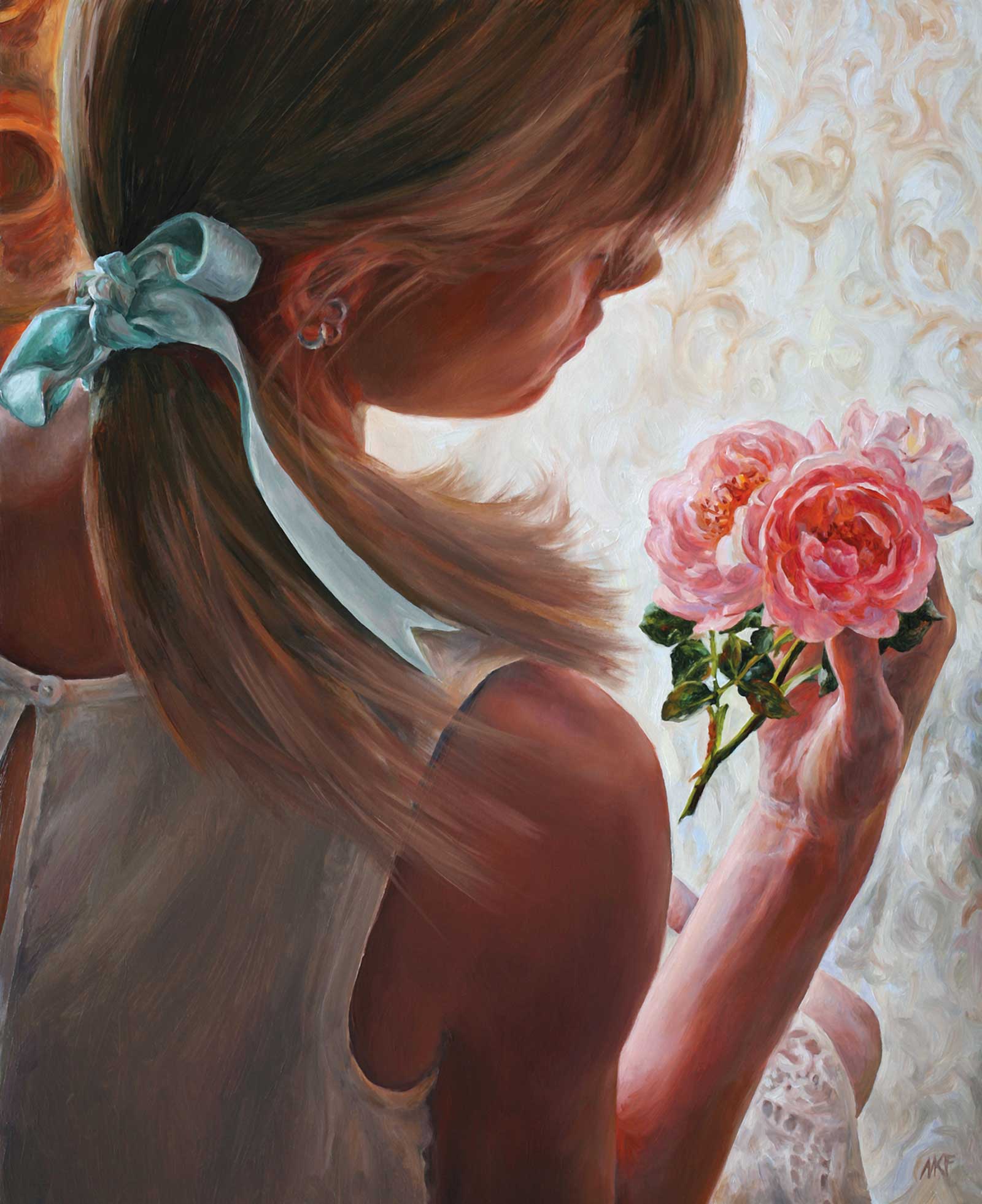 Marianna Foster, Take Time to Smell the Roses, oil on wood panel, 10 x 8"
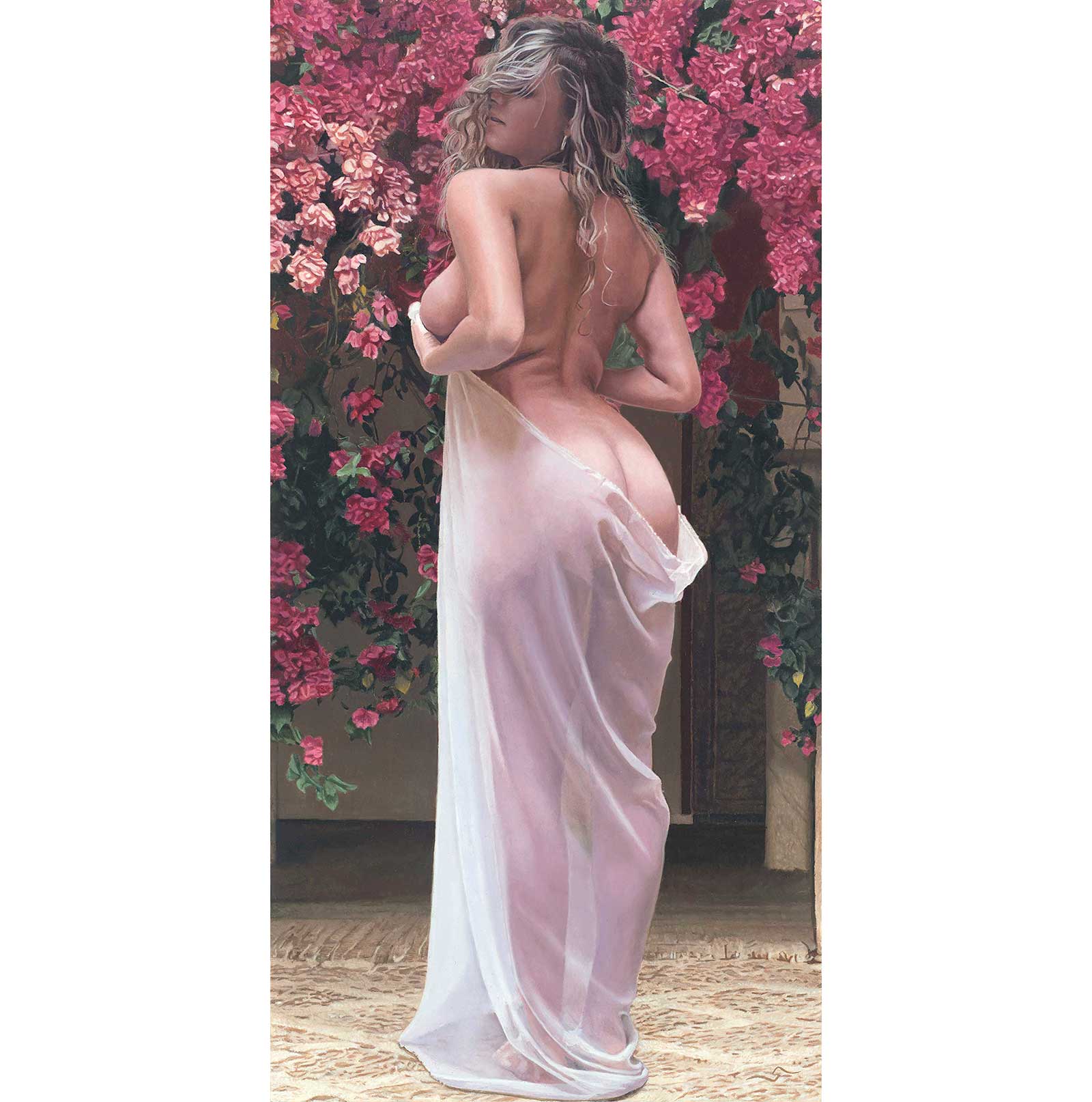 Salvatore Graci, Pink Flowers, oil on panel, 28 x 14 x 1¼"
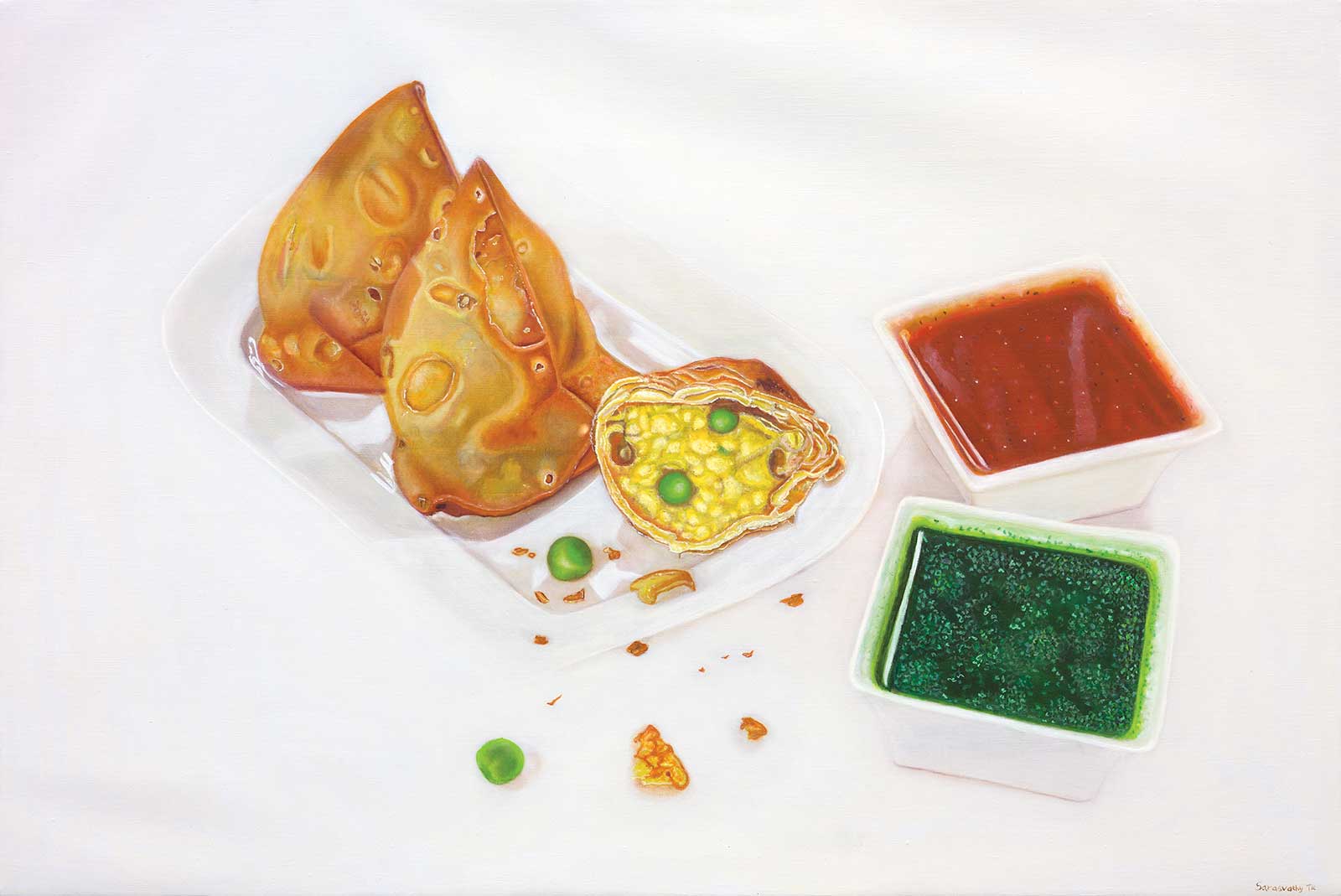 Sarasvathy TK, Samosa, Coriander Chutney and Tamarind Chutney, oil on linen, 24 x 36"
In her juried painting Dream Beyond, Judy Jing Pang says, “I wanted to express the concept of an infinite plane of solitude and tranquility, using the form of a human figure against the backdrop of space as a visual allegory.”
Take Time to Smell the Roses by Marianna Foster shows a young woman holding a rose in her hands. “I feel lucky to live in Phoenix and be able to enjoy the roses on their bushes almost all year-around,” she says. “The rose in my painting is a fragile and thorny beauty. It made me stop and take a moment to simply breathe, enjoy the beauty of life, enjoy those little things in the present moment and not to worry about the future or being stressed about what just happened in a past.”
Patricia McMahon Rice’s oil on copper painting Blue River Dream is included in the show. “My model, Sheba, glanced over her shoulder with this fleeting, dreamy smile that really caught my eye. Her business is Blue River Dream, hence the title,” she says. “I underpainted this first in burnt umber and white on a copper plate, later glazing on the color using a modified glazing technique. The highly smooth surface of copper was perfect for her porcelain skin.”
Priscilla Nelson loves to show the interaction between the human figure, water and light. In the case of her juried painting Making Waves, the figure’s “powerful swim [is] creating a wave on a calm day out at sea.”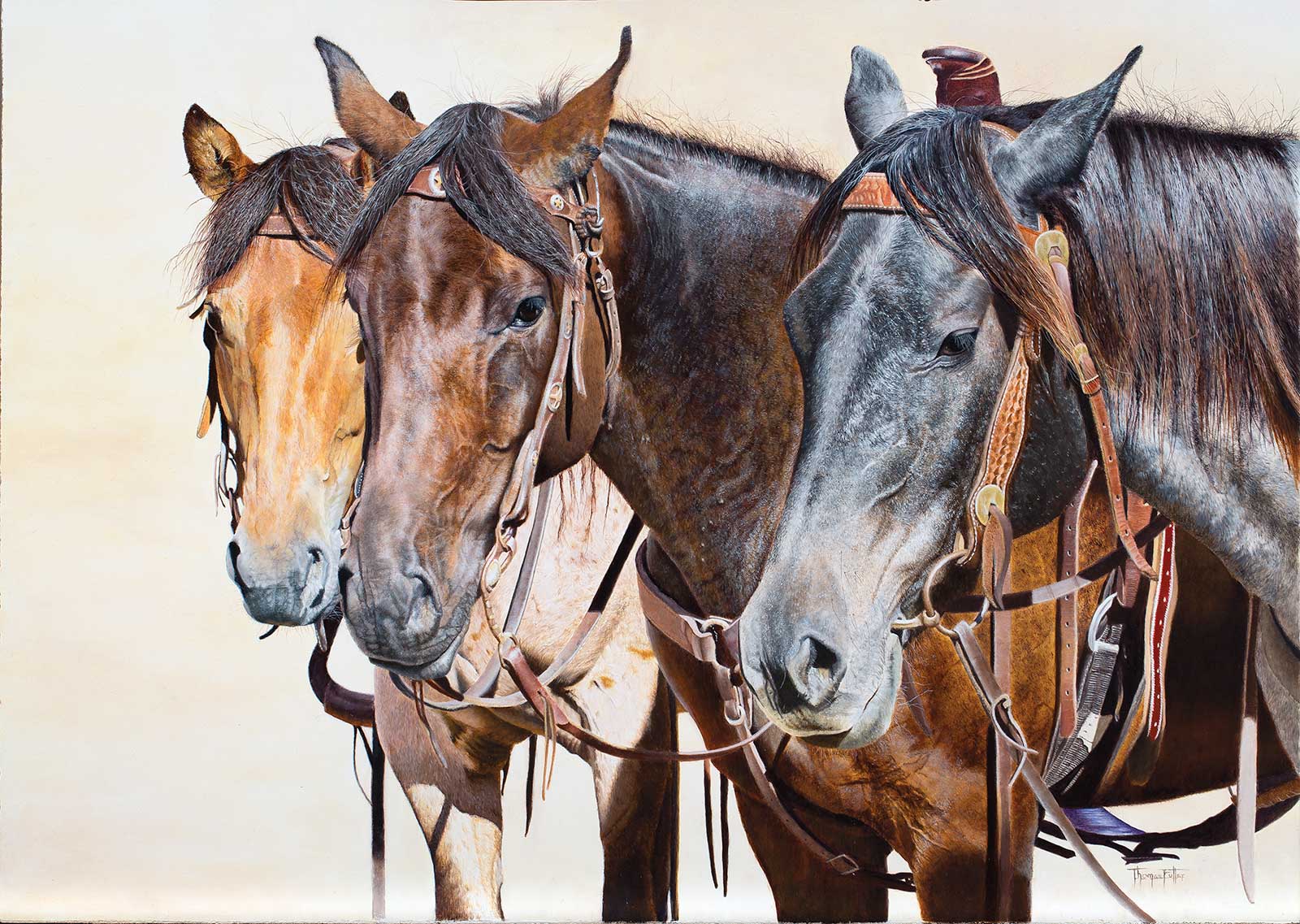 Tom Fuller, Waitin, oil on board, 18 x 27"
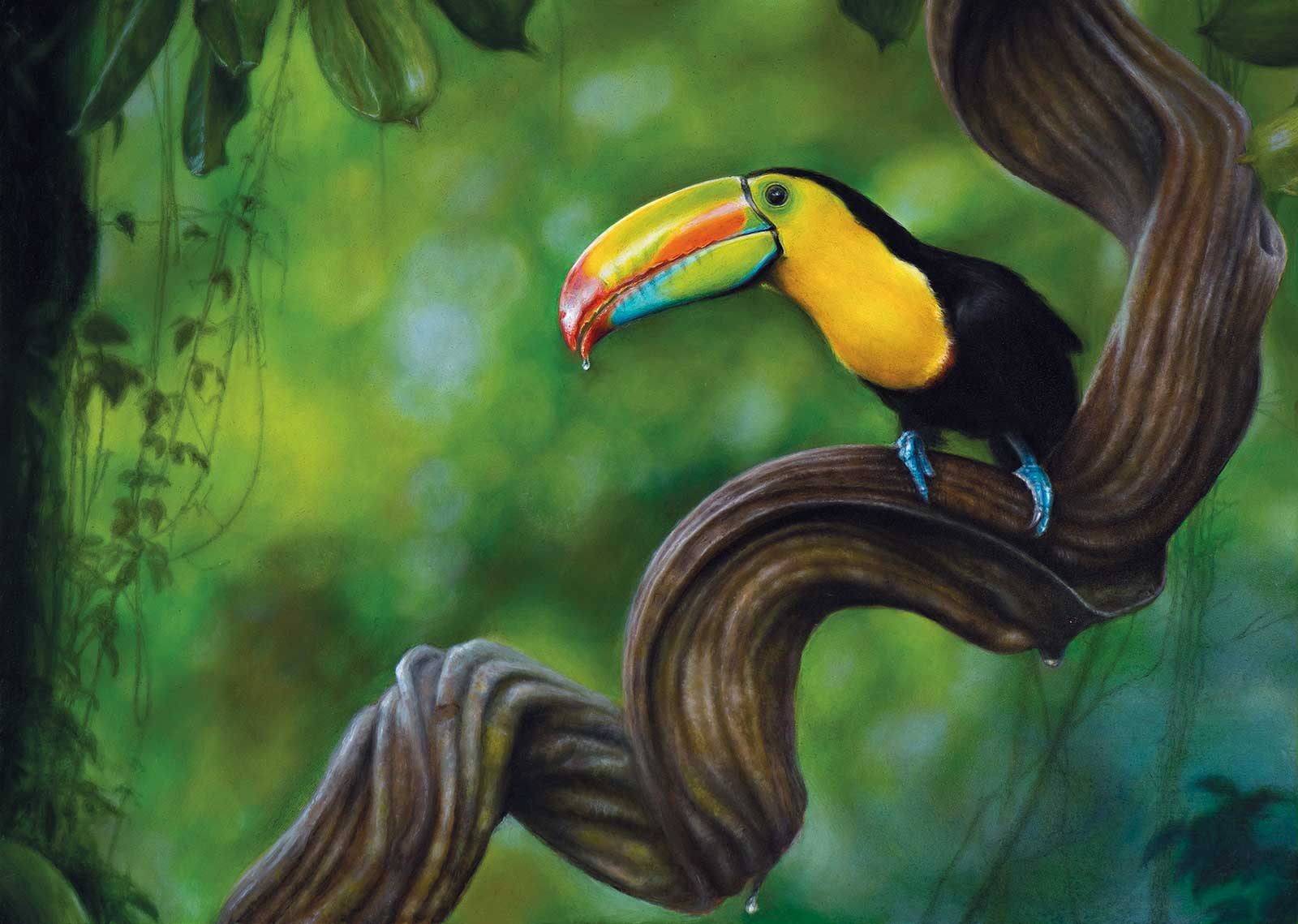 Dirk Freder, A Rainbow in the Forest, oil on board, 20 x 28"
In Pink Flowers, Salvatore Graci combines the figure with nature. “I liked the flowers in this courtyard inside this famous building and the woman’s photo,” the artist says. “Both images combined were magic.”
Stephen Mangum’s juried painting Gravity, “is about resignation and was inspired by our current state of affairs: the political environment, climate crisis, income inequality, a divided nation,” he says. “A self-portrait, I painted myself prone and shirtless to represent vulnerability and surrender, as though I do not have much fight left in me. The pool balls suggest a game that is maybe over or perhaps will continue without me. It is a grave situation, hence ‘gravity.’” 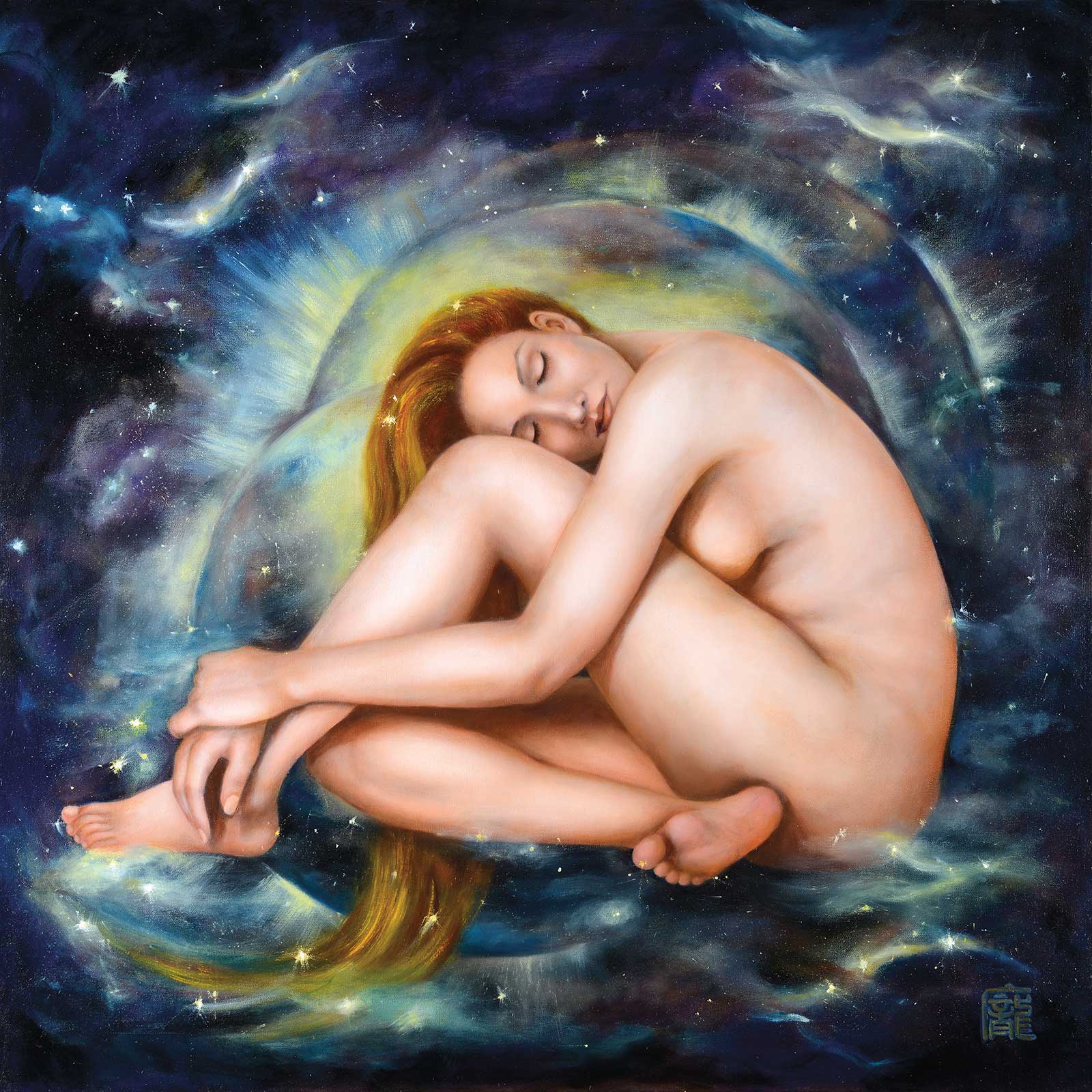 Judy Jing Pang, Dream Beyond, oil on canvas, 40 x 40"
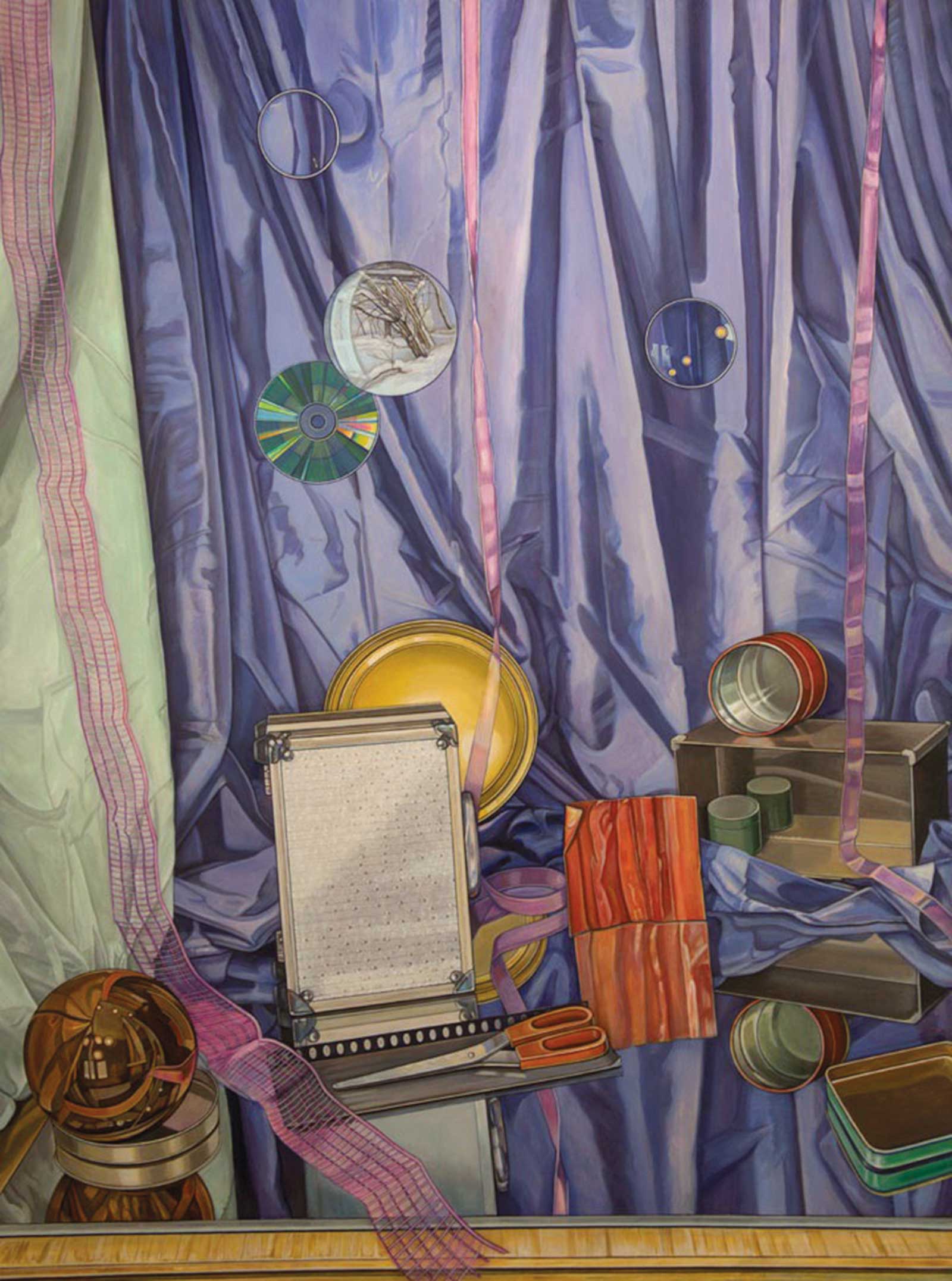 Karen Khan, Reflections, acrylic on canvas, 48 x 36"
Gloria J. Callahan’s Reflected Sea Life is a colored pencil drawing that shows two old seashells. “The texture of these old shells found two generations ago and passed down to me by a neighbor had me envisioning the lighting effects over them seen here,” she says. “Lighting always entices me to capture detail and colored pencil enables me to capture the realistic reflections of my still life’s surface and the 20 to 25 layers of translucent color to saturate the surface like an oil painting.”
Jan Stommes’ Trompe l’Oeil painting, which has real hinges, is aptly titled Trompe l’Oeil Series: The Eyes Have It. “The art of deception is created by painting various items in such a way as to give the illusion that the items exist,” says the artist. “If viewers feel compelled to touch the paintings to see if the items are real, then I feel like I have accomplished my goal.”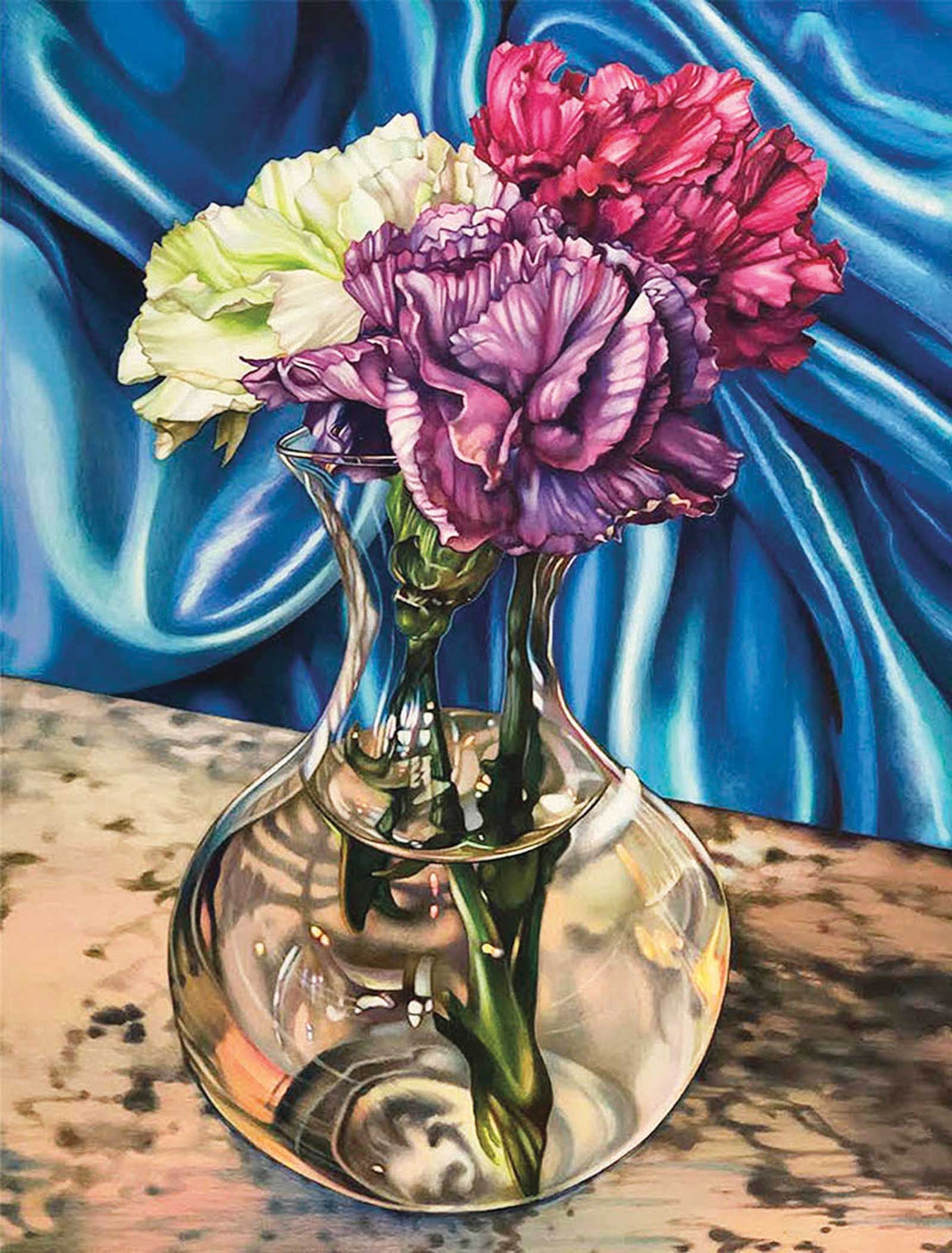 Nancy Jacey, Harmony, Prismacolor pencil, 25 x 20"
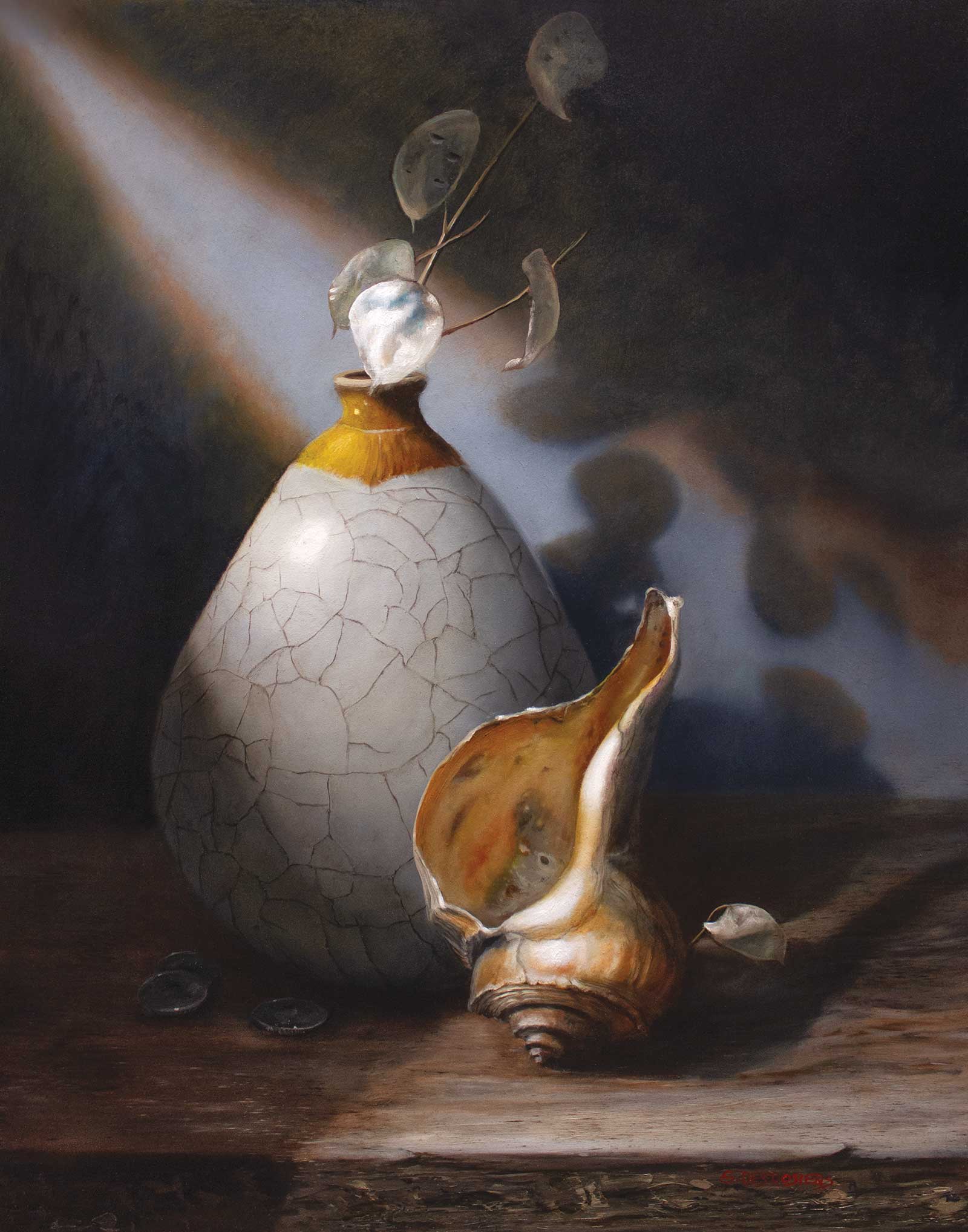 Sandra Desrosiers, A Few Dollars More, oil on panel, 14 x 11"
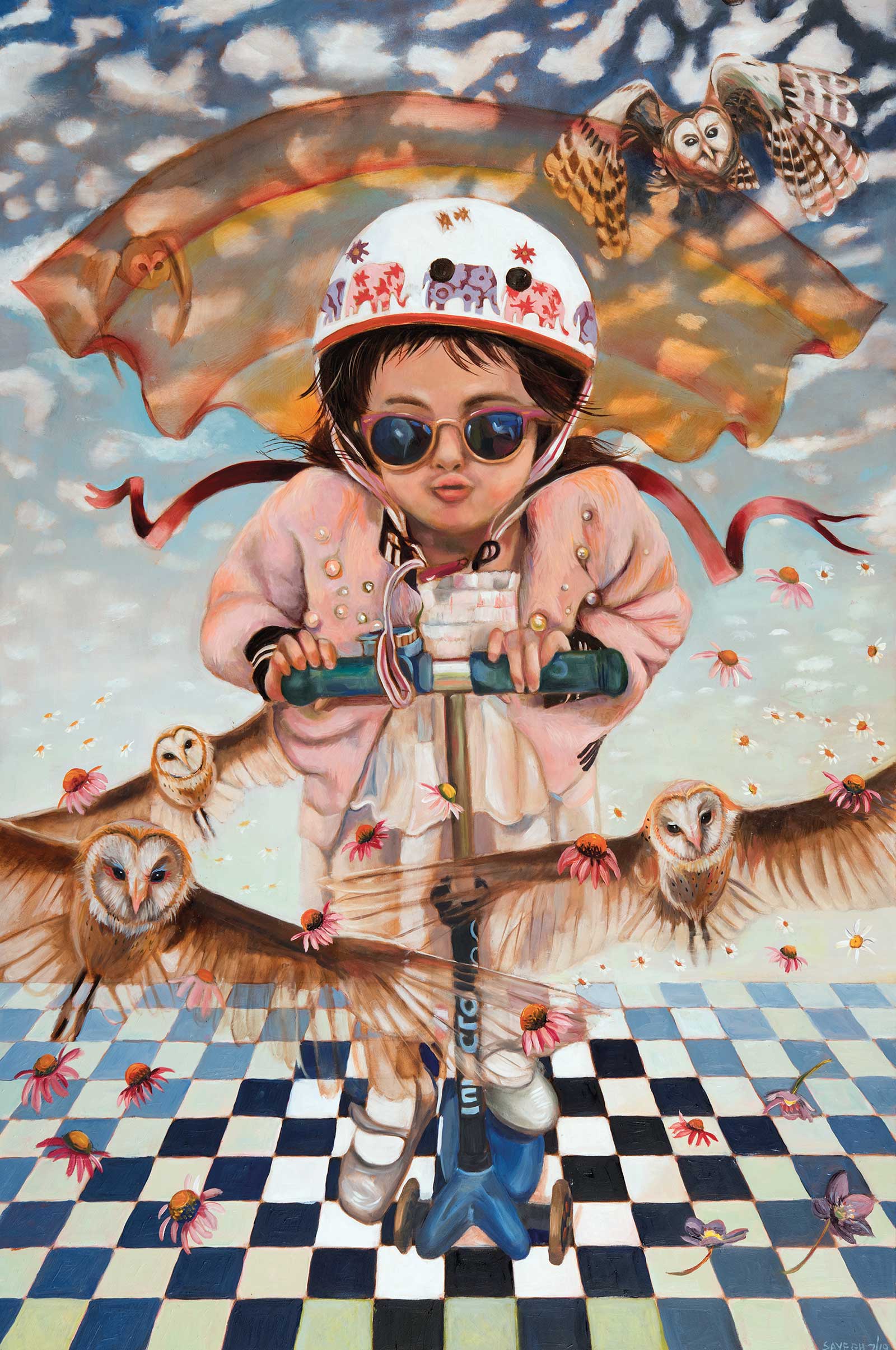 Sharon Sayegh, The Flying Machine, oil on panel, 36 x 24"
The still life Reflections is from Karen Khan’s newest series of the same name. “I am inspired by the implications that quantum physics can have on contemporary realism,” Khan says. “If everything is energy then the illusion of objects becomes special. Mirrors change our perception of space. Floating objects defy gravity. Objects can be devoid of stories. Still life compositions can be ‘abstractly’ arranged based on geometric versus biomorphic form.”
Karen Merkin often paints still lifes in her studio, including the painting Ribbons and Bows. “Loving lots of color, I was playing around with some leftover wrapping paper and ribbons after the holidays and thought this would make a fun painting,” she says. “And so began a whole new series.”
Another work using objects is Eight Spark Plugs by Peter Swift. “I believe that, inside the human brain, there is a deep psychological connection to circles,” Swift says. “The circle is a fundamental symbol in many of the world’s religions because it represents harmony, unity, tranquility, completion and wholeness.”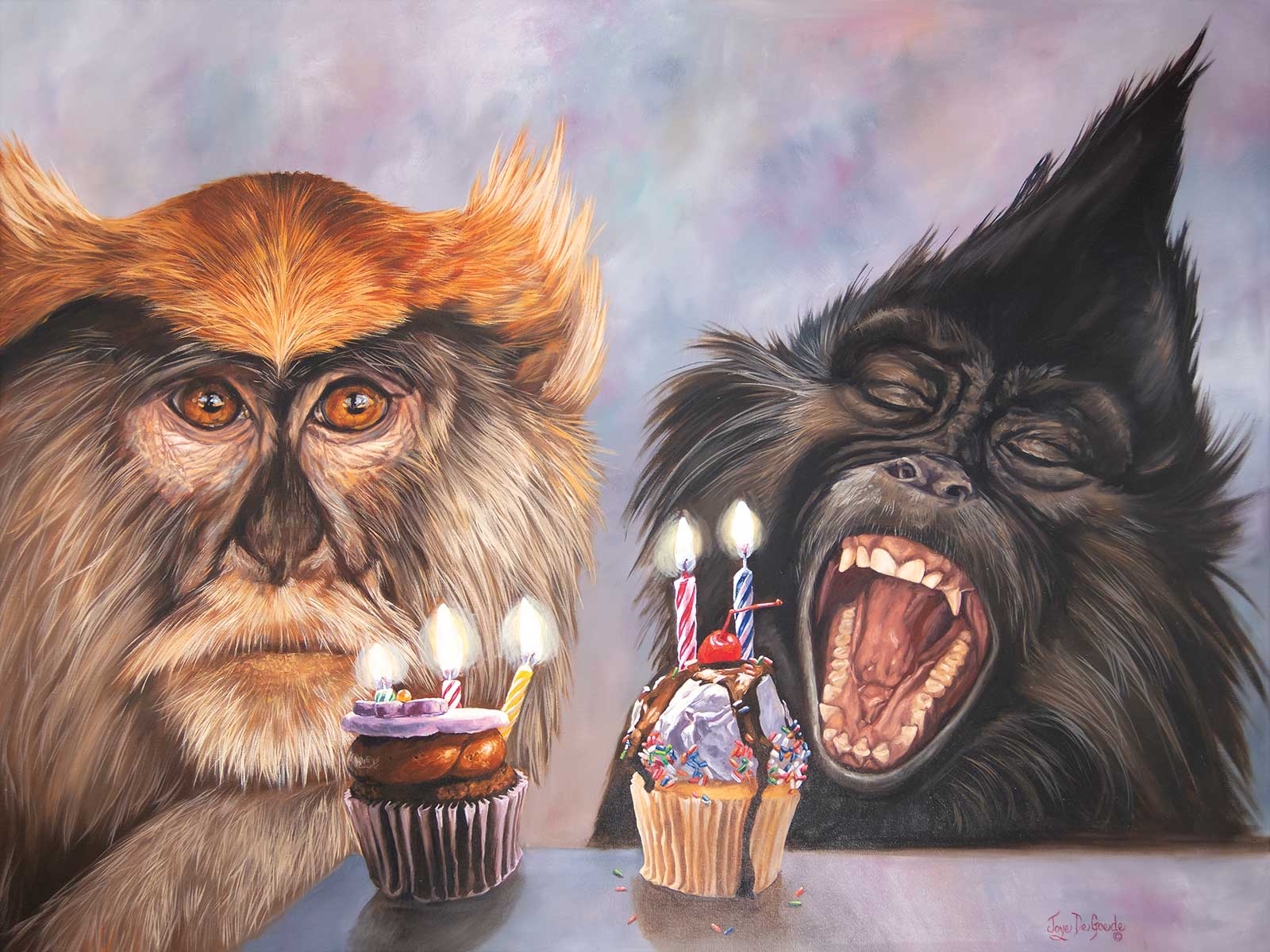 Joye DeGoede, You Look Like a Monkey…, oil on canvas, 40 x 52"
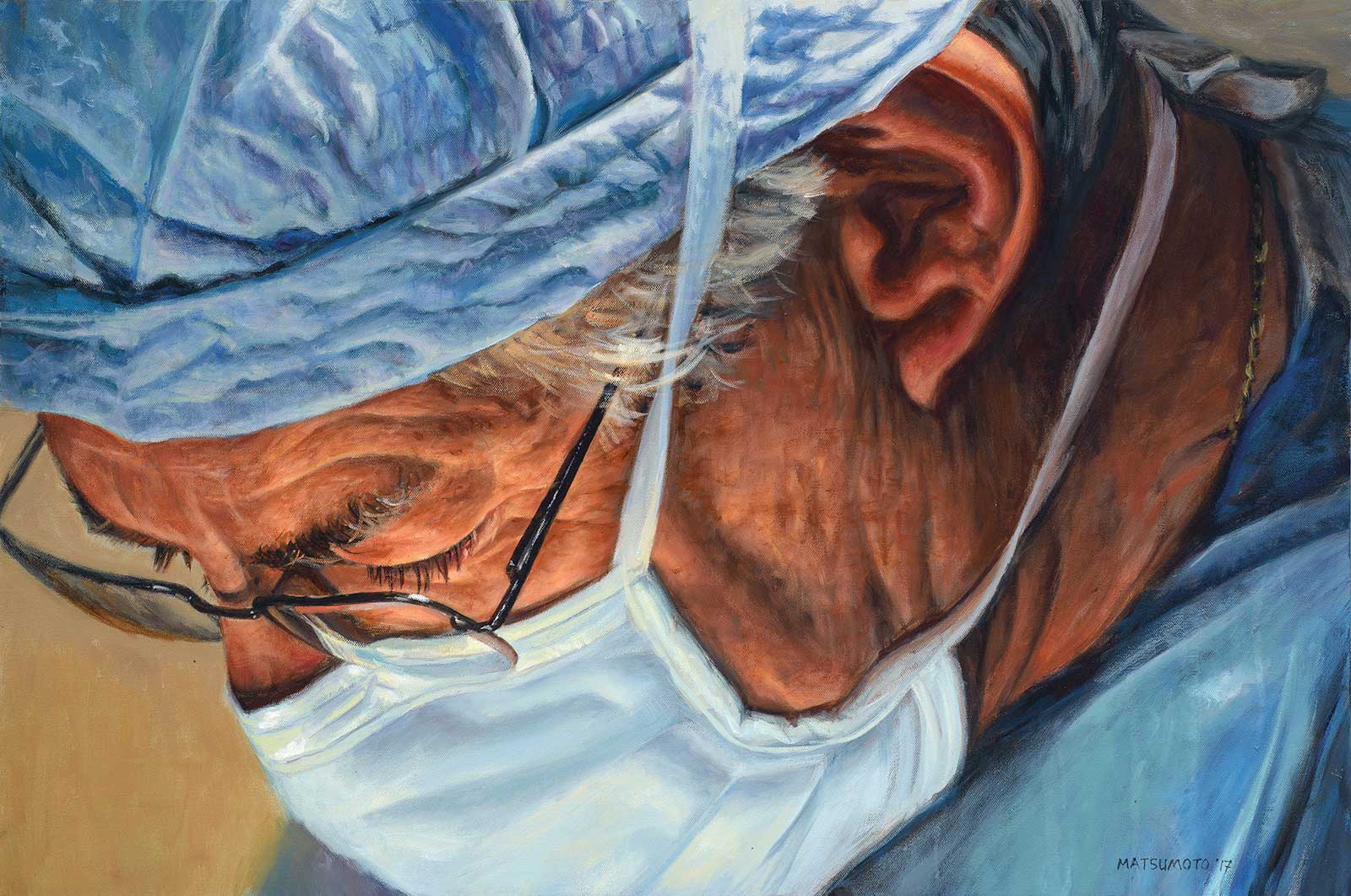 Edi Matsumoto, Concentration, oil, 24 x 36"
Robbie Fitzpatrick’s painting Ballet Shoes evokes a youthful memory. She explains, “I was told once that artists paint dreams...or memories. This painting of a worn pair of ballet shoes, lying just where they were left on the floor, is the recreation of a long-ago dream: to become a ballerina.”
Samosa, Coriander Chutney and Tamarind Chutney, by Sarasvathy TK, reflects heritage. The artist says, “What we cook is an expression of who we are and where we come from. Food is one thing that we all have in common and it plays such a central role in every culture, globally…The samosa probably traveled to India along ancient trade routes from Central Asia and have been around for about a thousand years now. Other historical accounts also refer to Sanbusak, Sanbusaq or even Sanbusaj were eaten by traveling merchants. So samosa was an existing indigenous product perhaps enriched in its stuffing to cater to royal courts.”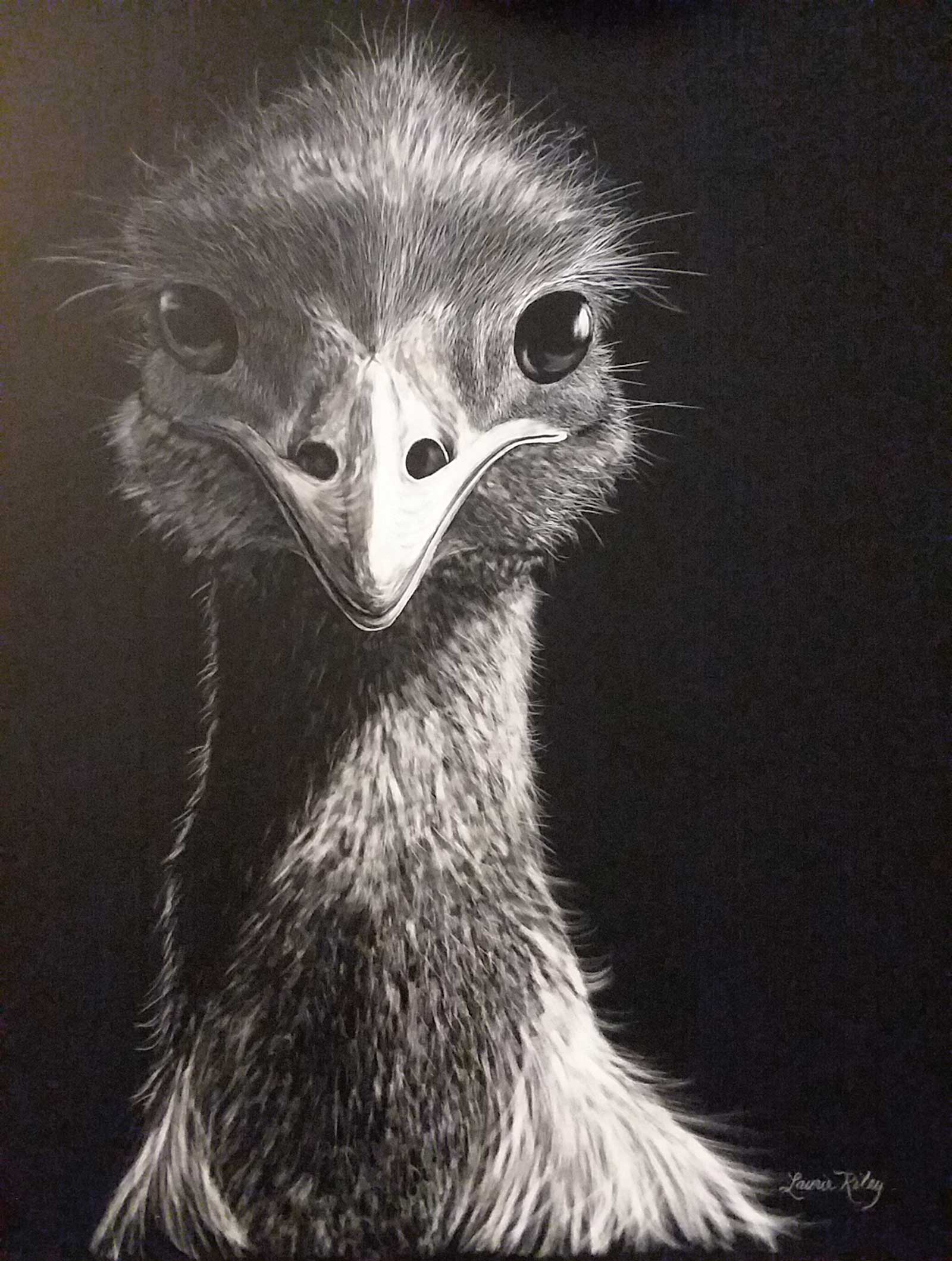 Laurie Riley, Emu, scratchboard, 16 x 12"
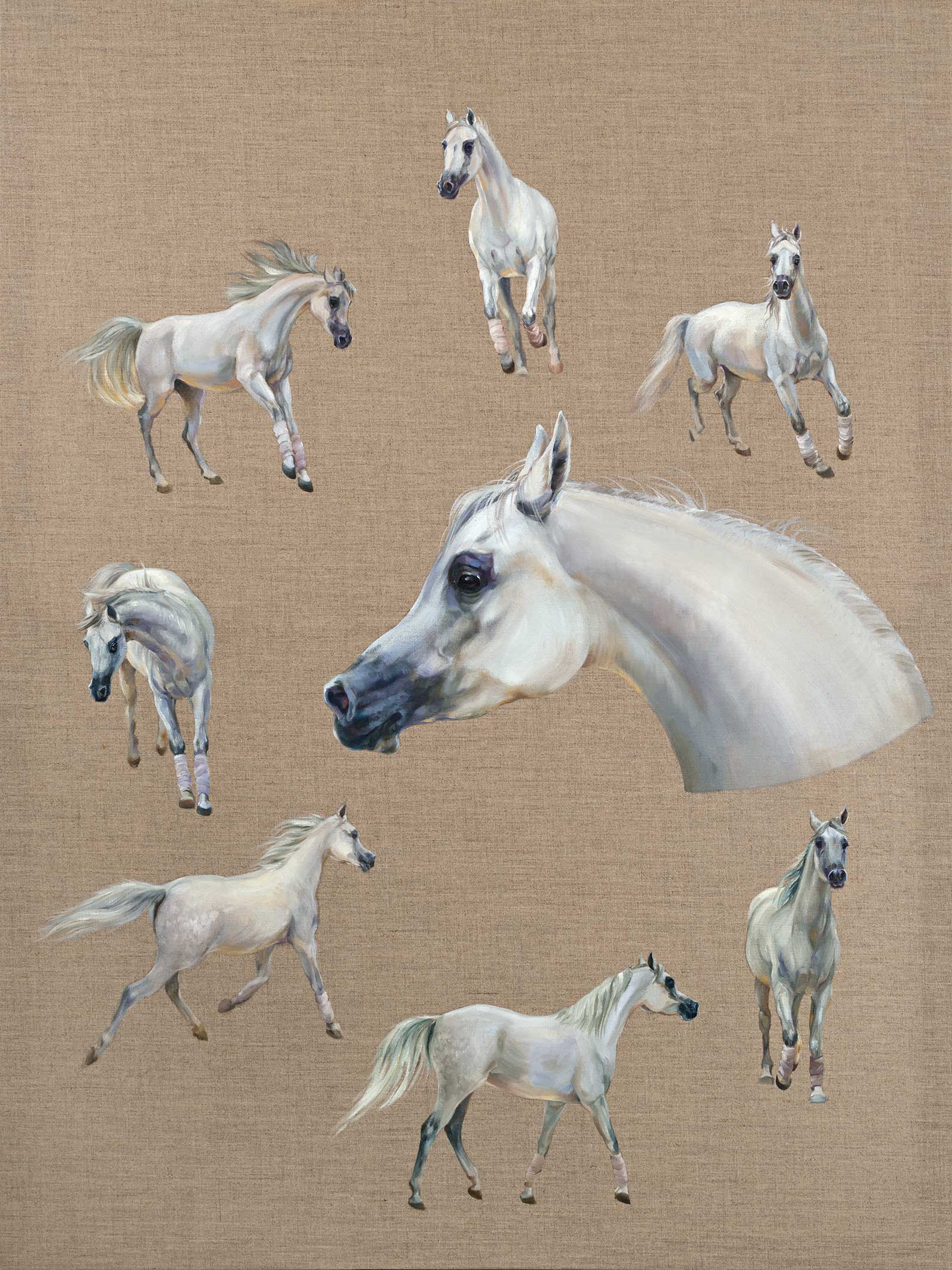 Elena Eros, Snow White Expressions, oil on linen, 48 x 36"
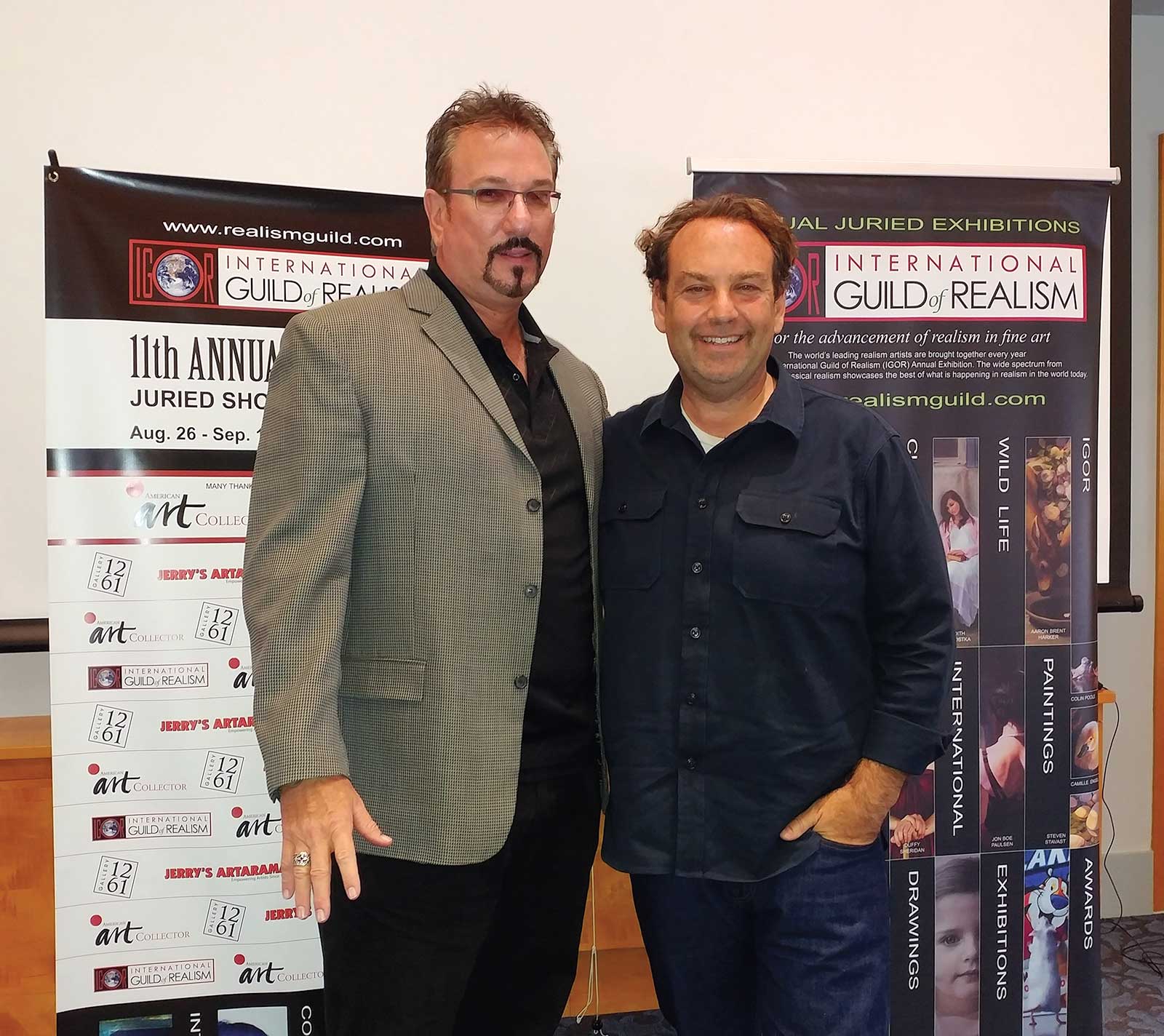 Donald Clapper, founding charter member of IGOR, and American Art Collector editor Joshua Rose at the 11th annual Juried Exhibition in Denver.
Wendy A. Carney’s Orwell highlights the artist’s strong fascination with typewriters and the variety of their appearances, functions and styles. “Each one has its own personality. I am currently working on a series called Writers and Their Typewriters,” she says. “The painting Orwell is intended to show the dark shadows created by George Orwell’s prophetical stories of social injustice and the corrupt state, while also revealing some of his personal traits, such as his love of tea and the proper way to serve it.” —
Powered by Froala Editor