Catalonia, Spain-born artist Aina Clotas is inspired by both 19th-century atelier methods and the language of cinematography, creating compositions that feel quiet and deeply intimate. With a masterful hand, the artist paints portraits, figures and still lifes in painterly brushstrokes.
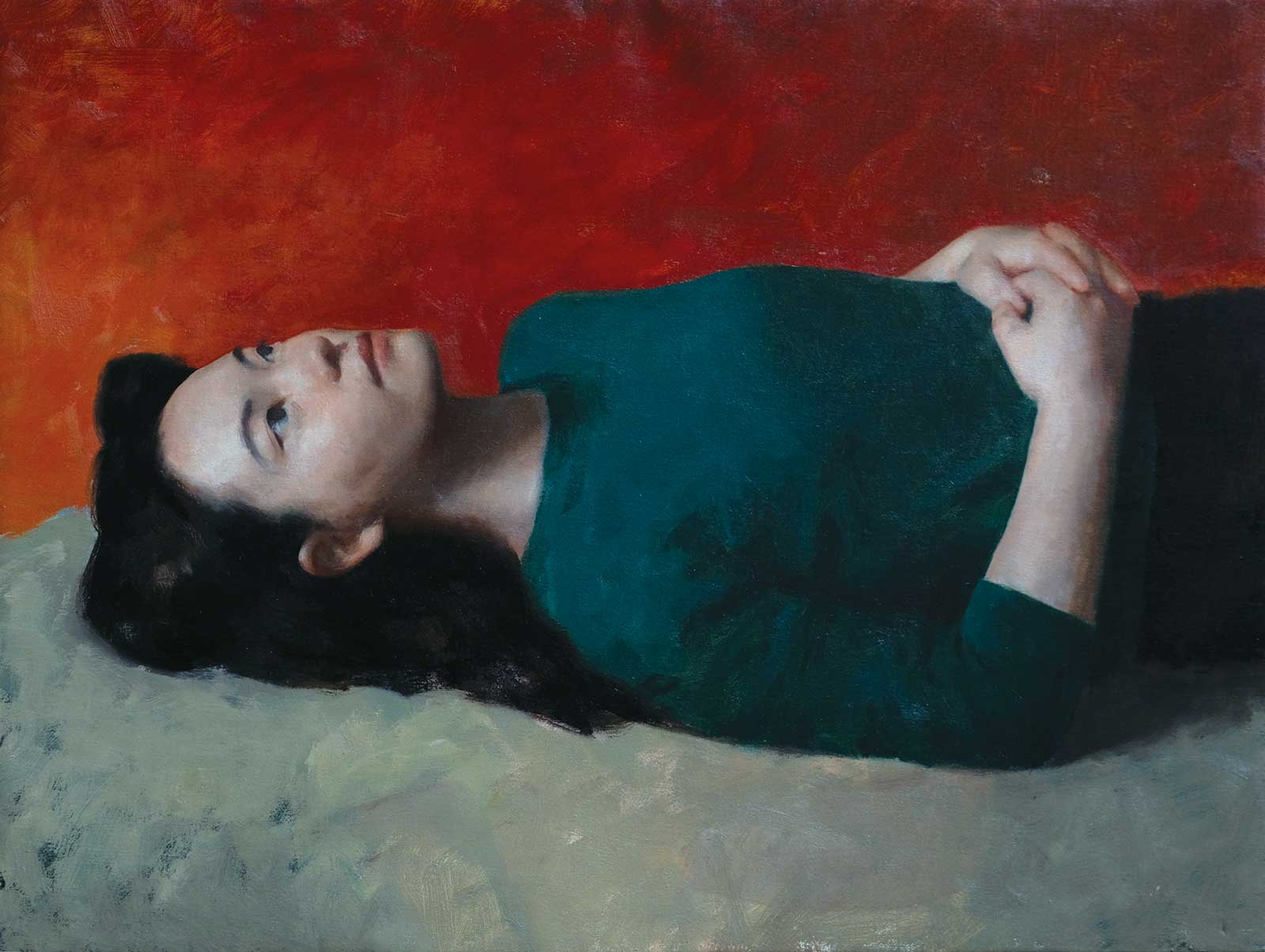
Two Shades, oil on canvas, 18 x 24 in.
“I visited Aina Clotas’ studio last year and found it a deeply compelling experience,” says Ryan Graff, gallery director of Ryan Graff Contemporary. “I discovered paintings that are less traditional portraits than meditations on embodiment itself: the mysteries of inhabiting a form, the nuances of language and identity, emotional landscapes manifest as physicality. An intimate stillness dwells within her subjects as they are held in a states of quiet reflection, a contrast with the animated and sometimes playful conversations conveyed by her portraits of hands and feet.”
A solo exhibition featuring about 20 new works by Clotas takes place at Ryan Graff Contemporary in San Francisco this July. “Around two years ago, I drastically changed directions in my paintings. I don’t think it was one thing only that triggered the change, but many factors,” Clotas says of the initial inspiration behind this new body of work. She explains that while she’d been out of art school for 10 years, she still found herself stuck in a box, constantly focused on technical proficiency. Then, one day, she decided to join a field trip with a few medical students to visit a cadaver dissection lab, of all things.
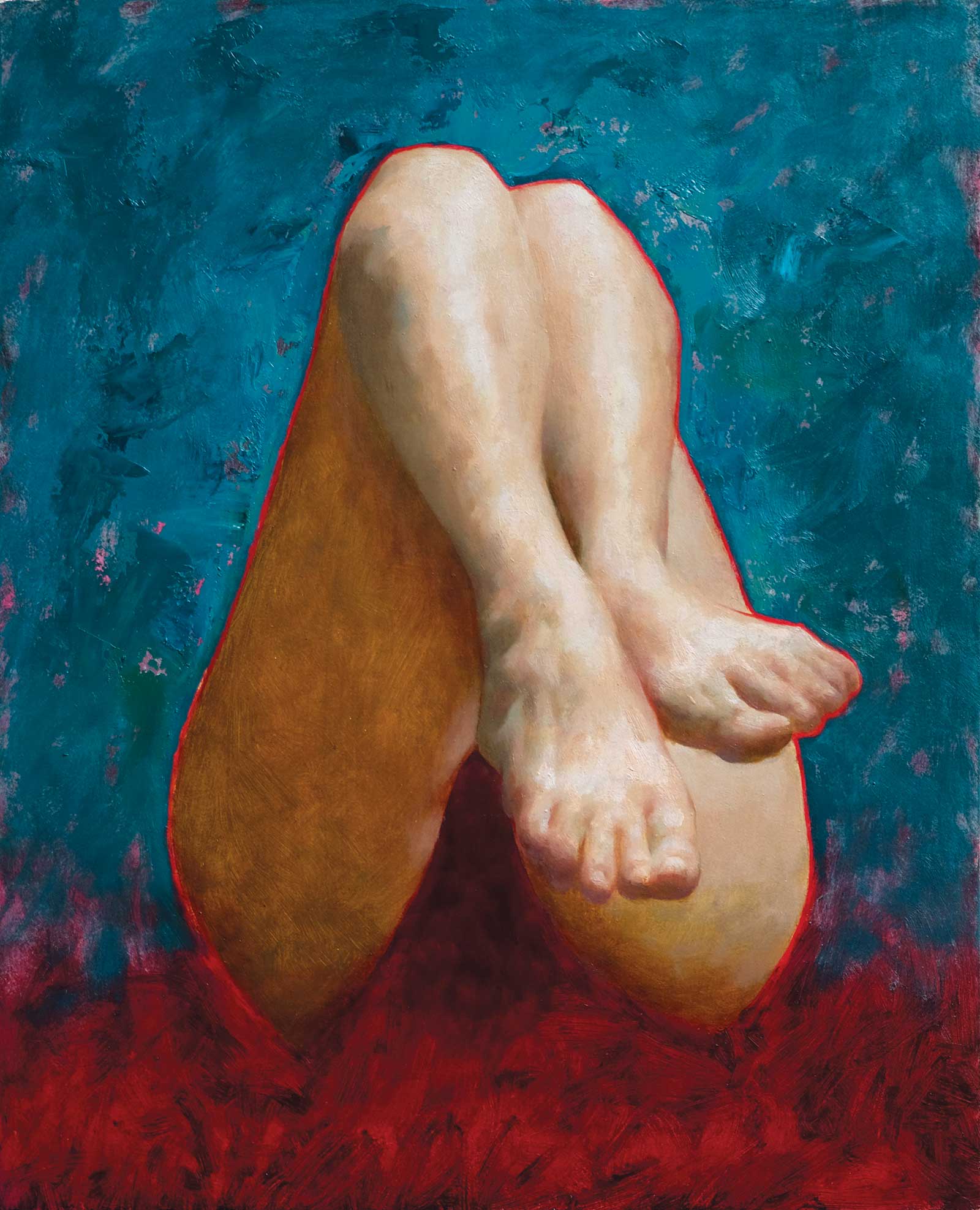
Fine Line, oil on panel, 20 x 16 in.
“The docent conducting the experience shared a few thoughts with all of us before we went in. She told us to be mindful, and to thank the soul behind the body we would see. She also told us to not be sad; those bodies we would look at happily volunteered to be there, they were loved, and the fact that we were learning from them was, in a way, a prolongation of their life,” Clotas continues. “That filled my heart with a peace that is hard to explain. The thought of connecting with someone past their lifetime and being able to have such an intimate and pure moment with them was overwhelmingly touching. After the experience, I started sketching what I felt. It was the first time in a long time that I was on that kind of search. I drew faces, limbs, heads. Beautiful pieces that are no less than the whole. I started thinking about how incredible the human body is. Its skin represents resilience and also strength. Its nature being both spirit and matter, surpassing the limits of space and time. My paintings started revolving around that idea.”
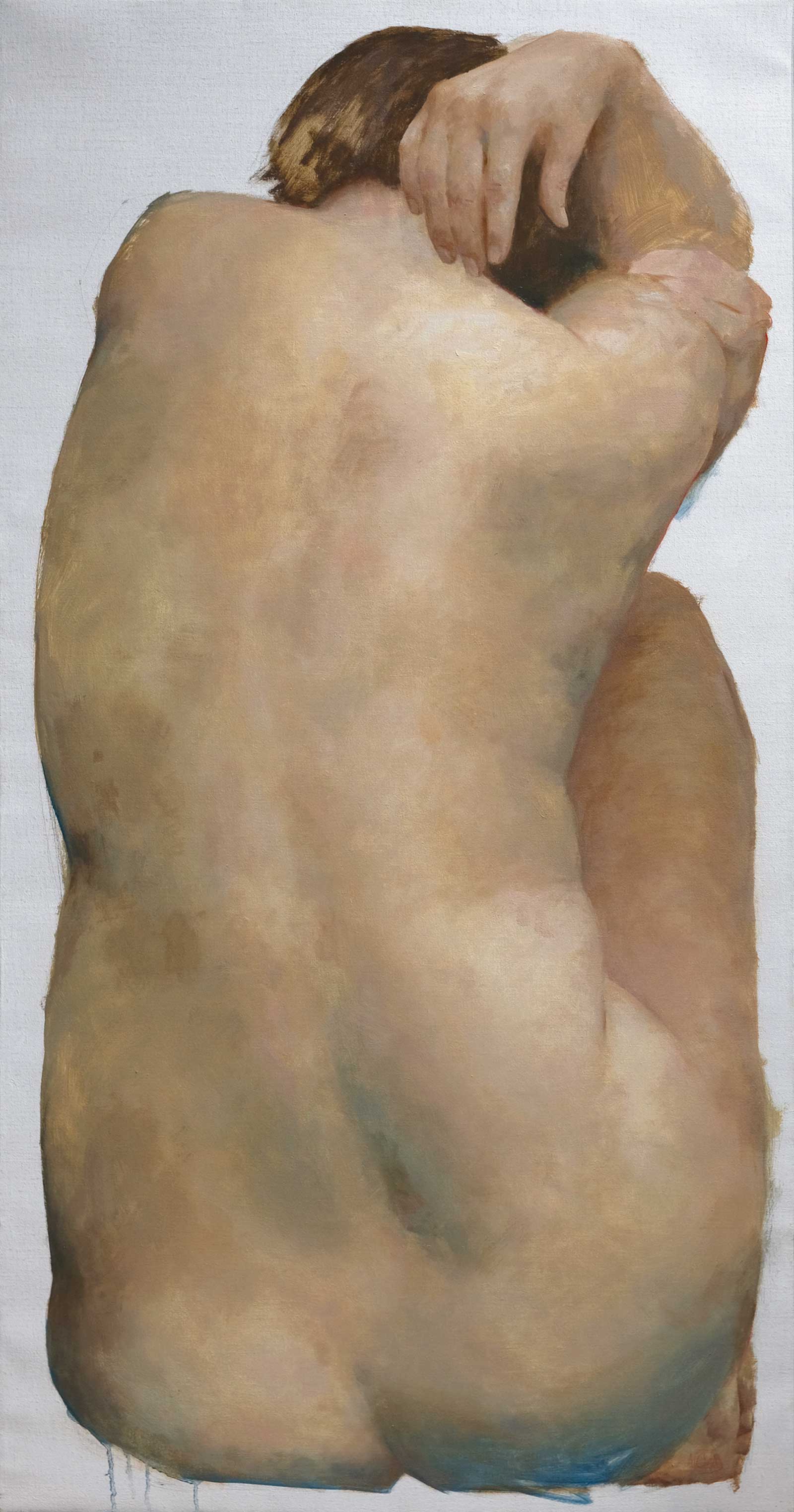
None, oil and graphite on canvas, 48 x 24 in.
Clotas’ figurative pieces often find expression and emotion in other body parts, rather than relying primarily on the face. In some paintings, it’s the gentle curve of someone’s back; in others, a pair of crossed legs or hands making delicate motions.
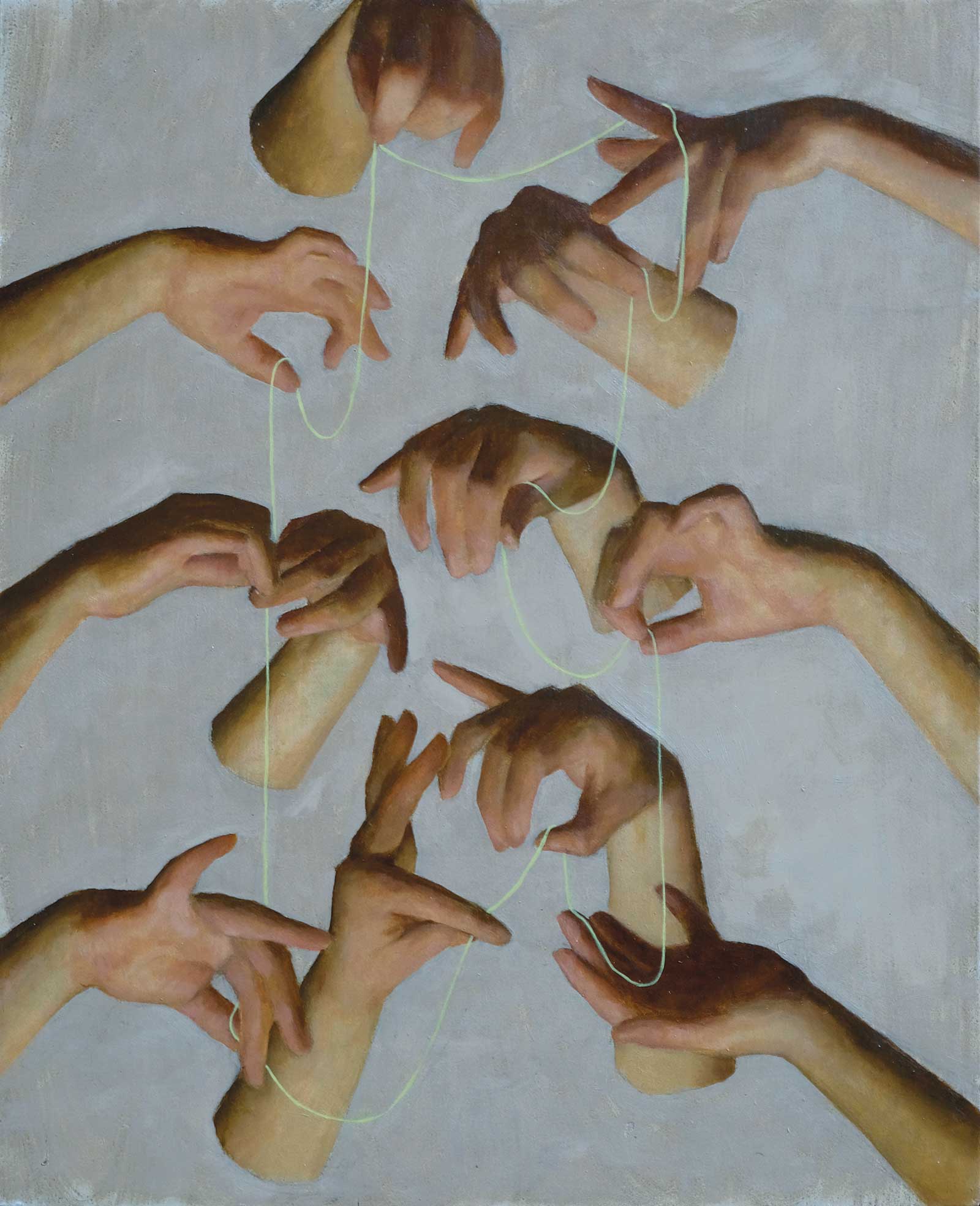
Continuum, oil on panel, 20 x 16 in.
“She explores human form not so much as literal identity, [but] as a place where feeling gathers,” Graff adds. “A thread dances through a series of disembodied hands, lively as a conversation, delicate as a fleeting thought; bodies fold inward, ponderous and almost architectural. In her expression of emotion and experience as form, her work is an invitation to view the body not as image alone, but as avatars of our humanity.”
The Backwards Race opens with a reception on Saturday, July 11, from 5 to 9 p.m. and hangs through August 1. —
Ryan Graff Contemporary 804 Sutter Street San Francisco, CA 94109 • (415) 534-1450 www.ryangraffcontemporary.com
Powered by Froala Editor