
The near-photographic realism of the landscapes of René Pozas has a softness that refutes photography and that also suggests an enigmatic unreality.
The visionary poet and painter William Blake (1757-1827) wrote, “The tree which moves some to tears of joy is in the eyes of others only a green thing that stands in the way. Some see nature all ridicule and deformity…and some scarce see nature at all. But to the eyes of the man of imagination, nature is imagination itself.”
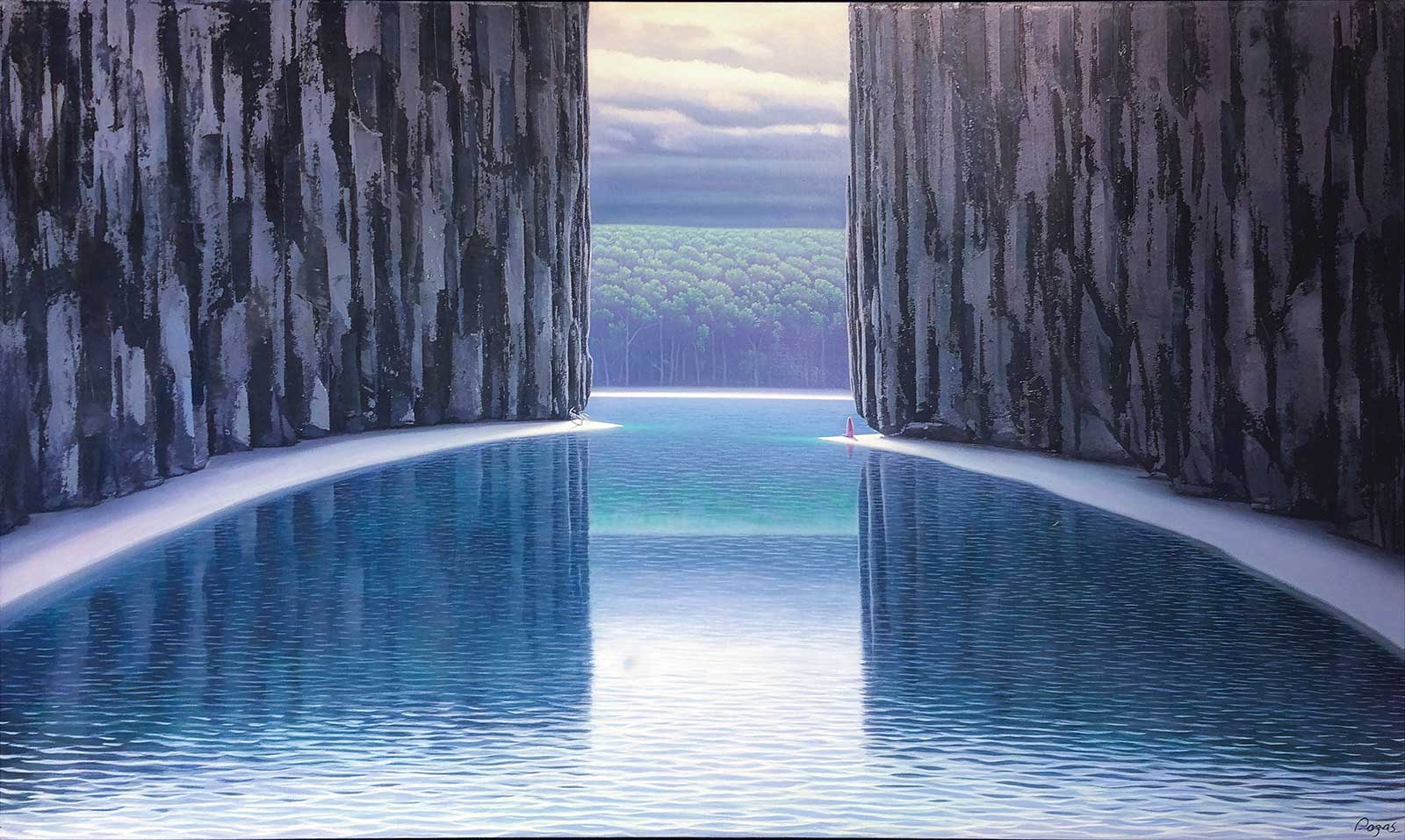
Remoteness, oil on canvas, 22 x 35 in.
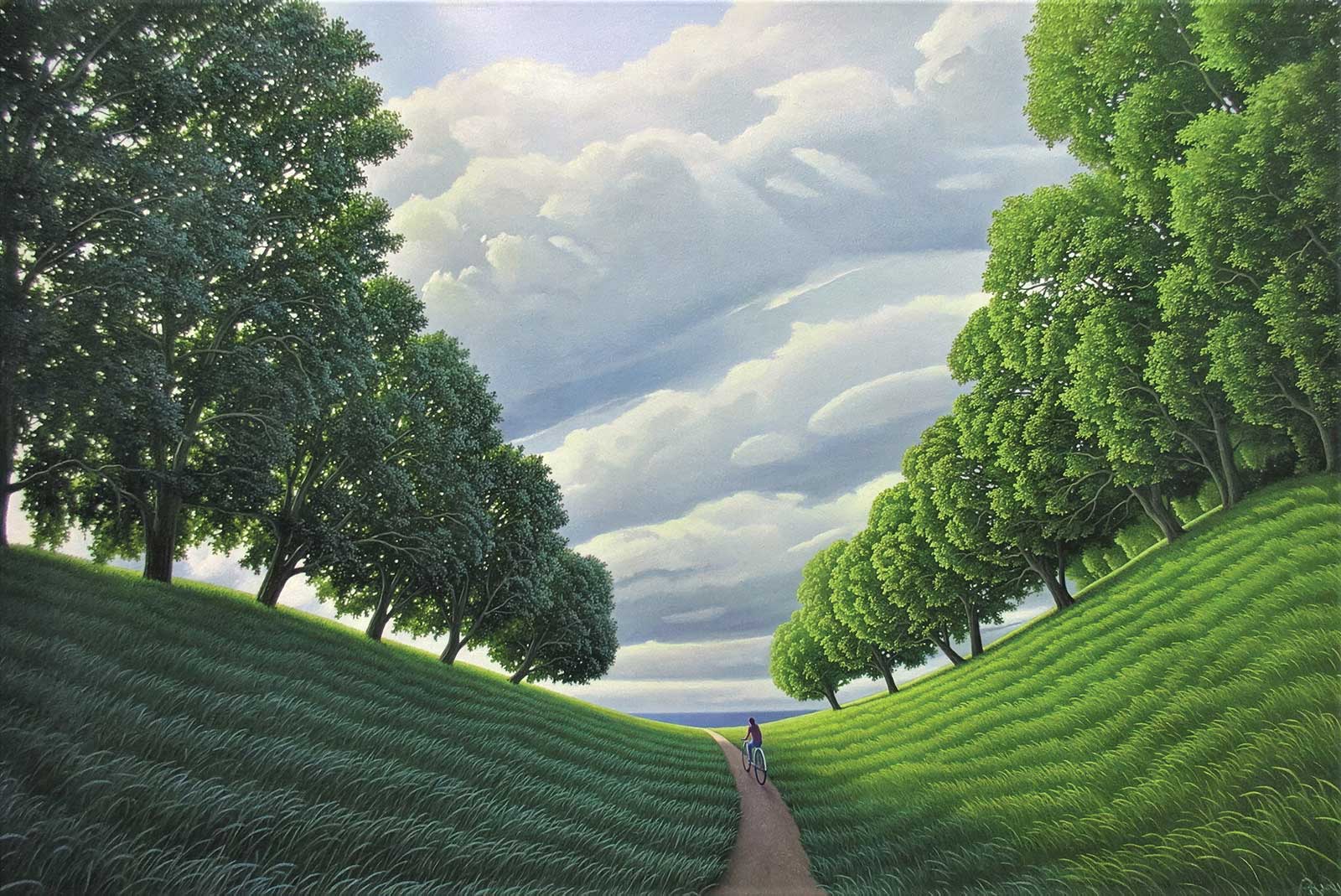
Looking the Horizon, oil on canvas, 23 x 34 in.
Another very different thinker and painter, Lucian Freud (1922-2011), wrote, “The painter must give a completely free rein to any feeling or sensations he may have and reject nothing to which he is naturally drawn.”Many years ago, I was the morning keynote speaker at a conference on realism in art. The afternoon speaker was American psychologist James Hillman (1926-2011) who told me in a delightful conversation over lunch, “I’m going to blow you out of the water this afternoon,” and, indeed, he did. Hilman had guided studies at the C.G. Jung Institute in Zürich and was the author of The Soul’s Code. His lecture on the nature of reality awakened in me a much broader awareness of the reality of what we believe we see. He has written, “We humans are primarily acts of imagination, images…What we are really, and the reality we live, is our psychic reality, which is nothing but—get that demeaning nothing but—the poetic imagination going on day and night. We really do live in dream time; we really are such stuff as dreams are made of.”
Pozas listens to Nature itself. “Although I often copied landscapes, I discovered that modeling them was what truly set me free. And I began working on ideas that became increasingly personal. I also discovered that no matter how much my imagination ran wild, nature was always there telling me: I have a place like that.”
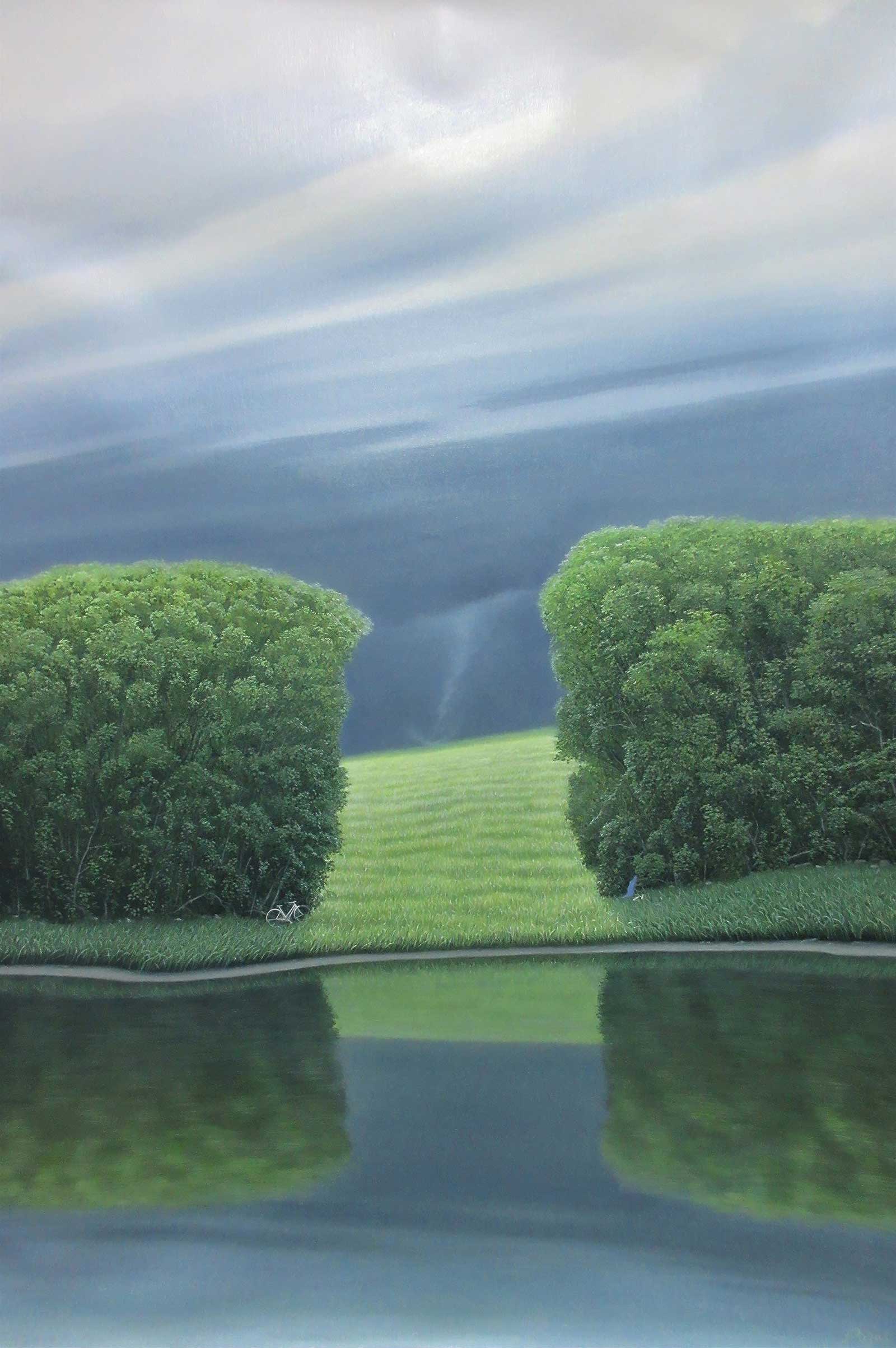 The Undeniable Pleasure, oil on canvas, 32 x 23 in.
His painting The Woman in the Mirror is a mesmerizing landscape of solidity and reflection—the water’s reflections interrupted where it runs up on the dry softness of the sand bar. “The piece,” Pozas explains, “is an example of interconnection with nature and introspection. It is both an expansion of the senses and a search for the inner self. The mirror is not only the calm water of the lake, but also the medium in which the image we have of ourselves is reflected. Painting is, truly, an inner exploration. The painter, through his wife, expresses his need to know what exists beyond the obvious. And for this, he has chosen an environment that evokes mysticism and truth.”
The artist’s journey to a place where he confidently creates realistic landscapes has not been an easy one.
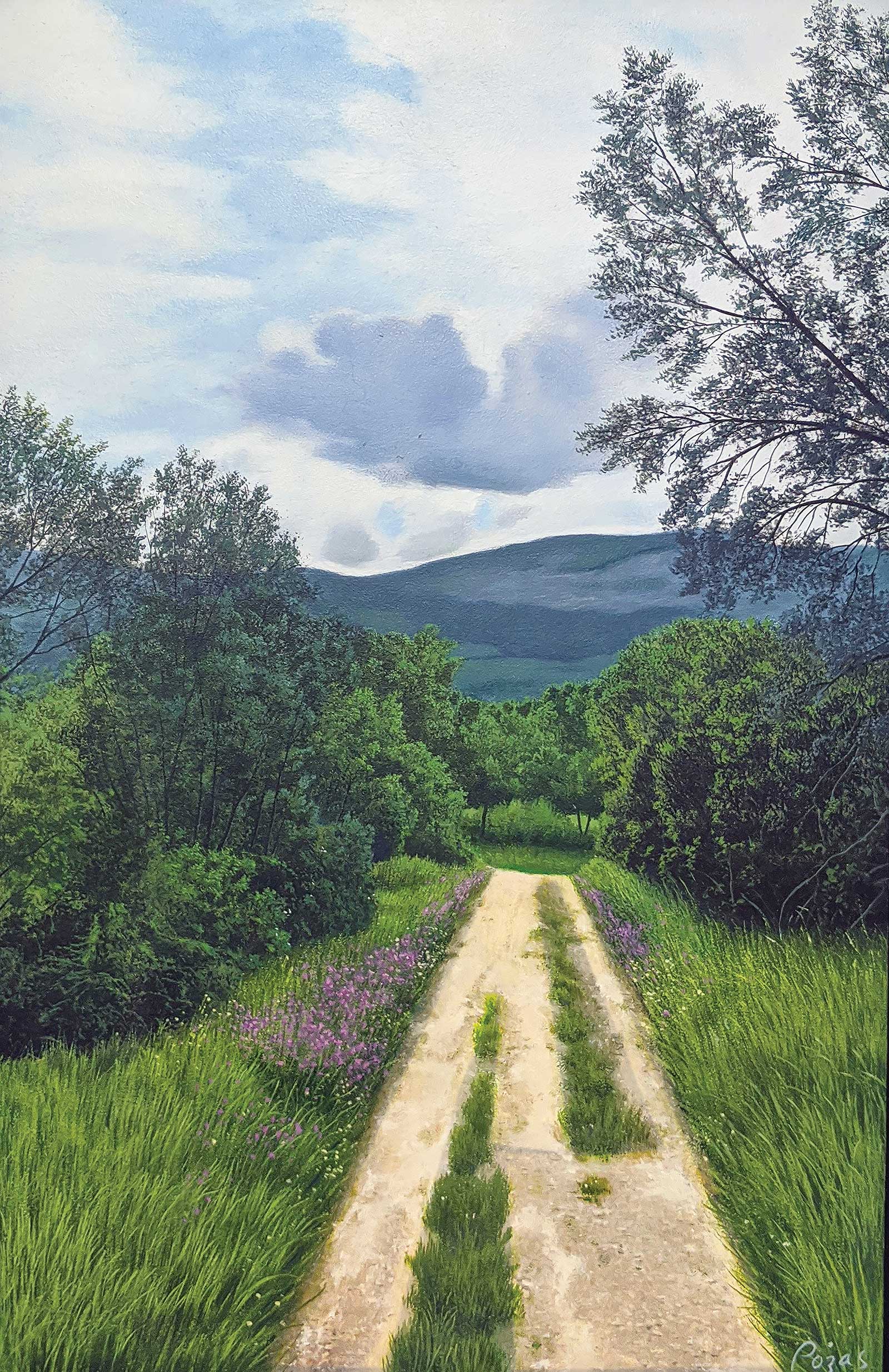
The Walk, oil on panel, 15¾ x 10¼ in.
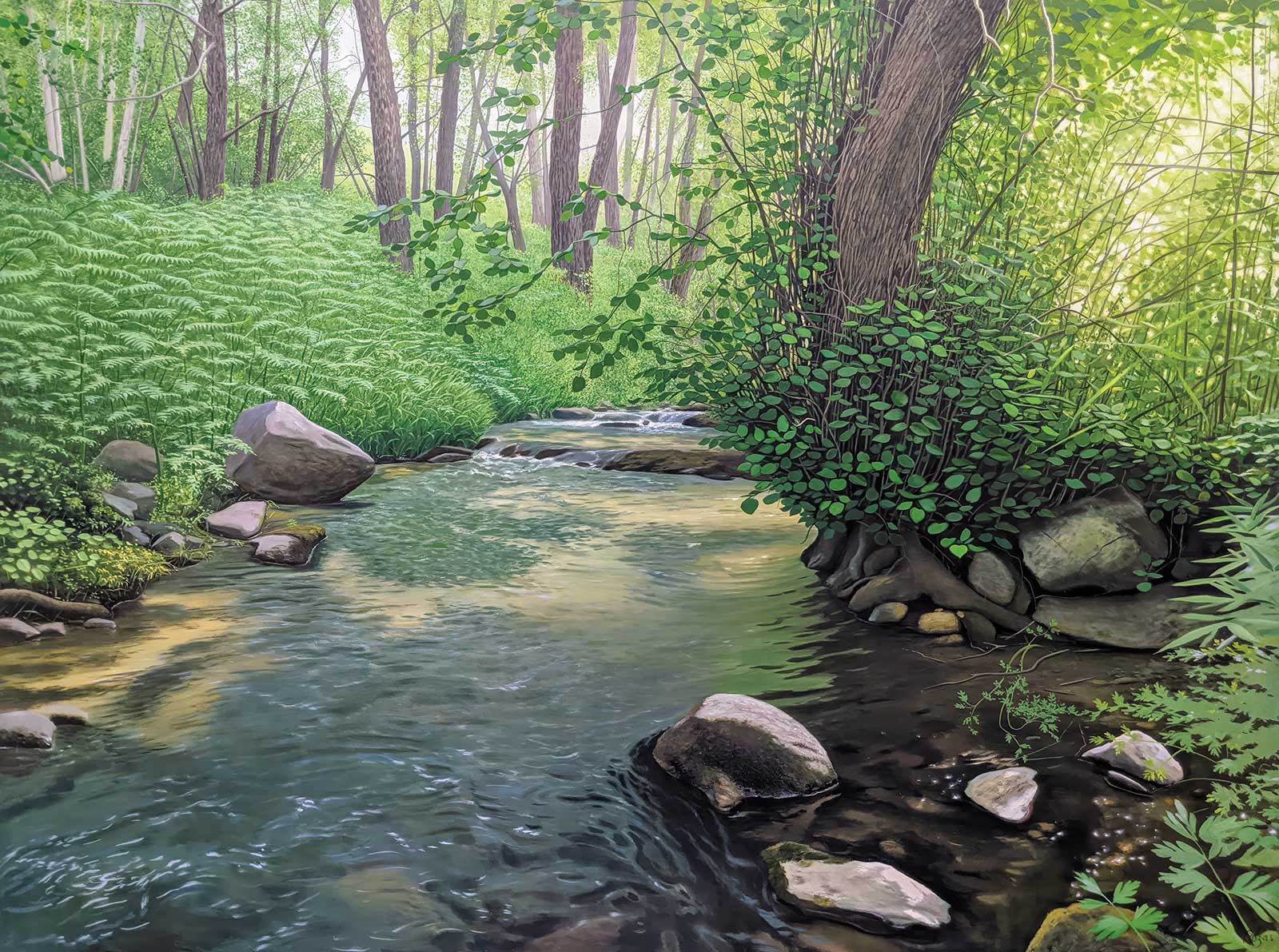
The River with No Name, oil on canvas, 37 x 49 in.
“My true passion was painting, but I had a big problem: I was good at math, and my father, a doctor, saw art as a waste of that talent. So, to reconcile his vision with my passion, I decided architecture was the way forward,” Pozas explains. “Everything was going perfectly until my second year of high school when my school moved to the boarding school, meaning I had to study and work in agriculture. Living day and night with other students and being away from my family led to a loss of control. When my father saw that things were going very wrong, he decided to bring me back, and I returned to a high school in the city.“But despite this, I never shone as brightly as before: my grades weren’t high enough to study either architecture or civil engineering, so I settled for the third option: I became an electrical engineer. It was six years of suffering, but also of laughter and many, many caricatures of classmates and teachers.”
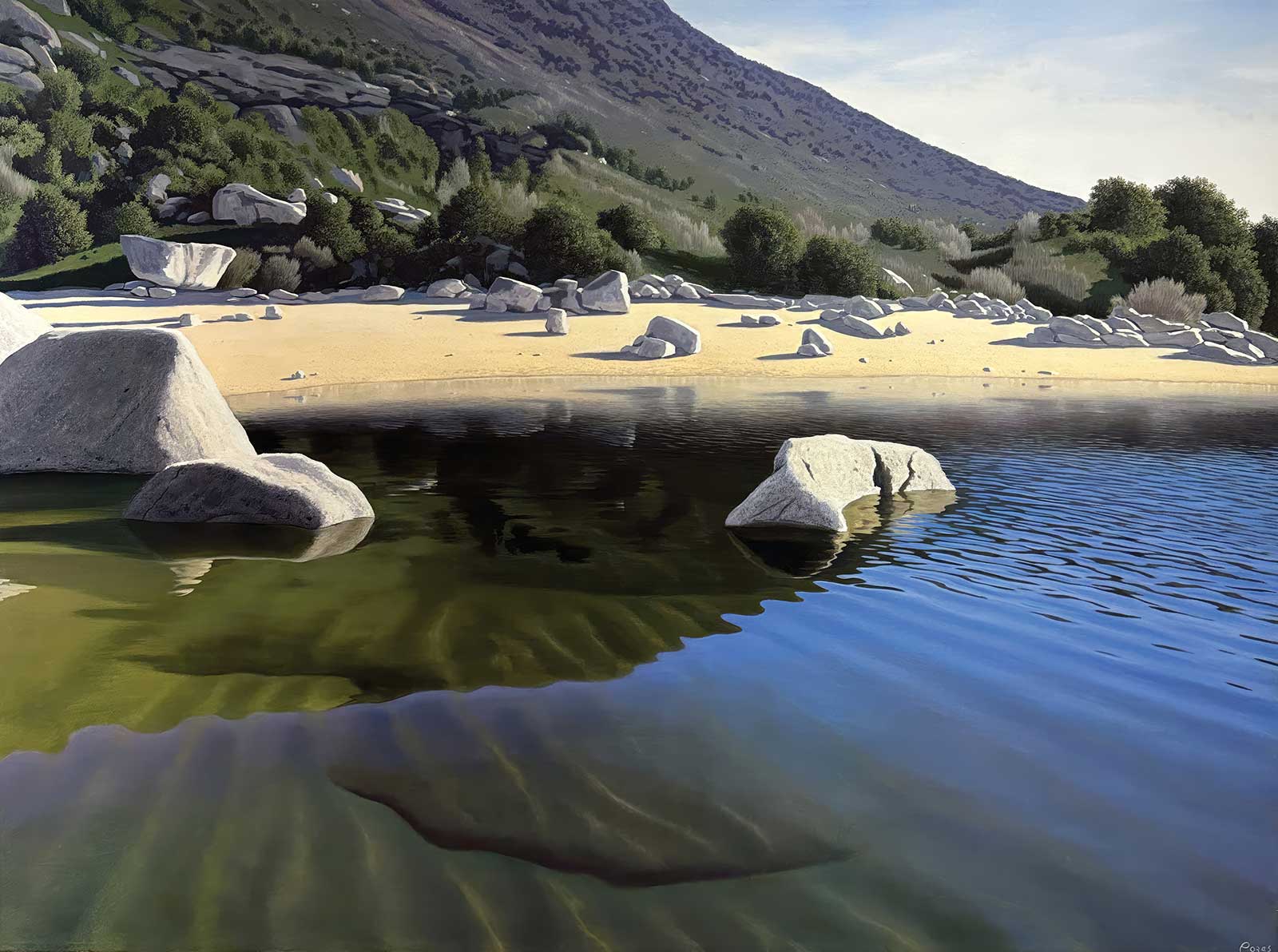
The Suggestion, oil on linen, 37 x 49 in.
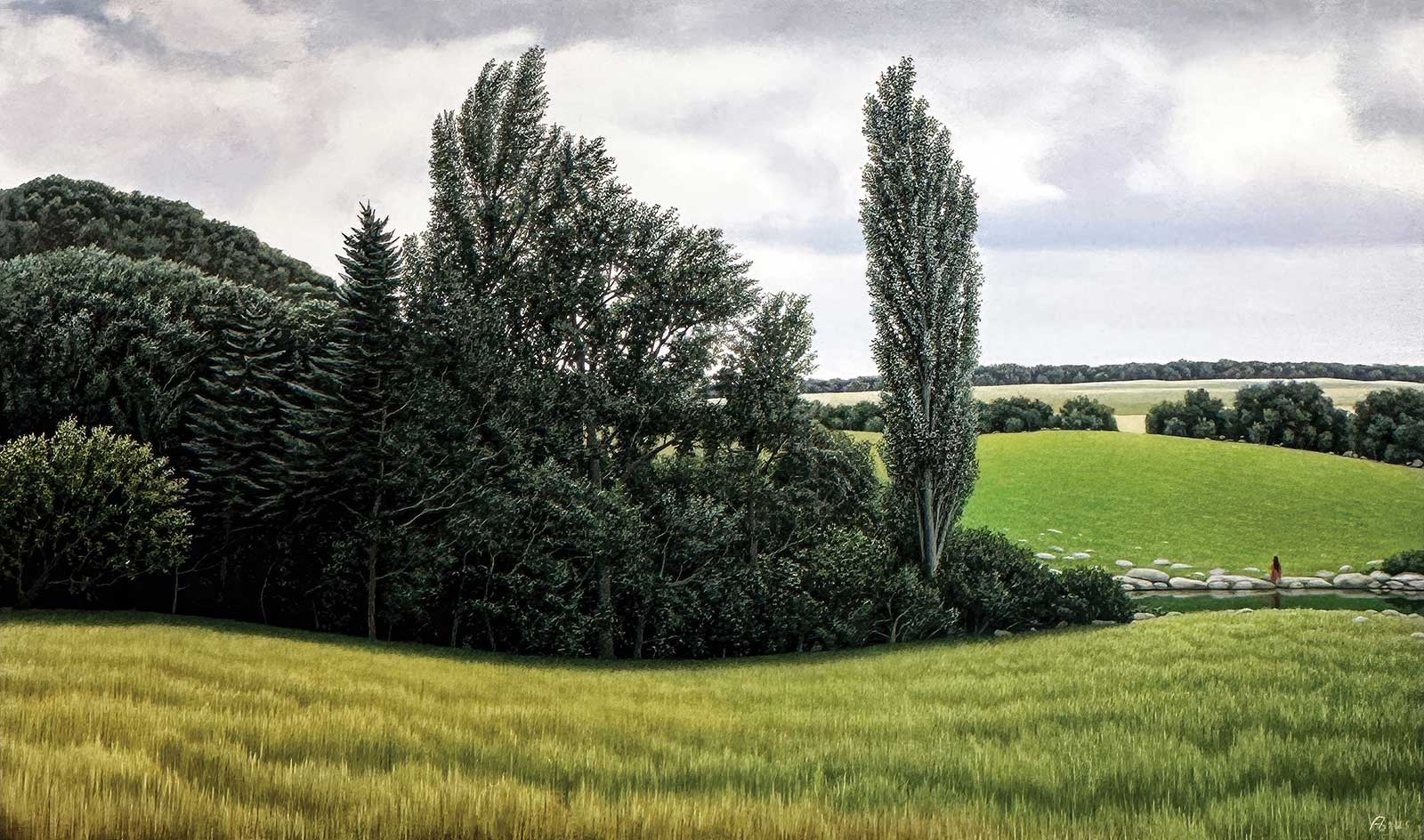
Absent from Everything, oil on linen, 22 x 32 in.
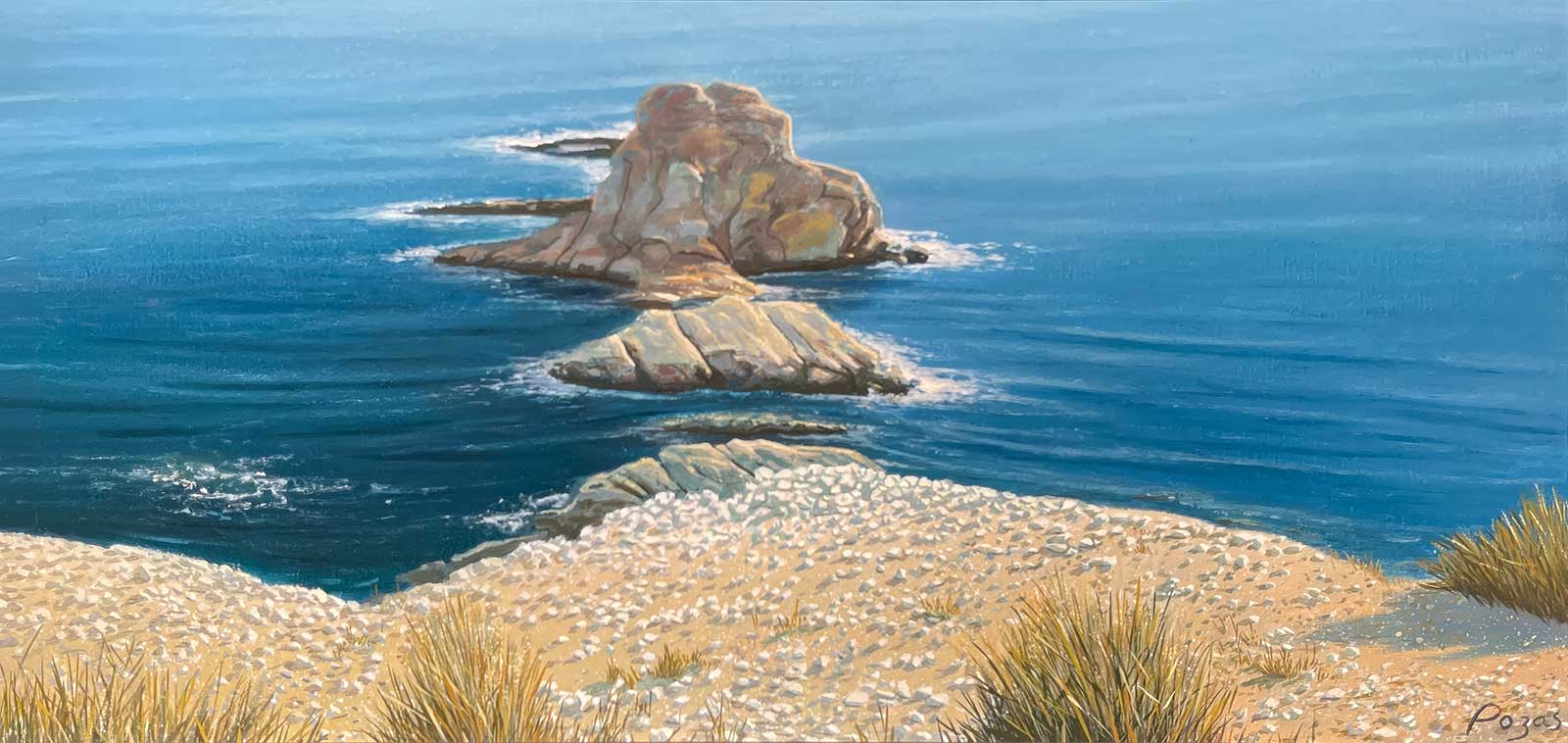
Vacaciones de Jose, oil on canvas on panel, 8 x 16 in.
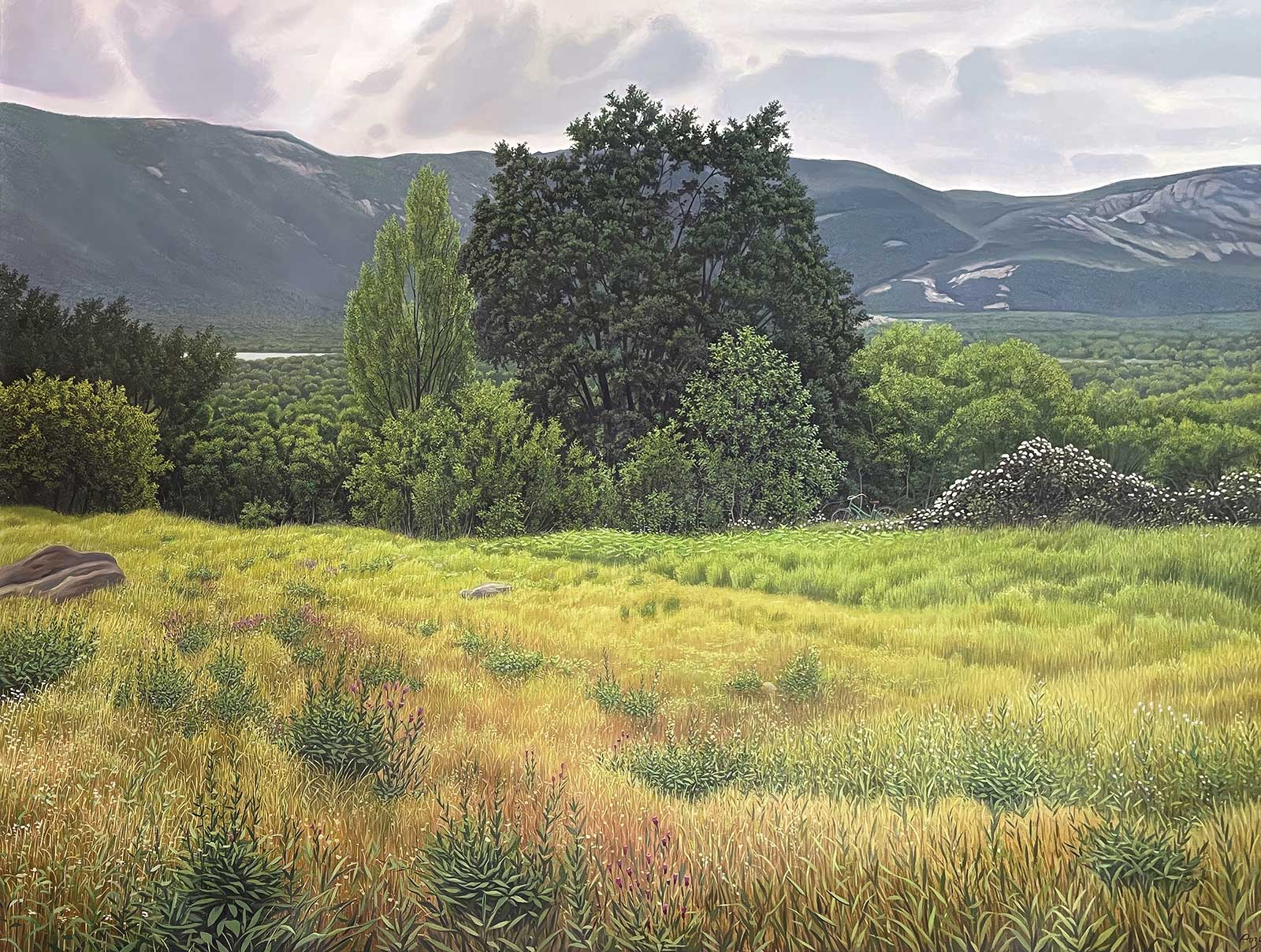
Unpredictable Valley, oil on linen, 36 x 48¼ in.
In 1992, Pozas graduated, and his father was satisfied, but he continued painting. “Once freed from all guilt, my exploration of painting began in a more serious way: surrealism, impressionism, abstraction… and several group and solo exhibitions in Havana and auctions in Mexico.”
In 1995, Pozas traveled to Spain, and it was here he says that painting definitively became his profession. There is a masterfully palpable light in his paintings. He comments, “In both photography and painting, the constant struggle between light and shadow is the greatest challenge I have ever faced. Finding the nuances of shadows in light and vice versa is something that has taken me years of observation. It’s like finding the spiritual in the material and vice versa.”
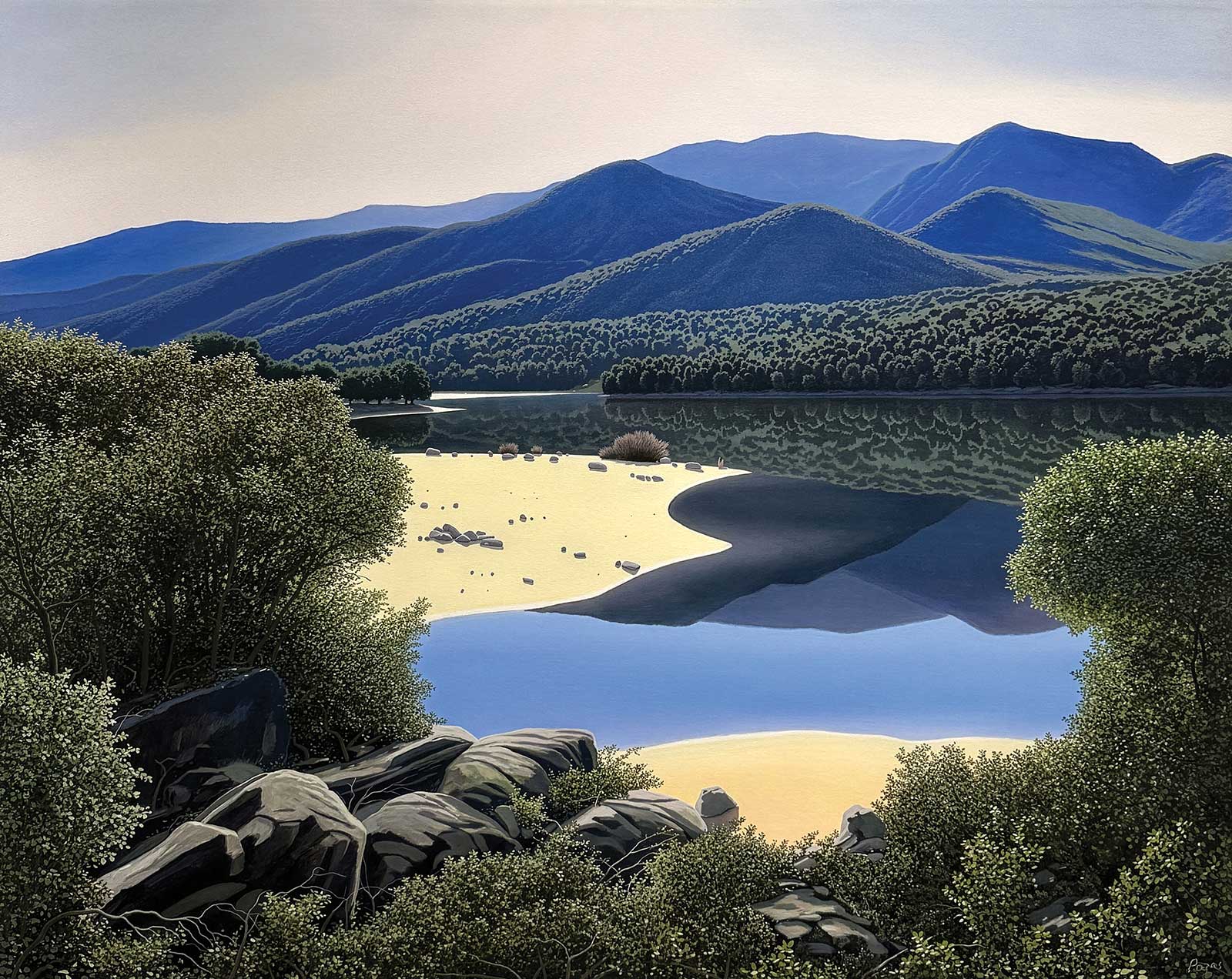
The Woman in the Mirror, oil on linen, 33 x 39 in.
His paintings invite not only deep inspection and, perhaps, introspection, but also an urge to step into them to experience the reality or the dream. In a painting such as The Suggestion, the viewer is already there, standing in the water. The ripples of the sand from the foreground to the shore are undisturbed by footprints as if the viewer has arrived from somewhere else and has yet to step further into the scene.
Figures seldom appear in his work, but when they do, either his wife or his son, they appear part of the landscape—one with it, physically and spiritually. A barely identifiable figure appears in Absent from Everything, a dab of warm color in the cool landscape. A bicycle stands at the edge of a field in Unpredictable Valley, suggesting a rider immersing herself in the landscape.
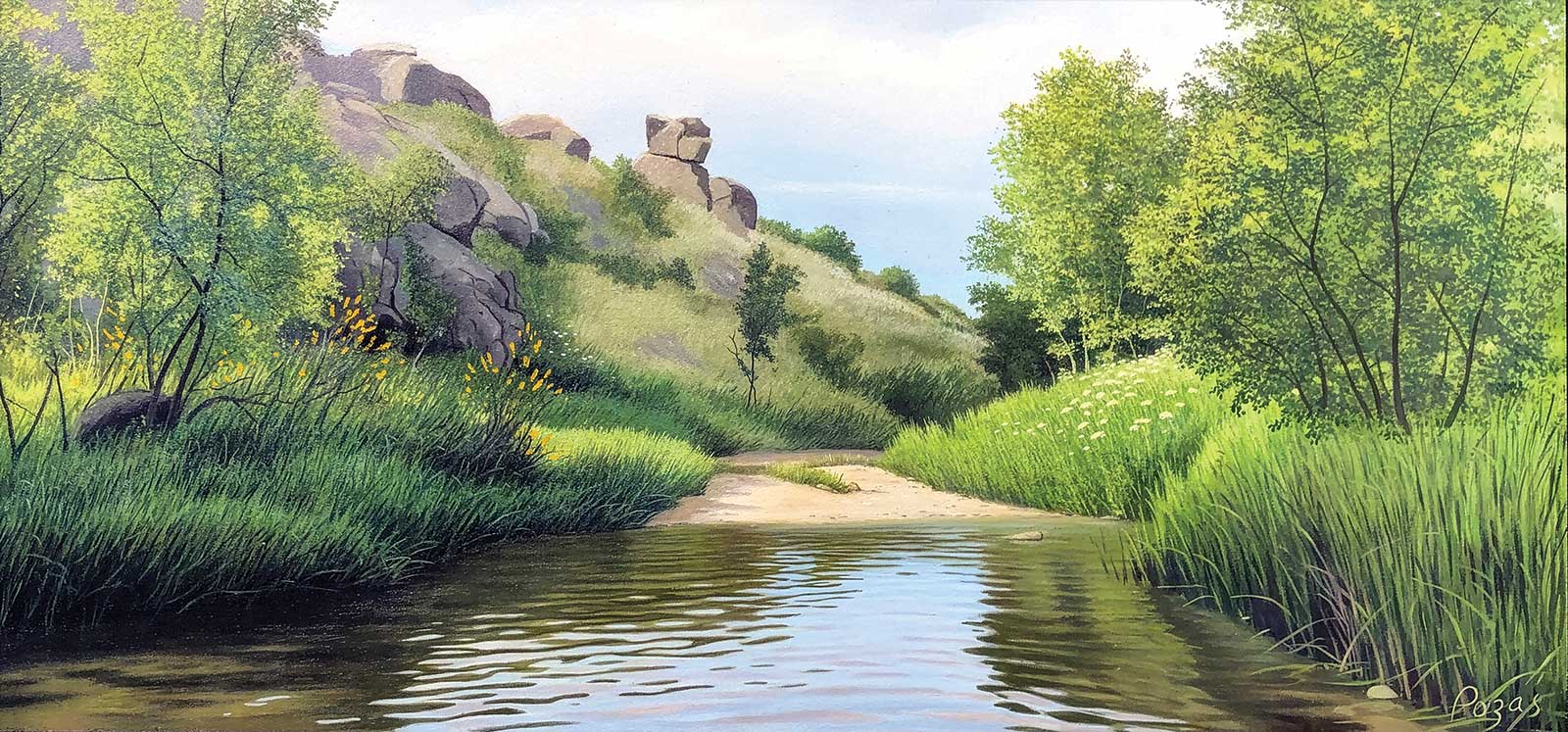
The Illusion of Havana, oil on panel, 8 x 16 in.
In Remoteness, bicycle and figure are dwarfed by, yet part of, the immense forms of the landscape. The mythical reality of these landscapes opens the viewer to a deep and rich experience of the vastness of Nature. —
Powered by Froala Editor