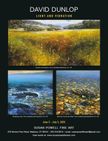
David Dunlop is fascinated by how we perceive and construct our visual worlds—how the images we form in our brain coalesce into a cohesive picture of what we see.
It’s a complex subject that requires a fluency in many branches of neuroscience from vision and memory to the cognitive and behavioral. Dunlop, who has a solo show at Susan Powell Fine Art from June 5 through July 5, has chosen the canvas—or aluminum panel—to explore such cerebral matters, creating dynamic landscapes that mimic the way the eye functions and invite viewers to participate in an ever-expanding world of visual possibilities. To his scientific comprehension, Dunlop brings the knowledge of an art historian. With his painterly skills and an exuberance for life, Dunlop transforms the academic into works of art.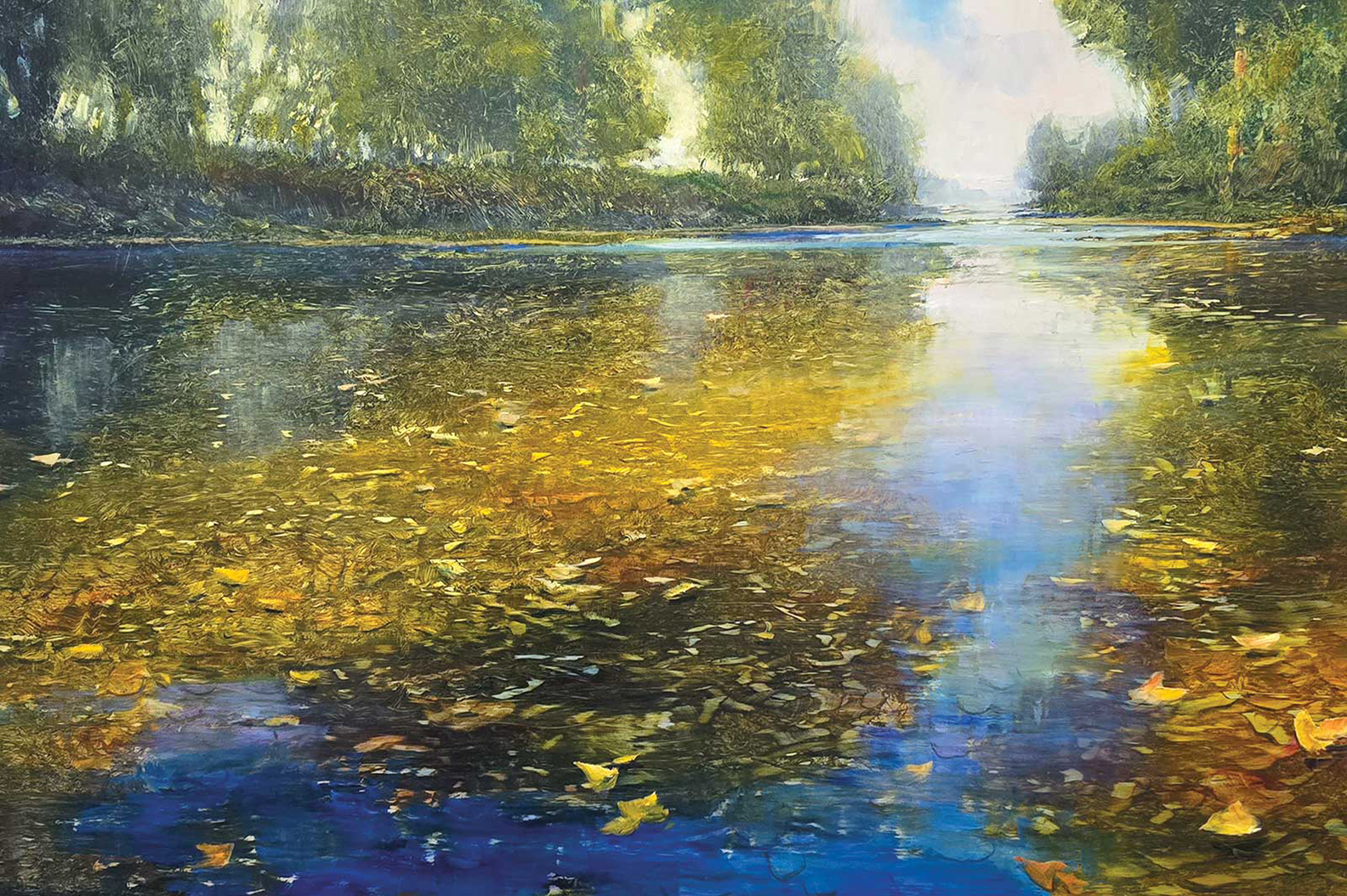 Echoes of Summer, oil on brushed gold aluminum, 24 x 36 in.Dunlop has a thriving art education business, leading workshops around the world, lectures regularly and is the Emmy Award-winning host of the PBS series Landscapes Through Time with David Dunlop. Like many good teachers, he likes to answer questions with analogies that are easily relatable.
“It’s like looking into the fog…you peer into it and say, ‘I think I see a figure,’” Dunlop says, likening the scenario to how we assemble a realistic scene out of what is fundamentally a series of abstract mark-making.
For example, his new painting Echoes of Summeris composed of patterns of sunlight and reflection passing over and through a blue surface we perceive as water. “Most of this painting is abstract,” he says. “It’s all these flickers and lights and darks, and there are what could be trees in the distance, and your brain starts to think they’re the reflections, and the gold flecks must be leaves.
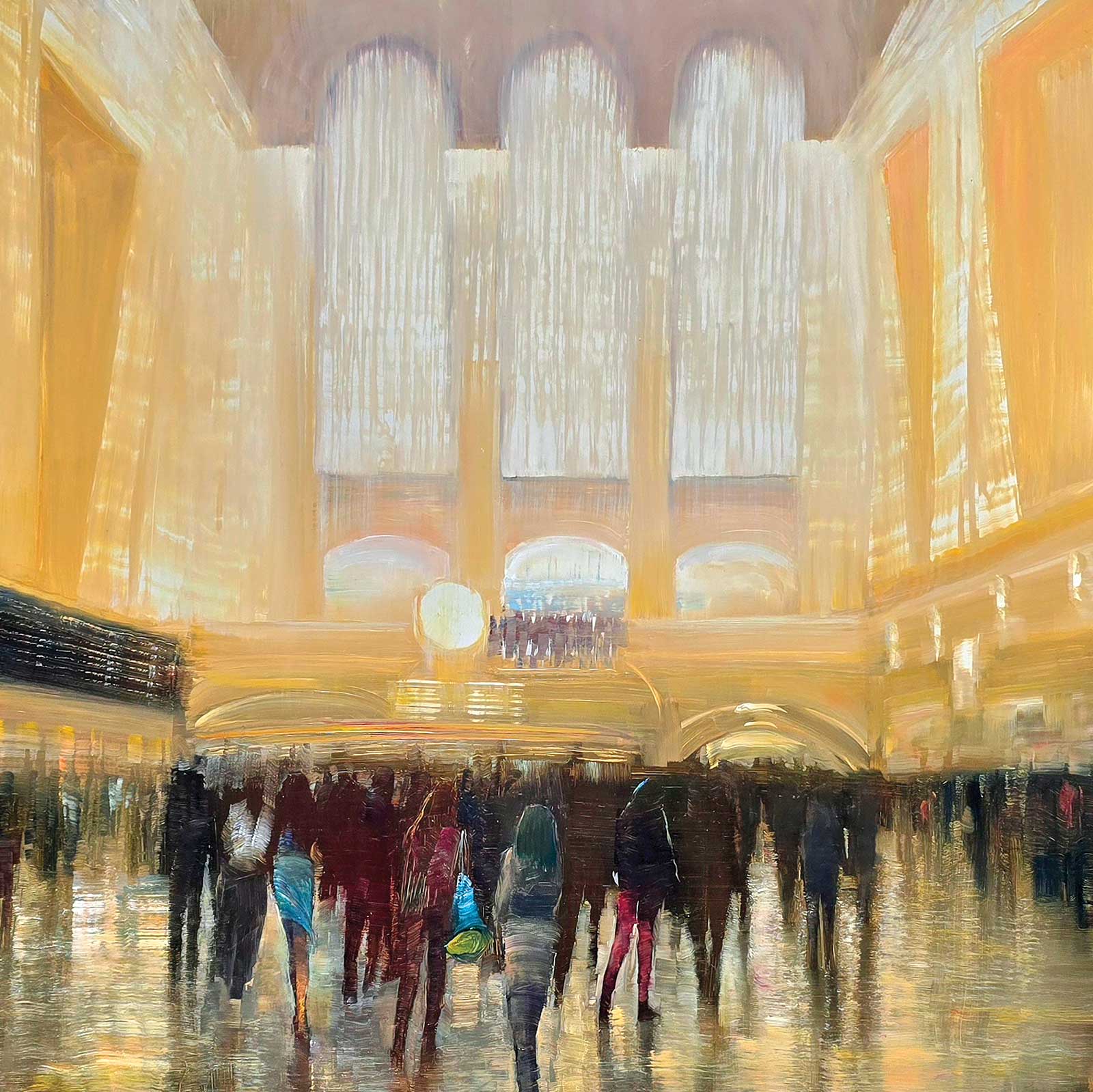 Arrivals and Departures, oil on laminated aluminum, 32 x 32 in.
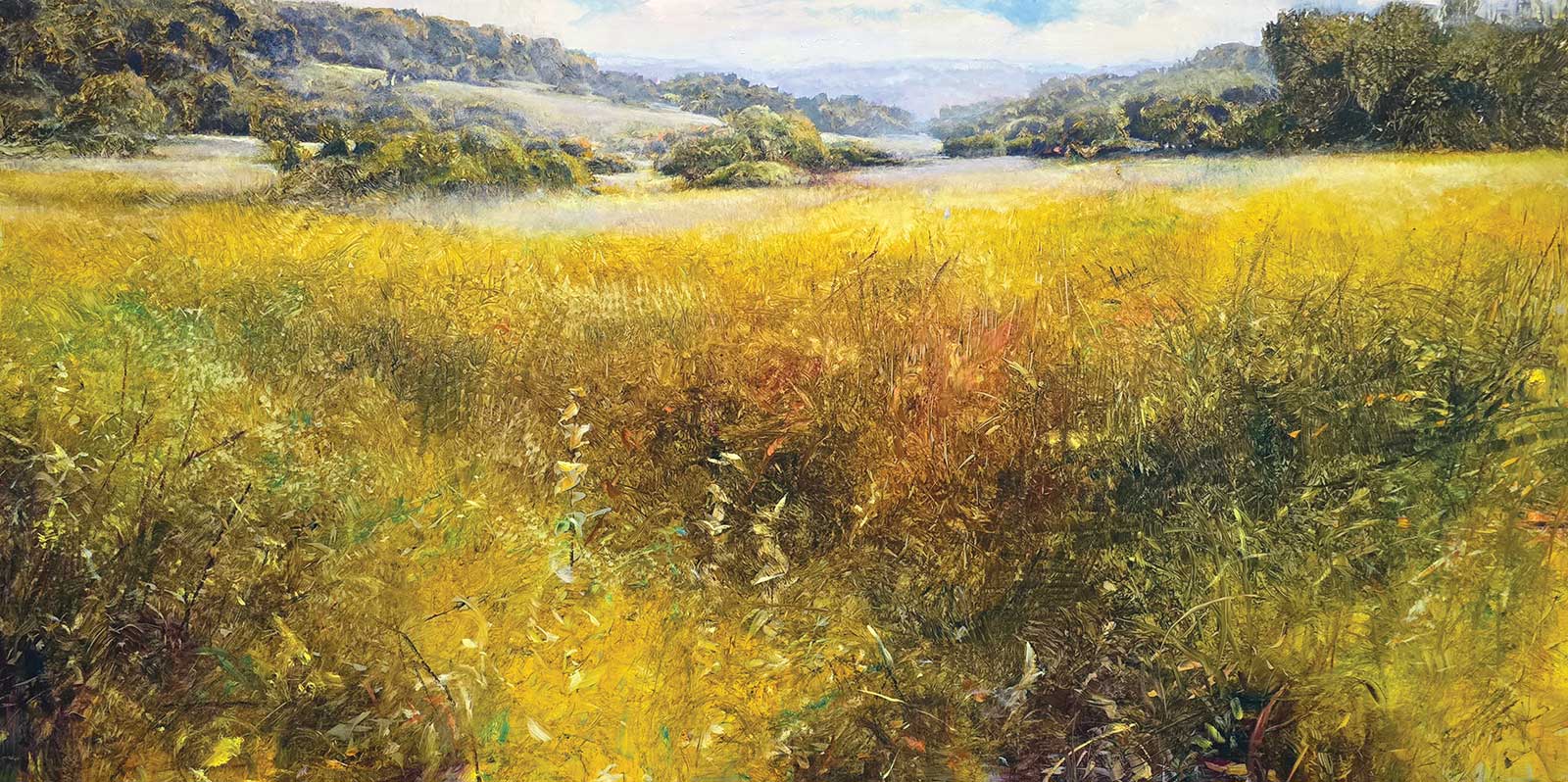 Summer Atmosphere, oil on laminated aluminum, 24 x 48 in.
“My goal is to allow enough ambiguity for you to access more of your memory and be flexible, to float with you wherever your mind, and the painting, takes you. When you’re standing at the edge of a pond or a river, you can say, ‘I’d like to see below the water. I can think, ‘my brain would like to see what’s on top of the water,’—the shadowy or the reflective. I try to allow those principles to exist within the same frame. Because that’s how we experience nature, how we experience the world.”
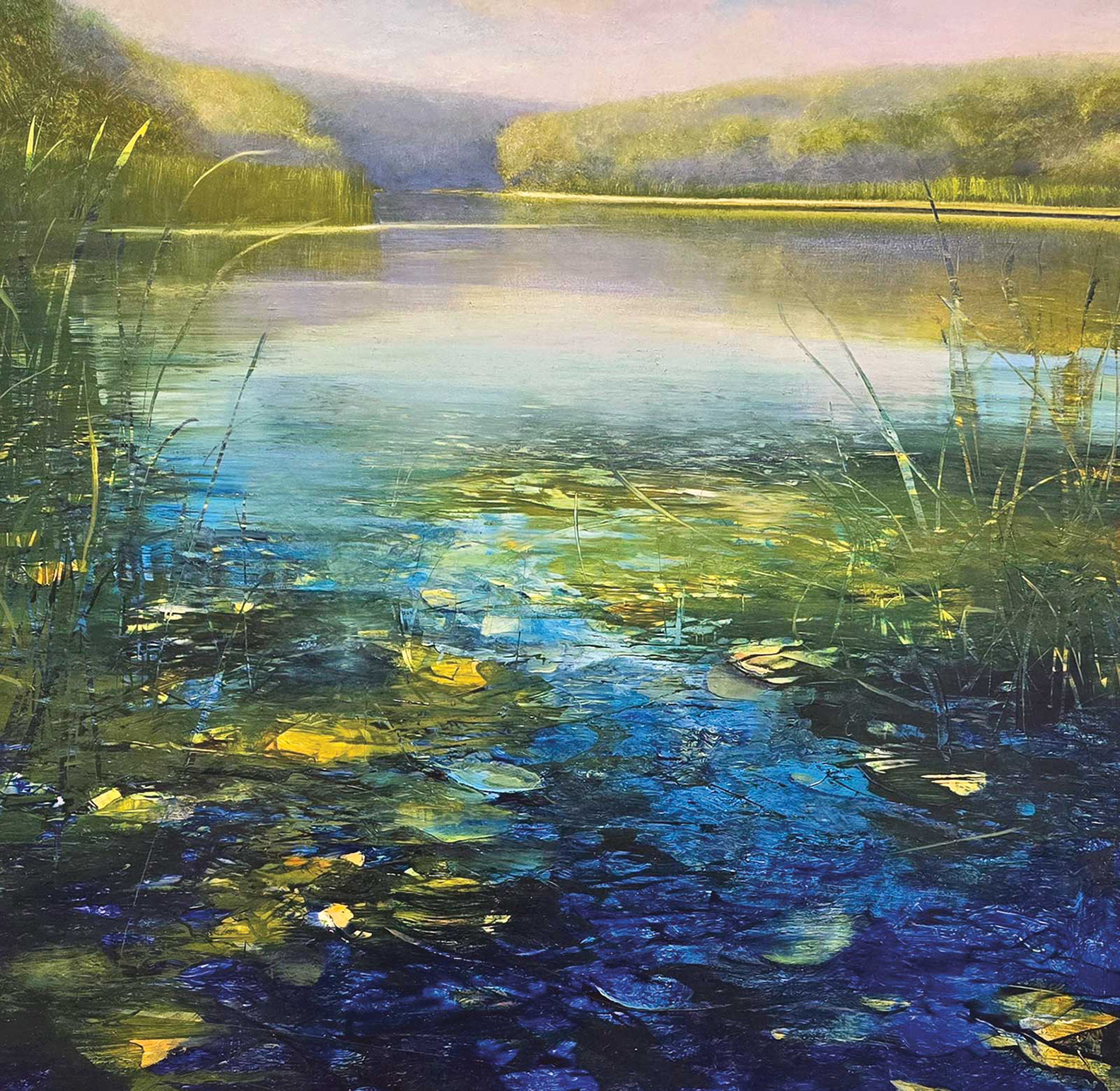
Lavender Atmosphere, oil on laminated aluminum, 36 x 36 in.
Dunlop explores these concepts and applies the same techniques to urban environments too, often New York City, where the setting is typically more specific. In Arrivals and Departures, Dunlop brings us into the cathedral-like space of Grand Central Station, where we can imagine being inside the hustle and bustle from a peaceful place of observation.
“All the people are in transit, moving autonomously but blending in with all the others, in this luminous space filled with light. You can merge with the motion and feel part of that dance, but you don’t have to say, ‘I have to catch the 6:05 to Greenwich.’ You can stand outside of it but see yourself in it. You can have transcendence and participation.”
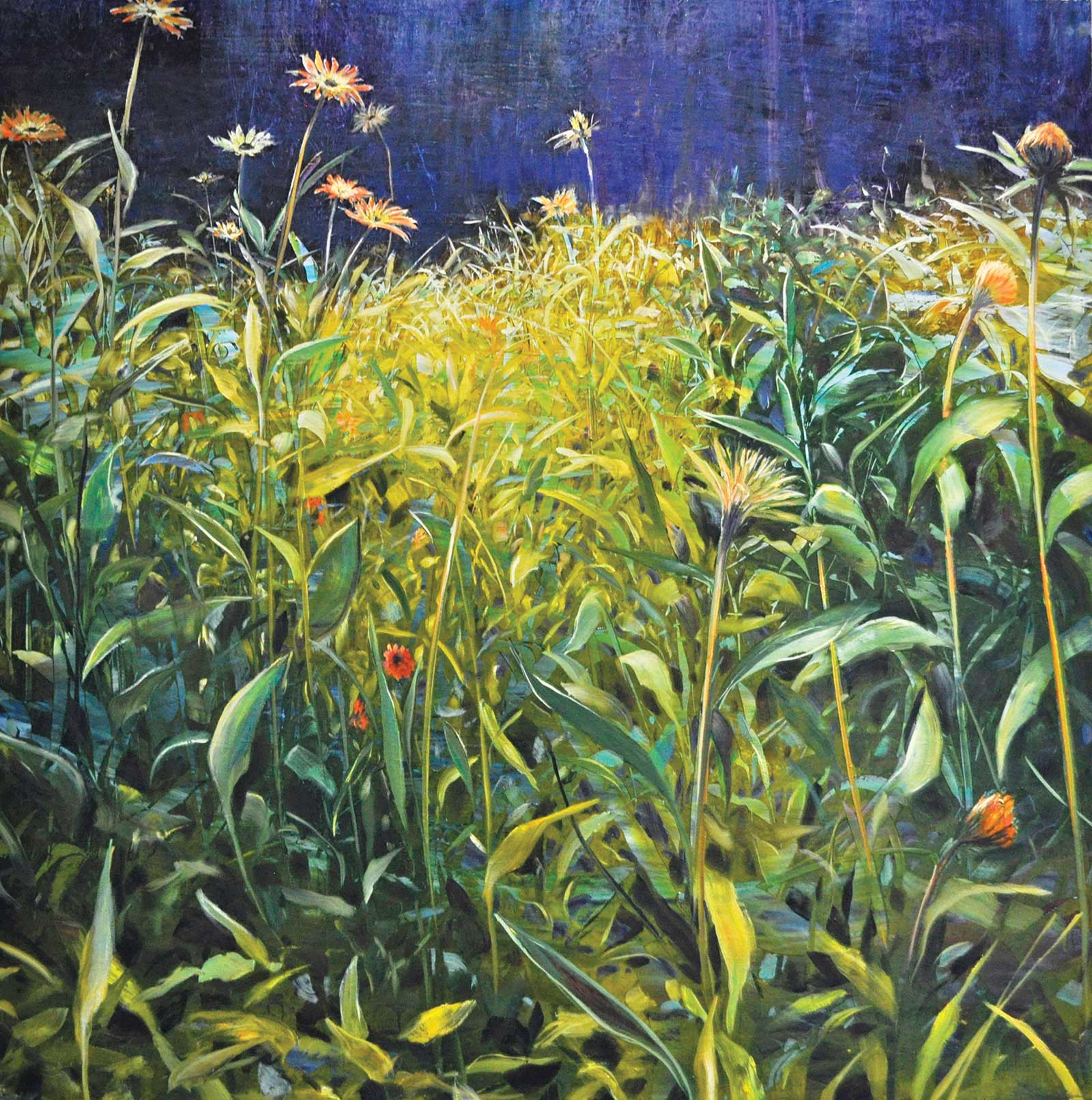
Forest Flower, oil on aluminum, 36 x 36 in.
Dunlop achieves his signature luminosity by applying countless layers of translucent paint in the style of the Old Masters. The effect is enhanced by his use of a reflective surface, the light bouncing off the shiny aluminum through the paint and back again. As a result, his paintings continue to open up in other ways, always changing depending on the time of day, the lighting and the angle from which it is viewed. He also stresses that the more people understand about art, the more they are exposed to it, the more they will appreciate it. It is an endless journey of discovery when it comes to art, and even can be with a single painting, when it truly feels alive.
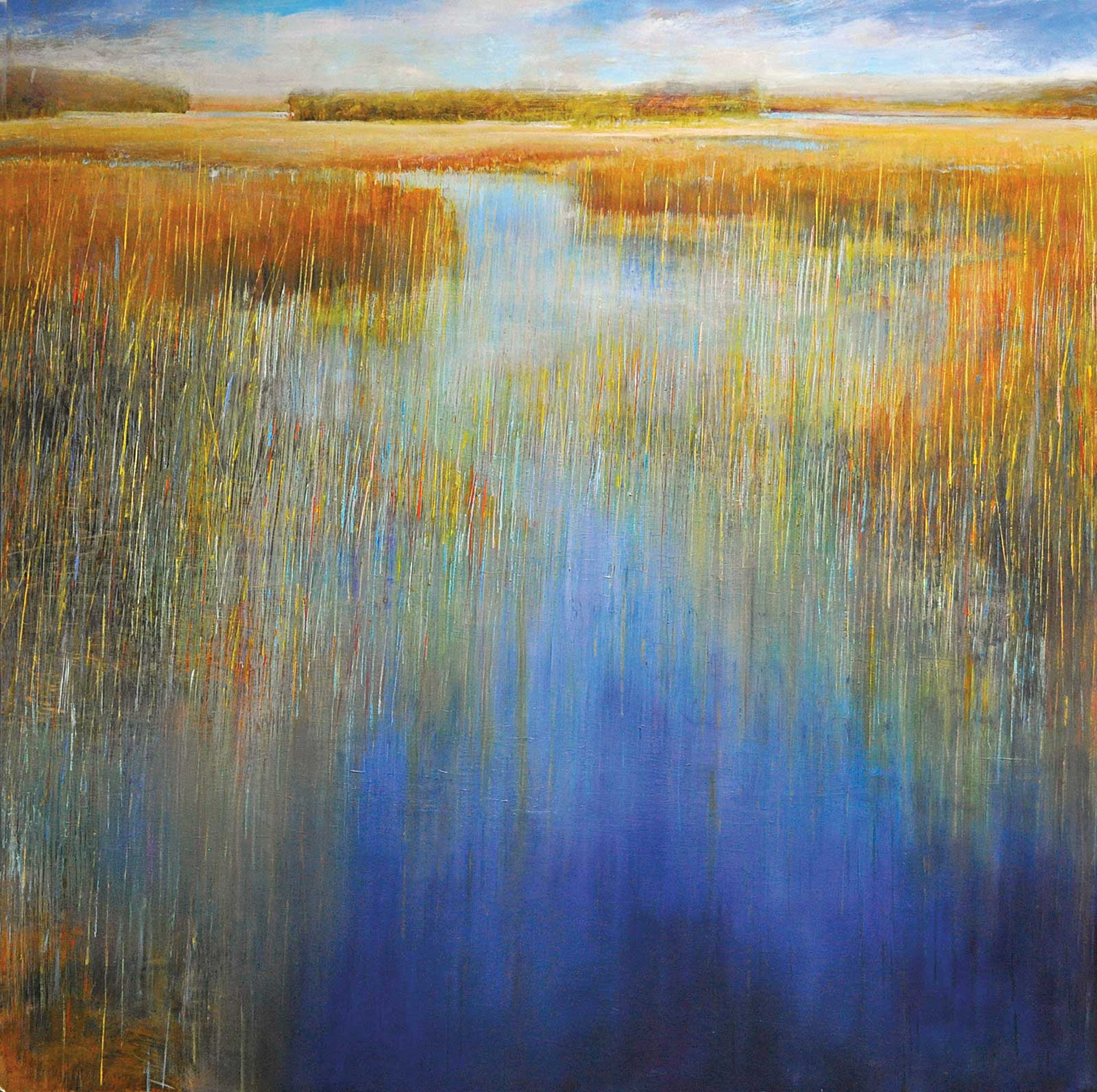
Waters of March, oil on laminated aluminum, 48 x 48 in.
“We’re always unfolding events,” says Dunlop. “We are not the same person year after year. Nothing is static. I’m interested in creating a quality of uncertainty that is analogous to how we experience the world, while providing enough of a sense of familiarity that someone will want to enter into it and participate.” —
Susan Powell Fine Art 679 Boston Post Road • Madison, CT 06443 • (203) 318-0616 • www.susanpowellfineart.com
Powered by Froala Editor