"Virtuosity” is a strange word. It muddles notions of high quality with morality—for in its shadow a virtuous person might either be morally good, or highly skilled. Technical virtuosity matters to art lovers, because recognizing and knowing quality is always at the heart of taste. Doubtlessly, virtuosity reigns in our world of paintings and sculptures, for we are ruled by connoisseurship, by the qualified appreciation of the work of art, by having good taste. In the late Renaissance, Baldassare Castiglione described the “art of hiding art” as sprezzatura, when an artist possessed such perfect technique that their work looked effortless, and their ideas could become the most important features of their paintings.
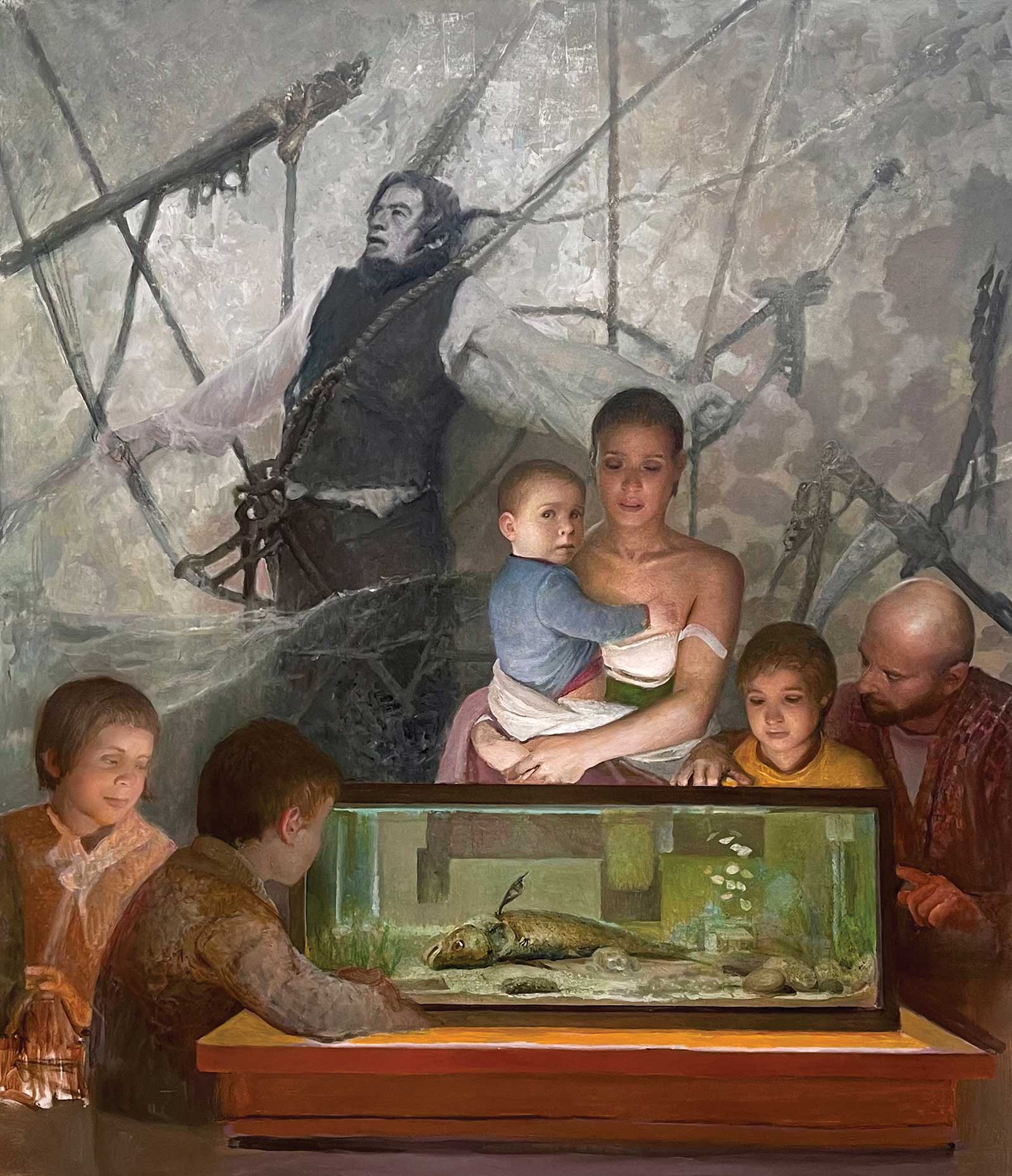
Sublime, 2026, oil on canvas, 76 x 65 in.
Vincent Desiderio is a virtuoso. His paintings are sprezzatura performances. He no longer needs models, and he is so fluidly skilled with brush and pigment that he can pluck figures and compositions from the shimmering air of his imagination and create worlds from nothing but thought. He explains, “It really feels like dreaming when you just invent everything. I can make whatever I want. I can change things very swiftly.”To Desiderio, technique has shifted from studio craftsmanship to the shape of thought. His skill is a liberation that allows him to travel in realms of pure idea. He continues, “I believe that the way this thing is painted is what convinces you the most. Otherwise, Vermeer would be just like ter Borch, and like Jan Steen, but he’s not. And it’s not that he’s painting different subject matter. It’s that he’s painting it in the most extraordinary way.” But, Desiderio insists that the role of a painter extends far beyond merely being highly trained in the arts of reproducing reality. He says, “one of the things we’re up against is that people…don’t think that you really should be articulate as a painter in terms of your technical prowess. They think that technique is just mere skill, and it’s not. Skill is skill, and there are plenty of skillful painters, but technique is the use of certain ways of painting to drive home a very important point…That is where I think the salvation lies. It’s in the technical narrative, rather than in the subject matter…I guess I’m a formalist in that sense.”
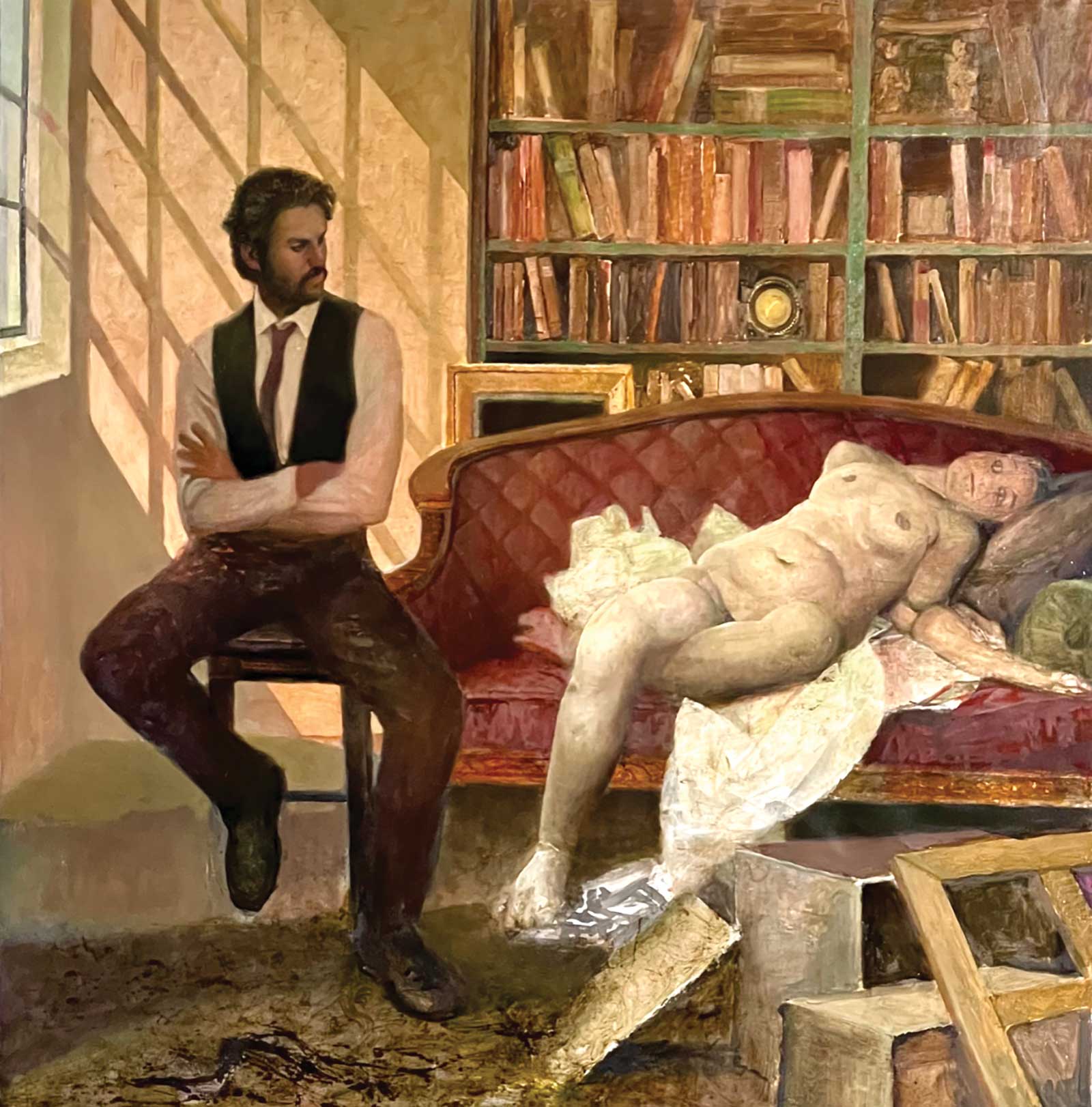
OK (work in progress), oil on canvas, 68 x 66 in.
Consequently, the true measure of any artist’s technique must include an evaluation of their ideas, and quality is as real in the realm of ideas as it is in material things. To a connoisseur, some things are better than other things—a Mercedes is better than a Škoda—and some ideas are better than other ideas. We lovers of art and wisdom must be critical connoisseurs of the virtuosity of mind as much as we are connoisseurs of clever skill.

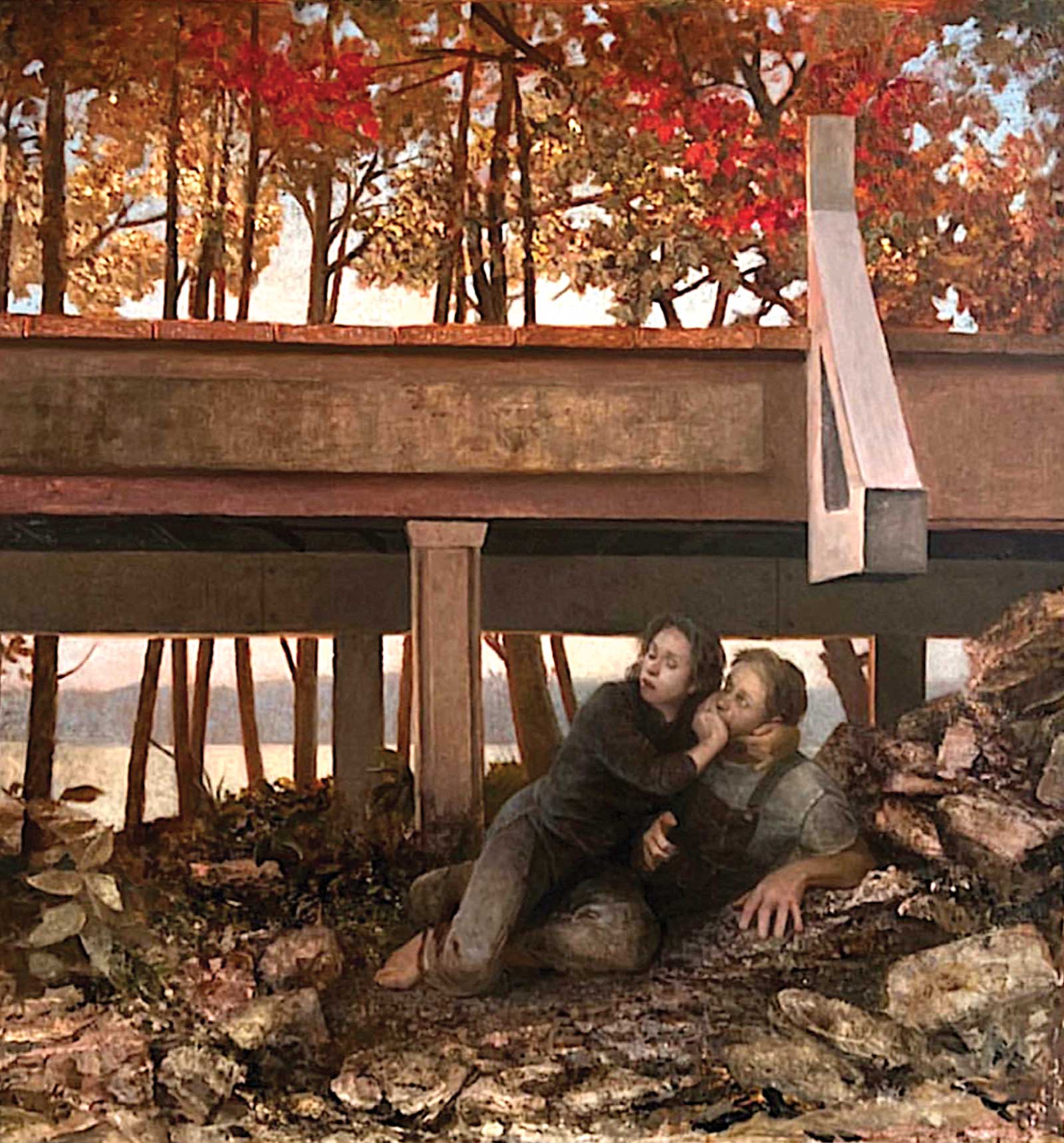
Musica Proibita, 2024, oil on canvas, 71 x 70 in.Courtesy Werring Contemporary, Devon, PA.
Must the virtuosity of our beloved be morally good as well as skillfully brilliant? Didactic and moralizing art is always dull propaganda. Desiderio understands the necessary ambiguity of an artist’s approach to virtue, because the work of artists does not require offering a moral imperative as a guide to action. The bohemian’s work is most often an exploration of bourgeois values; a journey, not a judgmental destination. His recent paintings explore connoisseurship with unusual depth and perception, offering uncomfortable images that are open-ended and paradoxical. “One of the things that I like to do,” he says, “is to keep the purpose of the painting open. It’s like the narrative goes in a direction and then you throw the curveball so that it doesn’t make the clear illustration of sense. As I move toward determinants, even as I’m working on the picture, as I’m doing it, if I see it veering too easily to a premature resolution. I splay these vectors that are moving towards the terminus so that they miss the terminus. And that is a strategy that’s just built into my thinking, to be an enigma. It’s the most important thing. I want to paint an enigma as clearly as possible.” These are paintings about painting.
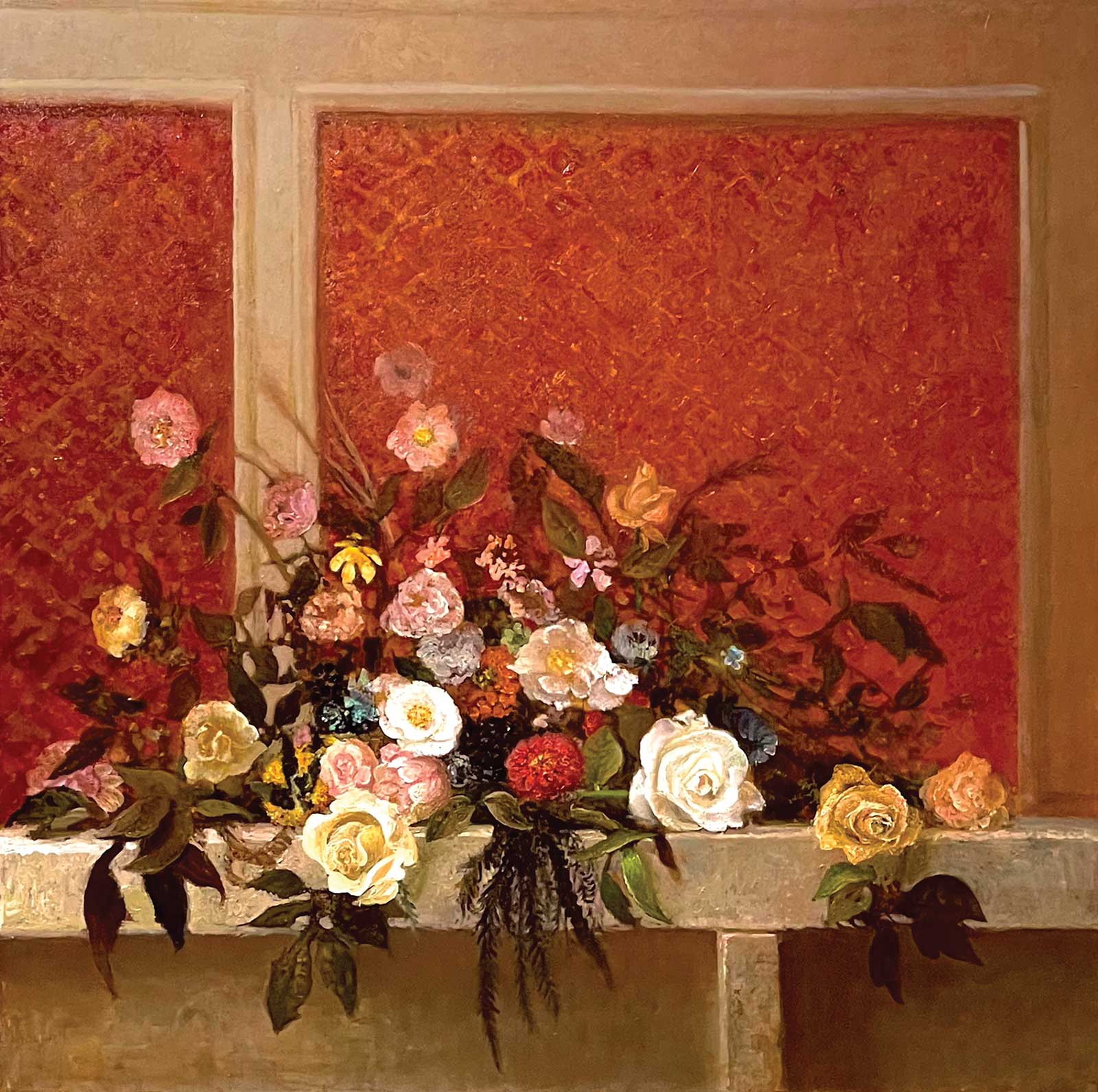
Sold Flower Painting, 2026, oil on canvas, 36 x 36 in.
The title of Desiderio’s recent magnum opus, Explaining Pictures was adapted from Joseph Beuys’ performance Explaining Pictures to a Dead Hare, when the German genius of 20th-century installation and performance gilded his face like Helios Apollo, the God of the sun, of music, poetry, art and oracles, and futilely explained the depth and mystery of art to the flopping body of the once fecund bunny he held in his arms.
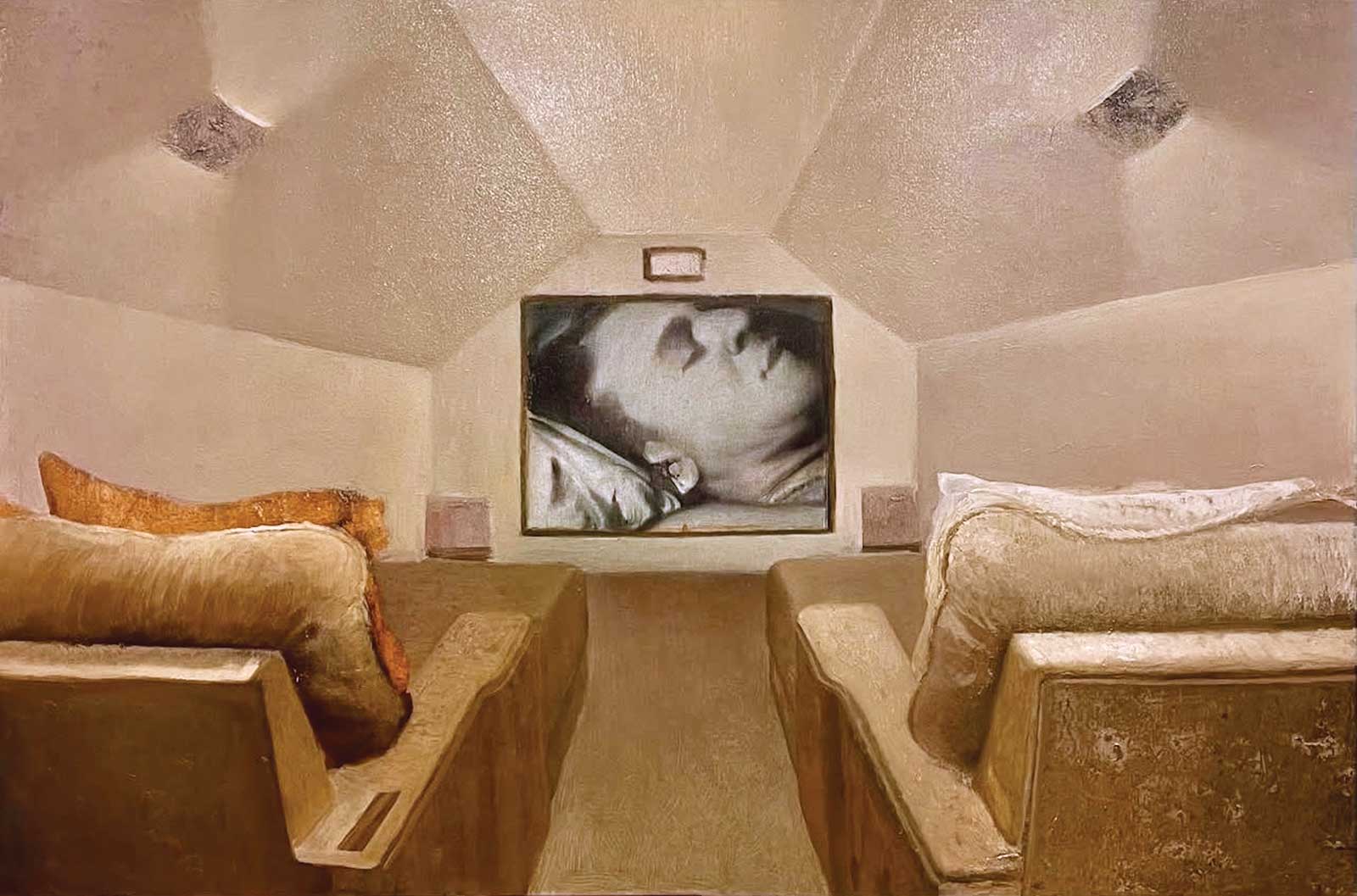
El Sueño de la Razón (work in progress), oil on canvas, 40 x 60 in.
The floor—covered by a faux Mondrian carpet—is littered with discarded books of minimalist art, with Malevich’s Black Square elevated and prominent among them in a tome in the foreground. The room is the conceptual space of art theory. In the background a docent wielding a microphone explains a Willem de Kooning, but nobody is listening, except perhaps the lanky painter Jean Frédéric Bazille, leaning on the opposite side of the room beside Giovanni Bellini’s Portrait of Doge Leonardo Loredan. The men and women of the gathering are either floating in private reveries, or flirting, all oblivious to the sublime tectonic power of the rockface behind them, divvied by the architectural frames of the modernist house. Desiderio is there, in the center, wearing his apron and contemplating the sleeping child in his lap, a symbol of slumbering creativity.
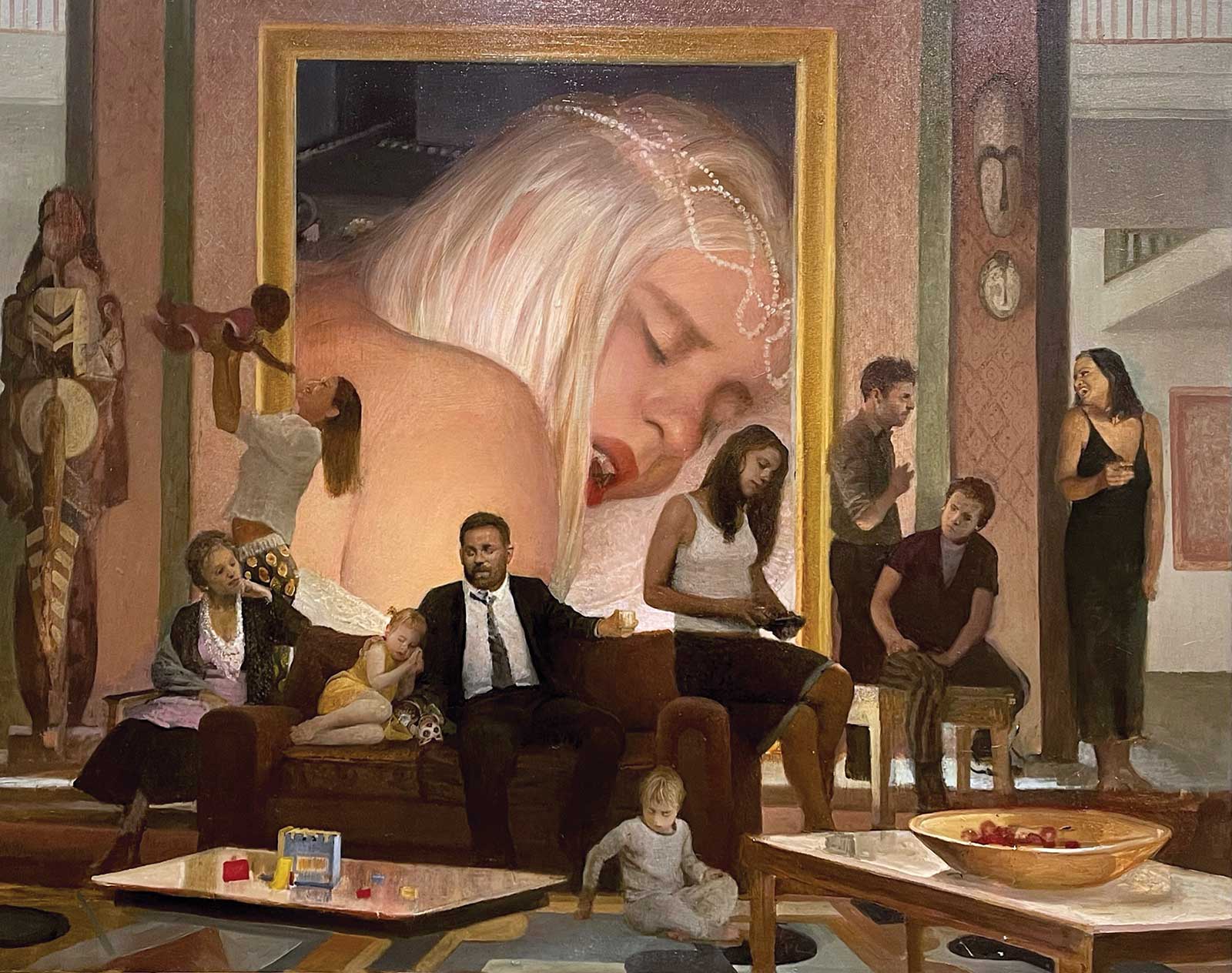
Family Happiness, 2026, oil on canvas 48 x 68 in.
He answers no questions. His work is in the asking. He explains, “And the daunting task of doing that is what technique is. Skill plays a part in it—it’s a mental dexterity as well as a physical dexterity. Every time we move the painting towards completion, we put another brick in the house that we’re building around ourselves, right? Now, that house can be a prison. Or it can be an observatory. I’ve had students come to me in tears because they went to an atelier and now they can’t make the paintings they want to make because they have to squeeze every idea into this format. That, I find the most disheartening thing about representation.”
Explaining Pictures is also a painting of the end of art’s meta-narrative as it reached postmodernity, and the beginning of a new conception of what it might achieve now. Desiderio says, “We can’t even use the same vocabulary that we used to use. ‘Old masters.’ What does that mean?…We’re not moving forward. We’re not progressing. Art doesn’t progress. That was a big mistake, aligning it with the progression of science in the Renaissance. And then we felt as if there was some kind of advancement of human attainment. But art is so wise to the foibles and the strangeness of human nature. And we have not clearly evolved for the last four thousand years. So even though science is taking off and technologies are taking off, the fact that art isn’t, and that art is in a kind of flatline position today, is an indication that maybe it was wrong to hitch a wagon to the attainment of progressive science. Maybe every generation reaches its highest, its apex. And the height of that apex depends on the fertility of the ground from which it springs. And right now, the ground is pretty wasted.”
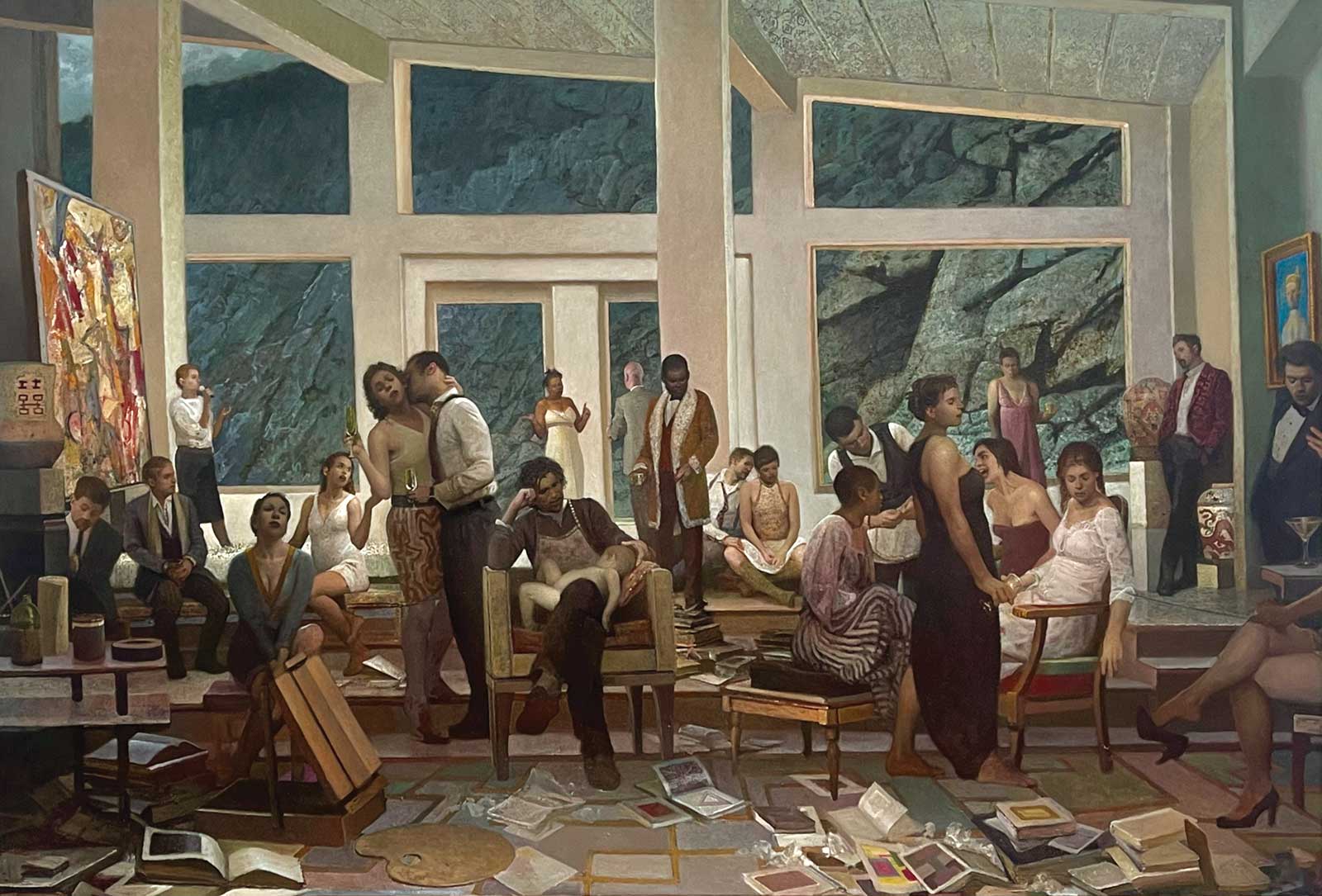
Explaining Pictures, 2026, oil on canvas, 83 x 120 in.
Desiderio warns against consuming digital propaganda with a sleeping man in the blue monotones of an early movie, projected onto a contrasted display of his El Sueño de la Razón, set in the luxurious but dated comfort of a hermetically sealed and luxurious 1980s screening room, designed with surround sound for full submission and immersion into broadcast media. He has used single point perspective, echoing the compositional brilliance of filmmaker Stanley Kubrick to lend an air of uncanny mystery to the painting, and the title awakens demonic forces from the ghost of Francisco Goya, whose famous etching of an unconscious figure was haunted by gothic bats and owls, warning of the dangers of libertine thought as the reductive rigor of the enlightenment crumbled beneath the relentless sensual assaults of emerging romanticism. The complete title of Goya’s brilliant composition warned that “the sleep of reason produces monsters.” Unlike Goya’s dark injunction against the dangers of the democratic revolution, Desiderio’s painting is an admonition against comfortable participation in the monstrous spectacle of insidious modern media.
The satirical and Hogarthian observation of social behavior that attracts Desiderio in some of his work reappears in Family Happiness, which echoes the structure of Explaining Pictures with its crowded interior and its painting within the painting, while the idea he expresses is entirely different. Now the bright canvas dominating the huge reception room of the comfortable mansion is a Jeff Koons, taken from his portfolio of erotic paintings of his one-time wife, the porn star Cicciolina, and kids play beneath it, oblivious to its content. With it, Desiderio contemplates the effects of living with such a painting upon the children. “What will they become?”
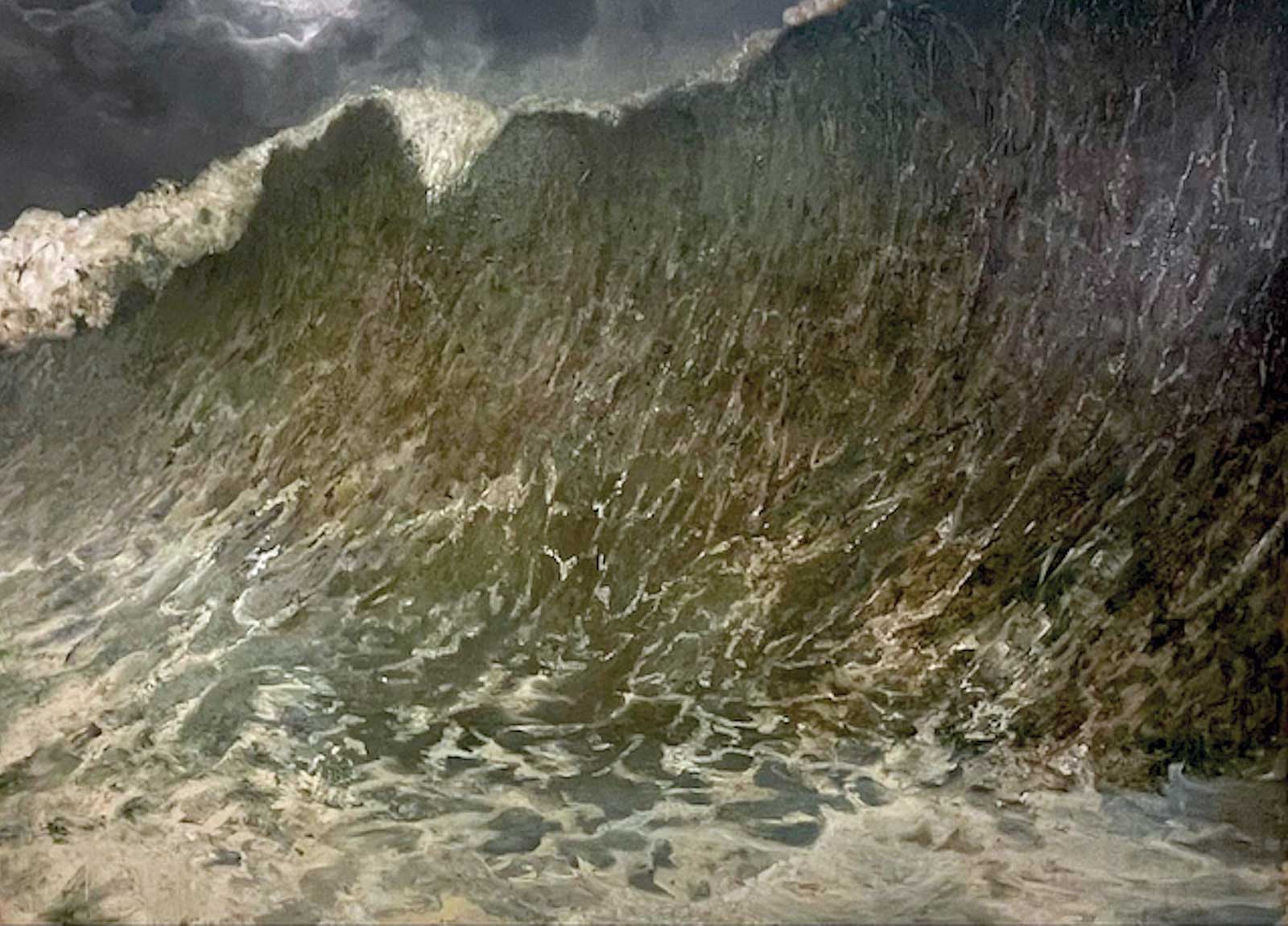
Wave, 2025, oil on canvas, 86 x 118 in.
The ambiguity of the artistic idea may be disturbing. Desiderio’s work-in-progress OK is as awkward as any painting by Balthasar Balthus, recalling the story of Oskar Kokoschka, who fell in love with Alma Mahler and commissioned Hermine Moos, a puppet maker from Munich, to make a life-size replica of her when she left him. Anxious that the doll should be an adequate substitute for his lost love, Kokoschka sent intimately detailed notes to Moos on how to proceed, but when the thing arrived at his studio it was a monstrosity covered with fur. Nevertheless, he planned parties in the doll’s honor, took it to cafes, created obsessive drawings and oil paintings of it, and treated it as a living representation of Mahler. The idea is monstrous, but the metaphor meaningful. How many representational paintings are creatures born of Frankenstein? The idea matters more than the method.
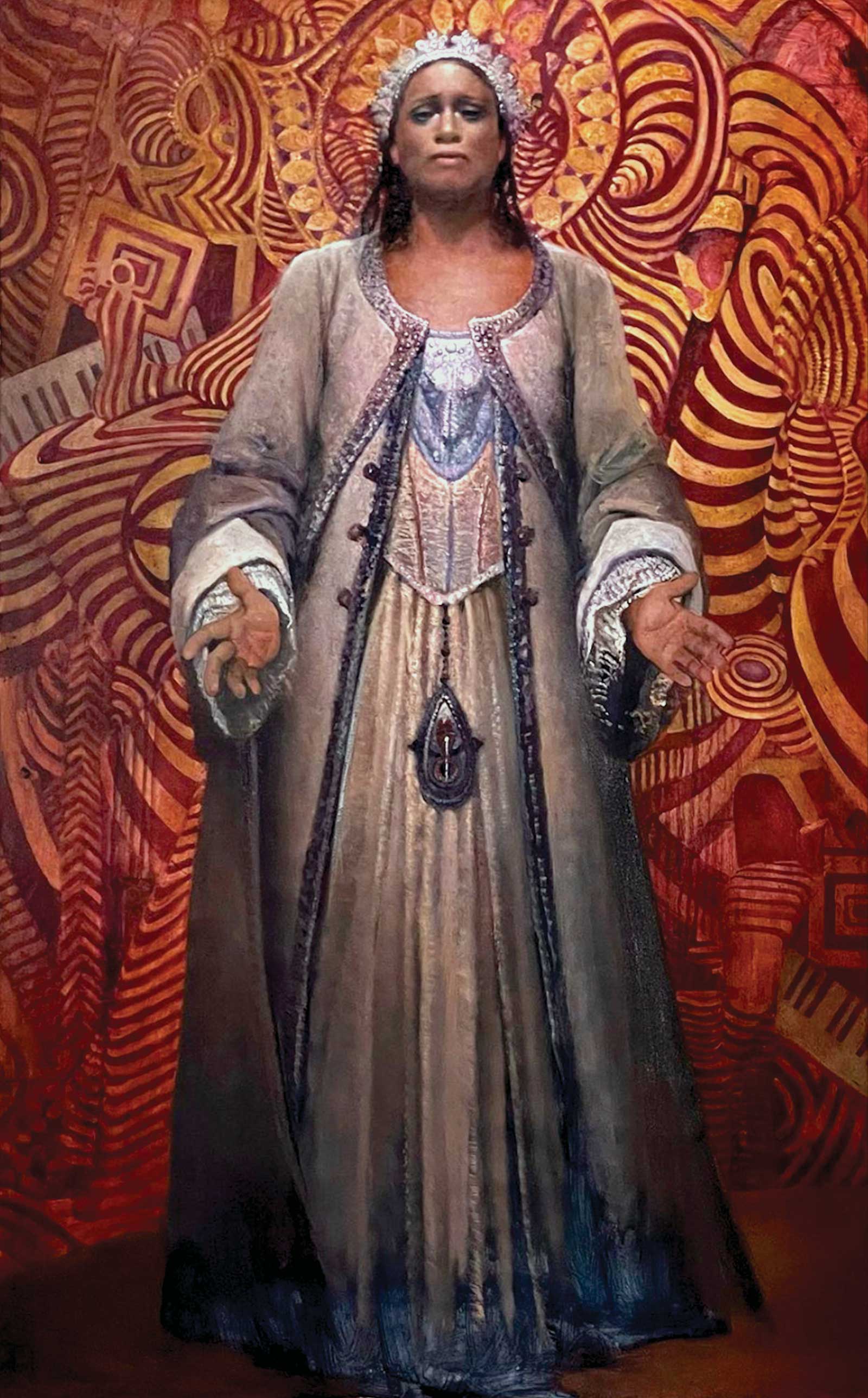
Opera, 2022, oil on canvas, 96 x 62 in. Courtesy Werring Contemporary, Devon, PA.
The virtuoso Desiderio explains, “What it does is create a sense of the uncanny. And that, I think, is the most important thing that a work of art can do. Because when we experience the uncanny, we become painfully aware of the split-second consciousness. Consciousness happens in a split second between the past and the future, and yet a painting has the capacity to take that moment and expand it. So, it’s consciousness expanded into a thing. And now, if it’s going to be expanded, it still has to retain the character of that uncanny perception of being conscious. And in that, it should be enigmatic. It should be a tantalizing un-resolution of something. Then paintings become ekphrastic. They are a pause between. There’s the narrative happening, then the description of the work of art that stops the narrative, and then the narrative continues. You know, paintings actually have that character, that they can stop the clock momentarily. And what that really is, is an uncanny expansion of consciousness. Photography can’t possibly do that because it simply documents the momentary. Painting expands the momentary. And that’s why I love it so much.” —
Powered by Froala Editor