Sculptor Katherine Stanek calls herself an “accidental gallerist.” She rented a space in Philadelphia out of necessity in 2014 when the gallery that had long-represented her closed, and her collectors were disinclined to travel to her studio in New Jersey. Stanek built her business on a non-traditional gallery model and has had to continually come up with creative solutions to stay afloat amid the perpetually shifting contemporary art market, and the complex factors that affect it. In late 2025, she opened a second Stanek Gallery in Miami, where she saw the opportunity to bring something unique to the rapidly maturing local art scene.
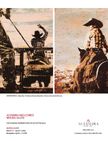
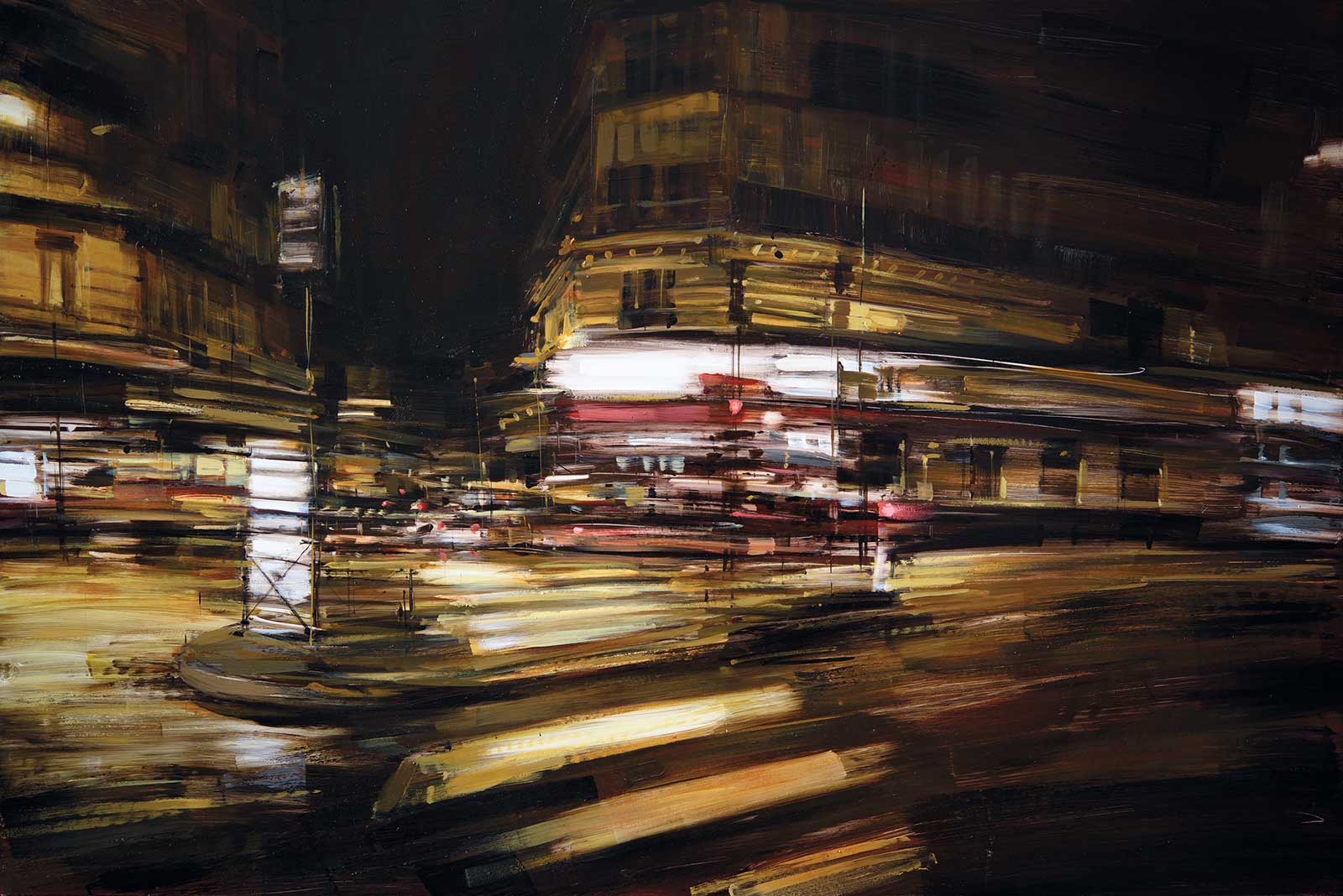 Valerio D’Ospina, Taxi Ride, oil on panel, 48 x 32 in.
Several years before Stanek found herself in the gallery business, she attended a gathering with other artists associated with her alma mater, the Pennsylvania Academy of the Fine Arts, and met Italian painter Valerio D’Ospina. He showed her his work—distinctive urban scenes alive with the sensation of racing through time and place—and it blew her away.
When Stanek was planning one of her first gallery exhibitions, City in Motion,she knew she wanted D’Ospina in the show. It took some effort but she finally tracked him down and has been showing his work ever since.
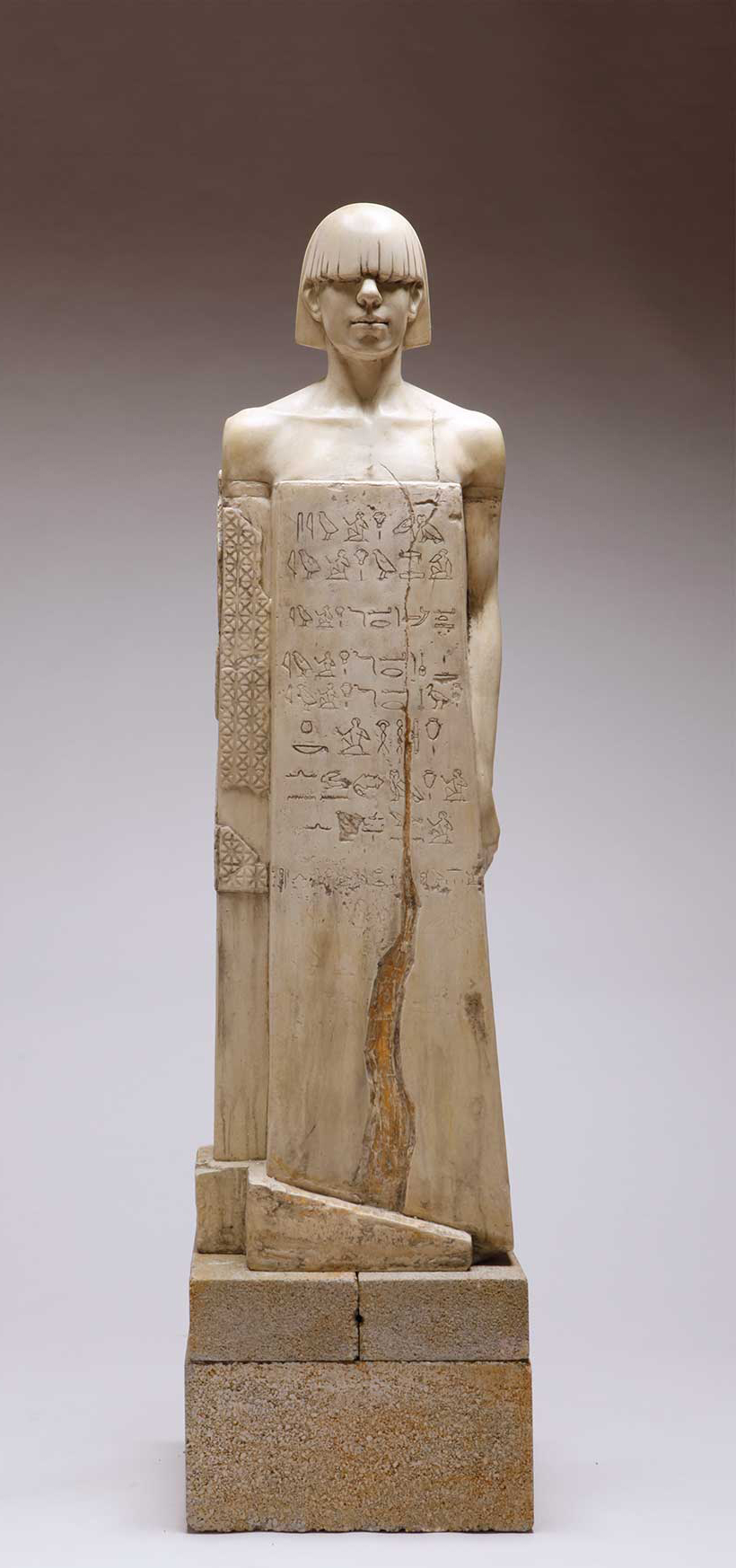 Katherine Stanek, I Am, 2023, cast concrete with integral pigment and gold leaf detail, 49 x 15 x 12 in.
D’Ospina demonstrated the three non-negotiables—what Stanek sees as the pillars of longevity—that inform her decision to invest in an artist. “The first is creativity,” says Stanek. “Are they doing something different and new that I haven’t seen before? That’s the authenticity—the fingerprint the person is going to have. The other is content—what are you saying? Even if it’s just ‘I’m making a pretty object.’ But make sure to make a pretty object. Third criteria—craft. The craftmanship has to be top notch. They have to be a master, or in pursuit of mastery, of their craft. It may not be a style that appeals to you, or a message that speaks to you, but craftmanship—how did they do that?—will always bring people in.”
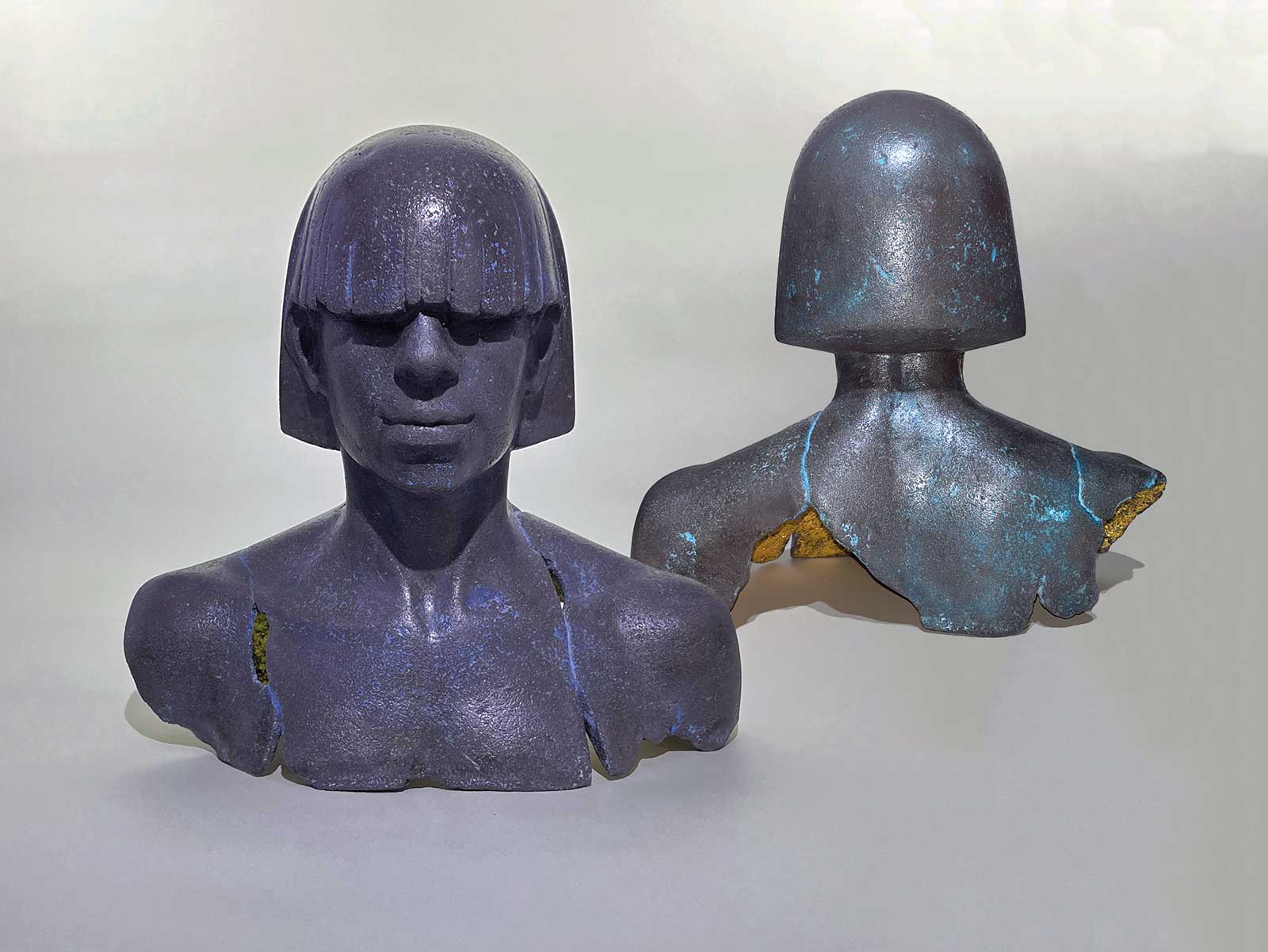 Katherine Stanek, The Self, concrete, 2026, 13 x 13½ x 7 in.
If Stanek has rigorous standards for the artists she represents, her prerequisites to curate her own work into one of her gallery exhibitions are even more so. Fundamentally, their respective work must resonate on a deep conceptual level to the extent that it elevates the vibration of both. D’Ospina’s work checked that box too. Now, in a rare joint show, Stanek will be showing radically original and more traditional examples of her sculpture, alongside a new body of paintings by D’Ospina. Allegory is on view at Stanek Gallery Miami through May 9.
While they come at it from different angles—Stanek is focused on questions of authenticity while D’Ospina is largely concerned with impact and the blurry nature of memory and motion—at root, their work is about the (un)trustworthiness of perception. It asks what is real, what is actually true, when our minds are trained to gravitate to what is familiar, what is comfortable, what we respond to as stable, secure and safe. But are we complicit in a masterfully orchestrated charade of self-deceit? If so, what is the trade-off? Driven by self-inquiry, neither of these artists are willing to risk finding out.
D’Ospina plays with one of the main themes in the show in High on Rooftops.Our eyes gaze out over a sea of abstract brushstrokes rushing horizontally across the canvas. We scan the image, looking for something recognizable, a landmark with which to orient ourselves in the chaos, until our gaze finally lands on the distant horizon and finds what the title promised.
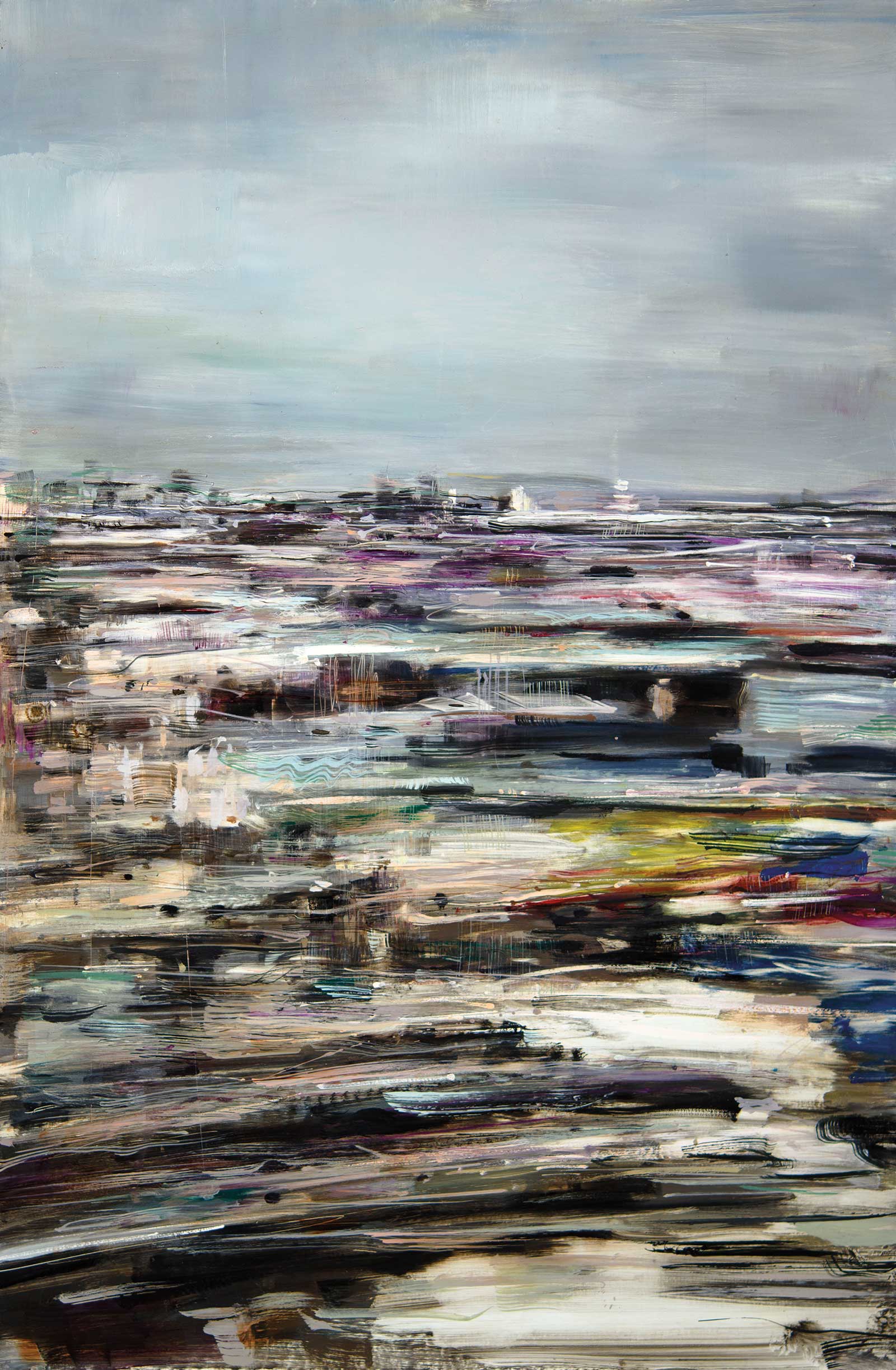
Valerio D’Ospina, High on Rooftops, oil on panel, 16 x 24 in.
Taxi Ride is a prime example of D’Ospina’s signature style, defined by his deft use of light, color and energetic brushwork to impart the feeling of speeding through an urban landscape.“At the core of my work is emotion, and for me emotion is inseparable from motion,” says D’Ospina. “Even linguistically, the word emotion comes from the idea of movement, of being stirred or set in motion…Movement generates feeling, and feeling generates movement.
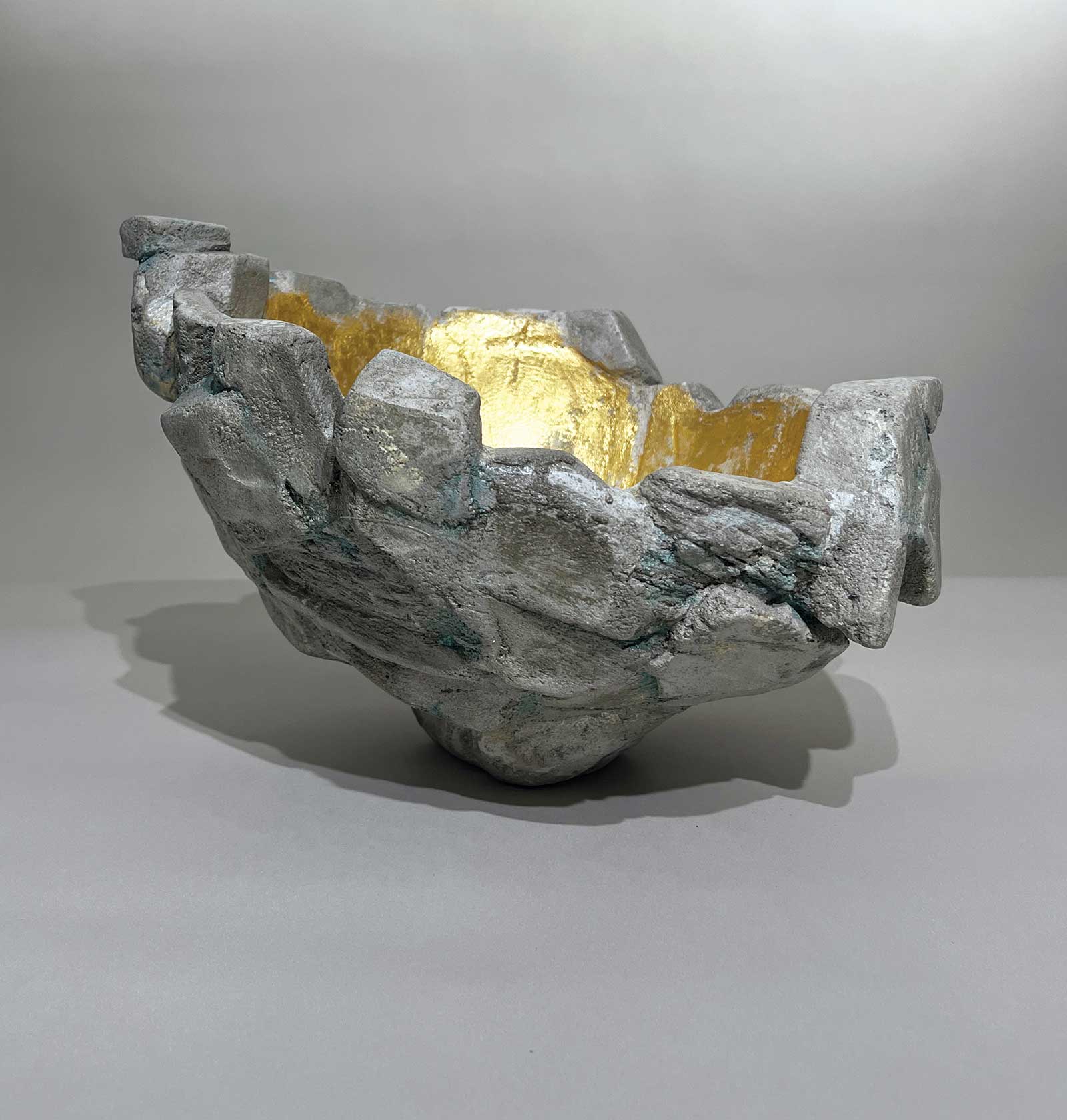
Katherine Stanek, Inversion, 2026, concrete, 8¾ x 12¼ x 14½ in.
“When I paint speed, blur or rapid light shifts, I am not simply describing a scene. I am trying to recreate the sensation of being inside it,” he continues. “A city at night, a trail cutting through space, headlights passing by. These are not static experiences. They are lived, felt, and remembered through motion…Ultimately, I am not painting speed for its own sake. I am painting the intensity of being present in a moment, and inviting the viewer to feel that same charge.”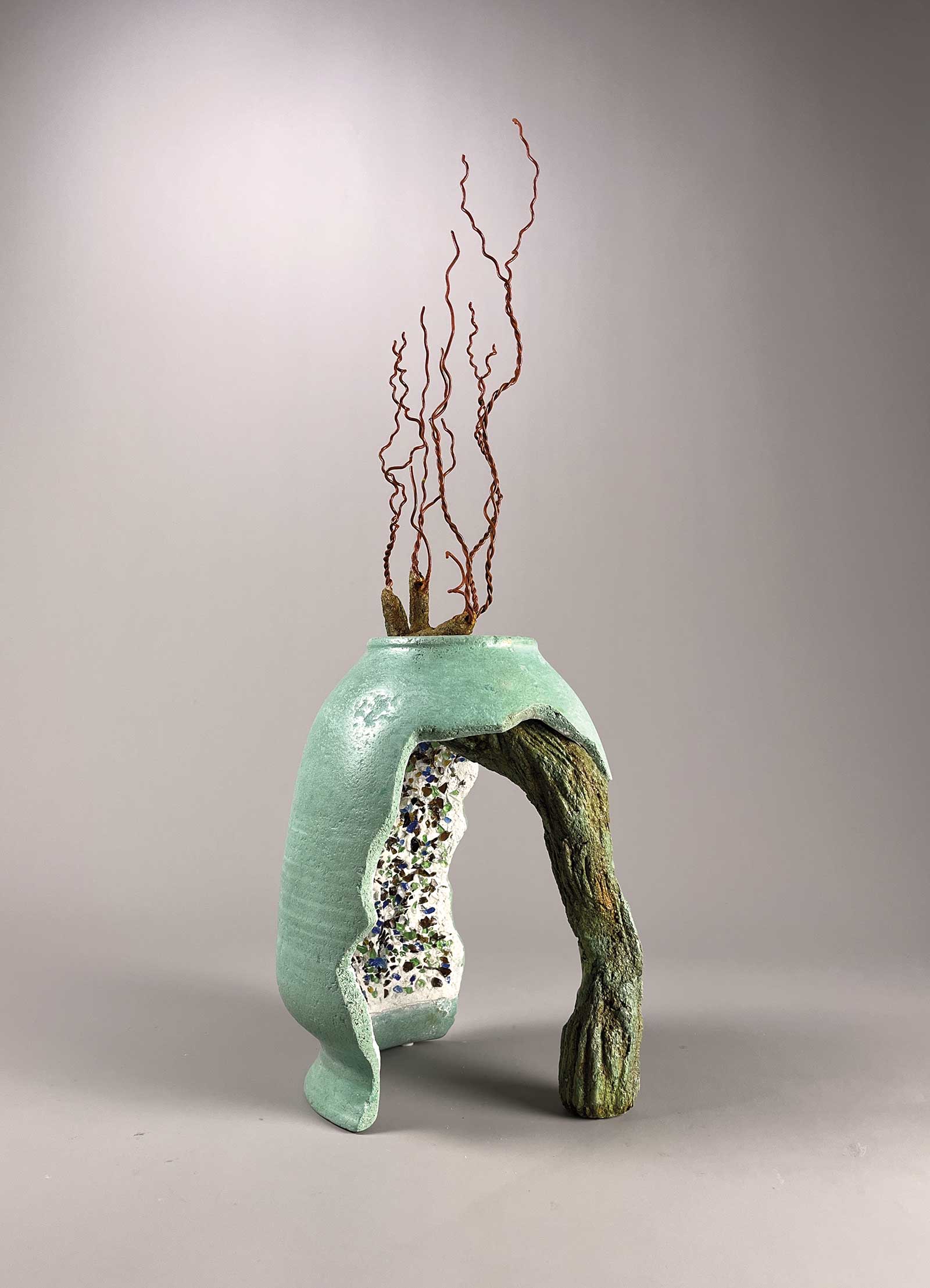
Katherine Stanek, Codependent 2, 2026, concrete with recycled glass aggregate and exposed metal wire, 22 x 8 x 9 in.
D’Ospina is also exploring our recall of visual memory, of contemporary experiences like riding a bike with a GoPro or watching the fragmented perspective of a dash cam; to those of the distant past. “When we think about memory, we rarely visualize it in sharp focus,” he explains. “When I recall moments from my own life, a childhood visit to my grandfather’s workplace in the dry docks, standing in front of a Caravaggio, or wandering through Paris late at night searching for an open restaurant, I do not see them as perfectly defined images. They appear dreamlike, atmospheric, partially obscured. Certain details emerge clearly, but much of what’s left of the image dissolves into nothing more than a sensation. That is what I try to paint. I am not interested in reproducing the thing itself. I am interested in painting the way it lives inside of me. Memory edits reality. It selects, amplifies, softens, and sometimes distorts. The blurred passages in my work reflect that filtering process. They suggest the instability of perception and the emotional weight carried by specific fragments.”
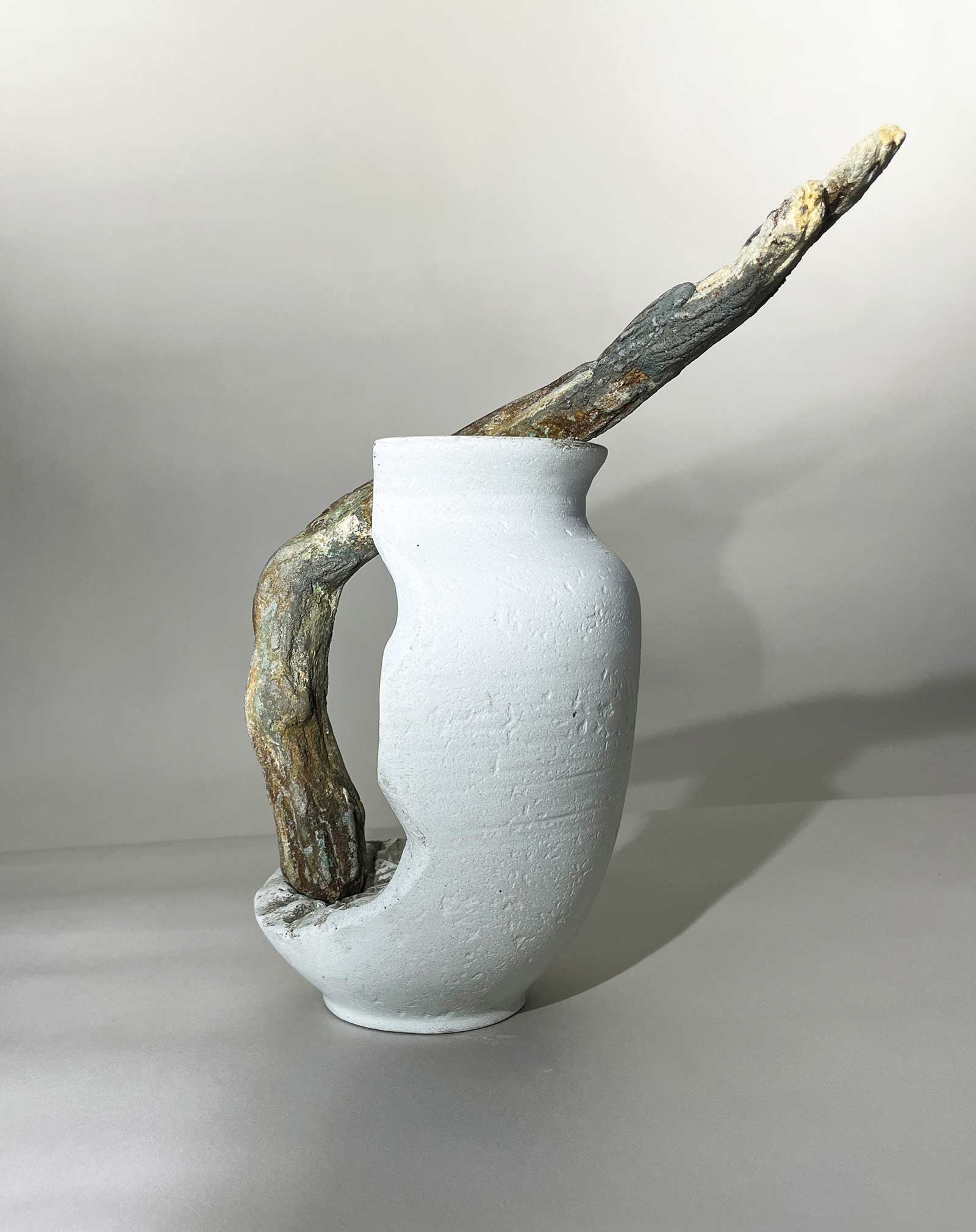
Katherine Stanek, Codependent i, 2026, concrete, 13¼ x 7 1/2 x 13 in. (variable configuration).
Christening her Miami studio in earnest, Stanek, whose base medium is cement, picked up on a body of figurative works that emerged from her sculpture I Am.
Stanek created I Am between 2020 and 2023, when she, like many, was confronting something of an identity crisis. Remembering and reasserting her core values was her chosen method of regaining and reframing her sense of self (again, the lifeboat we reflexively seek amid swirling, potentially swallowing seas). She wanted to encode her poetic self-declaration into its embodiment, so she carved the hieroglyphic translation onto the front of the statue.
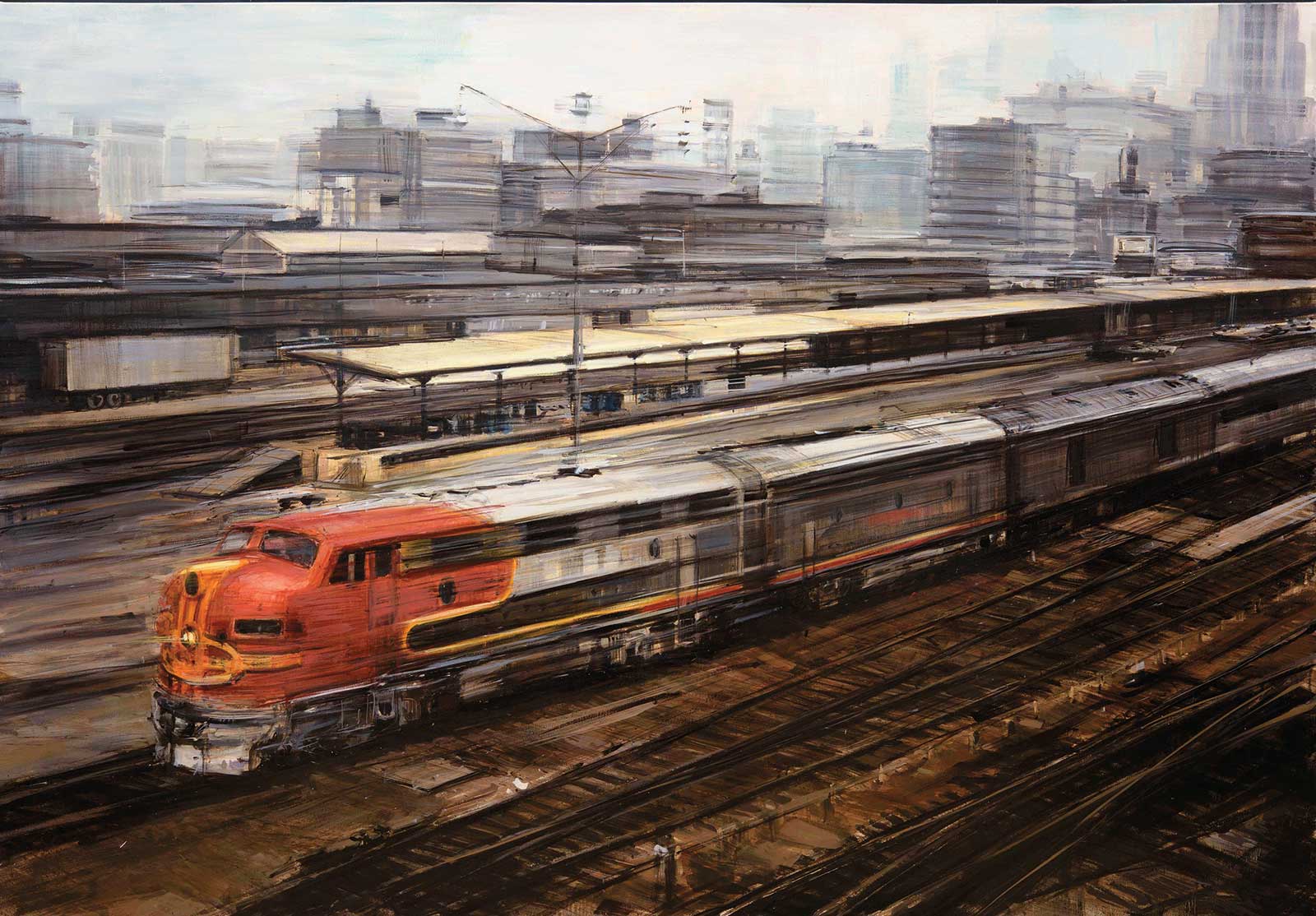
Valerio D’Ospina, Hai preso quel treno (You took that train), oil on canvas, 71½ x 50 in.
But instead of a conclusive act of self-affirmation, the creation of I Am threw her into a deeper state of existential questioning. “I Am is a declaration,” says Stanek. “I spent three years asking the question, and now I knew…but then I’d be in the studio and ask, is that the authentic me? Or is this just what the mind wants? Is this who I am, who I want to be? Or is this who I want people to think I am? If I’m really honest about it, I didn’t need to make a sculpture…I wanted to convey the message. It’s a raw honesty you can only get with yourself in the studio. Is it all ego? Or isn’t it?”
The answer could only be sought in the form of a new sculpture. For The Self, 2026, Stanek took the portrait mold for I Am and created a hollow version, intentionally broken, and lit from within with gold leaf. Rather than giving it a high-polished stone surface, she used black and gray pigments and a high content of refined marble sand to give it more texture and pronounced gaps.
“This is the signature piece,” says Stanek. “Though it’s coming from the same piece, this is the one asking the questions…It’s not making a statement of who I am, it’s actually questioning who I am.”
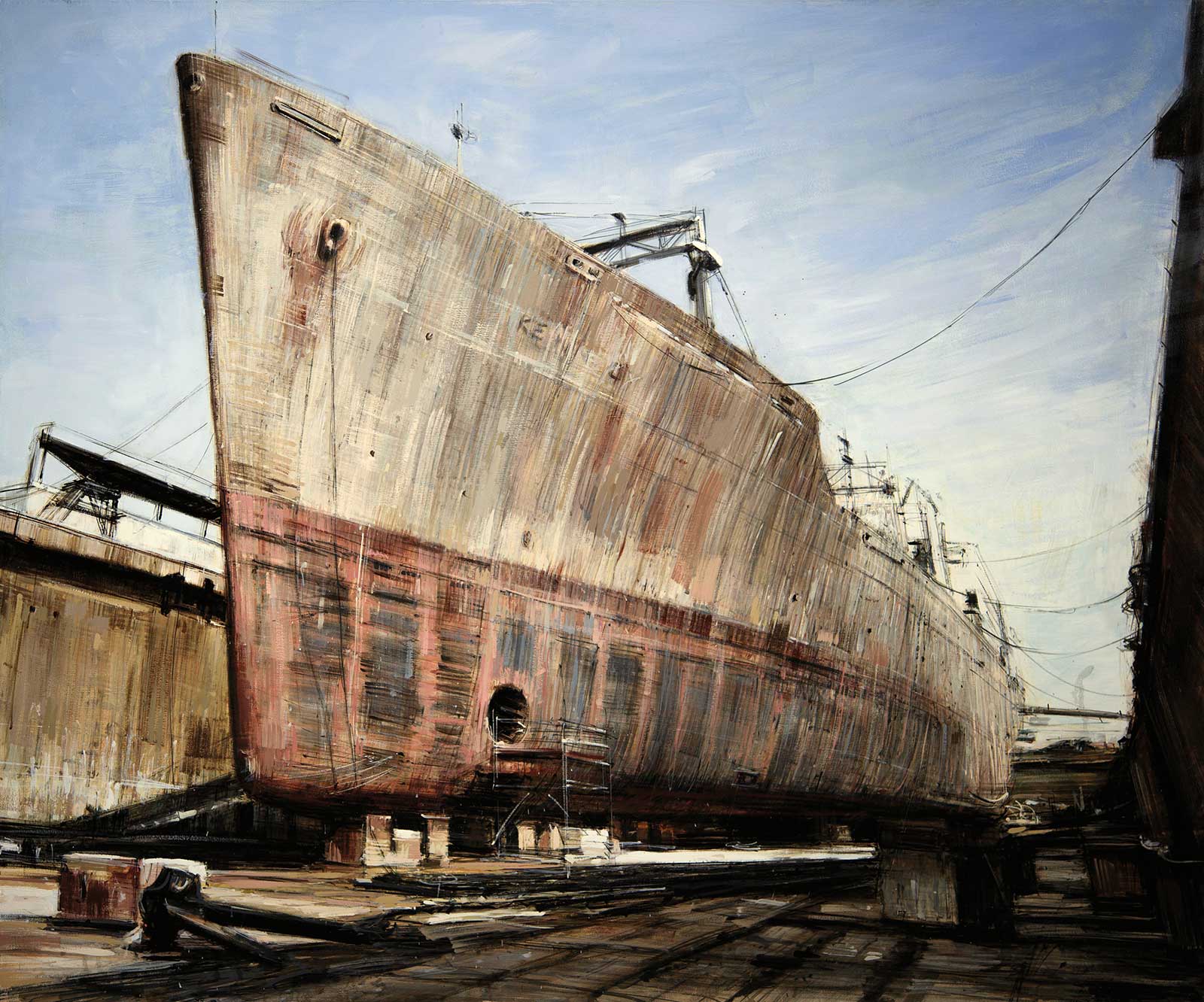
Valerio D’Ospina, Ship in Dry Dock, oil on linen, 48 x 40 in.
Stanek’s time in the studio had even more surprising revelations in store, groundbreaking works that will also be unveiled in Allegory. While working on The Self, she would toss the unused chunks of cement in the corner, where they began to form a pile. She noticed the clumps were falling inside a portion of a bowl and were taking on its curved shape in its not yet hardened form. Between waiting for elements of her figurative works to dry, she started playing with the discarded material. “I started thinking about rocks, and the life cycle of rocks, and how they are what gives concrete its strength. It was very relatable to all of these changes I’m going through,” she shares.
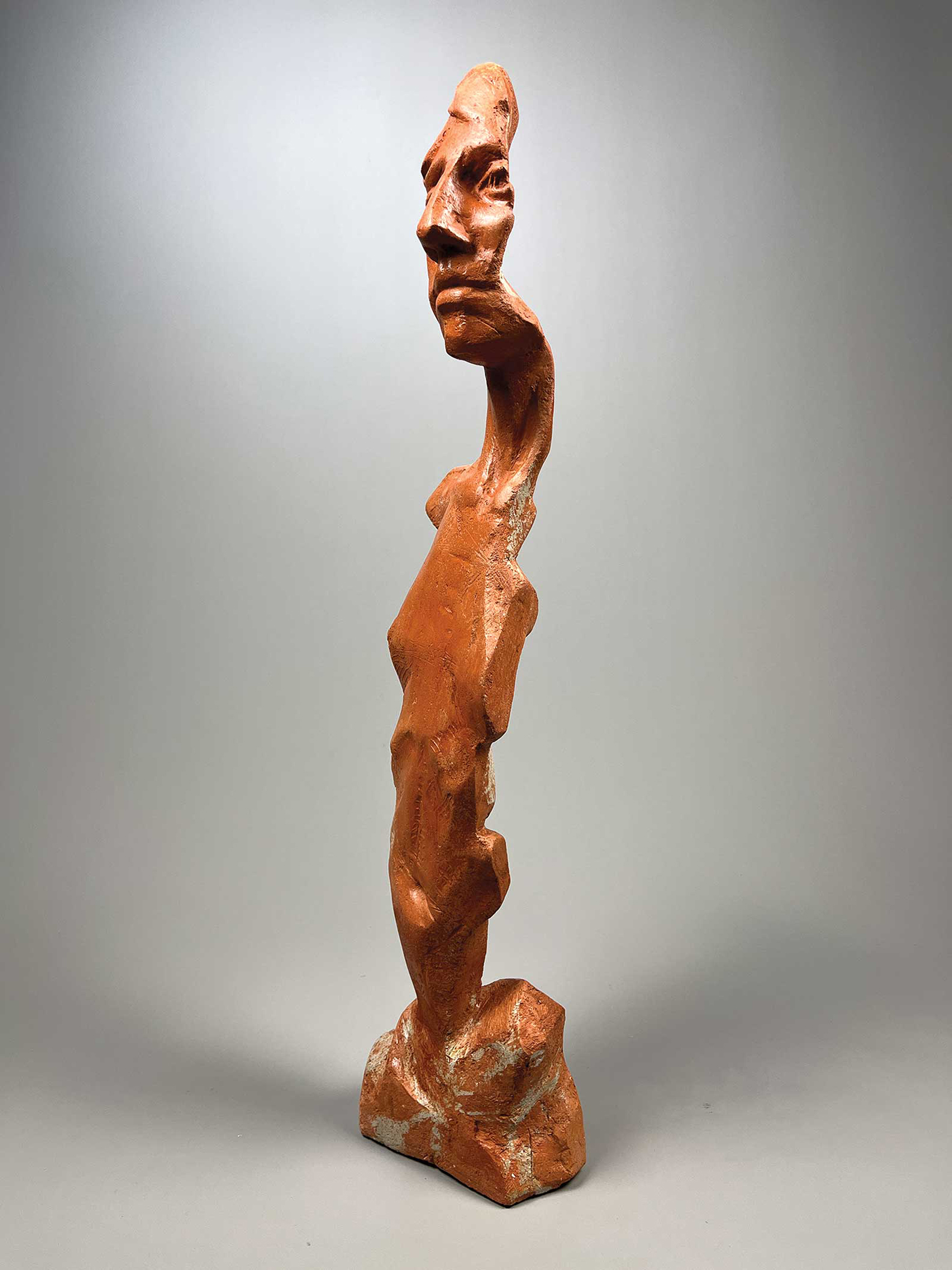
Katherine Stanek, Persona Dissolution, 2026, concrete with integral pigment and marble aggregate, 22 x 7 x 4 in.
“When I flipped it over, I had this epiphany—I just needed to change my perspective. It was literally made upside down, creating a darkness within. Once inverted, it appeared unstable yet balanced and open, bringing light to the shadows, and ready to receive.”
The piece, titled Inversion, is part of a larger grouping called Integration. With two other subseries, Individuation and Personal Dissolution, they form the complete body of work, Vessel, a continuation of the exploration forged in the crucible of The Self.
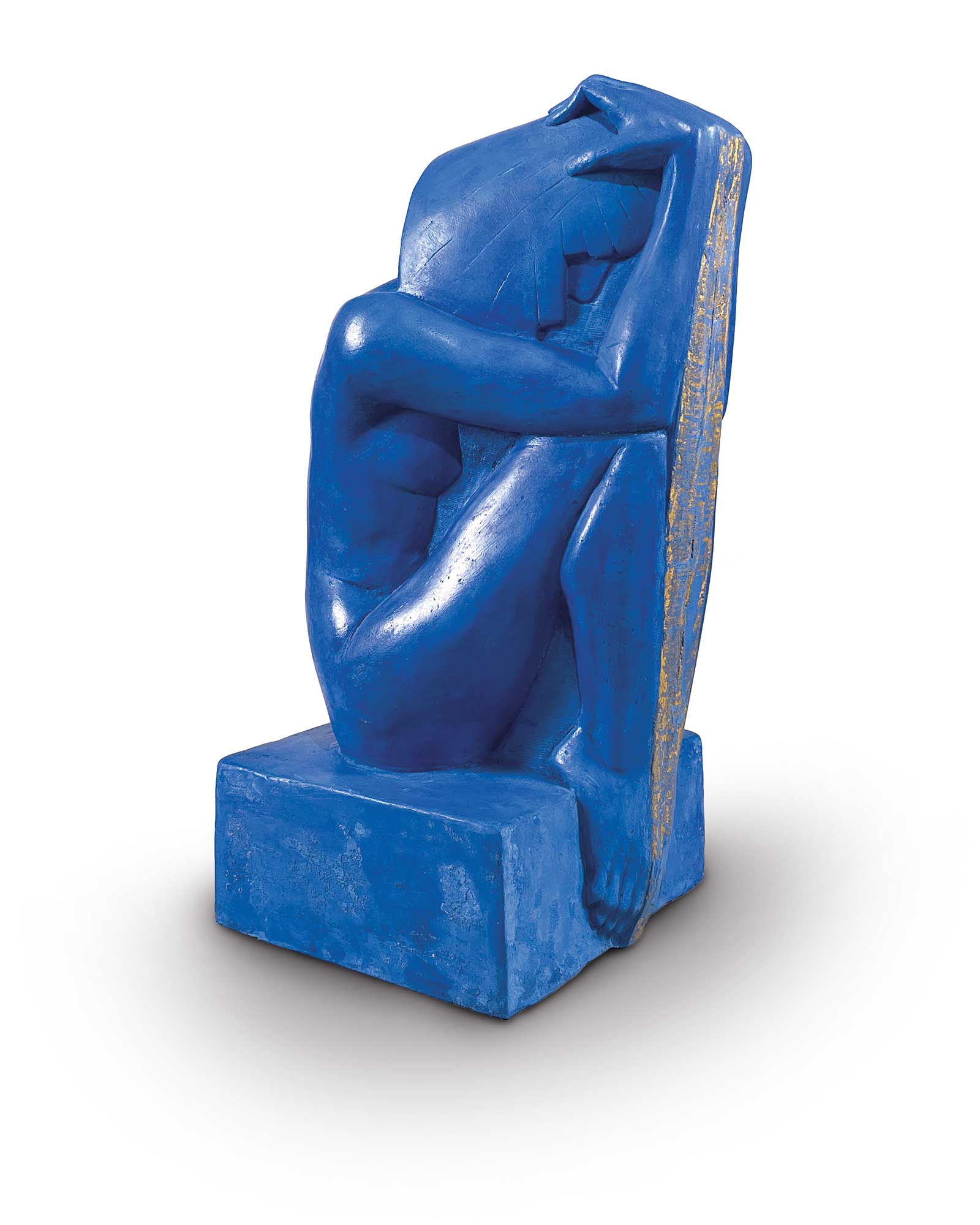
Katherine Stanek, Woman, 2025, concrete, 27 x 12 x 14 in.
Showing these abstract forms, a complete departure from anything she has created before, is a big leap of faith for Stanek. But once she grew confident that these pieces are a direct extension of the concepts she has been exploring in her representational work, and an expression of her quest for authenticity, she decided to hold her breath and jump. “I just made the decision that if I’m going to ask these questions, I’ve got to get out of my own way. I can’t be afraid of the judgement that may happen. I just have to follow my instincts.”
The abstract vessels are beautiful and, perhaps because they were born out of the figurative, there is something very human about them. After all, we are vessels, for our blood and bones, experiences and memories, scars and new growth. We are fragile, but can be put back together when broken, and be stronger than ever. We can add or eliminate elements to achieve balance. Perfectly imperfect, we can be missing pieces, and still be known.
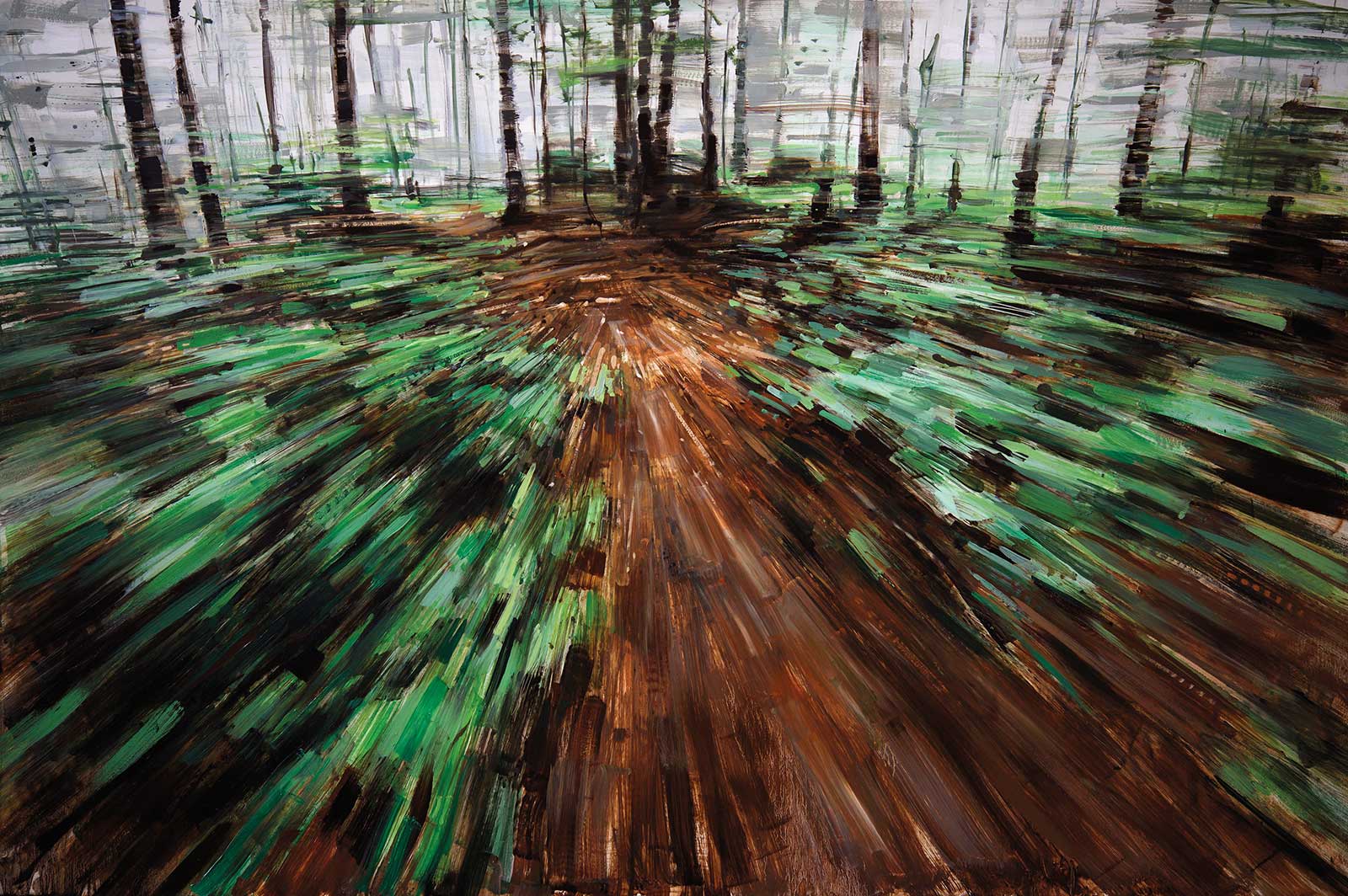
Valerio D’Ospina, MB Trail, oil on panel, 48 x 32 in.
“In all of my work,” says Stanek, “what you see is a fragment of a whole, but the mind will still recognize it despite the absence of function and truth.” —
Allegory: Valerio D’Ospina & Katherine Stanek
Through May 9, 2026
Stanek Gallery Miami
8375 NE 2nd Avenue, Miami, FL 33138
(305) 713-9454, www.stanekgallery.com
Powered by Froala Editor