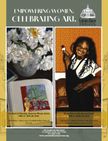
Through April 26, American Women Artists, a nonprofit dedicated to supporting women in the visual arts, and the Customs House Museum & Cultural Center in Clarksville, Tennessee, are co-presenting a juried exhibition of 105 works by an equal number of the country’s most accomplished women painters and sculptors.
Of Mark and Meaning: American Women Artists will feature works by acclaimed painters and instructors Sherrie McGraw and Lori Putnam, landscape artist Paula B. Holtzclaw, renowned sculptors Diana Reuter-Twining and Star Liana York, as well as many other top American Women Artists members. Artists will compete for over $30,000 in awards, including a $10,000 Grand Prize. Most of the works are available for sale in person and on the American Women Artists website.
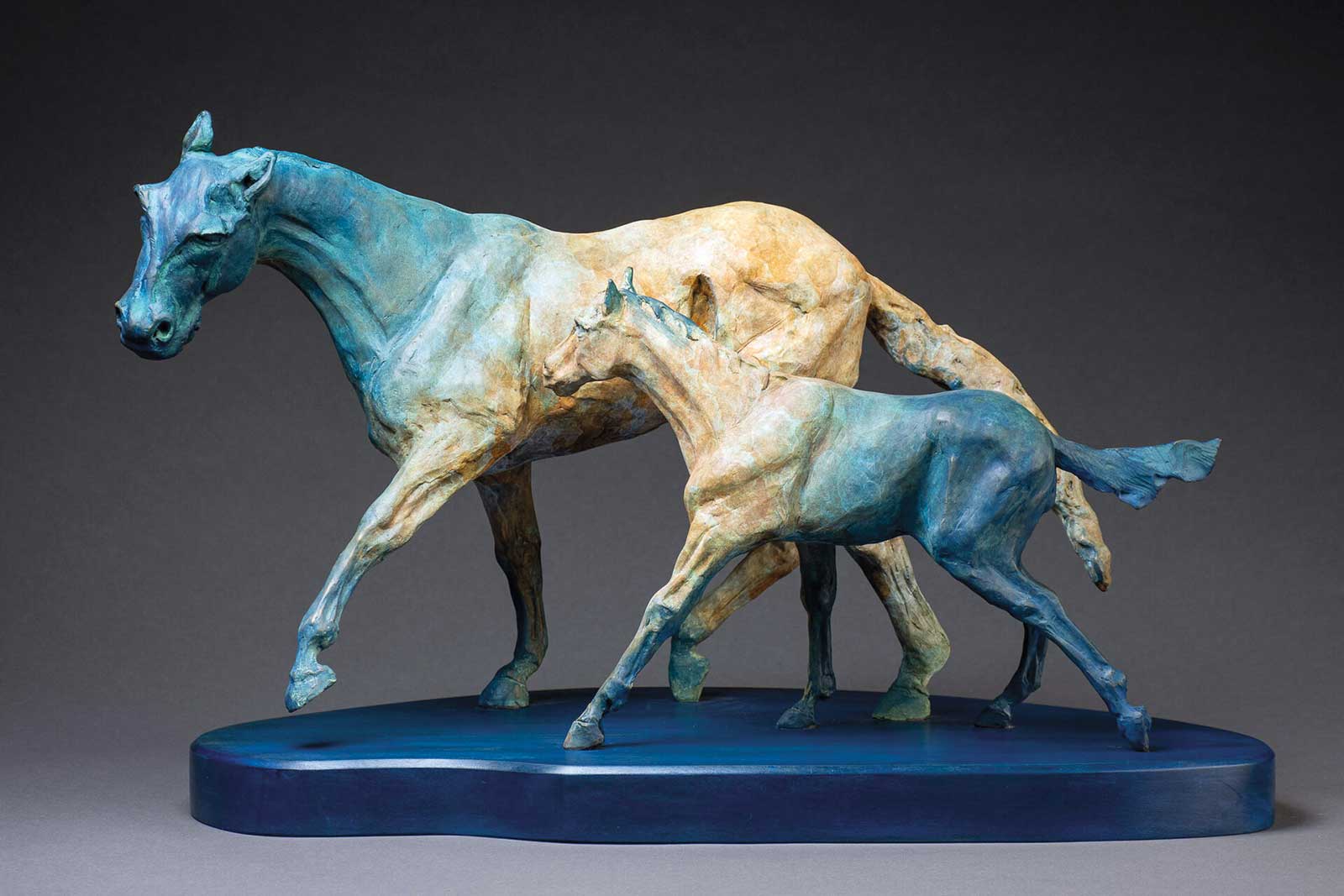
Diana Reuter-Twining, Duet, bronze, 16 x 25 x 11 in.
“American Women Artists partners with one to two museums per year to showcase the best professional women artists in America,” explains AWA executive director Andrea Bailey. “It is such a pleasure to be working with the Customs House Museum whose dedication to celebrating the work of women artists is well known. We hope that visitors see the quality and diversity of artwork by women. We also hope that they take a moment to think about how often they don’t see women’s art on the walls of museums. The history of art does not include a lot of stories of women artists because of women’s limited access throughout history to opportunities commonplace to their male counterparts. We want visitors to become ambassadors and collectors of women’s art.”
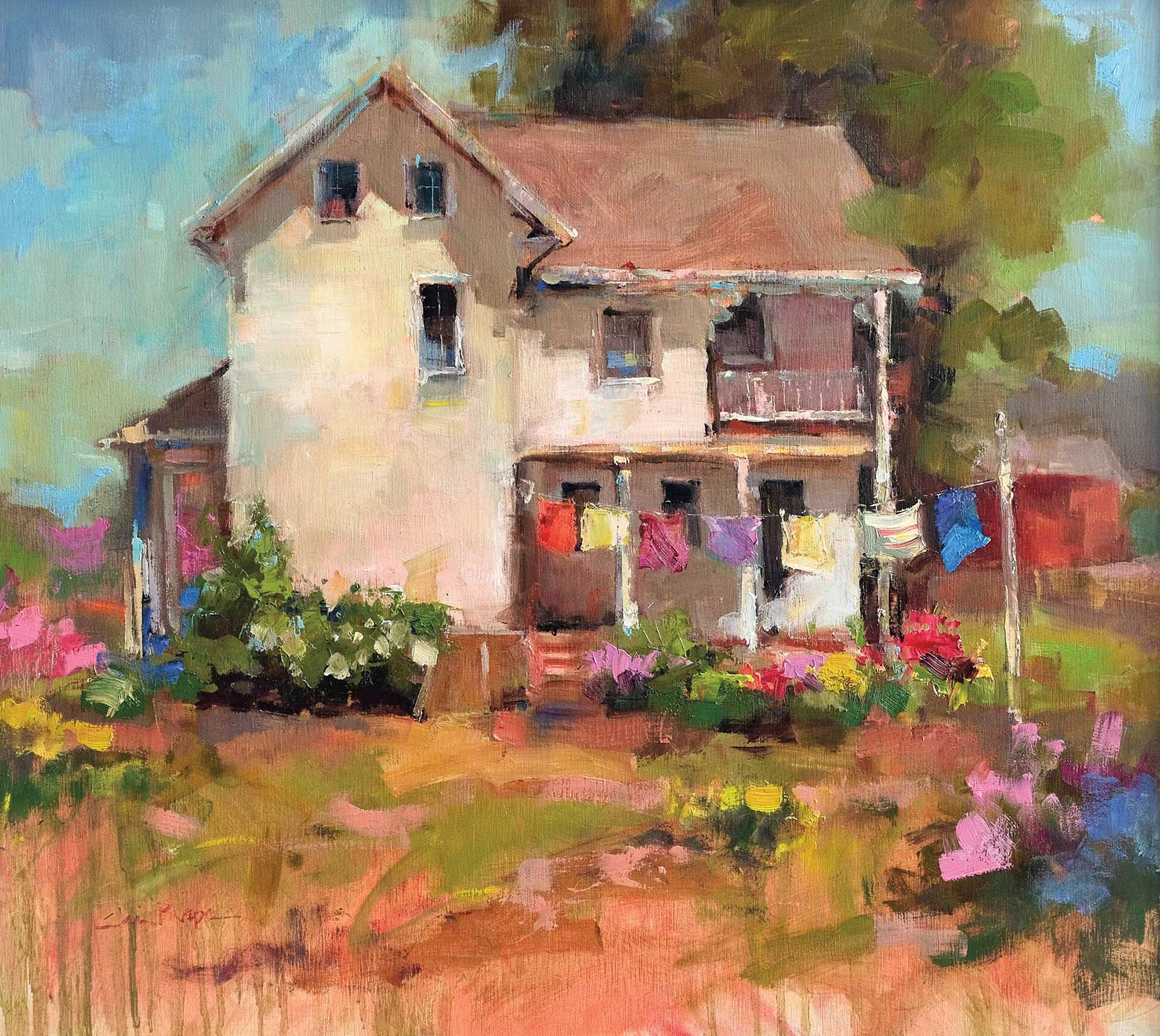
Christine Rapa, No Place Like Home, oil, 20 x 22 in.
The exhibition is organized around the theme of leaving one’s mark—in the literal sense of art making and metaphorically in terms of the legacy we leave behind, creatively and as human beings.
“The human drive to document how we see the world has been evident through mark-making, such as petroglyphs, since the beginning of humankind,” says Bailey. “These marks have evolved through technology as well as social and philosophical changes over time. We perceive the world and our place in it through our senses, and our sight is integral to that experience. Art allows us to simultaneously look inward and outward to better understand our world.”
For figurative sculptor Andrea Mia, “clay records pressure, hesitation, rigor or tenderness. Those marks become a kind of visual memory, evidence of human presence working in relationship with material lead by emotion,” she says. “Mark-making…carries intention and emotion beyond words that can help someone else name something they couldn’t quite articulate. I’ve watched viewers respond emotionally to my sculptures, pausing, softening, often sharing personal stories, and those moments remind me that art’s impact doesn’t have to be loud to be lasting.”
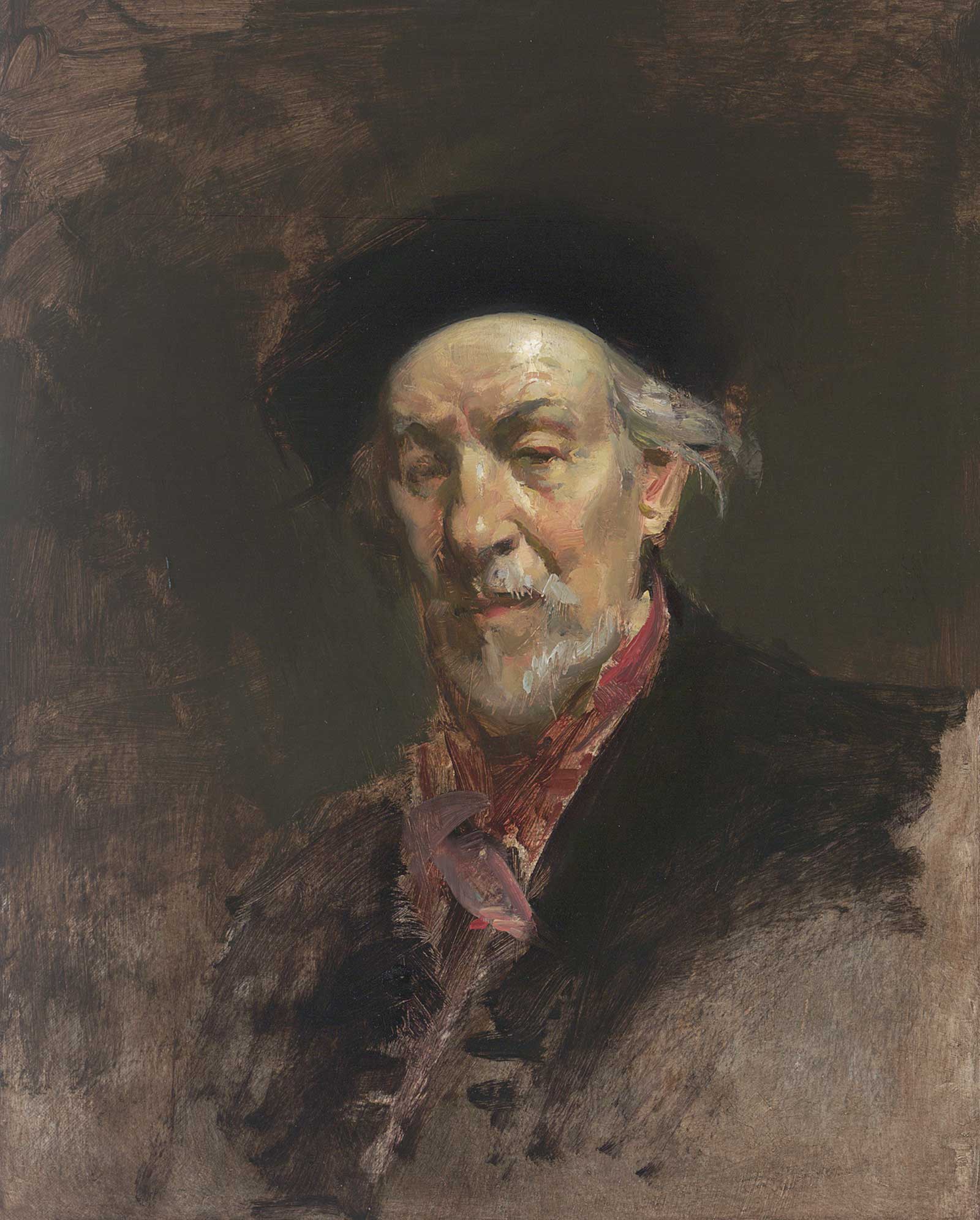
Sherrie McGraw, Master, oil, 26½ x 22½ in.
Mia’s bronze Brave, depicting a young girl wearing a crown of branches, leaves and baby owls, embodies the “mark” the artist would like to leave behind. “The piece is a sculptural portrait of courage expressed through innocence, not a hardened kind of bravery, but a luminous, steady one,” explains Mia. “The owls are siblings who remain together, watching over one another. They represent protection through kinship, and the safety and strength that comes from shared vigilance rather than isolation. Brave reflects values passed down to me by my mother and what I’ve learned by being a mother myself: that gentleness can be powerful and that imagination is worth protecting. The sculpture honors the idea that bravery can be tender, watchful and deeply connected, especially when we are not alone.”
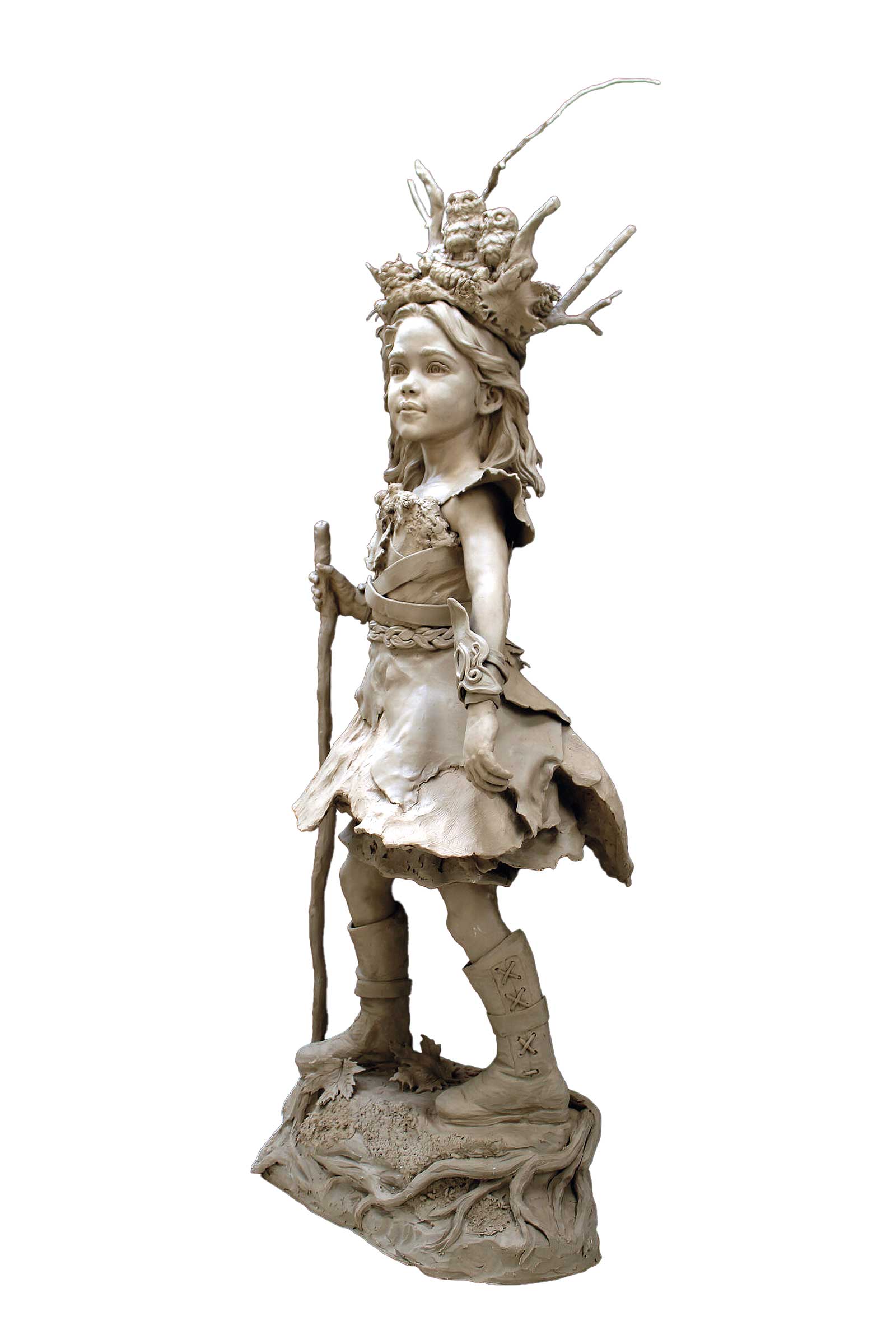
Angela Mia, Brave, bronze, 30 x 11 x 9 in.
A member of American Women Artists for 20 years, Holtzclaw will be showing the landscape Morning’s Embrace, an invitation for viewers to pause and appreciate a quiet moment along a coastal marsh. “In leaving our mark on the world, our role as artists is important because our ‘marks’ stay with us through generations,” says Holtzclaw. “An artist has the opportunity to create, document and impart the beauty, and perhaps the not so beautiful, of our world around us. Art, in all of its forms, has the ability to unite, to evoke emotions strong enough to bring tears, to educate, inspire and to heal. Through my art, I intend to celebrate our threatened natural areas, depicting its yet unspoiled beauty.”
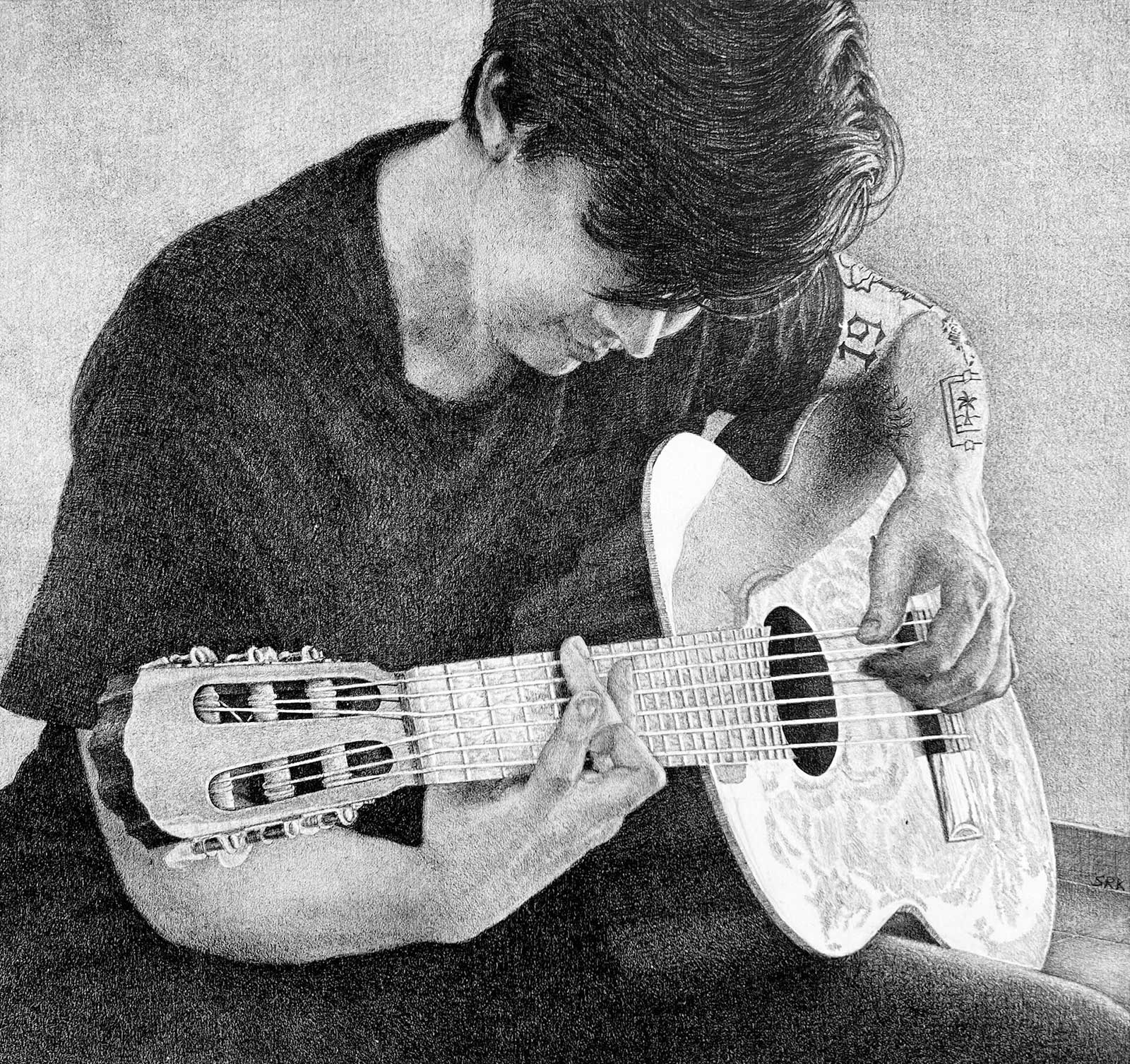
Sheryl Kolitsopoulos, Music is Life, Life is Music, aluminum plate lithograph, 19¼ x 19¾ in.
As a woman who has spent a lifetime in the visual arts, Elizabeth Pollie has seen some tangible evidence of women receiving more valid recognition and solid appreciation. “Yet, woman gaining equal footing to men on broader levels such as public and institutional perception still has far to go,” says Pollie. “Organizations like the American Women Artists exist to build and cultivate both awareness and exposure for the women who spend their lives dedicated to this profession.”
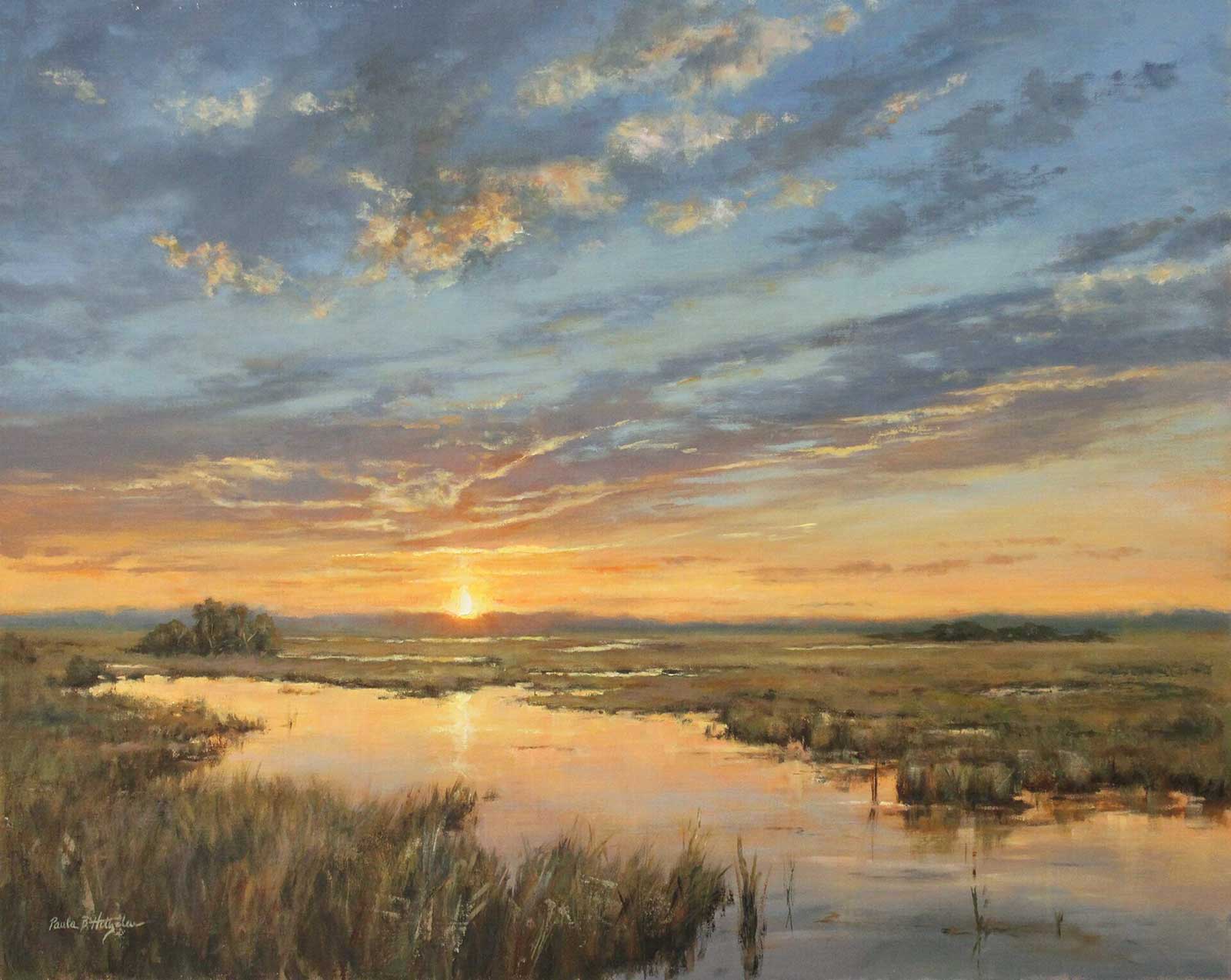
Paula B. Holtzclaw, Mornings Embrace, oil, 24 x 30 in.
When creating her own work, Pollie is drawn to heavily cropped forms while relying on mark-making and brushwork to orchestrate a sense of movement. “These small pieces of color (dots, dashes, lines) that move in and out of the pictorial field are used to create both a sense of depth and movement,” she explains. This can be seen throughout her juried painting, The Swimmer.
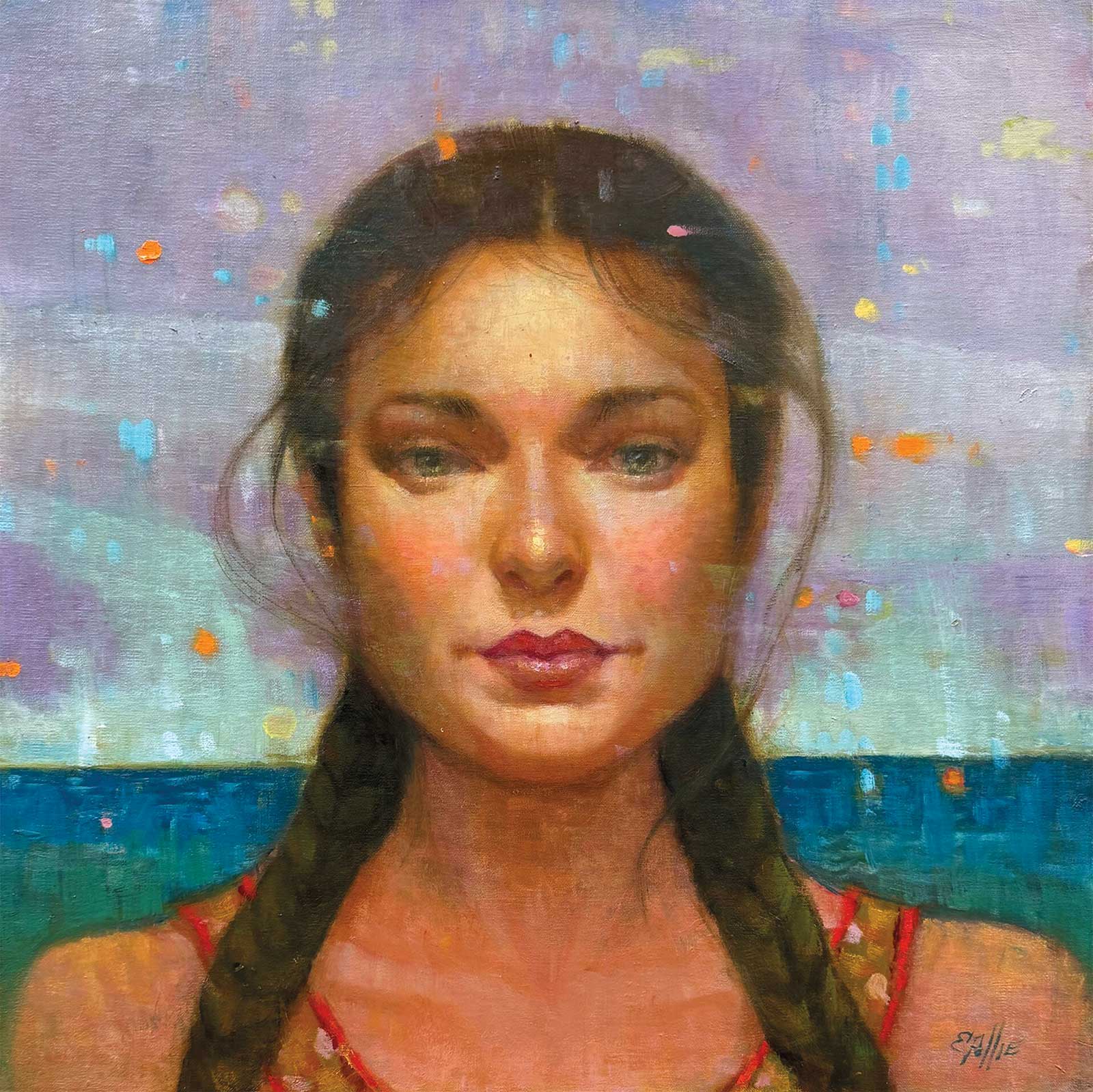
Elizabeth Pollie, The Swimmer, oil, 18 x 18 in.
For all of the artists featured in Of Mark and Meaning, showing their work alongside a such a strong collective of their female contemporaries is an empowering experience. Angela Mia articulates these shared sentiments eloquently. “There is something so powerful about women’s voices being centered collectively,” she says. “Being part of an all-women exhibition feels like an acknowledgement of both individual journeys and our shared resilience. I am profoundly honored to stand alongside women artists who inspire me with their talent, their commitment to their work, their bravery to remain creatively curious, and their willingness to share their perspectives honestly and vulnerably. This kind of collective has an undeniable impact that encourages risk-taking, self-belief, advocacy for one another, and, above all, a deeper connection to the world through art.”
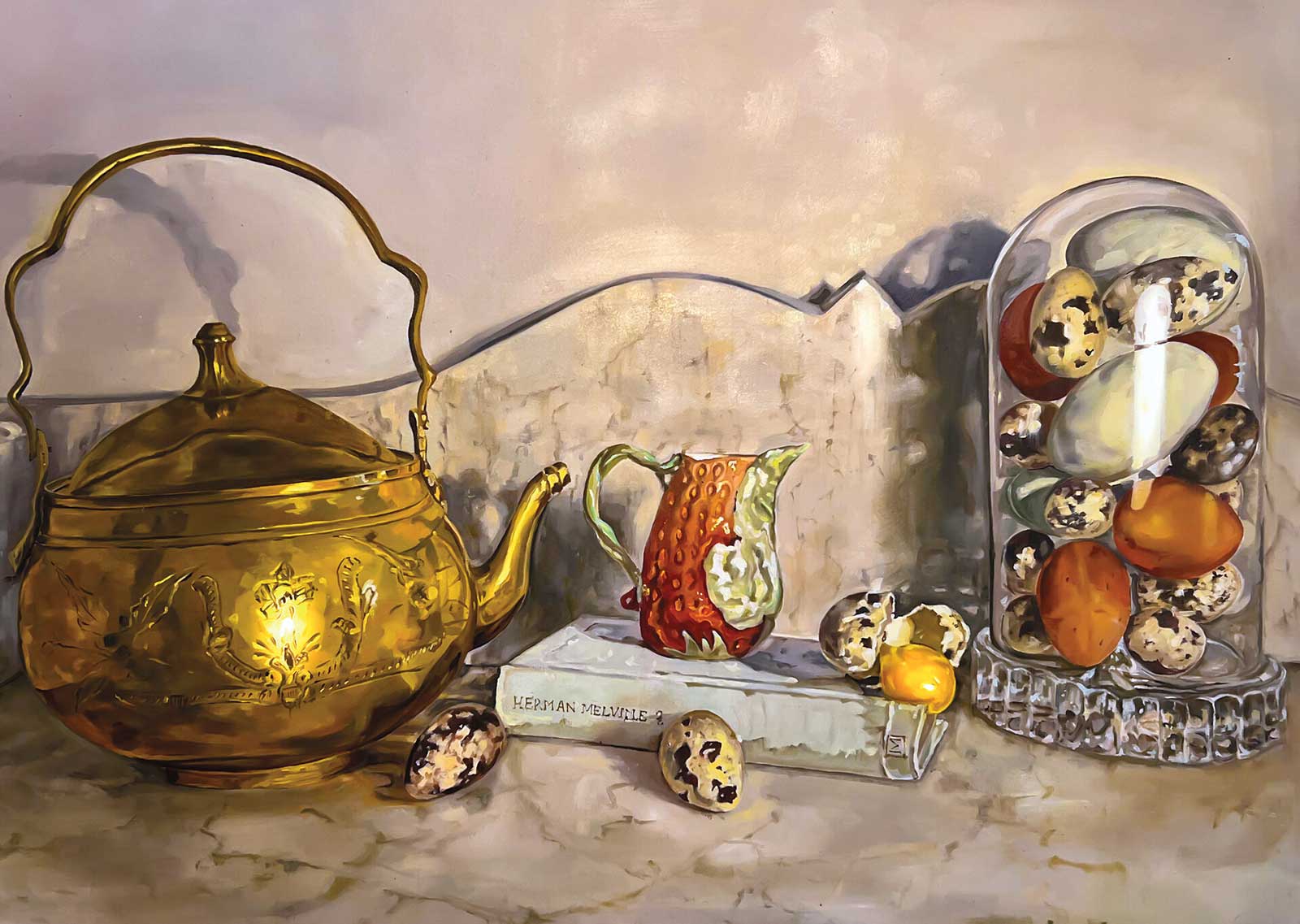
Taylor H. Wiedemann, Loomings, oil, 22 x 28 in.
Organizations like American Women Artists and Women Artists of the West, and awards like the Bennett Prize are placing women artists in the spotlight but, while strides have been made, Bailey says there is still a long way to go for women artists to achieve equity with their male counterparts on many levels.
“American Women Artists likes to remind our supporters that without the viewpoint of women artists; we are only seeing half the story,” Bailey says. “Women’s viewpoints, as told through their act of making marks, whether on canvas, paper, wood or stone, informs how we see the world and what it means to be human.”
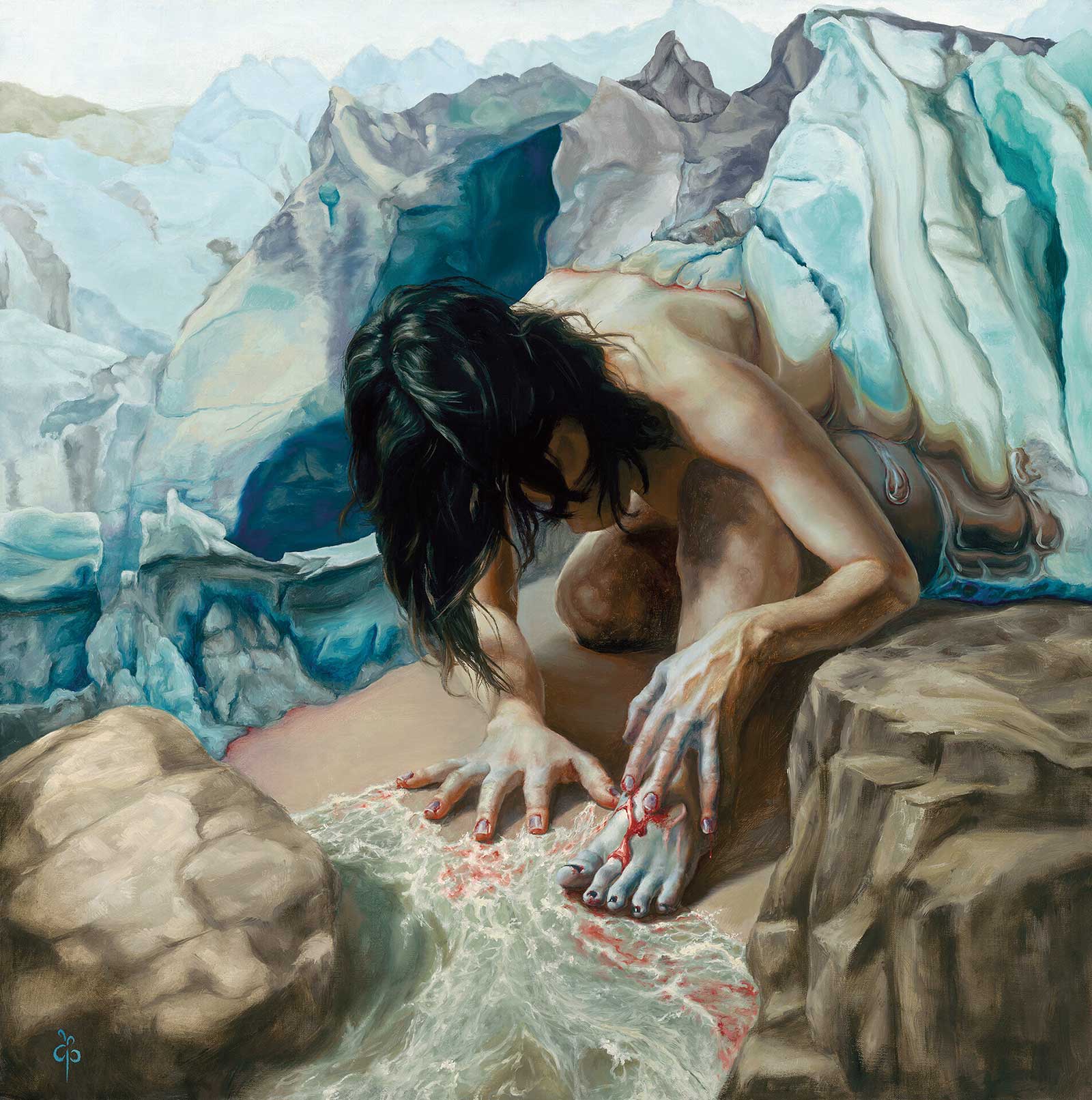
Brooke Bartholomew, Cold Blood, oil, 34 x 34 in.
The exhibition will be open to the public through April 26, coinciding with the annual Symposium of Women in the Arts, on April 25 from 12 to 5:30 p.m. at the Frist Art Museum in Nashville. The symposium, which is also available on the American Women Artists website, includes a keynote address by artist, educator, advocate, consultant and community builder Sharon Louden. The symposium is free and open to the public, but reservations must be made before April 10. —
Of Mark & Meaning: American Women Artists
Through April 26, 2026
Customs House Museum & Cultural Center
200 S. 2nd Street, Clarksville, TN 37040
(931) 648-5780, www.customshousemuseum.org
www.americanwomenartists.org
Powered by Froala Editor