As we continue to look toward the future of American art, it always serves to look to the past. After all, no creator, regardless of the art form, is exempt from the influences of those who came before them—from music, to literature, to fine art. In the world of American art, where men dominated the scene for centuries, it becomes more imperative than ever to reflect on the deep and crucial impressions made by women artists. Their grit, determination and raw creative prowess paved the way for future generations of girls who might look at their own hands (and their own minds) and truly believe they can achieve something great with them.
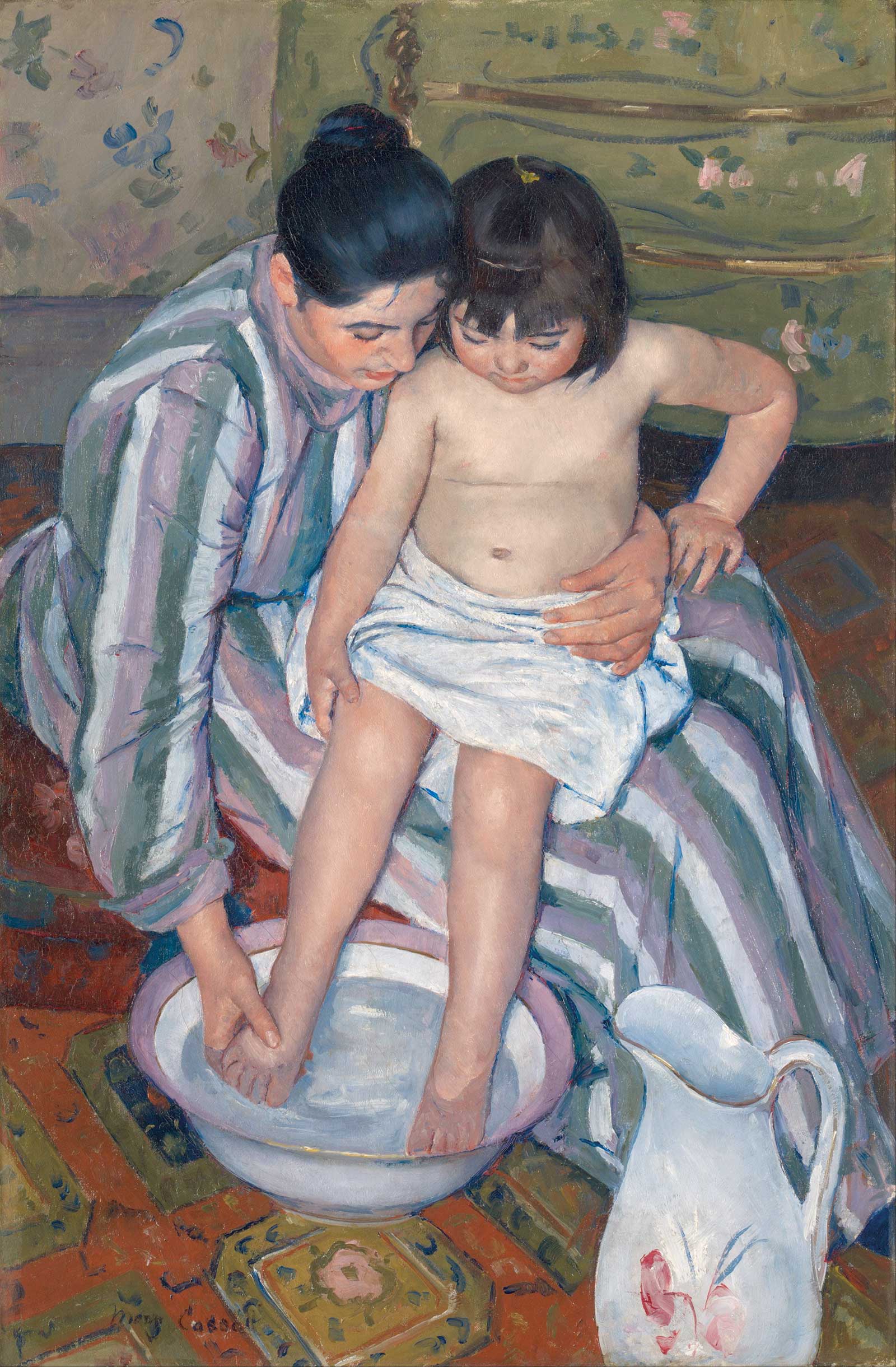 Mary Cassatt (1844-1926), The Child’s Bath, 1893, oil on canvas. Art Institute of Chicago. Public Domain.
 One of the best known historic artists is extraordinary impressionist Mary Cassatt, a native Pennsylvania who spent part of her life traveling across Europe. Despite her family’s misgivings, she began formal study at the Pennsylvania Academy of the Fine Arts in 1861. Nearly seven years later, her painting A Mandolin Player became her first work to be accepted by the Paris Salon, the official art exhibition of the Académie des Beaux-Arts.
“Edgar Degas saw Cassatt’s work at the Salon, and in 1877 he asked her to exhibit with the impressionists. Cassatt’s painting style and subject matter changed greatly because of her association with impressionism. She abandoned colorful costume genre depictions in favor of scenes from contemporary life,” notes the National Museum of Women Artists (NMWA). “Two years later, Cassatt and other artists, including Degas, Félix Braquemond and Camille Pissarro, experimented with graphic techniques in the hopes of creating a new print journal. Although the journal never came to fruition, this work became very important to Cassatt in her development as a printmaker and a painter.”
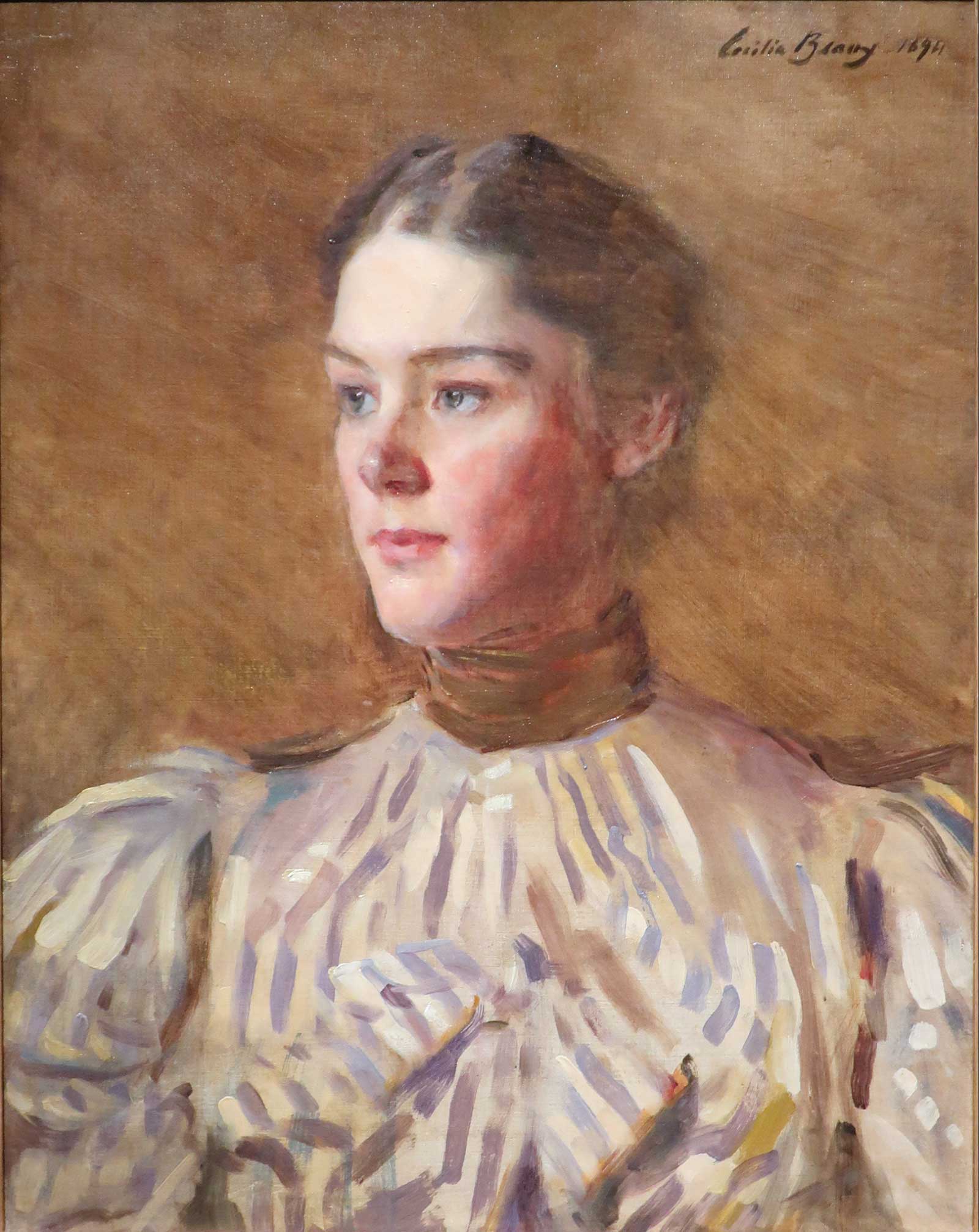
Cecilia Beaux (1855-1942), Self-portrait, 1894, oil on canvas. Public Domain.
Sculptor Augusta Savage was a pivotal player in the intellectual and cultural movement of the Harlem Renaissance, which centered on African-American music, dance, art, fashion, literature, theater, politics and scholarship primarily in Harlem, Manhattan, in the early 20th century. During the 1930s, she was well known in Harlem as a sculptor, art teacher and community art program director, having established the Savage Studio of Arts and Crafts in 1932. Two years later, “she became the first African-American member of the National Association of Women Painters and Sculptors,” according to the Smithsonian American Art Museum. “In 1937 Savage’s career took a pivotal turn. She was appointed the first director of the Harlem Community Art Center and was commissioned by the New York World’s Fair of 1939 to create a sculpture symbolizing the musical contributions of African Americans.”
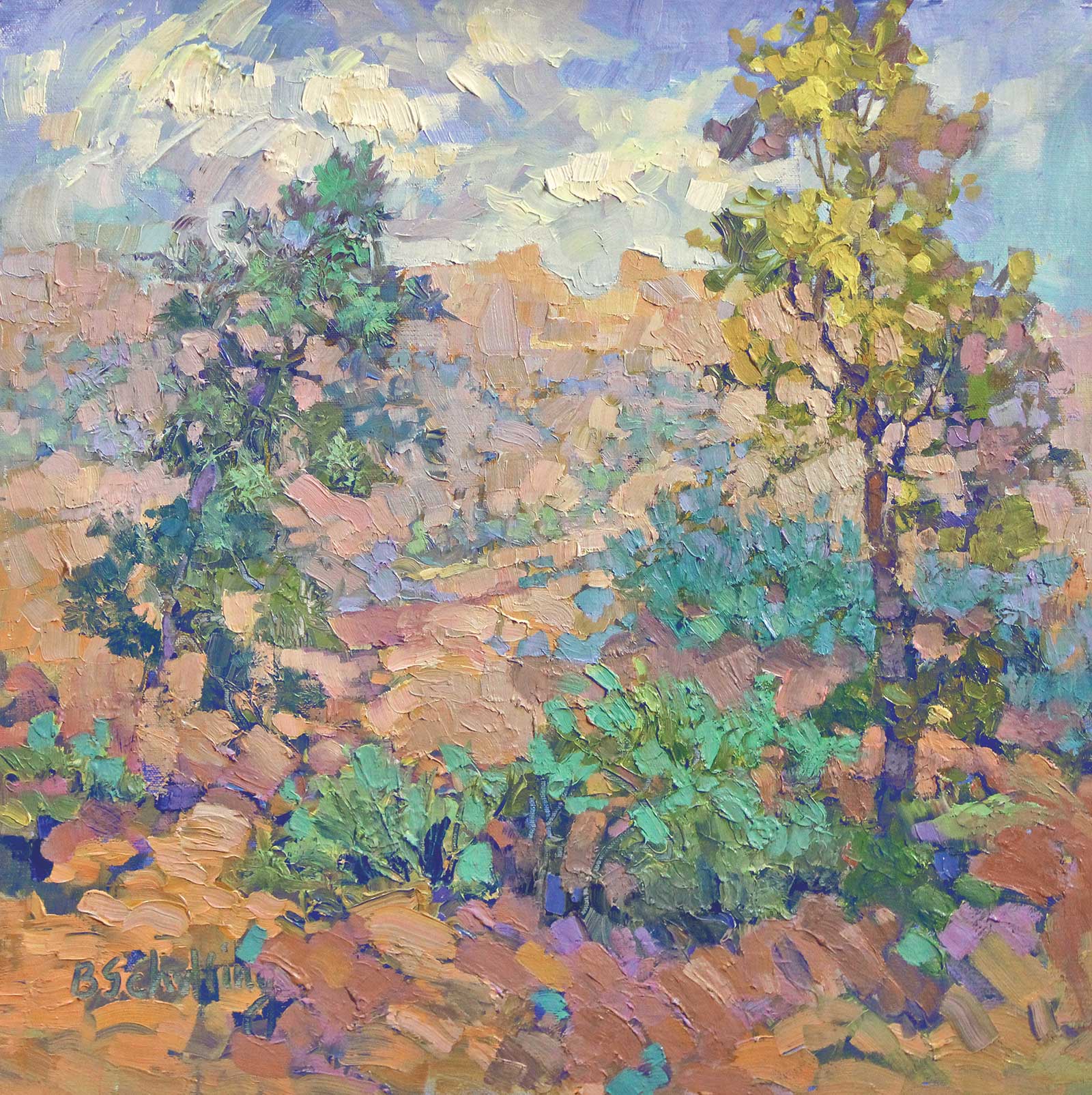
Barbara Schilling, Soft Desert Morning, oil on linen, 14 x 14 in.
By age 18, famous portraitist Cecilia Beaux “was earning a living through commercial art, making lithographs and painting on china while studying in Philadelphia and completed her first medal-winning portrait in 1884. In 1888, Beaux decided to devote herself to portraiture and studied in Europe for 19 months,” according to NMWA. She became known for her elegant portraits of notable Gilded Age figures—including prominent writers, politicians and fellow artists—as well as emotionally evocative portraits of Beaux’s close friends and family.
“For many years, she taught at the Pennsylvania Academy of the Fine Arts. Beaux’s pictures were widely exhibited in the United States, as well as in Paris and London,” notes NMWA. “She moved to New York in 1898 and also built a summer house in Gloucester, Massachusetts, which became a popular stopping point for her distinguished clientele.”
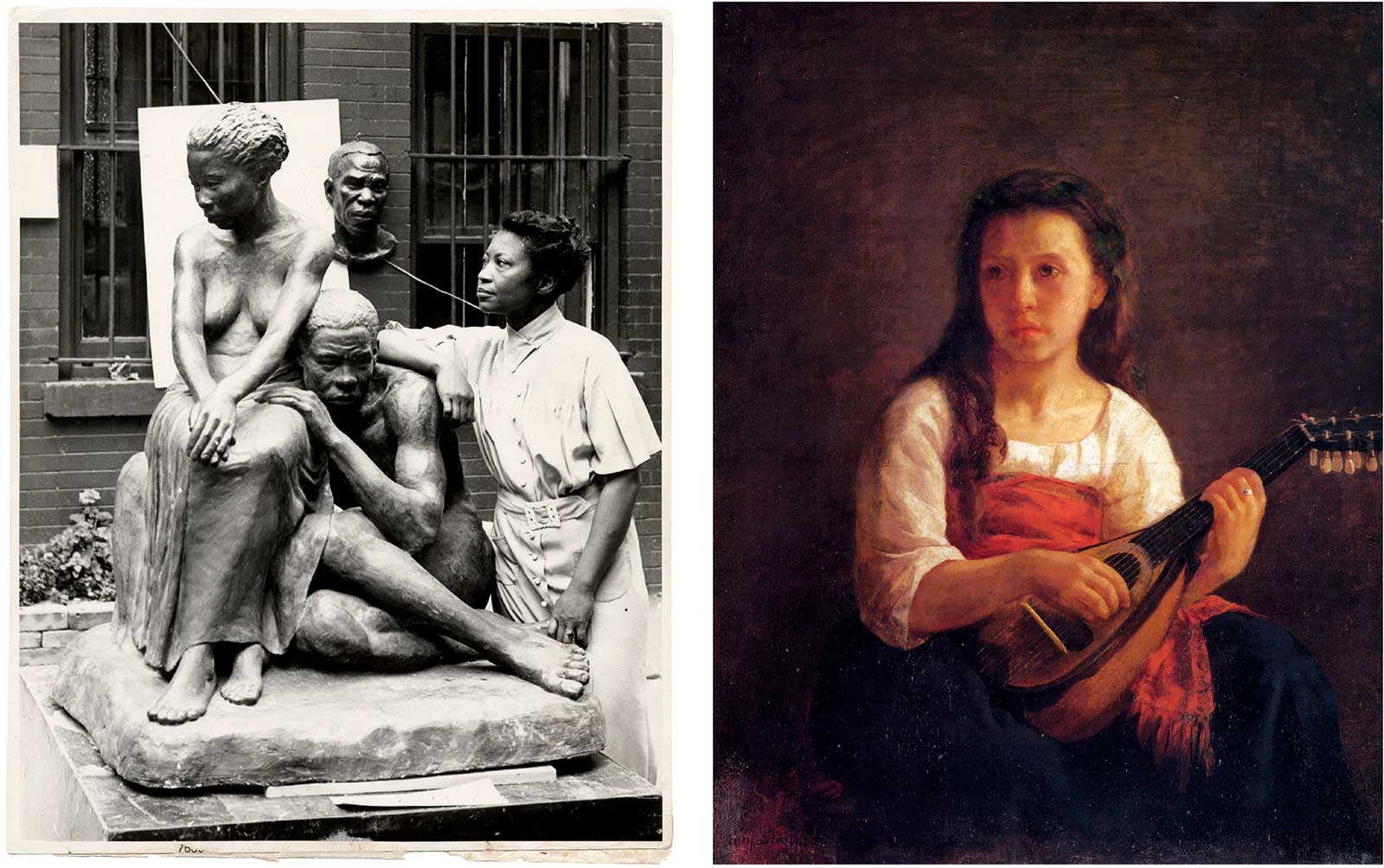
Augusta Savage posing with her sculpture Realization, created as part of the Works Progress Administration’s Federal Art Project. Photo by Andrew Herman, ca. 1938. Archives of American Art. Public Domain; Mary Cassatt (1844-1926), The Mandolin Player, 1868, oil on canvas. Private Collection.
The lives of these artists and dozens of others—many of whom are still waiting for their posthumous place in the sun—continue to inspire modern-day artists. In the following pages, collectors can explore artwork and learn about some of the many talented women artists working today.
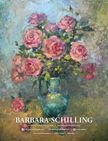
Contemporary impressionist Barbara Schilling’s work grows out of a lifelong attentiveness to the landscape as an emotional and sensory experience, rather than a literal record. “I’m drawn to places where color, light and movement carry feeling: quiet mornings, transitional seasons and terrain shaped as much by memory as by geography,” she says. Schilling paints intuitively, allowing the surface to build through layers of broken color and gesture. “These paintings are not about arriving at a destination but about inhabiting a moment, where stillness, change and resilience coexist. Whether the setting is a desert morning, a forested valley or a flowering path, I’m interested in how landscape can mirror an inner state: calm without stagnation, richness without excess, and openness without certainty. My hope is that viewers find their own pause within the work; a place to breathe, reflect and feel quietly accompanied.”
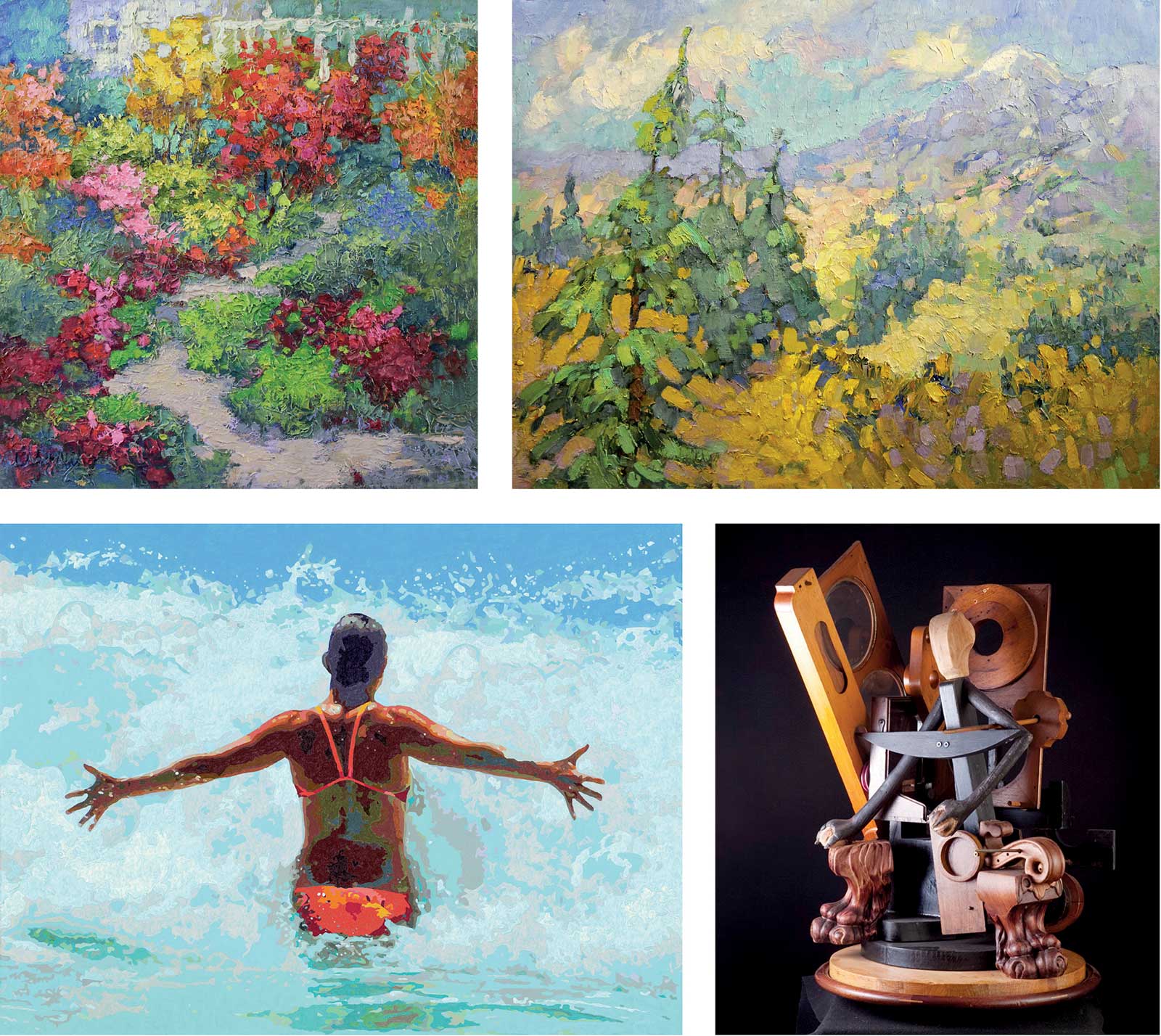
Top: Barbara Schilling, Where the Color Grows, oil on linen, 11 x 11 in.; Barbara Schilling, A Golden Journey, oil on linen, 14 x 19 in. Bottom: Karen Landrigan, Resilience, acrylic on canvas, 36 x 48 in.; Fay Wood, Matriarch, wood, vintage collectables, glass and turntable, 21 x 17 x 17 in.
Karen Landrigan is a figurative artist informed by abstract expressionist influences, creating work that emerges from thought and emotion rather than from strict adherence to form. Each painting begins as an internal response—an instinctive reaction to memory, feeling or moment—before taking shape on the canvas. Through this intuitive process, Landrigan translates inner experience into image, allowing gesture, color and texture to carry meaning as much as figure itself. Over time, she has discovered the quiet but enduring power of her work to move those who encounter it. Viewers often recognize something familiar within the paintings, even when the narrative is unresolved or abstracted. Grounded in the belief that joy and sadness coexist in us all, Landrigan’s work embraces emotional complexity rather than certainty. Her paintings invite reflection, offering space for viewers to project their own histories, emotions and stories, finding resonance not in what is explained but in what is felt.
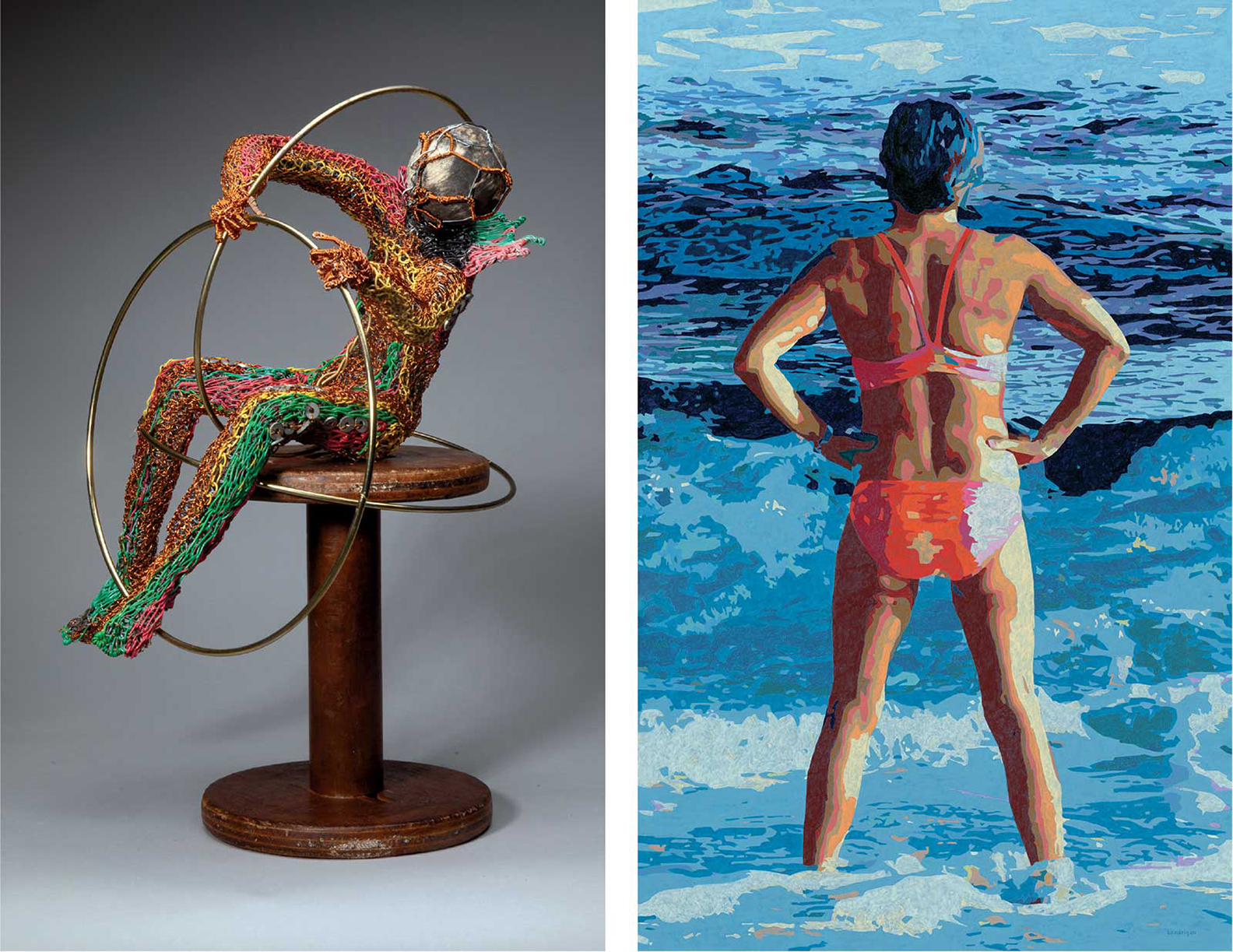
Fay Wood, Three ring Pandemic Circus - Living With These Changes, galvanized and coated copper wire, found object and, brass rings, 18½ x 15½ x 9½ in.; Karen Landrigan, Stand Tall, acrylic on canvas, 48 x 24 in.
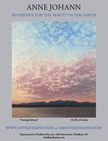
“I was on a painting trip to Monhegan Island in Maine. After several days of strong wind and intermittent rain, we had a quiet evening,” artist Anne Johann says of the inspiration behind her recent painting Quietude. “This change in weather reinforced the peaceful feeling: a soft sunset, wet sand lit by the sun, a gentle breeze, the sound of lapping water, fishing boats moored for the night. I worked on this painting in my studio using several photographs and my memory of the scene. Memory is a powerful tool for the artist. It enhances mood. The word quietude came to me repeatedly as I painted. A sense of calm and peace. My goal is to impart these feelings to the viewer.”
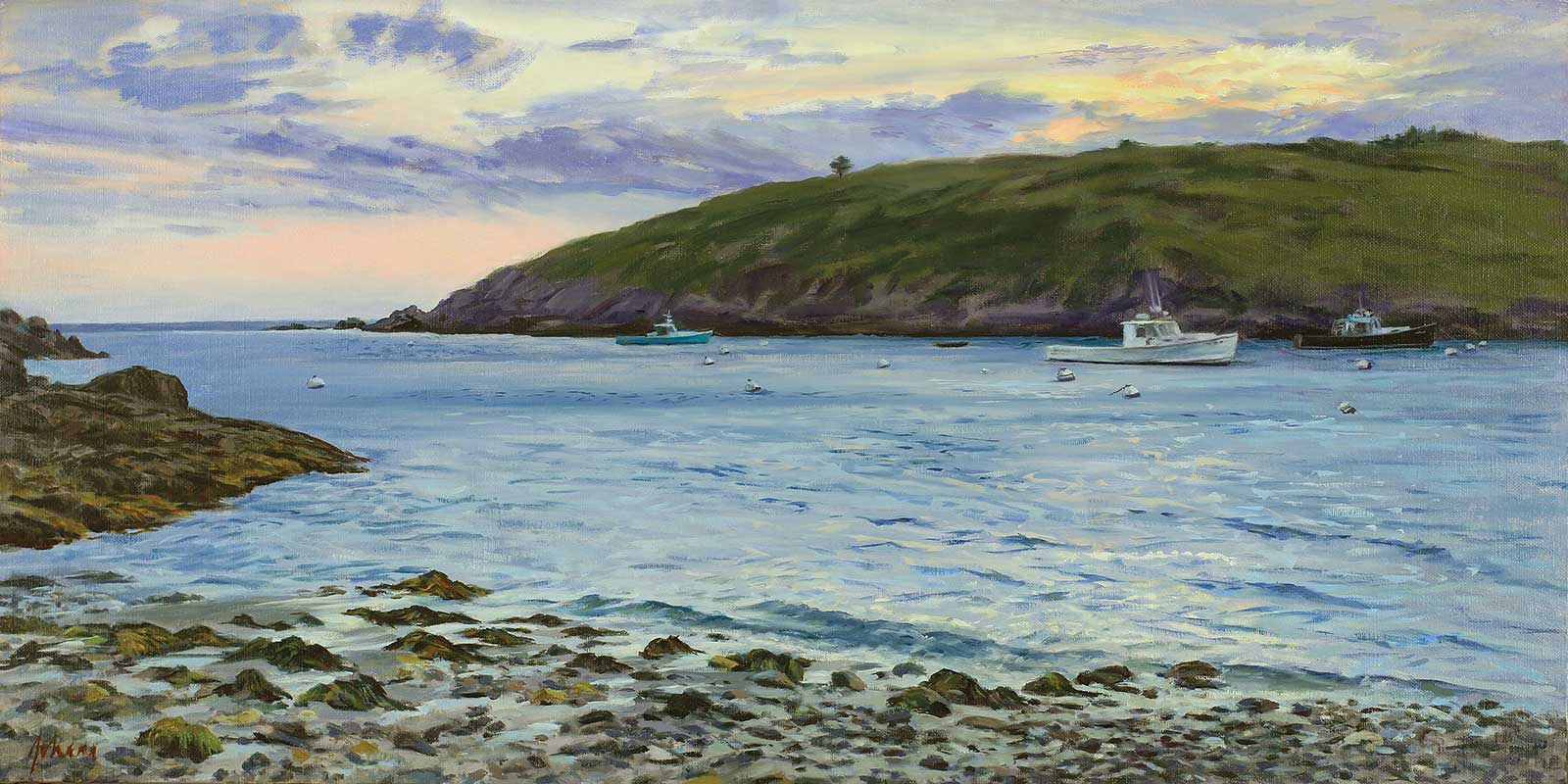
Anne Johann, Quietude, oil, 14 x 28 in.
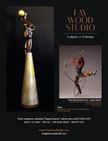
Mixed media artist Fay Wood uses a meticulous, process-oriented approach to create her outside-the-box sculptures. Working by hand with found materials like glues, paper, beeswax and “bees nest paper,” she transforms them into fine art with liveliness and humor. Her extensive resume includes exhibitions in Italy, Germany, England and across the United States. Wood finds collecting art to be one of life’s greatest joys. “Hopefully the collector can see the actual work before buying. However, that may be impossible, so photographs and discussions with the artist of the piece in question can be satisfying,” she says.
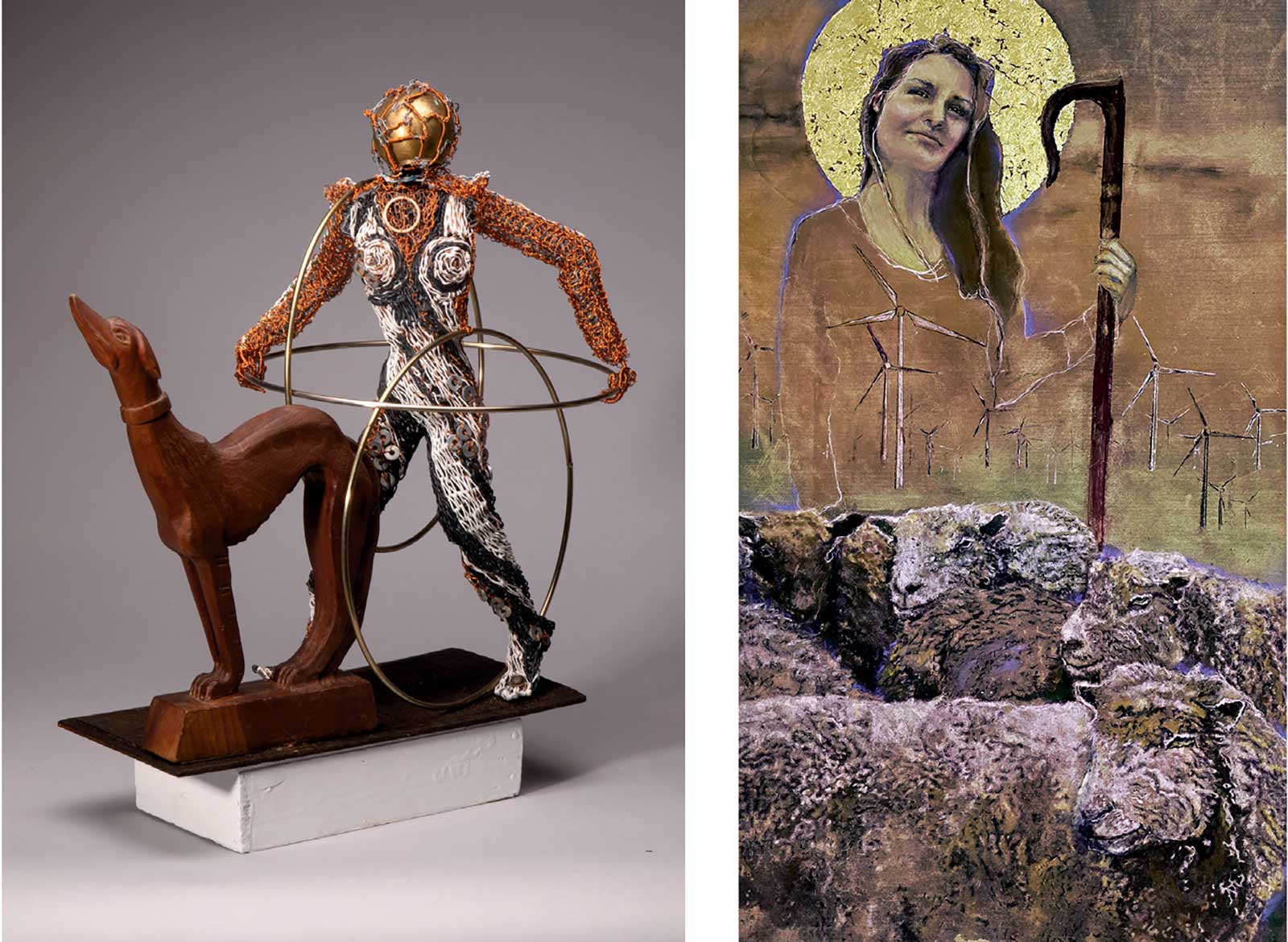
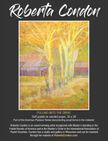
Fay Wood, Walk For Two, galvanized and coated copper wire, found objects and brass rings, 15 x 9½ x 13 in.; Roberta Condon, While Shepherds Watch Their Flock, soft pastel on paper, 36 x 23 in.
“My work is impacted by the rural area where I live and influenced by gender,” says pastelist Roberta Condon. Her recent series focuses on the strong women involved as producers on the local farms where she lives. “The census of 2022 documents that 36 percent of producers in our country are women. Women have a more feminine ethic of care that encompasses responsibility, nurturing, relationality and interdependence. They have close bonds with other women farmers, developing strong networks which focus on interdependence versus the male focus of independence,” she adds. Condon strives to capture the true experiences of her subjects, photographing and painting farm women in their fields, with their animals and with their crops. “I am a storyteller and a documentarian telling the relevant story of these [women].” —
Featured Artists & Galleries
Anne Johann
annejohannart@gmail.com
aj@annejohann.com
www.annejohann.com
Barbara Schilling
bschillingart@gmail.com
www.barbaraschilling.com
IG: barbaraschilling7205
FB: schillingbarb
Fay Wood
(336) 370-6157
info@faywoodstudio.com
www.faywoodstudio.com
Karen Landrigan
www.karenlandrigan.com
IG: karenlandrigan
FB: LandriganArtist
Roberta Condon
www.robertacondon.com
Powered by Froala Editor