Looking back over the past 10 years, around which time he started to pursue becoming a professional painter in earnest, Tad Retz sees his artistic evolution in a series of three major breakthroughs—all related to the teacher he was studying with at the time.
His first mentor was Vermont impressionist painter Mark Boedges who was influenced by the teachings of artist Richard Schmid. It was Retz’s introduction to painting from life. A couple years later, he was invited by John Burton to study with him in Carmel, California. “The big takeaway [from my time with John] was learning to see form three-dimensionally and how to apply it on a two-dimensional surface,” Retz says. “It was a huge breakthrough for me.”
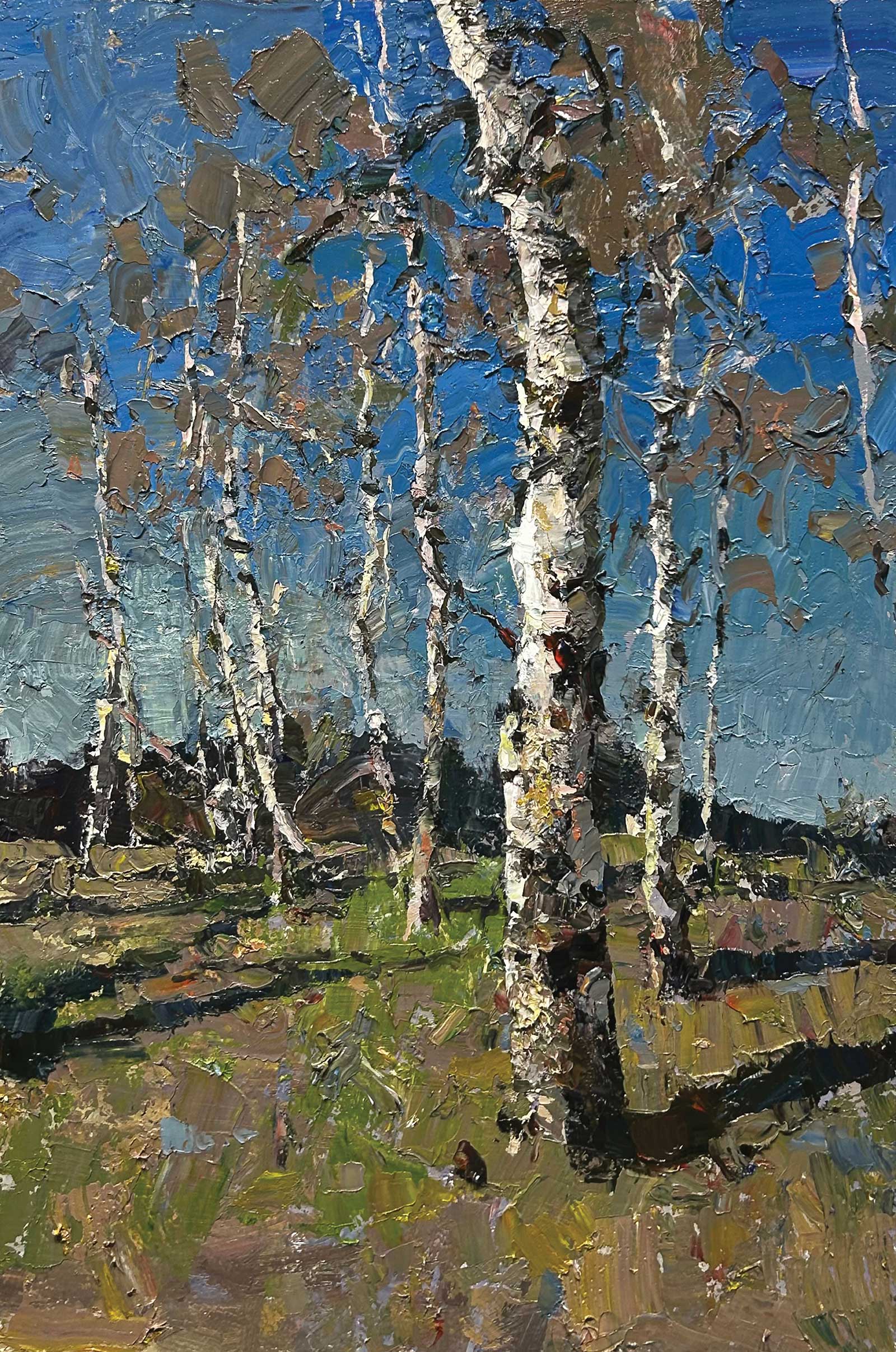
Autumn Birch Trees, oil, 24 x 16 in.
Retz became fascinated with the underpaintings in his work, more aggressive with the paint and more bold with his brushwork. “John had this teaching of his where he’d say, ‘I may not be right, but I am certain.’ I took on that mentality. For me, it means if you are very bold with your decision-making, you might be a little off with color or the edges, but if you’re really certain about it, and if you put it down really boldly, you can get away with it.”
Retz, who is only 29, expresses genuine gratitude for all of his teachers, but his ongoing relationship with celebrated impressionist C.W. Mundy has been especially impactful, and has deepened into more than a teacher-student dynamic. Mundy, who turns 80 this year, calls Retz his adopted grandson.
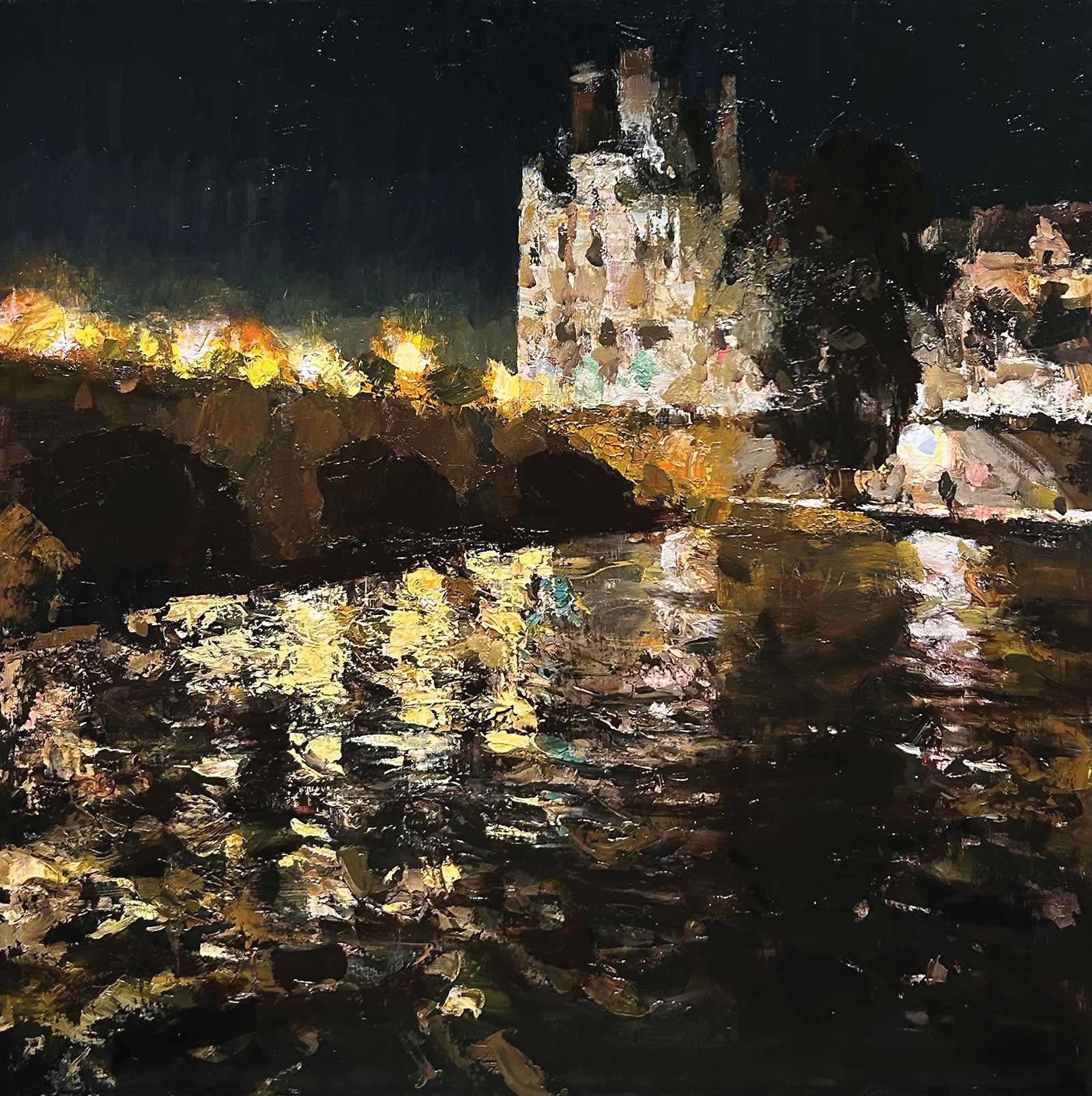
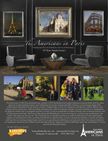
The Louvre at Night, oil, 36 x 36 in.
“It’s been mind-blowing meeting and working with C.W.,” says Retz. “He got me working bigger, using palette knives. I wanted to combine two looks and he helped me bridge that gap. My paintings are loose again, but there’s still form…He’s in Indiana and I’m in New York, so most of our feedback is through Facetime, but we talk nearly every day…It’s a very special friendship.
“All of this started about halfway through my senior year of high school,” Retz says about this series of mentorships. “I was able to study with very specific painters for very specific reasons, some of it worked out on its own through happenstance, but I feel like it was all meant to be. It seems like the artists I learned from saw what I needed and helped me in a very selfless way.”
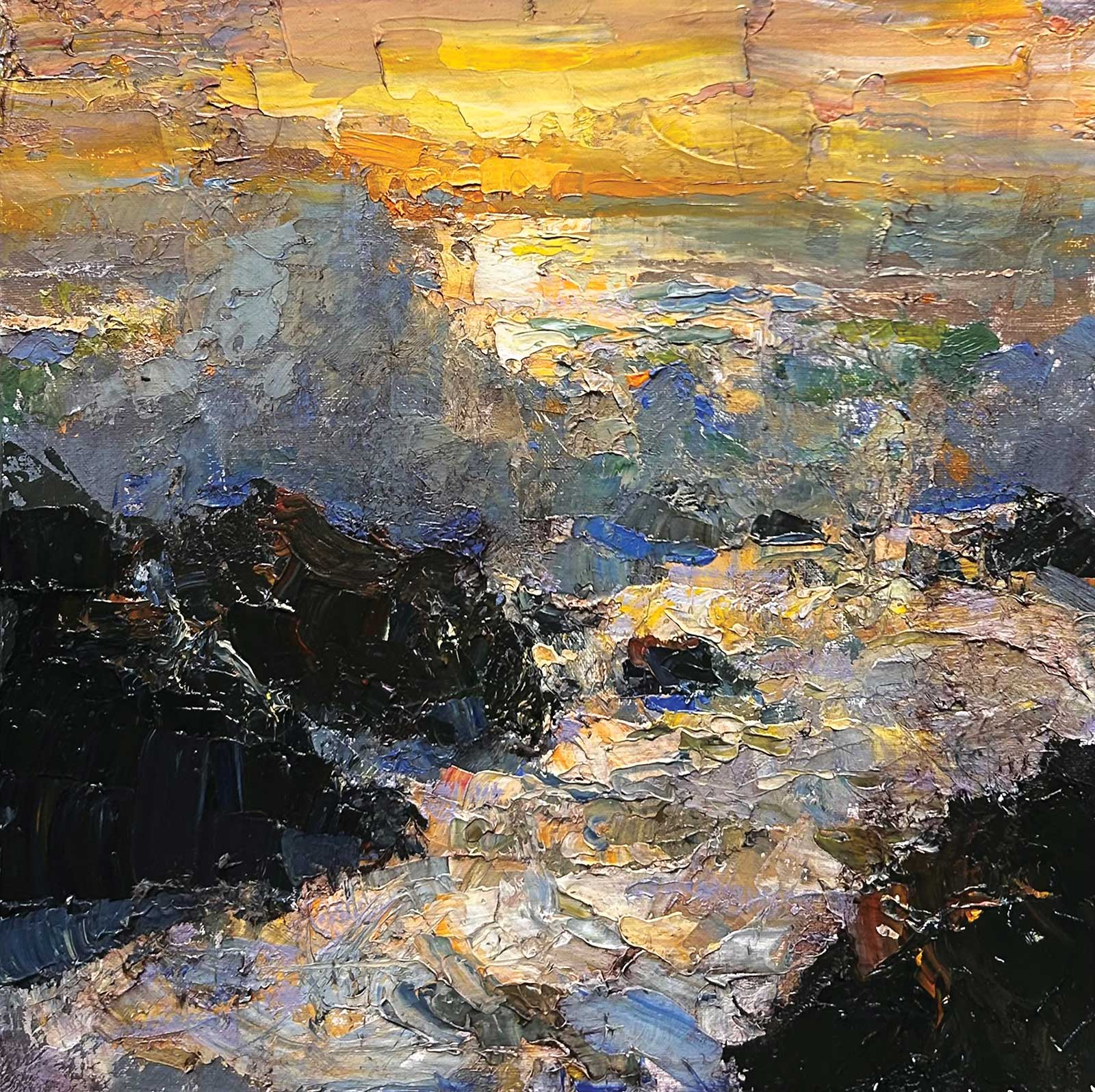
Maine Sunset, oil, 12 x 12 in.
Retz’s latest body work, comprised of seascapes, landscapes, florals and other familiar scenes from his travels and others closer to home, embody the delicate balance Retz endeavors to strike. From a distance, works like Maine Sunset are recognizable as a landscape, but when you get up close, they collapse into thick layers of painterly abstraction.
“Looking at it from 10 feet away, that’s when it will look most real,” says Retz. “As you get closer, you can appreciate the abstraction—the whole painting is just loose nothingness up close, in a sense. It’s nice to know that it will read believable as you’re walking around your house and you don’t have to be right up close to appreciate its realism. I like to find a sense of realism through working abstractly.”
For Retz, walking the line of believability is very personal: “Does that painting from across the room remind me of being in that place? Does it feel like a memory? Does the scene have a sense of the moment?
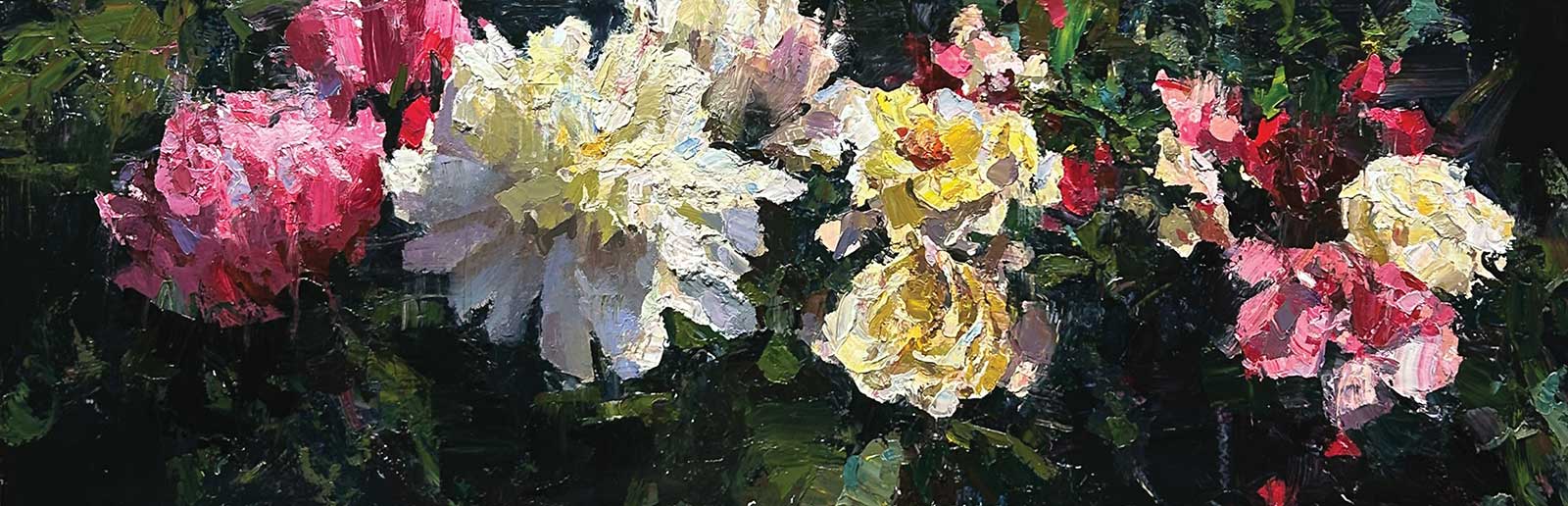
Roses and Peonies, oil, 11 x 33 in.
“If a painting leans too abstract or too caricatured or graphic, or if the colors are too crazy, it starts to lose the believability,” Retz adds. “I like my paintings to be a little more tonal and feel like memories of the locations where they’re painted from.”
Retz’s latest paintings will be featured in Chronicles, an exhibition at Paul Scott Gallery in Scottsdale, Arizona, that opens with an artist reception on December 4 from 7 to 9 p.m. and hangs through December 18. —
Paul Scott Gallery 7103 E. Main Street • Scottsdale, AZ 85251 • (480) 596-9533 • www.paulscottgallery.com
Powered by Froala Editor