Kristin Anchors is an emergency medicine doctor in Santa Fe, New Mexico. Before medical school she studied life sciences and philosophy. The scientific advances that underlie her medical practice have also occasioned a split among body, mind and spirit, their historic unity and crucial interconnectedness.
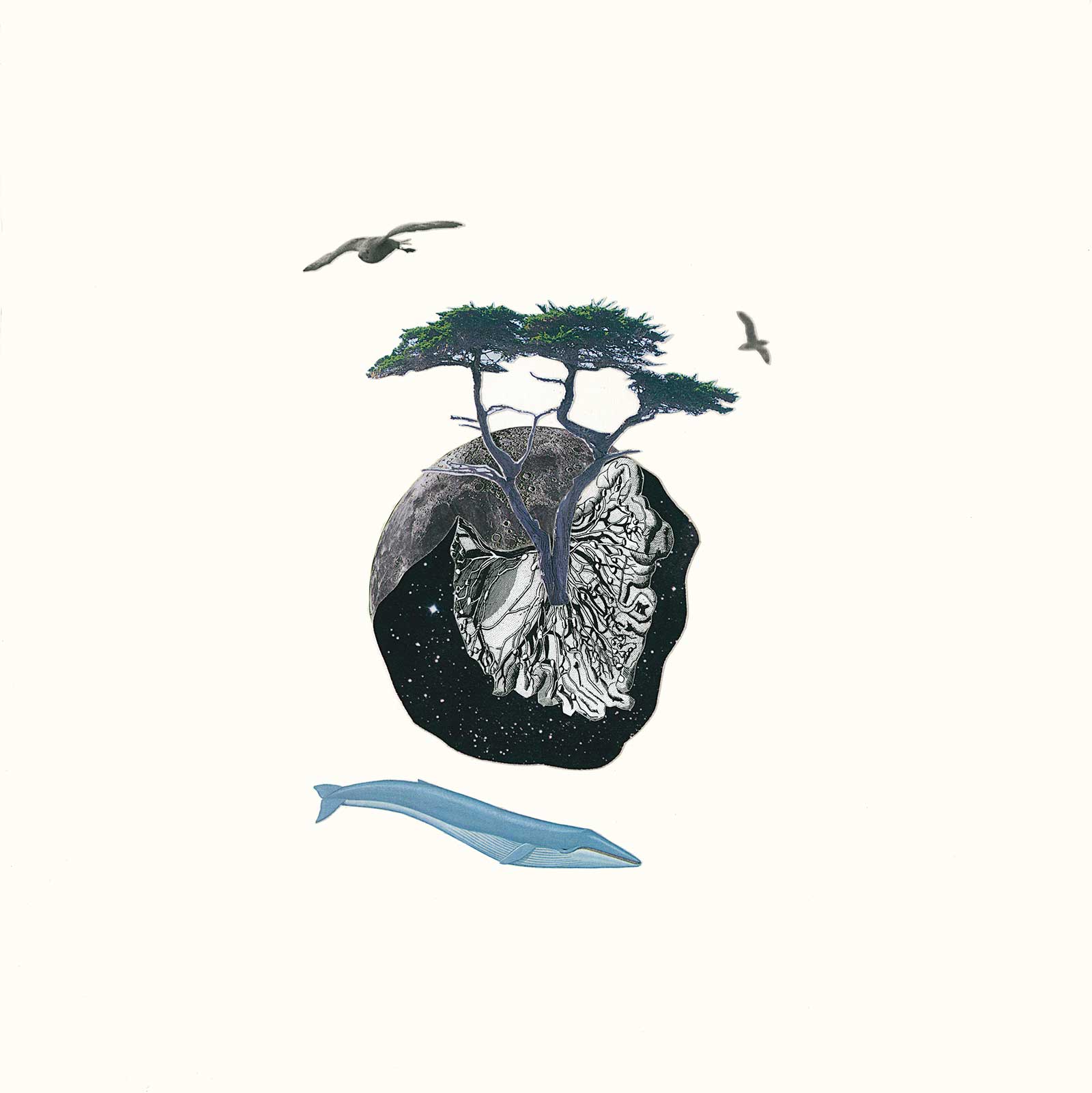
Tree of Life 4, 2024, hand-cut collage on paper, 12 x 12"
She is also an analog collage artist, intricately cutting and combining images from outdated textbooks to illustrate the interconnectedness of all things and reuniting her own body, mind and spirit that had become disconnected during the long hours and years of residency and hospital practice. It also brought back the art practice of her childhood.
She wondered how she might repurpose the textbooks and began cutting and combining images onto blank pages torn from her childhood drawing pads.
I first saw her work in an exhibition at Folklore in Santa Fe, a gallery whose owner, Kelly Dye, describes as “a peaceful space for healing. We exist to tell stories and facilitate connection in many forms. Our aim is to inspire the discovery of beauty, remembrance of the self, respect for the earth, and care for community.” A fitting place for Anchors’ finely hand-crafted, inspired work.
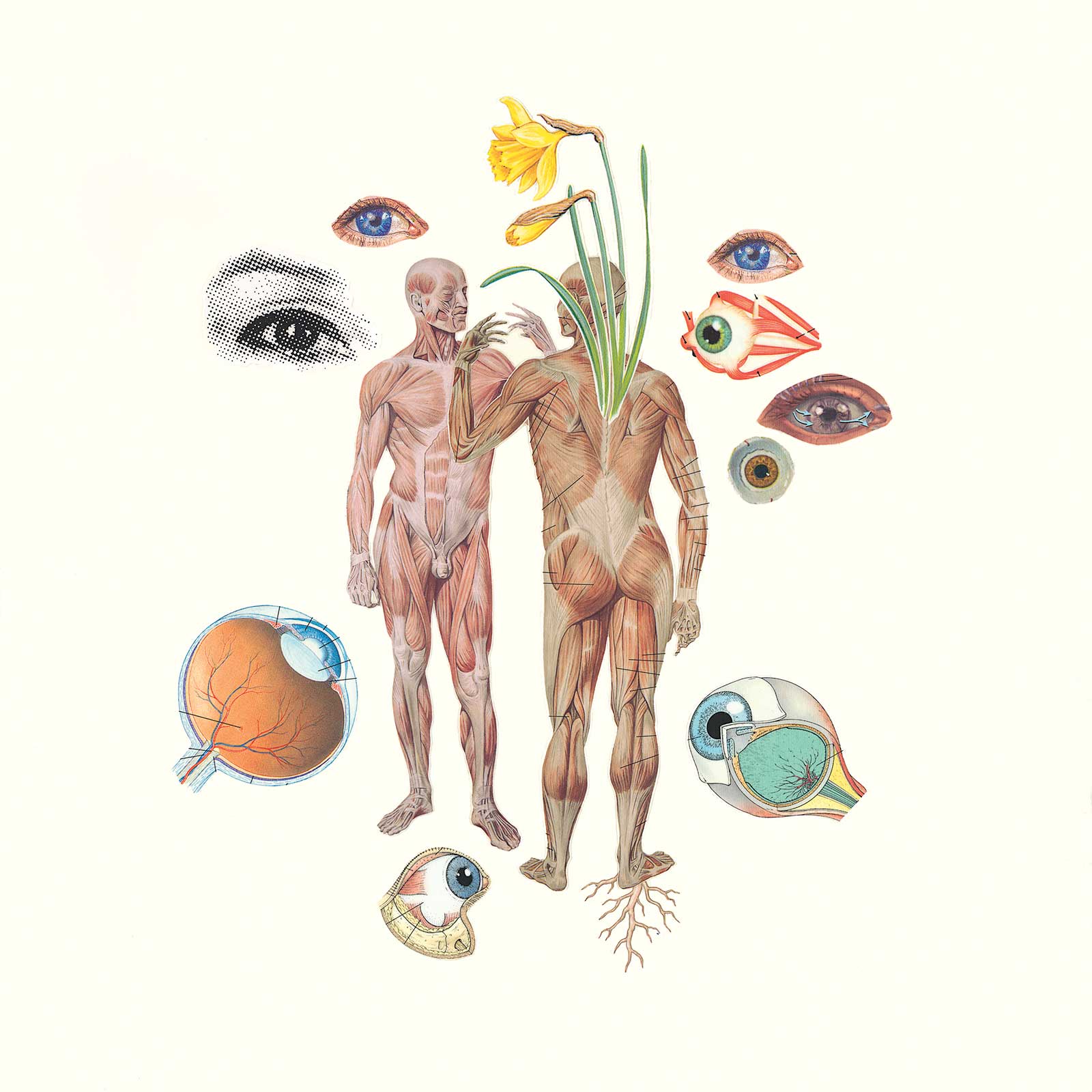
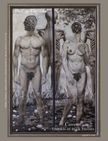
Seen, 2024, hand-cut collage on paper, 12 x 12"
When I think of inspiration, I think of its etymology, its origin in the past participle inspiratus of the Latin verb inspirare, “to breathe into.” For centuries it has meant “to draw into the lungs” from which oxygen is distributed throughout the body. The word ruach in the Hebrew Bible has multiple meanings from wind to breath to spirit—the creative breath of God or the life spirit of all creation throughout time.
Emily Dickinson wrote, “Forever—is composed of nows…” Dickinson wrote her poems of the cosmic in the mundane on scraps of paper, flaps of envelopes and chocolate wrappers that she stored in the drawer of her small writing desk.
Anchors’ collages are intricate and pristinely mounted in the center of the composition, surrounded by abundant negative space. In an interview for Rhizo Magazine,she explained, “The negative space in each piece pays homage to the necessity of emptiness, stillness, and rest—medicine I need as much as any. My home, arranged according to this same principle, is a sanctuary to which I retreat.”
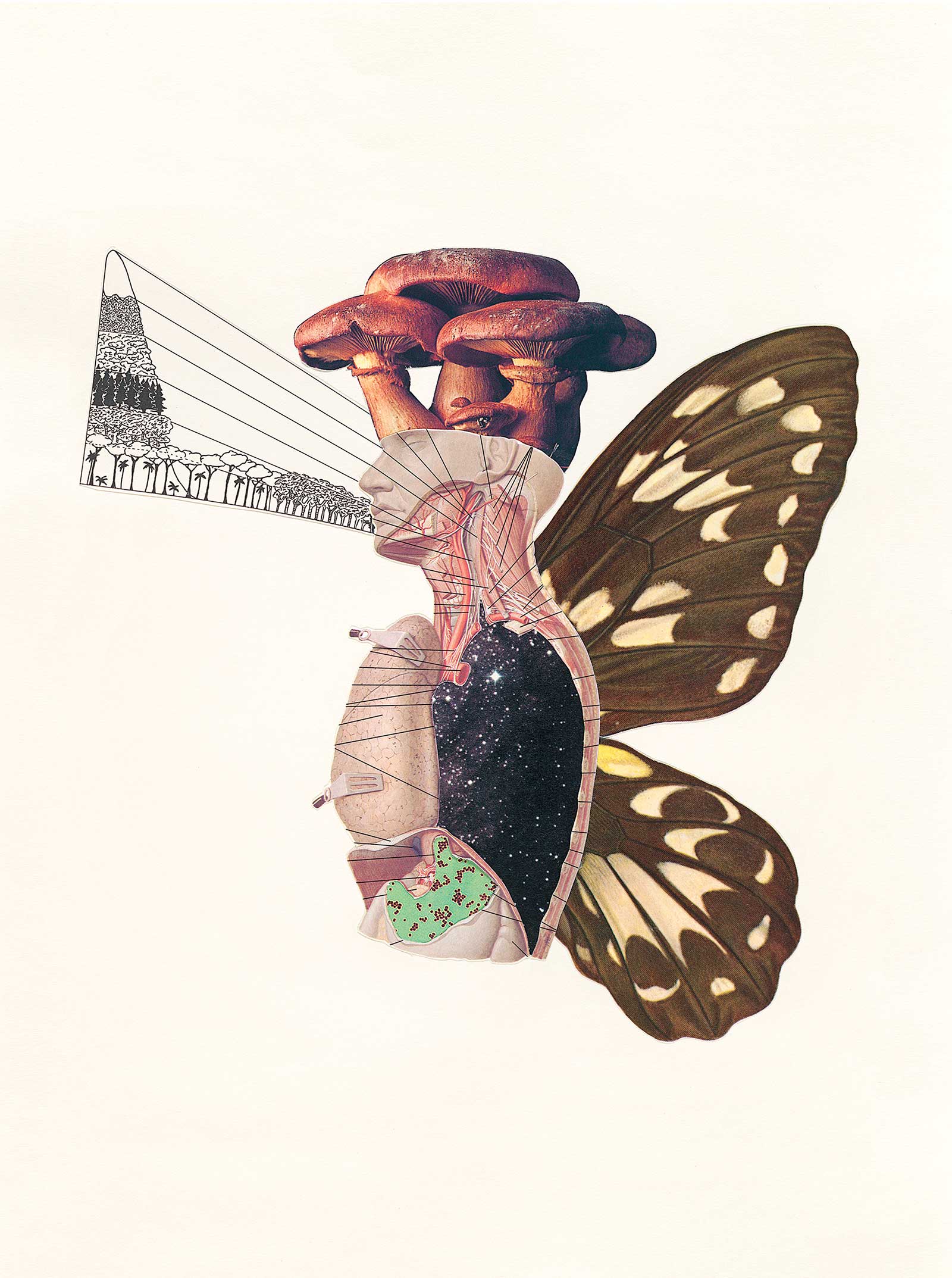
Interconnectedness, 2020, hand-cut collage on paper, 12 x 8"
Each piece encapsulates a morsel of her thinking. Seen, perhaps, covers more territory. “Drawing on the myth of Narcissus, this collage explores numerous themes,” she says. “The exposed figures—in a close, mirrored position—reflect intimacy and self-obsession. Their tender, homoerotic stance speaks to our desire for and comfort in sameness, serving as a metaphor for humanity’s fixation on itself, both individually and collectively.
“You are invited to reflect on how placing ourselves at the center of the universe shapes the way we (dis)connect to the world around us.
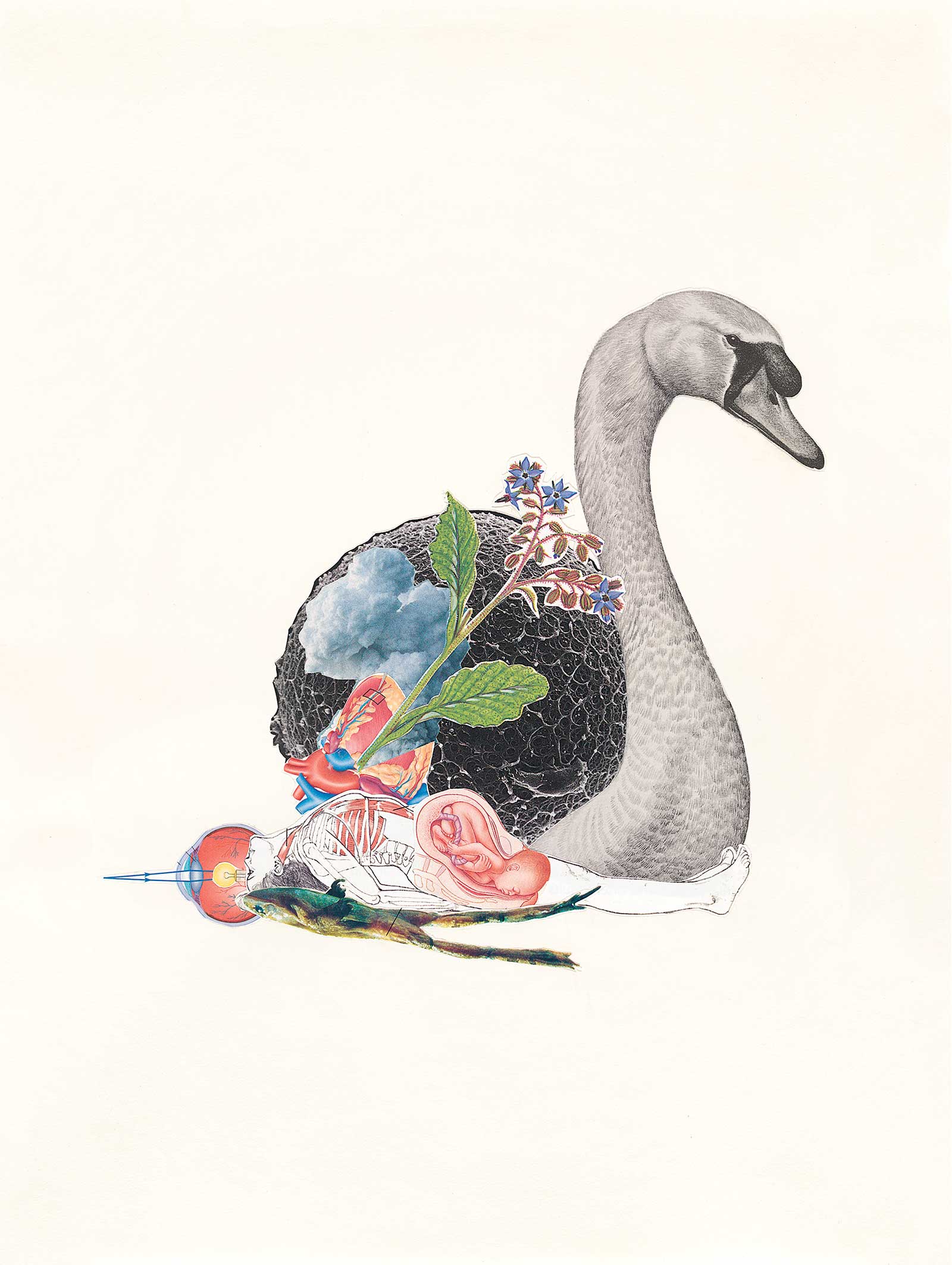
Self-Portrait, 2018, hand-cut collage on paper, 12 x 8"
“Albert Einstein observed that a human being is a spatially and temporally limited piece of a whole, called the ‘Universe,’ and that when we experience ourselves as something separate from the rest—an optical delusion of consciousness—we imprison ourselves.
“Blind or indifferent to others, Narcissus was locked on his reflection until his death, when he was transformed into the daffodil growing from one figure’s head. The roots at his feet remind us of our connection to a greater ecology, even when we are focused inward. This interplay highlights the contrast between human-centric views and the reality of our interdependence with the natural world—human and more-than-human forms alike.
“No matter how much we focus on ourselves, we remain part of a larger cycle of life. Lifting our gaze, and widening our circle of compassion, as Einstein suggested, is what will set us free.
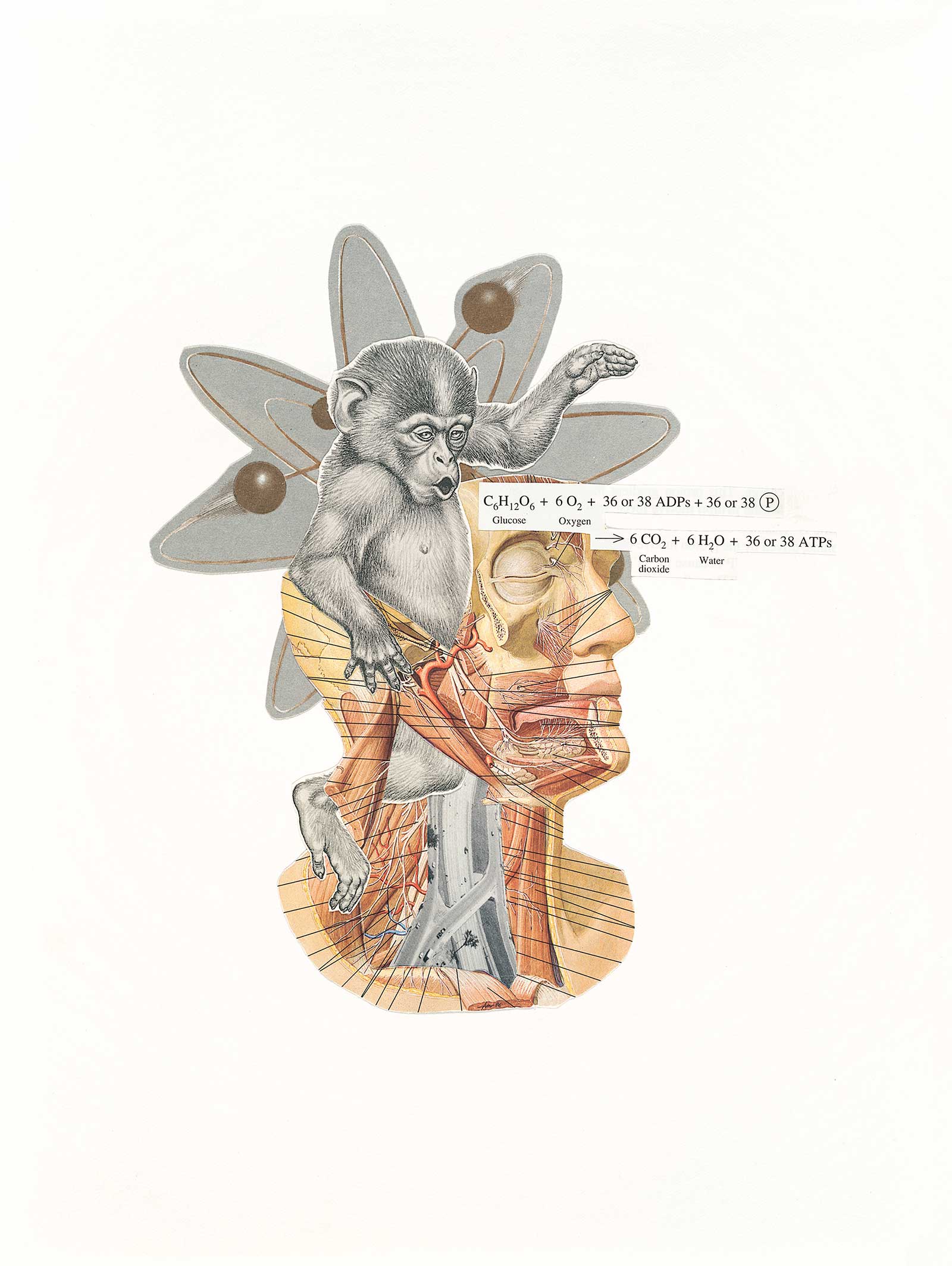
Mindfulness, 2022, hand-cut collage on paper, 12 x 8"
“The disembodied eyes surrounding the figures create an eerie omnipresence, as though the figures are being observed through multiple lenses. They represent external judgment as well as an internalized sense of being watched.
“The figures seem oblivious, emphasizing the emotional blindness typical of narcissism or perhaps the numbness of trauma. This oblivion might also suggest introspection, where external judgments fade as the self heals and transforms.
“The invitation now shifts to reflect on how we see ourselves, offering the opportunity to reclaim the narrative of our own identity, beyond the narrow gaze of ego and free of the perceptions and projections of others.
“Do you hold yourself in love?”
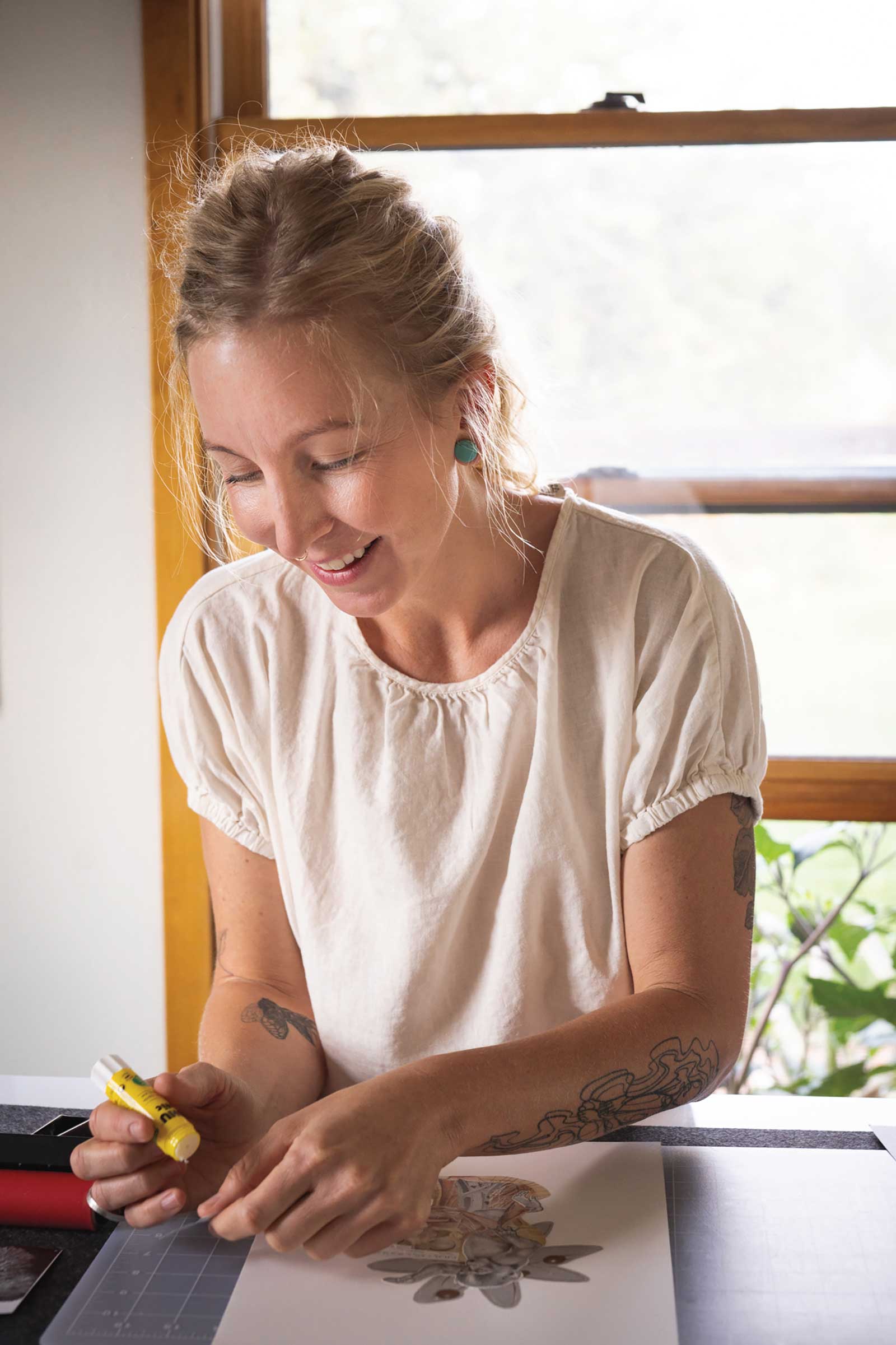
Kristin glues an image to her collage. Photo by Chelsea Call.
Her series Tree of Life features evergreen trees. I was drawn to Tree of Life 4 being familiar with Monterey cypress and their characteristic elegance growing precariously from the rocks on the Pacific Coast. Also, farther back and deeper down, it brought back memories of another artistic interpretation of the tree of life in the art glass windows of Frank Lloyd Wright’s Darwin D. Martin House where I lived for six years.
Kristin explains, “This solitary Monterey cypress emerges from an island of bowels on an otherwise aqueous planet. Naturally found near Carmel, on the Central Coast of California, these trees enjoy the nightly spectacle of the sun setting over the Pacific Ocean from their chosen home at the edge of the earth.
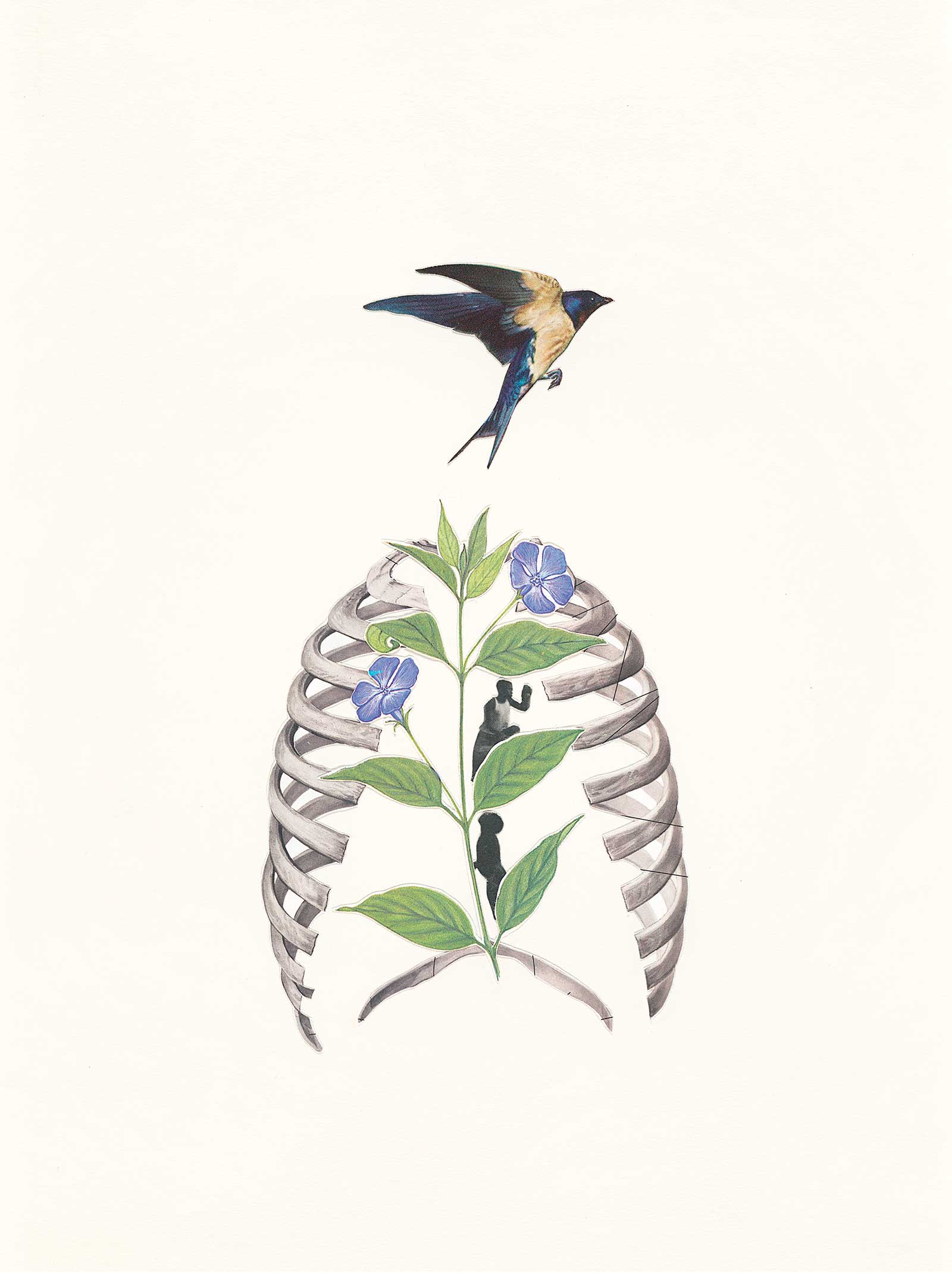
The Caged Bird, 2020, hand-cut collage on paper, 12 x 8"
“Like the first evergreens of this series, the Monterey cypress is long-lived, wind-blown and tolerant of poor soil conditions.
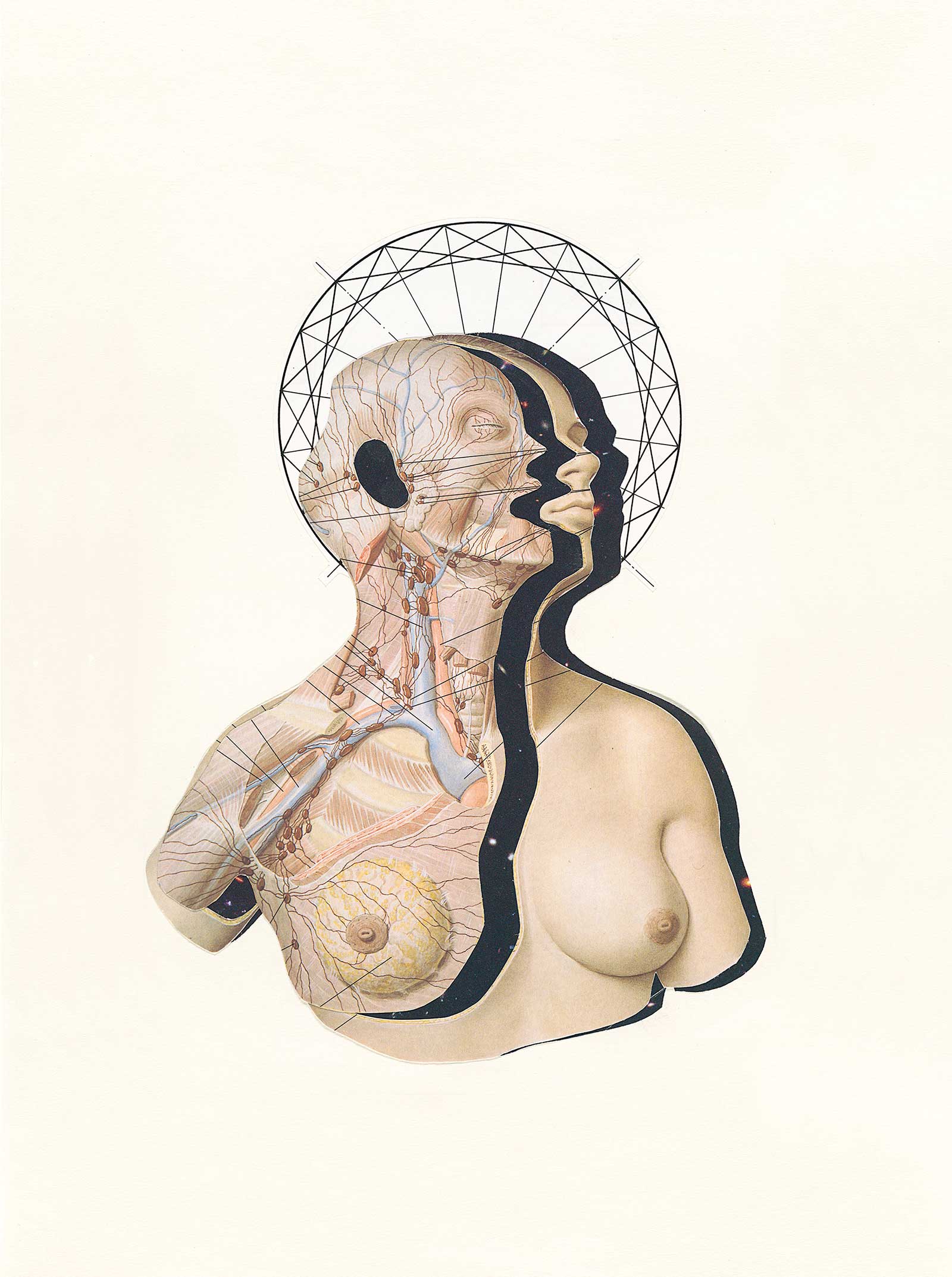
Bound Liberation, 2020, hand-cut collage on paper, 12 x 8"
“The moon rises behind the sculpted tree, appearing as one with Earth. The ocean, which covers most of our planet, is represented by a starry field, alluding to the vast mysteries both below and above us.
“The moon’s gravitational pull on Earth orchestrates the ebb and flow of the tides, but here, they feel slightly off balance—a commentary on humanity’s disconnection from the natural rhythms of the universe and the ecological impact of our presence.
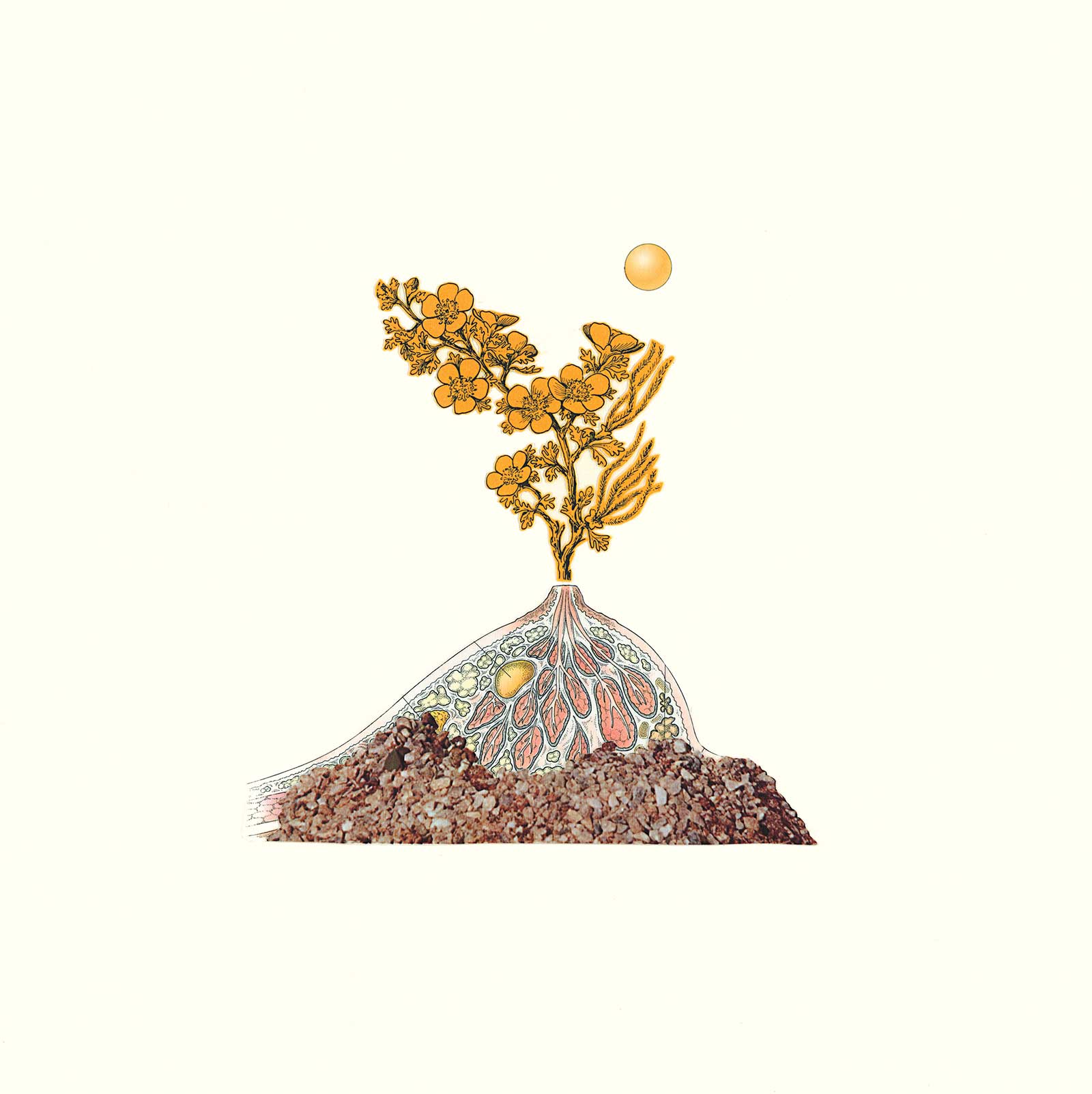
Eruption #1, 2024, hand-cut collage on clayboard, 12 x 12"
“Beneath the waves, swims [the blue whale] the largest creature to ever roam the planet, while above, a pair of seabirds soar through the boundless sky. These ancient messengers of harmonious coexistence remind us of our duty and responsibility as temporary stewards of this shared planet.”
Recent archaeological investigations trace collage as far back as 200 B.C. at the time of the invention of paper in China. In the early 20th century, it came into its own as an art form for artists such as Braque and Picasso. Later, Matisse made large, colorful “cutouts” pinned to the wall.
Kristin Anchors’ collages come out of a long tradition but are unique in their vision and execution. —
Powered by Froala Editor