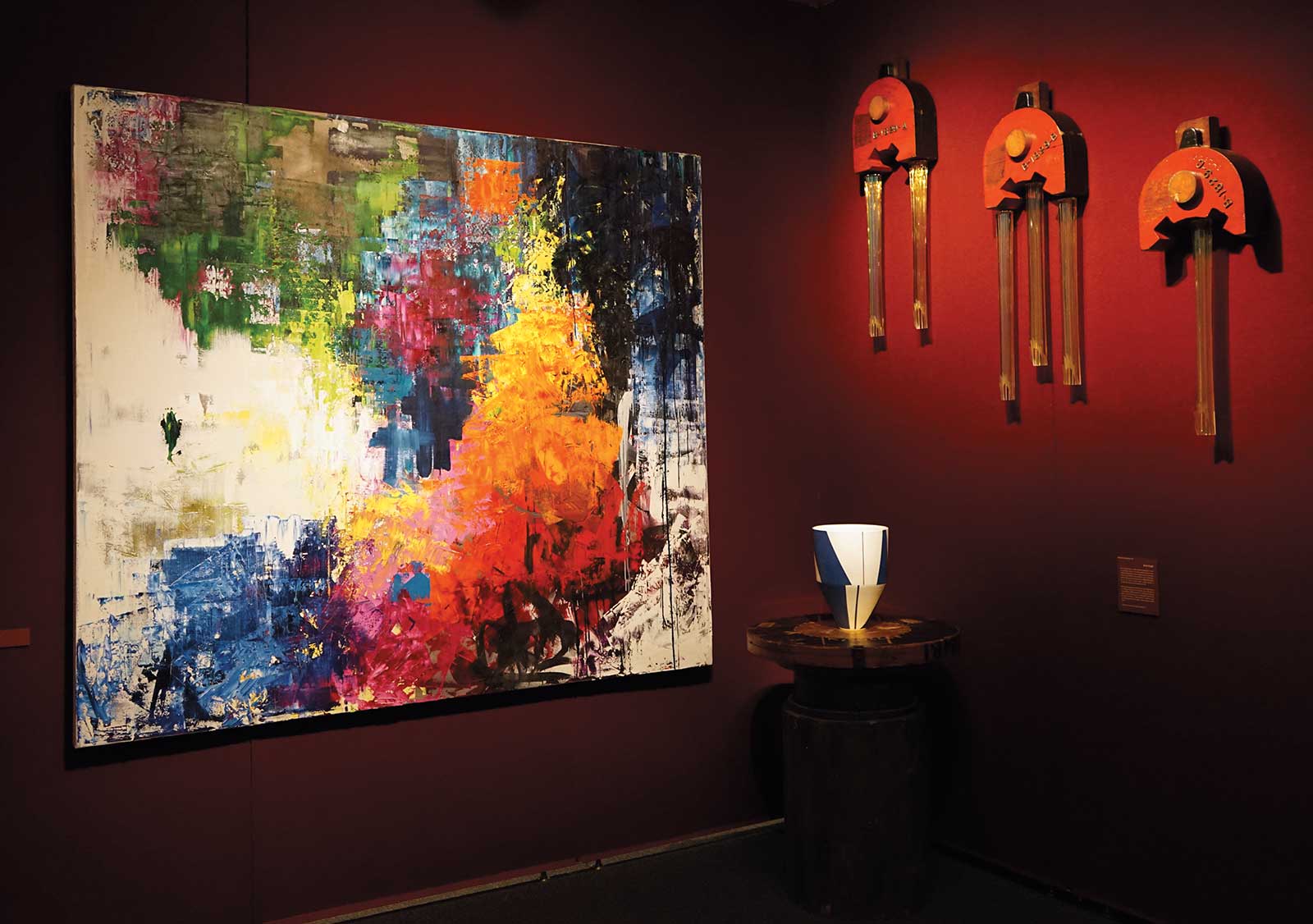
Works by Mia Tarducci (left), Brian Engel (right) and AJ Collins (center).
Images by James Kieselburg, Grohmann Museum
Patterns of Meaning: The Art of Industry by Cory Bonnet,an exhibition at the Grohmann Museum at the Milwaukee School of Engineering is a bold, collaborative, contemporary take on the city of Pittsburgh’s storied steel mills. In 2021, artist Cory Bonnet and scrap dealer Chip Barletto salvaged a collection of wooden casting patterns from the late 19th- and early 20th-centuries. These worn casting patterns, foundry molds for mill and furnace parts—slabs and crankshafts and gears—bear the patina of the 20th century. In a real way, these molds helped shape our modern world. Bonnet saw the potential of each pattern as “a work of art in its own right,” as support for paintings, media for sculpture, forms for glass and ceramics, and as inspiration for other works.
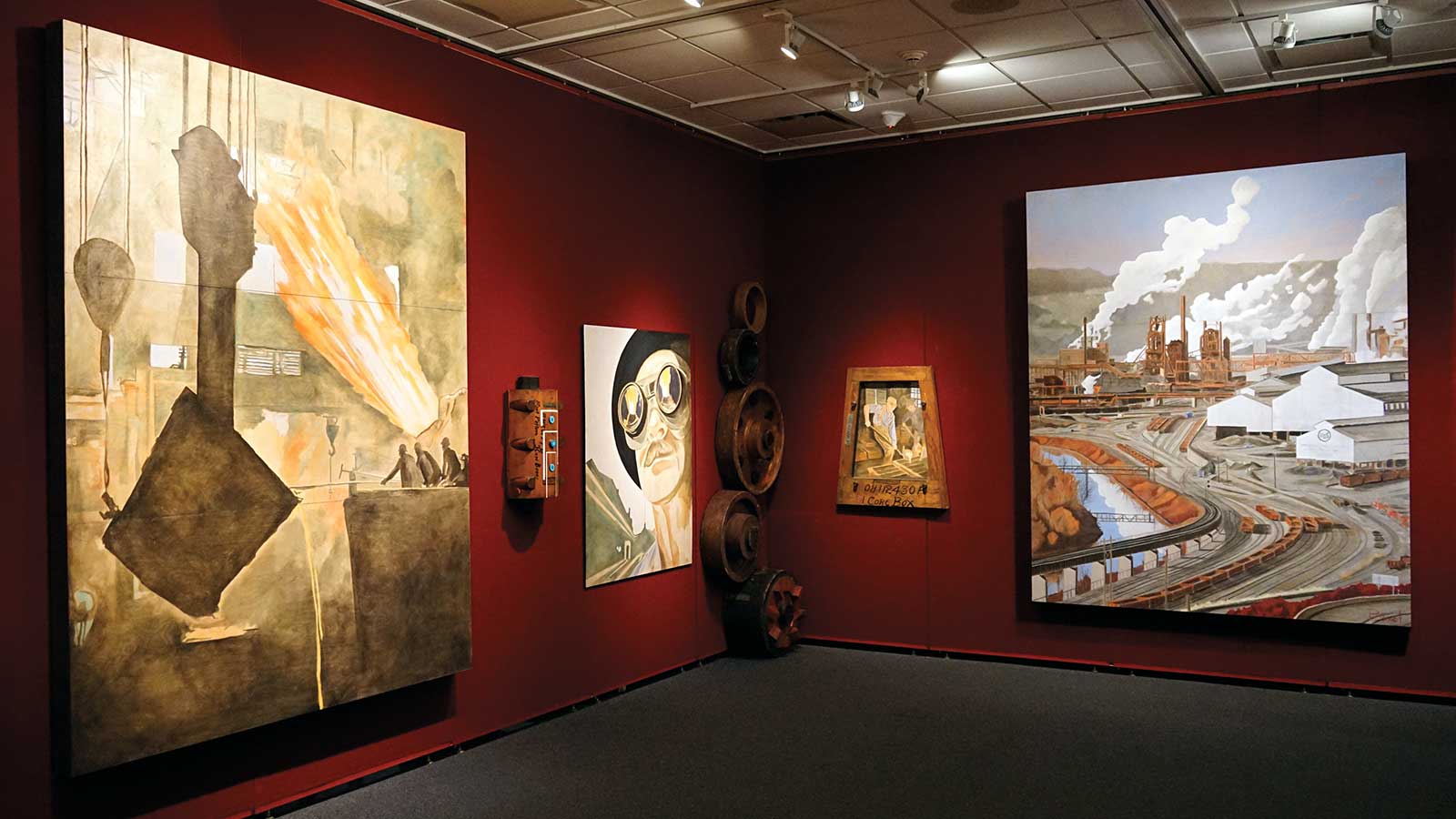 Installation view of Patterns of Meaning at the Grohmann Museum of Art.
The patterns kept coming. Ten 26-foot box trucks’ worth. Bonnet asked other artists to join him. At present, including Bonnet, there are seven: abstract painter Mia Tarducci, sculptor Nate Lucas, ceramic artist AJ Collins, glass artist Brian Engel, assemblage artist Angela Tumolo Neira and lighting artist Andrew Moschetta. All have studio space at the Energy Innovation Center in Pittsburgh’s Hill District. Opportunities for cross-pollination abound.
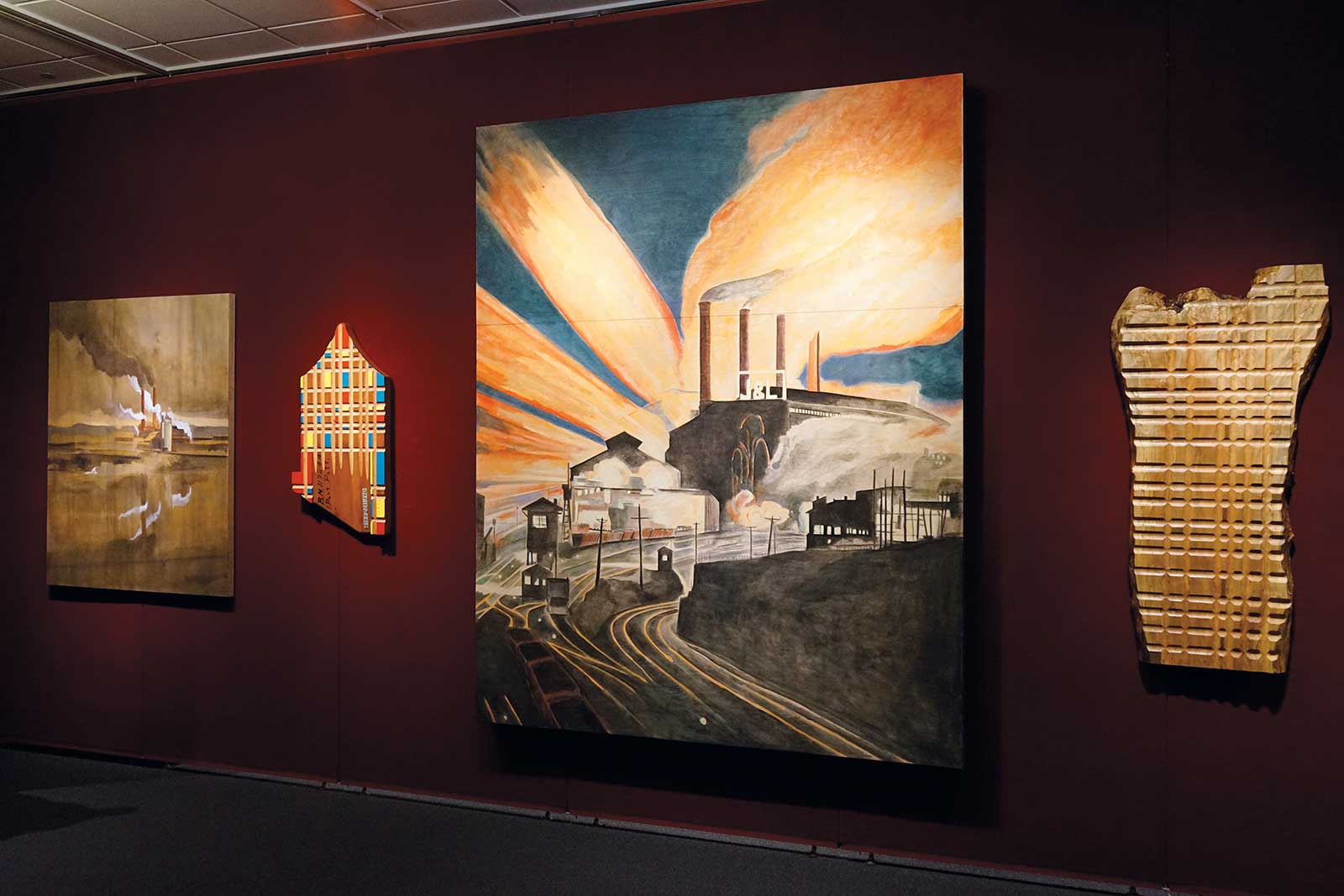
Installation view of Patterns of Meaning at the Grohmann Museum of Art.
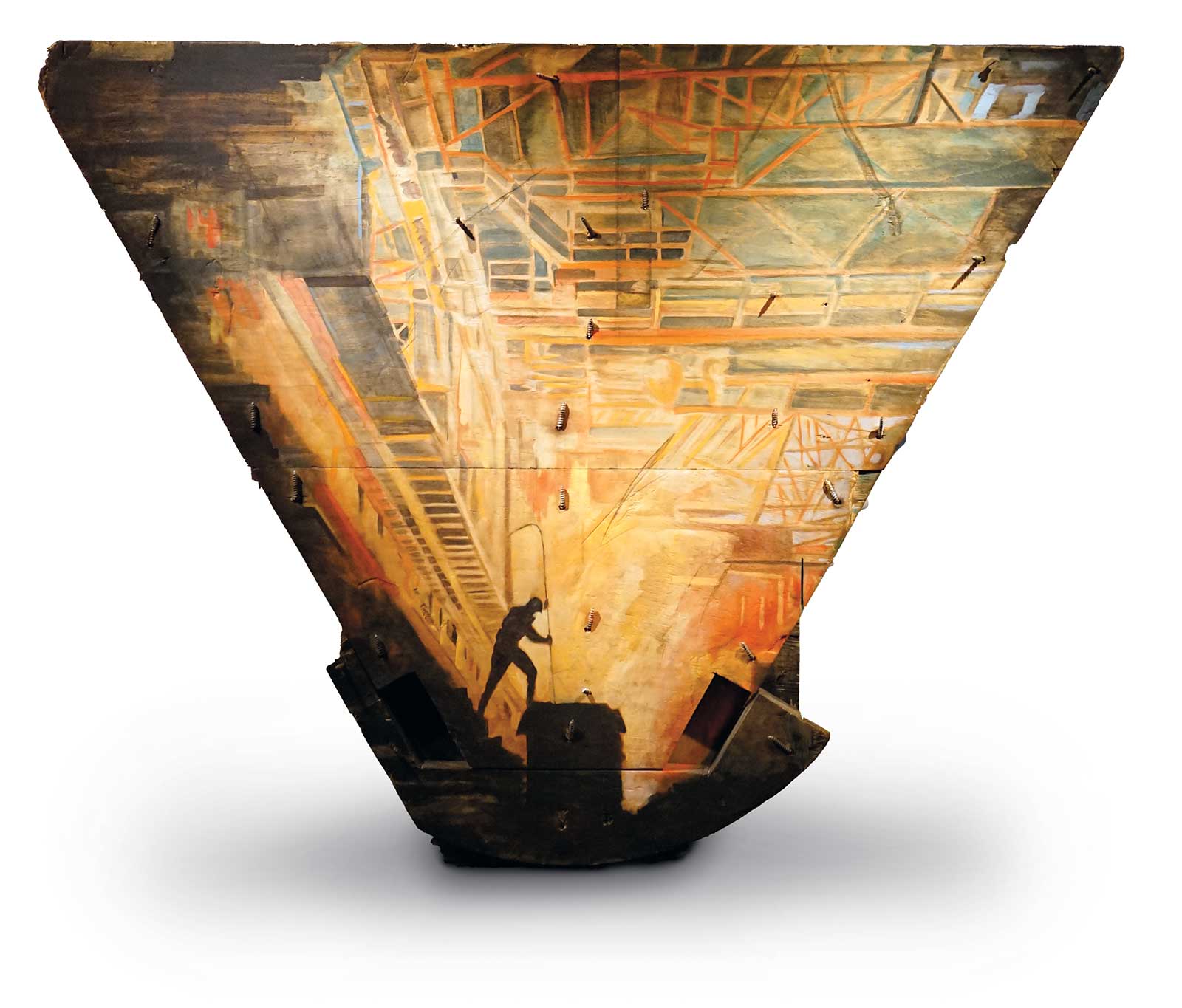 Cory Bonnet, Monument to Industry, 483⁄8 x 363⁄4"
Some describe Bonnet as an industrial painter, aligning his work with the WPA artists of the 1930s, and there are reasons to make this comparison. Pieces in the exhibition, however, transcend the expressionistic realism—to coin a phrase—characteristic of WPA murals and canvases. In Monument to Industry, painted on a trapezoidal piece of plywood with screws shot through from the back, Bonnet uses the shape of the support to funnel the scene into the crucible, where iron becomes steel, and where a worker in silhouette tests the metal—and tests his mettle in the heat. Yet it is equally possible to see the scene exploding out of the crucible, as if the scene is made and shaped by the reason for the mill’s existence. The mills make steel; steel makes the mills.
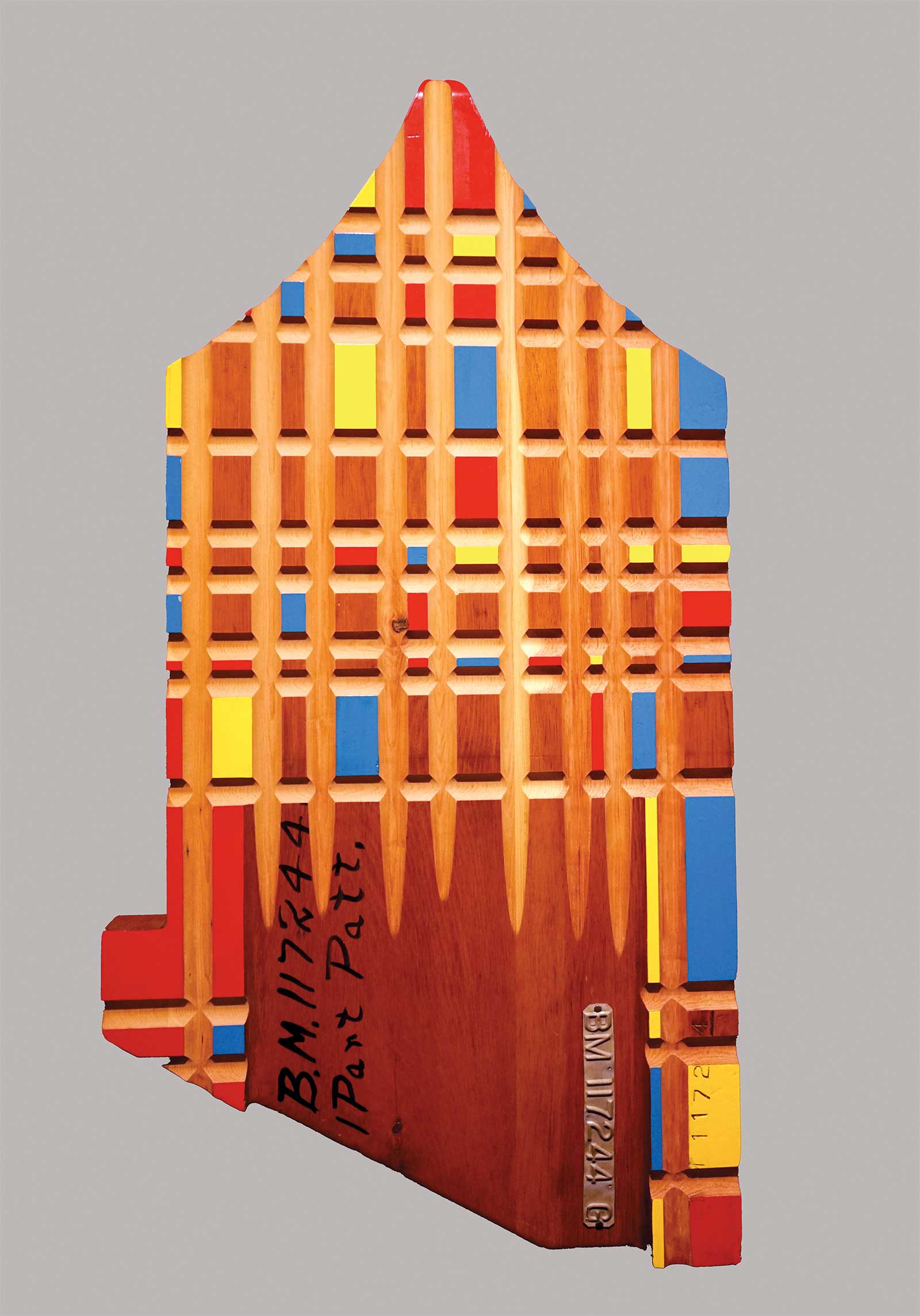
Nate Lucas, Symbiote, 393⁄8 x 205⁄8"
Mia Tarducci’s Smoke and Steam, a tall, chimney-shaped abstraction, springs from the calligraphic curling of millfire clouds and the splashing fronds of molten iron and molded steel plunged into cooling baths. The palette of the work, apart from rosettes of red and an area of pale yellow, is almost a color wheel opposite of the oranges and yellows we expect from the mills and furnaces. Vulcan has become Poseidon. The element of fire creates the element of water and the recipe is written in, well, smoke and steam.
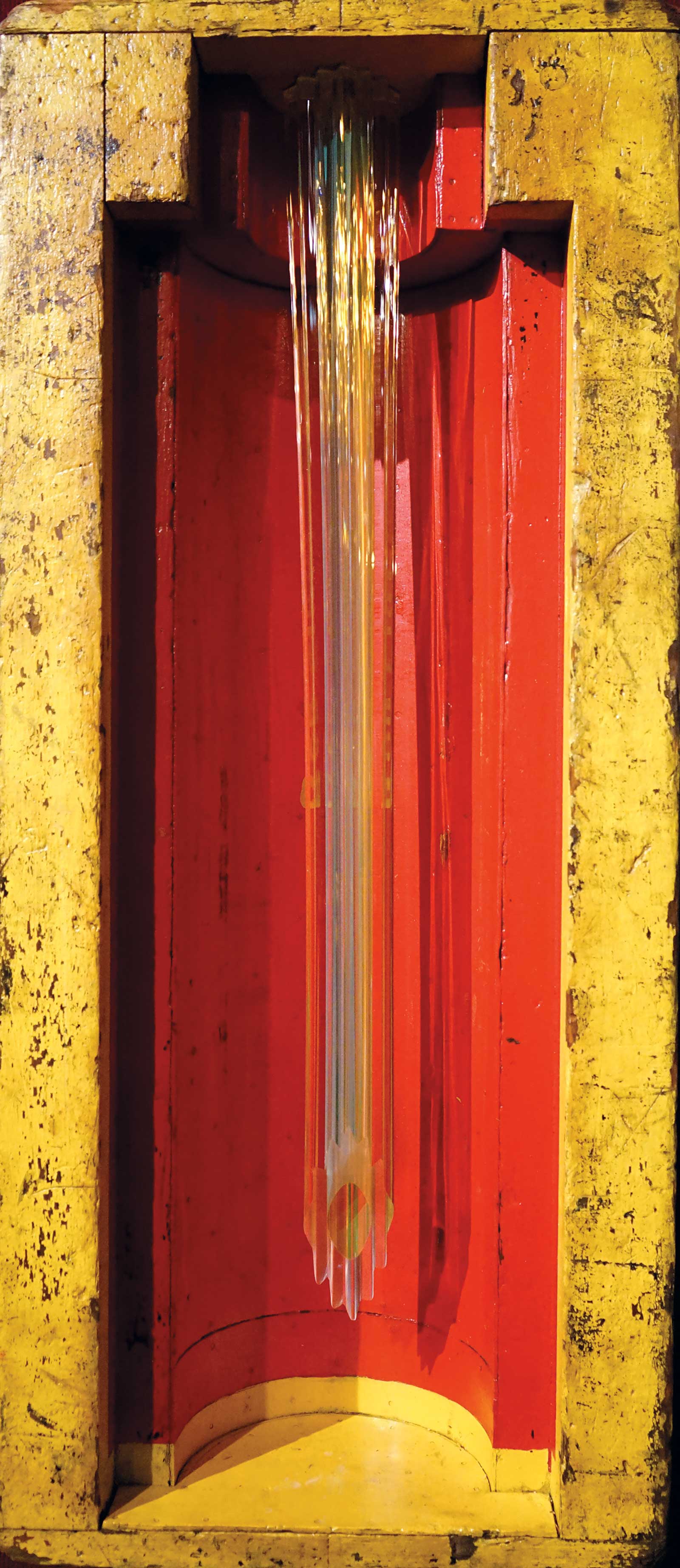
Brian Engel, Bold Press 1, 371⁄2 x 161⁄4 x 93⁄8"
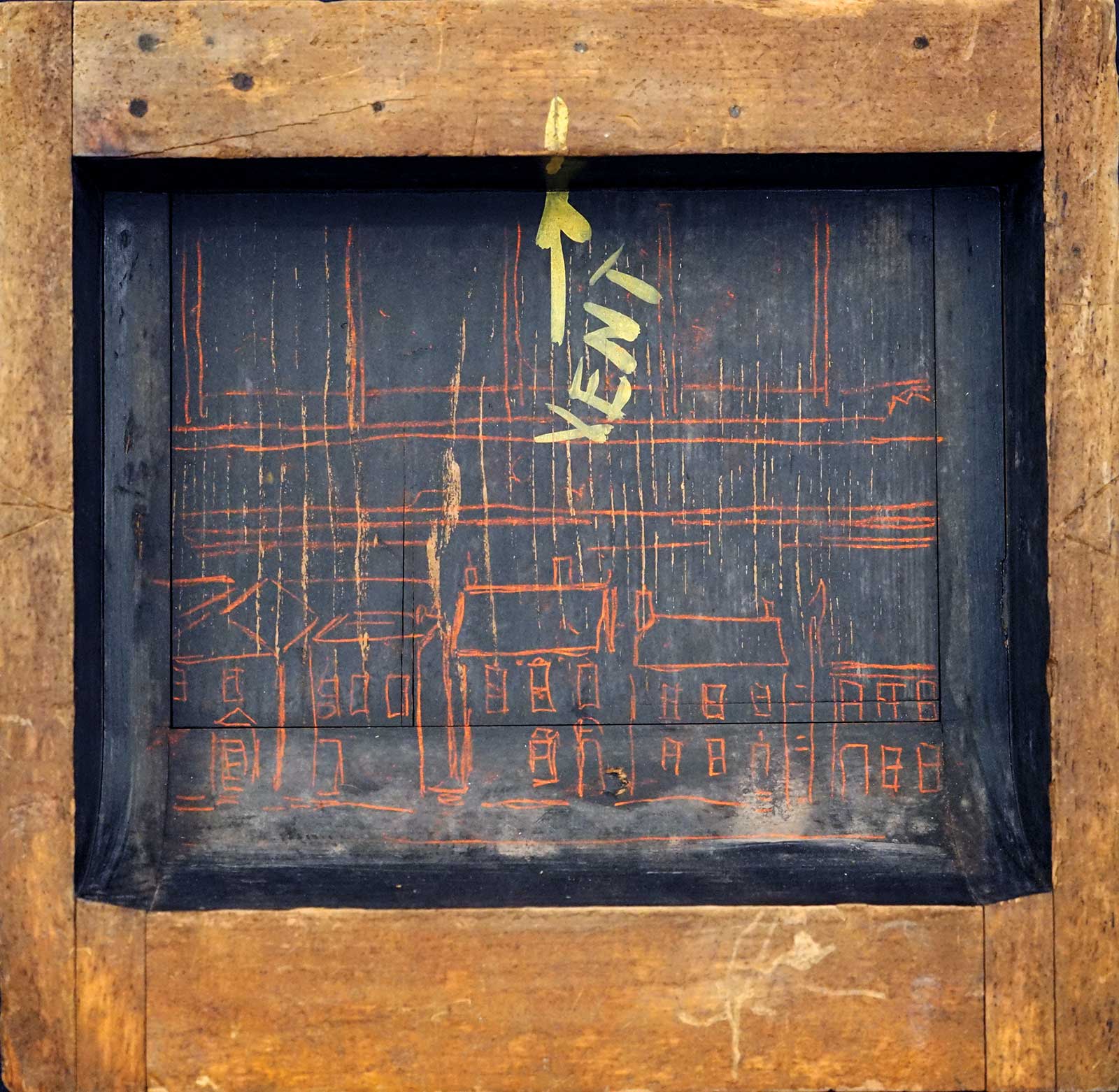
Cory Bonnet, Core Box Mill Town, 14 x 141⁄2 x 5"
Clay, fashioned of fired earth—as opposed to fired iron—is artist AJ Collins’s chosen medium. One of a series of rectangles of clay, Pigmented Porcelain Casting has a smooth, rounded, industrial shape, and seems to draw its art out of design with a nod to Italian Futurism. Order and disruption in colors and shapes move the eye around, over, and through the work, until it settles, time and again, on the speckled, dappled area left of center. The optical illusion Collins creates makes this area alternately recede and jut out, curving towards us and away. There is a sense of play here, as if this or any of the shapes might be a door to a shadow millscape.
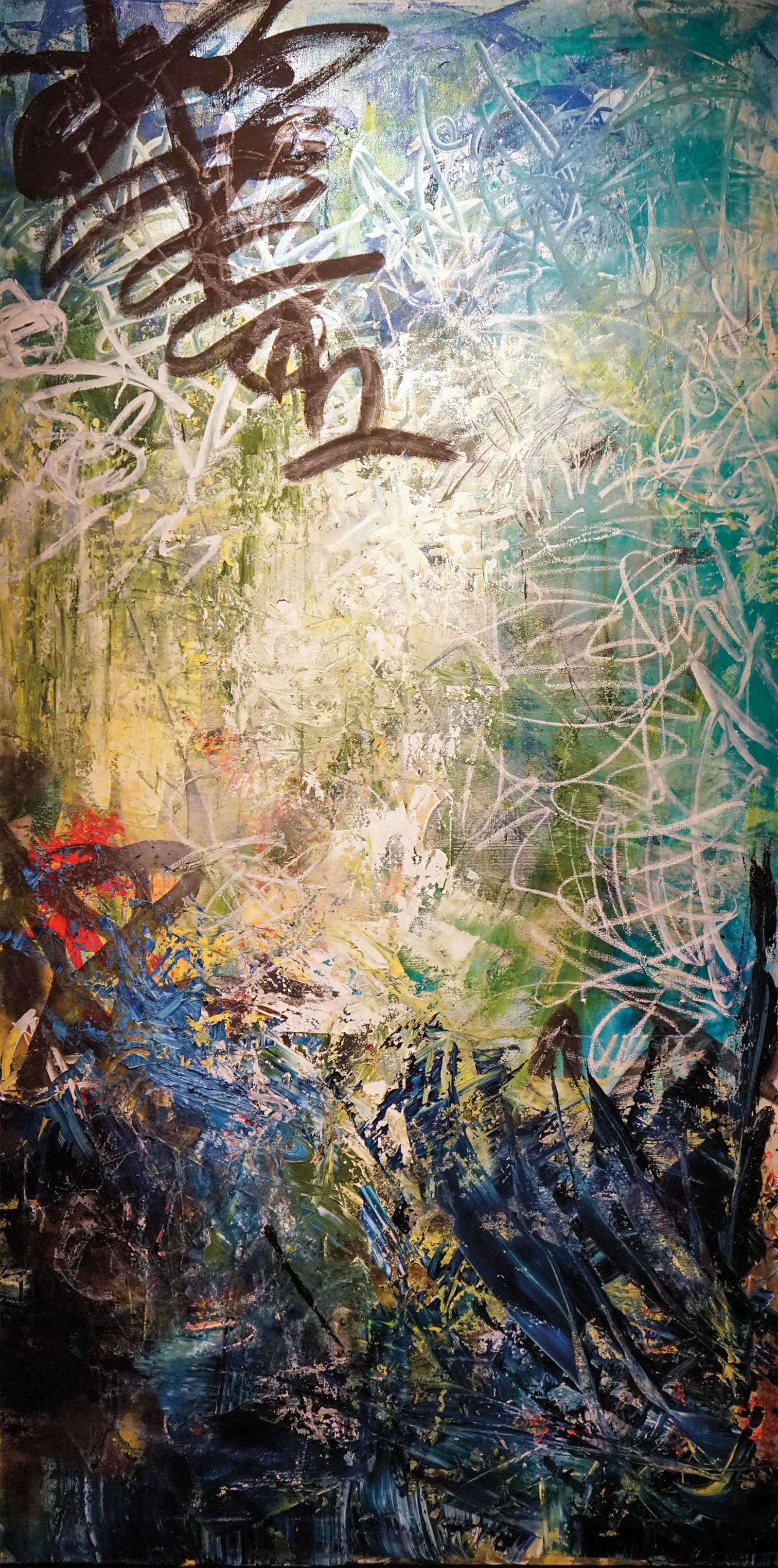
Mia Tarducci, Smoke and Steam, 84 x 43"
Glass from fire is Brian Engel’s medium. Works like Bold Press 1—From the Yellow Press Mold Series call attention to the form as object while transforming it into a new art-form. The hollow, fluted tubes make it seem as though the forms, meant to shape iron and steel, are now extruding glass, glass in motion, glass pulled down by gravity into “glassicles” whose hollowness suggests the sound of breath blown over a beer bottle or the horn of a night train carrying ore in the distance.
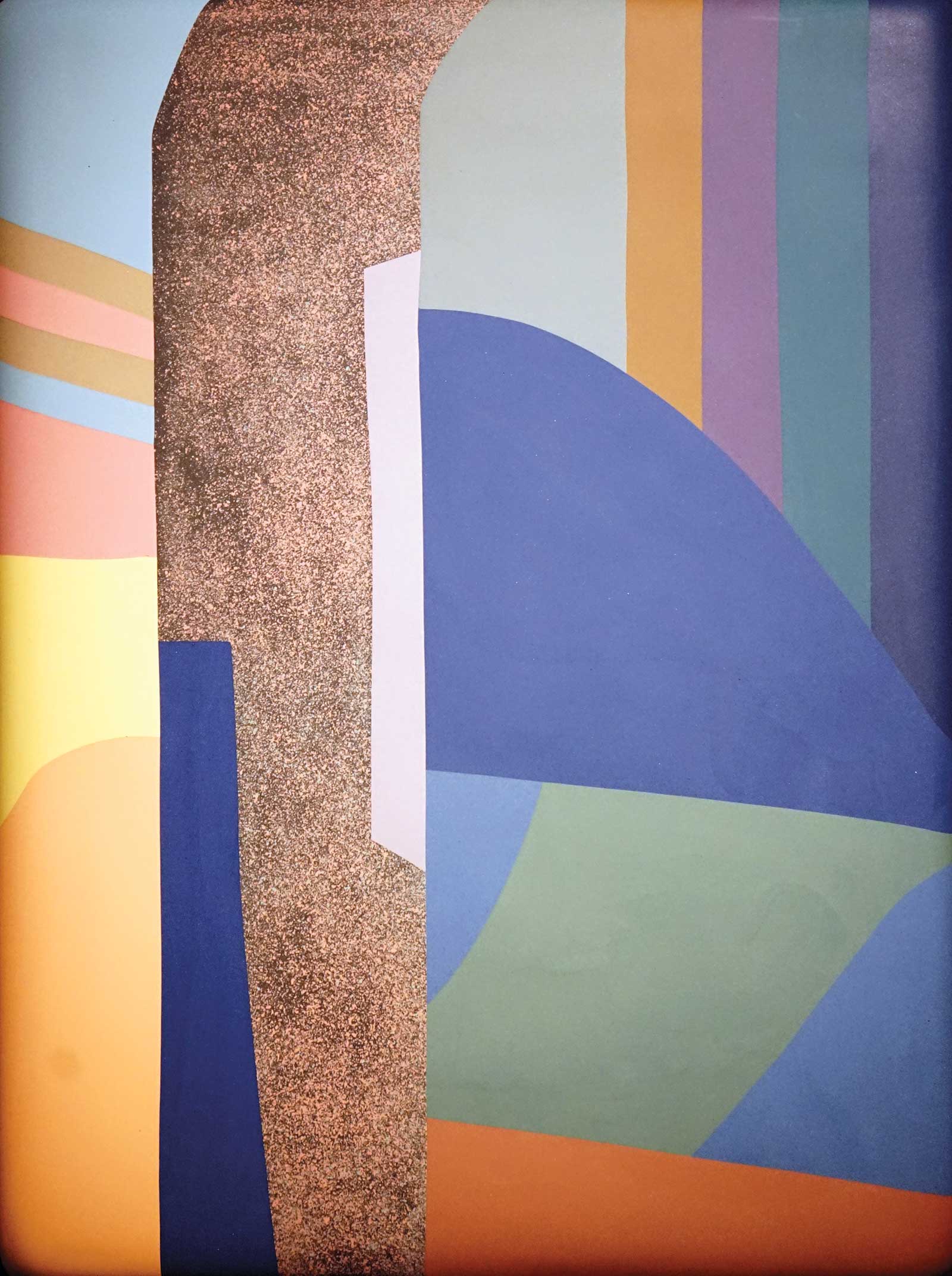
AJ Collins, Pigmented Porcelain, Casting, 193⁄8 x 143⁄4 x 13⁄4"
The art of Patterns of Meaning isn’t found art; it’s art imagined, art wrested, art made out of the cast-off casts of a found industry, one that inspired me when I was casting about (I’ll stop casting now) for an idea for a thesis play that would complete my MFA in playwriting and theatre at Carnegie-Mellon University, just across the Monongahela from Homestead and the other mill towns. I settled on the story of a multi-racial, multicultural neighborhood—the Ward in Homestead—and its tragic destruction in early 1942 to make way for a new mill that would churn out steel for battleships, tanks, and bombers. Homestead paid a heavy price for its key role in the victory in World War II. My research? Sneaking around derelict mills, eluding security—who were always on the lookout for scavengers. Wooden patterns in piles. Drinking ice cold Iron Cities in Hungarian bars. Irritating the Homestead Library historians. At the opening of Patterns of Meaning, the red ochre scratchboard of Bonnet’s Core Box Mill Town, a small work, opened up my past and made a deep impression. As if hastily etched with a back of a tool on a pattern found in the corner of a mill, the skeletal sketch of row houses beneath a line of hills cried out, “Remember us. This place. Our home. We were here.” Core Box Mill Town would make a superb projection for the play I eventually wrote—The Sons of Vulcan, or The Forge of the Fire God.
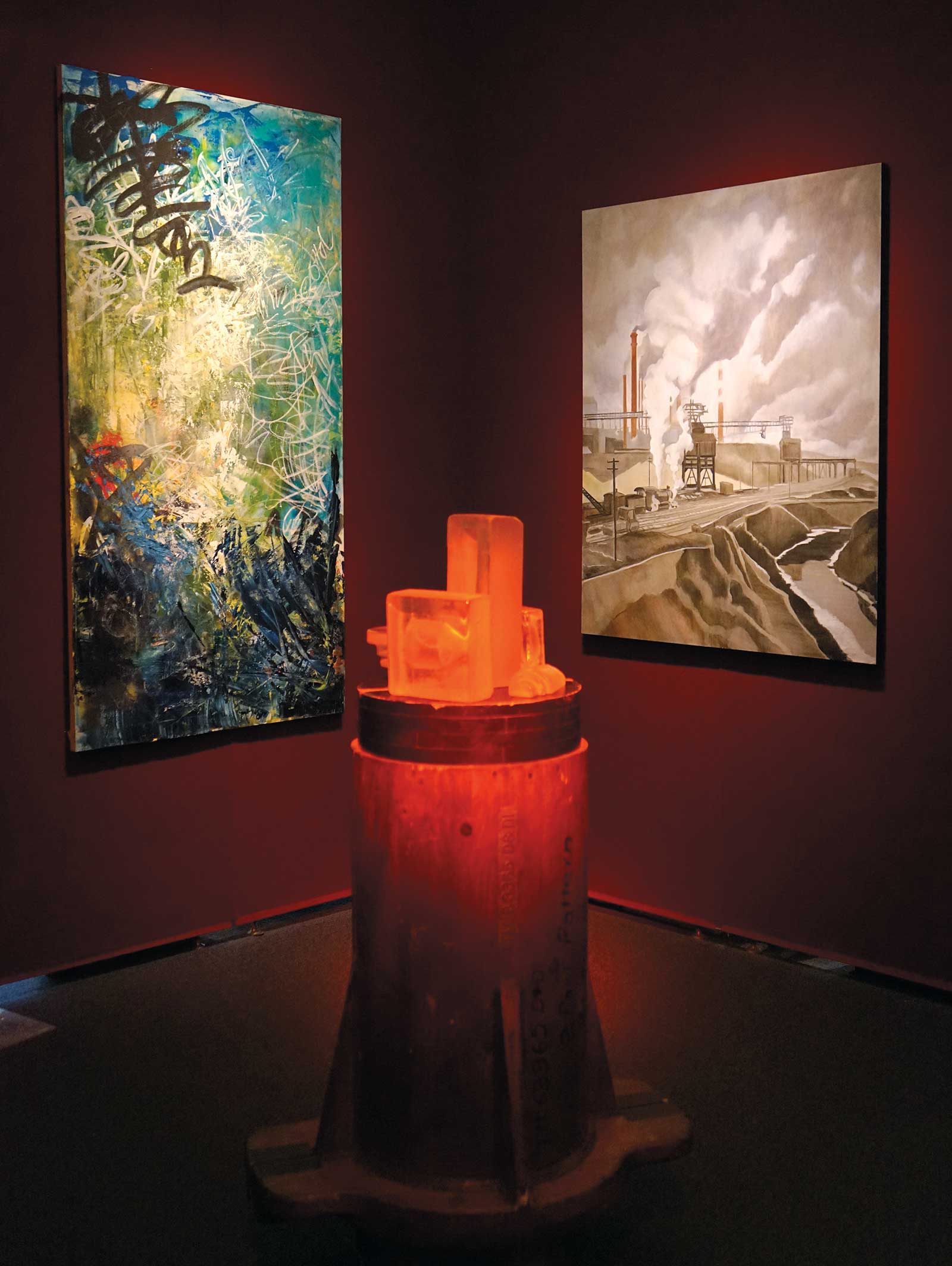
Works by Mia Tarducci (left), Cory Bonnet (right) and Brian Engel (center).
Iron to steel. Salvage to art. Past to present to future. Patterns of Meaning continues to evolve. —
Patterns of Meaning: The Art of Industry by Cory Bonnet
Through April 28, 2024
Grohmann Museum, Milwaukee School of Engineering
1000 N. Broadway, Milwaukee, WI 53202
(414) 277-2300, www.msoe.edu/grohmann-museum
Powered by Froala Editor