What constitutes modern art is a subjective determination. Perhaps less so is what falls into the category of abstract art, but even that, like all art I would propose, is a a matter of personal opinion. One individual might look at a Jackson Pollack and see clouds and faces and other forms in his poured paintings, while others might see nothing more than a random splattering of paint.
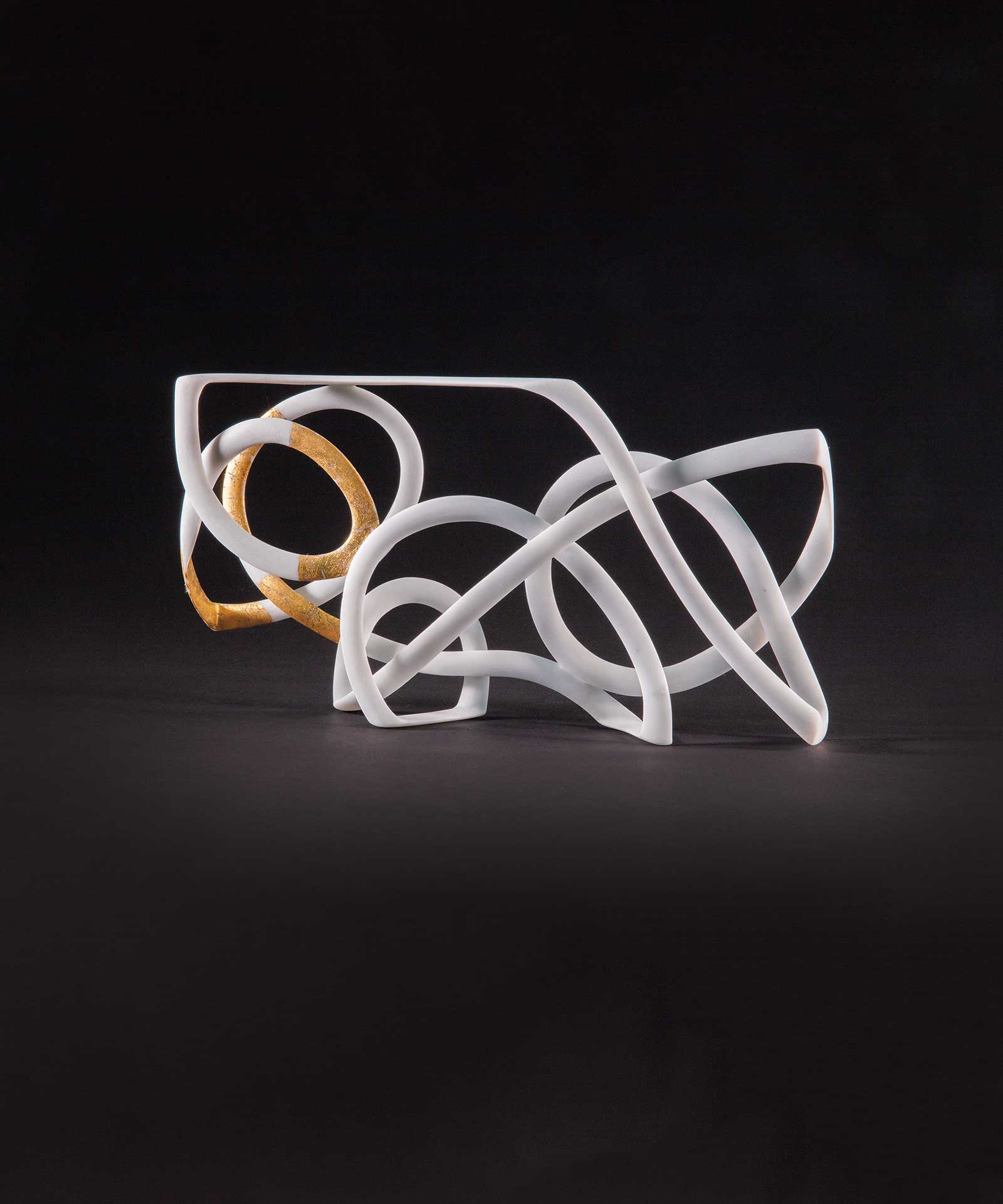
Hirschl & Adler Galleries, Passage 2, 2015-22, by Elizabeth Turk
With that in mind, and for the sake of this special section, our definition of modern art lies on a spectrum that ranges from the blurry edges of the representational to the more clearly abstract—works that lie outside the bounds of this magazine's focus on contemporary realism. Here, through the works of top artists working in the genre and their galleries, we give you a sampling of the varied forms modern art can take, and explore the creative freedom artists can find along a mark-marking continuum that many find liberating, but must also adhere to fundamental principles of composition.
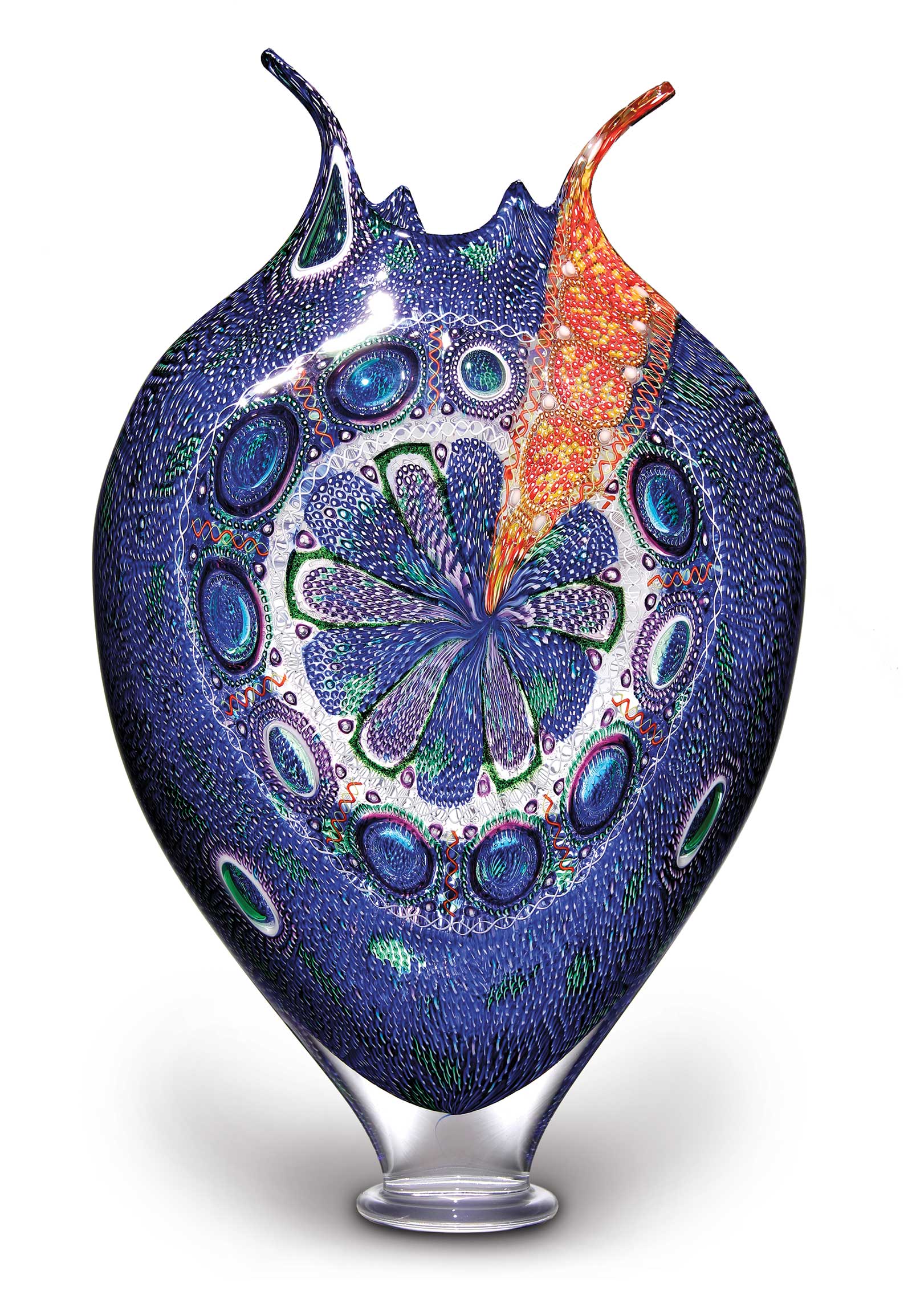
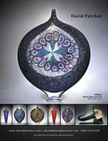
David Patchen, Cerulean Foglio, glass, 21 x 13 x 3½”
Inspired by the elegant beauty of ancient calligraphic scripts, Elizabeth Turk’s Passages sculptures explore the effects of technological communication on handwriting and its implications for the human experience at large. As Elizabeth Feld and Shelley Farmer of Hirschl & Adler Modern explain, this series begs questions like, “What happens when the curved lines of a scripted passage no longer hold meaning, or even exist? Or when the generations of tomorrow merely glance at a handwritten letter, fail to understand it, cannot decipher it, and simply move on, losing its nuances to history?”
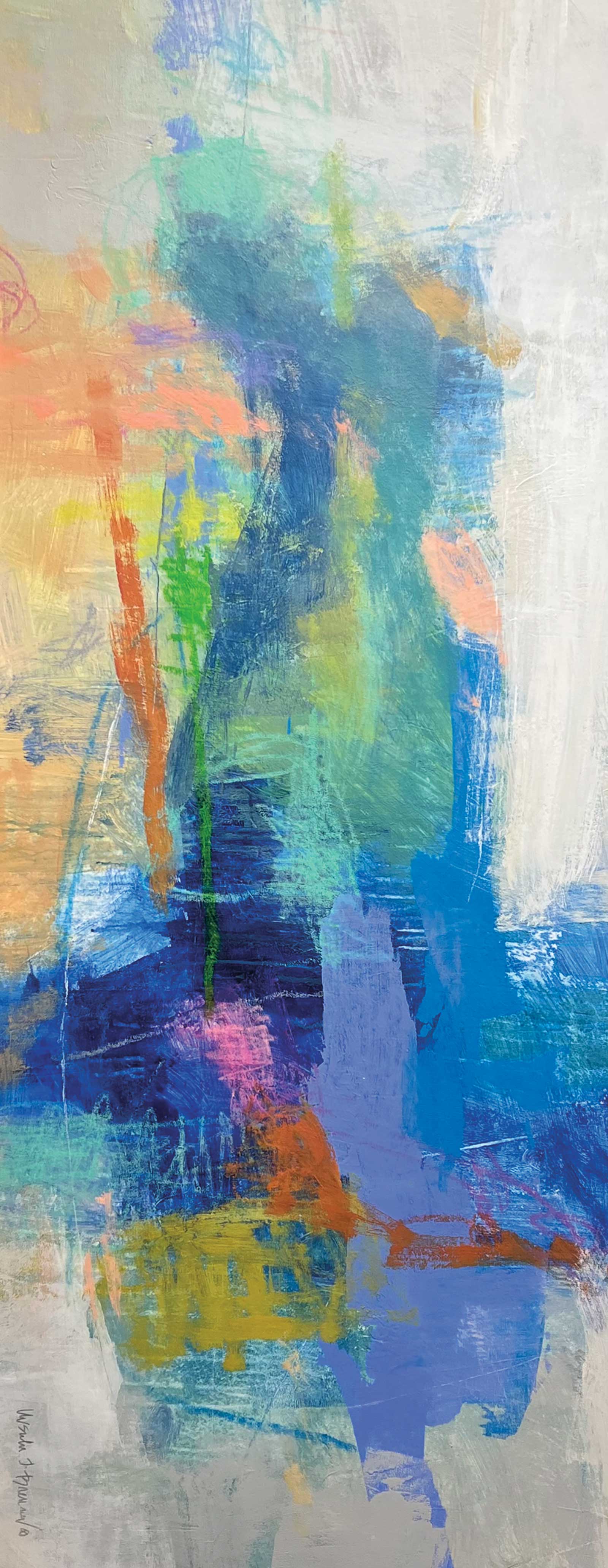
Art Post Gallery, Nantucket Memories, acrylic on canvas, 60 x 24”, by Ursula Brenner.
Meanwhile, Ursula Brenner’s contemporary abstracts use contrasts in form and color to underscore emotion in paintings that reflect a wide range of moods, from light and playful to deep and mysterious. For her, “work moves into abstraction when the artist no longer wants to depict reality as it is, but as he hopes it can be. Every color, line, shape, value and composition works in support of the whole. If you take any single element away, the whole dynamic of the work collapses. Abstraction is more than just emotion, it transcends the mundane. It can uplift and transport us somewhere else.” Her piece Nantucket Memories is meant to carry the viewer to the seaside and take in the beauty with all one’s senses, and to contemplate the essentiality of water to life. “What makes an abstract interesting, today and in the future, is a focal point, big shapes, small shapes, lines, a hierarchy of values, lost and found edges, surface, color, rhythm, pattern and tension,” she adds. “It is a balance between heart and intellect and should tell a story. When you look at a painting, they are all mini self-portraits, internal snapshots of a life.”
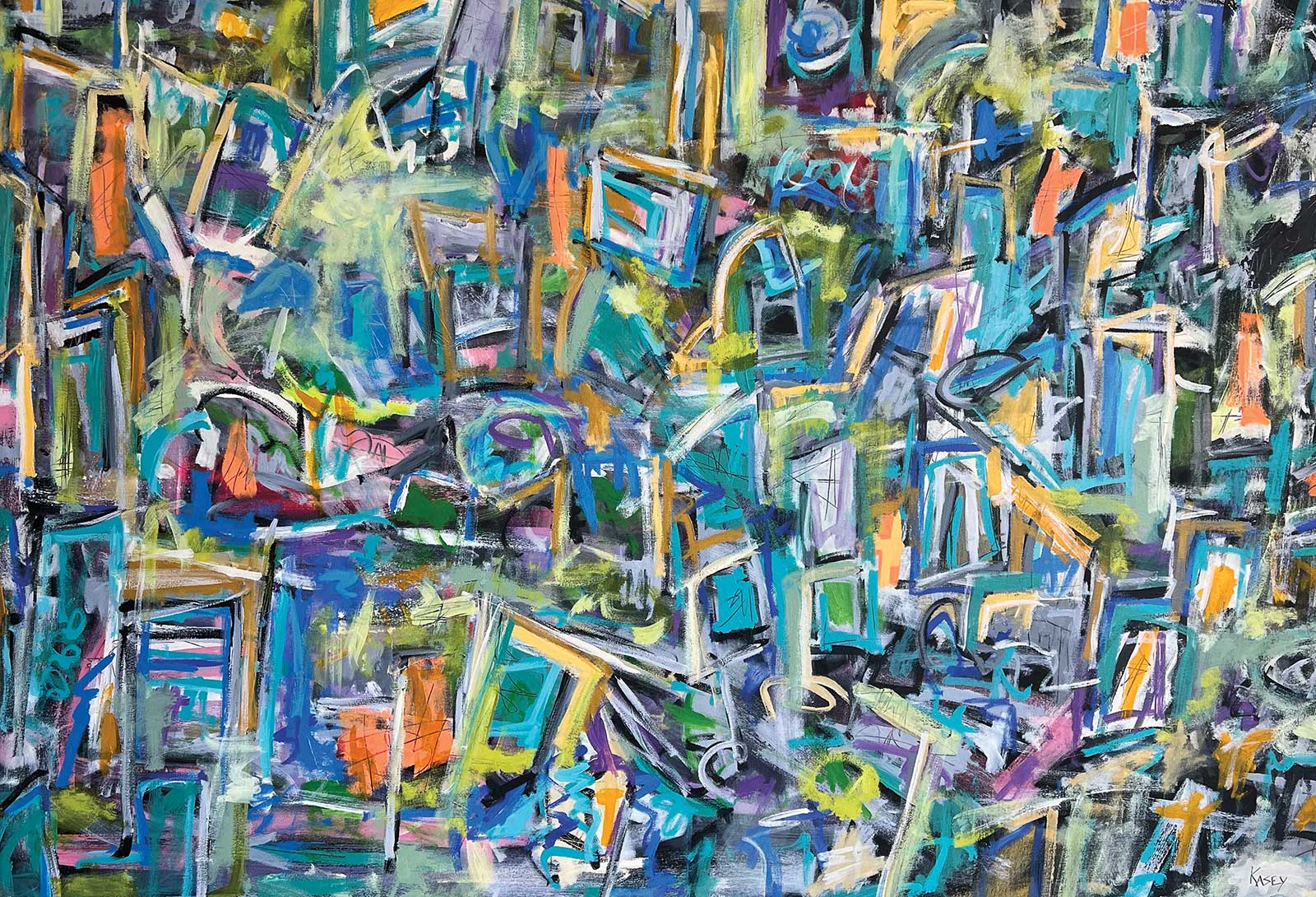
Art Post Gallery, Rebar, acrylic on canvas, 50 x 68”, by Kasey Child.
Even in Kasey Child’s painting Rebar, structural forms emerge from the dense abstract. “In my perspective, there are always elements of realism present in the work I create,” says Child. “I don’t think of my work as purely abstract but as abstractions of scenes, emotions or ideas. I’ve come to realize that the transition from realism to abstraction is subjective and viewer-dependent. What may seem obvious to me may appear entirely abstract to someone else. I now understand that people may have vastly different interpretations of my work, and that’s perfectly acceptable.” Painted while purchasing a home during a challenging housing market, Rebar reflects Child’s fascination with architecture and the intersection of nature and civilization. “Looking at it now, I know that I painted it as an aerial view of a landscape with an emerging city along the water, but I can also see a cartoonish shape of an alligator emerging from water. So, if a visitor to the gallery finds enjoyment in viewing the piece and perceives a crocodile, or something completely different than my intentions, I think that’s great.”
In the remainder of this section, we introduce you to additional artists creating abstract and modern art today, and a select group of galleries that carry contemporary works in the genre.
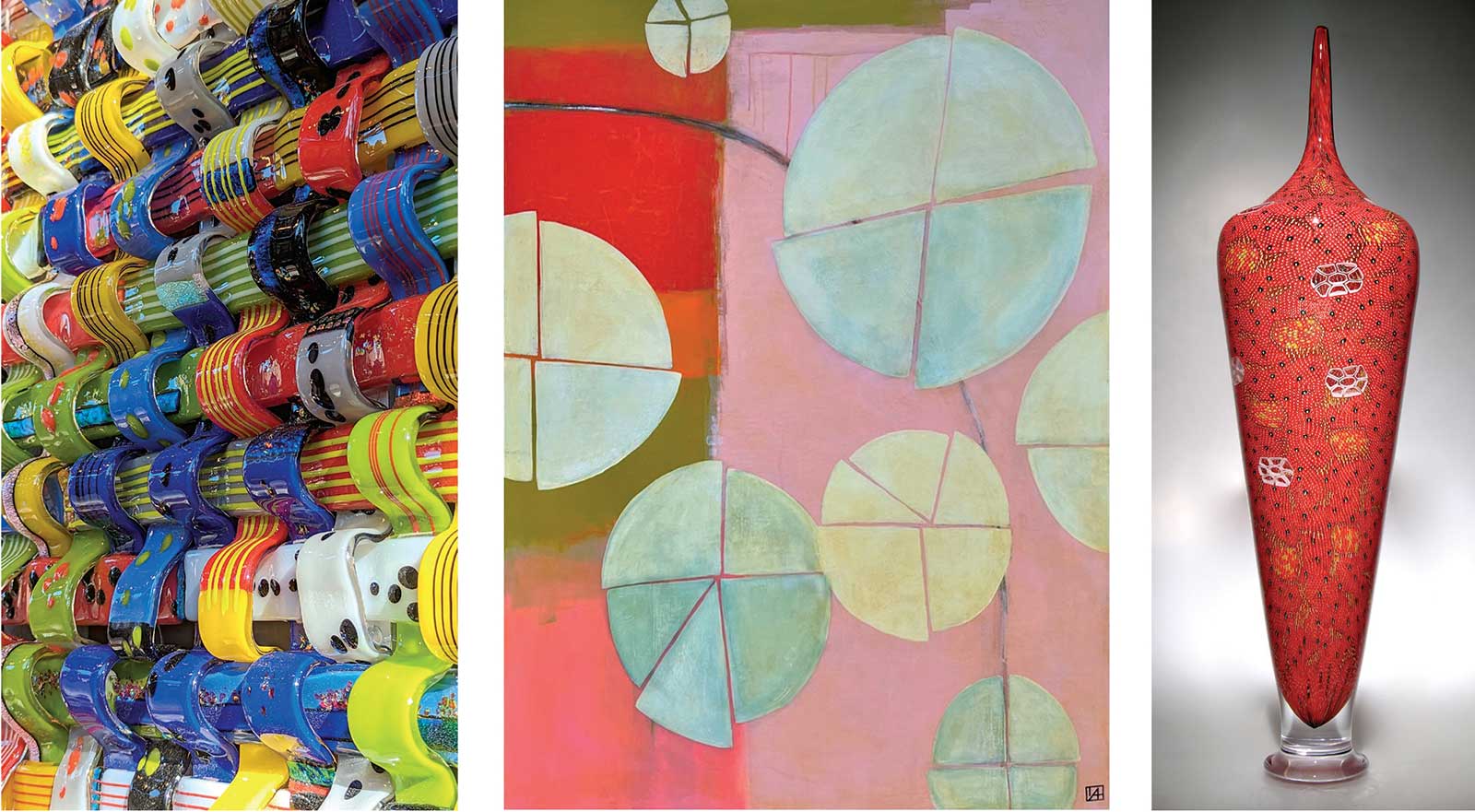
Festival of Arts of Laguna Beach, Pollinator, kiln-formed glass, 28 x 12 x 2”, by Sian Poeschl; Festival of Arts of Laguna Beach, Tell Me What You’re Dreaming, acrylic on panel, 54 x 40”, by Isabelle Alessandra; David Patchen, Vermillion Thread Parabola, glass, 29 x 8 x 8”
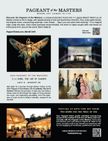
From July 3 through August 30, 100-plus juried artists from Orange County will converge in Laguna Beach, California, to showcase a diverse array of works at Festival of Arts of Laguna Beach, an event that began as a humble street fair in 1932. “The Festival of Arts serves as a top destination for art buyers and cultural enthusiasts alike, fostering an environment where innovation and diverse artistic styles can thrive,” says board of directors president David Perry. “It offers a unique opportunity to personally engage with artists, gaining insight into both their art and their artistic vision.”
Contemporary glass artist Sian Poeschl is among the many artists represented at the show. “Inspired by the organic forms found in nature and the geometric patterns of the urban landscape, I aim to capture a sense of fluidity and movement within the rigid structure of glass,” says Poeschl. “By layering opaque glass, I create a depth and complexity, inviting viewers to be immersed into its intricacies. I hope to foster a deeper appreciation for the artistry and craftsmanship of contemporary glass making.” For Lynn Welker, another festival artist, a commitment to abstraction and innovation is fundamental to her innate style of art-making. “Painting thought-provoking invented landscapes that challenge the eye of the viewer is what excites me,” she says.
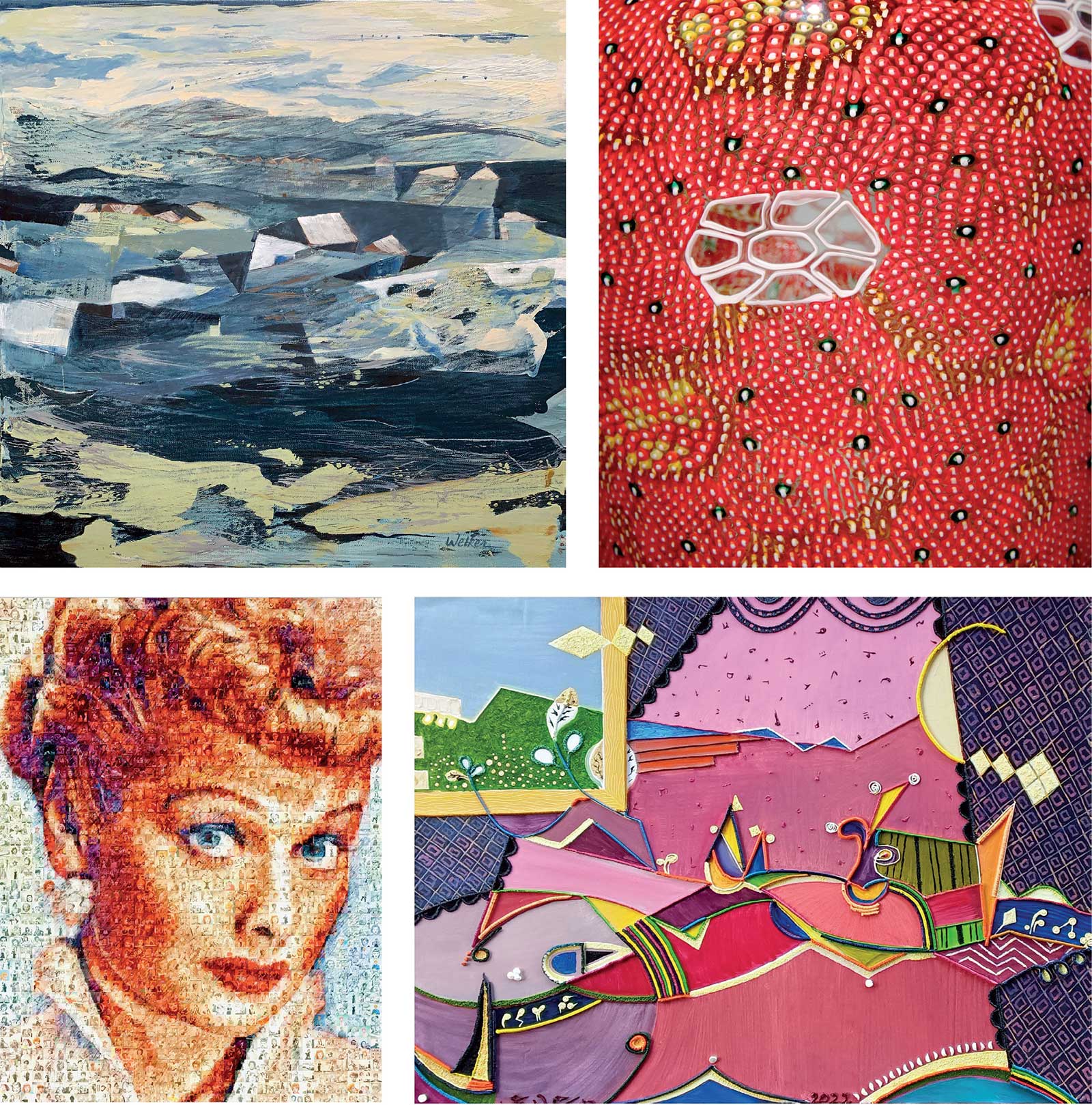
Top: Festival of Arts of Laguna Beach, Windy Cove, acrylic on canvas, 24 x 24”, by Lynn Welker; David Patchen, Vermillion Thread Parabola (detail), glass, 29 x 8 x 8”. Bottom: CODA Gallery, Lucille Ball, photo mosaic in acrylic, 60 x 45”, by Robin Austin; SVEN, Persian Garden, oil, 36 x 46”
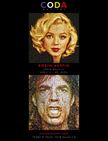
Robin Austin is an English artist known for his rich photographic mosaic artwork that employs thousands of images to create a cohesive visage of cultural icons. Represented by Coda Gallery in Palm Desert, California, each signed photo collage is a visual celebration of moments captured in time. An exhaustive amount of research and compositional planning goes into each digital canvas resulting in a retelling, a chronicling, of the spirit of pop culture that will never be viewed the same way twice. “Whether viewed from across the room or from 18 inches away, the cultural beauty of Robin’s iconic portraits is totally astonishing,” says CODA gallery director, Samuel Heaton.
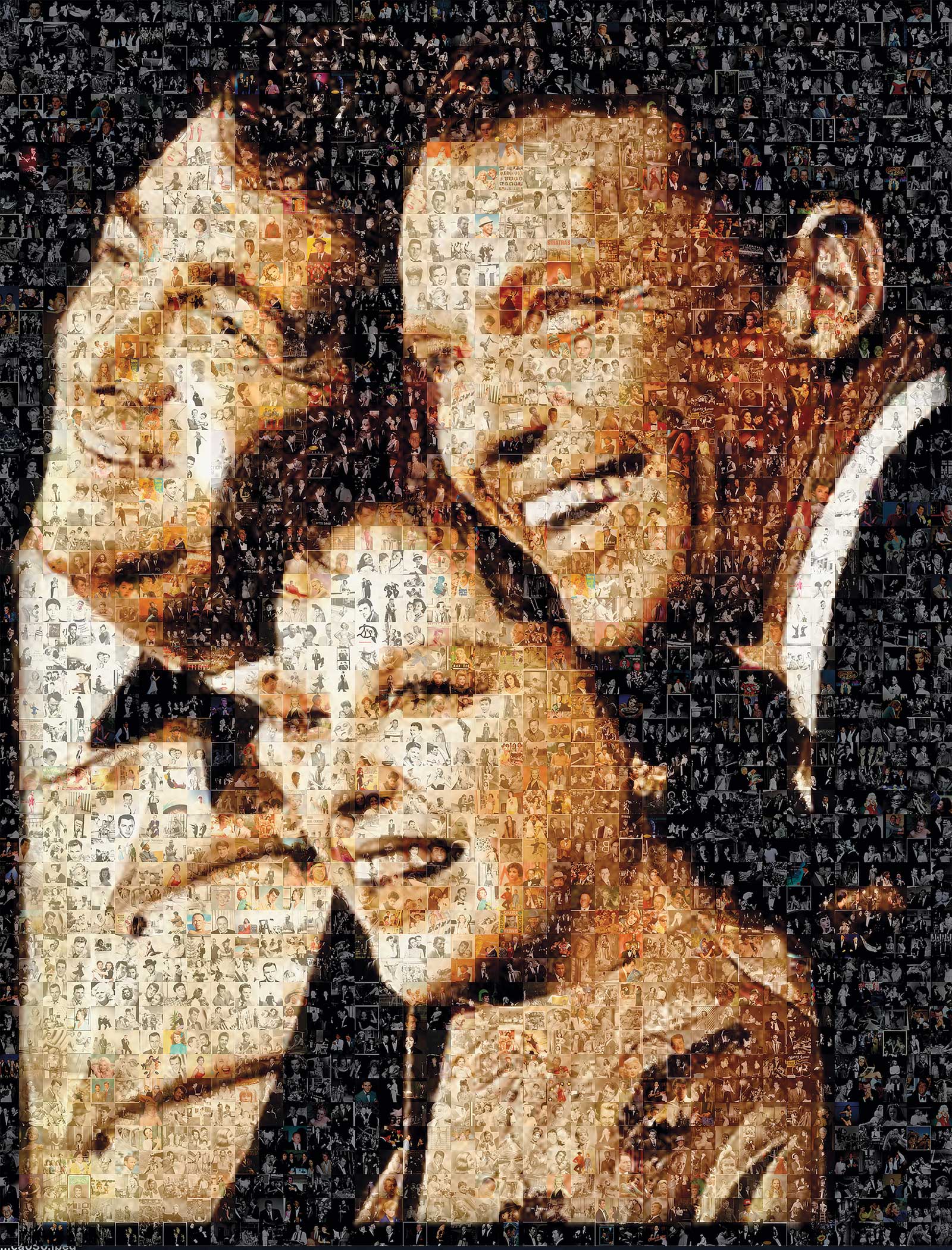
CODA Gallery, Dean, Judy and Frank, photo mosaic in acrylic, 52 x 40”, by Robin Austin.
San Francisco-based artist David Patchen is pushing the boundaries of what is possible with glass when it comes to detail, pattern and color combinations and the technical skills required to achieve his desired outcome. “The inspiration for my work is ephemeral and usually indirect,” he says. “I don’t consciously find inspiration in any specific source or topic, and creativity feels mostly subconscious for me. I often riff on visual ideas in a number of works, but while I design I’ll find many directions for ideas I want to explore. The opportunities to play with optics, detail, vibrant color and light are tantalizing and endless in my mind.”
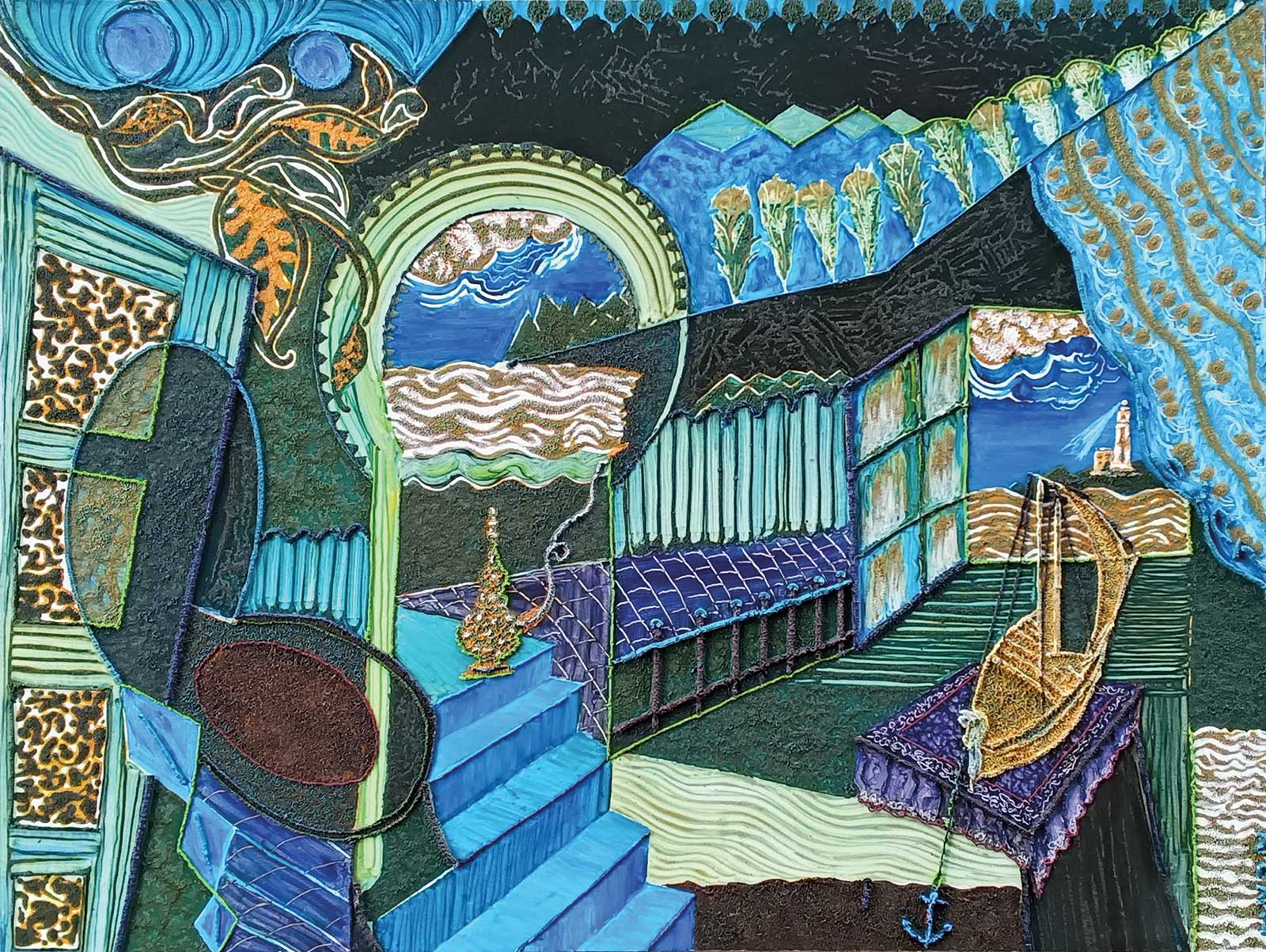
SVEN., Blue Nocturne, oil, 36 x 46”
Artist Sven paints in his modest studio by the Maumee River, where he finds an endless source of creative inspiration. “Maumee is a true beauty of northwest Ohio,” he says. “She’s crucial to my paintings—her light is essential and her essence is eternal!” Sven has sketched, drawn and doodled since his earliest days. Following his father’s warning not to “starve to chase ideals,” he pursued more “practical” degrees, but continued to create art through all of life’s twists and turns. Eventually those turns and twists worked their way in his paintings. “I try to have five corners to my works—spiritual, meaningful, beautiful, natural and universal,” Sven says. “That pentagram, that deep down, is in all beings.” Sven’s applications of oil and his innovative techniques lend a distinctive three-dimensional aesthetic to his works that have earned him a loyal following of collectors.
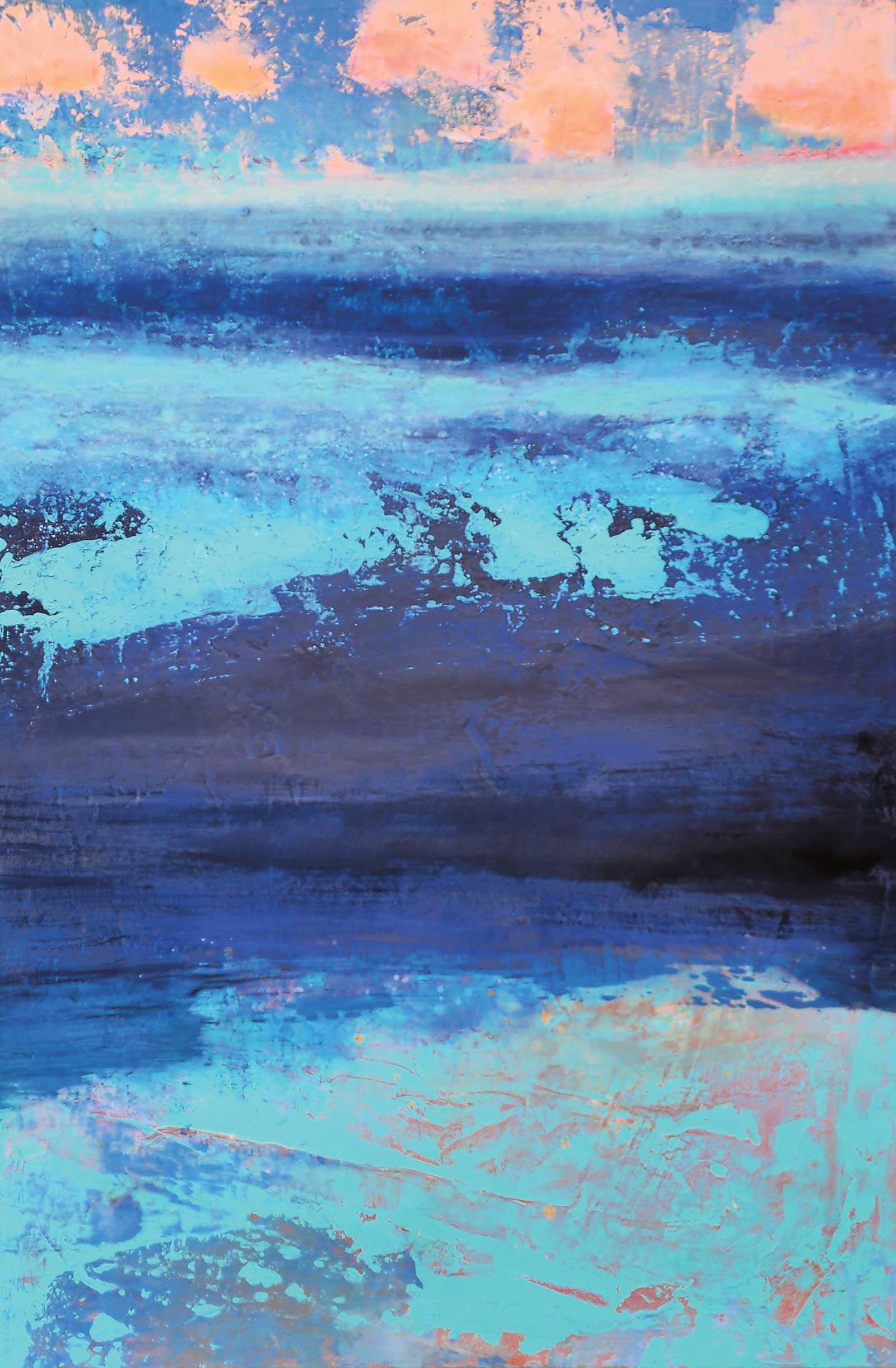
Sally Murphy, Untitled, acrylic on panel, 36 x 24”
Sally Murphy is both a representational and abstract artist who paints in a variety of mediums and techniques. She finds a different satisfaction in both styles of art-making. “Whereas representational art is a straightforward approach to a story begging to be told, abstract art is an alternate form of language that can tell a bigger story with no marked edges to give shape to a clear narrative,” she says. “I find more freedom in abstract art—it’s about blurred definitions, a synergy of color, movement, tone and composition that can resonate like sound.” —
Featured Artists & Galleries
Art Post Gallery
984 E. Willow Road, Northbrook IL 60062
(847) 272-7659
www.artpostgallery.com
CODA Gallery
73400 El Paseo, Palm Desert, CA 92260
(760) 346-4661
www.codagallery.com
David Patchen Handblown Glass
(650) 740-9794
david@davidpatchen.com
www.davidpatchen.com
Festival Of Arts Of Laguna Beach
650 Laguna Canyon Road Laguna Beach, CA 92651
(800) 487-3378, hello@foapom.com
www.lagunafestivalofarts.org
Hirschl & Adler Modern
41 E. 57th Street, New York, NY 10022
(212) 535-8810 www.hirschlandadler.com
Sally Murphy
(928) 254-1477
sallyjanellmurphy@gmail.com
Sven
(567) 703-7024
arthashikare@gmail.com
www.artbysven.com
Ursula Brenner
www.ursulajbrenner.com
Powered by Froala Editor