Encaustic painting was practiced by the Greeks in the 5th century BC and was described by Pliny the Elder before his death in the eruption of Mt. Vesuvius in 79 AD. The most famous early encaustic paintings are the Fayum mummy portraits painted on panels in Egypt around 100 to 300 AD.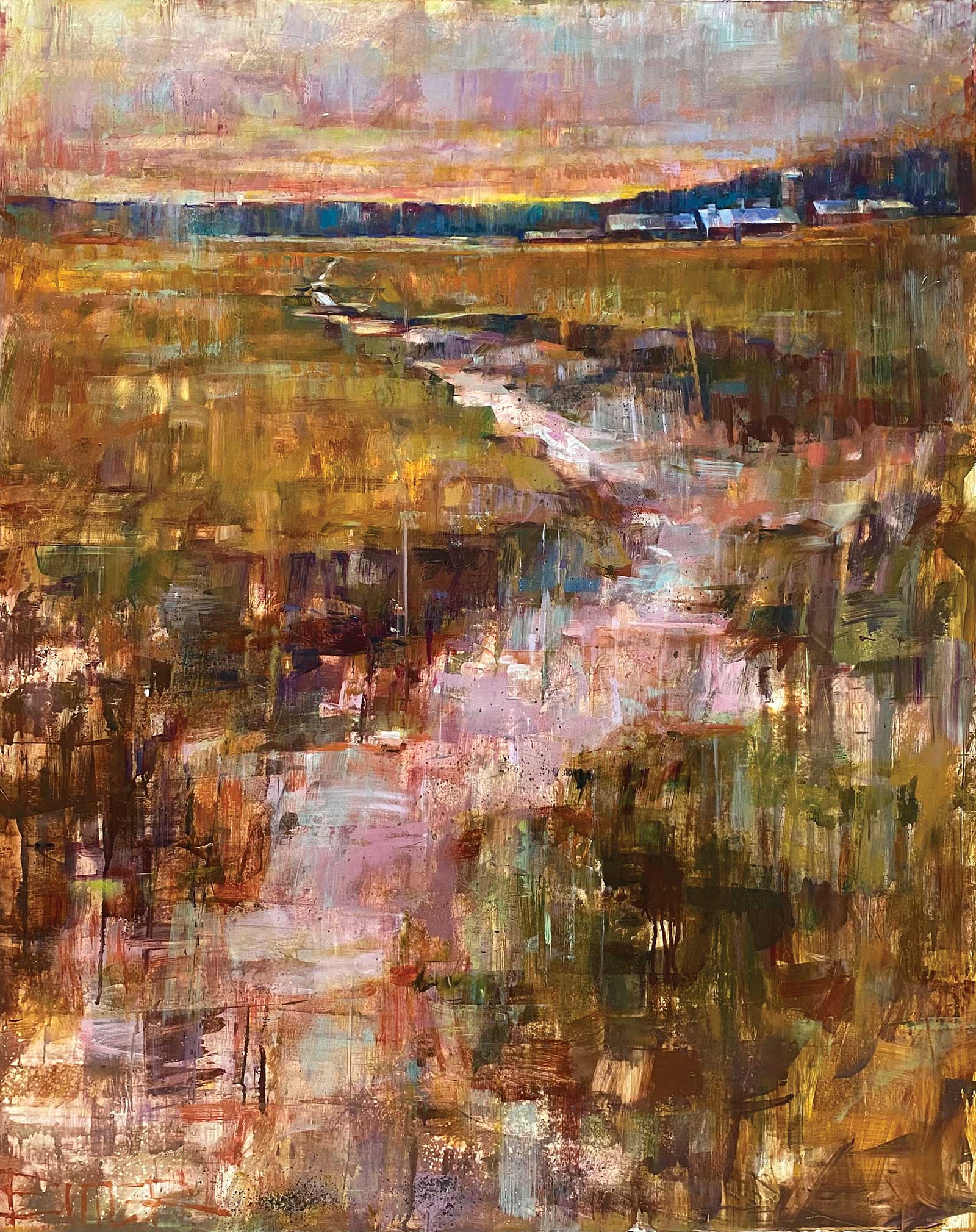 Family Farm, oil on canvas, 60 x 48"The word encaustic comes from the Greek word “enkaustikos” meaning to heat or to burn. Pigmented wax is heated and applied to wood panels or canvas to create a painting. Sometimes it is reheated to remove all traces of its application.
Curt Butler is a master of contemporary encaustic technique, creating paintings that attract with their realism from afar and whose surfaces are alive with the manipulation of the medium, as if he had sculpted the surface.
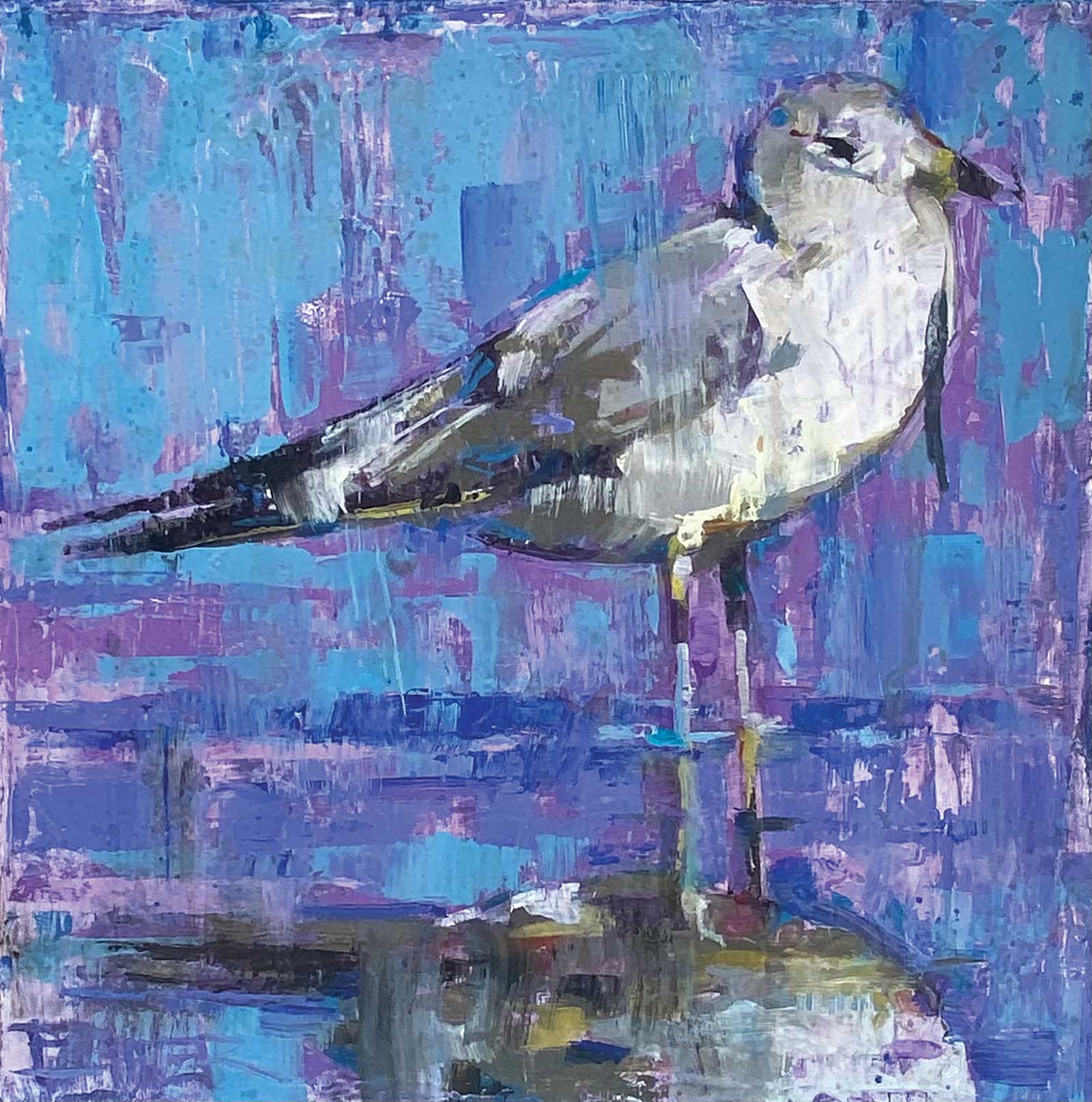
Gather, oil on canvas, 12 x 12"
“At times. I am building up the surface and at other times, I am subtracting or carving into the surface of the paint,” he explains. “Encaustic painting with oil has given me the emotional response that I am currently seeking in my work. To be able to suggest a subject rather than illustrate it, to literally feel the surface of the paint and to be able to engage the viewer from a distance, and yet retain them when they are close are all reasons I choose to work the way I do.
“I enjoy the play of carving back into the wax with a palette knife to create different textures. Heating up the wax allows me to fuse layers of paint to create a surface that is varied and complex.”
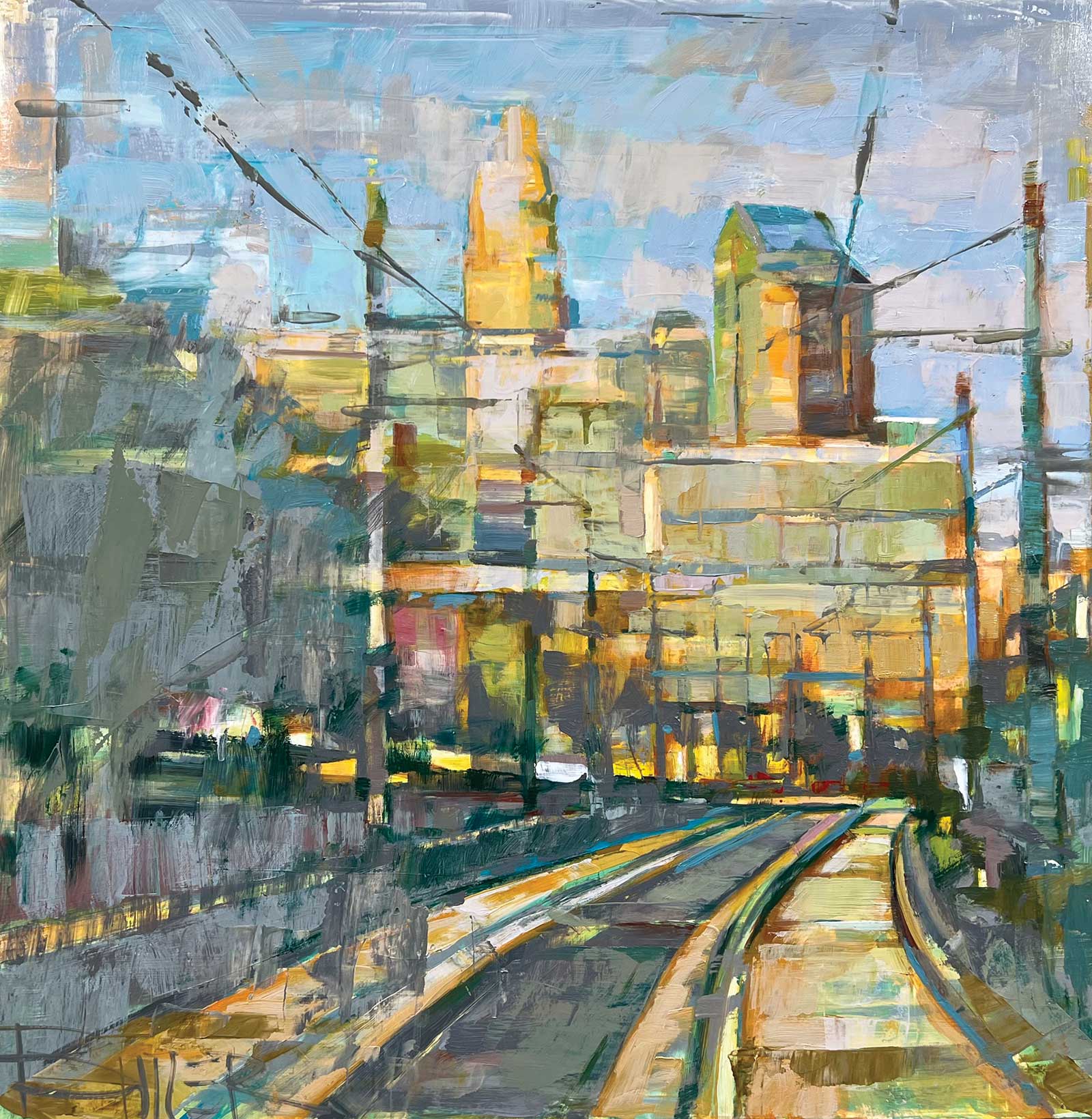
Rail Line, oil on canvas, 30 x 30"
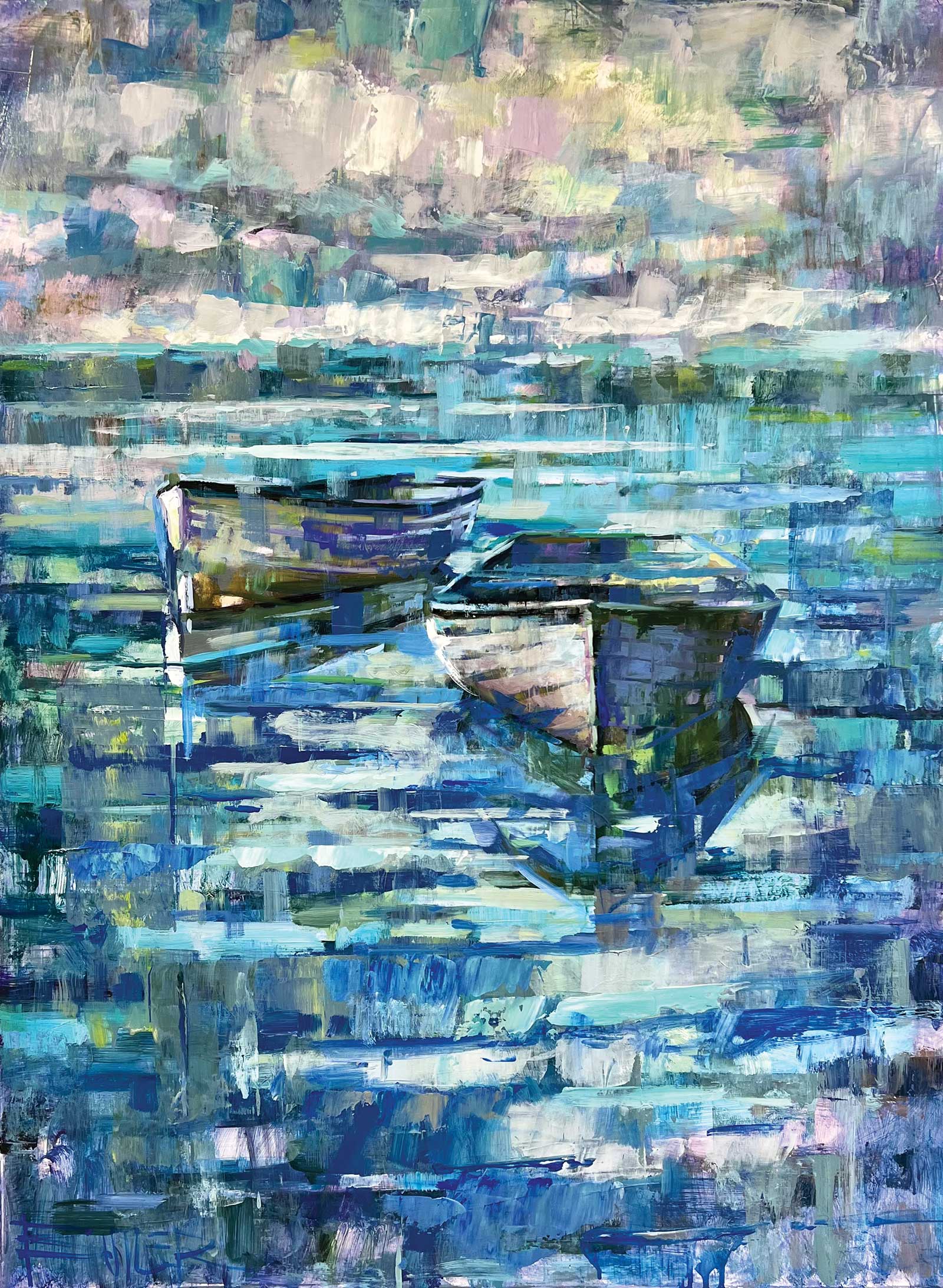
Eager and Trail, oil on canvas, 48 x 36"
Butler’s paintings can be seen in an exhibition at Shain Gallery in Charlotte, North Carolina, beginning April 14.
Among them is Eager and Trail,a 4-by-3-foot canvas of rich, jewel-like passages coalescing into an image of two boats floating on the water. The boats, as vessels, suggest our own human vessel to Butler. Perhaps a little timeworn but ready to continue the journey.
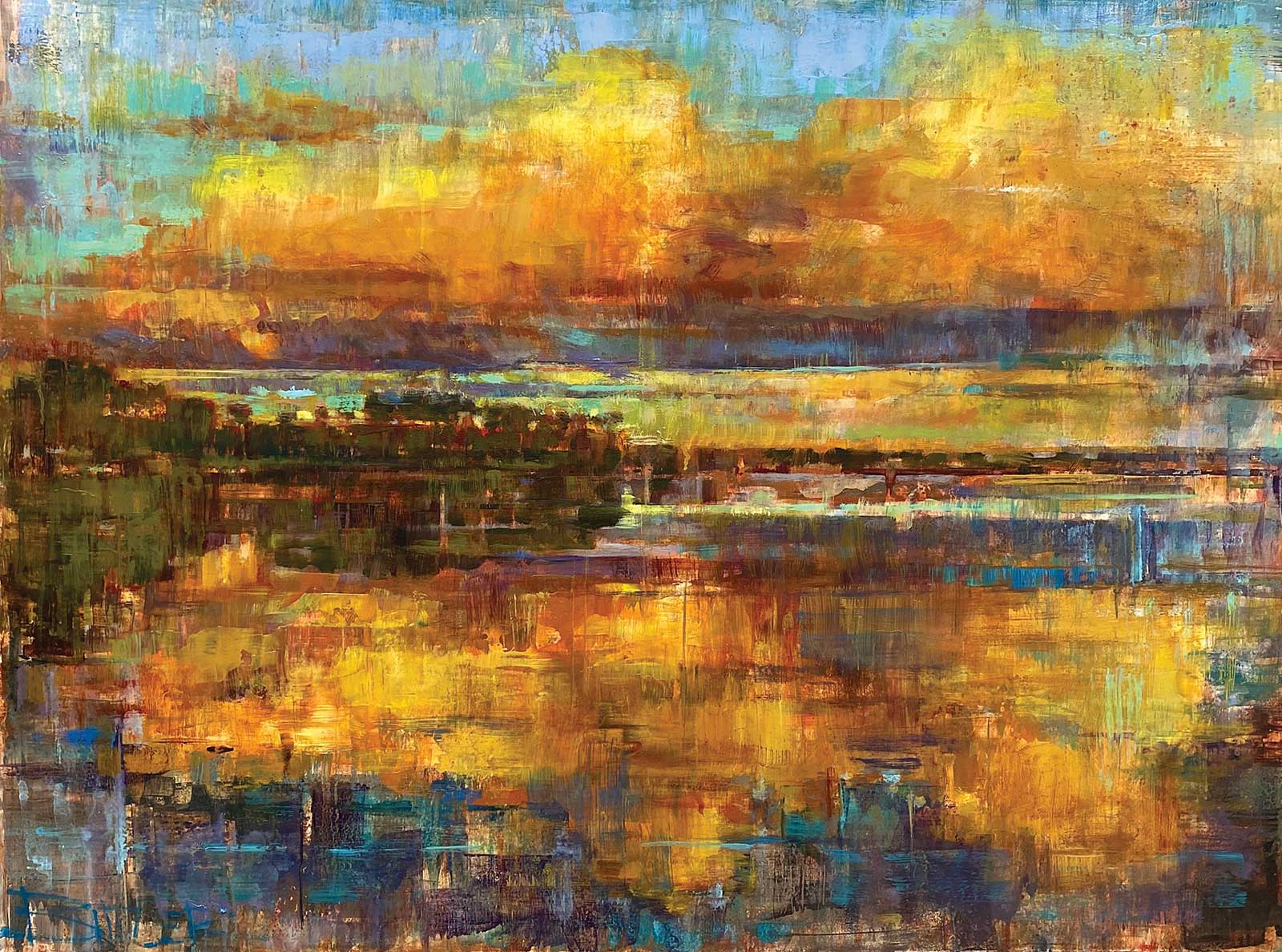
Nightfall, oil on canvas, 36 x 48"
Butler paints in the Lowcountry of North Carolina, a region rich in tradition and its connection to the land and the sea. In the case of the Lowcountry, the transition from land to sea is often softened by salt marshes, crucial to the food chain, as well as literally softening the effects of ocean waves. His paintings of the coast celebrate these interrelationships.
The paintings in the exhibition range from the large Eager and Trail to the intimate encounter with a shore tern in Gather, executed on a 12-by-12-inch canvas. —
Shain Gallery
2823 Selwyn Avenue, Suite K • Charlotte, NC 28209
(704) 334-7744 • www.shaingallery.com
Powered by Froala Editor