Treacy Ziegler describes herself simply. “Fine artist. I am a multi-mediums artist working in painting, sculpture and printmaking.” She lives with her husband, sculptor Gary Weisman, on more than 80 wooded acres outside of Ithaca, New York. Their son, Jack, has moved on to win awards as a director and cinematographer in Toronto.
A short walk through the woods from their house is Treacy’s studio, expanded since I first visited nearly 30 years ago, and just a stone’s throw beyond is Gary’s studio and bronze foundry.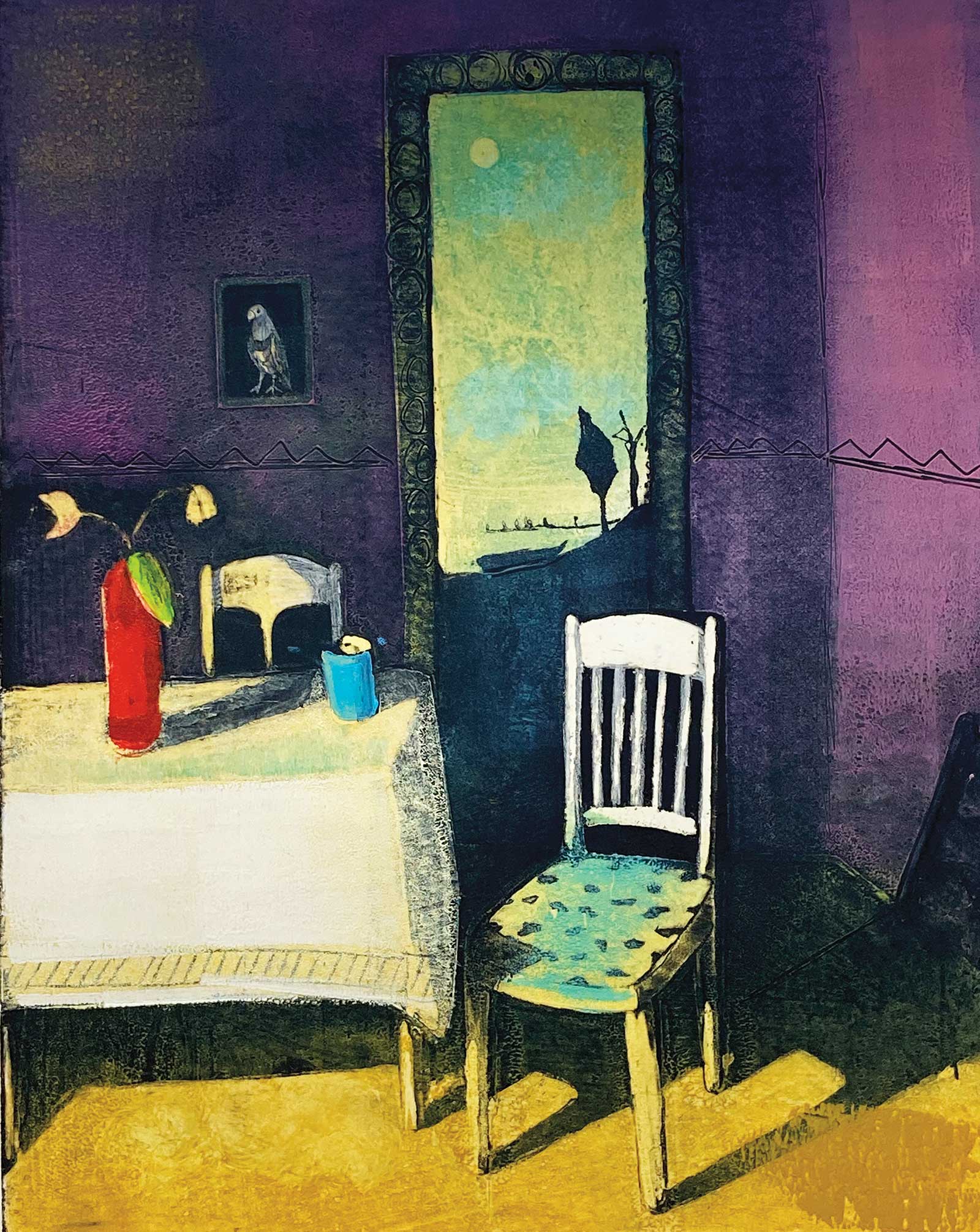 Crossing the Border, monoprint, 26 x 20". Courtesy Newbury Fine Arts, Boston.When I contacted her about writing an article about her and her work, she and Gary were in Toronto visiting Jack. To start the ball rolling, she referred me to an essay she wrote for the “Broad Street Review” in Philadelphia, where she had studied at the Pennsylvania Academy of the Fine Arts (PAFA). In the essay, “When Words Get in the Way,” she writes, “Art is vast. And when I hear the adage, ‘A picture is worth a thousand words,’ I feel as if an act of piracy has been committed against art. It is the piracy of branding art as quantifiable and accountable to words; apparently accountable to a thousand words…Art is unknowable. It happens to me over and above my wanting, doing and thinking. What I intend and anticipate is irrelevant. It is the happening where I discover ‘wow’; that borderless world where art exists without why and just because.”
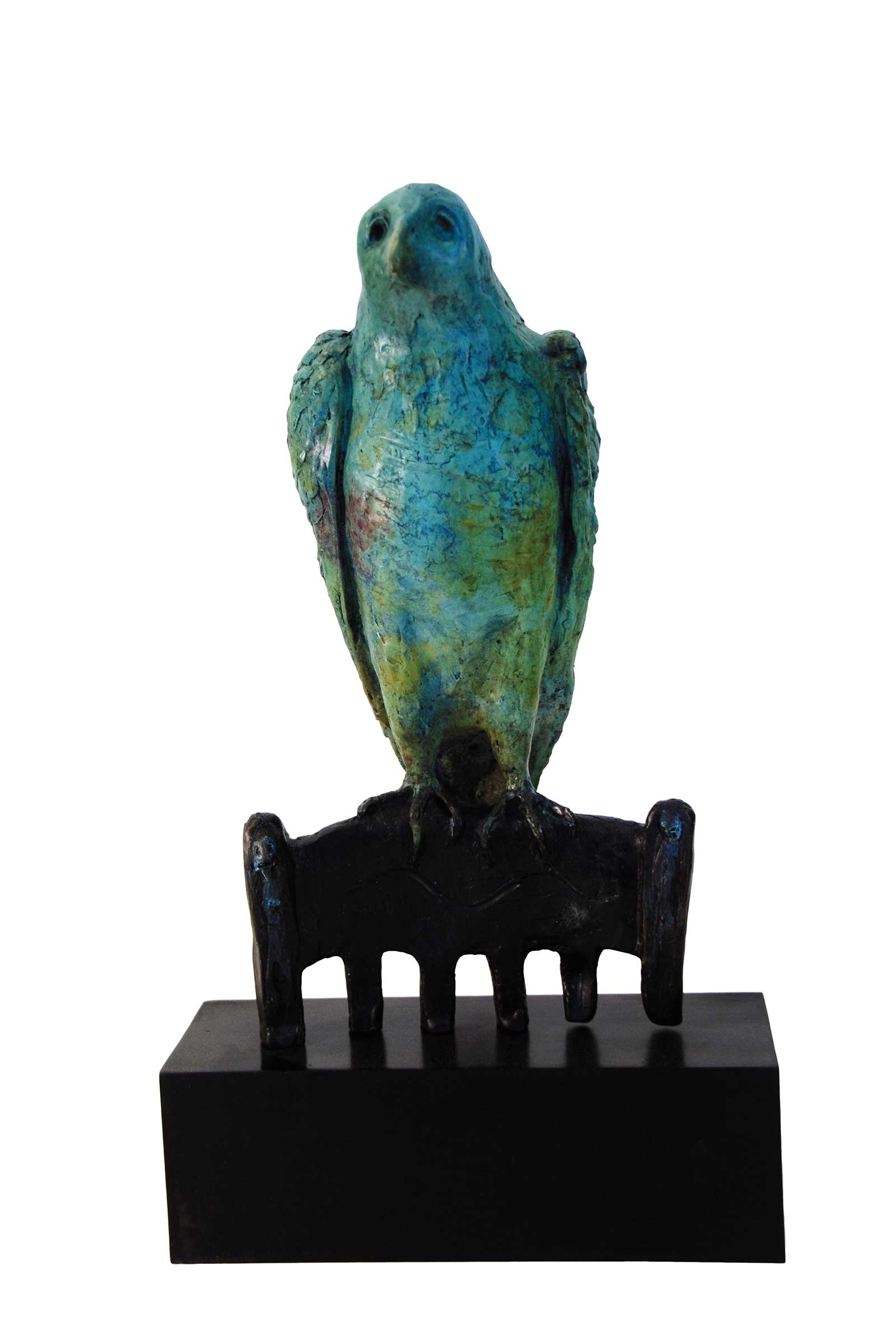
Hawk on an Empty Chair, 2018, bronze, 15 x 12 x 4", ed. 3 of 3. Courtesy Newbury Fine Art, Boston
Before she attended PAFA, she was a family therapist, having studied social work at the University of Pennsylvania. There, too, “why” was a problem. She explains, “It was always a dead end to ask why. Because the ‘why’ question always evokes what would have been or should have been. As a social worker, you’re not the one who comes up with the solution. You become the catalyst for others to come up with the solution. The question is not ‘Why?’ but ‘How?’”So, to the “how” of art. She has always been interested in art and felt that “art is nothing if it doesn’t start in drawing from life. When I get seriously old the faculty I want to hold on to is drawing. It’s an intimate, quiet experience between you and the marks on the paper.
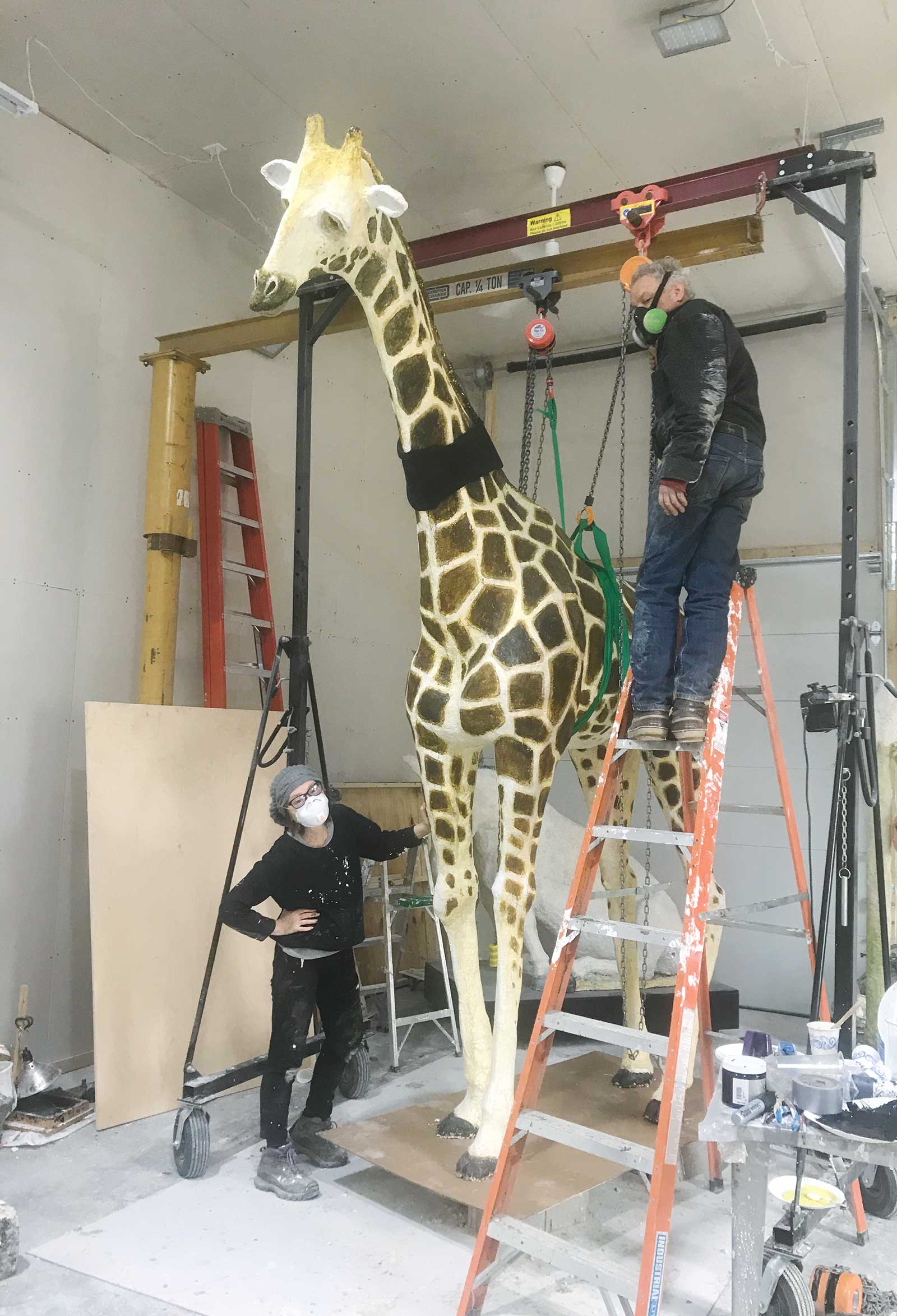
Treacy’s husband, Gary Weisman, adjusts the hoist on her cast paper sculpture, A Dream is Where We’ll Meet, 12 x 8 x 3'
“One day I was walking on the Cornell campus and walked into the atrium of a science building. There were glass cases around the perimeter filled with stuffed birds. I was mesmerized. It was so inspiring—like a gift. I thought, ‘I’ve got to come back and draw the birds. Since the cases were against the wall, I could only see them head on. Later, at the Cornell Lab of Ornithology I could draw the birds in the round.
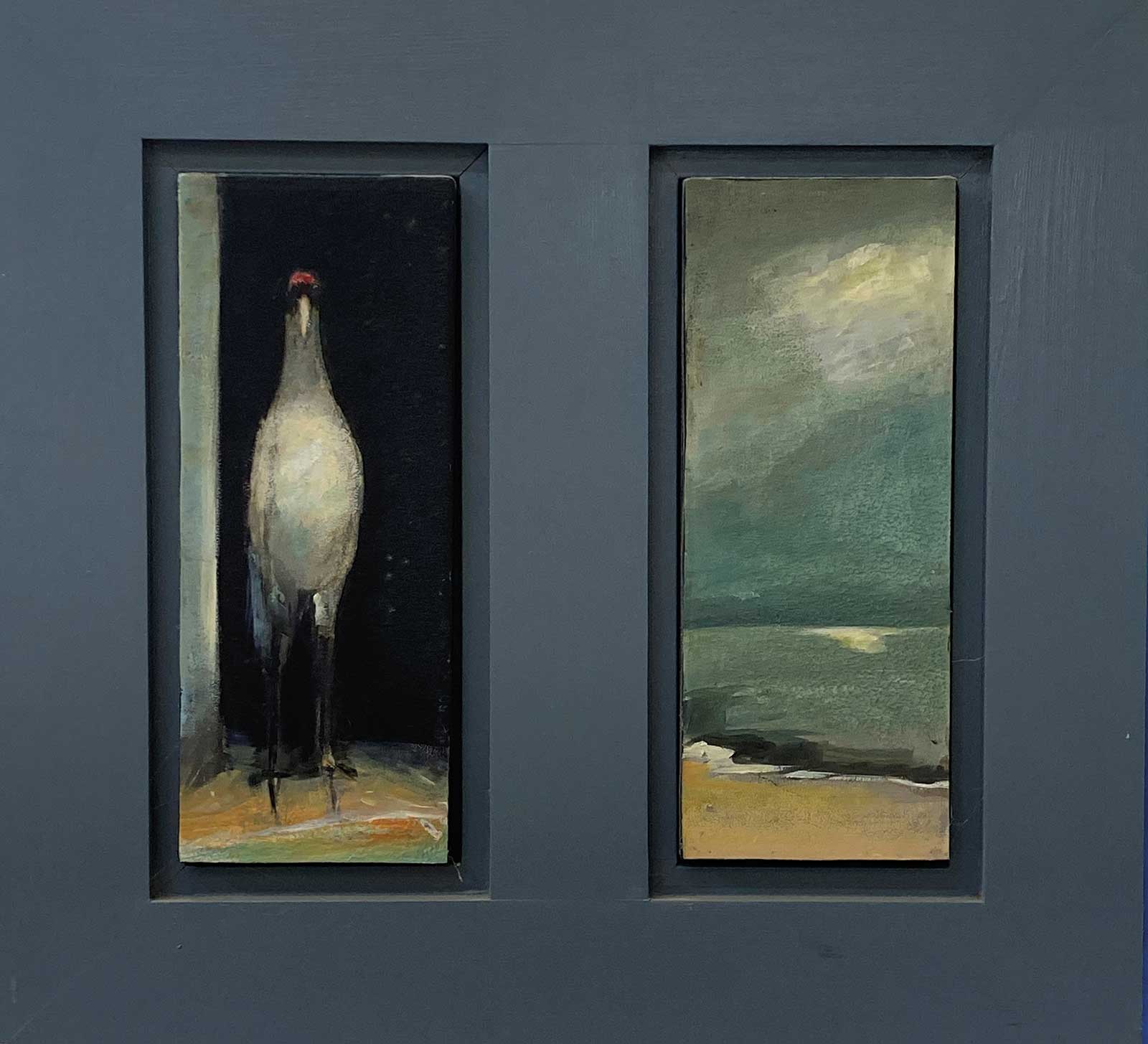
Emerging or Maybe Just Disappearing, oil on panel, 17 x 18". Courtesy Turtle Gallery, Deer Isle, ME.
“On our annual trips to Europe, especially Italy, Gary and I would spend our time drawing. We’d each go off and say, ‘I’ll meet you in three hours.’ Drawing is an exploration. You’re not trying to copy something, you’re trying to discover it. Once, after many hours standing in front of one painting, a guard came over and asked if I wanted to use his chair.
“When I began drawing from sculpture, my hand wanted to go into the sketchbook, I felt the form so intensely. I wanted to draw around it and make three dimensions. I later began gingerly to do reliefs. I learned how to do the molds, casting paper and concrete by myself. I also cast in wax which was not durable and Gary said, ‘Why not try one in bronze?’ I did reliefs in bronze and then pieces in the round.”
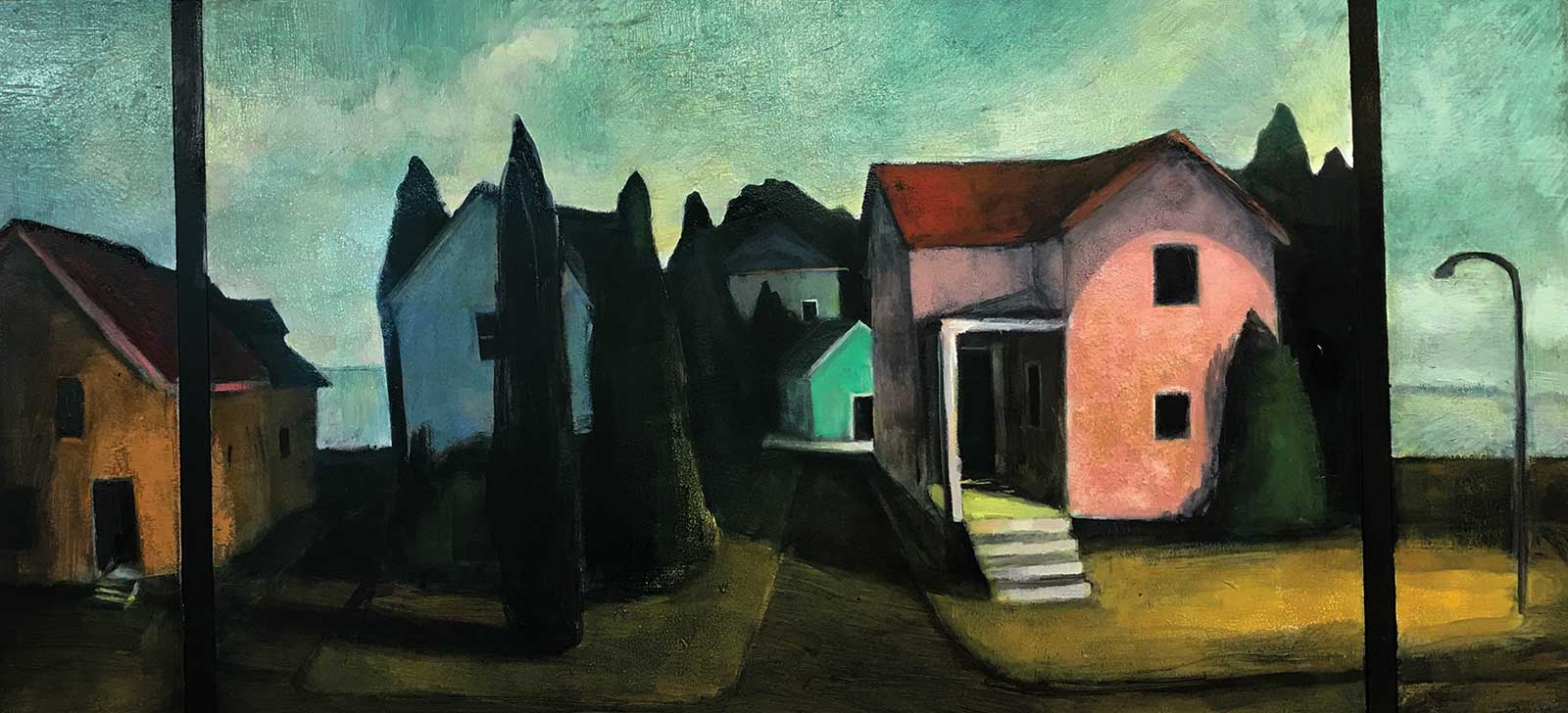
If the Sea Reaches My Grandmother’s House (triptych), oil on panel, 25 x 51". Courtesy West End Gallery, Corning, NY.
She began her volunteer prison work partly as a way to find a different audience for her work—one in which there was not a transactional relationship as with galleries and collectors.
She wrote to many prisons asking if she could have an art show there. “One of the first responses was from the warden of a supermax,” she relates. “It was chilling. He said these heinous inmates would not see my art and they would not see the light of day. The warden of one prison liked art and invited me to bring as much art as I could. I took 50 large paintings and they’re still in the dining hall and outside the cells. I didn’t know what the reaction would be. One prisoner told me, ‘These paintings are interesting. I’ve been here 50 years. These guys don’t care about nothin’ but some of them get emotional about looking at the paintings.’”
Treacy now runs the art program for Prisoner Express, a project of the Center for Transformative Action, a nonprofit organization in Ithaca. It “creates an opportunity for incarcerated men and women to get information, education and a public forum for creative self-expression.”
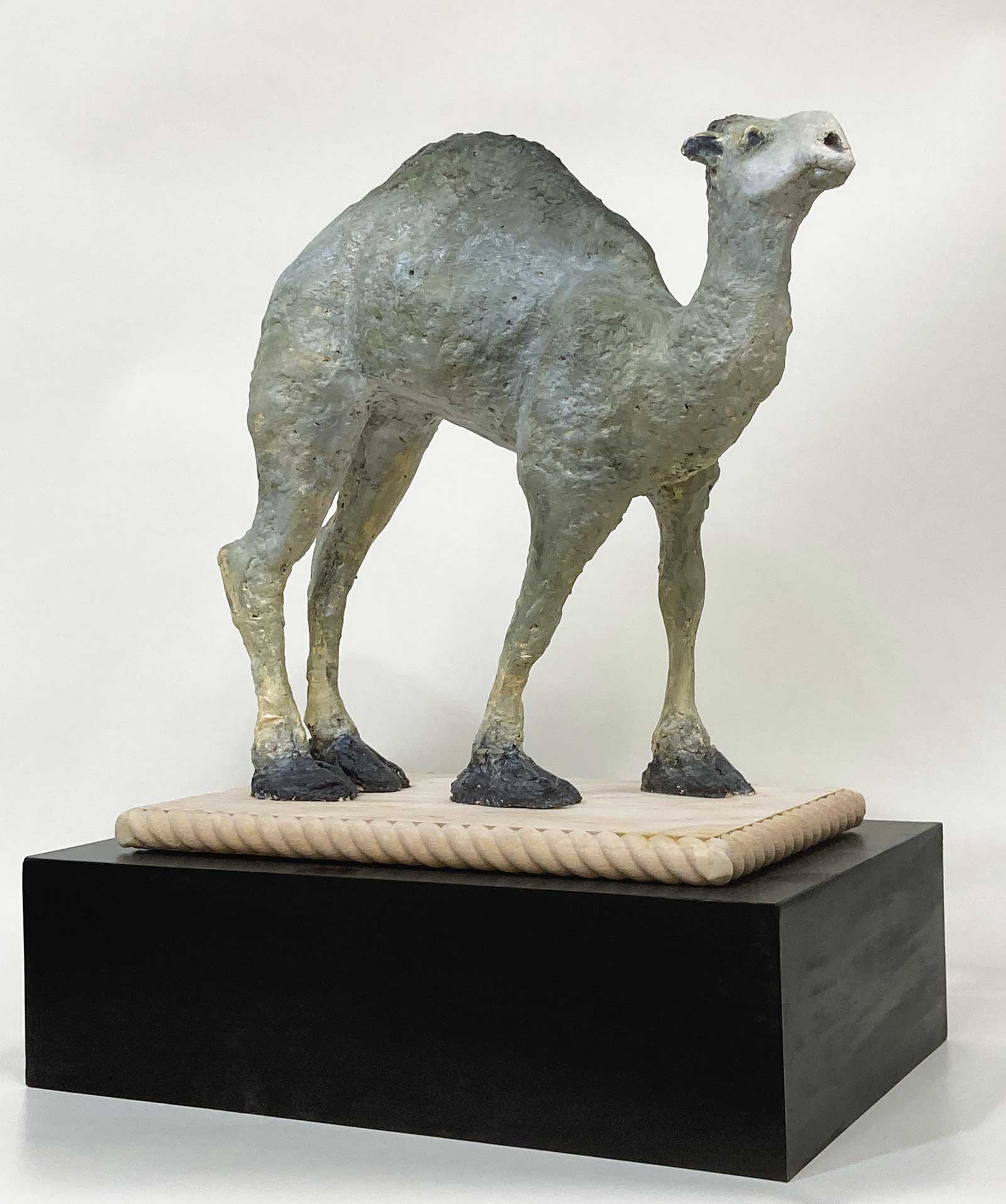
Leaving the Desert (camel), paper cast sculpture, 14 x 14 x 4". Courtesy West End Gallery, Corning, NY.
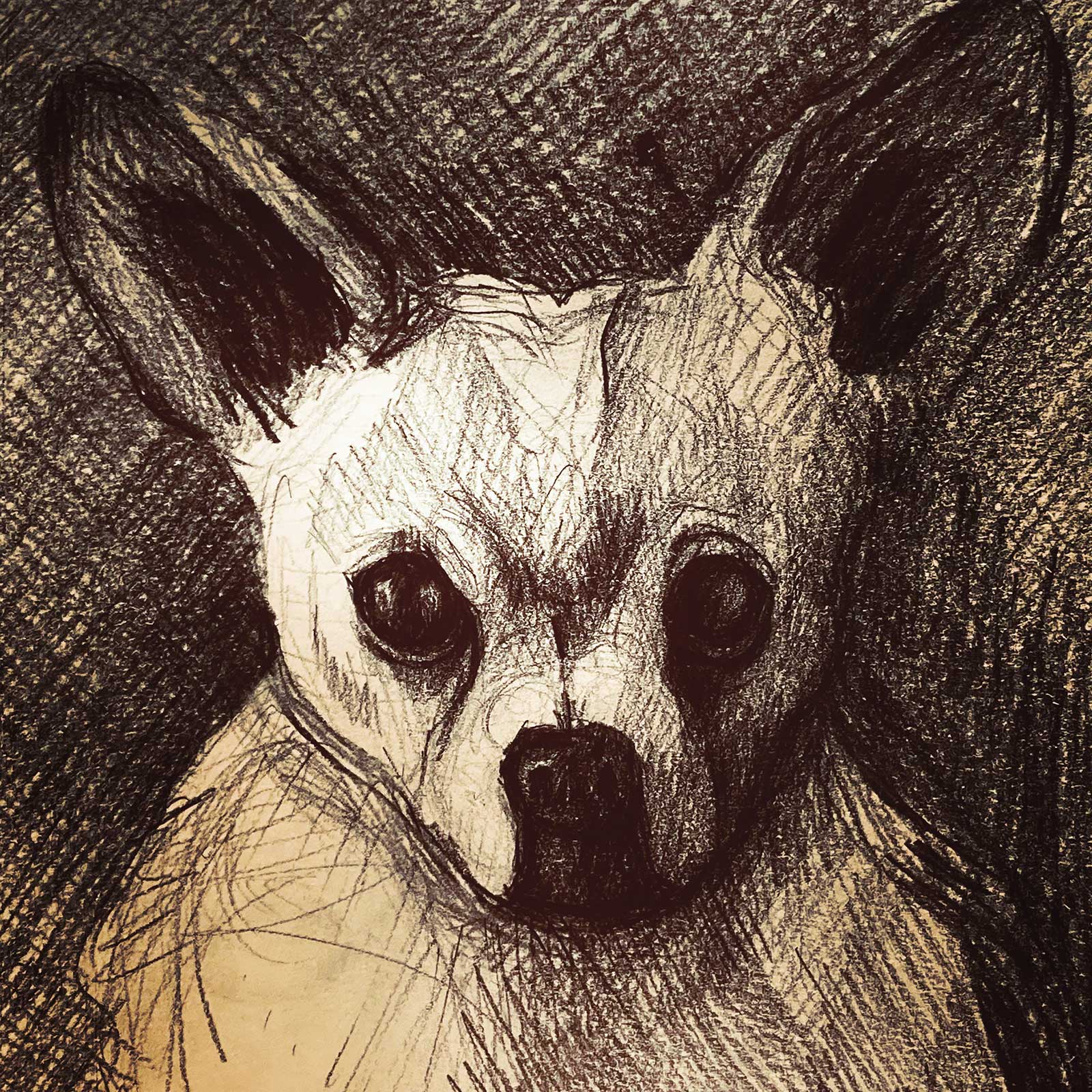
Little Shaggy, Prisma premier black pencil, 8 x 8". Courtesy the artist.
Prisoners affiliated with the project must write every six months about why they want to remain in the program. She reads and responds to each letter. As the letters piled up—over 20,000—she decided to incorporate them into her art. She shredded them, bought a high-powered mixer to turn them into pulp and pressed the pulp into the molds to bake for a couple of days.
Although the paper is far lighter than the bronze or concrete she had been using, the sculptures still required an armature to make them stable. To make the steel armatures she took welding classes at a local technical school.
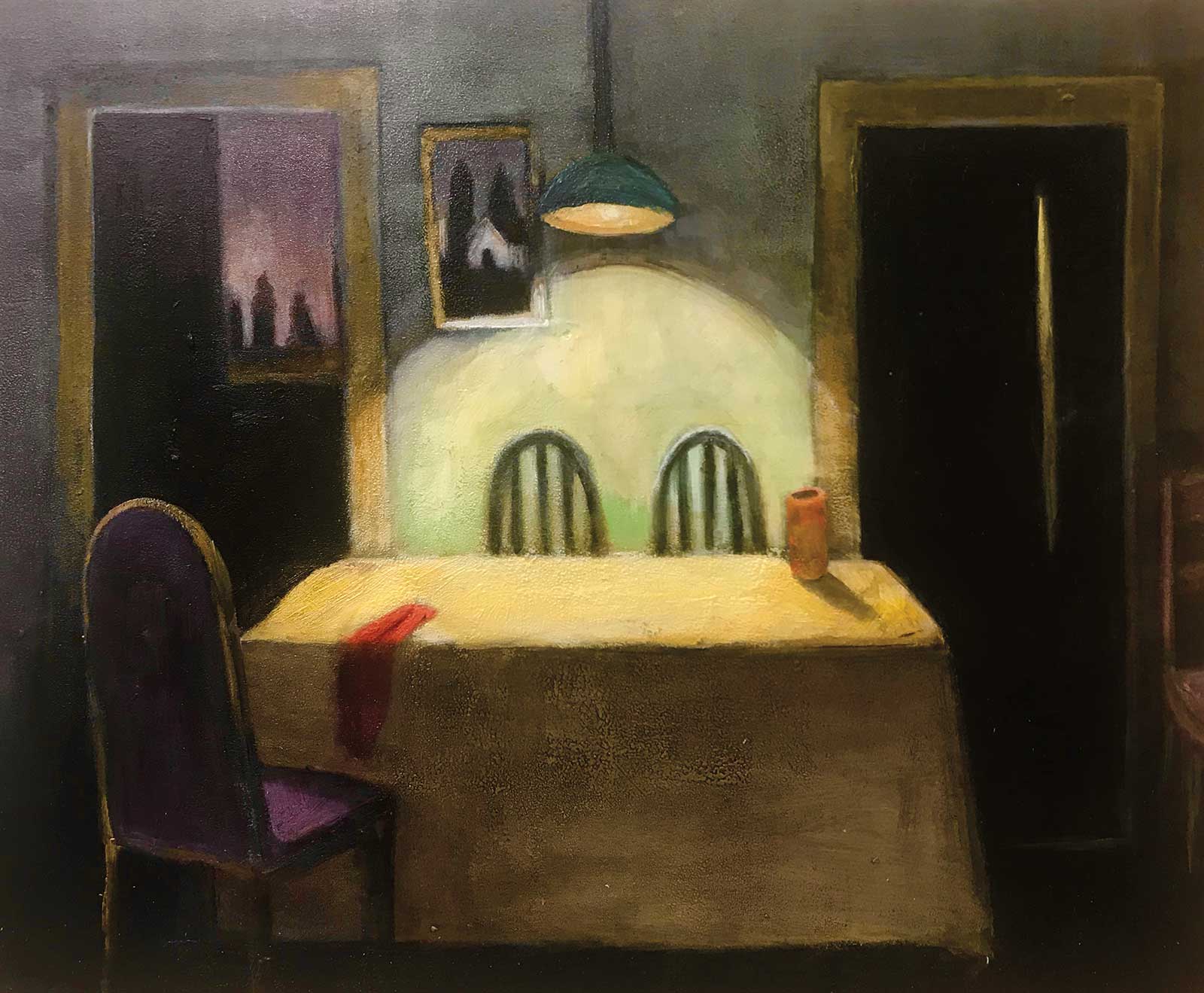
The Couple, 2021, oil on panel, 19 x 23½ x 2". Courtesy Stanek Gallery, Philadelphia.
The largest paper pulp piece is a 12-foot giraffe. “I thought about the otherworldliness of the giraffe. They’re so magical. They just don’t fit in. The giraffe reminded me of Clarence, a prisoner in solitary confinement who has been writing to me for years. In all likelihood, Clarence is diagnosed with paranoid schizophrenia.” He wrote to her:
I once measured myself and
I was nine distances upwards in height.
Nine widths in full circle;
four points in surface straight
across the level top.
This I will extend once freed
And we will make a temple
based upon you.
Treacy continues, “When I was an undergraduate student of community mental health, I worked with many people who were diagnosed with schizophrenia. My supervisors criticized me for loving to hear their stories. A different Clarence would tell me stories of working on the banana boats in the Philly port; tarantulas that were probably real and other creatures that were probably not. I can’t help but wonder why we are afraid of those with “thought disorders”? So much fear, that prison is filled with people so diagnosed.”
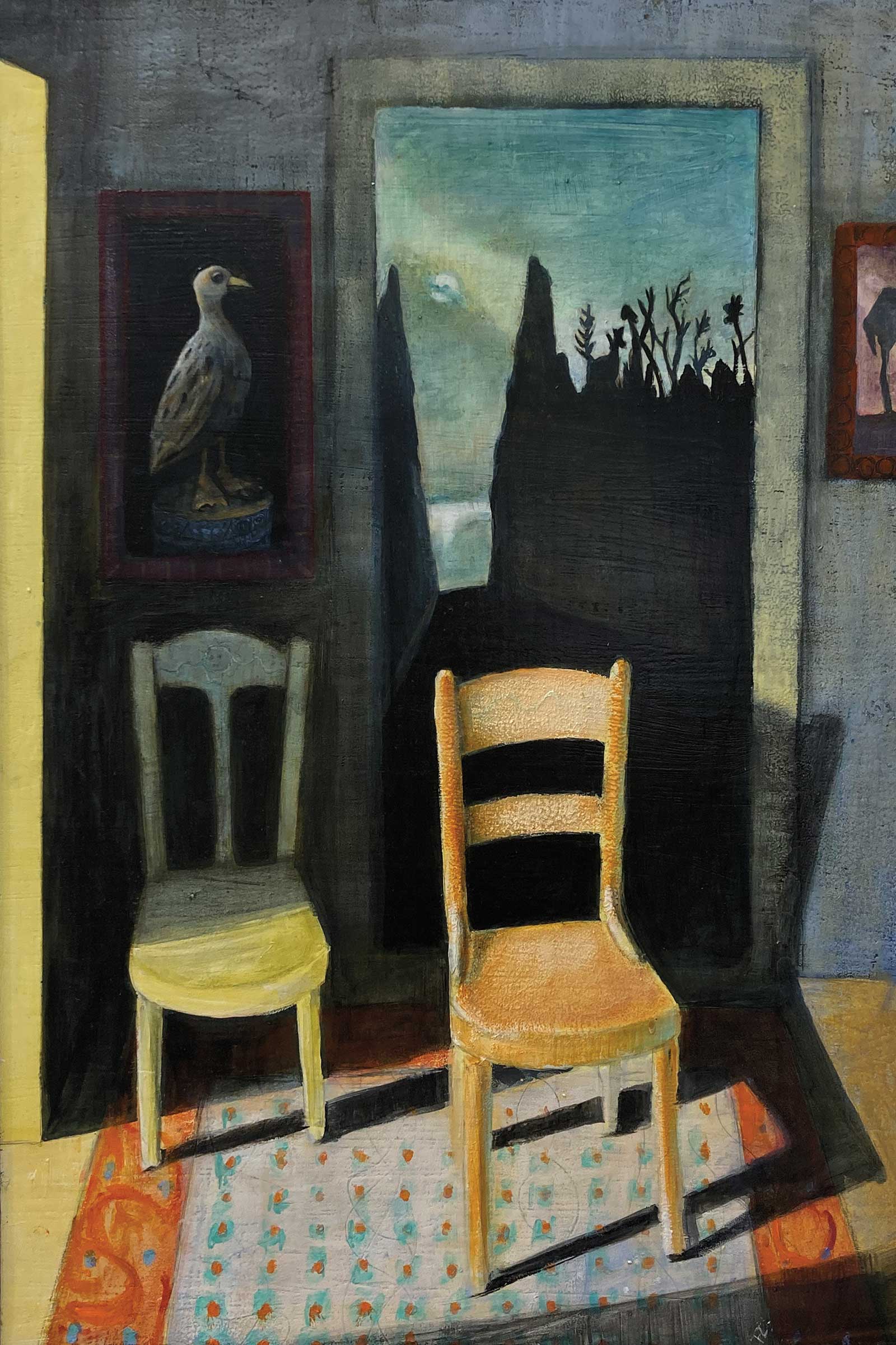
When They Came to Visit, 2022, oil on panel, 31 x 21". Courtesy Stanek Gallery, Philadelphia.
Chairs are prominent in Treacy’s monoprints and paintings. I’ve always been fascinated by them, wondering if someone has just left or if they’re awaiting someone’s return. I wondered if I wanted to step into the dark spaces and sit in one of the chairs, knowing that the mysterious spaces always offered an exit to the outside, the next place on a journey. When I asked her about her intention, she replied, “My intention is irrelevant. An artist is accountable to leave that space for the viewer. I was standing in front of my work at Art Miami when I heard one person say, ‘Oh. The chairs are so cheery. They make me so happy.’ Another person said, ‘They’re so depressing.’ I thought, ‘OK. I’ve arrived.’” —
Powered by Froala Editor