In 1977, the young glassmaker Josh Simpson toured a nuclear power plant in Vermont. As he peered down into a pool that held spent uranium fuel rods, the lights were turned off. He recalls, “I was profoundly moved by the intensity of the Cherenkov radiation emanating from the fuel assemblies so far below me...it was the most intense blue imaginable. I was struck by the realization that without the barium moderated water protecting me, that profound color would kill me. At that moment, I resolved to find a way to make that color in glass.”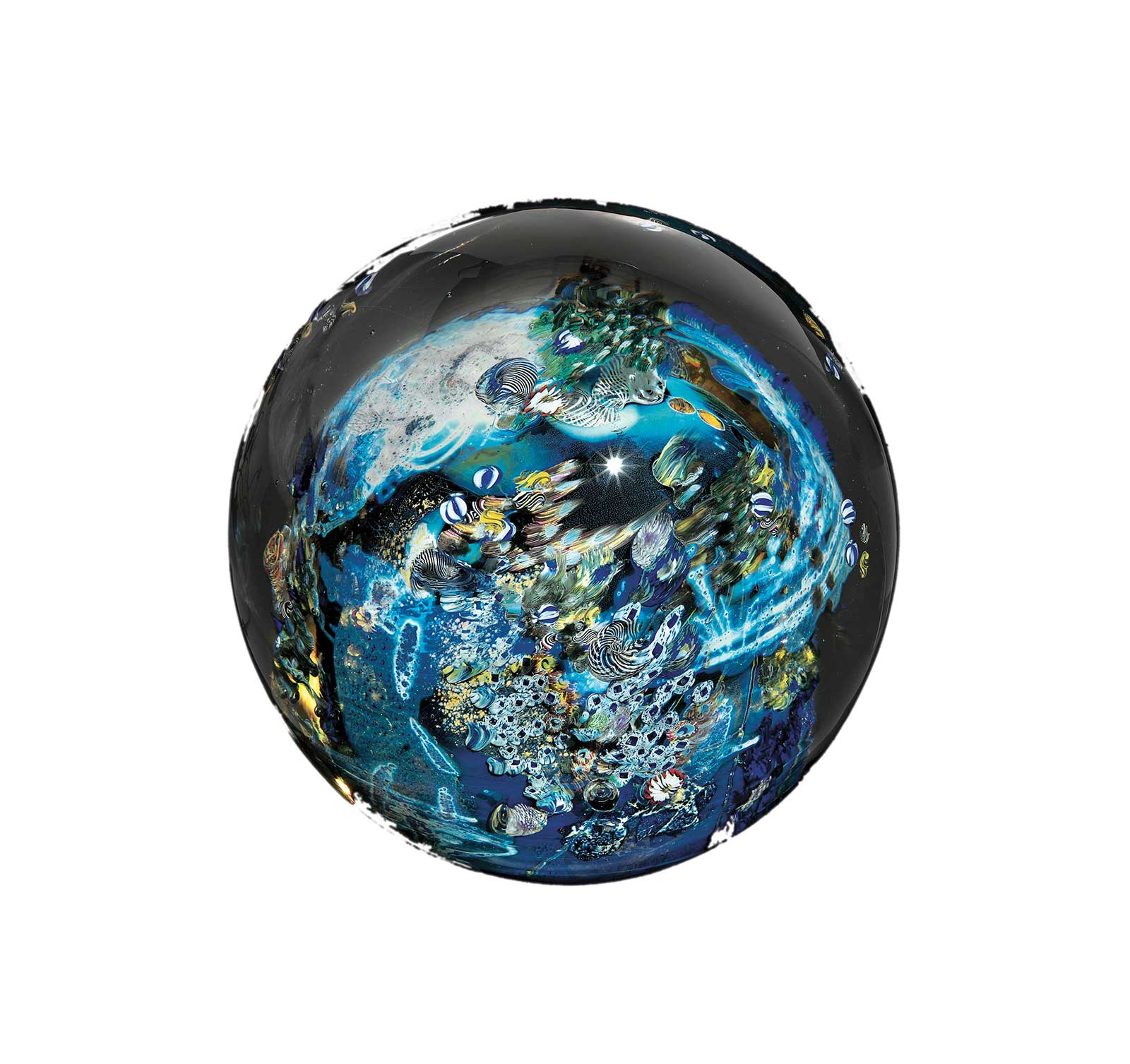 Corning Megaplanet, 2006, 13½". (Corning Serial 2006.4.154). Courtesy Corning Museum of Glass, Corning, NY.That same year, I became director of the Kenan Center in Lockport, New York, and inherited a first-rate annual show and sale called 100 American Craftsmen. Simpson was one of the exhibitors. Since then, I have followed his remarkable career in which happy accidents, extraordinarily hard work, experimentation and clear vision have resulted in art of surpassing beauty. In 1990, as director and curator of the Arnot Art Museum in Elmira, New York, we collaborated on the exhibition Josh Simpson: Glass Works.
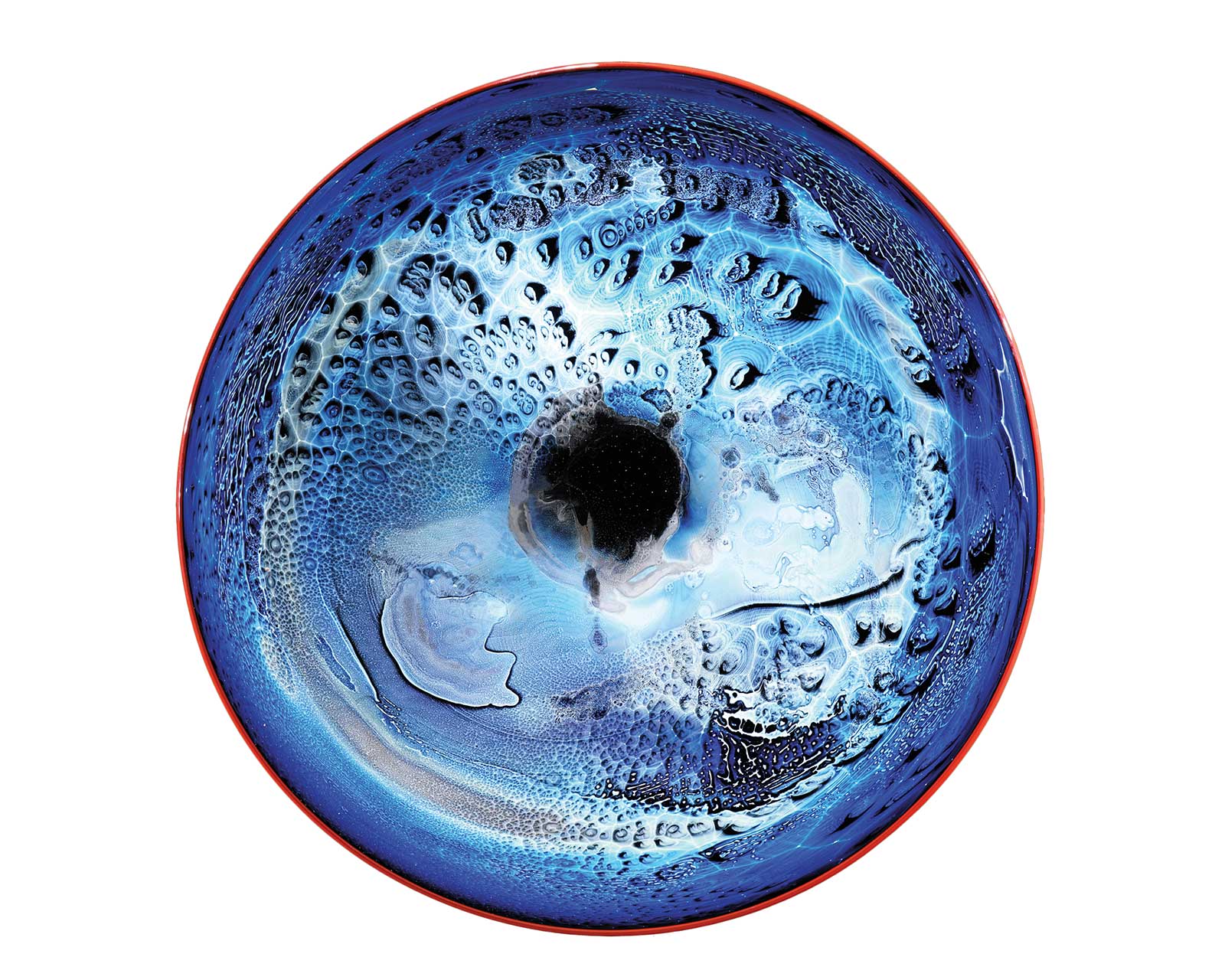 Subrahmanyan Chandrasekhar Disk, 2017, 10". Photo by Josh Simpson Studio.
Simpson had bought a farm in Shelburne Falls, Massachusetts, in 1976. By the time I visited him to talk about the exhibition, the old Cape Cod house had been restored and the barn and studio were a beehive of creative activity. Talking with the office and hotshop crew and watching them all at work, I got to know more about Simpson the man as well as Simpson the artist. There were the deadlines of a production schedule and the properties of glass that he describes as possessing “an inner light and transcendent radiant heat that make it simultaneously the most fascinating and the most frustrating material for an artist to work with. I do everything I can to coax and shape it, while all it wants to do is drip on the floor.” Glass artist Daniel Clayman, who had been a hotshop assistant, recalls, “What I really appreciated was Josh’s energy and crazy attitude about everything. We had fun every day. Josh gave generously of his time, to all of us, despite being under constant pressure.”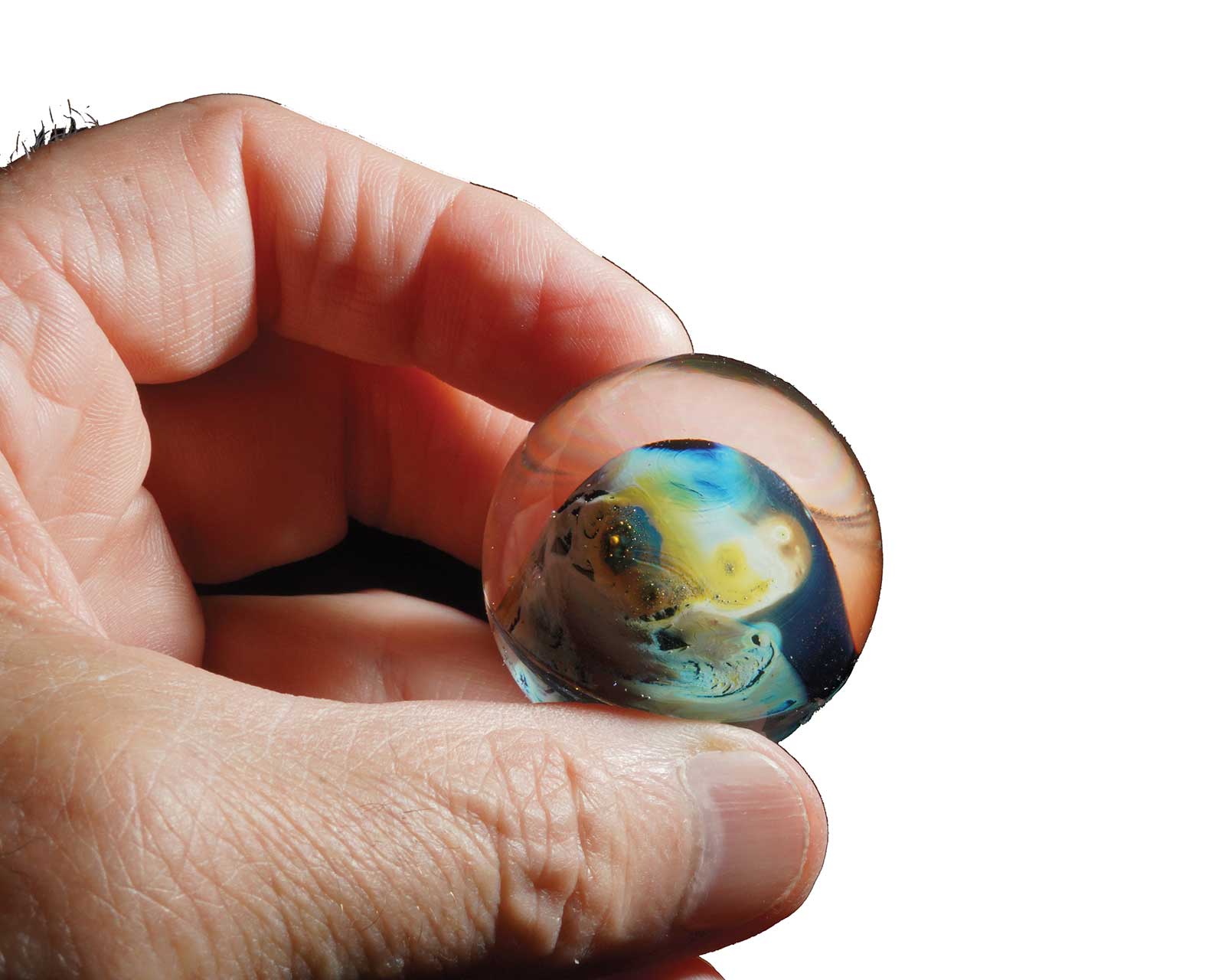 Early Planet Marble, 1”. Photo by Josh Simpson Studio.
During my visit, Simpson took me for a ride in his plane over the rolling hills of western Massachusetts and the playing fields of Northfield Mount Hermon School where his son, Josiah, just happened to be playing lacrosse. At dinner that night, Josiah remarked, “I thought that was you!”
By the time of the 1990 exhibition, the artist had long since mastered the science and art of creating Blue New Mexico glass with the extraordinary blue of Cherenkov radiation. One day, when he was experimenting with applying heat from his torch to a blob of molten glass that had some silver in its formula, the glass “turned different shades of yellow and blue.” The subtleties he is now able to achieve can be seen in Two New Mexico Goblets.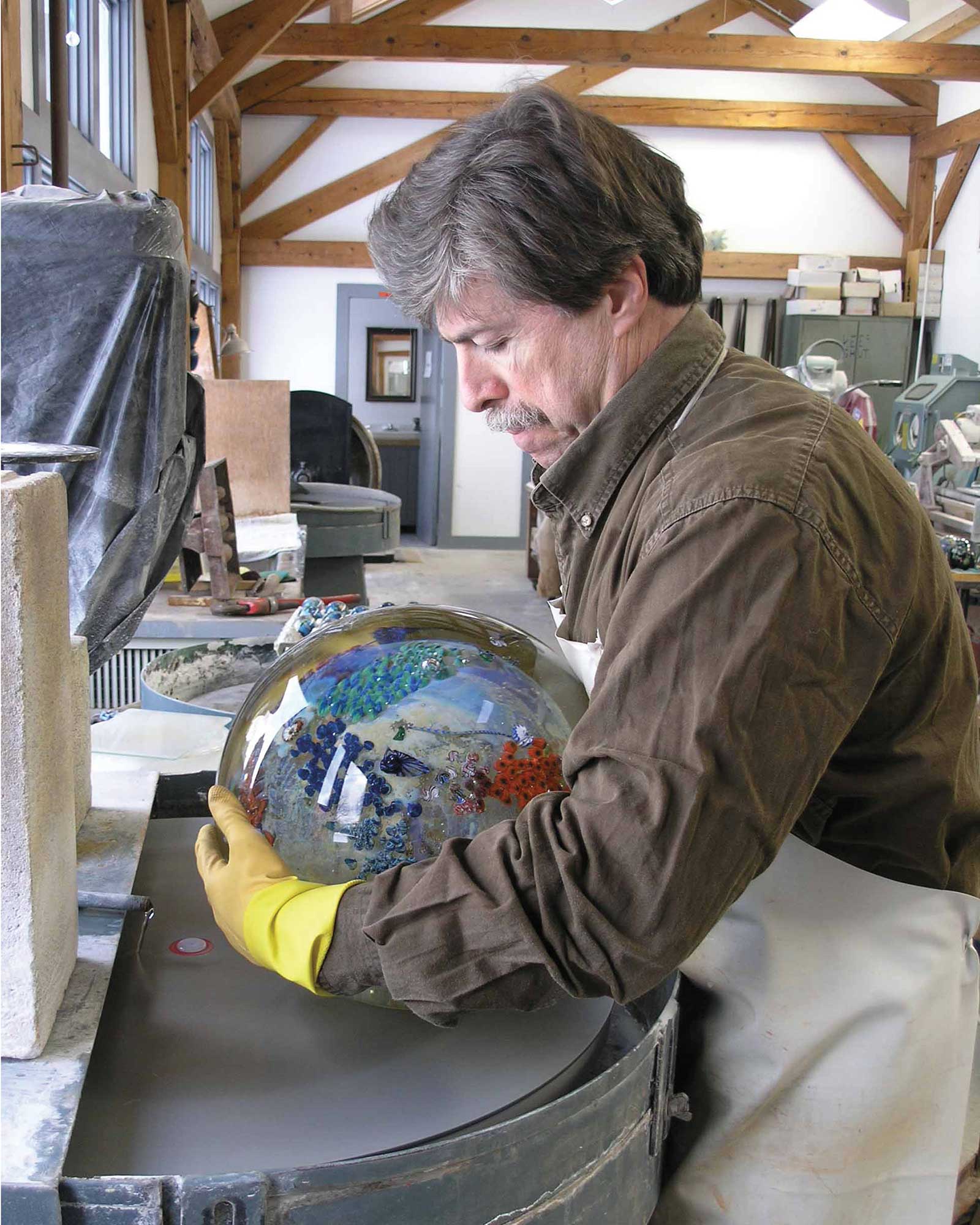 Josh Simpson grinds a megaplanet. Photo by Josh Simpson Studio.
This year Simpson celebrates a milestone with a book and an exhibition. Josh Simpson: 50 Years of Visionary Glass published by Schiffer Publishing. It will be released this month. The photos and many of the quotations here have been excerpted from the book. Simpson credits the eloquence of his texts to his collaborator, Sue Reed. The book contains an introduction and essay by William Warmus, former curator of the Corning Museum of Glass, and contributions by a wide variety of contributors who have written about Josh over those 50 years. In October, the D’Amour Museum of Fine Arts in Springfield, Massachusetts, will present the exhibition Josh Simpson: Visionary Explorations in Glass.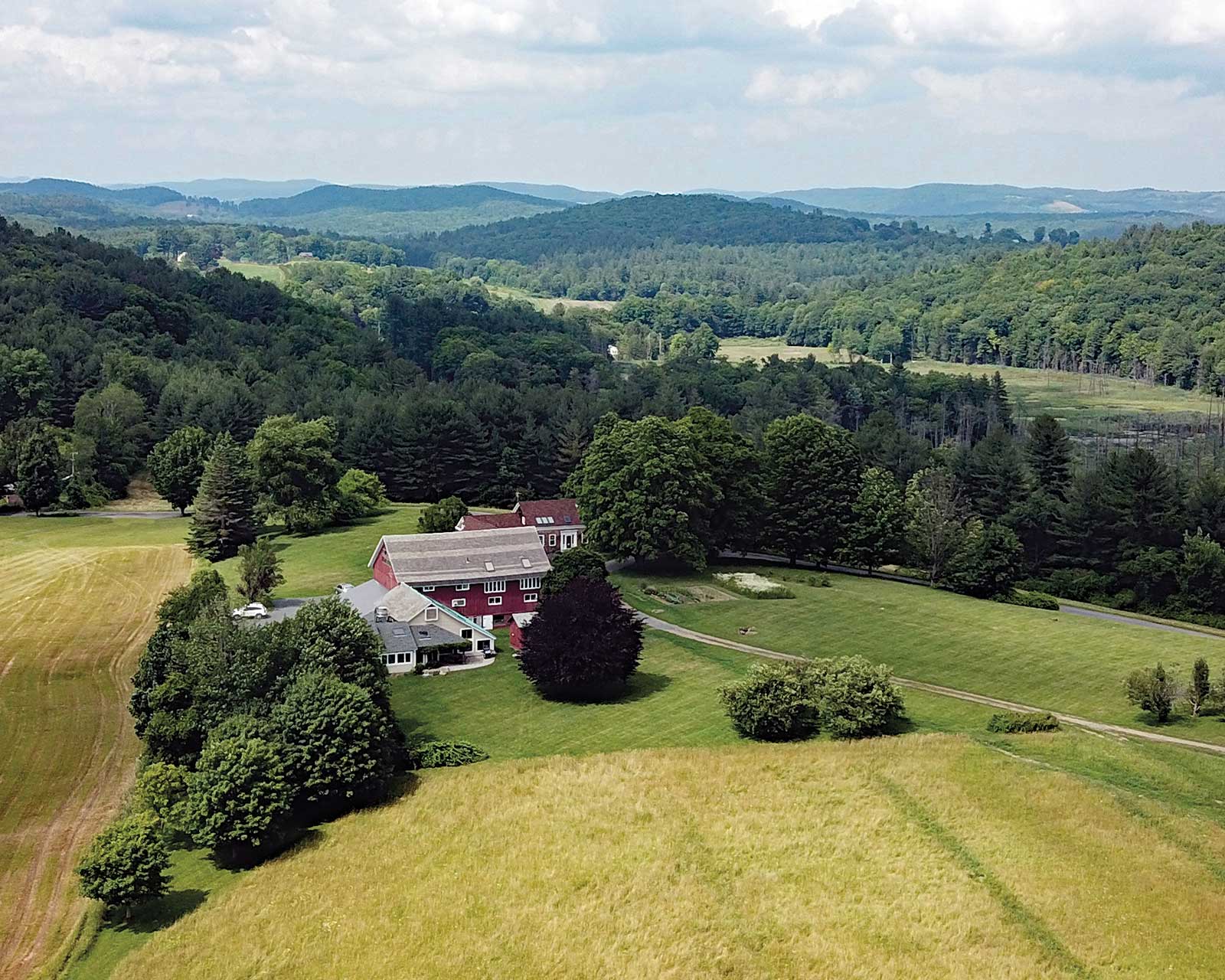 Simpson's home and studio in Shelburne, Massachusetts. Photo by Josh Simpson Studio.When I asked him what he thought was the most important of all his technological achievements he replied: “High temperature chemistry that I have developed—exclusively to pursue new or different colors in glass is probably my highest achievement. Glass has been made for at least 2,500 years by some incredibly smart and resourceful people... it is no less than amazing that anyone can create something that has never been seen before! My ‘New Mexico’ glass is unique and some of the colors I have achieved with my ‘Corona’ glasses (actually a series of colloidal silver glasses) are unique.”
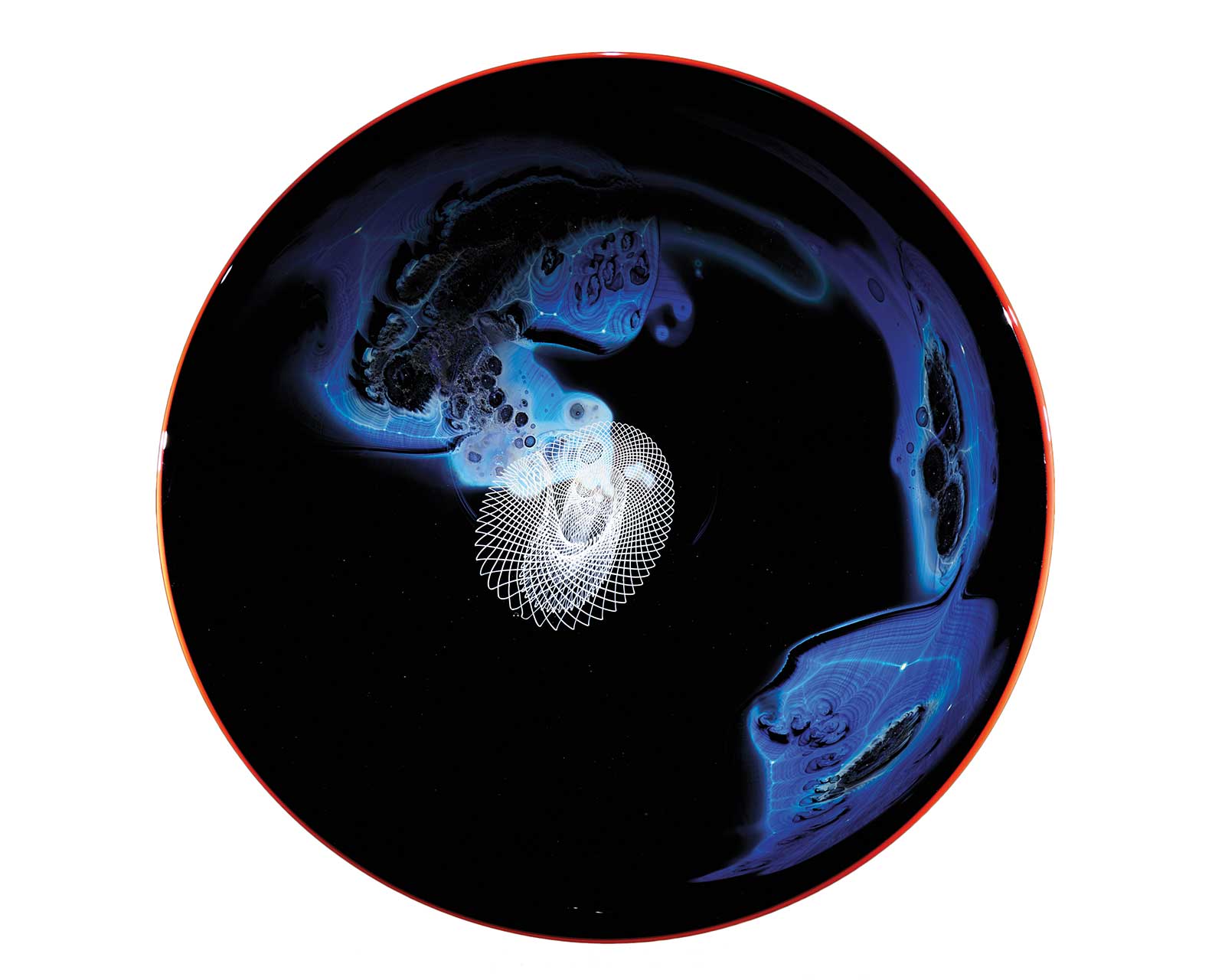 Heliosphere Boundary, 2017, 15¼". Photo by Josh Simpson Studio.
Replying to my question about his highest aesthetic achievement he replied: “Hundreds of glassmakers have made ‘paperweights’ of amazing complexity over the centuries.
I was inspired by the iconic photo that Apollo Astronaut Bill Anders took of our Earth as he and his crew circled the Moon…and was moved to create glass planets.” He added, “I think that others should judge my work in terms of aesthetic achievement.
I love the idea that my work can evoke a cavalcade of associative thoughts and emotions depending on the viewer.”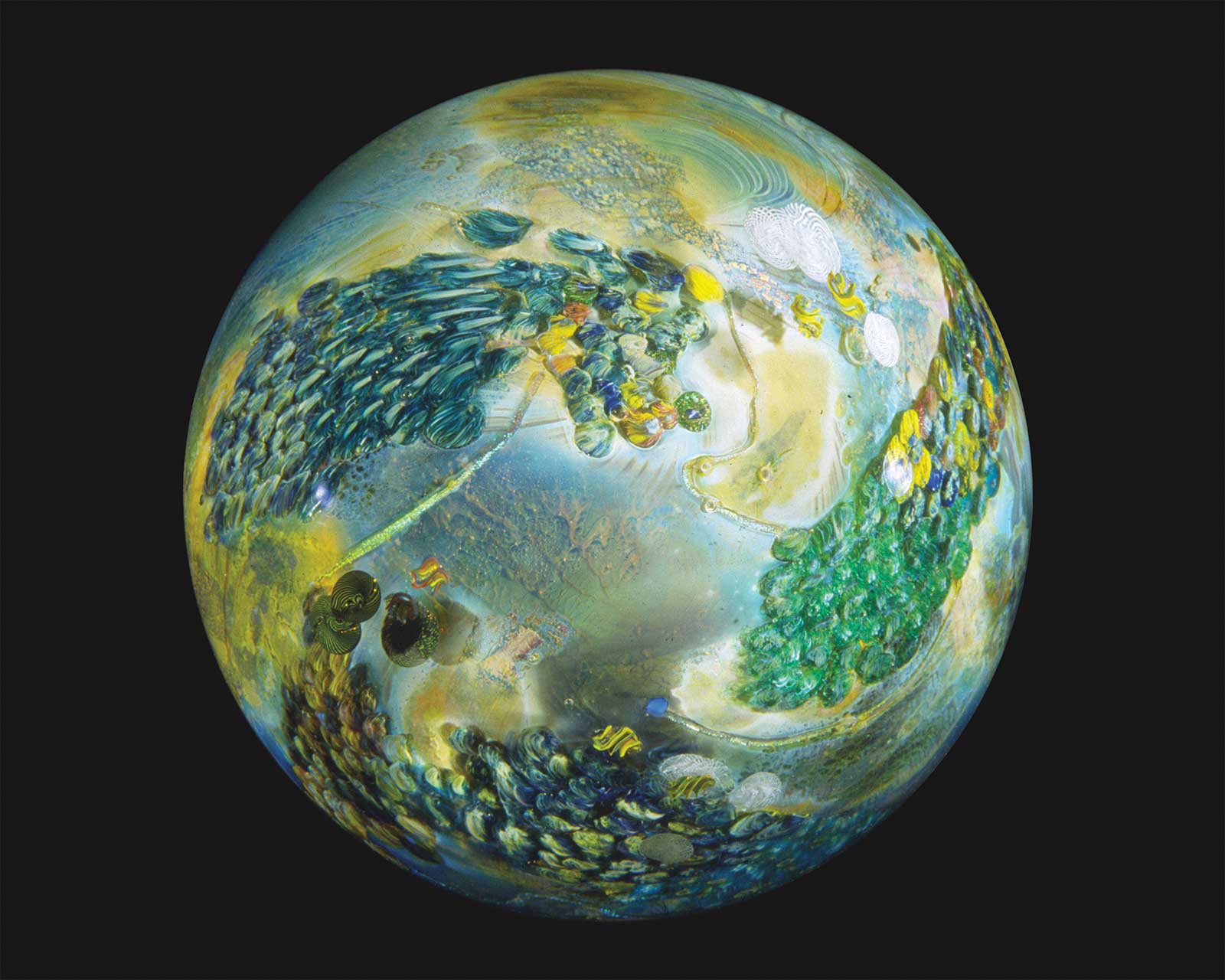 Verdant Megaplanet, ca. 2001, 10". Photo by Tommy Olaf Elder.
His planets began with marbles and evolved through traditional paperweights. “Then came a moment that changed things rather profoundly for me. One day I thought: ‘Hey, instead of making flowers and marbles from cane, what if I also took little segments of my favorite canes and heated and twisted them to resemble spacecraft, and sent them into orbit around the little worlds I was creating?’ That was a turning point, the start of using spaceships to evoke the idea of other worlds that might exist somewhere in the universe. It also was a chance to have my imagination go from micro to macro…now I could imagine that the tiny planet in my hand might actually be thousands of miles away, with a spaceship circling above in orbit. This played perfectly into my attempts to create a sense of depth in my work.”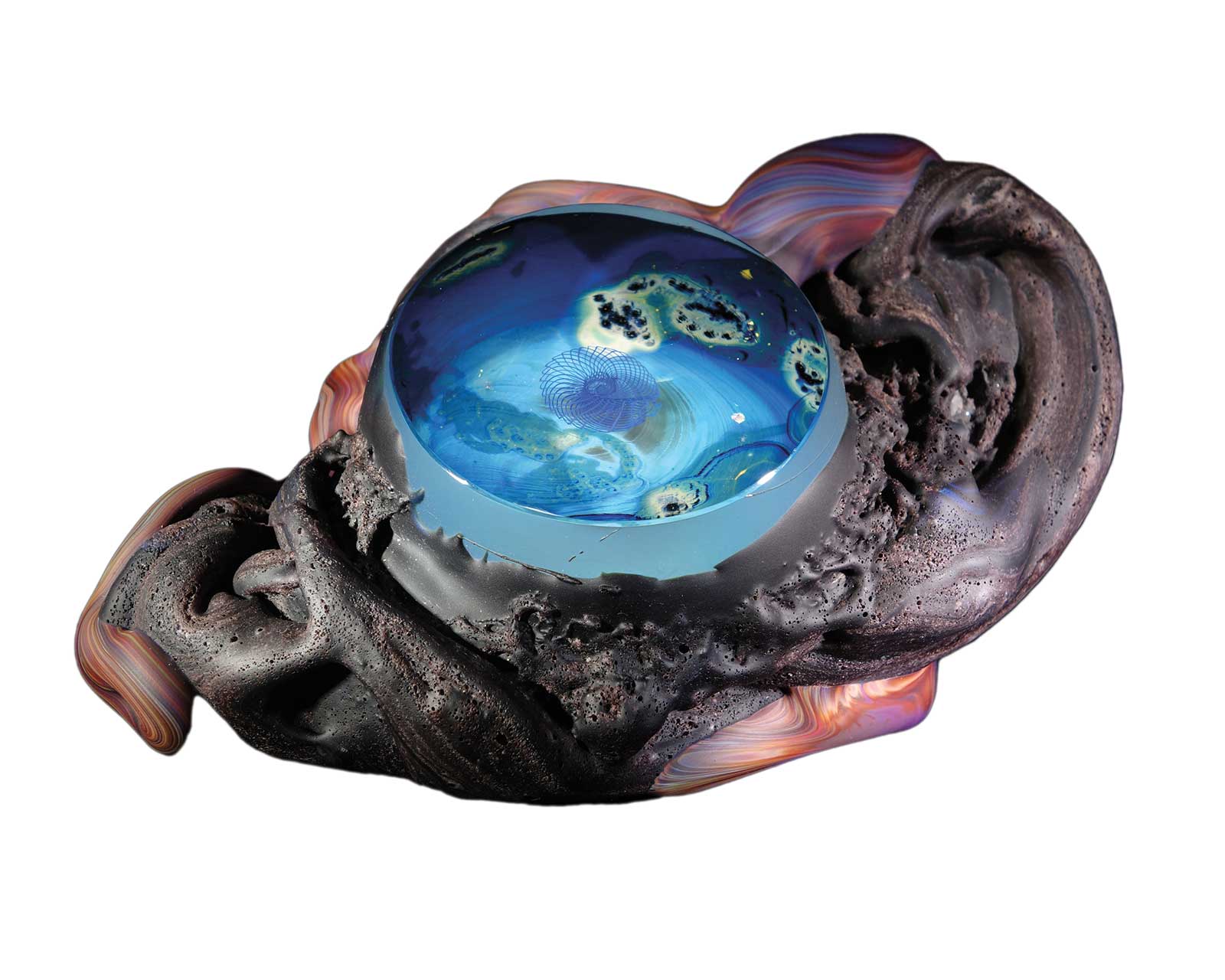 Corona Tektite Portal, 2017. Photo by Josh Simpson Studio.
He definitely went from micro to macro in 2005 when the Corning Museum of Glass commissioned him to create the world’s first 100-pound solid glass paperweight. It would be the largest paperweight ever made and the 1,000th paperweight in the museum’s collection. The resulting megaplanet measures 13½ inches in diameter and weighs 107 pounds.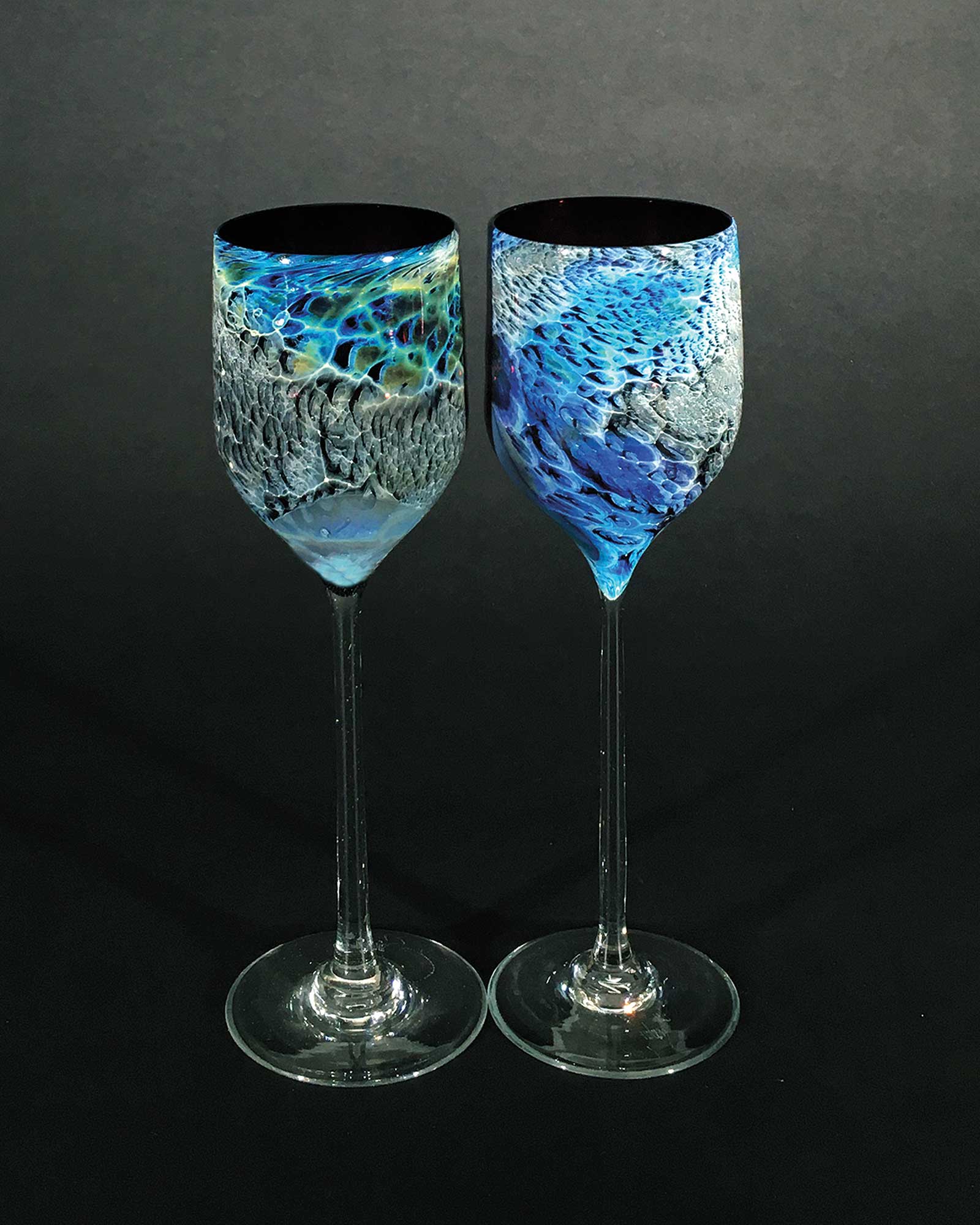 Two New Mexico Goblets, 8¾". Photo by Josh Simpson Studio.
Simpson continues to experiment and to explore his fascination with space. Heliosphere Boundary is an example of his hyperspace disks. He comments, “When I see this platter, I always think about reading an article in a Czech physics magazine, which contained an artist’s conception of a black hole in the center of the galaxy. From that, I wondered: What if we could see the lines of magnetism or gravity or X-rays with our visible-wavelength eyes? You can see this core is swirling inward. It’s a way of isolating just the gravitational forces, what they might look like. You can almost see hydrogen and star plasma being sucked in.”
I’ll leave the last word to Simpson’s wife, Cady Coleman, a retired NASA astronaut. “When Josh and I talk about how art and science come together in our family, I know that no normal scientist could duplicate his path to seemingly perfect formulas. There are just so many variables at play. But Josh has a unique approach that is both brilliantly analytical and profoundly intuitive. It can’t be quantified. And that’s the genius in his work.” —
Josh Simpson: 50 Years of Visionary Glass is published by Schiffer Publishing. By Josh Simpson and Sue Reed, with introduction by William Warmus. Available May 28, 2022, at www.schifferbooks.com and other online book stores.
Powered by Froala Editor