A curator’s aim is to create an engaging exhibition that is not only beautiful and built around a central theme, but one that is also meaningful to its viewers. The Women Painting Women exhibition at the Modern Art Museum of Fort Worth, curated by Andrea Karnes, accomplishes just that. The exhibition features artwork from the late 1960s to today, in which women are both the subjects and the artists. Karnes—inspired by an important book written first in 1971 and later revised and circulating today, Why have there been no great women artist? by Linda Nochlin—has created a global presentation on the subject. With the rise of more female artists now being recognized and included in important exhibitions, this historical look at women in art comes at a perfect and widely accepted, time.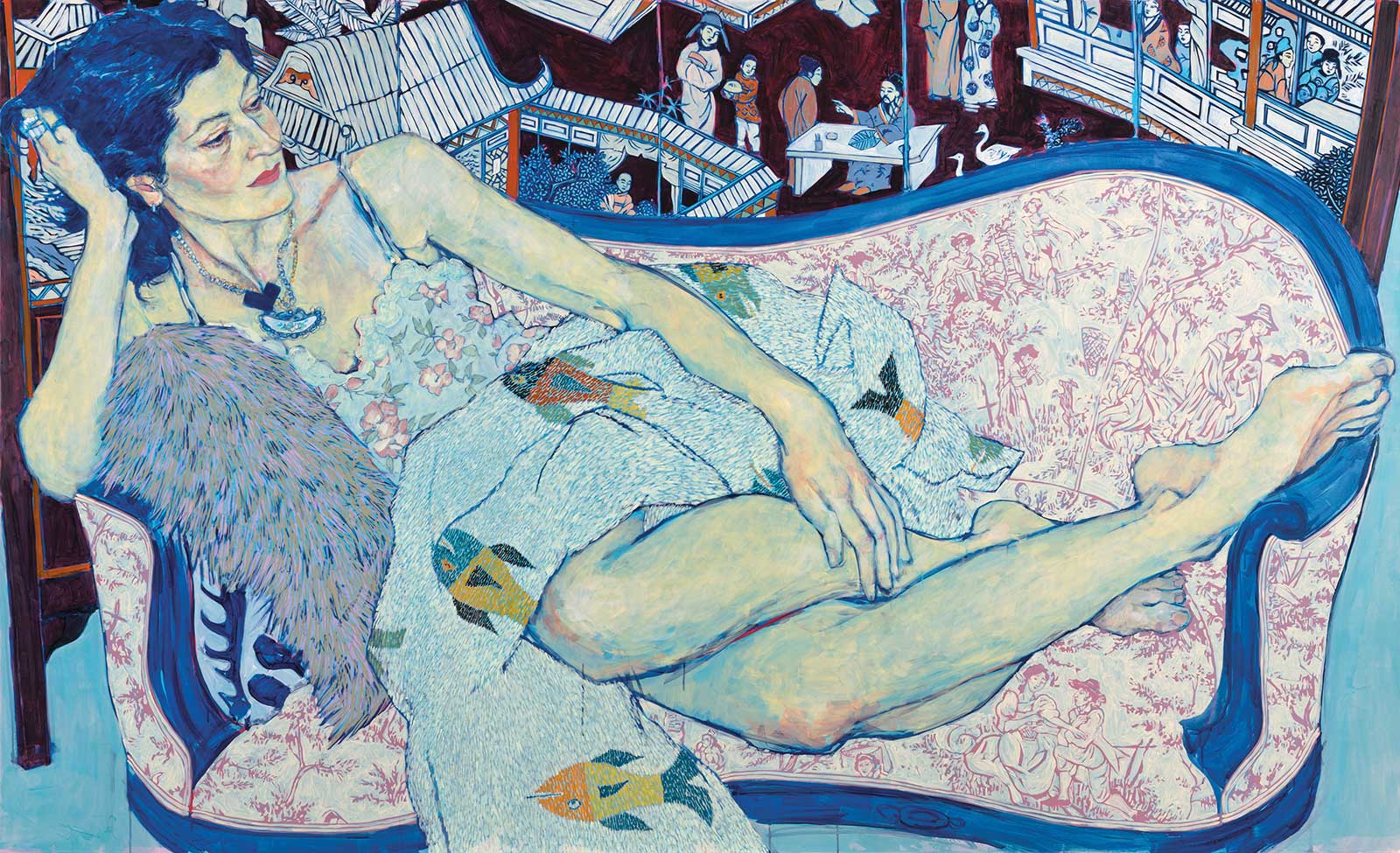 Hope Gangloff, Queen Jane Approximately, 2011, acrylic on canvas, 66 x 108". Collection of Alturas Foundation, San Antonio, Texas © Hope Gangloff, Courtesy of the artist and Susan Inglett Gallery, NYC.
To understand the significance of the exhibition a bit more, let us look briefly into art history. At first glance, the exhibition subject matter does not seem alarming to us in the year of 2022, as current avant-garde exhibitions include all levels of subjects by both male and female artists. However, if we look back to some of the most famous first women impressionist artists from more than 100 years ago, such as Mary Cassatt and Berthe Morisot from 1880, we realize it’s a theme of much more importance. In the mid-1800s, it was not only a conscious choice for women artists to paint other women and feminine subjects they were surrounded by—this included women in the garden, women with their children and women having tea—but it was also because women artists were scarcely allowed into ateliers to study the figure or paint males. In addition, these were subjects that were accepted by the male art jury for women to paint. 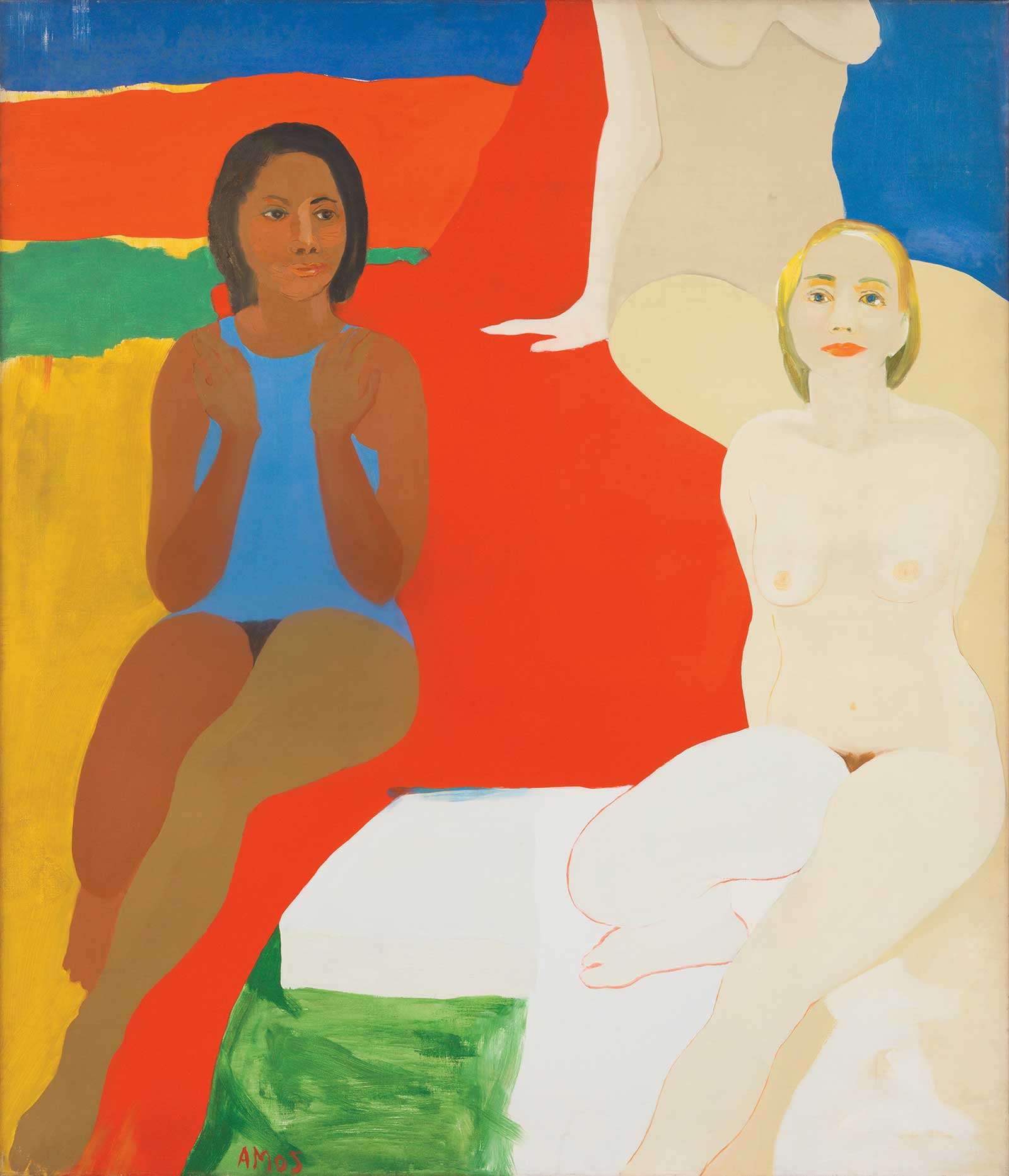 Emma Amos (1938-2020), Three Figures, 1967, oil on canvas, 60 x 50". The John and Susan Horseman Collection © Emma Amos, Courtesy RYAN LEE Gallery, New York.
Fast forward to an important female artist creating works in 1915 and 1920, Georgia O’Keeffe, who became one of the most celebrated artists of her time and was known as distinctly feminine. Her paintings of colorful compositional florals created a stir. At this time, it was much more accepted for women to paint any subject she admired, as the male dominated scene was shifting. Her work was seen almost as sexual, yet passive, and mirrored how women were seen at the time in Western society, but later was considered more subjective sexuality by feminists in the 1970s. The masculine and feminine roles and subjects in the 1920s in the art world hinted at change.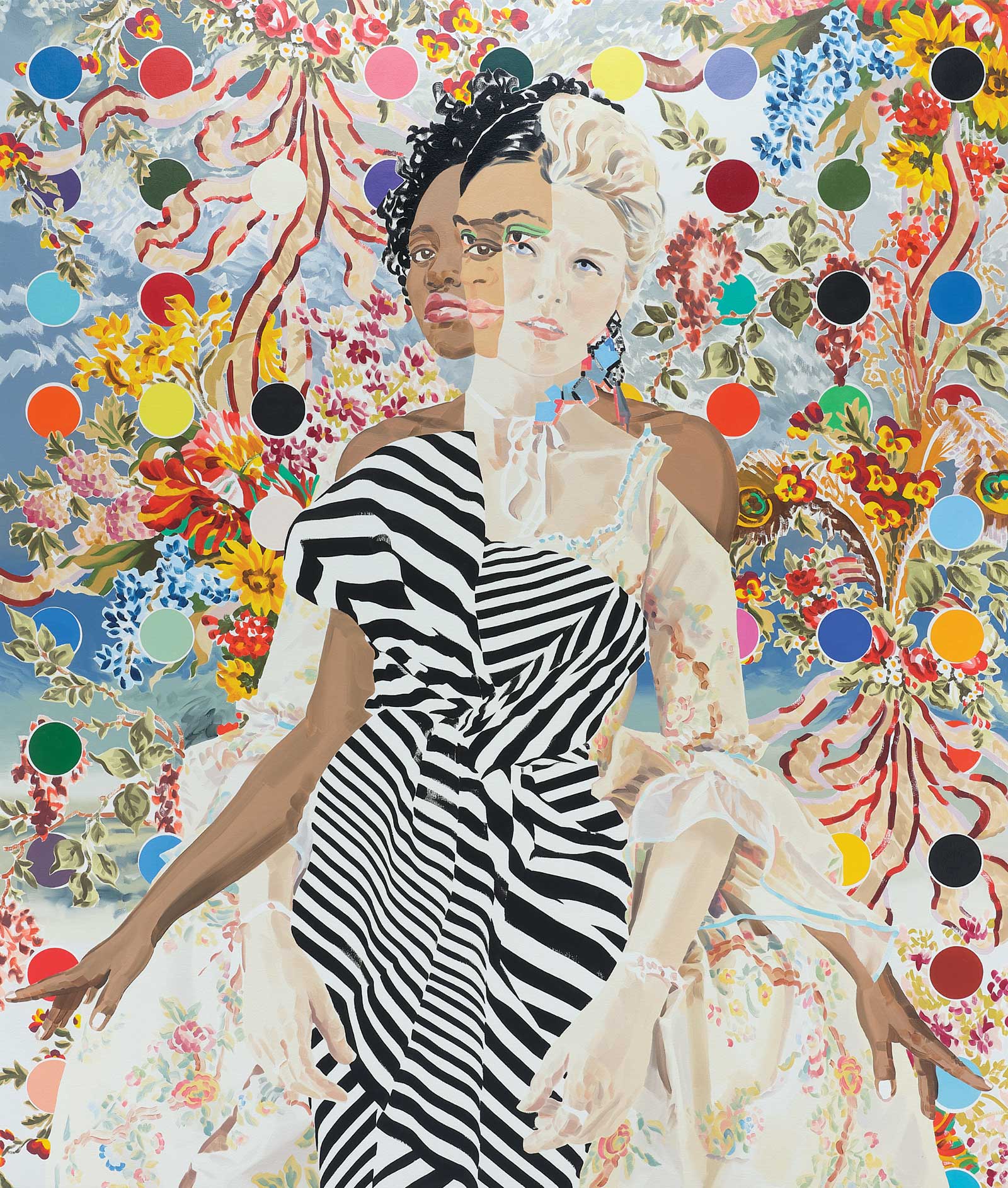 Christiane Lyons, Yayoi, 2021, oil on canvas, 58 x 49". Courtesy of the artist and Meliksetian | Briggs, Los Angeles.
Later in the 1940s, another stand-out female artist, Frida Kahlo from Mexico, found herself as a subject inspiration while surrounded by an artist husband and intense politics of the time. Was she painting herself due to her injury and inability to go find new subjects? Or were self-portraits simply an accepted theme, filled with color, that she wanted to pursue? A variety of other subjects were allowed and open to her at this time, however, artists often paint what is right before them in life. Some of her works even include extremely brave political notes. These daring works, and Kahlo’s self-portraits, remain an important chapter in every art history book to date.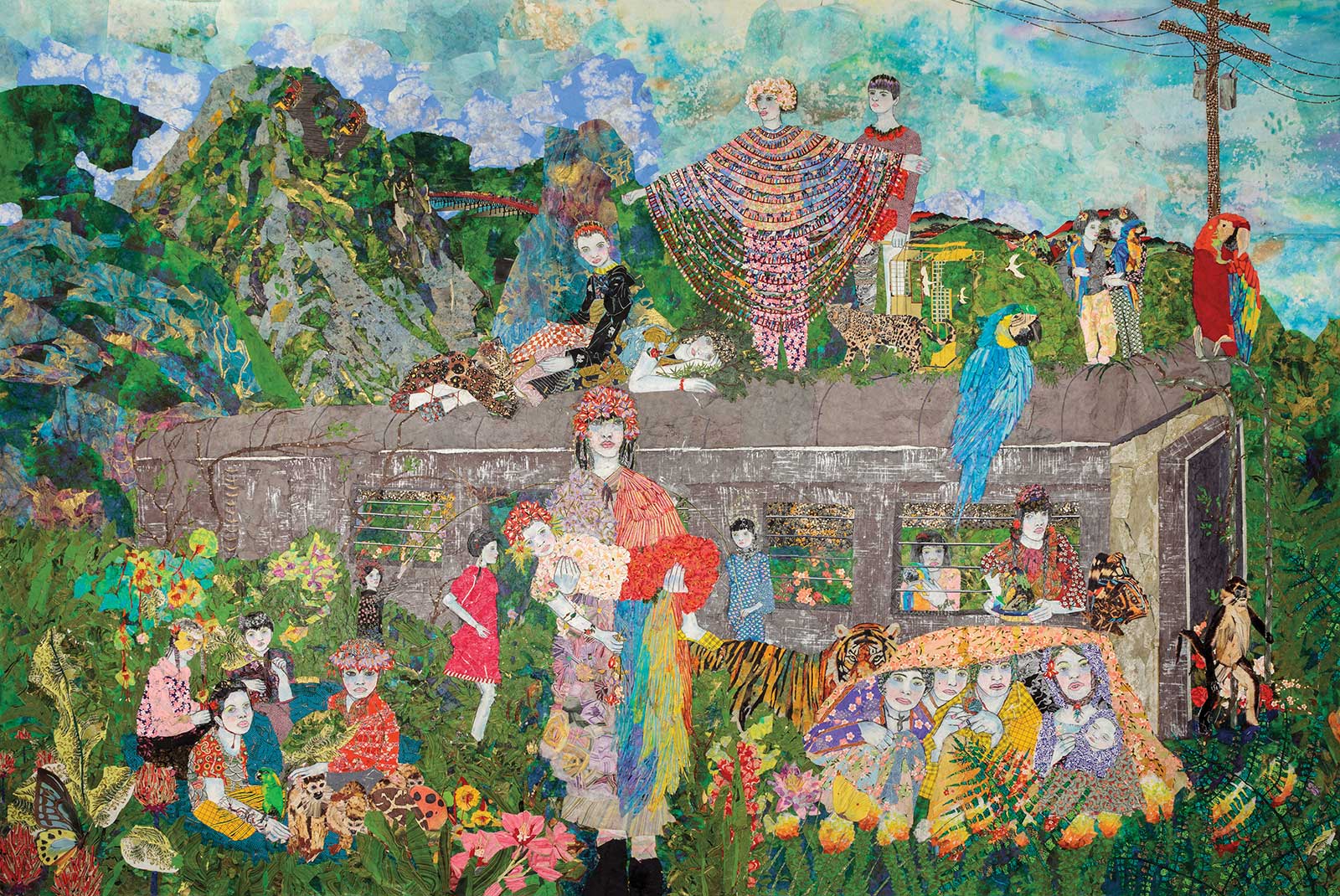 María Berrío, Wildflowers, 2017, mixed media, 96 x 140". Nancy A. Nasher and David J. Haemisegger Collection.Keeping in mind the subjects that were open to women artists and what they chose to paint in the 1960s and beyond, looking at the current exhibition will help us to put the exhibition in context and to enjoy the works on another level—beyond the beauty front of us.
With more than 50 evocative portraits by more than 40 different international women artists, the exhibition is a wide scope of works that have been created in the last 60 years. With the perspective of women in mind, the exhibition is a poignant grouping. From Alice Neel and Emma Amos, to emerging artists such as Jordan Casteel and Apolonia Sokol, these works celebrate the female in all their colors and forms, and have a woman as their main subject and focal point. Four main themes were included by Karnes when choosing the works: The body, nature personified, color as portrait and selfhood. “Historically, it’s been difficult for women to go into a museum and see art made by women, unless you’re in a women’s museum,” notes Karnes.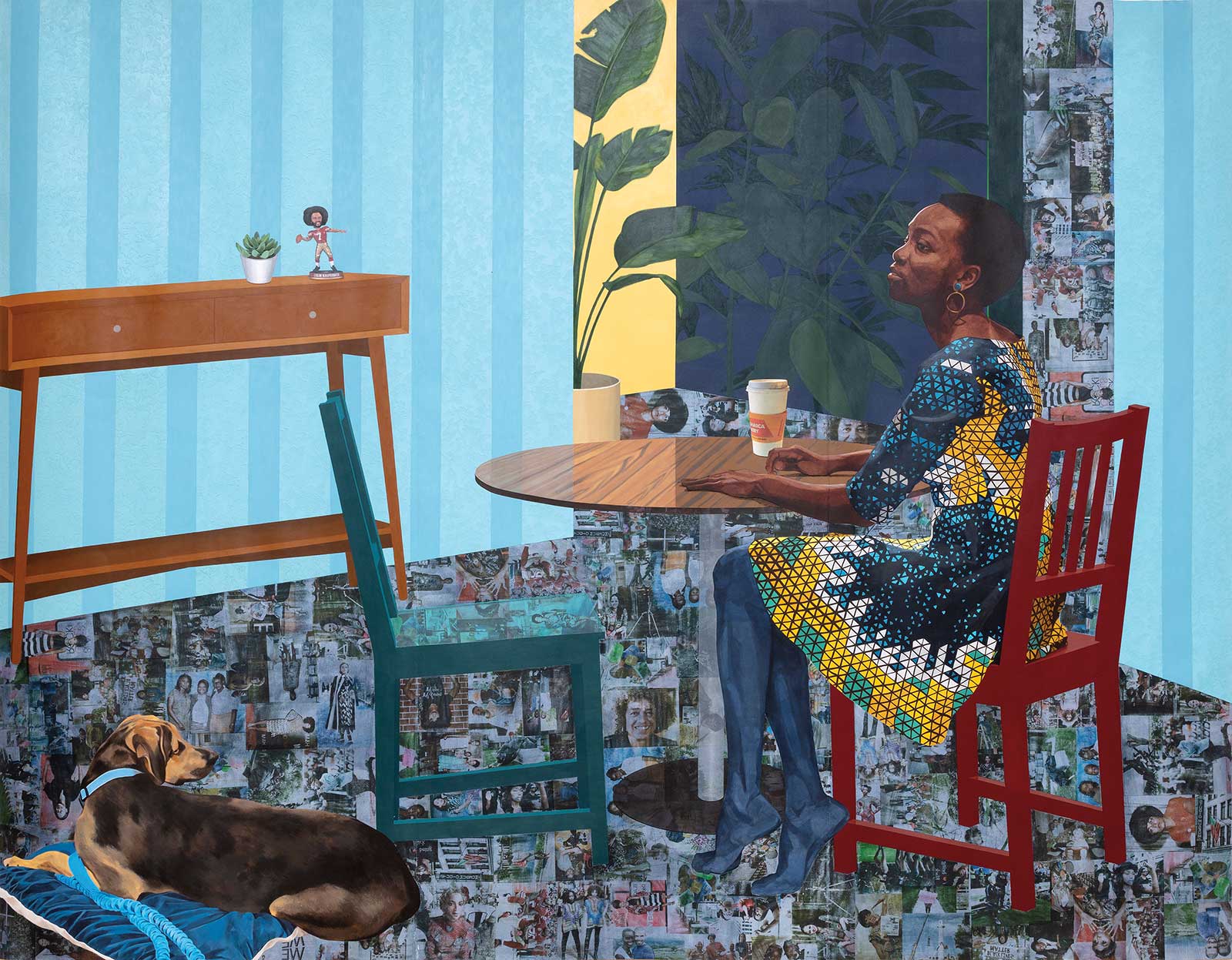 Njideka Akunyili Crosby, Dwell: Me, We, 2017, acrylic, transfers, colored pencil, charcoal and collage
on paper, 96 x 124". Collection of the Modern Art Museum of Fort Worth, Gift of the Director’s Council and Museum purchase, The Benjamin J. Tillar Memorial Trust, 2019 © Njideka Akunyili Crosby.In the work Three Figures by Amos, created in 1966, we are presented with two female figures in primary colors, evoking harmony. The figures share the space on the canvas and seem to be content as they sit side by side. A third figure in the back creates a triad or trinity, allowing for an interesting composition. The painting has a flat, almost illustrative quality, and a Gauguin-esque feel to it with the shapes being of particular importance, not rendered in three dimension. This work was created during the time of minimalism and feminist art, and we see the first theme of female body, in any color skin, celebrated in a harmonious work. “The inclusion of women of color in the show meant opening up the idea of what the female gaze truly is—diverse and reflective of many viewpoints,” says Karnes. To illustrate this, she’s included works by Amy Sherald, Mickalene Thomas and Arpita Singh.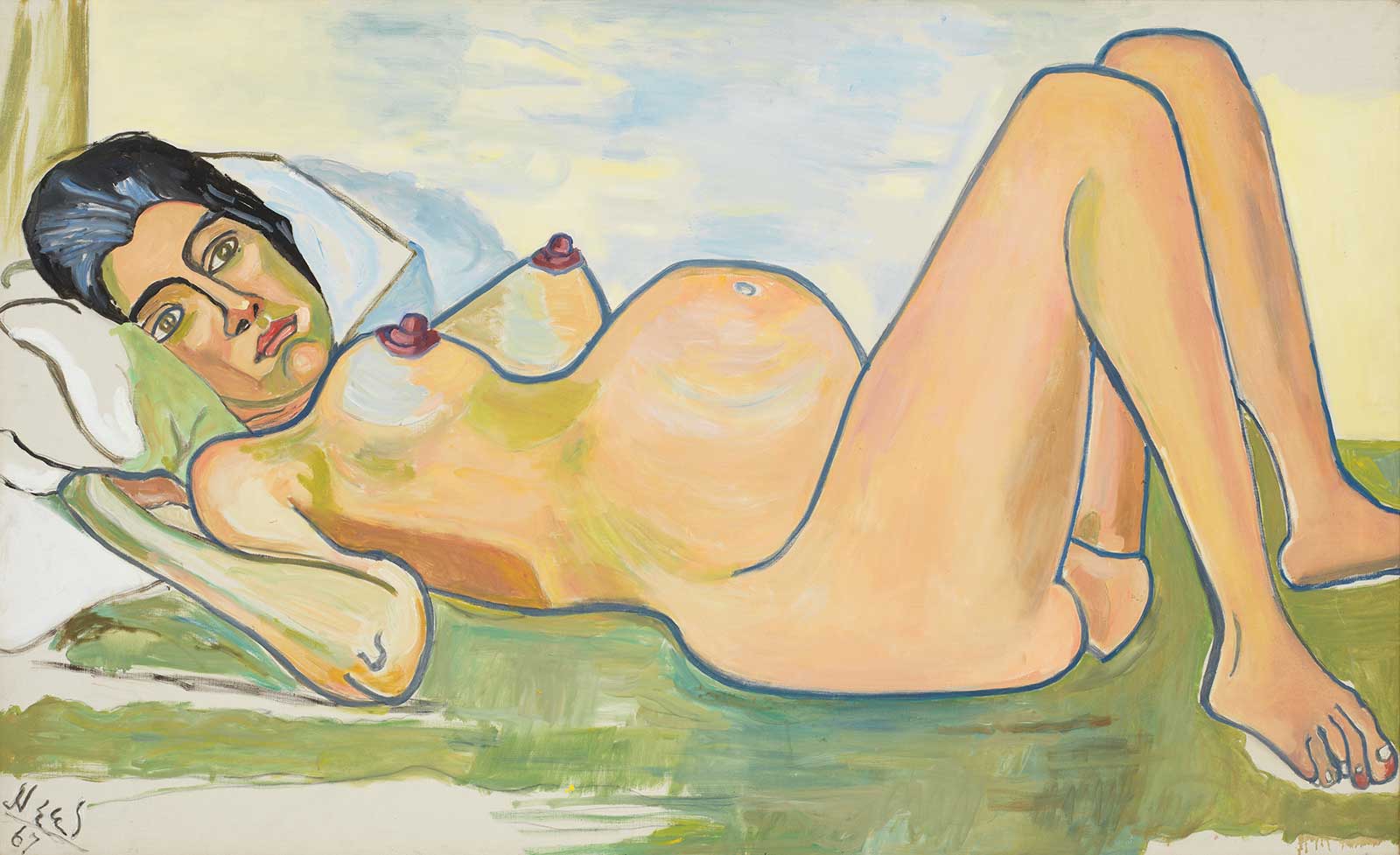 Alice Neel (1900-1984), Pregnant Nude, 1967, oil on canvas, 33 x 537⁄8". © The Estate of Alice Neel. Courtesy The Estate of Alice Neel and David Zwirner.Other works in the show seem to combine these themes with twisting florals, and again, the dual presentation of females in color. In the work by Lyons, created in 2021, a woman as the central figure seems to be taking on the role of three different females existing as one, wearing the gamut of clothing from hip 1980s fashion, to a French Marie Antoinette historical dress. Possibly showing that race, color, time , or status or are not important, and that they are, in fact, all equal and unified as women. The background is colorful and festive, certainly suggesting the celebration of the feminine, with round solid spheres and floral, natural elements.
In Neel’s oil on canvas, titled Pregnant Nude, we are presented with the ultimate in the feminine. A beautiful pregnant and nude female, depicting both the female body as natural and bare, but also as the mother giving importance to the miracle that a woman is able to create within her a new life. Painted in a modern style, with the main figure large on the canvas and without hiding any of the body, this piece is a strong feminine piece in the exhibition.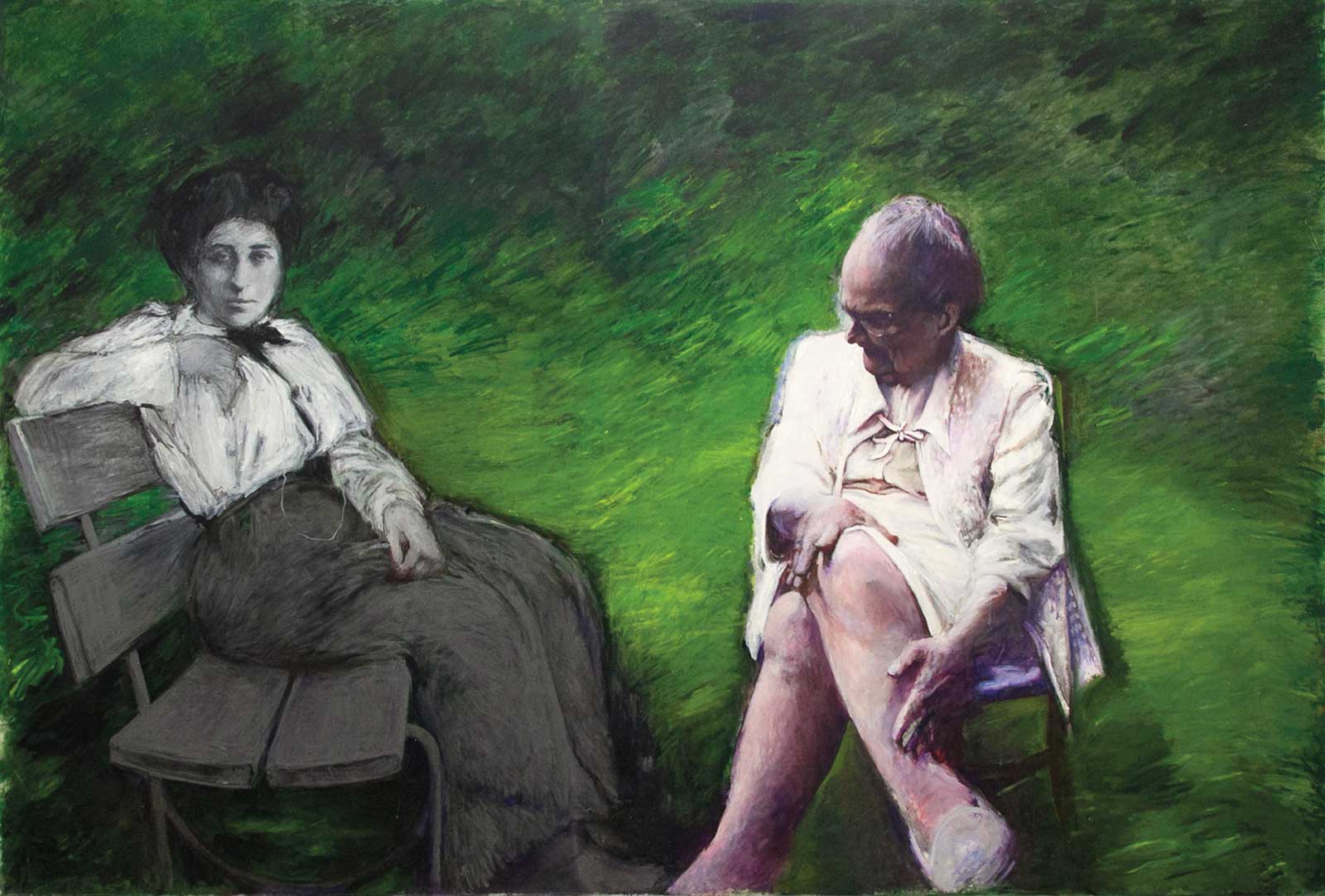 May Stevens (1924-2019), Forming the Fifth International, 1985, acrylic on canvas, 78 x 120". Courtesy of the Estate of the Artist and RYAN LEE Gallery, New York © May Stevens.
Beautiful natural works such as Maria Berrio’s Wildflowers, presents a juxtaposition of nature and man-made creations displayed in a multifigure collage on paper. The work is detailed and has many textures and patterns in the clothing, with a theme of nature and the female. There’s the central figure, perhaps representing motherhood, and also a green natural carpet of florals, vines and birds surrounding all the figures, often intertwining with them, becoming one. A train comes out of a nearby hill and a telephone pole contrasts with the natural blue in the sky, further endorsing the unified man-made to nature relationship. Born in Columbia, Berrio later lived in New York, so it seems she has combined both places into one work of art.
Indeed the curator has succeeded in creating both a beautiful and quite meaningful exhibition by pulling together the works from international female artists that, in their work, tear down walls of inequality, genre and race. “I think women want to be seen on the same world stage as any male artist, any white artist—any artist at all. There’s no push to take identity away in art as a means to address bias, but every artist wants their work to be taken out of a demographic.”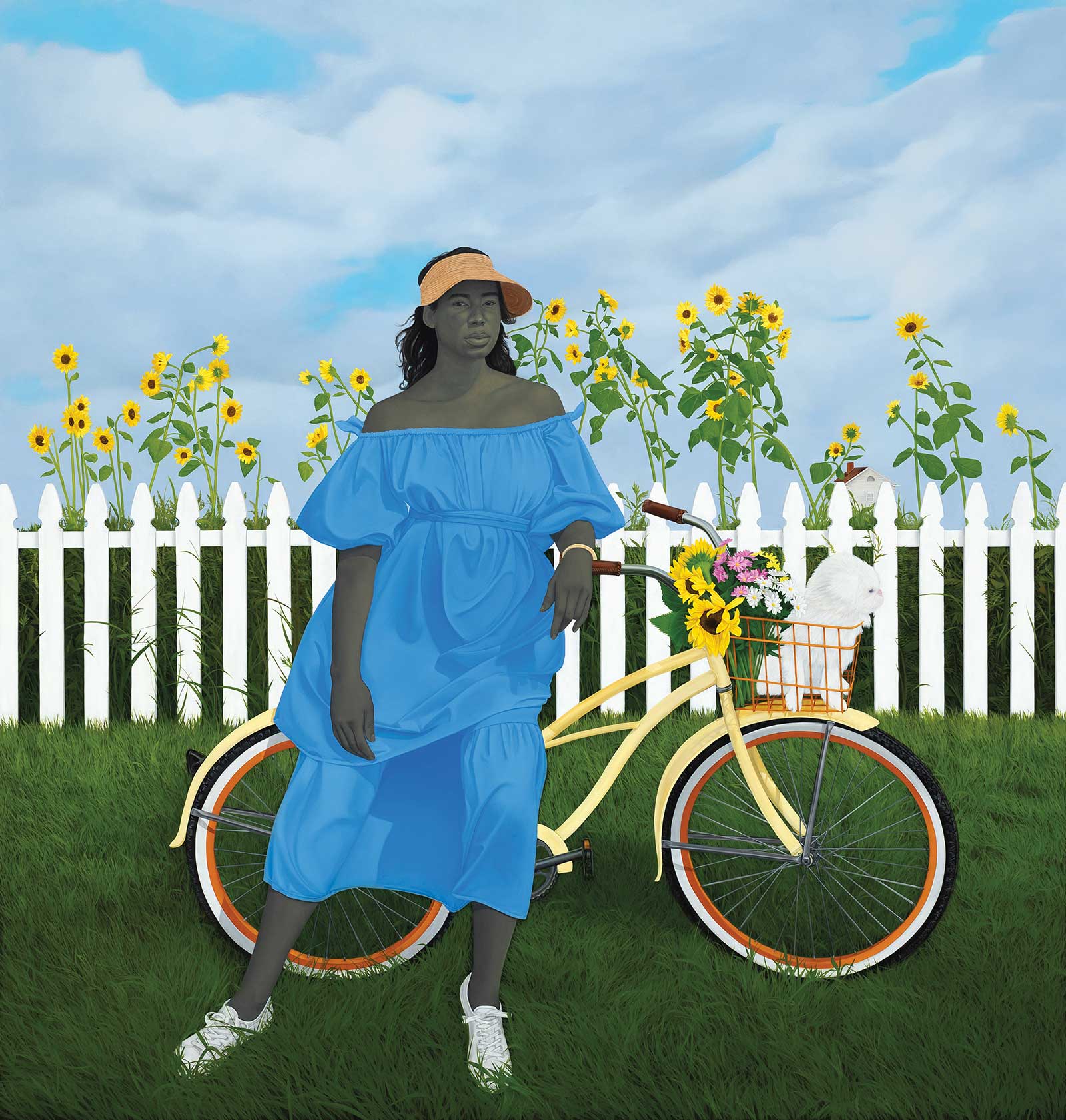 Amy Sherald, A Midsummer Afternoon Dream, 2020, oil on canvas, 106 x 101". Private collection © Amy Sherald. Courtesy the Artist and Hauser & Wirth, Photo by Joseph Hyde.From the 1960s to the present, where all of the artists are mainly free to use any subject in their works and choose to paint other women, they are celebrating the feminine, using women to convey their thoughts on a canvas with paint, a previously male-dominated medium. With women artists playing a larger role in exhibitions these days, we are a long way from the subject and genre boundaries of 1880. Female artists are being accepted into important live auctions and having solo shows at some of the top galleries in New York, with some even curating significant exhibitions, including this one. Although we may be a far cry from artist and collector equality, this important exhibition at the Modern Art Museum of Fort Worth certainly captures our attention. The captivating and strong subject matter are of huge importance in art history and the art world today. —
Women Painting Women
When: May 15-September 25, 2022
Where: Modern Art Museum of Fort Worth
3200 Darnell Street, Fort Worth, TX 76107
Information: (817) 738-9215, www.themodern.org
Powered by Froala Editor