
Mankind’s earliest drawings were of wildlife—whether drawn in awe or as an offering to ensure a successful hunt. It is thought that our early ancestors may have domesticated a wolf pup, weeding out the aggressive pups. The more agreeable pups were used for help in hunting game—a trait they retained from their ancestors.
Ester Curini’s paintings of animals portray the individuality of each animal, rather than a representation of a species. I Was Wild. They Named Me OR 4, is a wolf who was fitted with a radio collar in Oregon in 2010 and tracked until 2016. Too old to hunt for elk, he led his pack to kill a sheep and four calves. He, his injured mate and two pups were tracked down and shot.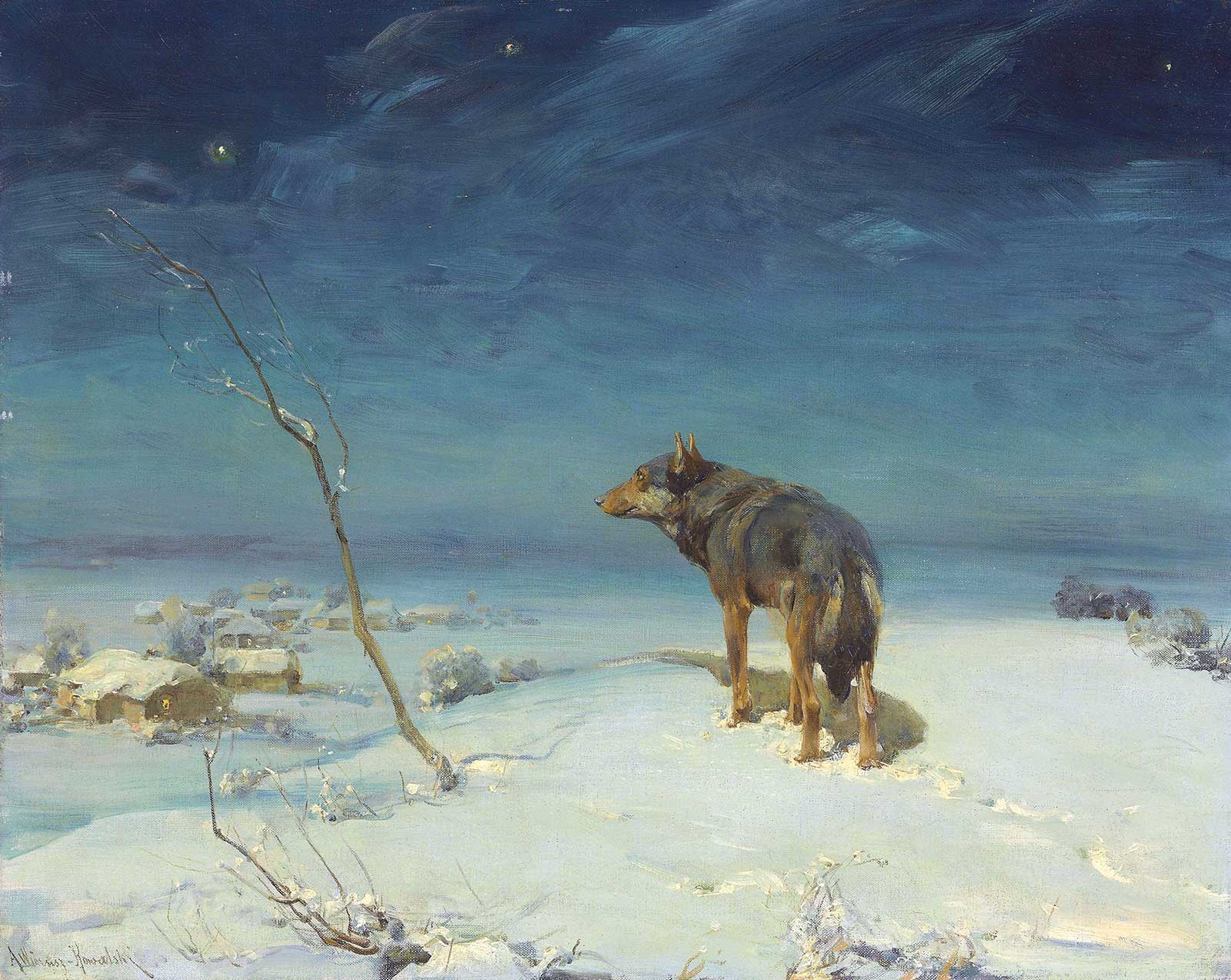 Alfred Wierusz-Kowalski (1849-1915), The Lone Wolf, oil on canvas, 15.2 x 19.2"
Curini writes, “My aim is to raise awareness about their importance in our ecosystem. They have been hunted, trapped and poisoned. Specifically, the Mexican gray and the red wolves. They are the most endangered species in North America…It is up to us to find a way to coexist with these magnificent animals. We need to preserve and protect them in a compassionate way.”
Alfred Wierusz-Kowalski (1849–1915) was a painter in the Polish “Munich school.” He painted innumerable images of a Lone Wolf casing out a village from a snow-covered hill. Although the term “lone wolf” is often used for an independent outsider, in wolfdom, wolves run in packs and the rare lone wolf has been cast out.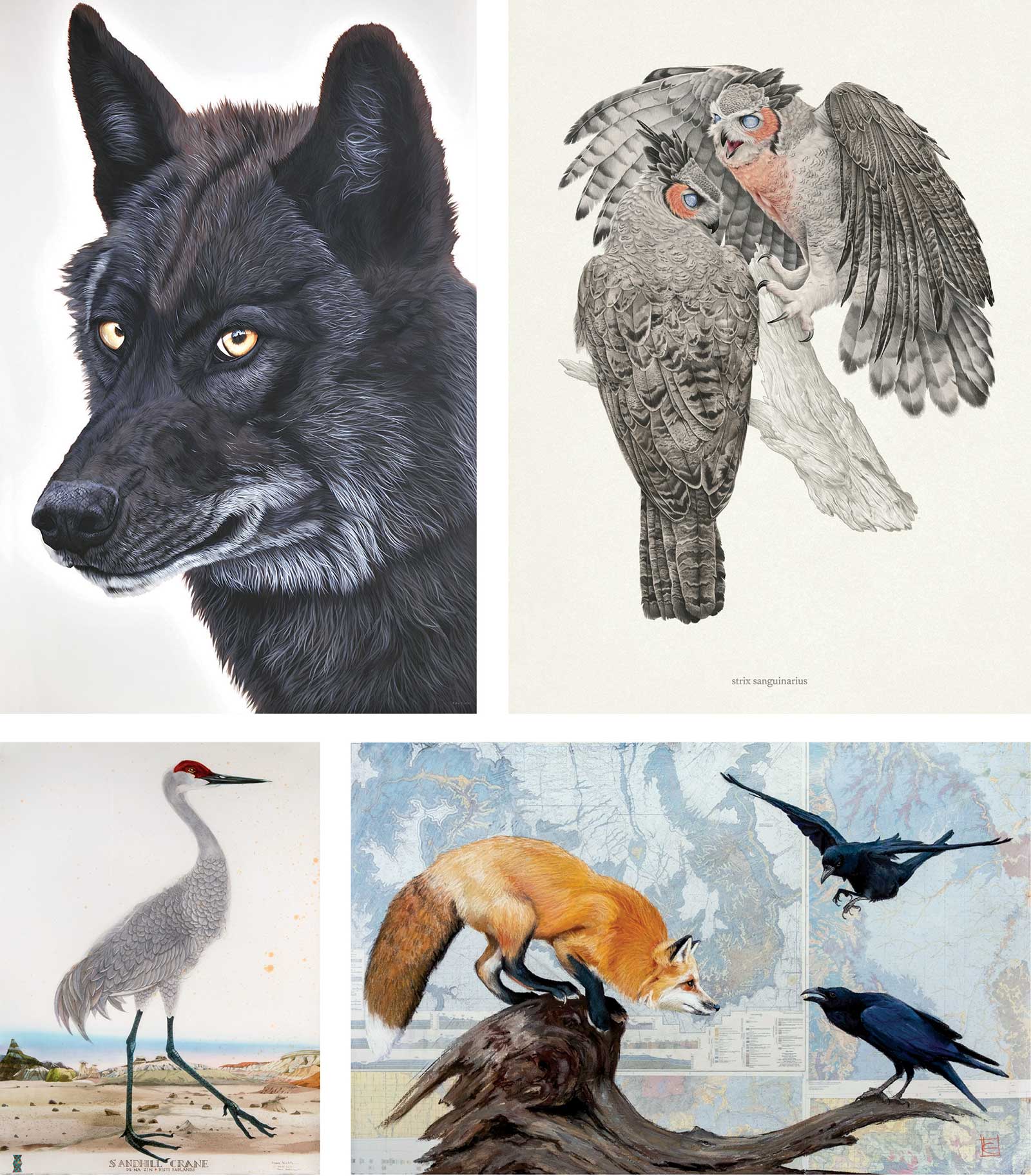 Top row: Evoke Contemporary, I Was Wild. They Named Me OR 4, acrylic on linen, 72 x 48", by Ester Curini; Antler Gallery, Sanguinary Owl, watercolor, gouache and digital media, 24 x 18", by Veronica Park. Bottom row: Gerald Peters Gallery, Sandhill Crane, De-Na-Zin, Bisti Badlands, NM, watercolor, ink, gouache and graphite on paper, 40 x 30", by Scott Kelley; Lisa Gleim, One Must Be A Fox To Recognize A Trap, pastel on geographical maps with pearl, 21 x 33"Veronica Park’s Sanguinary Owl is, as she says, an “invented cryptid”, an imaginary bird of ill omen. The gallery embellishes the description: “Spiritual healers or witches enticed by dark magic may suffer a physical transformation if they commit an abhorrent act, and at least one hypothesis suggests that the Sanguinary Owl could be the result of such a transformation.”
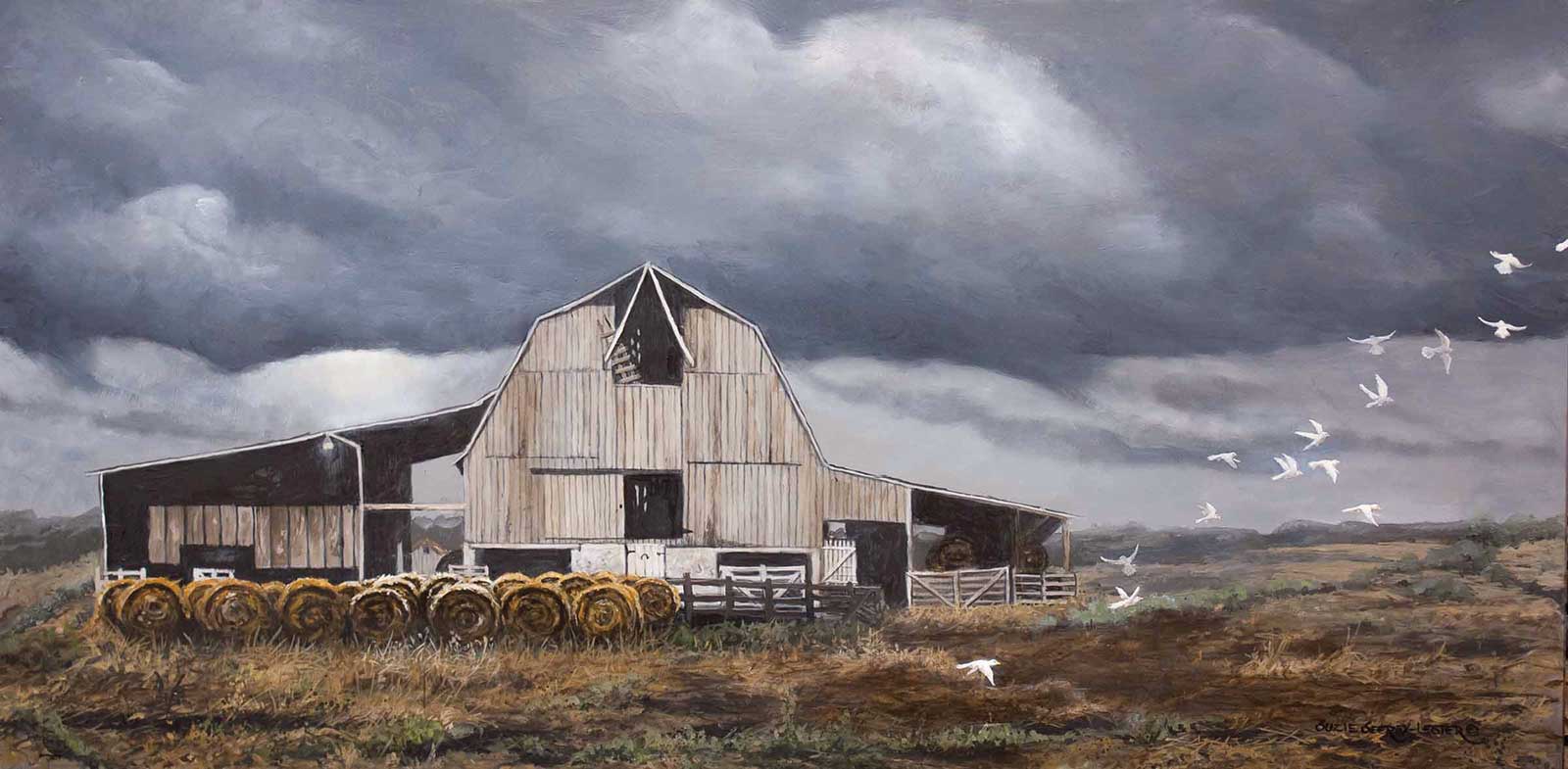 Suzie Seerey-Lester, Thunder Rolls, oil, 18 x 36"Park has painted the predatory creature “in a style reminiscent of vintage natural history illustrations,” she says.
Scott Kelley was invited to New Mexico by Gerald Peters Gallery. He reminisces: “I don’t know what I was expecting, but the landscape takes me by surprise...when it isn’t actively trying to kill me. I get lost in a canyon known as Ah Shi Sle Pah—meaning ‘gray salt’—and make a number of paintings based upon my travels.”
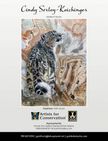
Sandhill Crane, De-Na-Zin, Bisti Badlands, NM, is from that series. The crane is set in an imaginary landscape and the paper is stained to resemble an early ornithological print.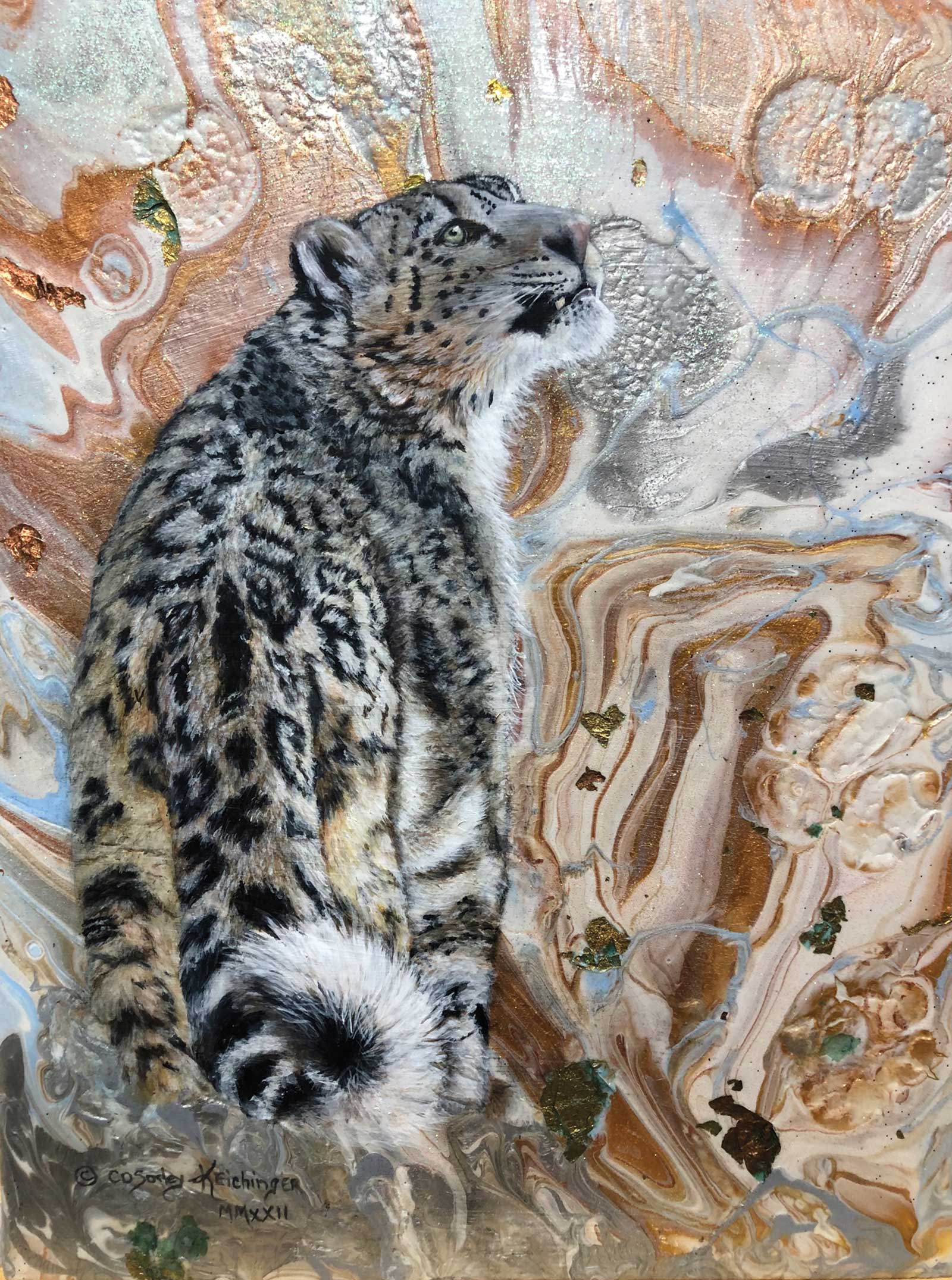 Cindy Sorley-Keichinger, Daydream, acrylic, 12 x 9"
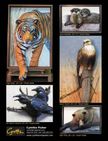
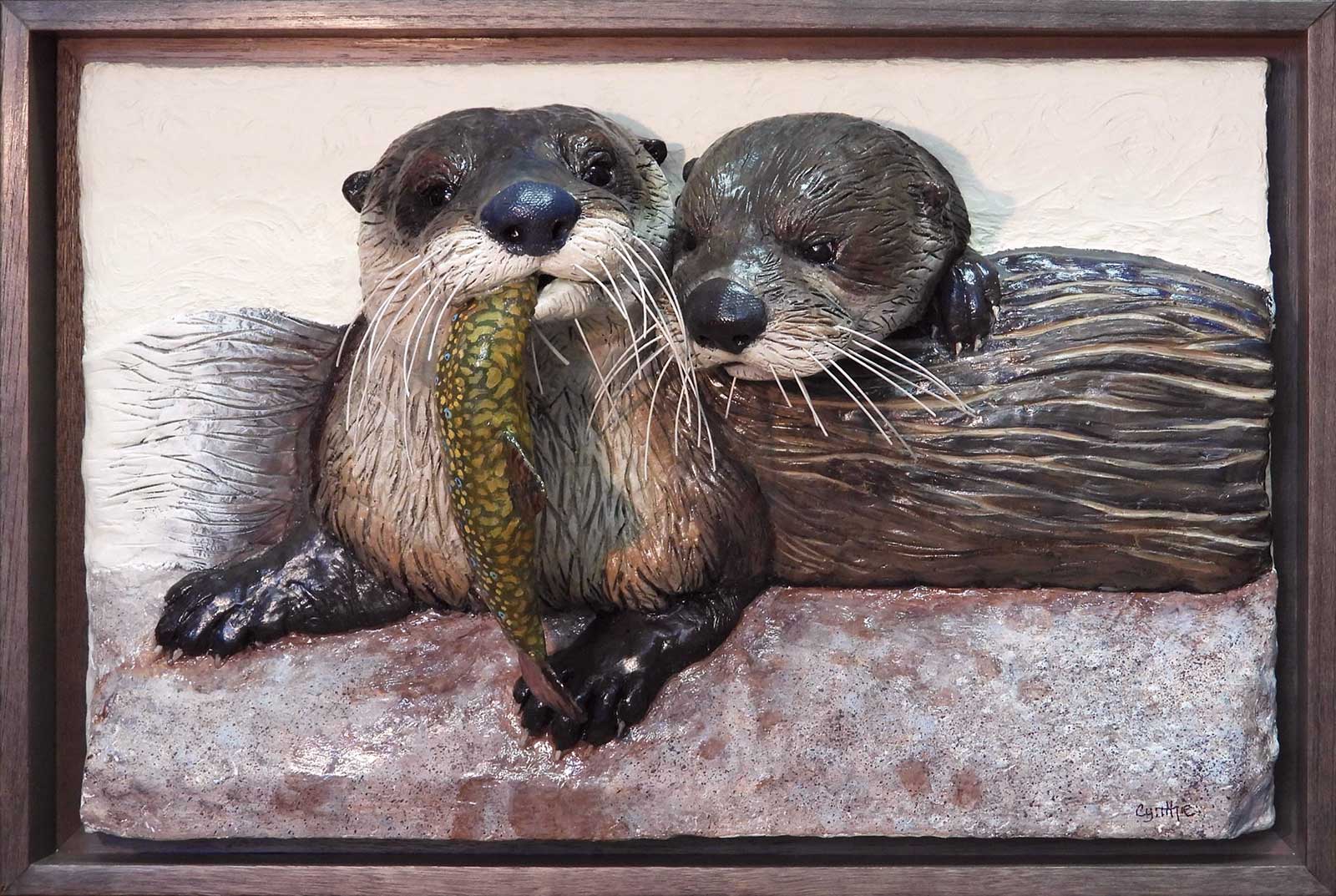 Cynthie Fisher, Otter Buddies, mixed media, 13 x 20"
Unlike the wolf and the terrifying, imaginary, sanguinary owl, sandhill cranes are a tourist attraction in meccas for birders along the Rio Grande. At Bosque del Apache National Wildlife Refuge, south of Albuquerque, the curious arrive in the cold predawn of winter. When the light reaches a precise level, nearly 10,000 birds take off en masse for a day of feeding in fields along the river. A truly awesome experience.
Wild animals have captivated the minds and hearts of humans for centuries, and our connections to these beasts of nature are ever enduring. Within this special collector’s focus, readers can embark on an exploration of yet more artists’ depictions, perceptions and unique connections to wildlife.
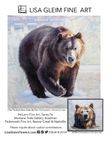
Artist Lisa Gleim has a knack for very deftly pairing clever compositions with masterful realism renderings of untamed, often predatory creatures to inspire mystical musings. Her work begs one to contemplate, to ponder nature’s scenario of what transpired before and after the documented moment, a mere second in time. “My career affords me hours of fascination observing my subjects living in, exploring and interacting in their environments,” says Gleim. “For me, it’s an endless source of pleasure working to capture the ever-changing light, colors, atmosphere and activity of the outdoor terrain and its inhabitants of the west or coastal regions.” Each piece is drawn using layers of colorful pastel mark making, often juxtaposed against subtle backdrops of vintage maps and collectible memorabilia. Occasionally Gleim will finish with delicate touches of gold leaf or perhaps a lustrous pearl, as in One Must Be A Fox To Recognize A Trap.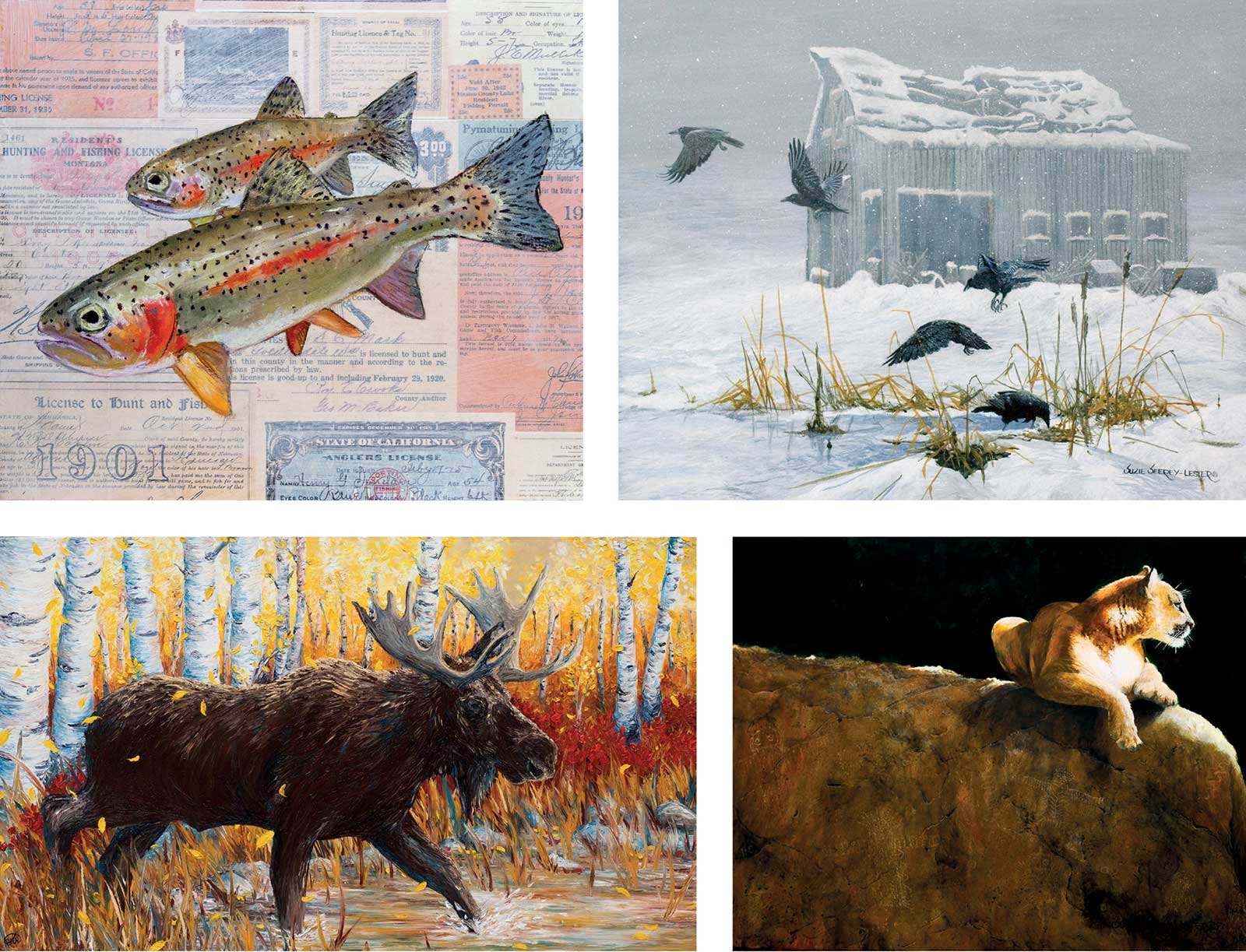 Top row: Lisa Gleim, Little Trouts, pastel on fishing ephemera, 12 x14"; Suzie Seerey-Lester, Winter Relic, acrylic, 16 x 20". Bottom row: Elizabeth Mordensky, Bull Moose in the Aspens, oil finger painting, 36 x 60"; Suzie Seerey-Lester, Shadows of the Past - Petroglyphs, oil, 16 x 20"
The work of Elizabeth Mordensky directly reflects her passion for nature. She has worked as a wildlife and backpacking guide for many years in Yellowstone National Park, which has provided her with endless inspiration. “I love exploring natural habitats and spending hours observing the comings and goings of all sorts of wildlife,” says Mordensky. “When I get back to the studio, ideas and images swirl around my head until I settle on the composition for the next painting.” Mordensky is known for bringing her paintings to life with a bold impasto style, achieved by finger painting with oils. She strives to provide viewers with an intimate look into the lives and personalities of her wild subjects. 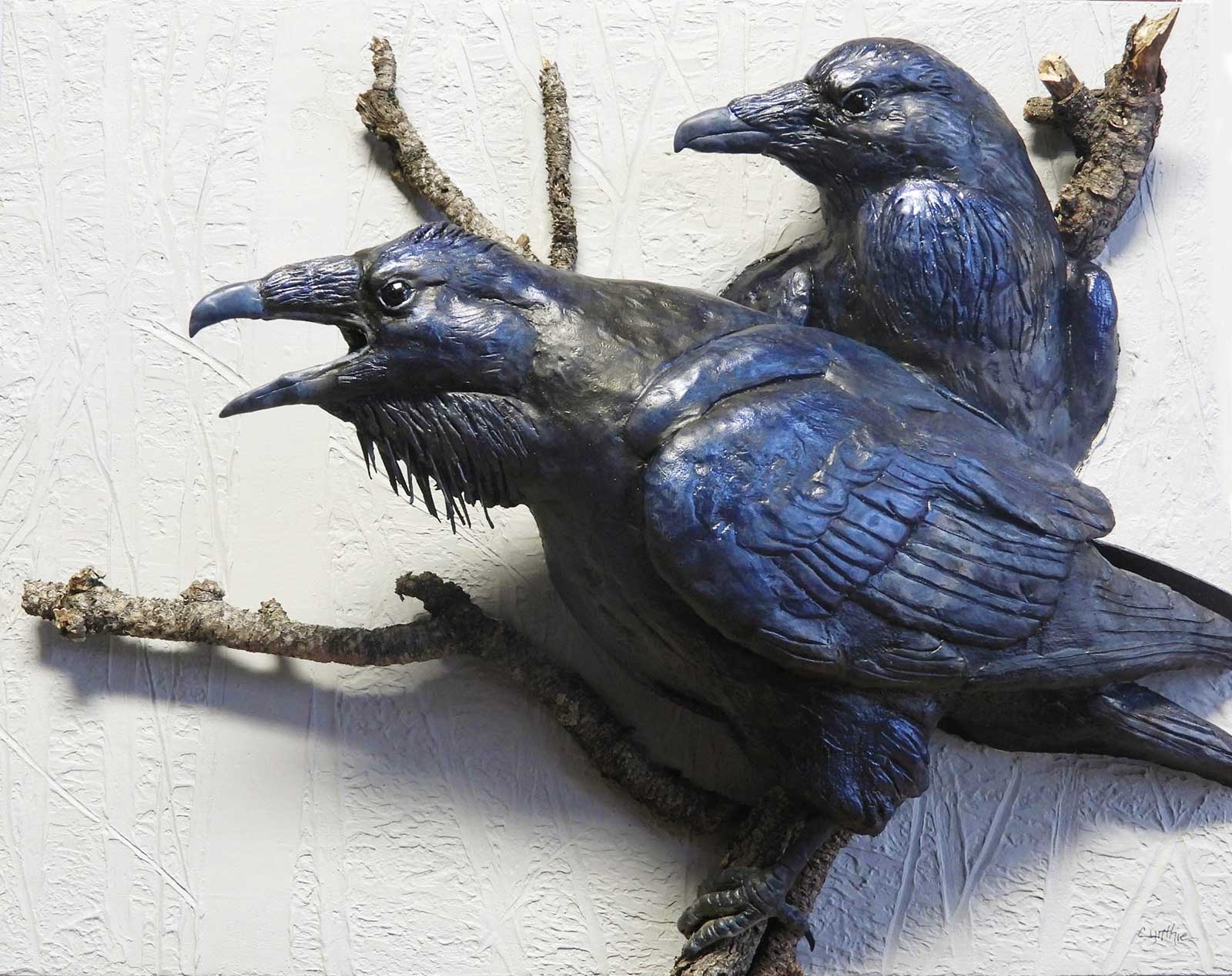 Cynthie Fisher, On Patrol-Ravens, mixed media, 22 x 18"
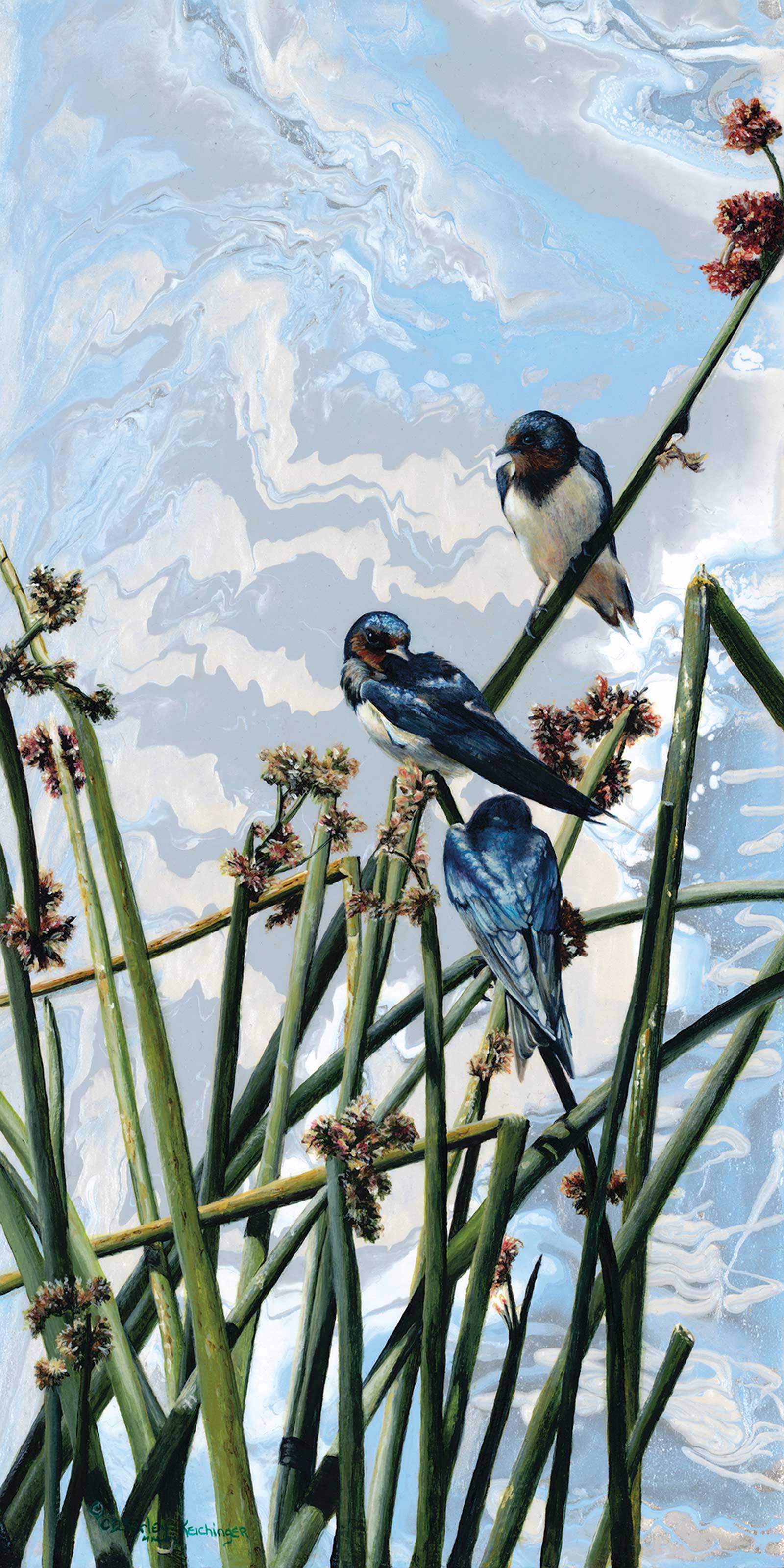 Cindy Sorley-Keichinger, Swallow Dream, acrylic, 18 x 9"
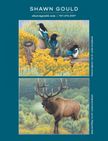
Award-winning wildlife artist Suzie Seerey-Lester has a passion for painting animals and birds. She loves to use light and shade to bring attention to the subject, which is hidden sometimes. Her paintings tell a story. For example, in the painting Shadows of the Past, viewers will find hidden in the rock petroglyphs of birds and animals that are over 1000 years old. In Sublet Blues, the old tool shack is a backdrop to the mountain bluebirds building a new nest. Winter Relic shows an old barn falling apart covered with snow, but ravens are visiting at the edge of the pond. Thunder Rolls has the darkened sky before the storm, where the white doves decide to take flight. 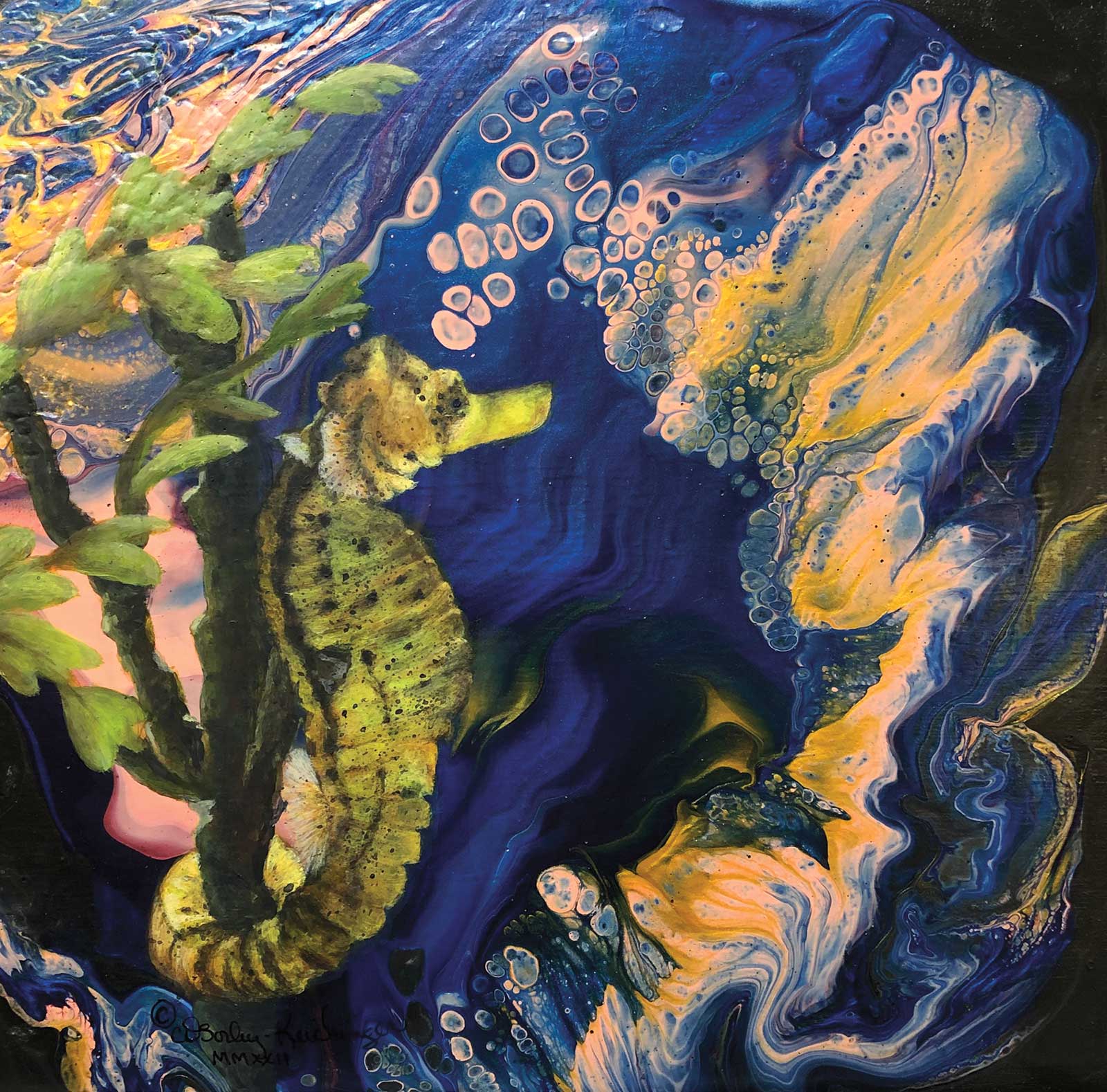 Cindy Sorley-Keichinger, Turbulent Seas, acrylic, 8 x 8"For Shawn Gould, art and nature are completely woven together. “Inspiration for my paintings comes from the world around me, whether I’m hiking some far off mountain trail or just taking our dog for a walk around the neighborhood. A flash of color or spark of light catches my eye and draws me in,” says the artist. Back in the studio, this initial idea is then edited down and rearranged until reality is transformed into art through his imagination. “Like the saying goes, ‘Stop and smell the roses,’” says Gould, “or in my case, ‘Slow down and really see the world around you. There just might be a painting looking back at you.’”
Over the years, the style of Cindy Sorley-Keichinger’s artwork has steadily evolved to where it is now. The main point of my work is that we are not the only ones on the planet, and I would like people to see and enjoy images of our neighbors,” says the artist. “To see and know something is to take an interest in it. Urban life, and to a lesser degree, rural life, insulates us from the world around us. I hope to introduce people to what they do not see everyday, and to see beauty in what they do see.”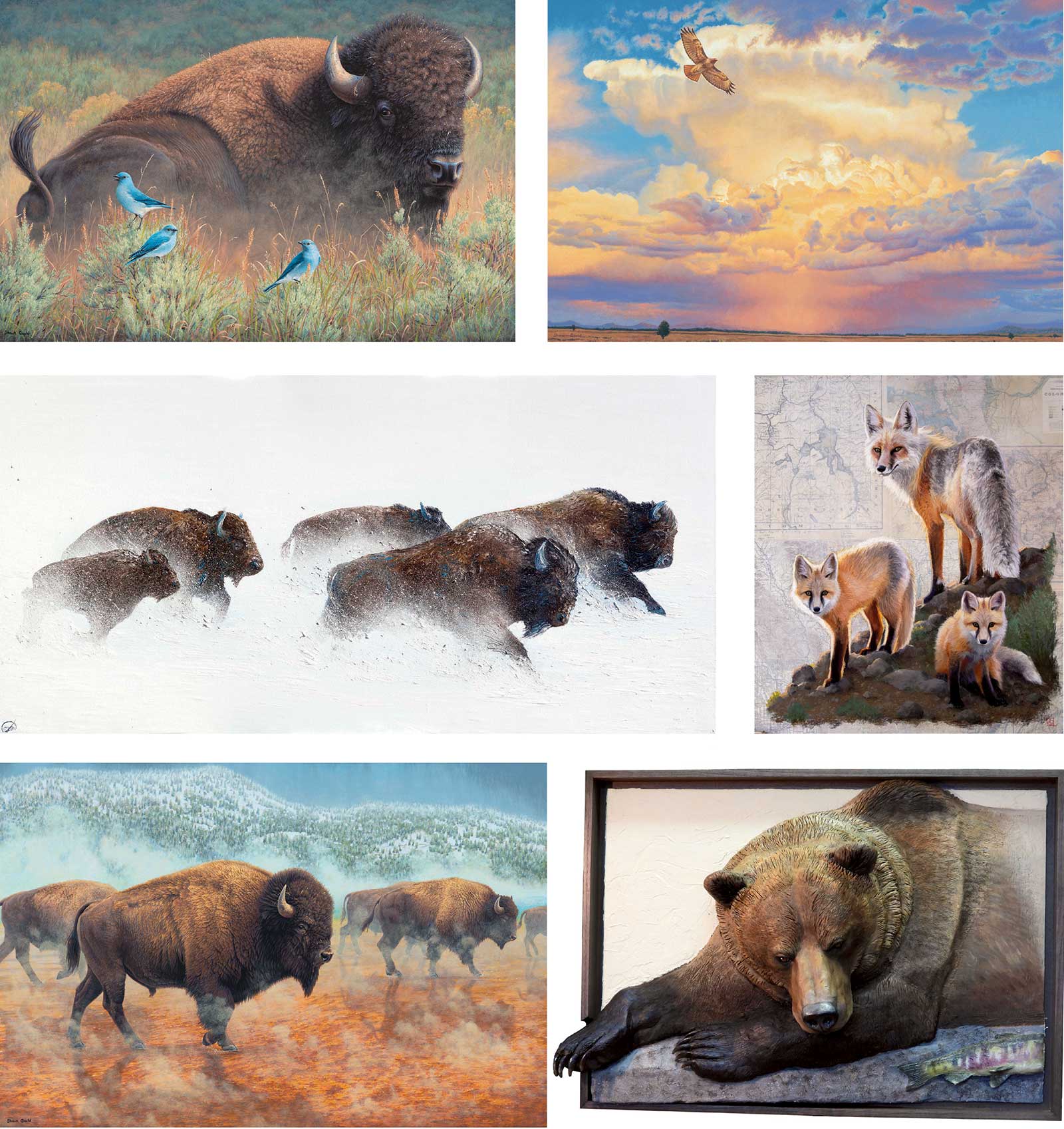 Top row: Shawn Gould, Beauties and the Beast, acrylic, 24 x 36"; Shawn Gould, Soaring Above, acrylic, 24 x 36". Middle row: Elizabeth Mordensky, Winter Thunder, oil finger painting, 36 x 72"; Lisa Gleim, Watchful Eyes, pastel on collage maps, 38 x 35". Bottom row: Shawn Gould, Grand Prismatic Crossing, acrylic, 24 x 36"; Cynthie Fisher, Nap Time, mixed media, 28 x 20"Cynthie Fisher has pioneered a new technique she calls “emergence.” These one-of-a-kind mixed media sculptures depict some of her favorite species, and all feature a unique three-dimensional aspect to bring them to life. Fisher enjoys both sculpting and painting, and with these special originals, she can do both. She uses plaster, clay, foam, wire and other materials to create three-dimensionality, then paints them with acrylics. She has endless inspiration for subjects relishes the challenge of creating each one. —
Featured Artists & Galleries
Antler Gallery
2728 NE Alberta Street, Portland, OR
(503) 737 4996, www.antlerpdx.com
Cindy Sorley-Keichinger
Golden K Studio
Box 382, Kitscoty, AB, Canada T0B 2P0
(780) 847-2294, (780) 871-4724
goldfarm@telusplanet.net
www.goldenkstudio.com
Cynthie Fisher
(406) 375-1445, (406) 360-0131
cynthieart@gmail.com
www.cynthiesoriginals.com
Elizabeth Mordensky
(406) 219-8307
www.mordenskyfineart.com
Evoke Contemporary
550 S. Guadalupe Street
Santa Fe, NM 87501, (505) 995-9902
www.evokecontemporary.com
Gerald Peters Gallery
1011 Paseo de Peralta
Santa Fe, NM 87501
www.gpgallery.com
Lisa Gleim
(770) 919-7719
www.lisagleimfineart.com
Shawn Gould
(707) 476-8197, shawn@shawngould.com
www.shawngould.com
Suzie Seerey-Lester
(941) 484-6164
seereylester@msn.com
www.seerey-lester.com
Powered by Froala Editor