An invasion of mysterious landscapes and unearthly animals takes over the Oceanside Museum of Art, California, at the end of May. A Kind of Heaven is an exhibit of paintings by contemporary visionary artists who imagine the world as another place, where alternatives to everyday reality are made manifest, and landscapes, animals and people are transformed. A Kind of Heaven holds a mirror to contemporary visionaries, the intrepid explorers of extravagant imagination, their vivid conceptions.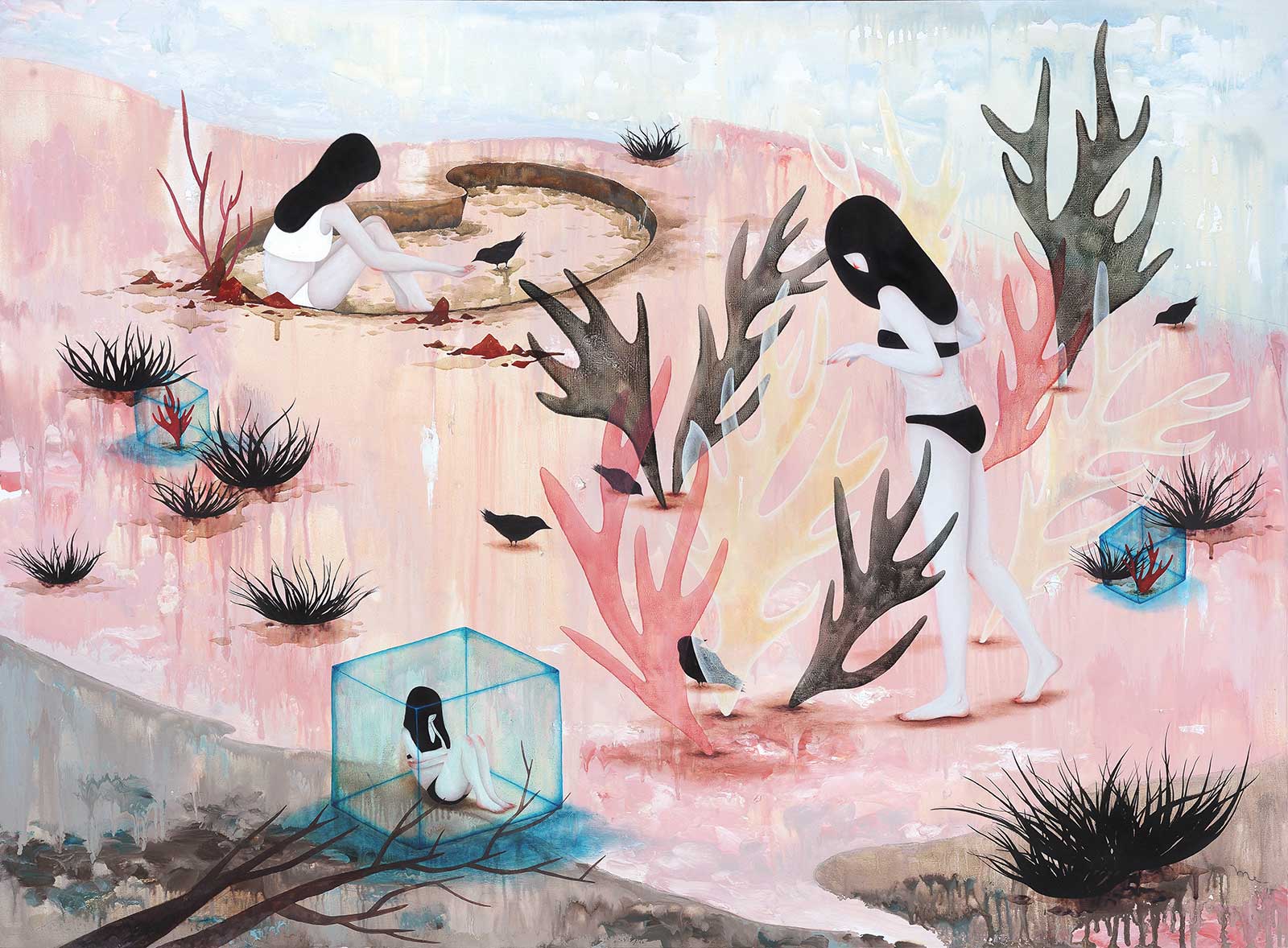 Mandy Cao, Finding Myself, oil on panel, 36 x 48"
The artists are all from Southern California—they share a Californian imagination born from the libertine freedoms released during the formation of American popular culture in the 1960s, when the first full flush of visionary, psychedelic and fantastic art emerged.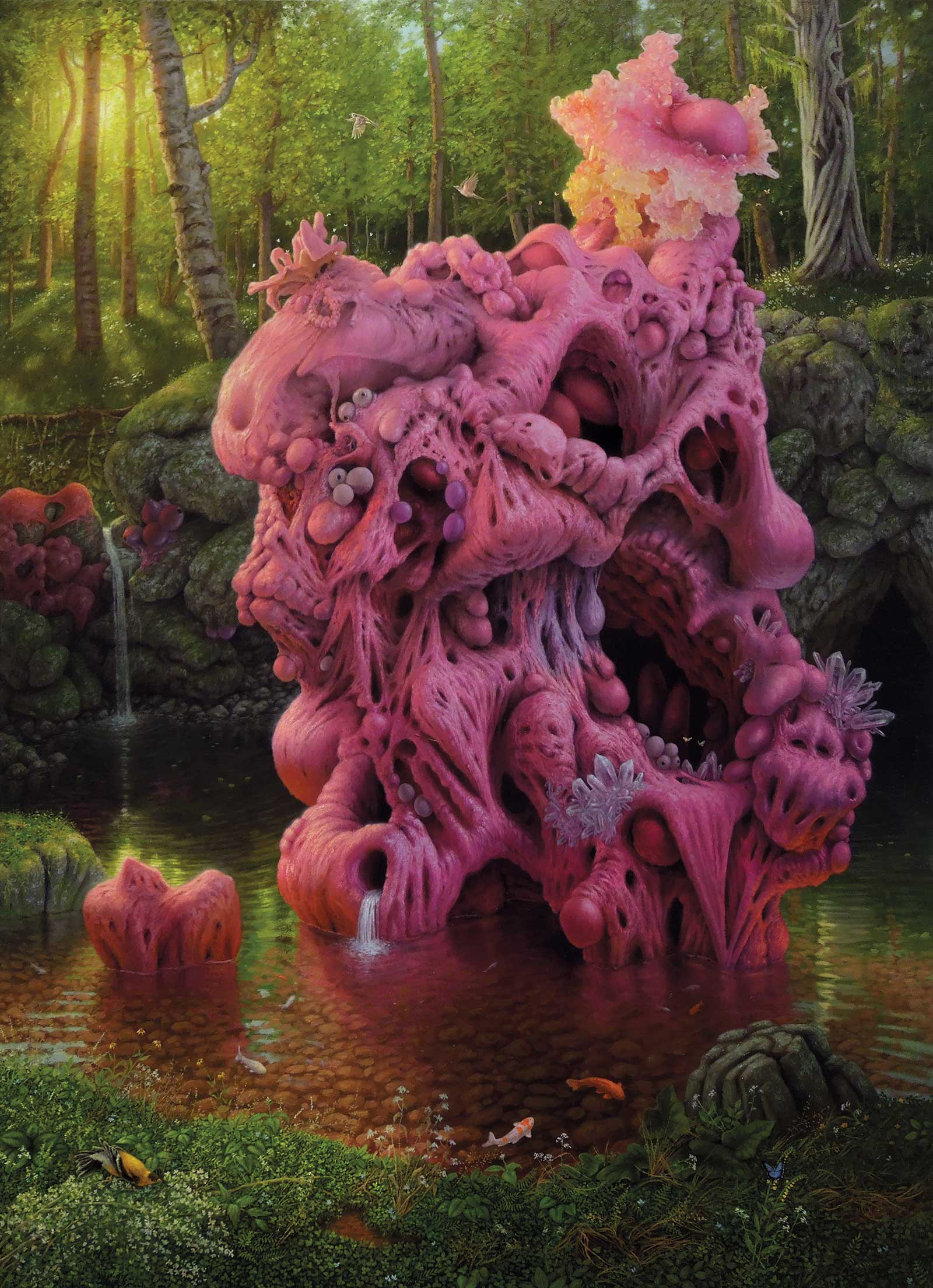 Adrian Cox, Borderlands (Summer Home), oil on canvas, 66 x 48"
Early visionary artists were untrained and had a somewhat naïve aesthetic, but as the genre matured, the imagery became increasingly sophisticated. After the ’60s, visionary art developed into a burgeoning field and deeply affected the appearance of motion pictures and music videos, and now California is again the epicenter of a new aesthetic. Contemporary visionary artists use groundbreaking technologies which are changing the ways we think about imagination and the production of visual arts. Their techniques have evolved from early stenciled airbrush work and illustrative painting to using computer programs for composition, and prompting artificial intelligence to stimulate the imagination, while still incorporating the luxurious finishes of the Old Masters. The 21st century is a beautiful but alien place, for DNA manipulation and artificial intelligence have created access to a new kind of loveliness, and given new power to the long tradition of visionary art. The subject matter has expanded, too, influenced by developments in bio-technology and neuroscience, which have added beautiful mutations and a new psychedelic breadth to the genre.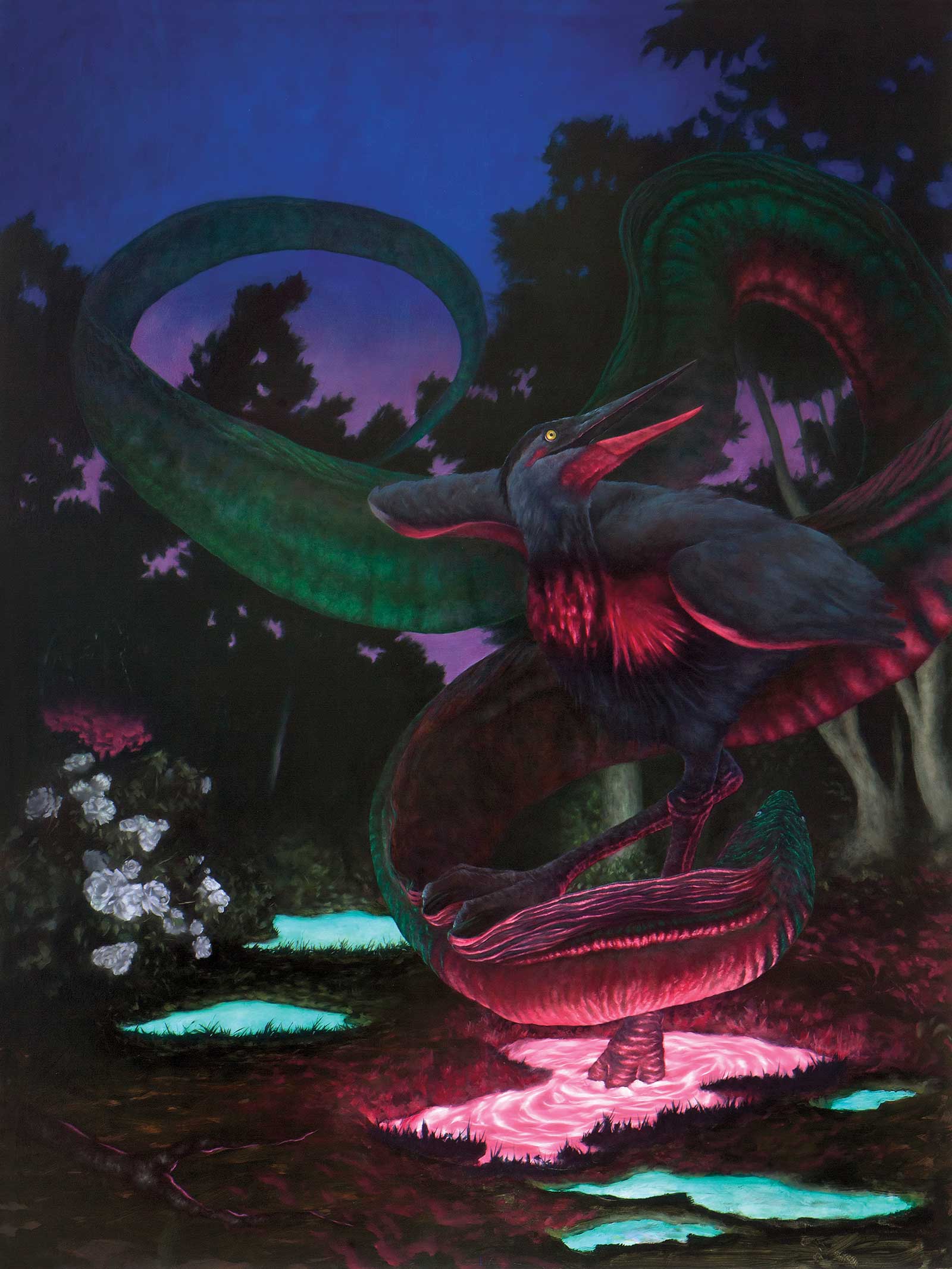 Cody Jimenez, Upper Hand, oil on wood panel, 48 x 36"
In the 1960s and ’70s, visionary artists were often delighted with utopian dreams of a future perfected by peace, love and LSD, which seemed like a genuine possibility—the Age of Aquarius was at hand. Over a half century later, those idealist fantasies have been replaced by the uncomfortable uncertainties of our own time, which is fraught with existential threats—the psychological equivalent of a volcanic eruption of frightening novelty. Machines seem to be smarter than us, and more proficient at performing human tasks. Genetic modifications may make us more human than human, can turn animals into weird hybrids, and transform nature into an alien landscape. Although an entirely human utopia seems unlikely now, we still dream of a better future, but it is one shaped by the beneficial aspects of these new technologies, and these future dreams can be unfamiliar, and disconcerting, but they are sublime and often beautiful.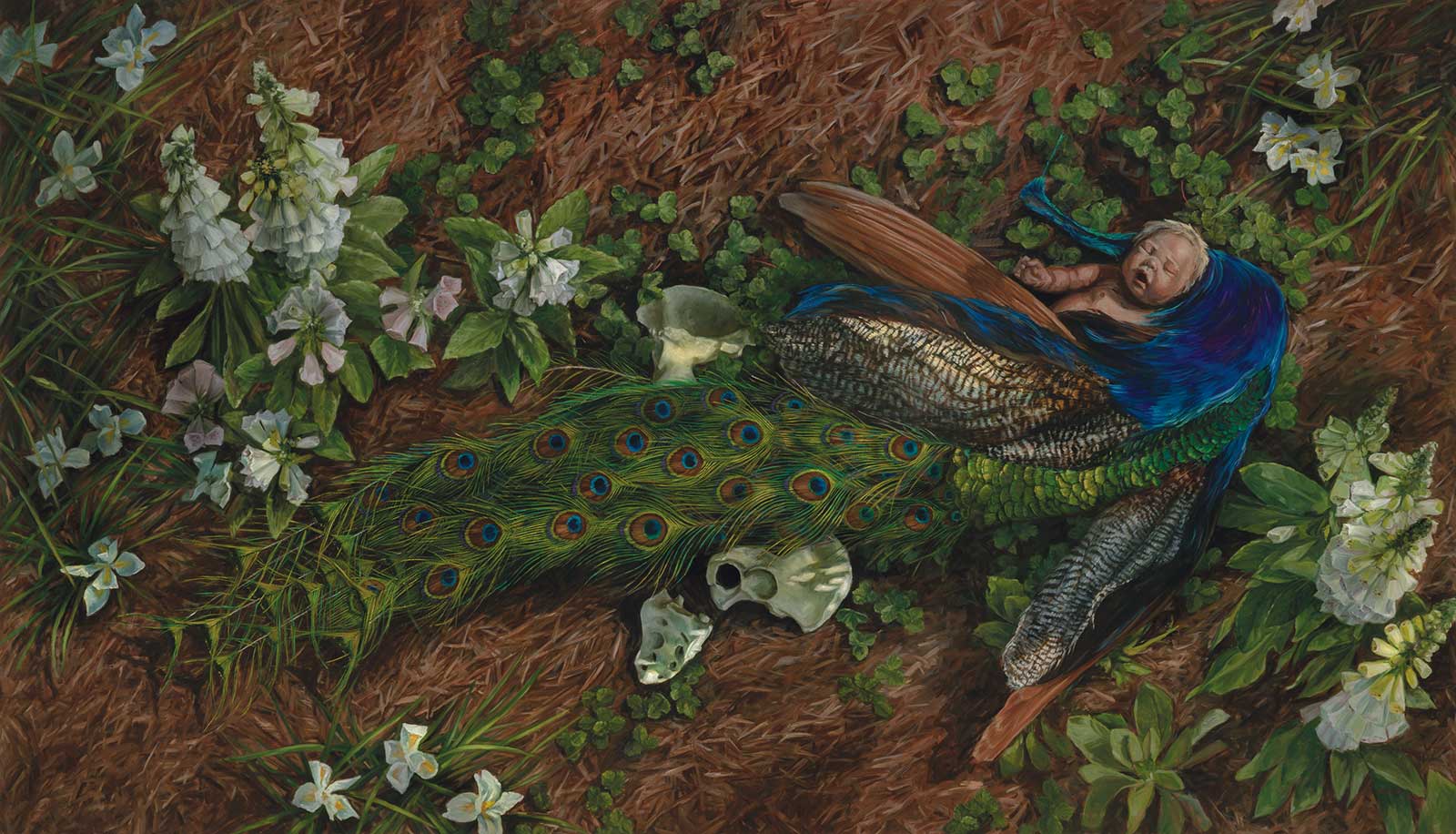 Cynthia Sitton, A Long Time Ago, oil on linen, 48 x 84"
Cliff McReynolds’ career began in the heady days of the hippy era. He was one of the artists featured in Walter Hopps’ essential book Visions, and his posters were fixtures on dorm room walls around the world. His visionary colleagues were hungry for a new age utopia, but McReynolds was entranced by the Christian paradise and painted its arcadian scenes. Like McReynolds, Guy Kinnear works to find a balance between the spiritual and the physical. His spectacular Breathe Against Babel is a new centerpiece for his marvelous imaginarium of cracked clay golems and paper figures. Set against the apocalyptic fires of a violent sky, storms threaten the sweeps of a swirling valley landscape and a fire-line of flame follows an infernal tripod machine, looming darkly over two fragile and magic little wisps of light—glowing glimmers of papery life caught beneath the threatening storm. It is a perfect illustration of the sublime moment in the postmodern age, the war between past and present worlds. Kinnear’s sky follows the thunderheads of John Martin’s Victorian paintings of sublime destruction, and his fragile and comical characters recall the primordial couple of Thomas Cole’s Expulsion from the Garden of Eden, made tissue thin and doomed by the monstrous threat of fearsome tech.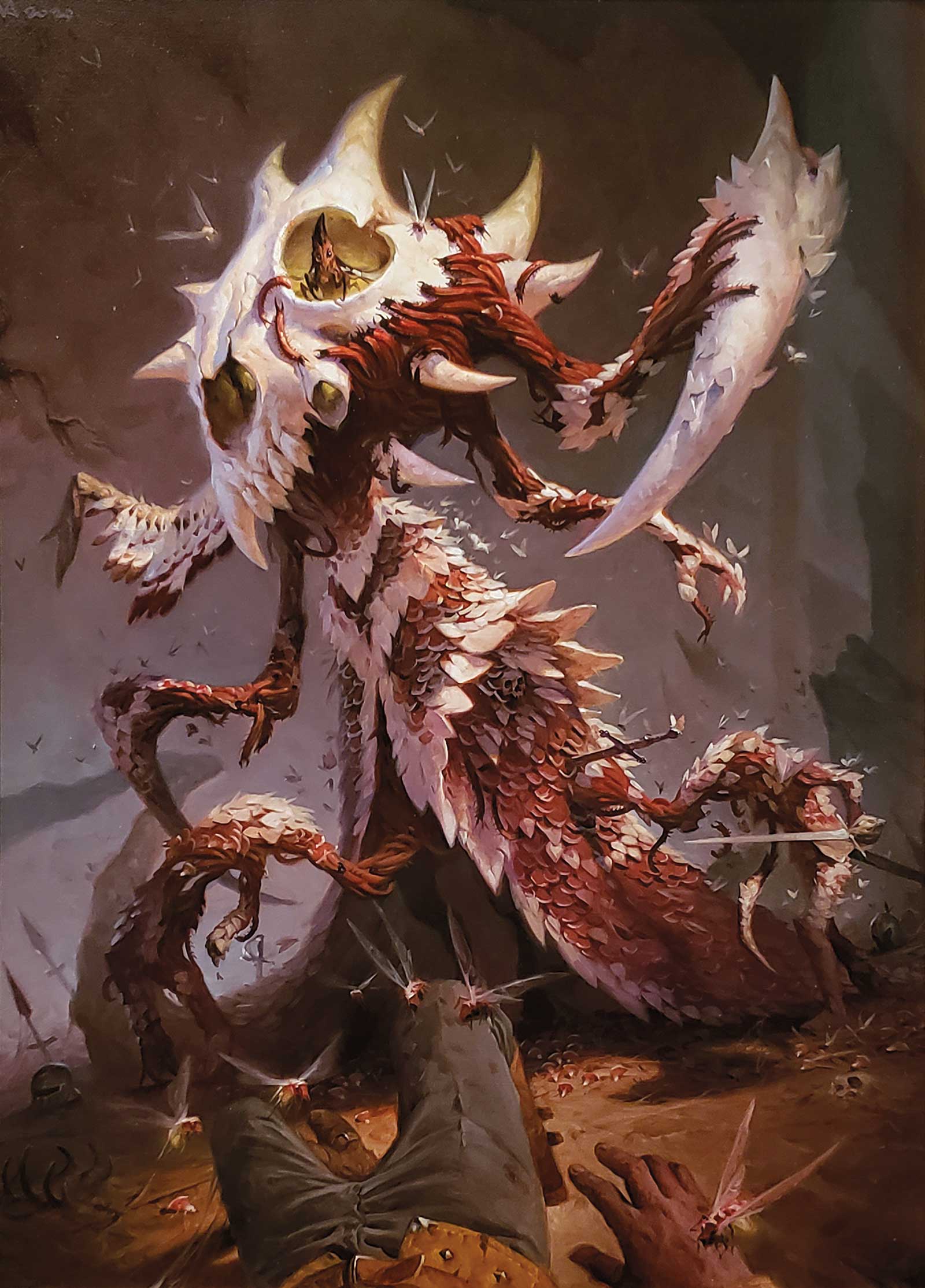 Victor Adame Minguez, Grist, The Hunger Tide, oil on panel, 14½ x 10½”
We fear the novelties of artificial intelligence and DNA engineering, reminded of the horrors of Terminator or Frankenstein, but these culture-changing innovations have created a fresh aesthetic which is rooted in 19th-century thoughts about the sublime. Although the sublime is linked to the beautiful, it arouses a feeling of astonishment, not the warm liquidity of beauty. Drivers slow to see smashed debris after a car crash, and we find a weird gratification in the wreck. We are fascinated by the calamitous disasters of war. Seeing a volcanic eruption, or the spectacular violence of a bombing, or the collapse of a big building, we find ourselves in a state of awe, amazement, fear and even terror. When sublime art like Breathe Against Babel is made, we can enjoy the experience of being in its energizing presence, because the danger it describes is controlled, and we are removed from the physical harm that terrifying events may cause. New visionary art flirts with the misty space between beauty and the sublime—approaching our dark fears of mutation, of the seductive monsters DNA manipulation may produce, or the existential danger presented by artificial intelligence, which threatens to surpass the abilities of the human mind with spectacular efficiency. Without the evolution of mind which elevated us from our simian cousins we would still be swinging about in trees, tasty treats for jaguars and leopards. Mind allowed us to create weapons for hunting and protection, to learn how to build shelter and control fire, to communicate and create culture—now artificial intelligence seems to threaten our supremacy. We are but clever monkeys.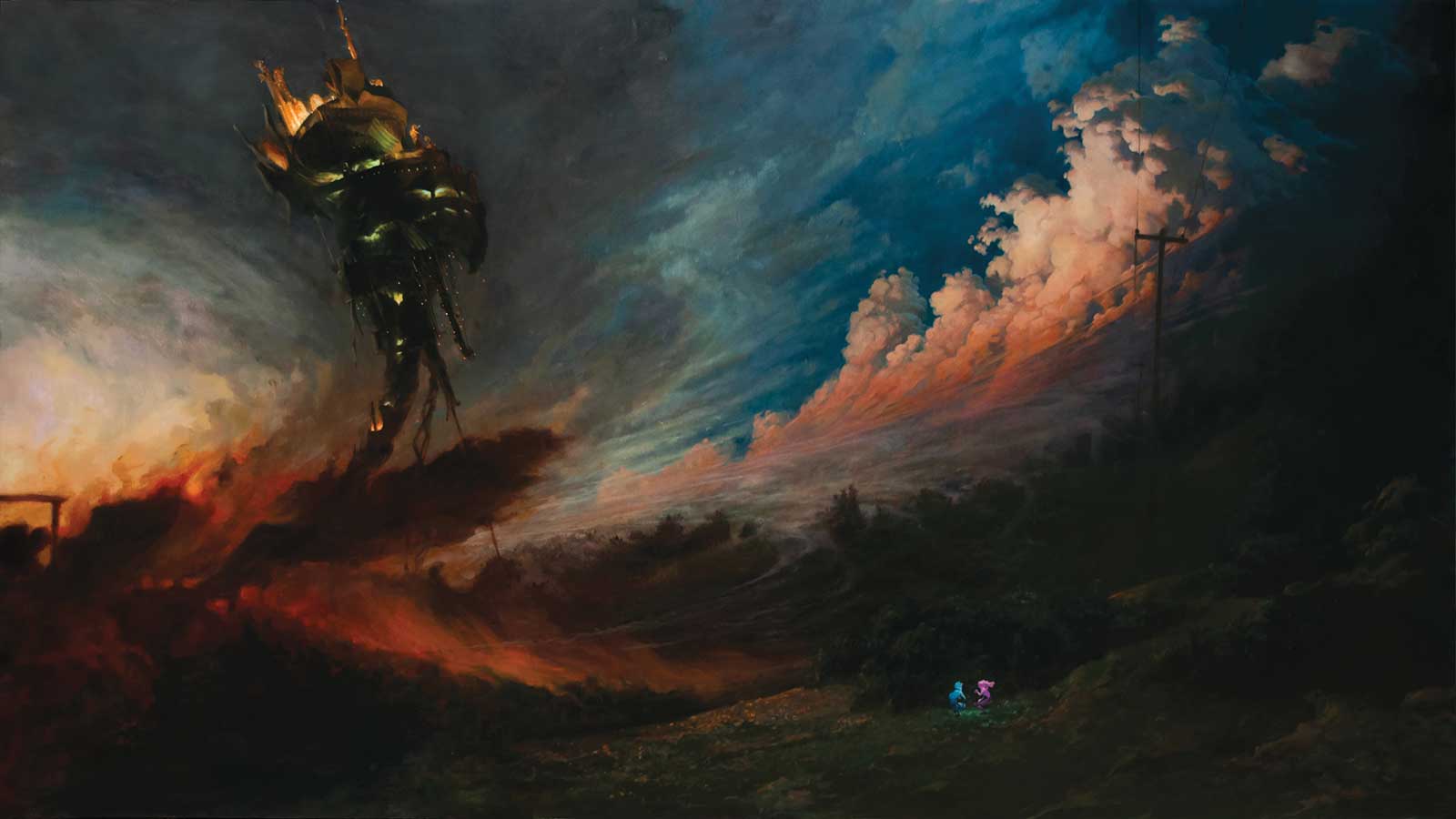 Guy Kinnear, Breathe Against Babel, oil on Panel, 36 x 64"
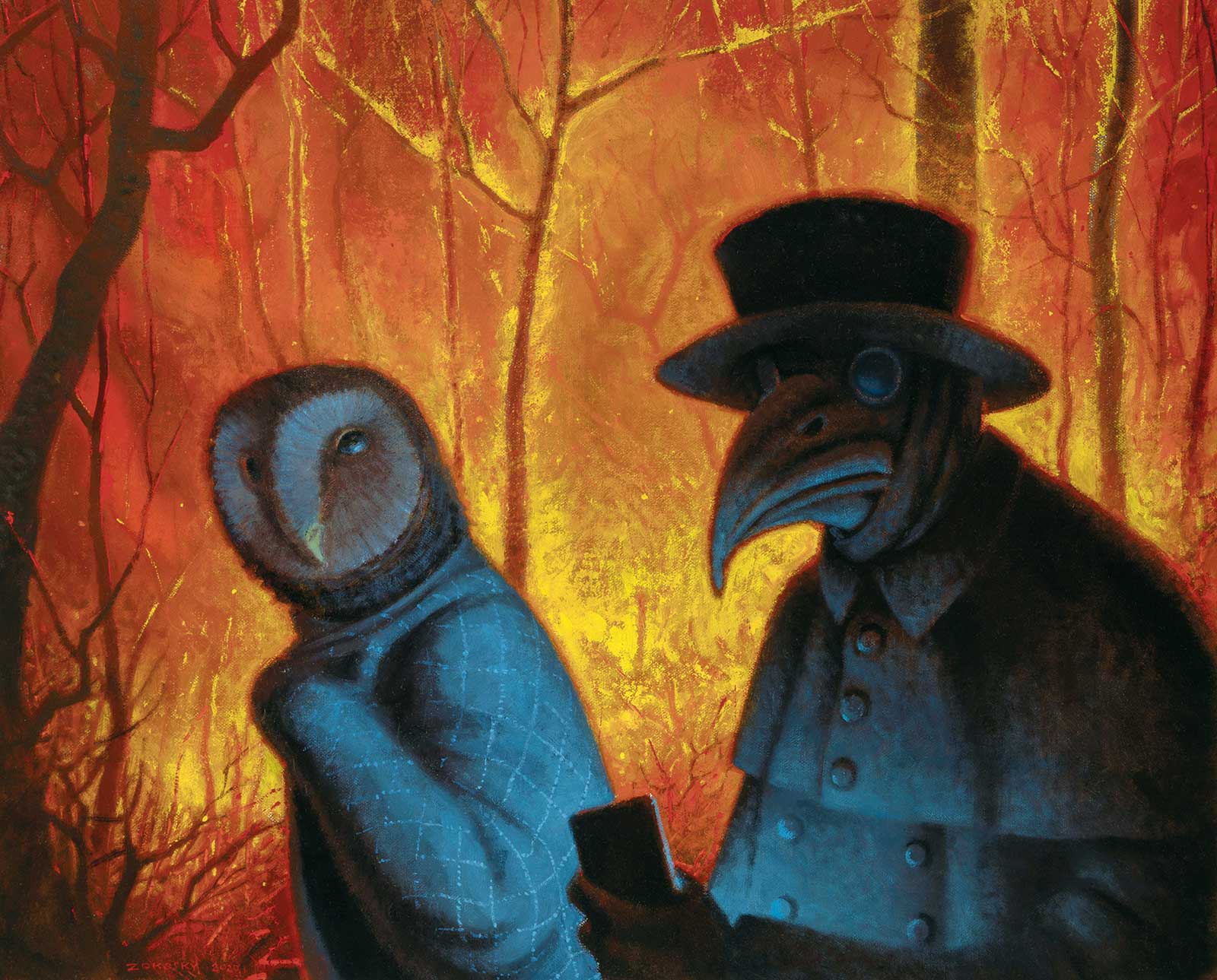 Peter Zokosky, Plague, oil on panel, 16 x 20"
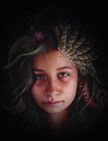
Digital works by Tim Hengst and Kirsten Zirngibl show the stylistic variety now available—Hengst using photography and computer manipulation to create psychedelic visions of nature, and Zirngibl creating gorgeous aethereal cities from the liquid crystal of her display.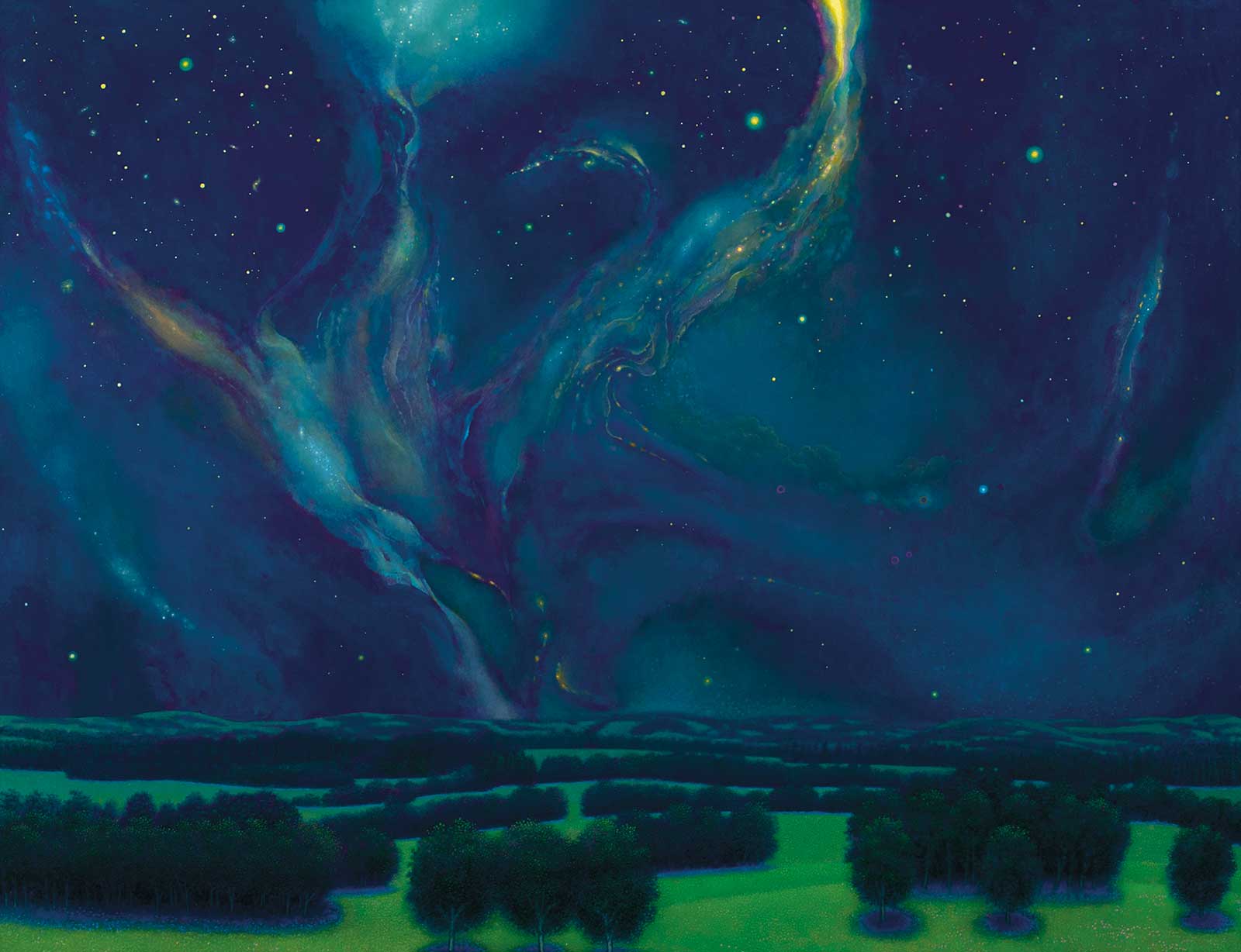 Cliff McReynolds, Big Sky, oil on panel, 24 x 31"Although threatened again by the sharp power of computers, and repeatedly declared dead for over a century, painting still shows all the signs of vigorous life. Aihua Zhou’s whimsical ink landscapes share the soft depth of tradition with the surreal eye. Mandy Cao wanders in fantasia. Peter Zokosky’s monsters lurk in the fires and forests of dreamland. Victor Adame Minguez and Cody Jimenez are observers of new forms in the strange new spaces between reality and the new imagination. Minguez makes spectacular oil paintings of strange creatures and scenes from science fiction, conjuring ideas from the cyberpunk alternate reality of the metaverse. His world is frightening, but has a polished beauty and a disconcerting sense of dangerous possibilities. Jimenez is aggressively transhumanist, exploring the spooky mineral interface of gemstones and organisms, unearthly fractal light and mutant nature. Adrian Cox has made mysterious fungal growth into a beautiful grand guignol spectacle, centering the weird metamorphoses of visiting alien life in his paintings with the same importance once granted to historical dramas, and the spectacular landscapes of Constable or Turner, now transformed into something new, something wonderful—but this luxurious novelty is also something dangerous, something predatory. If the biting aesthetics of this eerie utopia are alarming, and we feel like strangers in a strange land, Cynthia Sitton has provided a vision of optimism to pull the teeth of fear. A child lies within a feathered embrace, born of a broken bird, with all the potential of new life. Painting adapts, and its wisest lovers embrace the new and emulate the old. Painting reflects our world. —
A Kind of Heaven
When: May 21-August 21, 2022
Where: Oceanside Museum of Art, 704 Pier View Way, Oceanside, CA 92054
Information: (760) 435-3720, www.oma-online.org
Editor’s Note: Michael Pearce is the curator of this exhibition at Oceanside Museum of Art.
Michael Pearce is a dynamic writer, curator and critic. He is an active and enthusiastic participant in the conversation about 21st century art and its roots, especially contemporary imaginative realism. He has published dozens of articles about art and artists, and is author of Art in the Age of Emergence. He is a champion of art that emerges from popular culture and shapes the spirit of the age. He is Professor of Art at California Lutheran University.
Powered by Froala Editor