In Hirschl & Adler Modern’s ongoing exhibition A Likeness, portraits from seven artists send a strong message.
“While each work in the show can be solidly defined as a portrait, these paintings are also meditations on far-reaching ideas like labor, commodification, marginalization and displacement,” says Ted Holland, artist manager and exhibition coordinator at Hirschl & Adler Modern. “What I find to be the most interesting is how quickly each painting moves past being the picture of a real individual and to being a broader, universal statement.”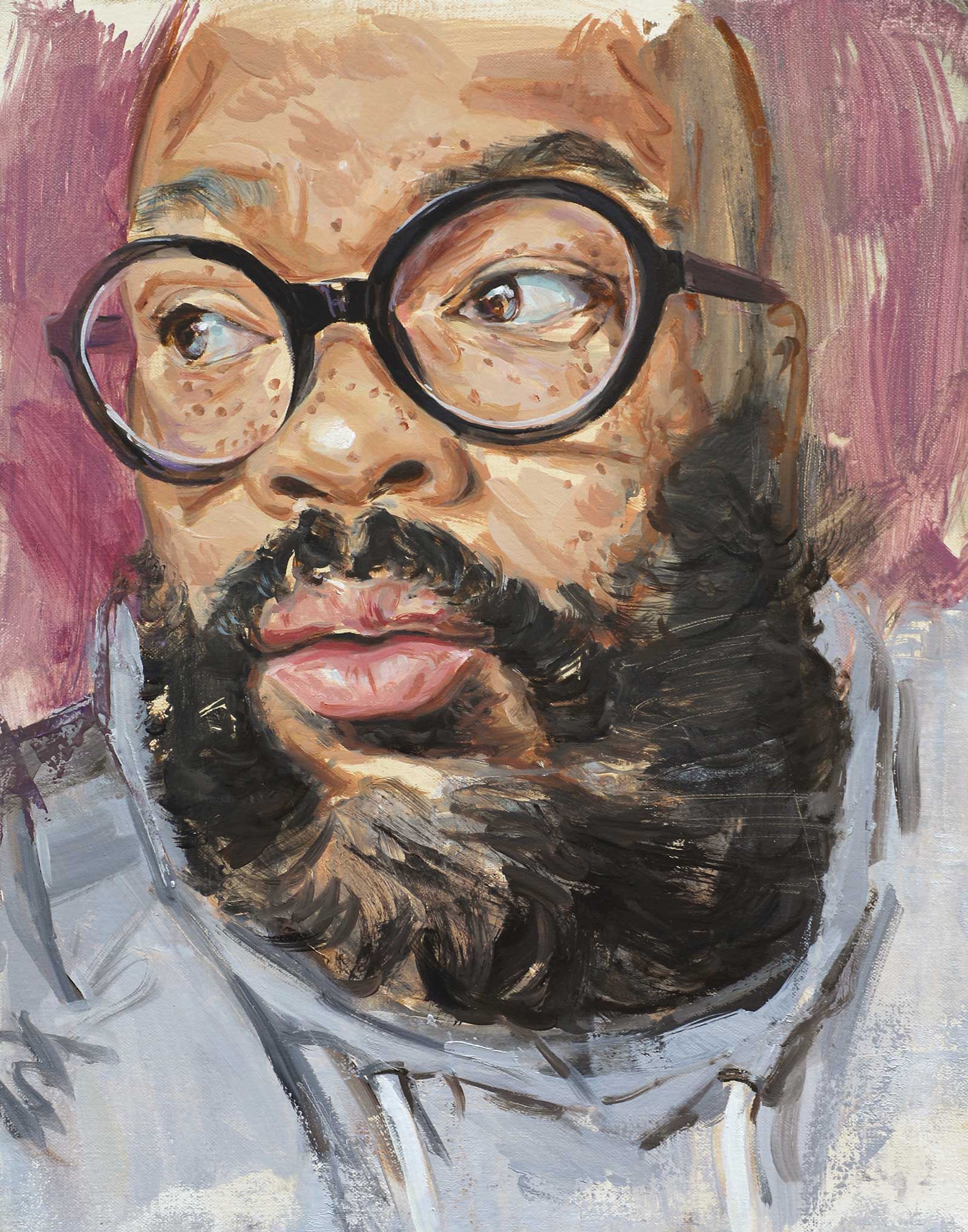 James Everett Stanley, Double Vision, oil on canvas, 14 x 11". Courtesy Hirschl & Adler Modern.
Angela Fraleigh’s Splinters of a Secret Sky — Splinters was originally created as an installation at the Weatherspoon Museum of Art and celebrates the donors Claribel and Etta Cone, whose early gifts were foundational to the museum’s modern art collection.
The painting portrays a dreamy atmosphere, fragmented by glimpses of the artworks from the sisters’ collection. “The works are clotted with splinters of ‘things’ that the Cone sisters so lovingly acquired, yet are airy and otherworldly to help evoke an illusory floating utopia,” Fraleigh describes. “The abstraction to some degree represents thought patterns, lingering layers, lost lenses or traces of female agency that so readily gets papered over or blotted out of history.”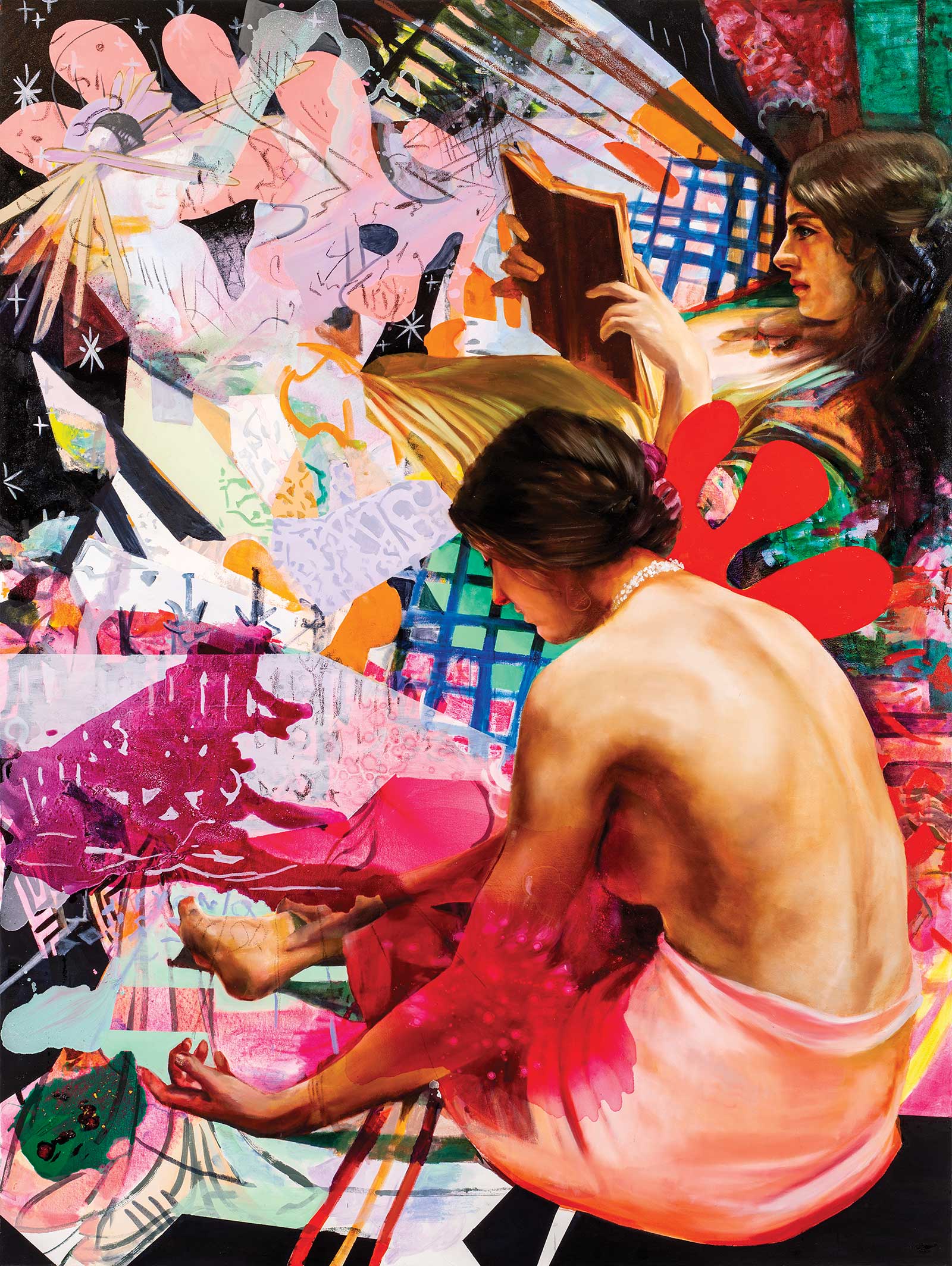 Angela Fraleigh, Splinters of a Secret Sky - Splinters, oil and acrylic on canvas, 96 x 72". Courtesy Hirschl & Adler Modern.
Fraleigh frames the Cone sisters’ influence on the art world through a new perspective and reexamines their legacy in modern art through a decidedly feminine lens. “They are engulfed in a hallucinatory dreamscape or emerging out of one. They are literally being framed by a new narrative. The voyeuristic keyhole we are so often peering through in art history is being mired by the remnants of a powerful historical female perspective,” she says.
Eric Helvie began painting at 16 while attending a British school in South Africa, where he was introduced to figurative artists like Marlene Dumas, William Kentridge, Francis Bacon and Lucian Freud. He remembers, “They were my heroes, all making figurative work and challenging notions of what portraiture and figurative painting was capable of doing.”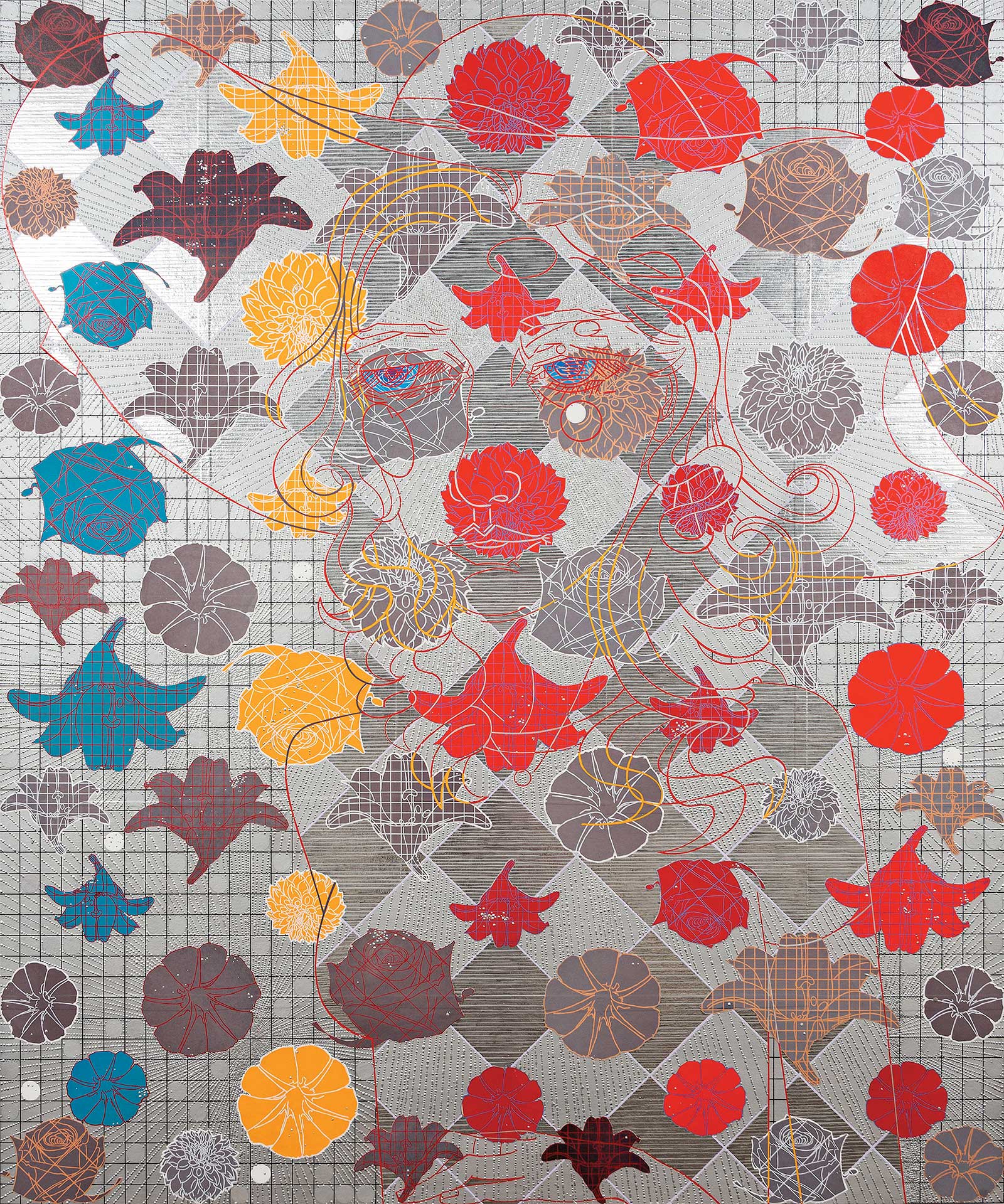 Chie Fueki, Mirror, acrylic, colored pencil and mirror paint on mulberry paper on wood, 58 x 48". Courtesy DC Moore Gallery.
Helvie’s subject in Wet Moon is his wife. While he was completing the painting, he thought often of Picasso’s weeping women, and the final result depicts love and sadness in equal measure. “Most of my portraits tend to push the boundaries of beauty and land on a certain kind of strangeness, but Wet Moon was an attempt on my part to make something more classical,” he says. “Beauty with a hint of underlying turmoil.”
At first glance, Chie Fueki’s Mirror may not look like a portrait. A collage of mirror paint, colored pencils and acrylics done on mulberry paper, the first thing viewers notice is the diamond pattern of colorful flowers. It’s only when standing in front of the work that the portrait emerges. When viewers look closely at the swirling red mirror paint, the outline of a woman appears out of the background.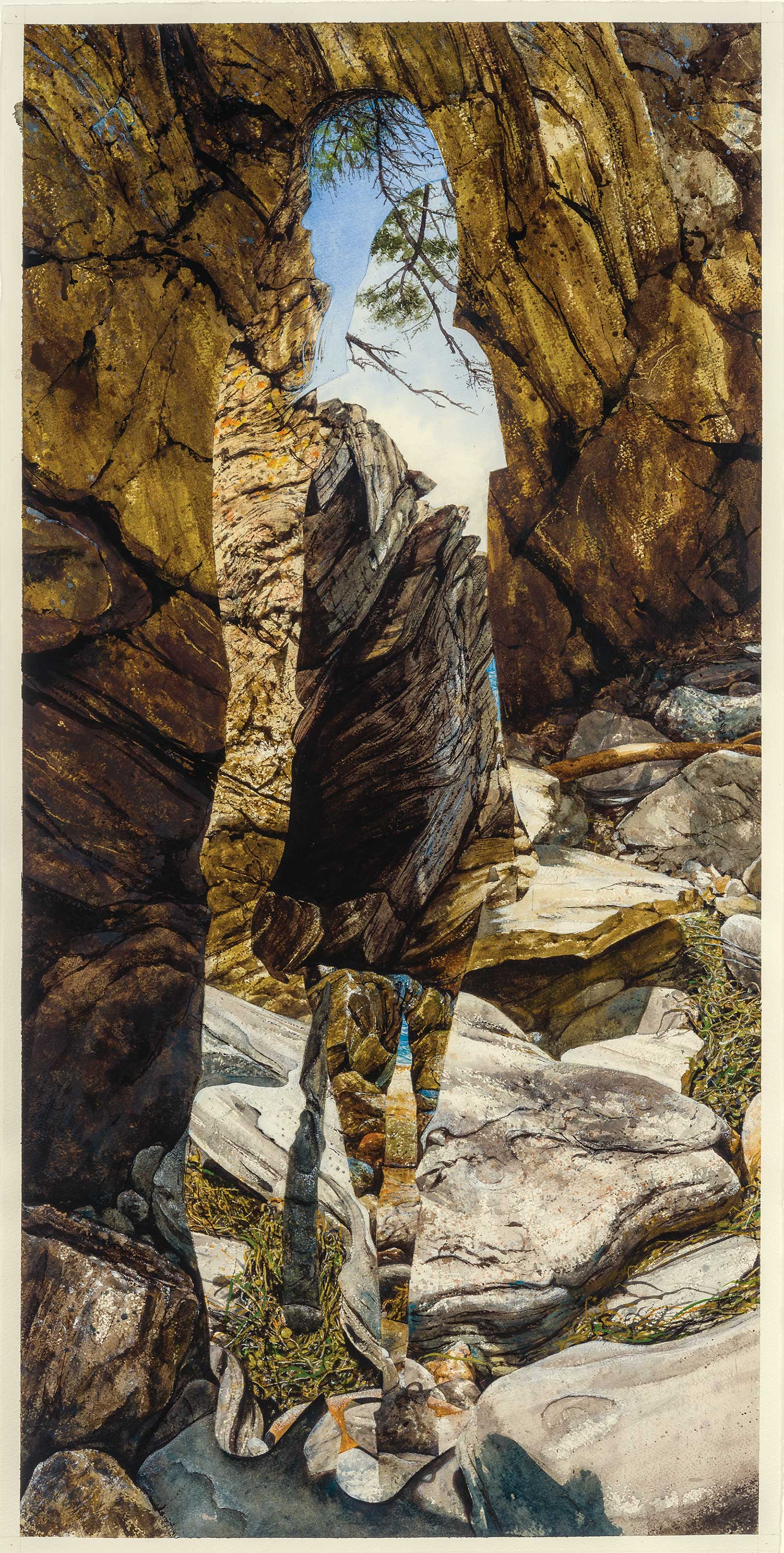 Colin Hunt, Many-Worlds Interpretation (H.C.L.V.a.), watercolor on paper, 40 x 22". Courtesy Hirschl & Adler Modern.
Andy Mister creates most of his works on watercolor paper with paint washes, then draws on top with carbon and charcoal pencils. The completed images are then mounted on a wood panel to be displayed. “It is in this liminal space between painting and drawing, which I feel lets me have the best of both worlds,” he says. “I really do enjoy drawing, and I enjoy doing things by hand, but I also like a lot of the material elements of painting, such as texture and form, that you don’t totally get with drawing.”
In Jane, Mister depicts the actress, singer, and model Jane Birkin, one of his recurring subjects. “In all my work, I am interested in how imagery can exist in different contexts and environments,” he explains. “How the context can change the image for the viewer, just as drawing a photograph fundamentally changes the image.”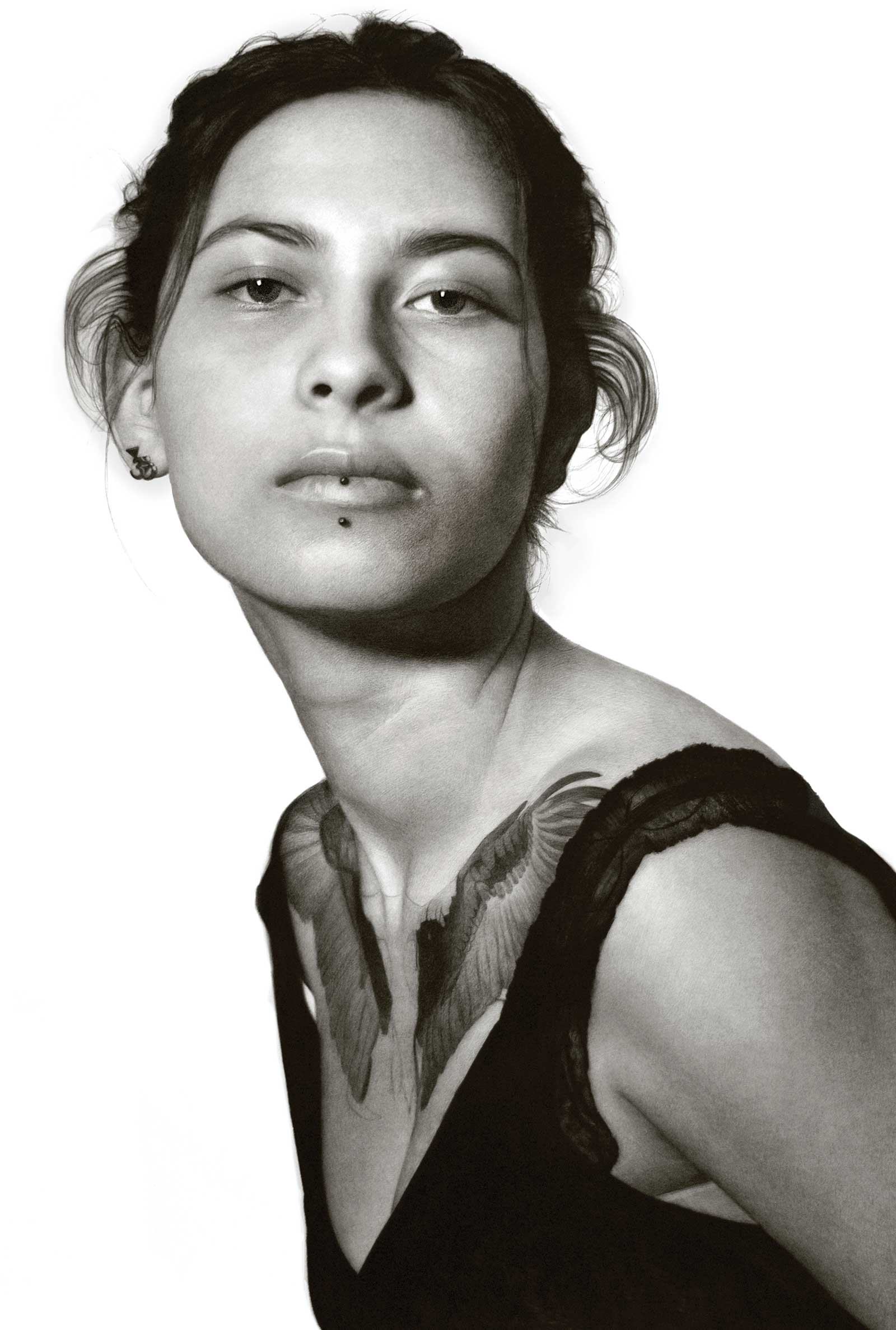 Clio Newton, Thivya, compressed charcoal on paper, 883⁄8 x 58". Courtesy Hirschl & Adler Modern.
A year-round resident of Cape Cod, many of James Everett Stanley’s works depict the Caribbean migrants who also live in the area. As a popular vacation spot, the people who populate the community throughout the year are tight knit but often overlooked. In Double Vision, a Black man with freckles and thick-rimmed glasses is portrayed in a tender, painterly close-up.
For the gallery, Stanley writes, “The inherent vulnerabilities of Black identity, particularly in the rural landscape; of fatherhood; of our roles as climate citizens...it’s all at the front of my mind when making these paintings. What do we see; what do we turn away from; what is barreling toward us as we move alone through time?”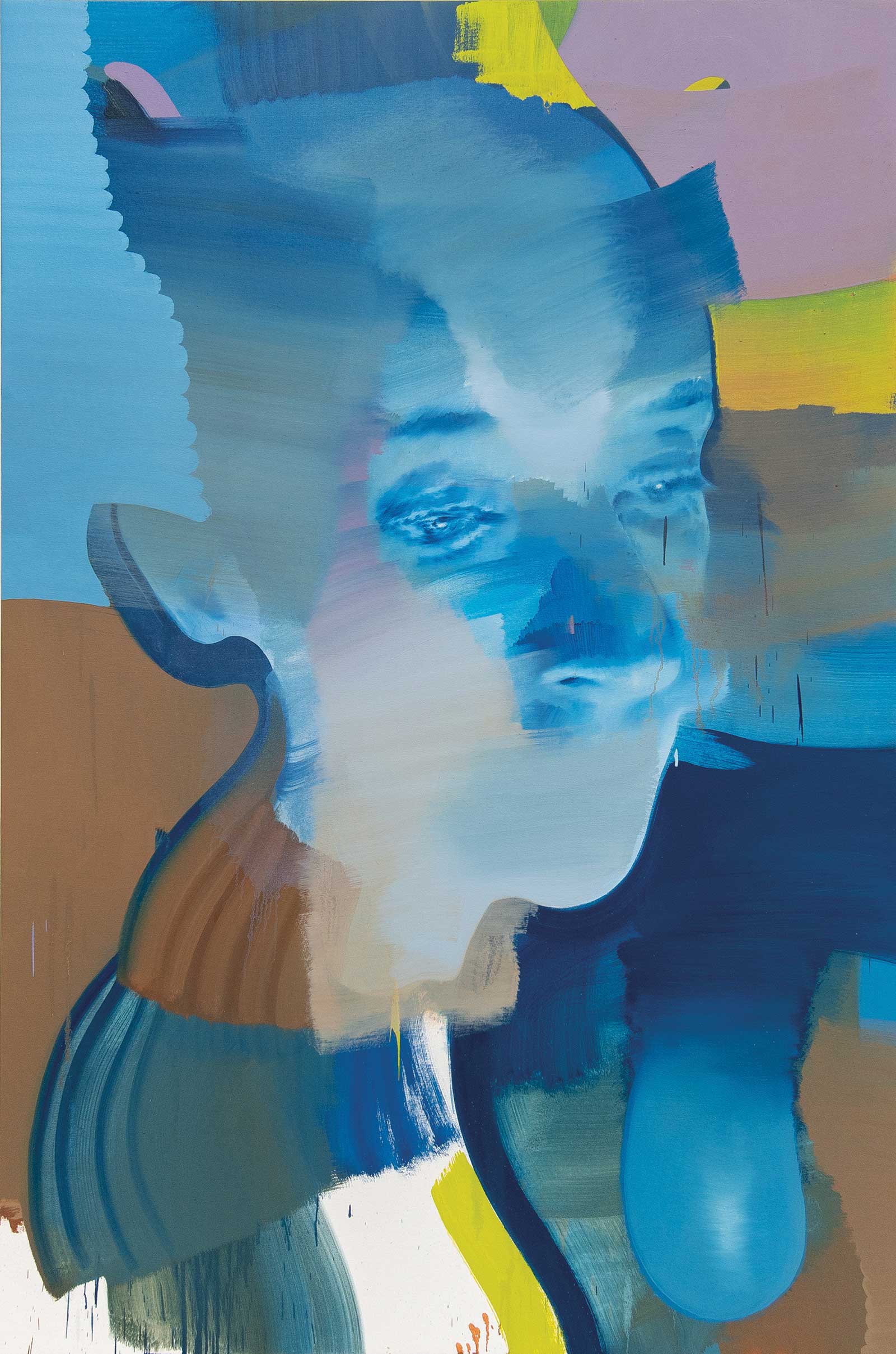 Eric Helvie, Wet Moon, oil on canvas, 72 x 48". Courtesy Massey Klein Gallery.
Clio Newton’s photorealistic portraits of the women in her community are presented at an immense, sometimes overwhelming scale. Taller than any viewer, these charcoal drawings give the subjects power and make it so they cannot be ignored.
Standing at over seven feet tall, Newton’s drawing Thivya depicts a young woman with a lip piercing who is staring down the viewer with an unflinching confidence.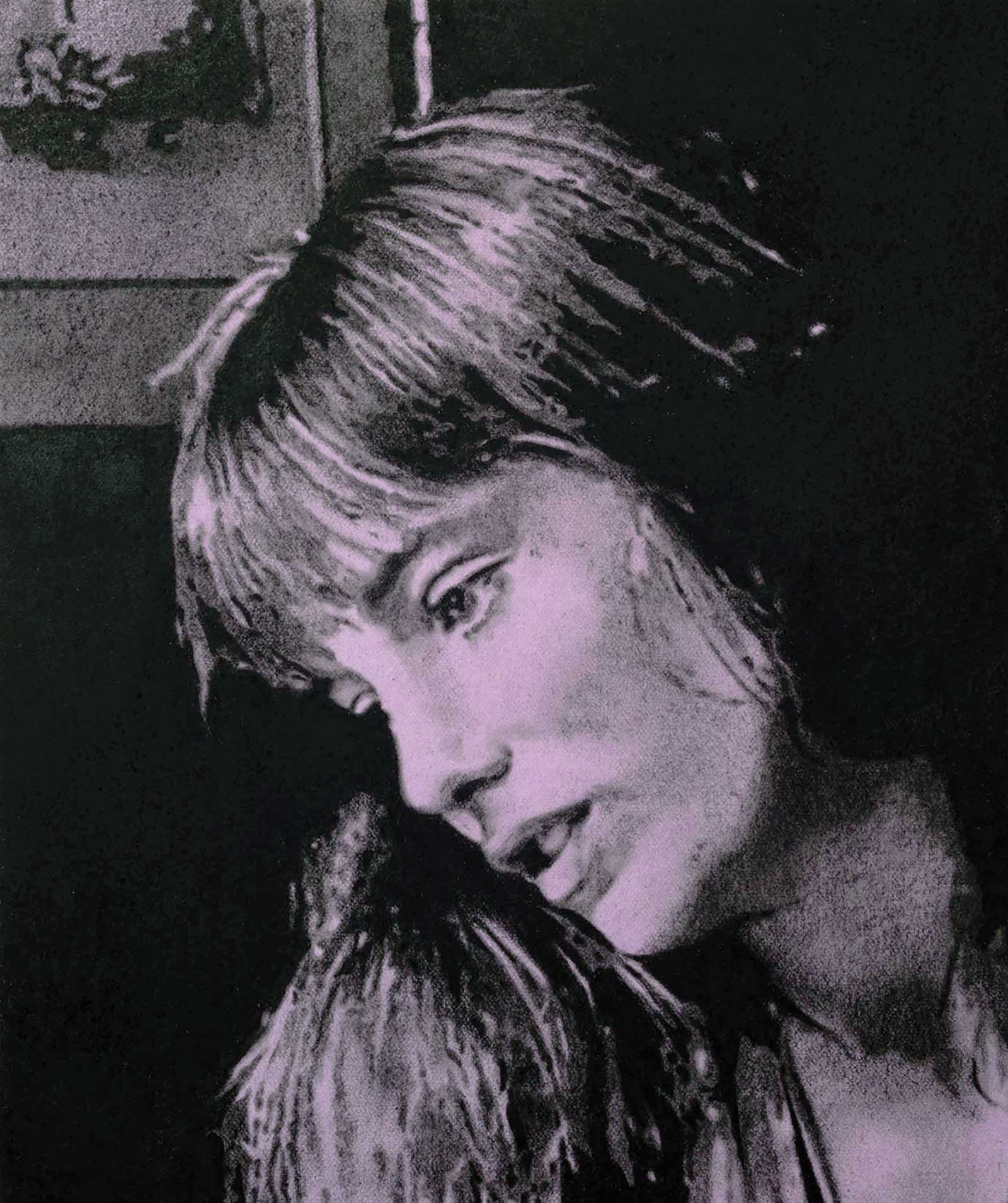 Andy Mister, Jane, carbon pencil, charcoal and acrylic on paper mounted on panel, 9 x 7". Courtesy Hirschl & Adler Modern.
In Many-Worlds Interpretation (H.C.H.L.v.a.), Colin Hunt depicts a figure in silhouette, a part of a mountain landscape. Hunt describes his work as an expression of the human desire to find meaning in death. “Through connecting the formal traditions of portraiture to American landscape painting, I collapse notions of time/space, sitter/likeness with a collective intuition intertwining memory, death and the afterlife,” he says. “These works document the vacuum of a person’s presence to reveal how one’s being is reflected back in nature.”
Hunt uses the landscape settings as a way to explore light and to demonstrate the mark people leave on the world. “These paintings weave together nature and the shared human experience of grief. In this particular moment of collective loss and everything COVID has taken, my work examines how places inhabit us and how we change them,” he says.
A Likeness remains on view at Hirschl & Adler Modern in New York through April 1. —
A Likeness
When: Through April 1, 2022
Where: 41 E. 57th Street, New York, NY 10022
Information: (212) 535-8810, www.hirschlandadler.com
Powered by Froala Editor