Thomas Paquette lives on the edge of the woods at the edge of Allegheny National Forest in Pennsylvania—a fitting location for a painter of nature. Yet, he is an inveterate traveler, dropping out of art school in his first year and hopping freight trains and hitchhiking to explore the continent’s natural environment. Having completed college and graduate school he continues to explore.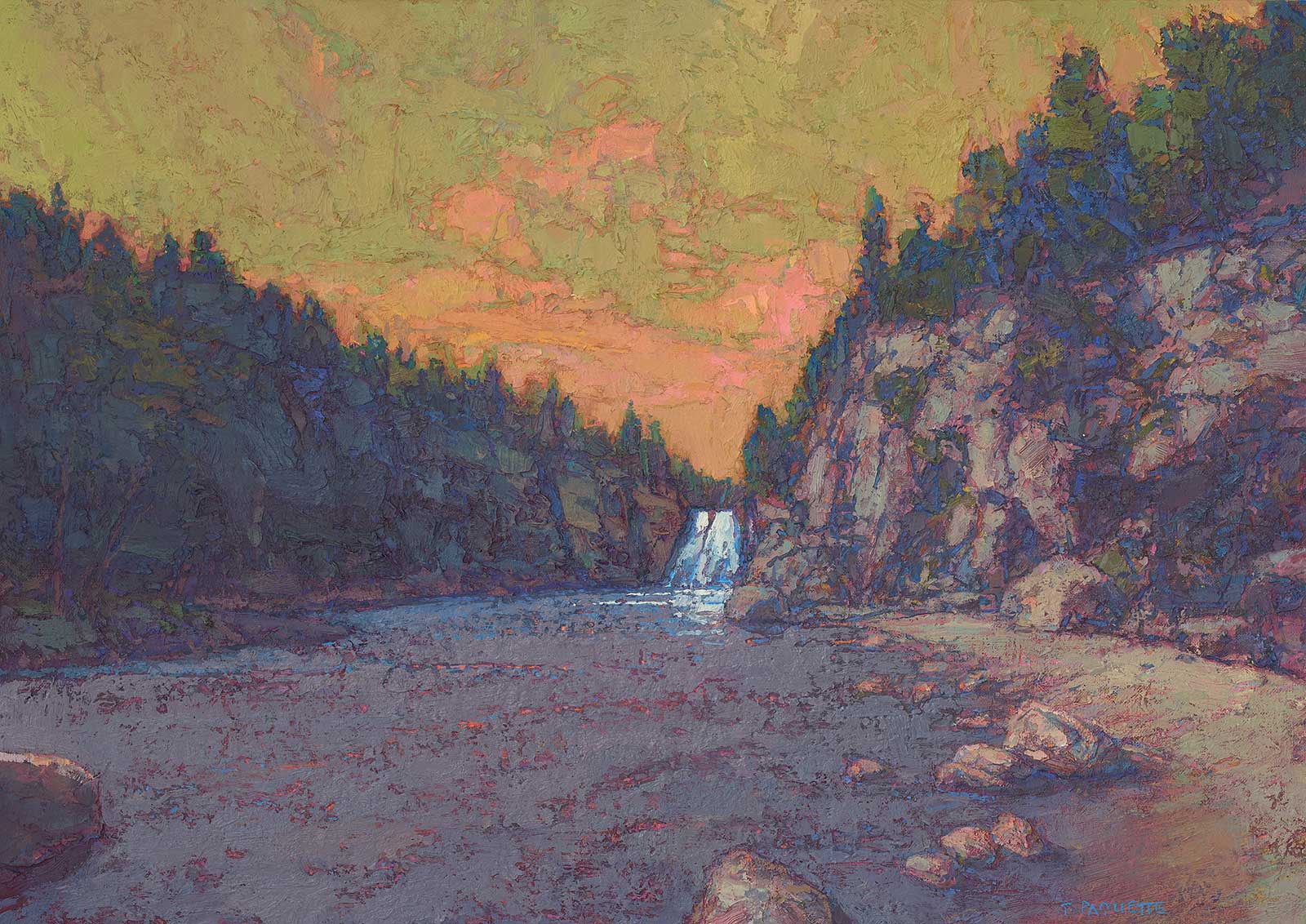 High Falls of the Baptism River, oil, 24 x 34"
Trees are his neighbors and populate his paintings. “They strike me as other living beings,” he says. “Although we live in the same world, they’re foreign to us. We may as well be on another planet. As I look at them, I feel their calling out their individuality.
“It’s all about looking. What we see every day becomes invisible. Sometimes a glint of light or the shape of a tree catches your eye and connects you more deeply to the environment. I try to put in my paintings that nuance that other people may not see. I try to make sure they have that experience.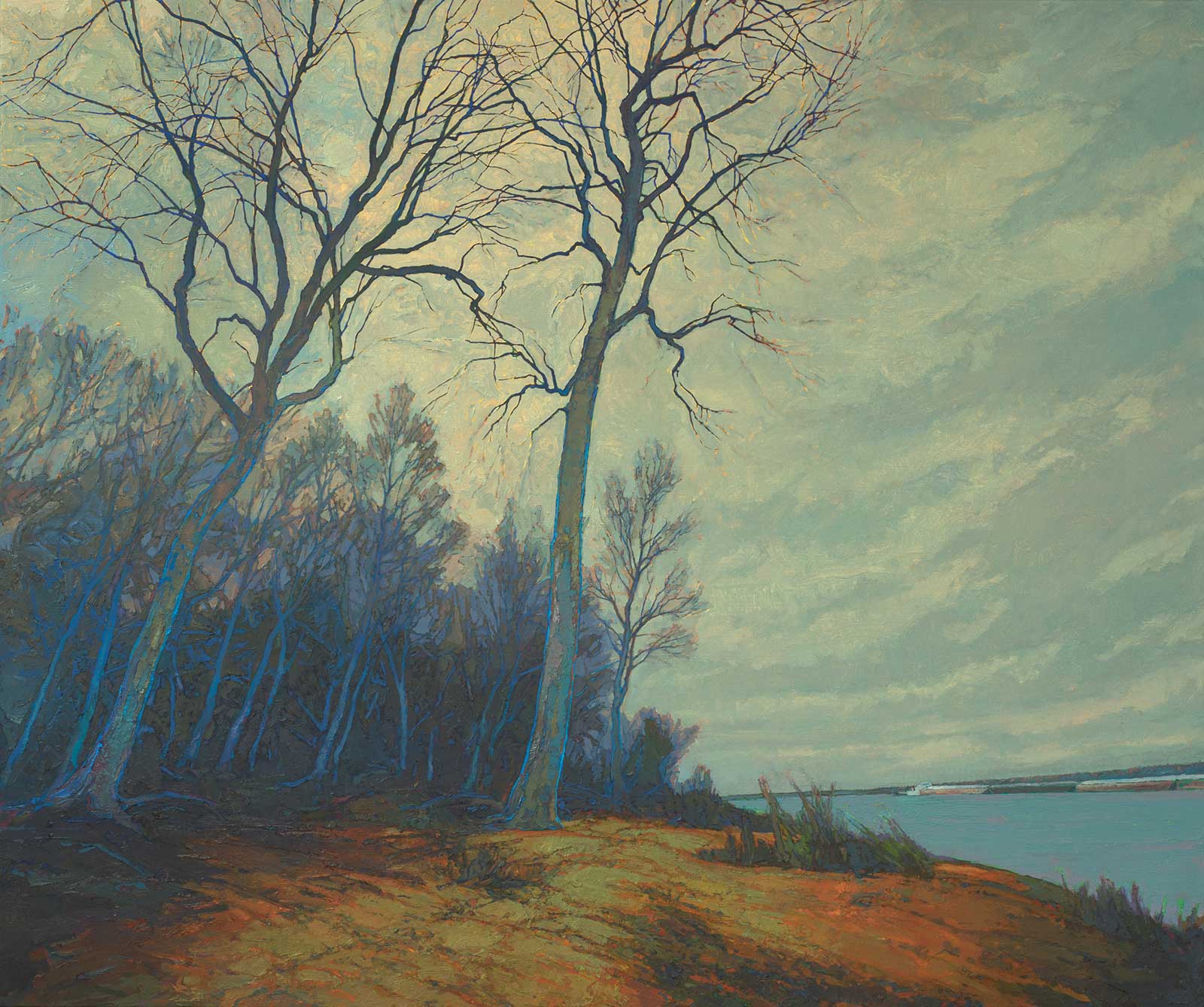 Reckoning After the Flood, oil, 40 x 48"
“I’m of two minds about painting,” he continues. “I admire the inscrutable surfaces of Alan Magee’s paintings, where you can barely see a brushstroke. Then, there’s Franz Kline who painted with house paintbrushes and seemed to finish a painting in three or four strokes. An artist needs to be well versed in the work of other artists, discovering what brought a particular artist to do what he did. When I’m painting and am working on an area that I think is beautiful I’ll sometimes see something in the corner that I can do something with, and it begins to overshadow the part I had been working on. I scrape things off a lot.”
Paquette underpaints in what he calls “bizarre colors that jump start the creative process.” As he was painting Reckoning After the Flood he had to adjust the color of the trees. “They were blue to begin with,” he explains. “But as I was making them more naturalistic, I thought I was losing something and brought some blue back.”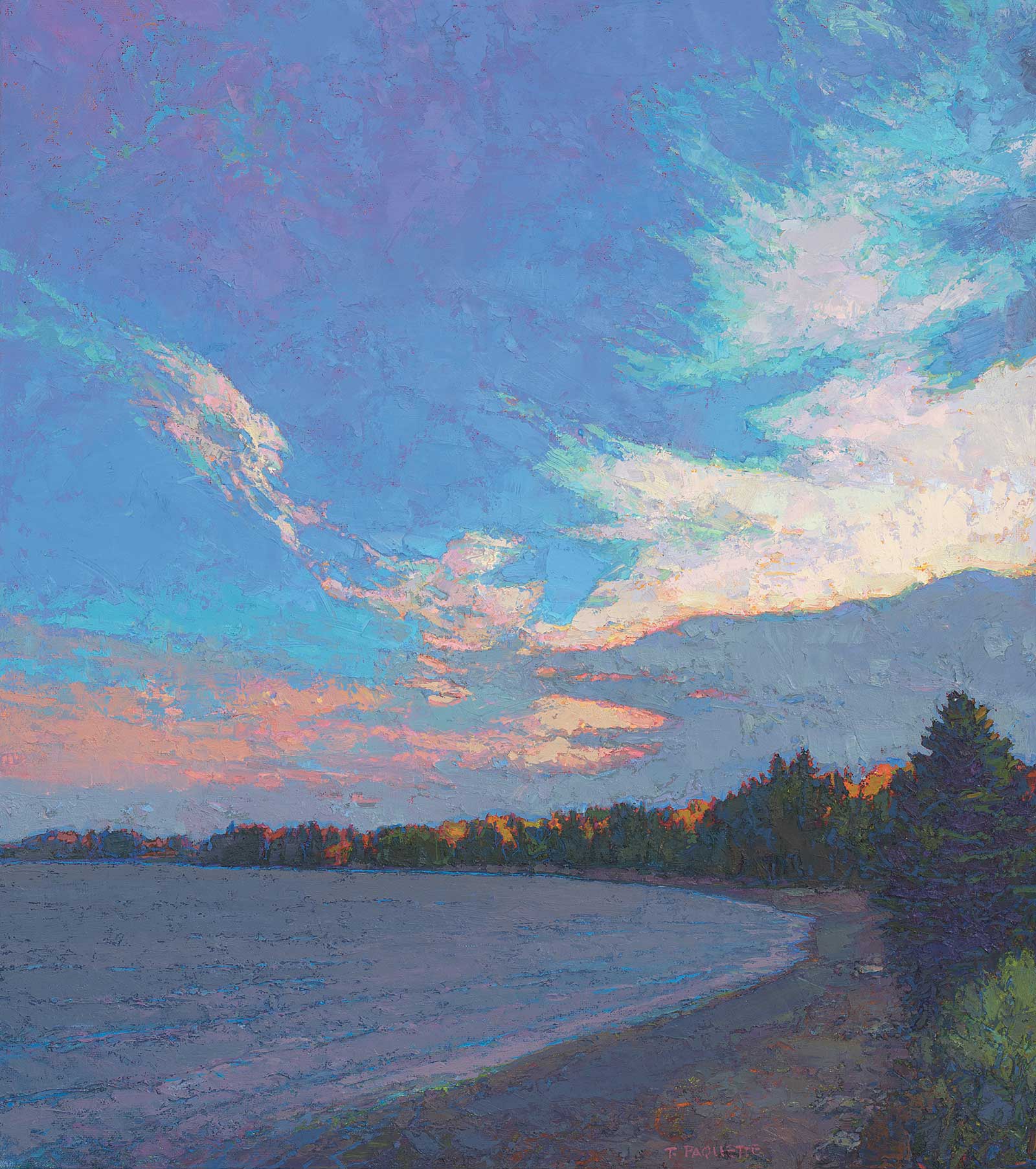 Paradise Beach, oil, 34 x 30"
He continues, “Color is relative. It looks different in different kinds of light. Searching for something within the subject’s color is one more way for the subject to show itself to the extent that it did when I experienced it in life.”
He hopes to elicit that experience in his viewers. William Blake wrote, “The tree which moves some to tears of joy is in the eyes of others only a green thing that stands in the way. Some see nature all ridicule and deformity…and some scarce see nature at all. But to the eyes of the man of imagination, nature is imagination itself.”
An exhibition of Paquette’s recent work, From the North, will be shown at Groveland Gallery in Minneapolis from October 23 through November 27. —
Groveland Gallery
25 Groveland Terrace • Minneapolis, MN 55403
(612) 377-7800 • www.grovelandgallery.com
Powered by Froala Editor