At 12 Braldt Bralds had his first exposure to paintings while visiting Rotterdam’s Museum Boijmans Van Beuningen with his fellow classmates from the Grafische School. There, he saw works by the Old Dutch Masters as well as famous contemporary artists. He was most impressed by Magritte’s The Treachery of Images (This is Not a Pipe)—a painting of a pipe. Braldt recalls, “Our teacher asked, ‘What do you think this means?’ I was confused. The painting was of a pipe. That was his meaning. It is a painting of a pipe, not a pipe! It was a revelation about art for my young mind. Magritte’s imagination has influenced me throughout my life.”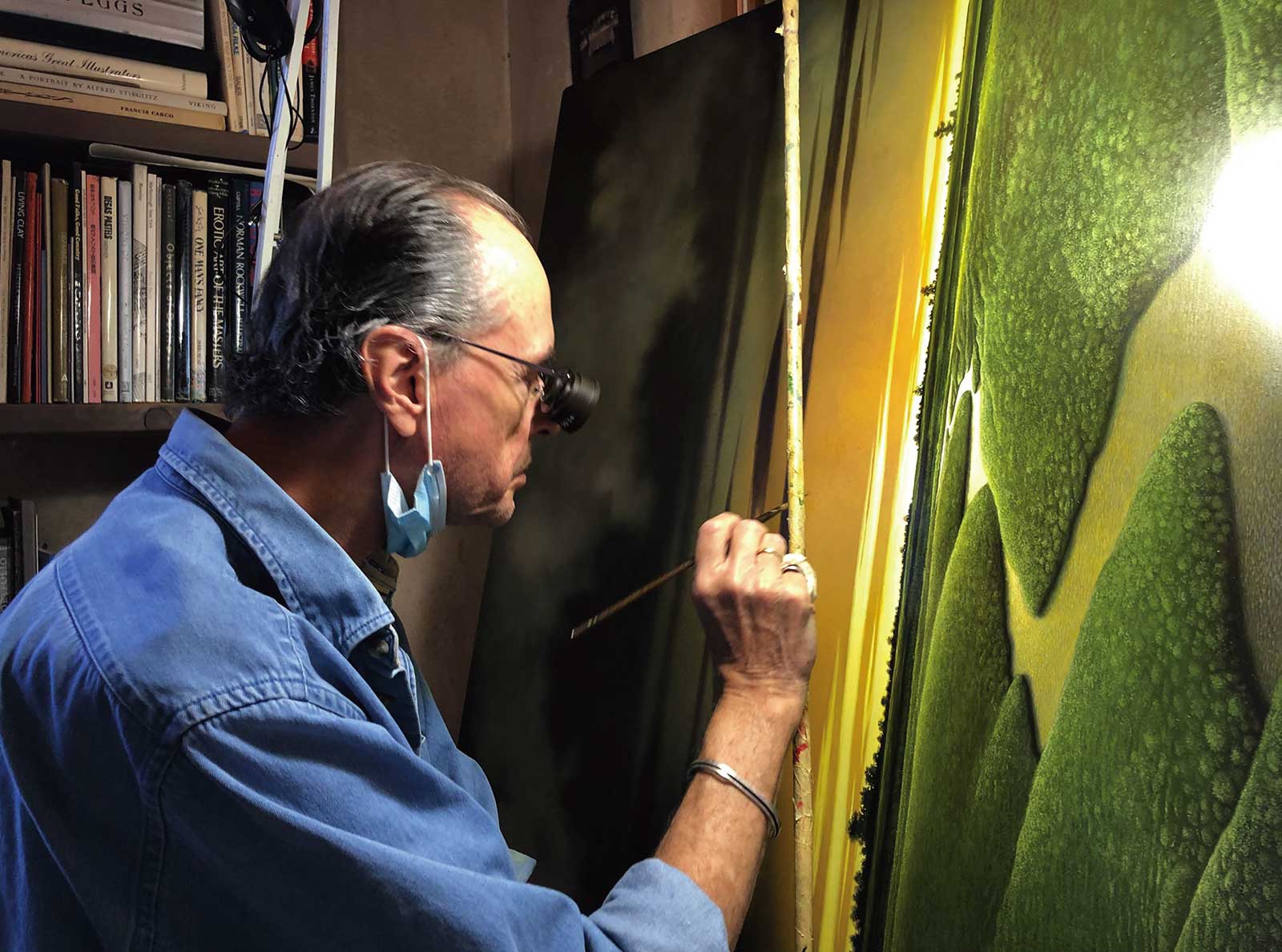 Braldt Bralds in his studio painting.
Magritte figured into his life years later when, in 1984, Braldt awoke one morning in his apartment and looked over at the largest book on his bookshelf. “René Magritte” in large white letters on the red cover was indecipherable. He was diagnosed with Best Disease, an untreatable condition that causes central vision to become distorted or to go blurry. “I literally paint peripherally,” he explains. “I can see a line when I look next to it.”
There is a story to Braldt’s life as an artist both before and after his diagnosis.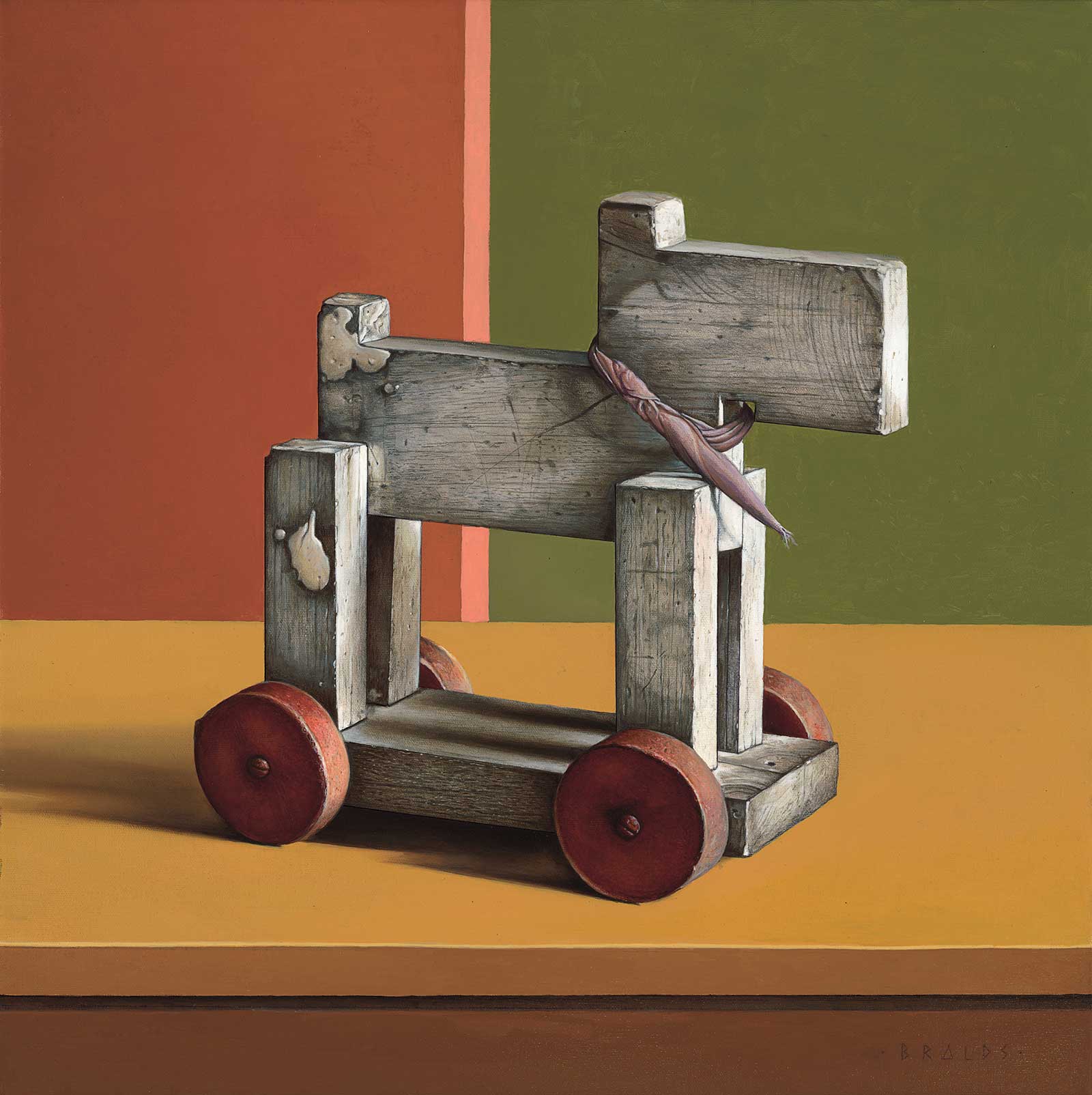 Woody, oil on canvas, 24 x 24"
Braldt began his career as a freelance illustrator in The Netherlands when he was 18. Nine years later, armed with a portfolio of his work, he accompanied a friend to New York City. A fortuitous meeting with a leading illustration agent led to a meeting with the art director of Time magazine. After looking at Braldt’s portfolio with his staff, the art director announced, “We want to give you a cover!” Braldt had been on the streets of New York less than two hours when he landed a plum commission that would change his life.
After that, Braldt’s work was featured on the covers of Time, Rolling Stone and Der Spiegel. Clients have included National Geographic, Gucci, Nike, Alfa Romeo and IBM. Braldt was honored to paint three sets of stamp issues for the United Nations Postal Administration.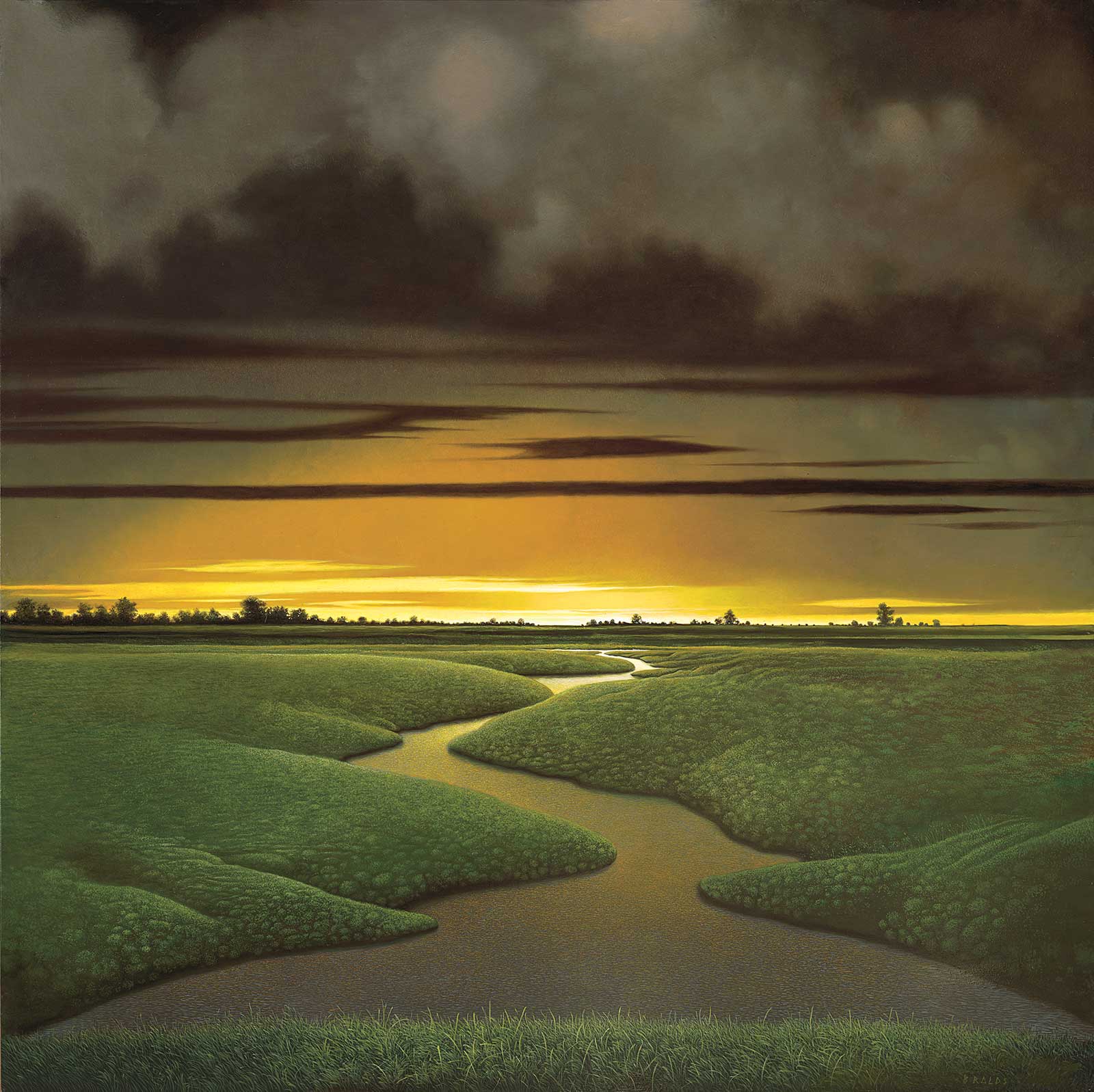 Eventide, oil on panel, 42 x 42"
Eventually Braldt stepped back from his illustration career and moved to Santa Fe, New Mexico, where he began to develop a body of fine art paintings. He connected with another former illustrator whom he had known in New York and in Connecticut. Carol Anthony had begun painting still lifes and landscapes and showed at Gerald Peters Gallery. She encouraged Gayle Maxon-Edgerton, then-director of contemporary art at the gallery, to see Braldt’s work.
The paintings were of stones, objects that had always intrigued him. “I always picked up stones that attracted me,” he explains. “I was intrigued that a stone had been slowly changing for millions of years before I was drawn to pick it up. I wanted to reveal their silent lives, their hidden beauty.”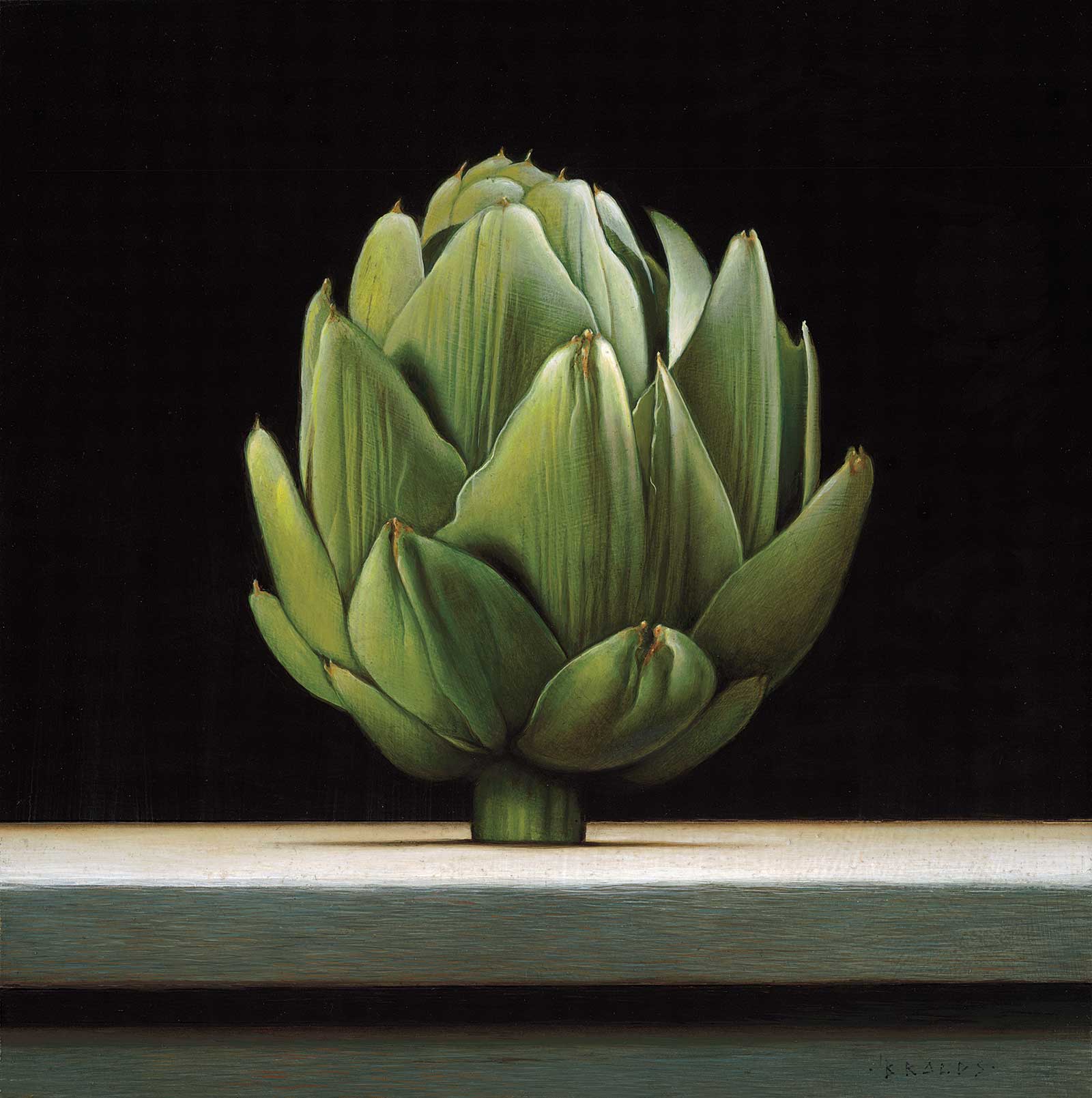 Stance, oil on panel, 12 x 12"
Gayle arrived at Braldt’s studio one day, unannounced. She asked him, “What are you trying to say?” He replied, “I don’t know. I don’t know if the paintings speak to people.” She suggested, “If I may, I want to bring five of your paintings to my office to live with for a few days.” Not long after, Braldt had a solo exhibition, Stone Lifes, featuring 27 of his paintings at Gerald Peters.
About seven years ago, Braldt had to stop working when seeing and painting became too difficult. “For five years I literally couldn’t do it,” he explains. In 2011, I had been introduced to Braldt by Gayle and had written a profile of him and his work for this magazine. I knew Braldt had stopped painting and when I saw a painting (Eventide) on his Facebook page dated 2020, I was eager to get in touch again.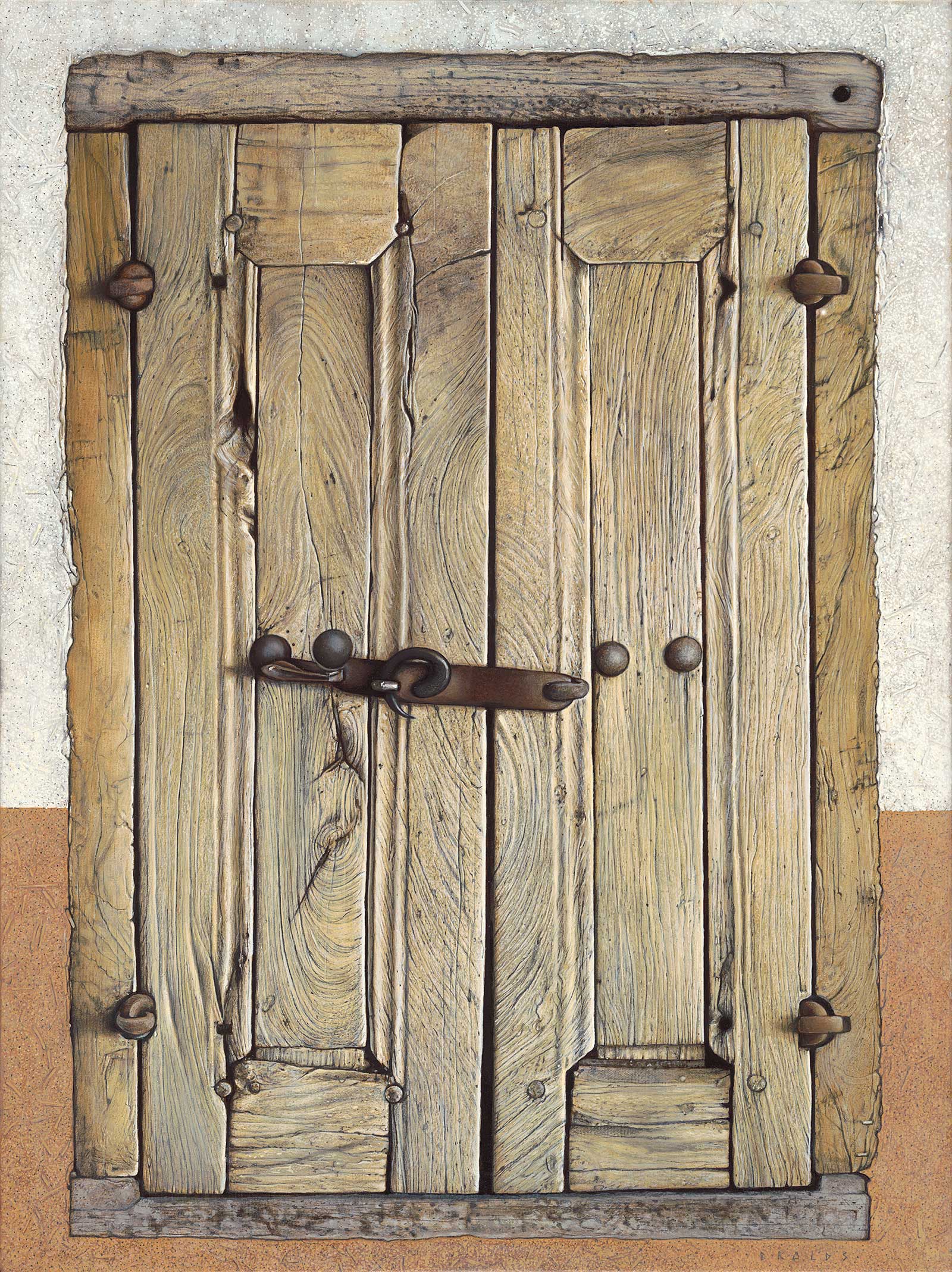 Behind Closed Doors, oil on canvas, 36 x 24"
Braldt’s road back to painting was paved by a guardian angel in the form of Carol Anthony. He expressed to Carol that he wanted to paint again, but doubted his capability. He also had no place to work. He asked Abigail Ryan, a mutual friend and fellow artist if she thought Carol might be open to collaborating on a piece, to help get him going again. Carol invited him to her home to paint, designating an area where he could work. As he was setting up his space, she walked into the room with her hands behind her back, and said, “I’m not really ready to collaborate, but why don’t you paint this instead?” Braldt comments, “She then presented me with the largest artichoke I had ever seen from behind her back. I decided to try to paint it. When it was done, Carol said, ‘See? You can do it!’”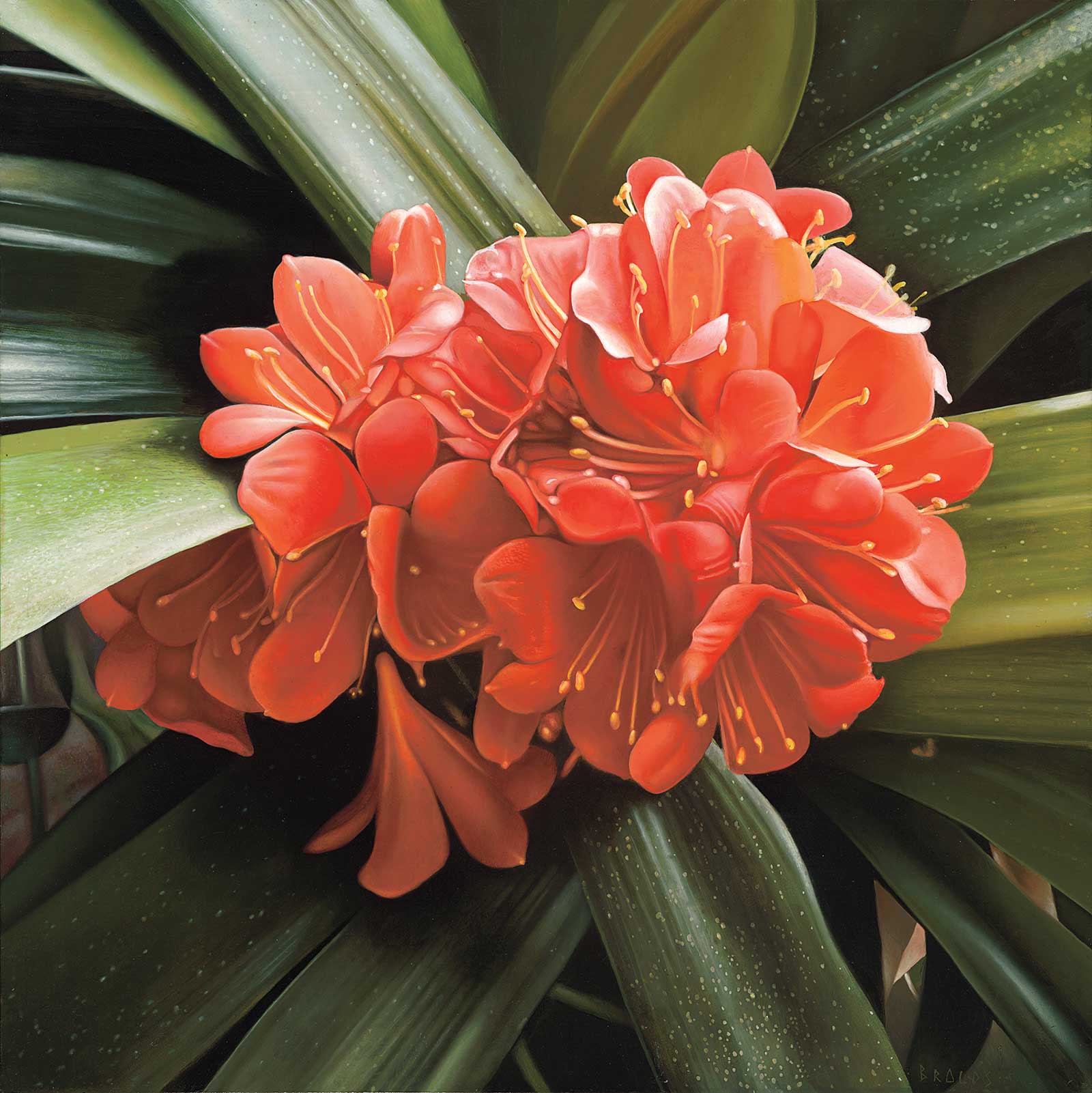 Burst, oil on panel, 24 x 24"
Braldt next decided to tackle a landscape, beginning Eventide on a 42-by-42-inch wood panel. “I thought I would begin painting loosely like Carol and then tighten it up, rather than starting with my usual tight pencil drawing. I drew just one pencil line and said, ‘This is the horizon.’ The landscape would simply come from my imagination. It wouldn’t have anything close up so there wouldn’t be a lot of detail. I filled up the sky in two days with big brushes and painted in the setting sunlight. I thought of having a lake and then a tiny stream beginning in the background and coming to the foreground with the darkening sky reflected in it. I drew the landscape with my brush with green shades. But every time I returned to the studio, I couldn’t help myself. I kept returning to my smaller and smaller brushes. I thought, ‘Forget it Braldt. You are who you are.’” —
Want to See More?
www.braldtbraldsstudio.com
Powered by Froala Editor