This is a story of joy. A story of heartache. A story of transformation. It begins on a soaring high note and closes on a hopeful flourish. In the middle there is despair and calamity. But like every human story ever told, the story remains unfinished because life continues while stories shift and twist as they evolve in the uncertainty.
It begins in elation on May 2, 2019, as Florida painter Aneka Ingold strides to a podium to accept the inaugural Bennett Prize. “It felt like a dream,” she would say later. The prize was started by art collectors Steven Allen Bennett and Dr. Elaine Melotti Schmidt, who wanted to shine a light on women artists who painted the figure.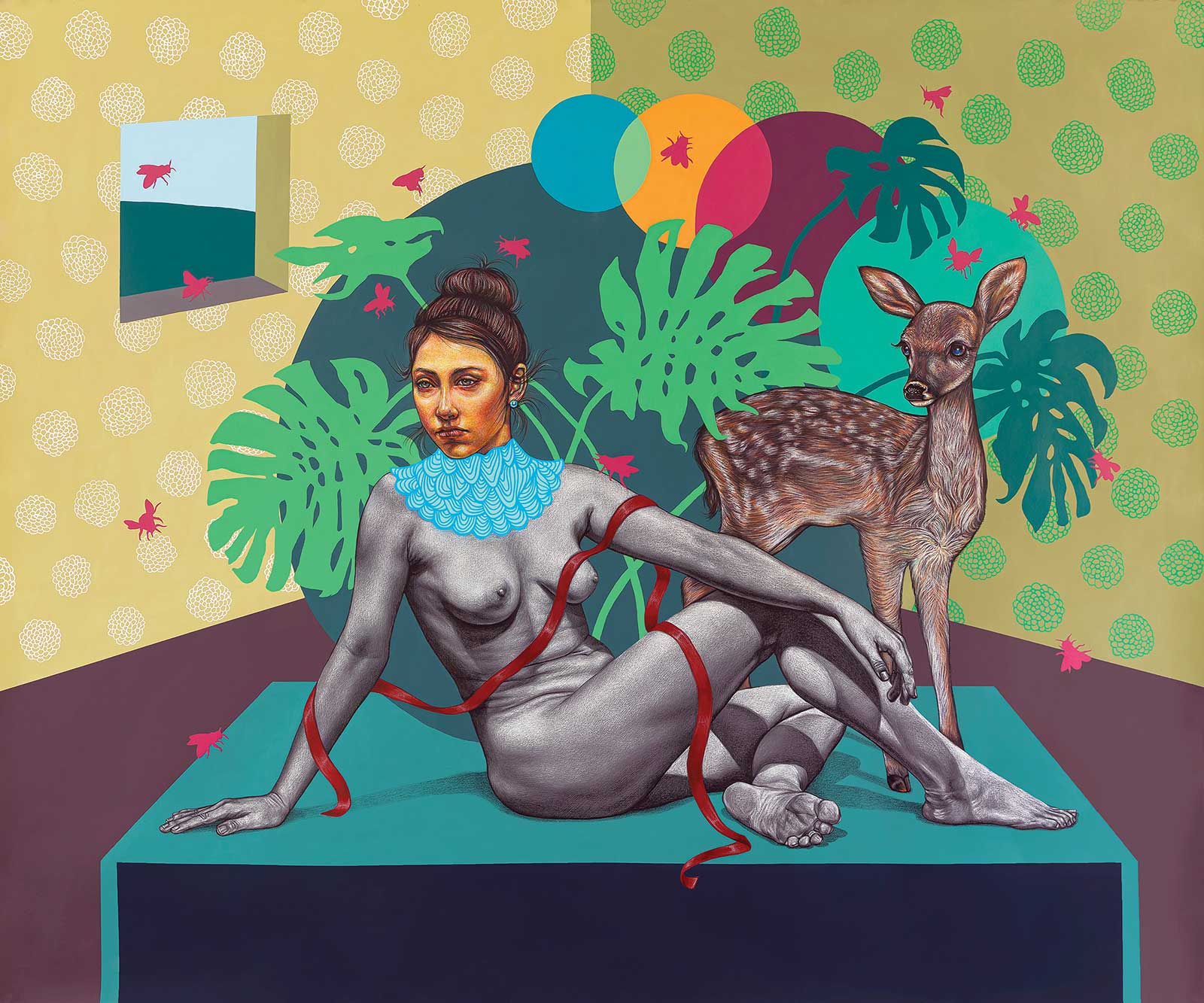 Live and Let Live, mixed media on Stonehenge paper, 48 x 58"
Aneka Ingold—“Aneka, like Monica but without the M,” she says—had entered the contest with her stunning portraits of women painted in electrifying colors and gorgeous compositions that blended art styles. In addition to a cash prize, The Bennett Prize also included a traveling exhibition that would begin in 2021 at the Muskegon Art Museum in Michigan. (That show, Transfiguration, is now on view.) Ingold started prepping paintings, and even churned one out, Live and Let Live, a magnificent piece showing a nude figure with a fawn. 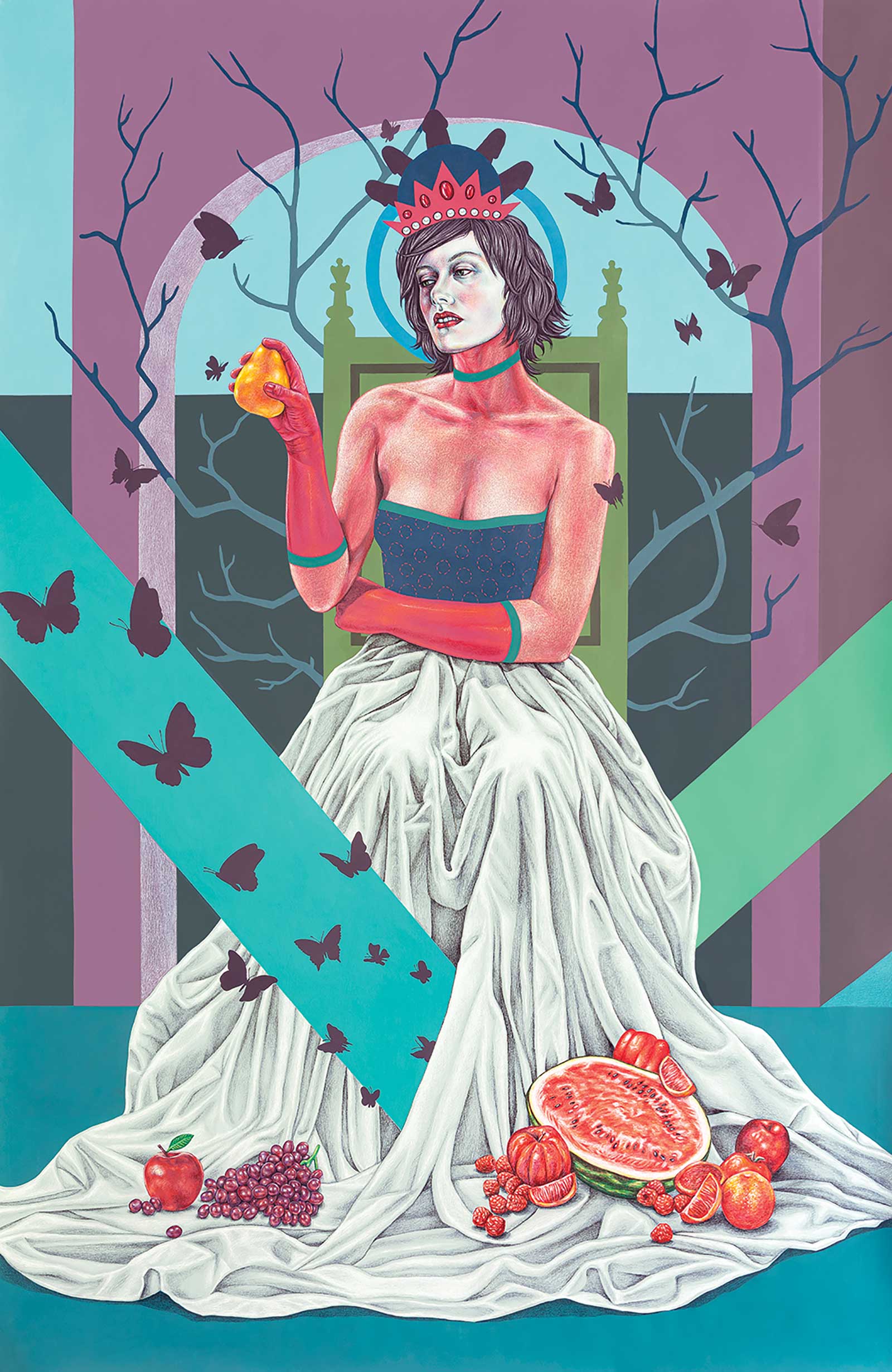 Fecundity, mixed media on Stonehenge paper, 74 x 48"
“I was feeling empowered. I had just won this amazing recognition and I felt like women’s stories mattered,” she recalls. “So I turned to abortion rights, which seems to always come up in our culture. I liked this idea of women’s bodies on pedestals. [Supreme Court justice] Ruth Bader Ginsburg was alive at the time, and a friend pointed out that my figure looked like her, particularly with the frilled collar. I liked this idea of tolerating opinions and behaviors of others, and expecting the same in return, even though it was such a difficult concept for so many people at the time. The fawn represented this sense of innocence, especially with the figure sitting there, posing in front of the new generation.”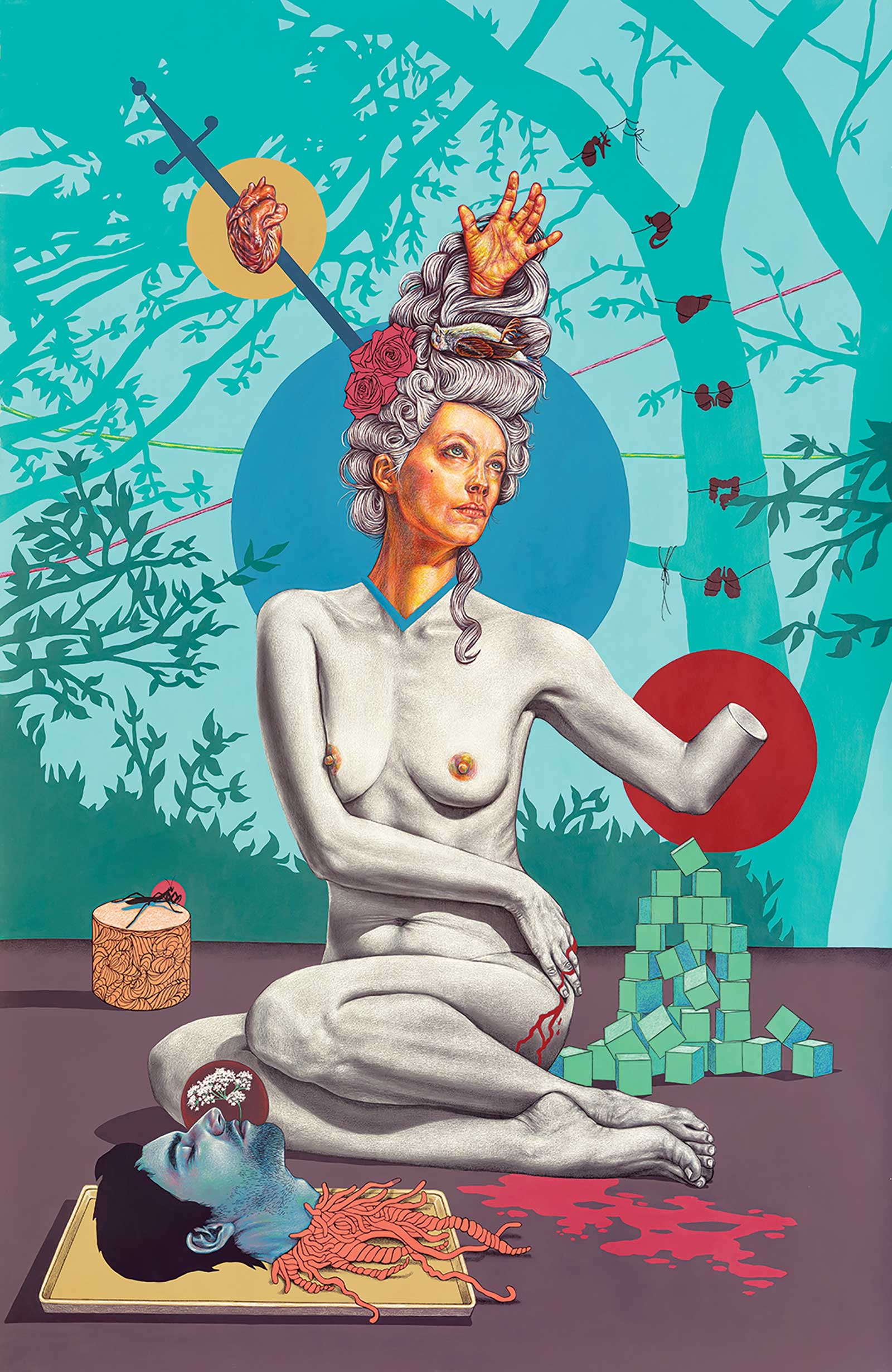 Devil’s Bread, mixed media on Stonehenge paper, 74 x 48"
The work is staggering, and it shows many of Ingold’s strongest abilities, including her intensely pleasing use of color, her tight realism paired with more flatly rendered shapes, and her provocative symbolism that nudged at the viewer gently. Ingold now recognizes Live and Let Live as an important piece that served as a baseline measurement of her career. Like A.D. and B.C., there would be pre-Live and Let Live and post-Live and Let Live.
Three months later, a bombshell: “My husband decided he didn’t want to be married to me anymore,” she says. “It was totally out of the blue, and just this really huge thing that I suddenly had to deal with. He moved out quite soon, and then the global pandemic hit. The previous year, 2019, had been a life-changing year, and here I was with all this in just a short period of time.”
You were warned about this part of the story. “Despair and calamity,” remember? She brings this pain up because it’s part of the fabric of her soul at the moment, and it helps frame the work she accomplished in the aftermath. It also speaks to her story as a woman, a mother and a wife. “I remember suddenly feeling like my roles were changing, and all of it during COVID, so I was home with [the] kids as all this fear surrounded us about the pandemic,” she says. “There seemed to be turmoil everywhere.”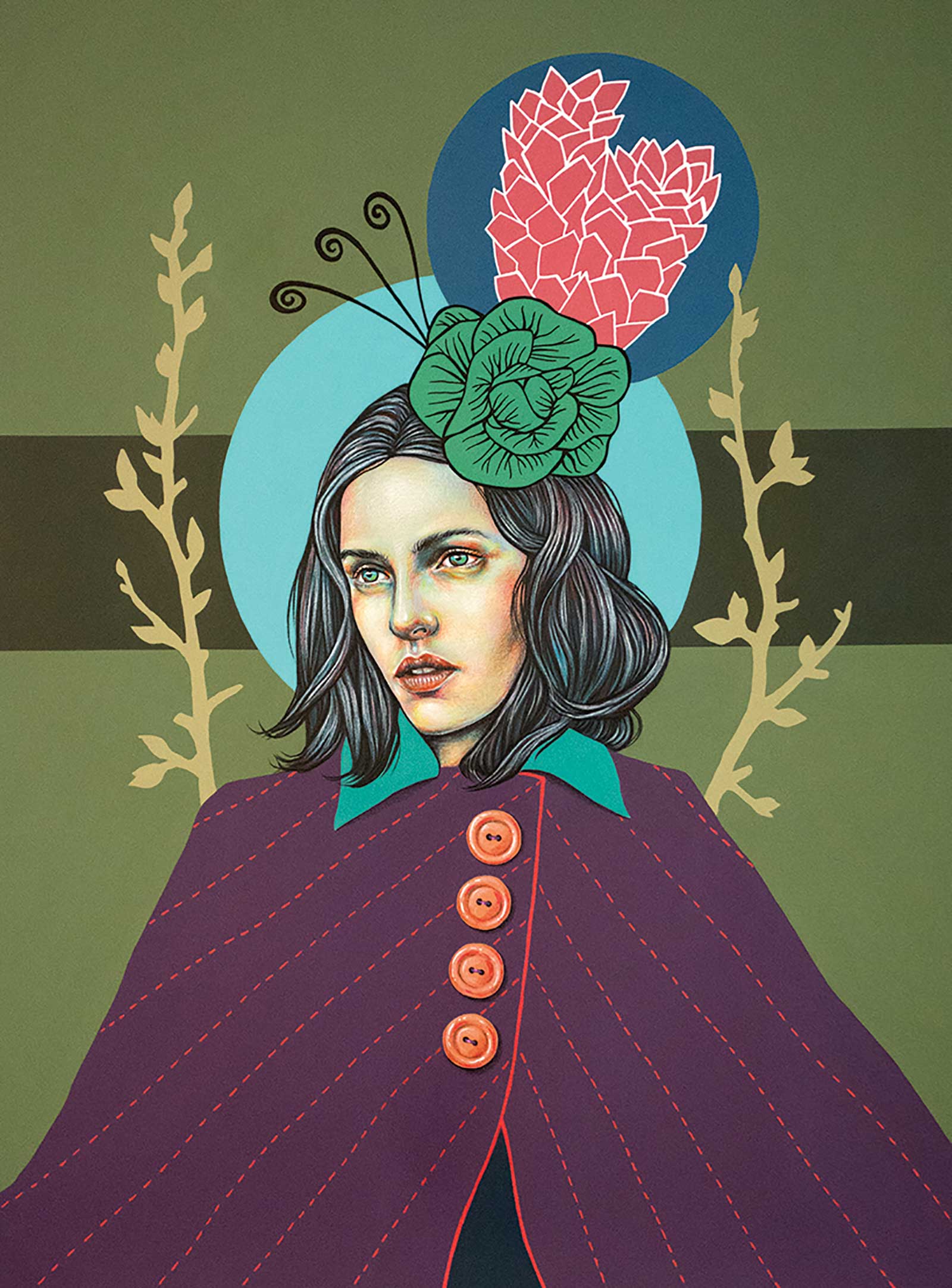 Hiberna (Winter), mixed media on Stonehenge paper, 30 x 22"
It took nearly six months before Ingold could dedicate serious time in her studio. Her first work back was one of intense catharsis, The Devil’s Bread, showing a nude figure surrounded in surrealist violence. The 74-by-48-inch painting, which is a self-portrait, is at once a declaration of fury, but also a surrender to her intense vulnerabilities.
“At the time, this was very cathartic. I didn’t know how to function properly. It felt very out-of-body, almost like floating. It felt like death to me. I don’t like telling people how to feel about my paintings, because they aren’t static objects, but this one hurt. The pain was right there in the paint with me,” she says. 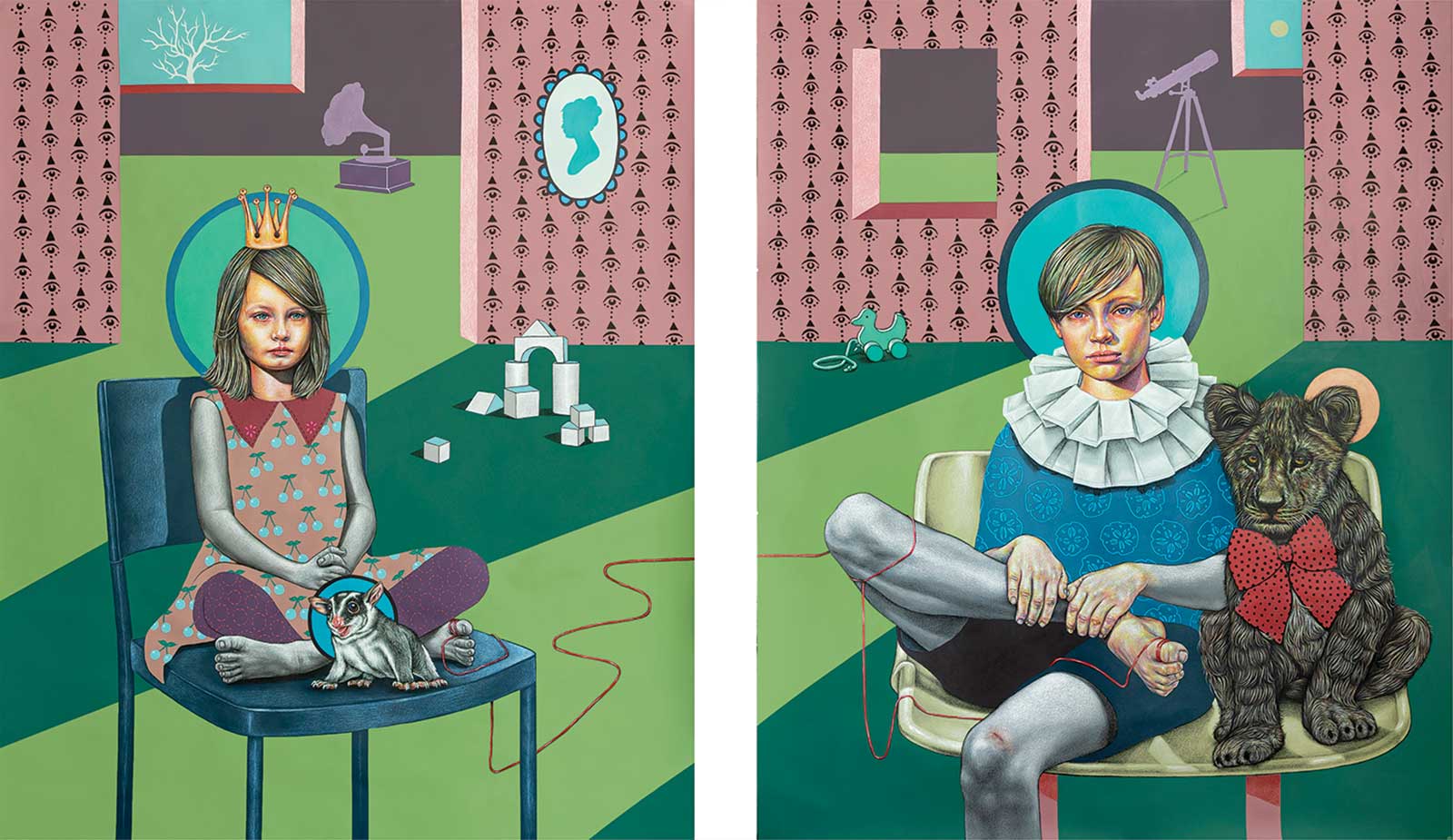 Symbiosis (diptych), mixed media on Stonehenge paper, 48 x 40" each
But then something remarkable happened: the painting, as revealing as it was, cleared the way for the rest of the story. Devil’s Bread opened the door to Fecundity, a work about “an abundance of growth and life returning anew”; Solaris, showing a figure emerging from a box with a hopeful outlook; and Symbiosis, a diptych that shows her two children, ages 5 and 12. Fecundity was especially fun for her to create, because it allowed her to dream of her future again. The painting speaks to rebirth, which is made more clear when viewers see the vaginal folds of the subject’s dress, or perhaps the phallic crown on her head. So literal rebirth, but also metaphorical rebirths that speak to the kind of year Ingold has had.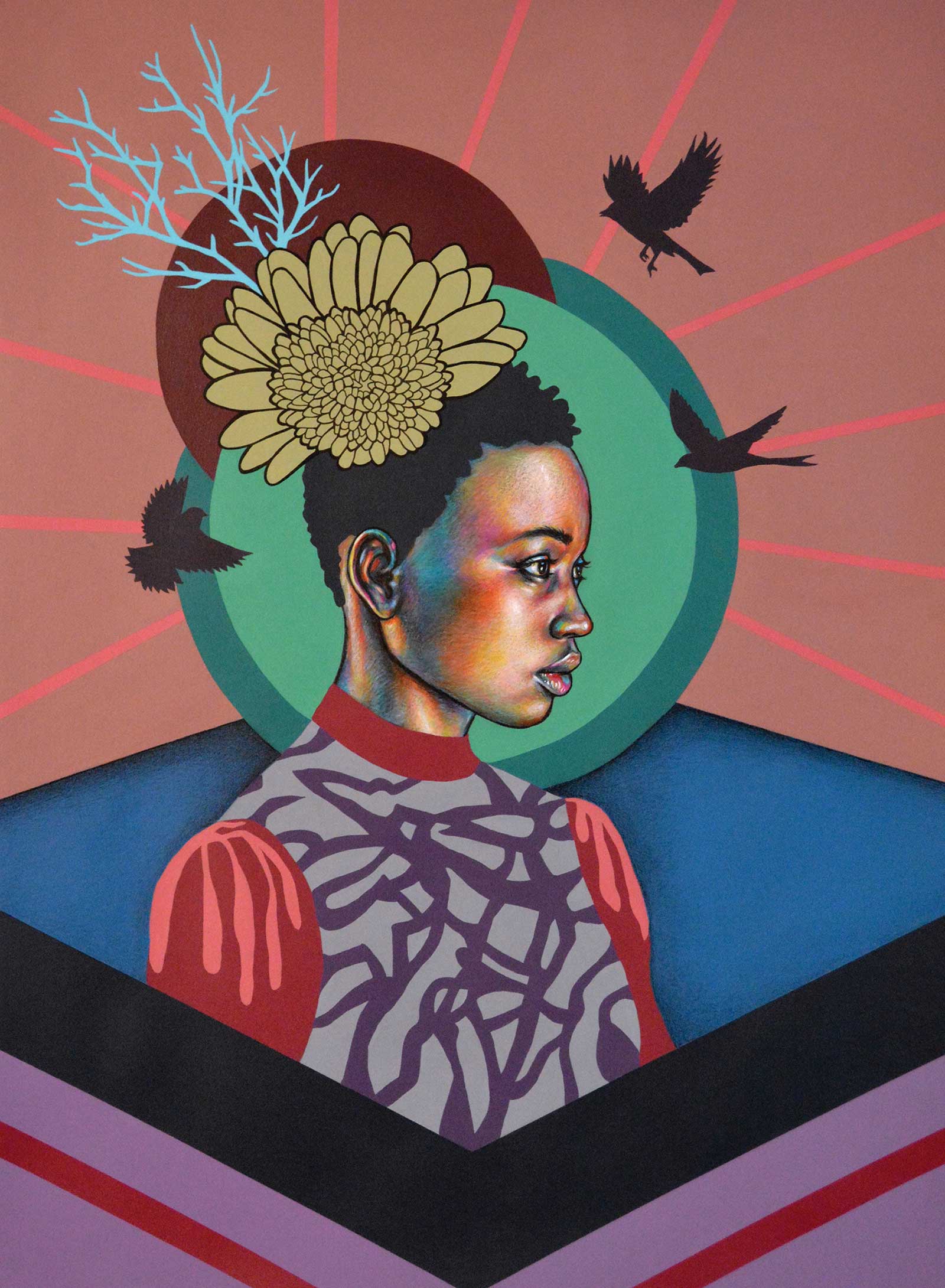 Vesna (Spring), mixed media on Stonehenge paper, 30 x 22"
“For the first time, I was really thinking about that word ‘transfiguration.’ It took me almost two years to process it all, but I think I came out stronger once I made the process my own,” she says, adding that these chapters of her life, no matter how difficult they are, still speak to women and their truths. She compares her transfiguration with that of a butterfly’s metamorphosis. “I really feel like I’m reshaping my identity. As scary as that is, it’s also so rewarding too.”
Richard Demato, owner of RJD Gallery in Romeo, Michigan, which represents Ingold, is struck by her artistic process and also her personal journey as an artist. “The finished artworks invite viewers to discover and embrace their own personal journey through her juxtaposition of a myriad of realties,” he says. “Once seen, they each draw you in, and it is very difficult to not explore and wonder their meaning, in relation to yourself, or to ever walk away from them.”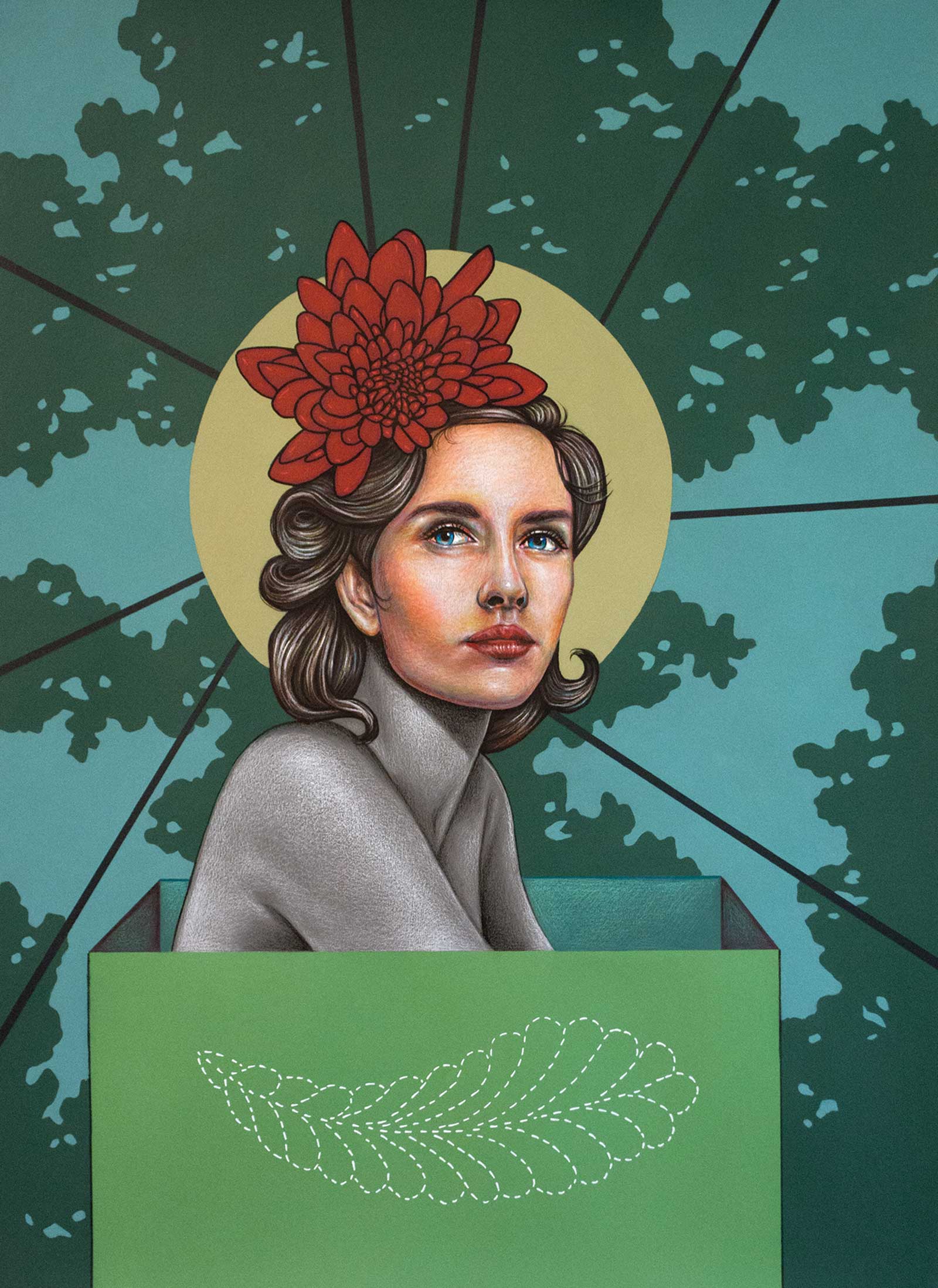 Solaris (Summer), mixed media on Stonehenge paper, 30 x 22"
Ingold is grateful for the opportunity to share her story with other women, including those who are experiencing some of the life events she’s lived through. And since Transfiguration will travel for the next two years, there is still time for her narrative to change even further as growth, hope, joy and, yes, even despair, trickle past her work. The unfinished life still has more stories to tell.
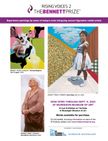
Transfiguration will hang at the Muskegon Museum of Art through September 5, after which it will travel to other locations. While this artwork remains on view for two years, the paintings and other new works can be purchased through RJD Gallery at www.rjdgallery.com.
Muskegon Museum of Art
296 W. Webster Avenue • Muskegon, MI 49440 • (231) 720-2570 • www.muskegonartmuseum.org
Powered by Froala Editor