The Connecticut River flows about 410 miles from its source at the Canadian border, separating New Hampshire and Vermont and bisecting Massachusetts and Connecticut until it flows into Long Island Sound and the Atlantic Ocean. Ancient Algonquin tribes referred to it as the “long tidal river.” It is tidal from its mouth to Hartford, Connecticut, nearly 50 miles. Unlike many rivers, there is no major city at its mouth. There are small towns with safe harbors, rich in history and havens for artists.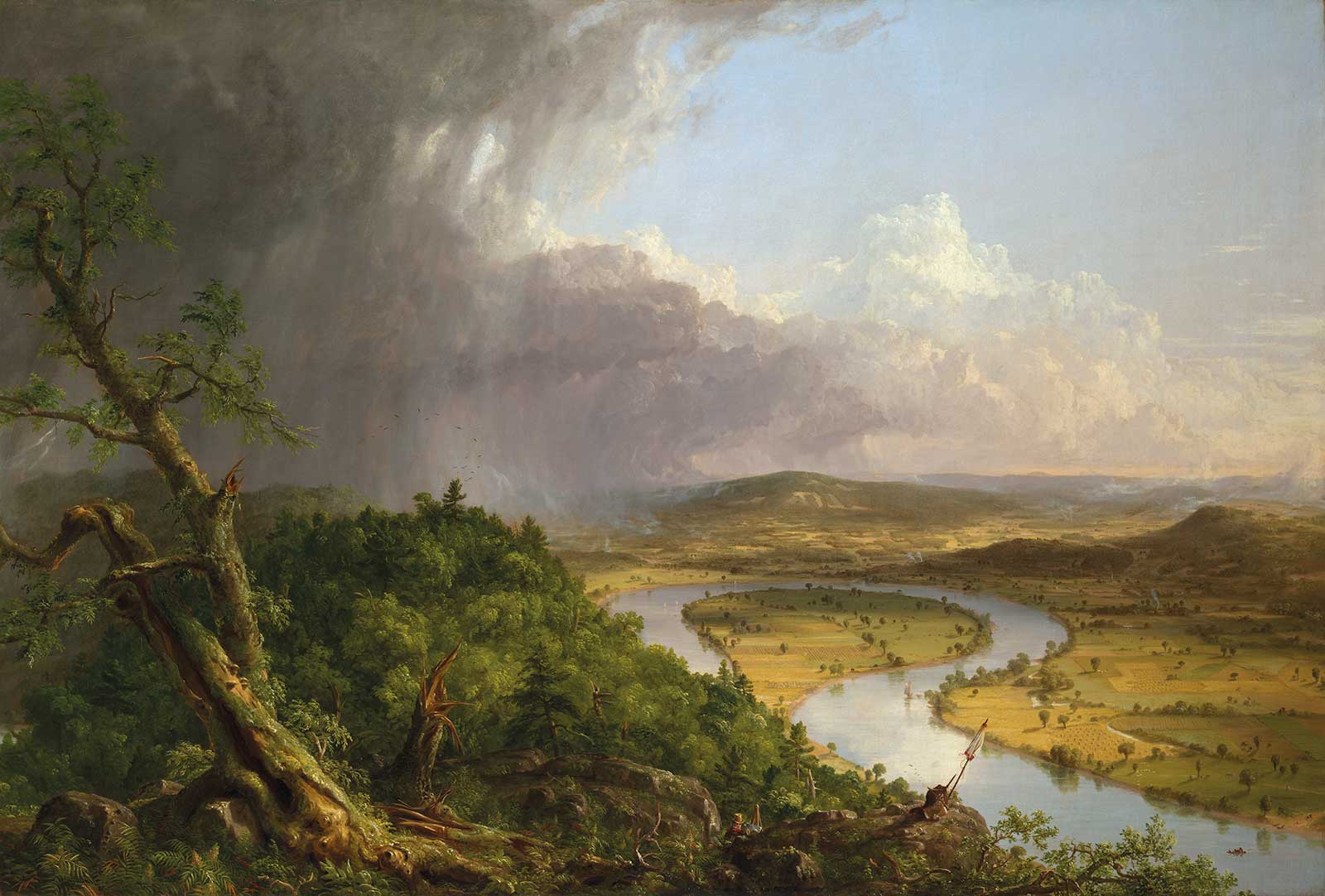 Metropolitan Museum of Art, View from Mount Holyoke, Northampton, Massachusetts, after a Thunderstorm—The Oxbow, 1836, oil on canvas, 51½ x 76", by Thomas Cole (1801-1848). Gift of Mrs. Russell Sage, 1908.
In 1836 Thomas Cole (1801-1848) painted a bend in the river in central Massachusetts. View from Mount Holyoke, Northampton, Massachusetts, after a Thunderstorm—The Oxbow, is a digest of the ideas of the painters of the Hudson River School, which was inspired by Cole. It is divided diagonally with sublime, untouched wilderness on the left and cultivated fields on the right signifying the promise of westward expansion. While men are subduing nature on the right, the blasted tree on the left suggests the awesome power of nature.
Only a few years after Cole painted The Oxbow nature exerted her forces and floodwaters cut the Oxbow off from the main river. Later, a railroad bridge was constructed and in the 1960s Interstate 91 was built across it.
Nature continues to modify the mouth of the river. Griswold Point faces the sound and bears the brunt of nor’easters, shrinking when it’s breached by the ocean and growing as sands shift in the wind. The land was acquired by the Griswolds in 1640. 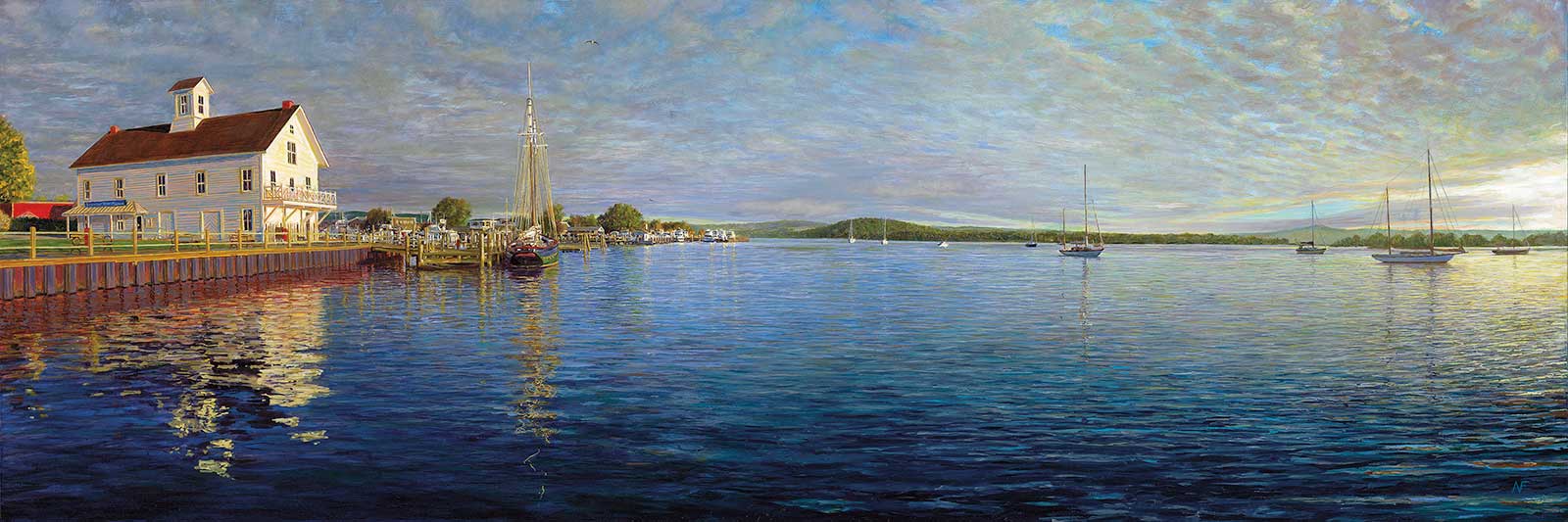 Cooper & Smith Gallery, Morning with Mary E, oil on canvas, 20 x 60", by Nathaniel Foote
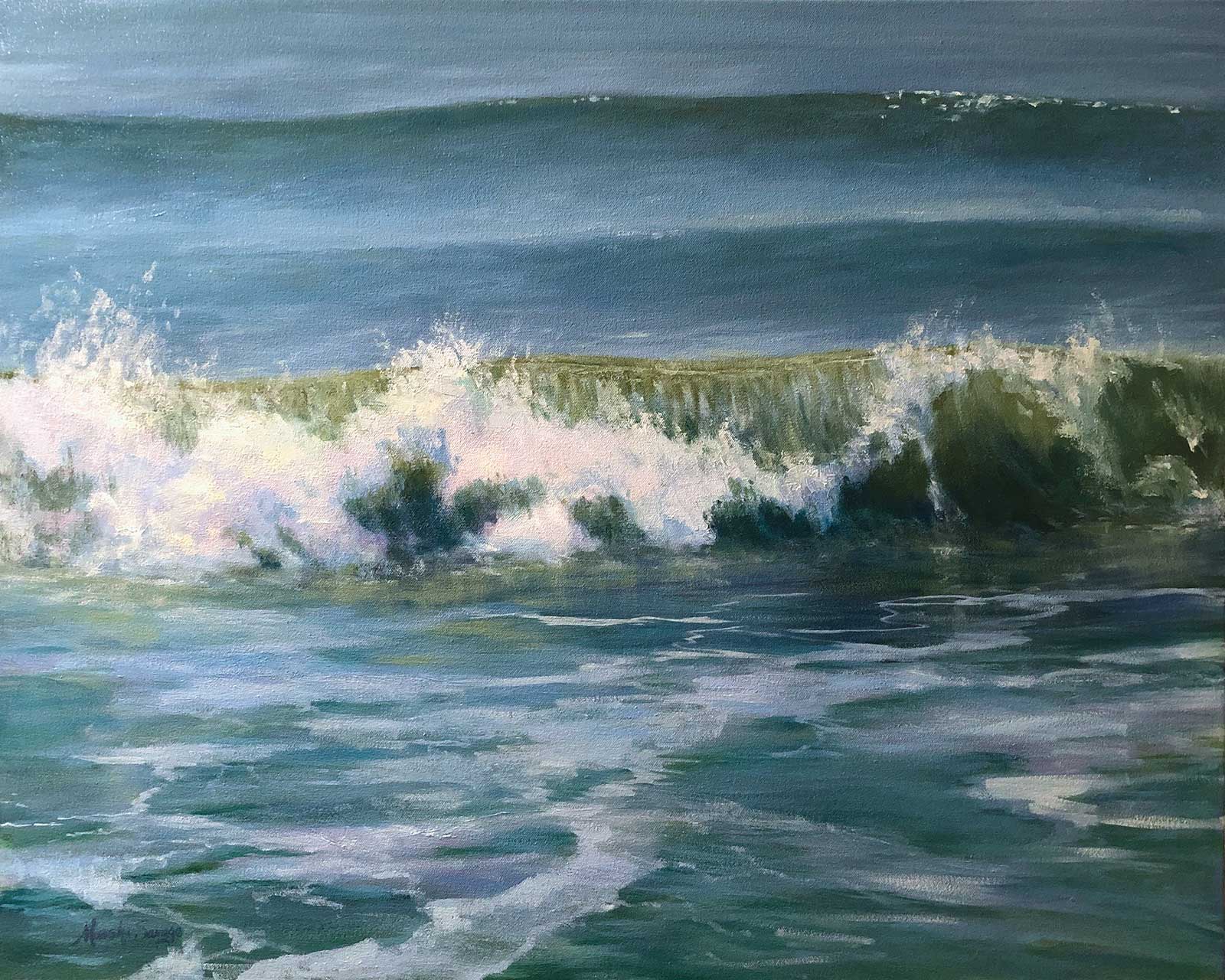 Marsha Hamby Savage, Double Trouble Plus One, oil on stretched canvas, 24 x 30"
In 1841, the family of Florence Griswold (1850-1937) acquired an estate on the Lieutenant River that flows into the Connecticut River. By 1899, “Miss Florence” had inherited the property along with significant debt. She ran a boarding house to make ends meet. Landscape painter Henry Ward Granger was a boarder and became so enraptured with the landscape and the light that he returned the next summer with artist friends in tow. The artists became the Lyme Art Colony. When Childe Hassam arrived in 1903, the focus of the colony changed from tonalism to impressionism and the estate became known as the “American Giverny.” Griswold wrote, “So you see, at first the artists adopted Lyme, then Lyme adopted the artists, and now, today, Lyme and art are synonymous.”
Painting continues to flourish in the communities around the mouth of the river. Leif Nilsson grew up there and carries on the plein air impressionist tradition, having studied at the Lyme Academy of Fine Arts. Often, he captures the river and ocean light alla prima, in one sitting, with thickly applied paint that, itself, reflects the light and brings the surface of the painting to life. 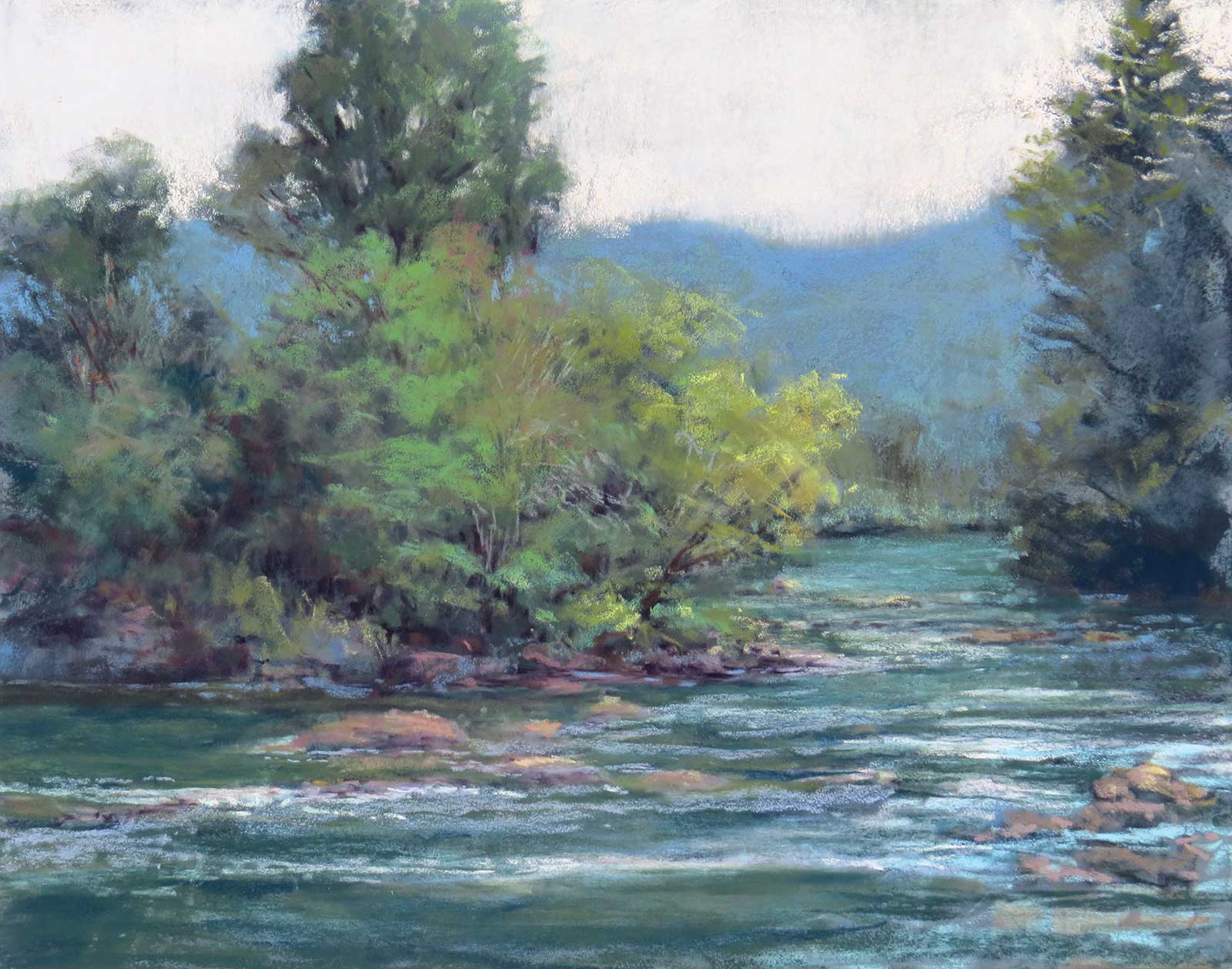 Marsha Hamby Savage, River Sentry, pastel, 11 x 14"
Griswold Point - Old Lyme depicts the broad panorama of the flat shoreline—land, water, and sky. Nilsson explains, “Raised in Old Lyme, my little johnboat and I knew Griswold Point well. It was breached by several storms that finally broke the sandbar in 1993. From my studio boat on a high tide in 2006 I painted what was left of it.”
The river widens at Essex, a short distance upriver. The historic schooner “Mary E.” is docked at the Connecticut River Museum housed in the old Steamboat Dock building, waiting for the day when river excursions can begin again.
Nathaniel Foote is a realist who studied at the Cooper Union and who has won two Emmys for art direction/production design and graphic design. Morning with Mary E is painted at water level dramatically emphasizing the vastness of the sky and the relative vastness of the water, while making human intrusions on the landscape seem almost insignificant.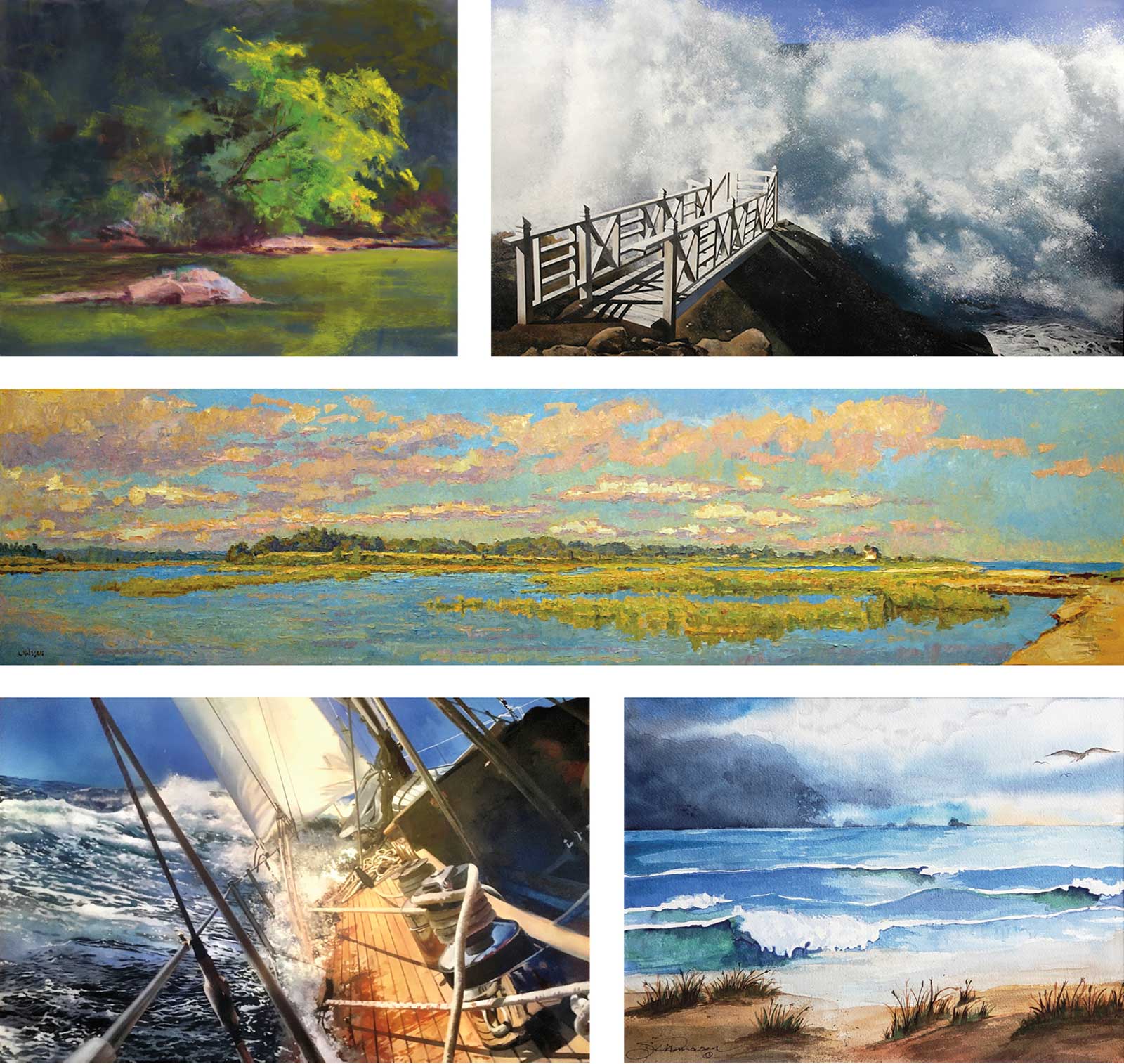 Clockwise from top left: Marsha Hamby Savage, Rising Light, pastel, 11 x 14"; John D’Antonio, Heaven’s Gate, oil on board, 40 x 70"; Spring Street Studio and Gallery, Griswold Point - Old Lyme, oil, 24 x 96", by Leif Nilsson; Sally Thomason, Oregon Coast Sunset, watercolor, 11½ x 14"; John D’Antonio, Breakaway, mixed media on board, 30 x 40"
Collectors can explore more scenes of the force and the power of water throughout the pages of this special section, from roaring rivers to the mighty sea. They can also glimpse tranquil scenes that slow it all down.
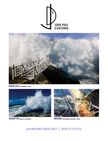
The marine paintings of John D’Antonio capture the rush of offshore sailing. His work is about the sea’s energy and its impact on the boat cutting through waves, making you feel the spray and the feeling of truly being within the scene. This is a radical departure from the typical sailing subjects with the boat on the horizon. He is one of the few living American artists that puts the viewers themselves at the helm and often in adverse conditions where few have been.
D’Antonio has spent many years on the ocean and has experienced seeing these subjects firsthand where blue turns to purple and the backwash from the boat creates a mystical green. Many of his offshore scenes combine a hyperrealist treatment of the boat with a more painterly ocean that helps exaggerate the power of motion through the waves making you feel that you are right there with startling immediacy.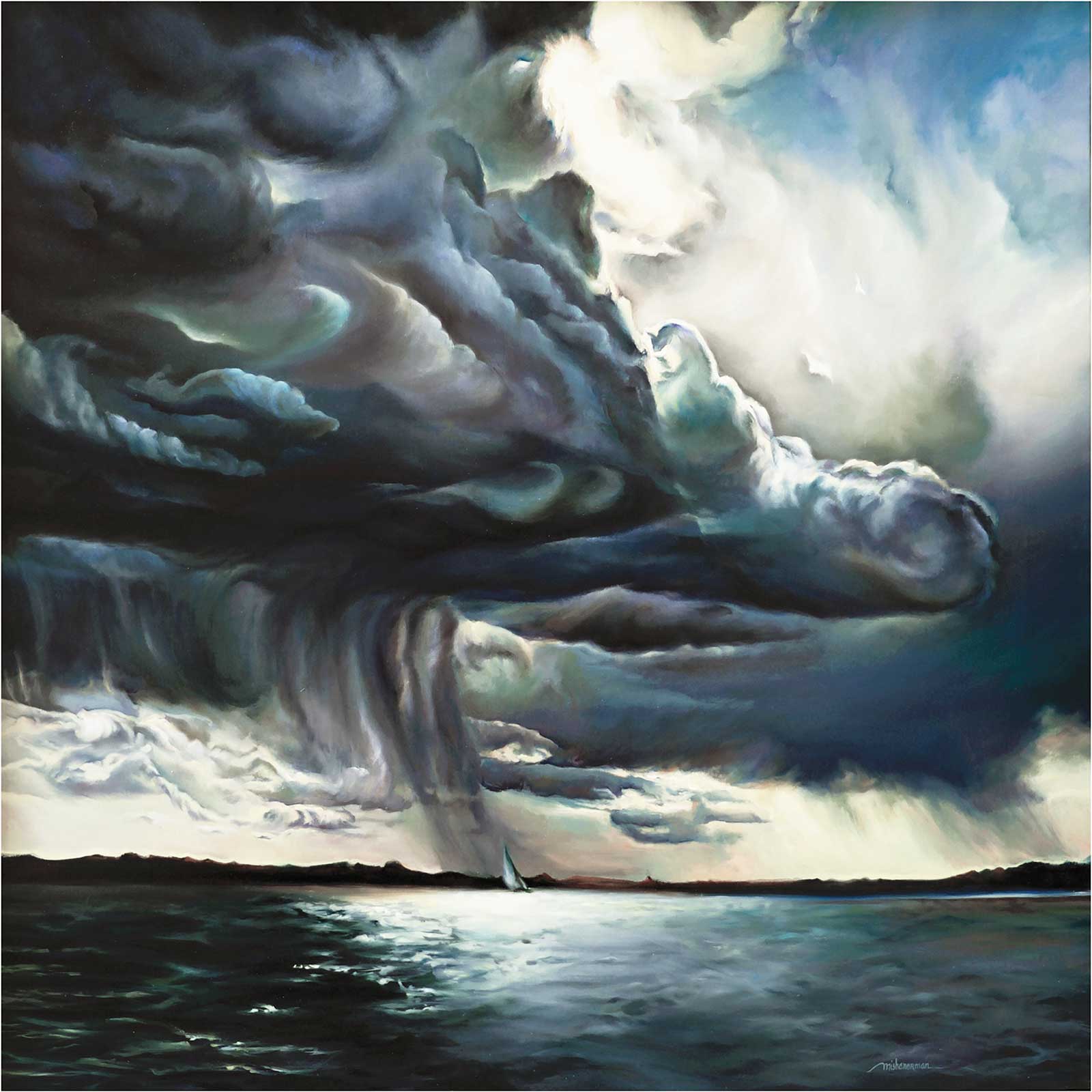 Michele Norman, The Prayer, oil on linen, 36 x 36"
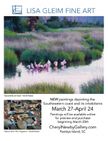
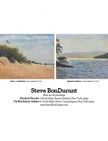
“Any day I am outside painting nature is a good day,” says painter Marsha Hamby Savage, who works in oil, acrylic and pastel. “Restoring my inner positivity is a wonderful byproduct of painting anything I want. I remember so well young childhood days of taking my shoes off and wading in shallow creeks and streams with my family and friends. Those rocks I picked up were gold to me. I have always thought my favorite subjects were trees and rural landscape, and I still paint them quite often. In the past few years, the call of water flowing over and around rocks, creating cascading sounds of music, and the sun on the rocks has shown me what feeds my soul. I cannot help but feel positive and upbeat any time I am standing with my easel in front of a creek with rocks sparkling around or underneath a bit of shallow water. The sounds are also amazing! I love that it comes back to me, and I can hear it and feel it when painting from my resource material in the studio.”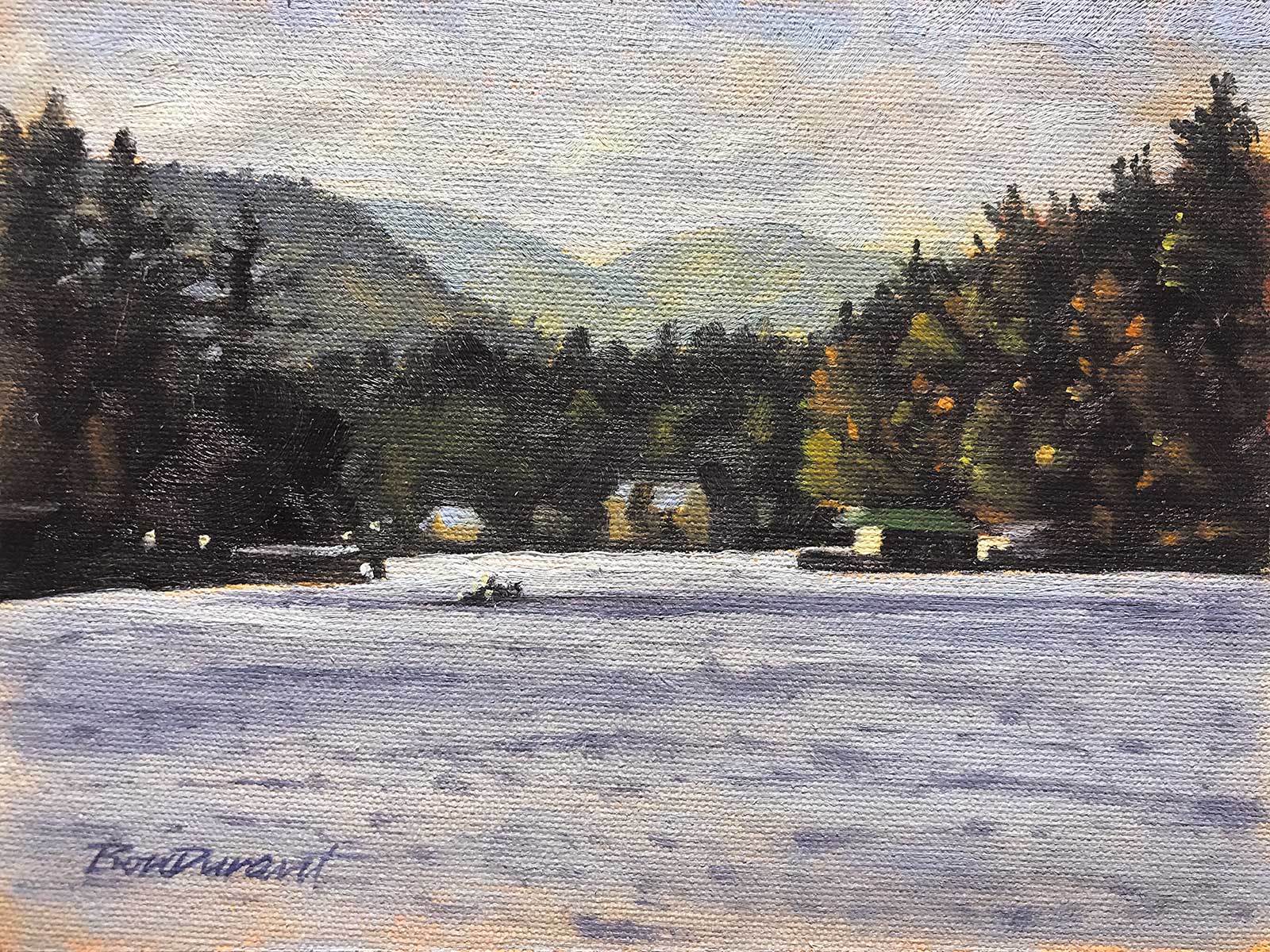 Steve BonDurant, Autumn Morning, Lake Flower, oil on panel, 6 x 8"
Monique Carr begins each painting with a period of “play” or experimentation working on small studies. Then, she listens to what the painting tells her what to do next. “The work, as I progress, makes its own demands, and I go with it,” says the artist. “Once I’m happy with my study, I keep the same palette, and make a large painting with a similar design.”
She adds, “I want to leave the viewers of my work with feelings of surprise and joy, allowing them to interpret each work in a soulful way that is uniquely their visual experience.”
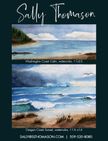
Sally Thomason is inspired by the ordinary things that occur every day in nature. “Flowers blooming, a stormy sky, an old barn on the side of the road, chickens in my yard,” she says, “a sunset that turns the blue mountains gold and the clouds cotton candy pink.”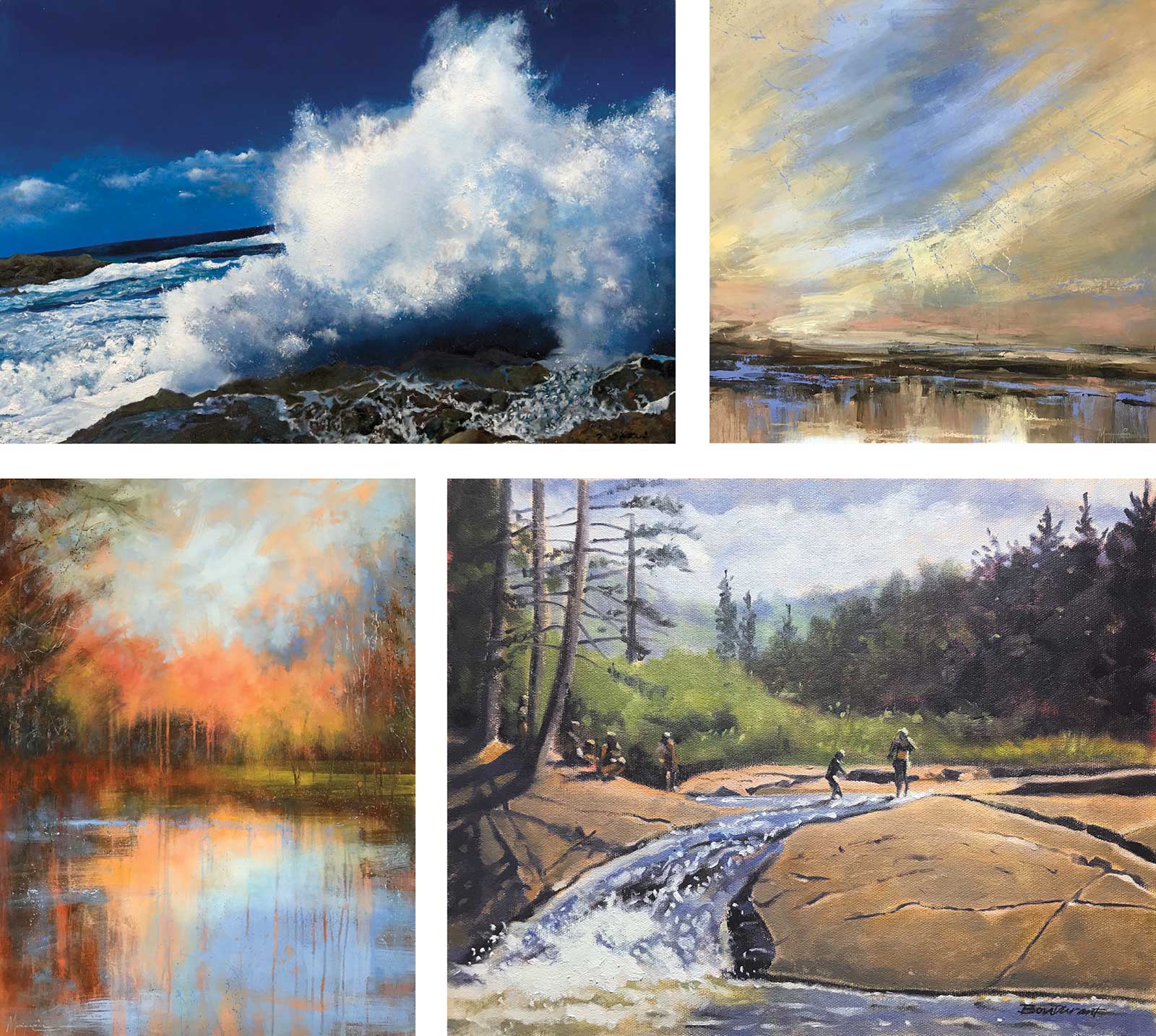 Clockwise from top left: John D’Antonio, Breaking Tide, oil on canvas, 24 x 36"; Monique Carr, Dare to Dream, acrylic on canvas, 36 x 36"; Steve BonDurant, Falls Sliders, oil on panel, 11 x 14"; Monique Carr, Just Such Beauty, oil on canvas, 40 x 30"For plein air painter Steve BonDurant, he aims to capture the variety of sensory experiences of being in an environment near water. He says, “If it’s a waterfall, it’s the sensation of spray and motion. If it’s seaside, it’s the sound of the surf. If it’s a lake, it’s often the activity of those enjoying it while I am painting. Water works often compel a connection to the scene, for the viewer and the painter.”
In Michele Norman’s The Prayer, intense storm clouds form over a body of water. “Being surrounded by a storm made me aware that in the midst of suffering or fear, we can’t see the light above it all,” she says about the idea for the painting. “I was inspired by the power of hope.” —
Featured Artists & Galleries
Cooper & Smith Gallery
10 Main Street, Essex, CT 06426
(860) 581-8526
art@coopersmithgallery.com
www.cooperandsmithgallery.com
John D’Antonio
(609) 577-0755
www.johndantonio.net
Leif Nilsson
Spring Street Studio and Gallery
One Spring Street, Chester, CT 06412 (860) 526-2077
www.nilssonstudio.com
Marsha Hamby Savage
Smyrna, GA, (770) 853-4696
marsha@marshasavage.com
www.marshasavage.com
Metropolitan Museum of Art
1000 Fifth Avenue, New York, NY 10028
(212) 535-7710
www.metmuseum.org
Michele Norman
(630) 433-1667
mish.norman@gmail.com
www.mishanorman.com
Monique Carr
moniquecarrfineart@gmail.com
www.moniquecarr.com
Sally Thomason
(509) 520-8080, sally@slthomason.com
Steve BonDurant
stevebondurant@gmail.com
www.stevebondurant.com
Powered by Froala Editor