While driving around the Iowa countryside Grant Wood (1891-1942) discovered a classic Gothic Revival farmhouse and began musing about the people who might live there. The painting, American Gothic, 1930, is the result, now an icon of American art. Wood meant it as a positive portrayal of solid American values, but it has become more popular as a satirical look at the same values.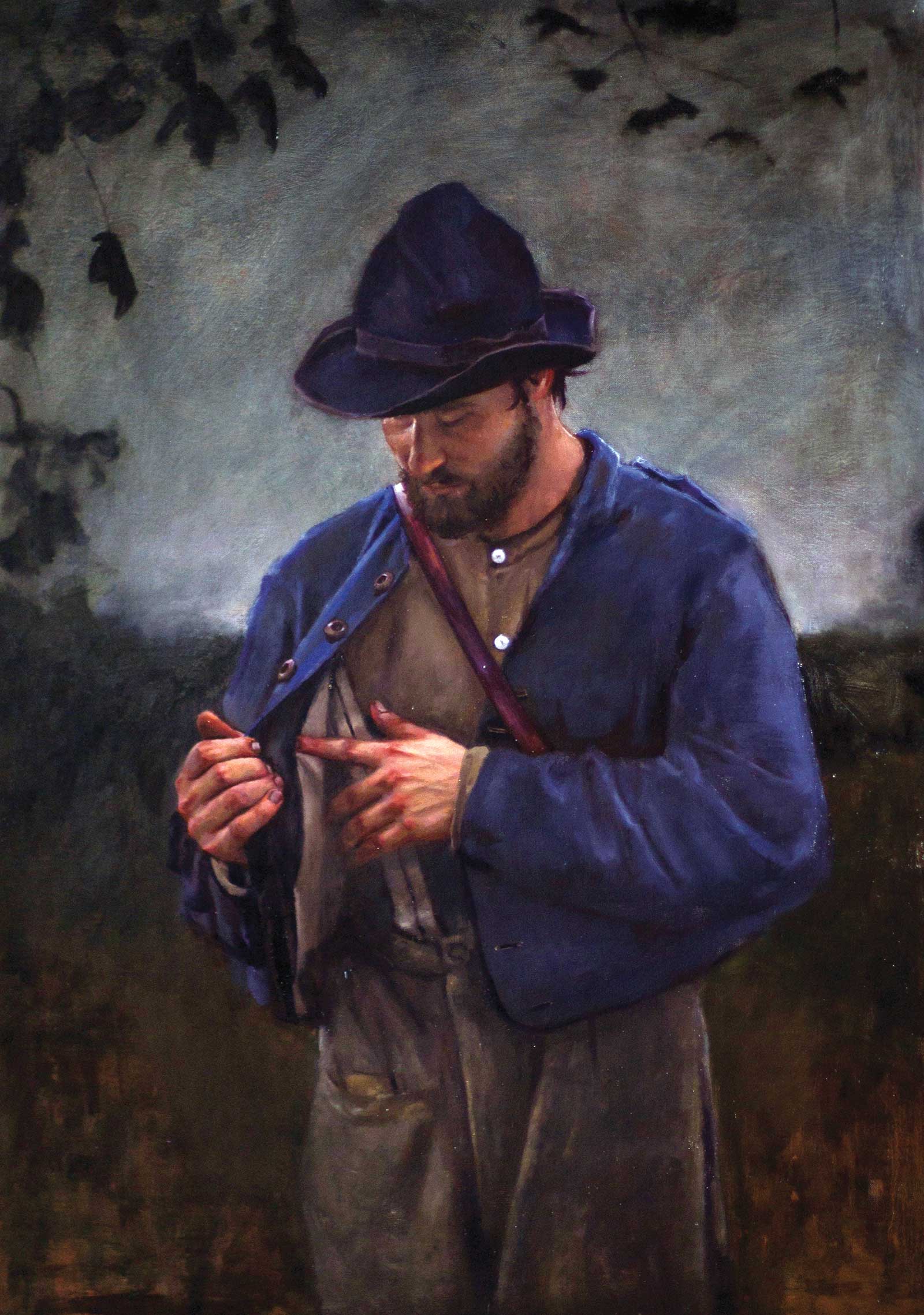 William Blake, Incredulity, oil on canvas, 40 x 30"
Beth Foley has created a series of paintings inspired by American Gothic for the exhibition Mine Eyes Have Seen the Glory at Gallery Victor Armendariz in Chicago through February 28. She says, “I’ve always loved Grant Wood. When I was in art school everyone made fun of him. Then I moved to San Francisco and went to his show and I felt so validated. I love people and painting people. For this show I started looking for couples that represent America now.”
Foley paints the diversity of the people in America. In Hillbilly American Gothic, the shape of the Gothic house is emulated in the shape of the barn and its porch, the pitchfork (here stuck into a porch post) is replaced in the farmer’s hand by a masculinity enhancing shotgun. In Muslim American Gothic, the couple replicates the poses of the original and is dressed in their traditional garb. An Islamic pattern replaces the lace curtains in the windows of the original.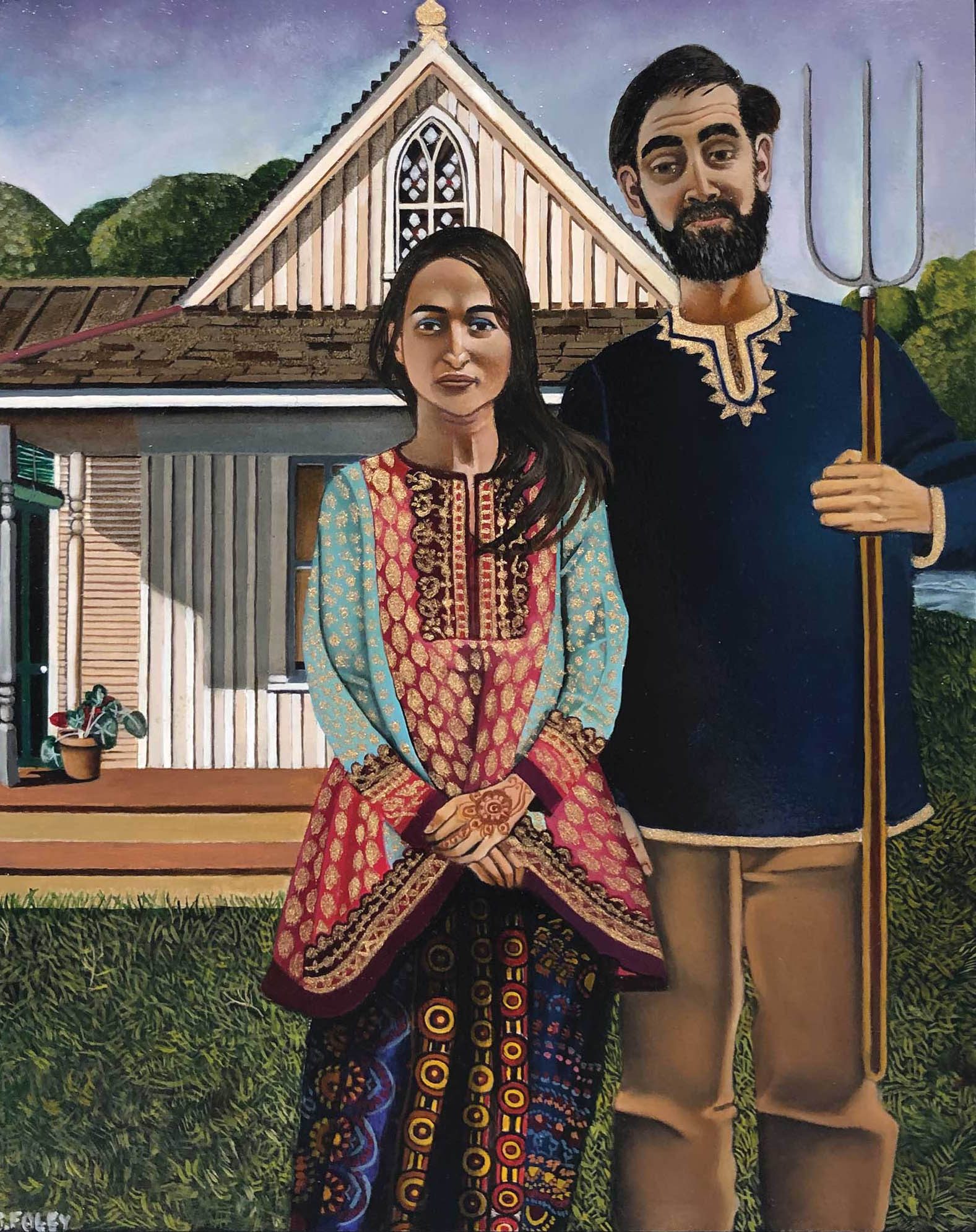 Beth Foley, Muslim American Gothic, oil on panel, 10 x 8"
William Blake began his experience of history as a bugle boy in Civil War reenactments. He says, “When I went to art school I fell in love with the artist correspondents of the Bohemian Brigade, and I have become Winslow Homer in reenactments.” Homer joined the brigade in 1861 as a correspondent for Harper’s Weekly. Blake researches the period and sports a beard and mustache as Homer and most soldiers had. Taking part in the reenactments, for which he makes period clothes and camps on the battlefields, brings veracity to the experience that appears in his work. 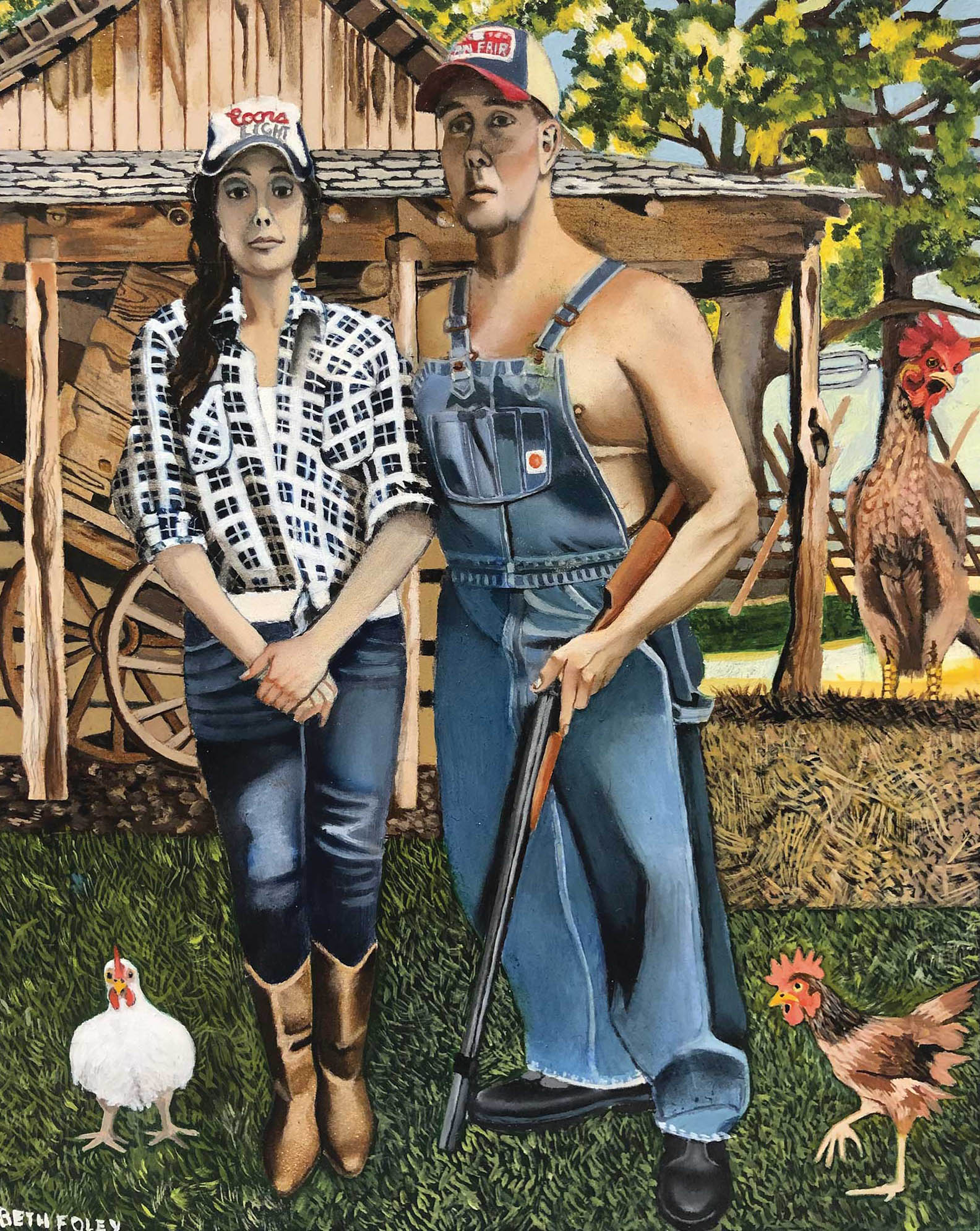 Beth Foley, Hillbilly American Gothic, oil on panel, 10 x 8"
“The picture is always getting larger and more accurate,” he explains. “The more you get into it more of the stories emerge.” In 1865, for instance, the Grand Review of the Armies victory parade in Washington, D.C., did not include representatives of the 180,000 strong United States Colored Troops who had fought within the army. One hundred fifty years later their descendants and others led the reenactment of the parade.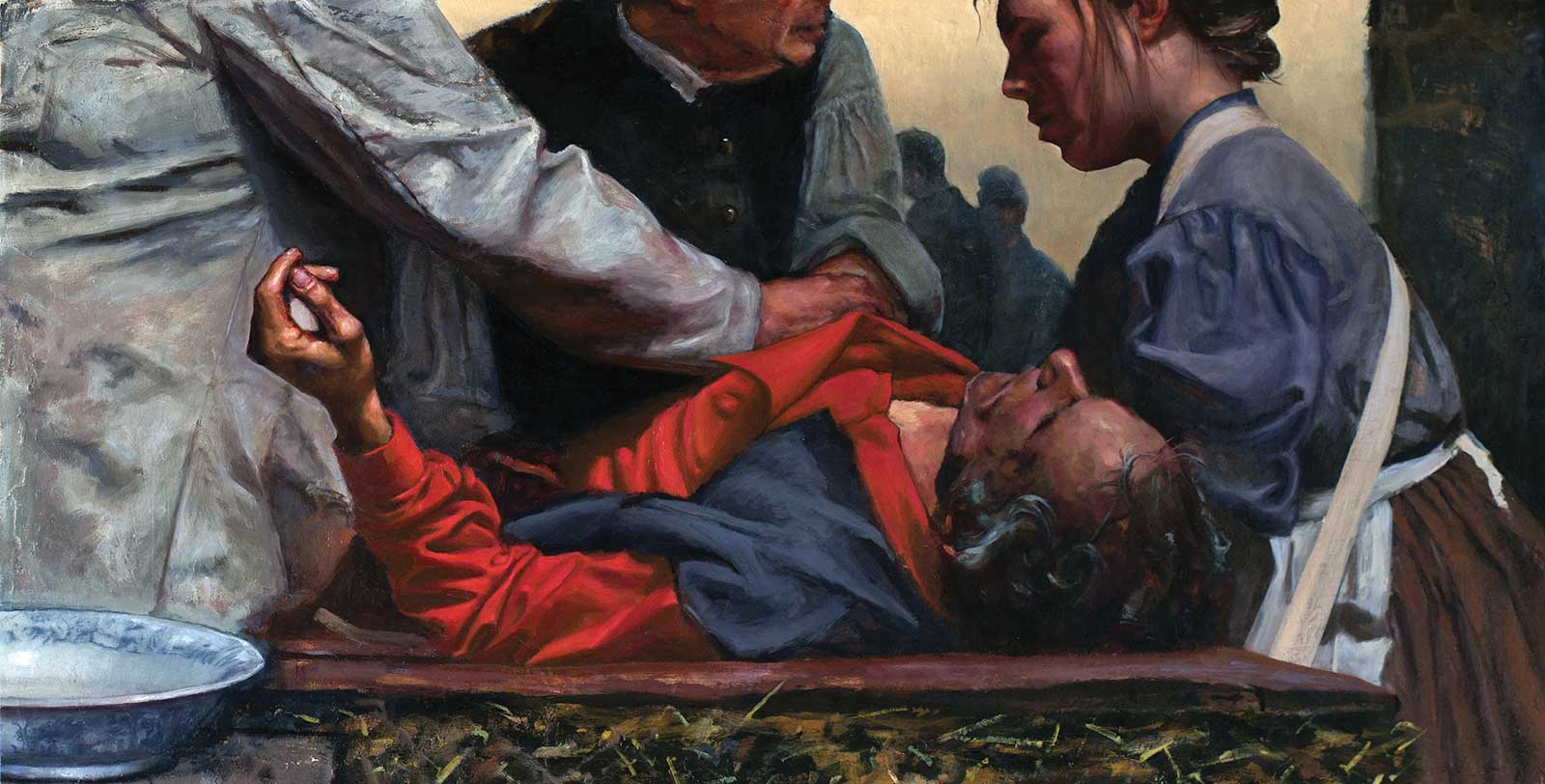 William Blake, Amputation, oil on canvas, 24 x 47"
In his painting Amputation, a soldier has his leg amputated as Clara Barton checks his pulse, later losing it and pronouncing him dead. Hundreds of women disguised themselves as men and fought in battle and thousands of women like Barton signed up to serve as nurses. Barton, who would later found the American Red Cross, said, “I may be compelled to face danger, but never fear it, and while our soldiers can stand and fight, I can stand and feed and nurse them.” —
Gallery Victor Armendariz
300 W. Superior Street • Chicago, IL 60654
(312) 722-6447 • www.galleryvictor.com
Powered by Froala Editor