When Skot Foreman was going to school at the University of Florida, Gainesville, in 1986, he stopped by a newsstand and saw a copy of Andy Warhol’s Interview magazine with Don Johnson on the cover. One of the teasers was “What’s Hot in Miami?”. Foreman was born in Pittsburgh where Warhol was born and he lived in South Florida, so the magazine scored with him on two counts. Inside, there was an article on the self-taught Miami artist Purvis Young (1943-2010).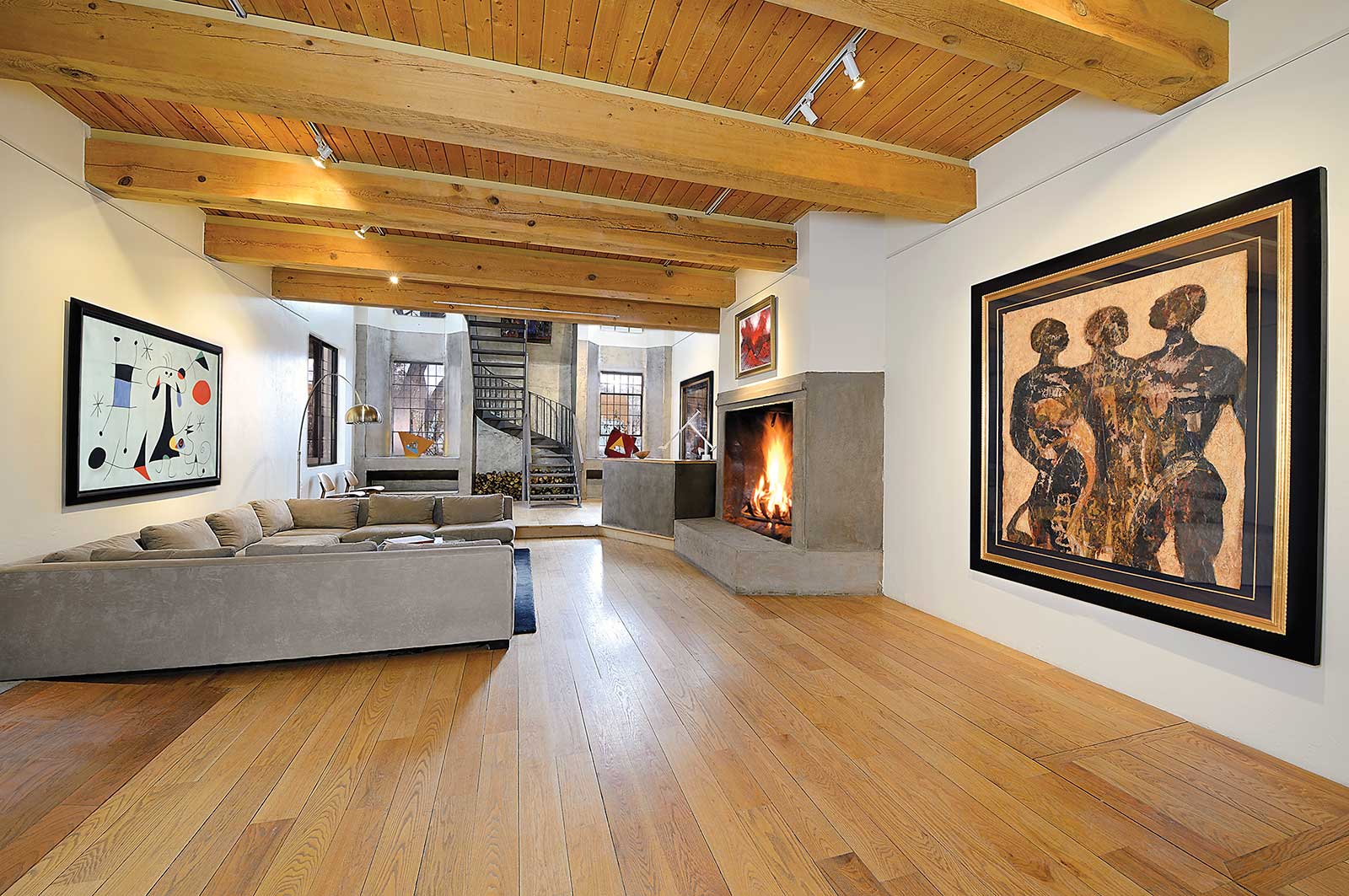 El Sol Grande by Joan Miró (1893-1983) hangs on the left in the great room. Above the fireplace is Paisaje Volcanico by David Alfaro Siqueiros (1896-1974). On the right is Chrissy Dolan-Terrasi’s Bala Bala. In the windows are sculptures by William Fares, from left, Untitled and Blood Red.
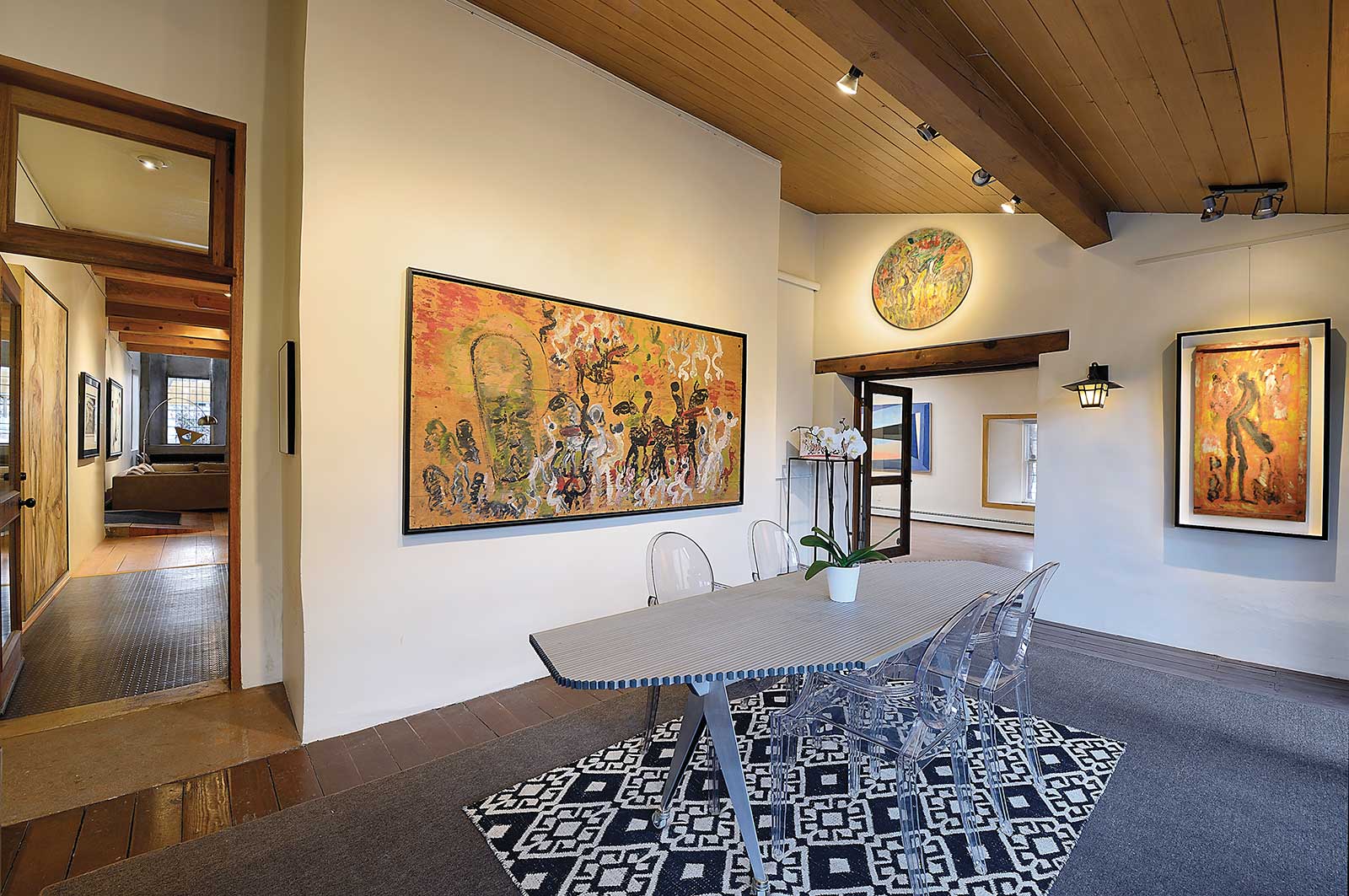 In the foyer are paintings by Purvis Young (1943-2010). They are, from left, Angel with Horseback Warriors, an Untitled tondo and Warrior with Shield. The table is from Baleri Italia and the Ghost Chairs are by Philippe Starck.
“His work was a mix of calligraphy, kid’s art and a little Cy Twombly,” Foreman recalls thinking. “Ten years later I was at a silent auction in Miami and there was a Purvis Young. I thought, ‘I’ve gotta get this.’ Purvis was brought up in Miami and never educated beyond the sixth grade. He went through the school of hard knocks and spent time in jail, but he turned his life around and dedicated it to painting. He has been labeled an ‘outsider’ artist but I think he reaches a much broader audience. His work is so layered and so complex. He painted with passion. The work may be a little primitive for some people but he makes up for it in the strength of his brushwork, which shows the influence of Chinese calligraphy, Jackson Pollock and others. We became friends over the years and last year I curated an exhibition of his work at the European Cultural Center in Palazzo Mora for the Venice Biennale.”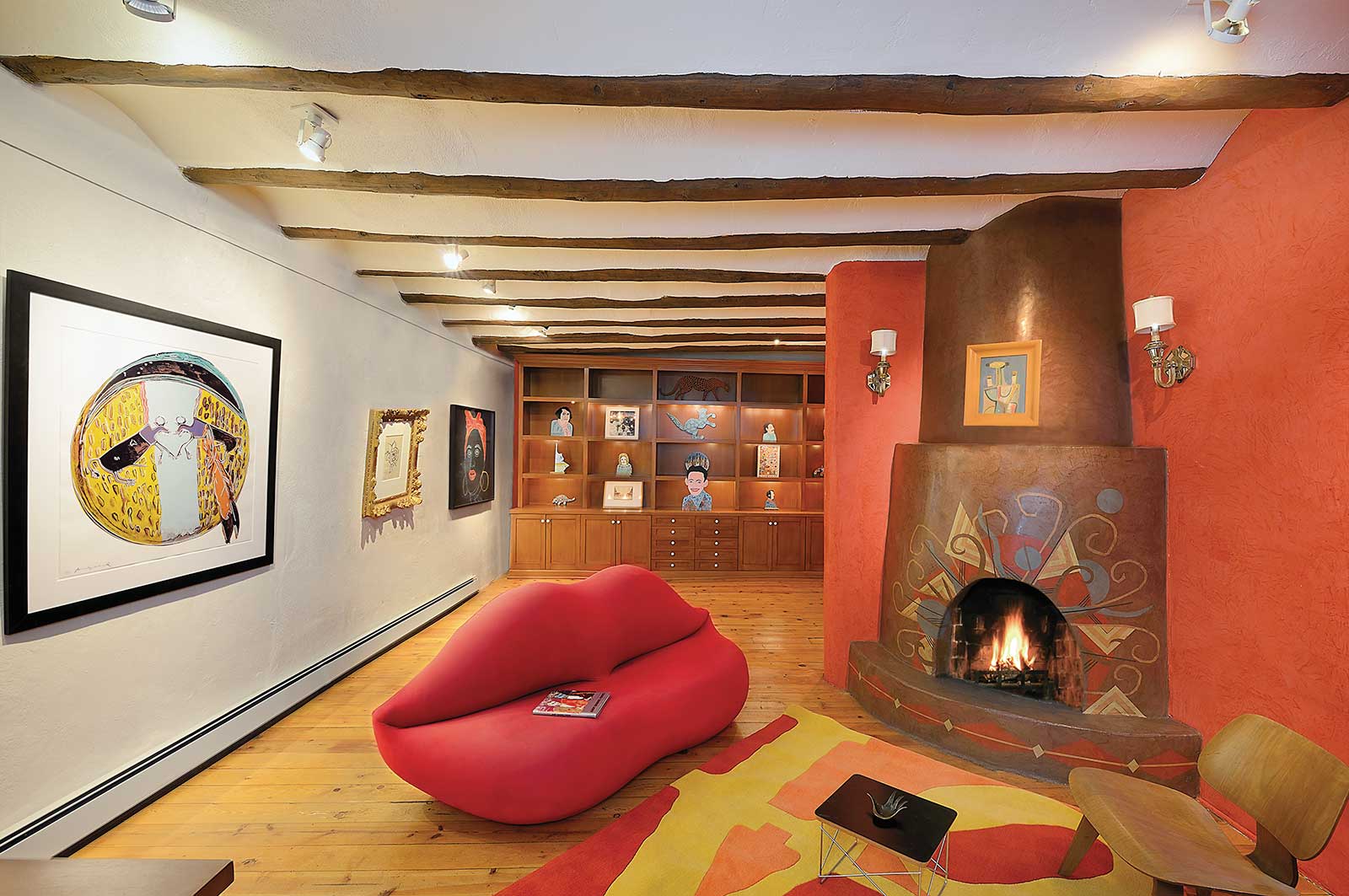 Plains Indian Shield by Andy Warhol (1928-1987) hangs in the library with his, from left, Black Rose and his Mammy. Above the fireplace is George Condo’s Figure Face Up. Tiger Love, a tapestry by Robert Indiana (1928-2018) is on the floor. The Bocca sofa is from Design Studio 65. On the right is a vintage LCW chair by Charles (1907-1998) and Ray Eames (1912-1988) and an Eames low table.
It’s a long way from picking up a copy of Interview and sponsoring an exhibition in Venice. Growing up in South Florida, Foreman would stop at the Boca Raton Museum of Art on the way home from school. “It was a smaller, quieter place then, and the staff would show me around and point out different artists and explain different periods of art. I was never able to shake that experience. I was fascinated by design at the time from billboards to printed T-shirts, and I collected matchbooks because of their strong graphics,” he says.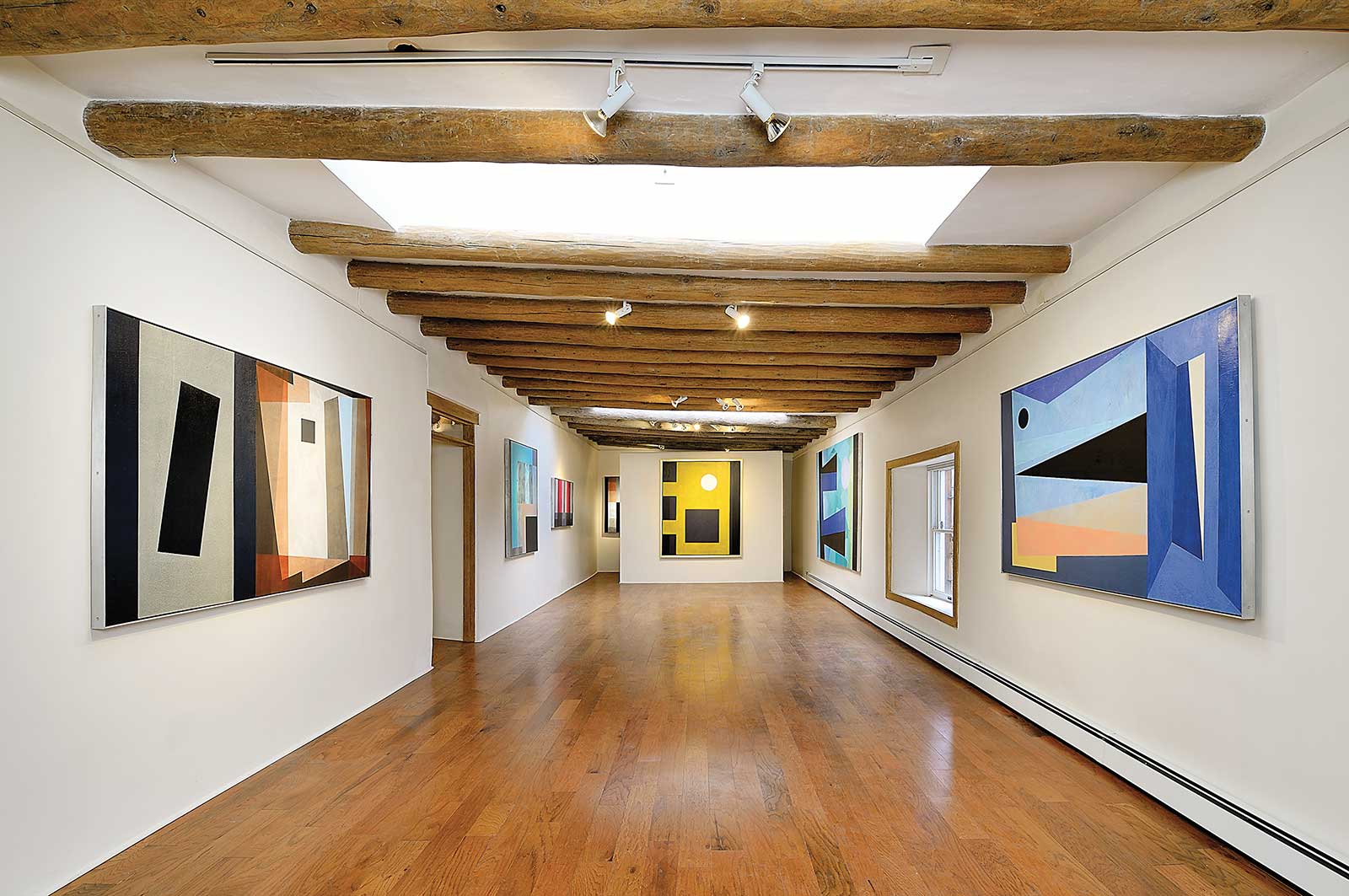 One room is devoted to paintings by Pascual Hijuelos who studied with Al Held (1928-2005).
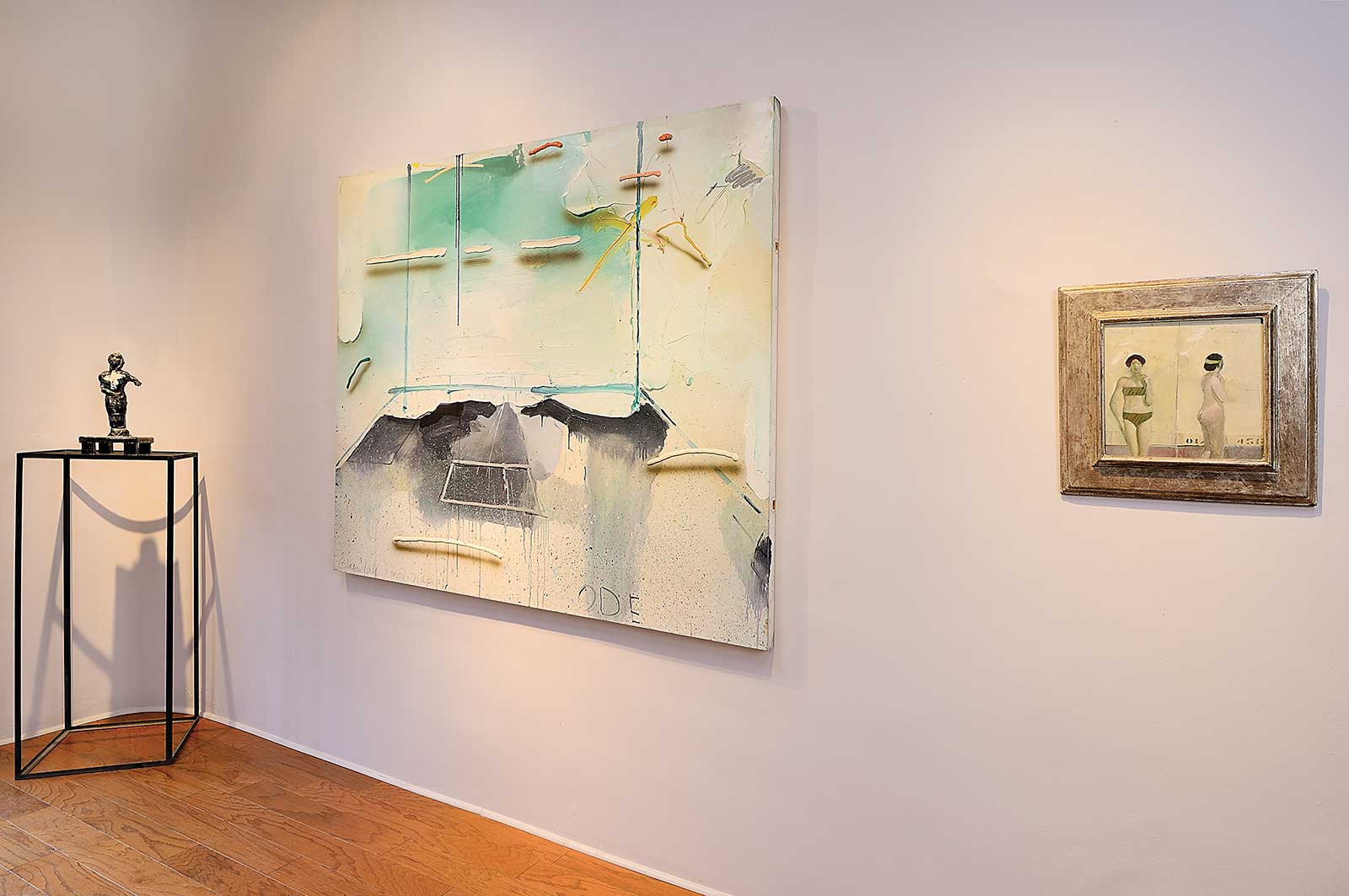 In a room dedicated to the work of James Havard are, from left, Ruby, Green Half Hour Nap and On Neu.
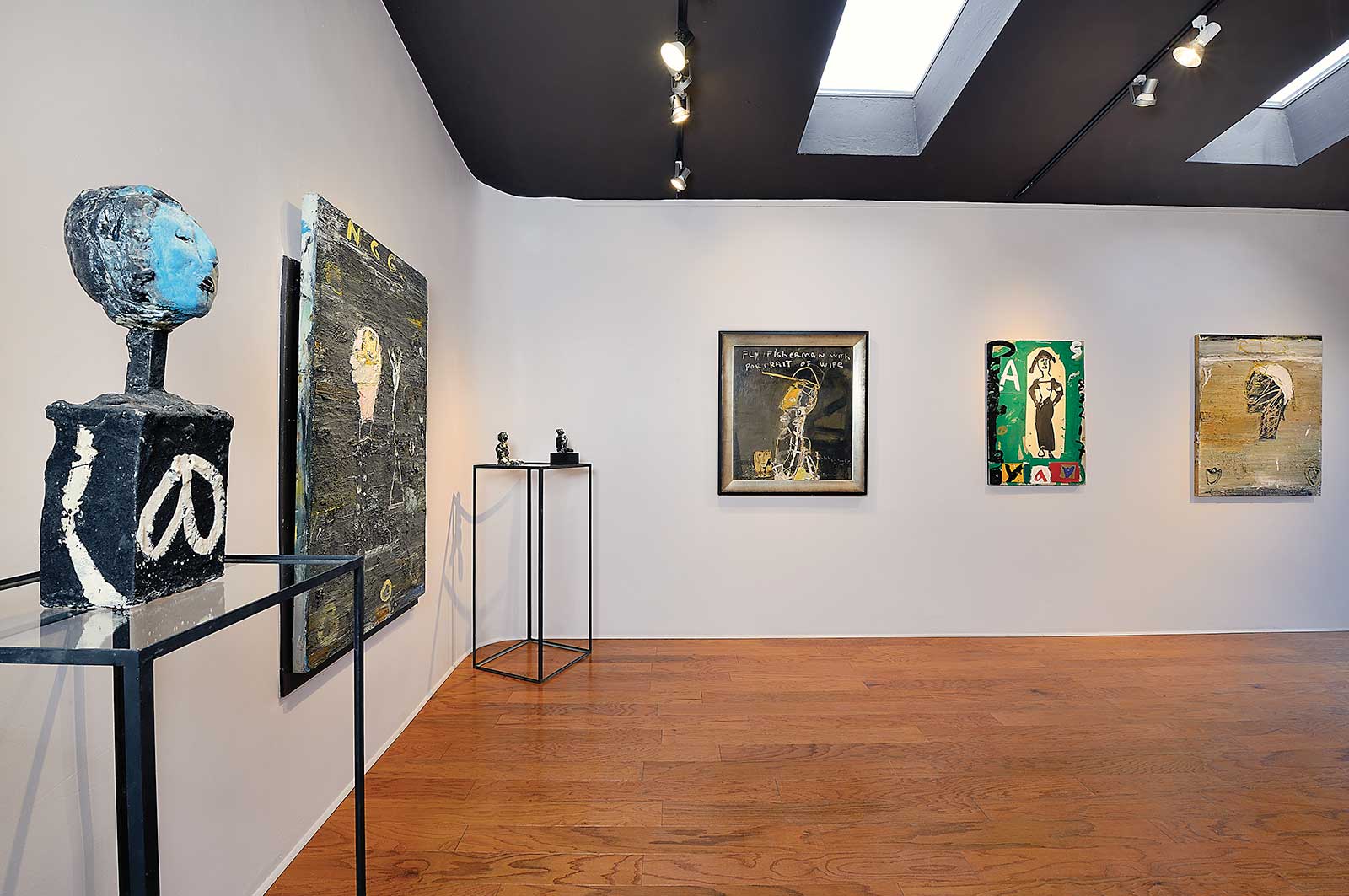 In the James Havard room are, from left, Blue Man, NGG, two sculptures (Seated Nude and Mother and Child), Fly Fisherman with Portrait of Wife, Annika of Sweden and Rio.
“I went to college for liberal arts and finance and worked in finance for a few years until I realized it was not my passion,” Foreman shares. “I moved back to Miami and immersed myself in the art scene. I cut my teeth in the gallery world by working for a dealer who was vertically integrated in the art world. In the 1990s I went on my own with a gallery in Miami and eventually to a location in New York City. In 2012 when my rents increased dramatically, I decided I needed a sea change and went to Mexico to clear my head and to see what would come to me. I met a gallery owner in San Miguel de Allende who invited me over for coffee one day. She said she and her family were moving back to the States and she wondered if I wanted to take over the lease for her gallery. Eight years later the gallery is going strong after a steep learning curve. Six months or so ago I decided I wanted to have a foot back in this country, too, and I found a live/work space just off Canyon Road in Santa Fe—San Miguel’s sister city with a strong art connection.”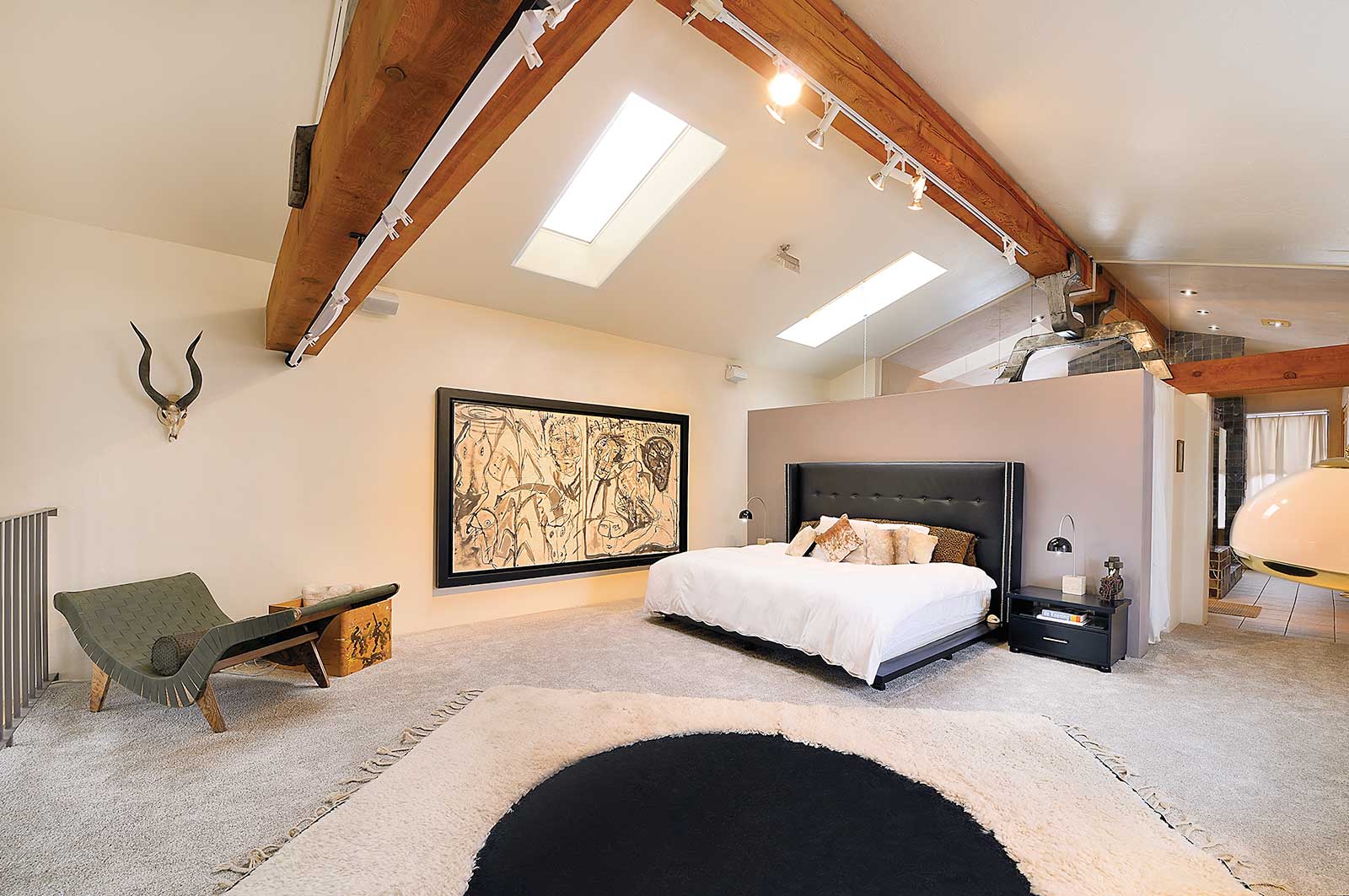 The lounge in the bedroom is by the Mexican designer Klaus Grabe (1910–2004) who trained at the Bauhaus. Next to it is a decorated found object by Purvis Young (1943-2010). The large painting is by Alejandro Santiago (1964-2013). The bedside lamps are by Harvey Guzzini. The handcrafted rug is by Joe Doucet.
The space is a large, open gallery space with a commercial kitchen and a large loft containing a bedroom and bath. When I visited him, Foreman had moved much of his collection into the space including his collection of vintage midcentury furniture. In the foyer is a selection of Young paintings. In the living room the pace changes with a display of vintage prints by M.C. Escher (1898-1972). The adjoining room is dedicated to paintings by James Havard—also a transplant to Santa Fe and very much a part of its art scene.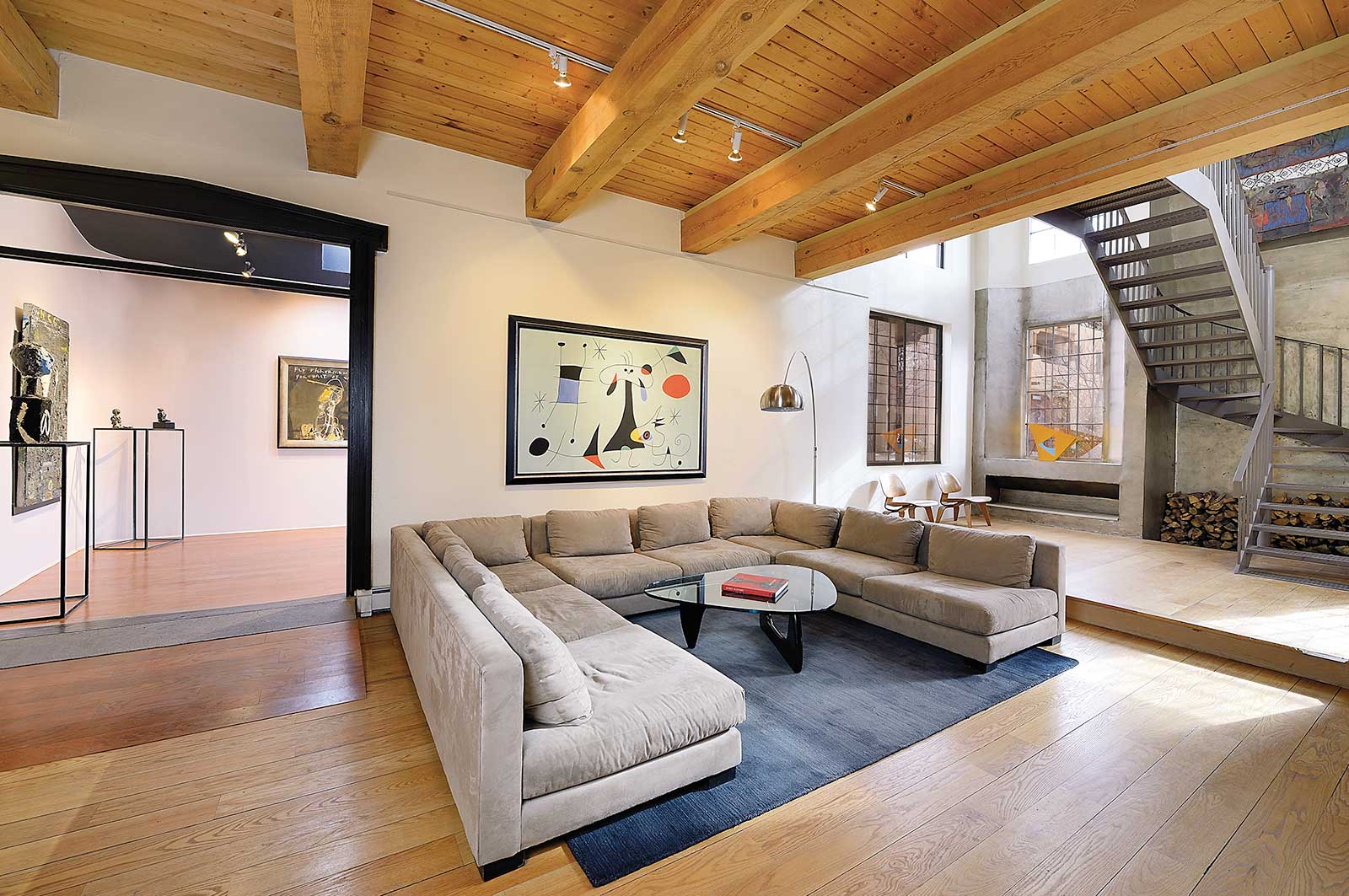 To the right of the doorway into the room of James Havard works is El Sol Grande by Joan Miró (1893-1983). The vintage coffee table is by Isamu Noguchi (1904-1988). On the right are vintage LCW chairs by Charles (1907-1998) and Ray Eames (1912-1988). In the window is an untitled sculpture by William Fares
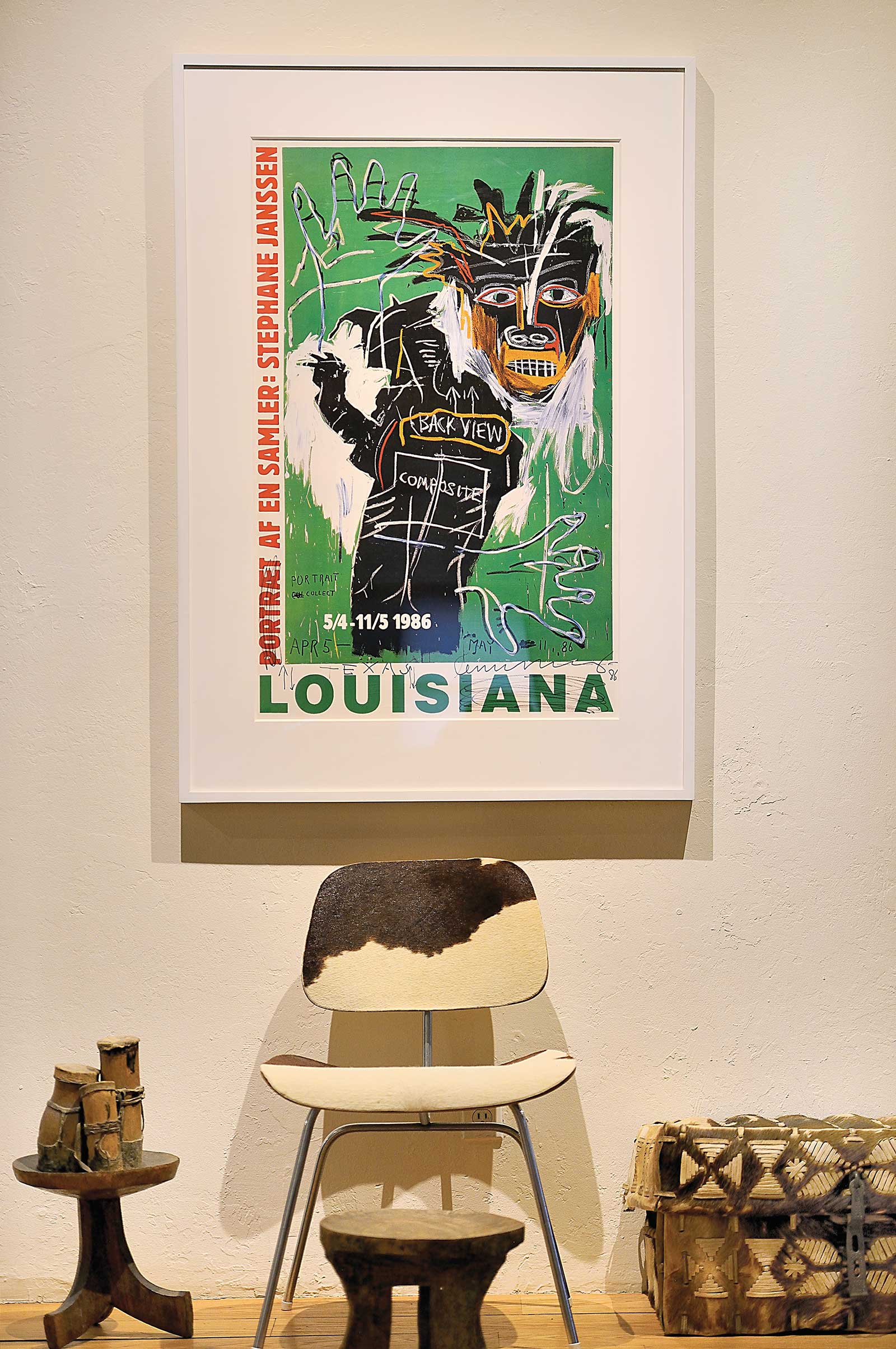 A hand-worked offset lithograph by Jean-Michel Basquiat (1960-1988) hangs above a vintage DCM chair by Charles (1907-1998) and Ray Eames (1912-1988) and African stools and a chest from Argentina.
“I was introduced to [his] work when I came out here to visit in the 1990s,” he explains. “There was such a powerful figurative component with abstract backgrounds.” Havard was known for his abstract illusionist paintings in which he shaded forms to make the surface appear three-dimensional. He later turned to more richly textured works influenced by tribal art. After a stroke in 2006, Havard taught himself to paint again, now in smaller formats with no diminishment in power and passion.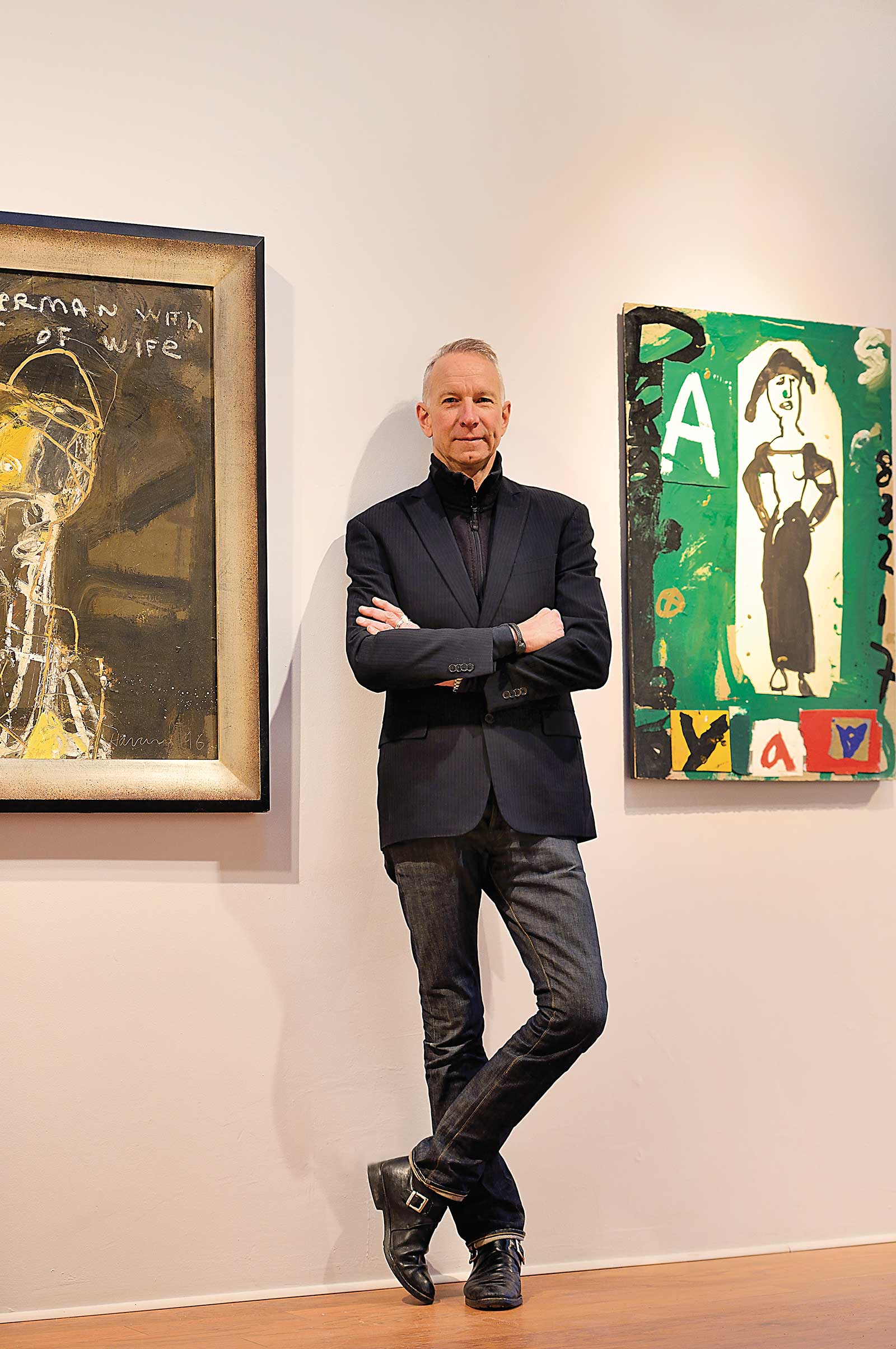 Skot Foreman poses between two paintings by James Havard, Fly Fisherman with Portrait of Wife and Annika of Sweden.
In what will become Foreman’s library, he has paired work by Warhol (1928-1987) and Howard Finster (1916-2001). “The hook is that there is something immediate and accessible about their work but there is much more when you dig deeper,” he explains. “Warhol got beneath and inside the American commercial culture and turned into high art. I think 100 years from now people will look back and realize there was a benchmark—pre-Warhol and post-Warhol.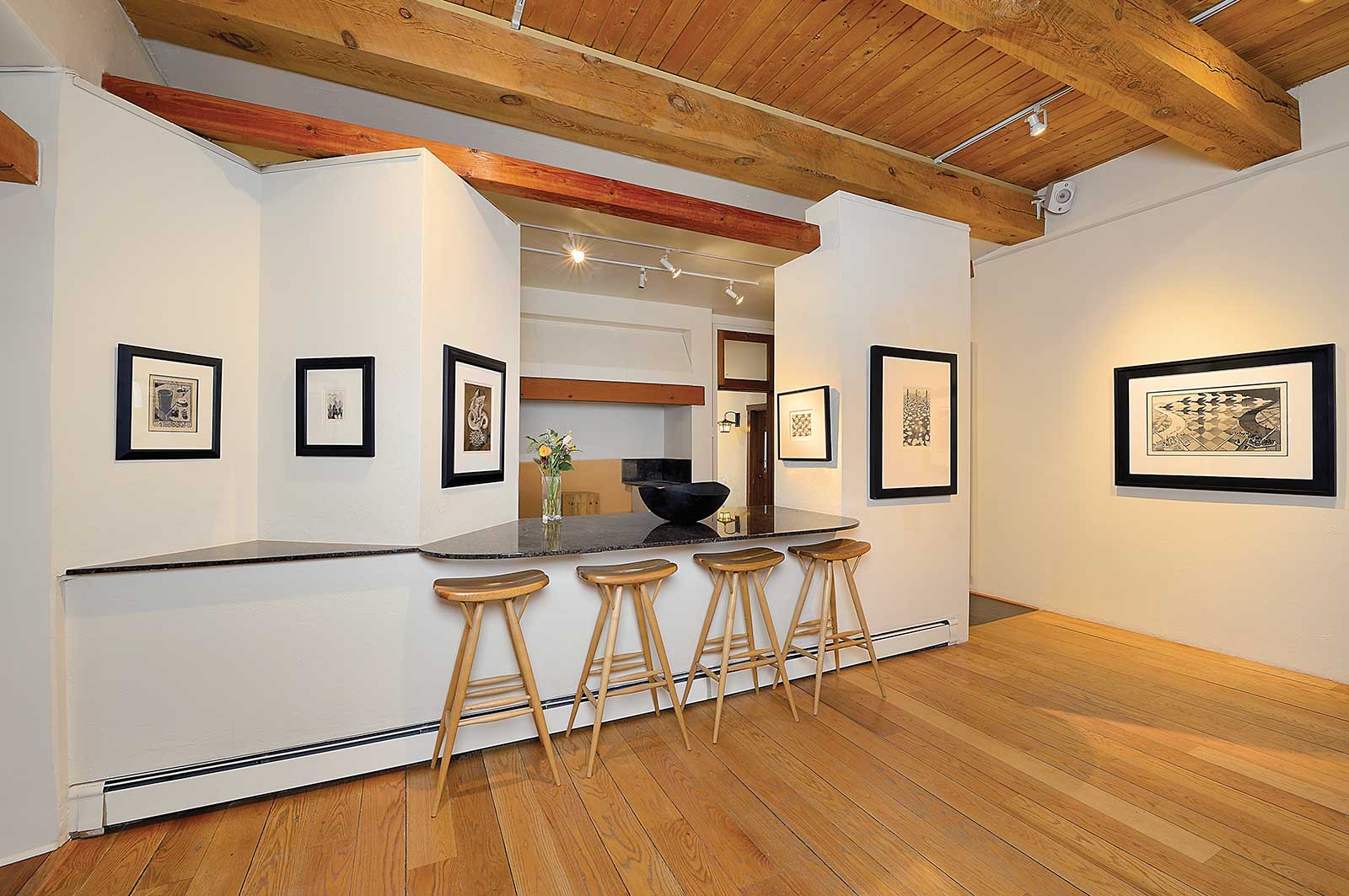 A selection of prints by M.C. Escher (1898-1972) are displayed at the end of the great room. They are, from left, Dice, Unicorns, Dragon, Plane Filling I, Three Worlds and Day and Night. The bar stools are by the Finnish designer Ilmari Tapiovaara (1914-1999).
“Finster was a fire and brimstone Southern preacher whom, he claimed, god told to begin painting because no one was listening to his sermons,” he adds. “He had a theme park, Paradise Garden, in Georgia and a small gift shop where he sold shelf art with a time stamp and messages about what was going on in the world when he painted each piece. I’ve put his and Warhol’s work together because of their pop art imagery.”
He says he sells 20 percent to 30 percent of his inventory online. “I need to be cognizant of trends in the market,” he says, “but there’s no replacement for walking into a space, turning a corner and falling in love with a work of art.” —
Powered by Froala Editor