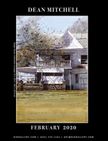
Black history is a living history, one that is added to with each new experience, story or milestone. History takes time to form, but the layers add up quickly. Eventually the layers tell their own stories. Those layers will be celebrated with the exhibition A Time and A Place — The Layers of Black History at RJD Gallery in Bridgehampton, New York. 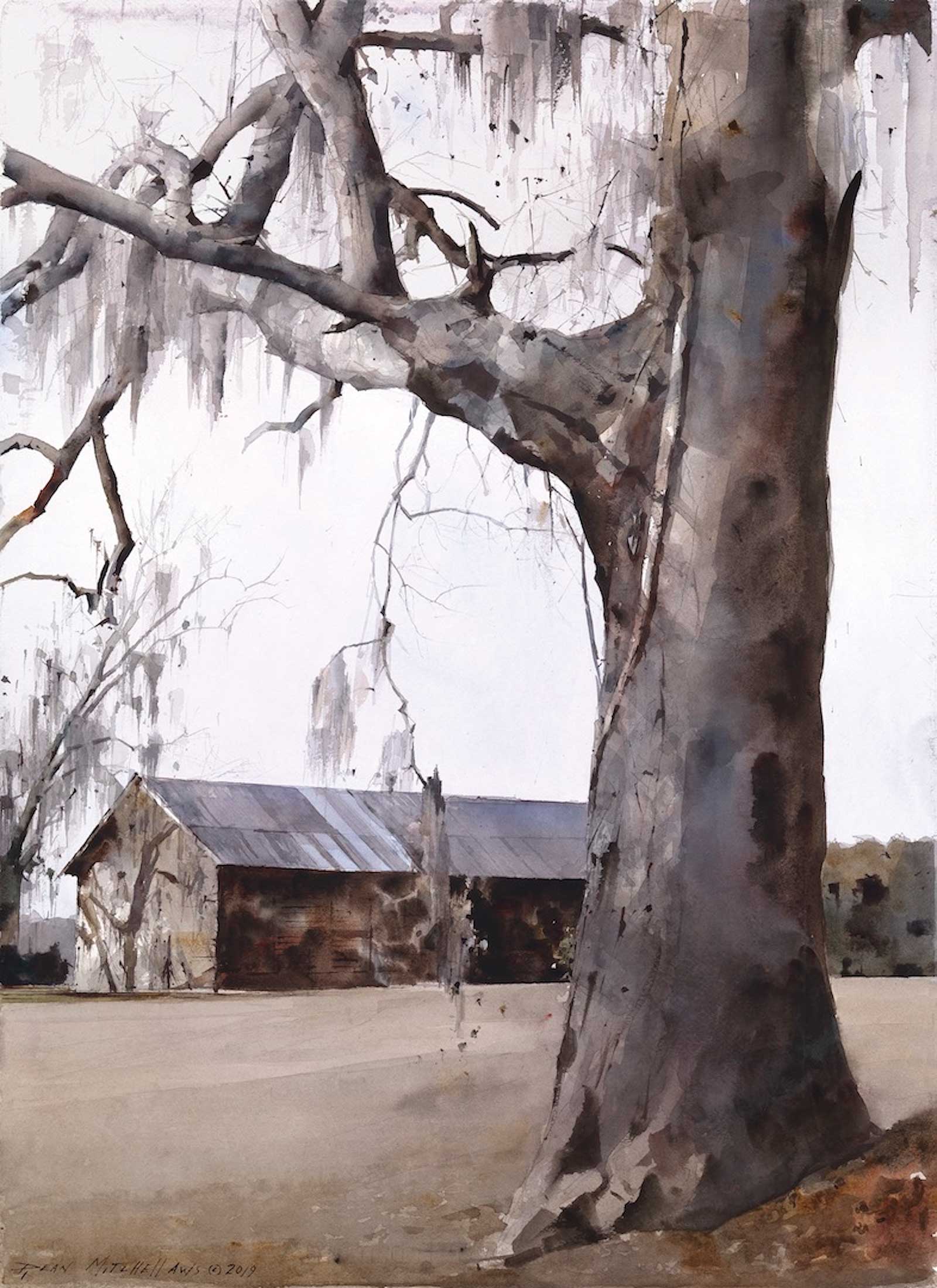 Dean Mitchell, Ball Farm, watercolor on paper, 30 x 22"The exhibition, which opens February 16, smack in the middle of Black History Month, will feature the work of three prominent black artists: Florida watercolorist Dean Mitchell, Jamaican oil and mixed media painter Phillip Thomas and Georgian oil painter Stefanie Jackson. Each of their works is uniquely different, and their artistic voices have a texture and timbre that is exceptional to each of them.
For Mitchell, he uses the delicacy and urgency of watercolor—he also paints in acrylic—to capture powerful scenes of American life, especially homes and other places people reside. His works often speak to poverty in America, where run-down houses and boarded-up properties tell their own stories, no human characters needed. In recent years he has also painted black soldiers, particularly the Buffalo Soldiers regimented during and after the Civil War.
But even as he paints black portraits or works that document the black experience in America, Mitchell has a reluctance to consider himself a black artist—mainly because he fought for so long to be recognized as just as an artist. 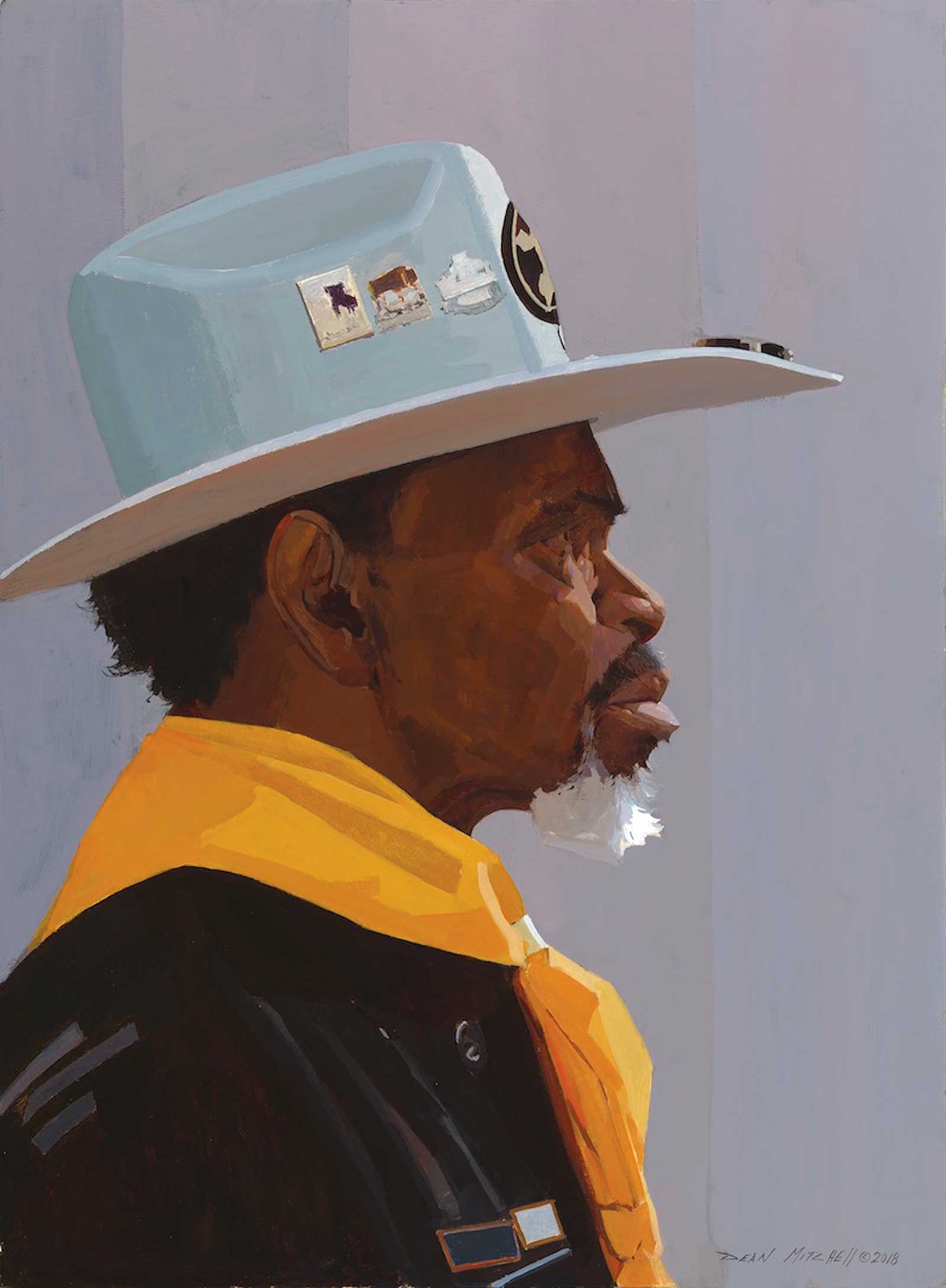 Dean Mitchell, "Buffalo Soldier", acrylic on panel, 30 x 22"“I’ve never approached my career as a black artist. I just never stayed in the African American art community. I was out doing all kinds of things, just trying to stay on the cutting edge of my work. I was taking a lot of risks,” Mitchell says. “Early in my career I would enter a bunch of shows and then not show up because I didn’t want anyone to know I was black. I wanted the work to just speak for itself.”
And the work did speak for itself: He started winning awards; he was one of the first black artists in the Prix de West, a Western show held annually in Oklahoma City; and there was a cascading effect as more galleries, museums and collectors became fascinated with his sympathetic images of people, poverty and the American experience. It culminated to a crescendo when, in 2016, President Obama interviewed Mitchell in the White House to paint his official portrait. (The honor eventually fell to Kehinde Wiley, though Mitchell was honored to even be considered a finalist.)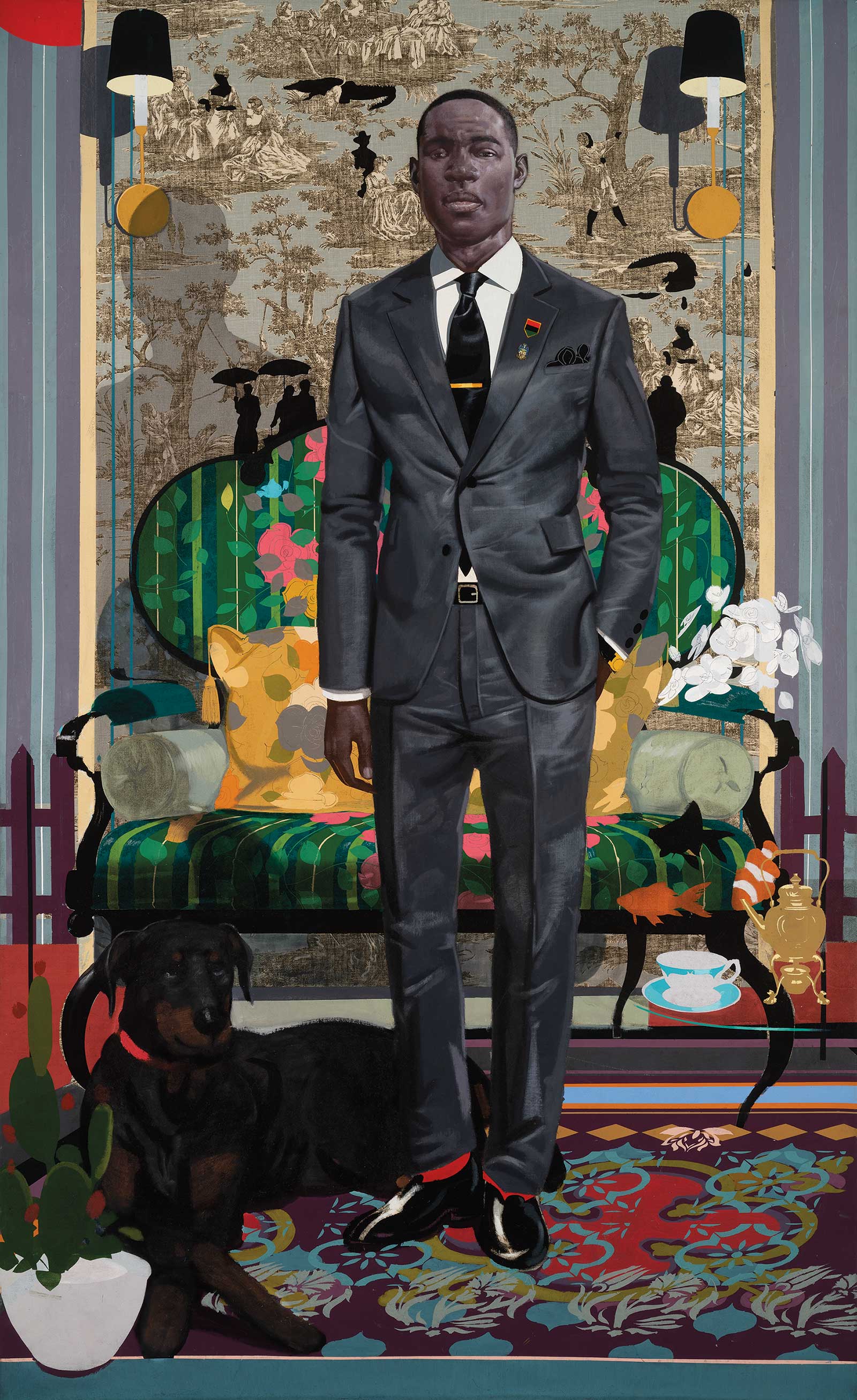 Phillip Thomas, "The other side of now is the same side as then," oil and mixed media on canvas, 84 x 48"“My grandmother had a fourth-grade education, but there I was in front of the President of the United States…it was pretty miraculous,” Mitchell says, adding that it was his grandmother and his own background growing up poor in America that most influenced his work and his work ethic. “Today, like always, I just let the work speak for itself.”
Like Mitchell, Thomas also has a unique perspective on being black in America and will present that perspective in his fascinating oil and mixed media works that are filled with patterns, objects and texture.
“The RJD gallery has been producing a Black History exhibition several years, and I have been creating works of art based on this subject for much of my career. The most important thing about having these kinds of exhibitions is the fact that the subject matter is not abandoned after Black History Month at the end of February, when Black History Month ends,” Thomas says. “I have been showing with RJD gallery for many years and my ideas have remained constant and the gallery has presented those ideas consistently. This is the first important step for artists that are dealing with such an important topic. In addition, there has been an understanding that there are differences between people from varying parts of the world. So, one exciting thing for me, with regards to this show, is the global dialogue that my work has with a diverse group of people from around the world.”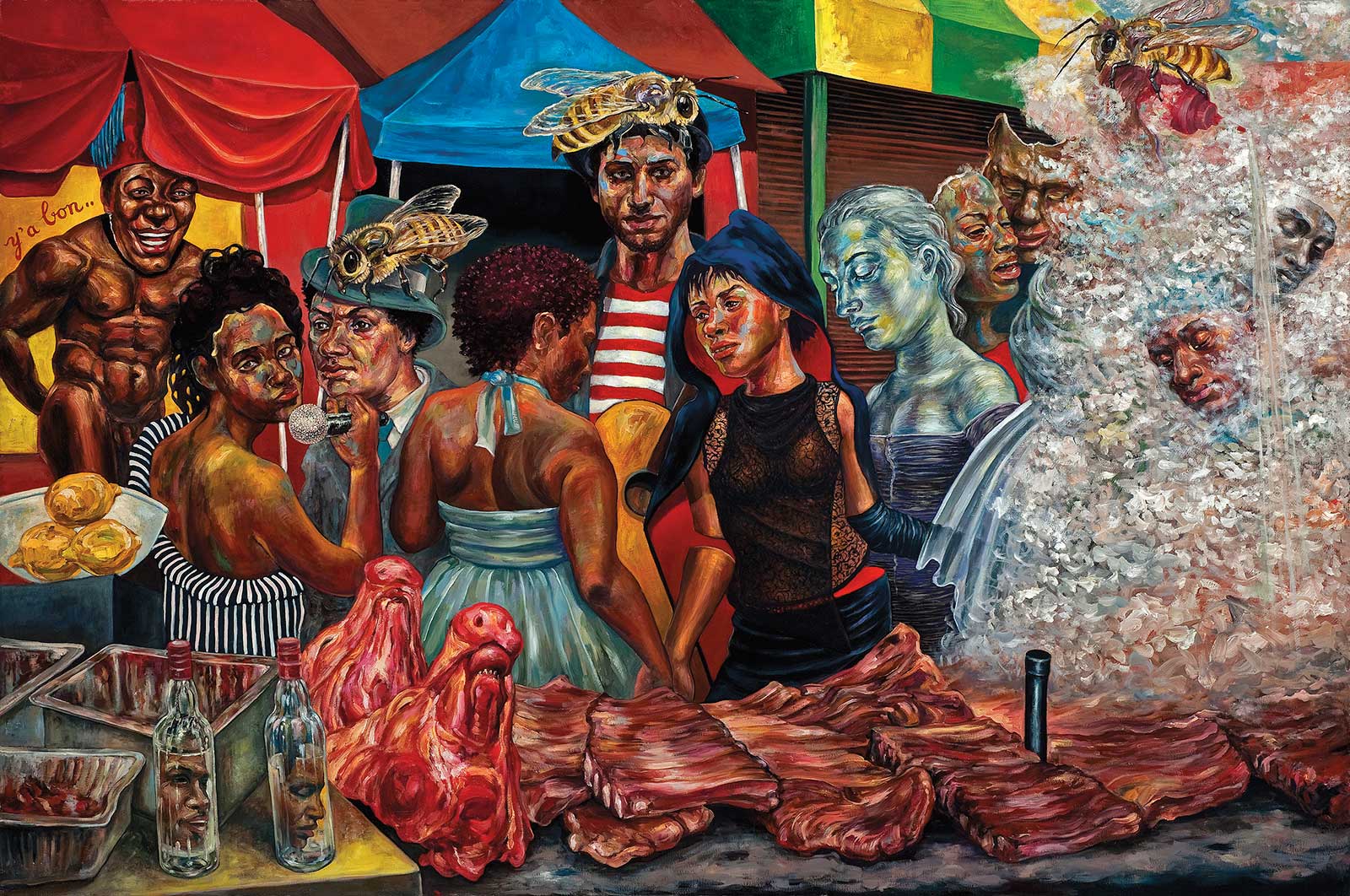 Stefanie Jackson, "Love’s in Need of Love Today", oil on canvas, 48 x 72"
Thomas will be showing The other side of now is the same side as then, which features a glorious arrangement of textures, from a patterned rug and beautifully upholstered loveseat to an exquisite wallpaper and various decorative elements. Standing center stage is a man in a suit with a dog at his heels. “I have a wide range of methodologies for producing a wide range of works. The subject I choose and how
I wish to deliver my ideas will determine the method of execution,” he says. “The other side of now is the same side as then is one in a series of full-length portraits. These portraits sometimes are based on a historical figure, as in my painting, George Steibel. In other paintings, like The other side of now is the same side as then, I choose an idea or theme based on an issue or social construct. The title of this painting is taken from an exhibition in Miami last year where most of the works were based on Afro-Futurism, a recurring theme in contemporary black art today. Afro-Futurism speaks to the repositioning of black representation in all areas of life. Through my work I address the unresolved issues of colonialism that must be dealt with, particularly throughout the Caribbean, before one can imagine dealing with other issues. I think we are making positive, concrete steps forward as evidenced in an increase of interest in these exhibitions and I remain hopeful that this trend will continue.”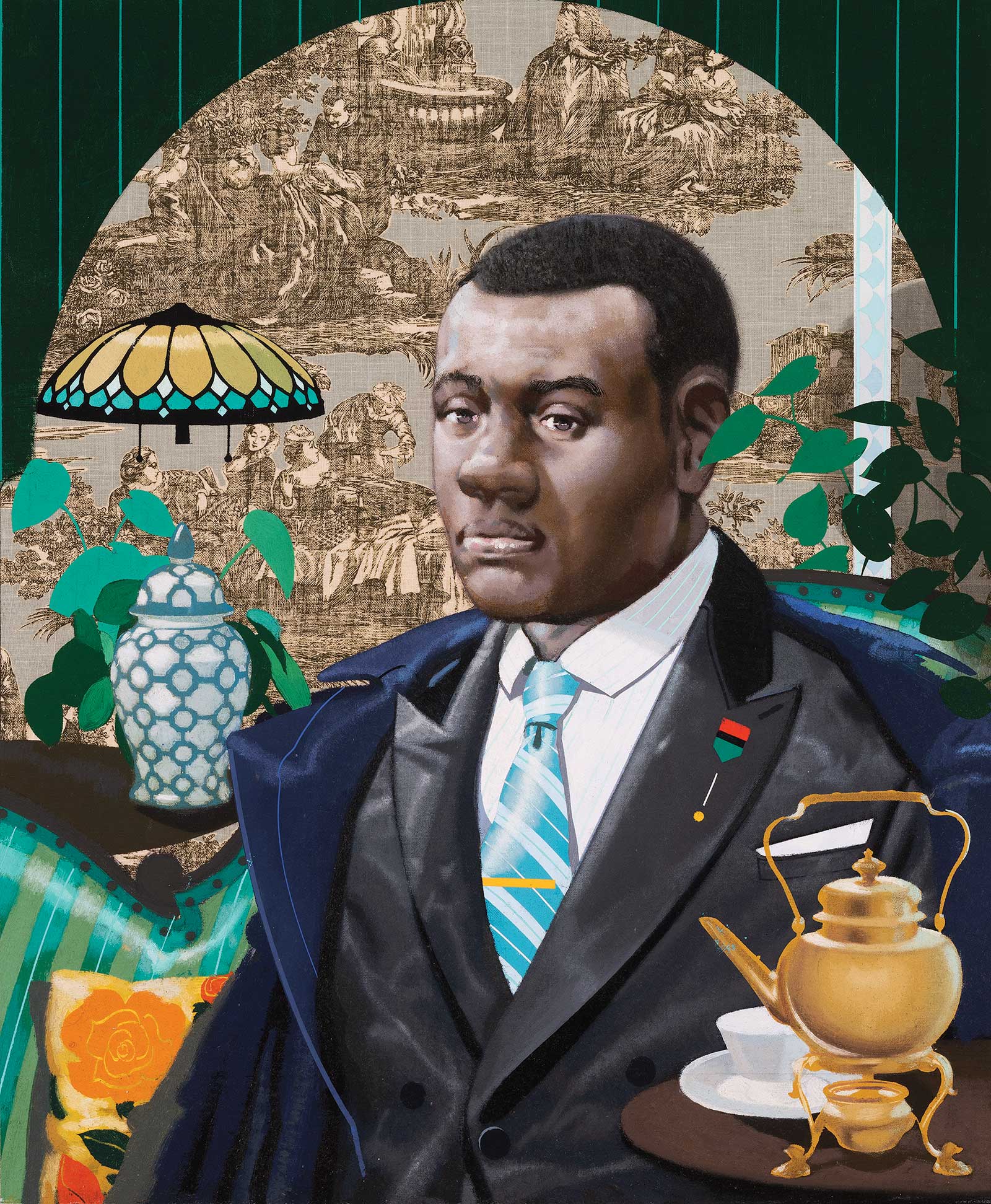 Phillip Thomas, "The Gentleman’s Tea Time," oil and mixed media on canvas, 36 x 27"For Jackson, her works are more allegorical and surreal. In Love’s in Need of Love Today, for instance, Jackson paints a meat market teeming with interesting figures, including several with giant bees on their heads. “[This] is a painting in the series Orpheus Soul Brother. It is part mythology, and part reality. The series is based on the Greek myth of Orpheus and Eurydice and inspired by the [1959] movie Orfeu Negro (Black Orpheus) by French director Marcel Camus,” Jackson says. “The movie is set in Brazil; my version is set in Detroit. All the titles in the 12-painting series are from Stevie Wonder’s Songs in the Key of Life. In the kingdom of the underworld, the condemned shades suspend their toil to listen to Orpheus’s magic sounds. The music penetrates into the remote depths of Tartarus.”
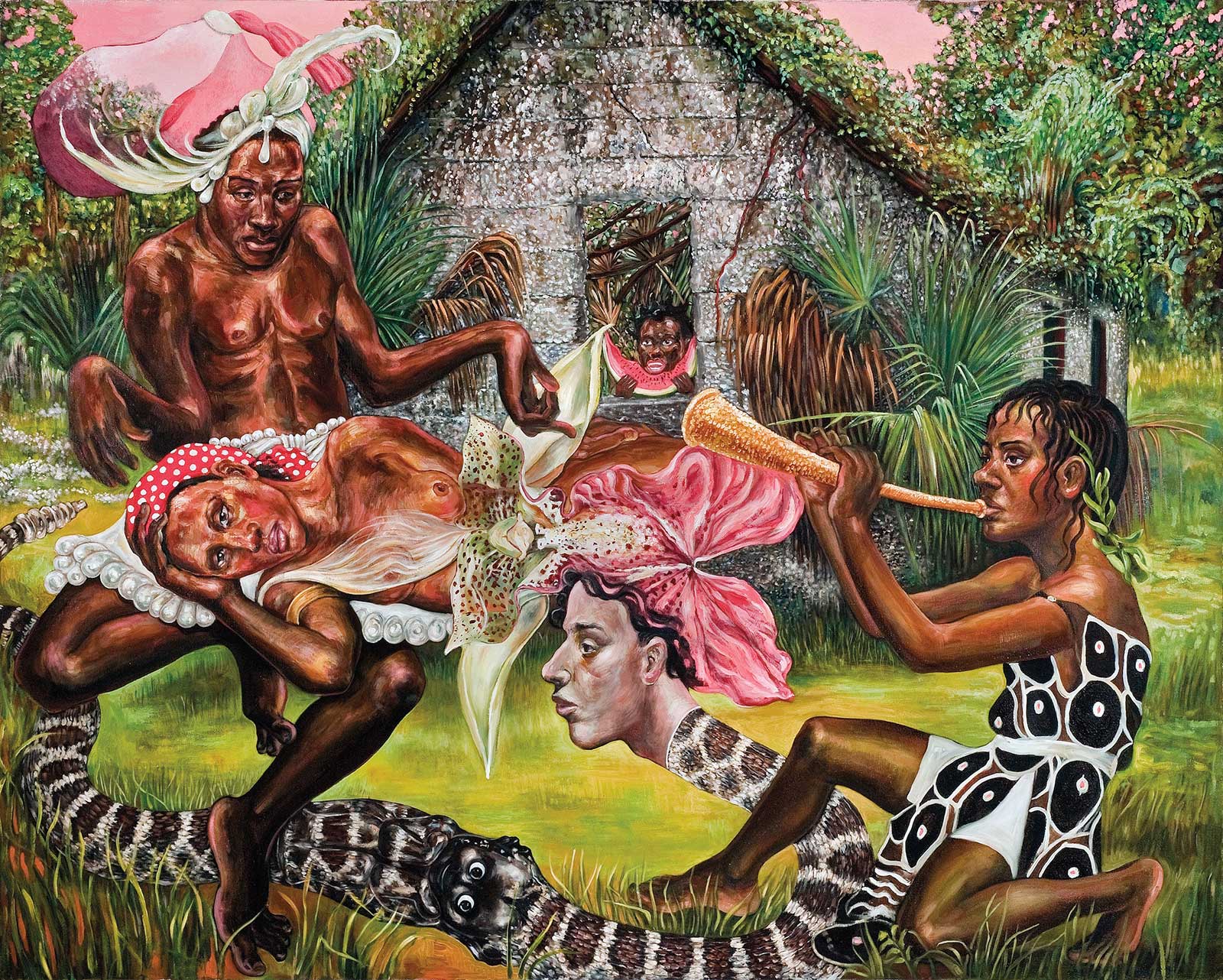 Stefanie Jackson, "Chocolate Plantation, Sapelo Island", oil on canvas, 48 x 60"She continues, “My painting depicts Detroit’s working class taking a break in Eastern Market, singing karaoke at an outdoor barbecue joint. Music is an essential component of the myth, the Camus movie and Motown. It makes hard lives more bearable. The lady in the black-and-white striped dress is holding the microphone. The smoke suggests fire, and the meat/hog’s head symbolizes the temporary nature of existence. In the foreground, Orpheus and Eurydice are trapped in bottles, as the characters must find love or perish. The scene is imprinted on my mind from a Saturday afternoon, at Detroit’s Eastern Market.”
In regard to the show’s Black History Month theme, Jackson says shows like this one are important to acknowledge the layers of history that have come before us. “In reference to today’s art world and the multitude of diverse artists and voices from the diaspora, I would say art is extremely critical to the ongoing dialogue about African Americans and all Americans’ contributions to society, as visual art encompasses a wide variety of means to get one’s personal and sometimes collective viewpoint across about the world around us,” she says. “Many artists do so by looking back for historical reference points to expose overlooked or misrepresented ideas in their art, expanding the viewers’ interpretation by exposing them to alternate and challenging ideas in their work. Artists such as Titus Kaphar, Kerry James Marshall, Robert Colescott and Kara Walker come to mind. I personally have done paintings about the race riots in Atlanta and Detroit, the former slaves of Sapelo Island, Georgia, and places of historical relevance such as the Fox Theatre in Atlanta and the Morton Theatre in Athens. Times and places that should not be forgotten.”
RJD Gallery • 2385 Main Street • Bridgehampton, NY 11932 • (631) 725-1161 • www.rjdgallery.com
Powered by Froala Editor