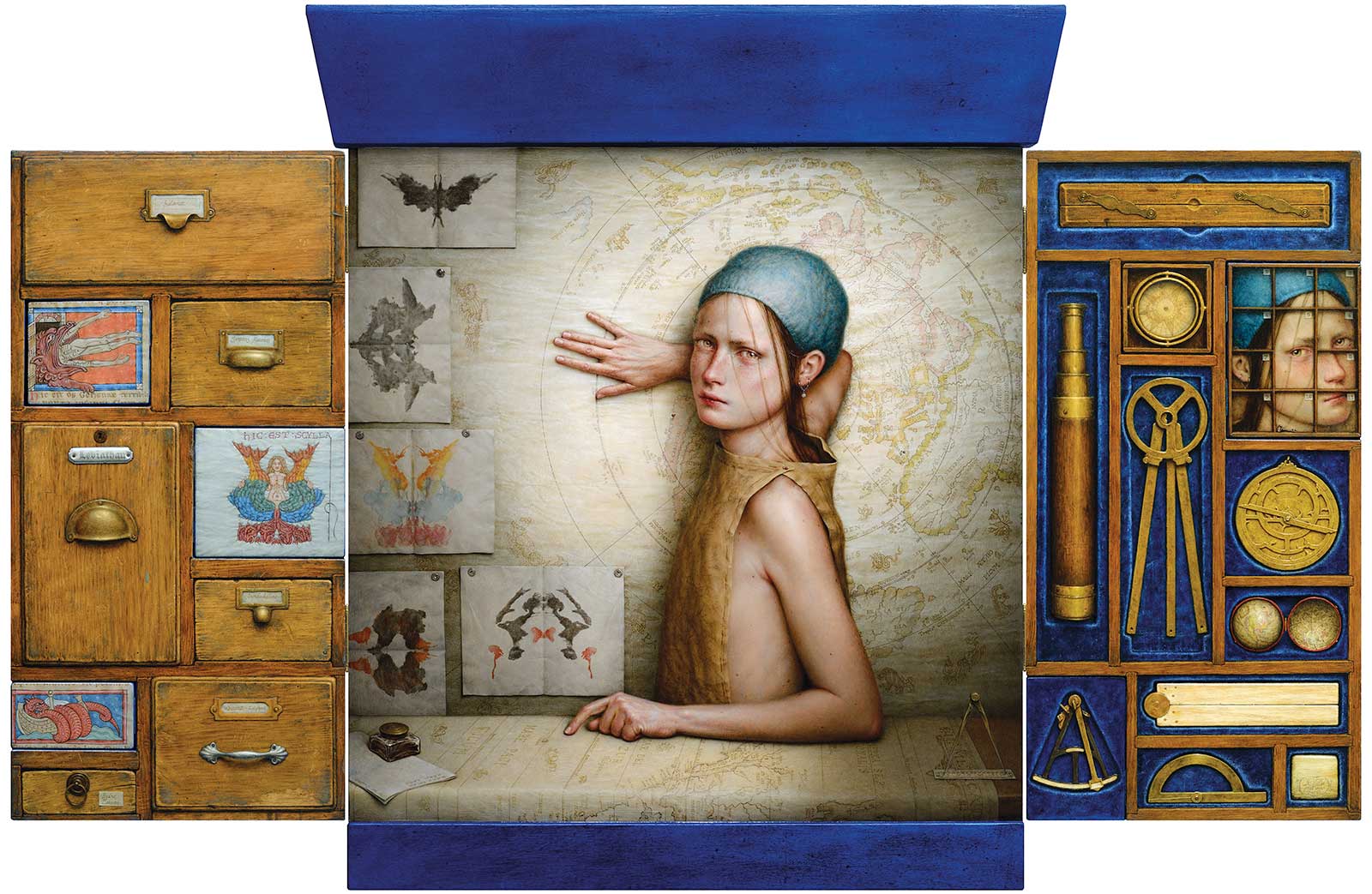
 Dino Valls, Mare Incognito (triptych), oil and silverleaf on wood, 33 x 40½". Courtesy the artist.
In Renaissance Italy, art patronage gave merchant bankers the appearance of royalty, which didn’t exist in the Republic of Florence. It also enabled artists to create many of mankind’s masterpieces. Patrons commissioned buildings, paintings and sculpture for public places and work for their private enjoyment. They often invited the artists into their palaces to live and work. Nearly always, the commission was something to suit the patron’s wishes. This element of patronage gave rise to negative interpretations of the practice, connoting the superiority of the patron and the inferiority of the recipient.
Enter the “matronage model” espoused by the IBEX Collection. Since 2013, German businessman and art connoisseur Albrecht von Stetten and his co-collectors—Kiki Kim from South Korea and David Willson from Australia—have traveled the world and assembled a group of 24 artists—from Spain, Italy, USA, France, Germany, Belgium, Russia, Korea, Japan, China and Argentina—giving them time as well as financial and moral support to create their masterworks. Willson notes, “We have a much more caring approach and have no artistic restraint.” Kim adds, “Actually, we do not collect art. We collect artists, whom we offer long-term financial support with very few strings attached.”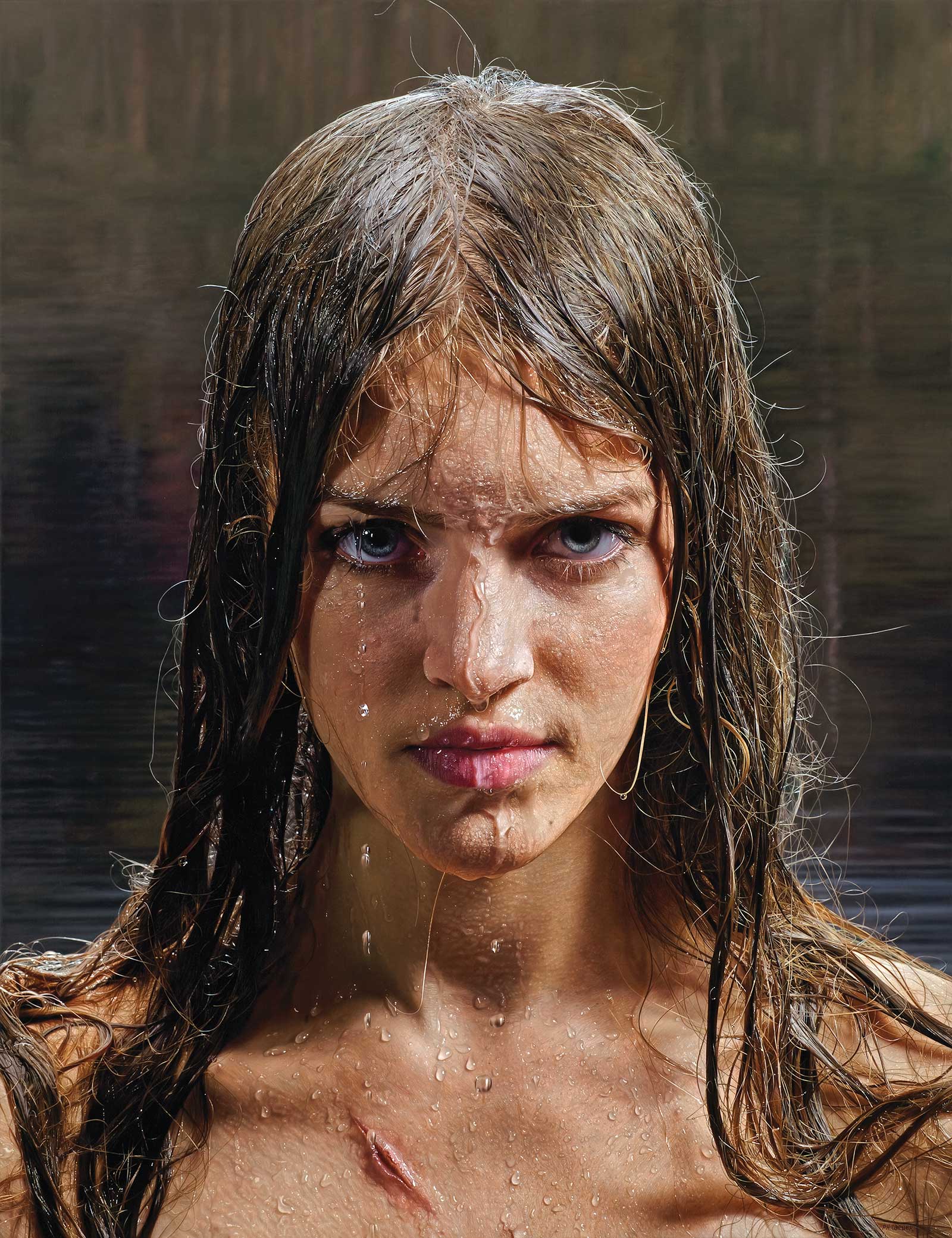 Philipp Weber, Bless Resistance, oil on canvas, 51 x 39"
The three collect paintings “by carefully selected master painters versed in the intricate art of capturing human micro-expressions and creating authentic and moving works of art that speak of human nature, the human condition and human connection.”
Belgian artist Christiane Vleugels says, “This is something every artist dreams of. When you are in the prime of your life with so many dreams ahead of you and suddenly there opens a door for you that makes all your dreams come to a reality. You don’t have to do this on your own.”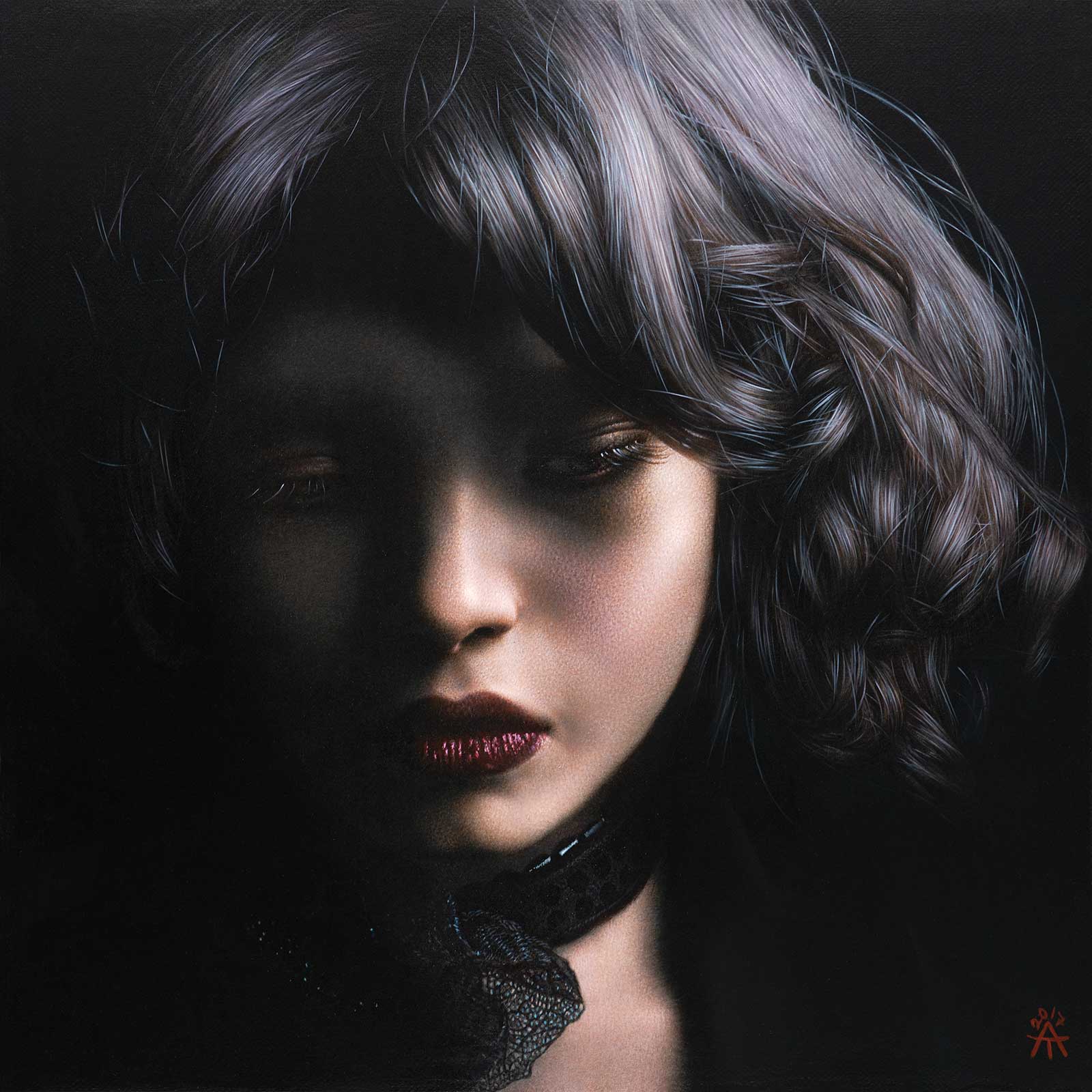 Alexander Timofeev, Lolita, oil on canvas,12 x 12"
Vleugels and the other artists reflect on the camaraderie that has developed among the artists and their collectors as well as among the artists themselves. The Italian graphite artist Emanuele Dascanio remarks, “Together, we are all one organism.”
Dascanio is the first of the artists to have his work reproduced as a high-quality giclée print. There is a pleasant irony in the fact that von Stetten has been overseeing the process. IBEX notes that his “prominent Augsburg family was involved in the first operation of a Gutenberg press outside Mainz, home of the modern press, as the Gutenbergs and von Stettens were closely connected patrician families.” An ibex, by the way, features in von Stetten’s family crest.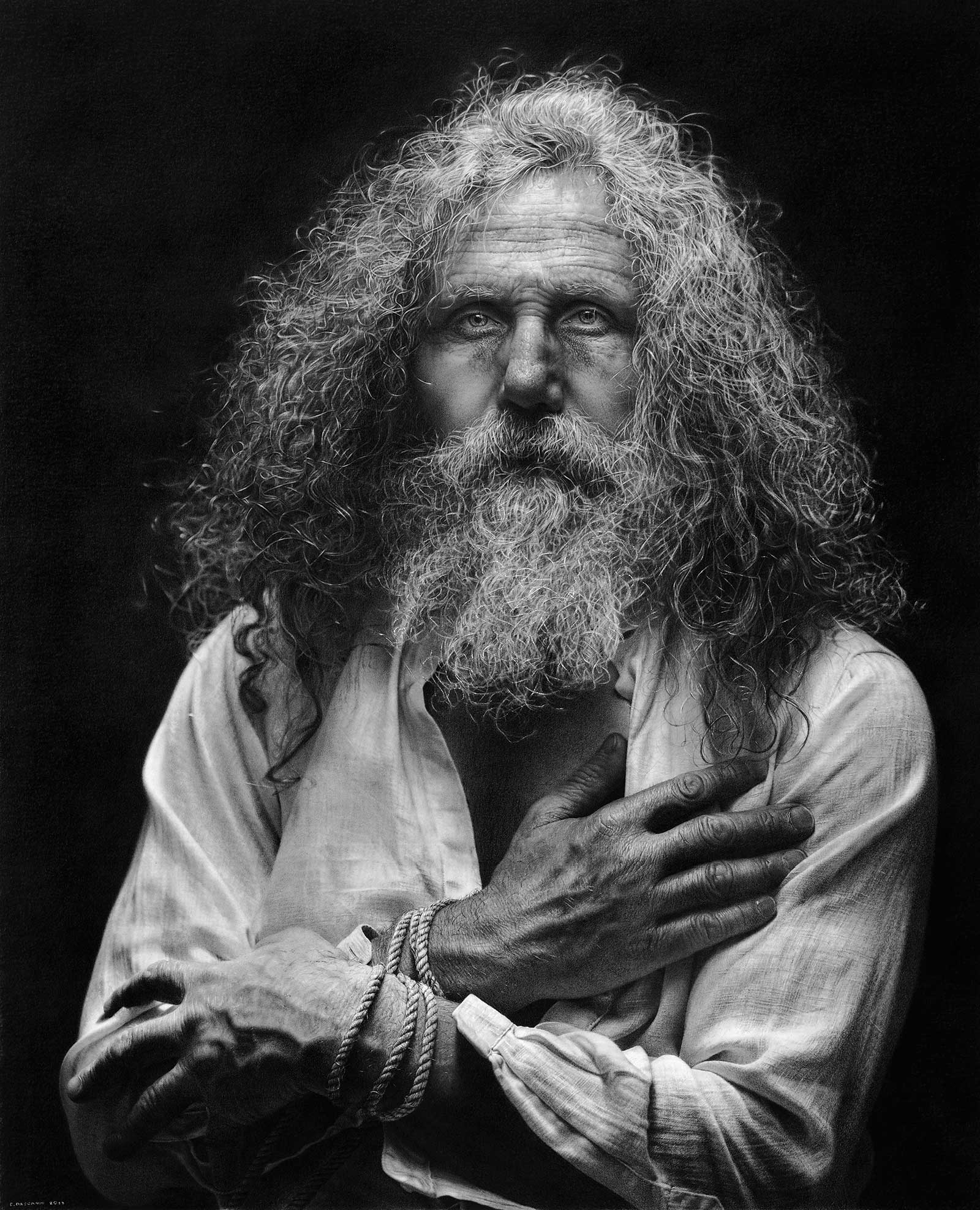 Emanuele Dascanio, The Father does not want a divorce with Die Mutter. This is my Father, charcoal and graphite on paper, 31½ x 25½"
The extraordinary vitality of Dascanio’s drawings is a testament to his ability and to the way we see. From a distance, the viewer may think they are photographs and wonder “why bother?” Up close, the intricate mark making of the artist is apparent and contains the energy of their application as well as the intimate connection between artist and model—an intimacy that can only be shared through an image constructed by the artist’s hand.
German painter Philipp Weber says, “Hyperrealism to me doesn’t only mean painting a barrage of details, but an onslaught of feelings.” His female figures and portraits seem to be from a photoshoot for a fashion magazine. In fact, his reference photos do come from carefully staged and styled sessions with photographer and model. In his paintings, the subjects come alive again, revealing more and calling responses from deep within our psyches. Bless Resistance is from a series with figures emerging from and responding to water—always a symbol of cleansing, healing and rebirth. Water streams down the impossibly beautiful model’s face, washing over a wound below her clavicle—an unexpected and ultimately unimportant defect.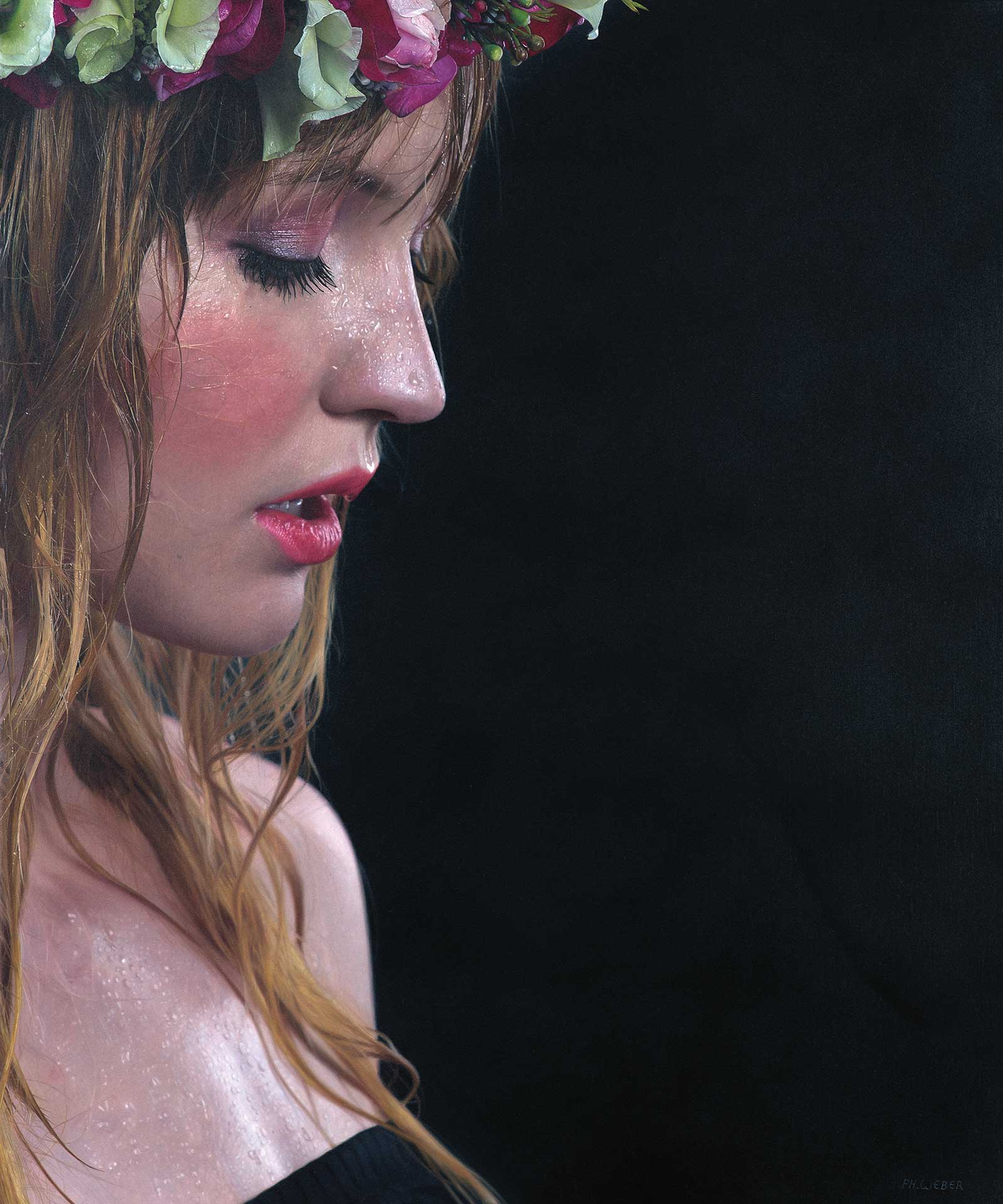 Philipp Weber, Introspection, oil on canvas, 24 x 20"
Alexander Timofeev received his education in the finest schools in St. Petersburg, Russia. He moved to Berlin after finishing his schooling and began to question everything he had learned from art to living in society. His mastery of classical training has given him artistic freedom to express his ideas. Willson writes that the artist is “a man so self-aware that he is simultaneously self-confident, but also deeply aware of his remaining flaws, making him humble and sincere. Through his quest for self-realization Alex has gained the capacity for a deep, non-judgmental, empathy for and insight into his fellow human beings. Knowing the flaws in himself, Alex is willing to embrace the flaws in others.”
In Vladimir Nabokov’s novel Lolita, Humbert Humbert lost his boyhood love to typhus, creating in him, he reasoned, a life-long interest in young girls who reminded him of her. Nearing 40, he met Lolita to whom he was attracted. She was 12 and already perhaps more experienced in the realm of physical desire than he was. Timofeev’s Lolita emerges from the dark in brilliant chiaroscuro, the total seductress.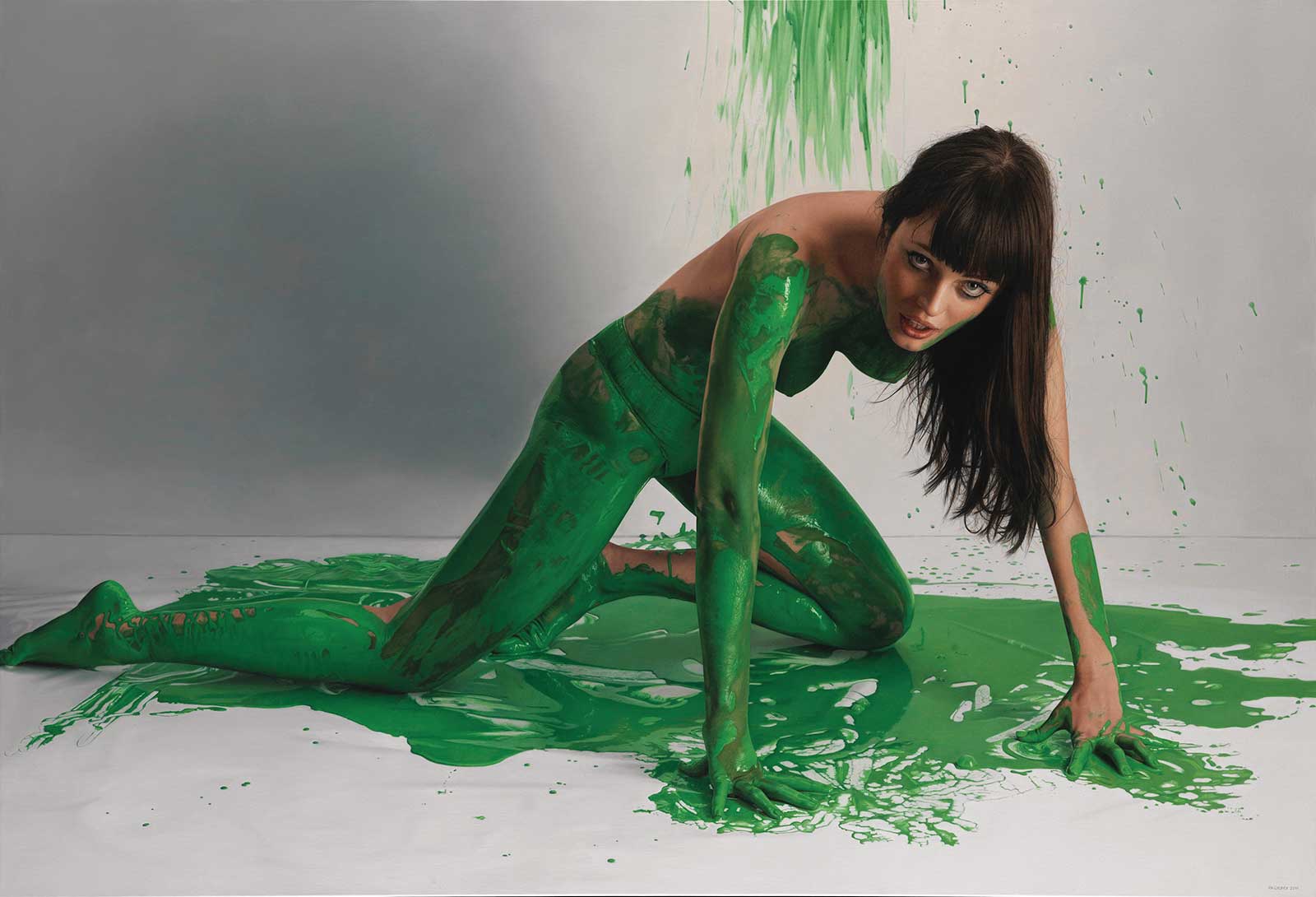 Philipp Weber, Creatura 4 – Natalia, oil on canvas, 67 x 98"
The IBEX Masters don’t always paint easy pictures. It is a credit to the collectors that they recognize the artists’ talent and potential and allow them to express themselves with freedom. I exhibited paintings by the Spanish artist Dino Valls 25 years ago, attracted by his explorations of the collective unconscious even before I knew there was such a thing. His paintings of the physical and the metaphysical continue to startle and confound. IBEX note that “Dino faces a great deal of pushback” especially in the U.S.” but that he “responds to such criticisms with good humor, describing his art as a Rorschach test, where people only see what they carry within them.” —
Powered by Froala Editor