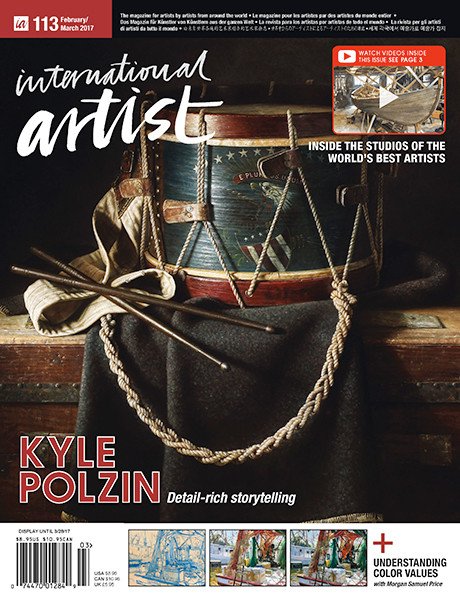
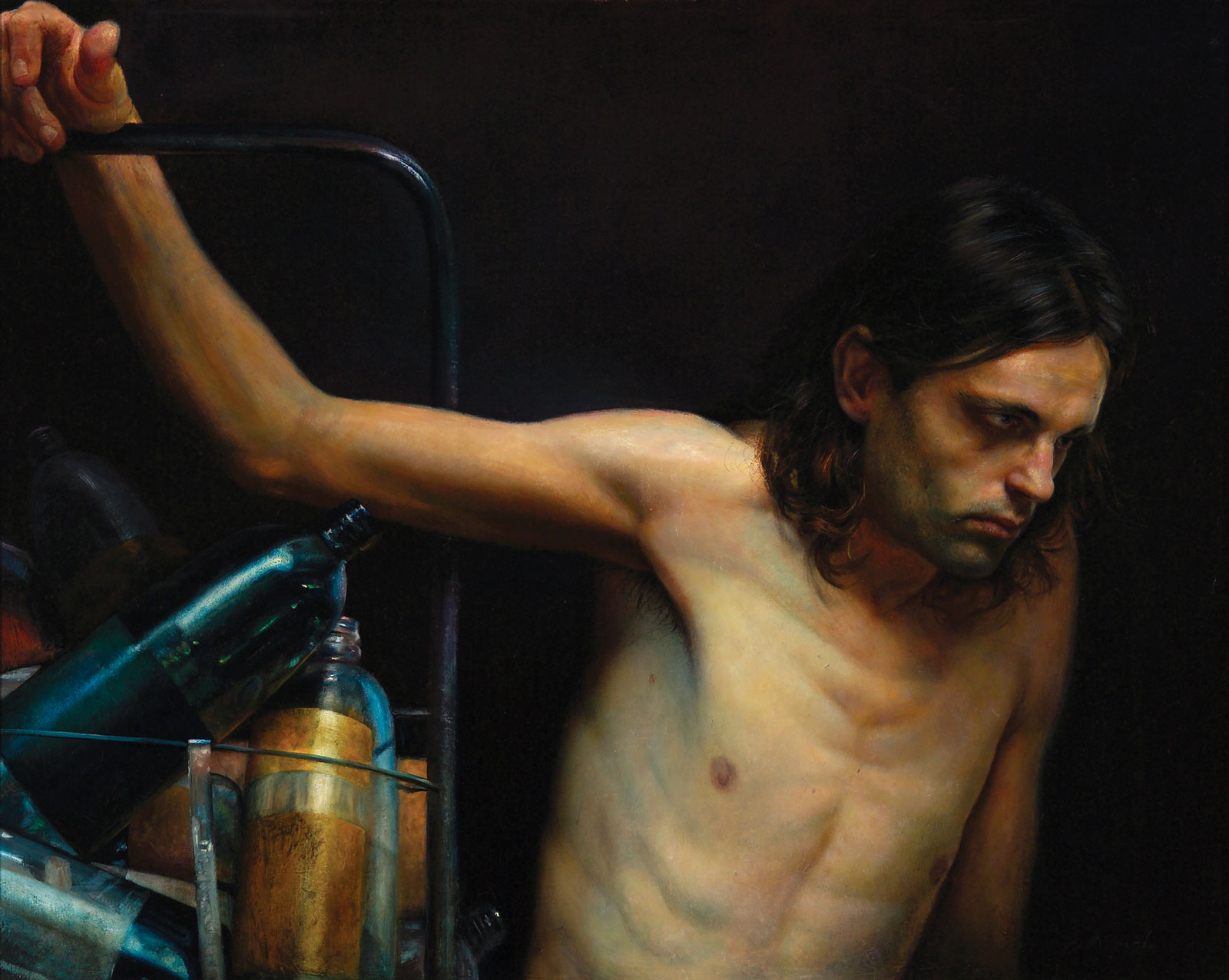
I had discovered Steven Assael’s paintings and drawings at Barbara Staempfli’s gallery in New York in 1991, and I was pleasantly surprised to see an artist addressing contemporary issues with a mastery of traditional technique.
My mentors composed a list of artists for us to consider beginning with Andrew Wyeth and Lucien Freud and the caveat that the artists had to be academically trained. I told them we needed to explore the un-vetted or less-vetted because I had begun to discover great work that wasn’t being shown in museums.
Our curator, Rachael Sadinsky, showed us how exciting that area could be in her exhibitions Seven Visions: The Spirit of Religion in Contemporary Art and Jerome Witkin’s Dreams, Portraits & Murders.
I put my own curatorial skills to the test and mounted the first of seven biennial Re-presenting Representation exhibitions in 1993. The title was an awkward working title that stuck—we were RE-presenting representational work after its submersion under all the “-isms” of the 20th century, and only representing the growing number of artists who were beginning to emerge from academies and not. My idea of “representation” spanned from the nearly abstract to the photorealistic in all media including glass. When asked to explain it I replied with scholarly precision, “It’s stuff you can recognize.”
Barbara Staempfli was the first of many gallery owners who helped me pull together those first shows. Bob Fishko of Forum Gallery and John Pence of his eponymous gallery were extraordinarily helpful. The museum’s board, having set the stage, stepped back and allowed me to follow what became one man’s take on contemporary realism for the next 12 years. Our staff, headed by our executive assistant, Mary Hickey, were excited by the exhibitions and worked phenomenally hard to make them happen, especially picking up the slack when I suffered two heart attacks over those 12 years. Mary organized both the exhibitions and their curator.
Outside the museum former co-workers and friends suggested artists and loaned works from the collections they managed. Namely, Chris Crosman who was then at the Farnsworth Museum in Rockland, Maine, and later the founding chief curator at Crystal Bridges Museum of American Art in Bentonville, Arkansas, and Richard V. West, who was then at the Frye Art Museum in Seattle and exploring the same area to great effect. Chris and I had worked together at the Albright-Knox Art Gallery, and Richard and I at Bowdoin College.
The exhibitions and the art cost money, which we didn’t have. Steven Assael’s Bottle Man was priced at about $4,000 and we couldn’t afford it. It later came into the collection as a gift, as many fine pieces would over the years. Principle among the corporate sponsors we solicited for the exhibitions was the Corning Incorporated Foundation, the company that once brought you Corning Ware and Steuben glass, and, by the time of RRIII, made it possible for us to create catalogs of the exhibitions.
Since we needed to draw people to the exhibitions of primarily unknown artists, I decided to include five Andrew Wyeths in the first exhibition, which Chris Crosman was instrumental in arranging. They included The Clearing from the collection of Andrew and his wife Betsy. The subject is a full-frontal male nude standing in a field. I was interested in showing the male nude since it had been ignored by the male-dominated art world that was more comfortable with the female as object than the male as object. The painting had the desired effect as I witnessed people walk up to it with an often-shocked expression until they read the label and exclaimed, “Oh, it’s by Andrew Wyeth. Isn’t that wonderful?”
Having shown many male nudes by male artists, I was asked why the male nudes and why no woman artists. I had an answer for the former but not the latter. I hadn’t considered the gender of the artists as I pulled the first exhibitions together. I only looked at the art. I later realized that women artists weren’t being shown as much as male artists and then began to seek them out and to show their work in the exhibitions.
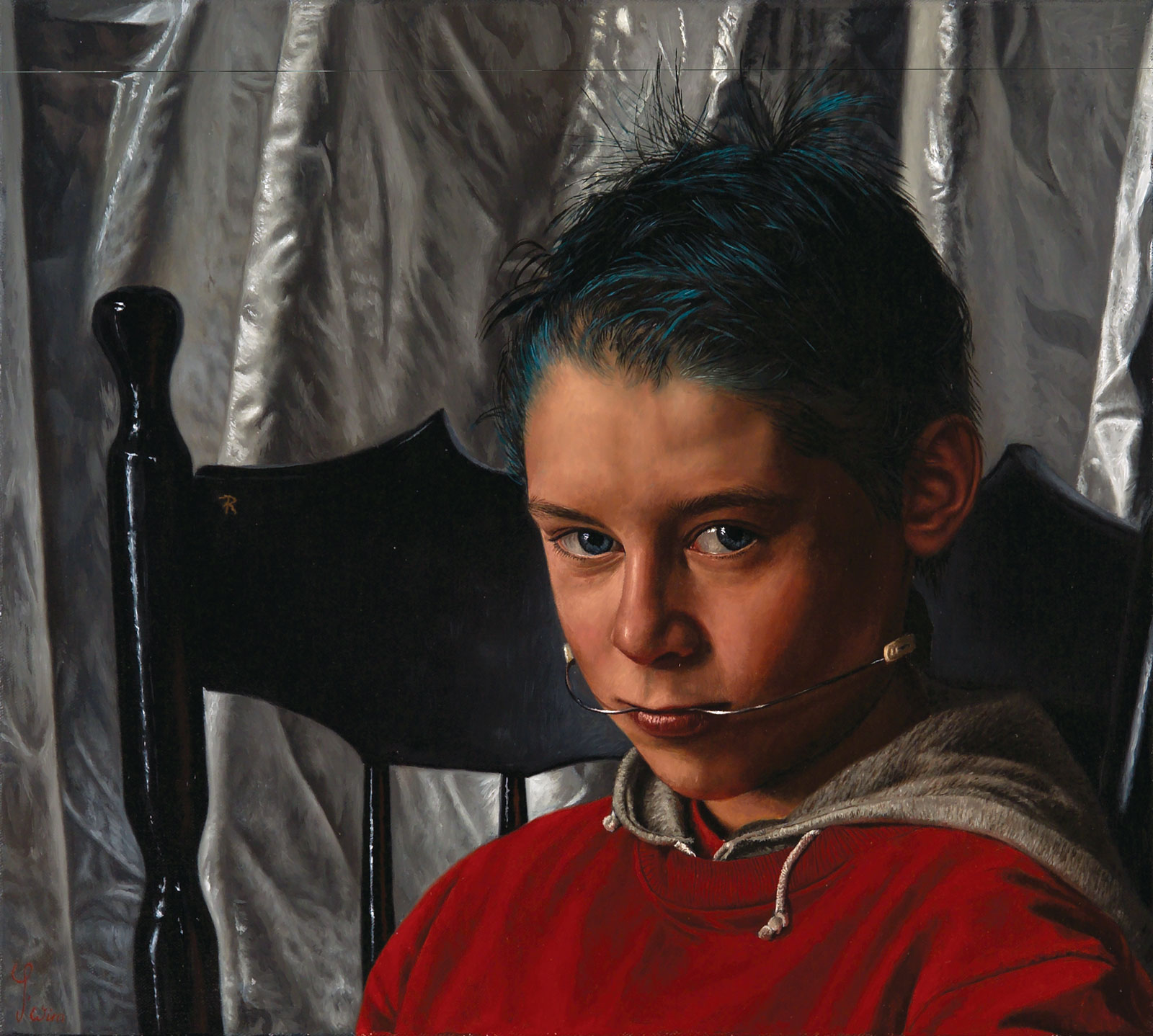
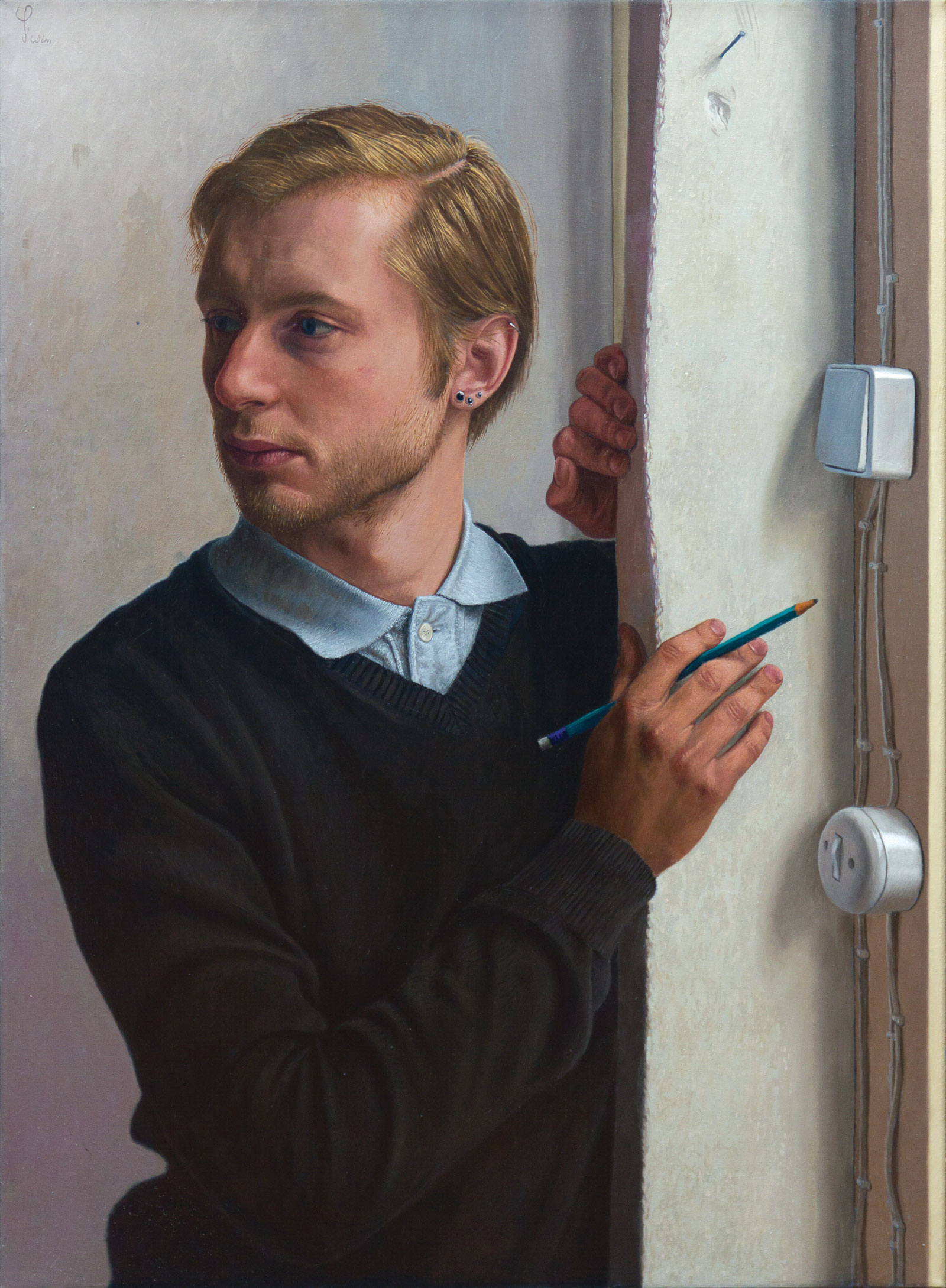
One of the many great thrills was discovering artists in obscure places and watching them grow not only in artistic expression but also in recognition. I found Wim Heldens’ work in a funky gallery in SoHo that I referred to as a “gay art gallery” because if you were male and painted the male, you were in, good or bad. I was corrected by the gallery owner that it was not “gay.” Wim walked in when I was there and invited me to his studio. We’ve been friends ever since. From that obscure gallery, Wim went on and was awarded the First Prize at the 2011 BP Portrait Award at the National Portrait Gallery in London. The subject of his prize winning painting, Distracted, is Jeroen Rijnders. Wim and Jeroen visited me at the museum when Wim’s painting of him, Blue Hair and Braces, was hanging there. Wim had promised it to Jeroen, but I felt it had to be in a museum and that museum had to be ours. Jeroen eventually agreed, but on one condition: “You have to add ‘Jeroen Rinders at 12’ to the title.” Done. Jeroen, too, has gone on in life, having received his Ph.D. in philosophy at the University of Oslo and the University of Edinburgh, with an emphasis on moral psychology.
I discovered the work of Wade Reynolds at a gallery in California and learned that he had been brought up only a few miles from the Arnot and had won a Scholastic Art Award there when he was in high school.
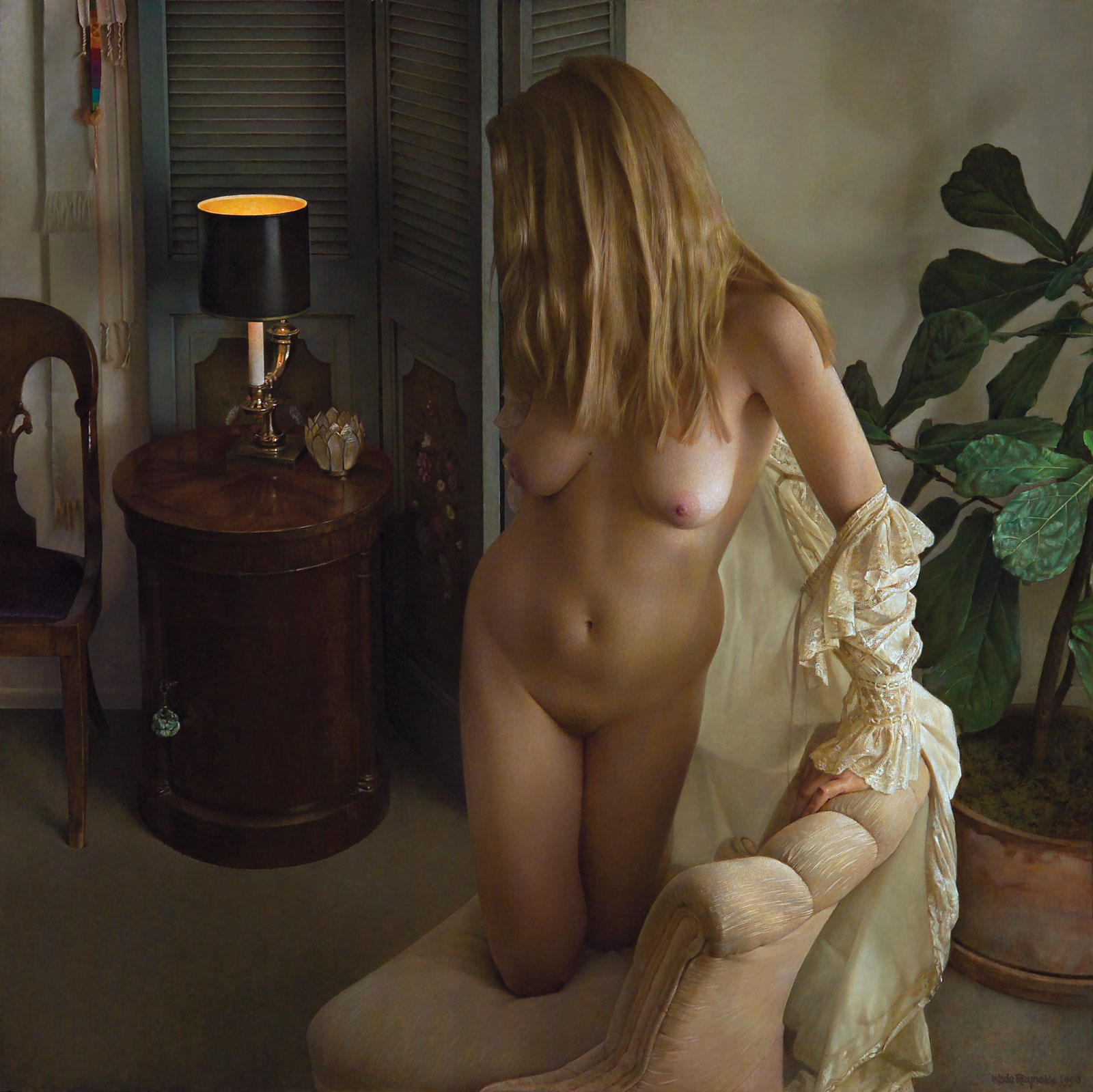
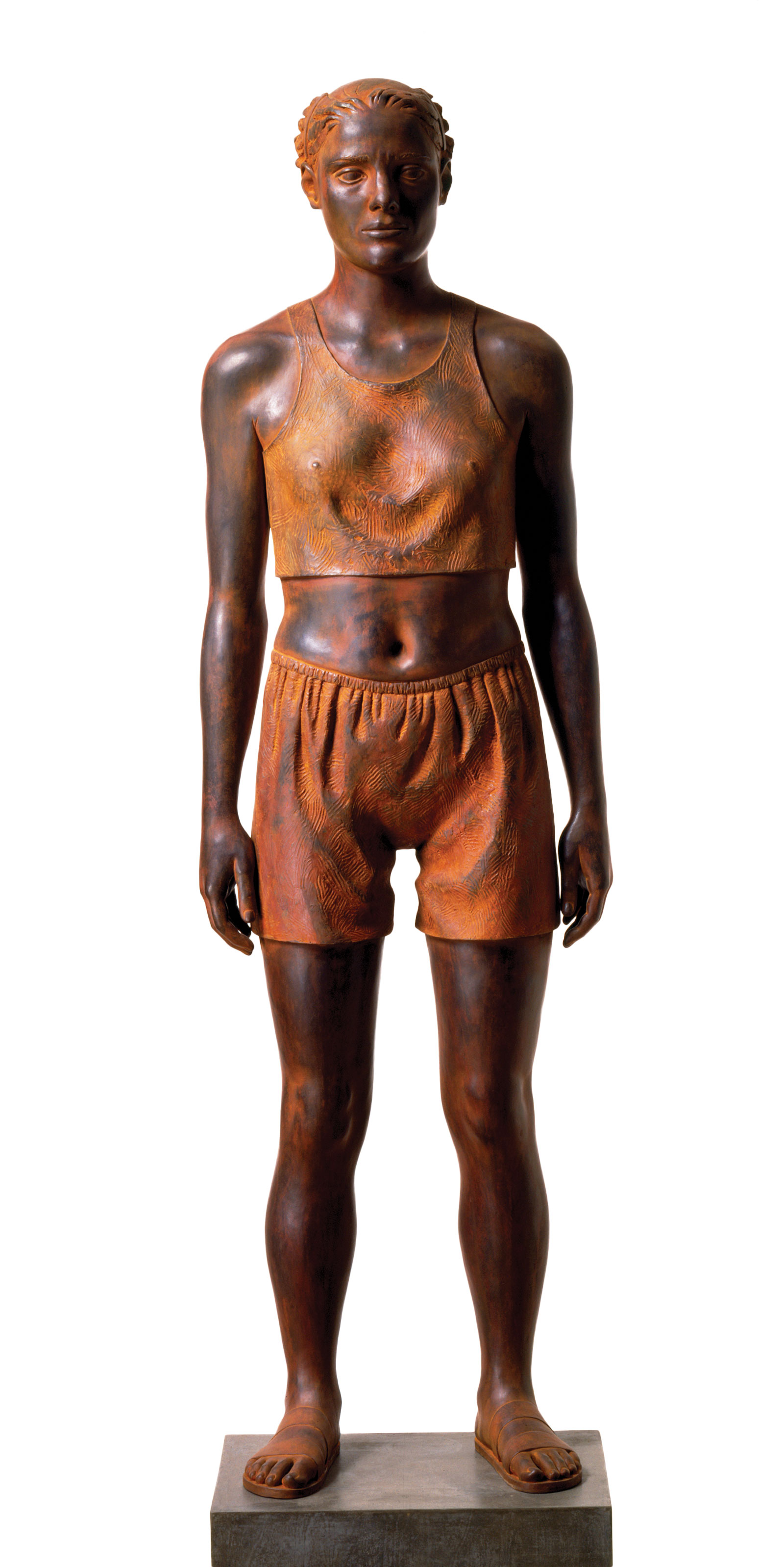
Many of the artists in the exhibitions have grown in their careers, continuing to produce fine representational art. Others have changed directions. One of those is Diana Moore whose monumental concrete heads and life-size carbon steel sculptures first caught my eye at Allan Stone Gallery. Diana is never afraid of experimenting or working with difficult materials.
We borrowed her carbon steel Athlete for one of the exhibitions. The strength of the athlete, a contemporary Greek goddess, was emphasized by the carbon steel. We loved it even as we cursed trying to lift it up onto its base after the winch stuck a foot from its goal.
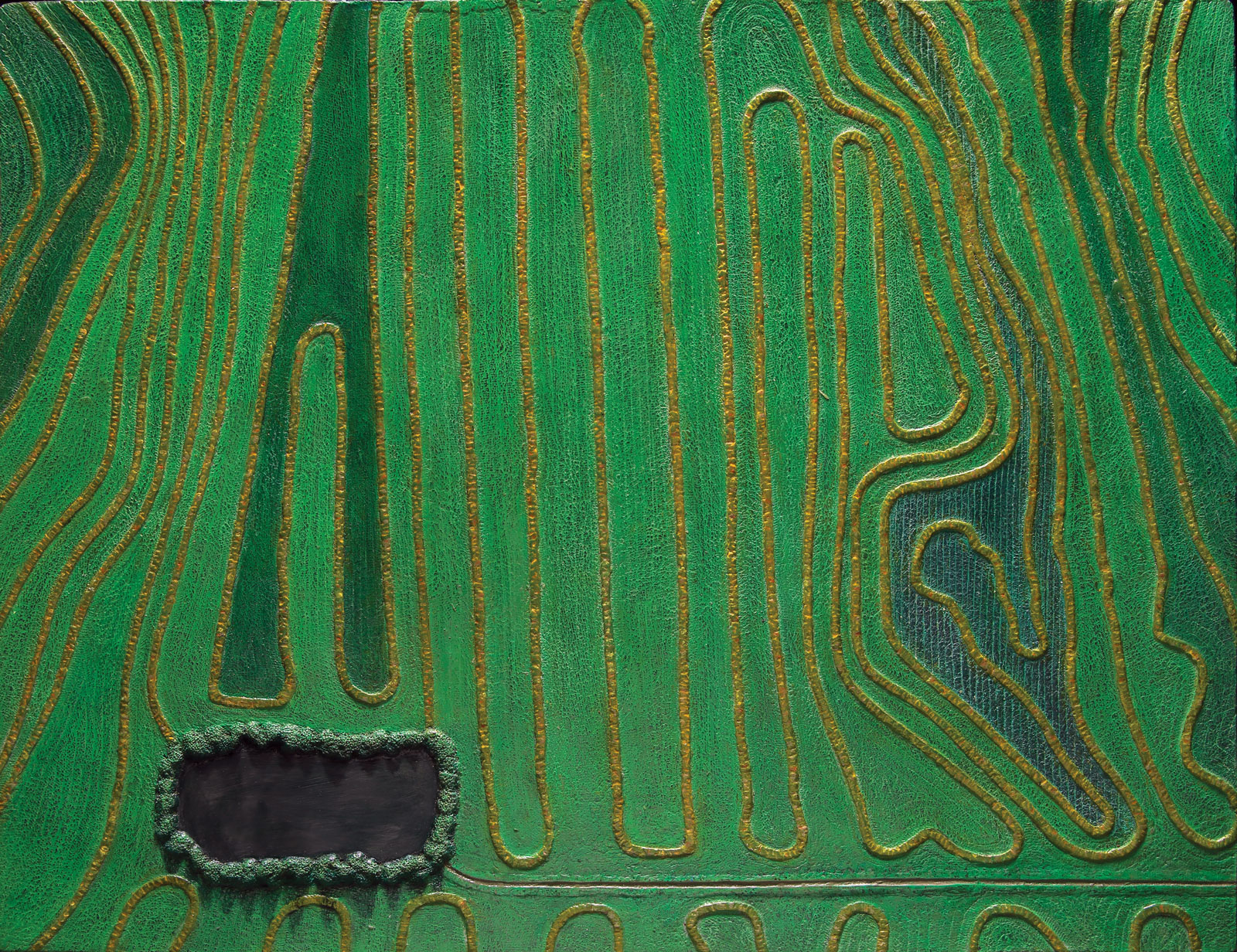
I went to an opening here in Santa Fe and saw colorful, small, aerial landscapes by “Diana Moore” but was sure it couldn’t be the same Diana Moore. I was wrong. Diana had decided she was through with figurative work and, inspired by the view from airplane windows, she began to experiment with materials and techniques to produce her Earth Etchings in Forton MG, a modified gypsum.
Speaking of Santa Fe, Stuart Chase, who was then director of the Rockwell Museum of Western Art in nearby Corning, New York, and is now director of the Monterey Museum of Art in California, asked me to do a branch of the RR exhibitions with a Western theme, which included Native American and Hispanic art. He raved about Santa Fe and said, “You’ll love it there.” I replied, “Who the hell wants to go to Santa Fe?” Michael Bergt, who had been in one of the exhibitions, invited me to visit with him and his family in Santa Fe and I took up the offer. New Mexico isn’t called the Land of Enchantment for nothing. I’ve lived here for 11 years.
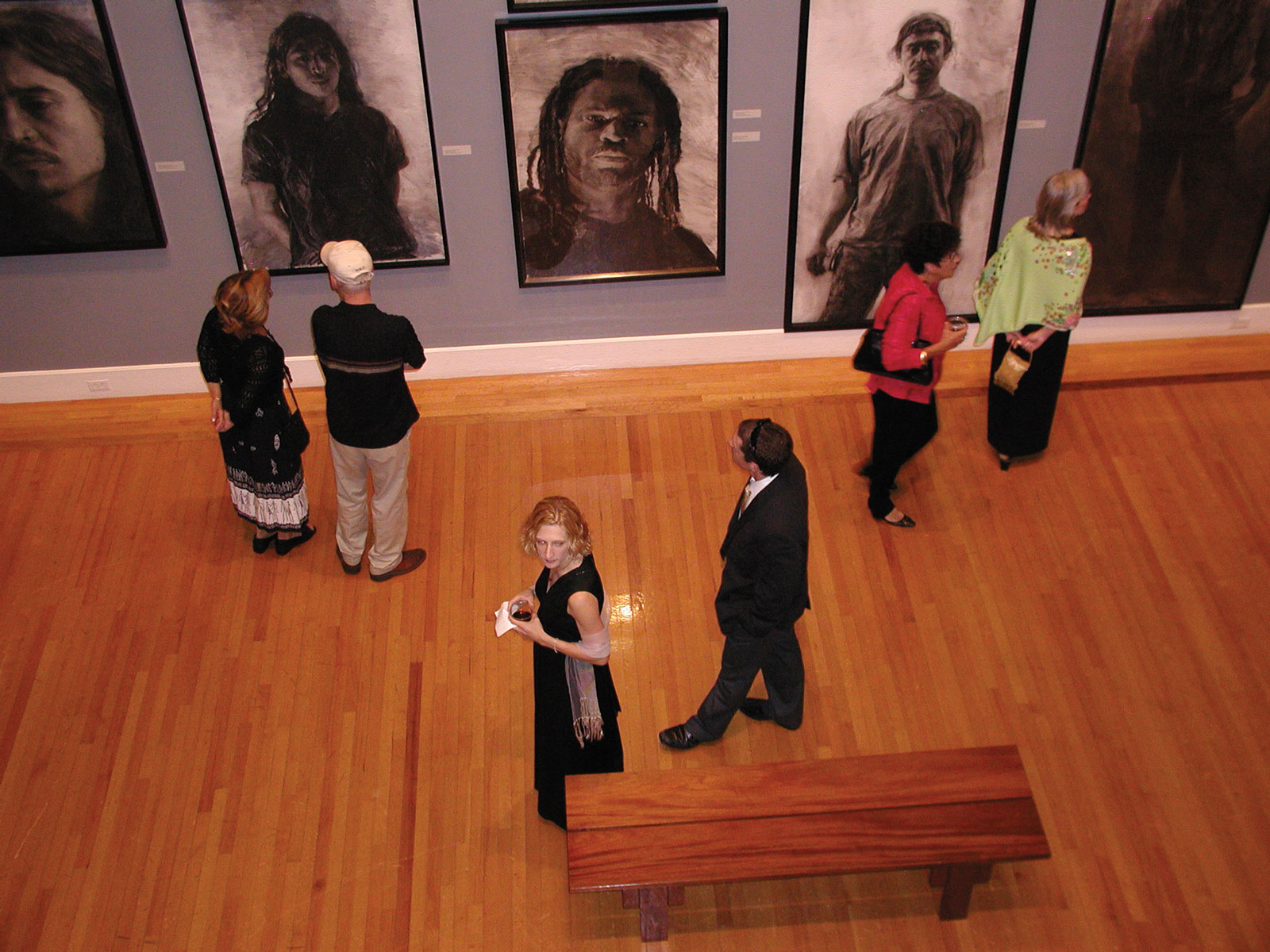
There wasn’t much of a forum for representational artists to communicate in the early days and the internet was just becoming viable. (My enlightened comment was “Who needs email?”) The artists came to the exhibitions and had the opportunity to meet one another and to talk technique, philosophy and life.
As I re-read what I had written contemporaneously with each exhibition, I was surprised by the consistency of my approach to representational art. As more and more great work emerged and lesser work faded into obscurity, I found myself still looking for the “something else” in contemporary realism—something beyond the skill.
James Hillman wrote, in his book The Soul’s Code: In Search of Character and Calling, “A ‘something else’ disturbs minds that mistake comfortable thinking with clarity of thought.” I had written, in an essay for the first RR, that “artists provide the viewer with the opportunity to look beyond the surface depiction of the world and its objects to search for the spiritual and substantial essence of reality.”
I’m happy to be still at it, having just turned 75, still searching for the “something else,” now in the pages of our magazines, thanks to the bravery of our editor Joshua Rose, who invited me to join the staff full-time 10 years ago. •
Powered by Froala Editor