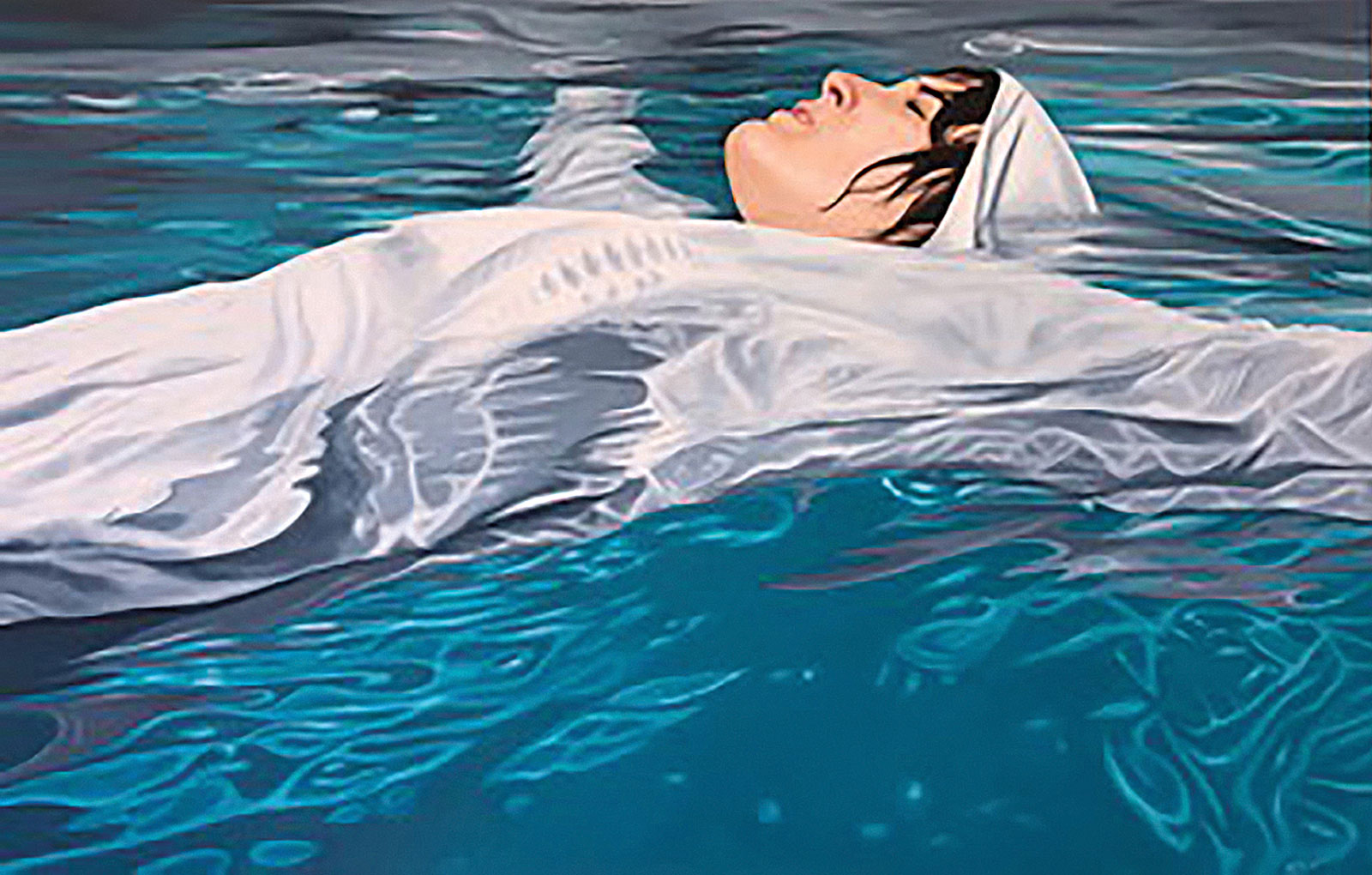
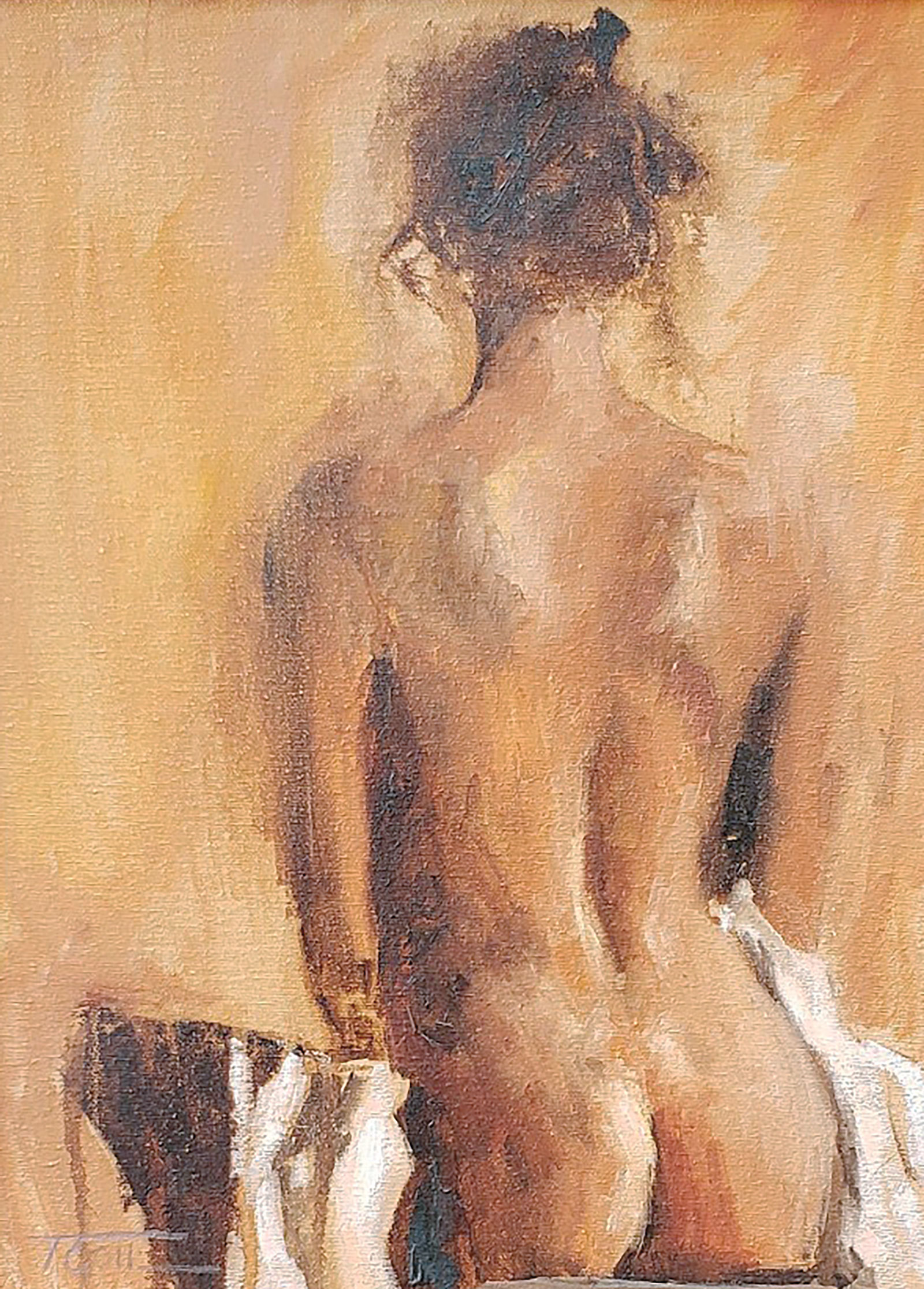
The Roman general Scipio Africanus (236-183 BCE) is reported to have said he was never less at leisure than when at leisure, nor less lonely than when alone. The Anglo-Irish essayist Jonathan Swift (1667-1745) tweaked the idea a bit when he wrote, “Wise people are never less alone than when they are alone.”
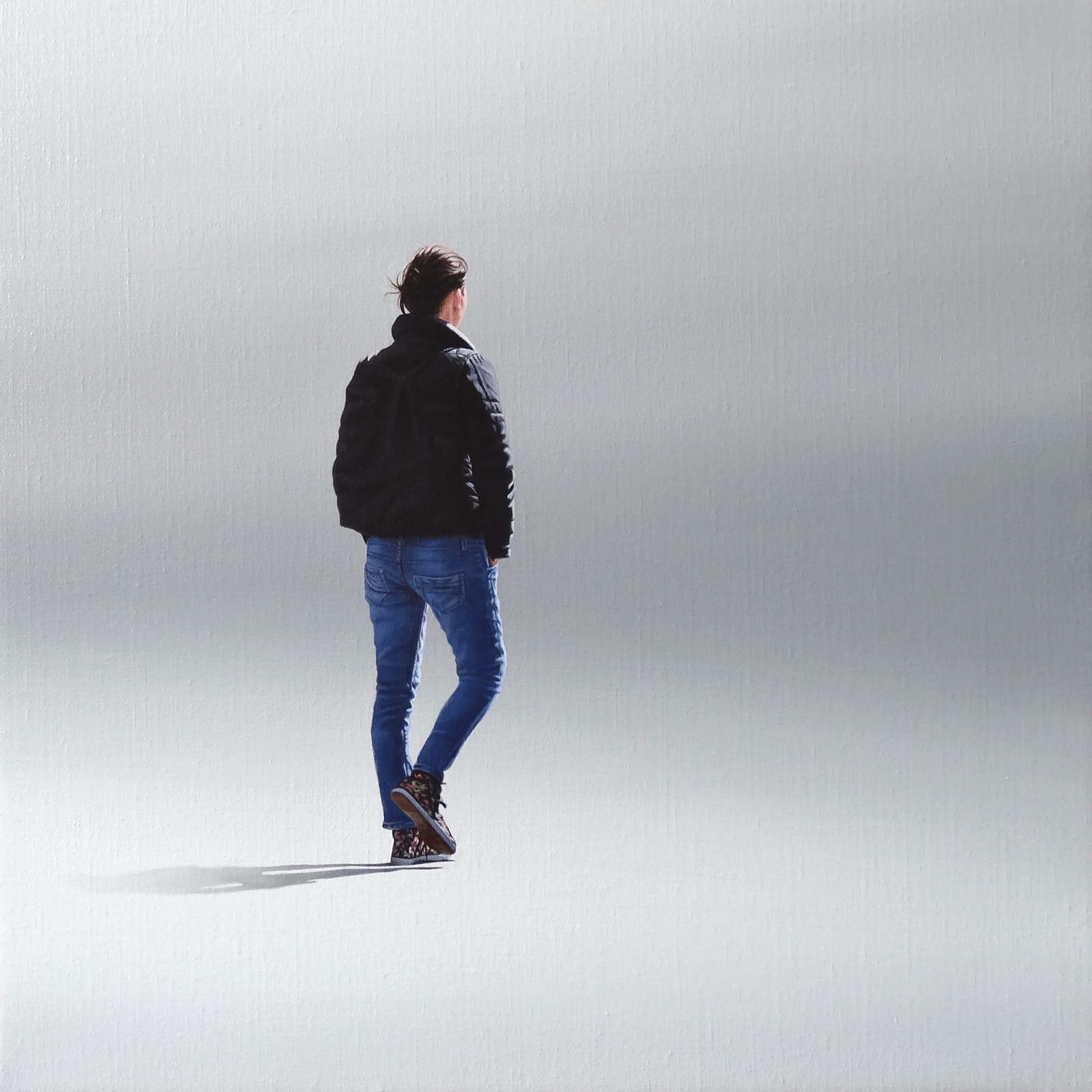
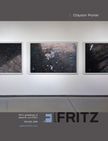
Contemporary Irishman Nigel Cox explores solitude in his paintings, and he is careful to elicit the positive aspect of the experience as opposed to the negative feeling of loneliness. His subjects are caught in a moment alone in a featureless environment—individuals plucked from their everyday lives and capable of being set down in another, complete in themselves and with the ability to respond to new stimuli.
Cox experienced the featureless landscape and ethereal light of both poles as the radioman on the three-year, 100,000-mile Transglobe Expedition, from 1979 to 1982. In Clarity, the figure walks confidently through the infinite space, grounded by her shadow.
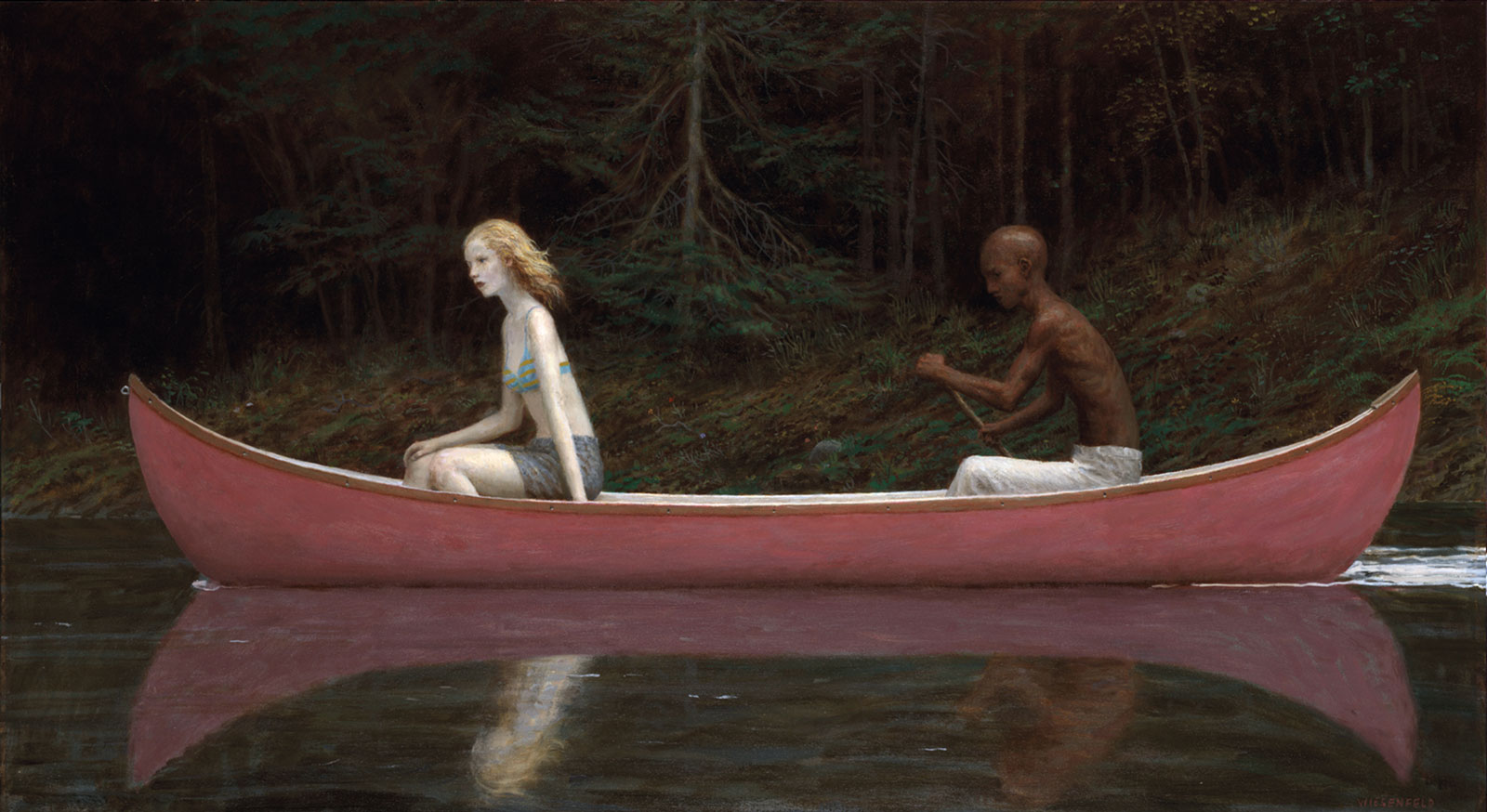
Arcadia Contemporary, The Canoe, oil on canvas, 23 x 42”, by Aron Wisenfeld.In Aron Wiesenfeld’s The Canoe, two figures glide along the edge of a dark wood, separated by the length of the canoe as well as by gender and race but united in their journey. Wiesenfeld says of his paintings, “I began to think of paintings as an expression of the unconscious, or that they can be objects of meditation, speculation and much more.”
He continues, “I look at Hopper and see the metaphysical. Most see his paintings as materialistic beautiful light. In the world of the painting the realm of the spirit is in the dark corners. It’s not visible. Either you feel it or you don’t. My job is to present the images and to suggest what they are and what they can possibly represent. Not everyone’s going to be of a like mind. That’s fine.”
“Choosing your art should be similar to how you choose your music; an escape from reality for a moment, leaving you feeling better for having experienced it.” — J.M. Brodrick, artist
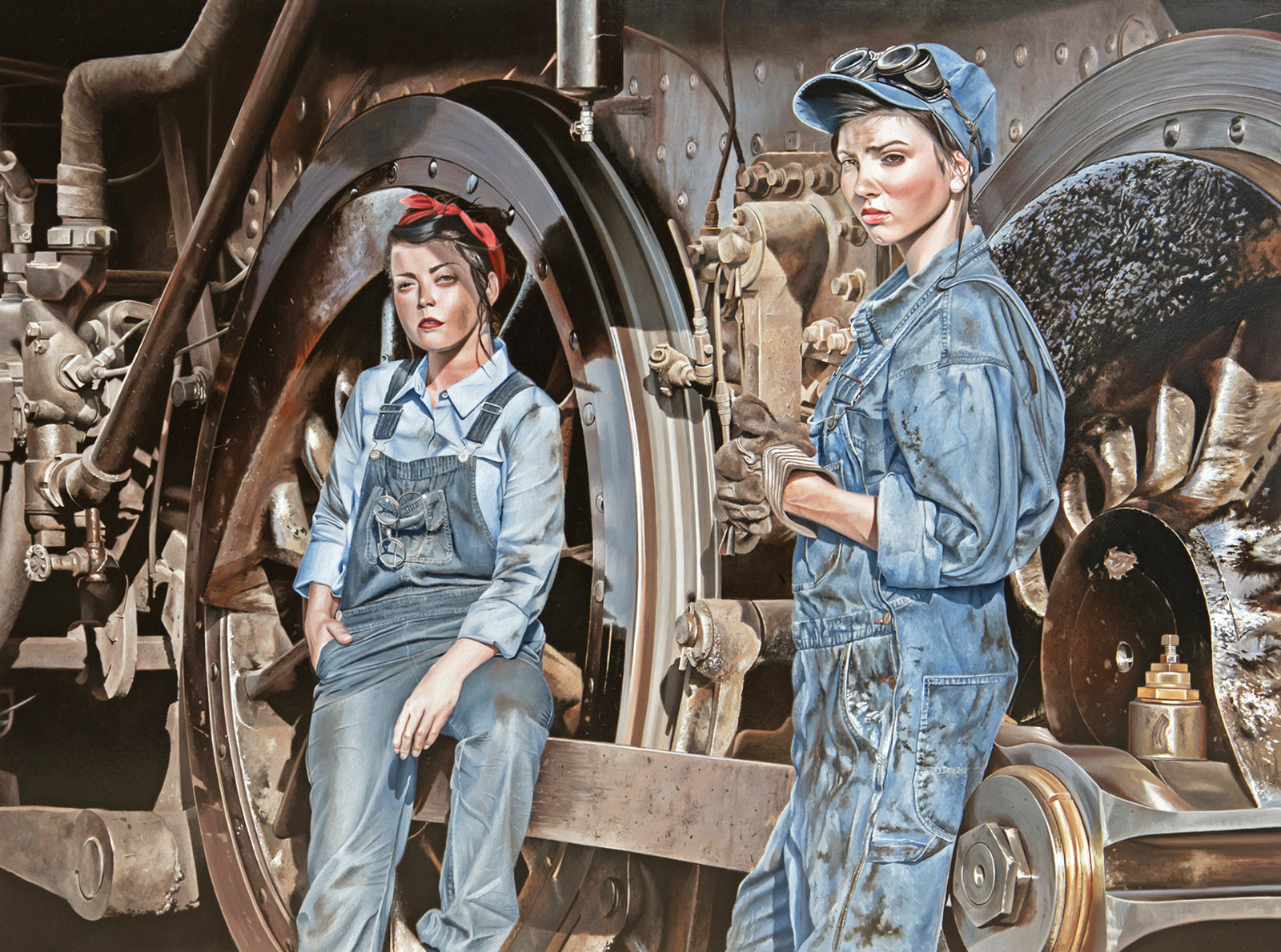
In Lee Alban’s Maintenance and Repair, the figures are bathed in light, representing not just themselves but the strength and talent of the women who entered the workforce during WWII when the male workers went off to war. Alban underscores the historical reference by dressing the figures in the work clothes that recall the iconic We Can Do It poster created by J. Howard Miller for Westinghouse in 1942.
Trained classically at the Schuler School of Fine Arts in Baltimore, Alban is equally at home painting landscapes, still lifes and portraits. His work is thematic, often, centering on the people who made America—from Native Americans to contemporary workers. The figures in Maintenance and Repair are painted with the same attention to detail as the locomotive behind them, suggesting a similar strength. He has painted them, however, not as symbols, but as individuals, each with her own personality.
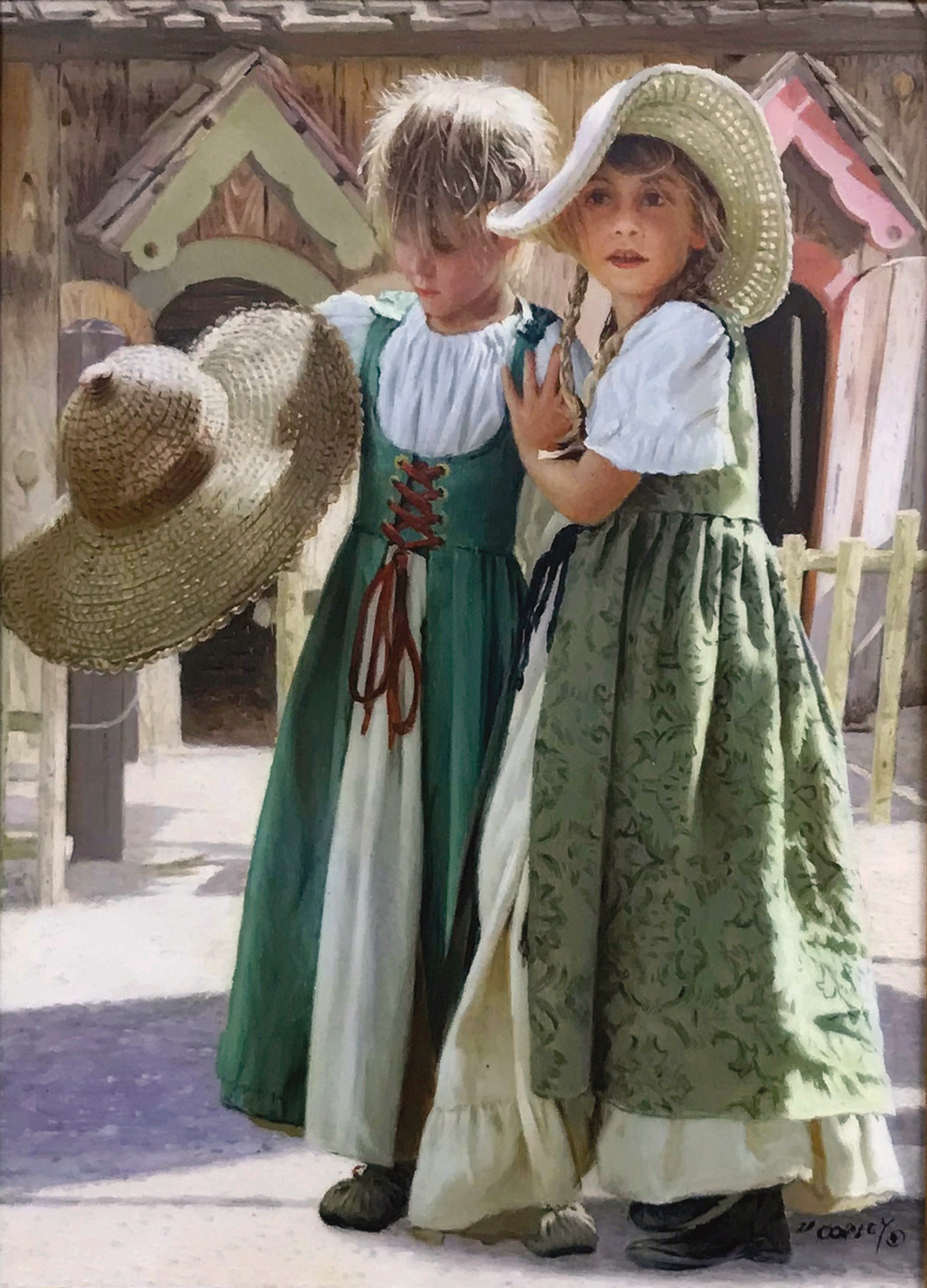
Copley has painted with oils on a copper panel, a lengthy process, as he has to allow each layer of paint to dry before returning to the painting. He notes that he applies red last since it takes the longest to dry. Painting on copper began in the late 16th century and their luminous quality and color remain vibrant.
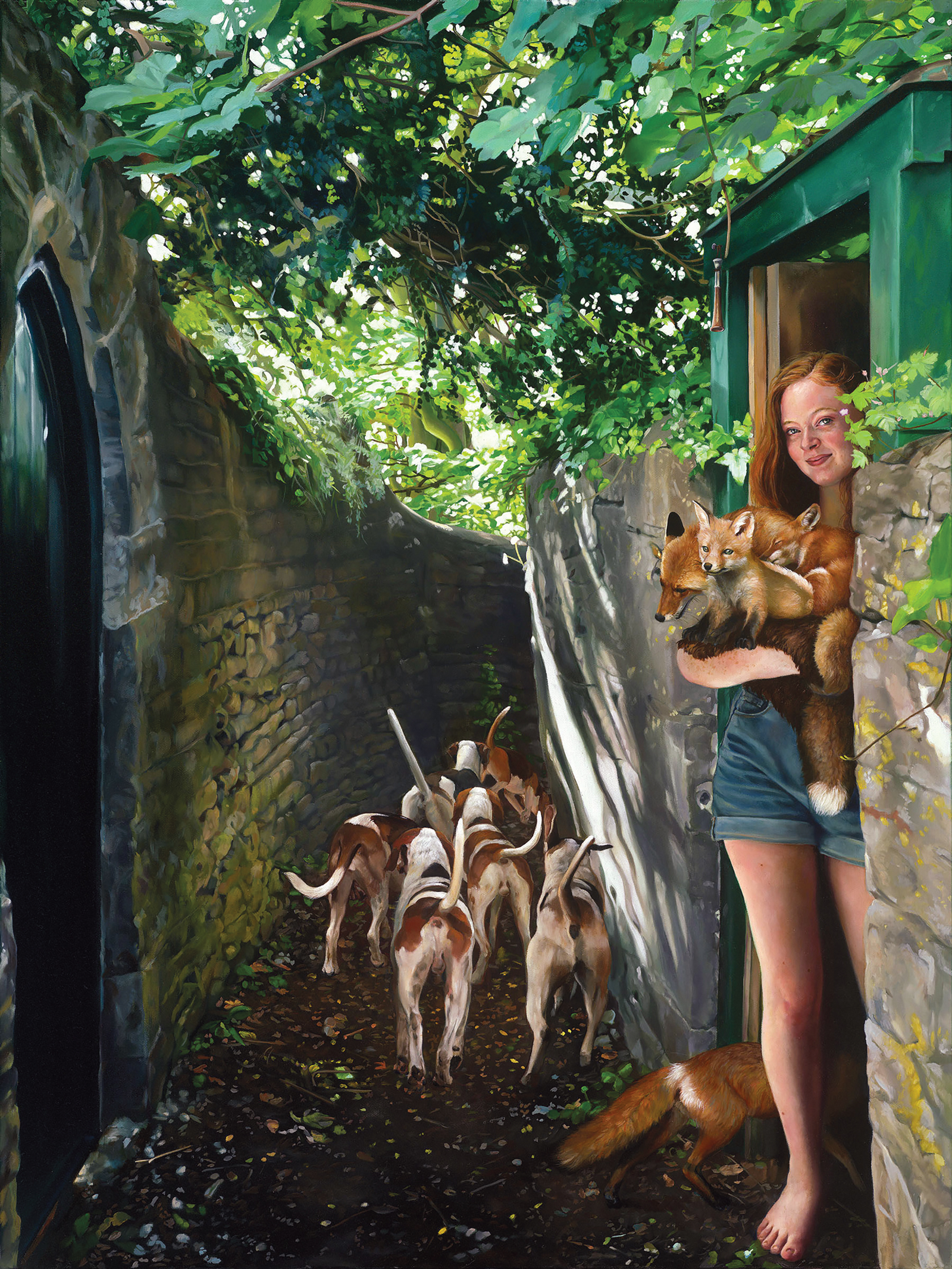
In Saboteur, Bryony Bensly demonstrates her desire “to find common ground for discourse, a platform upon which we can connect” not only with other humans, but with other species. She says her new work, which features endangered species, “is focused on the preciousness of this planet and the life it sustains as we face environmental and political challenges. I wish to celebrate all the beauty that surrounds us—which in turn, reflects all that is within.”
In Saboteur, a young woman gathers foxes into her sunlit shelter as the unsuspecting hounds dash by into the shadow. Confident in herself and her belief in the sanctity of all life, the girl smiles happily that she has thwarted at least this one foxhunt.
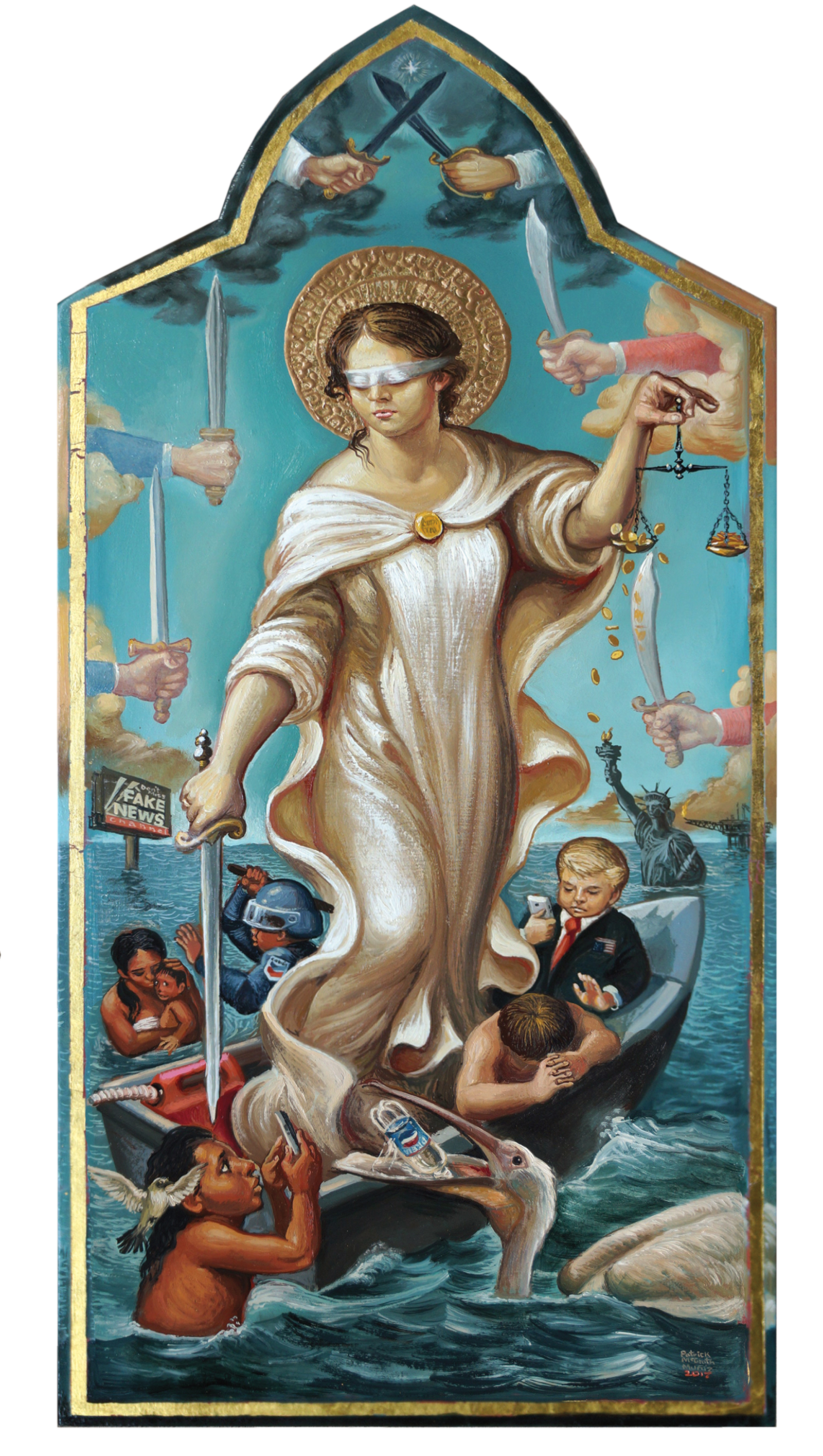
In Santa Justicia, Patrick McGrath Muñiz makes the central figure, alone in her sanctity, a metaphor for a larger concept. He explains, “Artists started depicting Lady Justice blindfolded from the 16th century onward. A symbol of impartiality. Before this, a blindfold would have signified foolishness or ignorance. In this re-interpretation of Lady Justice, by being blindfolded, she is unaware of her current predicament.” Today’s environmental and social chaos threatens a world in which Justice, always an ideal, can’t prevail. Of the many images threatening Justice, Muñiz cites “A Trump-like boy dressed in an executive suit looks attentively at his phone while ignoring the scene. Behind him, the Statue of Liberty under water and an oilrig in the horizon can be seen. Corporations and profit have replaced liberty and democracy.”
The novelist Joseph Conrad wrote, “The end (goal) of art is to figure the hidden meaning of things and not their appearance; for in this profound truth lies their true reality, which does not appear in their external outlines.”
In the following pages of this special section of figurative artwork are contemporary examples of the genre in classic and modern imagery. The artists share their inspirations, while dealers discuss the importance of collecting figurative works.
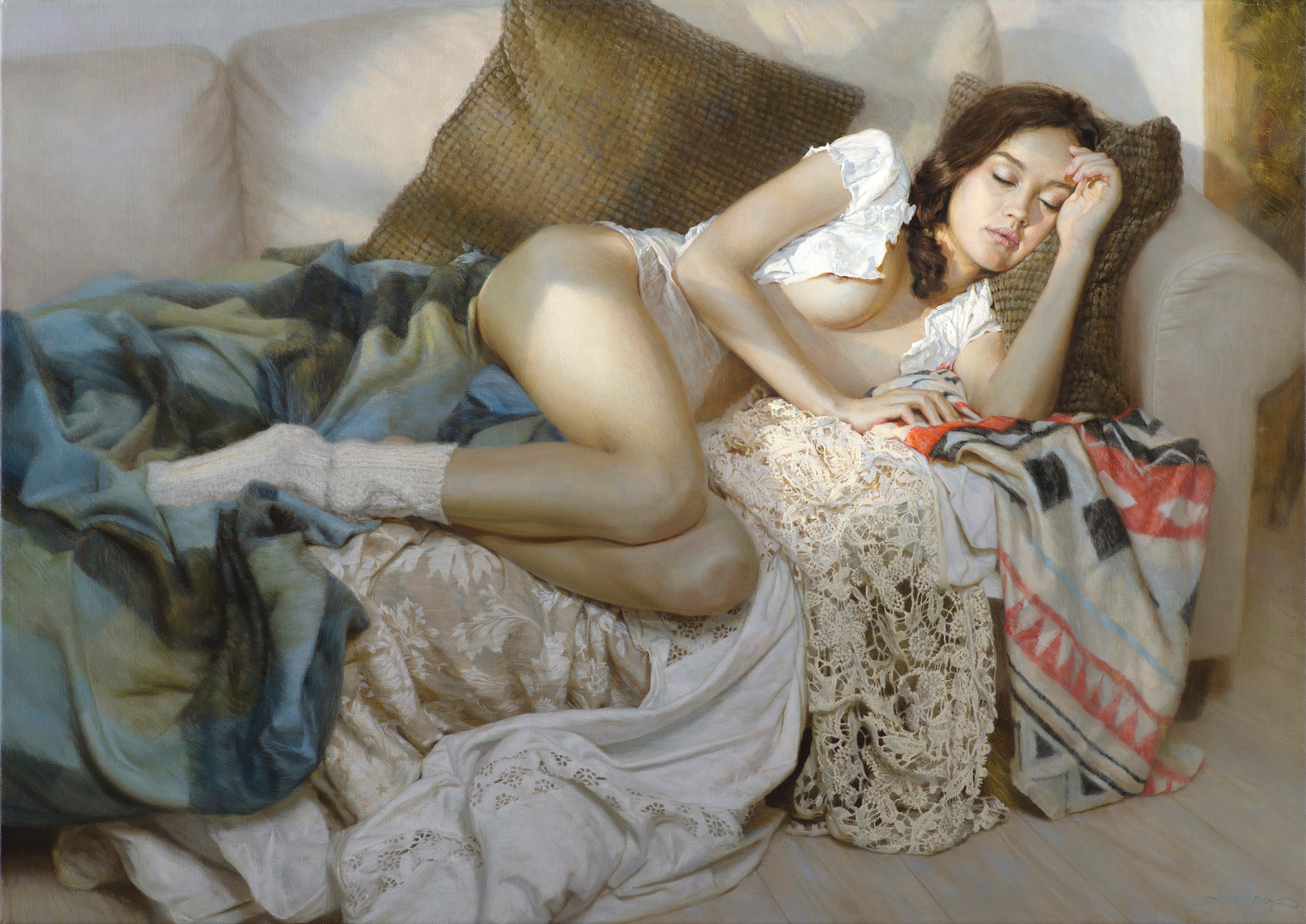
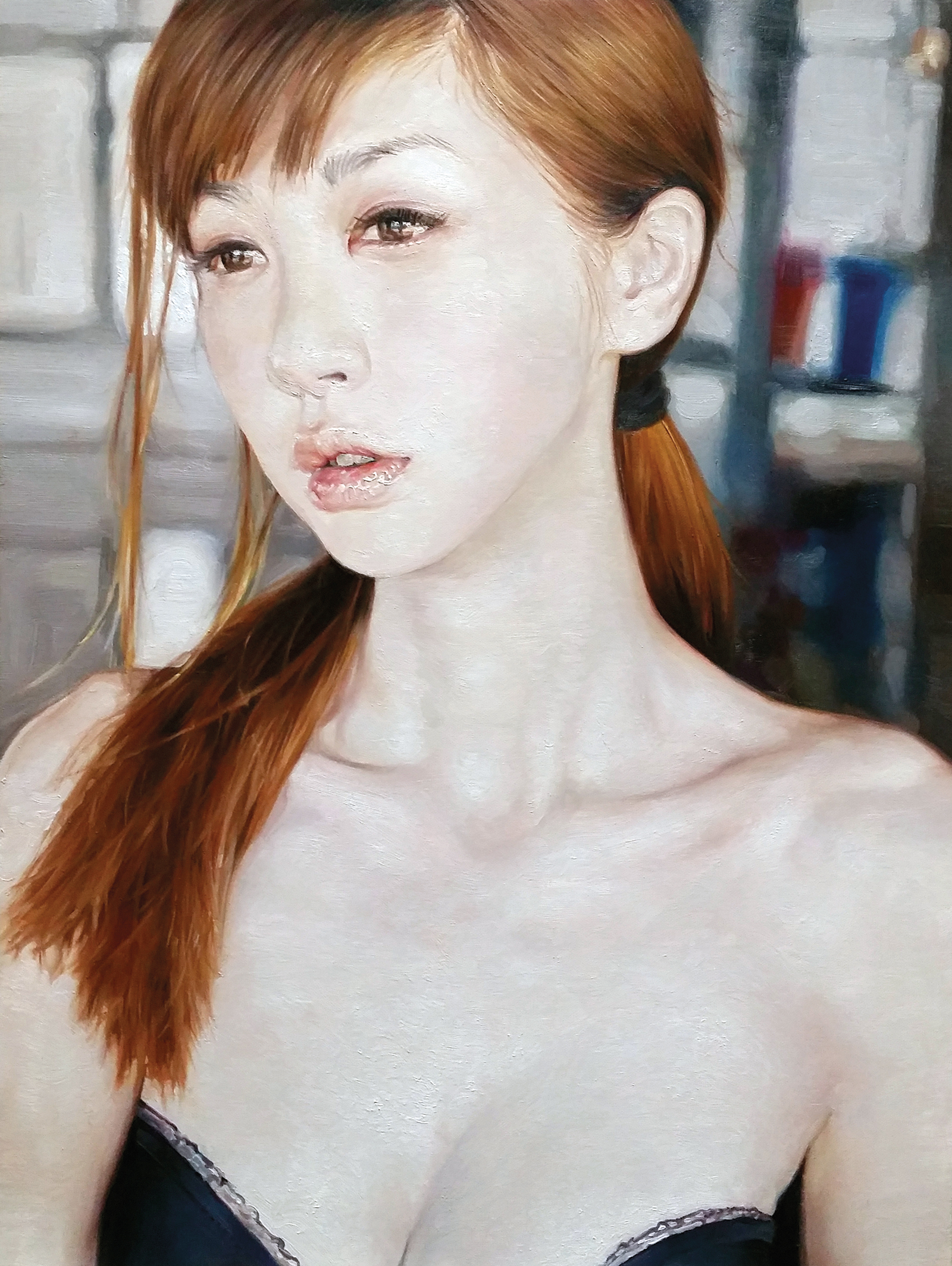
Lotton Gallery in Chicago, Illinois represents several sought-after figurative artists. Notably, among them are Marina Marina of St. Petersburg, Russia, and Lee Guk Hyun of Seoul, South Korea.
“Marina Marina’s painting Soft Evening shows her delicate balance of sensual figures and finely intricate fabrics,” says gallery director Christina Franzoso. “Lee Guk Hyun transcends meditation in his painting The Girl in the Dream, going beyond philosophical concepts to Nirvana.”
Sarah Stieber has found the practice of painting “strong, confident and vibrant characters has manifested those characteristics into my own reality and relationships.” Her hope is that they will inspire people to live their most expressed and authentic lives.
In her paintings, J.M. Brodrick works toward merging realism with the beauty of abstraction. She adds, “I like to play one color off the other in harmony much as a composer would use combinations of notes to form a symphony, and then pull everything together for a strong finish.”
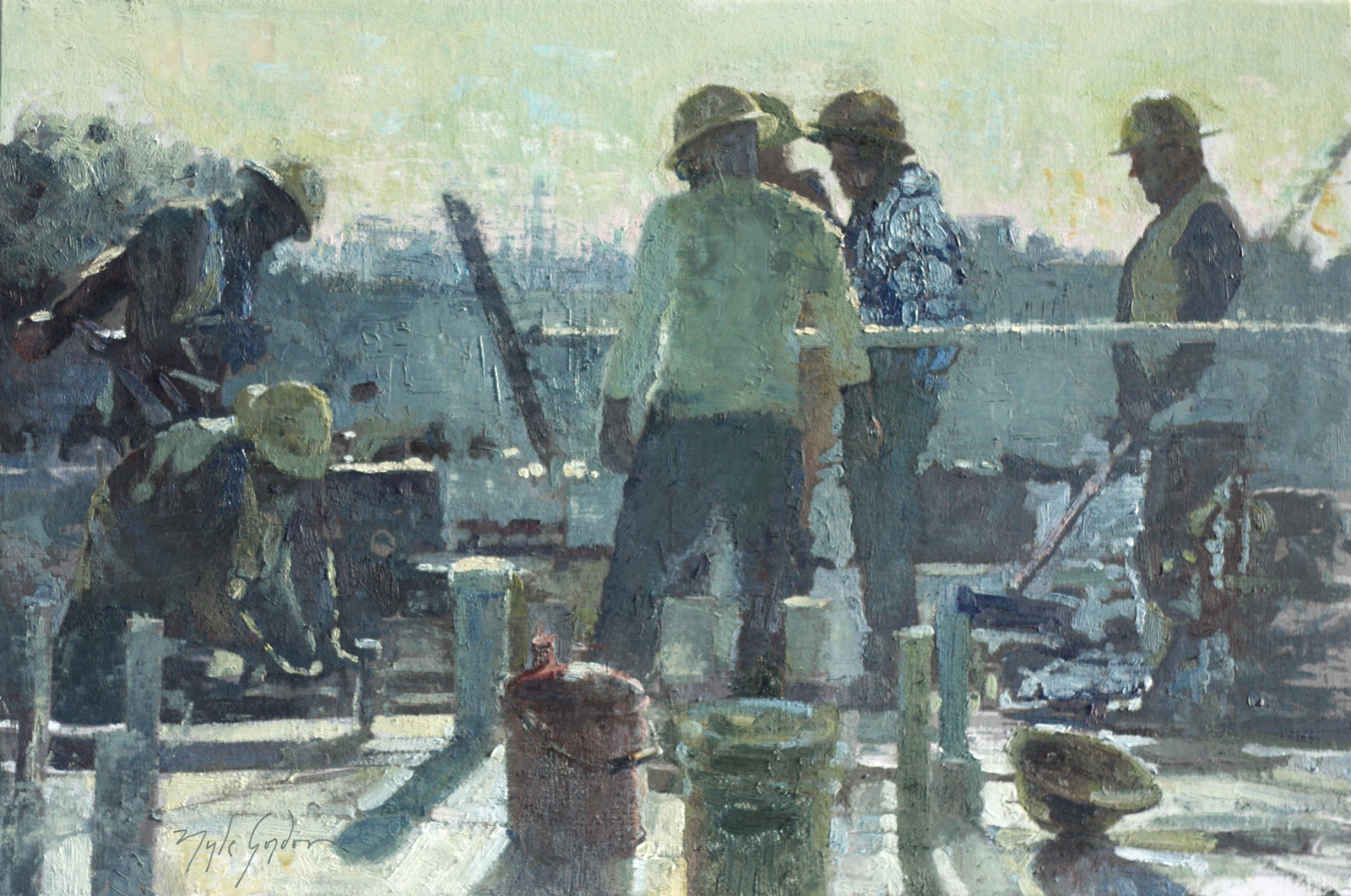
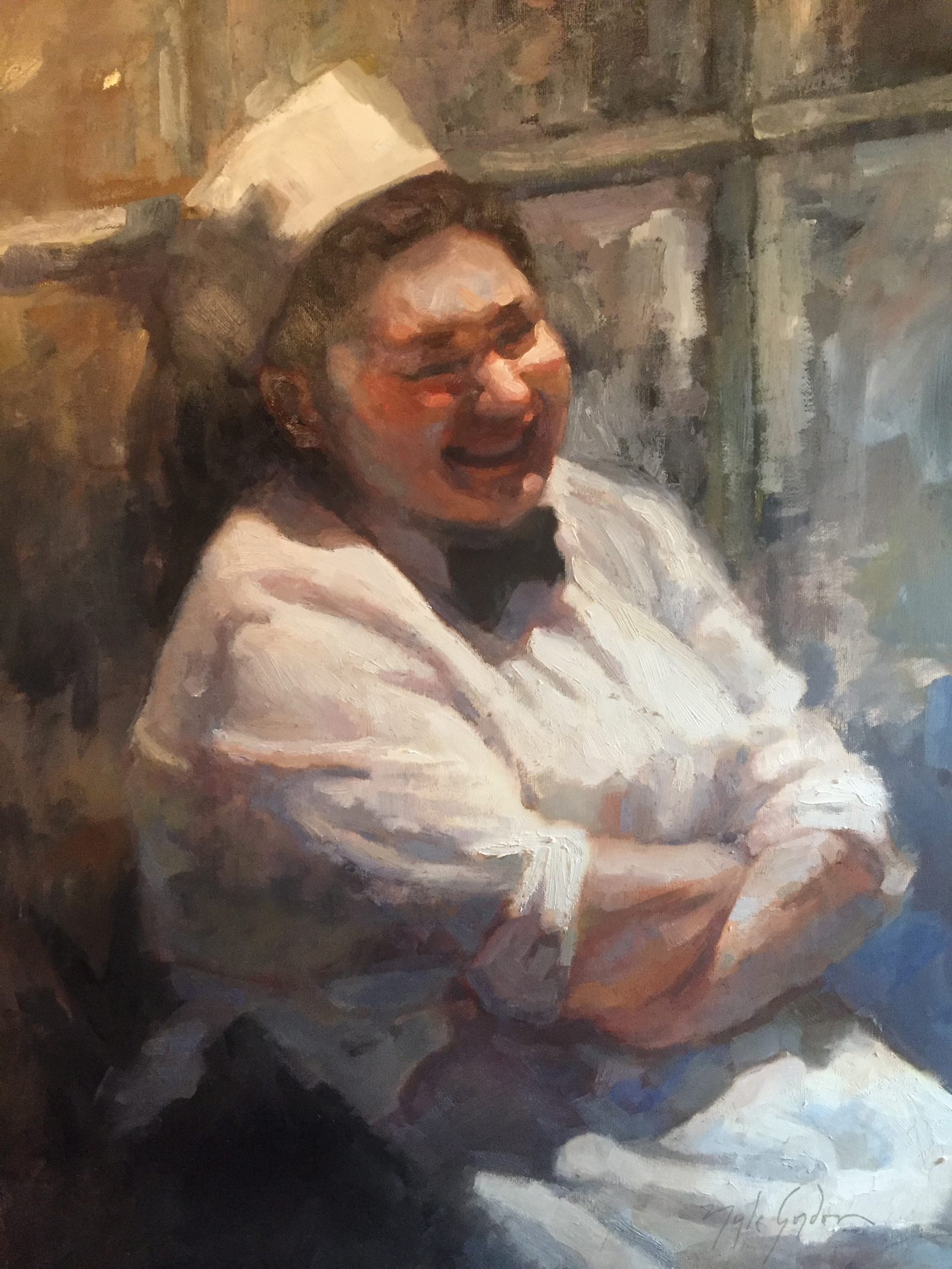
Nyle Gordon’s recent paintings have focused on “capturing the distinctive nobility of men and women in working regalia.” Real people who are laboring side by side also have inspired his pieces. In terms of technique, Gordon is drawn to expressing emotions through gesture, line and form.
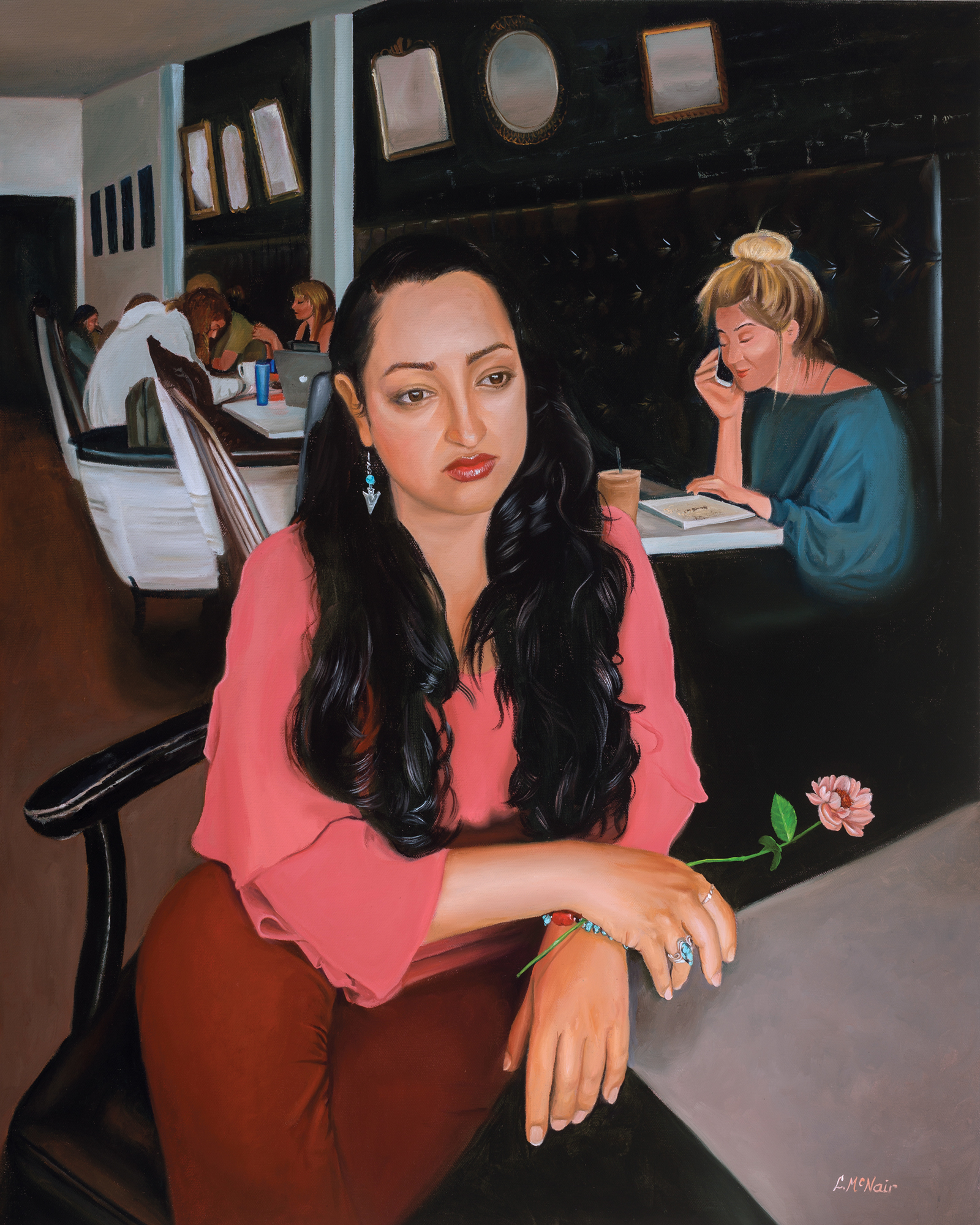
Loretta McNair, The Waiting is the Hardest Part, oil on canvas, 30 x 24”“I like capturing a moment in time that tells a story, more often humorously as Norman Rockwell inspires,” says artist Loretta McNair. “For collectors who are music aficionados of the classic rock/pop genre, I'm passionately working on an ongoing series of paintings that tell the stories in those songs. That is a prospect impossible to complete in one lifetime, but I'll complete as many as I can in mine.”
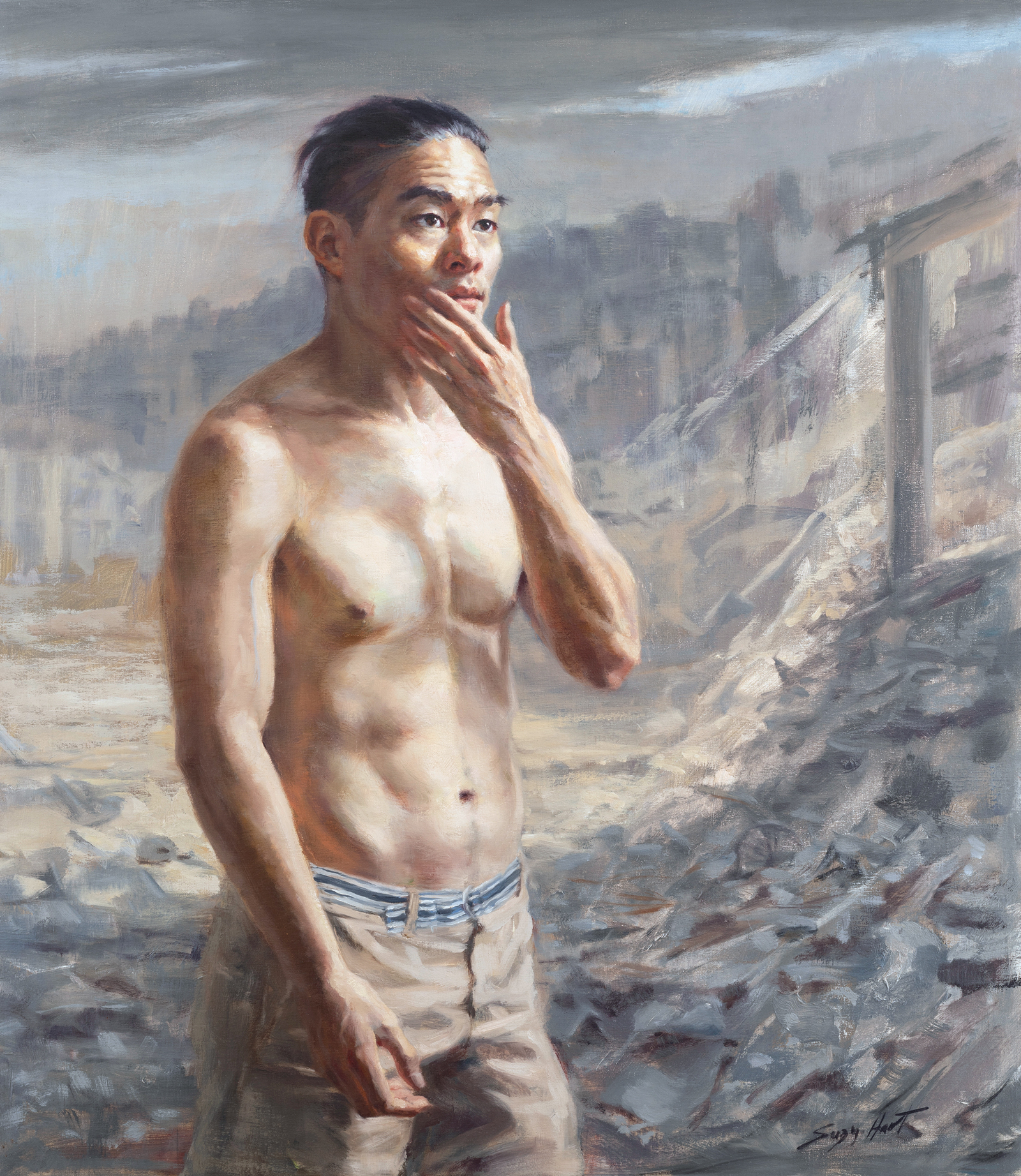
Suzy Hart often turns to humanistic topics in her figurative paintings. For instance, in her piece Witness, she depicts a figure that she describes as the “Everyman standing as shocked witness to destruction and chaos.” Hart continues, “He is witness to any war, any human atrocity. He is ‘us.’ The ‘Them’ are out of range of attack. I find a release from intellectualization in paintings that have hard themes; technique and finish give way to a personal freedom to work the paint just to the point I like, and not beyond.”
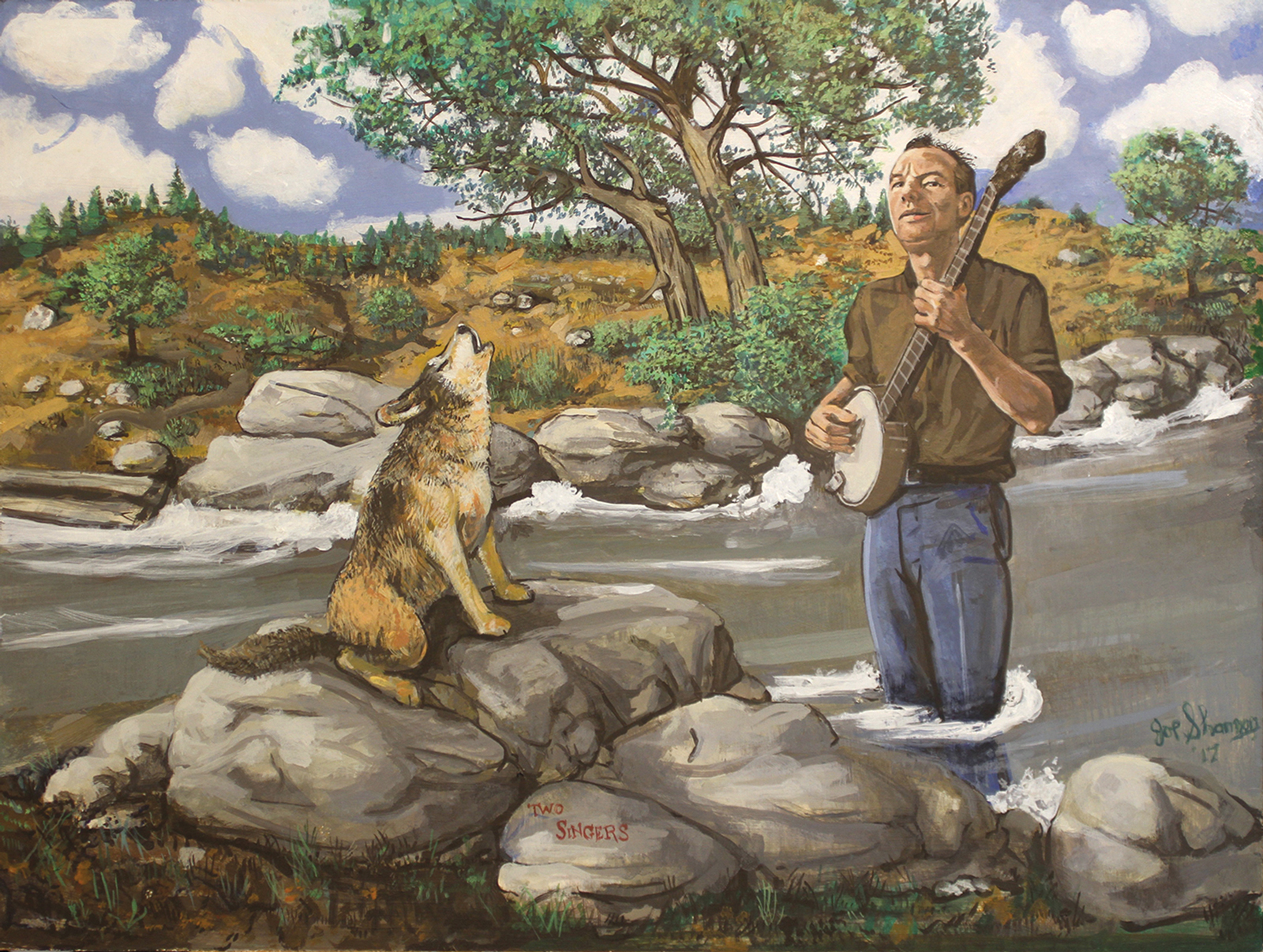
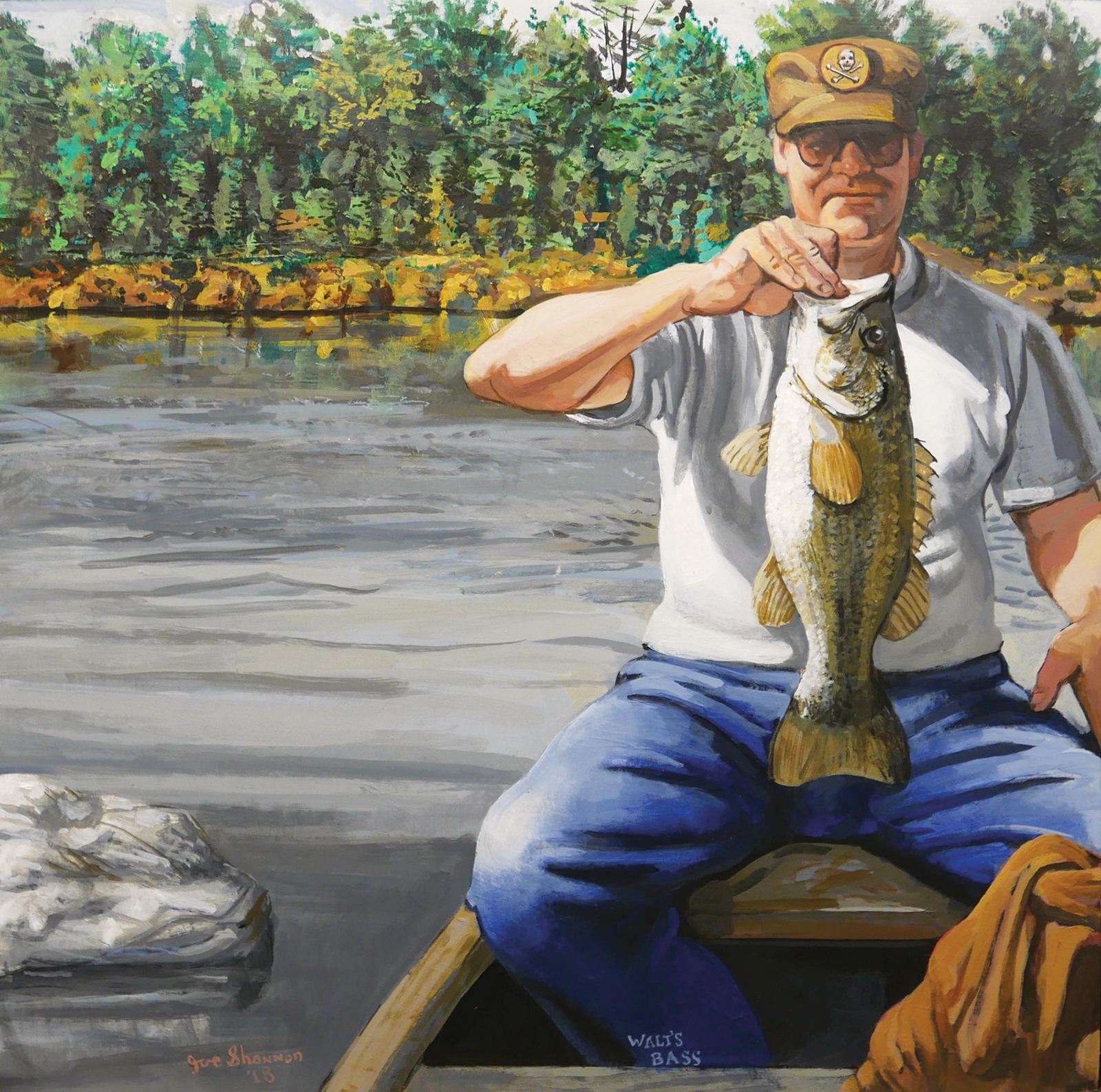
Joe Shannon has been an outdoorsman his entire life, and has spent his time hunting, fishing and connecting with nature. “I love folk music, so in Two Singers: Pete Seeger and Pal, I honor one of my heroes in a natural setting. And I’ve heard the songs of coyotes and even wolves who are kindred spirits,” he says. “Walt’s Bass recalls the good times I had with one of my oldest friends with whom I worked at the Smithsonian. We fished and hunted together for many years. These paintings reflect my deep love of music and nature.”
Shannon’s work includes not only figure paintings, but landscapes, portraits and abstract pieces. He has had paintings represented in major museums, including the National Gallery, and numerous private collections.
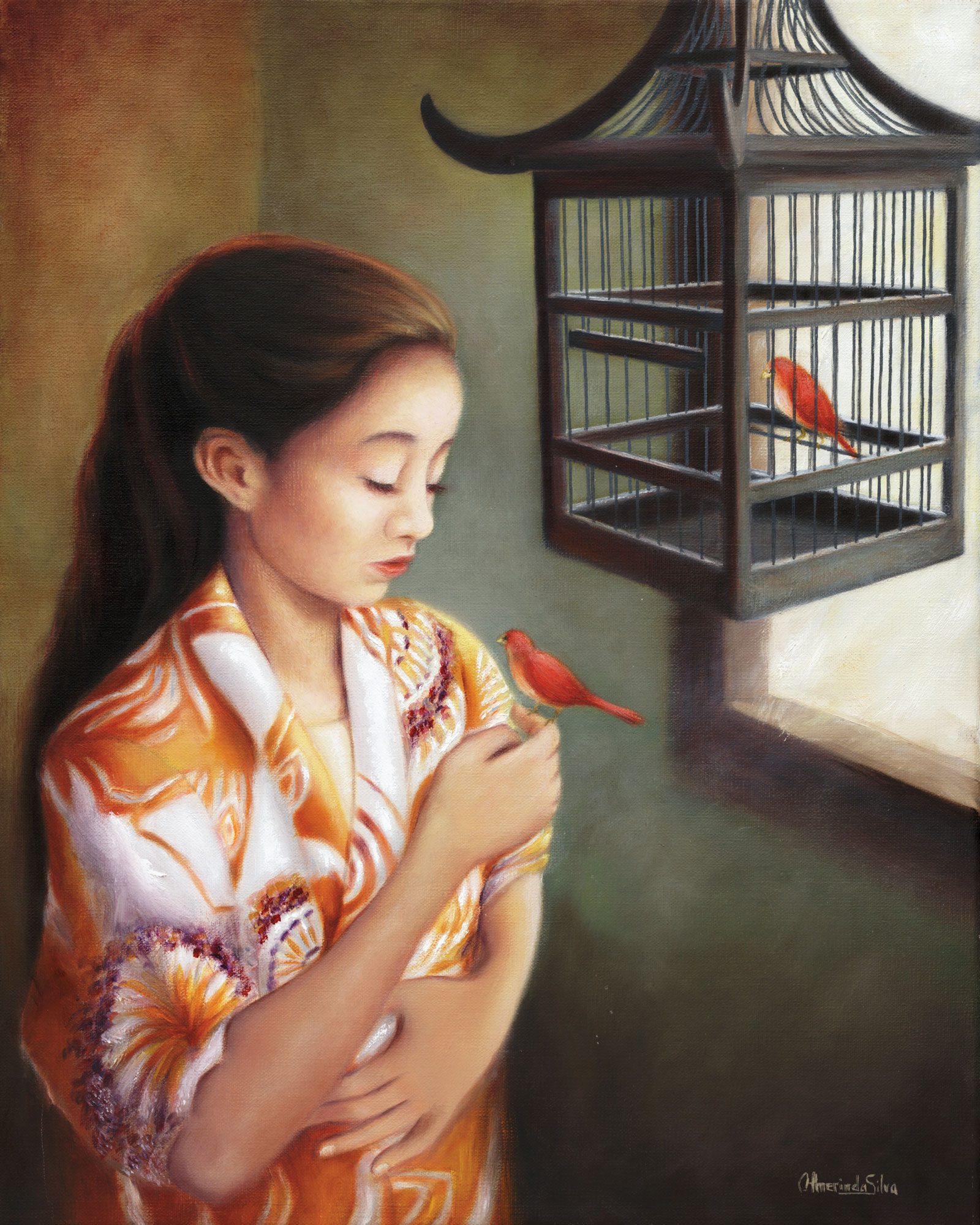
New England artist Almerinda Silva believes some collectors are particularly interested in provocative paintings with a variety of interpretations that stimulate conversation. In Red Canaries she envisioned at least two sharply contrasting viewpoints, with each furthermore being either literal or metaphorical.
As Almerinda explains, “Is the young girl taking the birds out of the cage to free them or putting them back in to keep them safe? Perhaps the subject herself feels imprisoned, as suggested by the stark walls and crossed arms. Alternatively, she might be apprehensive about transitioning from her familiar adolescence to the unknown of adulthood, retreating to her confined but safe space, as symbolized by the bird in its cage.”
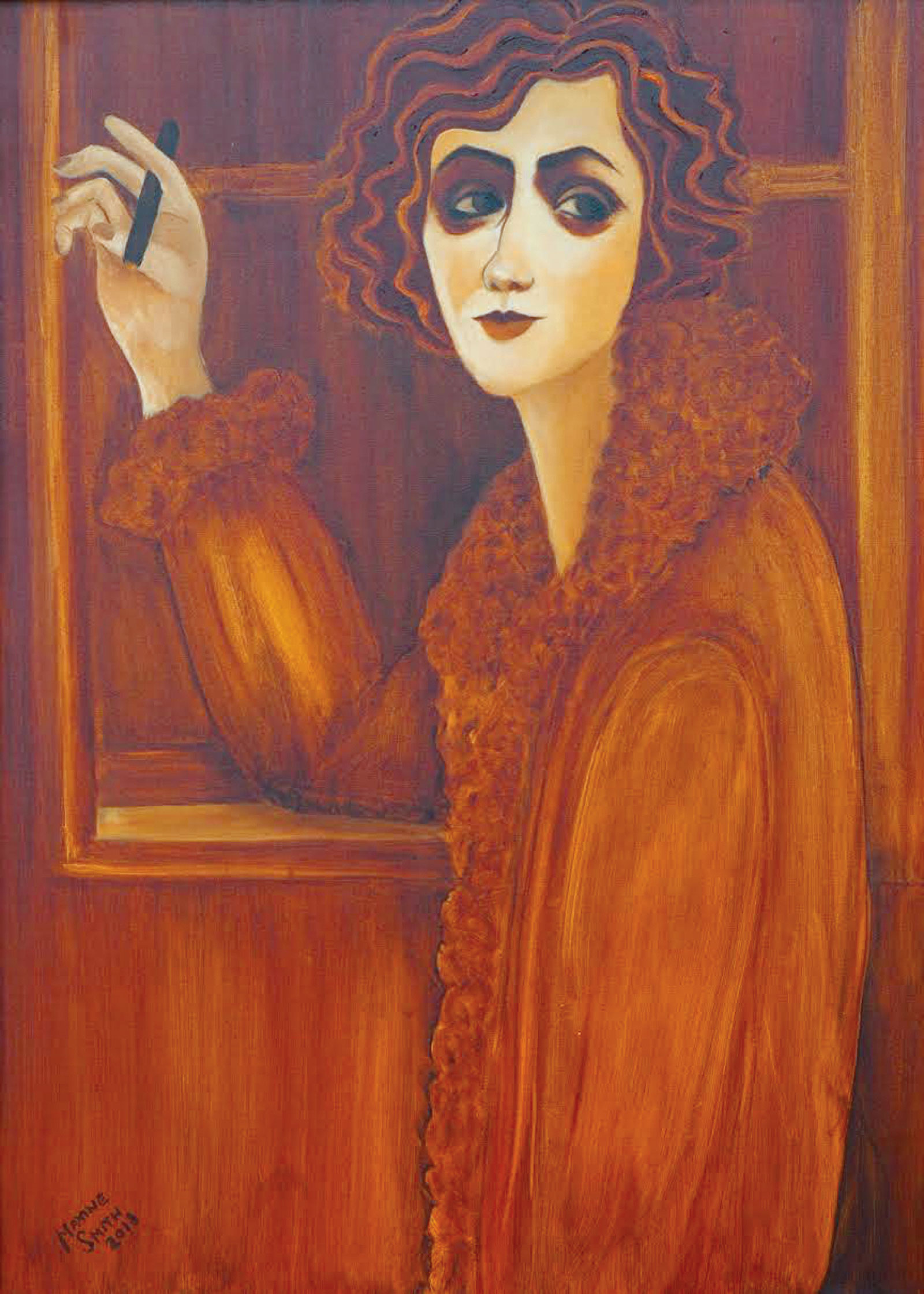
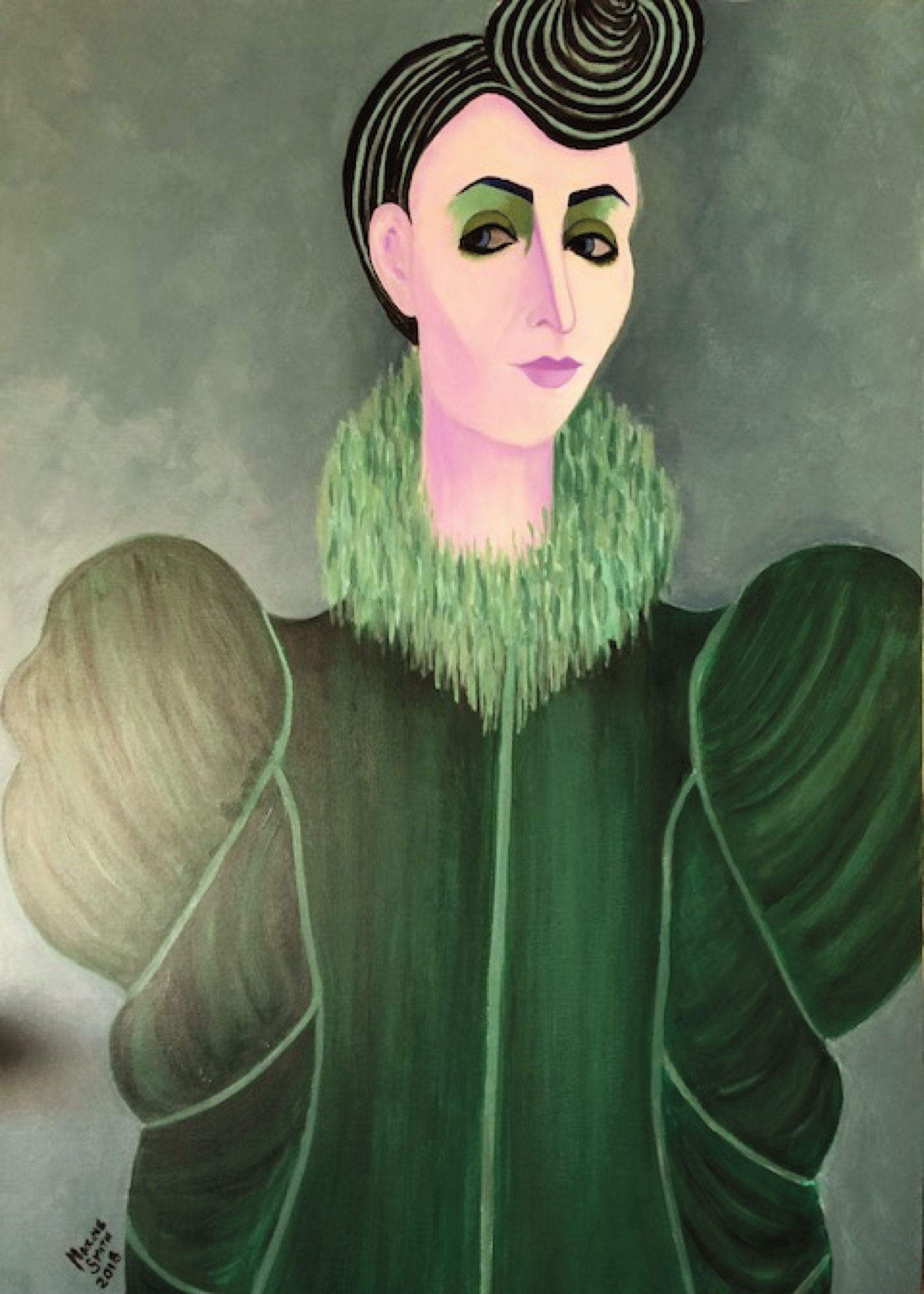
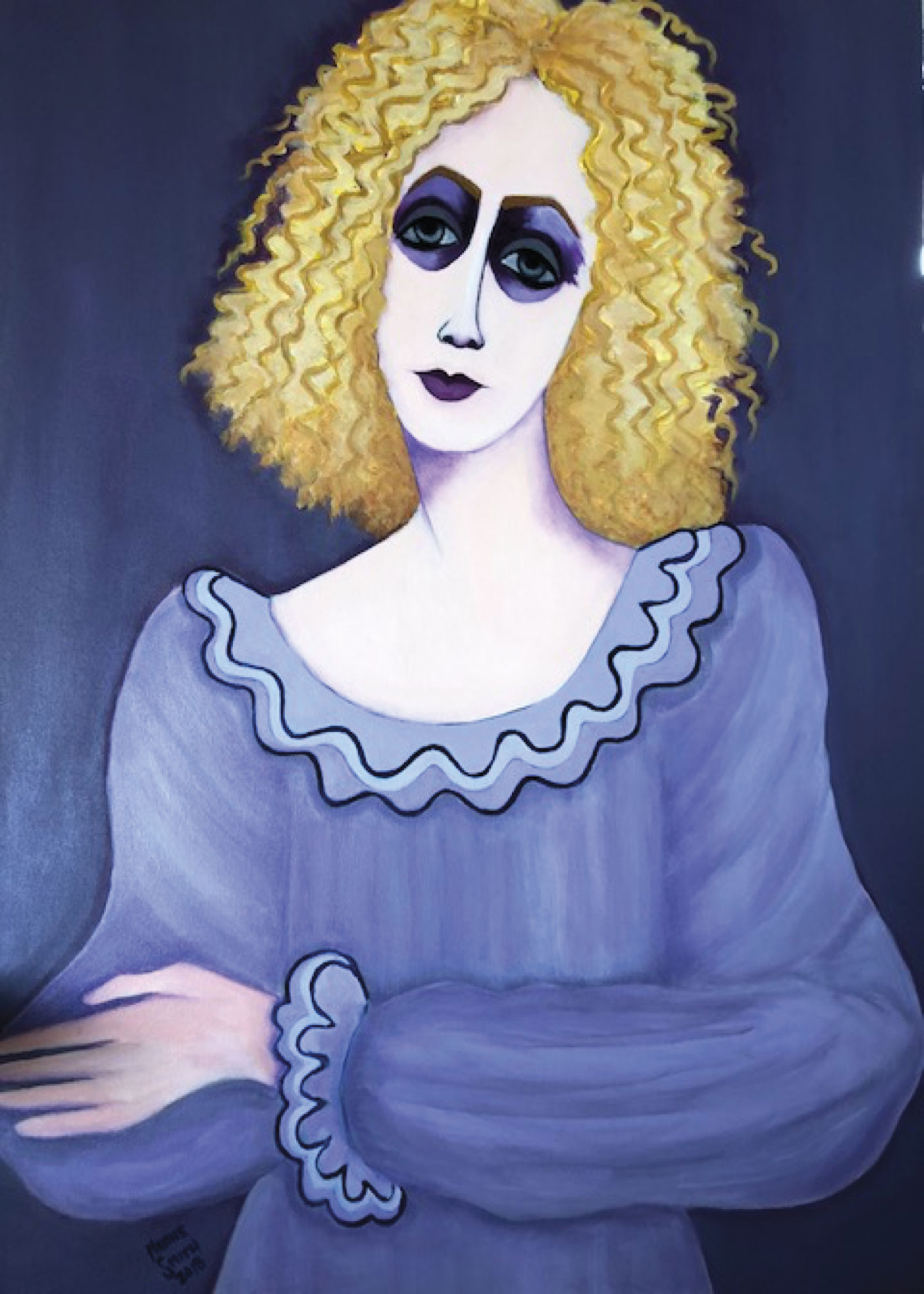
In her artwork, Maxine Smith finds “Imperfection is perfection.” She adds, I am not trying to paint a realistic portrait, what I do is always stylized; for me that is what is interesting. Otherwise, the camera or a postcard will do.” Many of her pieces are of people that she has met, sometimes in her day-to-day life and other times while she is traveling. Often the people become quite different from the person she has met, but the work is inspired by a moment that she needed to capture.
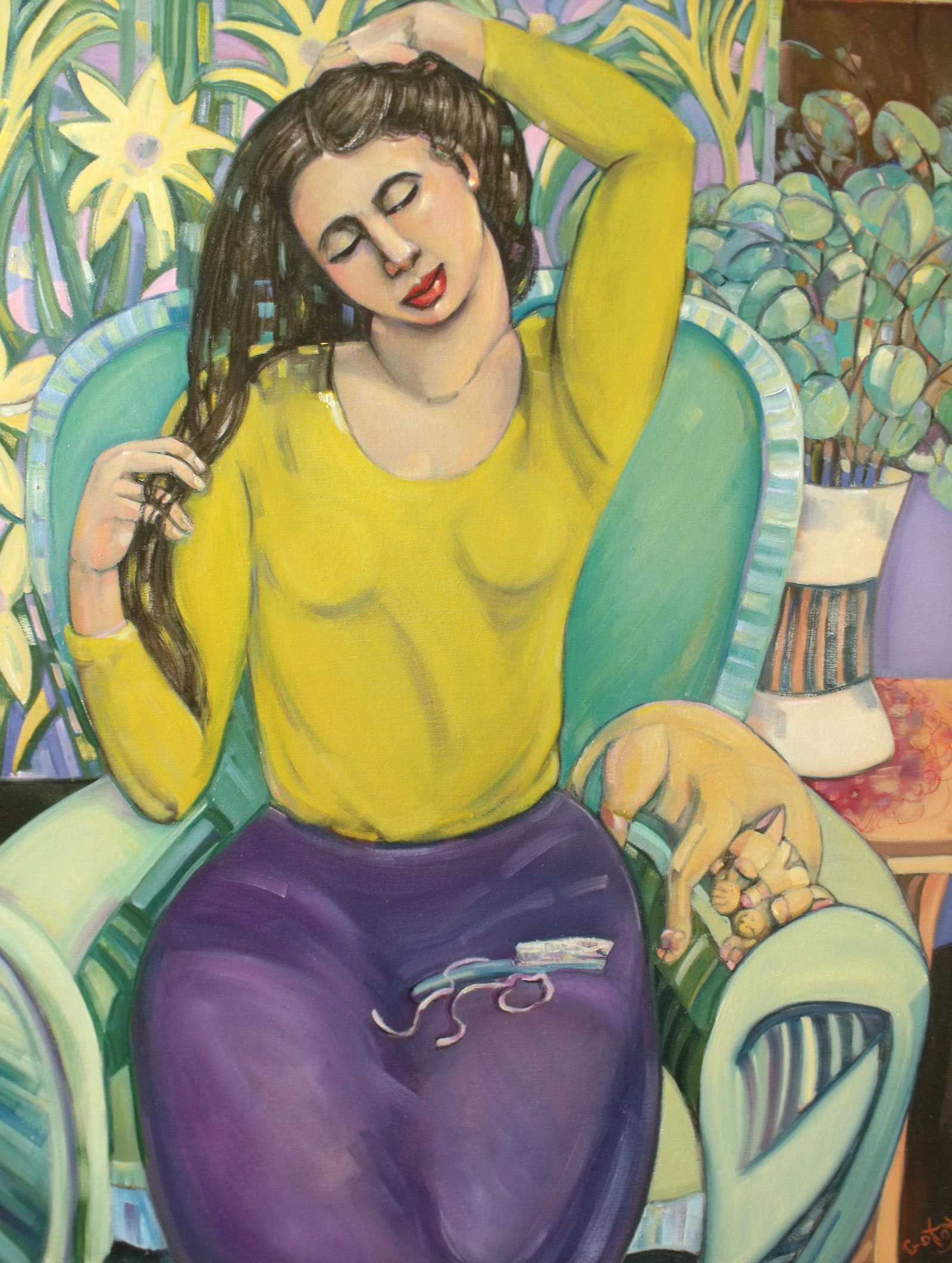
Zulia Gotay Anderson, Moment For Myself, oil on canvas, 36 x 30”Zulia Gotay Anderson, represented by Jane Hamilton Fine Art in Tucson, Arizona, has been painting the figure for 40 years and still finds it challenging. “I choose to paint my figures in an abstract way, and from my imagination,” she says. “This gives me more freedom to play with the forms and colors and to follow my artistic instincts.”
Depicted in Moment For Myself is “a woman enjoying the simple act of combing her hair while having a moment for herself,” the artist explains. “I wanted the figure to be integrated into the background, so I used curves lines, round shapes, and colors that are echoed in the background. The imaginative figure and the background were done with the same intensity and passion, and both are unified and are important parts of the painting.”
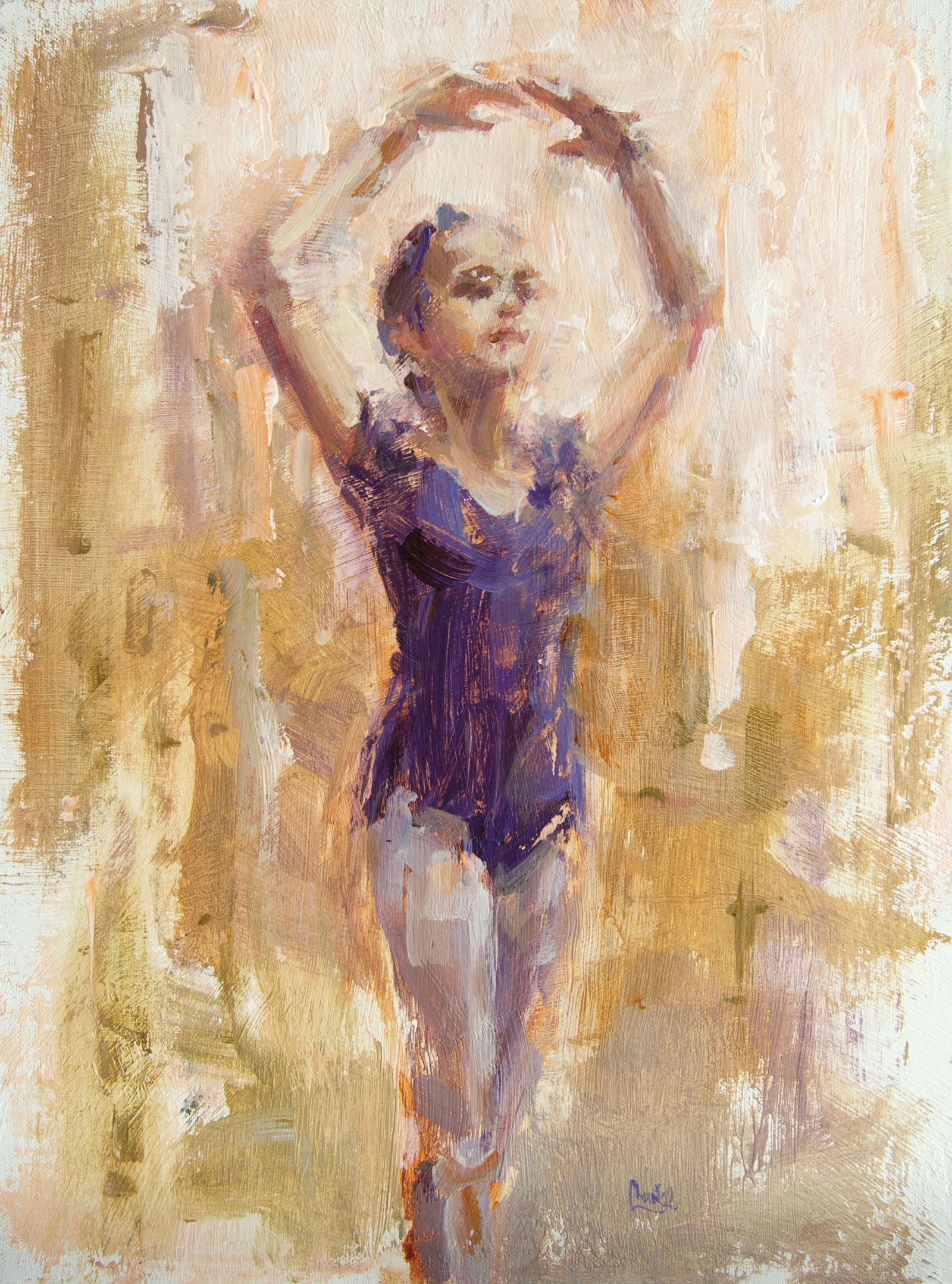
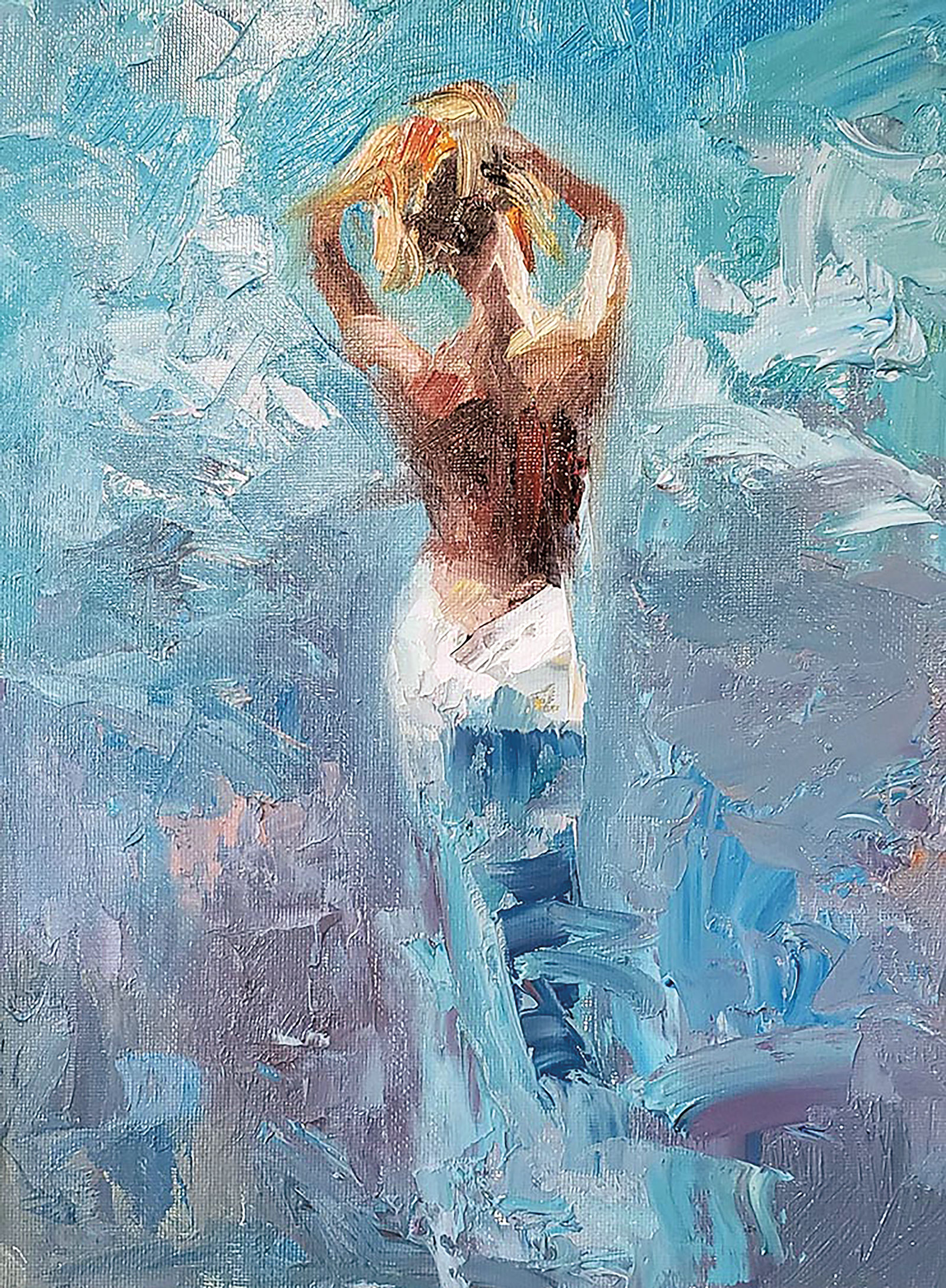
Troy Collins, Light in Blue, oil on board, 12 x 9”Artist Troy Collins says, “I have always loved painting a variety of different subject matter but am most known for my landscapes featuring aspen trees with bright colors and my paintings of the American flag. I have been striving to become more diverse with the subject matter that I paint and my love of figurative work has, and always will be, something that brings me joy. These pieces still are impressionistic and are created with my signature style: using thick paint and focusing on edgework to convey the feeling of a figure as opposed to a detailed representation.”