December 2018 Edition


Features


Connected to the City

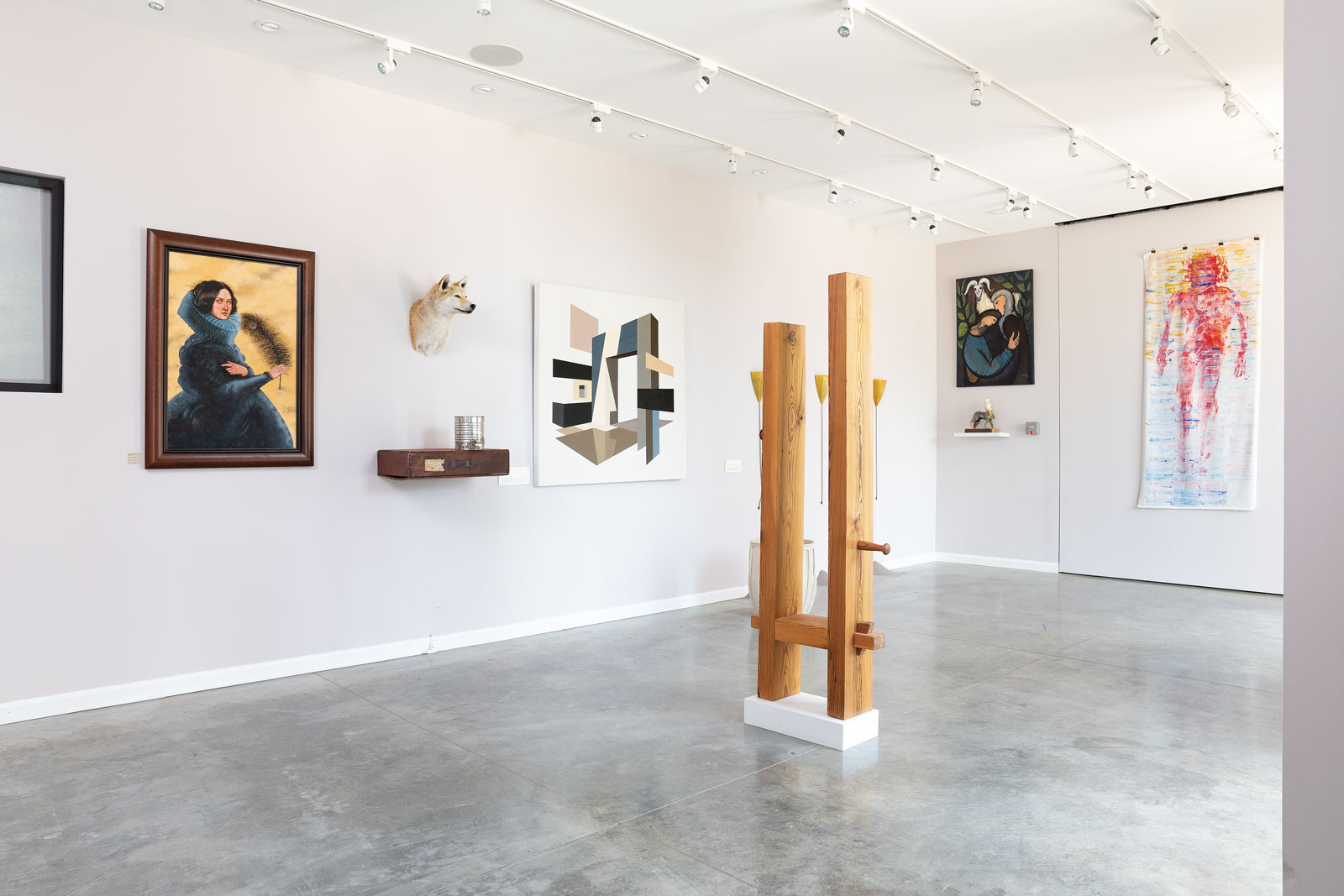
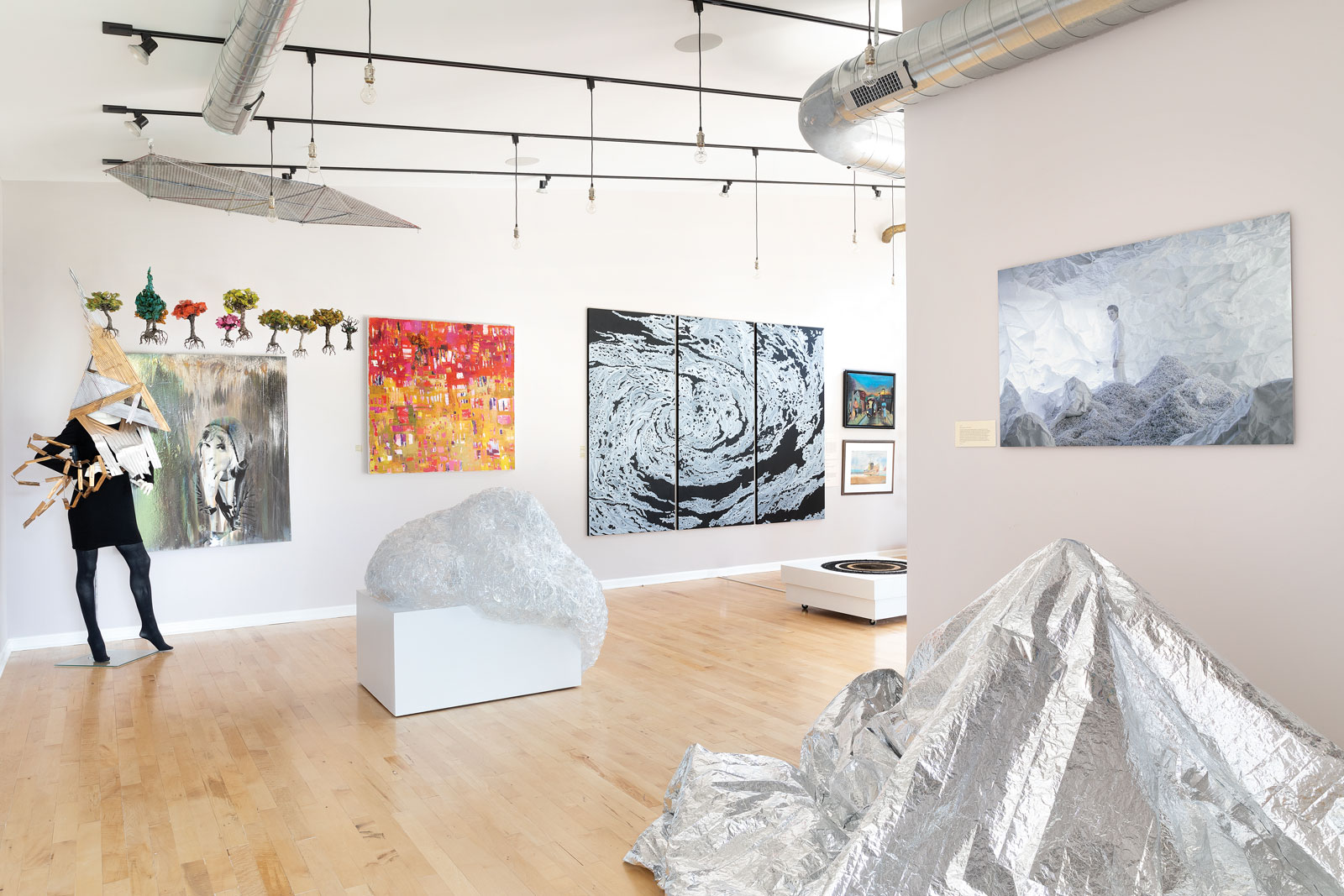
On the left is Carlos Gamez de Francisco’s Red Ink, 2012, oil on canvas. The sculpture is Drool: Coyote, 2014, taxidermy, wood, pump, steel can, by Jacob Heustis. Next to it is Nicolas Jorcino’s Interior #7, acrylic on wood. The sculpture in the center of the room is Shakers, 2010, hand-milled white pine by an unknown high school student. On the sidewall is William Fischer’s Abraham—Isaac, 1982, oil on canvas, a study for a stained glass window at Keneseth Israel Synagogue in Louisville. On the shelf beneath it is Pillsbury Centaur, 2010, resin, glitter invisible dog toy, Pillsbury Dougboy, by Scott Scarboro. On the right is Untitled, 2014, acrylic on canvas, by Avrum Palgy.

Larry Shapin and Ladonna Nicolas’ home in Louisville, Kentucky, was once a 3,000-square-foot house on over 10 acres. As their collection has grown, the house has grown—to 16,000 square feet. Since they choose to live with their art, not keep it in a warehouse or a separate gallery, and since they continue to collect, the house will probably grow again. The collection currently comprises about 1,200 pieces by 330 artists.

The unique character of their collection is that it began with a Louisville artist when Larry purchased his first painting in 1975 and has continued to focus on artists from Kentucky, from 17-year-old high school artists to an artist who is 99. Even Larry’s new car was built in Kentucky.
 
Art also had a role in the couple getting together. When Larry brought Ladonna to the house to see his collection about 17 years ago he showed her a sculpture he had bought 25 years ago. She told him she had been the model for the sculpture. It was destiny! Ladonna shared his love for art. “At the time, I was buying one or two pieces a year,” Larry explains. “Lately, we’ve been buying one piece a week.” “And we’re not going to stop,” Ladonna adds. 
 
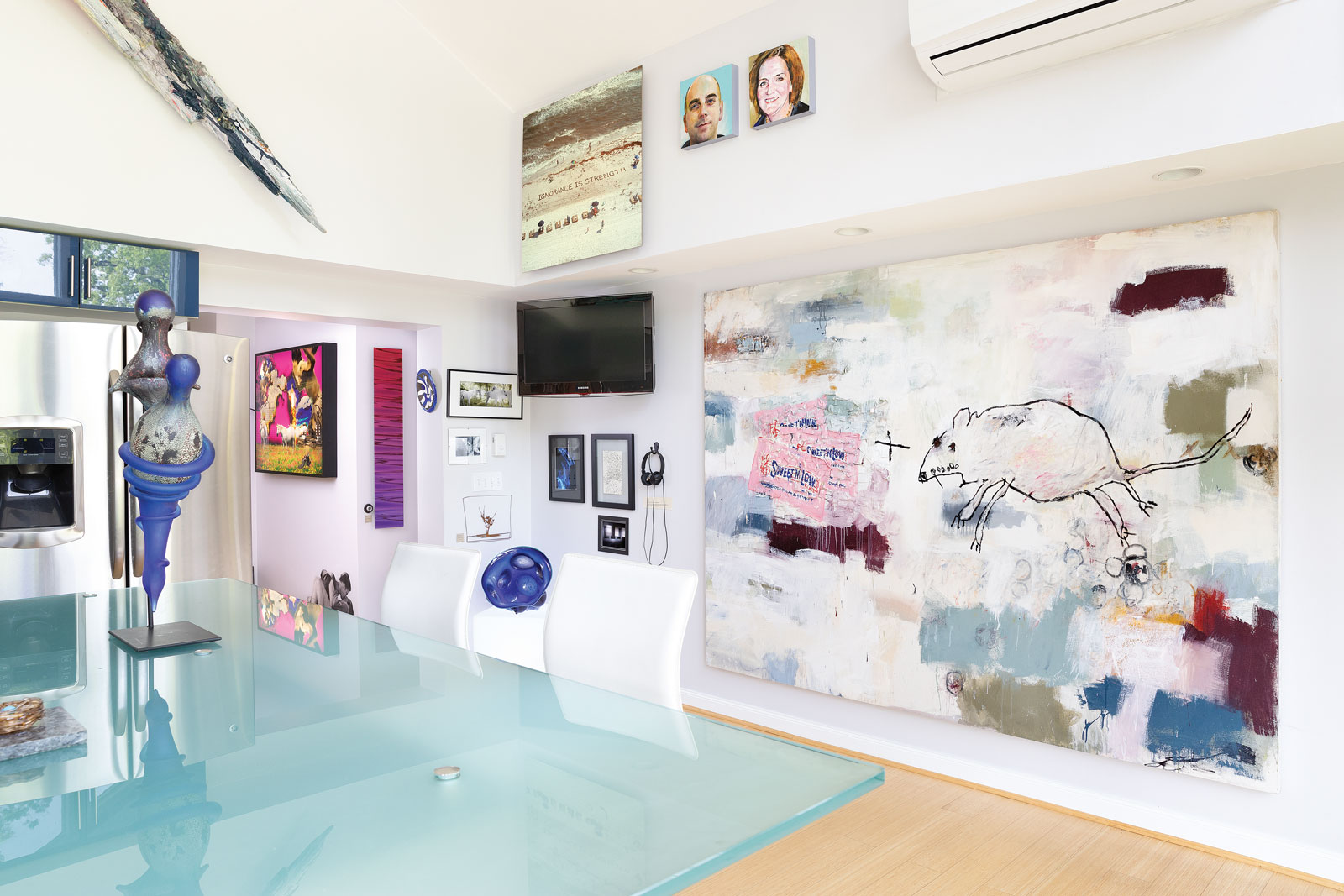
On the counter is Paul Nelson’s Embrace, 2014, blown and cast glass. On the left in the hall is J.B. Wilson’s Self Determination, 2010, digital reconstructed image printed on Duratrans in light box. High on the wall, from left, Hallie de Catherine Jones’ Ignorance is Strength, 2011, dye sublimation on Masonite board and Shayne Hull’s William, 2007 and Valerie, 2006, acrylic on wood. The large painting is Sweet ‘n Low, 2005, acrylic, sugar substitute packets on canvas, by Jacob Heustis. The glass sculpture is Chad Balster’s Untitled, 2013.

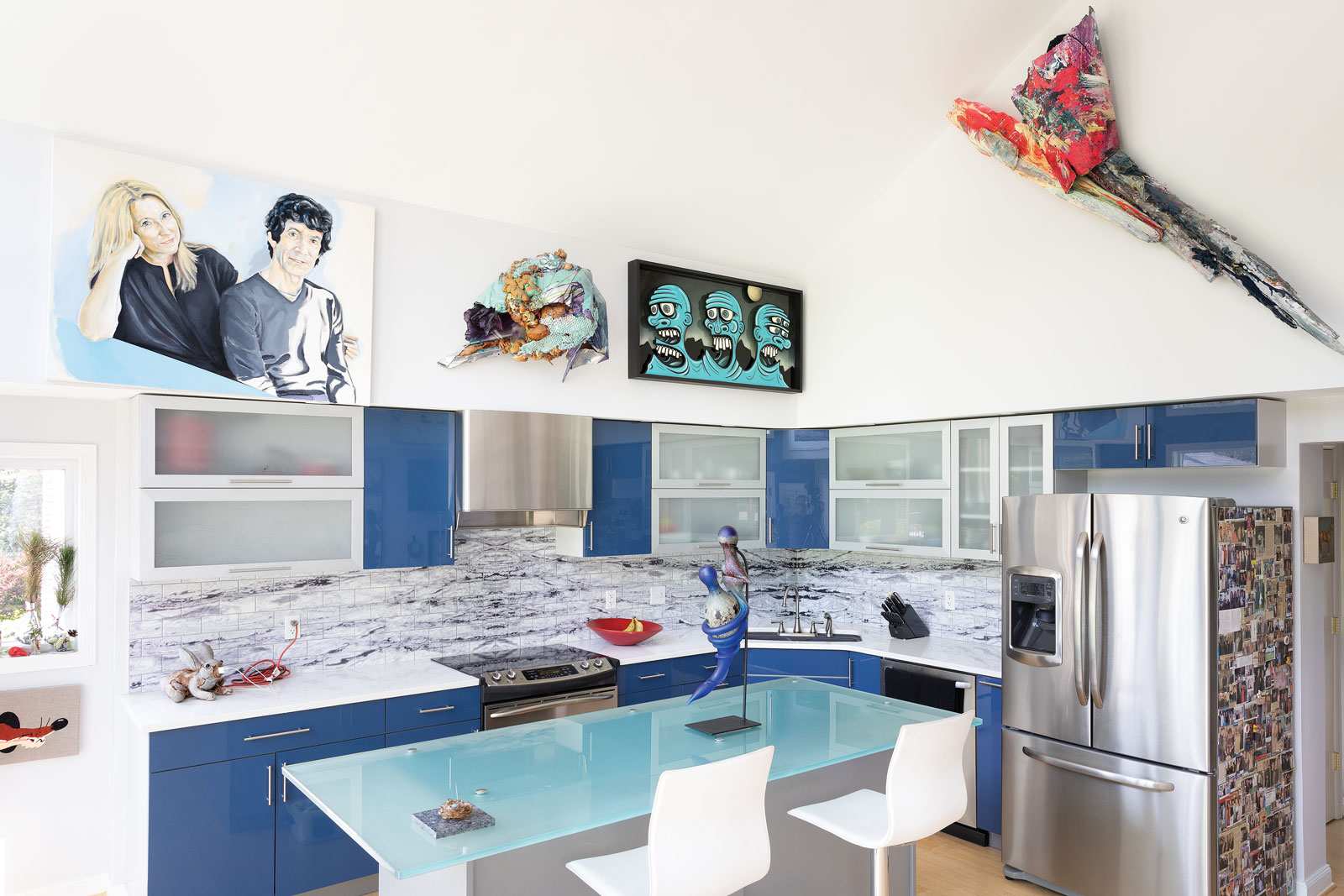
Starting at left in the kitchen are Larry & Ladonna, 2015, acrylic on canvas, by David Iacovazzi-Pau; Keith Linton’s Nebulous, 2004, foam, aluminum, wood, acrylic and spray paint; Dustin Dirt’s Me, Myself & I, 2012, enamel on wood; and Linton’s Prick, 2004, driftwood, metal, paint. The backsplash is J.B. Wilson’s River, 2012, digital image sublimated onto ceramic tile. On the counter is Paul Nelson’s Embrace, 2014, blown and cast glass.
Vinhay Keo’s Precious Plastic Armor, 2014, plastic straws and blinds, spray paint, stands in the corner and in front of J. Eric Heilbronner’s Thought, 2014, chromoskedasic silver gelatin photograph on aluminum. Next are Cheryl Chapman’s Match, 2014, oil on canvas, and Shohei Katayama’s Uzu, 2013, hand drawn oil sharpie on acrylic. The sculpture on the pedestal is Peter Golembowski’s Visual Cliff, 2011, melted plastic petri dishes, wire. On the sidewall is Vinhay Keo’s Samsara, 2017, digital photography on aluminum. In the foreground is Richard Campbell’s Buddy, 2010, deconstructed mechanical dog, thermal blanket.
Larry’s first piece was Mary Ann Currier’s Frilly Lilies. “The woman I was dating at the time wanted to go to an art opening. I had never been to one,” Larry says. “I liked the painting, but it was $500 and I didn’t have $500. But I worked out a deal with Mary Ann to pay her $30 a month. When she died last year, she was a close friend and Kentucky’s most famous contemporary artist.”
 
“We came to ‘buy local’ before it became popular,” Ladonna notes. Larry adds, “By having a collection of work by local artists, we run into them all the time and see how they progress. If we bought out of town artists, we’d never see them again. This way, we can help them and introduce them to other collectors.”
 
“We want to support emerging local artists,” Ladonna says. “Their work is affordable and it’s fun to go around to their studios. Their ideas are exciting and they’re so excited about their work. Many are shy but soon open up when we begin talking about their ideas. We collect many young artists who didn’t think they’d be collectible. It’s nice to see them grow. We can say ‘I knew them when.’ We’re like a little incubator.”
 
The couple doesn’t commission artwork but did when they met one troubled young artist. They asked her to make a piece for the pergola in their garden. “It turned her life around,” Larry happily explains. “She graduated from high school and then went on to study art.

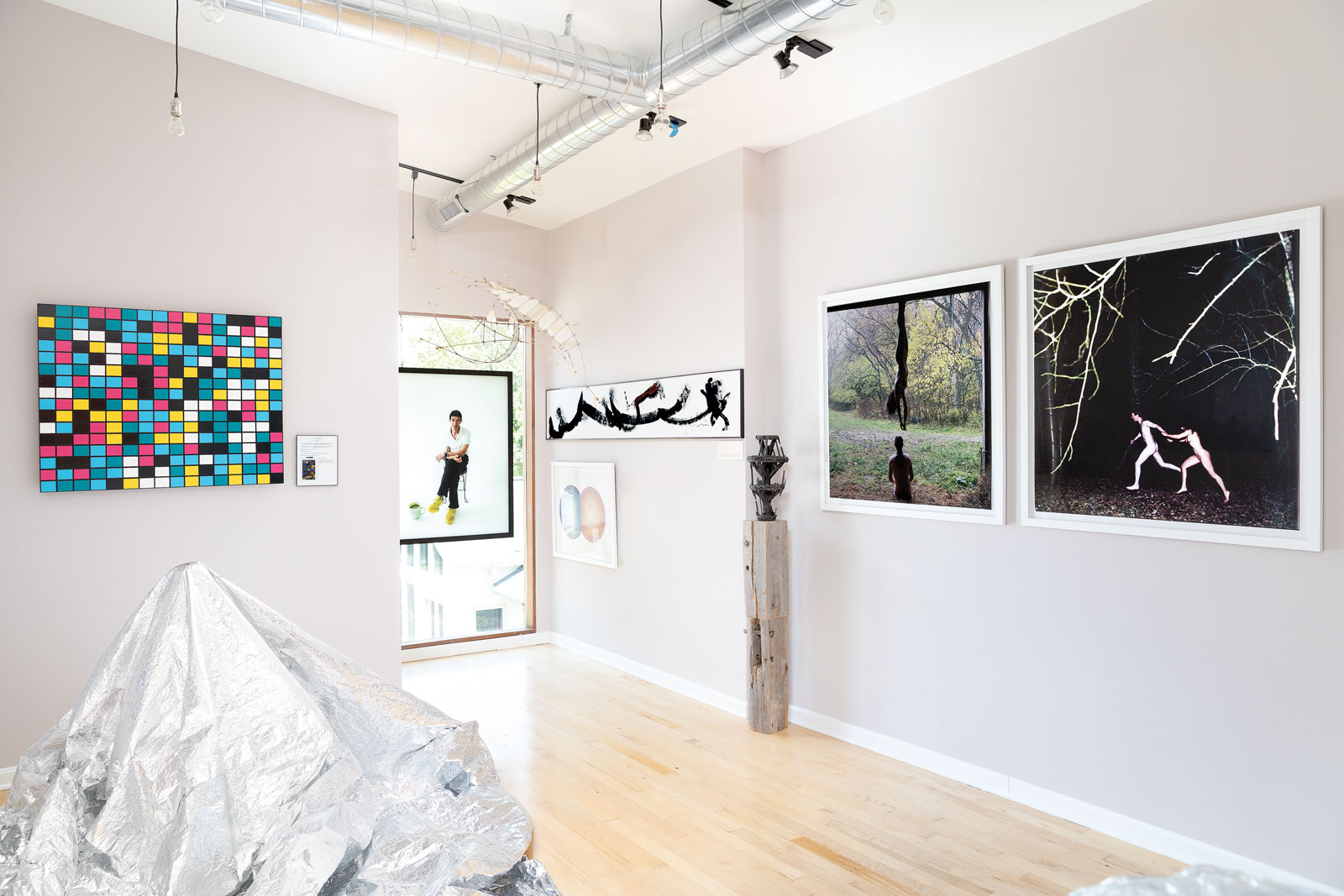
On the left is Thaniel Ion Lee’s Dice Painting number 1, 2013, enamel on board. In the foreground is Richard Campbell’s Buddy, 2010, deconstructed mechanical dog, thermal blanket. In the window is Carrie Burr’s Larry, 2017, photograph on polymire. The long painting is Carlos Gamez de Francisco’s Hippopotamus, 2012, India ink, oil, pencil on canvas. Beneath it is Gibbs Rounsavall’s Transition #2, 2018, enamel on paper. The photographic series is Surrender, 2015, by Leslie Lyons.
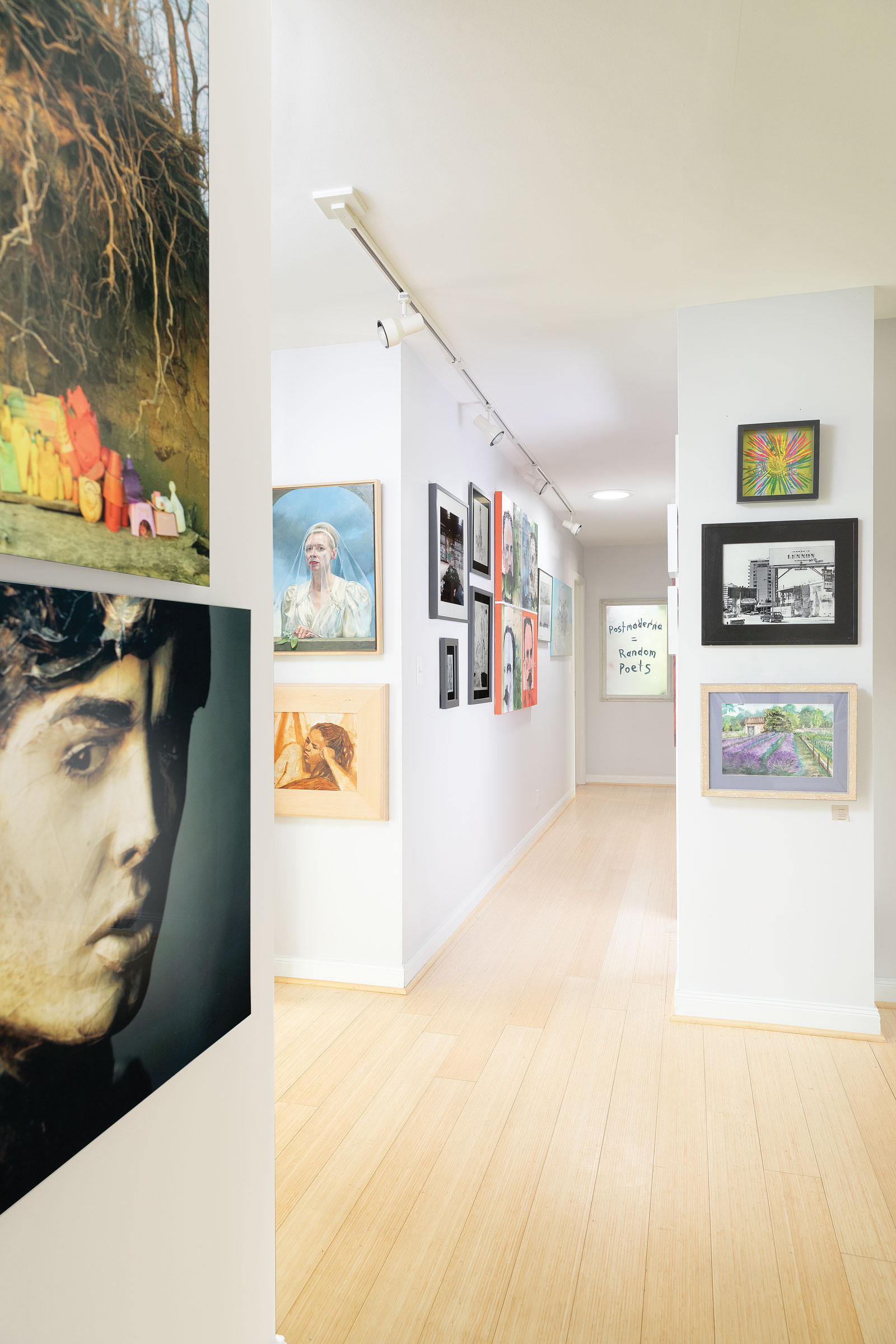
On the top left is Albertus Gorman’s The Golden Hour, 2017, dye sublimation on aluminum. Beneath it is Matt Gatton’s Self-Portrait, 2018, dye sublimation of photo-sculpture on aluminum. In the hall, from top left, are Gaela Erwin’s S.P.: Mystic Marriage of St. Catherine, oil on linen on panel, and Suzanne Enriquez Dougherty’s Female Study, 2008, oil on board. On the right, at top, are Andrea Stanislav’s Untitled, 2009, glitter, print assemblage, Don Ater’s John Lennon is Available, 1972, photograph, and Jill Baker’s Lavender Fields at St. Remy, 1998, watercolor.
“Other artists take strange career paths to support their art,” he continues. “We met one young woman who went into nursing but is now in graduate school in art.

“We have a couple of pieces that were done by high school students. Shakers was designed and constructed by one. The Shakers were celibate and he shows the male and female figures facing away from each other. 
 The couple host charity events and school tours. “Whether they’re 17 or 70,” Larry comments, “they’ve never seen anything like this.” The collection is challenging and behind each piece there is a story. Most of their guests ask for the stories—sometimes supplied by the artists who have been invited to the event and sometimes by the host. “Most people are fascinated once they hear the stories,” Larry says. “We’re educating the people of Louisville that there is interesting stuff out there.”

Many of the young artists reveal themselves in their art. Ladonna has said, “I think that students are just really coming up with cool ideas. It’s like kids who are more creative when they are little, and as they get older feel like they have to fit into a slot. Younger artists are wanting to and willing to take risks.”
 
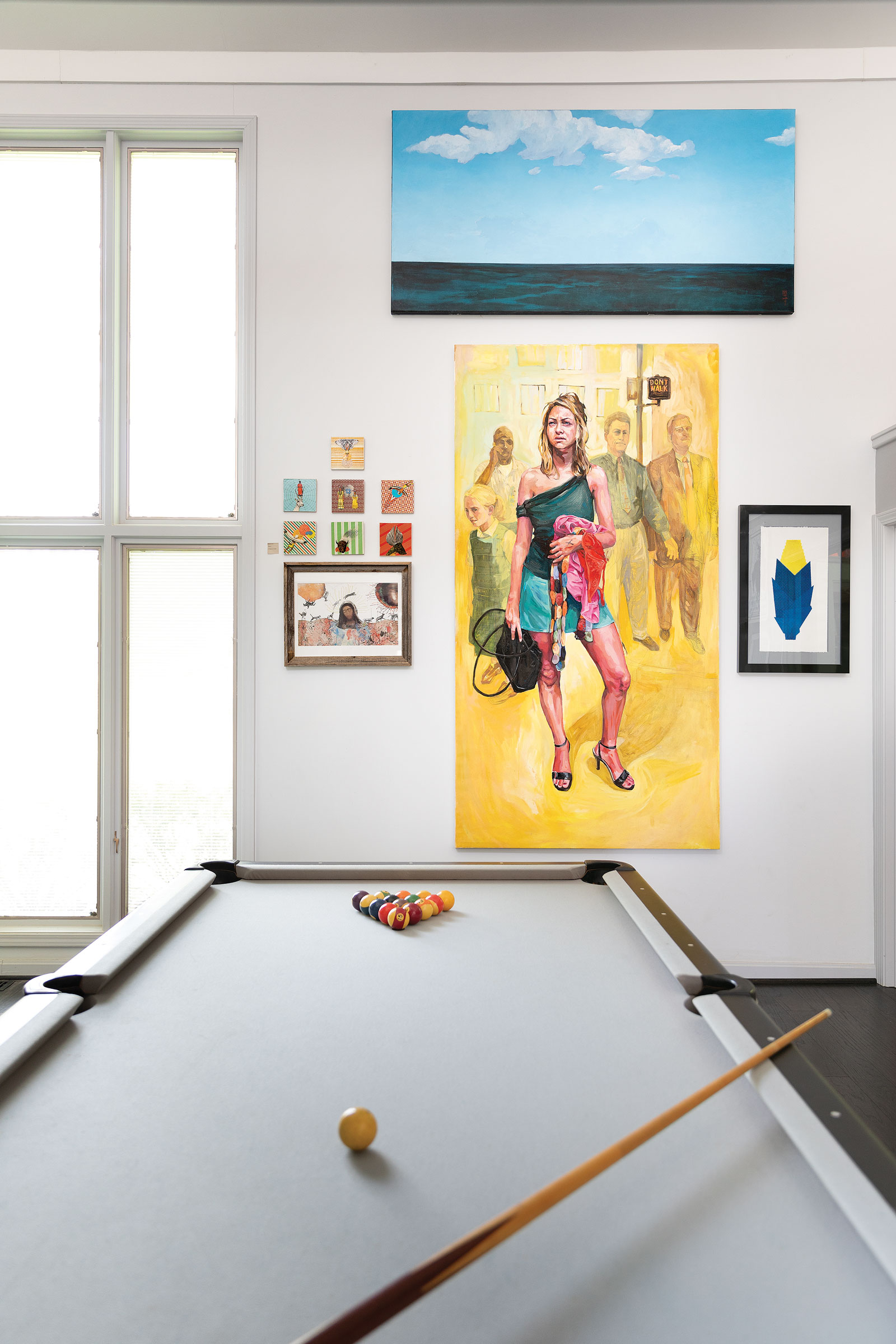
Natasha Sud’s Native, 2015, assemblage on wood is on the left. At the top is Peterson Thomas’s Lorain County Sky, 2013, acrylic on canvas. Beneath it is Sarah Lasley’s Goodbye Brooklyn, 2009, oil on canvas. On the right is Drura Parrish’s LOT Cob, 2010, silkscreen on paper.
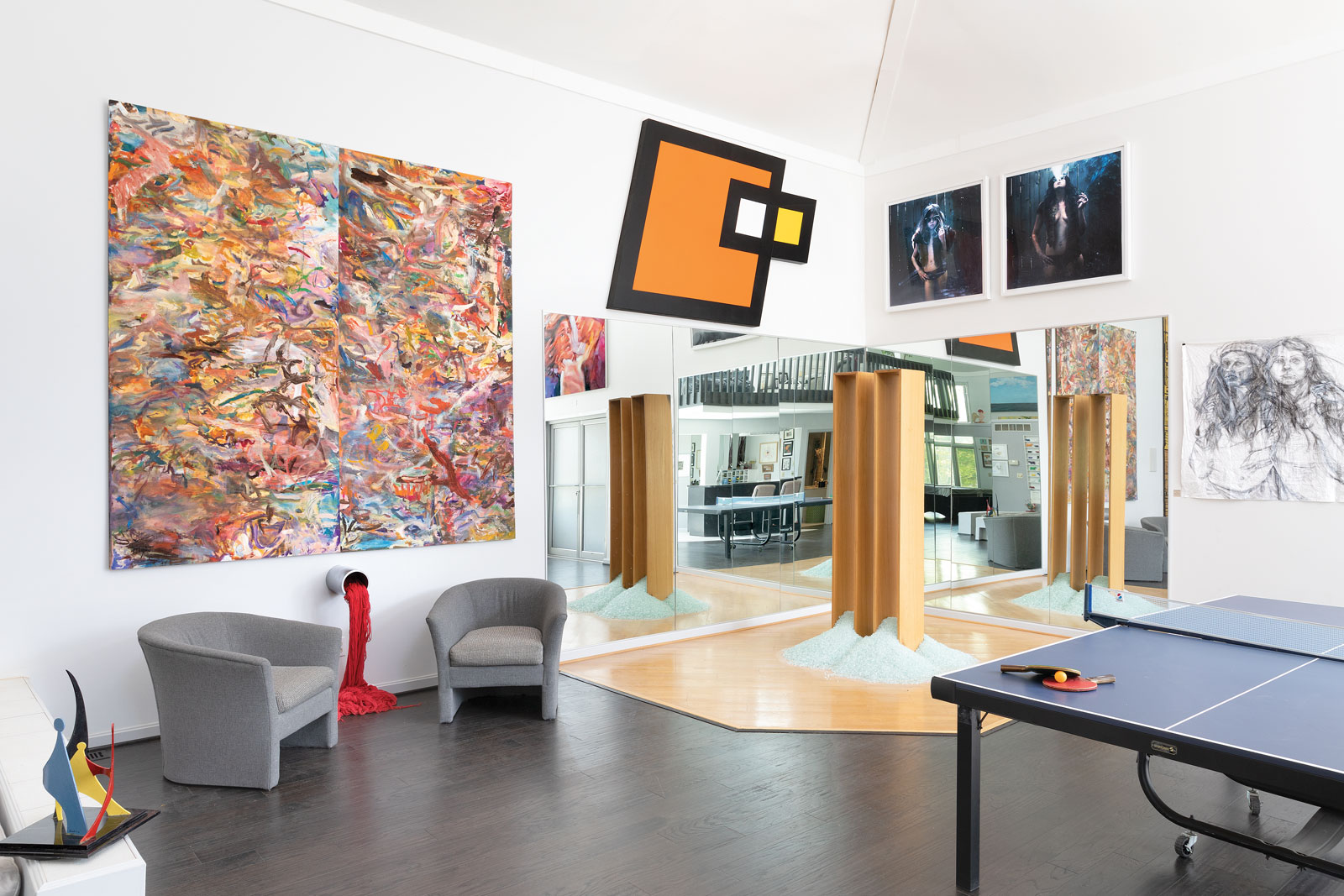
The sculpture on the left is William Fisher’s Family, 1990, painted steel. The large painting is Bob Higgins’ Homage to de Kooning, acrylic on board. Beneath it is Nathaniel Hendrickson’s Monkey Meat, 2013, yard, cardboard cylinder. High on the wall is Bryce Hudson’s Boundaries, 2004, acrylic on canvas. On the right is Devon Murphy’s Constraint, 2017, graphite on Tyvek. The sculpture is Chris Radtke’s Reach, 2008, oak, shattered tempered glass. Above the Radtke are two 2014 photographs by Leslie Lyons, from left, Before and After.
A young gay man from Cambodia, Vinhay Keo, was unable to come out to his family or to others when he first came to the States. His Precious Plastic Armor was his freshman piece at the Kentucky School of Art. Nearby in the couple’s collection is his senior thesis piece, Samsara, in which he is seen in a sea of 2,000 shredded phone books emblematic of his coming to terms with who he is. Samsara, in Hinduism and Buddhism, refers to the cycle of death and rebirth. The collectors are proud to note that Keo is beginning graduate school in LA.

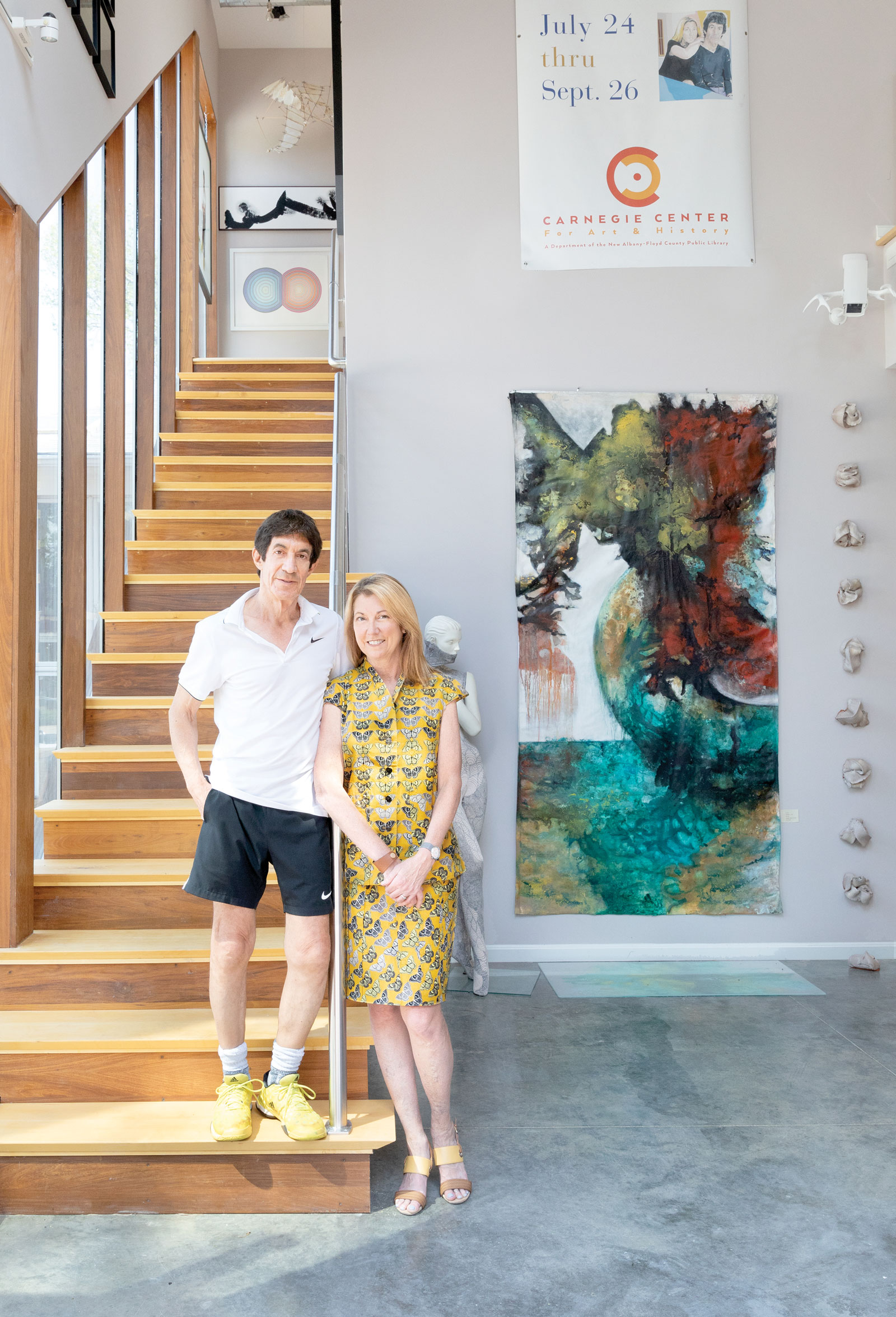
An Iraqi immigrant, Vian Sora, painted Purification, representing the chaos and bloodshed of war in the upper portion and a calmness at the bottom as her life settled down peacefully.
 A large installation piece, Chris Radtke’s Reach, represents the artist herself. The crushed glass is equal to her body weight and burn marks at the top of the oak sculpture represent a lightning strike that began the process of life on earth.

A large painting in the kitchen is Jacob Heustis’s homage to Helen Frankenthaler, Sweet ‘n Low. Painted in the technique of the great abstract expressionist, it incorporates a rat that is the signature of the street artist Banksy, and alludes to the toxic quality of the artificial sweetener which is said to have been developed as a rat poison.  
 
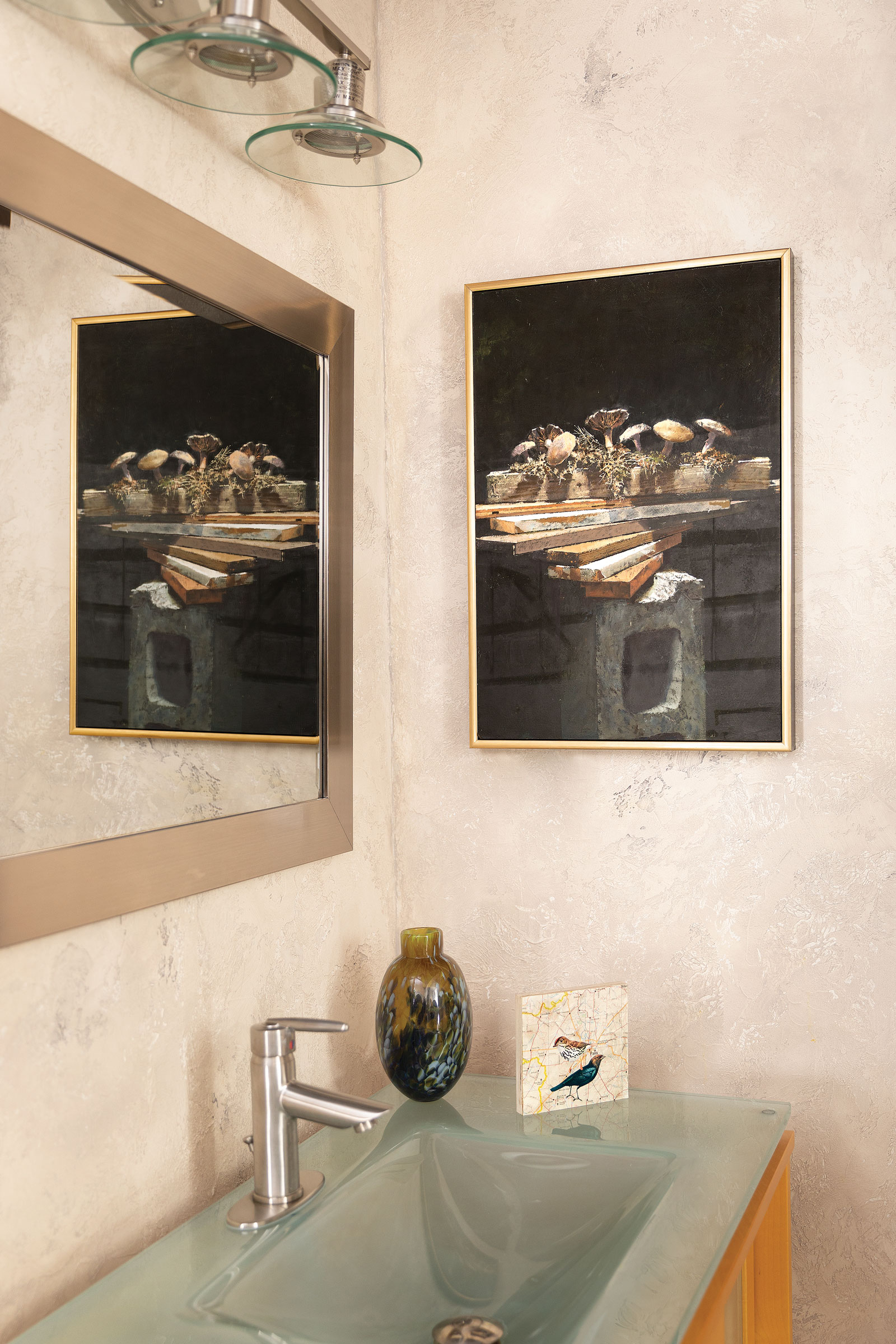
William Ciccariello’s Black Mushroom, 1998, oil on board, hangs above the sink.
Larry Shapin and Ladonna Nicolas stand in front of Vian Sora’s Purification, 2013, Plexiglass, pigments, inks and oil on canvas.
Heustis takes a more positive turn in Drool: Coyote in which he has mounted a taxidermy road kill coyote head above a shelf with a can. A circulating pump allows the coyote to “drool” into the can, enjoying a second chance at life.
 
As the collection grows, the couple is planning for its future, investigating ways it can be kept together in its setting either through a foundation or in association with an institution. They are also considering the possibility that there could be artist residencies at the property.
Surrounded by the art and knowing the stories behind it and the artists who made it Larry and Ladonna are the consummate passionate art patrons. It has become their life. As Ladonna says, “Living with the art is second nature. Collect local—wherever local is.” •
Powered by Froala Editor

Preview New Artworks from Galleries
Coast-to-Coast

See Artworks for Sale
Click on individual art galleries below.