Stephen Hannock’s grand, atmospheric landscapes routinely invite comparisons to those by the 19th-century Hudson River School artists. The association was cemented decades ago with the creation of The Oxbow: After Church, After Cole, Flooded (Flooded River for the Matriarchs E. & A. Mongan), Green Light, a mural-sized painting acquired by the Metropolitan Museum of Art shortly after its execution in 2001.
Hannock’s contemporary interpretation of the Connecticut River scene made for a perfect counterpart to the original, Thomas Cole’s View from Mount Holyoke, Northampton, Massachusetts, after a Thunderstorm—The Oxbow (1836), also in the Met’s collection.
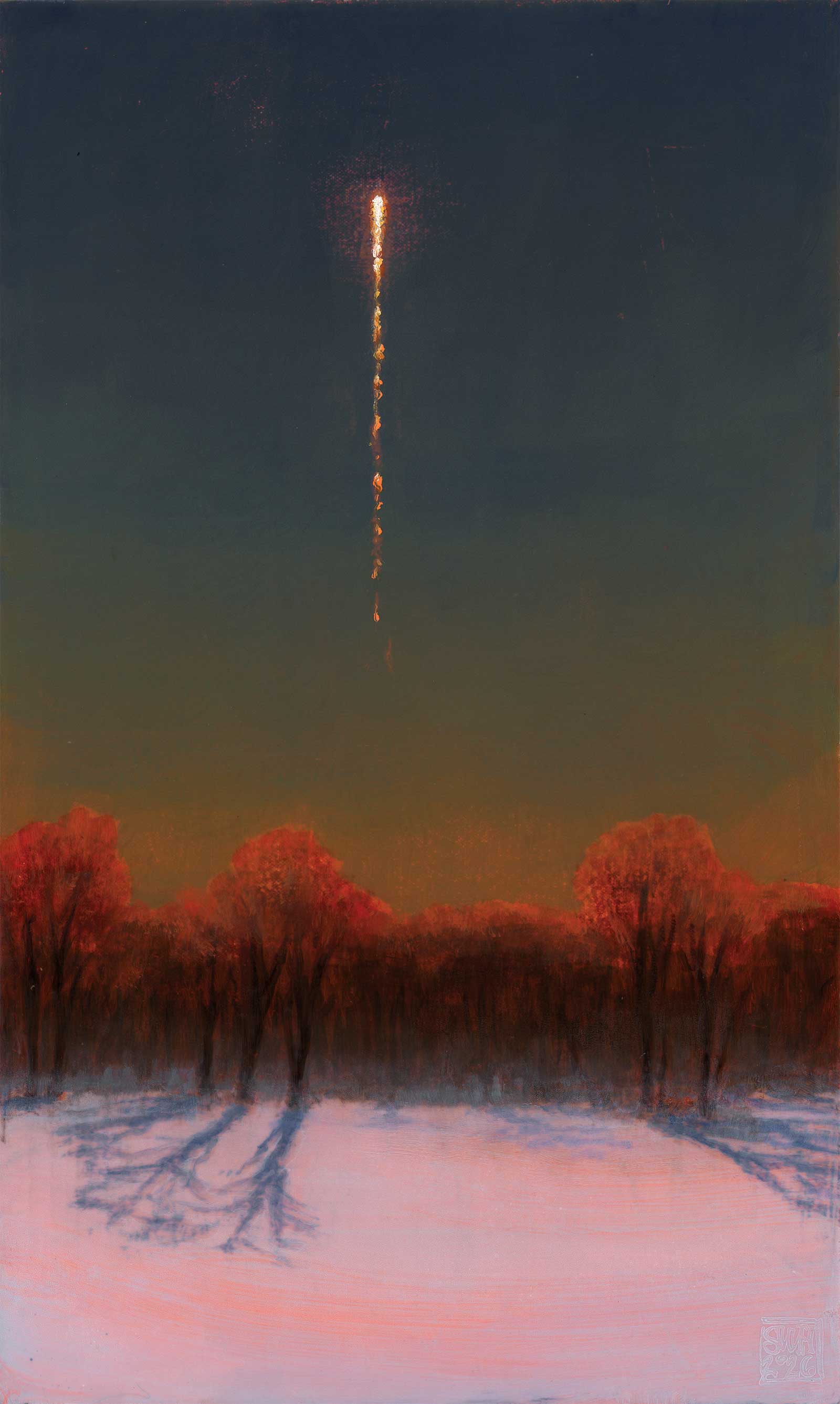
Incendiary Nocturne over Snowfield at Dawn, 2026, polished oil on canvas 20 x 12 in.
But beneath the similarities in subject and style, are layers of the experimental techniques and modern elements that Hannock is also known for, from a period when he created imaginary landscapes with phosphorescent paints that glowed under black light, to embedding personal writings in his works, and perfecting a sanding technique to enhance luminosity.
“I never considered myself to be a ‘landscape painter,’ despite painting compositions with an obvious horizon,” shares Hannock. “Luminosity and mood have always arrested my interest more than place. And then, years ago it was brought to my attention by Gary Tinterow, formerly at the Metropolitan Museum of Art, now the director of the MFA, Houston, that I had essentially moved from painting a place to setting a stage. With the example of my vistas with text, people and my association with them mean more to me than the typography. Thus, the diaries and collage woven throughout the composition of the paintings.”
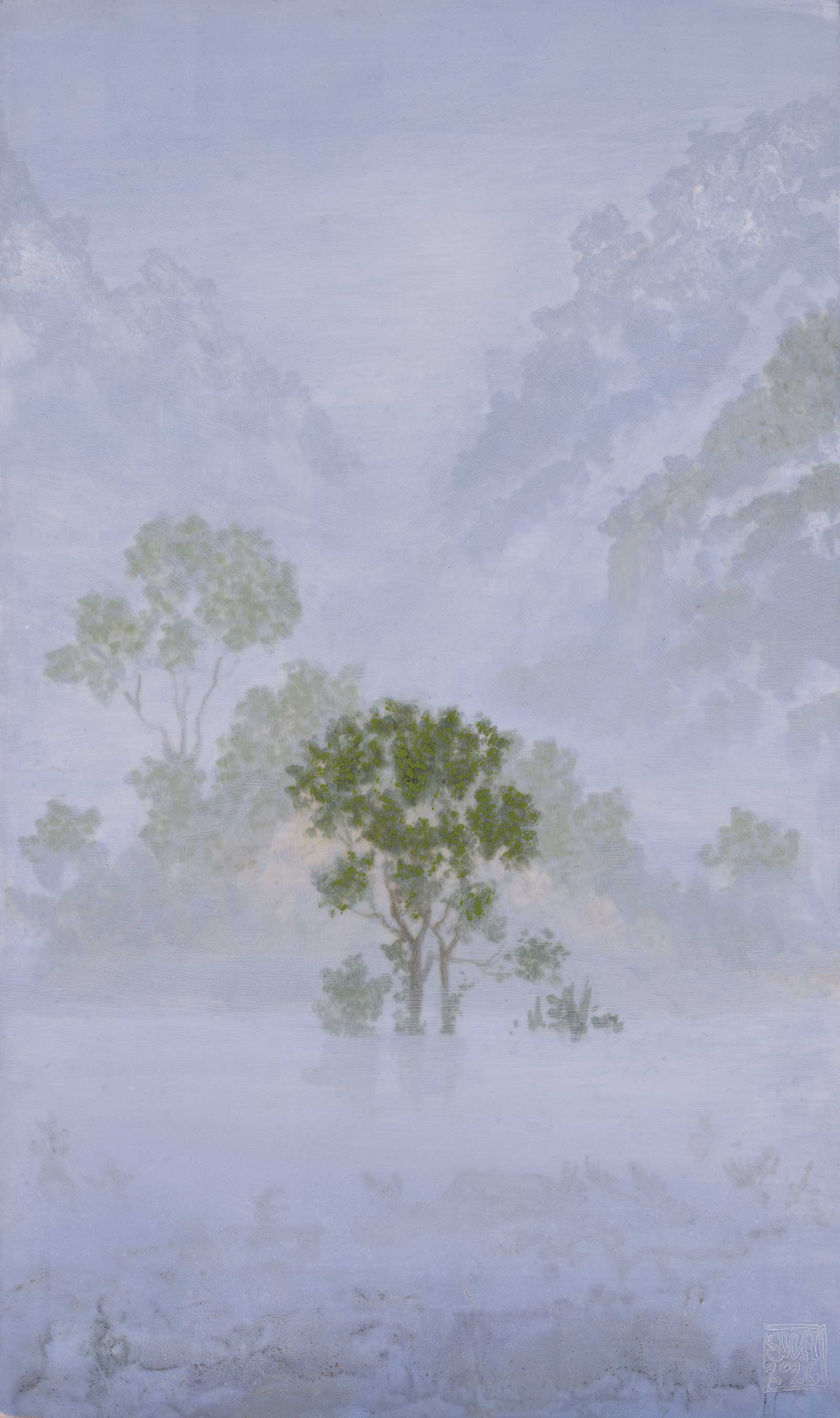
Silverado Dawn with Cascading Fog, 2026, polished oil on canvas, 20 x 12 in.
A new body of work that builds on Hannock’s five decades of artistic practice is now on view in a two-part exhibition at Berggruen Gallery in San Francisco. The works in Nocturnes in the Gloaming draw attention to the polished oil technique Hannock employs to achieve subtle hues and atmospheric luminosity. Each work in Nocturnes in the Gloamingis accompanied by the preliminary study used as the main reference point for the finished work, allowing viewers an intimate view of Hannock's process from its nascent beginnings to full expression.
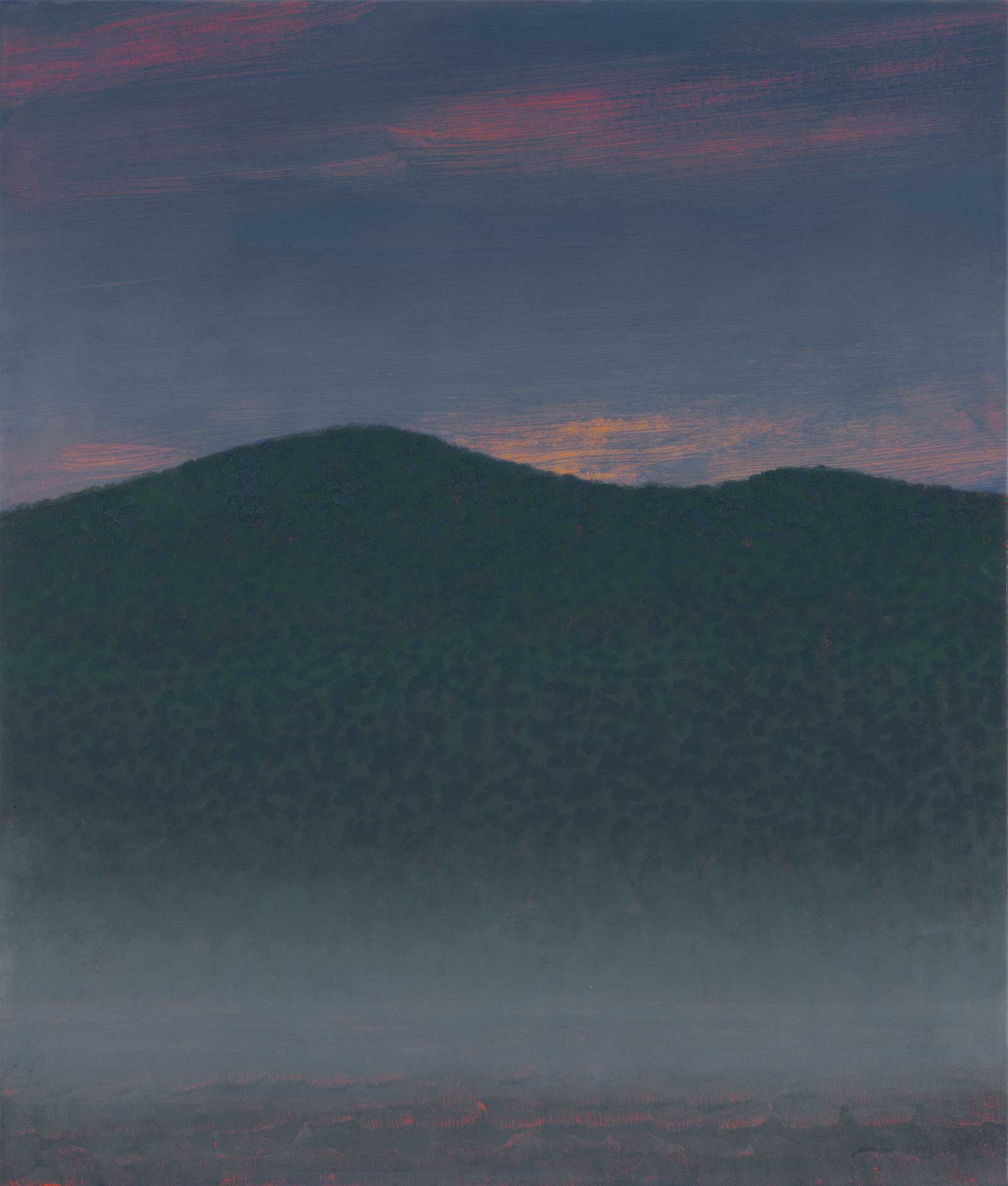
Hudson Highlands: Clearing Dawn, 2026, polished oil on canvas, 20 x 17 in.
From the River Tyne to the Port of San Francisco is a series of narrative paintings inspired by historical maritime events that link the port city of Newcastle upon Tyne in the northernmost region of England, to San Francisco. Arrival of the Steam-Tug Eppleton Hall: The Port of San Francisco, March 1970, celebrates the successful 11,000-mile journey of Newcastle upon Tyne’s last surviving historic steam tugboat to its (and Hannock’s) current home in San Francisco. Another interesting link between the two cities is Hannock’s 40-year friendship with the artist and musician Sting, who is from Newcastle upon Tyne. The city is the setting for Sting’s musical The Last Ship, for which Hannock created hand-colored serigraphs for the accompanying publication. A selection of these serigraphs are also part of the exhibition.
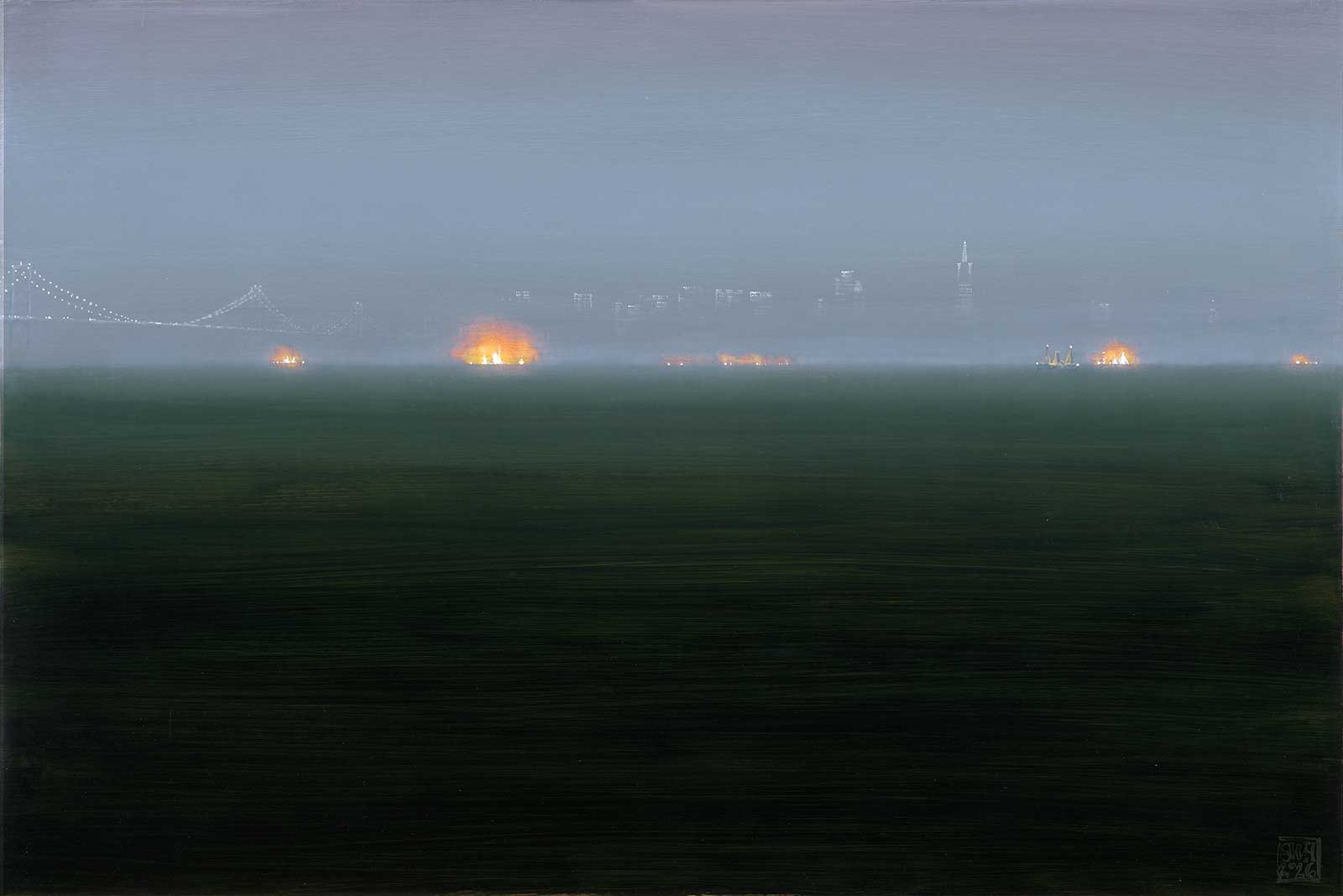
The Arrival of the Steam-Tug Eppleton Hall: Port of San Francisco, 1970, 2026, polished oil on canvas, 24 x 36 in.
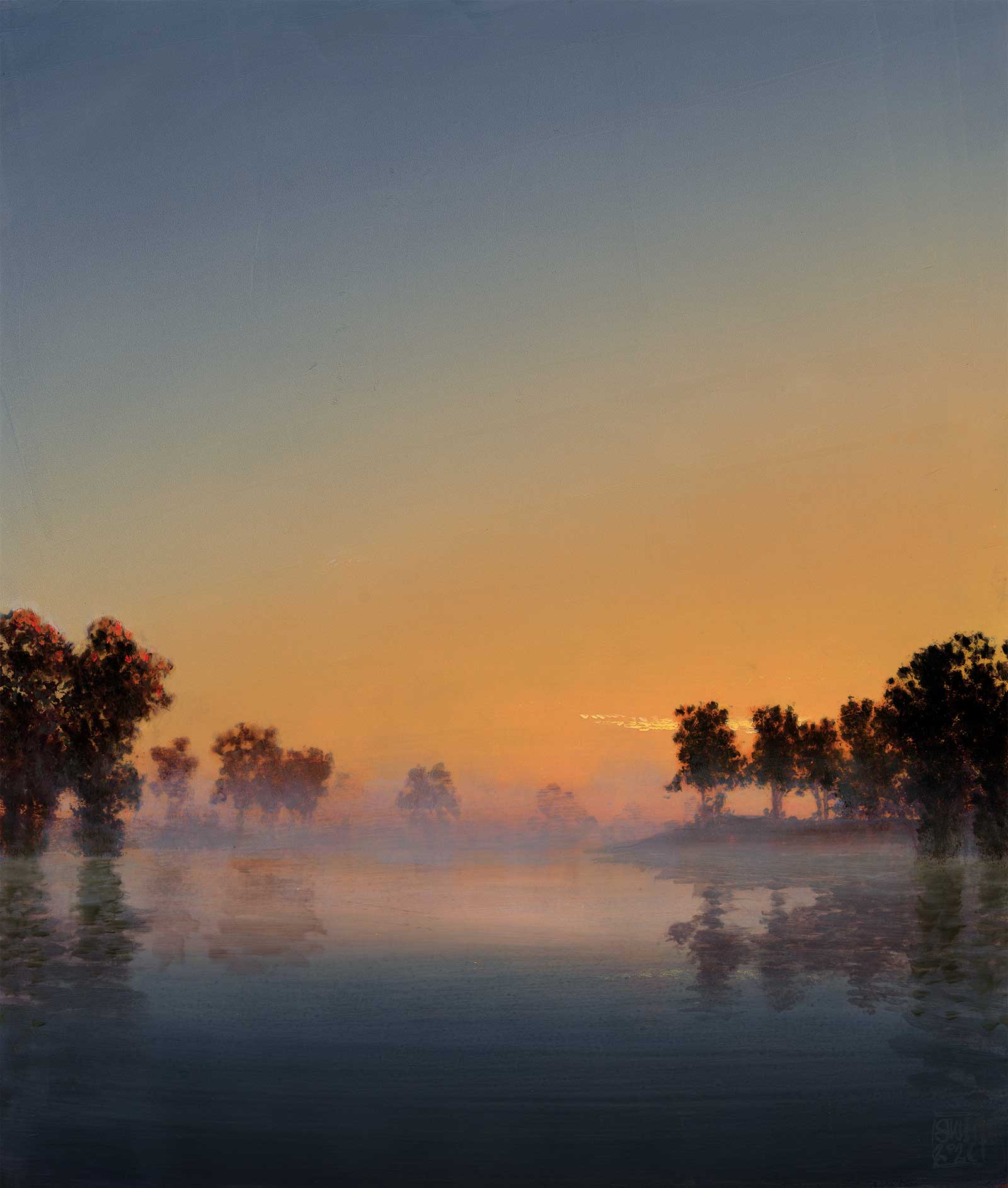
Flooded River with Luminous Corridor, polished oil on canvas, 20 x 17 in.
In addition to Arrival of the Steam-Tug Eppleton Hall: The Port of San Francisco, March 1970, Berggruen points to Northern City Renaissance: The River Tyne with the Launch of the Eppleton Hall, 2026, as another central work in the exhibition. He explains, “One of Hannock’s signature vistas-with-text, it speaks to Newcastle upon Tyne’s creative renewal, following the closure of its coal mines. At one point, the largest coal-exporting city in the world, Newcastle upon Tyne saw the collapse of its main industry due to the Industrial Revolution. Hannock points to the city’s critical juncture as an opportunity for the revival of creative industries.”
For Hannock, what links the two parts of the exhibition is a sense of mystery. “The Nocturnes in the Gloaming are an exploration of the quiet color that exists in the low light of the in-between worlds of night and day, with the occasional interruption of fireworks. The technique is the rigorous effort of ‘polished oil on canvas.’ This allows for the desired mood without interference from the glare of reflected light.” The works in From the River Tyne to the Port of San Francisco, and the story they tell, are filled with the mystery of misty nocturnal seascapes and an epic maritime odyssey that defied all odds.
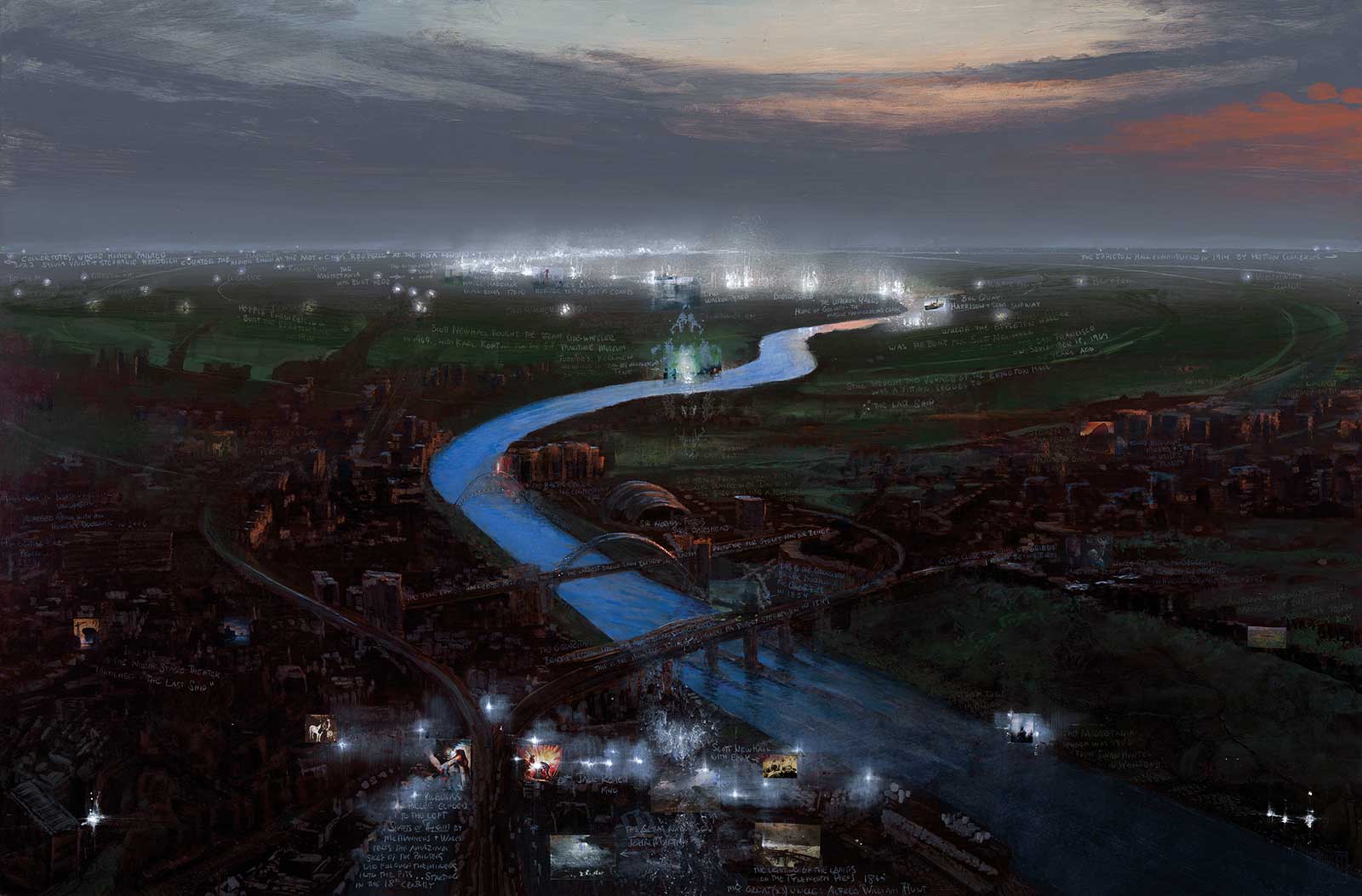
Northern City Renaissance: The River Tyne with the Launch of the Eppleton Hall, 2026, polished oil on canvas, 40 x 60 in.
“The fundamentals of my art-making have not changed,” explains Hannock. “In the midst of living day to day, creative thoughts come and go. When an idea excites me to a given point...then it’s time to bring the idea to life.” —
Berggruen Gallery 10 Hawthorne Street • San Francisco, CA 94105 (415) 781-4629 • www.berggruen.com
Powered by Froala Editor