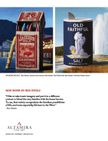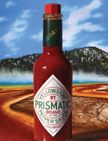
Anthony Waichulis and Natalie Featherston are each masters of the trompe l’oeil technique—a painting style of artful illusion and a decidedly pleasant “trickery” of the mind. It’s downright delightful to view their works, which challenge our perceptions through a masterful handle on the craft. Sometimes you almost have to pause for a moment and wonder whether it all truly is paint or whether they sneak a few real items in there. (They don’t).
So when these two minds came together to curate a new exhibition at Meyer Gallery on Santa Fe’s historic Canyon Road, it was bound to be captivating.
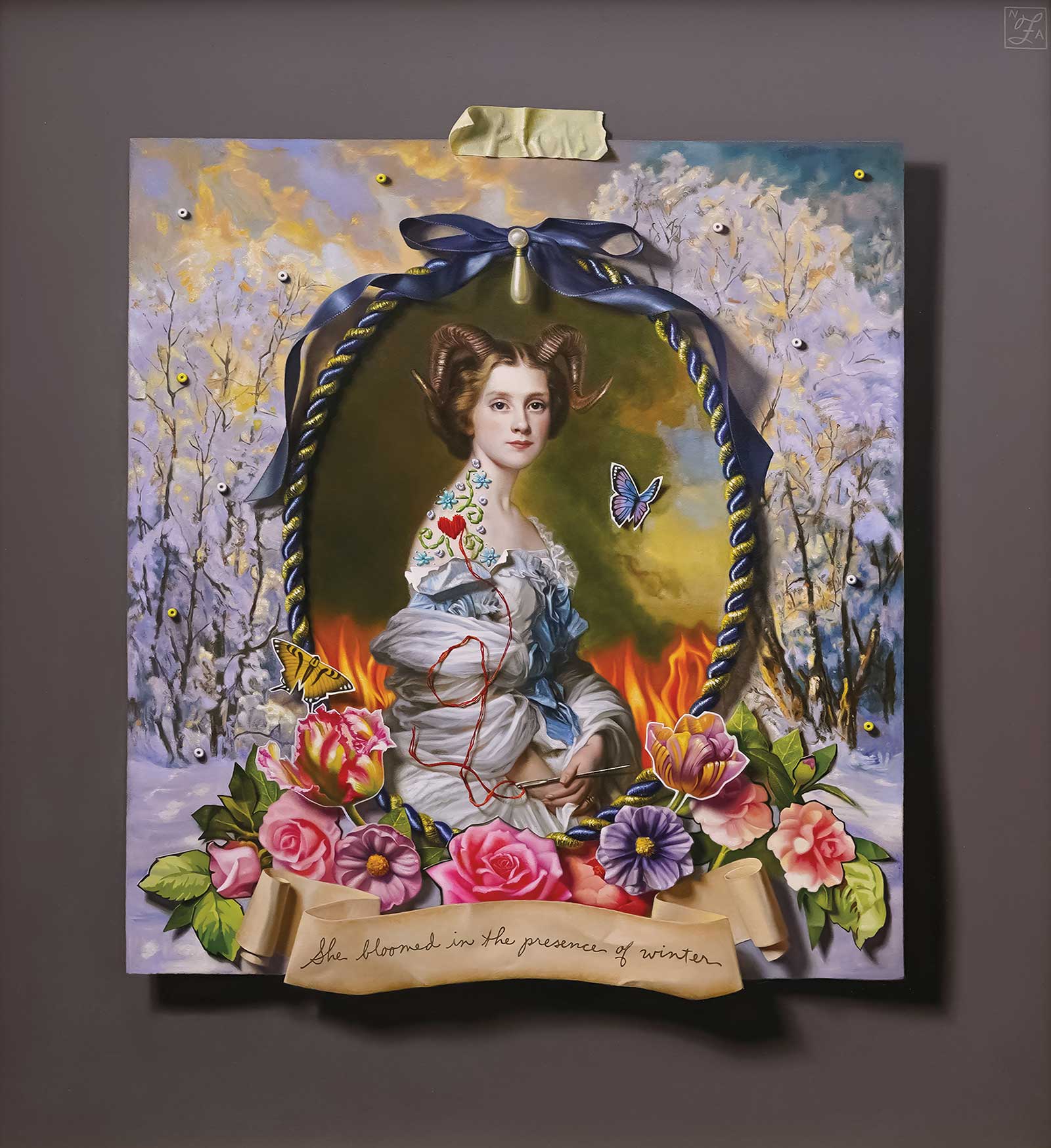
Natalie Featherston, She Bloomed in the Presence of Winter, oil on panel, 22 x 20 in.
Waichulis explains that the “seed” idea for this show came from a fascinating book he read years ago, titled The Creative Spark: How Imagination Made Humans Exceptional, by American anthropologist Agustín Fuentes. “He argues that imagination and collaborative creativity have been central to human evolution, allowing us to envision possibilities and work together to make them real. That broad understanding of creativity provided the initial inspiration, but exhibition co-curator Natalie Featherston’s work became the catalyst for narrowing the focus and ultimately creating the exhibition,” he says. “It’s easy to see that Natalie’s work grows out of the long-standing conventions that define trompe l’oeil. Yet her contemporary leanings and modern aesthetic have undoubtedly expanded what countless artists and art lovers may come to regard as the nature of the genre itself. It’s a very powerful thing. Her work embodies a compelling balance between tradition and contemporary invention that truly defines what this show is about.”
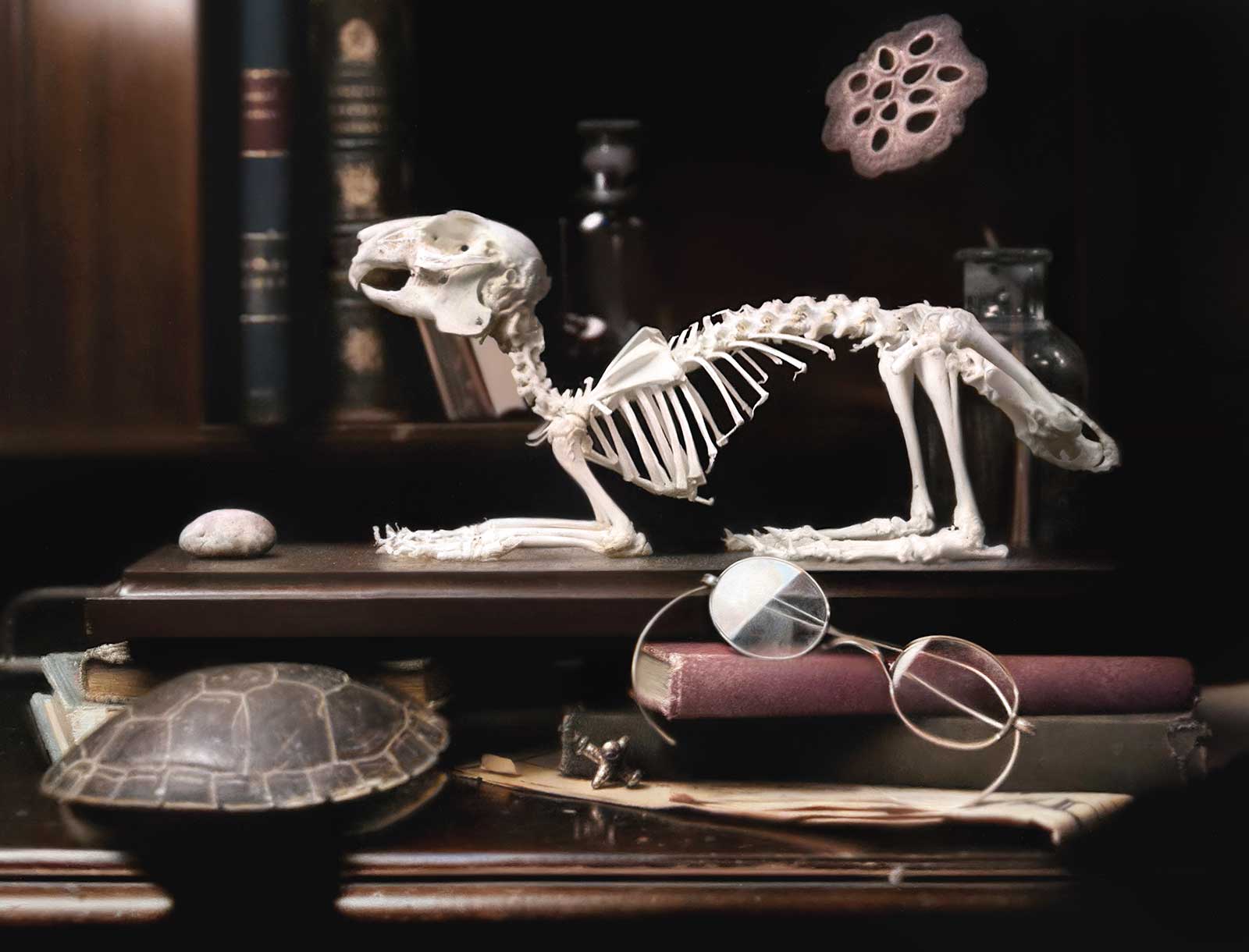
Anthony Waichulis, Fable, oil on panel, 16 x 20 in.
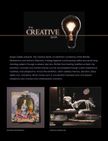
Titled The Creative Spark, the exhibition centers on the question, “What happens when an artist takes the discipline of the Old Masters seriously and still insists on saying something new?”
Featherston and Waichulis have their own answers to that question, but both agree on the heart of it: it’s ultimately about channeling the brilliance of past masters, then taking those fundamental skills into the modern day and doing something entirely original.
“The Old Masters were innovators, learning to use new materials and tools to create their work while relying on the traditions and disciplined training of their past. I think we have to do the same thing—not just copy the Old Masters and reproduce their efforts, but stand on their shoulders,” says Featherston. “What happens when we do this is create art that has a new visual language and connects with a modern sensibility; we continue the legacy of the past and become the artistic inspiration and building blocks for the future.”
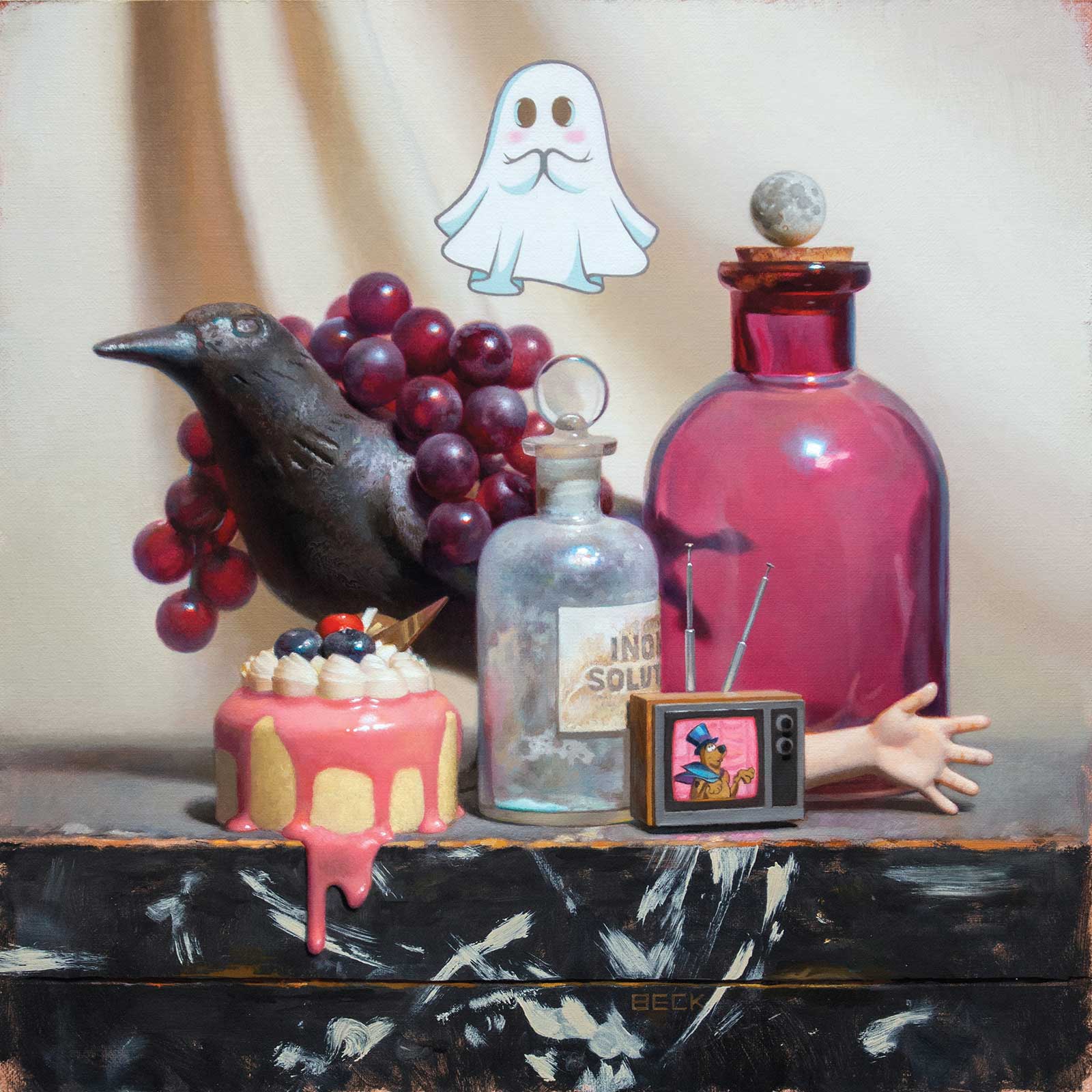
Julie Beck, Altar of Enjoyment, oil on panel, 12 x 12 in.
The lineup for The Creative Spark is impressive. Collectors can expect to see works by some of the most successful and skilled artists working in the American art market today: Anthony Adcock, David Baird, Julie Beck, David Michael Bowers, Mary Carroll, Michael Paul Carson, Scott Conery, Silvia Davis, Diego Glazer, Patrick Kramer, Maxwell Miller, Sharon Moody, Rodney O’Dell Davis, Brian O’Neill, Jacob A. Pfeiffer, Mark R. Pugh, Fatima Ronquillo, Alisa Shea, June Stratton, Anna Wypych and Vincent Xeus, as well as Featherston and Waichulis.
“The roster for this show is certainly not exhaustive, but we wanted to bring together artists whose work reflects, in varied ways, how tradition and innovation can be balanced. Some take conspicuous liberties with inherited conventions, while others introduce a more subtle departure from expectation,” Waichulis says. “That range is part of what we wanted viewers to encounter. Ideally, the collection we’ve assembled will serve as a starting point for exploring other artists’ creative efforts through this same lens. Oceans of incredible artists navigate these relationships beautifully, and we hope this exhibition encourages viewers to seek them out.”
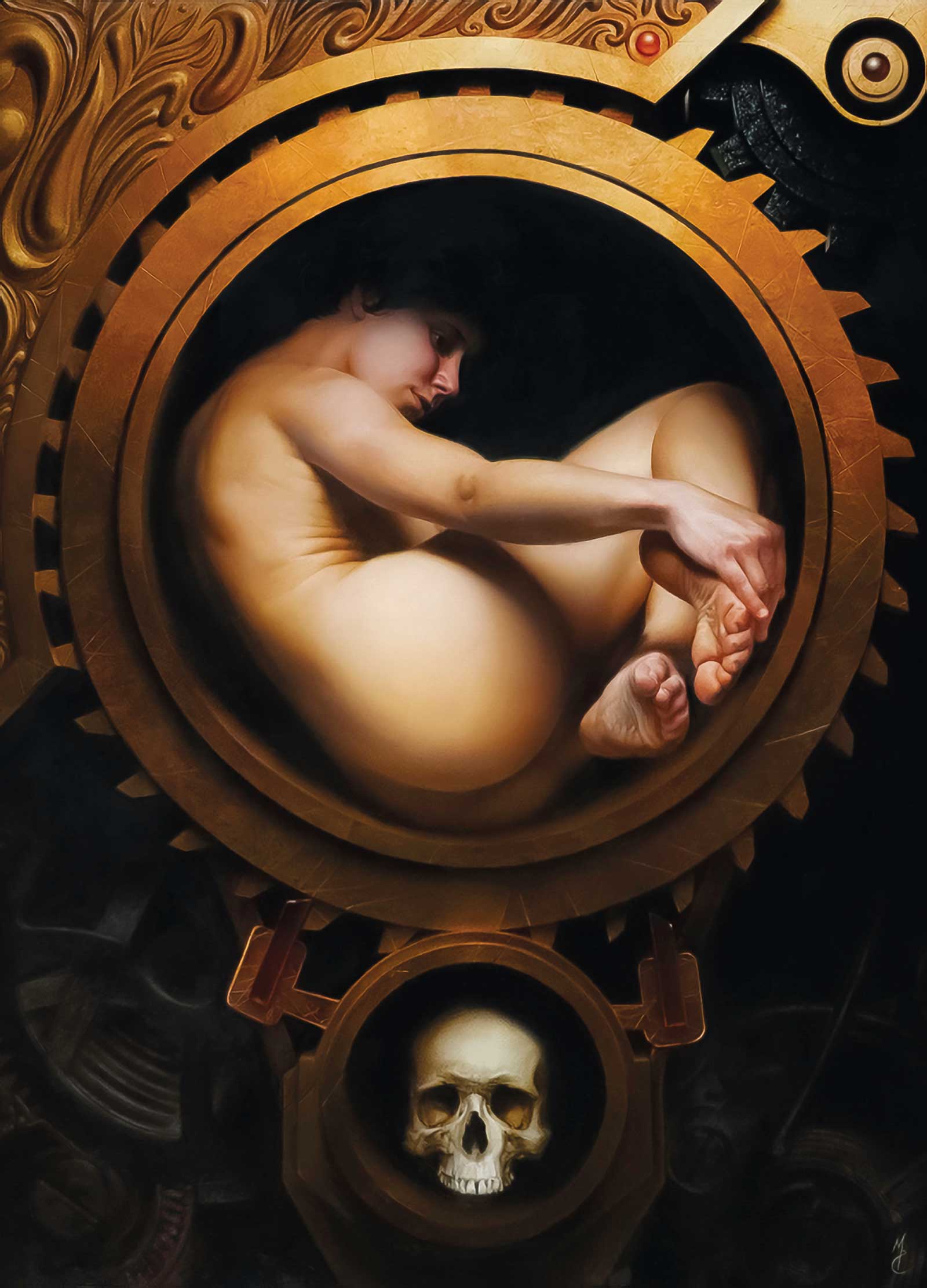
Michael Paul Carson, Memento, oil on panel, 12 x 9 in.
Featherston points to Beck as a prime example of a willingness to take risks. “Her work has a unique visual language, storytelling through objects and an incredible use of color,” says Featherston. “[Beck’s] Altar of Enjoyment has subject matter you see in traditional still lifes: draped fabric, glass bottles, grapes—but this painting is anything but traditional. Julie has expanded the idea of a still life and filtered it through her own experience, and added whimsy and experimentation to a rather staid painting genre.”
The aforementioned piece, a 12-inch-square oil on panel, captures a menagerie of little trinkets, including a crow sculpture, a tiny ceramic cake and old television set, and a happy little ghost floating in the backdrop.
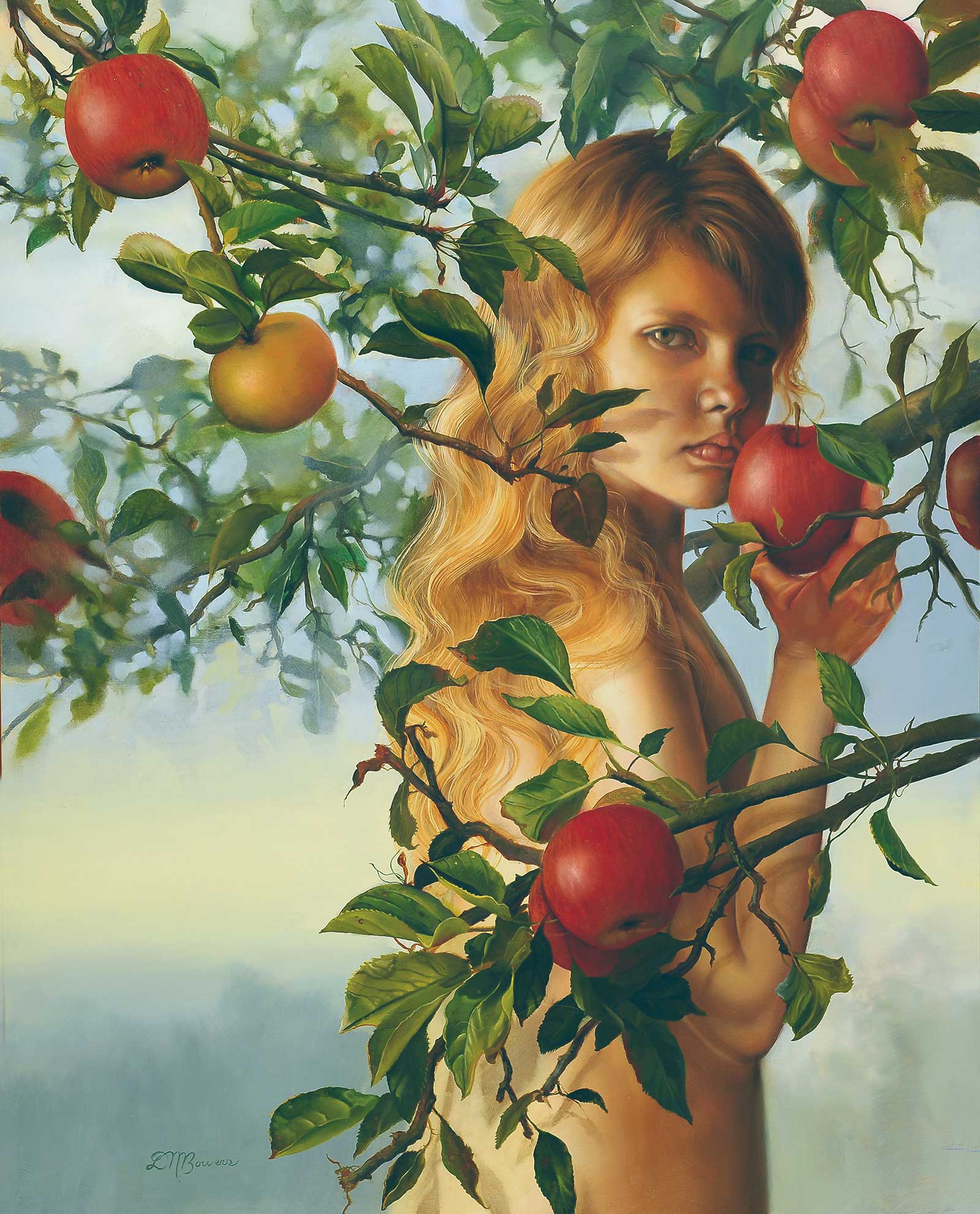
David Michael Bowers, Eve’s Future Path, oil on panel, 20 x 16 in.
“The most traditional elements of Altar of Enjoyment are really in the techniques and process I used to create the painting,” Beck explains. She trained in her 30s at a traditional atelier, the Academy of Realist Art Boston, where the philosophy focuses on developing strong technical skills rather than adhering to a particular style. “You could also argue that the subject matter [in this painting] has traditional roots. Fruit, desserts, vessels and even small animals have all been common subjects in still life painting for centuries, but in this case, each of those elements is a contemporary version of those traditional still life subjects,” she says. “I’m interested in using that familiar visual language as a starting point, then pushing it somewhere that feels more personal and unexpected.”
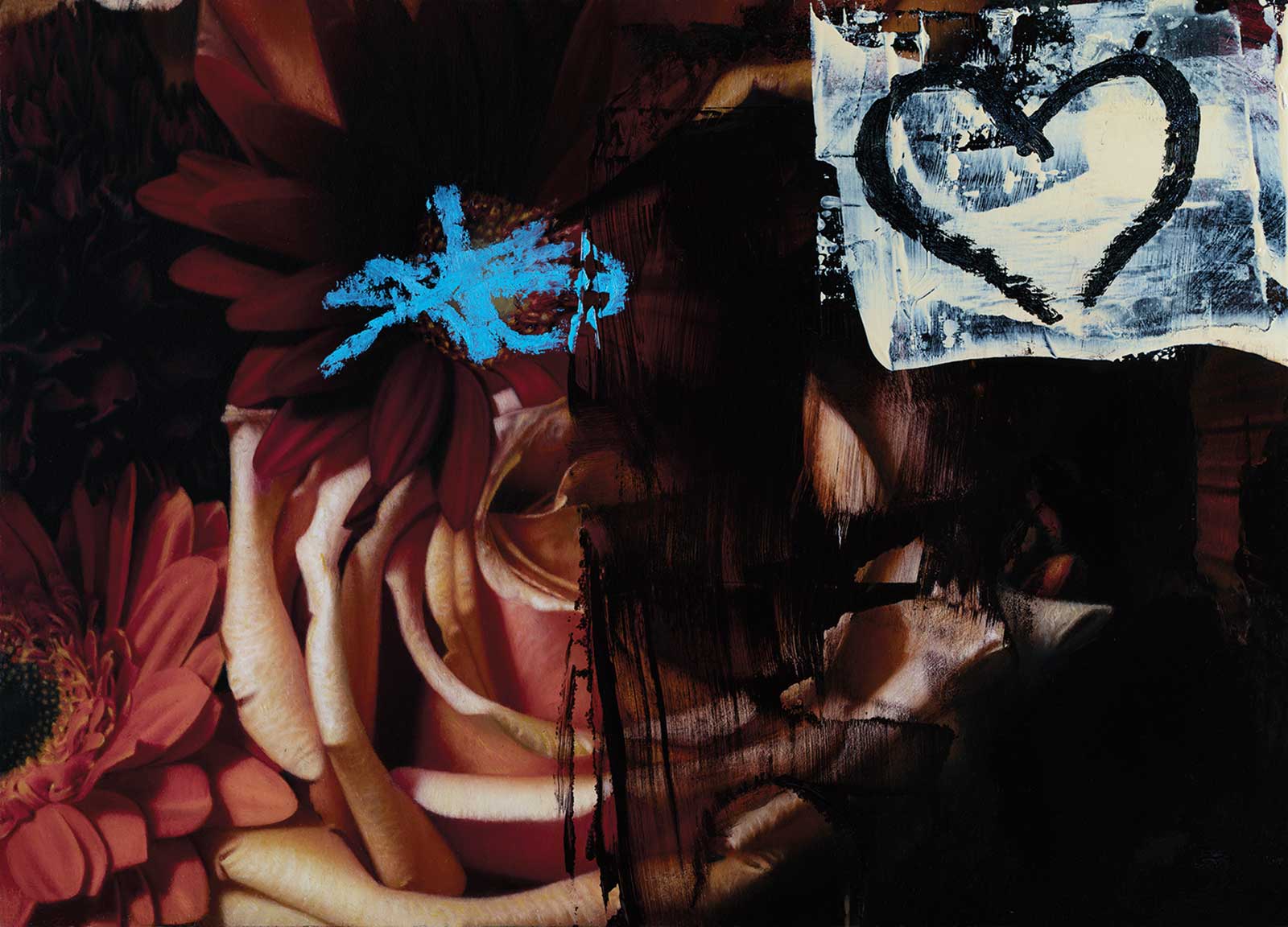
Rodney O’Dell Davis, Blackheart, oil on panel, 8 x 6 in.
Moody brings to the show an oil featuring various old school Wonder Woman comic books. “What I love about Sharon’s work is how modern it looks, with the abstract design of the vintage comic on white background,” says Featherston. “She’s building on the double tradition of trompe l’oeil, which has been around forever, and the more modern sensibilities of Pop Art. The virtuosity and skill are undeniable, and her choice of Wonder Woman is layered with the strong feminist narrative of a woman who fights crime and injustice.”
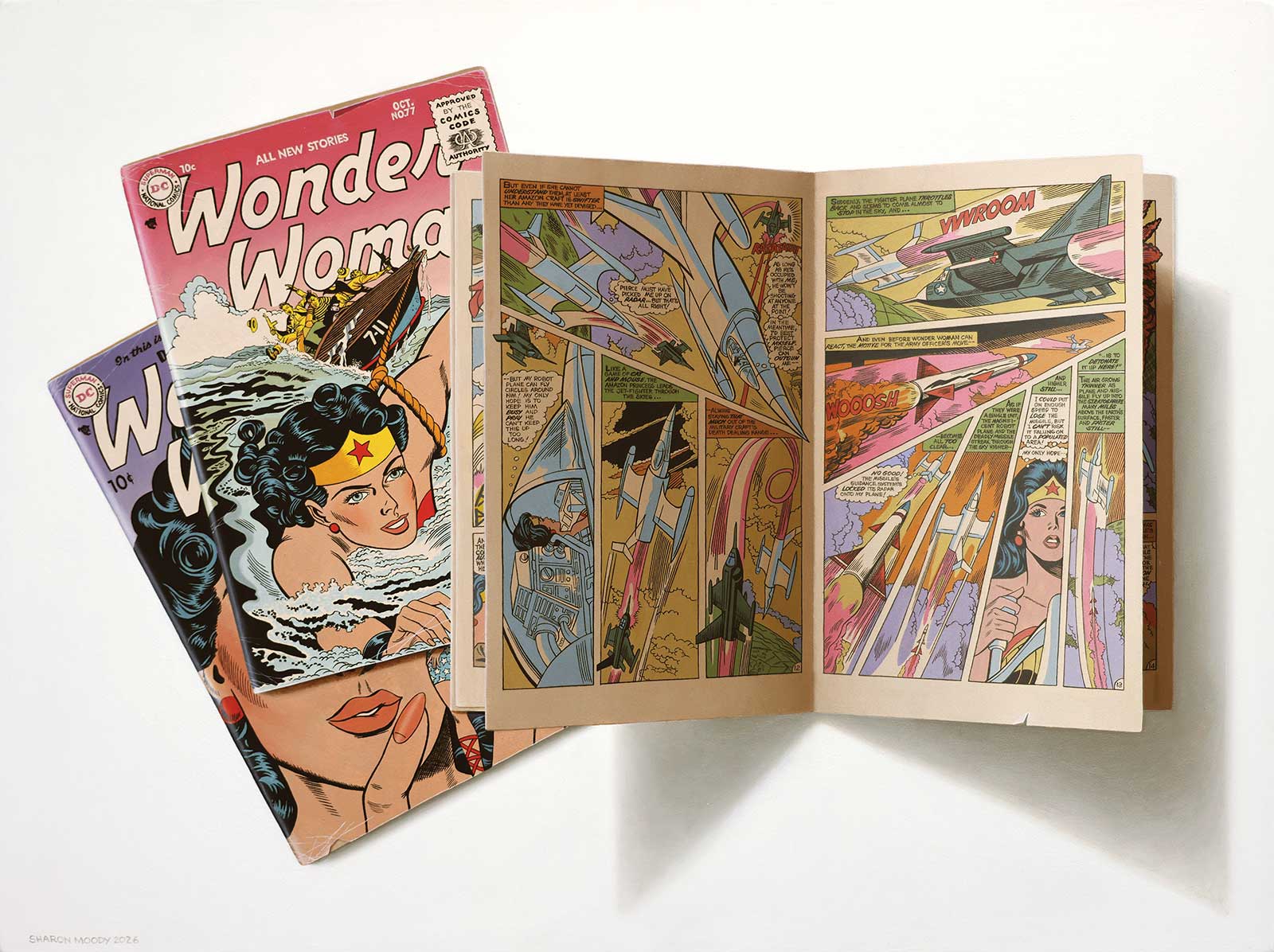
Sharon Moody, Her Amazon Draft, oil on panel, 18 x 24 in.
Another painting in the upcoming show is Wypych’s oil Persephone, a vivid and fragmented portrait of a female figure surrounded by flowers. “Persephone is my personal re-reading of the ancient myth of Persephone. I was interested in her not so much as the goddess of spring or as a figure in the story of Hades and Demeter, but as someone experiencing an inner transformation: a symbolic journey from a dark world into the light. Her descent into the underworld became, for me, a metaphor for depression, not necessarily understood as dramatic suffering, but as a state of stillness, numbness and separation from the world,” Wypych says. The artist also doesn’t see tradition and contemporaneity as opposites. “So my approach is not about choosing between tradition and contemporaneity, but about allowing a traditional form to carry a contemporary experience.”
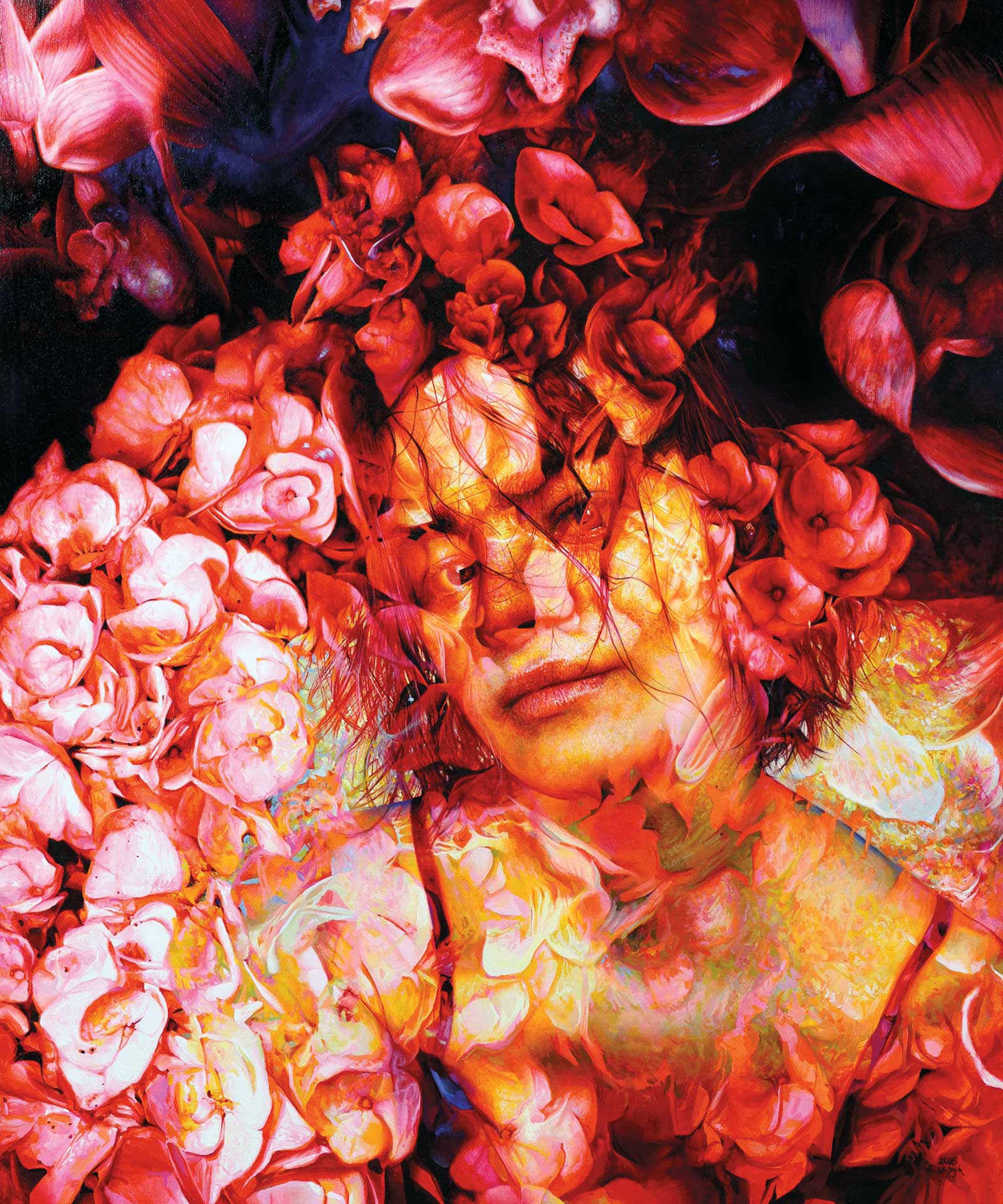
Anna Wypych, Persephone, oil on canvas, 20 x 24 in.
Miller’s Dawn on the Shores of Creation depicts a man surrounded by glowing lanterns at night, with a great blue heron walking behind him and several moths fluttering about. One also cannot fail to notice the many additional arms sprouting from the man’s figure. “Dawn on the Shores of Creation is the visual culmination of my creative philosophy and is meant to embody the theme of The Creative Spark. This painting connects a broad spectrum of allusions from quite a few cultures, religions and spiritual groups to explore the purpose of our creation and what it means to create,” says Miller.
“At first glance, a lot of my work looks very traditional, presenting historical or mythological settings and characters, arranged in theatrical staging,” he adds. The artist then combines these traditional stories and aesthetics with contemporary subjects and themes, using intentional anachronism to better communicate the message of the painting. “I find that the familiarity of a recognizable story can make a painting more accessible,” he says, “drawing a viewer into the work and inviting them to explore its contemporary narrative and commentary.”
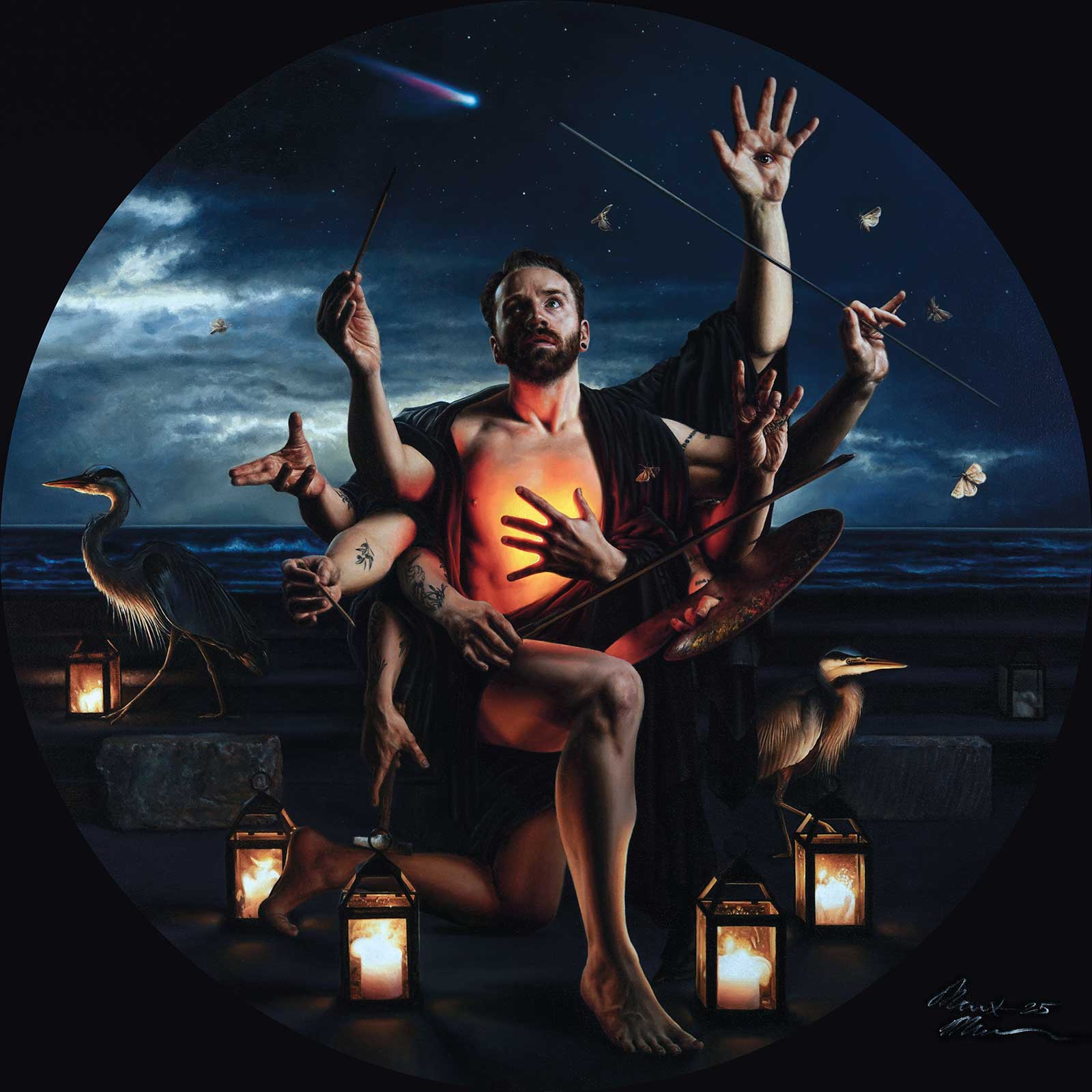
Maxwell Miller, Dawn on the Shores of Creation, oil on linen, 30 x 30 in.
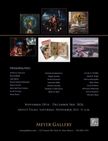
The Creative Spark will hang from November 20 to December 3, with an artist reception on opening day from 4 to 6 p.m. In addition, an artist walk-through and talk will take place the following day at 11 a.m.
“We often think of novelty as a significant departure from convention, but in this context, convention makes novelty possible,” says Waichulis. “Artists who embrace the conventions and visual language developed by generations of great artists are empowered by that inheritance. In turn, their contemporary voices can make the work of past masters potentially more accessible while contributing to that same evolving visual language. This idea is central to The Creative Spark—artists engaging meaningfully with a tradition while contributing something that may expand how we understand it—and what future artists might do with it.” —
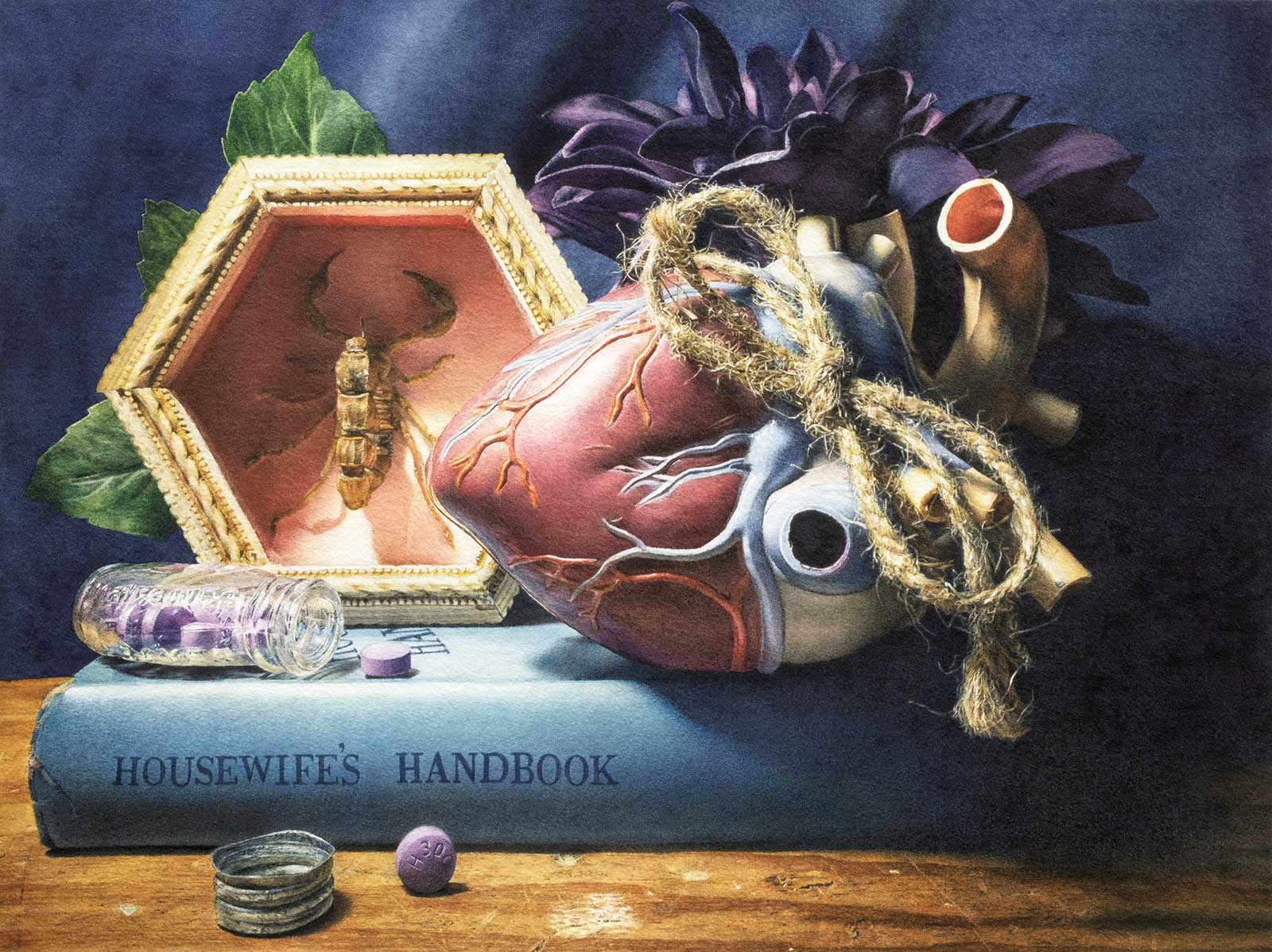
Alisha Shea, In Sickness, watercolor on paper, 14 x 19 in.
The Creative Spark
November 20-December 3, 2026Meyer Gallery
225 Canyon Road, Suite 14, Santa Fe, NM 87501
(505) 983-1434, www.meyergalleries.com
Powered by Froala Editor