
Nocturnes, or any painting depicting a nighttime or twilight scene, have a strong historical association with Western art, established by masters of the genre like Frederic Remington (1861-1909) and Frank Tenney Johnson (1974-1939). These painters employed the blue-green palettes of moonlight and the warm glow of firelight to illuminate the vast landscapes of the Frontier, and more intimate subjects like cowboys and their horses gathered around the campfire. However, James McNeill Whistler popularized the term “nocturne” in the 1870s when he transitioned away from narrative realism, to paint softer pieces with an emphasis on mood, color harmony and atmosphere, essentially laying the foundation for the Tonalism movement that followed.
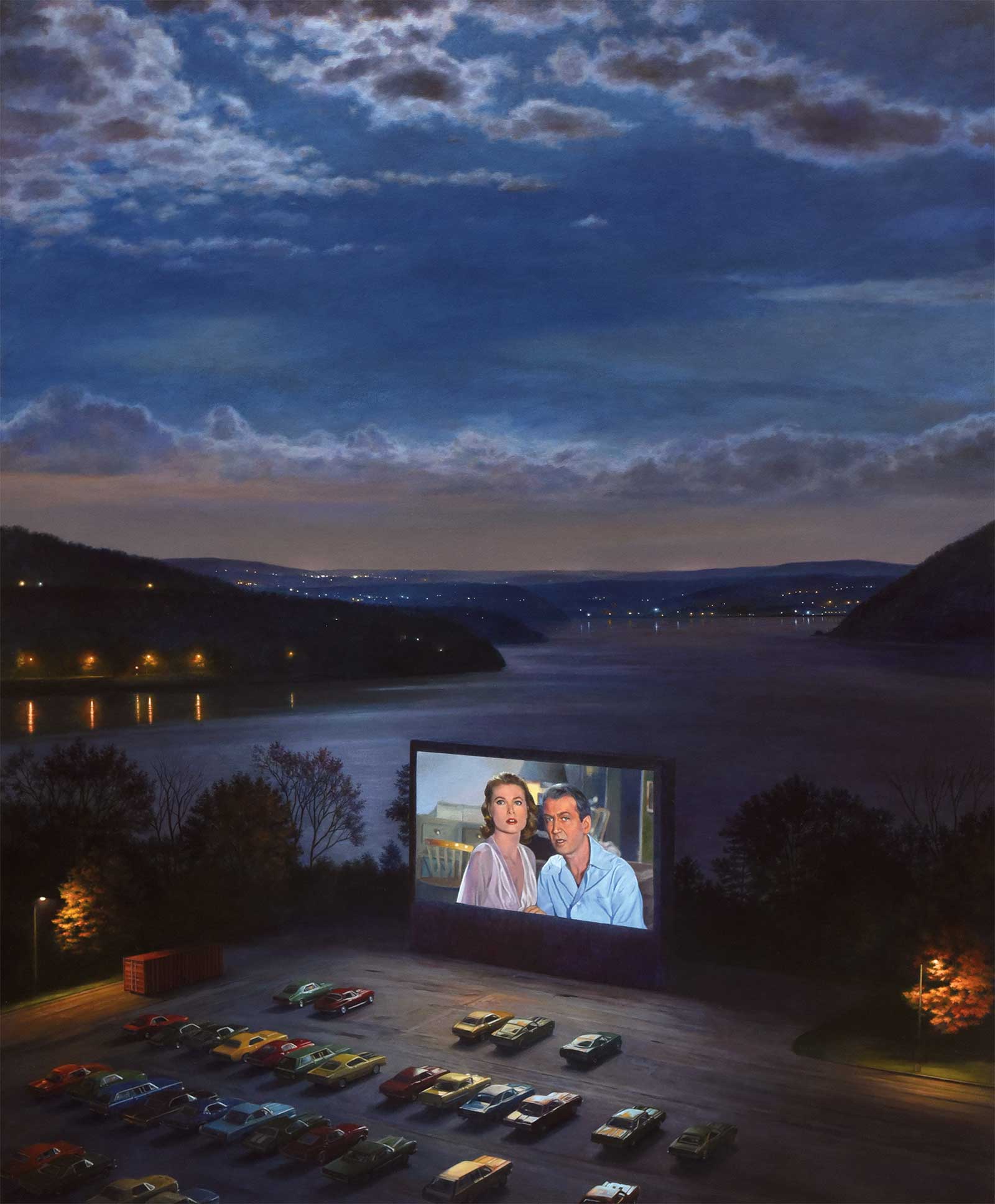 Stephen Fox, Window to a Larger World, 2026, oil on canvas, 55 x 45 in. Courtesy Arcadia Contemporary, New York, NY.
As in the past, Western artists are not the only painters carrying the nocturne tradition into modern times. Whether capturing a coastal scene in plein air, working from photo reference or choreographing elaborate compositions under studio lighting, contemporary realists are painting applying the dramatic power of the light in the dark to create scenes with nuanced impact.
A painter of nighttime scenes almost exclusively, Stephen Fox is best known for his realist depictions of drive-in movie theaters, misty street scenes and atmospheriece natural landscapes. Fox’s interest in nocturnes grew out of a natural attraction to the sense of mystery inherent to the night. “It quickly became apparent to me that night subjects allow for a great deal of freedom in the manipulation of color and tonality while remaining plausible,” Fox explains. “It’s like being a lighting director, with the option of allowing some areas of a painting to sink into obscurity and mystery; or, conversely, shining a light there so that more definite details can emerge.” His large-scale oil Window to a Larger Worldmerges his explorations of the Hudson River at night from nearly 20 years ago with his more recent drive-in motifs. “The movie screen, glowing against the nocturnal landscape, becomes a kind of window or portal, connecting the physical landscape with the imagined worlds projected onto the screen,” Fox says. “The painting brings together two subjects that have been important to my work: the nocturnal landscape and the idea of the movie theater as a place of escape and possibility.”
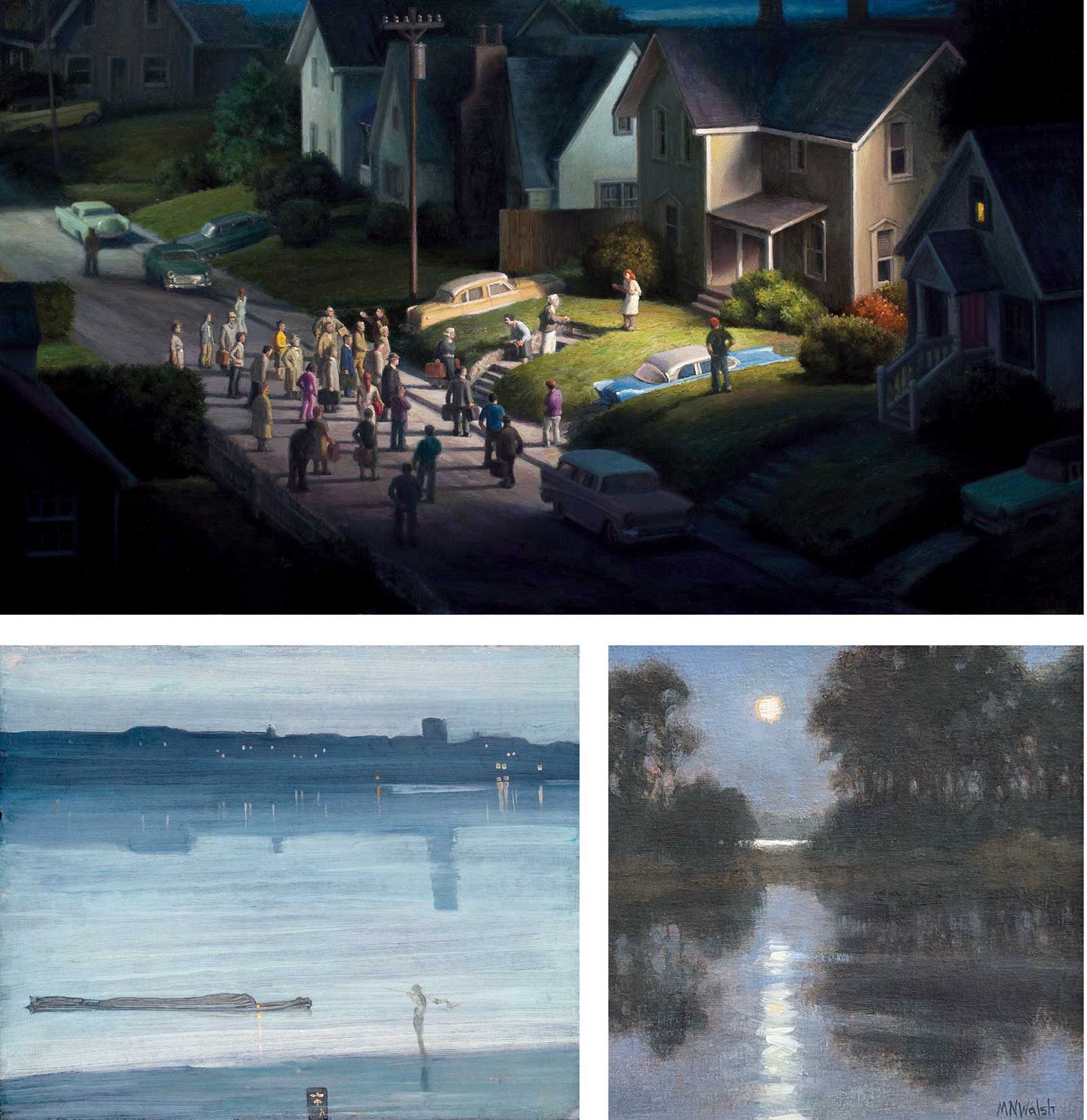
Top: Alberto Ortega, Judgement Night, 2026, oil on panel, 17 x 30 in. Courtesy Arcadia Contemporary, New York, NY. Bottom: James McNeill Whistler (1834-1903), Nocturne: Blue and Silver – Chelsea, 1871. Oil on panel, 20 x 24 in. Courtesy Tate Britain, London. Meg Walsh, Moonstruck, oil on linen, 12 x 12 in.
Not only does Alberto Ortega paint nighttime scenes, he builds models of his 1950s suburban neighborhoods, lights them with the artfulness of a cinematographer, and paints them as one would a still life. “I’ve always been drawn to the way a scene changes as the light disappears,” says Ortega. “A familiar place can suddenly feel very different at night, even if nothing about the place itself has changed…With my work, I’m usually interested in fairly ordinary suburban situations, and darkness gives me a way of taking some of the ordinary information away…Some things are very clearly illuminated while others almost disappear.”
In his painting Judgement Night, a cluster of people are gathered in the street, but the light only illuminates certain aspects of the scene. “You can see enough to start wondering what brought them there, but not enough to really know,” says Ortega. “I like that gap between what you can see and what you can understand.
In Sally Storch’s Night Stories, the darkness lies outside a warmly-lit interior. “I am drawn to painting images at night because of the private, nocturnal spaces my subjects inhabit,” explains Storch. “My paintings are narrative in nature, inviting the viewer into these fleeting encounters and offering glimpses into the intimate lives of those portrayed. Through light, often the artificial glow of streetlights, windows and interior lamps, I explore what exists beneath the visible surface. These unseen stories, emotions and connections linger beyond what is immediately revealed. I am interested in the tension between what we can see and what we can only imagine, and in the quiet spaces where those possibilities emerge.”
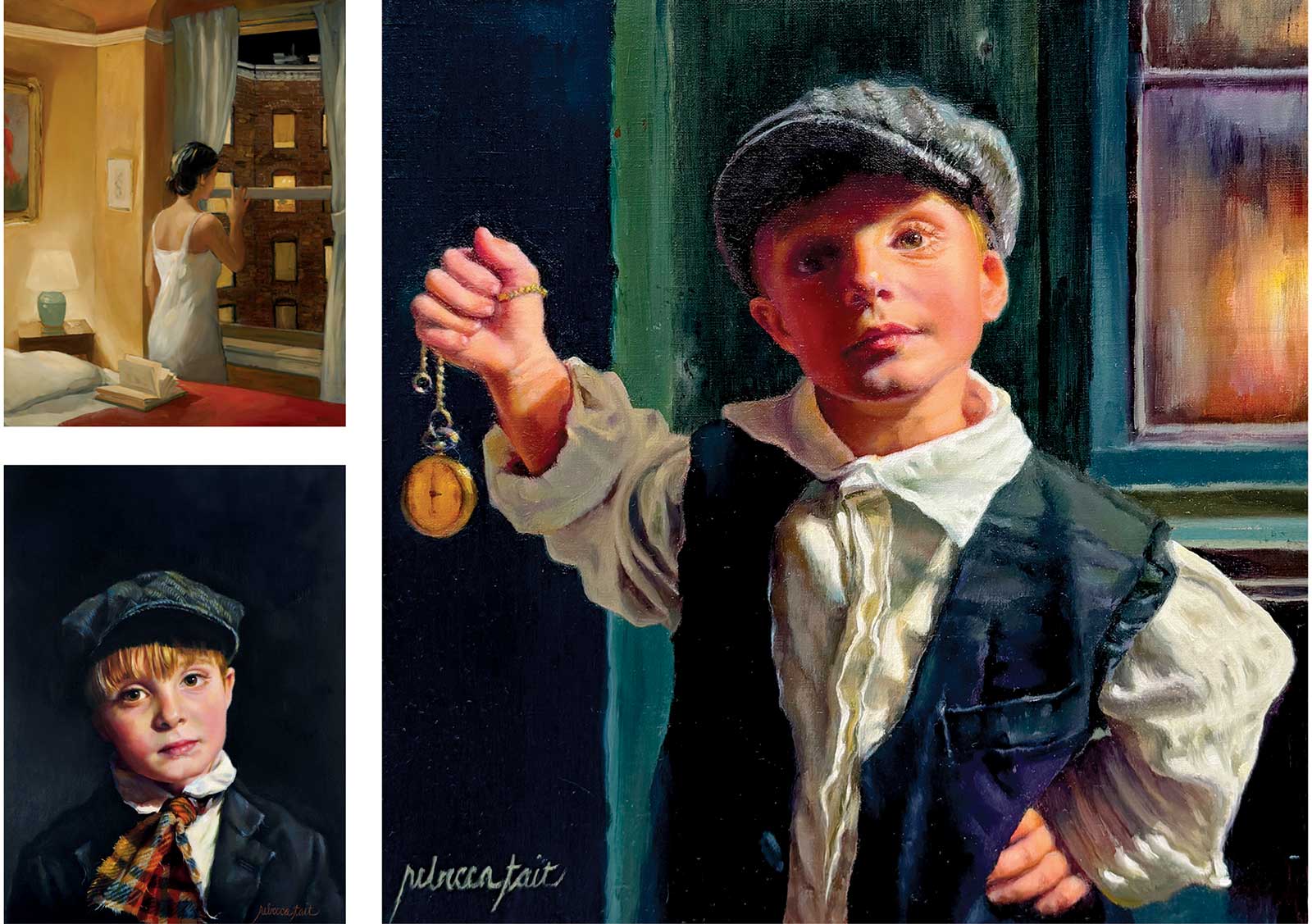
Clockwise from top left: Sally Storch, Night Stories, oil on canvas, 30 x 24 in. Rebecca Tait, The Success of the Little Dipper, oil on mounted linen, 10 x 10 in. Rebecca Tait, The Orphan, oil on linen, 12 x 16 in.
In the remainder of this special section dedicated to nocturnes, enjoy exploring the work of more contemporary artists working in this genre and reading about the inspiration behind paintings that depict scenes of the night.
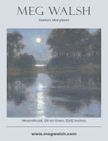
There is something about moonlight that has always captured Meg Walsh’s imagination. “My painting Moonstruck is a scene I sometimes view from my bedroom, when the silvery light that pours through the window will awaken me,” Walsh shares. “Using close values, merged shapes, muted color and soft edges, I was hoping to evoke the mystery of a moonlit night. If I could supply a soundtrack, it would be of lapping water, cicadas and the hoot of an owl. I am very influenced by the visual poetry of the American Tonalists painters. This is my ode to them.”
Laura Hopkinsalso draws inspiration from 19th century Tonalists like George Inness, in addition to Whistler and Remington. “What has kept me endlessly interested is the veiled mystery of the night sky, and the cool, dim light of the moon. The beautiful, ethereal gray-blue-greens of the night sky offer me so many opportunities for artistic expression.” Hopkins notes that nocturnes are notoriously difficult to photograph due to reflections on the dark surface. If in-person viewing isn’t possible, Hopkins recommends asking to see the painting photographed in a variety of light or in a video.
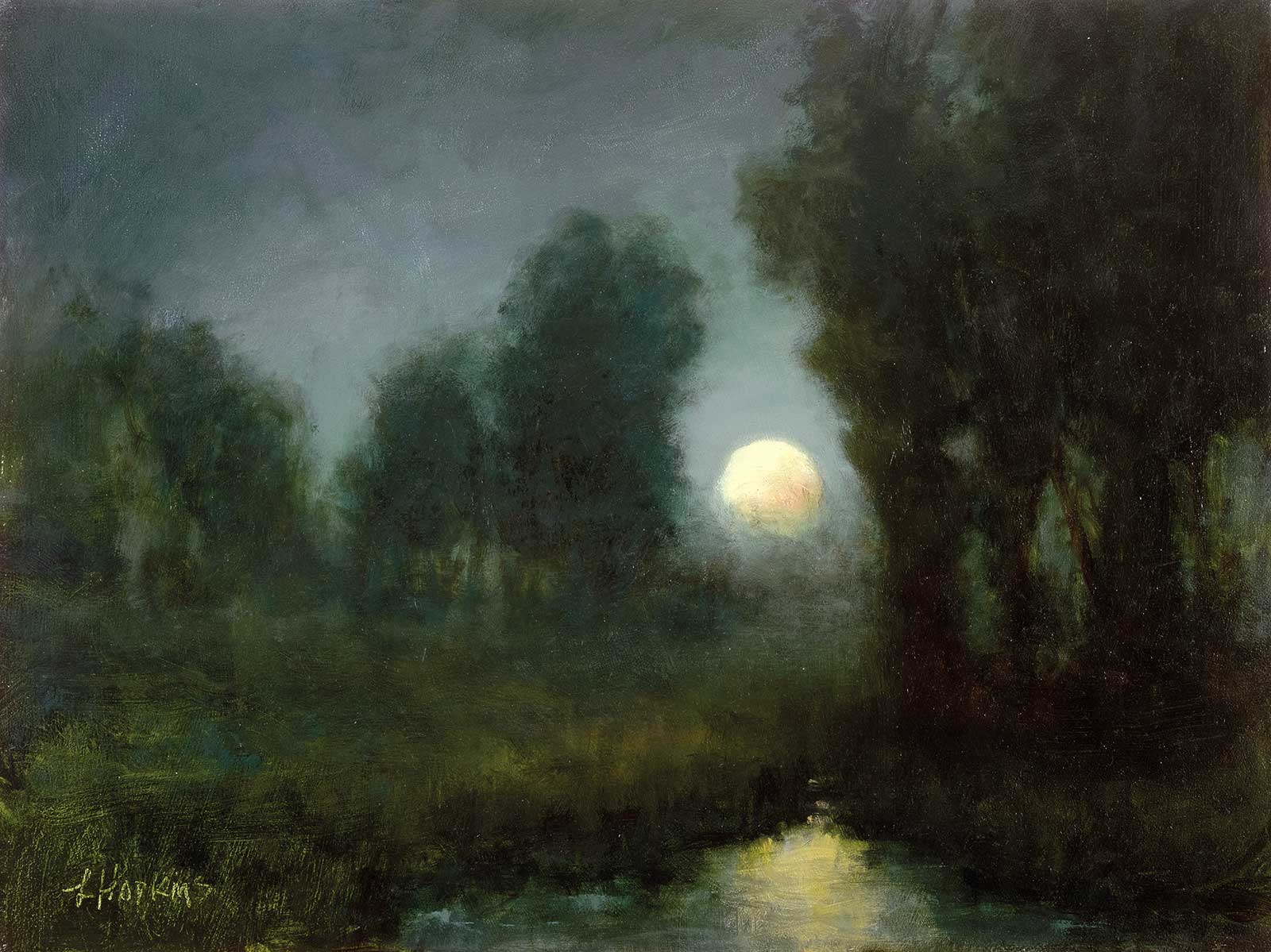
Laura Hopkins, The Tender and Growing Night, oil on panel, 12 x 16 in.
The drama of a well-executed nocturne is what appeals to artist Rebecca Tait. “The warm glow of a gas street lantern on an orphaned child’s delicate face, contrasted against a gritty dark alley scene, lures me into the narrative,” she says, adding that , as a young girl, she was fascinated by Charles’ Dickens story of Oliver Twist. “Recently, I dove deep into the gloomy world of 1840’s London and the orphaned boys schooled only to be pickpockets. The brutality endured in their innocent young lives forced them to become willing swindlers, less they not be fed that day…What Dickens captured with the written word, I strive to capture visually. The innocence, successes and brotherhood of these parentless, discarded little boys has challenged me to witness their struggles on canvas and paper.” Tait’s grandsons were her models. “Period costumes, dramatic lighting and lots of emotion have made this series the most exciting in my lifelong career as a professional classical artist.” —
Featured Artists & Galleries
Alberto Ortega
www.albertoortega.art
Laura Hopkins
laura@laurahopkinsfineart.com
www.laurahopkinsfineart.com
IG: laurahopkinsfineart
Meg Walsh
www.megwalsh.com
Rebecca Tait
glengables@gmail.com
www.rebeccatait.com
Sally Storch
sallystorch.com
Stephen Fox
www.stephenfoxart.com
Powered by Froala Editor