David Dibble grew up on a farm in western Utah near the Great Salt Lake. He was more interested in wandering through the fields and watching the shapes of the clouds, and daydreaming about nature than the hard work on the farm.
When he was 15, however, he worked at a Boy Scout camp where his peers competed to see who had the best work ethic. He learned “to work hard and to find joy in work.”
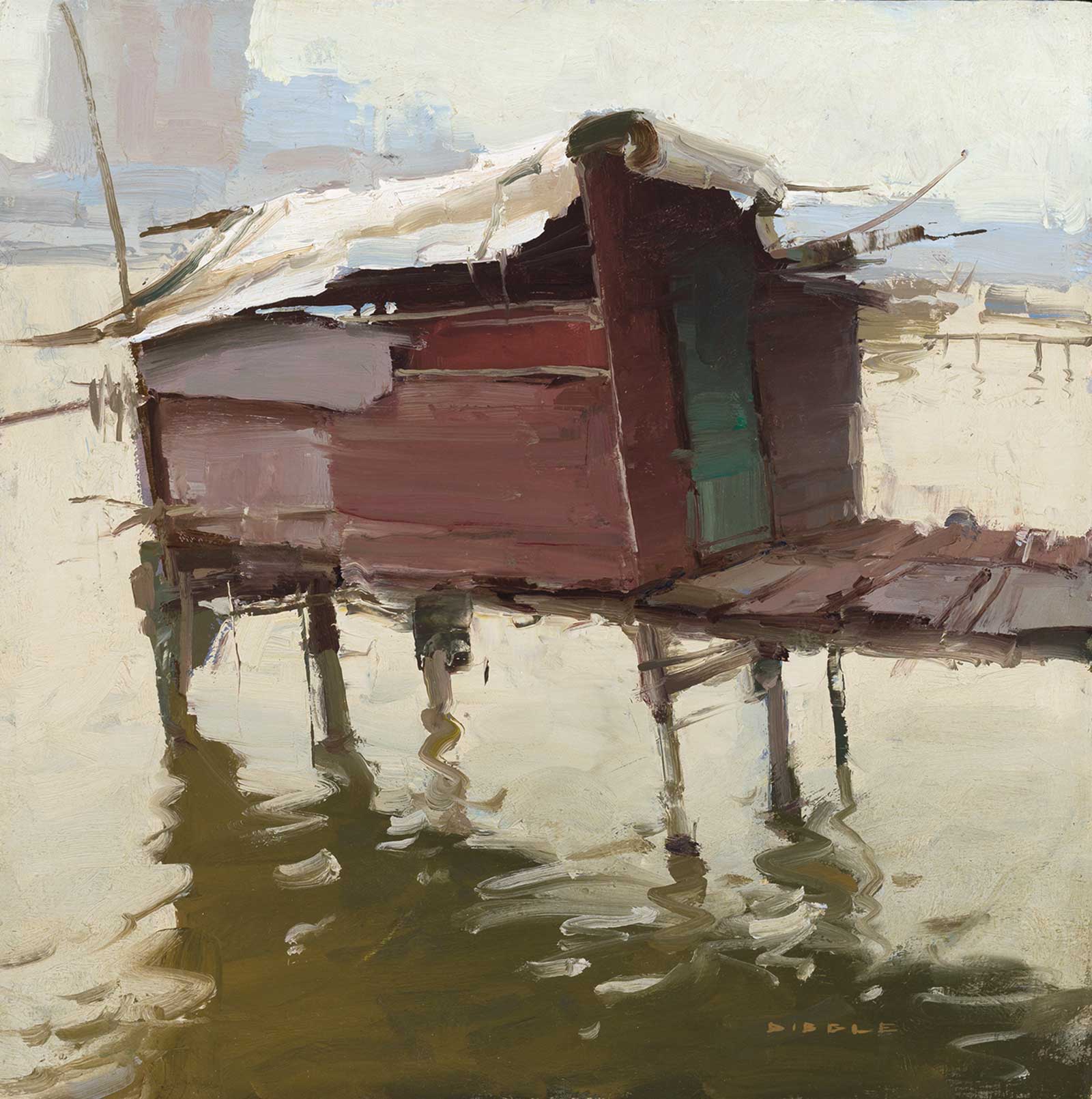 River Hut, Shenzhen, China, oil, 12 x 12 in.
In a 2022 interview with painter Jeff Hein on “The Undraped Artist Podcast” Dibble explained that change in his life and his relationship to the farm. “I came home from that summer really determined and excited to show my dad that I knew how to work now, and that I had figured that out. From then on, I really loved the farm, both aesthetically, as well as for what I was able to learn and feel and do workwise, and it became a real joy. So even though as a young kid I was figuring it out and I was grateful for the chance to connect a work ethic to dreaming and to imagination, those two together—because you and I both know that’s the only way that art can happen.”
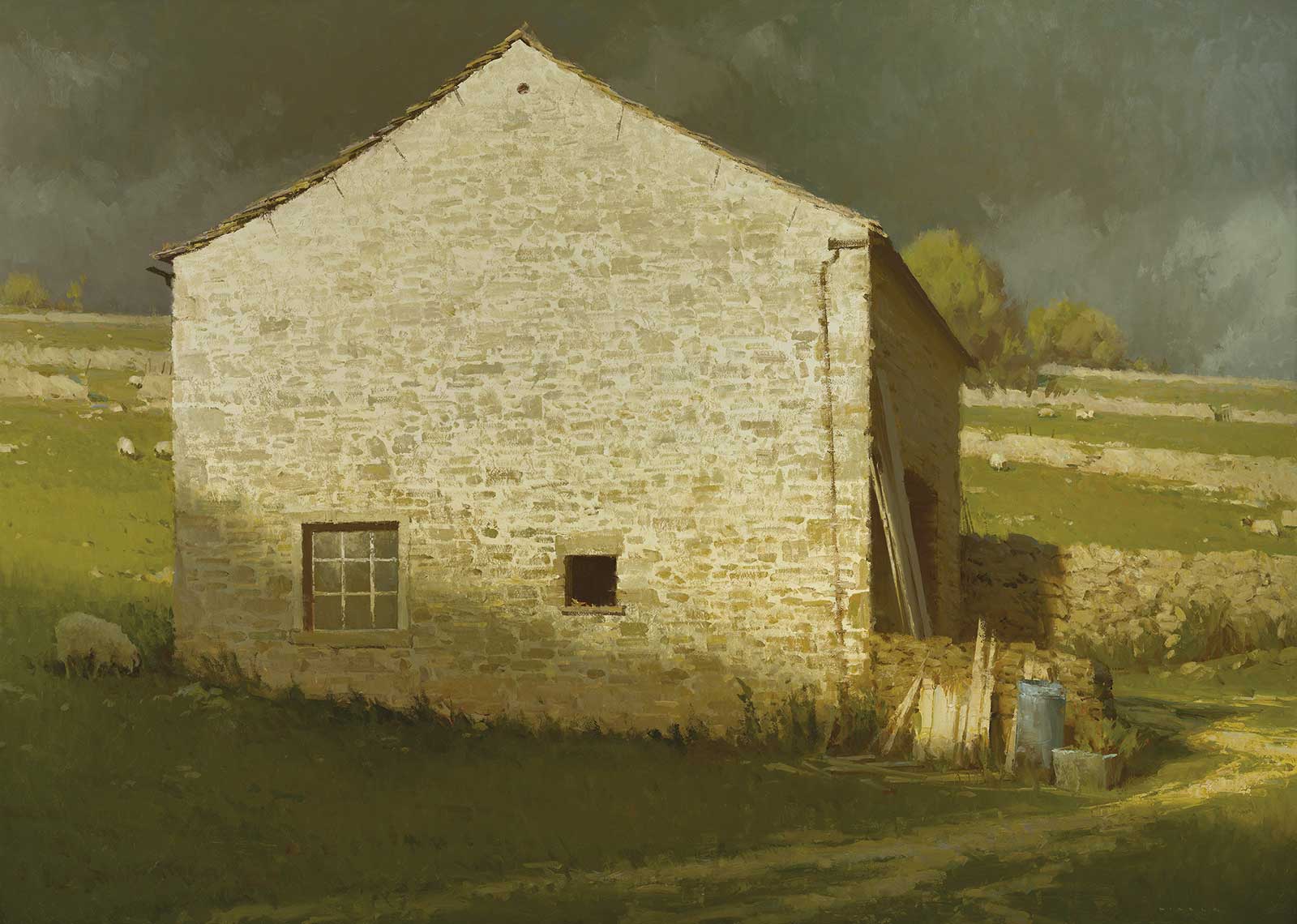
Yorkshire Barn, England, oil, 50 x 70 in.
I first saw Dibble’s paintings at Meyer Gallery in Santa Fe, just a few months ago and met him at the opening of his exhibition. I stopped in front of his 65-by-86 inch oil painting The Waiting—several dusty vintage tractors in a barn with a few swaths of sunlight sweeping in through cracks in the siding of the barn. The soft light and monochromatic palette felt real. I knew the artist had really experienced the spatial and sensory qualities of that barn. When we spoke later, he told me the owner of the barn had several other barns full of tractors from different eras, most of which he has kept in running order.
I felt the authenticity of Dibble’s interpretation of the scene as I recalled spending Julys on a farm in New Hampshire for several years when I was very young. I sensed the dust and being able to pick out detail in the dimness of the barn, and recalled the smell of hay and grain and the not totally unpleasant smell of the cows on the farm.
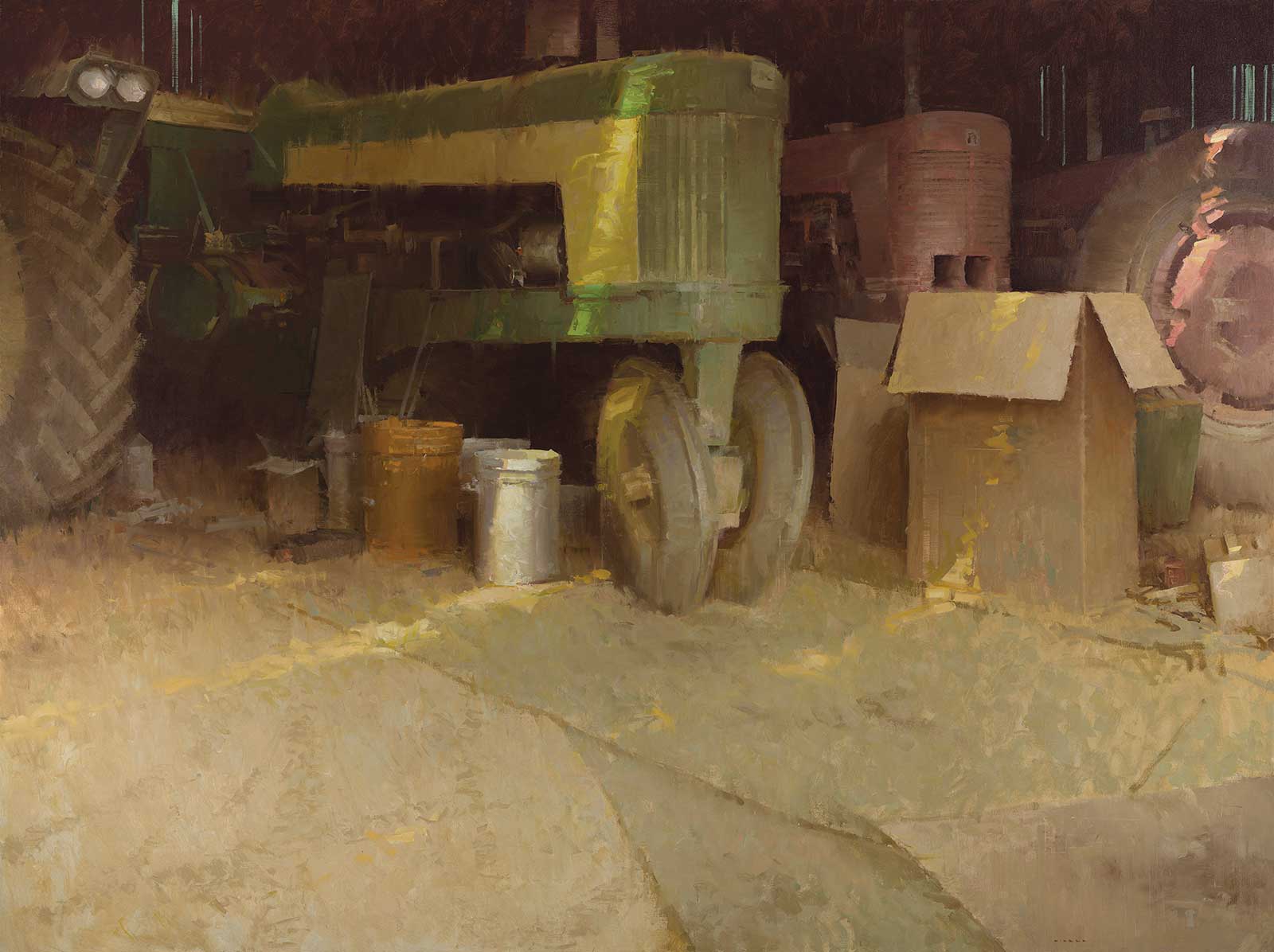
The Waiting, oil, 65 x 86 in.
My experience of the painting was more than nostalgia. I felt that the artist really knows his subject and that he has a reverence for the farmer who cares for his tractor collection, as well as the farmers and others whose presence is felt if not seen in his other paintings. “I feel like there are people all over these paintings,” he says. “There is an expression of generations. If I put a person in the scene, it becomes just a backdrop and less universal.”
Dibble explains, “I’m not a loud and gregarious person. I enjoy peace and calm. It’s important that in my paintings the tonal range is going to be soft and quiet. So much of what I’m talking about is the memory of having grown up on the farm. I want to make the painting feel like a memory, fuzzy and not always distinct, a sense that something is older and removed from the present. A dusty farm building rather than a sunny, bright scene makes me feel more connected to places 200 years old.”
The classic green and yellow of the large, central, John Deere tractor has softened over time and has taken on a less specific patina under the layers of dust. “I’ve been experimenting with little puzzles to solve how I can get a lot of color and still feel monochromatic,” he comments.
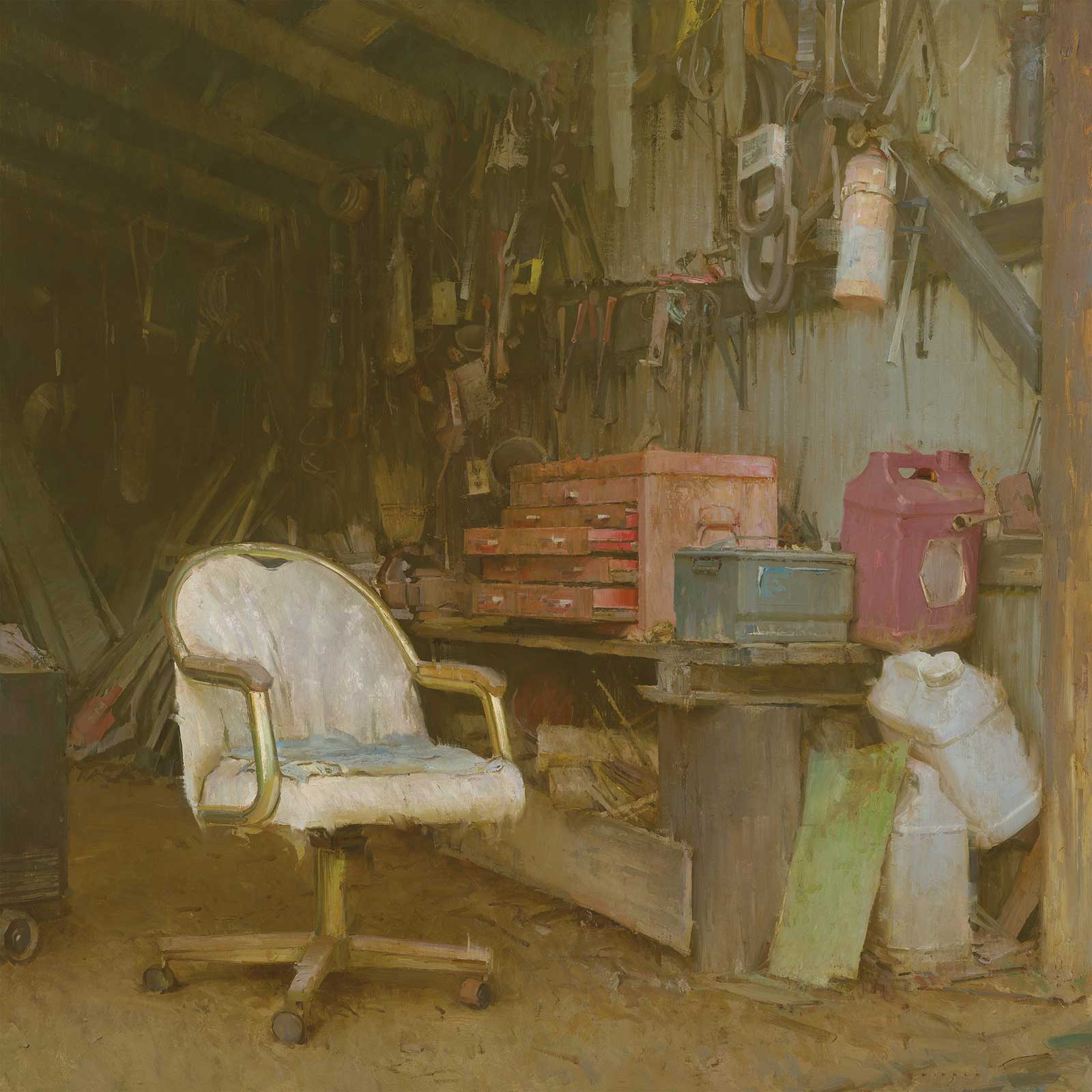
The Inheritance, oil, 48 x 48 in.
About his painting The Inheritance, a portrait of an upholstered office chair in friend’s barn in Mississippi, he expresses, “I’m now the one in the chair. What am I going to do with my time in that chair with the tools all around me? How am I going to add to that inheritance and pass it on to the next generation?”
Dibble is deeply aware of his place in the continuum of people connected to the land from his grandfather and father on their generational farm to his neighbors and his children. “Farmers are all working the land, subject to the laws of nature, and all supporting one another,” he comments.
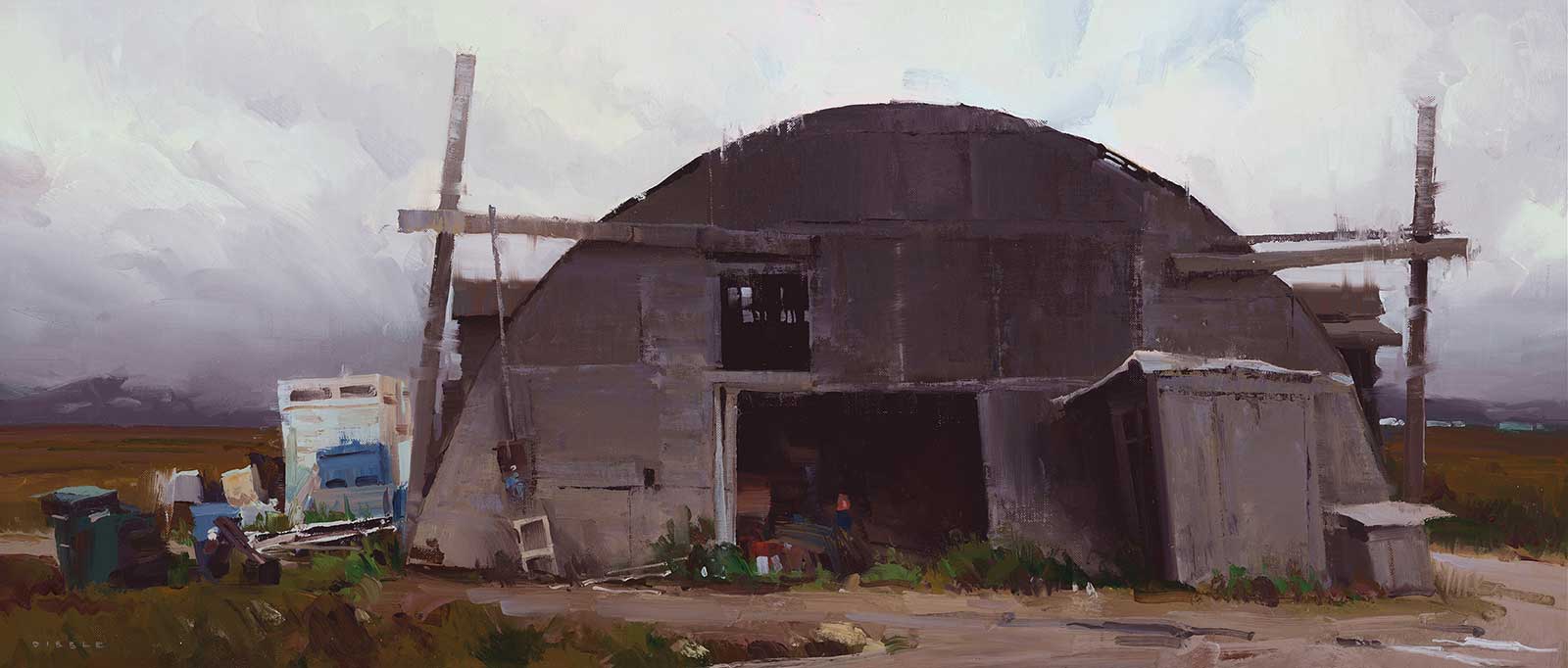
Sheet Metal Barn, Tasmania, Australia, oil, 23 x 36 in.
Growing up as a young man in the Mormon church and learning church doctrine, he developed his own deep sense of divine connection. “I had my own spiritual spots,” he relates. “I found a lot of the divine on the farm and in nature. Cultivating the land, you can’t force the seed to grow. Nature does what it does. That brings humility. That idea of there being something bigger than myself comes out in my work.”
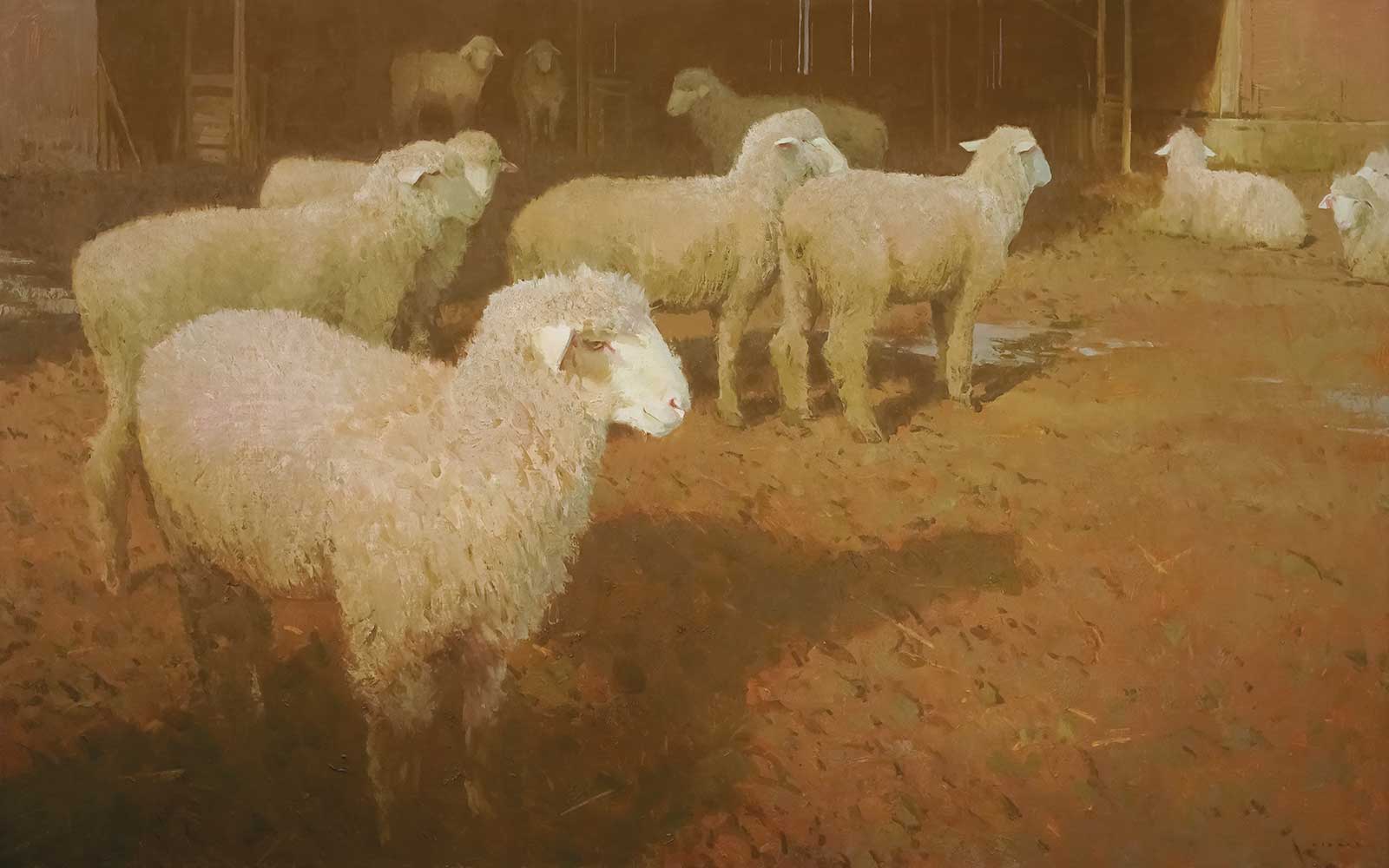
Late April, oil, 40 x 64 in.
After high school, he was called to be a missionary in Brazil and, today, has been called to serve a period of time as bishop of his local ward of the Church of Jesus Christ of Latter-day Saints, a congregation of about 250 people.
“The farming community provided a real binder,” he explains. “Our nearest neighbors, about a mile away, were Greek Orthodox and had bought land from my grandfather. I would wander over to their farm where they raised sheep. I remember going into their barns and seeing a sheep strung up and bled to provide the meat for souvlaki. I heard the flies buzzing around and the shafts of sunlight entering the barn. It was beautiful and scary at the same time.”
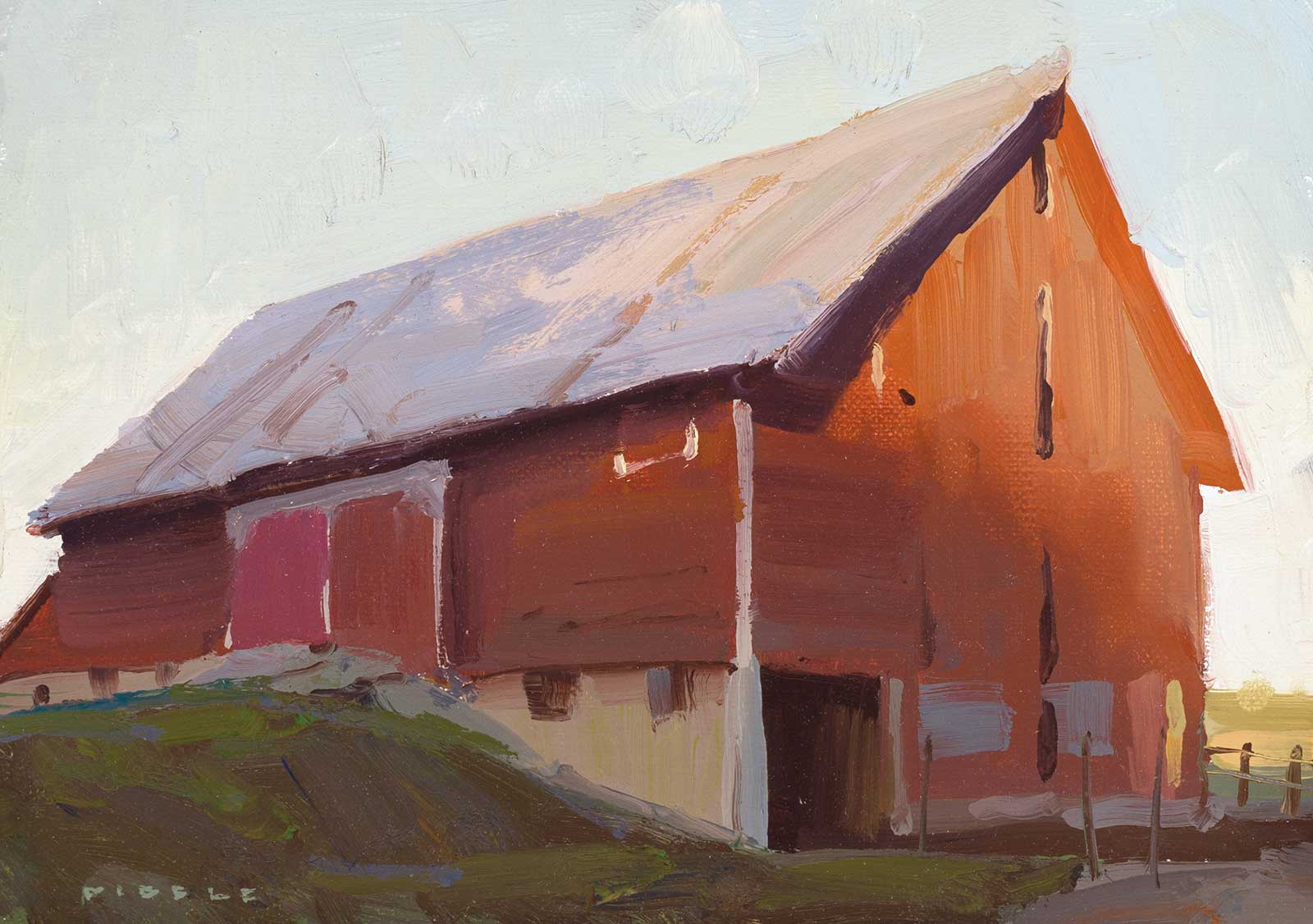
Michigan Barn, Evening, oil, 5 x 7 in.
His parents encouraged him to pursue his artistic gifts. He studied illustration at Brigham Young University where he received his BFA. He then spent a year as a freelance illustrator before attending the Academy of Art University in San Francisco where he received his MFA. He later moved to New York City and worked as a color artist for Blue Sky Animation Studios (20th Century Fox) creating concept design for such films as Rio, Epic, Ice Age 4, Peanuts and Ferdinand. He was then recruited to teach illustration back in Utah at Brigham Young University. Six years later, he devoted his life to full-time painting.
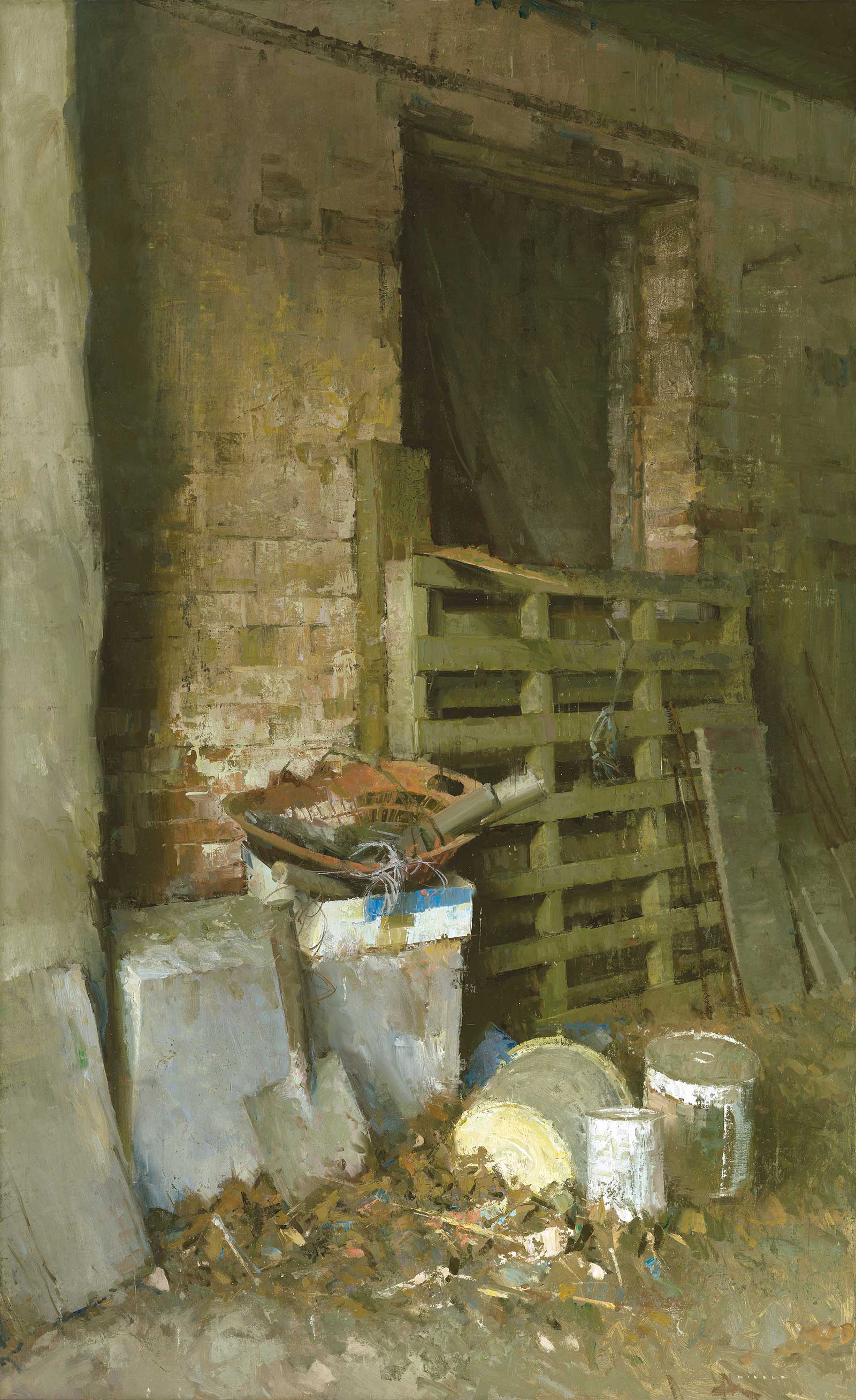
Barn Interior, York, England, oil, 65 x 40 in.
At Blue Sky he learned different aspects of storytelling—but other people’s stories. “It taught me, though, that by changing things, the story would change. Does the image tell the story or does it need tobe cropped or do things need to be moved around?” He used digital painting in his work, a process he had earlier thought was an anathema for a traditional painter. “When I go on location to a farm or other scene I make as many plein air studies as I can, not trying to compose,” he explains, “just taking notes. Back in the studio I begin painting digitally over the photographs to develop an idea or a concept—all the tools I used in animation.”
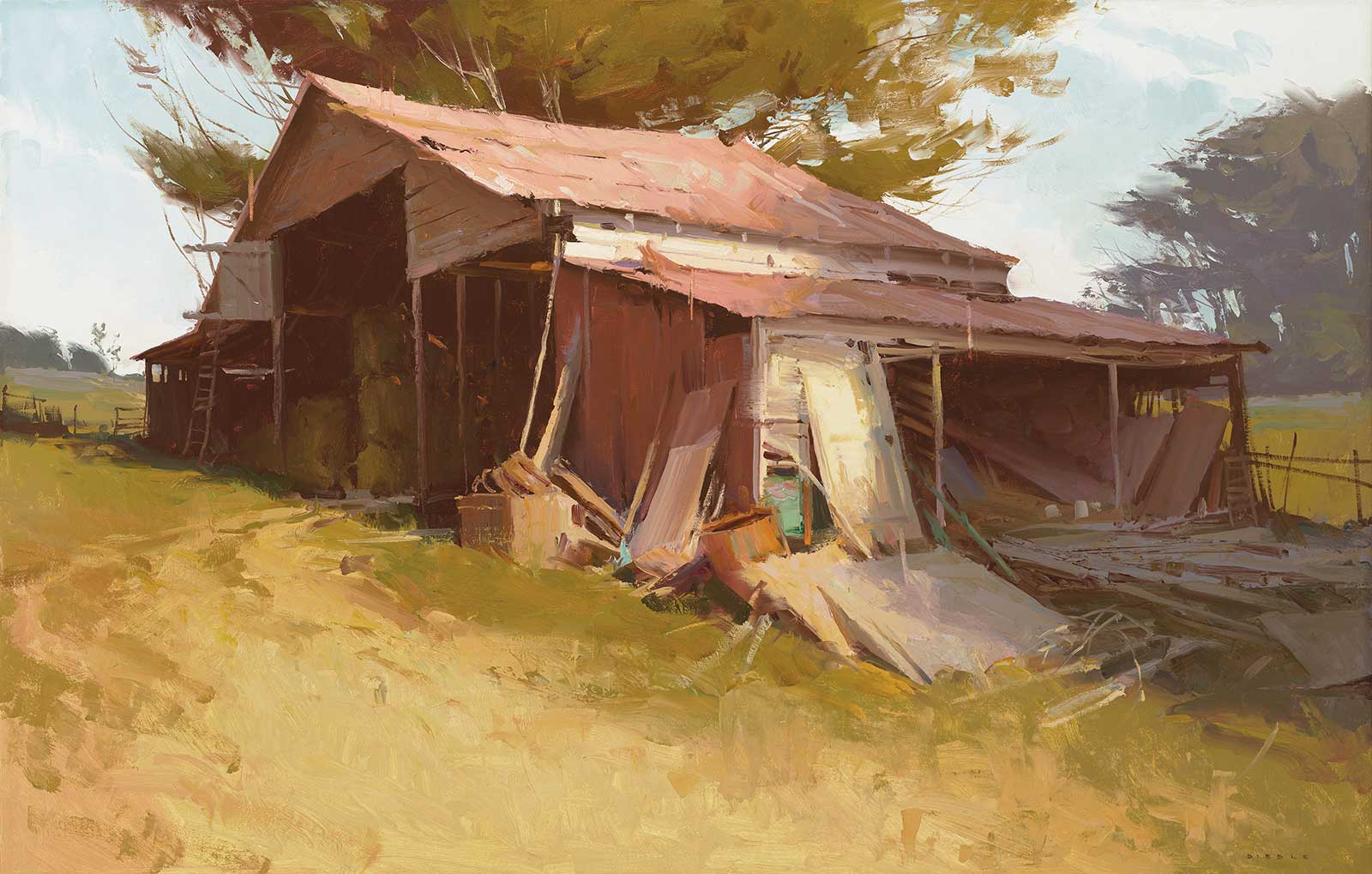
Sheet Metal Barn, Tasmania, Australia, oil, 23 x 36 in.
He told Jeff Hein, “I want to tell a story about agriculture in general and people’s interactions with the land—deeper philosophical ideas rather than just, ‘I can do a big barn from the front in profile’ and it starts to feel a little bit like a drive-through at Wendy’s.” He went on to quote painter T. Allen Lawson who said, “‘The transition from painter to artist comes when you cross the line of painting what you see to painting what you feel about what you see.’ So that idea of painting what you feel about a place rather than just a thing that you saw, for me, is a big, big reason that I am an artist because I want to be a storyteller and, sometimes, it’s just emotional, simple stories.” —
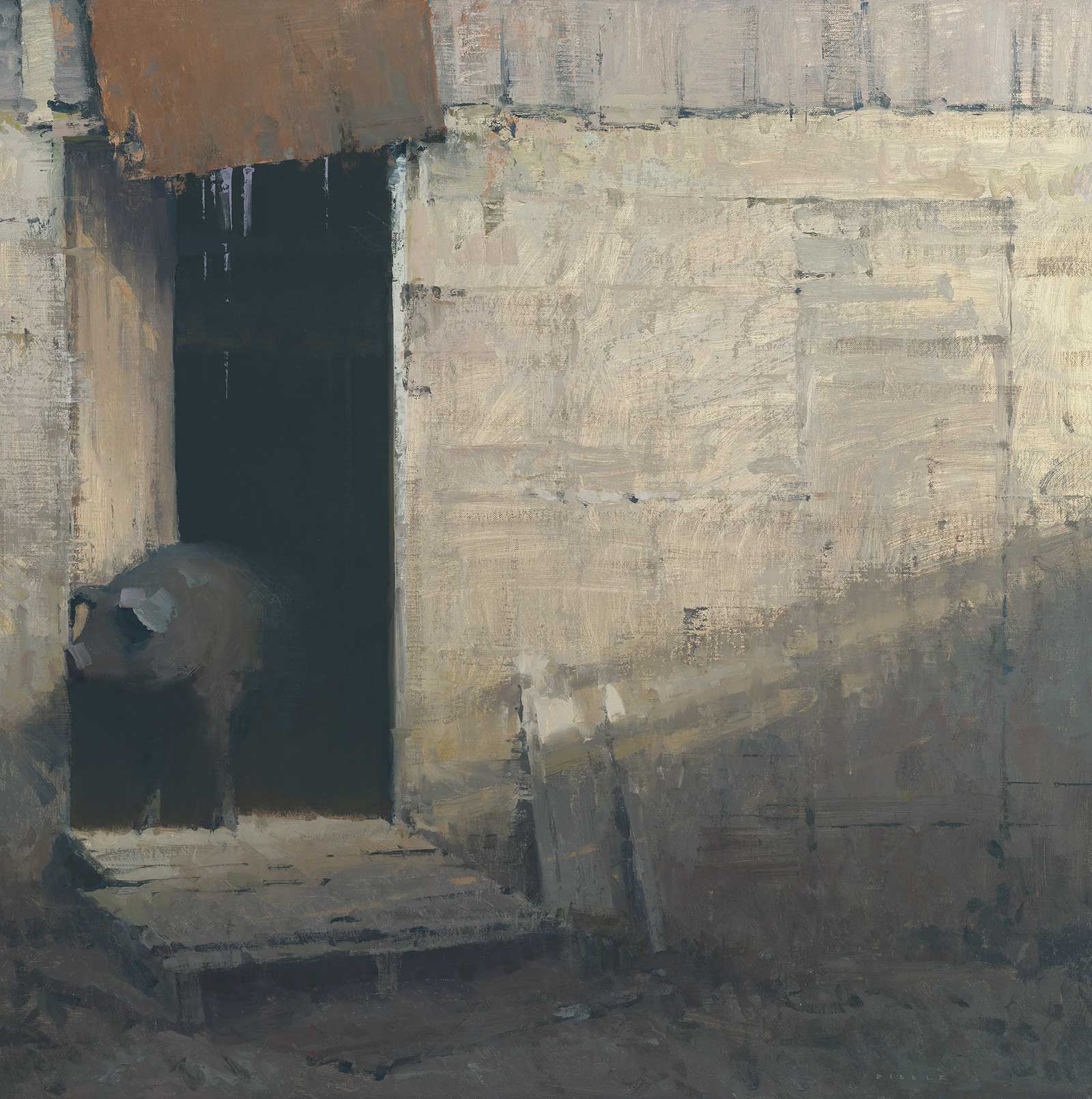
Danu Hof Pig, Michigan, oil, 30 x 30 in.
Powered by Froala Editor