Most artists are searching for some form of truth in their work. For Ron Hicks, his truth was discovered between the lines (or brushstrokes), often in the subtext or footnotes (or hidden in plain sight). For his new show, he’s put it all within the punctuation. Specifically, the parentheses (yes, these right here).
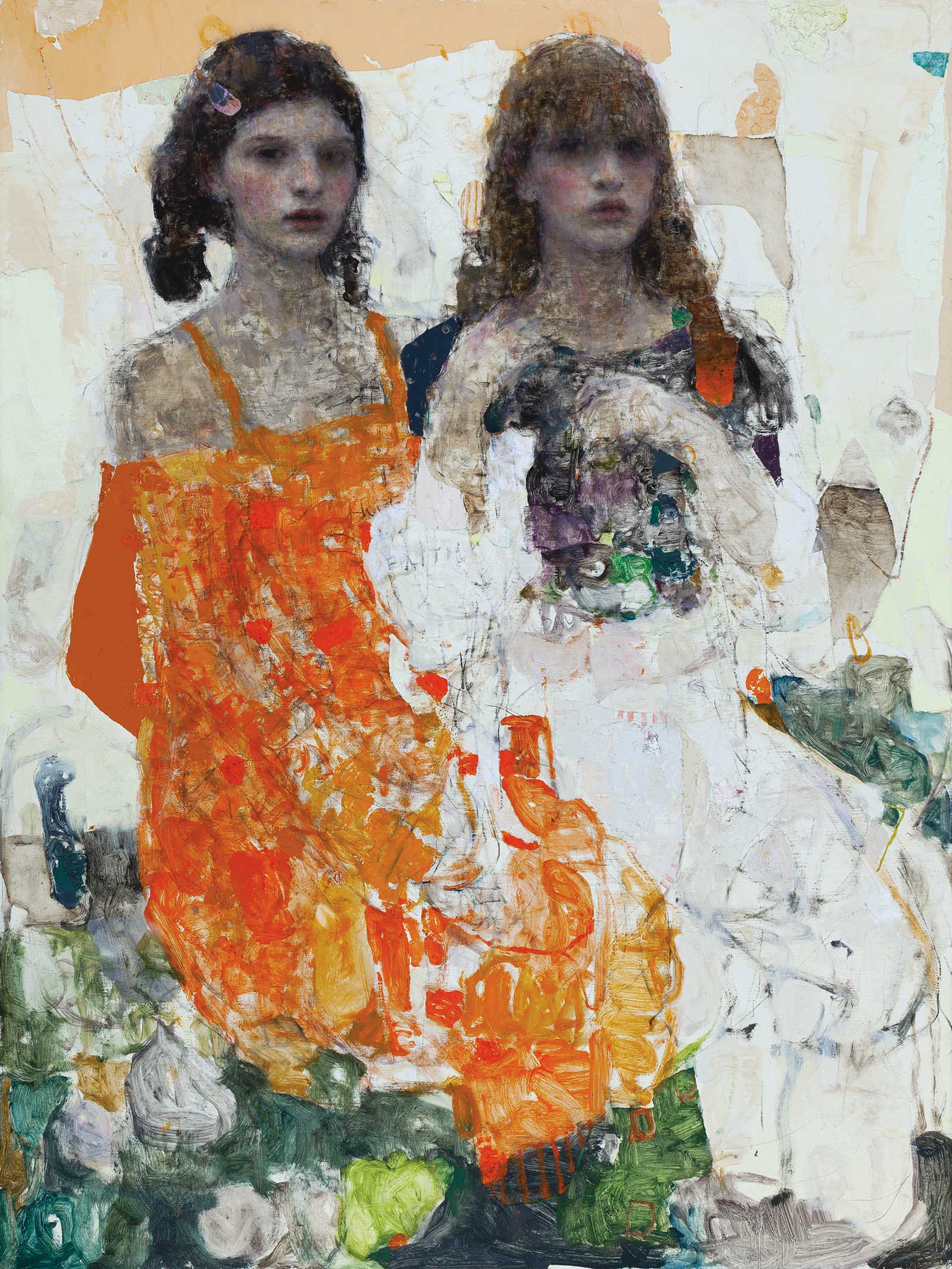
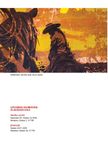
Hope and Faith, oil on canvas panel, 48 x 36 in.
For his new show, The Book of Paranthesis, Hicks is exploring the idea with a fresh set of eyes, even as he’s been playing with this way of thinking for nearly 20 years.
“My body of work, in recent years, is geared toward my truth. That started more than 16 years ago. It’s not about representation and it’s not about the figure. I started creating this abstract dialogue. And that dialogue has led here,” Hicks says. “When you think about sentence structure, most of the information is in the sentence, but not all of it. Sometimes the best parts are in between a parenthesis. That’s where the life and truth can be found.”
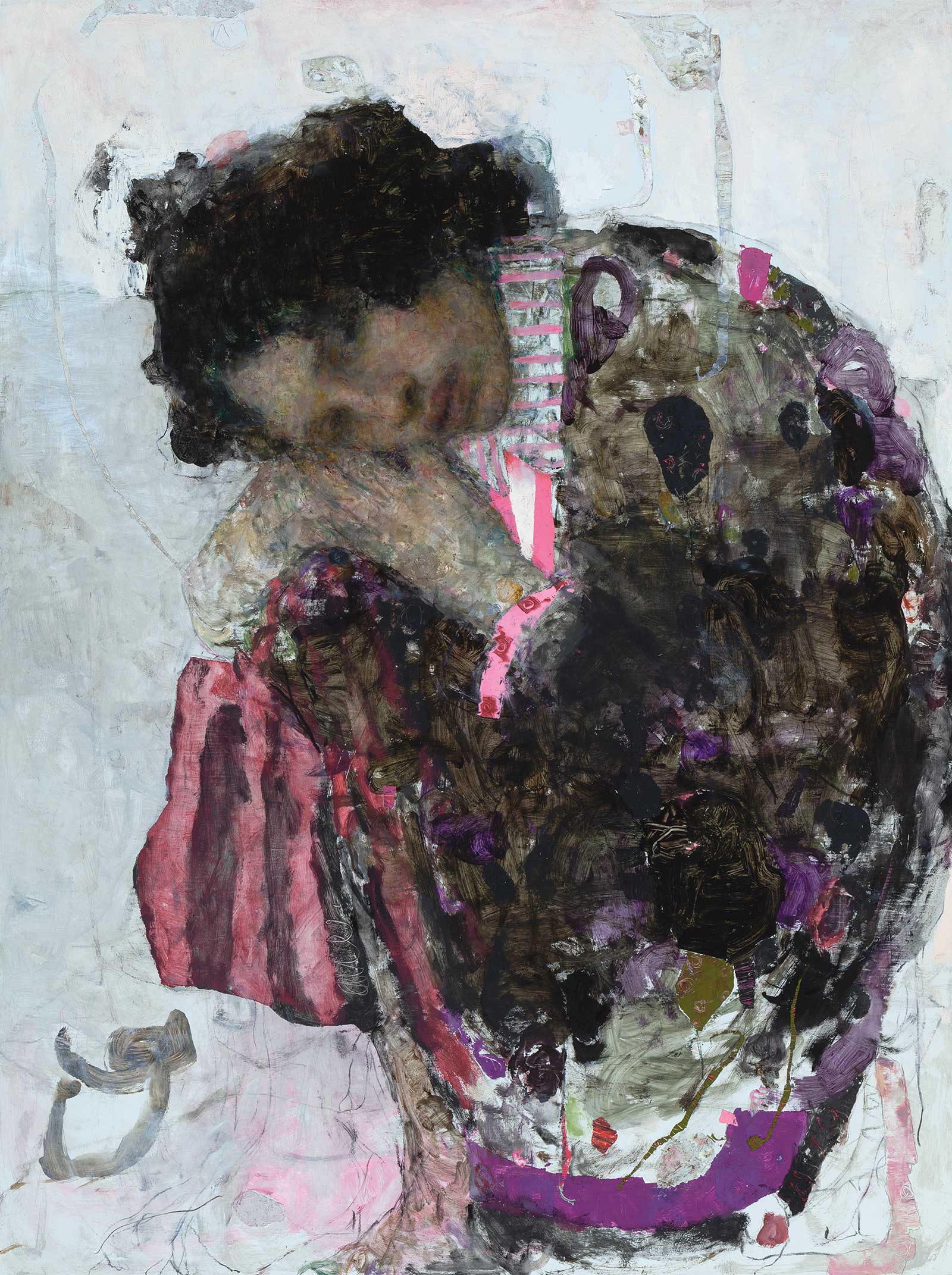
Shelter, oil on canvas panel, 40 x 30 in.
The artist refers to his youth when he was asked to color for school. He would color outside the lines, or ignore general color instructions. For example, he would color apples orange instead of red. He was frequently told he was wrong. “Life is built around those kinds of moments. Layers and layers of things that dictate how to create. There are some things that require those layers. A brain surgeon has a known way of working to keep people alive, but artists have different systems that dictate what they can do,” he says. “I remember when I got to college, I was told there were ways of creating art. Again, more layers on control.”
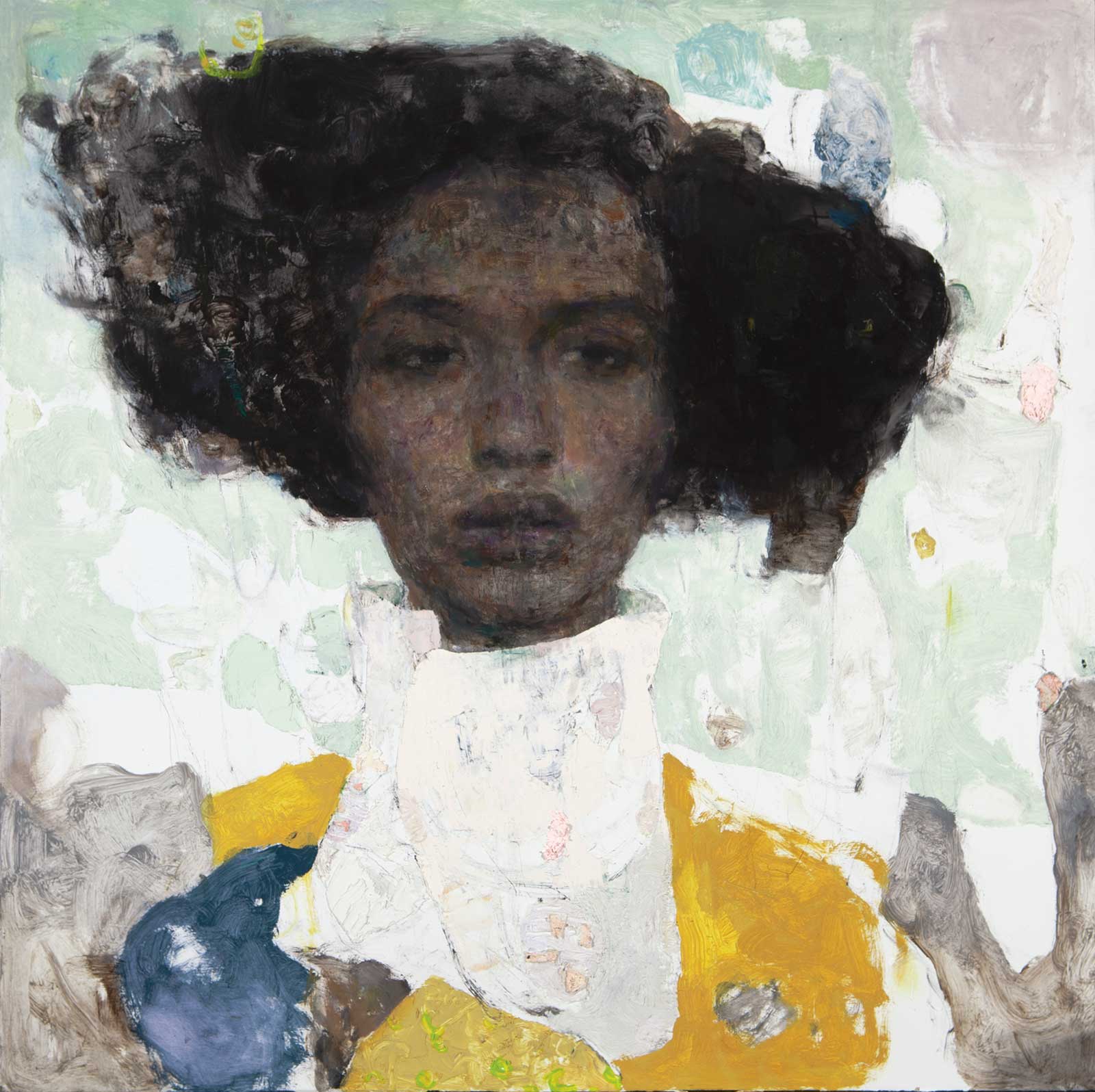
And Yet, oil on canvas panel, 20 x 20 in.
These systems and pressures that push artists (and brain surgeons) into specific ways of thinking, they are the main text. But the exceptions to these systems are placed into parentheses. That’s where Hicks want to explore.
For his newest show, which opens October 16 at Gallery 1261 in Denver, Hicks moves between the realms of abstraction and realism (a place where the two can co-exist). In Hope and Faith, for example, Hicks paints two figures, whose apparition-like faces hover within the paint. All around them are loosely painted structure that dissolves into pure form and color (and fields of emotional brushwork that flutters against the canvas). He often uses live models, but only for the loosest of reference material. “The accuracy of it is less important. The physical model is less important,” he says. “All I’m looking at is the abstract setting. There’s not even a light source because I remove it. I don’t know if I’ll ever be a non-objective painter, or a purely abstract painter, because I do have an emotional connection to the figure, but purely from an abstract place.”
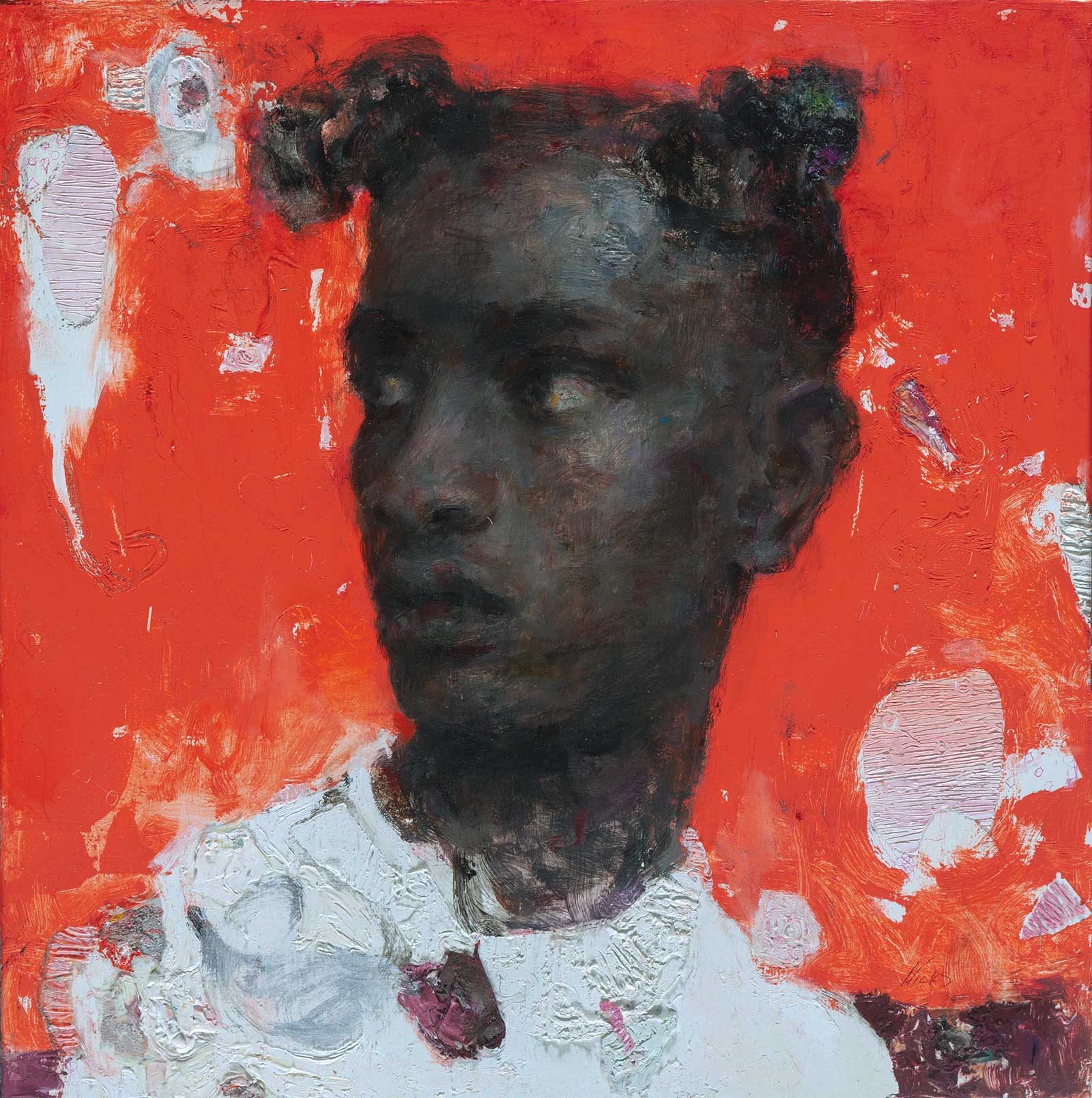
Evening Calls, oil on panel, 12 x 12 in.
Hicks adds that each painting is a personal experience, one meant to connect with the viewer on their own terms. (Hicks is such a big believer of this, he refuses to discuss what each painting means.) “Each painting expresses an emotional state,” he adds. “It’s right there with abstract dialogue between the viewer and the painting.” —
Gallery 1261 1261 Delaware Street, Suite 1 • Denver, CO 80204 • (303) 571-1261 • gallery1261.com
Powered by Froala Editor