From October 2 through 4, the Palette & Chisel Academy of Fine Arts in Chicago is holding a weekend of in-person and online events celebrating the legacy of artist and teacher Richard Schmid (1934-2021). The programming includes an impressive schedule of panel discussions, lectures and demonstrations by luminaries Romel de la Torre, Mary Qian, Daniel Gerhartz, Susan Lyon, Clayton J. Beck III, Scott Burdick, Rose Frantzen, Nancy Guzik, Carol Arnold, Michelle Dunaway and Tina Garrett. An exhibit of 50 paintings by Schmid and those who painted alongside him in the Academy and elsewhere, will also open and remain on view through the end of the month. 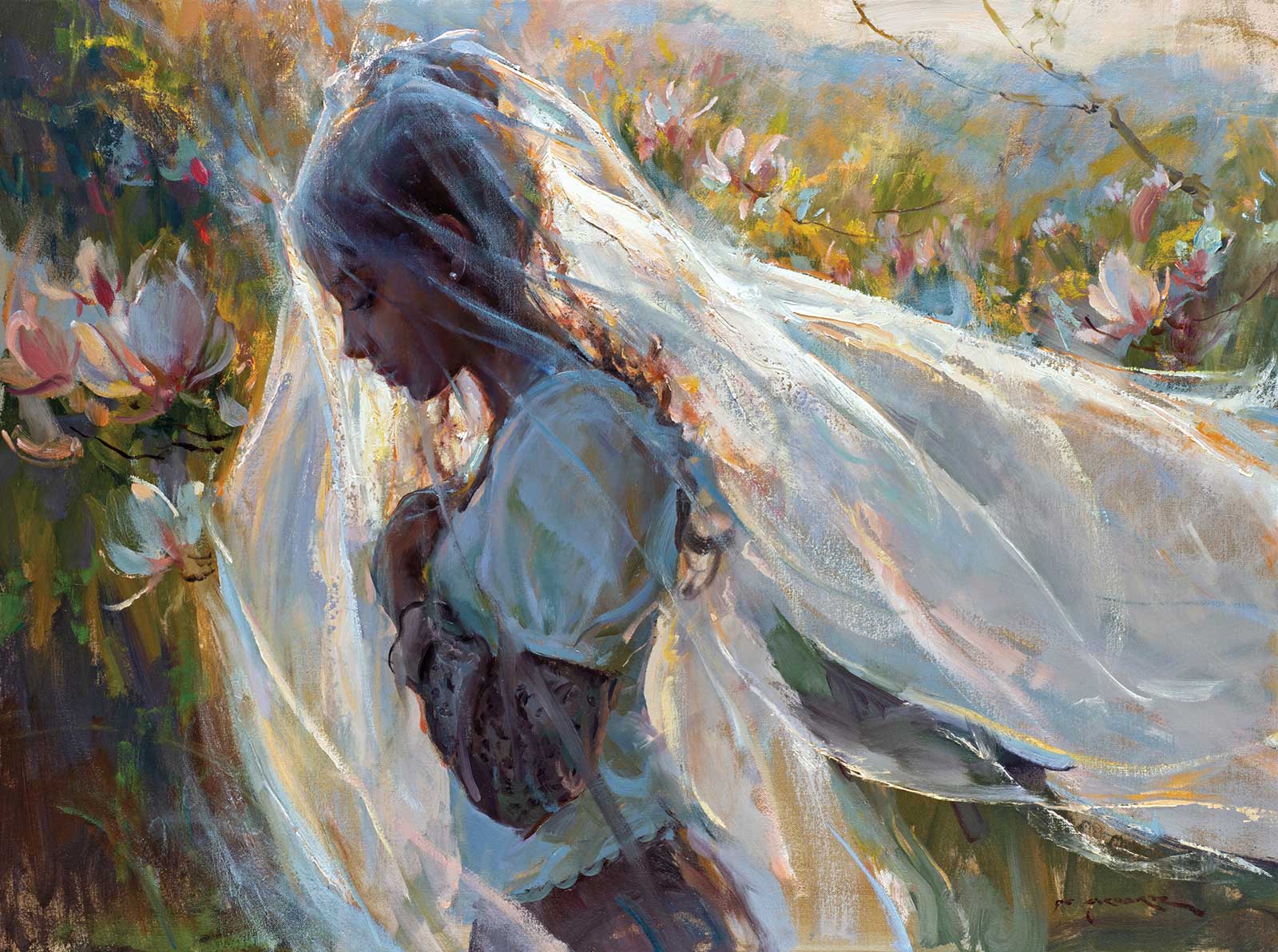 Daniel Gerhartz, Diaphanous, 2026, oil on canvas, 30 x 40 in. As well as being the Academy’s charismatic leader, Schmid is remembered as one of the trailblazers of the representational art movement that swept across the United States after the turn of the millennium. Schmid was an adroit, gifted artist and an exceptional master of the “alla prima” technique—the method of creating a picture in one sitting without waiting for layers of pigment to dry. (The Italian phrase “alla prima” means “at first” or “at the first attempt.”) His best-selling guide to the technique Alla Prima: Everything I Know About Painting distilled his decade-long effort to document and share his profound knowledge. Rejected by every publisher who reviewed the manuscript, Schmid printed the book himself. The internet was expanding rapidly in 1998, and word about the book spread fast and it soon became an international bestseller. It is now in its 18th edition. Because of his book, Schmid became a hero to a new generation of representational painters, giving them an understanding of the tools and techniques they needed to paint, and with them, the permission they sought from their elders.
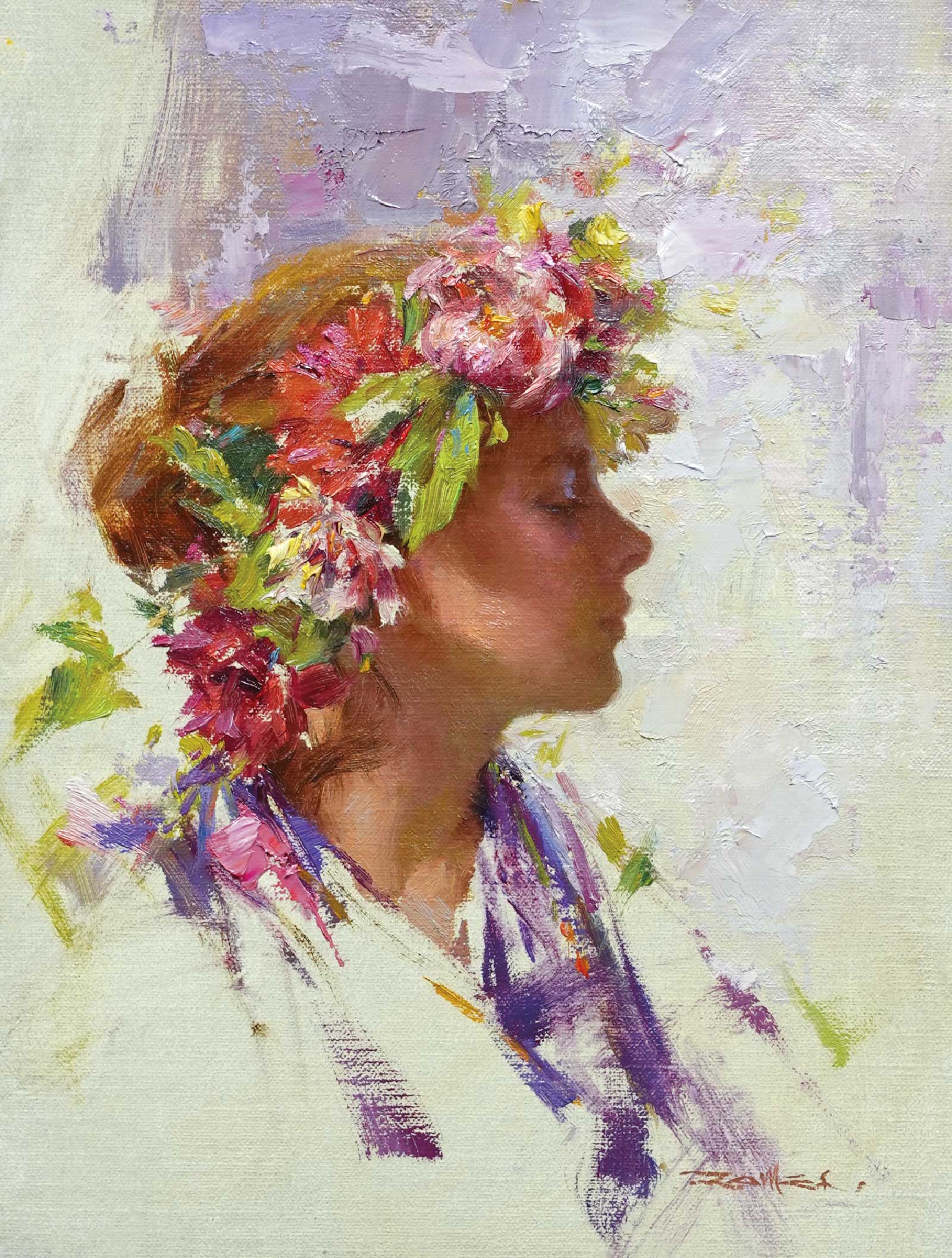
Romel de la Torre, Flower Crown, 2026, oil on panel, 12 x 9 in.
During the current revival of figurative art, it is hard to imagine the isolation representational painters felt during the 1990s, when they endured jeers of opprobrium. Schmid’s bright presence was a light in the darkness. The circle of his admirers extended far beyond his former students and colleagues at the Palette & Chisel. Inspired by Schmid’s quiet example, these artists saw representation as having a boundless horizon of sense and stimulation with no limit to its creative exploration. To Michael Lynn Adams, co-founder of the Representational Art Conference series, Schmid’s alla prima book was a touchstone of wisdom. Adams explains, “…to me it is the best book on painting and creating art that I’ve ever seen. He tells you everything he had to do, and how he developed the tools and the craft and taking it seriously, and it’s just a marvelous book. I called it my little Bible. I still do.”
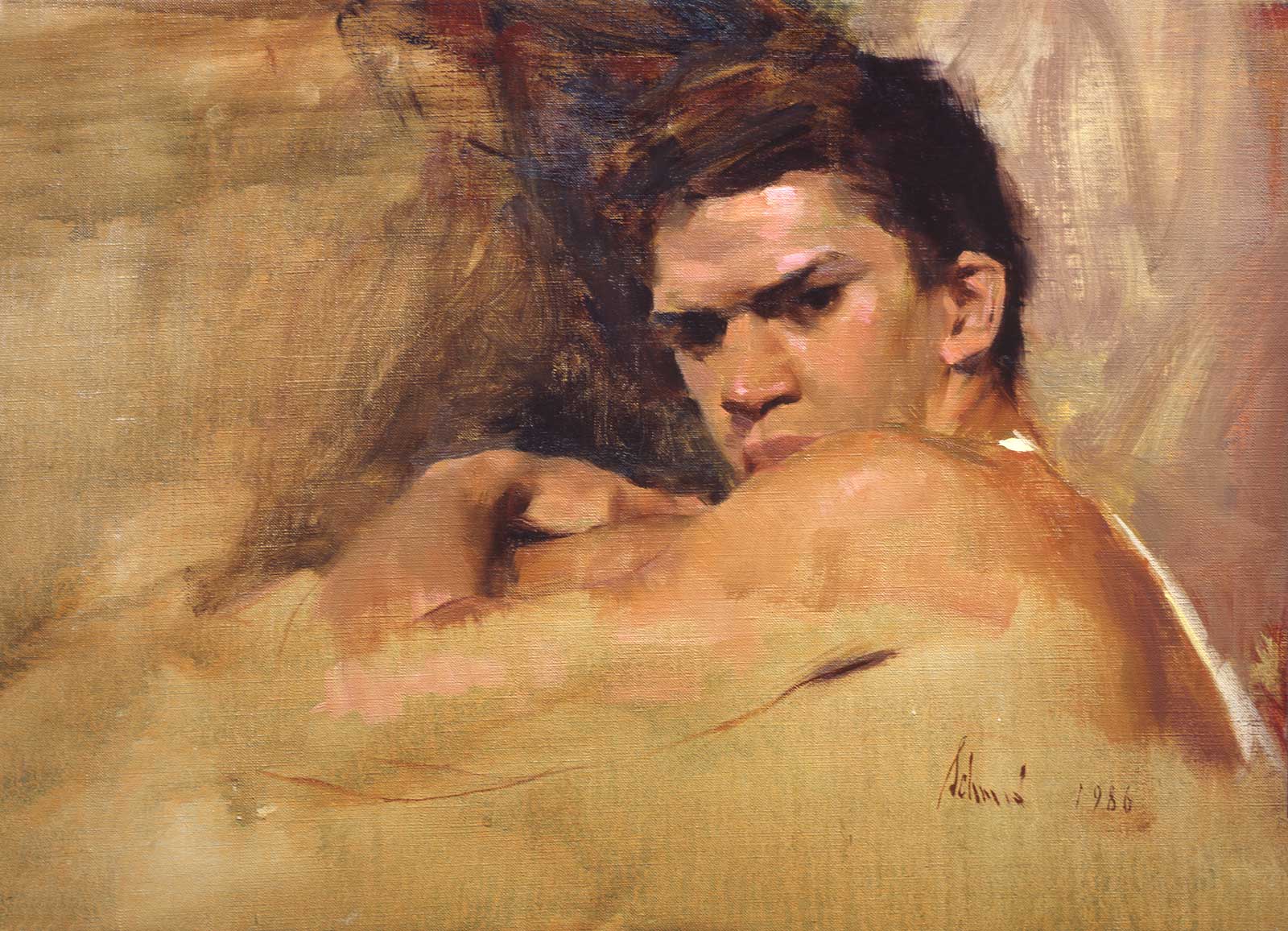
Richard Schmid (1934-2021), Eddie Thornton, 1986, oil on canvas, 16 x 22 in.
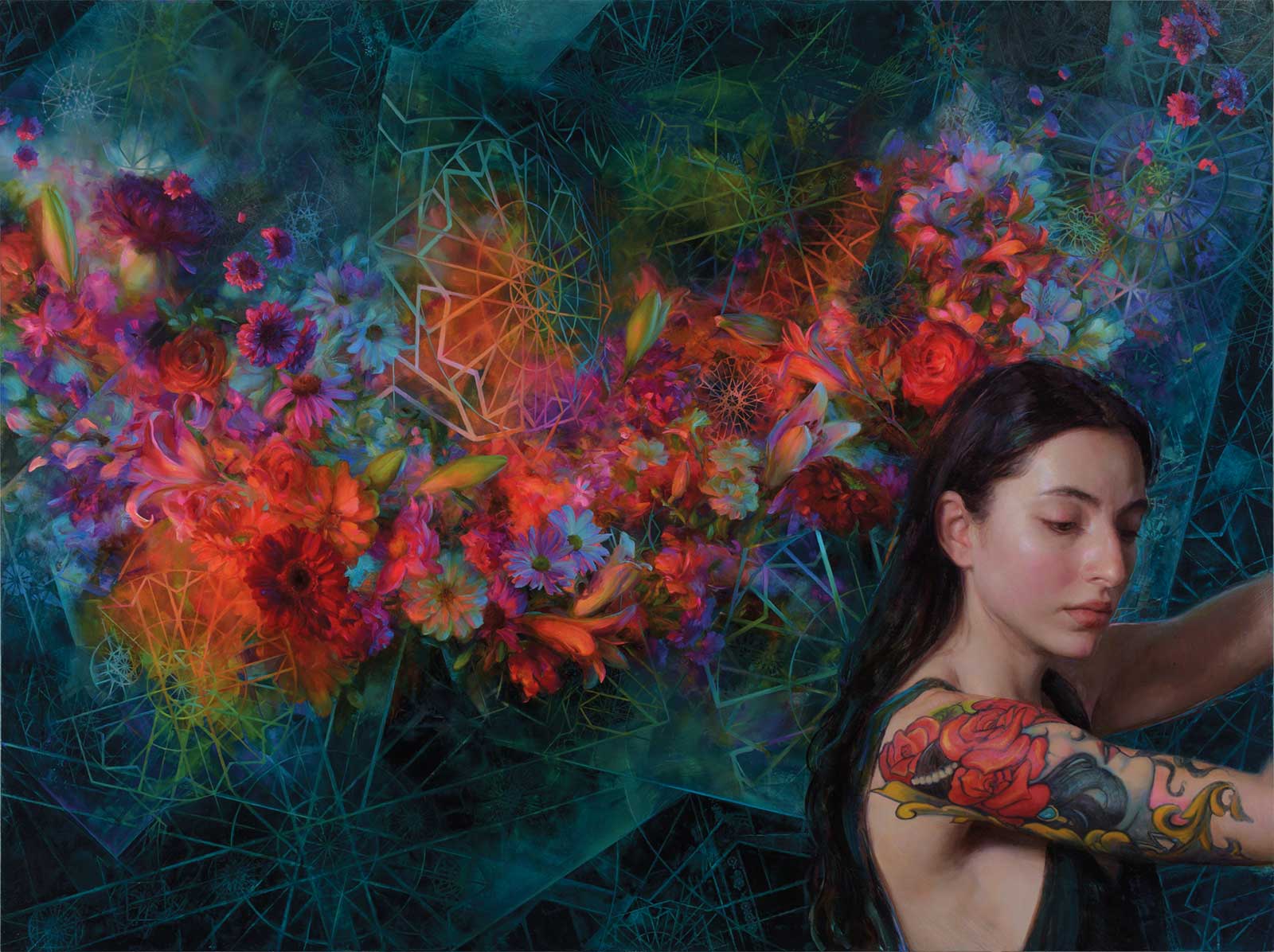
Rose Frantzen, The Impossibility of Feeling Worthy of a Universe of Infinite Beauty, 2025, oil on canvas, 36 x 48 in.
Alexey Steele, whose remarkable glowing landscapes featured in the last issue of American Art Collector, reveres Schmid. He says, “His brush sparkled in exactly the same way his eyes did when he was excited or interested about something worthy of his interest and excitement. And that solid unity is what made Richard, in my judgment, a maestro.”
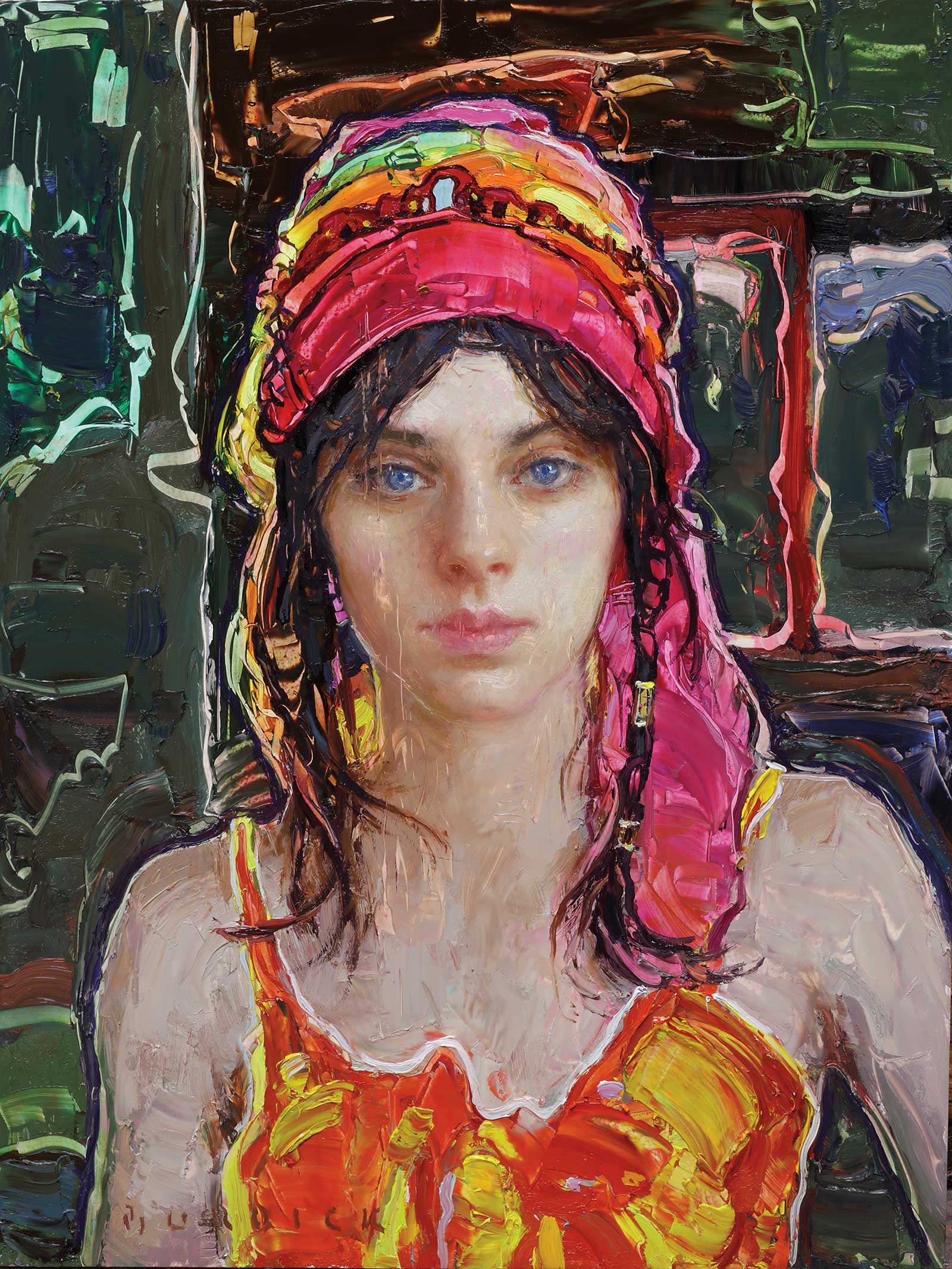
Scott Burdick, Anke the Animator, 2025, oil on canvas, 24 x 18 in.
Schmid’s widow and former student Nancy Guzik, curated the exhibit, finding it a challenge to choose works representing the breadth of his legacy. “Richard painted more than a 100 heads from life at the Palette & Chisel, and because he never wanted to sell them, narrowing that remarkable body of work was not easy,” Guzik explains. “At first, I thought we would exhibit two dozen. Then it became three dozen and somehow, we arrived at 50. But there was a reason the exhibition kept growing. I kept thinking about the artists who would stand in front of these paintings—what they might see, discover and learn from Richard. I wanted them to experience the extraordinary variety in the way he painted, how he posed and lit a model, designed a composition, explored color and edges, captured character and mood, and responded to what was before him. Seeing one painting can inspire you; seeing so many together can reveal the depth of an artist’s thinking.”
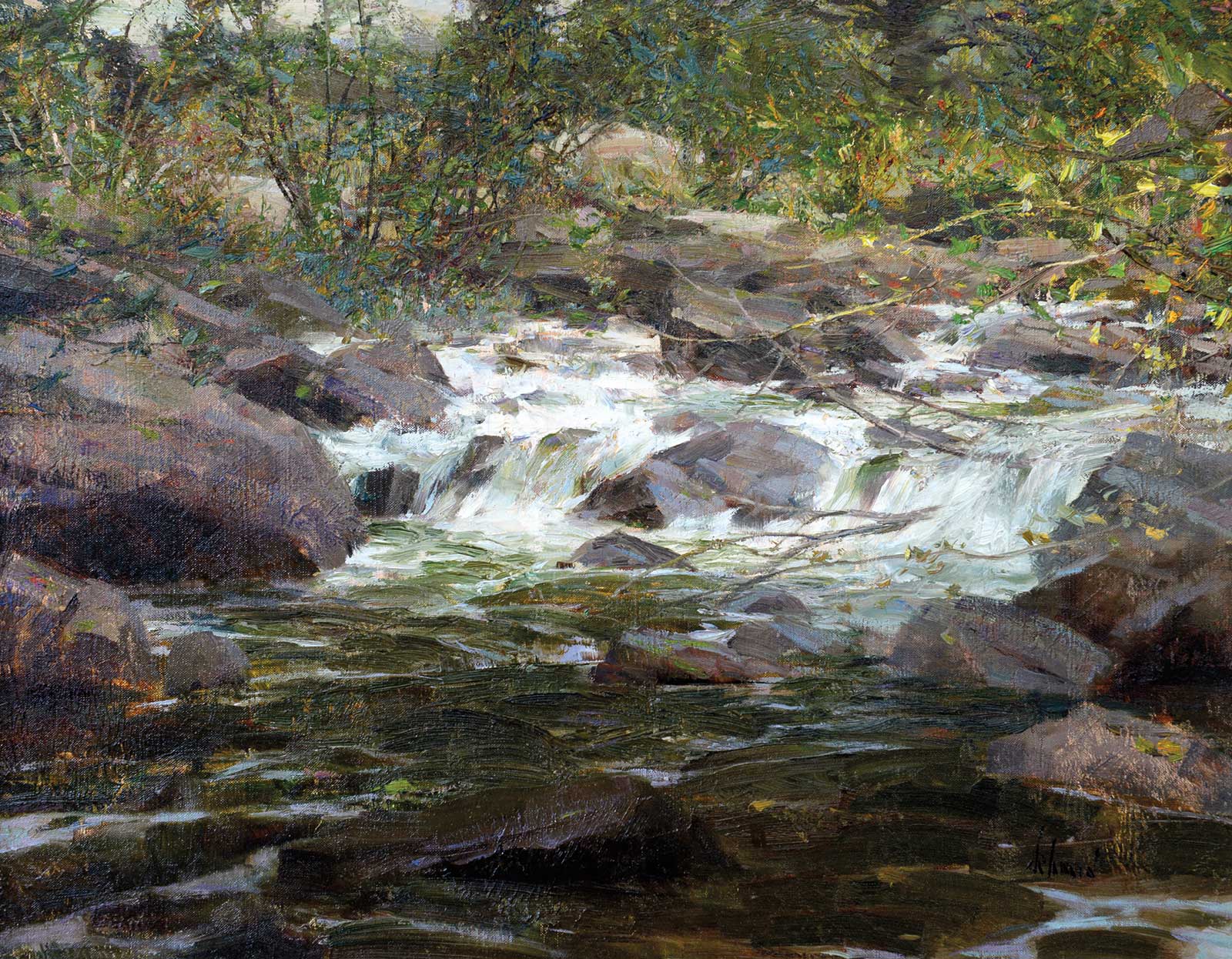
Richard Schmid (1934-2021), Cache La Poudre Rocky Mountain Stream, 1987, oil on canvas panel, 16 x 20 in.
The Palette & Chisel is the oldest artist organization in Chicago, occupying an historic Italianate William Waller mansion built soon after the Great Fire of 1871. It lies in the Near North Side neighborhood on the edge of the center of the city, where the high-rises that crowd the Lake Michigan shoreline begin their towering ascent over the water. The building is warm and welcoming, and the contrast between its architecture and the skyscrapers that surround it is striking, and reflective of the modesty and grace of Schmid’s still, calm portraits. Schmid’s gentle paintings emphasize the touch and study of personality. They are empathic explorations of the human heart.
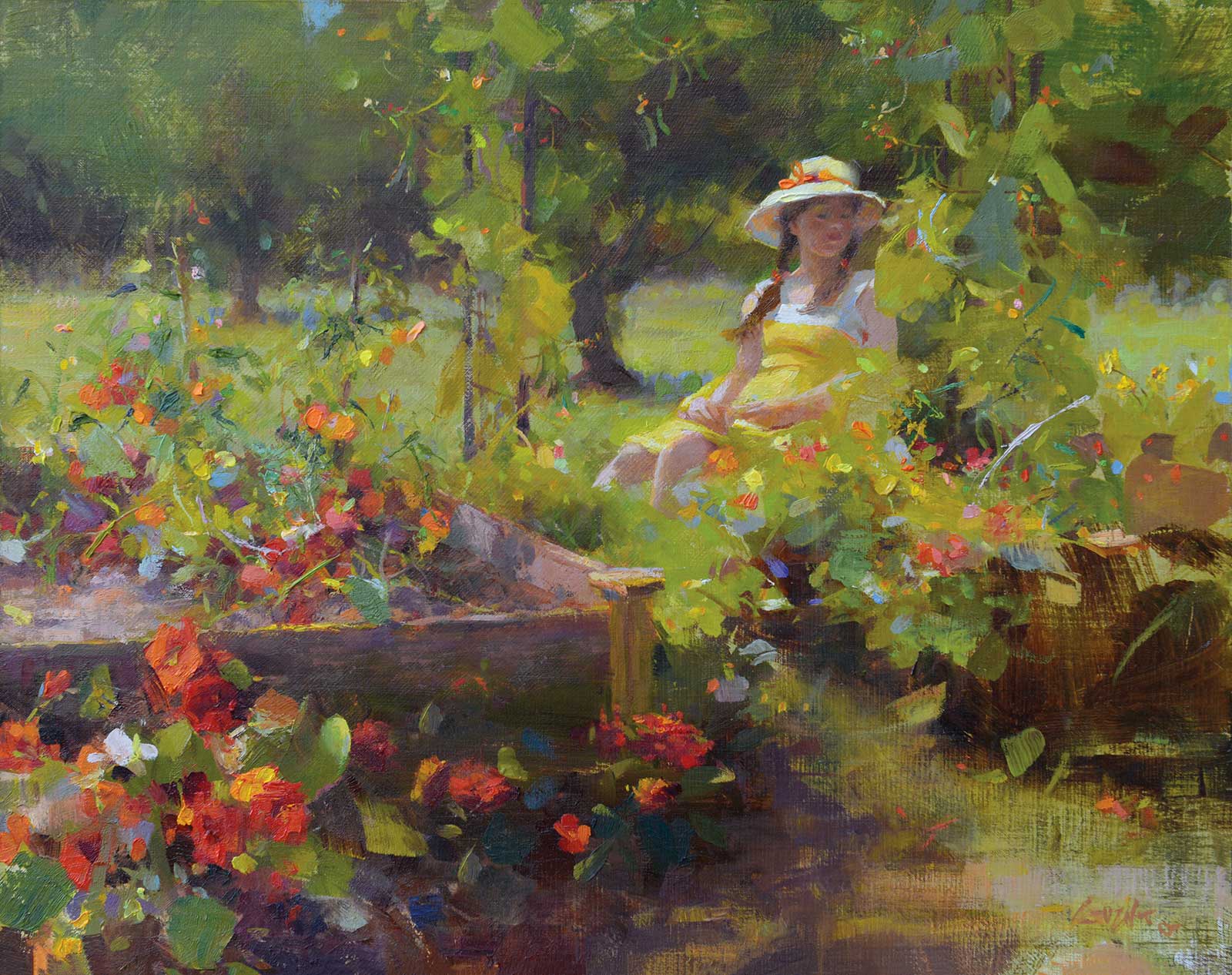
Nancy Guzik, Sunny Day Grace, 2026, oil on panel, 11 x 14 in.
In Guzik’s memory, they are as fresh now as they were when he painted them. Schmid’s delightful little portrait studies are triggers for her reminiscences. In 1986, Schmid painted the saturnine head and shoulders of Eddie Thornton as a handsome young man, his face cut by the rounded muscle of his shoulder, his back glowing in a bright dash of light. Guzik says, “Thornton was both a member and an artist at the Palette & Chisel during Richard’s years of painting there. He became a friend and one of Richard’s favorite models, frequently posing for Richard and the members at the Palette & Chisel. Eddie loved karate and, if my memory serves me correctly, held a black belt. He was tall, intelligent, kind and strong, and this dynamic pose was captivating from every angle for those of us painting alongside Richard that evening.” Guzic will give a guided tour of the exhibit at 9.30 a.m. on Thursday, October 1.
The show is not limited to Schmid’s portraits. Guzik also included 14 of his landscapes, animals and still life paintings to demonstrate the breadth of his ability. As Schmid discovered the magic and quality of everyday things, his subjects expanded out of the studio into the home, and then into the landscape. In a book titled My Still Life Art, he wrote, “I see the whole world as a boundless still life, and there is no limit to the choices I have or how I paint those choices…” He painted We Threein 1995. Guzik says, “Richard admitted that some dolls could be a little spooky, yet he never lost his fascination with them. What touched him most were the worn dolls. The ones missing an eye or showing the marks of a lifetime of play. He would quietly say, ‘I knew they had been well loved.’”
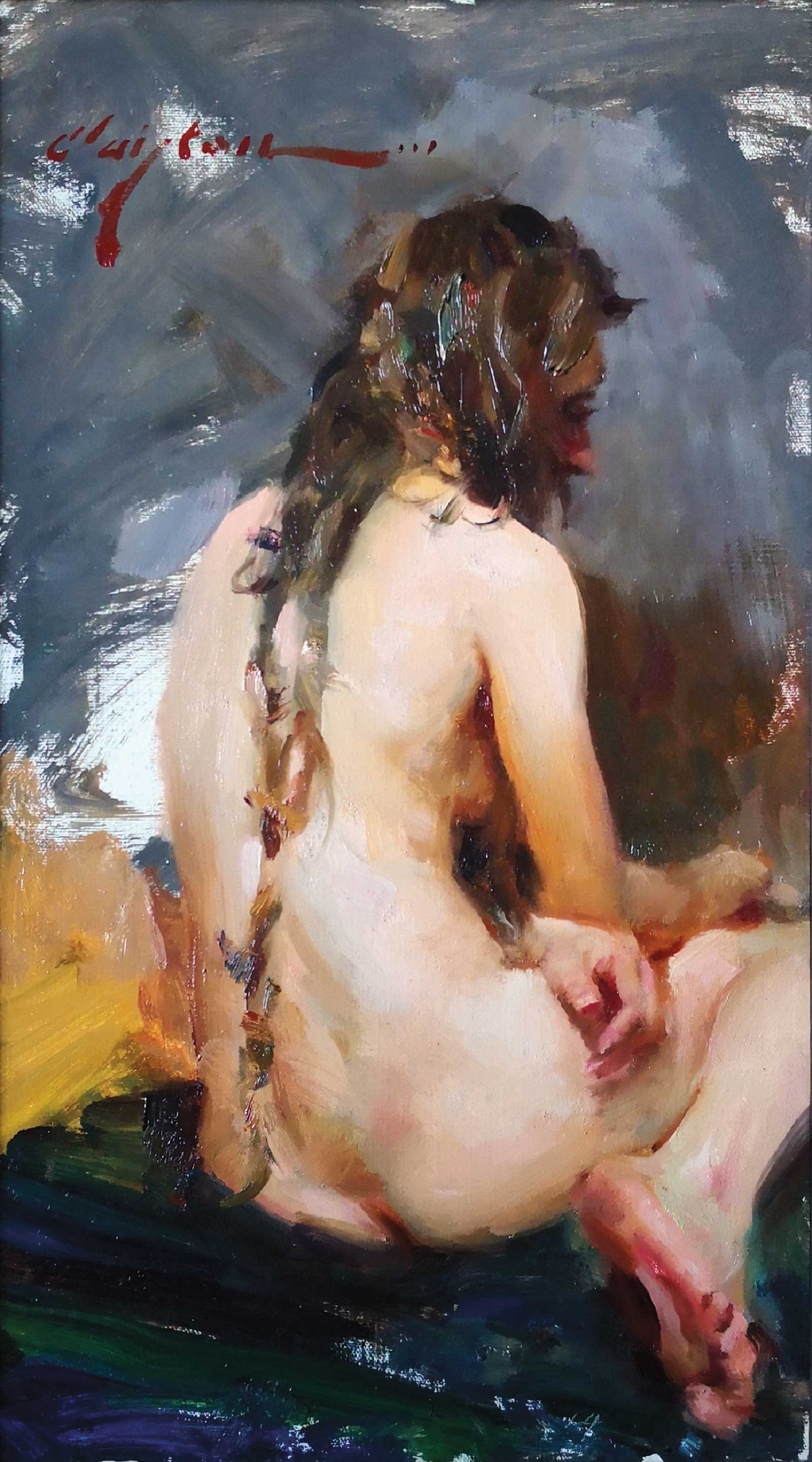
Clayton Beck III, Nude, 2009, oil on linen, 18 x 9 in.
Although Schmid painted water with surprisingly broad strokes, his simplicity was deceptive. His understanding ran as deep and clear as its current. He had been an enthusiastic disciple of the Housatonic River in Connecticut and a devotee of the rugged coast of Monhegan Island, Maine, but the scenic Cache la Poudre River became one of his favorite subjects when he lived in Colorado. “It became an endless source of inspiration,” Guzik recalls, “and he never tired of exploring its many moods with brush in hand. Richard told me that the river’s ever-changing character fascinated him. From the violent spring runoff roaring through the Poudre Canyon to the quiet, meandering waters that nourished the farmlands below, each season offered something entirely new. He was captivated by the endless movement of water and spent years studying its light, reflections and constant motion.”
In the 1996 painting Red Schooner Ucluelet, a cheerful, traditional two-masted wooden schooner is moored in a quiet harbor, with its vermilion hull reflected in the water. It’s loosely worked with the customary breadth and confidence of Schmid’s quick brushstrokes. Guzik recalls, “Richard painted this during one of our trips to Vancouver Island, where the fishing harbors and coastal light provided endless inspiration. I was painting with him that day, and it remains one of my most cherished memories because of the ease and joy with which he worked. Richard once told me that as a child he loved boats and became fascinated with their anatomy by building countless miniature models. That lifelong fascination is evident in the confident structure of the schooner.”
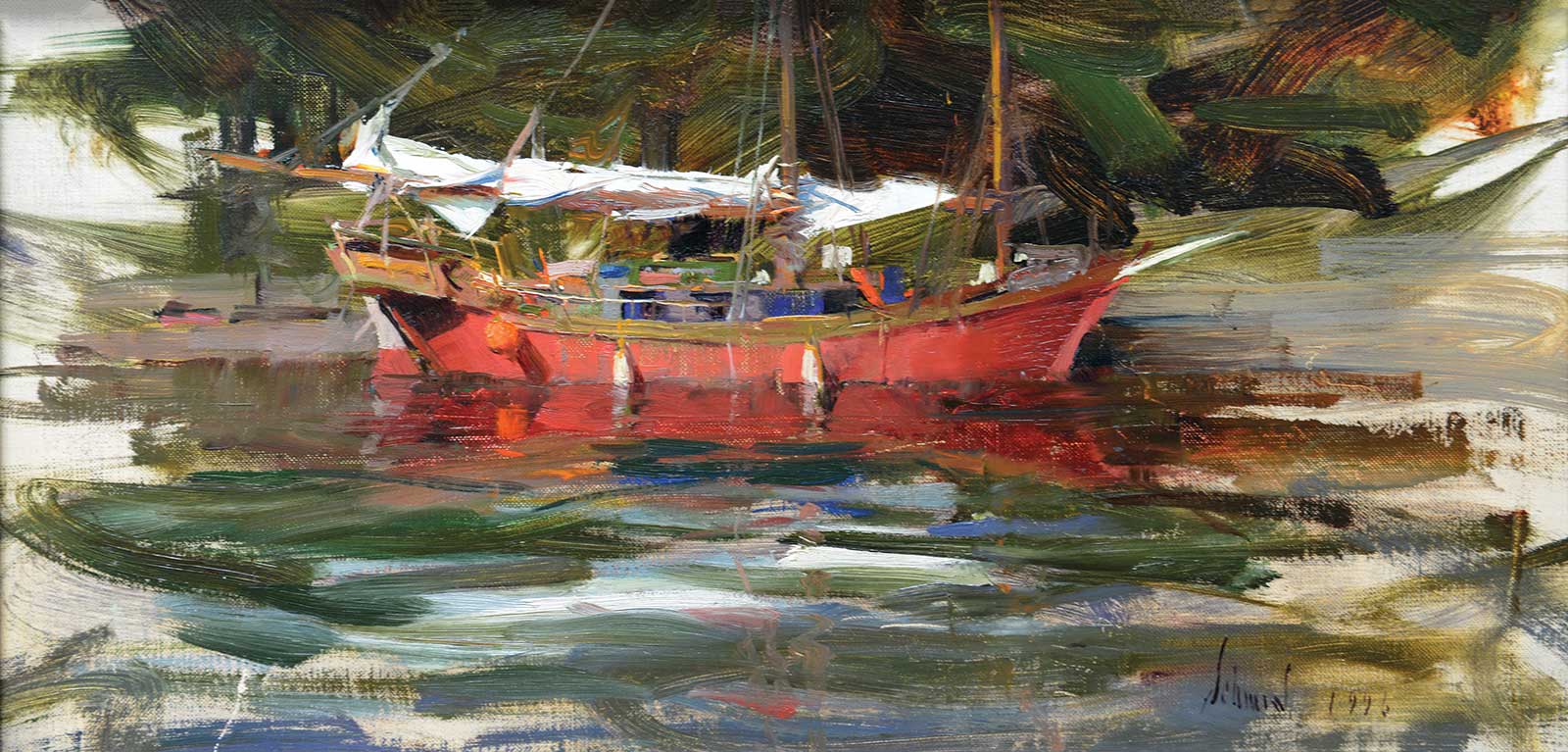
Richard Schmid (1934-2021), Red Schooner Uculelet, Vancouver Island, Canada, 1996, oil on canvas, 8 x16 in.
Schmid’s decades of teaching and the connection readers felt to his book placed him in the center of an extraordinary network of admirers. As well as choosing from the array of Schmid’s works, Guzik has hung paintings by seven of Schmid’s former students and colleagues who she has dubbed the “Seven Legendary Artists.” Echoes of Schmid’s loose, confident brushwork sound from these examples of the master’s influence, ranging from the modest homages of Clayton J. Beck III’s lucid, slippery Nude, a harmonious and alluring study of a naked girl staying carefully within the realms of Schmid’s hallowed conventions. Beck recalls, “I was never interested in the figure—every version I’d seen had some strange subtext. When I saw Richard’s book, the hair came up on my arms. It made a 90-degree turn in my life. I had a subject I could paint forever.” Guzik’s painting Sunny Day Grace, an impressionistic rendering of a girl enjoying a lazy siesta in an orchard beside a boxed garden of flowers and vines, will be in the exhibition; as well as Romel de la Torre’s Flower Crown, which adheres most closely to the studied heads of Schmid’s studio demonstrations with its garland of spring blooms crowning his pretty model.
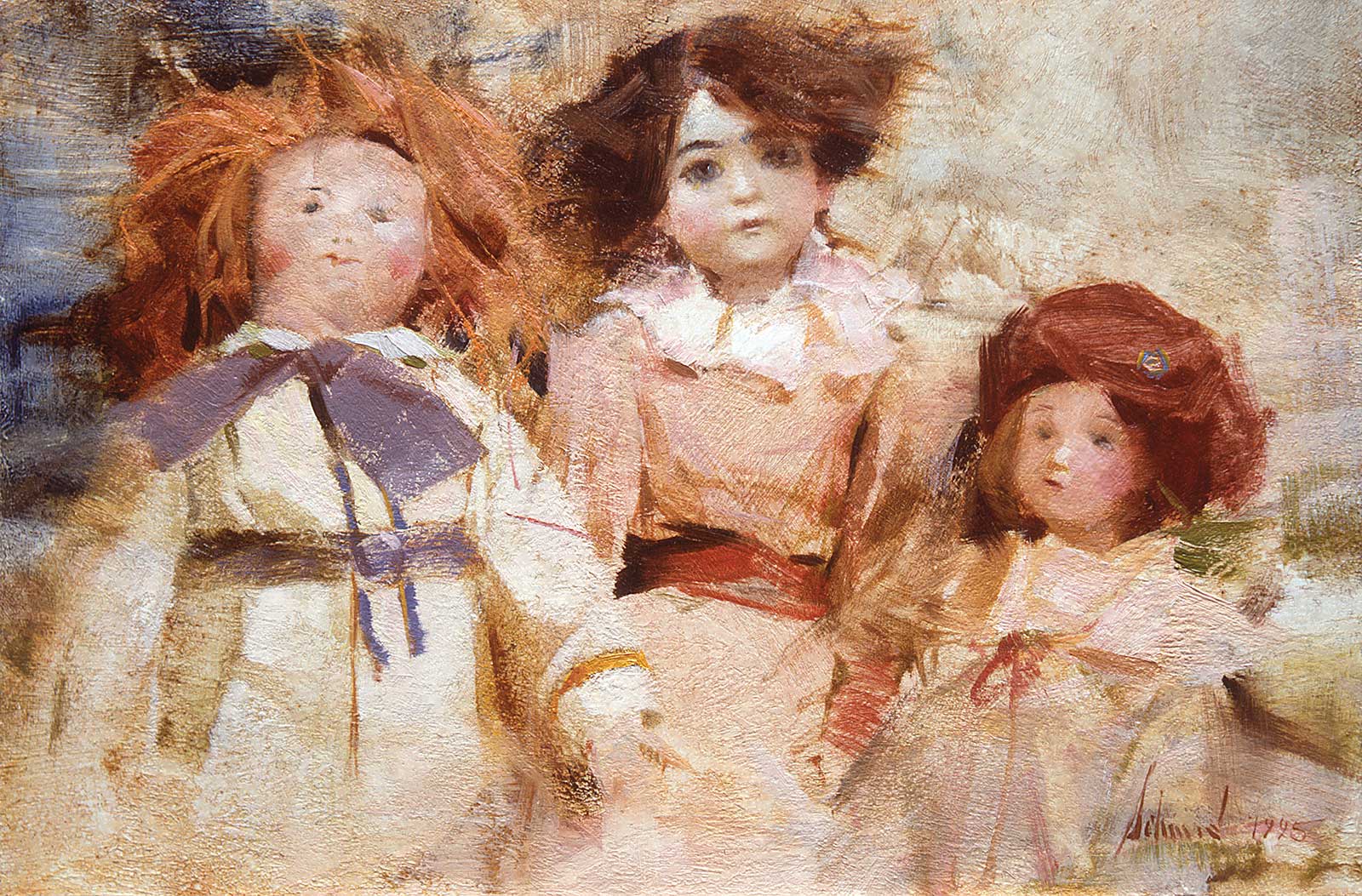
Richard Schmid (1934-2021), We Three, oil, 1995, 8 x 12 in.
Emulation emerges in the loose romanticism of Daniel Gerhartz’s delicious bride swathed in a cascade of backlit, white contemplative within the flow and scent of tulip magnolias. In Scott Burdick’s Anke the Animator, which retains Schmid’s deft brushstrokes and spontaneous joy, but embraces the colorful palette of youth and vigor, gestures to the digitally filtered world of a new, rising generation. His influence is especially present in the spectacle of Rose Frantzen’s glorious floral and swirl of figurative psychedelia. The Impossibility of Feeling Worthy in a Universe of Infinite Beauty develops Schmid’s technique gloriously by pushing forward into innovative new arenas of imagination and visionary power. Frantzen says, “Richard was really good at emphasizing using useful questions. I mean, he was always clear that if you’re going to struggle in a painting, turn the questions away from some sort of inner question about whether you are worthy of even being an artist—it isn’t about yourself. It’s about ‘does it need to be shifted to the left or right?’ He was very pragmatic about being clear on the questions in front of you that were more painting-directed. That was always a useful tool for somebody like me who probably leans more toward an emotional point of view. But he also felt like a person who couldn’t, at times, contain it. He would giggle that great giggle…I can still hear it in my head.”
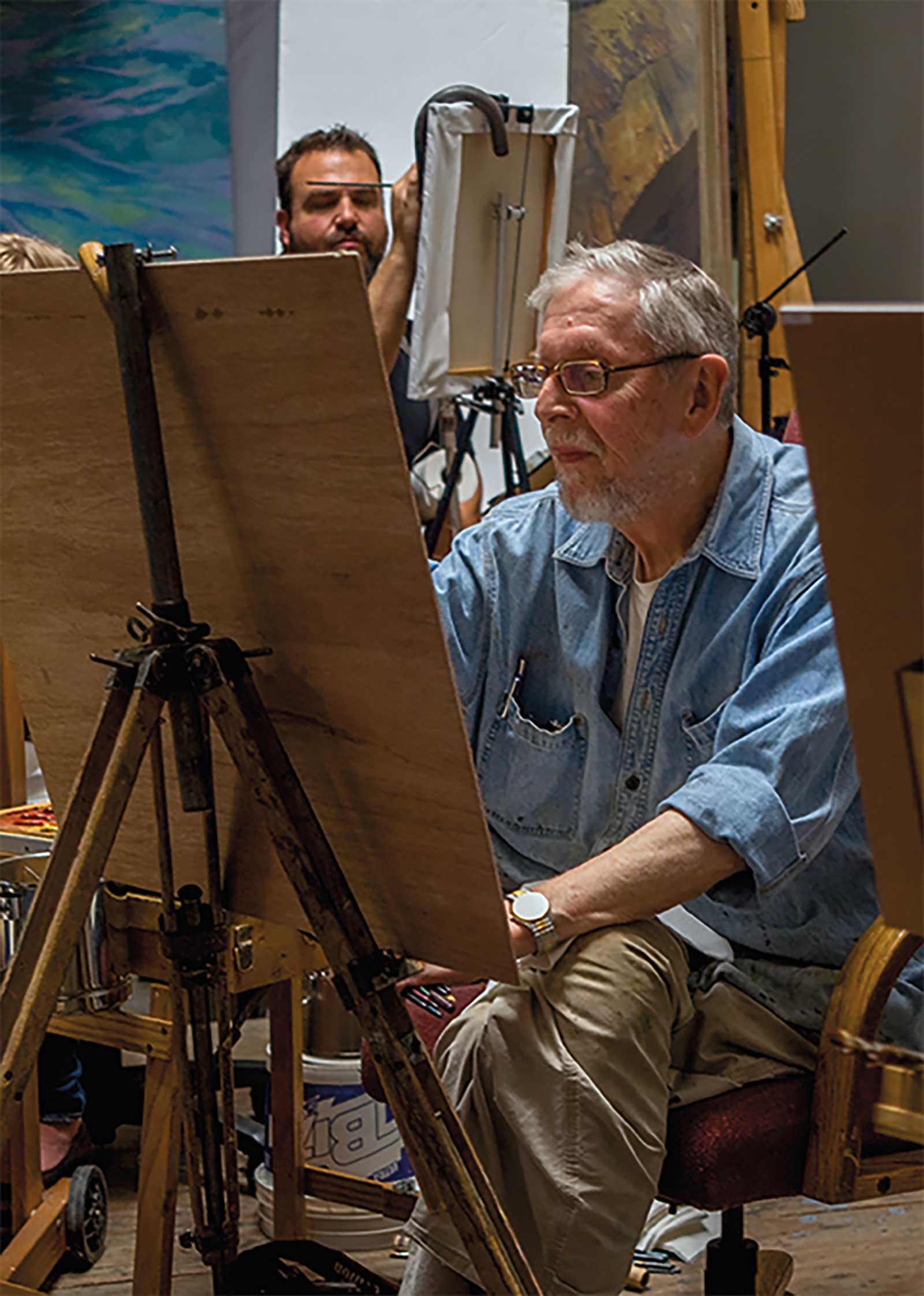
Richard Schmid working at Alexey Steele’s studio in Carson City, Nevada.
For a full schedule of events surrounding Celebrating Richard Schmid's Legacy and to register, visit www.paletteandchisel.org. —
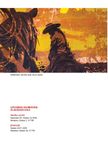
Celebrating Richard Schmid's legacy
Special Programming: October 2-4, 2026
Exhibition: October 1-31, 2026
The Palette & Chisel Academy of Fine Arts
1012 N. Dearborn Street, Chicago, IL 60610
(312) 642-4400, www.paletteandchisel.org
Powered by Froala Editor