Nearly 30 artists have been busy creating new figurative paintings for a massive group show that opens this month at Principle Gallery in Alexandria, Virginia. Titled Bodies of Work, the exhibition brings together an international mix of some of today’s most celebrated contemporary realists to showcase the human form and, perhaps more so, the breadth of artistic interpretations of it.
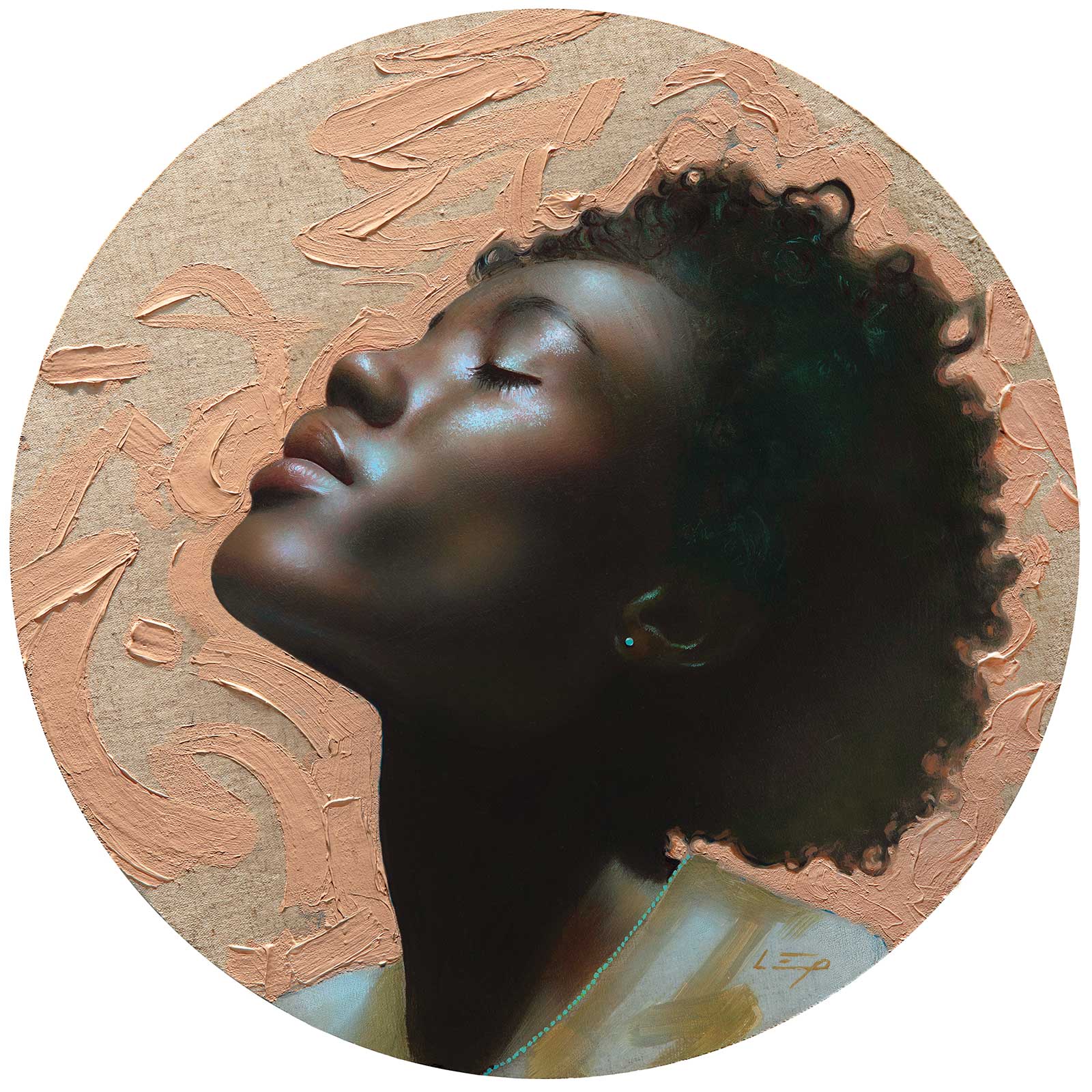
Laura E. Pritchett, Reception, acrylic on linen, 18 in.
Featured artists include Jeremy Mann, J Louis, Stephen Early, Alexandra Manukyan, Mary Sauer, Marissa Oosterlee, Nicolas Martin, Shane Wolf, Anna Wypych, Andreas Claussen, Stephanie Deshpande, Laura E. Pritchett, Paula Rubino, Angelo Salmoiraghi and many others.
“Figurative work remains one of the most enduring traditions in art because it begins with something universally familiar: ourselves,” says Principle Gallery director and show curator Clint Mansell. “Yet what makes this exhibition compelling is not simply the presence of the figure, but the remarkable range of ways these artists use it to explore perception, identity, memory, narrative and emotion.
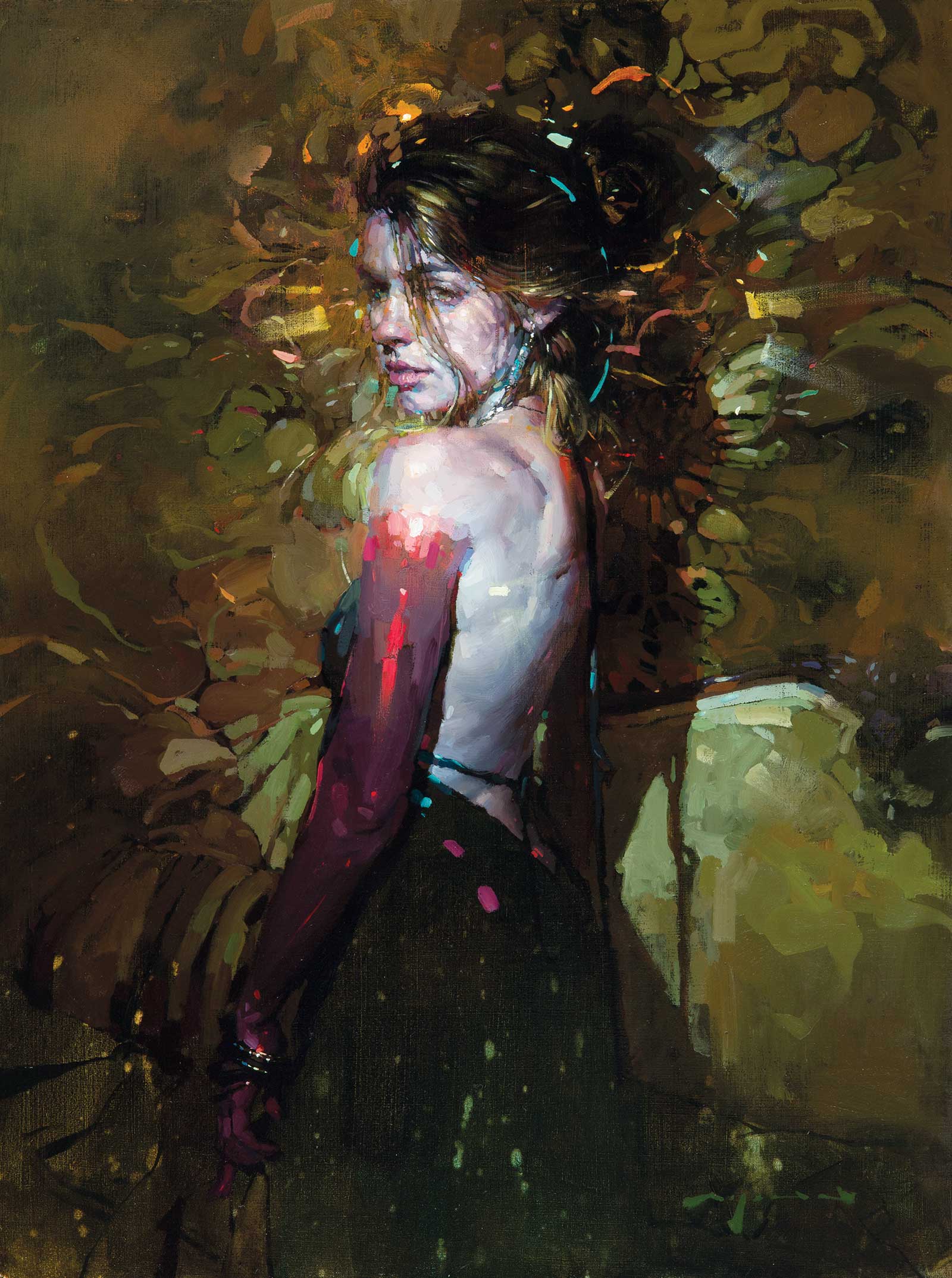
Jeremy Mann, Lydia, oil on panel, 24 x 28 in.
“Bringing together artists from around the world, this exhibition presents a survey of contemporary realism at a time when the genre continues to expand in exciting directions. While each artist shares a commitment to craftsmanship and observation, their approaches are strikingly diverse. Some create intimate psychological portraits, others construct symbolic narratives, while others push realism toward atmosphere, abstraction or imaginative invention.”
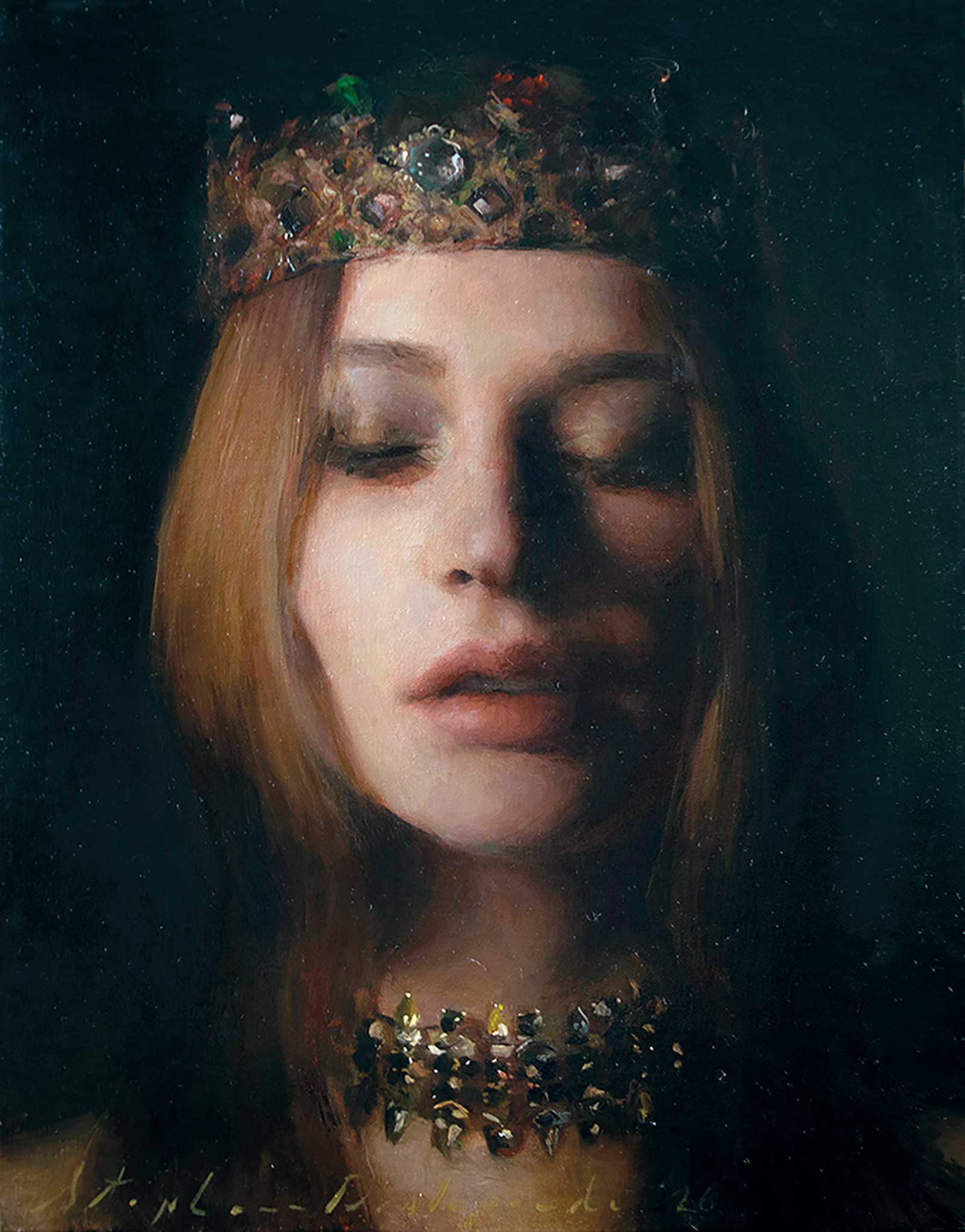
Stephanie Deshpande, Prescient Vision, oil on linen, 14 x 11 in.
On one end of the spectrum, we have works like Lydia by Jeremy Mann, where a woman’s refined face, shoulder and back give way to a dynamic canvas of abstraction and flickering flecks of color. Mann bestows her with materiality while suggesting she is a figment of the imagination, a captivating woman glimpsed at a ball, only to disappear into the crowd, never to be seen again. Then we have timeless, traditional works like Paula Rubino’s portrait Aida’s Sister.
Both of Rubino’s paintings in Bodies of Work are small, straightforward portraits painted from life in natural light. “My approach with these works is to become engrossed in painting by direct observation,” she says. “What keeps me in the studio is the process—the meditative nature of observation and building up layers and colors. I am still chasing down the elusive successful painting, but once the painting has a certain texture, harmony and structure, I can let it go.”
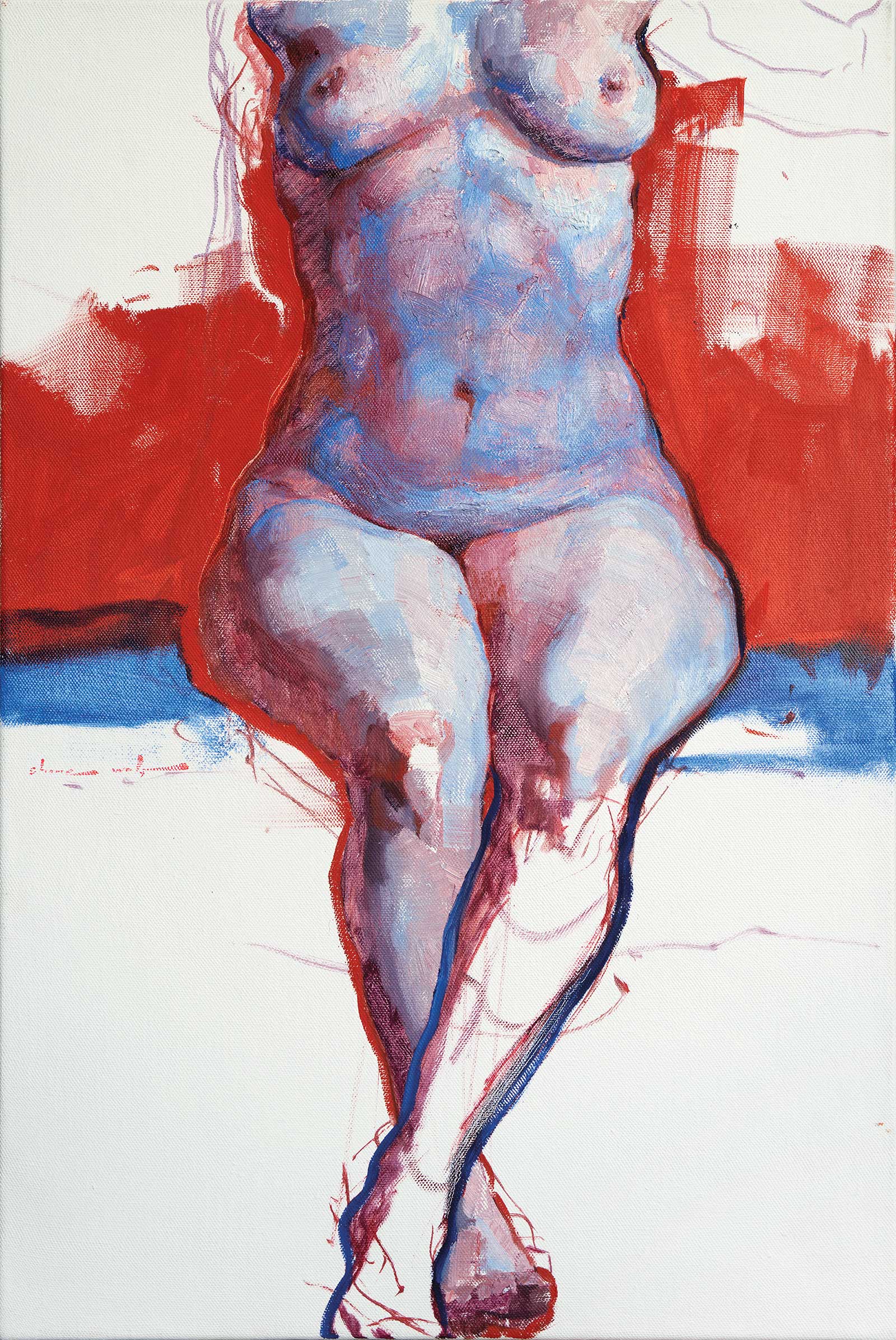
Shane Wolf, Milkshake Currency, oil on canvas, 29 x 20 in.
If Mann and Rubino give you a sense of the range of styles in Bodies of Work, the others fall somewhere in between, or even outside, those poles.
Laura E. Pritchett has two stunning tondos in the show. The hyperrealistic womens’ faces wear a sheen of vitality, brought more into focus by the abstract, impasto backgrounds.
She says, “I pursue painting what I’m most excited about a subject: the delicate sweeps of hair, ambient reflections on cheekbones and jawlines, details in jewelry and transparencies in cloth. I paint in a way that allows me to indulge in what I have the most fun creating…By emphasizing what I’m drawn to and simplifying the rest, my style has become my own. Gestural brushwork, simple planes of color and the natural texture of exposed linen play an important role in my recent work, adding movement and contrast to tightly rendered, more delicate focal points.”
About her show piece, Reception, Pritchett says, “Like a satellite dish turned toward the heavens or a flower open to the sun, [the woman] in Reception is listening and absorbing inspiration in all its forms.”
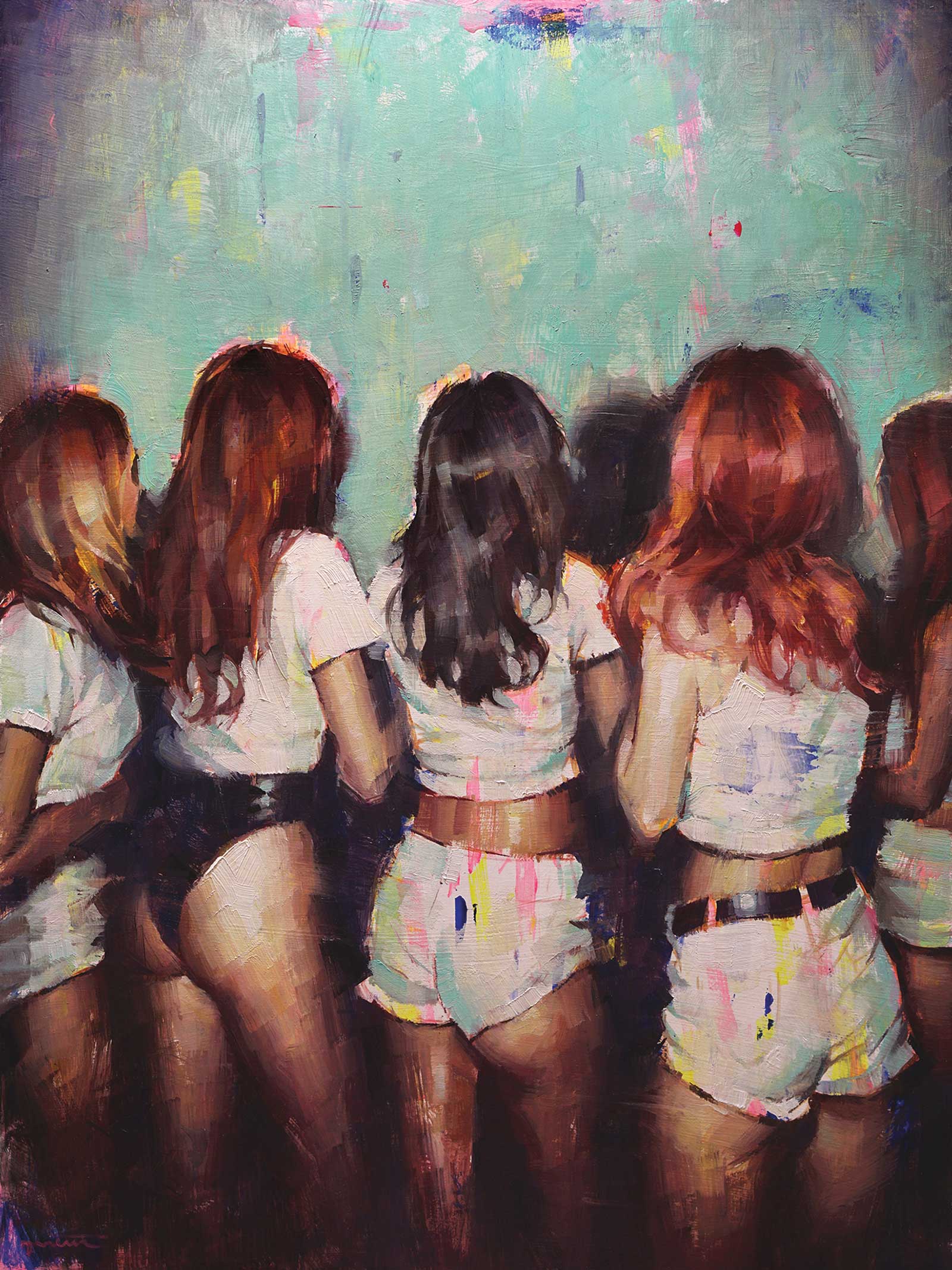
Nicolas Martin, Sisterhood, oil on panel, 16 x 12 in.
Alexandra Manukyan’s The Lullaby of Water and Petals and Angelo Salmoiraghi’s Castalia wade into the waters of imaginative realism and allegory. In Manukyan’s piece, a figure is cradled within a tapestry of lilies, petals and flowing water, in a moment of profound stillness. “Suspended between the tangible and the imagined, she turns inward, listening to the quiet rhythms that exist beneath the surface of the visible world,” explains Manukyan. “The Lullaby of Water and Petals is a meditation on tranquility, introspection and the delicate harmony between the human spirit and the natural world—a space where silence itself becomes a form of revelation.”
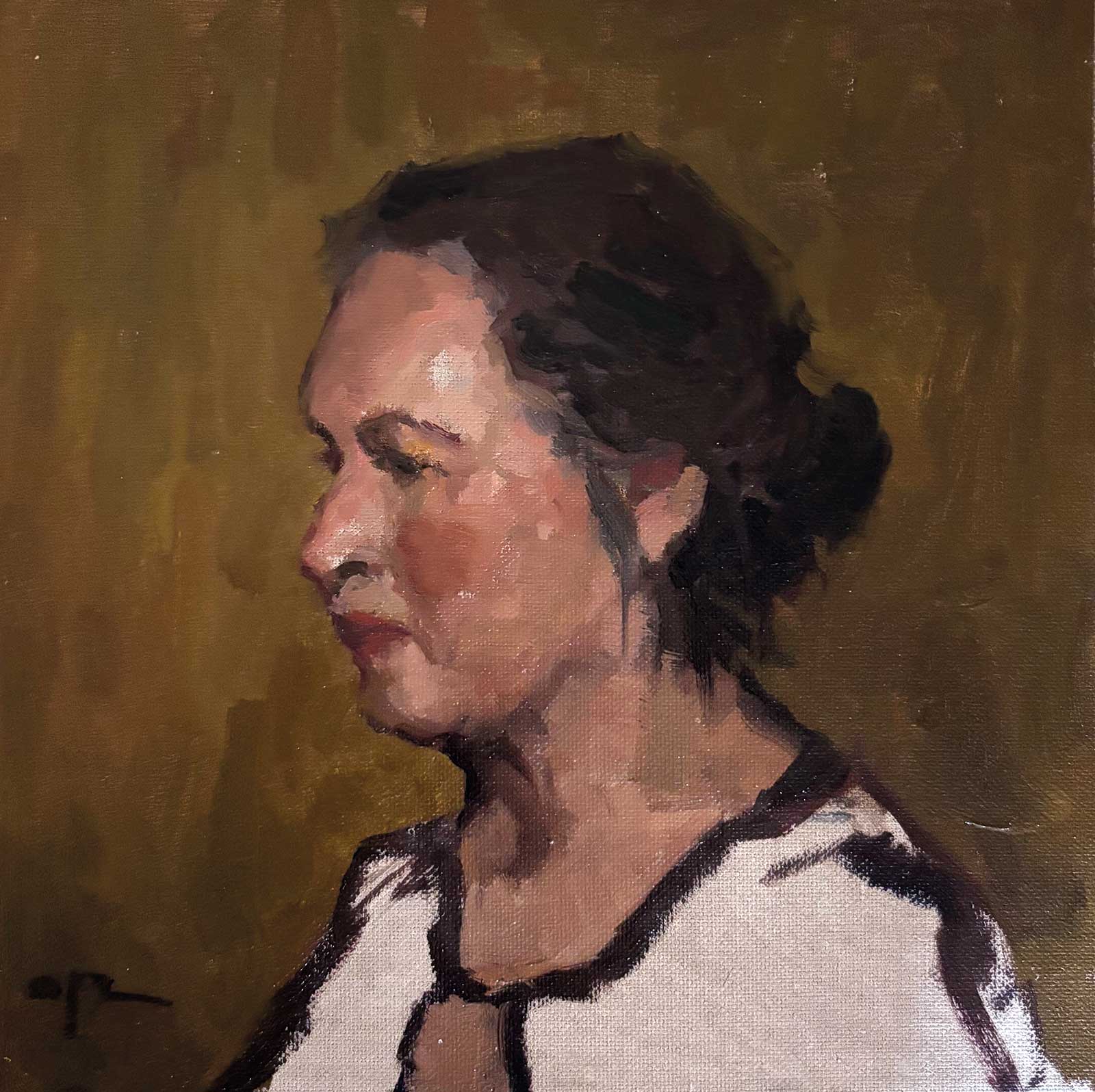
Paula Rubino, Aida’s Sister, oil on linen, 12 x 12 in.
Salmoiraghi’s, Castalia, in which a nude woman watches the water flow between the river rocks from above on her perch, draws on the myth of the nymph and the sacred spring at Delphi. While fleeing Apollo, the nymph threw herself into the water and was transformed into the spring that would bear her name, and later become associated with purification, prophecy and poetic inspiration. “I imagined the figure in a suspended moment, as though the metamorphosis had already begun within her before taking place in the body,” says Salmoiraghi. “From a painterly point of view, this allowed me to explore the contrast between the warmth of flesh and the coolness of water, between the solidity of rock and the transparency of the stream, and between the controlled definition of the figure and a freer handling of the landscape. The scale is deliberately intimate. It asks the viewer to come closer, as one would approach a spring to drink.”
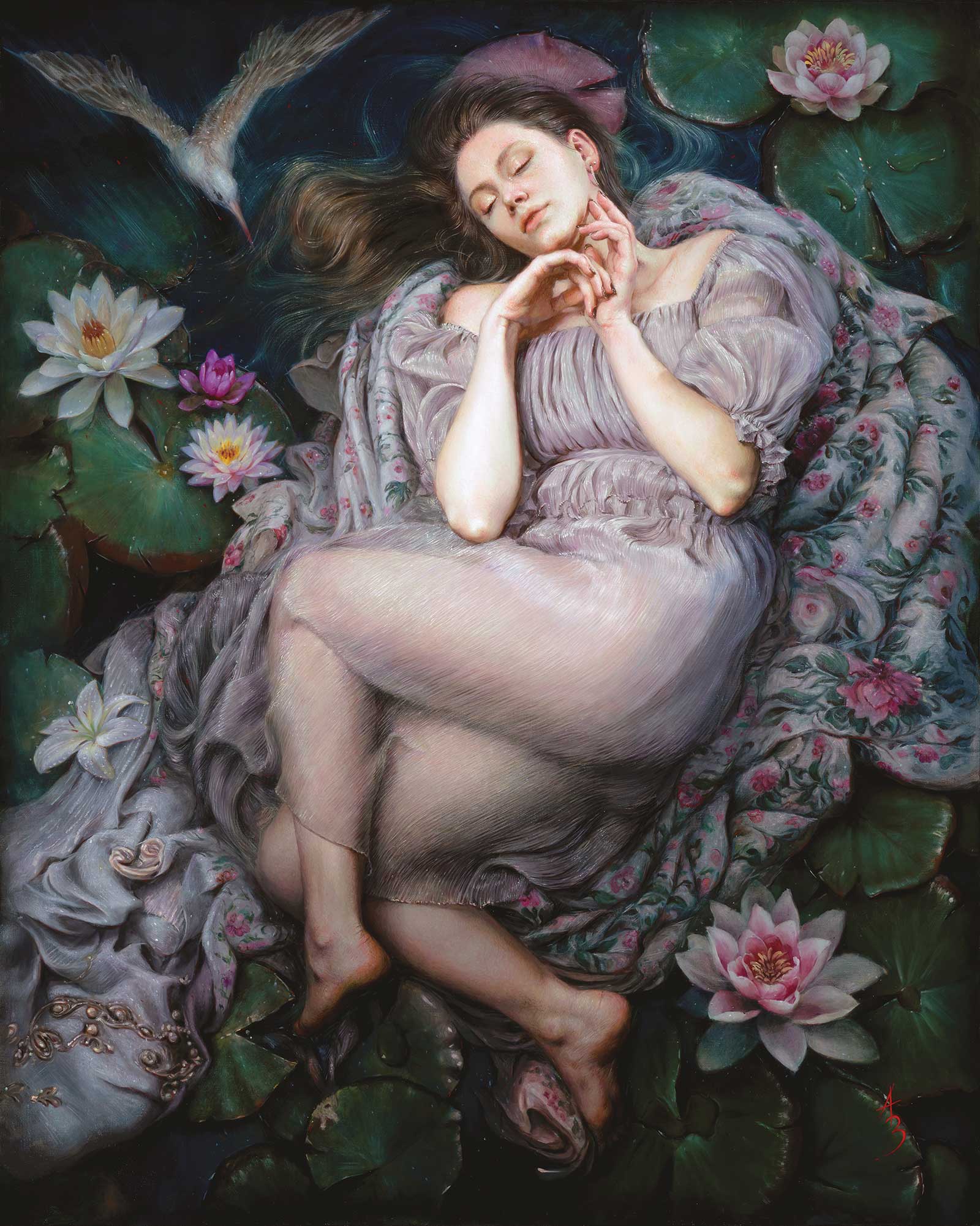
Alexandra Manukyan, The Lullaby of Water and Petals, oil on linen mounted on aluminum, 40 x 32 in.
Known for his playfully defiant handling of dystopian themes and focusing instead on human resilience, adaptability and optimism, Andreas Claussen brings his distinctive style—and voice—to the show with paintings that include JUST FOLLOW ORDERS AND YOU ONLY LOSE ONCE. “The inspiration comes from the harsh clash between two very different views on duty,” he explains. “This painting explores exactly that tension between structural obedience and individual conscience. Visually, you see the astronaut marching blindly in the direction of a graffiti arrow, carrying a weapon that is bent entirely backward to point at himself. It is designed to provoke a specific thought: If a system collapses as soon as someone starts using their brain—is that system really the solution or the problem itself? Through this piece, I am questioning the personal responsibility that each of us bears—or could bear. Perhaps not everyone is responsible for how things are right now, but we can do a hell of a lot to prevent them from staying that way.”
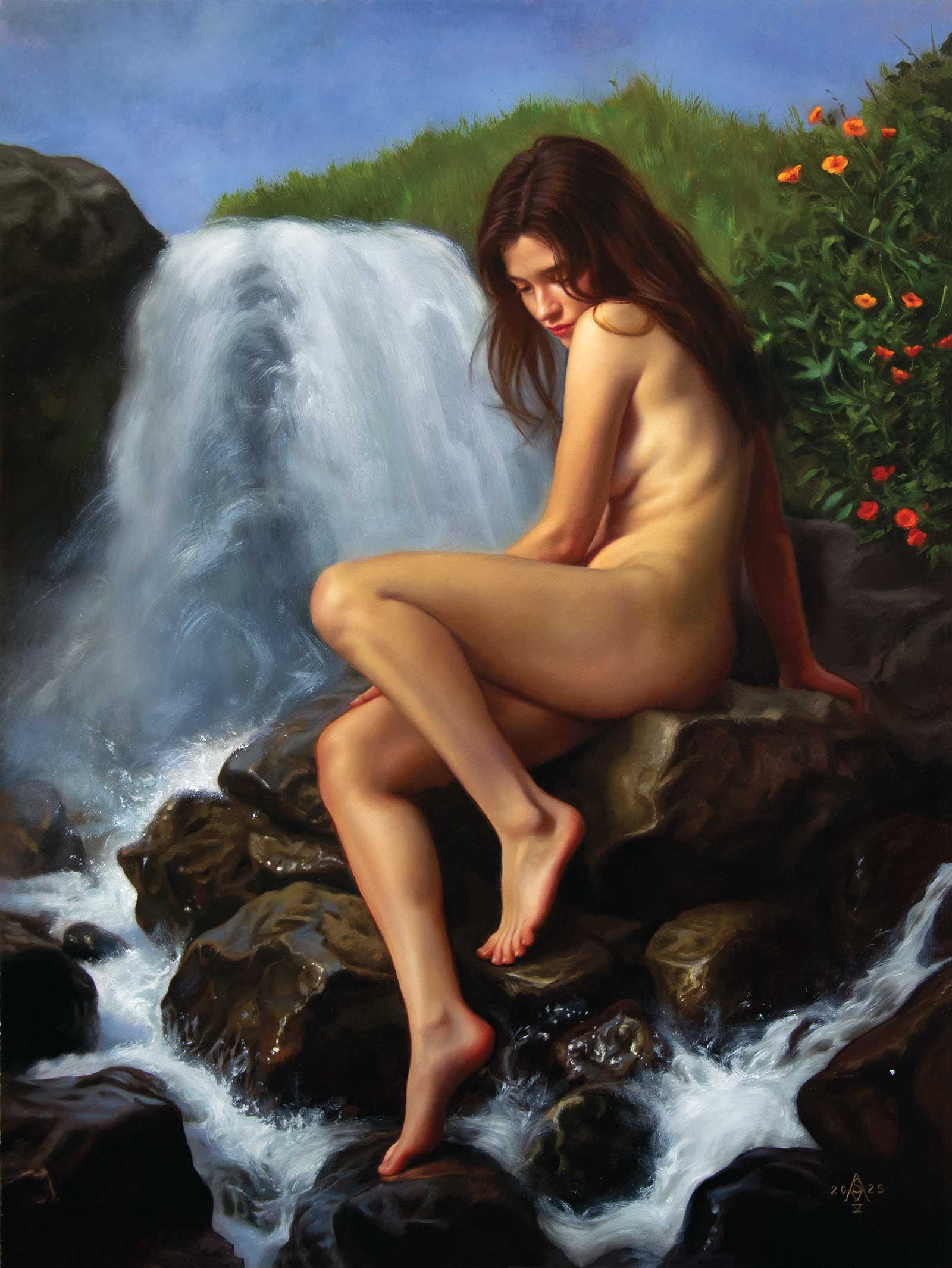
Angelo Salmoiraghi, Castalia, oil on panel, 15½ x 12 in.
With Prescient Vision, a hazy, tonalist portrait of a queen-like figure with her eyes closed, Stephanie Deshpande brings an introspective mood to the show. “[This] painting reflects my interest in the mind and its unknown capacities, and the idea of perception beyond what is visible,” says Deshpande. “The more I worked on the painting, the more I felt the title Prescient Vision was fitting, as the model seemed to be in a slumber-like, meditative state. The crown and jewels evoke a historic era, adding to the sense of timelessness. Darkness weaves in from the background, filling the shadows of her face and causing her features to seem as if they are dissolving into the surrounding darkness, suggesting a connection to a universal consciousness.”
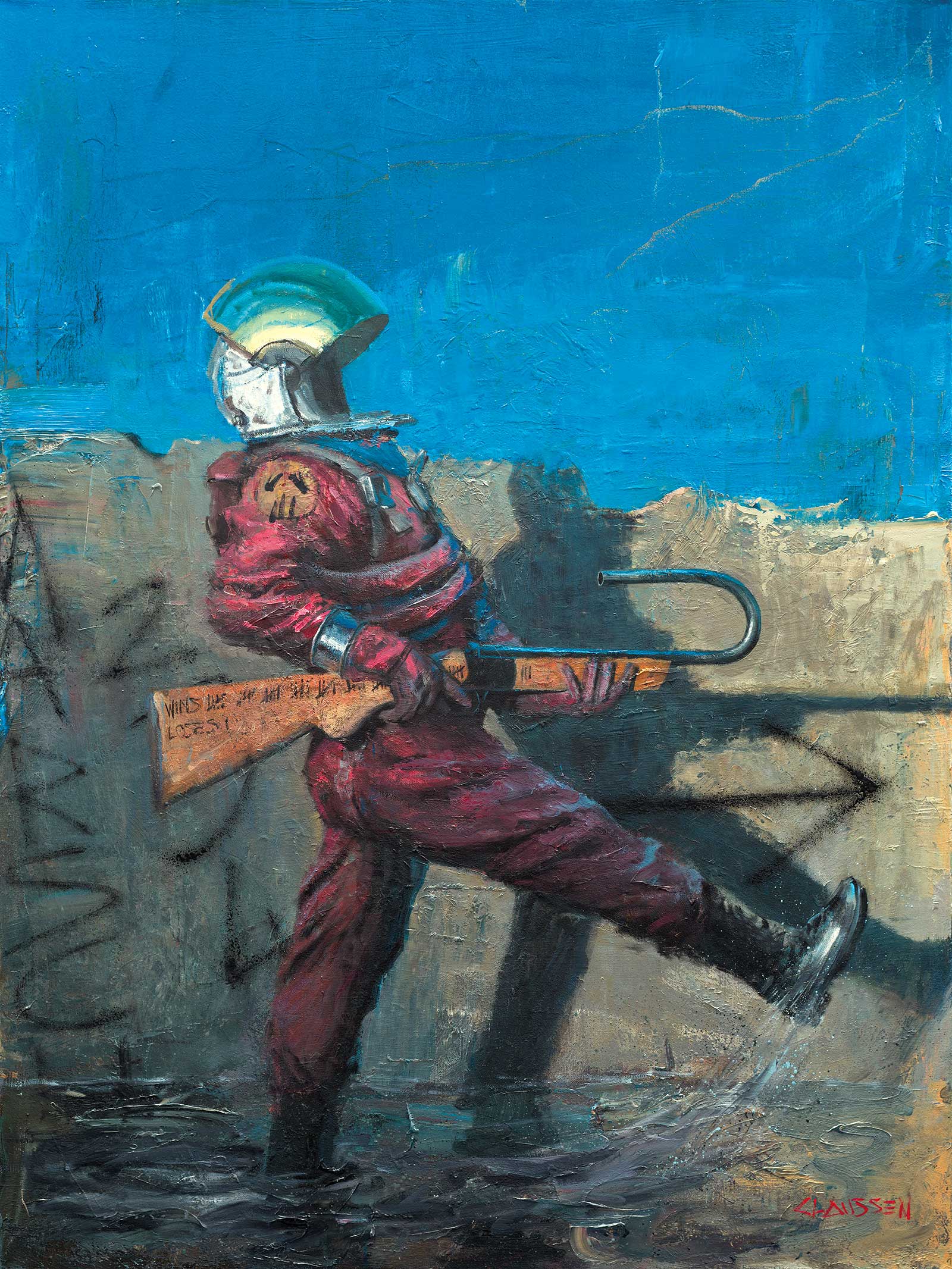
Andreas Claussen, JUST FOLLOW ORDERS AND YOU ONLY LOSE ONCE, oil on canvas, 47 x 35½ in.
The infinite variety and forms of expression of the human figure are an endless source of inspiration for Shane Wolf, who paints strictly nudes in the purest sense. Painting solely from life, his models wear no accessories and there are no representational background elements, real or imagined. Stripped to the bare essentials, his piece Milkshake Currency was a light-hearted experiment and a departure from his usual color palette and cropping of the figure. “Being both an American and French citizen, I rather frivolously used the nations’ colors as my pigments, honestly not having any idea what would come of it,” says Wolf. “I call these ‘play paintings,’ which I feel every artist should do from time to time: not take ourselves so seriously and just have fun in studio! The fact that the lovely model, Ace, was posing in the dead of winter when it was minus 30 degrees outside, the painting’s dominance of blueish fleshtone turned out to be rather appropriate.”
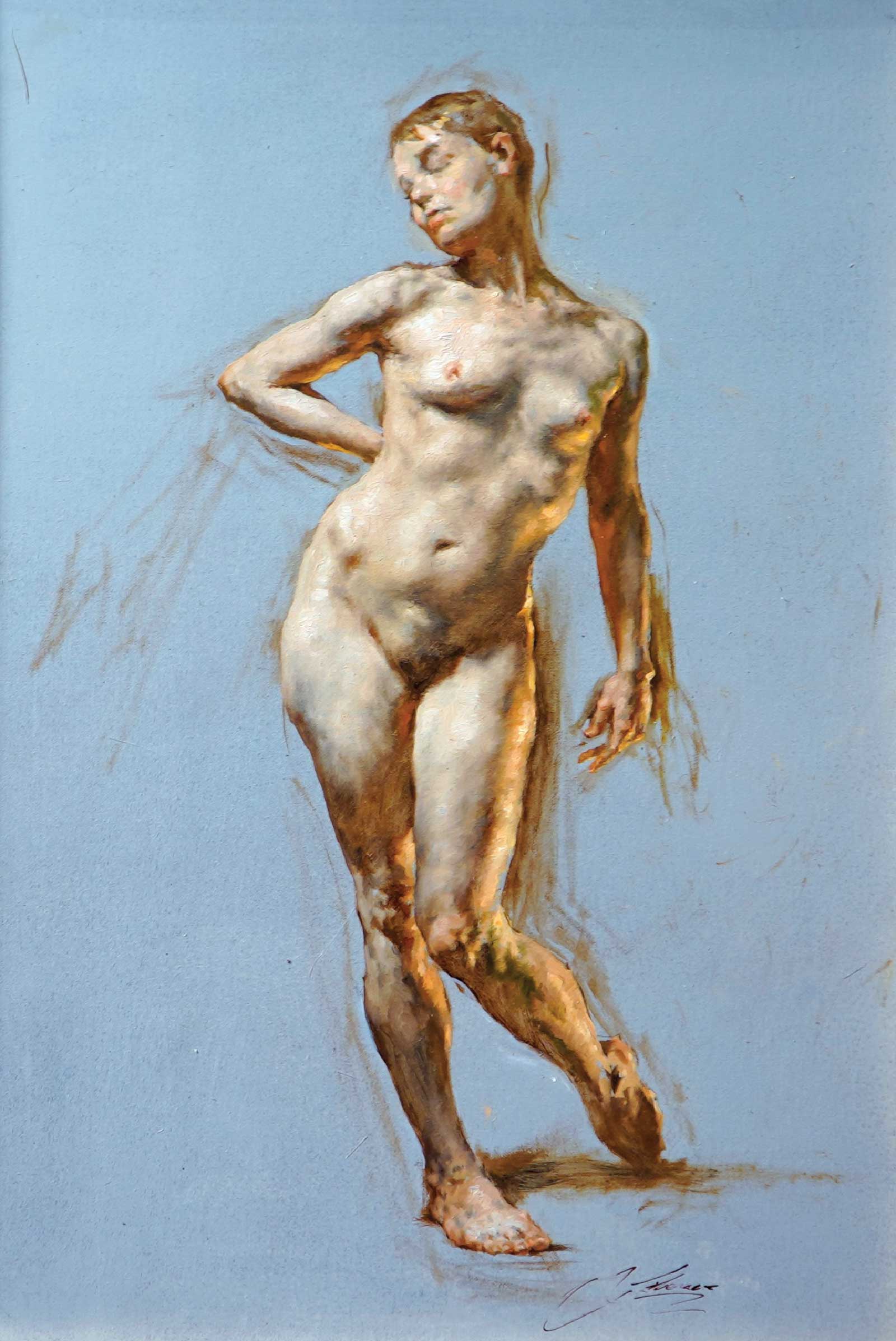
Robert Liberace, Standing Figure, oil on panel, 16 x 12 in.
These and many more compelling bodies of work will be on view at Principle Gallery’s Alexandria location from August 21 through September 14. A reception will be held on opening day from 6 to 8:30 p.m.
“Rather than advancing a single curatorial theme, this exhibition celebrates the richness of figurative painting today,” says Mansell. “Together, these artists demonstrate that realism is not a fixed style, but a living and evolving language. The human figure remains an inexhaustible source of inspiration, capable of revealing both the world around us and the inner worlds we carry within.” —
Bodies of Work
August 21-September 14, 2026
Principle Gallery
208 King Street, Alexandria, VA 22314
(703) 739-9326, www.principlegallery.com
Powered by Froala Editor