Aristotle wrote, “The aim of art is to represent not the outward appearance of things, but their inward significance.”
Sometimes when we look at portraits we look at them as if they were still lifes, perhaps getting the glimmer of a personality in a gaze or an expression. Even when admiring still lifes, we seldom think of how the objects were made or who used them.
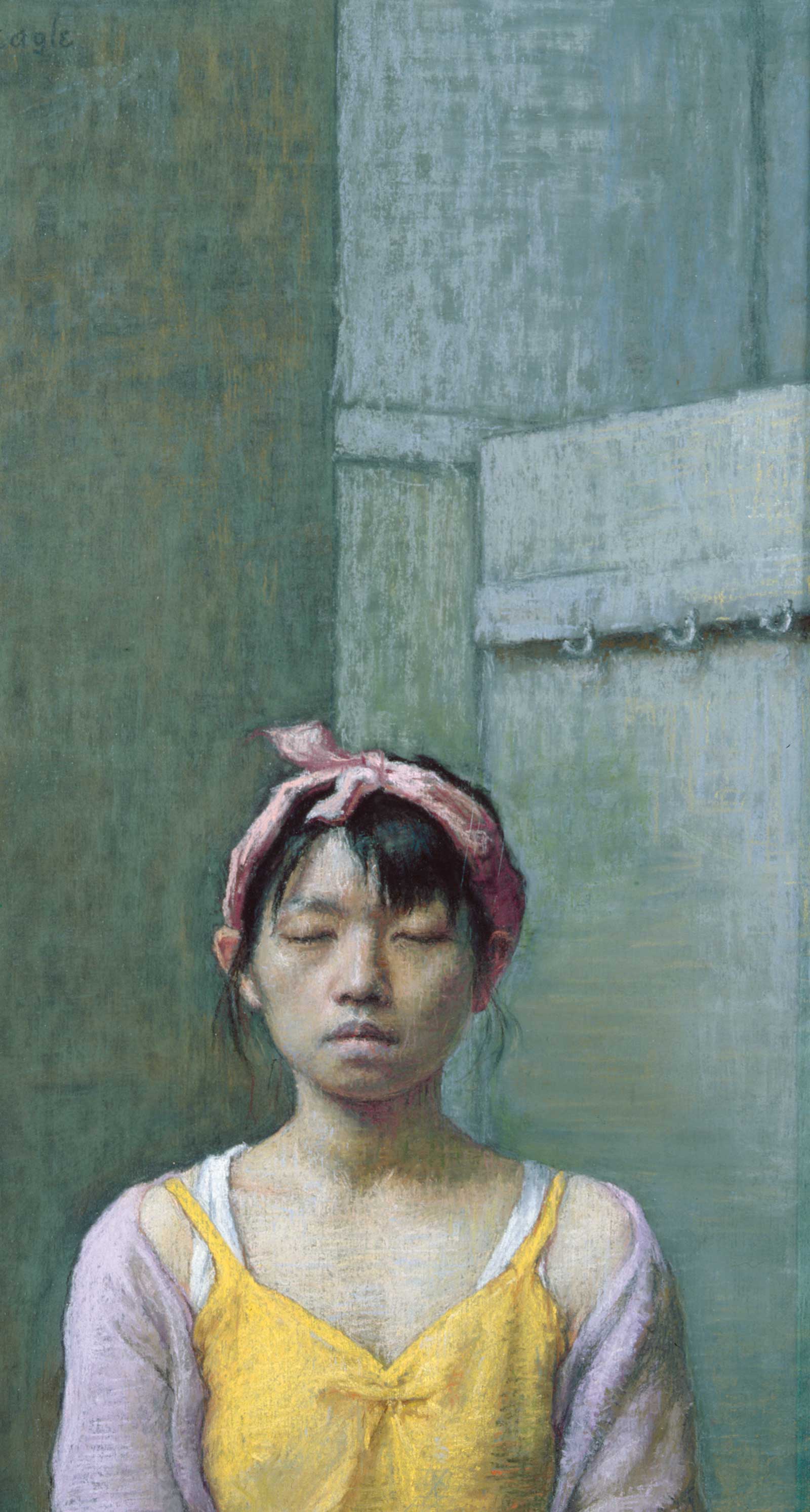
Mai-Chiao (detail), pastel on pumice board, 13 x 7¼ in.
Ellen Eagle’s pastel portraits evince a vitality unique to each sitter she paints. She works in the remodeled attic of her home. She relates how her husband, Gordon Leavitt, gave her his inheritance from his mother to convert the dark one-windowed space into what she has described as “a natural-light-filled cathedral of a studio.”
It’s a safe place for her and her models. During the 10 to 15 portrait painting sessions that last about three to four hours each, she works in near silence. Her sitters relax. As their minds drift in thought, their bodies and faces subtly express their emotions.
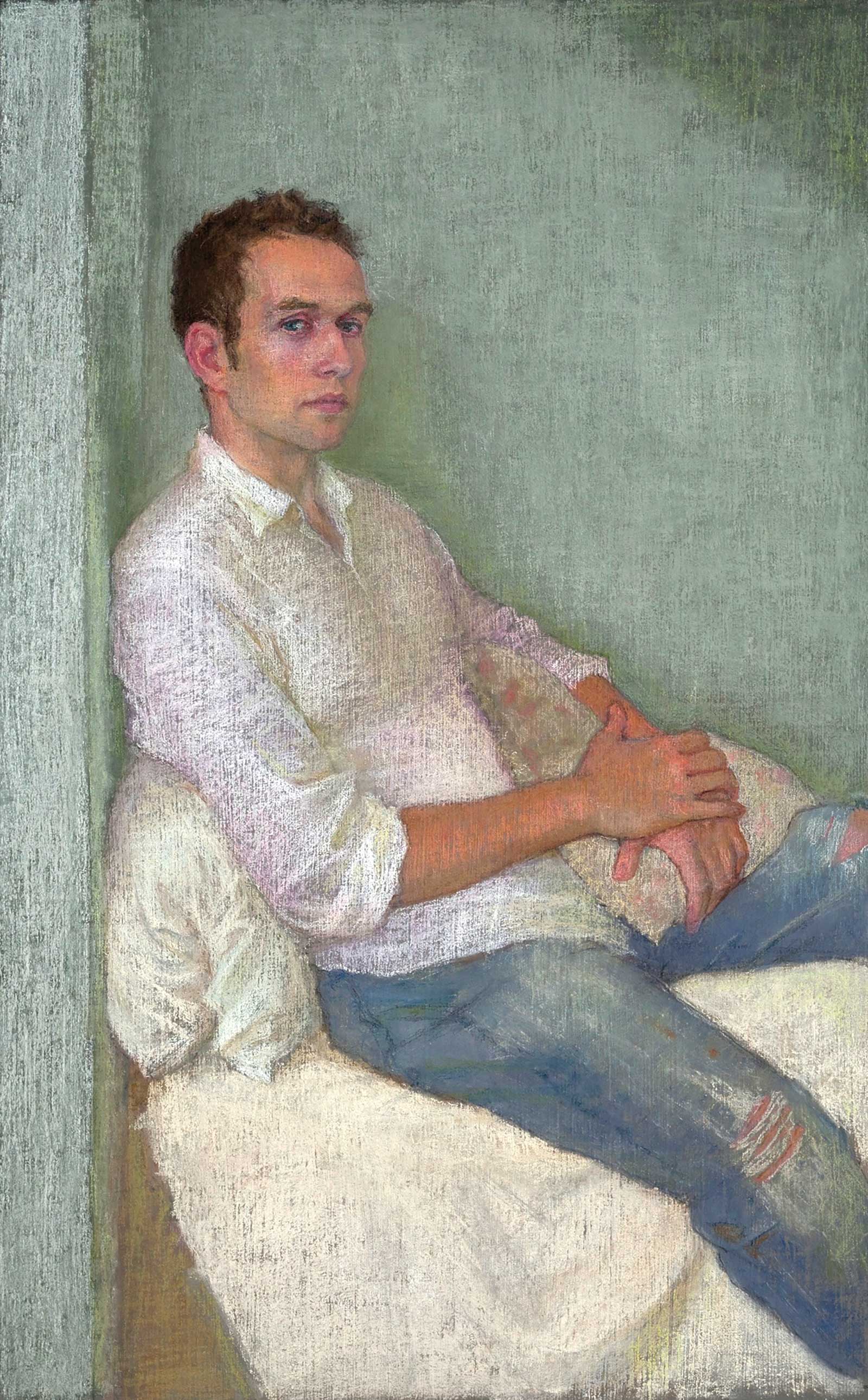
Anastasio with Pillow, pastel on pumice board, 18½ x 11½ in.
“My paintings evolve slowly, contemplatively,” she says. “I’m not in a race to produce. I sit and take in, for want of a better word, the energy, the sense of life and vitality both in the struggle and the victory I sense in my models. I have already sensed their inner light before I ask them to sit for me. “I hope there’s an honesty that the viewer picks up, the effort on my part to be honest about the sitter.”
In her portrait Mai-Chiao,the sitter is placed low in the vertical composition, the upper half and background expressing more than simple setting. Eagle relates that Mai-Chiao had recently arrived from China speaking barely any English. “I was amazed at the strength it took to leave her home country for one whose language she didn’t speak,” Eagle says. “The background represents the maze of obstacles and open doorways she had to navigate to arrive in the present moment. Her disheveled hair and her unstudied layers of clothing indicate she had stuff to get done. I closed her eyes because of the language barrier.”
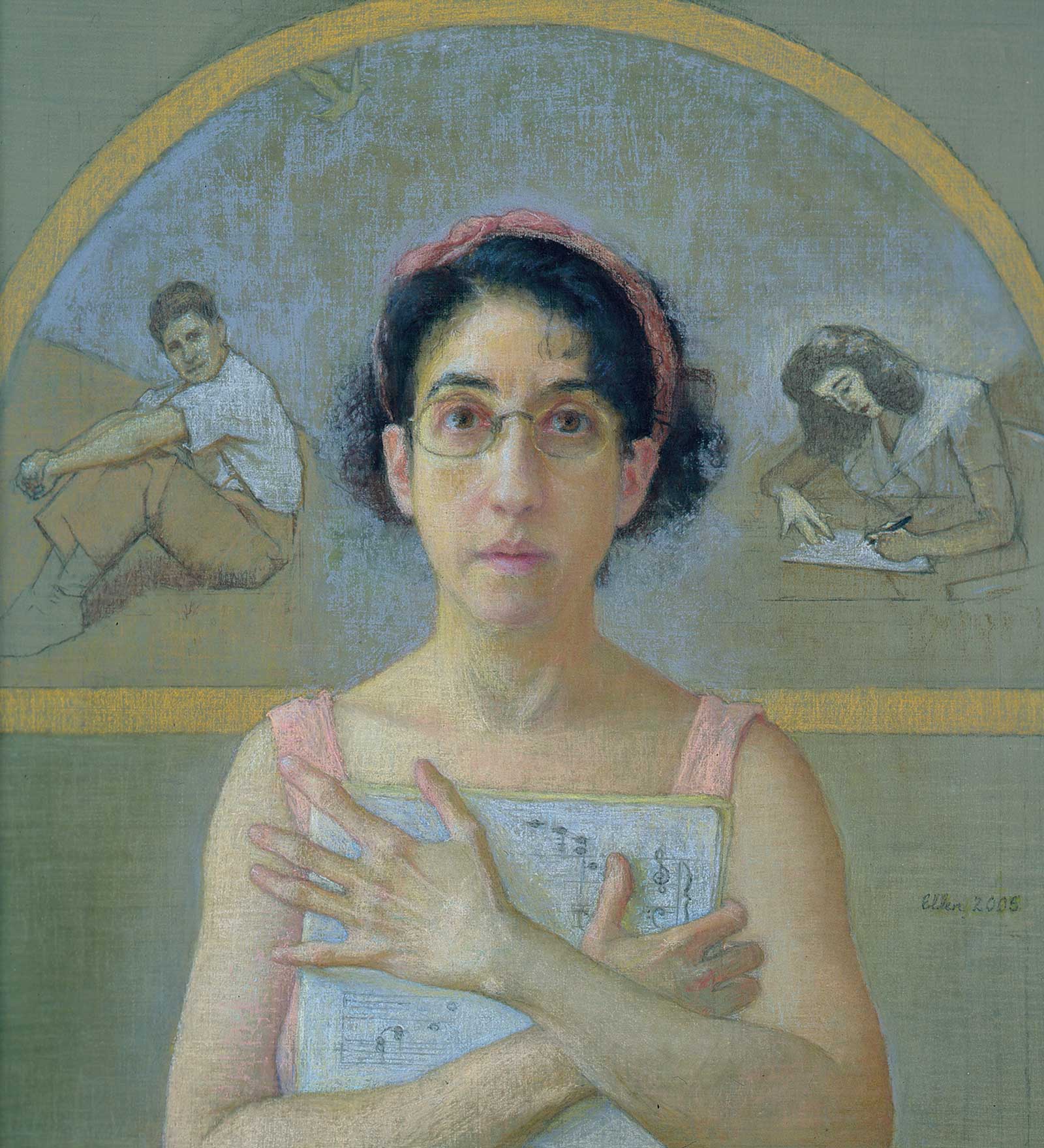
Roslyn and Arturo, pastel on pumice board, 13 x 12 in.
In Anastasio with Pillow, the sitter is a young man from Greece who has modeled for Eagle in her classes at New York’s Art Students League and the National Academy School of Fine Arts. In this portrait she was interested in the relationship of whites and light grays and folded the pillow to recall a Greek column. Anastasio’s relaxed pose belies the intensity of his gaze and his alertness to his surroundings. Eagle shares that as she worked on his portrait, with her easel facing away from her model, he would observe which color pastel she was picking up and comment, “you’re working on my cheek,” or “now you’re working on my lips.
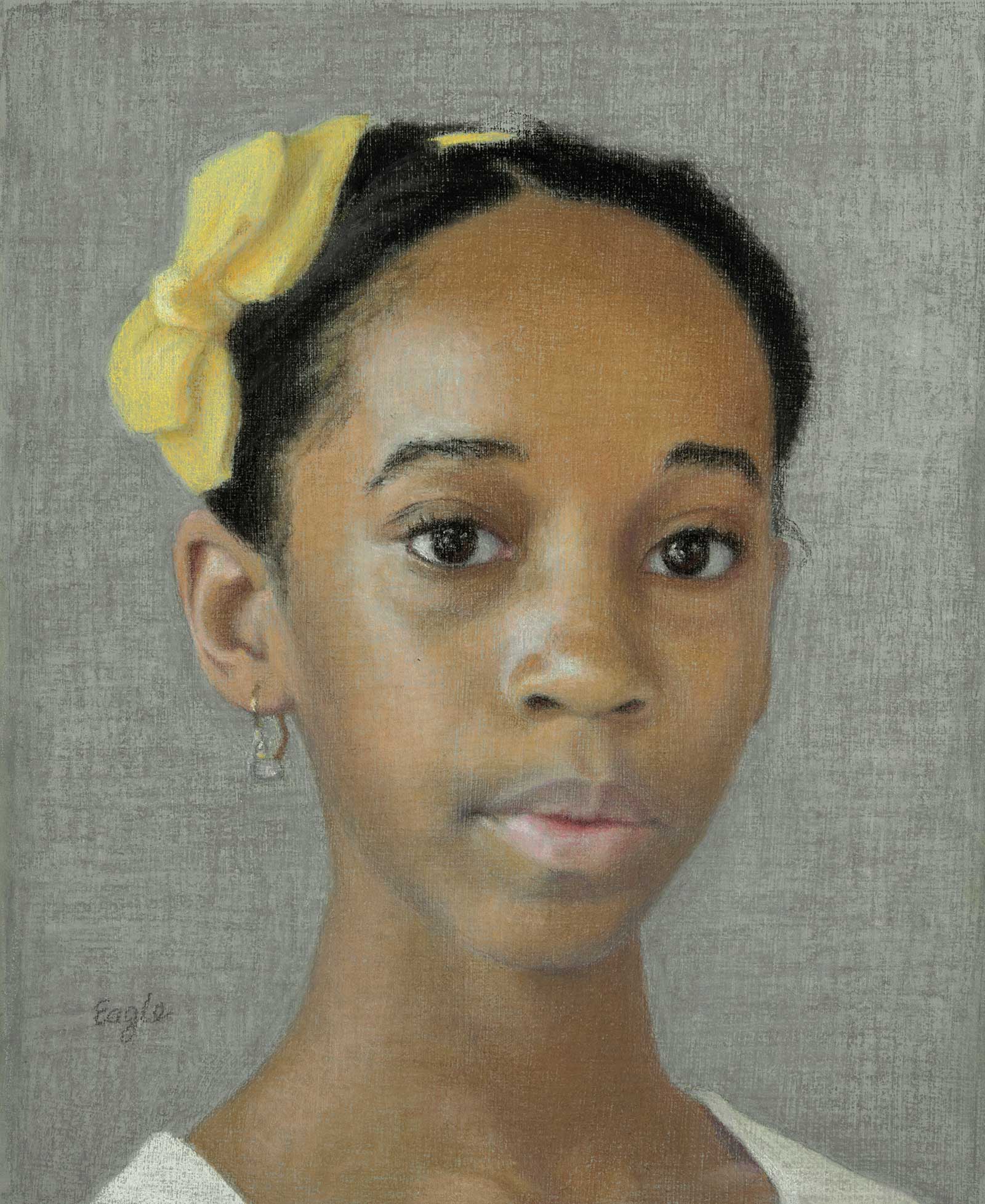
Portrait of the Young Artist Marela Alvarez, pastel on pumice board, 11¼ x 9¼ in.
“I felt as though he was right by my side in the act of creation. The partnership was powered by joy and energy.” In Roslyn and Arturo, she draws from her past and photographs of her parents that were taken before she was born. Her mother sits at her writing table. “She lived by her principles,” Eagle says, “and her words were at the center of our household.”
On the left, her father turns to look over his shoulder at his wife. “He worshiped her,” Eagle adds. “He gazes out at me. He adored being a father. I left his shoes colorless because he is no longer walking this earth.” Her father brought music into the family’s life and she clasps a musical manuscript to symbolize “the feeling for music that is embedded in my heart.”
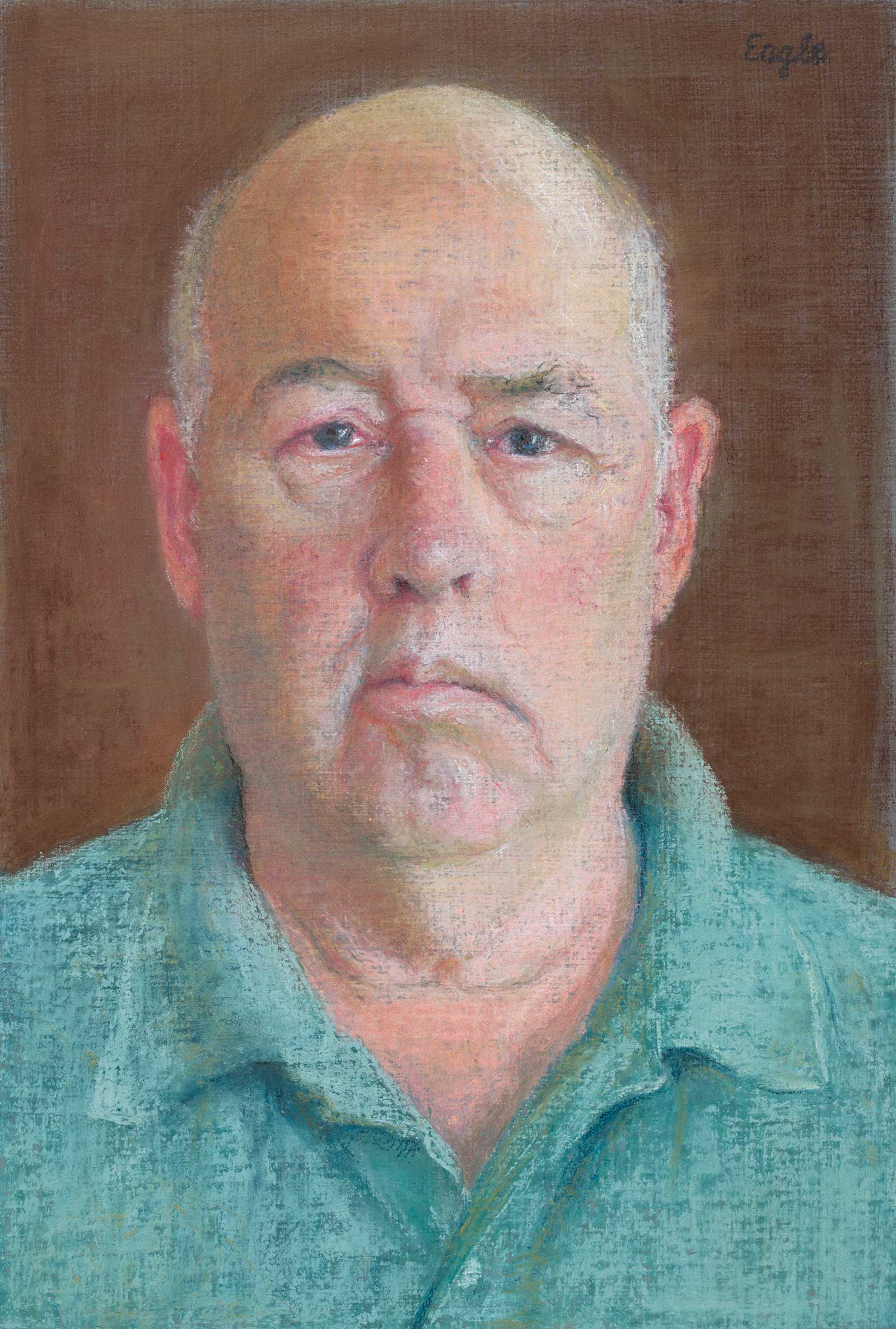
Maurice, pastel on pumice board, 81⁄8 x 53⁄8 in.
Eagle’s artistic talent was recognized at an early age. When she was 4, she did a drawing of a sculpture of a bird. When her mother saw it, she assumed it was done by her son, David, who was 11. David informed her, “It must have been Ellen!” Her mother immediately signed her up for classes at the Staten Island Museum. When she was 10, she drew a portrait of her friend Ramona, and Ramona’s mother offered her $10 for it.
The following year, her brother was attending City College of New York in Harlem and saw students walking across the campus with musical instruments and art portfolios. The students were attending the High School of Music and Art (M&A) on the college’s campus. He contacted his sister and said, “I know where in this world you belong.” When it was time for her to go to high school she enrolled at M&A. She later received her BFA with distinction in drawing at the California College of Arts and Crafts in Oakland. She then moved back to the East Coast to continue her studies at the National Academy and the Art Students League in New York.
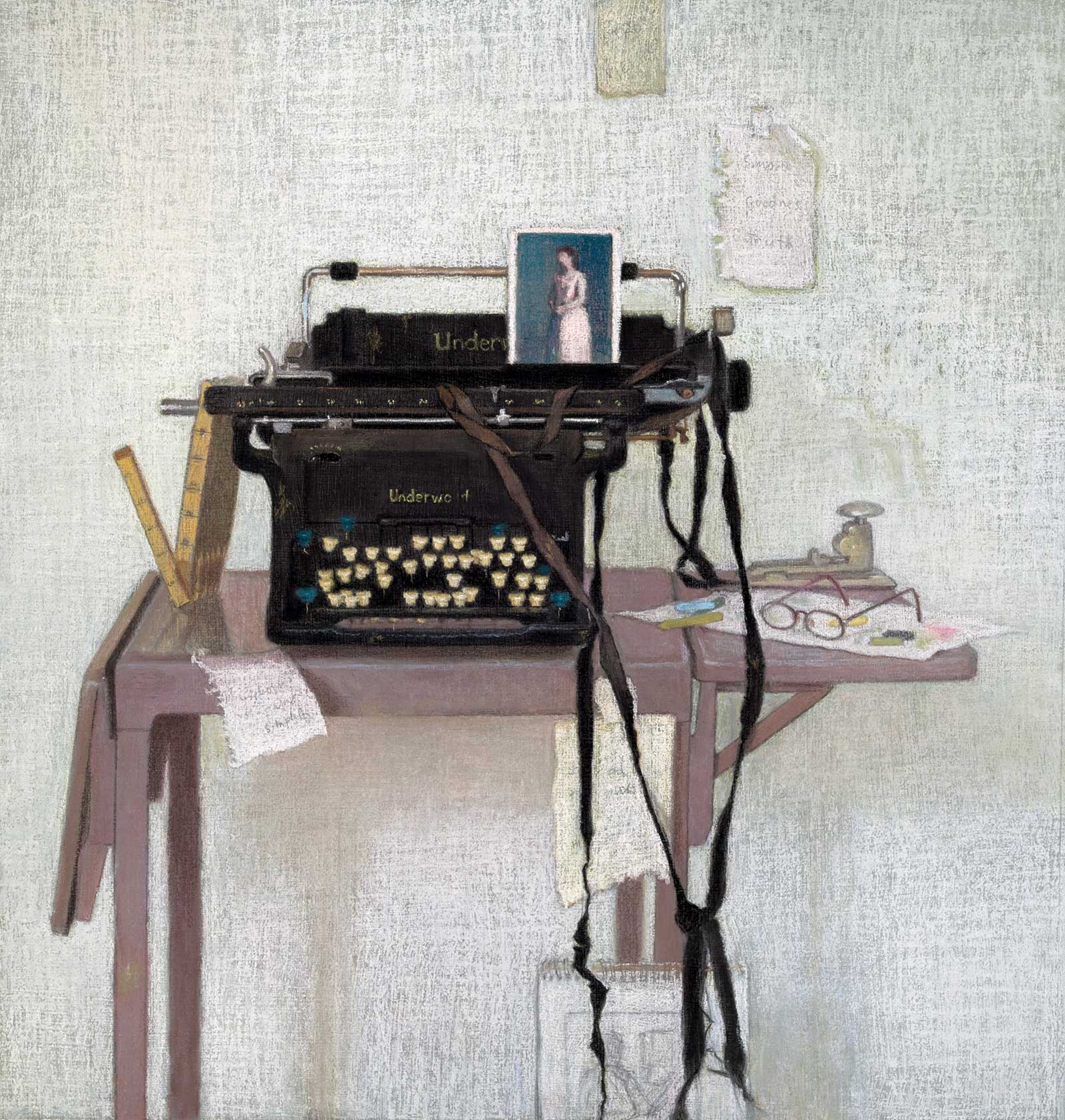
Underwood, pastel on pumice board, 19 x 18½ in.
After college, she created and illustrated children’s books. “I enjoyed the narrative of illustrating childrens’ middle-grade novels until the publishers offered me the same things over and over. On my 40th birthday I finally decided I wanted to go back to my first love—painting portraits.”
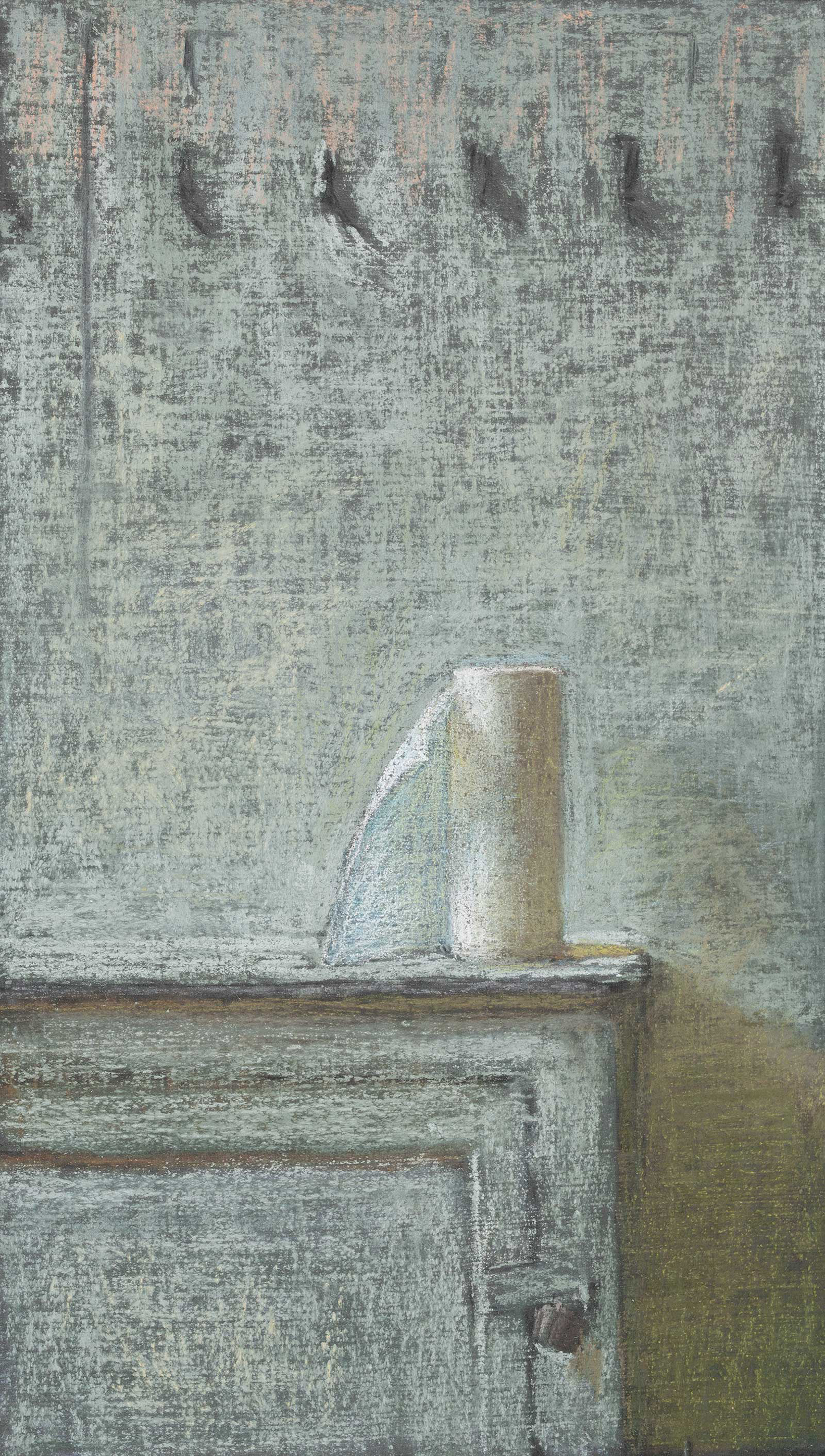
Paper Towels and Hooks, pastel on pumice board, 95⁄8 x 59⁄16 in.
Some of her models just appear in her life. Others have been part of it for years. When she was teaching her Saturday morning class at the Art Students League, there were children’s class being held elsewhere in the building. She went to the cafeteria at lunch time just as a stampede of young people erupted from the room. One young girl held the door for her. When she said “Thank you!” the girl replied, “You’re welcome!” Eagle was impressed with the self-possessed little girl and, later, asked her teacher about her, indicating that she wanted to paint her.
When Marela Alvarez’s mother arrived to pick her up, Eagle greeted her and showed her a book of her work. She asked if she could paint her daughter and invited her to attend the sittings. In the portrait of the 10-year-old aspiring artist, she is wearing the yellow ribbon she had in her hair when she and Eagle met at the cafeteria.
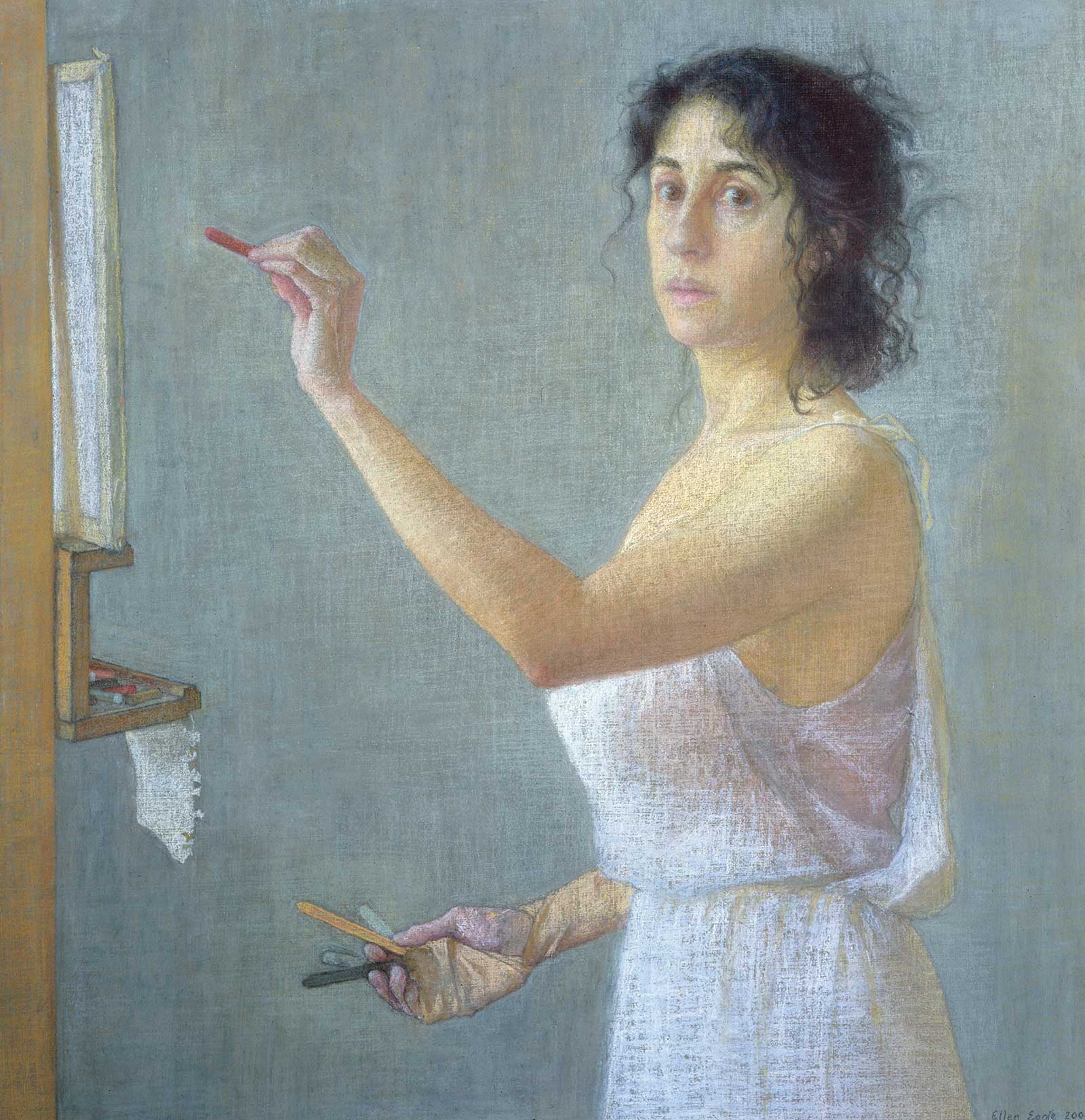
Winter, pastel on pumice board, 17¼ x 165⁄8 in.
Maurice was Eagle’s neighbor for 30 years. He worked at a florist shop and after work, “we spent countless summer evenings on our front porches as Maurice regaled us with stories about the shop and the multitude of people he befriended and loved in every corner of his life.” she recalls. “His gregarious warmth was irrepressible.” After he retired, Maurice told her that he wanted to sit for her. “He sat as still as a stone to perform his job as a model for me,” she recalls. “But his studio stoicism was in direct opposition to the almost childlike openness I knew my neighbor to embody. Usually, I work in silence, but in order to elicit the Maurice I sat with on our porches, I engaged him in the kinds of evening conversations we had had for 30 years. The slight smile and tiny spark of light in his eyes are the clues to his nature. Although he appears to the viewer to be wholly self-disciplined and composed, his expression conveys the animated and unguarded Maurice I knew.”
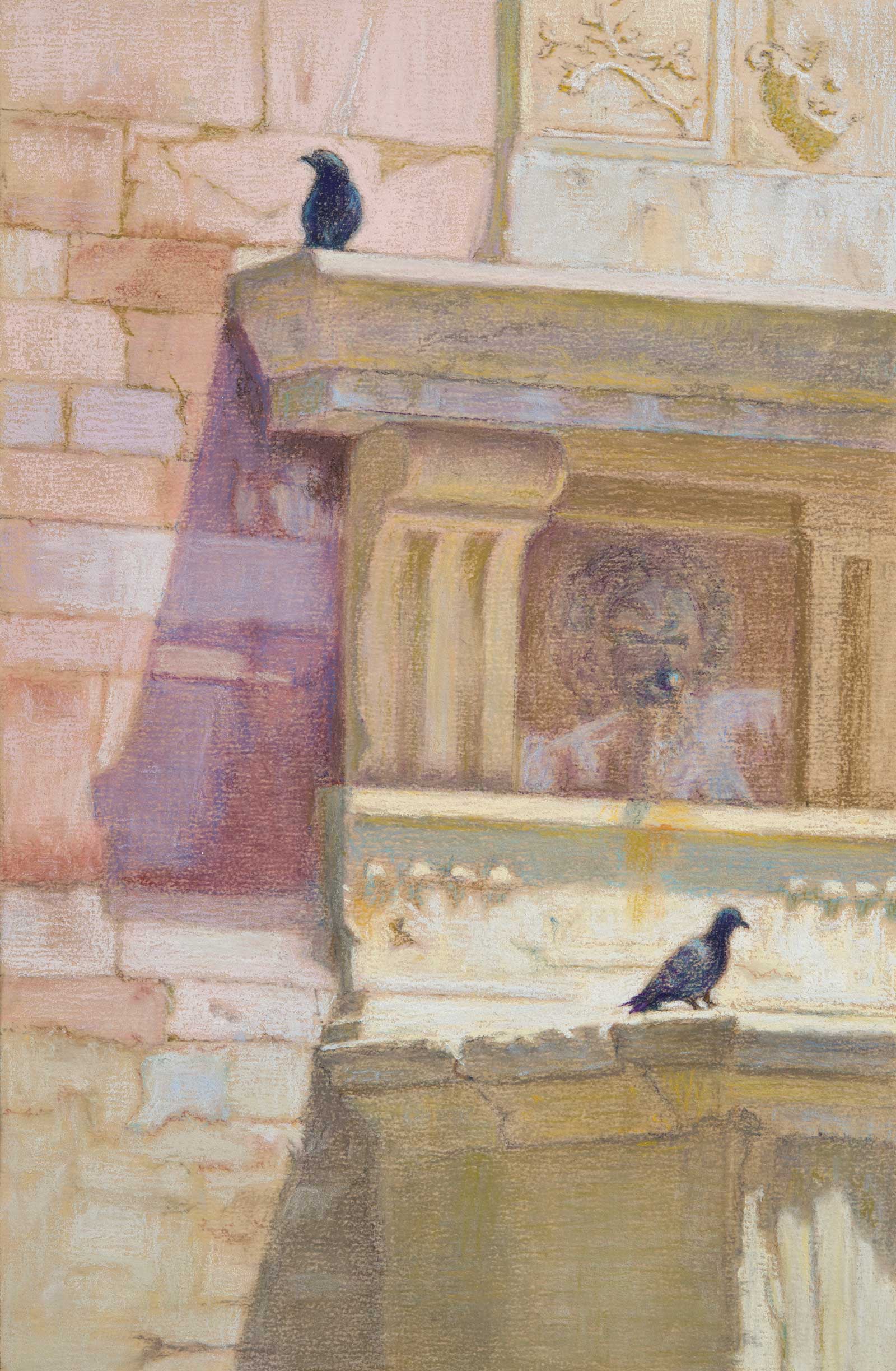
Afternoon in Assisi, pastel on pumice board, 11½ x 9 in.
Lucien Freud wrote, “I would wish my portraits to be of the people, not like them. Not having a look of the sitter, being them.” Eagle’s portraits are the sitters but, as she explains, “Of course, I see through the filter of my own temperament. “When I am painting a portrait from life, the subject and situation are most compelling to me,” she explains. “I like my model to almost forget I am there. Inevitably, during the course of the sittings, as the model drifts in thought, he or she experiences emotions both deeply felt and lighthearted. I respond to the body’s subtle expression of those emotions. This requires very careful and sustained observation. Fidelity to my subject’s particular qualities is a blissful practice for me.” —
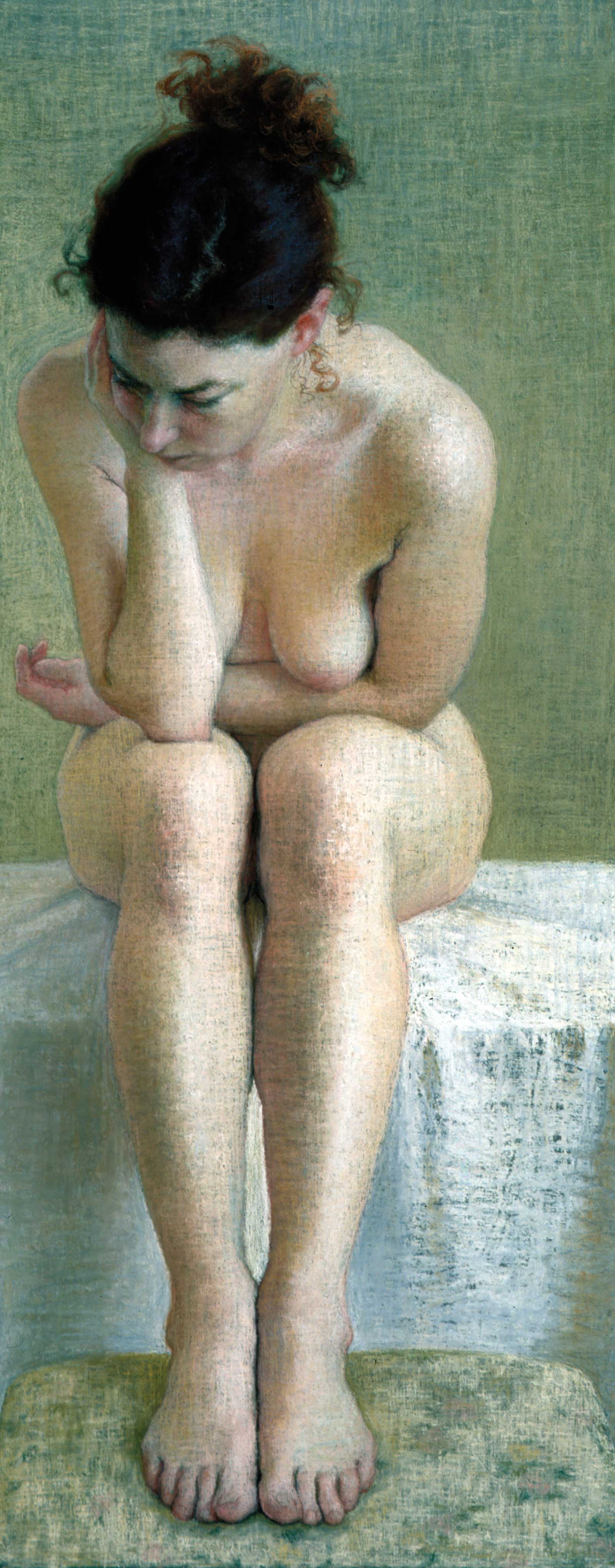
Nude, pastel on pumice board, 31½ x 13 in.
All photos by Peter Jacobs. Courtesy Forum Gallery, New York, NY
Powered by Froala Editor
Powered by Froala Editor