I was under the impression that Duffy Sheridan lived in Arizona, until he provided an Oregon address. When I called him, it was a Hawaii phone number. “That should tell you a little something…we get around a bit,” chuckled Sheridan at the start of our interview.
That is an understatement. In addition to various places in the United States, the artist and his family have lived in many far-flung, exotic locales around the world, including the South Pacific island of Samoa, Argentina, England and perhaps most formatively, for several years in the Falkland Islands, a rugged, windswept archipelago in the remote reaches of the South Atlantic Ocean.
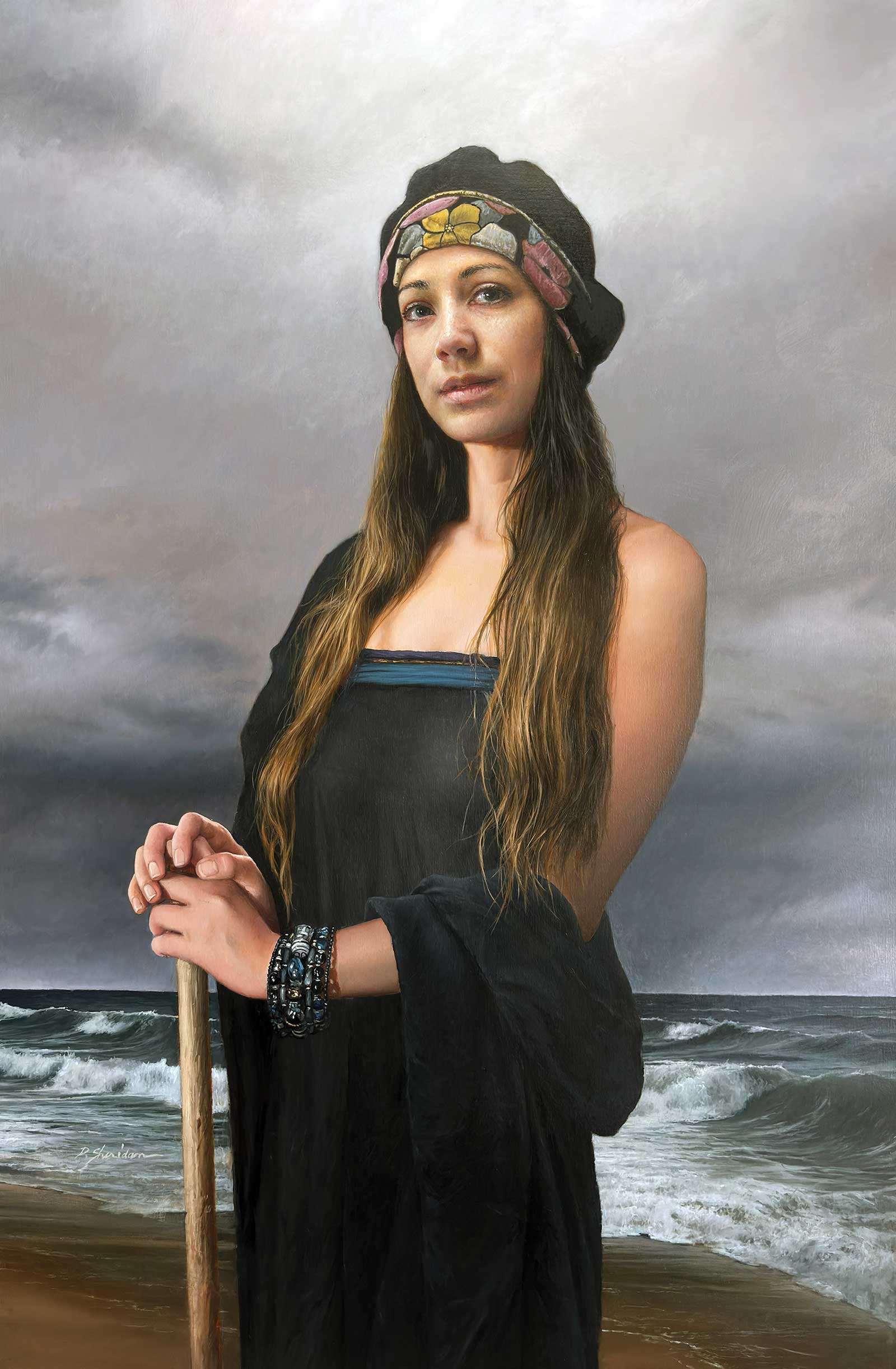
Storm Brewing, oil on linen, 20 x 16 in.
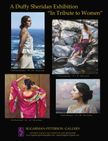
Sheridan and his wife have been practitioners of the Bahá'í Faith for over 50 years. They were introduced to the global religion while living on Telegraph Avenue in Berkeley, California, which, in 1968, was pretty much ground zero of the counterculture movement. Founded in 19th century Persia (modern-day Iran), the core principles of the Bahá'í Faith—the fundamental oneness of all humankind and religion—have shaped and guided how Sheridan perceives and moves through the world around him. His spiritual beliefs also shine through his artwork, including a new series of paintings that will be unveiled in a show titled In Tribute to Women at Sugarman Peterson Gallery this August.
Sheridan’s latest paintings live up to the show’s title. They are more than pictures of beauty, but they are that as well. They are Sheridan’s gentle suggestion that now, more than ever, we need to turn toward the wisdom of the feminine for guidance as we navigate an increasingly complex, troubled reality.
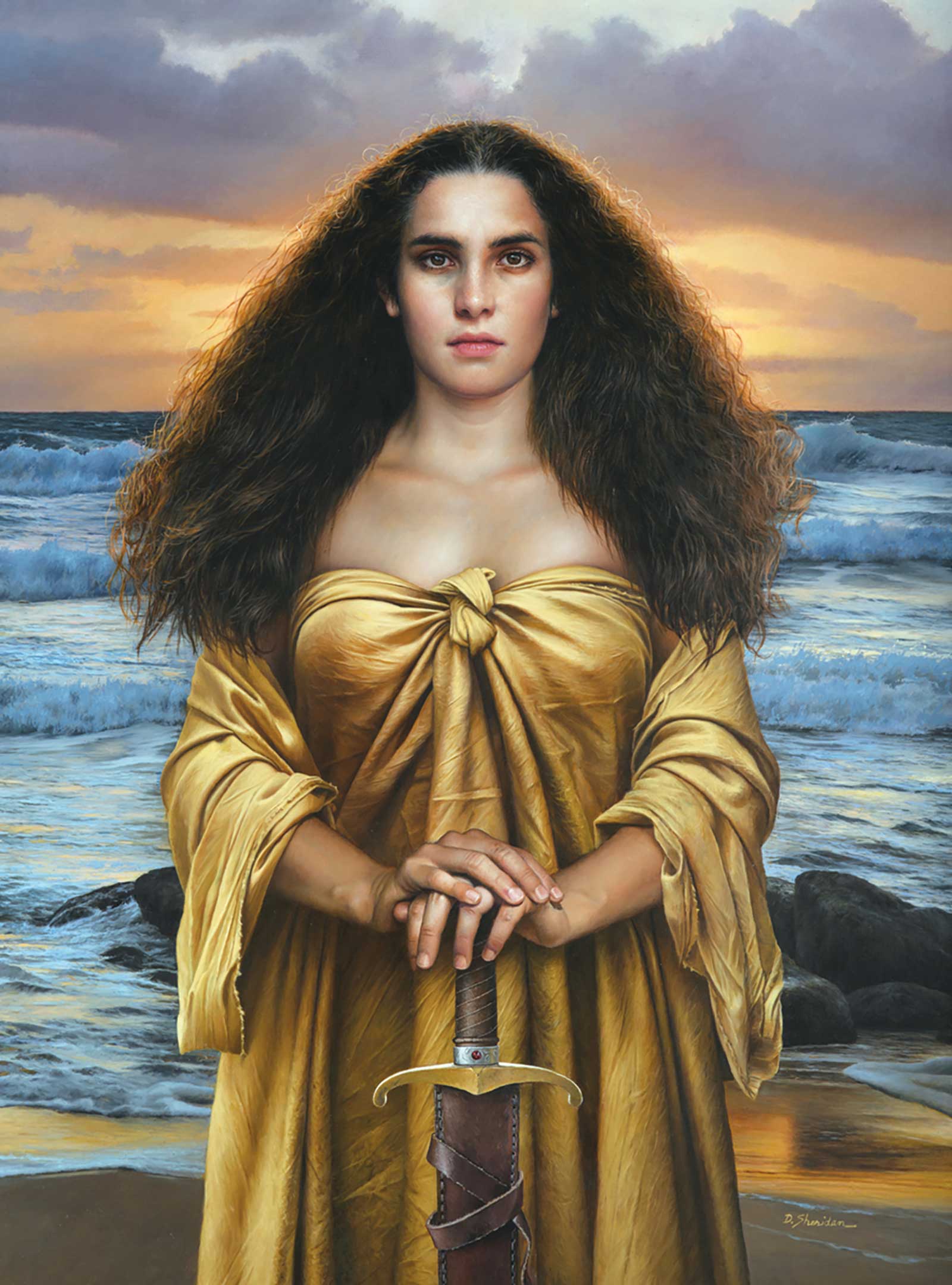
War No More, oil on linen, 48 x 36 in.
“I’m attracted to the potential of human beings, and especially women,” says Sheridan. “For me, they seem to exemplify so many of the qualities I admire—compassion, patience, brightness, resolve…And when I’m looking at women, I am looking for those qualities and always find them one way or another.”
War No More is one of the most overt expressions of Sheridan’s sentiments. A woman in a gold gown stands before the sea. Her hands are folded over the hilt of a sheathed sword, a resolute gaze challenging any attempt to trespass.
Sheridan says, “It suggests in my mind that I believe that, in the future, as these feminine qualities begin to take over the psyche over the world, women will no longer allow their children to go to war…or, as the painting might say, you can go to war but you have to go through me first.”
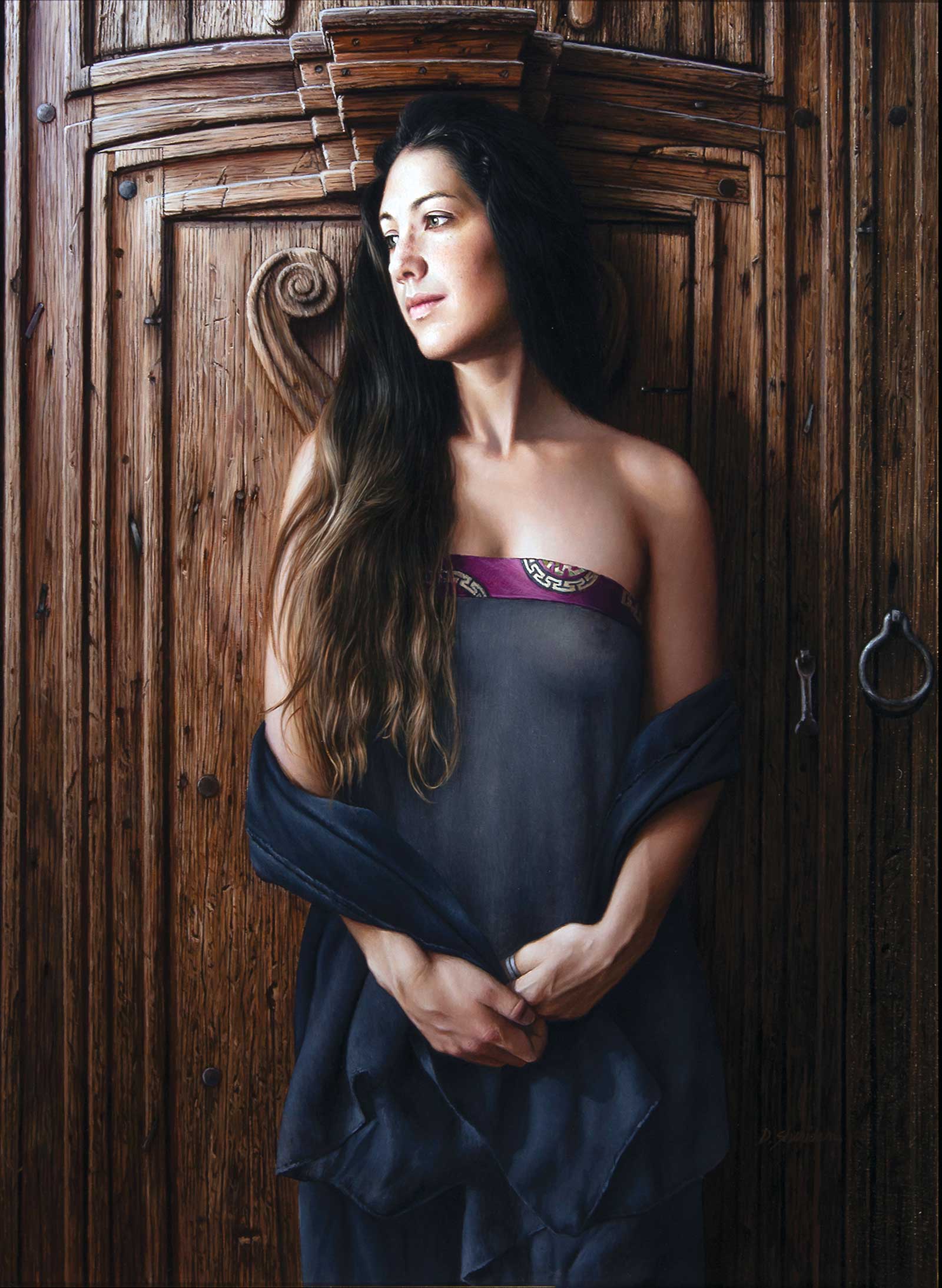
Patience, oil on linen, 40 x 30 in.
In Storm Brewing, a woman looks out at the viewer unfazed by the ominous sky and tempestuous sea at her back. “It’s all about her look,” says Sheridan. “She’s standing on a violent beach, wearing something no one would ever wear on a beach, and there’s a storm coming. She’s looking out saying, ‘I’m warning you about this, and it’s my feminine nature to warn you about this because I’m a little more insightful than you are.” Most of Sheridan’s paintings originate from a single “look.” Once in place, without a plan, he relies on his intuition and imagination to develop the rest of the painting around it.
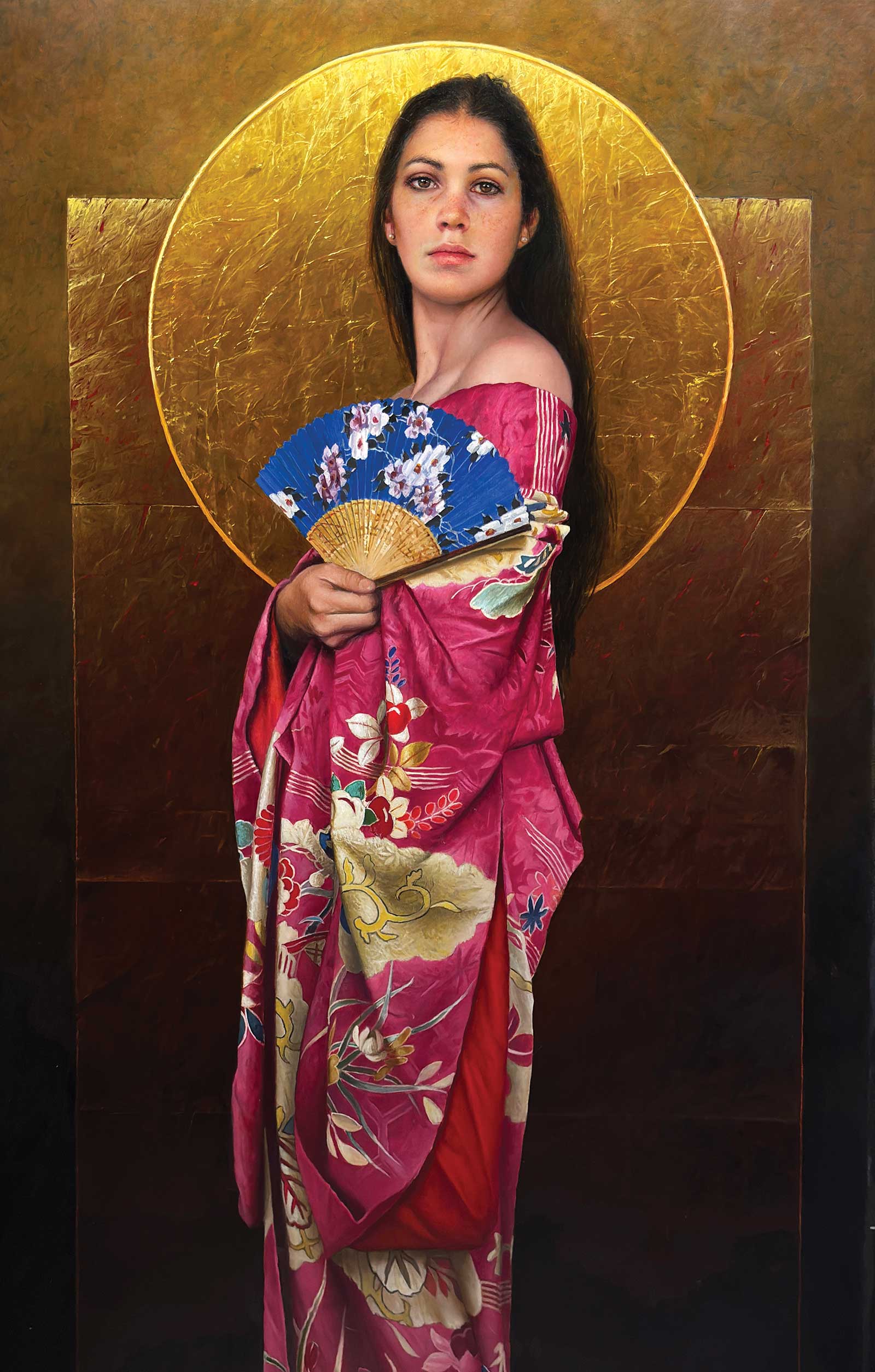
The Blue Fan, oil on linen, 48 x 24 in.
Sheridan stresses the fact that not all of his paintings in this show are making a statement “about what women can and should do in the world.” Some are simply beautiful for beauty’s sake. But even such works, he points to Patience and The Blue Fan, tie into a philosophy of Sheridan’s about what humanity needs from artists today.
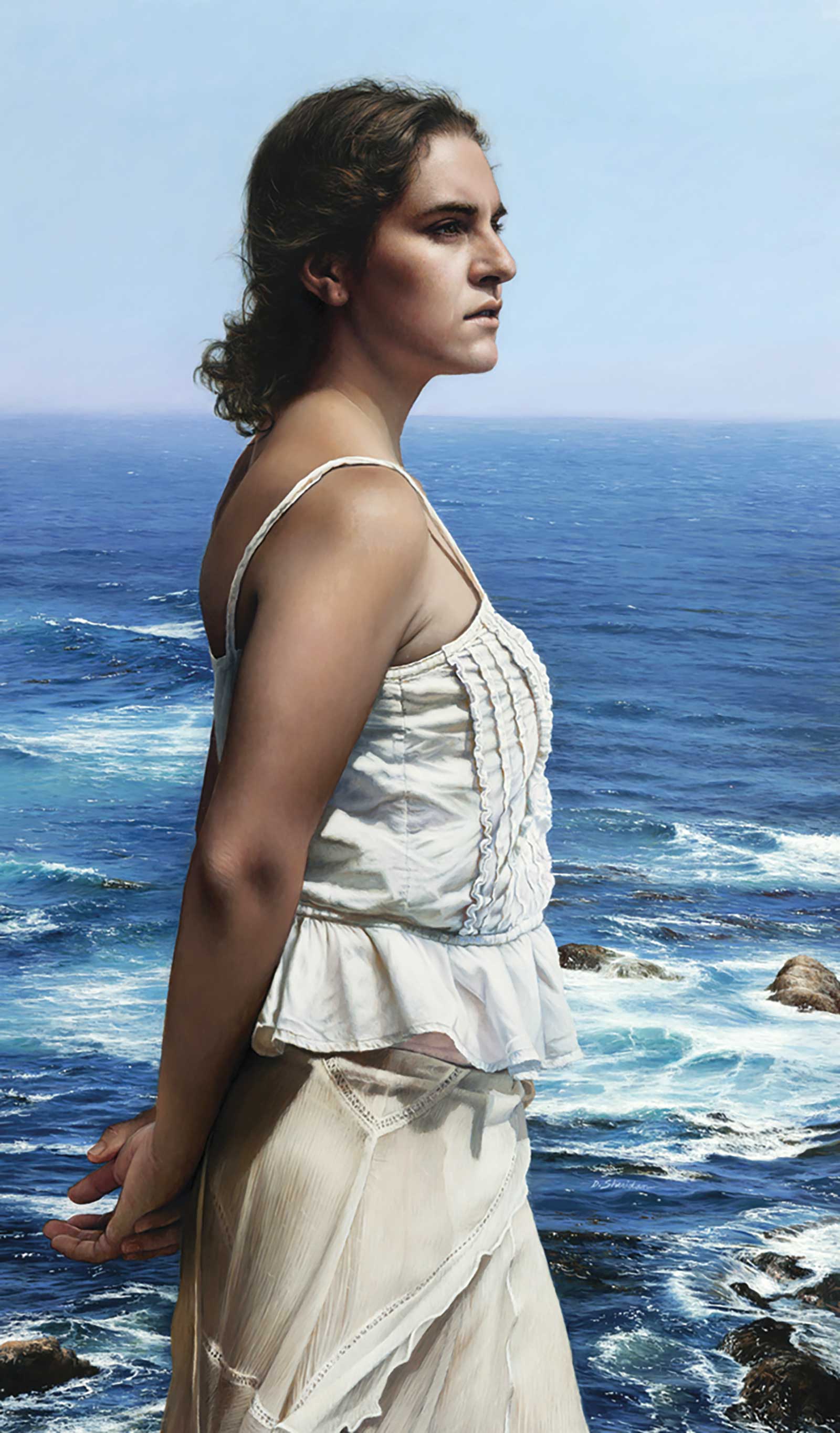
The Whale Watcher, oil on linen, 40 x 24 in.
“It seems that when we’re looking at a painting, whether a landscape, seascape or an abstract piece, it should make you feel a little better,” says Sheridan. “We’re so bombarded by influences that have a negative effect on us…I don’t think we can ask more of an artist than to uplift humanity. Artists have served all sorts of purposes throughout the centuries, but I believe we have a different role in this moment of history. I think we need to make a conscious effort to help the situation not harm it. For me, personally, that’s the task at hand. I don’t mean by creating images that are going to make great contributions to humanity, but I would like to think that those few people who see my work feel better when they see it, rather than worse. And that’s my bottom line.”
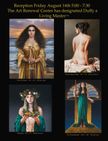
In Tribute to Women opens with a reception on August 14 from 5 to 7:30 p.m., and runs through September 15 at Sugarman Peterson Gallery in Santa Fe, New Mexico. —
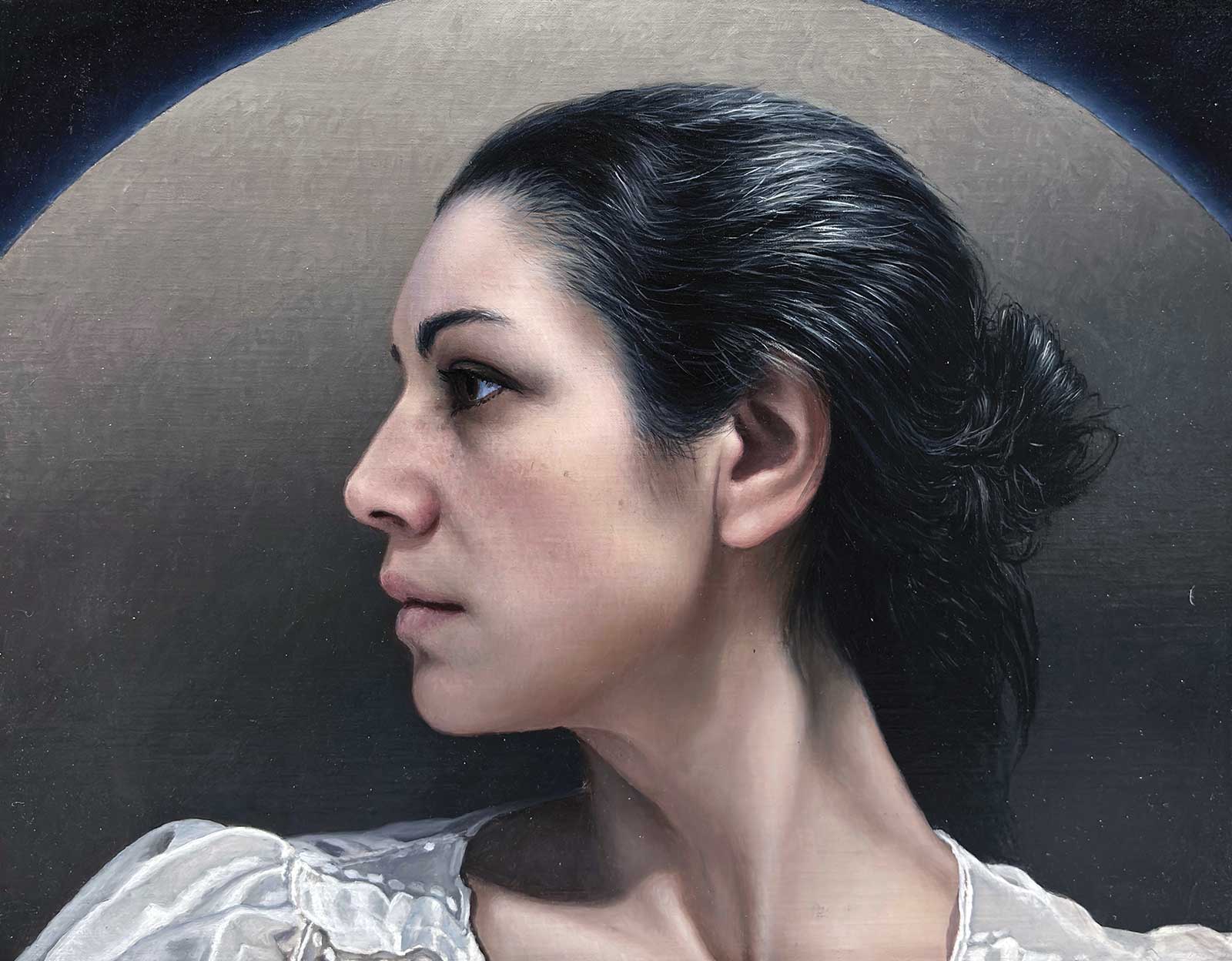
Profile in White, oil on linen, 14 x 11 in.
Sugarman Peterson Gallery • 130 W. Palace Avenue, Suite A • Santa Fe, NM • (505) 820-0010 • www.sugarmanpetersongallery.com
Powered by Froala Editor